Home Blog Page 4501

MPIC gets shareholders’ approval to delist

METRO PACIFIC Investments Corp. (MPIC) shareholders on Tuesday voted to approve the voluntary delisting of the company from the Philippine Stock Exchange (PSE) by October.

“Based on the votes cast, shareholders representing 77.72%, or more than two-thirds of the total outstanding common shares, voted in favor of the delisting proposal,” said MPIC Chairman, President and Chief Executive Officer Manuel V. Pangilinan during the company’s special stockholders’ meeting.

“The requisite number of votes required to approve the delisting of the company on the main board has been met… The proposal to delist the common shares of the company from the main board of the PSE is therefore approved,” Mr. Pangilinan added.

MPIC needs to acquire 95% of its shares from minority shareholders to comply with PSE rules. The delisting tender offer process will begin on Aug. 9 and conclude on Sept. 7 this year. The company expects to be delisted from the PSE on Oct. 9.

This development follows the announcement by a consortium of companies backed by First Pacific Co. Ltd., GT Capital Holdings, Inc., and Mitsui & Co. Ltd., disclosing their intent to buy minority shares as part of their strategy to acquire greater control over the company and privatize it.

“The main hurdle remains getting at least 95% of the outstanding shares to tender. They’ll need to gather enough institutional shareholders to participate in the tender offer to ensure a successful delisting,” China Bank Capital Corp. Managing Director Juan Paolo E. Colet said in a Viber message.

“There is a good chance they will obtain enough shares to proceed with delisting. For minority shareholders, this is their best chance to exit a perennially undervalued stock at a reasonable price,” Mr. Colet added.

The bidders submitted another a tender offer of P5.20 apiece, a 12.3% rise from the initial P4.63 per share.

The new offer price represented a 37% premium over the one-year volume-weighted average price of MPIC common shares and is at a premium of 10 centavos over the highest end of the range provided by the independent advisor.

The consortium had selected Unicapital, Inc. as the new independent financial advisor (IFA), and it provided a valuation range of P3.37 to P5.10 per share.

Unicapital Securities, Inc.’s Senior Equity Research Analyst Carlos Angelo O. Temporal said that there is a need to address concerns regarding meeting the requirement for the company to successfully delist from the main board of the PSE.

“But considering the substantial 12.3% increase in the tender offer price…, the likelihood of delisting has likely improved significantly since then,” Mr. Temporal added.

In a regulatory filing also on Tuesday, GT Capital said that the bidders would spend up to P54.8 billion or $986 million for the remaining shares held by the minority shareholders of MPIC.

The tender offer values MPIC at P149.2 billion, which is equivalent to $2.7 billion in equity value on a 100% basis.

“Allowing MPIC to become private again will permit the company to focus on delivering long-term benefits to various stakeholders inherent in the infrastructure assets it holds and operates,” GT Capital Chief Financial Officer Francisco H. Suarez said in a press release.

AFTER DELISTING
First Pacific Executive Vice-President Stanley H. Yang said during the briefing that the consortium aims to maintain its investments in infrastructure.

He reiterated the group’s intention to list Metro Pacific Tollways Corp., Metro Pacific Health Corp., and Maynilad Water Services, Inc.

“As a delisted company, there would be some flexibilities and opportunities for the group to be making investments in businesses,” Mr. Yang said.

Meanwhile, Mr. Pangilinan said that shareholders who choose to retain their shares after the delisting would be subject to capital gains tax and documentary stamp tax.

“There are costs related to keeping your shares post delisting,” he noted.

China Bank Capital’s Mr. Colet said: “[We] expect much of the funds obtained by institutional shareholders to be redeployed into equities.”

MPIC is one of the three key Philippine units of Hong Kong-based First Pacific, the others being Philex Mining Corp. and PLDT Inc.

Hastings Holdings, Inc., a unit of PLDT Beneficial Trust Fund subsidiary MediaQuest Holdings, Inc., has a majority share in BusinessWorld through the Philippine Star Group, which it controls.

On Tuesday shares for MPIC went up by 1.43% to P4.97 apiece. — Adrian H. Halili

Giant public art installation takes center stage at a township development

THE VICTOR is lit up at night with the colors of the Philippine flag.

EARLY in August Robinsons Land Corp. (RLC) unveiled its landmark art installation, The Victor, the showpiece of Bridgetowne Estate, its new master planned, 32-hectare district, located minutes away from Ortigas.

“It’s destined to be the star of countless social media posts, an icon that captures the beating heart of the city, very much like the Eiffel Tower and the Arc de Triomphe of Paris, Big Ben with London, and the Colosseum with Rome,” said Mybelle V. Aragon-GoBio, RLC’s senior vice-president and general manager for Robinsons Destination Estates, at the media preview.

She explained that since Bridgetowne is poised to be Robinsons Land’s premier destination estate, it must be shaped by public art.

The Victor is inspired by the success story of Robinsons’ founder John Gokongwei, Jr., who overcame his humble beginnings. It is meant to capture “the indomitable spirit of the Filipino people.”

Created by Filipino-American artist Jefrё Manuel-Figueras, it is one of the world’s tallest art installations with lighting projection, standing at 60 meters or 20 storeys (55 meters for the statue itself and an additional five meters for the podium it rests upon).

The gigantic structure, situated on the eastern portion of the township, weighs a hefty 330 tons or 660,000 lbs. The perforated stainless-steel construction makes it semi-translucent as it allows sunlight to pass through it. At night, it can be lit up in multiple ways and colors via lighting projections.

“I wanted to pay homage to the resilience and determination that resides within every Filipino,” said Mr. Manuel-Figueras via Zoom. “In fact, I purposefully wanted it to surpass the Statue of Liberty, which is 46 meters.”

Its all-conquering pose, with a raised fist thrust in the air, is meant to inspire visitors. For Mr. Manuel-Figueras, drawing from his feelings as a Filipino based abroad, The Victor also represents global Filipinos who have achieved greatness and influence both within and beyond their homeland.

Ms. Aragon-GoBio told BusinessWorld that The Victor is only the first of many planned public art installations in the area.

“We want this district to be a thriving art hub, which will add to the local culture and become an Instagram-worthy landmark in years to come,” she said.

There is another work of art near the structure, one that gives the township its name.

Before he passed away, National Artist Francisco “Bobby” Mañosa designed a bridge with a twirling ribbon-like design inspired by the ribbon depicted in the Bridgetowne logo. His son Gelo Mañosa, who leads the family’s architectural firm Mañosa & Co., completed the project, which spans 110 meters, and connects the nine-hectare Quezon City side of the development with the 23-hectare Pasig City side.

“It passes over the Marikina River and has a width of 25 meters, which allows for four lanes for vehicles, with dedicated lanes for pedestrians and bikers,” said Ms. Aragon-GoBio.

Bridgetowne Estate is accessible via C-5, Ortigas Avenue Ext., and Amang Rodriguez Ave. The district’s upscale Opus mall is expected to open this year. — Brontë H. Lacsamana

CreditSights sees PLDT on track to meet full-year guidance

BW FILE PHOTO

PLDT Inc.’s earnings growth for this year is expected to be modest, likely in the low single-digit percentage, according to credit analyst CreditSights.

This aligns with the company’s full-year expectations, CreditSights said in its outlook report for PDLT e-mailed to reporters on Tuesday.

“[This is] led by our expectations of resilient [albeit slowing] broadband growth, robust enterprise data growth and cost efficiencies that offset a challenging mobile operating environment,” the credit analyst said.

For the second quarter, PLDT’s net income attributable to equity holders stood at P9.44 billion, representing a 22.4% increase from P7.7 billion in the same period last year.

From April to June, the company’s consolidated EBITDA (earnings before interest, taxes, depreciation, and amortization) hit an all-time high of P26.1 billion, a 4.4% jump from the P25 billion recorded in 2022.

Meanwhile, PLDT’s attributable net income for the first half of the year reached P18.45 billion, climbing 9.9% from P16.79 billion in the same period last year.

Its first-half consolidated EBITDA was P52.1 billion, which is 3.2% higher than what the company booked last year, that is P50.5 billion.

The company’s full-year guidance for EBITDA growth is in the low-single digits, which it said will be supported by top-line growth and aggressive cost management.

“We also anticipate lower second half capital expenditure (capex) in line with management guidance, with liquidity aided by a residual P28.8 billion of tower sales proceeds that we expect to be closed through the second half,” CreditSights said.

PLDT’s capex reached P40.8 billion in the first half, which is 11.3% lower than what the company spent in the first six months of last year, which was P46 billion.

The company has set a capex guidance of P80 billion to P85 billion for 2023, which is lower than the P96.8 billion it spent last year.

“We maintain our market performance recommendation on PLDT; we believe spreads rightly reflect its resilient credit profile aided by its leading broadband market position and tower sales, which outweigh its high capex, versus historical levels, arising from a P33 billion budget overrun,” CreditSights said.

PARTNERSHIP WITH US SOLUTIONS PROVIDER RADISYS
In a disclosure on Tuesday, PLDT announced that it is in advanced talks with US-based Radisys Corp. to build and launch digital solutions.

“As part of PLDT’s purpose to inspire innovation and our mission to deliver meaningful connections for all our customers, we look forward to closely working with Radisys to help us usher in more immersive and exciting digital experiences for tech-savvy Filipinos as we look into the future,” said PLDT President and Chief Executive Officer Alfredo S. Panlilio.

Radisys is a subsidiary of Jio Platforms Ltd., which designs, industrializes, and deploys a range of networking, communications, devices, and digital engagement platforms in India and globally.

“Radisys is thrilled at the prospect of a collaborative partnership with PLDT, tapping into the broad range of solutions available across Jio Platforms,” said Arun Bhikshesvaran, president and chief executive officer at Radisys. 

“We are eager to leverage our past experience in successfully launching similar innovations in India as we embark on this strategic alliance with PLDT,” he added..

First Metro Investment Corp. Head of Research Cristina S. Ulang said in a Viber message that the partnership will push the expansion of the 5G network.

“This partnership heralds the gathering momentum of the push for 5G and the greater network and digital technology capabilities required of the country’s growing digital economy,” Ms. Ulang said.

Hastings Holdings, Inc., a unit of PLDT Beneficial Trust Fund subsidiary MediaQuest Holdings, Inc., has a majority stake in BusinessWorld through the Philippine Star Group, which it controls. — Justine Irish D. Tabile

Maturity makes tick…tick…Boom! tick

REINE BANTANG

By Giselle P. Kasilag

Theater Review
tick…tick…Boom!
By Jonathan Larson
Directed by Robbie Guevara
Presented by 9 Works Theatrical

ABOUT to turn 30, musician/composer Jon finds himself in a panic. Once named as a promising young composer, he is on the verge of leaving his youth behind without realizing any of its promise. The last five years have been spent waiting on tables at a diner while trying to finish his musical that appears to be going nowhere.

It didn’t help that his best friend, Mike, just bought a BMW and is in the process of moving out of the tiny apartment that they share. He is moving into a luxury residence courtesy of his earnings as a successful marketing executive. But the financial stability came with a steep price tag. Mike gave up his dream of becoming an actor.

His girlfriend, Susan, is a dancer who makes a living teaching ballet to children. She is wondering if it’s time to leave the hard life of New York and move somewhere else and start a family.

As Jon wonders about his life choices, he is constantly hearing the ticking of a clock that seems to foreshadow an explosive boom.

Thus opened the press preview of 9 Works Theatrical’s current staging of Jonathan Larson’s tick…tick…Boom! It’s first production since the global lockdowns, managing director Santi Santamaria’s directive was to start small. But director Robbie Guevara appeared to have a different definition of “small.” The curtain rose to reveal a replica of a typical New York apartment. It was a hardworking set that had a few surprises up its sleeves.

Jef Flores is Jon, Reb Atadero is Mike, and Tanya Manalang is Susan. All three were handpicked by Mr. Guevara for their respective roles and each one delivered a performance as explosive as the title of the musical implied.

From the moment the show began, Mr. Flores owned the stage. The material used him as a narrator while making him interact with the other characters at the same time. The constant shifting would have been daunting to a lesser actor, but his approach allowed the audience to feel like they’d entered his brain and were experiencing the stress and panic with him.

And there was a lot of that. The entire plot is driven by the anxiety of a timeline imposed by society and reinforced by the hunger to achieve personal greatness. It would have been easy to turn Jon into a caricature, fully laden with every struggling artist trope and cliché known to man. Instead, Mr. Flores gently turned him into a character we are all familiar with. The mumbling, the stumbling, the doubt, the freaking out, and the weak attempt at adulting — Jon is all of us questioning our decisions to follow our passions and wondering if it’s time to move on and get a “real” job. That he performed it for a predominantly creative audience which included theater legend Audie Gemora and prima ballerina Lisa Macuja-Elizalde — both of whom have had their own Jon moments in their careers — could not have been easy.

While it was natural to feel sympathy for Jon, Mike and Susan represented the harsh realities of the stories of our lives, with Mike choosing financial stability while Susan looked at the simple life. They were the unfulfilled potential and broken dreams that we would rather not face. Humanizing them was difficult but Mr. Atadero and Ms. Manalang were up to the task. They approached their characters from a position of compassion. They did not ask to be pitied for supposedly giving up on their passion. They made choices based on their circumstances.

It was noticeable that chemistry was missing between Mr. Flores and Ms. Manalang which may have worked to their advantage. After all, the couple was on the verge of breaking up when the story began, and their characters have admitted to growing apart. Unfortunately, it did not help that the chemistry was intense between Ms. Manalang and Mr. Atadero. A couple in real life, it translated so well on stage that there were moments when it felt like Mike and Susan might end up together.

Apart from being the girlfriend and the best friend, the pair also performed a range of characters including Jon’s parents and agents, Mike’s boss, and customers at the diner. It is in the portrayal of these seemingly minor characters that their stage experience was most evident. Digging deep into their theatrical war chest, they created distinct personalities for each one.

Ms. Manalang seized her moment with her rendition of “Come To Your Senses.” The song is one of the few true earworms in the musical whose soundtrack is not always easy to sing along with. There was an honesty to the performance that made the audience feel vulnerable along with her.

Mr. Flores was undeniably the star of the show, but the night clearly belonged to Mr. Atadero. The role — not just Mike but all the characters that followed — felt like it was written for him. He was clearly in his element, effortlessly shifting from one personality to the next without missing a beat. It was like he was channeling Robin Williams as the genie in Aladdin. It takes a gifted actor to take on a supporting role and make it shine. But it takes a special kind of human being to do so without upstaging his co-actors. There was a generosity to his acting that truly highlights the best of theater as a shared artform.

If there is one word that can be used to describe the entire production of tick…tick…Boom!, it would be maturity. There is a new depth in the direction and performance, and the shared trauma of the pandemic was thoughtfully utilized to draw out emotions long held back for the sake of staying strong. There may be differences in certain artistic decisions, but the audience was in agreement that the performance was powerful and exactly what was needed as we navigate the new normal.

ACEN to develop floating solar project in Laguna Lake

AYALA-LED ACEN Corp., through its subsidiaries, is set to develop a large-scale floating solar project in Laguna Lake with an expected capacity of about 1,000 megawatts (MW), the company’s top official said on Tuesday.

“We were awarded 800 hectares, which should be good for approximately 1,000 MW capacity,”  Eric T. Francia, president and chief executive officer of ACEN, told reporters.

“We’re still in the process of the pre-development stage, so we have to work on the permitting, we need to work on the grid connection,” he added.

ACEN, through AC Subic Solar, Inc.; AC Laguna Solar, Solar Ace4 Energy Corp.; Ingrid Power, and GigaWind 1, has signed a renewable energy contract area utilization agreement with Laguna Lake Development Authority (LLDA) for the lease of 800 hectares of renewable energy areas (REAs) in Laguna, Philippines.

“As we explore the potential of our first large scale floating solar project which will be a crucial part of ACEN’s master plan to achieve our 2030 goal, we are excited to spearhead this energy innovation in the Philippines. We are committed to expanding our clean energy assets while addressing land scarcity,” he said.

The company is targeting to expand its renewable energy capacity to 20 gigawatts (GW) by 2030. Currently, it has a combined 4,200 MW of attributable capacity.

The project accelerates the energy company’s goal to adopt new technologies while also addressing critical issues of climate change, according to Mr. Francia.

Mr. Francia also said that the renewable energy project is expected to be completed within two to three years, which includes permitting, right-of-way acquisition, and transmission connectivity.“The critical path typically in our projects is the grid connectivity so that typically takes time because of right of way acquisition and so forth,” he said.

In 2022, LLDA initially offered 2,000 hectares of the Laguna de Bay for floating solar projects for a 25-year contract.

SunAsia Energy, Inc. has secured 1,000 hectares in Laguna de Bay which has an expected capacity of about 1,300 MW, while Singapore-based Vena Energy secured the remaining 200 hectares.

“It’s too early to tell about specific capex (capital expenditure) cost, that’s a work in progress. One thing’s for sure: we need large-scale renewable projects like this. It’s very hard to find 2,000 hectares on land that’s very near the load center. This laguna lake, these 2,000 hectares addressed that. The land equivalent right at the load center,” Mr. Francia said.

Further, ACEN encourages the Energy Regulatory Commission and the Energy department to review the rates for floating solar as it is a different technology than ground-mounted solar which typically costs more.

“We are sharpening our pencils, we want to improve on the cost because we know that it’s going be more expensive than ground-mounted solar, so we need to really sharpen our pencils and achieve economies of scale,” Mr. Francia said.

At the local bourse on Tuesday, shares in ACEN closed unchanged at P5.42 apiece. — Ashley Erika O. Jose

Shared horse and human burials show how deeply the Vikings cared for their animal companions

ILLUSTRATION of the graves by Mirosław Kuźma. —LESZEK GARDEŁA

IS YOUR PET part of the family? That’s nothing new. Archeological evidence exists to suggest that the Vikings held their own animals in high — even intimate — regard, taking them with them on voyages. Earlier this year, scientific evidence found for the first time that — as early as the 9th century — Vikings brought horses, dogs and other animals with them across the North Sea.

The prevailing assumption had been that enterprising Viking armies had simply acquired horses (along with other items of plunder) in their raids on the British Isles. But these findings suggest that the depth of the relationships Viking-age people had with animals has been dramatically underrepresented.

But why? After all, the vast majority of people — Scandinavian or otherwise — living through the Viking age relied on farming to survive. Why has it taken so long for researchers to realize that these humans and animals sustained deep, complex, emotional and mutually enriching relationships?

Past societies cared about humans, animals, and things differently. Some humans could be owned, even viewed as objects and valued far less than some animals. In our research, we use both archaeology and texts to show that some horses in communities such as those of Viking-age Scandinavia and Iceland could be seen as “people” themselves, capable of agency and worthy of careful and deliberate treatment.

Horses in the Viking age were seen as liminal creatures, meaning they were capable of crossing physical and conceptual boundaries, travelling over different terrains, and even between worlds. They also held cosmological significance.

Norse poetry depicts the god Odin riding to the land of the dead on his eight-legged horse Sleipnir. A newly discovered bracteate — or pendant — bearing a runic inscription from Denmark might also suggest an association between Odin (or at least someone who identifies himself as “Odin’s man”) and a horse companion as far back as the early 5th century AD.

Historically, horse bodies in Viking-age burials have been interpreted as symbolic of the journey to the afterlife, part of the possessions of the deceased in the afterlife, or as status symbols. But these interpretations miss something vital — the bond between horse and rider.

Horses have special relationships with their riders, as both have to learn to work with each other. In Norse poetry (some of which links to the Viking age) horses were a vital part of warrior identities. Legendary poems about the heroes Helgi and Sigurd depict heroes who are almost inseparable from their horse companions. Grani, the horse of Sigurd the dragon-slayer for example, is depicted mourning Sigurd after his death.

Evidence of partnerships between humans and horses has been found in burials from across northern Europe, from the grand ship burials of Ladby and Gokstad, to the equestrian burials of 10th-century Denmark, to the more modest human-horse burials in Viking-age Iceland. But horses weren’t just buried with men.

At Trekroner-Grydehøj in Sjælland, Denmark, a woman was buried with a horse next to her, one leg partially overlapping with the human body. Something about this human and this horse meant such an intimate arrangement was appropriate.

The woman is thought to have been a ritual specialist, possibly a sorceress, buried with an iron-tipped copper rod and a range of other objects including some knives, a bucket, and a small wooden box. A large flat stone, a dog which had been cut in half and some sheep bones, as well as some iron pins (possibly for fastening baggage to a saddle) and a dog chain completed the burial.

At Løve in Vestfold, Norway, a 10th-century burial also has a horse laid next to a woman. Like the woman at Trekroner-Grydehøj, they are thought to have been a ritual specialist. But the woman wasn’t the only one buried with the tools of her trade. An iron rangle (a metal ring with smaller rings attached to it) was laid on the chest of the horse buried alongside her. When attached to wagon harnesses or bridles, the metal rings would jingle. It is thought that it may have played a role in Viking-age rituals.

Were these women buried with these horses because they had special relationships? Or because they were sorceresses? Or did being a sorceress entail close relationships with these animals? We believe that, among other rituals, horses appear to have been vital participants in the processes and practices of funerals.

Research shows that relationships with horses have a host of benefits, especially for young people. It’s interesting then, that there is a repeated insistence in Norse poetry and medieval sagas that young men should practice horse grooming and training. Horses are considered partners in farming and often even members of families in these texts.

The 13th-century saga Bjarnar Saga Hítdœlakappa even depicts a woman who appears to benefit from a medieval form of equine-assisted therapy, finding relief from her ailment by sitting on her horse as it is led around a field: “The most relief was offered to her by sitting on horseback, as Þórðr led her horse back and forth, and he did so, even though it was a great pain to him, as he wanted to try to comfort her.”

In a time of ecological upheaval, looking to the past to understand the relationships humans have had with animals can inspire different approaches to the present and the future. Given a recent victory by Māori activists granting legal personhood and rights to a river, looking for historical analogies, such as the Vikings and their horses, can encourage us all to continue to push for more responsible relationships with the non-human world. — The Conversation via Reuters Connect

Keith Ruiter is a Senior Lecturer in History at the University of Suffolk while Harriet Evans Tang is a Post Doctoral Research Associate at Durham University. Mr. Ruiter receives funding from the Social Sciences and Humanities Research Council of Canada (grant 756- 2021-0499) and Berit Wallenbergs Stiftelse (grant BWS 2022.0040). Ms. Evans Tang receives funding from the Leverhulme Trust (grant RPG-2019-258) as part of the Cohabiting with Vikings Project.

Global-Estate Resorts posts 13% rise in H1 income

GLOBAL-ESTATE Resorts, Inc. (GERI) reported a 13% increase in attributable net income for the first half (H1), rising to P848 million from P748 million, thanks to the strong performance of its business units.

“Our focus on our tourism townships allowed our company to achieve remarkable growth through the first half of the year,” GERI President Monica T. Salomon said in a statement.

“The company’s core businesses especially those in our destination estates largely benefited from the increasing tourism in our country,” she added.

The company’s consolidated revenues for the six-month period rose by 32% to P3.9 billion from P3 billion last year, driven by its real estate business, which accounted for 79% of GERI’s total revenue.

Real estate sales climbed to P3.1 billion, marking a 32% increase from P2.3 billion during the same period last year.

Likewise, reservation sales saw a 39% growth, reaching P11.7 billion, fueled by strong demand for the company’s residential and commercial properties, particularly in Boracay Newcoast, Eastland Heights in Antipolo, Rizal, and Twin Lakes in Laurel, Batangas.

The company said that it has now sold 94% of its P817 million Ocean Garden Villas Cluster C project in Boracay Newcoast, which was launched earlier in the year.

GERI doubled its hotel revenues to P308 million from P157 million in the previous year, driven by higher occupancy and room rates due to the continuous rise in local tourism and travel.

Additionally, the company’s leasing revenues grew by 29% to P273 million from P211 million in the prior year.

The contribution of retail spaces to the company’s leasing income increased compared to the previous year, as foot traffic and tenant sales have already recovered from the slowdown.

“This second half, we are determined to leverage our expertise and hope to continue capturing the increasing tourism opportunities in the sector,” Ms. Salomon said.

To date, the company has nine tourism estates and integrated lifestyle communities across the country, covering more than 3,300 hectares of land. — Adrian H. Halili

A journalist’s life

By Gary Mariano

Book Review
Under the Bridge: Memoirs
By Miguel Patolot

UNTIL three months ago, I had no idea who Miguel Patolot was. Growing up in a newspaper environment, admiring journalists and desiring to be one, I thought, how could I have missed him, a top editor with a leading newspaper. As a teacher of an introductory course on journalism, I made my students collect oral histories of nearly 400 journalists. The students never found Mr. Patolot and those they interviewed never even mentioned him.

I am grateful therefore to Francis Angelo, editor of the Iloilo Daily Guardian, for introducing me to Mr. Patolot over a totally unrelated matter. Mr. Patolot had questions about a program I was facilitating. I contacted him right away and our conversation led to an offer from him to send a signed copy of his book, which I got a few days later.

Mr. Patolot and I live at opposite ends of town, so when I had the chance to be on more neutral ground and after reading the first 100 of 568 pages, we met for lunch. I was fueled by both curiosity and humility.

I discovered reviews of his book in two newspapers. The reviewers said they received their respective copies from someone he had “heard of in the past” and “a stranger.”

Mike Patolot should have been difficult to miss. He was, after all, a pioneer reporter for and later executive editor of the Business Day, a precursor of BusinessWorld.

Business Day was one of the five dailies in Manila that the martial law regime allowed to publish, the others being Bulletin Today, the Philippines Daily Express, People’s Journal, and the Evening Post. Its publisher, Raul Locsin, vice-chairman of the Philippine Council for Print Media, struggled to shake off the label of a “crony” newspaper and President Ferdinand Marcos himself was said to point out Business Day whenever faced with the criticism over the absence of press freedom.

Mr. Patolot endeavored to be a diplomat and ended up a journalist despite advice from a high-school classmate about bad pay and not being able to live comfortably. He studied foreign service at the Lyceum simply because, compared with those of the University of the Philippines (UP), he thought “the fees were reasonable.” He consoled himself with the idea that many of his professors also taught at UP.

After graduating in 1965 and passing the FSSO (foreign service staff officer) and later the commercial attaché exams. Mr. Patolot was ready to be a diplomat, but he soon learned that landing a job in the foreign service was a complicated mix of limited plantilla positions, a steady supply of foreign-service graduates from both Lyceum and UP, among others, and political appointments.

By his account, he was on a jeepney in early 1967 on his way to follow up on a possible Department of Foreign Affairs job when he chanced upon a classified ad for a researcher with the Economic Monitor, a business weekly published by Mr. Locsin.

Motivated by a dire need for any kind of job that paid, he switched jeepneys, went to the Monitor office, and was asked to write an essay as some kind of an entrance test. He impressed his interviewer and the Monitor ran part of his test on page one of the next issue, Jan. 9, 1967, titled, “Trade Expansion Scheme.” The rest, he said, was serialized. At 22, a little under two years out of college, Mr. Patolot had a job as a reporter.

And a byline.

He had hardly warmed his seat when Mr. Locsin resigned from the Monitor. On Feb. 9, he launched Business Day and Mr. Patolot was one of the pioneer reporters, along with Ferdinand Ramos, Romeo Herrera, Fernando Gil, Aurelio de la Cruz, Tara Singh, Pacifico Dumandan, Jr. and Roman Dinglasan. Their editors were Alfio Locsin (Raul’s brother who would later be the Manila Times business editor), Exequiel Molina (also known as the leader of the Jazz Friends), Nilo Mulles, Benjamin Defensor (later dean of the Manila Times School of Journalism), and Ramon Almario. They were “the best,” he writes.

Mr. Patolot’s story shows that success as a journalist is not the exclusive domain of journalism majors. His degree, with a major in international law, proved to be an asset in a business newspaper. While many of his counterparts from journalism schools would be wrapping their heads around slippery topics like international business procedures, consular practices, mediation and arbitration, tariff and taxation, he already had a firm grasp of them.

Born in 1945, on the feast of St. Michael and the day after the “liberation,” Mr. Patolot picked up as a child some useful skills that came handy in his future career. To begin with, his father was a Death March survivor who became a public-school teacher, later principal, and earned an American master’s as a Fulbright scholar.

Despite being the teacher’s son, Mr. Patolot said he struggled in school, a “slow starter in the elementary grades,” getting failing marks in high school, and wrestling with quadratic equations in college — on the brink of flunking. His father sent him to Baguio’s Teachers’ Camp as some kind of a punishment. There he served as a “dormitory boy,” for whom work began at 3 a.m., looking after the needs of female teachers for 90 centavos a day. The “most horrible” task, he recalled, was transporting hot water for their baths. Soon he learned to work the system, resulting in more tips from the satisfied teachers. He was a dorm boy for five summers, with each succeeding one becoming less of a penalty.

He solved his math issues with the help of his sister, Edna, a straight-A student, who showed him how the formula worked for his equations. “We went through the equations one by one until it was clear how the process went,” he remembers. The next day he volunteered to solve the problems in front of the class, thereby passing the course. “Life always presented itself as an equation to be solved. Behind this forbidding equation was always a formula — the key to myriad answers. Figuring it out, and making the formula work was life’s greatest secret.”

But he had a gift for languages. He loved poetry, in English and Spanish. In college he learned the language of diplomacy. For his FSSO exam, he wrote a critique of a Guy de Maupassant essay, en français.

As a reporter, he wrote about the big business associations — the Chamber of Commerce of the Philippines and the Philippine Chamber of Industries — and the men who led them.

He covered the opening of trade with the communist regimes of the Soviet Union and China, and then a beat called “national planning” which brought him up close with the National Economic Council and the Presidential Economic Staff. He credits this experience for helping him pass the certification for commercial attaché.

He also formed professional and, to some extent, personal relationships with the captains of business and industry, among them Enrique Zobel, Andres Soriano, Jr., John Gokongwei, Jose Concepcion, and the Ongpin brothers Jaime and Roberto.

Mr. Patolot’s memoirs are replete with anecdotes from his youth — my favorite was his misadventures as an ROTC model-platoon cadet — and of course his shared memories with Raul Locsin. They remind us that behind every story byline is a person shaped by many factors.

At the ripe old age of 37, after 15 years on the job, Mr. Patolot bade adieu to Mr. Locsin, Business Day and journalism, for a career with the Philippine International Trading Corp., building a countertrade system with the Eastern European market.

Five years later, on June 5, 1987, Business Day would close shop due to labor problems. Within weeks, on July 25, Mr. Locsin would be back with a different title, BusinessWorld.

Mr. Patolot will be 78 soon.

Cebu Pacific removes expiration of travel funds

CEBUPACIFICAIR

BUDGET CARRIER Cebu Pacific said on Tuesday that it will be offering non-expiring travel funds and extending the validity of travel vouchers.

“The improvements in our customer care policies, especially the non-expiry of our travel funds, is a testament to our commitment to our passengers and our promise to keep listening and improving,” said Candice Jennifer A. Iyog, chief marketing and customer experience officer at Cebu Pacific, in a press release.

“With these enhancements, we hope to make air travel even more accessible to every Juan,” she added.

The changes, which started on Aug. 1, are expected to provide passengers with better experience, according to the budget carrier.

Prior to such changes, Cebu Pacific travel funds were valid for six months from the date of conversion. Under the new policy, the travel funds will no longer have an expiration date.

“Passengers can now use their travel funds as a virtual wallet to pay for new bookings or add-ons in the future without any time constraints,” the airline said.

Cebu Pacific customers may also use their non-expiring travel funds for booking flights on behalf of their family members or friends if they have a MyCebuPacific account.

The new policy has also extended the validity of Cebu Pacific travel vouchers from six months to 18 months which will give passengers more time to use them for booking flights. — Justine Irish D. Tabile

OFWs as a permanent phenomenon: Bringing them home

PHILIPPINE STAR/MIGUEL DE GUZMAN

(Part 2)

A moral challenge to many countries in the First World, ostensibly in the United States, is the prevalence of consumerism, a manifestation of materialism. Some moral philosophers consider consumerism as worse than the atheism of the communists or other materialists. At least, practitioners of materialism are consistent with their beliefs. They do not believe in the existence of a personal God or of the spirit. Thus, they behave accordingly and live as if they cease to exist when they die and therefore, look for their fulfillment and happiness in the material things of this world. In contrast, many of the consumerists allege that they believe in God and in a life hereafter. But they act as if everything that matters is acquiring more and more material goods. They equate human fulfillment or happiness with ever accumulating more and more goods to consume. They are obsessed with “having” rather than with “being.”

There is a serious danger that the children of the OFWs are being programmed to be consumerists. The biological parents are being replaced with material possessions, such as the money and goods that the OFWs provide for their families back home to compensate for their absence. Research has shown that those who have been ensnared by a materialistic lifestyle have decreased well-being, consisting of low levels of psychological adjustment and social functioning. Furthermore, more materialistic children and adolescents are less motivated to learn and have less interest in school.

Parental authority is easily eroded among the children of OFWs. They do not give the appropriate respect and attention to their OFW parents as their absence allows their children to look for figures or objects to satisfy the immediate love and support they need as growing human beings. This lack of emotional and moral support will eventually have serious negative effects on the child’s welfare. There are studies which show that the continual separation from their parents and their feeling of having been abandoned could cause conflicts in future reunions and result in a care deficit among adolescents. Although parents often ask the help of relatives to care for their children and the availability of technological applications such as Facebook or Zoom make communication online easier, this mode of interaction falls short of the physical and emotional relationships required between a parent and a child. Eventually, these children would be less socially integrated in their community as adults as they become more selfish and develop a poor work ethic — defects that in a normal family with both parents present are readily corrected at home and in school (in coordination with the parents).

According to the eminent sociologist Talcott Parson, families have assigned gender roles to help with the child’s formation: “While men take on the ‘instrumental role,’ providing financial support, women take on the ‘expressive role,’ ensuring that the emotional needs of the children and husband are met.”

To the extent possible, the government policy regarding OFWs must be geared towards keeping Filipino families intact, with both father and mother physically present in the upbringing of children. One obvious solution is to focus on sending the younger members of the families who are still unmarried as OFWs, to avoid parent absenteeism. Data I obtained from a leading practitioner of ethical recruiting, EDI-Staffbuilders International, is encouraging. Of 382 Filipino nurses the company sent to a European country, 80% are female, of which 58% are single. Of these 382 nurses, 87% are in their thirties.

The very discernible demographic trend of Filipinos and Filipinas getting married at later ages (often already in their thirties) compared to the Baby Boomers and Generation X may actually favor this policy. These younger workers may not be able to earn as much as their respective parents who are more experienced and have better qualifications, but they can still contribute to the financial support of their respective families. There are occupations and professions in which youth and physical health may actually be an advantage, such as in construction, healthcare, hospitality, information technology, and seafaring. We should spend more resources in upskilling and reskilling these types of workers. Also, there may be more bilateral agreements with countries that practice what is known as family integration, i.e., the policy of requiring the married immigrant worker to bring with him or her the entire family, as is already a common practice in countries like Spain and Italy.

The policy that should be followed as regards OFWs should be coordinated with efforts of the Government, in partnership with business and civil society, to bring down the poverty incidence from the 13-15% of the population still prevailing today (2023) to single digit levels of anywhere from zero to 4% by the end of this current Administration (2028). By that time, we can really say that those who still opt to work abroad for a living are doing so not because of extreme necessity, but because of free choice.

The late President Benigno Aquino III had already pledged to make migration for OFWs a choice rather than a necessity by creating enough well paid and meaningful jobs in the Philippines to encourage workers to return. As reported in an editorial of a local daily, President Aquino III’s intentions remained a pious wish because the number of annually deployed OFWs steadily increased, from 2.04 million in 2010 to 2.44 million in 2015 before dropping to 2.24 million in 2016. To avoid confusion, these figures cited by the Philippine Statistics Authority (PSA) are annual flows as compared with the usual 10 million or more cited of OFWs abroad which is a stock number. Obviously, the $36 billion in remittances in 2022 were sent by the 10 million.

Some positive developments may address the problem of lack of jobs in the Philippines. Because of the Build, Build, Build program started during the Duterte Administration, which the present Administration is strongly determined to continue by budgeting 6% of GDP on infrastructure, there is now a shortage of skilled construction workers that can be filled by some returning OFWs, especially from the Middle East. There is also a great probability that larger amounts of FDIs will pour into such infrastructure as airports, railways, tollways, bridges, telecom facilities, data centers, and renewable energy projects because of the amendment of the Public Service Act which now allows foreigners to own as much as 100% of these investments. These projects will surely generate more demand for workers who have honed their skills abroad.

Also cause for some optimism for the returnees is the laudable initiative of the Department of Trade and Industry, in cooperation with the newly created Department of Migrant Workers, that recently signed an agreement that will help the reintegration of OFWs into the local economy by helping them start businesses, especially at the MSME level. The agreement includes assistance in the business registration process; reskilling, upskilling, and retooling training programs for the returning OFWs and members of their families; offering financial literacy courses; featuring the products of the businesses of OFWs in trade fairs, both domestic and international; and providing a network of OFW-established companies, products, or services to improve market access and promotions. There are social entrepreneurs who focus their efforts in assisting businesses started by OFW returnees through financial, marketing, human resources management, and digitalization advice.

Another area in which the Government, business, and civil society can do much to improve the welfare of the OFWs and reward them for their sacrifices in working abroad away from their loved ones is helping them and their families manage their savings intelligently. Macroeconomic data show that the savings rate of the Philippines, if measured based on Gross Domestic Product (GDP), is at historical low of 12%. If we measure savings though as a percentage of Gross National Income (GNI) (which includes incomes earned by Filipino nationals abroad), the rate jumps to 28% or more, already comparable to the savings rates of our East Asian peers. The reason is that the remittances from OFWs are not part of Gross Domestic Product. The high rate of savings may be explained by provisions made by their families for the college education of children and for the purchase of houses. As the editorial to which we earlier referred stated: “The next best thing for the government to do, if it cannot assure OFWs of stable employment back home, is to make sure that their hard-earned money will grow and that they don’t have to worry about their finances if and when they eventually choose to return. That is why it is important for the government (and I may add NGOs) to step in and provide interventions on how OFWs can manage and grow their hard-earned money. There have been instances where they have lost money to scams or to failed business ventures because the OFW or the family back home were financially illiterate.”

In this regard, there should be more of what the BSP in tandem with the DMW and BDO Foundation are doing in an upskilling program called Pinansyal na Talino at Kaalaman (PITaKa) which purports to teach OFWs and their families the value of saving, investing, and achieving financial stability.

(To be continued.)


Bernardo M. Villegas has a Ph.D. in Economics from Harvard, is professor emeritus at the University of Asia and the Pacific, and a visiting professor at the IESE Business School in Barcelona, Spain. He was a member of the 1986 Constitutional Commission.

bernardo.villegas@uap.asia

William Friedkin, acclaimed Exorcist director, 87

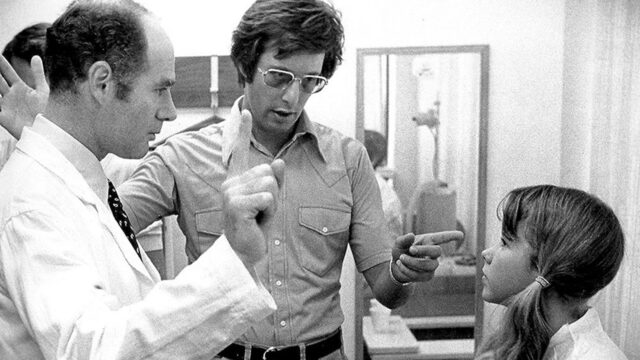
ACTRESS Linda Blair, director William Friedkin (center), and actor Barton Heyman behind the scenes during the filming of the 1973 movie The Exorcist. —IMDB.COM

WILLIAM Friedkin, who achieved cinematic immortality by directing the bleak, gritty 1971 drug-smuggling thriller The French Connection and the terrifying 1973 demon-possession blockbuster The Exorcist, died on Monday at the age of 87.

He died at his home from heart failure and pneumonia, said a spokesperson for Creative Artists Agency.

Mr. Friedkin got his start as a director with the mild 1967 musical comedy Good Times with the pop duo Sonny and Cher, then spent the rest of his career creating some of the most disturbing, violent and controversial images in film history.

The French Connection won five Academy Awards, including best picture, best director for Mr. Friedkin, and best actor for Gene Hackman, who Mr. Friedkin initially did not want in the memorable role of New York narcotics detective Popeye Doyle.

The Exorcist shocked moviegoers and offended some people with its unflinching tale of an innocent 12-year-old girl, played by Linda Blair, who undergoes a harrowing Roman Catholic exorcism to free her from possession by a demon. A cultural phenomenon and one of the highest-grossing movies of all time adjusted for inflation, it was hailed by some as the greatest horror movie ever made.

The Exorcist was nominated for 10 Academy Awards, including best picture and best director for Mr. Friedkin.

“My films have always been a study of human behavior at its extremes,” Mr. Friedkin told interviewer Tom Huddleston in 2012. “They’re not aimed at young people, they’re aimed at adults. Is there a line I wouldn’t cross? … I don’t know.”

Mr. Friedkin went on to make other movies but none achieved the level of success of his two big triumphs.

Other noteworthy efforts included the 1985 crime thriller To Live and Die in L.A. starring William Petersen and Willem Dafoe, the 2006 mental disintegration chiller Bug with Ashley Judd, and the twisted 2011 black comedy Killer Joe starring Matthew McConaughey.

Detractors considered him a hot-tempered, arrogant bully and dubbed him “Hurricane Billy.” Mr. Friedkin admitted he had a sense of entitlement and hubris after making two of the defining movies of the 1970s.

In The French Connection, cops played by Mr. Hackman and Roy Scheider in the decaying New York City of the early 1970s track a French heroin smuggler. The film, shot almost in a documentary style, was raw, violent, and cynical, with brutal cops barely distinguishable from the bad guys.

It also contained one of the greatest chase sequences in cinema, involving Mr. Hackman’s character and an elevated train line.

GHASTLY ACTS
Mr. Friedkin went to great lengths to infuse The Exorcist — based on William Peter Blatty’s novel — with a desolate mood. To get genuine reactions on film, he slapped an actor and startled another by unexpectedly firing a gun. He also refrigerated the set to chill the actors and make their breath visible on film.

Mr. Friedkin had Ms. Blair, who was nominated for a Oscar for her astonishing turn as the possessed girl, perform ghastly acts. Her character urinates and vomits. She levitates and her head spins around. She masturbates with a crucifix. With deep-voiced actress Mercedes McCambridge recording the demon’s lines emanating from the girl, she mouths appalling profanities.

“I personally believe that within each of us there are these forces of good and evil constantly battling for our souls,” Mr. Friedkin said in 2012. “We all have a dark side and we all have a better side. The Exorcist is a metaphor for that.”

Mr. Friedkin had a losing streak after The Exorcist. The Roy Scheider action-thriller Sorcerer, his next film, bombed in 1977, as did the comedy The Brink’s Job in 1978.

His next film was the spectacular 1980 failure Cruising, with Al Pacino as a cop who wades into New York’s gay subculture on the trail of a serial killer. Gay activists called the film homophobic and it sank in a storm of bad press.

William David Friedkin was born on Aug. 29, 1935, and grew up in Chicago, the son of poor Ukrainian immigrants. Unable to afford college, the young film buff worked in the mail room of a Chicago TV station after high school and soon began directing live shows.

He honed his skills making documentaries. One in 1965 helped lead to the commutation of a convicted killer’s death sentence. It also opened the door to Mr. Friedkin’s first job in Hollywood.

Mr. Friedkin suffered a heart attack in 1981 that he later blamed on his fondness for deep-dish pizza and hot dogs.

Mr. Friedkin married actress-turned-studio boss Sherry Lansing in 1991 after failed marriages to actresses Jeanne Moreau and Lesley-Anne Down and newscaster Kelly Lange.  Reuters

SMC reports P23.3-B net income for first half

San Miguel Corp. (SMC) announced on Tuesday an 18% growth in net income to P23.3 billion for the first half of the year.

This growth was driven by sustained improvements in its beer, spirits, infrastructure, and packaging units, along with contributions from its recent acquisition, Eagle Cement, the company said in an e-mailed statement.

Consolidated operating income also increased by 5% to P69.9 billion, despite challenges from rising raw materials costs, the company noted.

However, the conglomerate saw a 4% decline in consolidated revenues, amounting to P685.2 billion.

This decline was attributed to Petron Corp. being impacted by decreasing crude oil prices, and San Miguel Global Power facing lower volumes, according to the company.

There was a positive note in the form of a 10% increase in consolidated EBITDA (earnings before interest, taxes, depreciation and amortization), reaching P100.1 billion, according to the company’s statement.

“We’re greatly encouraged by the sustained growth we are seeing across most of our businesses. While there are challenges, we’re confident in the programs we have put in place to address them,” SMC President and Chief Executive Officer Ramon S. Ang said.

“We are also keeping our focus on executing on our projects, implementing our growth strategies, and providing our customers the high-quality service they expect from San Miguel,” he added. — Adrian H. Halili