Home Blog Page 4500

vivo X100 configured with groundbreaking telephoto lens

vivo X100

Latest reports revealed that the upcoming vivo X100 would be equipped with a groundbreaking periscopic telephoto lens, with its Pro version expected to surpass the 90 Pro+ performance in dark scenes due to its upgraded chip.

The highly anticipated vivo X100 is rumored to have Zeiss HD lens with 12MP periscope telephoto. Its Pro+ version is expected to have an unmatched 200MP telephoto lens with 10x zoom.

Aside from the telephoto lens, the phone’s rear cameras consist of a 50MP Sony IMX989 main camera and 32MP ultra-clear wide-angle lens. The camera system is also expected to be supported by dual optical image stabilization.

With the said features and cutting-edge image algorithms, expect high-quality and stunning portraits from the upcoming vivo X100.

Users will be able to produce stunning, detailed, and precise photos even from a distance or in low-light environments.

Powerful chipsets

Chinese tipsters said that the vivo X100 and its Pro version will be powered by MediaTek Dimensity 9300 with four Cortex-X4 mega-cores and four Cortex-A720 macro cores. The chipset’s performance is benchmarked from the A17 Bionic.

The Cortex-X4 mega-core has an average of 15% higher performance than the previous X3. In addition, the chipset is believed to be manufactured using TSMC’s N4P process, which reduces power consumption by 40%.

Meanwhile, the vivo X100 Pro+ is anticipated to come with the upcoming Snapdragon 8 Gen 3 chipset.

Be updated by following vivo’s official channels on Facebook, Instagram, YouTube, Twitter, and TikTok.


Spotlight is BusinessWorld’s sponsored section that allows advertisers to amplify their brand and connect with BusinessWorld’s audience by enabling them to publish their stories directly on the BusinessWorld website. For more information, send an email to online@bworldonline.com.

Join us on Viber at https://bit.ly/3hv6bLA to get more updates and subscribe to BusinessWorld’s titles and get exclusive content through www.bworld-x.com.

British water companies face $1-B lawsuits over pollution — law firm

People walk past the Houses of Parliament and the Big Ben clock tower in London, Britain, August 23, 2016. — REUTERS/HANNAH MCKAY

LONDON — Six British water companies are facing lawsuits valued at over 800 million pounds ($1 billion) brought on behalf of millions of customers for allegedly overcharging customers by under-reporting sewage discharges, a law firm said on Wednesday.

Environmental and water consultant Carolyn Roberts, who plans to bring the claims, says water companies would have faced penalties if they had properly reported pollution incidents.

Roberts says the companies’ alleged failure to report pollution incidents had led to customers being overcharged.

A 330-million-pound case against Severn Trent was filed at London’s Competition Appeal Tribunal (CAT), law firm Leigh Day said in a statement.

The firm said it will also be filing cases against five other companies – Thames Water, United Utilities, Anglian Water, Yorkshire Water and Northumbrian Water – in the coming months.

The lawsuits follow the biggest wave of public criticism over the dumping of raw sewage and the poor quality of rivers and beaches since the water industry was privatized in 1989.

Water companies have pushed back against the proposed claims, describing them as “highly speculative”.

A Severn Trent spokesperson said any pollution incidents have been reported to Britain’s Environment Agency, adding: “Any claim to the contrary is wholly and completely wrong.”

A Thames Water spokesperson said the company was aware of the potential claim, which they said was without merit.

A spokesperson for industry body Water UK said: “This highly speculative claim is entirely without merit.”

“The regulator has confirmed that over 99% of sewage works comply with their legal requirements. If companies fail to deliver on their commitments, then customer bills are already adjusted accordingly.”

Yorkshire Water declined to comment on ongoing legal proceedings. Anglian Water referred to Water UK’s statement and Northumbrian Water did not respond to a request for comment.

The cases are being brought as collective proceedings – which are roughly equivalent to class actions in the United States – by environmental consultant Roberts.

Water companies have avoided being penalized by regulator Ofwat for “serial and serious under-reporting” of pollution incidents, she said in a statement.

“I believe this has resulted in consumers being unfairly overcharged for sewage services,” Roberts added. — Reuters

World Bank says Uganda’s anti-LGBTQ law violates its values

REUTERS

WASHINGTON — The World Bank said on Tuesday it would halt new lending to the Ugandan government after concluding that its anti-LGBTQ law, which has been condemned by many countries and the United Nations, contradicts the bank’s values.

A World Bank team traveled to Uganda immediately after the law was enacted in May and determined that additional measures were needed to ensure projects were being implemented in line with the bank’s environmental and social standards.

“No new public financing to Uganda will be presented to our Board of Executive Directors until the efficacy of the additional measures has been tested,” the bank said in a statement, adding that such measures were now under discussion with Ugandan authorities.

“Uganda’s Anti-Homosexuality Act fundamentally contradicts the World Bank Group’s values. We believe our vision to eradicate poverty on a livable planet can only succeed if it includes everyone irrespective of race, gender, or sexuality,” the bank said.

“We remain committed to helping all Ugandans – without exception – escape poverty, access vital services, and improve their lives.”

World Bank President Ajay Banga, who took office in June after the Ugandan law was enacted, has come under pressure to respond to the Ugandan law. On June 15, 170 civic groups urged Banga to take “specific, concrete and timely actions” in response to the Uganda anti-LGBTQ law, including suspending future lending.

The World Bank had provided $5.4 billion in International Development Association financing to Uganda by the end of 2022, including many health and education projects that could be affected by the new law.

The existing portfolio will continue to disburse funds, even as new lending is put on hold, a World Bank source said.

Private sector projects backed by the International Finance Corporation and the Multilateral Investment Guarantee Agency (MIGA) would proceed only “on a selective basis,” the bank said in a separate note to staff seen by Reuters.

It said the IFC and MIGA would also implement additional measures to “ensure inclusion and non-discrimination as needed.”

In its statement, the World Bank said it would significantly increase third-party monitoring and grievance redress mechanisms with regard to the Uganda portfolio to allow the bank to take corrective action as necessary.

The law was enacted in May and carries the death penalty for “aggravated homosexuality,” an offense that includes transmitting HIV through gay sex. — Reuters

Top Brazilian airlines say passengers not willing to pay to offset emissions

NATANAELGINTING-FREEPIK

SAO PAULO – Most airline passengers are still not willing to pay to offset carbon emissions from their flights, two of Brazil’s largest carriers said on Tuesday, as the sector searches for ways to fulfill its goal of reaching net zero emissions by 2050.

Initial experiments by Gol and Azul saw only a tiny proportion of their flyers engage in voluntary carbon reduction projects, the firms said, suggesting passengers do not wish to spend their own money to offset emissions.

Gol partnered with Brazilian startup Moss in 2021 to offer flyers the option of buying carbon credits to offset emissions from their flights, while Azul earlier this year announced a similar partnership with climate tech CHOOOSE.

Moss sells carbon credits – tradable permits that allow the owner to emit certain amounts of greenhouse gases – which it generates by preserving parts of the Amazon.

According to the startup, the credits needed to offset emissions from a Gol flight between Sao Paulo and Rio de Janeiro would cost the passenger less than 3.00 reais ($0.6128).

The companies did not say how much the credits would cost the company in a quarter to offset all of their flights.

The global aviation sector has committed to reaching net zero emissions by 2050 through a combination of the use of sustainable fuel, new technology and carbon offsets but reducing emissions remains a challenge.

“It does not bring me any pride, but I think it’s important to share that when we started our program, there was a very low adherence of 0.01%,” Gol’s Operations Control Center Director Eduardo Calderon said at an event hosted by Boeing and Roundtable on Sustainable Biomaterials.

When the company upgraded its system to add the carbon-offset platform to its own website, giving the travelers the option of buying the carbon credits at the same time they purchase the ticket, adherence jumped some 30%, Calderon said.

But that means it rose from 0.01% to 0.013%.

Azul’s sustainability manager, Filipe Alvarez, told the same panel that even though at seven months the carrier’s carbon-offsetting program was far newer than Gol’s, results from its first months were similar, with very low adherence.

“People still don’t have that sense of commitment,” Gol’s Calderon said.

“Everyone loves talking about sustainability, but when it’s time to pay from their own pocket, that doesn’t happen. Even in Europe that level reaches only 4% or 5% for companies offering carbon-offsetting options.” — Reuters

Biden’s carbon proposal is unworkable, US power sector warns

US PRESIDENT JOSEPH R. BIDEN — WHITEHOUSE.GOV

United States power plant owners warned the Biden administration on Tuesday that its sweeping plan to slash carbon emissions from the electricity sector is unworkable, relying too heavily on costly technologies that are not yet proven at scale.

Top utility trade group the Edison Electric Institute (EEI) asked the U.S. Environmental Protection Agency (EPA) for revisions of the proposed power plant standards, which hinge on the widespread commercial availability of carbon capture and storage (CCS) and low-emissions green hydrogen, adding the agency’s vision was “not legally or technically sound.”

“Electric companies are not confident that the new technologies EPA has designated to serve as the basis for proposed standards for new and existing fossil-based generation will satisfy performance and cost requirements on the timelines that EPA projects,” EEI said in a public comment released on Tuesday on the agency’s deadline for feedback.

Resistance from the EEI and other energy-related groups poses a potentially big challenge to the administration’s climate agenda.

U.S. President Joe Biden has a goal to achieve net-zero emissions by 2035 in the power sector, the source of a quarter of the nation’s climate-warming gases. That target is a central part of Washington’s pledge to halve U.S. greenhouse gas output by 2030 as part of an international agreement to fight global climate change.

Proposed in May, the EPA plan would for the first time limit how much carbon dioxide power plants can emit, after previous efforts were struck down in court.

West Virginia, which led a lawsuit against the Obama-era Clean Power Plan, also said it and 20 other states were opposed to the rule because the standards would leave coal plant operators with no choice but to close.

The proposed limits for both new and existing power plants assume availability of CCS technology that can siphon the CO2 from a plant’s smokestack before it reaches the atmosphere, or the use of hydrogen as a fuel. The EPA said that last year’s passage of the Inflation Reduction Act, which subsidizes those technologies, makes them cost-effective and viable.

Environmental groups Clean Air Task Force and Natural Resources Defense Council said the proposal “provides generous lead times for implementation and compliance and will not cause reliability problems if finalized.”

Industry is particularly concerned about proposed standards for existing natural gas power plants, saying those facilities would be hard to retrofit with CCS, or hydrogen, due to space constraints and other limitations.

The EPA’s plan would require large existing gas-fired plants that run at least 50% of the time to install carbon capture by 2035, or co-fire with 30% hydrogen by 2032. EEI asked the agency to “repropose or significantly supplement” the proposed rules for existing gas plants.

One investor-owned utility, Baltimore-based Constellation , distanced itself from EEI’s position and said it supported the EPA’s proposed guidelines. The company said, however, that it was seeking improvements to the rule.

The National Rural Electric Cooperative Association, which represents 900 member-owned electric utilities, asked the EPA to withdraw the proposed rule, saying it would compromise reliability and affordability, said CEO Jim Matheson.

Labor unions, the United Mine Workers of America and the International Brotherhood of Electricity Workers, also called on the EPA to redo the rule and criticized its reliance on CCS, saying it puts jobs at risk.

The EPA’s proposal had been crafted to reflect constraints the Supreme Court imposed on the agency last year after it ruled that the Obama era’s Clean Power Plan went too far by imposing a system-wide shift from fossil fuels to renewable energy. — Reuters

WTO, Nigeria’s Tinubu discuss measures to ease pain of fuel price hike — WTO director-general

WORLD TRADE ORGANIZATION

ABUJA — The World Trade Organization’s director-general said on Tuesday she discussed measures, including support from the agency, with Nigerian President Bola Tinubu that could help cushion the impact of ending a subsidy on petrol that has increased the cost of living in Africa’s largest economy. 

Ngozi Okonjo-Iweala, who is on a private visit to her home country, said talks focussed on immediate community programs to create jobs for young people and women “who are those bearing the brunt” and long-term opportunities that Nigeria can seize, including investment in the pharmaceutical industry.

“We are already working in Nigeria with women in particular, who own small and medium enterprises, to try to help them upgrade the quality of their products, whether it’s in agricultural, textiles, and in other areas so that they can sell more internationally,” she told reporters in Abuja, the capital.

“We are going to try to do the most we can to support Nigerians at this particular time,” she said.

Since being sworn into office on May 29, Tinubu has embarked on the country’s boldest reforms in decades, scrapping the popular but expensive subsidy, which cost $10 billion last year, and relaxing foreign exchange regime.

Tinubu, who is under pressure as prices soar following his reform agenda, has defended his decision saying Nigeria has saved over 1 trillion naira ($1.31 billion) in just over two months since reforms were started.  Reuters

Magnitude 5.4 earthquake strikes Mindanao

MANILA – An earthquake of magnitude 5.4 struck Mindanao, Philippines, the German Research Centre for Geosciences (GFZ) reported on Wednesday.
The quake was at a depth of 10 kilometers (6.21 miles), GFZ said.

The Philippines seismology agency reported it at magnitude 5.3 in Davao Oriental province and said it was expecting damage and aftershocks. — Reuters

SM goes beyond retail and banking to serve more communities

SM goes beyond retail, banking, and property to better serve more communities especially in provincial areas where local economies are growing faster. SM also invests in clean energy production and logistics.

Community impact

A neighborhood in Barangay Sta. Rita in Guiguinto, Bulacan brightened up when an Alfamart opened last year. What was once too dark for comfort, the area is now lit up through the presence of this new establishment.

Alfamart’s presence has become a catalyst for economic activity in the area as it provides space to sell to small suppliers while meeting the needs of the residents for convenience and wider fresh food choices.

SM currently has 3,590 retail outlets across the Philippines consistently delivering quality products and services.

Opportunity to serve more through regional expansion

Through the years, SM has built and managed integrated developments centered on their network of 83 malls nationwide with 59 malls in provincial areas and 24 malls in Metro Manila.

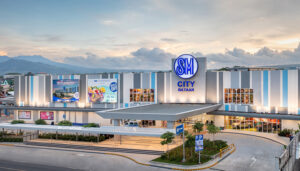
Malls have become community centers where medium, small, and micro enterprises (MSMEs) come to thrive; where residents come to create memories and experience. The recently opened SM City Bataan, SM’s 83rd mall, is a testament to the expansion in the provinces, creating new gateways and avenues for tourism and growth.

SM Development Corp. (SMDC), SM Prime’s residential arm, is also helping address the widening housing gap that stands at close to 6.5 million homes.

SMDC has a growing number of residential projects in key provincial cities with emerging economies and growing populations. These developments are either integrated into SM malls or have their own commercial establishments within their communities and are near transport terminals and major thoroughfares for the convenience of their residents.

Last year, four SM malls also opened in the regions outside Metro Manila: SM City Roxas in Capiz, SM City Tanza in Cavite, SM City Sorsogon in Bicol, and SM City Tuguegarao in Cagayan.

In the same line that two-thirds of the country’s barangays are unbanked, BDO Unibank, Inc. and China Banking Corp., the banking arms of SM, are ready to reach out through their over 2,300 branches.

BDO’s Cash Agad has been making banking accessible to Filipinos, particularly in low-income and rural areas since 2014. BDO continues to expand Cash Agad’s coverage through community partnerships while adding more services such as cash-in and bills payment.

Driven by innovation and the need to serve, SM businesses continue to grow.

For information, visit www.sminvestments.com.


Spotlight is BusinessWorld’s sponsored section that allows advertisers to amplify their brand and connect with BusinessWorld’s audience by enabling them to publish their stories directly on the BusinessWorld website. For more information, send an email to online@bworldonline.com.

Join us on Viber at https://bit.ly/3hv6bLA to get more updates and subscribe to BusinessWorld’s titles and get exclusive content through www.bworld-x.com.

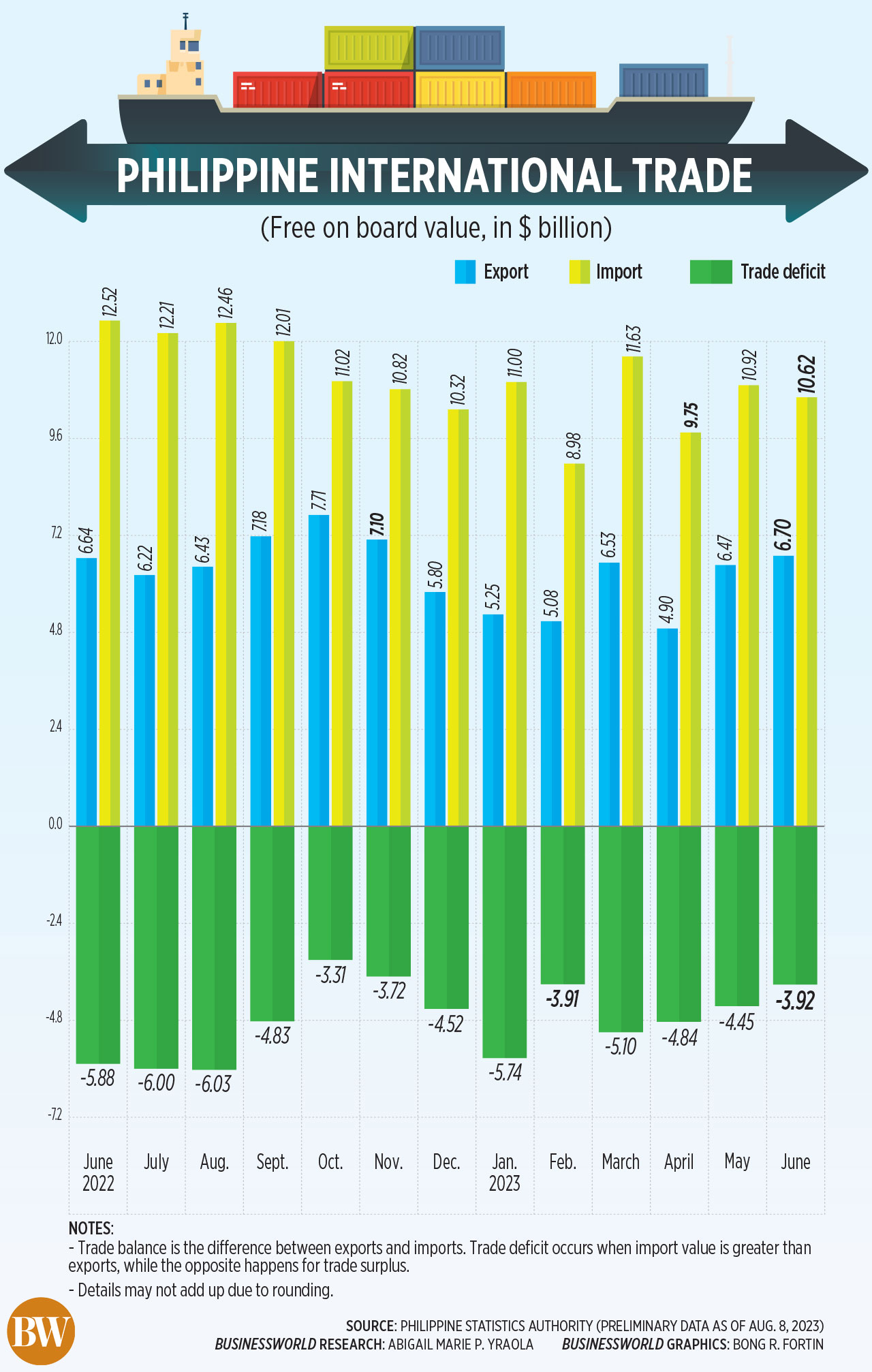
Trade gap narrows to $3.92B in June

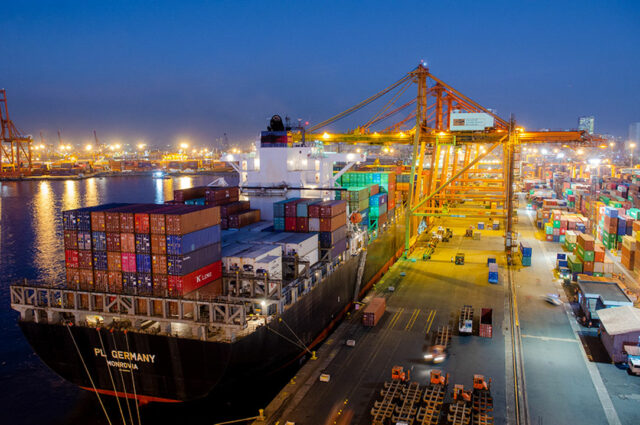
THE Philippines recorded a trade deficit of $3.92 billion for June. — MANILA INTERNATIONAL CONTAINER TERMINAL

By Bernadette Therese M. Gadon, Researcher

THE PHILIPPINE trade-in-goods deficit narrowed for a third consecutive month in June as imports contracted to a near three-year low while exports were flat as global demand for goods weakened.   

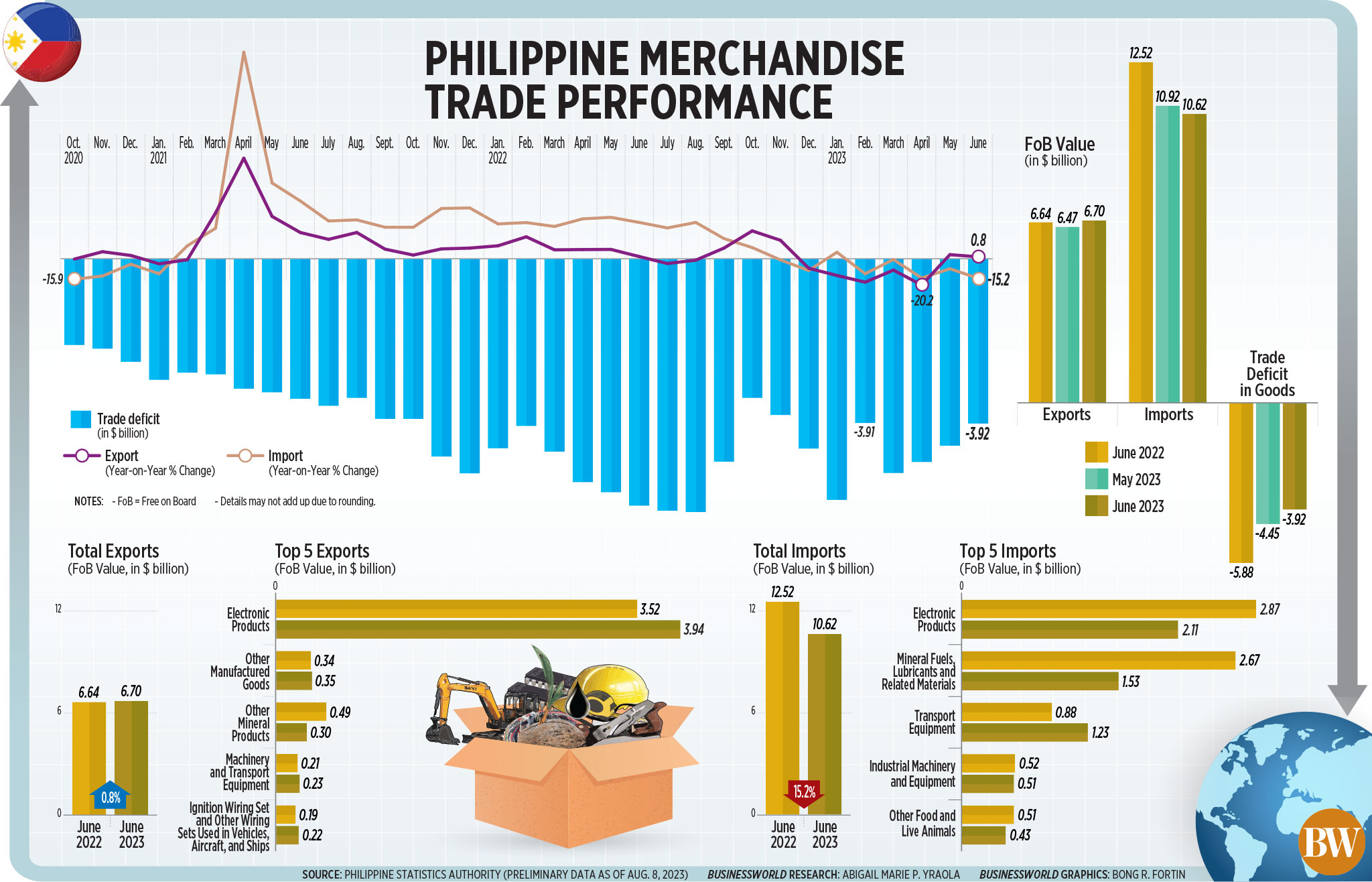
The value of merchandise imports contracted by 15.2% year on year to $10.62 billion in June, worse than the revised 8.1% drop in May, preliminary data from the Philippine Statistics Authority (PSA) showed on Tuesday. This was also a reversal of the 26.4% growth in June 2022.

Imports have been on a decline in the last five months, but June saw the sharpest drop in nearly three years or since the 15.9% drop in October 2020.

By value, the country’s import bill was the lowest in two months or since the $9.75 billion in April.

Meanwhile, merchandise exports inched up by 0.8% annually to $6.7 billion in June, slower than the revised 2.4% growth in the previous month and the 1% in the same month a year ago.

Exports receipts for June were the highest in seven months or since the $7.1 billion in November 2022.

This brought the country’s trade balance — the difference between the amounts of import orders and export sales — to a deficit of $3.92 billion in June, narrowing for the third consecutive month. This was slimmer than the $4.45-billion gap in May and the $5.88-billion deficit in June 2022.

The balance of trade in goods has been in deficit for over eight years. June’s gap was the slimmest in four months or since the $3.91-billion deficit in February.

For the first semester, the trade gap reached $27.96 billion, narrower than the $29.84-billion deficit a year ago.

This as exports declined by an annual 9.3% to $34.94 billion during the six-month period, while imports fell by 8% to $62.90 billion.

At its June meeting, the Development Budget Coordination Committee lowered the export growth assumption for this year to 1% from 3%, and the imports growth assumption to 2% from 4%.

China Banking Corp. (China Bank) Chief Economist Domini S. Velasquez said weaker external demand affects the manufacturing sector although “generally the Philippine economy is less sensitive to a global downturn (compared with other Southeast Asian economies).”

“Although exports posted positive growth for the second month, we think the sustainability of the growth remains fragile,” she said, noting that Taiwan and South Korea continue to see a drop in exports.

Oikonomia Advisory & Research, Inc. President and Chief Economist John Paolo R. Rivera said the slowdown in exports can be attributed to lower production due to supply constraints and recent natural calamities that limited operations.

In June, the United States was the top destination for locally made goods, displacing China. Exports to the US stood at $1.12 billion or 16.7% of the total, followed by China with $999.19 million or 14.9% share and Hong Kong with $957.88 million or 14.3% share.

China remained the main source of imported products, which accounted for 22.4% of the total or $2.38 billion. Indonesia came in second with 9.8% share or $1.04 billion and Japan with 7.9% share or $841.75 million.

“Imports decline continue to be helped by favorable base effects from lower oil prices this year compared with the same period last year. However, we expect these price effects to dissipate from August. Imports of capital goods remain to be a concern as its continued contraction points to slowing productivity in the economy,” Ms. Velasquez said.

Mr. Rivera said the decline in imports can also be attributed to the weaker peso that made imported products more expensive.

By major type of goods, imports of capital goods fell by 1.2% to $3.08 billion in June. Orders of raw materials and intermediate goods slid by 15.3% to $3.92 billion and accounted for 36.9% of the total import bill.

Imports of consumer goods inched up slightly by 0.2% to $2.05 billion.

By commodity group, importation of electronic products — accounting for almost a fifth of total imports — declined by 26.4% to $2.11 billion in June. Orders of semiconductors, which accounted for nearly three-fourths of electronic products and 14.2% of total imports, contracted by 29.6% year on year in June to $1.51 billion.

On the export side, manufactured goods, which made up the bulk of total outbound sales in June, went up by 5.2% to $5.49 billion.

Electronic products, which accounted for almost three-fifths of exports and 71% of manufactured goods, rose by 12% to $3.94 billion.

Semiconductors, which comprised almost half of total exports and 83% of electronic products, climbed by 22.3% to $3.28 billion.

The latest trade data may point to slower gross domestic product (GDP) growth in the second quarter, analysts said.

Historically, merchandise exports account for about 20% of the country’s GDP, while imports make up 30%.

“This can be a contributing factor to GDP growth slowdown, if indeed it slowed down and it was not offset by private and public consumption spending,” Mr. Rivera said.

A BusinessWorld poll late last week yielded a median estimate of 6% growth in the second quarter. If realized, this would be slower than the 6.4% print in the first three months of the year and the 7.5% growth in the second quarter last year.

“Merchandise trade will likely remain soft in the coming months despite a more optimistic global outlook. Globally, the manufacturing sector in many economies continues to contract as consumers prioritize demand for services over goods. A silver lining is a pickup in economic activities in China where Xi’s government is coming up with stimulus packages to boost consumer spending,” Ms. Velasquez said.

PHL dollar reserves inch up to $99.7 billion in July

THE Philippines’ gross international reserves (GIR) inched up by 0.3% to $99.7 billion in July from a year ago. — REUTERS

By Keisha B. Ta-asan, Reporter

THE PHILIPPINES’ dollar reserves edged higher as of end-July, as the value of its gold holdings rose amid an increase in world prices, the central bank said late on Monday.

Preliminary data released by the Bangko Sentral ng Pilipinas (BSP) showed gross international reserves (GIR) inched up by 0.3% to $99.7 billion in July, from the $99.4 billion as of end-June.

Year on year, dollar reserves fell by 0.1%.

This is the highest level of dollar reserves in two months or since the $100.6 billion posted in May.

“The month-on-month increase in the GIR level reflected mainly the upward valuation adjustments in the value of the BSP’s gold holdings due to the increase in the price of gold in the international market,” the central bank said in a statement.

The BSP also attributed the higher dollar reserves to its net foreign exchange operations, income from its investments abroad, and the foreign currency deposits of the National Government.

The end-July reserve level was equivalent to 7.4 months’ worth of imports of goods and payment of services and primary income. 

It was about 5.9 times the short-term external debt of the country based on original maturity and 4.1 times based on residual maturity.

A strong reserve buffer protects financial markets from volatility and assures investors and debt watchers that the country can pay its debt in case of an economic downturn.

“The increase in GIR tagged largely to revaluation of gold, which was offset by lower investments, likely due to the movement of global interest rates for the month,” ING Bank N.V. Manila Senior Economist Nicholas Antonio T. Mapa said in an e-mail.

The gold reserve component rose by 2.8% to $10.3 billion as of end-July, from $10.01 billion as of end-June. It was 17.5% higher than $8.76 billion a year earlier.

Rizal Commercial Banking Corp. Chief Economist Michael L. Ricafort said in a note that gold prices in the world market jumped by 2.4% month on month in July.

Meanwhile, gains from investments abroad, which made up the bulk of the GIR, dipped by 0.2% to $83.5 billion from $83.7 billion a month ago and by 0.02% from $83.52 billion a year prior.

Mr. Ricafort said the drop in foreign investments was due to the decline in the global bond markets for a third straight month in July, after the United States raised its debt ceiling.

The central bank also posted higher foreign currency deposits in July, Mr. Mapa said.

Based on BSP data, foreign currency deposits reached $1.3 billion, jumping by 8.3% from the $1.2 billion as of end-June. However, this fell by 58% from the $3.1-billion level as of end-July 2022.

Net international reserves edged higher by 0.3% to $99.7 billion at the end of July from $99.4 billion in the previous month, the BSP said.

Net international reserves are the difference between the central bank’s reserve assets and reserve liabilities such as short-term foreign debt, and credit and loans from the International Monetary Fund (IMF).

Special drawing rights, or the amount the country can tap from the IMF, was unchanged at $3.76 billion for the second straight month. Year on year, it inched up by 0.8% from $3.73 billion in 2022.

Buffers kept with the IMF rose by 0.9% to $801.8 million from $794.6 million as of end-June and by 6.4% from $753.5 million in the same period in 2022.

“The BSP continues to shore up its reserves which will be helpful if the time comes where the peso will experience unusual volatility, especially given the narrower gap between Philippine and US interest rates,” China Banking Corp. Chief Economist Domini S. Velasquez said in a Viber message.

At its July meeting, the US Federal Reserve raised its own policy target range by 25 basis points (bps) to 5.25-5.5%, the highest in more than two decades. The Fed has hiked 550 bps since March last year.

In June, the BSP extended its policy pause for a second straight meeting and kept the key rate at 6.25%. Since May 2022, the BSP has raised borrowing costs by 425 bps.    

According to Mr. Mapa, the country’s dollar reserves remain more than adequate as they were more than four times short-term obligations based on residual maturity.

“Concerns of GIR depletion can be allayed for now given the steady stream of foreign currency via remittances, which have shown resilience even in a time of global lockdowns,” he said.

He was referring to concerns over the BSP’s use of dollar reserves to mitigate the volatility in the foreign exchange market after the US Federal Reserve tightened policy rates in July.

“Moving forward, if the peso depreciates rapidly and excessively, higher reserves will give the BSP sufficient ammunition to defend the peso,” Ms. Velasquez said.

“Our current forecast is that the (foreign exchange) will remain relatively stable and that the peso will be stronger compared with the P59 levels we saw last year,” she said.

The peso hit its lowest level of P59 against the dollar in October last year, amid the aggressive tightening by the US Federal Reserve.

“A country’s GIR represents the first line of defense for the currency, but it is by no means the last as the BSP has several standing facilities available to tap in case dollar liquidity does indeed become stretched,” Mr. Mapa said.

He said that none of these facilities have been used by the central bank, reflecting the resiliency of the country’s external position.

“With regard to inflows, we think the BSP will continue to have steady sources of foreign reserves due to robust growth of BPOs (business process outsourcing), remittances, and tourism,” Ms. Velasquez added.

The BSP projects the country’s dollar reserves to hit $100 billion this year.

Factory output eases to 1-year low in June

Workers are seen at an electronics manufacturing assembly plant in Biñan, Laguna, April 20, 2016 — REUTERS

MANUFACTURING OUPUT eased in June to its slowest in a year, mainly due to the contraction in the manufacturing of food products and beverages, the Philippine Statistics Authority (PSA) reported on Tuesday.

Preliminary results of the PSA’s latest Monthly Integrated Survey of Selected Industries showed factory output, as measured by the volume of production index, rose by 3.4% year on year in June.

However, this was slower than the revised 7.7% in May, and matched the pace in March. It was also the slowest growth in 12 months or since the 0.04% decline in June last year.

On a monthly basis, June’s output contracted by 3.5%. Stripping out seasonality factors, manufacturing for that month slipped by 2.1%, a reversal of the 2.4% growth in May.

Year to date, factory output growth averaged 5.9%, decelerating from the 28.1% growth in the same six-month period in 2022.

According to the PSA, the manufacturing slowdown in June was mainly due to the sharp annual declines in the top three industry divisions: food products (-3.2% from 6.9% in May), fabricated mineral products, except machinery and equipment (-36.4% from 2.9%), and beverages (-7.7% from 4.8%).

Ten other divisions posted slower growth, while the remaining nine saw expansion.

This slowdown was reflected in the S&P Global Philippines Manufacturing Purchasing Managers’ Index, which eased to 50.9 reading in June — the slowest expansion in 11 months. A reading above 50 separates expansion from contraction.

Nicholas Antonio T. Mapa, senior economist at ING Bank N.V. Manila, said he expects manufacturing to continue expanding for the rest of the year.

“Potential headwinds to the agricultural sector (storm damage and El Niño) could have a negative impact on manufacturing, however,” he said in an e-mail.

Philippine Exporters Confederation, Inc. President Sergio R. Ortiz-Luis, Jr. said in a Viber interview that the manufacturing sector’s performance could have affected second-quarter gross domestic product (GDP) growth.

Manufacturing historically accounts for about 20% of the country’s GDP.

“The positive but less pronounced pickup in manufacturing moves in line with our expectation for a slowdown in the second quarter from the 6.4% pace of growth in the first quarter,” Mr. Mapa said.

A BusinessWorld poll yielded a median estimate of 6% GDP growth for the second quarter. If realized, this would be easing from the 6.4% print in the first three months of the year and the 7.5% growth a year ago.

The PSA will release the second-quarter GDP data on Thursday (Aug. 10). — Lourdes O. Pilar

Extension of estate tax amnesty lapses into law

Republic Act No. 11956 extends the availment period for the estate tax amnesty for another two years or from June 15, 2023 to June 14, 2025. — PHILIPPINE STAR/MIGUEL DE GUZMAN

THE BILL expanding the coverage of the estate tax amnesty and extending the period of availment by another two years has lapsed into law.

Republic Act (RA) No. 11956 extends the availment period for the estate tax amnesty for another two years (June 15, 2023 to June 14, 2025).

The new law also expands the amnesty’s coverage to include the estates of those who died on or before May 31, 2022.

The previous law provided for a two-year amnesty that expired on June 14, 2023, and covered the estates of people who died on or before Dec. 31, 2017.

A copy of the Estate Tax Amnesty Extension Act showed it was not signed by President Ferdinand R. Marcos, Jr., and that it had lapsed into law on Aug. 5. An approved bill becomes a law if the President does not act on it 30 days after it is submitted to Malacañang.

House Ways and Means Committee Chairman and Albay Rep. Jose Ma. Clemente “Joey” S. Salceda said the estate tax amnesty extension would benefit as many as one million Filipino families with unsettled estates.

“It will benefit some 920,000 Filipino families who have unsettled estates, many of whom include the 610,054 agrarian reform beneficiaries recently released from debt by President Marcos’ New Agrarian Emancipation Act,” he said in a statement.

The new law also allows payment of the estate tax in installments within two years from the statutory day for the payment without civil penalty or interest.

“It has many improvements compared to the previous Estate Tax Amnesty, especially as it makes the administrative requirements for filing much easier to comply with,” Mr. Salceda said.

The law allows taxpayers to pay the amnesty tax either manually or electronically through any authorized agent bank, revenue district office or an authorized tax software provider.

It also limited the number of documents required for filing the application for tax amnesty.

The law also clarified that the proof of settlement is only required for the issuance of Electronic Certificate Authorizing Registration for transfer of properties, not for the filing and payment of estate tax.

Under the law, the implementing rules and regulations should be released within 30 days, not 60 days as previously required.

The estate tax amnesty initially ran from June 15, 2019 to June 14, 2021 under RA 11213. It was extended for two years from June 15, 2021 to June 14, 2023. — Beatriz Marie D. Cruz