Home Blog Page 4478

Style (08/14/23)


Gucci opens a new boutique in Greenbelt 4

GUCCI has expanded its presence in the Philippines with the opening of a new boutique in Makati City. Situated in Greenbelt 4 along Makati Ave., the space spans over 7,475 square feet and carries a wide selection of ready-to-wear, handbags, travel bags, shoes, belts, silks, eyewear, small leather goods, jewelry and watches. The store’s façade is done all in marble and distinguished by a multi-hued geometrical motif whose veining elegantly frames the House’s logo. A LED screen video wall, presenting Gucci’s latest campaigns. The interiors are equally refined, as the marble flooring echoes the façade, drawing inspiration from designs found across antique historic buildings. Hand-painted wood flooring features decorative motifs that reference details from the House’s collections while soft rich fabrics in lighter tones adorn the walls, complementing the ivory boiserie, which acts as a backdrop to the items on display. The store is framed with built-in displays reminiscent of walk-in closets while newly designed racks inspired by classic brass designs accommodate diverse product categories. Velvet armchairs and sofas, and shaggy wool monochrome rugs are placed throughout to create intimate corners.


Avon offers new matte lipsticks

AVON recently launched its new Hydramatic Lipstick in the Philippines. It is the world’s first matte lipstick with a patented hydrating core. The Avon Hydramatic Lipstick features a central core featuring an exclusive blend of hydrating and skin-protecting ingredients. Avon’s scientists formulated the core with hyaluronic acid that helps draw moisture to the lips, and glycerin to help make them super soft and plump. The hydrating hyaluronic core is surrounded by high-pigment matte color that stays completely matte. It is available in six high-impact shades to suit any skin tone — Hydra Garnet, Hydra Plum, Hydra Pink, Hydra Rosy, Hydra Ruby, and Hydra Siren Red. The new Hydramatic Lipstick and other Avon products are available through local Avon representative or by shopping online at www.avonshop.ph/collections/hydramatic, Lazada, and Shopee.


Mitsukoshi carries under-the-radar Japanese beauty products

SKINCARE and make-up lovers will be interested to know that some of their favorite Japanese brands — even under-the-radar ones found only in Japan—are now available in the country at Mitsukoshi Beauty in BGC. The Japanese department store’s beauty and wellness zone carries a wide selection of natural Japanese skin care, hair care, and makeup brands, both familiar and new in the country. Mitsukoshi BGC is located along 8th Ave. in North Bonifacio Global City and at the podium of The Seasons Residences. Debuting in the country and available only in Mitsukoshi Beauty are the sophisticated and high-quality Japanese brands Waphyto, E Standard, and La Casta. Waphyto uses phytotherapy techniques, biotechnology, and herbology for a line of skin, hair, body, and intimate care products for men and women of all ages. The plants and herbs in Waphyto products are sourced from Mikawa, Japan, where the soil is vitamin-rich. Based on the concept that “hair care is also skincare,” E Standard offers a comprehensive range of hair and scalp care solutions. It has a five-step routine consisting of shampoo, hair serum, two hair treatments, and hair oil. E Standard’s organic products are made from nine plant extracts and three essential oils. And while most hair care brands use purified water, E Standard uses Hita Tenryosui natural mineral water to help nourish and revitalize hair. La Casta is a hair care brand used by many professional stylists in hair salons across Japan. The components of this brand are only natural aromas and botanical ingredients. This award-winning hair care brand (2015 and 2016 Vogue Natural Wonder Prize and 2020 and 2022 WWD Beauty “Best Cosme”) has shampoo and conditioner ranges to treat several hair and scalp concerns, like thinning, tangled, frizzy, dry, oily, and colored hair. They also have solutions like specialized brushes, scalp treatments, masks, and hair lotions. La Casta provides consultation services from their expert Beauty Advisors.


Merrell opens new concept store in Gateway Mall

THE OUTDOOR brand Merrell has opened a new concept store at the ground floor of Gateway Mall in Quezon City. The new store features the brand’s signature footwear, including their Moab line which has sold 28 million pairs worldwide and their fan-favorite clog the Hydro Moc. The new store carries a wide array of footwear, apparel, and accessories for outdoor activities. Available are a wide selection of performance hikers like Merrell’s signature Moabs and streetwear-ready shoes like the Hydro Moc, Hydro Runner, and the newly released Hut Ultra sandals collection. There are also innovative trail runners, after-sport shoes, and sandals. Merrell is located at the Ground Floor of Gateway Mall 1 by the entrance near Taco Bell. For more styles, check out Merrell’s official webstore www.merrell.com.ph.


Adidas Sportswear drops new Z.N.E. Collection

THE LATEST release from Adidas’ new Sportswear label is the Z.N.E. collection. It is a collection of comfortable and relaxed fits built with innovative materials including Aeroready technology and four-way stretch fabric for maximum comfort. The collection of hoodies, trackpants, tees and shorts, offers a minimalist and distraction-free design. The collection includes the Women’s World Cup Expression which celebrates the qualified adidas federation teams. This is made up of the Z.N.E. Premium Full Zip and Z.N.E. Premium Pants coordinates. With an all-white color palette and simple detailing, the fit showcases the national team’s crest on the upper chest and mid-leg all whilst ensuring comfort remains central for both athletes and fans. Then there are the Z.N.E. Premium Full Zip paired with Z.N.E. Premium Pants or Z.N.E. Leggings. Boasting a casual yet coordinated look, the men’s Full Zip hoodie offers an all-round relaxed fit with added shape through its ribbed hem, cuff construction and high rounded neckline. Maintaining similar design cues, the women’s version adopts a batwing aesthetic with added form through its shoulder structure helping to offset its boxy silhouette. Whilst the men’s look matches it with close to the body full-length pants with a tapered cuffed ankle finish, the women’s look pairs it with soft-to-the-touch leggings, complete with split hem detailing, reduced seaming and a smooth finish. Other items are the Premium Overhead Hoodie and Shorts for men (in pink fusion colorway) and women (in white); women’s Z.N.E. Tee and Z.N.E. Shorts; and Men’s Z.N.E. Premium Polo and Z.N.E. Premium Shorts. The Adidas Sportswear’s Z.N.E. collection is now available in-store and through https://www.adidas.com.ph/.


Puma’s All-Pro Nitro now available in the Philippines

GLOBAL sports brand Puma has released the latest addition to its cutting-edge basketball silhouette lineup, the All-Pro Nitro. A direct descendant of the original Clyde All-Pro Nitro released in 2021, this next generation of Puma Hoops shoes is the first to use the Nitro SQD foam. This innovative technology combines a soft inner layer of Nitro foam for superior cushioning with a firm outer layer of Nitro foam to provide support during multi-directional movements. The silhouette also includes a specially engineered knit upper made with multi-zoned materials for targeted support, a supportive but breathable fit as well as cord lock-down lacing system in the forefoot for lateral stability which extends down through the shoe. The All-Pro Nitro was first seen in action during Kai Sotto’s recent stint at the 2023 NBA Las Vegas Summer League with Orlando Magic. Mr. Sotto, one of the Puma global brand ambassadors, wore the new shoes during their game against the Portland Trail Blazers on July 13 and is expected to wear the All-Pro Nitro during the games of Gilas Pilipinas at the upcoming FIBA Basketball World Cup, should he be selected to be part of the national team’s final and official roster. The All-Pro Nitro is available in a Lime Squeeze colorway and retails for P7,900 in Puma official retail stores, select sporting goods retailers, and online at puma.com.


Hello Glow offers buy 1 get 1 promo

HELLO GLOW joins #LoveLokal celebration with “Buy one, get one free” promo on all of its items this August. Hello Glow, one of the multi-awarded local skin care brands in the country, offers a complete line up of affordable skin care products developed with world-class product efficacy. All their products have been formulated to suit all skin types, are vegan, cruelty-free, paraben-free, and SLS free. With August celebrating Pinoy pride and #LoveLokal, Hello Glow is joining in with its “Buy one, get one free” promo on all of its items for the whole month. The promo applies to products that have the same price or less and is available in all Watsons (same price or lower) and SM Beauty Department Stores (same price only) nationwide and online (Shopee, Lazada, Tiktok Shop). The promo is automatic with the second item reflecting as free upon check out. For the best value for money, Hello Glow suggests these pairings: Skincare Sets (P360 each) and Sunscreens (P320 for 50g); Sun Care Gel 25g (P199), and Lip Balm (P135); and Sunflower Oil (P250) with Sunflower Lotion (P250). For more information about Hello Glow, visit https://www.everbilena.com.ph/hello-glow/.


How PSEi member stocks performed — August 11, 2023

Here’s a quick glance at how PSEi stocks fared on Friday, August 11, 2023.


Stocks may move sideways before BSP meeting

BW FILE PHOTO

PHILIPPINE STOCKS are expected to move sideways this week due to bargain hunting and as investors await the Bangko Sentral ng Pilipinas’ (BSP) policy meeting on Thursday.

The Philippine Stock Exchange index (PSEi) went down by 43.75 points or 0.67% to close at 6,405.91 on Friday, while the broader all shares index inched up by 15.19 points or 0.44% to 3,430.19.

Week on week, the PSEi declined by 44.93 points or 0.7% from its close of 6,450.84 on Aug. 4.

“Selling persisted this week, after disappointing Philippine GDP (gross domestic product) growth in the second quarter,” online brokerage 2TradeAsia.com said in a report.

The Philippine economy grew at its slowest pace in the second quarter, dampened by elevated inflation, lingering impact of rising borrowing costs, and a decline in government spending.

In the April to June period, GDP expanded to 4.3% year on year, decelerating from the 6.4% expansion in the first quarter, and the 7.5% print a year earlier, the Philippine Statistics Authority reported last week.

The latest figure was lower than the median estimate of 6% of 21 economists conducted in a BusinessWorld poll.

For the first semester, GDP growth averaged 5.3%, below the government’s 6-7% target.

For this week, the market may see bargain hunting as they await the BSP’s policy review, analysts said.

“With the local market already declining for three straight weeks, we may see bargain hunting in its trading [this] week. However, with the tempered confidence towards the economy following the recent GDP data release, a strong rally would be challenging,” Philstocks Financial, Inc. Senior Research Analyst Japhet Louis O. Tantiangco said in a Viber message.

“[This] week, investors are also expected to look forward to the Bangko Sentral ng Pilipinas’ policy meeting to see how their reaction and policy outlook would be following the slowdown in our GDP growth in the second quarter. Hints of dovish policies from the BSP may give sentiment a boost,” Mr. Tantiangco added.

A BusinessWorld poll last week showed 12 of 14 analysts see the Monetary Board keeping benchmark rates steady at 6.25% during its fifth policy meeting for the year on Thursday.

2TradeAsia.com added that the Chinese ghost festival may lead to lower trading volume in the coming weeks.

The ghost month is a period in the Lunar calendar when some Asian investors refrain from making big investments or decisions, resulting in lower trading volumes. For this year, it is from Aug. 16 to Sept. 14.

2TradeAsia.com placed the PSEi’s immediate support at 6,350 and resistance at 6,600 to 6,700, while Mr. Tantiangco put support and resistance at 6,400 to 6,600, respectively. — A.H. Halili

Peso may continue to weaken ahead of BSP policy meeting

BW FILE PHOTO

THE PESO may continue weakening against the dollar this week ahead of the Bangko Sentral ng Pilipinas’ (BSP) rate-setting meeting on Thursday.

The local unit closed at a near nine-month low of P56.315 versus the dollar on Friday, weakening by 9.5 centavos from Thursday’s P56.22 finish, data from the Bankers Association of the Philippines’ website showed.

This was the peso’s worst close since its P56.56-per-dollar finish on Nov. 29, 2022.

Week on week, the peso dropped by 57.5 centavos from its P55.74 close on Aug. 4.

The local unit opened Friday’s session at P56.23 per dollar. Its intraday best was at P56.10, while its weakest showing was at P56.34 against the greenback.

Dollars traded rose to $1.43 billion on Friday from the $1.24 billion recorded on Thursday.

The peso declined further against the dollar on Friday as the market continued to reel from the weak second-quarter gross domestic product (GDP) report, Rizal Commercial Banking Corp. Chief Economist Michael L. Ricafort said in a Viber message.

The Philippine economy expanded by 4.3% in the second quarter, the slowest in two years, Philippine Statistics Authority data released on Thursday showed.

The second-quarter print was slower than the revised 6.4% growth in the first quarter and 7.5% in the same period a year earlier. It was also well below the 6% median forecast in a BusinessWorld poll of 21 economists conducted earlier this month.

For the first half, GDP growth averaged 5.3%, lower than the government’s 6-7% target.

The peso was also dragged down by hawkish Fed signals despite cooling inflation, Mr. Ricafort added.

San Francisco Federal Reserve Bank President Mary Daly on Thursday said that while recent inflation data is moving in the right direction, more progress is needed before she would feel comfortable the Fed has done enough, Reuters reported.

While goods inflation is receding, and newly signed lease trends signal inflation from housing will also cool, core services inflation excluding housing has so far made little progress, Ms. Daly said.

The Fed raised borrowing costs by 25 basis points (bps) in its July 25-26 meeting, bringing its benchmark overnight rate to a range between 5.25% and 5.5%.

The US central bank has hiked rates by a cumulative 525 bps since it began its tightening cycle in March last year.

The Fed will hold its next policy meeting on Sept. 19-20.

US consumer prices increased moderately in July as higher rents were mostly offset by declining costs of goods such as motor vehicles and furniture, a trend that could persuade the Fed to leave interest rates unchanged next month.

The consumer price index (CPI) rose by 0.2% last month, matching the gain in June.

The CPI advanced 3.2% in the 12 months through July. That followed a 3% rise in June, which was the smallest year-on-year gain since March 2021.

The increase in the annual CPI rate picked up for the first time in 13 months as it was calculated from a lower base after prices subsided last July following a jump that had boosted inflation to a pace not seen in more than 40 years.

Annual consumer prices have come down from a peak of 9.1% in June 2022. The CPI increased at a 1.9% annualized rate over the last three months, the slowest pace since June 2020, from 2.7% in June. The Fed has a 2% inflation target.

For this week, Mr. Ricafort said the peso could stay at the P56-per-dollar level as the market awaits the BSP’s policy meeting on Thursday.

A BusinessWorld poll last week showed 13 of 15 analysts see the Monetary Board keeping benchmark rates steady at 6.25% during its fifth policy meeting for the year on Aug. 17.

Meanwhile, two economists expect the BSP to hike borrowing costs by 25 bps to mirror the Fed’s move last month. If realized, this would bring the key rate to 6.5%.

The market will also await the release of the minutes of the Fed’s latest rate-setting meeting this week, Mr. Ricafort said.

He expects the peso to range from P56 to P56.50 per dollar this week. — A.M.C. Sy with Reuters

QR-based system replacing bar codes to be trialed in Q1

REUTERS

A SYSTEM based on quick response (QR) codes which is set to replace line-based bar codes will undergo trials in the first quarter, the Philippine Retailers Association (PRA) said.

“By next year, we will trial the migration from the one-dimensional (1D) to two-dimensional (2D) bar code. The trial will be in the first quarter next year,” PRA President Roberto S. Claudio, Sr. told reporters on the sidelines of the 29th National Retail Conference & Expo in Pasay City last week.

“This is a big transition since this will make product distribution more efficient,” he added. 

Mr. Claudio said the retail industry will lead the transition to the GS1 bar code system from the 1D black and white vertical lines to the QR code matrix 2D bar codes, which will be implemented worldwide by 2025.  

“The new bar code will allow for better traceability and will be more consumer friendly. Consumers can now appreciate what products they are buying,” Mr. Claudio said.

Mr. Claudio said that both 1D and 2D barcodes will be used in products for the first two years of implementation to allow a transition period for retailers and manufacturers.

He added that retailers will need new scanners to read the new bar codes.

“The new scanners can read both 1D and 2D barcodes so that whatever is there, it will be read,” Mr. Claudio said.

“From what I’ve heard, half of the supermarkets are now using scanners that can read both bar codes…,” he added.

Among the other benefits of the QR-based system, Mr. Claudio said that consumers will have more information available about the products they will purchase. 

“The new bar code will display calorie count, nutritional value, etc. In essence, the QR code gives more information compared to the black and white straight-line bar code,” Mr. Claudio said.

“The QR bar codes will also have links that will lead you to the website of the manufacturer, as well as links to recipes,” he added.

Mr. Claudio said one of the challenges in implementing the new bar code system is the added cost to be borne by micro, small, and medium enterprises (MSMEs).  

“The challenge is the MSMEs. It will be an added cost, but it will only be a small amount. The cottage industries like those making jams, bagoong, and pastillas in the provinces don’t have barcodes,” Mr. Claudio said. — Revin Mikhael D. Ochave

ACEN bats for solar hybrid systems in next green energy auction

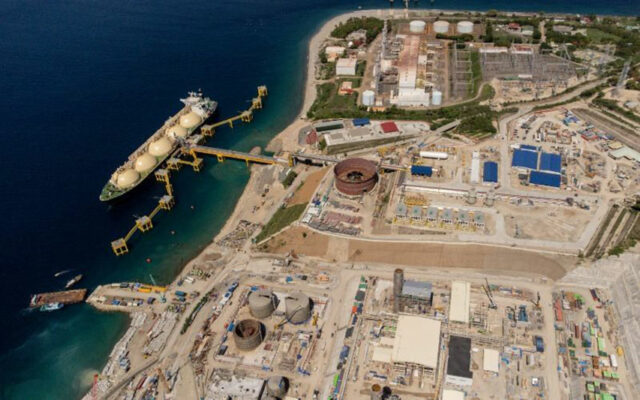
AYALA group unit ACEN Corp. said the next green energy auction should include solar hybrid systems, which incorporates a storage component to allow electricity to be transmitted at all hours.

“We are hoping that in the next green energy auction (will entertain) the notion of… a solar storage hybrid,” Eric T. Francia, president and chief executive officer of ACEN, said in a chat with reporters last week.

“Solar-storage hybrids… will help address grid constraints, as well as encourage distribution utilities to procure GEAP capacity because it enhances the reliability of GEAP as a source of supply,” he said.

He said pairing solar power with storage addresses the intermittency problem of renewable energy and issues caused by injecting large renewable capacities onto the grid. 

“While we are a very strong proponent of renewable energy, let us be careful in injecting renewable energy. If you inject more renewable energy… that puts a strain on the grid. Because you have large capacitiy output but it is intermittent,” Mr. Francia said.

“If you have solar at 16% capacity factor output, if you have wind at around 30%, you are only typically using that much of the grid. You are effectively or potentially crowding out other capacities from going to the grid,” he added.

The second round of the green energy auction resulted in firm project commitments of about 3,440 megawatts (MW) of renewable energy capacity out of the 11,600 MW of capacity on offer.

Theresa C. Capellan, president of SunAsia Energy, Inc. and chairperson of Philippine Solar and Storage Energy Alliance, said in a statement on Sunday that the next green energy auction should also include advanced technologies like floating solar panels.

“Supplying power to Metro Manila and Laguna requires gigawatts of power which needs thousands of hectares not readily available to developers. Using the (Laguna de Bay) surface for solar energy provides a clear pathway in realizing the energy security and decarbonization goals of the country,” Ms. Capellan said.

However, Ms. Capellan said rates for floating solar should be evaluated, noting that it is a different kind of technology from the ground-mounted solar. 

“The tariff on floating solar is a good start as it differentiates the economics (compared with) land-based solar. But… the green energy auction reserve (GEAR) price for floating solar has not yet captured the true cost of this emerging technology,” she added.

Last week, ACEN and SunAsia Energy separately signed renewable energy contract area utilization agreements with Laguna Lake Development Authority for their floating solar projects in Laguna de Bay. — Ashley Erika O. Jose

Government urged to take lead in job creation effort

PHILSTAR

THE GOVERNMENT needs to create more public-sector jobs after unemployment worsened to a three-month high in June, a labor group said.

“The economy’s sluggish capacity to generate jobs is a fitting reminder to the government that job generation is too important to leave in the hands of the private sector,” Sentro ng mga Nagkakaisa at Progresibong Manggagawa Secretary-General Josua T. Mata said in a Viber message.

The jobless rate rose to 4.3% in June, the Philippine Statistics Authority reported on Aug. 9. Job quality worsened as the underemployment rate, which measures those employed who are seeking more work or longer hours, increased to 12% from 11.7% a month earlier. This was lower than the 12.6% posted in June 2022.

Mr. Mata said the government’s jobs package needs to include income guarantees, paid training programs and the promotion of green or climate-related jobs to help lower carbon emissions.

Last week, Labor Secretary Bienvenido E. Laguesma presented his department’s labor and employment plan to the Cabinet. The labor roadmap called for enhanced coordination with other agencies to promote sustainable jobs and social protections for the workforce.

He said the government is seeking more partnerships with the private sector to create more jobs in infrastructure.

Public Works Secretary Manuel M. Bonoan told a Palace briefing on Aug. 8 that the government will need more than three million workers to staff major infrastructure projects.

He said the Department of Public Works and Highways has 70,000 ongoing major and minor infrastructure projects this year, which are valued at about P890 billion.

“(Upskilling) is an important step toward employment gains because you cannot separate the linkage of training and employment,” Mr. Laguesma told a news briefing last month.

In his second address to Congress last month, President Ferdinand R. Marcos, Jr. urged his Cabinet to continue working towards making the workforce more employable.

“The need for government to directly provide jobs through a massive public employment program that the labor movement has been calling for,” Mr. Mata said.

In a statement on Sunday, the Federation of Free Workers (FFW) also cited the need for workers to form more trade unions and exercise their right to bargain with their employers as the job situation deteriorates.

“In a time where job concerns escalate and wealth accumulates at the pinnacle, freedom of association becomes crucial,” said Arlene D. Golloso, board member of the FFW and president of the Ateneo de Davao Academic and Teaching Union.

 “Every Filipino worker deserves an environment that acknowledges and upholds their rights, granting them a just share of the fruits of their labor.” — John Victor D. Ordoñez

GOCC subsidies nearly double in June to over P26B; PhilHealth gets P15B

PHILSTAR FILE PHOTO

SUBSIDIES provided to government-owned and -controlled corporations (GOCCs) rose 94.64% year on year in June, the Bureau of the Treasury (BTr) said.

Budgetary support to GOCCs rose to P26.055 billion in June from P13.386 billion a year earlier, the BTr said. Month on month, subsidies jumped 253.24%.

The government provides subsidies to GOCCs to help cover operational expenses not covered by their revenue.

The Philippine Health Insurance Corp. (PhilHealth) was the top recipient in June, obtaining P15.016 billion or 57.63% of all subsidies during the month.

This was followed by the National Irrigation Administration (NIA), which received P3.524 billion.

The Bases Conversion and Development Authority received P2.91 billion, while the Philippine Crop Insurance Corp. got P1.8 billion.

Other top recipients were the Philippine Fisheries Development Authority (P853 million), National Food Authority (P471 million), and Philippine Children’s Medical Center (P221 million).

GOCCS that received at least P100 million were the Philippine Heart Center (P178 million), Philippine Rice Research Institute (P149 million), Philippine Coconut Authority (P133 million), National Kidney and Transplant Institute (P125 million), and National Dairy Authority (P100 million).

GOCCs that were given at least P50 million were the Social Security System (P93 million), Philippine National Railways (P73 million), Lung Center of the Philippines (P70 million), and Development Academy of the Philippines (P70 million).

The National Home Mortgage Finance Corp., National Housing Authority, Cagayan Economic Zone Authority, Philippine Postal Corp., Power Sector Assets and Liabilities Management Corp., Small Business Corp., and Social Housing Finance Corp. received no subsidies during the month.

In the first six months, subsidies amounted to P63.701 billion, up 20.77% from a year earlier.

The NIA received the most subsidies during this period at P21.81 billion, accounting for 34.24% of all subsidies.

In 2022, GOCC subsidies increased 8.5% to P200.41 billion. — Aaron Michael C. Sy

Fisherfolk call for EO to firm up reclamation freeze order

PHILSTAR FILE PHOTO/BASILIO SEPE-CEED

PAMBANSANG LAKAS ng Kilusang Mamamalakaya ng Pilipinas (Pamalakaya), an organization of small fisherfolk, urged the government to issue an executive order (EO) to add teeth to its suspension of reclamation projects on Manila Bay.

The organization wants the government “to release an executive order or immediate declaration of Manila Bay as reclamation-free zone,” Pamalakaya National Chairman Fernando L. Hicap said via telephone.

Last week, Environment Secretary Maria Antonia Yulo-Loyzaga said that President Ferdinand R. Marcos, Jr. has ordered the suspension of 22 reclamation projects in Manila Bay, pending a review of their environmental compliance and social impact.

“All are under review. We have to take our time really beginning with those that are ongoing because they are in fact impacting the areas and then we will graduate to those that are in fact still not yet begun,” she said at a Palace briefing.

Mr. Hicap said the organization is not satisfied with the pronouncement and that the President should issue an EO as a way to block all ongoing Manila Bay reclamation projects.

He also asked to certify as urgent House Bill No. 2026 filed by the Makabayan bloc last year. The measure would declare Manila Bay a reclamation-free zone.

In its explanatory note, the bill cited the need to comply with a Supreme Court ruling ordering that the bay be cleaned up, rehabilitated, and preserved, to make it suitable for swimming and other forms of recreation.

“In our estimate, fishers incur losses of about 80% of their income and because there is nothing to catch in Manila Bay; some need to go out to Bataan, Zambales, and Mindoro,” Mr. Hicap said.

Meanwhile, Quezon City Rep. Marvin D. Rillo, vice-chair of the committee on Metro Manila development, said the Department of Environment and Natural Resources (DENR) is getting another P1.4 billion in new appropriations.

In a statement on Sunday, he said that the additional funding will aid in the clean-up and rehabilitation of Manila Bay.

“The DENR’s Operational Plan for the Manila Bay Coastal Management Strategy will be receiving another P1.4 billion in 2024. The sum is in addition to the P1.5 billion earmarked (for the operational plan) in this year’s national budget,” he said.

“We are all for the complete environmental restoration of Manila Bay for the enjoyment of future generations,” he added.

Mr. Rillo said the budget for the rehabilitation also covers the relocation of about 233,000 informal settler families that reside along the 190-kilometer coastline. — Sheldeen Joy Talavera

Transforming with AI

The science for artificial intelligence (AI) has been around for almost a century. Although the concept of AI can be traced back to ancient stories from Greece and China, AI practitioners have only actively achieved significant progress within this century. The approach to applying AI has been continuously refined, from using symbolic or classical AI that is based on embedding knowledge and creating rules, to progressing statistical AI which involves pattern recognition, probabilities, and learning. Nonetheless, the challenges encountered in applying AI have forced renewed thinking among practitioners.

With computing power increasing exponentially over the years, the discipline of AI now has an explosive opportunity to grow whatever the approach may be, but largely towards practical use cases. In addition, the growth of AI would not be centered solely around creating robots that think and behave like human beings, as is often portrayed in movies and books. Instead, it will revolve more around how it can fulfill specific objectives as agents in various forms to help humans achieve their work. This is where the current boom is coming from, but this unfortunately also raises concerns related to how AI may replace some jobs. On the other hand, there also are many who are actively pushing and exploring the possibilities for AI to make work more efficient for people.

In the recent EY Tech Horizon report, where about 1,600 companies across the globe of varying sizes were surveyed quantitatively and qualitatively, respondents reported that AI and machine learning will be a significant part of their top technology investments within the next two years. AI can be considered a foundational technology, along with data and analytics, the cloud, and the Internet of Things. By combining these four as part of their technology strategy, organizations gain a good foundation to execute a tech-enabled transformation. As AI continues to gain more traction in development and adoption, however, its prominence as an expected technology stack will likely increase.

CHALLENGES IN AI ADOPTION
The recent Forrester’s Global AI Software Forecast predicted that off-the-shelf and custom AI software spend will double from $33 billion in 2021 to $64 billion in 2025. Moreover, AI software is projected to have an annual growth rate of 18%, which is 50% faster than the overall software market. However, based on one IDC survey, only 22% of organizations in 2022 reported that AI was implemented on a large scale in their enterprises.

For all the reports around how AI will be a priority for investment and implementation in organizations, we have yet to see it leveraged at scale to transform businesses. This poses the question — why is AI, which is clearly a top-of-mind technology around the world, seemingly unable to make a strong breakthrough?

A key challenge for widely adopting AI across an enterprise is the typical bottom-up approach taken by organizations. It often starts with technical teams building portfolios of projects on piloting AI on specific processes only, which is disconnected from the wider business. This creates siloed solutioning and tends to put the burden on technical teams to foster the business cases for AI to incrementally secure more funding. This also means that solutions may not look holistically at how the business works and can lead to an incoherent approach to delivering value across functions. This incoherence can lead to leadership and teams being disillusioned with what AI promises to deliver.

Maximizing the potential of AI requires a refreshed approach. Businesses should include this as a strategy from the top to help differentiate themselves from competitors while simultaneously becoming more resilient to disruptors in their industry. Chief Executive Officers (CEOs) should drive the change in culture towards AI and align with their Chief Information Officers (CIOs) towards championing the importance of technology in meeting organizational goals.

This means that there should not be a separate technology strategy, but one embedded into the business strategy itself. This approach can help answer questions such as whether AI allows the organization to enter a new market or re-imagine its business model. This will ensure that investments in technology will align and help meet the vision of the organization.

LEVERAGING AI
As early as the 1970s, one of the first recognized knowledge systems (classical AI approach) was MYCIN. This system was intended as a doctor’s assistant refined over a period of five years and was designed to give input and explanations about blood diseases based on blood tests.

The use of AI has since been developing across various industries and businesses should be more aware of how it can be deliberately leveraged while being driven by an organization’s leadership. The most common use is enabling it as a recommendation engine for online retail or search, which by now should start being a standard for most online stores.

Fast forward to now: machine learning (statistical AI) can help identify diseases in medical surgery, from CT scans used to detect lung cancer to eye photographs to check for diabetes. Another example is in smart farming, where crop scanners and drones collect images and analyze them to determine if more water, pesticide, or fertilizer is needed. In short, regardless of the industry, AI can drive innovation to help humans.

AI can clearly help enable CEOs innovate, but with it comes the responsibility of proper implementation. There are issues such as data privacy, embedded biases, and accountability in deploying this technology. While the strategy is defined from the top, along with it comes the necessary governance to help safeguard the organization from its risks. In 2023, seven leading AI companies in the US have agreed to voluntarily implement safeguards on AI development. They have committed to establishing new standards for safety, security, and trust for the technology.

Being familiar with these movements can help business leadership navigate where to plan for AI adoption, and check for readiness on how to address potential regulations in their industries.

EMBRACING THE IMMINENCE OF AI
We have come to a point in history where AI can be deployed as a day-to-day technology. This was made possible because the science now focuses more on specific use cases rather than creating general AI that strives for human-like intelligence. AI is going to be an imminent part of how businesses will be run today in the same way that machines in the industrial revolution moved workers from cottage industries to industrial factories and introduced new skills for people.

CEOs must embrace this imminence and can do so by intentionally including this in their high-level strategy, understanding how the technology can be applied today, upskilling employees to work with AI, and more importantly being proactive on internal governance and external regulation.

This article is for general information only and is not a substitute for professional advice where the facts and circumstances warrant. The views and opinions expressed above are those of the author and do not necessarily represent the views of SGV & Co.


Lee Carlo B. Abadia is a technology consulting principal of SGV & Co.

Raga gatecrashes semifinals of European Pool Championships

ANTHONY RAGA — TAKA WU/MATCHROOM MULTI SPORT

WHEN he first picked up a cue stick and won his first tournament back home in Cebu City in 2010, Anthony Raga dreamt of carving his name in the history books as one of the sport’s best and brightest.

Sixteen years later, the 26-year-old Mr. Raga is on the cusp of achieving such a feat.

Sustaining his shot-making wizardry, Mr. Raga blasted past Canada’s John Mora, 10-6, and Poland’s Wojciech Szewczyk, 10-7, Saturday to gatecrash into the semis of the European Pool Championships in Fuda, Germany.

There, Mr. Raga joined a cast consisting of world champions in German Joshua Filler (9-Ball 2018), American Van Boening (9-Ball 2022) and Spanish David Alcaide (World Pool Masters 2017).

The former University of Cebu-METC nautical student was battling Mr. Filler, who eliminated Russian Fedor Gorst in an epic 10-9 hill-hill win, at press time with hopes of catching another big fish.

Mr. Raga made it this far by riding roughshod over everyone he faced including former world 9-Ball and 10-Ball king Ko Pin-yi of Chinese Taipei via a quick, merciless 10-0 rout Thursday.

Mr. Van Boening, for his part, advanced after outlasting Austrian Mario He, 10-9, while Mr. Alcaide dispatched countryman and reigning world 9-Ball and 8-Ball titlist Francisco Sanchez Ruiz in another thrilling hill-hill showdown, 10-9.

Mr. Raga is practically in the lion’s den and he hopes to come out of it victorious. — Joey Villar

Eala beats Hartono, 7-6(4), 2-6, 6-1 to advance to W25 Roehampton finals

ALEX EALA — FACEBOOK.COM/ALEXEALA

ALEX Eala scraped past No. 3 seed Arianne Hartono of the Netherlands, 7-6 (4), 2-6, 6-1, to advance to the W25 Roehampton finals late Saturday night in Great Britain.

The 18-year-old Filipina wunderkind pulled off a great escape in the first set before stamping her class in the clincher behind a flurry in the last four games for a huge semifinal win in two hours and 23 minutes.

Ms. Eala, seeded sixth, was to clash against No. 2 seed Arina Rodionova of Australia last night for her fourth pro title and the $25,000 grand prize.

Ms. Rodionova, 33 years old and with 13 titles to show, eked out a gritty 4-6, 7-5, 6-3 comeback win against No. 4 seed Yuriko Lily Miyazaki of Great Britain in the other semis pairing.

But Ms. Eala, the WTA No. 250, bagged the bigger win ignited by a come-from-behind triumph in the first set from a massive 1-4 deficit. Ms. Eala unleashed a 5-2 rally to force a tiebreaker, where she notched a 7-4 win.

As expected, the 27-year-old and WTA No. 208 Ms. Hartono would swing back in the second set behind a 6-2 domination only for Ms. Eala to get back with a bang in a third-set masterclass.

Holding only a 2-1 lead, Ms. Eala dominated the last four games to move a win away from snaring her second pro title this year.

It’s the third finals appearance this season for Ms. Eala, who previously bested three Australian aces in Gabriella Da Silva Fick, Destanee Aiava and Priscilla Hon.

Ms. Aiava was her partner albeit the Filipina-Aussie duo exited in the quarterfinals of the doubles tilt. — John Bryan Ulanday

ADVERTISEMENT
ADVERTISEMENT