Home Blog Page 4474

From too wet to bone dry: Indonesian coffee crop faces El Niño jolt

FREEPIK

JAKARTA/SINGAPORE — El Nino’s dry weather threatens to further dent coffee production in Indonesia, the world’s fourth largest grower, after excessive rains dragged down output to its lowest in more than a decade, driving global prices to all-time highs.

Lower coffee output in Indonesia, which mainly produces robusta beans — having a bolder and more bitter flavor than the arabica variety — could trigger more gains in prices which have climbed more than 40% in 2023 and hit a record high in June.

“There are forecasts of El Niño weather leading to dryness towards the end of the year and early next year in Indonesia,” said Carlos Mera, head of agri commodities markets research at Rabobank.

“If there is dryness, Indonesia’s coffee production could fall further in 2024/25.”

Indonesia’s weather agency (BMKG) said the El Niño weather phenomenon, which typically brings prolonged hot and dry weather to the tropical country, is already affecting more than two-thirds of the nation, including Java and parts of Sumatra, two key coffee producing areas.

There is a more than 95% chance that El Niño conditions will prevail from December 2023 to February 2024, a US government weather forecaster said last week, exacerbating the risks of heatwaves and floods across several countries.

The dry conditions contrast with high rainfall in the Southeast Asian nation between 2020 and 2022 due to La Nina, while heavy rains have also been experienced during the first five months of this year.

In 2023/24, Indonesia’s coffee output is forecast at 9.7 million 60-kg bags, down from 11.85 million bags a year ago and lowest since 2011/12, according to US Department of Agriculture data.

RAIN RELIANCE
Plantations in Sumatra and Java are likely to bear the brunt of any drought, with meteorologists forecasting El Niño to intensify towards the end of 2023 and early next year, a crucial time for flowering and fruit formation.

Most Indonesian coffee plantations are rain-fed. The threat of dryness follows higher precipitation over the past several months across Sumatra and Java, which reduced coffee output.

“This year my harvest is only 30% compared to last year due to too much rain, causing coffee flowers to drop off early,” said Peratin Buchori, a 55-year-old farmer in Lampung, on the southern tip of Sumatra island, known for its robusta beans.

Too much rain during the flowering stage can lead flowers to drop off before berries are formed, leading to lower yields.

“Coffee supply is very thin. I personally say it is down around 25% compared to last year,” one Lampung-based coffee trader told Reuters, adding that the decreased supply has created panic buying in the past months.

SMALLHOLDERS, LOW YIELDS
Coffee yields in Indonesia range between 0.7 and 1.0 metric tons per hectare, while Vietnam, the world’s biggest robusta supplier, produces 2.7 tons per hectare.

Almost all of Indonesia’s roughly 1.25 million hectares of coffee plantations are tended by smallholder farmers, who use traditional planting methods and limited fertilizer. Many coffee trees are old, with some planted more than two decades ago.

The government has been pushing farmers to replant trees, including by providing coffee seedlings, subsidizing fertilizers, and extending cheap loans.

However, just 2% of the total coffee plantation area has been replanted since 2018, official data showed.

“Our farmers often lack focus; they plant various commodities on their land, not just coffee,” Muhammad Rizal, director of annual and perennial crops at the agriculture ministry told Reuters.

“They are also lacking in the knowledge of good agricultural practices.”

The ministry is considering a new program that would bring in corporate buyers to help train growers in best practices while also acting as off-takers, Rizal said, likening the initiative to the country’s nascent plasma farmer scheme for Indonesia’s top commodity palm oil. — Reuters

Argentine far-right outsider Javier Milei posts shocking win in primary elections

Image by David from Pixabay

BUENOS AIRES — Argentine voters punished the country’s two main political forces in a primary election on Sunday, pushing a rock-singing libertarian outsider candidate into first place in a huge shake-up in the race towards presidential elections in October.

With some 90% of ballots counted, far-right libertarian economist Javier Milei had 30.5% of the vote, far higher than predicted, with the main conservative opposition bloc behind on 28% and the ruling Peronist coalition in third place on 27%.

The result is a stinging rebuke to the center-left Peronist coalition and the main Together for Change conservative opposition bloc with inflation at 116% and a cost-of-living crisis leaving four in 10 people in poverty.

“We are the true opposition,” Mr. Milei said in a bullish speech after the results. “A different Argentina is impossible with the same old things that have always failed.”

Voting in the primaries is obligatory for most adults and each person gets one vote, making it in effect a dress rehearsal for the Oct. 22 general election and giving a clear indication of who is the favorite to win the presidency.

The October election will be key for policy affecting Argentina’s huge farm sector, one of the world’s top exporters of soy, corn and beef, the peso currency and bonds, and ongoing talks over a $44 billion debt deal with the International Monetary Fund.

The economic crisis has left many Argentines disillusioned with the main political parties and opened the door for Mr. Milei, who struck a chord especially with the young.

“Inflation is killing us and job uncertainty doesn’t let you plan your life,” said Adriana Alonso, a 42-year-old housewife.

As polls closed in the early evening after voting system glitches caused long lines in capital Buenos Aires, all the talk in campaign hubs was about Mr. Milei, a brash outsider who has pledged to shutter the central bank and dollarize the economy.

“Milei’s growth is a surprise. This speaks of people’s anger with politics,” said former conservative President Mauricio Macri as he arrived at Together for Change’s election bunker.

In the most important leadership race, within the Together for Change coalition, hard-line conservative Patricia Bullrich, a former security minister, beat out moderate Buenos Aires Mayor Horacio Larreta, who pledged to get behind her campaign.

Economy Minister Sergio Massa won the nomination for the ruling Peronist coalition, as expected, and could perform more strongly in October if he can win over more moderate voters.

The unpredictable factor had been Mr. Milei, whose loud rock-style rallies are reminiscent of ex-US President Donald Trump, but he far outperformed all forecasts. Most polls had given him just shy of one-fifth of the likely vote, though were also badly wrong four years ago in the 2019 primaries.

Turnout was under 70%, the lowest for a primary election since they started to be held in Argentina over a decade ago.

Whoever wins in October, or more likely in a November runoff, will have big decisions to make on rebuilding depleted foreign reserves, boosting grains exports, reining in inflation and on how to unwind a thicket of currency controls.

Jorge Boloco, 58, a merchant, said Argentina need a “course into the future,” but no party offered a clear way forward.

Maria Fernanda Medina, a 47-year-old teacher, said she had also lost some optimism about politicians truly bringing change after many years of revolving economic crises.

“I don’t have much hope because in every election I feel a little disappointed,” she said as she cast her ballot in Tigre, on the outskirts of Buenos Aires. “But hey, we can’t lose all hope, right?” — Reuters

Kansas newspaper says co-owner, 98, dies from stress after police search

A KANSAS newspaper that was searched by police said its 98-year-old co-owner died on Saturday from stress related to the incident, which free press advocates condemned as a possible violation of the Marion County Record’s First Amendment rights.

A search warrant, authorized by a Marion County District Court judge, said there was probable cause to believe there was identity theft and unlawful acts concerning computers, according to an image of the warrant published by the Kansas Reflector news organization.

In a story published on its website, the Record said the search of its office was related to a reporter verifying a drunken driving charge against a local restaurant owner, Kari Newell.

Reuters was not able to reach Newell or the reporter, Phyllis Zorn, for comment. Calls to the Marion Country Record went unanswered. A recording at the restaurant and its website indicated the eatery was closed on Sundays.

Reuters could not independently verify the warrant’s contents or the Record’s story.

“Stressed beyond her limits and overwhelmed by hours of shock and grief after illegal police raids on her home and the Marion County Record newspaper office Friday, 98-year-old newspaper co-owner Joan Meyer, otherwise in good health for her age, collapsed Saturday afternoon and died at her home,” the paper reported.

The Marion County Record said in its article Ms. Meyer had been unable to eat or sleep after police showed up at the door of her home on Friday with a search warrant and took away her computer and router.

Reuters could not establish the state of Ms. Meyer’s health before the warrant was served and was unable to reach the Marion County Medical Examiner to confirm the cause of death.

Marion County Police also searched the newspaper office on Friday, seizing personal cell phones, computers and the newspaper server, among other equipment, the Record said.

Marion Police Chief Gideon Cody did not immediately respond to a Reuters request for comment on Sunday. On Saturday, he issued a statement justifying the search of the newspaper.

“As much as I would like to give everyone details on a criminal investigation I cannot. I believe when the rest of the story is available to the public, the judicial system that is being questioned will be vindicated,” Mr. Cody said.

Such searches are highly unusual given that news organizations are largely protected from government intrusion under the free press guarantees of the First Amendment of the US Constitution.

The Kansas Press Association described the search as “unprecedented” and “an assault on the very foundation of democracy.”

The Washington-based Reporters Committee for Freedom of the Press also condemned the police search and demanded that all seized materials be returned.

“There appears to be no justification for the breadth and intrusiveness of the search – particularly when other investigative steps may have been available,” the committee said in an open letter to Mr. Cody.

The letter was signed by more than 30 major media organizations, including Reuters, the Associated Press, the New York Times and the Washington Post. — Reuters

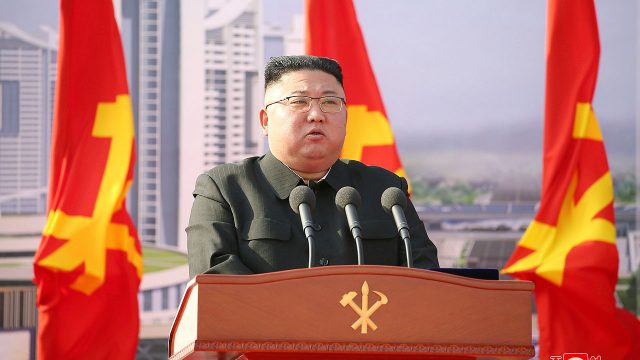
North Korea’s Kim orders making more missiles ahead of S.Korea, US drills

KCNA VIA REUTERS

SEOUL — North Korean leader Kim Jong Un has called for an increase in missile production to help secure “overwhelming military power” and be ready for war, state media KCNA said on Monday, as South Korea and the United States gear up for annual military drills.

Mr. Kim gave the order as he visited key munitions factories that produce tactical missiles, missile launch platforms, armored vehicles and artillery shells on Friday and Saturday.

His field inspection was the latest in a string of visits to arms factories, where he ordered mass production of weapons, and came days before South Korea and the US are to begin annual military drills, which Pyongyang sees as a rehearsal for war.

Kim noted an “important goal to dramatically increase” missile production capacity to meet the needs of the expanded and strengthened frontline military units, KCNA said.

“The qualitative levels of war preparations depend on the development of the munitions industry, and the factory has a tremendous responsibility in accelerating our military’s war preparations,” he was quoted as saying.

At other plants, Kim inspected and drove a new utility combat armored vehicle and praised recent progress in modernizing production lines for large-caliber multiple rocket launcher rounds, KCNA said.

There was a “very urgent need” to “exponentially increase” the production of such rockets to strengthen frontline artillery units, he said.

“Our army must thoroughly secure overwhelming military power and solid readiness to handle any war at any time, so that the enemy does not dare to use force, and would be annihilated if it does,” Kim said.

South Korea and the United States said on Monday that they would stage the Ulchi Freedom Guardian summer exercises on Aug. 21-31to improve their ability to respond to North Korea’s evolving nuclear and missile threats.

North Korea has denounced the allies’ military drills as a rehearsal for nuclear war.

This year’s drills will be held on the “largest scale ever”, mobilizing tens of thousands of troops from both sides, as well as some member states of the U.N. Command, for about 30 field training programs, according to South Korea’s Joint Chiefs of Staff (JCS).

“The exercises are an essential element in maintaining robust combined defense posture in case of emergency – absolutely necessary to respond to the growing military threat from North Korea,” JCS spokesman Col. Lee Sung-jun told a briefing.

The United States has accused North Korea of providing weapons to Russia for its war in Ukraine, including artillery shells, shoulder-fired rockets and missiles.

North Korea and Russia have denied any arms transactions.

The leaders of South Korea, the United States and Japan are also set to discuss security cooperation over North Korea, Ukraine and other issues when they gather for a trilateral summit on Aug. 18 at Camp David. — Reuters

US loss of AAA badge a reminder of ‘regime shift’ for government debt

FINANCIAL markets barely flinched when Fitch stripped the United States of its top credit rating, but it served as a reminder of longer-term structural risks investors in government bonds are yet to grasp.

The immediate focus in the aftermath of the Aug. 1 downgrade has been on US governance, but Fitch Ratings also flagged higher rates driving up debt service costs, an aging population and rising healthcare spending, echoing challenges that reverberate globally.

David Katimbo-Mugwanya, head of fixed income at EdenTree Investment Management, a £3.7 billion ($4.71 billion) charity-owned investor, said with the move highlighting reflecting elevated debt levels at a time when interest rates will likely remain high, debt sustainability was back in focus.

“I think it really brings home that shift being a regime shift rather than a cyclical one,” Mr. Katimbo-Mugwanya said.

Pressures investors will eventually face include ageing populations, climate change and geopolitical tensions.

Such risks are making some investors, including hedge fund manager Bill Ackman, bet on rising longer-term borrowing costs. Yet many investors say factors at play are too complex and their impact too far out to influence their investment decisions.

“The rating agencies are not looking at them in a systemic way. And the investors even less,” said Moritz Kraemer, former head of sovereign ratings at S&P Global, now chief economist at German lender LBBW.

WARNING SIGNS
There is no shortage of research sounding alarm.

Without cuts to age-related spending, median net government debt will rise to 101% of gross domestic product (GDP) in advanced and 156% in emerging economies by 2060, S&P Global Ratings said in a study this year.

S&P said the assumption that governments would prioritize servicing debt over spending promises had rarely been tested at such high debt levels.

It expects policy steps that will make ageing-related costs more manageable. Not taking them would see creditworthiness deteriorate and half the governments it rates would have metrics associated with junk credit ratings while even top-rated governments would lose the highest ratings, S&P said.

For the European Union and the euro area, where public pensions and healthcare play a major role, the European Commission and European Central Bank have also flagged costs related to ageing as a key risk to debt sustainability.

Japan is one major economy where financing costs remain low even as its debt exceeds 260% of GDP and it has one of the world’s oldest populations. But that reflects high domestic ownership of government debt and ultra loose monetary policy — a hard act to follow with higher inflation.

On the environmental front, a study last week showed a failure to curb carbon emissions will raise debt-servicing costs for 59 nations within the next decade.

“These long-term risks may not possess a well-established historical precedent, making reliance solely on historical data for risk assessment a challenge,” said Gael Fichan, head of fixed income at Swiss private bank Syz Group.

For now, despite the steepest increases in borrowing costs in decades, investors still see little risk in holding governments’ longer-term debt.

For example, the New York Fed estimates longer-term US Treasuries still yield less than rolling over short-term debt — a legacy of central bank government bond buying.

However, as central banks now roll off that debt and government financing needs rise, that should reverse, investors say. A recent rise in long-dated bond yields in reaction to a surge in US borrowing needs was a case in point.

“As the supply of long-dated Treasuries rises, investors may demand higher term premia to compensate for the added risk of holding bonds with longer maturities,” Mr. Fichan said.

Mr. Kraemer, the former S&P official, said it was “unreasonable” that shorter and longer-term government debt were rated the same.

POLICY WATCH
Greater focus on longer-term risks should bring scrutiny of government policies.

Policy “is going to matter more especially in terms of the fiscal side of things about how the governments are reacting to the various promises to the electorate and what they’re trying to achieve,” said Kshitij Sinha, a fund manager at Canada Life Asset Management.

It will be crucial whether governments can bring down relative debt levels by boosting economic growth, and here climate change is both a challenge and opportunity.

“The green transition will require quite some investments… that will also increase the overall debt levels further, but down the road… you will profit from it,” said Martin Lenz, senior portfolio manager at Union Investment, which manages €424 billion.

Still, with higher debt an economic reality, few governments are left with the coveted AAA rating.

“Can there be a world without AAA sovereigns? Yeah, I think there can be, We’ve seen this happening in the corporate space, for example,” LBBW’s Mr. Kraemer said, adding that out of dozens of AAA-rated US companies in 1980s now there were only two left. — Reuters

AIM says dual-degree initiative tackles demand-supply gap in data science workforce

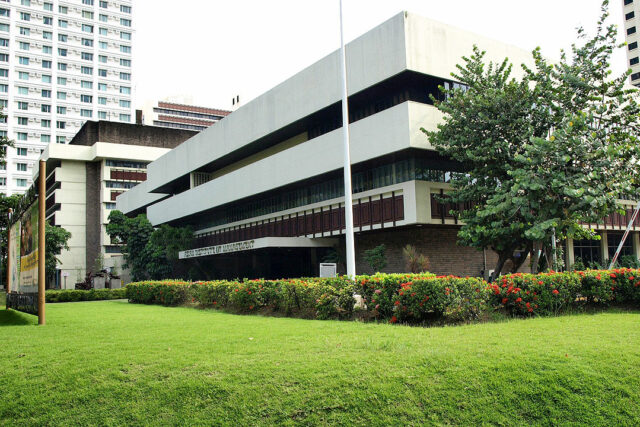
THE Asian Institute of Management campus in Makati City. — JUN ACULLADOR/FLICKR/CC BY-ND 2.0

The Asian Institute of Management (AIM) on Monday said it is now training future data scientists, technopreneurs, and business leaders in its double-degree undergraduate program.

“We have to upskill and reskill a huge workforce,” Jikyeong Kang, AIM dean and president, said in an interview with BusinessWorld.

“Most, if not all, data science programs tend to go really deep into domain knowledge but don’t necessarily connect to the business side,” she added.

During its convocation on Monday, AIM welcomed the initial 51 students into its double-degree program: Bachelor of Science in Data Science and Business Administration (BSDSBA) and Bachelor of Business Administration Major in Management Information Systems (BBAMIS).

“We are not only educating and training programmers but also producing industry leaders,” remarked the AIM president, emphasizing that future graduates will play an integral role in intricate business solution processes.

According to a study by the Philippine Institute for Development Studies (PIDS), data regarding the demand for the data science and analytics (DSA) workforce is limited due to the emerging nature of the field. The APEC Human Resource Development Working Group reported a 131% increase in the local demand for DSA workers, rising from 147,420 in 2016 to 340,880 in 2022.

“There is a misalignment between the demand and the supply of DSA workforce in the country,” the study said on its findings. “There were DSA competencies that were poorly supplied by DSA-related undergraduate programs.” 

The study noted that establishing a shared understanding of the DSA profession can aid in aligning supply and demand, ultimately contributing to the industry’s growth. This should be coupled with fostering connections between the government, industry, and academia to expand the current local DSA workforce market. 

The BSDSBA-BBAMIS program holds a transnational curriculum with a fusion of business and technology disciplines, where students can study data science use cases and real world data sets for strategic business perspectives, Michelle P. Banawan, academic program director at AIM, noted. 

“We hope this program would somehow address the labor market challenge of a lacking talent pool with high demand,” Ms. Banawan said. “It is pushing theoretical into a more practical perspective for students in response to the demand for data professionals.” 

AIM said that the program serves as a solution to meet forthcoming demands in commerce and enterprise, given the rapid pace of technological advancements and the escalating adoption of digital transformation in the economy. 

“I think everybody needs to be aware of AI and technical tools available to make sure what can be automated can be done in the most efficient manner,” Ms. Kang said on including specialized subjects on artificial intelligence and machine learning in the program curriculum. 

The program is jointly delivered by AIM’s Aboitiz School of Innovation, Technology, and Entrepreneurship (ASITE) and the University of Houston’s (UH) C.T. Bauer College of Business with a pioneering batch of 31 male and 20 female students set to graduate in 2027. 

Students have the opportunity to spend a year or two at the UH campus in Houston through a 12-month or 24-month visa and additional fees on top of the $13,500 annual tuition (roughly P775,000+). They can also pursue optional practical training in the US after graduation. 

“We want to elevate the skillset of talent we give to business industries in the Philippines and across the globe,” Ms. Banawan said. — Miguel Hanz L. Antivola

Britain warns of possible terrorist attacks in Sweden

A SWEDISH FLAG hangs outside a store on a busy street in Stockholm, Sweden, July 14, 2023. — REUTERS

LONDON — Britain on Sunday warned citizens going to Sweden of possible terrorist attacks following Koran burnings by anti-Islam activists that have outraged Muslims.

In updated travel advice, Britain’s foreign ministry said Swedish authorities had successfully disrupted some planned attacks and made arrests.

“You should be vigilant at this time,” it said, adding that “terrorists are very likely to try and carry out attacks in Sweden” with places visited by foreigners potential targets.

In a statement acknowledging Britain’s changed travel advice, Sweden’s National Security Advisor Henrik Landerholm reiterated the increased threats to Sweden since the burnings.

Landerholm said the storming of Sweden’s embassy in Iraq on July 19, an attempted attack on its embassy in Lebanon on Aug. 9, and also the Aug. 1 shooting of an employee at a Swedish consulate in Turkey contributed to the risk assessment.

Koran burnings are permitted in Sweden under free speech rules, but Muslims see burning of their holy book as blasphemy.

The U.S. government has also warned of possible terrorist attacks in Sweden in its travel advice. — Reuters

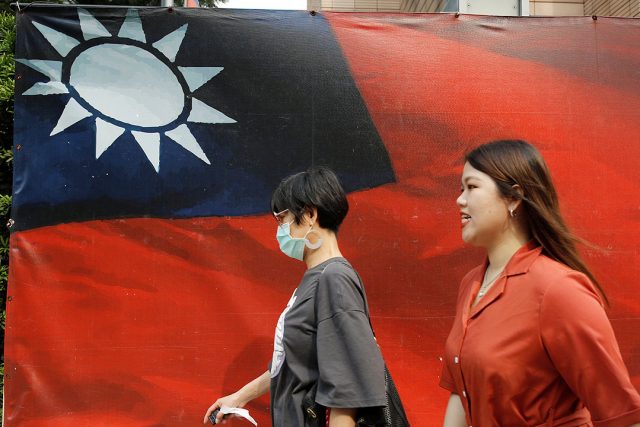
Taiwan will not back down to threats, Taiwan VP says on US trip

REUTERS

TAIPEI — Taiwan will not be afraid nor back down in the face of authoritarian threats, the island’s vice president told supporters on a United States visit that Beijing has condemned, while reiterating a willingness to talk to China.

William Lai, also frontrunner to be Taiwan’s next president at January elections, is in the United States on what is officially a transit stop on his way to Paraguay for the inauguration of its new president. Paraguay is one of only 13 countries to maintain formal ties with the Chinese-claimed island.

Taiwan and the United States both say the stopovers, including one in San Francisco on the way back, are routine, but China has denounced them and called Lai a separatist “troublemaker”.

Lai told a supporters lunch in New York on Sunday that “if Taiwan is safe, the world is safe, if the Taiwan Strait is peaceful, then the world is peaceful”, according to Taiwan’s presidential office.

“No matter how great the threat of authoritarianism is to Taiwan, we absolutely will not be scared nor cower, we will uphold the values of democracy and freedom,” he said.

China considers Taiwan its most important diplomatic issue, and is a constant source of friction between Beijing and Washington, which is the island’s most important international backer and arms supplier.

China has a particular dislike of Lai, who has previously described himself as a “practical worker for Taiwan independence”, a red line for Beijing which has never renounced the use of force to bring the island under its control.

WILLING TO TALK
Lai, who has pledged to maintain peace and the status quo, reiterated in New York that on the basic principle of dignity and parity he was “very willing” to talk to China and seek peace and stability.

But Lai said he will protect Taiwan’s sovereignty, that only Taiwan’s people can decide their future and that the Republic of China – Taiwan’s formal name – and the People’s Republic of China are “not subordinate to each other”.

Lai’s speech was attended by Ingrid Larson, managing director of the American Institute in Taiwan, a U.S. government-run non-profit that carries out unofficial relations with Taiwan.

Both Taipei and Washington are aiming for the U.S. stopovers to be low-key, and have called on China not to take any provocative action in response.

Still, Taiwanese officials say China is likely to launch military drills this week near Taiwan, using Lai’s U.S. stopovers as a pretext to intimidate voters ahead of a next year’s election and make them “fear war”.

On Monday, the Eastern Theatre Command of China’s People’s Liberation Army, which has responsibility for the area around Taiwan, showed pictures on its WeChat account of troops practicing storming a beach, though did not give the location, timing or specifically mention Taiwan.

It said the soldiers guided armored vehicles “to the enemy frontline positions and launched a fierce attack”.

China carried out war games around Taiwan in April after Taiwan President Tsai Ing-wen returned from California where she met U.S. House Speaker Kevin McCarthy while also on a transit on her way back from Central America. — Reuters

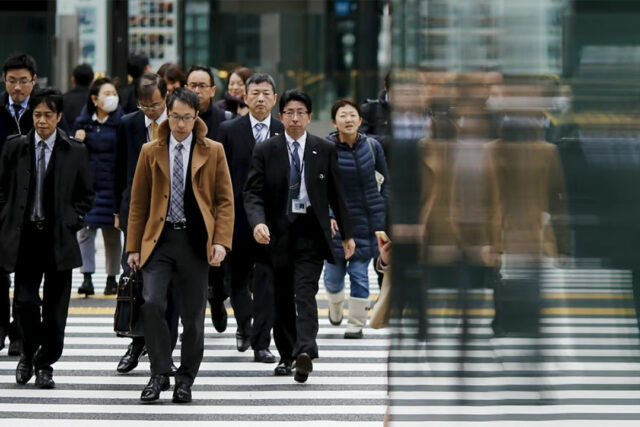
Weak yen gives Japan’s automakers temporary relief from China pain

REUTERS

TOKYO — Japanese automakers are getting much-needed cover from an old standby, as the weaker yen helps prop up profits amid declining sales in China and the increasingly tough shift to electric vehicles.

Toyota, Honda and Nissan recently reported earnings that topped analyst estimates by 6% to 21% in the three months through June, and all cited the currency as a factor.

“If the yen stays low, they clearly benefit but it doesn’t offset any other concerns,” said Satoru Aoyama, senior director at Fitch Ratings Japan.

“They are struggling in the Chinese market,” he said. “They just don’t have an immediate solution” for their problems there, he added.

Nissan late last month upgraded its full-year operating profit forecast, raising it by 30 billion yen ($208 million) to 550 billion yen. About 20 billion yen of that came from the currency, CFO Stephen Ma told a briefing.

A weak yen has traditionally lifted profits for Japan’s big exporters, although it is no longer as large a boon for automakers that have increased their overseas manufacturing in recent years.

Automakers’ shares are quick to react to swings in the yen, although the companies themselves tend to stick to conservative forecasts for the currency.

For instance, Toyota has stuck to its forecast for an average exchange rate of 125 to the dollar this business year, a level not seen since April 2022, about a month after the U.S. Federal Reserve started raising interest rates. The yen was at 144 on Thursday.

At smaller Subaru, a move of one yen against the dollar has a 20-billion-yen impact on operating profit, CFO Katsuyuki Mizuma said earlier this month.

On Wednesday, a Honda official said its April-June operating profit came in tens of billions of yen higher than expected, with the weak yen accounting for about half of that.

“The yen wasn’t only weak against the dollar, but also against other currencies, including in Asia and Europe, so that comes through as a profit,” the official said.

CHINA STRUGGLE
The yen’s cushion couldn’t come at a better time for Japanese automakers, which are struggling in China. The world’s largest auto market is increasingly being dominated by home-grown players.

Nissan’s China sales to retail customers slumped 46% during the quarter and those of Honda were down 5%.

Sales of Toyota, including of its Lexus luxury brand, rose over the period. For the first half of the calendar year, they declined almost 3%.

Japanese automakers have also been slow to pivot to the growing global market for electric vehicles with competitive offerings.

It is unclear how long the weak yen will last. Japan’s central bank recently tweaked its cap on bond yields, sparking expectations it could eventually exit the ultra-loose policy that has weighed on the currency.

Influential former finance ministry official Eisuke Sakakibara told Reuters the yen could strengthen to 130 by the end of the year.

Subaru has kept its forecast at 128 yen, CFO Mizuma said, citing the difficulty in predicting the currency.

“We’re really closely watching exchange rates,” he said. — Reuters

Germany economy ministry supports ‘fair’ distribution of wind power expansion costs

FREEPIK

BERLIN — Germany’s economy ministry is in favor of distributing the network costs of expanding renewable energies “fairly” among the country’s federal states, a spokesperson for the ministry said on Sunday.

A dispute between the northern and southern states has intensified recently, with northern-state residents complaining about higher electricity prices in their region despite cheaper wind power production there.

Prices in the north have been comparatively high due to connection costs for wind turbines to the power grid that are passed on to the residents of the regions where the turbines are located. 

Prices are higher in the north due to the lower population there, meaning the costs are passed on to fewer consumers.

The premiers of the northern states said the difference in prices was hurting local support for constructing new wind turbines.

“It is important that they (the federal states) work together for a fair distribution,” the spokesperson told Reuters.

The ministry declined to give details on how electricity prices might be adjusted.

Germany’s network agency will be responsible for redistributing the costs more fairly once a draft bill passes the lower house of parliament and it will then put forward proposals for reform, the agency’s head Klaus Mueller said.

“It is obvious that we should reward the expansion of renewables. I can well understand the frustration of many citizens and regions,” Mueller told Neue Osnabruecker Zeitung in an interview published on Saturday. — Reuters

Ecuador candidates talk tough on crime after assassination

STOCK PHOTO | Image by DEZALB from Pixabay

QUITO — Ecuador’s presidential candidates promised improvements in security during a debate late on Sunday, days after their fellow hopeful Fernando Villavicencio was assassinated leaving a campaign event.

The killing of the 59-year-old in the closing days of the campaign has sent shockwaves through the South American country of 18 million people, where violent crime stoked by transnational gangs has risen sharply in recent years.

Villavicencio, an ex-lawmaker and investigative journalist with a record of exposing corruption, repeatedly said he was not afraid of the gangs despite receiving threats.

An empty podium stood in Villavicencio’s place as several candidates promised an iron fist against crime during the tumultuous debate, which moderators initially struggled to control.

Luisa Gonzalez, who has led polling with about 30% of the vote, pledged a return to policies implemented by her mentor, former President Rafael Correa, who left office in 2017 and was later convicted of corruption.

“We’ll return security on the streets, so they don’t kill us, with a firm hand against crime,” Gonzalez said. “We are going to retake control of this country.”

Law and order candidate Jan Topic said he would redirect $1.2 billion in earnings from police fines to a “zero tolerance” plan for security.

“We’ll retake control of the 36 prisons and the northern and southern borders so that drug trafficking and illegal arms never come to our streets, equip and train our forces of order and integrate all the sources of intelligence,” Topic said.

Pro-market candidate Otto Sonnenholzner also promised a tough response on crime.

“We’ll back public forces, when a criminal raises a firearm against a citizen they will know they will get the bullet that they deserve,” Sonnenholzner said.

Indigenous candidate Yaku Perez, who said he is the only candidate with an advanced law degree, promised social improvements and better criminology data to inform policy.

“We’re going to give conclusive answers to common crime and to organized crime,” Perez said.

FBI JOINS INVESTIGATION
Earlier on Sunday, leaders of the Build party, or Construye in Spanish, announced they would now opt for Christian Zurita to replace Villavicencio as the party’s candidate, reversing their decision from Saturday to elevate the party’s vice presidential nominee.

Zurita is also a journalist who in the past collaborated with Villavicencio.

Though he officially registered his candidacy for the Aug. 20 vote on Sunday, he still must be approved by the national electoral authorities and could not participate in Sunday’s debate.

“We’re going to try to emulate his abilities and we’re going to try to emulate his name,” Zurita said at a press conference, referring to Villavicencio, while wearing a bullet-proof vest.

He emphasized he will not negotiate with “any mafia.”

While ballots for the election had already been printed prior to Villavicencio’s assassination, votes for him will automatically transfer to the party’s replacement.

As the final days of campaign wind down, the search for answers into the slain candidate got an outside boost.

Interior Minister Juan Zapata told reporters earlier in the day that a team from the U.S. Federal Bureau of Investigation (FBI) had met with police leaders and would in the “next few hours” meet with prosecutors from the attorney general’s office who are leading the investigation into Villavicencio’s slaying.

Outgoing President Guillermo Lasso asked for FBI help in the case on Thursday, the day after Villavicencio was shot multiple times as he stepped into a car.

Six Colombian nationals have been charged with the murder and remain in custody while one other suspect died after an exchange of gunfire shortly after the murder. — Reuters

BSP to keep policy rates steady — poll

The Philippine central bank is widely tipped to keep its benchmark interest rate at a near 16-year high of 6.25% at its Aug. 17 meeting. — PHILIPPINE STAR/WALTER BOLLOZOS

By Keisha B. Ta-asan, Reporter

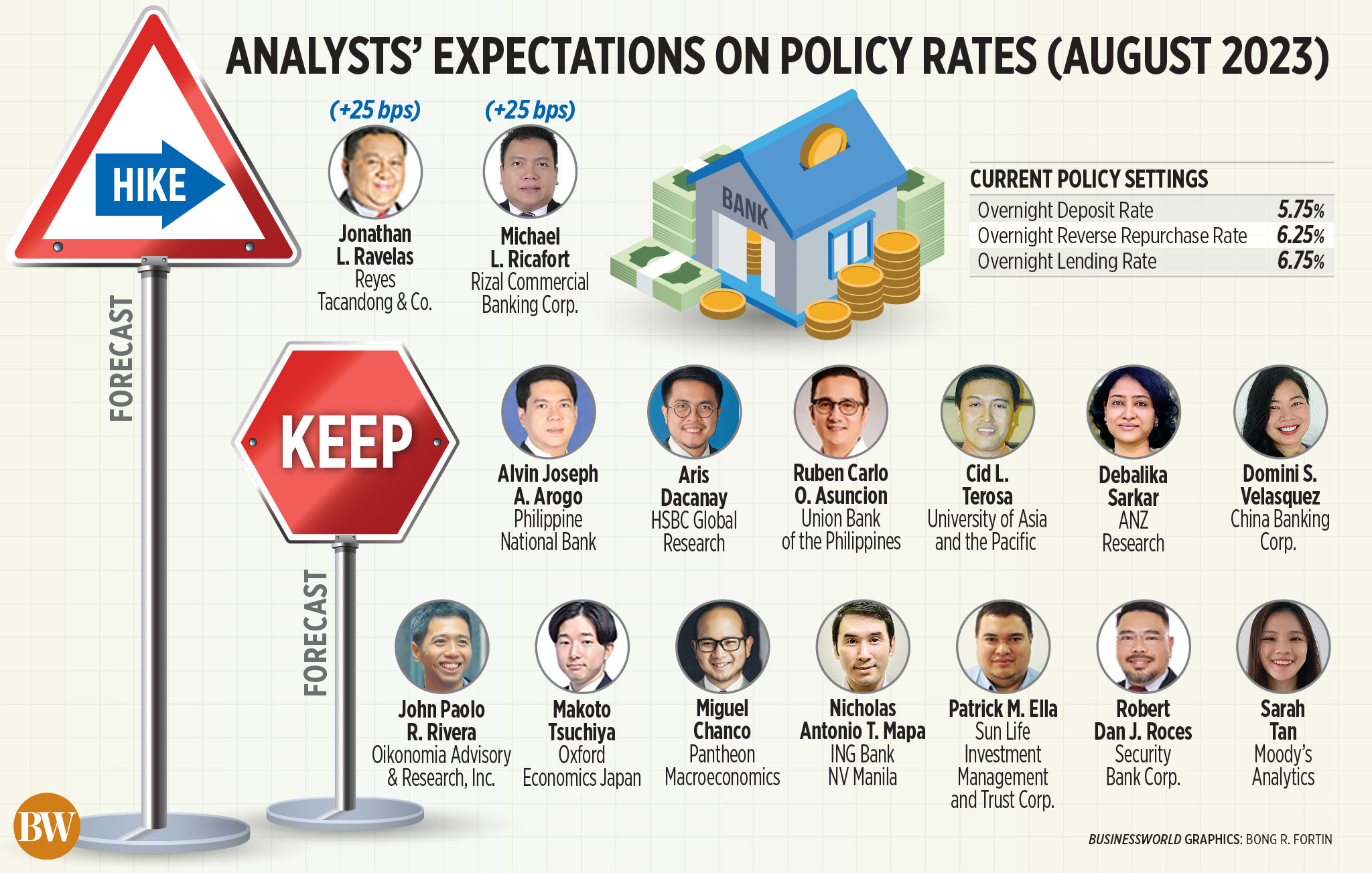
THE PHILIPPINE central bank will likely keep its benchmark policy rates steady at 6.25% for a third straight meeting on Thursday, amid easing inflation and slowing economic growth.

Some analysts, however, expect the Bangko Sentral ng Pilipinas (BSP) to start cutting rates in the fourth quarter to boost consumer demand following the disappointing second-quarter gross domestic product (GDP) data.

A BusinessWorld poll last week showed 13 of 15 analysts predict the Monetary Board will extend its pause at its Aug. 17 meeting.

On the other hand, two economists expect the BSP to hike borrowing costs by 25 basis points (bps), mirroring the move of the US Federal Reserve last month. If realized, this would bring the key rate to 6.5%. 

Alvin Joseph A. Arogo, an economist from the Philippine National Bank, said a pause is appropriate since inflation continued to trend downwards in July.

Headline inflation slowed for a sixth straight month to 4.7% in July from 5.4% in June. It marked the slowest headline figure in 16 months, or since the 4% in March 2022.

For the first seven months of the year, inflation averaged 6.8%, still higher than the BSP’s 5.4% full-year forecast.

“I think BSP will extend its policy hold and continue to reassess the current economic situation. Slower second-quarter GDP growth will make BSP a bit more cautious in raising interest rates at this time,” University of Asia and the Pacific (UA&P) Senior Economist Cid L. Terosa said.

The Philippine economy expanded by 4.3%, easing from the 6.4% growth in the first quarter and 7.5% a year ago. This was much lower than the 6% median forecast in a BusinessWorld poll, and the slowest in two years.

For the first semester, GDP growth averaged 5.3%. Economic managers have said the economy has to expand by at least 6.6% in the second half to achieve the government’s 6-7% full-year target. 

“We think that the BSP will likely pause in its August meeting as the effect of the cumulative tightening since last year has taken a toll on the economy,” China Banking Corp. Chief Economist Domini S. Velasquez said in an e-mail.

While government spending was a major drag on growth, Ms. Velasquez said weaker consumption, flat investments and muted private construction growth “will likely be major considerations in hiking rates too much.”

Government spending contracted by 7.1% in the April-to-June quarter, a reversal of the 6.2% growth in the first quarter and 10.9% a year ago.

Household spending growth slowed to 5.5% from 6.4% in the first quarter and 8.5% expansion a year earlier.

Gross capital formation — the investment component of the economy — dipped by 0.04%, ending eight straight quarters of growth. This was a reversal from 17.2% in the second quarter of 2022.

“We believe the BSP governor will need to consider a pause to provide growth with some support while remaining hawkish in his statement by vowing to hike if upside risks to the inflation outlook materialize,” Nicholas Antonio T. Mapa, senior economist at ING Bank N.V. Manila, said.

BSP Governor Eli M. Remolona, Jr. last week said the central bank wants to ensure a smooth exit from its tightening cycle.

“If there’s a chance that we might have to raise rates again after we start cutting, we don’t want to take the risk from these quick reversals. I think the exit has to be a smooth process and this is what central banks have learned over the years — sudden reversals are bad,” he said in a transcript of a discussion with Nomura Chief ASEAN (Association of Southeast Asian Nations) Economist Euben Paracuelles provided by the BSP on Thursday.

Mr. Remolona said the BSP is ready to resume its policy tightening should supply shocks on inflation emerge, especially if the El Niño weather event will turn out to be severe.

Meanwhile, Jonathan L. Ravelas, senior adviser at Reyes Tacandong & Co., said the BSP will likely raise policy rates by 25 bps on Thursday to match the recent hike of the US Federal Reserve.

“This is to keep the difference in interest rates between the Philippines and the US healthy, which can help stabilize the value of the Philippine peso compared to the US dollar and control inflation,” Mr. Ravelas said. “It will also serve as a calibrated preemptive response to the upside risks to inflation.”

The US central bank raised the federal funds rate target by 25 bps to 5.25-5.5%, the highest level in more than two decades.

RATE CUTS BY YEAREND?
Pantheon Chief Emerging Asia Economist Miguel Chanco said the Monetary Board may cut rates by 25 bps in November and another 25 bps in December.

“This call has been bolstered by disappointing second-quarter GDP report, which shows a broad-based and sharp slowdown in domestic demand. Our core view now is that the economy will enter a shallow technical recession, implying another quarter-on-quarter contraction in GDP in the third quarter,” he said.

Patrick M. Ella, economist at Sun Life Investment Management and Trust Corp., likewise said there is room for a possible 25-bp cut in the fourth quarter if inflation continues to ease.

BSP Deputy Governor Francisco G. Dakila, Jr. on Friday said inflation could return to the 2-4% target range earlier than expected.

“There’s actually some chance that we may even go back to within target before the fourth quarter and that is something that will be considered,” he said at an economic briefing in Cebu, adding the full-year inflation forecast will be reviewed this week.

However, Mr. Arogo said the BSP will likely hold the key rate at 6.25% for the rest of the year due to the upside risks to prices.

“In particular, we are concerned about the impact of the minimum wage hike, El Niño, typhoons, oil production cuts, and prolonged Russia-Ukraine war,” he said.

A P40 wage hike in the National Capital Region took effect on July 16. Pending wage hike petitions for various provinces in the country will likely be decided on by September.

The El Niño weather phenomenon is expected to persist until the first quarter of 2024.

“If the exchange rate sharply weakens due to the lower BSP-Fed interest rate differential, however, then we believe that BSP may need to temporarily sacrifice supporting growth until the peso stabilizes,” Mr. Arogo said.

Meanwhile, HSBC Global Research ASEAN economist Aris Dacanay said the BSP will likely keep rates steady until yearend.

“Despite the challenges in growth, we continue to expect the BSP to maintain the policy rate at 6.25% and only cut rates after the Fed cuts its own. Since our baseline view is for the Fed to cut in the second quarter of 2024, we expect the BSP to begin its easing cycle in the third quarter of 2024,” he said.

After Aug. 17, the BSP will hold policy-setting meetings on Sept. 21, Nov. 16, and Dec. 14.

ADVERTISEMENT
ADVERTISEMENT