Home Blog Page 4469

Core businesses lift GT Capital net earnings

GT CAPITAL Holdings, Inc. more than doubled its consolidated net income to P16.61 billion from P8.1 billion in the first half of the year, driven by its core businesses.

“Our key businesses in banking, financial services, automobile, and property development delivered unprecedented gains on the back of tempered inflation, resilient consumer spending, and political stability,” GT Capital President Carmelo Maria Luza Bautista said in a statement on Monday.

“[We] are optimistic that our domestic economy remains somewhat insulated, and that the growth momentum will help carry us forward for the rest of the year,” Mr. Bautista added.

GT Capital’s banking unit, Metropolitan Bank & Trust Co., recorded a 34.1% rise in net income for the period to P20.9 billion driven by asset expansion, higher margins, and growth from fees.

The bank’s net interest income rose by 27% to P50.6 billion on the back of an increase in net interest margin to 3.9% and an 8.6% rise in gross loans.

“Our core businesses continued to grow and benefit from our strong balance sheet,” Metrobank President Fabian S. Dee said. “[W]e see more market opportunities that will keep our upward momentum and sustain our efforts to better serve our customers.”

The holding firm’s automotive arm Toyota Motor Philippines Corp. more than doubled its consolidated net income to P8 billion from P3.2 billion. Its revenues reached P106.4 billion, up 25% from P85 billion.

It reported retail sales of 93,575 units for the semester, rising 17% from 80,090 units the prior year.

“[Toyota] remains the country’s number one automotive brand with a 47.5% overall market share in the first half of 2023,” it said.

Additionally, its wholly owned subsidiary Federal Land, Inc. doubled its consolidated net income to P1.5 billion from P727 the prior year.

The property unit saw a 77% surge in revenues to P11.8 billion from P6.7 billion in the same period last year.

Its associate Metro Pacific Investments Corp. (MPIC) booked a consolidated core net income of P9.9 billion, 33% higher than P7.5 billion the prior year.

“Improved financial and operating results at MPIC’s holdings delivered a 27% increase in contribution from operations, mainly driven by the strong performance of the power generation business and higher water tariff for the water concession,” the company said.

Meanwhile, AXA Philippines saw an 18% increase in consolidated net income to P1.3 billion from P1.1 billion for the six-month period.

Its consolidated life and general insurance gross premiums fell to P12.9 billion from P15.1 billion in the same period last year, as investors remained cautious over market uncertainties.

The insurance firms saw life insurance sales at an annualized premium of P1.9 billion from P2.1 billion.

GT Capital shares went up by 0.38% to P524 apiece on Monday. — Adrian H. Halili

Alliance Global income rises 5%

ALLIANCE Global Group, Inc. (AGI) on Monday reported a 5% jump in attributable net income to P4.6 billion for the second quarter on the back of growing revenues.

In a regulatory filing, the company said that its consolidated revenues for the period went up by 8% to P48.8 billion.

“The group has proven its tenacity in trying to beat industry metrics as we aspire to be always a step ahead of the race through our creative offerings and active engagement in the market. It also helped that consumer spending has been healthy while mobility continues to improve,” AGI Chief Executive Officer Kevin L. Tan said.

Real estate development unit Megaworld Corp. booked a 35% higher attributable net income for the quarter to P3.8 billion on the back of a 10% revenue growth to P15.8 billion.

Emperador, Inc. saw a 20% higher attributable net income for the three-month period to P2.4 billion, while its top line was “flattish” at P15.5 billion.

Additionally, McDonald’s Philippines operator Golden Arches Development Corp. (GADC) booked a 9% increase in net income for the April-to-June period to P554 million despite being weighed by increased cost pressures and overall margins.

Its revenues rose by 25% to P10.2 billion as it maintained its upward sales trajectory.

“While there are persistent inflationary pressures, we have remained steadfast in achieving operating efficiencies across all business units. We have also maintained our financial prudence even as we continue with our aggressive expansion plans both here and abroad,” Mr. Tan said.

“The group is optimistic that we can weather this through as we remain focused in achieving our growth goals,” he added.

For the first half, the company reported a 19% rise in net income to P14.2 billion from P12 billion a year ago due to growth in revenues for the period.

Its consolidated revenues for the six-month period went up by 20% to P99.1 billion from P82.6 billion due to improvements in discretionary spending and mobility.

Megaworld saw its net income climb by 34% to P7.9 billion from P5.9 billion due to economic resurgence, which drove demand for its residential properties, leasing activities and hotels.

The developer’s consolidated revenues rose by 17% to P32 billion, with real estate sales contributing 60%.

Emperador reported a 9% decline in net income for the first semester to P4.7 billion from P5.2 billion due to an increase in selling and operating expenses.

Its consolidated revenues for the period went up by 11% to P31.1 billion from P28.1 billion mainly driven by the increasing popularity of its premium whisky brands

The company said that Emperador saw revenues from its whisky segment grow by 23% to P12.5 billion; while revenues from brandy increased by 4% to P18.6 billion amid the stiffer competition in the domestic market.

GADC reported a 27% increase in net income for the six-month period to P972 million, while its top line rose by 31% to P20.2 billion from P15.4 billion the previous year.

“McDonald’s Philippines, the country’s most dynamic quick service restaurant operator has maintained its relevance in the highly competitive consumer market with its creative product offerings and pricing,” it said.

At the end of the January-to-June period, GADC had 702 stores in its network nationwide.

On Monday, AGI fell by 4.02% or P0.52 to P12.42 per share. — Adrian H. Halili

Uy-led Chelsea, DITO CME trim their losses

DENNIS A. UY’S Chelsea Logistics and Infrastructure Holdings Corp. and DITO CME Holdings Corp. trimmed their net loss during the second quarter after booking higher revenues.

Chelsea Logistics narrowed its attributable net loss to P106.83 million in the second quarter from the P587.63 million incurred last year.

The company posted P1.87 billion in revenues, a 15.8% increase from the P1.61 million recorded a year ago. It described its quarterly top line as its highest since March 2020, and just 8% lower than its record P2.04 billion reported in the fourth quarter of 2019.

The increase in revenues was supported by a 5.7% decline in the company’s cost of sales and services from April to June at P1.34 billion from P1.42 billion in 2022.

“Both cargo and passage revenues maintained positive year-on-year and sequential growth, mainly driven by passage,” the company said.

The passage segment contributed 51% higher revenue in the second quarter to P540 million, with the freight segment remaining the biggest contributor at P919 million, 6% higher than last year’s showing, it said.

For the first semester, the company booked an attributable net loss of P430.87 million, down from the P1-billion loss incurred last year.

The narrowed net loss came after a 22.8% increase in the company’s top line to P3.58 billion from P2.91 billion in 2022.

The first-half cost of sales was slightly higher at P2.78 billion, which reflected a 5.4% rise from the P2.64 billion recorded in the previous year.

“The second-quarter results have shown that the group is on the right trajectory to profitability,” said Chelsea Logistics President and Chief Executive Officer Chryss Alfonsus V. Damuy.

“With increasing demand and traffic, we continue to activate and deploy our ships which have been laid-up for the past years. Our loyal customers will see more positive developments from us in the coming days,” he added.

HIGHER SERVICE REVENUES
DITO CME trimmed its net loss to P1.1 billion in the three months ended June from the P4.63 billion incurred last year, due to higher service revenues.

The company’s top line reached P2.62 billion in the second quarter, 54.7% higher than the P1.7 billion booked in the same period last year.

Service revenues accounted for P2.61 billion of the company’s top line, which reflects a 53.9% increase from the P1.69 billion booked in the previous year.

Non-service revenues showed significant growth, increasing more than eight times to P17.47 million from P2.09 million a year ago.

DITO CME’s costs and expenses rose by 21.9% to P6.21 billion in the second quarter from P5.1 billion in 2022, amid higher depreciation and amortization.

For the first semester, DITO CME saw its attributable net loss decline to P1.43 billion, trimming down last year’s loss of P8.3 billion.

Revenues from contracts with customers totaled P4.96 billion in the first six months, 64% higher than the P3.03 billion booked in the same period last year.

“The group derives its revenue mainly from the transfer of goods and services over time and at a point in time by providing mobile services to subscribers in prepaid arrangements such as SMS (short message service), voice, data, and internet,” the company said.

DITO CME’s revenues were mainly generated by DITO Telecommunity Corp., which had approximately 7.5 million active subscribers by the end of the SIM (subscriber identity module) registration period.

Costs and expenses in the first half ballooned to P11.58 billion, an 18% increase from the P9.82 billion incurred in the previous year, as depreciation and amortization climbed by 61.3% to P6.42 billion from P3.98 billion last year.

“(The increase in depreciation and amortization was) mainly due to the significant capital expenditures during the year as part of DITO Tel’s continued focus on increasing network coverage nationwide,” the company said.

On Monday, shares in Chelsea Logistics increased by a centavo or 1.04% to 97 centavos apiece, while shares in DITO CME slipped by a centavo or 0.44% to P2.24 each. — Justine Irish D. Tabile

Strong revenues boost Alsons net income to P256M

ALCANTARA-LED Alsons Consolidated Resources, Inc., reported an attributable net income of P255.98 million for the second quarter, more than double the P90.52 million a year ago, driven by higher revenue during the period.

In a stock exchange disclosure on Monday, the company said its second-quarter gross revenue stood at P3.61 billion, a 32.2% increase from P2.73 billion in the same period last year.

For the January-to-June period, the company’s attributable net income rose to P346.15 million, up by 91.6% from P180.68 million last year.

Alsons’ net income for the first semester surged to P1.17 billion, almost double the P689 million previously.

Its profit rise for the period was mainly driven by the increase in revenues, the company’s financial report showed.

For the first semester, the listed energy company’s gross revenue expanded 28.1% to P6.93 billion compared with P5.41 billion in the corresponding period a year ago.

The company’s 210-megawatt (MW) Sarangani Energy Corp. continued to deliver contributions to revenues and earnings, Alsons said.

Sarangani Energy provides power to several areas in Mindanao such as Sarangani province, General Santos, Cagayan de Oro, Iligan, Dipolog, Dapitan, Pagadian, Samal, Tagum, Kidapawan, and Butuan.

Alsons cited the operations of the 100-MW Western Mindanao Power Corp. (WMPC) as another key revenue contributor for the period.

WMPC is the operator of a diesel power plant in Zamboanga City. It is the only major power generation facility in the Zamboanga Peninsula, supplying power to Zamboanga City and providing ancillary services to National Grid Corp. of the Philippines.

Alsons said it will be focusing on expanding its renewables capacity in the next five years, with several renewable energy facilities in the pipeline. 

It said its 14.5-MW Siguil hydropower plant is expected to start operations by yearend. Two more renewable energy projects are targeted for development, namely: a hydro and solar power project in Zamboanga del Norte with an expected capacity of about 37.8 MW and a hydropower project in Bago River, Negros Occidental with a targeted capacity of 42 MW.

To date, Alsons has four power facilities with a combined capacity of 468 MW. The company serves 14 cities and 11 provinces in the country. — Ashley Erika O. Jose

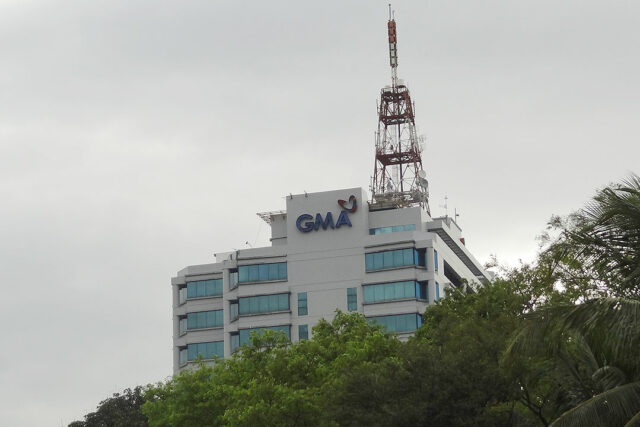
GMA profit decreases 69% to P581M amid lower advertising revenues

GMA Network, Inc. saw a 69% decline in its attributable net income to P581.51 million for the second quarter from P1.88 billion a year ago after booking lower advertising revenues.

The network’s revenues from April to June amounted to P4.44 billion, 26.9% lower than the P6.08 billion booked in the corresponding period last year.

“Despite election campaigns culminating only up to the first week of May 2022, political advertisements during that quarter were even higher versus the first quarter of the same year,” the company said in its quarterly report.

Production costs and cost of sales were higher by 4% and 9.7% to P1.99 billion and P81.25 million, respectively.

During the quarter, the company’s general and administrative expenses dipped by 1% to P1.61 billion from P1.63 billion in the previous year.

GMA’s first-half attributable net income reached P1.19 billion, 70.3% lower than the almost P4 billion profit seen in the same period last year.

The company’s top line totaled P8.46 billion in the first half, a 29.2% increase from the P11.94 billion booked last year due to lower advertising revenues.

For the six months ended June, GMA’s advertising revenue reached P7.75 billion, a 31% drop from the previous year’s P11.3 billion.

“Advertising revenues remained the lifeblood of the Company, comprising more than 90% of the total revenue pie. This segment was also the hardest hit due to the absence of election-related placements this year,” the company said.

Production costs and cost of sales were higher by 4.9% and 24.9% to P3.66 billion and P186.44 million, respectively.

GMA also incurred higher general and administrative expenses in the first six months of the year which amounted to P3.1 billion, a 1.4% increase from the P3.05 billion recorded in the previous year.

At the stock exchange on Monday, shares in GMA declined by 17 centavos to P8.81 each. — Justine Irish D. Tabile

SEC greenlights ACEN preferred shares offering 

Ayala-led ACEN Corp. on Monday said it had secured a permit from the Securities and Exchange Commission for the public offer and sale of up to 25 million preferred shares.

In a regulatory filing, the listed energy company of the Ayala group said the 25 million preferred shares are the first tranche of its three-year shelf registration of up to 50 million preferred shares.

It said the first tranche includes about 12.5 million perpetual, cumulative, non-voting, non-participating, non-convertible, redeemable, and re-issuable Philippine peso-denominated preferred shares.

The offering has an oversubscription allotment of up to 12.5 million preferred shares priced at P1,000 each, which will be offered in two series for a total of P25 billion, the company said.

The shares will be traded under ACENA for the series A preferred shares and ACENB for the series B of the preferred shares offering.

“This issuance further strengthens ACEN’s balance sheet and will help the company attain its 2030 aspiration of achieving 20 gigawatts (GW) of renewables. ACEN is currently building around 1,100 megawatts (MW) of renewable energy plants in the Philippines, and more projects are expected to be added in the coming years. This financing initiative will enable ACEN to continue its aggressive renewables expansion,” Eric T. Francia, president and chief executive officer of ACEN, told the stock exchange on Monday.

Net proceeds from the preferred shares will fund the company’s new or existing eligible green projects or will be used for refinancing of short-term bridge loans for eligible green projects, ACEN said.

“We are greatly encouraged by the interest shown by both institutional and individual investors in this offering, even amidst tight financial conditions,” said Maria Corazon G. Dizon, chief finance officer of ACEN.

She said it is an honor for ACEN to pioneer the issuance of the first-ever peso-denominated “fixed-for-life equity instrument in the country, making a significant mark in the financial market.”

“This underlines our determination to blaze new trails in the financial sector,” she added.

ACEN said the offer period is from Aug. 11 to 23, with the target listing of the shares on the main board on Sept. 1.

At the local bourse on Monday, shares in the company gained four centavos or 0.78% to end at P5.15 each. — Ashley Erika O. Jose

Vista Land income surges 83%

VILLAR-led Vista Land & Lifescapes, Inc. on Monday said its net income for the first half surged by 83% to P5.8 billion from P3.18 billion.

In a press release, Vista Land Chairman Manuel B. Villar Jr. said he was pleased with the company’s performance “as we have sustained our growth trajectory for the year.”

“We have been launching more projects this year compared to last year. These launches will form part of our huge project pipeline,” he added.

The company said it had launched a total of P24.3 billion worth of projects across the country.

Its consolidated revenues for the six-month period went up by 8% to P18.35 billion from P16.97 billion.

Mr. Villar said reservation sales went up by 12% to P35.6 billion.

Vista Land placed its real estate revenues at P8 billion and its rental income at P7.9 billion. It also said that its gross margins for the first semester rose by over 300 basis points to 59%.

The company also recognized a P1.8-billion gain from insurance proceeds.

Vista Land President and Chief Executive Officer Manuel Paolo A. Villar said the company had seen “strong and sustained demand” in its horizontal and vertical residential projects from overseas Filipino buyers, which he said account for about 60% of total sales.

He said the company saw increased foot traffic and a “return to normalcy” for its over 1.6-million-square-meter portfolio of assets consisting of 45 malls, 56 commercial centers, and seven office buildings.

“Our strategy of maximizing our prime land is ongoing implementation, as we have been launching more Vista Estates across the country. These developments are mostly vertical and commercial projects which are geared towards the higher end of the income spectrum demand,” he added.

The company’s current land bank stood at a total of 3,085 hectares across the country.

On Monday, Vista Land was unchanged at P1.56 per share. — Adrian H. Halili

Shakey’s income jumps 31% on systemwide sales growth

SHAKEY’S PIZZA Asia Ventures, Inc. saw its attributable net income increase by 31.3% to P228.22 million for the second quarter from P173.88 million last year, driven by systemwide sales growth.

In a stock exchange disclosure, the company reported P3.77 billion in gross revenues for the second quarter, up by 52.6% from P2.47 billion a year ago.

“With dine-in back to pre-pandemic levels, we saw an influx of celebrations across all our stores despite an inflationary environment. Supported by the wide scale of our full-service restaurants and kiosks network, our guest-centric approach of providing accessibility and enhanced brand value resonated well with our guests, leading to a robust, volume-led growth,” Vicente L. Gregorio, president and chief executive officer of Shakey’s, told the stock exchange on Monday.

He said the company’s strong performance for the period was driven by a rise in foot traffic due to “special celebrations” recently.

For the first six months, the company posted an attributable net income of P489 million, marking a 95.5% growth from P250.11 million in the same period last year.

Its revenues for the January-to-June period jumped 69.2% to P6.92 billion from P4.09 billion, year on year.

The company attributed its robust first-half performance to the systemwide sales increase, which went up by 51% to P8.8 billion. It said it also benefited from same-store sales, posting 27% growth.

“Moreover, we’ve continued building new stores and outlets across our brands, leveraging the strength of our portfolio to reach more guests. We are pleased to share that these new stores and outlets are performing better than expected and proving to be accretive to the business,” Mr. Gregorio said.

Its expansion program for the period also boosted its revenue growth, the company said, adding that it opened 164 new stores and outlets during the six-month period.

Mr. Gregorio said the company’s first-half performance “underscores our unwavering pursuit of sustainable growth.”

“We have spun a culture where guest-centricity, cost discipline, and operational efficiency are deeply ingrained in our people. Coupled with our diversified multi-brand portfolio, we are able to leverage our competitive advantage in full-service restaurants and benefit from productivity gains and synergies from our vertically-integrated operations more effectively,”  he added.

At the local bourse on Monday, shares in the company declined by 10 centavos or 1.06% to end at P9.35 each. — Ashley Erika O. Jose

Filinvest REIT income declines to P561M

FILINVEST REIT Corp. (FILRT),  the real estate investment trust of Filinvest Land, Inc, on Monday reported a net income of P561 million for the first half, a 20.5% decline from P706 million a year earlier.

“Despite the challenges faced by the office leasing sector in the past 12 months brought about by the rightsizing and recalibrating of multinational tenants’ hybrid work setups, the sector is resilient and headed towards recovery,” FILRT  President and Chief Executive Officer Maricel Brion-Lirio said in a stock market disclosure.

“More locators are now experiencing the advantages of working back in the office from increased productivity supported by a vibrant workplace and community,” she added.

The company recorded a topline of P1.58 billion, 3.7% lower than the P1.62 billion in the same period last year.

Ms. Brion-Lirio said that the company has added over 7,200 square meters (sq.m.) of office space, bringing its total leases for the year to about 17,500 sq.m. coming from a mix of co-working and business process outsourcing tenants.

“We are also in the process of finalizing an additional 8,400 square meters that are expected to materialize in the next quarter while discussions with other BPO and traditional companies are ongoing,” she added.

The company said that it has also renewed 72% or 29,427 sq.m. of expiring leases in 2023, with about 2,408 sq.m. signing their letter of intent.

It added that the company’s weighted average lease expiry is 6.9 years as of the first semester, with the average occupancy at 84%.

FILRT said that it is planning to diversify its tenant mix with traditional and co-working locators. To date, it has signed over 4,000 sq.m.

The firm’s tenant mix is mainly made up of BPOs at 79%, and resorts at 10% after the infusion of the Boracay property. Traditional and co-working tenants make up 10%, with retail tenants accounting for the rest.

“FILRT has zero POGO (Philippine offshore gaming operators) exposure,” the company said.— Adrian H. Halili

Asian Terminals’ income soars 82% to P978M

Asian Terminals, Inc. (ATI) saw an 82.1% increase in its attributable net income to P977.92 million for the second quarter from P537.02 million a year ago, amid higher revenues.

From April to June, the company’s topline reached P3.7 billion, reflecting a 15.3% growth from the P3.21 billion booked in the same period last year.

Costs and expenses during the period reached P1.6 billion, a 10.5% increase from the P1.45 billion incurred last year. The figure does not include the government’s share in revenues, which was P627.91 million in the second quarter of this year.

ATI’s other expenses declined in the second quarter to P172.33 million, which is 62.3% lower than the P457.02 million booked a year ago.

For the first semester, ATI’s attributable net income reached P2.15 billion, reflecting an 89.2% jump from the P1.14 billion recorded last year.

Revenues from operations were also higher in the first six months of the year at P7.45 billion, 22% higher than the P6.10 billion booked in the same period of 2022.

ATI said that the rise was due to the increase in revenues from South Harbor international containerized cargo, Batangas Container Terminal and ATI Batangas.

ATI’s costs and expenses were P3.21 billion for the six months that ended in June. This showed a 13.3% rise from the P2.83 incurred in the previous year.

Meanwhile, the government’s share in revenues amounted to P1.28 billion from January to June, an increase of 15.5% from P1.11 billion last year.

Total other expenses were 83.4% lower at P106.61 million in the first half from P659.91 million in the corresponding period a year ago.

At the stock exchange on Monday, shares in ATI declined by six centavos to P14.44 apiece. — Justine Irish DP. Tabile

New leases lift CREIT income to P316M

Citicore Energy REIT Corp. (CREIT) registered an attributable net income of P316.08 million for the second quarter, 5.1% higher than the P300.81 million last year, boosted by higher revenues for the period.

In a stock exchange disclosure, the company said it saw its gross revenue for the second quarter expand by 27.7% to P423.53 million from P331.79 million last year.

Its gross expense for the April-to-June period fell by 4% to P26.83 million from P27.94 million in the same period last year.

Lease revenues for the second quarter went up to P799.98 million from P663.58 million a year ago, the company said in a separate media release.

Of these leases, about 17% came from the contribution of new leases after the company signed new contracts for land acquisition using proceeds from its ASEAN green bond issuance.

To recall, the company had received the approval of the Securities and Exchange Commission allowing it to sell its maiden P4.5-billion ASEAN green bond offering.

“We remain committed to CREIT’s vision of delivering a sustainable investment platform, both from a financial and environmental perspective. Rest assured that we will continue to focus on adding green and value-accretive assets to our portfolio to drive long-term growth and shareholder value creation,” Oliver Y. Tan, president and chief executive officer of CREIT, said in a stock exchange disclosure.

The company said the newly acquired properties in Batangas and Pampanga expanded the company’s land area to 5,960,000 square meters as of June, further growing its land holdings.

For the January-to-June period, the company’s attributable net income rose to P621.04 million, up by 3.3% from P601.14 million last year.

Its gross revenue for the period went up to P799.98 million, marking a 20.6% increase from P663.58 million previously.

For the first semester, however, the company’s gross expense increased by 26% to P60 million from P47.62 million year on year.

At the local bourse on Monday, shares in the company gained two centavos or 0.79% to end at P2.56 apiece. — Ashley Erika O. Jose

D.M. Wenceslao net income up by 4% 

Property developer D.M. Wenceslao and Associates, Inc. reported on Monday an attributable net income of P387.29 million for the second quarter, 4% higher than the P372.23 million a year ago, boosted by higher residential earnings.

“In spite of prevailing challenges in the Philippine property landscape, promising opportunities are steadily emerging. Notably, office space requirements across traditional and emerging industries ramped up significantly, boosting our office leasing activities,” Delfin Angelo C. Wenceslao, chief executive officer of DMW, said in a statement.

For the second quarter, the listed company saw its gross revenue climb by 22.6% to P977.04 million from P796.88 million in the same period last year.

“As an integrated property company, D.M. Wenceslao is well-positioned to seize opportunities across the entire real estate spectrum,” Mr. Wenceslao said.

For the January-to-June period, the company’s attributable net income contracted to P912.95 million, lower than the P1.33 billion recorded last year.

In the first half, the company’s gross revenues declined to P2.09 billion, down by 12.9% from P2.4 billion in the same period last year.

Broken down, residential revenues climbed 54% to P704 million amid more sales take up, continued construction progress and incremental units qualified for revenue recognition, the company said.

Its rental revenues, which include rentals from land, building and other revenues, went up 6% to P1.2 billion, accounting for 58% of the company’s combined revenues.   The company attributed the growth in rental revenues to new land and building leases.

For the first half, DMW failed to secure land sales even after putting about 1,790 square meters of land on sale. The company, however, noted that land sales are not part of its long-term revenue mix.  To date, DMW has about 4,200 square meters of land available for sale.

At the local bourse on Monday, shares in the company gained two centavos or 0.33% to end at P6.03 apiece. — Ashley Erika O. Jose

ADVERTISEMENT
ADVERTISEMENT