Home Blog Page 4412

Spain defeats England in Women’s World Cup final

FIFA

SYDNEY —  Spain defeated England 1-0 in the Women’s World Cup final on Sunday, capping off a tournament that has broken attendance and TV records and raised hopes of a surge in interest for the women’s game.

Co-hosted by Australia and New Zealand, the ninth edition of the global showpiece event was the first to be held in the southern hemisphere.

While local interest ebbed when Australia exited in the semifinals, just shy of two million fans will have passed through the gates in nine host cities after Sunday’s final crowd of 75,784 is added to the tally.

An Olga Carmona goal was the difference between the two sides in a pulsating game that saw Spain create the majority of the clear-cut chances.

“We suffered, it was a difficult match (but) we always thought we were going to make it,” Ms. Carmona, who was also named player of the match, told Spanish state broadcaster TVE.

La Roja were rocked by a locker room dispute between the squad and coach Jorge Vilda and the Spanish football federation, with some of their best players absent from the tournament as a result.

But despite a shock 4-0 loss to Japan in the group stage, the team has shone throughout the tournament with their brand of attractive, attacking football. “I can’t imagine how much excitement there will be in Spain,” Mr. Vilda told TVE.

“We are going to celebrate here and we don’t know when it will end.”

Thousands of fans milled around Stadium Australia in Sydney hours before kick-off on Sunday, with troupes of drummers and stilt walkers creating a festival atmosphere.

England and Spain were both making their first appearance at a Women’s World Cup final, while England’s wait for a first trophy since the men’s tournament in 1966 goes on.

Women were banned from official facilities in England, the home of the game, until 1970 and have long lagged the men’s team in interest and funding, although that began to change after the Lionesses won the European Championship last year.

England captain Millie Bright told reporters after the final whistle she was proud of the progress the women’s game had made.

“Credit to the tournament, it’s been phenomenal, the crowds that we’ve generated and the support that all teams have and it’s been surreal, it’s been so visible,” she said.

“In terms of the women’s game … I definitely think we’re at our peak.”

Australia’s semifinal loss to England on Wednesday drew an average of 7.13 million viewers on the channels of local broadcaster Seven Network, the highest viewership ever recorded by research firm OzTAM, which launched in 2001.

Matildas matches sold out months in advance, and organizers expect the average attendance to exceed 30,000.

The last Women’s World Cup in France four years ago attracted more than 1.1 million fans to 52 matches with an average crowd of 21,756.

Demand was weaker in New Zealand, whose team went out in the group stages. FIFA gave away thousands of tickets and some games attracted as few as 7,000 fans, although White Ferns matches broke records for a soccer crowd in the country.

Australia’s players, who lost 2-0 in a third-place playoff match to Sweden on Saturday, will earn $165,000 each in prize money for this tournament, more than 300 times the A$750 ($480) they received for a quarterfinal appearance in 2015.

But at the grassroots level, the sport needs more resources, Matildas striker Sam Kerr said after the loss to England Wednesday. “We need funding in our development, we need funding in our grassroots,” she said. “We need funding, you know, we need funding everywhere.”

The Matildas’ World Cup campaign has led to calls for more support to women’s soccer in Australia, where it lags more popular football codes like rugby league and Australian rules.

Prime Minister Anthony Albanese responded on Saturday by promising A$200 million for women’s sport in the wake of the Matildas’ run to the semifinals.

Albanese said the money would be used to improve sports facilities for women and girls, with football tipped to receive “significant resourcing.”

The government also wants to ensure women’s sporting events are available on free-to-air television, after criticism that most World Cup games not involving Australia were behind a paywall. — Reuters


Jordan World Cup squad headlined by faces familiar to Filipino crowd

TWO faces Filipinos are familiar with — Rondae Hollis-Jefferson and Ahmad Al Dwairi — spearhead Jordan’s campaign at the FIBA Basketball World Cup in Manila.

Mr. Hollis-Jefferson, fresh from leading TNT to the PBA Season 47 Governors’ Cup title and winning Best Import for himself, signed up as the Falcons’ new naturalized player in place of 2019 World Cup veteran Dar Tucker last month.

Barring any hitches, the former NBA player will suit up for the Jordanians as they face tall odds against powerhouses USA, Greece, and New Zealand in Group C of the prestigious hoopfest set at the MoA Arena.

Filipino fans last saw Rondae Hollis-Jefferson in action in April, when he fired 29 points 14 rebounds and six assists as the Tropang Giga finished off Ginebra in Game 6, 97-93, for a 4-2 win in the title series.

RHJ averaged 30.4 points, 13.3 rebounds and 6.6 assists in his maiden PBA appearance and is set to return for TNT’s title defense in October.

With Jordan, he is expected to team up with Mr. Al Dwairi, who has had regular battles with Gilas in past World Cup Asian Qualifiers and FIBA Asia Cups.

Mr. Al Dwairi was the Falcons’ second leading scorer in the 2019 edition in China with his 16.3-point average behind Tucker’s 21.0.

The 7-foot Turkish-Jordanian banged in 34 points in their 76-80 loss to the Dominican Republic, sharing the single-game high honors in the previous World Cup with Australian star Patty Mills, Tucker and Japanese ace Yuta Watanabe.

Like Gilas Pilipinas, Jordan is seeking to finish as the best Asian team in the Aug. 25 top Sept. 10 showpiece to clinch a ticket berth to the Paris Olympics. — Olmin Leyba

Spanish fans celebrate historic World Cup victory

REUTERS

MADRID — Jubilant Spain supporters cheered loudly and waved flags after their team beat England 1-0 in Sydney on Sunday to win the Women’s World Cup for the first time.

Fans packed into Madrid’s WiZink Center, home to the Real Madrid Basketball team, jumped up and down, waved Spanish flags and sang loudly after the final whistle blew.

“(They’ve made) history, finally women’s soccer and women’s sport is starting to get attention. Great girls! Congratulations,” Raquel Chamochin, 40, told Reuters.

Co-hosted by Australia and New Zealand, the ninth edition of the Women’s World Cup was the first to be held in the southern hemisphere.

Olga Carmona’s goal put La Roja, as the Spanish women’s team are known, ahead in the first half and they created the majority of the clearcut chances in the match.

“It’s very exciting,” said Mercedes Guzman, 54, who watched the match in the WiZink Center. “They’re a super solid team and this is huge progress for women’s sport.”

”As a football fan I’m super happy that Spain is the best in the world again,” said engineer Jorge Martin, 33.

Spain’s Queen Letizia and Princess Sofia were in Sydney for the match and the Queen hugged each player before they were presented with the trophy.

The Spanish Royal Family was quick to celebrate, writing on their official X, formerly Twitter, account “You are the best football players in the world, this is FOOTBALL and this is HISTORY!”

Spanish Prime Minister Pedro Sanchez also sent his congratulations, writing on X: “You have made history. You are a source of pride. You are an inspiration. You are GREAT.”

Spain, missing leading players after a mutiny against coach Jorge Vilda only a few months ago, were thrashed 4-0 by Japan in the group stage, but progressed steadily through the knockout stages and outplayed England in the final. — Reuters

Spain’s World Cup hero Carmona learns of father’s death after final

REUTERS

SPAIN captain and World Cup final hero Olga Carmona found out after the match that her father had died, the Spanish FA (RFEF) said Sunday.

Ms. Carmona scored the goal that earned Spain a 1-0 win over England in the 29th minute as they secured their first Women’s World Cup title.

“The RFEF deeply regrets to announce the death of Olga Carmona’s father. The footballer learned the sad news after the World Cup final,” the Spanish FA said on social media. “We send our most sincere embrace to Olga and her family in a moment of deep sorrow. We love you, Olga, you are Spanish soccer history.” — Reuters

Sea drills may boost China deterrence

HMAS Canberra (III) — NAVY.GOV.AU

By Kyle Aristophere T. Atienza, Reporter

JOINT naval drills among the United States, Japan and Australia in the South China Sea this week could embolden other countries to stand up to China’s increasing assertiveness at sea, according to political analysts.

“The upcoming joint exercises by the Philippines’ closest ally and partners signify the increasing push for states to cooperate under a rules-based international system,” Victor Andres C. Manhit, president of Manila-based think tank Stratbase ADR, said in a Facebook Messenger chat.

The trilateral drills aim to show the three countries’ commitment to rule of law after the Chinese Coast Guard on Aug. 5 fired water cannons at Philippine vessels trying to deliver food and other supplies to a sunken ship at Second Thomas Shoal in the South China Sea, the Associated Press reported at the weekend, citing unnamed Philippine security officials.

Three aircraft carriers will be used during the drills, including Japan’s largest destroyer JS Izumo, Australia’s amphibious assault ship HMAS Canberra and the US amphibious assault ship USS America, AP said.

The Philippines, which won’t be part of this week’s drills due to logistical challenges, is open to becoming a participant in the future, it added.

It said the three countries’ commanders will meet with their Philippine counterparts in Manila after the drills.

“With these exercises, the Philippines, US, Australia and Japan are forming a united front against those who attempt to disrupt the rules-based international order,” Mr. Manhit said. “It also signals that any acts of coercion will never be tolerated by these countries.”

He expects similar initiatives with other states. “I look forward to similar initiatives in the near future with other states that share our values and believe in the rules-based international system.”

The US, Japan and Australia were among the countries that immediately issued statements of concern after the water cannon incident.

This week’s three-way drills represent an “important form of signaling by the three countries toward their desire to be consistent and steadfast in their strengthening partnership with Manila,” Don Mclain Gill, a political science lecturer at De La Salle University’s Department of International Studies, said via Messenger chat.

“The location of this exercise is crucial to the security of Philippine sovereignty and sovereign rights,” he said. “Such engagements serve as a reminder to China that all four countries are committed to securing the rules-based order, particularly in the South China Sea.”

‘LONG WAY TO GO’
This week’s trilateral drills are an important step in Philippine efforts to cement international support, Gary Ador Dionisio, dean of De La Salle-College of Saint Benilde School of Diplomacy and Governance, said in a Messenger chat.

“At the same time, this is also a platform to do some benchmarking of our defense capabilities,” he said. “We have a long way to go with regard to our modernization, but we need to be strategic in terms of prioritizing the most important aspect of our modernization plan.”

Asian countries have called for respect for international law after the Aug. 5 sea incident, including South Korea and India.

Mr. Gill said India engages closely with the US, Japan and Australia through naval drills. “In fact, the Indian Navy has now also extended the operational reach of its submarines not only toward Southeast Asia but also close to Australia,” he said.

India has reacted with shock and caution to the loss of at least 20 soldiers at its disputed border with China in 2020, with images of Chinese President Xi Jinping burned in Indian cities.

Experts have said Indian efforts to expand influence in Southeast Asia would allow the region to counter China’s dominance.

In an unprecedented move, India last month revised its stance on the sea dispute between the Philippine and China, showing support for a 2016 arbitral ruling that voided China’s expansive claims in the South China Sea.

India, which is seen boosting ties with the US, is one of the world’s fastest-growing economies. It is expected to reach high middle-income status by 2047.

Mr. Gill said South Korea, despite trying to cautiously balance its historical ties with both the US and China, is now seeking to strengthen its security ties with the US and Japan, “with whom it had frosty relations for the past years.”

South Korea exported goods worth $136 billion to China in 2019, accounting for a quarter of its total exports. But it also needs to balance ties with China as it counters North Korea’s threats. Beijing is considered a major ally of Pyongyang.

Mr. Gill noted that Washington, Tokyo, and Canberra are now seeking to institutionalize a more robust and functional trilateral relationship “with the hopes of maintaining peace and stability in East and Southeast Asia.”

Marcos urges Filipinos to set aside differences on Ninoy Aquino Day

OFFICIAL GAZETTE

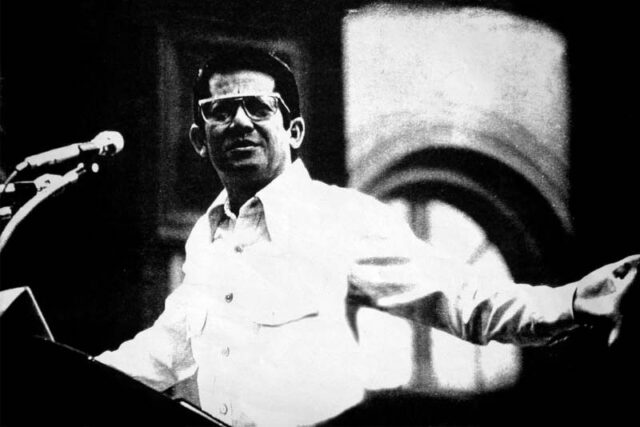
PRESIDENT Ferdinand R. Marcos, Jr. on Monday urged Filipinos to set aside political differences as the Philippines commemorated the 40th death anniversary of democracy icon Benigno “Ninoy” Aquino, Jr.

“I stand united with all Filipinos worldwide in commemorating Ninoy Aquino Day,” he said in a statement. “By standing for his beliefs and fighting for battles he deemed right, he became an example of relentlessness and resolve for many Filipinos.

Historians have cited Mr. Aquino’s death in 1983 as a turning point in the dictatorial rule of the late President Ferdinand E. Marcos, Sr., leading to his ouster by a popular street uprising less than three years later. The elder Marcos was the father of Bongbong.

Mr. Aquino was assassinated moments after deplaning from Manila’s international airport after years of exile in the US.

In his message, the younger Mr. Marcos called for unity, his battle cry during the 2022 presidential campaign.

“In our resolute quest for a more united and prosperous Philippines, let us transcend political barriers that hamper us from securing the comprehensive welfare and advancement of our beloved people,” he said.

“Let us imbue ourselves with clarity of mind and unity in purpose so we can proceed towards a future that resonates with our hopes and dreams,” he added.

Mr. Marcos, who took office in June 2022, did not issue a statement on Ninoy Aquino’s death anniversary last year, which is a nonworking holiday under the law.

More than 70,000 people were jailed, about 34,000 were tortured and more than 3,000 people died under martial rule, according to Amnesty International.

“Ninoy Aquino was not just an example of ‘relentlessness and resolve’ when he stood for his beliefs,” Bayan Secretary General Renato Reyes said in a statement, reacting to Mr. Marcos’ commemorative message.

“His death became a symbol of the brutality of the Marcos fascist dictatorship,” he said. “This fundamental point is lost in the statement from Malacañang today.”

He said it’s the “insatiable drive for power, unbridled corruption and subservience to foreign dictates,” not political barriers as mentioned by the President, “that are the real stumbling blocks to development.”

Mr. Reyes said any call for unity must be grounded on an honest assessment of history and on a real sense of justice for those aggrieved.

He added that the dangerous mindset that led to Ninoy’s death remains, with the continuing persecution of state critics who are now labeled “terrorists” for simply speaking out.

“Ninoy Aquino Day should invite us to reflect on the unfinished work of achieving genuine freedom and democracy 40 years after his death.” — KATA

House bill silent on vote-buying, secret campaign donations

PHILIPPINE STAR/EDD GUMBAN

A HOUSE of Representatives-approved bill that seeks to increase the ceiling on campaign expenses is silent on issues such as vote-buying or unreported campaign donations, a political analyst said at the weekend.

“The bill still permits loopholes to overspend, and does not account for illicit campaign spending, such as vote buying and off-the-books individual or corporate donations to candidates and political parties,” Terry L. Ridon, a public investment analyst and convenor of think tank Infrawatch PH, said in a Viber message.

He said the measure that congressmen approved last week does not forbid candidates and political parties from using and buying allowable airtime for other candidates.

Undisclosed donations of people or corporations to a candidate, which may reveal conflicts of interests, illicit connections or criminal activity, are also not covered by the bill, Mr. Ridon said.

He said the Anti-Money Laundering Council (AMLC) should ensure strict financial reporting 90 days before and after the campaign period.

Under House Bill 8370, presidential candidates may spend as much as P50 per voter, while vice presidential candidates can spend as much as P40 per voter.

Candidates for senator, district representative, governor, board member, mayor, vice mayor, councilor, and party-list may spend as much as P30 per voter registered in the place where they are running. Political parties are allowed to spend P30 for every voter.

The Commission on Elections, in consultation with the central bank, National Economic and Development Authority and Philippine Statistics Authority may adjust the spending cap depending on inflation.

Any contributions in kind will not be subject to donor’s tax.

The proposed law hurdled the House on Aug. 16, but it has no counterpart bill in the Senate.

It seeks to amend Republic Act 7166, which only allows a P10 budget per voter for presidential and vice-presidential candidates, P3 for candidates for senator, party-list and local governments, and P5 for political parties.

Arjan P. Aguirre, a political science professor at Ateneo De Manila University, said the spending limits now date back from the 1980s to 1990s.

“The bill intends to make campaign spending applicable to our present time, to make it more realistic to the present conditions,” he said in a Facebook Messenger chat.

He said a bill that would standardize and monitor activities and campaign donations of political parties should help ensure truthful accounts.

Only three congressmen, those from the minority, voted against the bill because it is “anti-poor” and “anti-democratic.”

“We already cannot increase the minimum wage of our workers to an amount equal to the family living wage. We will only make it more difficult for them to run for public office,” Party-list Rep. Arlene D. Brosas said.

Mr. Aguirre said the spending limits would promote accountability for campaign overspending. “Once this is passed, we can expect more electoral reform measures to follow to strengthen our electoral mechanisms and standards.” — Beatriz Marie D. Cruz

Farmers back rice law review

NEDA

By Sheldeen Joy Talavera and Kyle Aristophere T. Atienza, Reporters

THE FEDERATION of Free Farmers is getting behind the government’s move to review the Rice Tariffication Law (RTL) of 2019, citing “serious infirmities” that should have long been amended.

However, some stakeholders are alarmed that the amendments to Republic Act 11203 are aimed at restoring the National Food Authority’s (NFA) power to import rice, while others believe the law should be scrapped altogether.

“Essentially, the Rice Tariffication law has left food security and farmers’ and consumers’ welfare to the vagaries of the so-called free market and the ‘humanitarian graces’ of rice-exporting countries,” the federation said in a statement.

“It has tied government’s hands in addressing spiraling rice prices and export bans, among others. We therefore expect and demand that the review and amendments of the RTL look deeply into its basic assumptions, objectives and major provisions,” it said.

The law deregulated rice imports that allowed private parties to import with few restrictions at a 35% tariff on grains brought in from Southeast Asia. This provides allocation for the Rice Competitiveness Enhancement Fund intended to help farmers.

It also removed the NFA’s authority to import, restricting it to buying domestic harvests to maintain an emergency inventory of rice for use during calamities.

But Agriculture Assistant Secretary Rex Estoperez said President Ferdinand R. Marcos, Jr. had told agriculture and fishery stakeholders during a meeting in Malacañang last week that he supports the review of the law to “empower the NFA” with its previous functions.

The Samahang Industriya ng Agrikultura said the NFA should focus on procuring more unmilled rice from local farmers instead of reverting to its regulatory powers to import rice.

“There is no rice shortage,” group Executive Director Jayson H. Cainglet said as he scored certain Agriculture officials whom he accused of misquoting the president who is also the Agriculture chief.

He said these officials have sought a review of the Rice Tariffication law so the NFA could import rice again. But the real solution is for “NFA to buy palay from local farmers,” Mr. Cainglet said.

Kilusang Magbubukid ng Pilipinas Secretary General Ronnie Manalo said they want RA 11203 junked because it harms farmers and the local industry.

“Even without a review, it is already evident that the Rice Tariffication law, enacted under [former President Rodrigo R.] Duterte and pursued under Marcos, Jr., wreaked havoc on the lives and livelihood of Filipino rice farmers,” he said.

“If the review is just to continue importation, it would be useless for the farmers and consumers,” he added.

Under RA 11203, the Congressional Oversight Committee on Agricultural and Fisheries Modernization must review the law at the end of its sixth year to determine whether the Rice Fund should be continued, amended or terminated.

Meanwhile, Federation National Director Raul Q. Montemayor said Malacañang should not take credit for the increase in prices of unhusked rice since the trend is driven by external factors and not state interventions.

“It’s not due to the efforts of the Department of Agriculture (DA), but rather external factors such as, among others, the India ban and Ukraine war, and to some extent, ironically, the failure of the DA to significantly expand production and ensure adequate buffer stocks during the lean months and reducing our dependence on imports,” he said in a Viber message.

In a Palace press release, Agriculture Undersecretary Leo Sebastian said: “Filipino rice farmers are enjoying better prices from their fresh harvest.” He added that this was “perhaps sparked by global fears of a shortage resulting from the adverse impact of El Niño, forcing world suppliers to tighten supply in the world market.”

But Mr. Montemayor noted that when palay prices were very low due to excessive and cheap imports, the “government hardly lifted a finger” for the benefit of farmers.

He lamented that the NFA had refused to increase buying prices or temporarily impose safeguard duties to stop a surge in imports to help the local industry. “Now that palay prices are up, they seem to be claiming credit for it.”

LRT-2 extension under study

LRT-2 / TWITTER

THREE MORE stations will be added to the Light Rail Transit Line 2’s (LRT-2) east-end expansion to Antipolo City, as indicated in the feasibility study that would be submitted to the Department of Transportation.

“Right now, we are finalizing (the study) for the Cogeo extension of LRT-2,” Light Rail Transit Authority (LRTA) Administrator Hernando T. Cabrera, speaking in Filipino, told Businessworld over the weekend.

Once finalized, Mr. Cabrera said “it will go through the National Economic and Development Authority, which will decide if the project will be locally funded or will be under a public-private partnership.” 

Earlier this year, the LRTA requested that the issuance of the multi-year obligational authority, a document that would clear the way for the bidding of the west-end extension project of the LRT-2, be expedited.

This LRT-2 extension project towards Port Area in Manila also has three proposed stations: Tutuban, Divisoria, and Pier 4. “We are waiting for the funding for the project towards Pier 4. We have not secured the funds yet, that is why we cannot start,” Mr. Cabrera said. — Justine Irish D. Tabile

Zambo fire razes over 200 houses 

FIRE VICTIMS scour for lost valuables among the charred debris of their houses in the villages of Camino Nuevo and Canelar, Zamboanga City on Monday. — ZAMBOANGA CITY GOVERNMENT

COTABATO CITY — More than 200 houses spread across two villages were razed by fire Sunday night in Zamboanga City.

In separate statements released early Monday, Zamboanga City Mayor John M. Dalipe and the Bureau of Fire Protection-9 said the fire started past 8 p.m. in Barangay Camino Nuevo and spread quickly through the adjacent residences in Barangay Canelar before being put out at 10:36 p.m.  

Hundreds of families who lost their homes were temporarily evacuated to the covered courts of both barangays and the nearby Iglesia Ni Kristo compound.

An initial tally from the city’s disaster response office indicated that there are 150 families who lost their homes on Tambucho Street, Barangay Canelar, and 58 families were staying at the Barangay Camino Nuevo evacuation site.  

As of noon yesterday, the City Social Welfare and Development Office has been distributing food and essential relief supplies to the fire victims. Meanwhile, arson investigators were still investigating the cause of the fire. — John Felix M. Unson 

POGO closure effects downplayed  

THE PHILIPPINE Amusement and Gaming Corp.’s (PAGCOR) plan to privatize 45 casinos would make up for the losses the government would incur from shuttered Philippine offshore gaming operators (POGO), a senator said on Sunday.  

“The plan to privatize PAGCOR casinos could potentially augment government revenues, eliminating the need to impose any additional taxes amid prevailing tight fiscal space,” Senator Sherwin “Win” T. Gatchalian said in a statement. 

“Unless PAGCOR relinquishes its commercial operations, it is still in competition with other casino operators in the country,” he added.  

Last week, PAGCOR said it would start the privatization by the third quarter of 2025, which is expected to generate between P60 billion and P80 billion in revenue.  

Mr. Gatchalian said the measure would also bolster PAGCOR’s oversight over POGO companies.  

Last Aug. 15, Senator Ana Theresia “Risa” N. Hontiveros-Baraquel scored PAGCOR’s failure to collect P2.2 billion in unpaid dues from a POGO establishment that had closed shop.  

“POGOs don’t have redeeming qualities anymore,” she said in Filipino. “Money that should have been collected for the nation has turned into stone.” — John Victor D. Ordoñez

Cop killed in road mishap 

COTABATO CITY — A motorcycle-riding policeman was killed when he crashed right into a dump truck parked on an unlit stretch of the highway in Kapatagan town, Lanao del Norte in the wee hours of Sunday morning.   

Col. Sandy S. Vales, Lanao del Norte provincial police director, said Patrolman Jhon Ryan G. Baylan died on the spot as a result of the impact of the crash. The victim belonged to the 1005th Mobile Company of the Regional Mobile Force Battalion under the Police Regional Office-10.   

Investigators from the Kapatagan Municipal Police Station said it appeared that Mr. Baylan was not wearing a helmet when the accident happened around 2 a.m. in Purok 2, Barangay Taguitic of the town. John Felix M. Unson