Home Blog Page 4344

Generating trust by demonstrating value to society, economy

NATIONAL CANCER INSTITUTE-UNSPLASH

The pandemic response and efforts to broaden access to vaccines and treatments at the height of COVID-19 are being seen as key strengths of the biopharmaceutical industry, according to a recent Ipsos survey.

The said survey was commissioned by the International Federation of Pharmaceutical Manufacturers and Associations (IFPMA) and conducted in 11 countries with a representative sample of 11,000 people across both high and lower-income countries.

The survey found that about 68% of respondents agree that research-based pharmaceutical companies have a leading role in advancing new technologies, such as better, more effective medicines or vaccines that are useful in response to the COVID-19 pandemic. At least 62% agree that pharmaceutical companies are doing all they can to develop solutions to COVID-19. Moreover, 67% agree that the industry has a leading role in the development of new technologies that could be useful in response to future public health crises, such as pandemics.

The research-based pharmaceutical industry also generated more trust compared to other sectors measured, such as technology, banking, and insurance. Academic institutions, health agencies, and regulatory affairs agencies are the most trusted institutions, followed by the research-based pharmaceutical industry which solicits marginally higher levels of trust than governments and the media.

The public recognized research-based pharmaceutical innovation as beneficial to society and the economy, with 60% agreeing that they make positive contributions to society; 63% agreeing that they contribute to improving health, globally; and 55% agreeing that companies make a positive contribution to the economy.

In the Philippines, the role of the biopharmaceutical industry has been in transforming healthcare by bringing research and innovation that save and improve the quality of life of Filipinos. In a recent interview on TV5’s program Agenda, Roche general manager Dr. Diana Edralin emphasized that the industry’s impact to society is on ensuring that the biopharmaceutical innovations benefit patients and, in the process, contribute to growing the Philippine economy.

Also the president of the Pharmaceutical and Healthcare Association of the Philippines (PHAP), Dr. Edralin said that the industry has introduced 575 new drugs in the country over the last five years. These are for cardiovascular, respiratory, metabolic, oncology and other diseases that impact the health and well-being of Filipinos. In the past two years, the industry also conducted 154 clinical trials in the country. The majority of the R&D process — in terms of investments and duration — happens during the clinical trial process.

Dr. Edralin also emphasized the need for policies and regulations that enable innovation as well as multi-stakeholder partnerships that have been critical in the success of the introduction of innovation. At the same, the industry has introduced a number of collaborations among local government units that initiated capability building and medicine access schemes, among others.

One of these collaborations with the local governments is the PHAPCares Foundation partnership with the La Union Provincial Government and two of its municipalities, Bauang and San Juan.

Last week, PHAPCares President Lotis Ramin signed a Memorandum of Agreement (MoA) with La Union Governor Raphaelle Veronica Ortega-David to facilitate and fast track the implementation of Universal Healthcare in the province.

“We have recognized, through the pandemic, that our healthcare system was really put under extreme pressure. If there’s one thing that was clear during the pandemic was that the Filipinos are resilient. But we cannot count on pure resilience alone and so sustainability is a very important element in how we design the way moving forward, how we take the lessons from the pandemic. Another thing that we have learned is the importance of coming together,” said Ramin, who is also country president of AstraZeneca Philippines.

Under the partnership, PHAPCares will provide the expertise to support the health advocacy on WASH (Water, Sanitation and Hygiene), and oral health and other disease in the LGU sites. PHAPCares will also help train community health volunteers and provide the necessary materials to support the barangay health workers and stations among others. The Foundation will bring with them their experience in medicine donation programs that have exceeded P1 billion in value since the start in 2003. It has also trained more than 630 responders under the Earthquake, Landslide Search and Rescue Orientation Course with the Metropolitan Manila Development Authority (MMDA). Since 2015, the Foundation has also served 5,000 families through its medical outreach programs.

Since the start of the pandemic, the biopharmaceutical industry has demonstrated how it is committed to save and improve the lives of our people while contributing to reignite the economy. In tackling current and future health challenges, the biopharmaceutical industry will continue to play a crucial role, and show that public-private collaborations will be as important as ever.


Teodoro B. Padilla is the executive director of Pharmaceutical and Healthcare Association of the Philippines (PHAP).  PHAP represents the biopharmaceutical medicines and vaccines industry in the country. Its members are in the forefront of research and development efforts for COVID-19 and other diseases that affect Filipinos.

Style (09/11/23)


Lush launches SpongeBob SquarePants limited edition collection

Known for innovating packaging free cosmetic items – such as bath bombs, shampoo bars, and solid bar soap – Lush is partnering with Paramount to introduce a range of SpongeBob SquarePants themed, plastic free products, to encourage shoppers to consider the sea and choose plastic free. In support of Paramount’s SpongeBob SquarePants “Operation Sea Change” campaign, which kicked off last year, Lush has worked with the team there to create a range of six new products across bath, shower, and skin care. The Spongebob collection includes the SpongeBob Soap (P395) featuring a blend of cleansing and brightening fresh pineapple juice, buchu oil, and extra virgin coconut oil; the SpongeBob Bath Bomb (P525), a passion fruit-scented blend of enzymic pineapple powder, sweet wild orange oil, and popping candy; the Surprised Patrick Bath Bomb (P525; only available for a linited time), a sweet vanilla and coconut-fragranced bathbomb featuring coconut milk powder; the Squidward Bubble Bar (P595) featuring seaweed absolute, violet leaf absolute, and Persian lime oil; the Home Sweet Pineapple Body Balm (P645) made with Fair Trade organic cocoa butter and shea butter, fresh pineapple juice and davana oil; and the Krabby Bathy Bath Gift (P2,995), featuring two fizzy and fruity bath bomb buns, scented with bergamot and lime oils, which sandwich a bubble bar patty with a cheerfully tropical fragrance courtesy of buchu and Sicilian lemon oil, and topped by two lettuce and tomato-shaped soaps perfumed with watermelon twist. In the Philippines, Lush is exclusively distributed by Stores Specialists, Inc., and has branches at the Alabang Town Center, Ayala Malls Manila Bay, Bonifacio High Street, Glorietta 4, Greenbelt 3, Robinsons Magnolia, Shangri-La Plaza, SM Mall of Asia, and TriNoma. It is available also in Zalora and Trunc.com.


Avon brings back matte lipsticks

Matte lipsticks, a big hit in the mid-2010s, are coming back in a big way and they’re a lot more comfortable and lip-friendly than before. With its strong color payoff, even without a full face of makeup, a good matte lipstick can be all a woman needs to serve a strong look. But the catch always was that in exchange for all the long-wearing color, the lipsticks were very drying. But that’s not the case anymore. New formulations offer the benefits of long-wearing comfort and constant hydration. The new Avon Hydramatic Matte Lipstick features a central patented hydrating core powered by an exclusive blend of hydrating and skin-protecting ingredients. The core contains hyaluronic acid that helps draw moisture to the lips, and glycerin to help make them super soft and plump. Each core is surrounded by a high-pigment matte color. The result gives a color payoff that stays completely matte and gives lips all-day hydration. The lipstick line is available in six high-impact shades — Hydra Garnet, Hydra Plum, Hydra Pink, Hydra Rosy, Hydra Ruby, and Hydra Siren Red. These and other makeup products are available at https://avonshop.ph/collections/hydramatic, through Avon representatives, or Avon shops at Lazada, and Shopee.


Alabang Town Center holds lifestyle fair

Alabang Town Center will hold the Travel in Style Lifestyle Fair from Sept. 14 to 17, at the mall’s Activity Center during mall hours. The Travel in Style Lifestyle Fair brings together a selection of merchants, offering shoppers an opportunity to explore and purchase quality products from renowned brands. They include top-tier outdoor brands like The North Face, Columbia, ROX, and Quiksilver, promising gear and clothing fit for an adventure. For those in search of premium luggage labels, Samsonite, American Tourister, The Travel Club, Wanderskye, and Herschel offer both style and functionality. Wandering feet can find comfort with options from Res Toe Run, Birkenstock, and Havaianas. For beauty and cosmetics, seek out offerings from The Face Shop and Happy Skin. For kitchen and home essentials, LocknLock, SESOU Nature Source, and Coleman showcase a variety of items. As for accommodations, consider luxurious stays at Vivere Hotel, The Bellevue Manila, or Acacia Hotel, while Sunlight Air offers a chance to take a flight to one’s chosen destination. The Travel in Style Lifestyle Fair is not just about shopping; it’s an immersive experience designed for travel enthusiasts. Creative installations will be scattered throughout the event space, providing backdrops for Instagram-worthy selfies and photos. There will also be 20 major prizes and 10 minor prizes in the Travel in Style Lifestyle Fair’s raffle draw. A minimum purchase of P1,000 in single or accumulated receipts from any of the participating Travel in Style Lifestyle Fair merchants at Alabang Town Center between Sept. 14 and 17, gives customers the chance to join the raffle. The deadline for submission of raffle entries is Sept. 17, while the raffle draw will be on Sept. 18.


Binakol found in Shibuya’s Rakuten Fashion Week

The Manila Fashion Festival expanded its reach beyond the Philippine borders through PH MODE x TYO, a collaborative international iteration of the festival. Created in partnership with STYLEM, Japan’s leading fabric trading company, PH MODE x TYO takes center stage twice a year in Tokyo during Rakuten Fashion Week. For its second walk on the Rakuten Fashion Week stage earlier this month, Filipino fashion label .ARCHIVES championed the traditional binakol fabric with creations by designer Ellis Co. Together with .ARCHIVES, five Filipino designers showcased an exclusive collective ensemble by merging Japan’s quality fabrics with binakol, a woven fabric originating from Northern Luzon, inabel fabric of Ilocos, and piña (pineapple) fabric. For more information about .ARCHIVES and its Spring/Summer 2024 collection, check their social media page on Instagram.


Home grooming services through PetPal

PetPal, the innovative tech startup under 917Ventures, introduces home grooming services in Metro Manila and neighboring provinces, including Rizal, Laguna, and Cavite. Starting at P750, PetPal’s Home Grooming Services ensures that pet owners can now enjoy the luxury of having pets groomed in the familiar surroundings of their homes. Beyond grooming, PetPal’s all-in-one digital pet care platform offers a range of services from licensed and accredited veterinarians. The platform operates daily from 8 a.m. to 9 p.m., ensuring flexibility for clients with varying schedules. Additionally, the Pet Pawrtal, a digital pet booklet, ensures that pet owners have all the essential information about their pets at their fingertips, making the healthcare journey seamless. The pricing structure for the home grooming services is set based on the size of the pet: Small pets weighing between 1- 10kg are priced at P750, medium-sized pets between 11 and 18kg are at P850, large pets weighing from 18 to 26kg come in at P1,000, and for extra-large pets weighing 27kg and above, the cost is at P1,200. Those interested in availing of Home Grooming Services can visit www.petpal.asia/home-grooming-visit/, choose a preferred schedule by selecting a date and time, and enter basic details such as name and e-mail address. After this, expect to receive a confirmation via email, followed by a calendar invite.

All-new Nissan Z, new GT-R now here

Nissan Philippines President Juan Manuel Hoyos poses with the new GT-R and all-new Z. — PHOTO FROM NISSAN PHILIPPINES

NISSAN PHILIPPINES, INC. (NPI) has now made available the refreshed version of the GT-R, along with the all-new Z. “We are thrilled to introduce (these models) to our passionate and dedicated fans in the Philippines,” said NPI President Juan Manuel Hoyos. “These models represent the culmination of Nissan’s legacy of innovation, blending cutting-edge technology with the spirit of our iconic vehicles. Whether you’re seeking heart-pounding performance or a thrilling driving experience, these models deliver.”

Boasting a new look on its front and rear, the Nissan GT-R gets more downforce, with the modifications not only giving it a new look but contributing to the vehicle’s enhanced on-road stability.

On the other hand, the Z gets a dynamic design that is a nod to its historic nameplate, which is then combined with “contemporary flair.” The iconic headlights and taillights, along with the 240Z-inspired grille, create an unmistakable presence on the road. Under the hood is a powerful 3.0-liter turbo engine delivering 400hp and 475Nm. Said to provide a “well-rounded driving experience,” the Z gets an enhanced suspension system and upgraded brakes. It also comes with new technology features such as a rearview monitor, a digital dashboard on Sport Mode, and front and rear sonar sensors.

Additionally, the Z is equipped with the full suite of Nissan Intelligent Mobility features, including new additions such as Forward Crash Warning, Intelligent Cruise Control, ABS and traction system, Advanced Airbag System, and Automatic Emergency Braking with Pedestrian Detection.

The all-new Nissan Z will be offered in two variants: the Premium MT equipped with a six-speed manual transmission, and the Premium AT equipped with a nine-speed automatic transmission with manual mode. The model will be available for reservation starting Sept. 21. Priced at P3.888 million, the Z comes in Ikazuchi Yellow, Passion Red, Everest White, Boulder Gray Pearl, Seiran Blue, and Black Diamond Pearl.

The new Nissan GT-R is priced at P12.445 million and comes in Gun Metallic, Bayside Blue, Pearl White, Vibrant Red, Pearl Black, and Ultimate Silver. Interested customers may contact Nissan Quezon Avenue for more details.

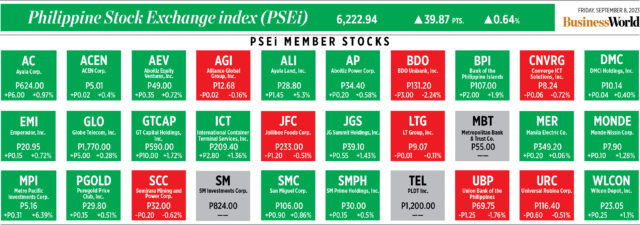
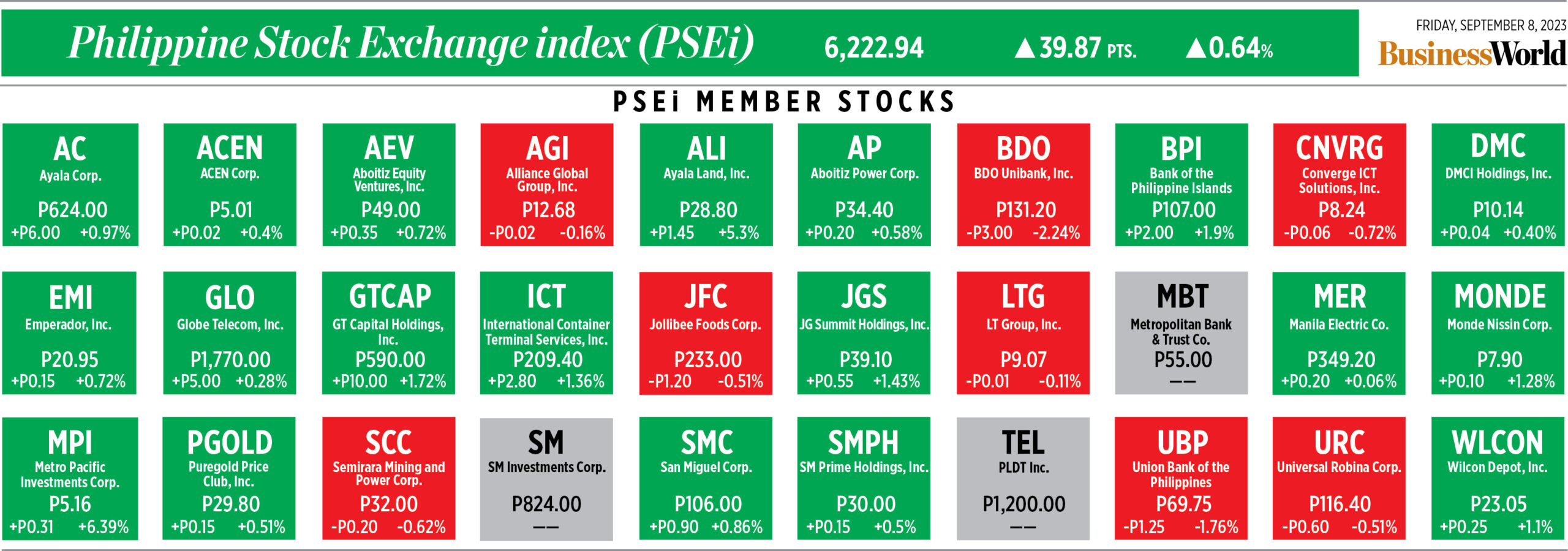
How PSEi member stocks performed — September 8, 2023

Here’s a quick glance at how PSEi stocks fared on Friday, September 8, 2023.


Peso may trade sideways

BW FILE PHOTO

THE PESO could trade sideways against the dollar this week ahead of the release of US inflation data that could affect the US Federal Reserve’s next policy move.

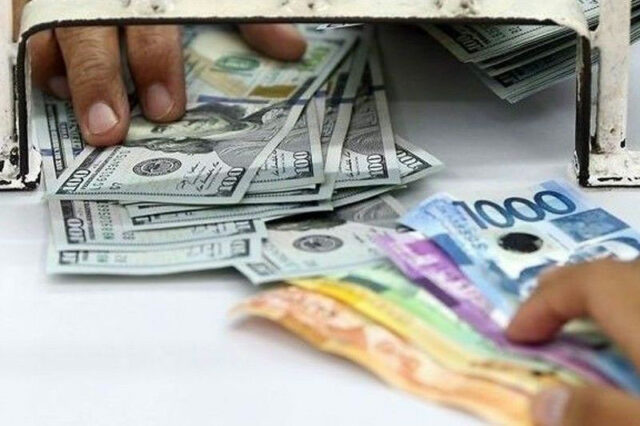
The local unit closed at P56.63 versus the dollar on Friday, strengthening by 16 centavos from Thursday’s P56.79 finish, data from the Bankers Association of the Philippines’ website showed.

Week on week, however, the peso inched down by 3.50 centavos from its P56.595 close on Aug. 30.

The local unit opened Friday’s session at P56.74 per dollar. Its weakest showing was at P56.785, while its intraday best was at P56.56 against the greenback.

Dollars traded rose to $1.62 billion on Friday from $1.45 billion on Thursday.

The peso appreciated on Friday following the dollar’s slight decline in Asian trading, Rizal Commercial Banking Corp. Chief Economist Michael L. Ricafort said in a Viber message.

For this week, the peso could move sideways against the dollar as the market awaits the release of August US consumer and producer inflation data, which could affect the Fed’s decision this month, Mr. Ricafort said.

The US central bank raised borrowing costs by 25 basis points (bps) last month, bringing its target rate to a range between 5.25% and 5.5%.

It has hiked rates by 525 bps since it began its tightening cycle in March last year.

The Federal Open Market Committee will hold its policy meeting on Sept. 19-20.

For this week, Mr. Ricafort expects the peso to range from P56.30 to P56.80 per dollar. — AMCS

Stocks may move sideways before US CPI data

PHILIPPINE STAR/KRIZ JOHN ROSALES

PHILIPPINE SHARES are expected to move sideways this week before the release of US inflation data, which could affect the US Federal Reserve’s next move.

The Philippine Stock Exchange index (PSEi) gained 39.87 points or 0.64% to end at 6,222.94 on Friday, while the broader all shares index went up by 13.24 points or 0.39% to 3,360.23.

Week on week, the PSEi rose by 41.88 points or 0.68% from its close of 6,181.06 on Sept. 1.

For this week, analysts said the PSEi may move within a tight range ahead of the release of US consumer inflation data on Sept. 13.

“This week, we could see the index continue its rangebound pattern within the 6,150 to 6,350 area, with investors taking a more cautious stance ahead of the release of US August inflation data,” China Bank Capital Corp. Managing Director Juan Paolo E. Colet said in a Viber message.

“A higher-than-expected rise in US consumer prices would be unwelcome news for equities market as it would pile pressure on the Federal Reserve to raise interest rates and prolong a hawkish monetary policy,” he added.

Faster US consumer inflation could affect trading activity, China Bank Securities Corp. Research Director Rastine Mackie D. Mercado likewise said in an e-mail on Friday.

“We may see muted buying appetite this week should the US inflation print come in faster than expected, and as investors adopt a cautious stance ahead of the Fed’s policy meeting on Sept. 19-20,” Mr. Mercado said.

The US consumer price index (CPI) rose 0.2% in July, matching June’s gain, Labor department data showed. On an annual basis, the CPI advanced by 3.2%.

US Federal Reserve Chair Jerome H. Powell said in the annual Jackson Hole Economic Policy Symposium last month that the central bank may need to raise interests further to cool still-too-high inflation, Reuters reported.

The Fed raised interest rates by 25 basis points (bps) in July, bringing its benchmark overnight rate to 5.25-5.5%.

The US central bank has hiked borrowing costs by a total of 525 bps since it started tightening cycle in March 2022.

Another trading driver for this week is the FTSE rebalancing on Friday, Sept. 15, Mr. Colet said.

“What investors are eagerly awaiting is a significant catalyst that can boost trading activity in the market. Nonetheless, we are closely watching the dollar’s resurgence, spurred by recent developments in the United States,” Globalinks Securities and Stocks, Inc. Senior Trader Mark V. Santarina said in a Viber message.

The US dollar index registered an eighth straight week of gains on Friday while global stock indexes ended slightly higher on the day ahead of key US inflation data this week, Reuters reported.

For this week, Mr. Mercado placed the PSEi’s support at 6,150. — S.J. Talavera with Reuters

BoI, PEZA hit 72% of 2023 investment targets

THE two main investment promotion agencies (IPAs) — the Board of Investments (BoI) and Philippine Economic Zone Authority (PEZA) — said they have to date hit 72% of their 2023 investment targets.

The BoI said approved investments in the first eight months amounted to P720 billion, slightly behind the year-earlier pace.

Marjorie O. Ramos-Samaniego, governor of the BoI, said at a forum on Thursday: “We see now a recent positive BoI investment approval performance. (As of) August of 2023, the BoI approved P720 billion in investment projects. This actually amounted to 72% of our original P1-trillion investment target,” she said.

Last year, the BoI approved an estimated P729 billion worth of new investments, which is 11% higher than the P655.4 billion approved in 2021.

In February, the BoI raised its investment target by 50% to P1.5 trillion for 2023. Registered investments at the end of August now account for 48% of the new target.

Ms. Ramos-Samaniego said that the recently amended implementing rules and regulations of the Renewable Energy Act drove the growth of investments.

She said that the amendment allowed 100% foreign ownership in renewable energy projects such as wind, solar, hydro, tidal, and ocean energy.

“With the recent registrations with BoI, we see now that the opening up of these renewable energy projects actually contributed to the growth of our investment projects,” she added.

Meanwhile, PEZA said investments between January and Sept. 7 amounted to P111.21 billion, almost three times the year-earlier level of P39.63 billion.

The approved investments were generated by 144 projects, against 148 projects from a year earlier.

“With our approved investment pledges as of September, we have achieved 72% of our P154.77-billion investment target for 2023,” said PEZA Director General Tereso O. Panga in a statement on Saturday.

“We are confident that we will exceed our conservative 10% growth target this year given the increasing number of ecozone applications filed with our office as well as big-ticket projects that we expect to register in the last quarter of 2023,” he added.

Mr. Panga attributed the performance to macroeconomic stability of the country and the attraction to investors of the forecast 6-7% gross domestic product growth. 

“The other contributing factors for our increasing ecozone investments include our accession to free trade agreements, restoration of incentives for investors under the Corporate Recovery and Tax Incentives for Enterprises Act, and the recent proclamation of ecozones providing for the most conducive location and environment for registered business enterprises,” he added.

On Sept. 7, PEZA’s board approved P14.04 billion worth of projects. The approvals covered 27 separate projects expected to generate exports of $174.81 billion and 4,614 jobs. — Justine Irish D. Tabile

PEZA sees trade deal helping South Korea climb FDI rankings

THE Philippine Economic Zone Authority (PEZA) said it expects South Korea to become a top-four source of foreign direct investment (FDI) after the recently signed free trade agreement (FTA).

“If they are currently number five right now, they might be number four,” PEZA Director General Tereso O. Panga said on the sidelines of a Philippine Information Agency briefing on Friday.

“If you look at the numbers, from January to September we saw a strong increase in Korean investment,” he said.

PEZA estimates that South Korean FDI in the January-Sept. 7 period was P1.41 billion.

Japan topped the list with P22.61 billion approved investments, followed by Singapore (P15.4 billion), the Cayman Islands (P11.63 billion) and the UK (P2.75 billion).

Mr. Panga said the FTA with South Korea is expected to drive increased FDI in electronics, agro-processing, renewable energy, automotive, and frontier technology.

Trade Undersecretary and Board of Investments managing head Ceferino S. Rodolfo said that the FTA, signed on Thursday, will correct tariff disadvantages hindering major Philippine exports to South Korea.

The Philippines was able to secure tariff elimination on 1,531 lines of agricultural goods, of which 1,417 lines will be removed upon entry into force (EIF) of the bilateral FTA.

Bananas, which are currently charged a 30% tariff, are set to go to zero tariffs over five years, while tariffs on processed pineapples, which are currently charged 36%, will obtain tariff elimination in seven years.

For industrial goods, the FTA led to tariff elimination for 9,909 lines, of which 9,747 lines are set for tariff elimination upon EIF.

Ateneo de Manila economics professor Leonardo A. Lanzona said in an e-mail that the FTA will likely lead to large domestic companies forging tie-ups with their Korean counterparts.

“It is crucial then also that the micro, small, and medium enterprises (MSMEs) are made to link with the domestic companies that are going to be tied to the multinational Korean companies,” Mr. Lanzona said.

“(The Korea FTA) is a welcome development. The more free trade agreements there are, the better,” he said.

“To maximize the benefits from these FTAs, we need to support more MSMEs and upgrade the skills of the workers to give them opportunities to participate in these activities,” he added.

Rizal Commercial Banking Corp. Chief Economist Michael L. Ricafort said the FTA will boost trade and FDI in the Philippines.

The Philippines can be positioned as “an alternative manufacturing hub as well as hedge (against disruptions of) the global supply chain for the international operations of South Korean global companies,” he said.

In turn, the FTA could also encourage the hiring of Filipino workers in South Korea, in view of improved economic ties, Mr. Ricafort said.

“Thus, the FTA will boost gross domestic product growth in view of the increase in external trade and investment,” he said.

He added that the agreement may also boost tourism from South Korea, already a leading source of visitors for the Philippines.

However, Ateneo’s Mr. Lanzona cited the need to amend the Constitution with the expansion of FDI to more industries.

“The Constitutional provision that limits foreign ownership of firms to 40% needs to be revised.  Greater flexibility in our trade agreements is needed as long as greater production with more and better jobs are achieved,” he said. — Justine Irish D. Tabile

Hotel industry feeling staffing pressures from ‘brain drain’

PHILSTAR FILE PHOTO

THE hotel industry is losing some of its best staff to foreign employers as well as to Philippine call centers, an industry association said.

“The brain drain within the hospitality group, it’s happening,” Hotel Sales and Marketing Association (HSMA) Philippines President Loleth G. So said, describing the losses as taking place “within the country” as well as “out of the country.”

Speaking at a news conference last week in Pasay City, Ms. So said domestic rivals competing for hotel workers include the business process outsourcing (BPO) industry, while foreign companies like the cruise industry employers are also hiring away its workers.

Agnes Pacis, HSMA director for membership, said the competition for talent is also affecting hotel sales and marketing personnel.

“We are experiencing it ourselves as practitioners. It used to be that we’re competing with other hotels. But now we’re competing with other industries like banks and BPOs,” Ms. Pacis said.

Ms. Pacis proposed that government and industry associations boost their efforts in attracting more workers to the hotel industry.

“Maybe some incentives can be put in place. Universities could encourage more enrollment in tourism and hotel and restaurant-related courses,” Ms. Pacis said.

“Industry associations could also come up with training programs. We can improve in the area of education and awareness-building. The tourism industry is affected, more than any other industry,” she added.

In June, the Philippine Statistics Authority estimated that employment in all the tourism industries hit 5.35 million in 2022, against 4.9 million in 2021.

The tourism industry accounted for 6.2% of gross domestic product last year, up from a 5.2% share in 2021.

The combined economic contribution of tourism rose 36.9% to P1.38 trillion last year.

In 2023, the Department of Tourism has set a target of 4.8 million international arrivals compared to 2.65 million last year. — Revin Mikhael D. Ochave 

Fitch expects continued pressure on regional currencies until Fed wraps up tightening cycle

PHILIPPINE STAR/ MIGUEL DE GUZMAN

THE decline in Philippine gross international reserves (GIR) was minimal in the second quarter, but currency pressures could continue until the Federal Reserve is done tightening rates, Fitch Ratings said.

Fitch Ratings, in a commentary posted on its website on Sept. 7, said the Association of Southeast Asian Nations (ASEAN) saw their dollar reserves decline with the Fed posed for further tightening.

“Several sovereigns in ASEAN, including Indonesia (BBB/Stable), Malaysia (BBB+/Stable), the Philippines (BBB/Stable) and Thailand (BBB+/Stable), saw reserves decline over the second quarter, which may in some cases reflect intervention to support currencies,” it said.

“The changes have been marginal so far, not influencing credit profiles significantly, but currency pressure may continue until the Fed finishes raising rates,” it added.

The Bangko Sentral ng Pilipinas (BSP) sometimes intervenes in the foreign exchange market to mitigate the volatility brought by the Fed’s policy tightening.

The Fed hiked borrowing costs by 25 basis points at its meeting in July. This brought the Fed funds rate to 5.25-5.5%, its highest level in 22 years.

The BSP reported that dollar reserves fell 0.14% month on month to $99.81 billion.

Foreign currency deposits fell by 52.5% to $648 million at end-August from $1.367 billion a month earlier and by 63.5% from $1.777 billion a year ago.

Meanwhile, Fitch Ratings said that official reserves among Fitch-rated sovereigns in Asia-Pacific rose $170 billion in the first half of the year.

This was driven by increases in GIR among economies with large buffers such as China, Singapore, India, Japan, and Taiwan.

“Strong external liquidity positions support these sovereigns’ credit profiles, but further reserve increases are unlikely to have much near-term influence on ratings,” the Fitch Ratings said.

However, sustained declines in GIR “could be a drive of negative rating action” in Bangladesh, the Maldives, Mongolia, and Vietnam.

Fitch Ratings earlier kept the Philippines’ long-term foreign currency issuer default rating at “BBB.”

A “BBB” rating indicates low default risk and adequate capacity to pay, although some unfavorable economic conditions could impede this.

Fitch Ratings also upgraded the Philippines’ outlook to stable from negative, reflecting its confidence in the economy’s continued recovery from the pandemic.

A stable outlook indicates a rating that is likely to be maintained rather than lowered or upgraded in the medium and long terms or over the next 18-24 months. — Keisha B. Ta-asan

Philippines must brace for China’s new tactics at sea, analysts say

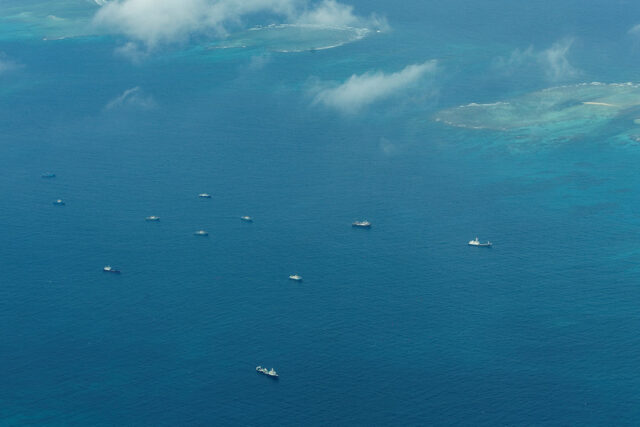
AN AERIAL VIEW of what Philippine Coast Guard alleges were Chinese vessels, manned by Chinese maritime militia, loitering within the vicinity of Thitu Island, one of nine features occupied by the Philippines in Spratly Islands, in the disputed South China Sea, March 9, 2023. — REUTERS

By Kyle Aristophere T. Atienza and Beatriz Marie D. Cruz, Reporter

THE PHILIPPINES should brace itself for a more aggressive China as it is now under pressure to devise new tactics with a focus on deceptive propaganda amid vigilance from the international community, according to analysts.

The Chinese Coast Guard (CCG), backed by Beijing’s maritime militia and navy vessels, on Friday attempted to block a Philippine resupply mission to Second Thomas Shoal (Ayungin Shoal) with Philippine authorities recording at least 10 instances of dangerous maneuvers committed by the Chinese.

“We will expect massive swarming of Chinese armada and drones in the West Philippine Sea as they will try to contain our maritime law enforcers,” said Manila-based International Development and Security Cooperation founder Chester B. Cabalza.

“China will confront us in terms of their size and quantity of vessels to counter our meek contingent at sea and joint maritime patrols with allied countries,” he said in a Facebook Messenger chat.

The Philippines was able to deliver food and other supplies for troops stationed on a World War II-era ship grounded in the shoal despite China’s new display of aggression.

“At one instance, we saw how a CCGV (vessel) conducted dangerous maneuvers in between our RORE vessel and the escorting PCG (Philippine Coast Guard) vessel, which is a very irresponsible and unprofessional act,” Armed Forces of the Philippines (AFP) Spokesman Medel Aguilar said in a statement.

Four CCG and four maritime militia vessels harassed BRP Cabra and BRP Sindangan, as well as ships contracted by the AFP, “jeopardizing the crew members’ safety,” PCG spokesperson for the West Philippine Sea Jay Tarriela said — all of which were shown in PCG video footages made public.

“It can be expected for China to devise new strategies of dual-purpose nature to strengthen its presence in the West Philippine Sea,” said Don Mclain Gill, who teaches foreign relations at the De La Salle University, referring to parts of the South China Sea that are within the Philippines’ exclusive economic zone.

“It (China) has to change its strategy given that it is now once again under the spotlight of international condemnation,” he said via Messenger chat.

Raymond M. Powell, the South China Sea lead at Stanford University’s Gordian Knot Center for National Security Innovation, reported that aside from two China Coast Guard ships and 10 maritime militia vessels that tried to block the Philippine vessels, a Chinese cargo ship was also present during the Friday mission “for unclear purposes.”

“Previous resupply missions encountered ‘dark’’ China Coast Guard ships (not broadcasting automatic information system, or AIS),” he said in a tweet. “Unclear if dark ships present today, but forward deployment of so many militia ships suggests fewer CCG than before.”

He said Beijing employed bow-crossing, a harassment tactic “in which a ship abruptly maneuvers to cross dangerously across the bow of another in violation of the 1972 International Regulations for Preventing Collisions at Sea (COLREG) and the 2014 Code for Unplanned Encounters at Sea (CUES).”

“This maneuver is intended to force the other ship to take evasive action to avoid a collision. It may be used to disrupt freedom of navigation operations (FONOPS) or other assertions of international law or national sovereignty,” he said, citing an analysis published by Stanford defense scholar Gaute Friis in July.

Mr. Gill said it is necessary for the Philippine government “to take every action of the CCG and the People’s Liberation Army Navy with a grain of salt given that Beijing has clearly illustrated its unwillingness to engage based on rules.”

The Philippines needs to be alert and expect the worst-case scenario in terms of Chinas behavior, he added.

“China will confront us in terms of their size and quantity of vessels to counter our meek contingent at sea and joint maritime patrols with allied countries,” Mr. Cabalza said, citing the need to upgrade the Philippines’ coast guard force.

China’s harassment on Friday happened just a day after the four-day gathering of leaders of the Association of Southeast Asian Nations (ASEAN) for their 43rd summit in Indonesia.

LEVERAGING ASEAN TIES
At the 18th East Asia Summit last Thursday, which was also attended by Chinese Premier Li Qiang, President Ferdinand R. Marcos, Jr. urged his Southeast Asian counterparts to take action over what he described as dangerous use of coast guard and maritime militia vessels in the South China Sea.

“We must oppose the dangerous use of coast guard and maritime militia vessels in the South China Sea,” he said

Mr. Marcos said the Philippines is also concerned “over illegal, unreported, and unregulated (IUU) fishing, and the militarization of reclaimed features” in the waterway.

“We call on ASEAN and our partners to harness our shared interests and rally us into taking joint action, guided by ASEAN Centrality and universal multilateralism,” he said.

Mr. Marcos had said that while the Philippines does want to be involved in any violent conflict, it would not hesitate to stand up to foreign aggression.

“Let me be clear, we do not seek conflict. But it is our duty as citizens and as leaders, to always rise and meet any challenge to our sovereignty, to our sovereign rights, and our maritime jurisdiction in the South China Sea,” he said at the 43rd ASEAN Summit Retreat in Jakarta on Tuesday. “No country would expect any less. No country would do any less.”

Security in Southeast Asia and the whole Indo-Pacific region has been a major discussion among ASEAN countries, as they deal with the increasing tension between the US and China, which has ramped up its aggression in Philippine waters through provocative actions that stop short of a war.

AVOID ‘EITHER-OR’ POLICY — ANALYSTS
Analysts said over the weekend that the Philippines should avoid an “either-or” kind of foreign policy in dealing with geopolitical tensions in the South China Sea.

Instead, it should advance its diplomatic ties with ASEAN member-states, most of which also have interests in the disputed sea.

“There’s a tendency to see or at least to look at the Philippines as going too close to the United States (US) at the expense of our relationship with China so our situation is becoming a zero-sum game in terms of how we actually deal the great power,” Herman Joseph S. Kraft, a political science professor at University of the Philippines, said in a video interview.

“Relations within the region is increasingly being dominated by the rivalry between China and the United States,” Mr. Kraft said, noting that the rivalry between the two superpowers narrows down ASEAN cooperation.

Victor Andres C. Manhit, president of Stratbase ADR Institute, said the Philippines’ legal victory at United Nations-based arbitration court, The Hague, is widely recognized, signifying the opportunity to advance cooperation with other ASEAN nations.

“As more aggressive activities are reported in the West Philippine Sea, it only fuels more commitment to cooperate in the maritime area among like-minded states,” Mr. Manhit said in a Viber chat.

Mr. Kraft said ASEAN countries should have a “collective voice,” in dealing with the South China Sea dispute.

“The problem is right now ASEAN can’t act collectively on this because even as it tries to strengthen ASEAN centrality, the strategic relationship of ASEAN countries is differentiated in terms of how they deal with both the US and China,” he said.

The situation in the South China Sea was discussed in the 2023 ASEAN Summit last week in Jakarta, Indonesia, in which “concerns were expressed by some ASEAN Member States on the land reclamations, activities, serious incidents in the area, including actions that put the safety of all persons at risk, damage to the marine environment, which have eroded trust and confidence, increased tensions, and may undermine peace, security, and stability in the region,” according to the Chairman’s Statement.

“We reaffirmed the need to enhance mutual trust and confidence, exercise self-restraint in the conduct of activities that would complicate or escalate disputes and affect peace and stability, and avoid actions that may further complicate the situation,” it also said.

Mr. Manhit noted that the ASEAN and China have yet to finalize a code of conduct for navigating the South China Sea, which was not even mentioned in the ASEAN statement.

Meanwhile, China continues to ignore a 2016 ruling by a United Nations-backed arbitration court that voided its claim to more than 80% of the South China Sea.

“Six years has already passed since the ruling, I think it is high time for states to take a more active stance in enforcing international law,” Mr. Manhit said.

The Philippines should advance infrastructure development and free trade agreements with ASEAN countries to strengthen ties, as well as decrease import dependency on China, said Mr. Gill.

“Such partnerships should also focus on economic cooperation as well given that China’s provocations are fueled by its economic advantages over its less powerful neighbors,” the DLSU professor said. “Hence, a comprehensive partnership that focuses on both defense and economics will be crucial for Manila.”

DOLE: Workers press for freedom of association

BW FILE PHOTO

WORKERS SECTOR representatives are pushing for the government to secure their civil liberties, especially their freedom of association, the Labor department revealed on Sunday.

In a statement, the Department of Labor and Employment (DoLE) said it held a strategic planning workshop with its stakeholders on Sept. 4 in Manila to set goals for a labor roadmap it had presented to the Cabinet last month.

“Strengthening the capacities of government and social partners through labor governance education, specifically in the areas of freedom of association (FoA) and civil liberties, is also among the strategies to ensure a labor and employment sector that respects fundamental principles and rights at work, international labor standards, and human rights,” the DoLE said.

The agency said the results of the consultations would form the foundation of the labor and employment plan’s implementation for the next five years.

At a Senate hearing on DoLE’s proposed budget for 2024 on Sept. 1, Labor Secretary Bienvenido E. Laguesma said workers and employers would have oversight of its jobs plan to improve the employability of the country’s workforce.

The employment plan aims to upgrade worker skills, raise the quality of teachers, and modernize training institutions, Mr. Laguesma told an employer conference last month.  It also details a comprehensive social protection program for workers.

President Ferdinand R. Marcos, Jr. in his second address to Congress urged government agencies to continue improving the employability of the workforce.

“The responsibility for [Labor and Employment Plan 2023-2028s] implementation, monitoring, and evaluation is not the DoLE’s and/or the government’s responsibility alone but is collectively shared with the private sector, with all,” Labor Undersecretary Carmela I. Torres said in the same statement.

Mr. Marcos on April 30 signed an executive order creating an inter-agency body that will investigate labor rights violations targeting trade unionists.

Labor groups have called on the government to amend the order creating the task force, noting the measure lacked participation from workers. — John Victor D. Ordoñez