Home Blog Page 4290

Low liquidity levels setting back local corporate bond market, say investors

THE PHILIPPINE corporate bond market is still suffering from low liquidity levels, resulting in a low amount of issuances compared with government bonds and leaving it behind Southeast Asian counterparts, investors said.

“For the bond market, I think the Philippines needs to be more competitive compared to those in the region. In terms of size, we are lagging [behind] our ASEAN peers,” said Maria Cristina B. Gabaldon, deputy head of Metrobank’s investment management division.

“I guess it has to do with the number of issuances. We need more supply of bonds. We need to deepen the capital market,” she added in a panel discussion at the Advancing the Philippines Bond Market Conference on Wednesday.

Compared with regional peers, the Philippine government remains dominating the bond market, said BPI Wealth Head of Investment Solutions Gladys Buenaventura.

“In other countries, it’s relatively equal. Here, we still see limited corporate issuers,” she said.

According to the Asian Development Bank’s Bond Monitor, corporate bonds comprised only 13.6% of the outstanding local currency bonds in the second quarter.

Ms. Gabaldon said demand exists for corporate bonds, but the country lacks issuers.

“We need more supply of bonds. We need to deepen the capital market. I think demand is there. It depends on the tenor. Some retail investors are asking for the short-term tenors while some companies want longer tenors. So I think corporates and BTr (Bureau of the Treasury) should take advantage of this demand,” she said.

Ms. Buenaventura likewise said increasing market makers could solve the liquidity issue on the corporate side.

She added that bond literacy in schools could help drive the demand for bonds, and thus increase the liquidity in the market as well as accessibility of the market to the public.

“As we know, most Filipinos are very familiar with stocks. It’s so easy for them. But once we start talking about bonds, it’ll take time for us to actually explain to them how the whole instrument works,” Ms. Buenaventura said.

She noted that a more “curricular” rating system for the issuances could help investors assess what they are investing in and compensate them for the risk they are taking.

BDO Unibank Vice-President and Fixed Income Manager Jason Samson L. Clemente, Jr. added that transparency is also lacking, and improving it could help in expanding the market. — Aaron Michael C. Sy

Champagne demand softens after post-COVID boom years, LVMH says

IHOR N-UNSPLASH

DEMAND for LVMH’s Champagne brands is moderating this year after the boom that followed COVID-19 lockdowns, according to a top executive at the luxury conglomerate.

There was a “general sense of revenge pleasure,” in 2021 and 2022 after consumers were stuck at home, Moët Hennessy Chief Executive Officer Philippe Schaus said in an interview. The drinks and wines division he oversees generated about 7.5% of first-half revenue at parent company LVMH Moët Hennessy Louis Vuitton SE.

“2023 is a bit more complicated, because this effect of COVID is fading out, and there’s a lot of inflation in all countries,” Mr. Schaus said. “So we see that we are going back to normal.”

Mr. Schaus pointed to a drop in Champagne consumption at home. But other markets are holding up well.

“We have seen this summer that there was no abating of the demand for high-end Champagne” in beach and nightclubs across the Greek island of Mykonos and the Italian Riviera, as well as top restaurants in Paris, Mr. Schaus said. The division’s brands include Dom Pérignon, whose Plénitude 2 vintage 2004 bottle costs €495 ($528) in France.

Organic sales at the drinks unit fell 3% in the first half, hurt by a slowdown in Cognac consumption in the US.

LVMH’s wines and spirits division has been acquisitive in the recent past, with deals including an investment in the pricey Champagne label Armand de Brignac, co-owned with rapper Jay-Z. Earlier this year, LVMH bought a majority stake in rosé wine maker Château Minuty.

Mr. Schaus said LVMH isn’t looking at buying more alcohol brands, describing its portfolio as strong. But the executive expects more consolidation in the Champagne region.

“There are about 300 Champagne maisons so I can imagine that there will be mergers, for sure, because 300 is a lot,” he said. “It’s super fragmented.”

The Luxembourg-born executive spoke at Château de Saran, which is surrounded by vineyards belonging to Moët & Chandon near the town of Epernay in northern France. The interview took place during the harvesting period, known as les vendanges.

Mr. Schaus said volumes are plentiful. Rising temperatures have made yields more erratic, but the industry has been resourceful and has adapted to climate change over the past few centuries, Mr. Schaus said. “Champagne will continue to evolve. But I promise you, in 100 years, people will still be doing Dom Pérignon and Moët & Chandon.”

LVMH is the biggest maker of Champagne since it also owns the Krug, Ruinart, Veuve Clicquot, and Mercier labels.

Comité Champagne, the industry trade group, in July said it expects its producers to ship 314 million bottles this year, down 3.7% from last year. — Bloomberg

Cebu Landmasters, NTTUDA tie up to develop residential towers

LISTED property developer Cebu Landmasters, Inc. (CLI) and NTT UD Asia Pte. Ltd. (NTTUDA) will create a new joint venture (JV) company as the two companies partnered to develop residential towers in Cebu City.

“This is also to disclose to the exchange that both companies are now preparing formal notifications to the Philippine Competition Commission (PCC) and intend to secure PCC clearance for the new JV company which shall be known as CLI NUD Ventures, Inc.,” CLI said in a stock exchange disclosure on Wednesday.

The new company comes as the partners signed an agreement to develop premium-grade residential towers in Cebu City.

CLI is a real estate developer with over 116 development projects across 16 major locations in Visayas and Mindanao. It currently has a residential portfolio consisting of more than 37,000 units valued at P122 billion.

Its portfolio includes the Premier Masters, Garden-Series, Casa Mira, and Villa Casita Residential offerings.

Meanwhile, NTTUDA is an international developer of commercial properties such as office buildings, residences, and other mixed-use developments in Southeast Asia.

In the first half of the year, CLI’s consolidated net income rose 32% to P2.1 billion versus the P1.6 billion posted a year ago.

On Wednesday, shares of CLI at the local bourse closed unchanged at P2.55 apiece. — Revin Mikhael D. Ochave

Keeping the old and adding the new

JUST in time for the runup to its fifth anniversary, Sheraton Manila is keeping some of the old but is also introducing the new — particularly a new executive chef and several new executives.

Earlier this week, Sheraton Manila showed off the Sheraton Club, an exclusive venue for Marriott Bonvoy members (the Sheraton chain was acquired by Marriott International in 2016 after purchasing its parent, Starwood). There, they introduced their new Italian Executive Chef, Andrea Burzio.

Mr. Burzio is installing a “prenza e cena (lunch and dinner)” Italian spread at the hotel’s S Kitchen restaurant. For that, he teased guests with a one-meter-long lasagna, which is set to enter S Kitchen in October.

General Manager Anna Vergara said in a speech that they began operations in January 2019 — its return to the Philippines after three decades — and we know what happened a year later.

“The past five years were not a walk in the park,” she said. She told BusinessWorld that in those five years, the hotel had been used as a quarantine facility, while they bolstered their food and beverage operations so they could offer takeout and delivery during the COVID-19 pandemic.

“During the pandemic, we obviously had to cut down on a lot of things. We wanted to make sure that we survived. Because of that, we discovered a lot of efficiencies,” she told BusinessWorld. “We realized that these efficiencies can be applied in the ‘real’ world.” These include the same stringent hygiene standards enforced during the height of the pandemic, but also making more use of their online capabilities — including within the management board, where they continue holding online meetings.

Aside from Ms. Burzio, Ms. Vergara introduced a new Director of Sales and Marketing for the hotel, Ria Galvez. She introduced us as well to the Director of Food and Beverage, Czats Lopez. Feminism looks strong in this workplace, and Ms. Vergara mentioned that seven out of nine members of the executive board were women. Ms. Vergara, who had been General Manager since the Sheraton’s 2019 opening (it must be noted that Ms. Vergara’s status as a General Manager of an international hotel chain is also a rarity in the city), spoke about the difference of a woman’s touch. “I don’t want to be very biased against our male counterparts. But for us, for women, I think the biggest advantage is the nurturing talent that we have that comes out naturally,” she said. “A majority of our women leaders, we are actually mothers, so they use that as an advantage in taking care of our associates (and guests).”

The countdown to the January anniversary — the celebrations for the fifth anniversary will kick off on Jan. 14, 2024 — kicks off with holiday room packages and even a wedding campaign (10% off food and beverage for a 2024 Sheraton Manila Grand Ballroom wedding). — JLG

TDF yields drop before Fed, BSP policy decisions

BW FILE PHOTO

YIELDS on the central bank’s term deposits dropped on Wednesday as both tenors were oversubscribed on expectations of a rate pause this week.

The term deposit facility (TDF) of the Bangko Sentral ng Pilipinas (BSP) fetched bids amounting to P434.066 billion on Wednesday, well above the P300-billion offering but a tad lower than P446.698 billion for a P340-billion offer seen a week ago.

Broken down, tenders for the seven-day papers reached P263.423 billion, higher than the P180 billion auctioned off by the central bank and the P248.137 billion in bids for a P200-billion offering seen the previous week.

Banks asked for yields ranging from 6.3% to 6.515%, lower than the 6.33% to 6.575% band seen a week ago. This caused the average rate of the one-week deposits to decrease by 6.15 basis points (bps) to 6.4576% from 6.5191% previously.

Meanwhile, bids for the 14-day term deposits amounted to P170.643 billion, beyond the P120-billion offering but failing to beat the P198.561 billion in tenders for a P140-billion offer seen on Sept. 13.

Accepted rates for the tenor were from 6.3275% to 6.525%, also lower than the 6.34% to 6.58% margin seen a week ago. With this, the average rate for the two-week deposits fell by 3.64 bps to 6.4863% from 6.5227% logged in the prior auction.

The BSP bank has not auctioned 28-day term deposits for more than two years to give way to its weekly offerings of securities with the same tenor.

The term deposits and the 28-day bills are used by the BSP to mop up excess liquidity in the financial system and to better guide market rates.

Term deposit yields went down ahead of the widely expected pause from both the US Federal Reserve and the BSP at their meetings this week, Rizal Commercial Banking Corp. Chief Economist Michael L. Ricafort said in a Viber message.

The US Federal Reserve was set to announce overnight its policy decision after a two-day meeting.

The Fed hiked borrowing costs by 25 bps at its July meeting, bringing its target rate to 5.25-5.5%, the highest level in 22 years.

Meanwhile, the Monetary Board will hold its own review on Thursday, where it is likely to keep rates steady for a fourth straight meeting, according to 14 of 17 analysts in a BusinessWorld poll last week.

Mr. Ricafort said headline inflation could fall within the 2-4% target by the fourth quarter or in the first quarter of 2024 due to a high base, which would be a key factor in the BSP’s decision making.

The country’s headline inflation rose to 5.3% in August from 4.7% in July. It marked the 17th straight month inflation breached the central bank’s 2-4% target.

For the first eight months, inflation averaged 6.6%, still above the BSP’s 5.6% forecast. — K.B. Ta-asan

King-king mine operator seeks foreign investors

ST. AUGUSTINE Gold and Copper Ltd. is updating the preliminary feasibility study (PFS) for its King-king copper-gold project in Davao de Oro as it seeks foreign investors, a company official said.

“We are having our 2013 PFS updates. Hopefully, it will be ready by early next year,” St. Augustine Chief Operating Officer Michael G. Regino told reporters on the sidelines of a mining forum of the Chamber of Mines of the Philippines.

“They might be ready by January,” he said about the updates.

Mr. Regino said the updated study would allow the company to see revisions on current prices, revenues, and cost of the project.

“We believe that the financials will definitely be a lot better than the 2013 PFS,” he said. “You need to update the study and the cost to determine the viability.”

He said the project, which requires an initial $2 billion, would need investments from foreign investors.

“Projects of this size, definitely would need big money, so you would need a partner, big investors,” he said.

He added that the company Is in talks with multiple foreign investors, but “[they] are just waiting for the PFS to be completed.”

He said that based on the company’s original plan, it would take an estimated four years to put up the plant and open pit.

“Copper is really becoming a need because of [the electric vehicle] revolution and the increase in use of copper in each car is threefold,” he said.

Mr. Regino said the project’s 23-year mine life is estimated to bring 3.1 billion pounds of copper, 5 million ounces of gold, and nearly 10 million ounces of silver.

In the first five years, the company expects to extract 150,000 tons of copper per year.

The King-king copper-gold project is part of a mineral production sharing agreement between the Philippine government and Nationwide Development Corp.

St. Augustine is responsible for the overall development and operation of the project. — Adrian H. Halili

Recycling beverage cartons

FREEPIK

In May 2022, Congress passed Republic Act (RA) 11898 to amend the law on solid waste management and make producers responsible over their products’ packaging waste. This was in response to the issue of what to do with products at the end of their life cycle. The law made manufacturers or producers, and not just consumers, also responsible for this.

RA 11898 “institutionalize[s] the extended producer responsibility mechanism as a practical approach to efficient waste management, focusing on waste reduction, recovery, and recycling, and the development of environment-friendly products.” The law requires “producers to be environmentally responsible throughout the life cycle of a product, especially its post-consumer or end-of-life stage.” It is in this context that I now raise the issue of producers’ seemingly limited capacity to locally recycle, particularly used beverage cartons or multi-layer “paper bottles.” Consumers are inclined to think that beverage cartons, being paper-based, are more friendly to the environment than plastic bottles. While this may be true, paper bottles are still not easy to recycle since they contain not only paper layers but also plastic and aluminum layers.

Given this, how can local producers effectively comply with the mandate of RA 11898 if they have limited capacity to undertake the local recovery, recycling, reuse, and proper disposal particularly of used beverage cartons? Locally, is there actually a way to make paper bottles even more environment-friendly in terms of both carbon footprint and recycling?

Studies indicate that paper bottles with plastic and aluminum layers take less energy to make than other beverage packaging. They are also light and space-efficient to transport because of their material and shape. And they can better store perishable items like milk, juices, soups, and sauces. Beverage cartons are thus great packaging, but they are difficult to recycle.

It is in this line that Plastic Action (PACT), in a paper, recommends the calibration of policies with respect to the use of beverage cartons or paper bottles. And the recommendation, particularly in Singapore, is to limit the use of beverage cartons only “to highly perishable food products.” This is given the fact that Singapore has no local recycling facility for used beverage cartons.

PACT was started by World Wildlife Fund-Singapore and is based on WWF’s No Plastic in Nature Initiative. According to WWF-Singapore, PACT is a business initiative that aims to reduce waste and move towards a circular economy. It pushes for science-based decisions for responsible production and consumption.

In what PACT refers to as a “Guidance Pack on Used Beverage Cartons” for Singapore, it said beverage cartons have “debatable recyclability,” and should thus be “reserved for highly perishable liquid foods that require the preservation of flavor and nutrient value, and benefits from a lengthened shelf-life.” For drinking water, plastic bottles could be retained, PACT said, noting that “plastics with recycled content would have a lower environmental footprint than beverage cartons.”

PACT added, “Beverage cartons should not be used as a replacement for drinking water plastic bottles, simply to accommodate consumers’ demand for plastic removal. The disposal of the beverage carton will also be a problem especially in Singapore’s waste management context.”

Moreover, “the intended design of the beverage carton would not contribute significantly to the shelf life of drinking water. Neither does drinking water require the preservation of flavors or nutrients.” In short, why use paper bottles for water when plastic will do just fine, for now.

PACT added, “Although beverage cartons are theoretically recyclable, their actual recyclability is debatable. This is because: Firstly, a beverage carton cannot be 100% recycled back to a new beverage carton. Secondly, the recovered materials from recycling are either downcycled or made into products that are unrecyclable. [And], although advances in recycling technology can improve the recyclability of beverage cartons, there are very few facilities with such advanced technology, raising the question of the term ‘recyclable’ from a country’s waste management context.”

PACT noted that Singapore does not have its own recycling facility for used beverage cartons, and the nearest one is in neighboring Selangor, Malaysia. But the Malaysian facility “is only able to recover paper [from used beverage cartons], while the remaining plastic and aluminum are downcycled into a composite material (a material that is made from at least two very different materials).”

I believe the Philippines can take the lead of PACT on this given the country’s limited capacity to undertake the recycling of used beverage cartons. I know only of Nestlé Philippines, Tetra Pak Philippines, Green Antz Builders, and JunkNot collecting used beverage cartons and repurposing them into durable materials for making tables and chairs.

While other producers are also getting into recycling, capacity is still limited. In this sense, if more local and imported products come in paper bottles or beverage cartons, just so to save on freight and limit plastic use, then much of their discarded packaging will still end up in landfills. Consumers also need to do their part in collecting, cleaning, and turning over their used cartons.

My concern is not so much the recyclability of beverage cartons but the Philippine capacity to do so. With proper facilities in place, paper bottles can in fact be recycled, with the paper, plastic, and aluminum content separated. But, until more facilities or more producers collect and recycle discarded cartons, we need to consider alternatives.

My call is that importers and local producers, in determining packaging for their products, should steer clear of materials that cannot be commercially recycled, reused, or repurposed. Meantime, they should also consider investing in facilities that can locally recycle, reuse, or repurpose the very packaging materials they produce.

While the priority is for producers to always use fully reusable packaging, this is easier said than done. An option, particularly for beverage makers, is to use recycled PET, or at least collect and recycle most of their PET or plastic bottle. As for those using beverage cartons or paper bottles, they need to initiate more programs to collect and recycle their used packaging products.


Marvin Tort is a former managing editor of BusinessWorld, and a former chairman of the Philippine Press Council

matort@yahoo.com

Treasury bureau looking to issue tokenized bonds within the year

BW FILE PHOTO

THE BUREAU of the Treasury (BTr) is looking to conduct a pilot test of tokenized bonds among government securities eligible dealers (GSED) within the year.

The BTr has not decided on the issue size, Deputy Treasurer Erwin D. Sta. Ana told reporters on Wednesday, but is looking at offering smaller denominations.

He said the denominations for the tokenized bonds could be lower than the P5,000 minimum investment for retail Treasury bonds.

Tokenized bonds are exchanged digitally through a blockchain.

The tokenized bonds use a value known as a token to take the place of the securities’ sensitive data and secure them.

Mr. Sta. Ana said in a speech at the Advancing the Philippines Bond Market Conference 2023 held on Wednesday that the BTr is working on issuing a total of two tokenized bonds.

The BTr is conducting an internal study on the tokenized bonds with inputs from government financial institutions to potentially implement tokenization for retail bonds and attract more digital investors.

“We’re currently studying it. We did the study to initially pilot it with institutional investors, with our GSEDs, and possibly the government institutions. Later on, once the proof of concept is okay, then we can venture into retail,” Mr. Sta. Ana said.

“We’d like to roll it out first to the institutional investors and then later on, to harness what this technology offers, which is to further enable fractional shares in terms of onboarding more digital investors,” he added.

He said that the BTr will announce the pilot tokenized bond offering soon.

The BTr is also planning to issue a sukuk and a retail dollar bond before the end of the year, he added.

“The BTr is trying to introduce Sukuk bonds through the LGU (local government unit) bonds financing framework. We have launched this as well. We have been speaking with LGU executives. We have seen interest from at least three, five first-class cities, so efforts are on the way,” Mr. Sta. Ana said.

The Sukuk bond issue would mark the Philippines’ debut in the Islamic bond market.

National Treasurer Rosalia V. de Leon said last week that the securities could be issued before the end of the year or in the first quarter of 2024. — A.M.C. Sy

Fungus and May downpours ravage Italy’s wine production

MIKA BAUMEISTER-UNSPLASH

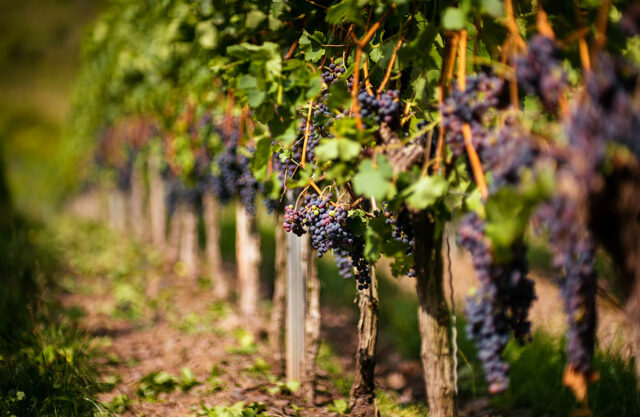
SAN PAOLO DI CIVITATE, Italy — As Italy’s autumn grape harvest begins, winemakers are braced for a sharp drop in output after a rampant fungus ruined vines, thriving on drought followed by torrential spring rain.

The plasmopara viticola fungus, which causes a disease named grape downy mildew, destroyed vines in many Italian regions and will result in a 12% production loss nationwide versus last year, according to wine lobbies UIV and Assoenologi and agriculture institute ISMEA.

That means Italy is set to lose its position as the world’s top wine producer to France, which had ceded the crown nine years ago.

First found in the Americas some 190 years ago, the fungus thrives in warm, humid conditions which were common in Italy this year due to unusual heat and heavy downpours during the key month of May, when the grapes are forming.

Worst hit were regions along the Adriatic coast, with Abruzzo, known for its Montepulciano d’Abruzzo red, and Molise, losing 40% and 45% of their output respectively. Further south Puglia, famous for its Primitivo red, is down by 25%.

Paolo Niro, a small-scale grape farmer who cultivates 14 hectares around the Puglia town of San Paolo di Civitate, lost his entire crop.

“Early in May we realized there would be no harvest, we cultivate organically and experienced the (fungus) attack sooner,” he told Reuters.

Italian output is forecast to fall to below 44 million hectoliters this year, according to the wine lobbies and ISMEA, from 50 million last year.

A hectoliter is 100 liters, or 133 standard wine bottles.

Wine production in France is expected to fall 2% this year to just below 45 million hectoliters, with major disparities between regions after some vineyards were severely hit by fungal diseases while good weather in other regions boosted potential output, the French farm ministry said last week.

SOUTH BEARS BRUNT
Plasmopara viticola, which attacks the vines’ leaves and the fruit, is historically more prevalent in the rainy regions of northern Italy. This year, however, the north emerged almost unscathed, losing just 0.8% of output.

The center and south, on the other hand, were hit hard as prolonged periods of drought were interspersed with intense rain, particularly during May, damaging crops and agricultural infrastructures, and favoring the fungus.

“The plants are the most vulnerable during the pre-flowering, flowering, and early fruiting stages,” said Andrea Luvisi, professor of phytopathology at the University of Salento in Puglia.

Thanks to heavy rains and humidity, the fungus was able to attack the vines during these vulnerable periods, he added.

The Italian government last month allocated a modest one million euros to help grape producers hurt by downy mildew. The Puglia farmer Mr. Niro, who employs 25 permanent workers, said he alone expected lost income of 110,000 euros ($117,128.00).

Fazil Dusunceli, agriculture officer at the United Nations Food and Agriculture Organization (FAO), based in Rome, said global warming was causing more frequent extreme climate events that threaten vineyards, and contingency plans were needed.

Italy has already registered 2,664 extreme events so far this year, including heavy rain and large hail, according to the European Severe Weather Database (ESWD) — against 3,192 for the whole of 2022 and just 787 recorded 10 years ago.

Mr. Dusunceli called for more investment in new, disease-resistant strains of grape, saying he was sure this year’s plasmopara attack “will force many farmers to look for other types of varieties.” — Reuters

Century Pacific Food’s plant-based brand expands reach and offerings

CENTURY PACIFIC Food, Inc. (CNPF) continues to boost its global presence as its plant-based food brand recently entered Australia and launched new offerings in the United States.

In a stock exchange disclosure on Wednesday, the listed food and beverage firm said its unMEAT brand is now available in Australia via supermarket chain Woolworths.

“Woolworths, Australia’s largest supermarket chain, now carries unMEAT in 960 stores nationwide. The brand is likewise available on the retail giant’s e-commerce platform. unMEAT entered the chain with its range of plant-based luncheon meat in shelf-stable format, all priced at parity to luncheon meat analogs,” it said. 

CNPF Executive Vice-President and Chief Operating Officer Gregory Francis H. Banzon said plant-based food consumption in Australia is increasing, with one in three Australians “consciously reducing meat consumption.”

In the US, CNPF is now offering more unMEAT products as Walmart added meat-free chili with beans, chicken-style chunks, and roast beef to the items being sold on the retailer’s shelves.

Earlier in the year, CNPF’s unMEAT luncheon meat debuted in about 1,800 Walmart stores. 

“The thesis behind plant-based alternatives remains. Consumers want healthier and more planet-forward food choices. As a food company, we need to address these needs through innovation and reduce friction by making options more affordable and accessible,” Mr. Banzon said.

Currently, CNPF’s unMEAT brand is carried by retailers such as Walmart, Albertsons, Harris Teeter, HEB, and Meijer in the US; Carrefour in the UAE; and FairPrice in Singapore.

“Developing the plant-based alternatives category requires innovation, not just of the protein source but also the variety. Apart from reducing the price friction, we need to give consumers more points of entry through a wider select,” Mr. Banzon said. 

CNPF entered the plant-based sector in 2020 with the institutional launch of unMEAT via its affiliate company, Shakey’s Pizza Asia Ventures, Inc., which was then followed by the launch of its frozen range in the local retail market in 2021. 

The brand also began its international rollout in 2021 as it expanded to the United Arab Emirates, the United States, Singapore, and China.

In the first half of the year, CNPF’s net income climbed 8% to P3.19 billion as its revenues improved 7% to P33.44 billion. 

On Wednesday, shares of CNPF at the local bourse rose P1.40 or 4.83% to finish at P30.40 apiece. — Revin Mikhael D. Ochave

Transformation of the mind

FREEPIK

(This piece is in commemoration of International Peace Day on Sept. 21.)

SUSTAINABLE PEACE and “dividends of peace,” particularly in the Bangsamoro Autonomous Region in Muslim Mindanao (BARMM), are key for growth and development. Among the key actions that have significantly aided in setting the region’s trajectory towards peace and growth are the signing of a peace deal between the government of the Philippines and the Moro Islamic Liberation Front (MILF) in 2014, the subsequent approval of the Bangsamoro Organic Law by the Congress in 2018, and the establishment of the Bangsamoro Transition Authority (BTA) in 2019.

But while these important agreements are pivotal, the region’s full potential can only be fully realized when its key leaders, some of whom were former revolutionaries, are able to implement an inclusive vision for peace and sustainable development — one that is rooted in the pursuit of moral governance and sustainable development.

In March 2020, the School of Peace and Democracy-Bangsamoro or SPD-Bangsamoro was launched through the collaboration of the Bangsamoro Government, the United Nations Development Program (UNDP) Philippines, and the Australian Embassy in the Philippines. SPD-Bangsamoro was founded on the belief that one of the most important transformations for peace is that of the mind. Under this belief, the program provided MILF commanders and community leaders an opportunity to play civilian leadership roles. The SPD-Bangsamoro sought to support the Bangsamoro Government and accompany the transformation from armed struggle to civilian socio-political leadership and to mainstream the transitioning combatants into socio-political inclusion and participation.

The SPD-Bangsamoro continued its implementation from 2022 to 2023, under the leadership of the Peace, Security and Reconciliation Office (PSRO) and the Development Academy of the Bangsamoro (DAB), with an enhanced curriculum composed of three phases focused on personal and community resilience, conflict resolution and mediation, leadership and social movement building.

Recently, close to 200 top leaders of the MILF completed the SPD-Bangsamoro and have now been organized into four tracks according to their specialization. The SPD-Bangsamoro fully supports the implementation of the Comprehensive Agreement on the Bangsamoro (CAB) and under this stage, strongly featured the meaningful and substantive participation of women leaders. Out of those who graduated from the program, there were a total of 44 women leaders from the MILF. UNDP Philippines is honored to able to accompany former MILF combatants and community leaders in this journey through the SPD-Bangsamoro.

Testimonials from those who graduated from the program show that the experience equipped participants to value their past efforts for social justice and empowerment, and to envision themselves continuing these struggles through peaceful means. They feel empowered in a new way to continue the struggle for peace and development.

The message of SPD-Bangsamoro is clear: that lasting peace and sustainable development cannot be achieved without addressing the intangible factors that contribute to conflict and instability. Hope, resilience, empowerment and social cohesion are factors that are all interrelated, and they all play a role in creating a sense of belonging and purpose, which is essential for peace and development.

While the agreements in the past decade are pivotal, it is ultimately the personal and social transformation that will determine the strength of our joint commitment for peace.


Dr. Selva Ramachandran is the UNDP Philippines resident representative.

Multi-country initiative seen to boost cybersecurity practices, infrastructure

FREEPIK

A MULTI-COUNTRY initiative is expected to boost cybersecurity infrastructure and practices in the Philippines, according to experts.

The ASEAN-Japan Cybersecurity Community (AJCC), which the Philippines is a member of, aims to leverage regional partnerships through international conferences to sustain an information security and cybersecurity community of practices.

“It is about time that a multi-country approach spearheaded by communities of practice will join hands to fight against cybercriminals,” Sam Jacoba, founding president of the National Association of Data Protection Officers of the Philippines and conference chair of the CyberSecConPH, said during a press conference.

“We can only strengthen the cybersecurity community if it is built on collaboration, cooperation, communication, and contribution,” said Angel “Lito” S. Averia, Jr., president of the Philippine Computer Emergency Response Team (PhCERT).

Kaspersky earlier said the Philippines was the second most attacked country by web threats last year, with 39,387,052 internet-borne threats detected. The country placed fourth in 2021.

It also saw 2,409,085 brute force or trial and error attacks among remote workers, 52,914 financial phishing cases among business, 24,737 crypto-phishing cases, 15,732 mobile malware cases, and 50 mobile banking Trojan cases last year, according to data from Kaspersky.

The Philippines will be represented by 20 cybersecurity experts and entrepreneurs at the International Conference on the AJCC in Tokyo, Japan on Oct. 5-6.

Rudi Lumanto, founder and advisor of the Indonesia Network Security Association, said a strong government mandate and increased public education are pillars of best cybersecurity practices.

“Everybody has a responsibility to educate themselves and the people around them,” Mr. Lumanto said.

Seiichi Ito, chair of the international relations committee at the Japan Network Security Association, said governments must focus on enhancing the power to develop and protect critical infrastructure for cybersecurity.

“The gap between the government and communities is quite high,” Mr. Ito said on the primary challenge of cybersecurity, citing the need for capacity building and information sharing at the national level.

Mr. Jacoba suggested benchmarks for industry best practices, like how much should be spent on infrastructure and what kind of training must be done to manage protection, among others.

NATIONAL CYBERSECURITY
Meanwhile, Mr. Averia pushed for the implementation of minimum information security standards for both the public and private sector, in response to the resurgence of text message scams.

“The problem is that the adoption of ISO (International Organization for Standardization) 27001 or any other ISO standards is very expensive,” he said on implementing ISO-certified standards for information security management systems.

He noted that it will take the Philippines a long time to comply with international standards and frameworks.

Mr. Jacoba said the Philippines needs at least about 108,000 chief information security officers (CISOs) among registered establishments, assuming that only 10% of the 1.08 million businesses listed by the national statistics agency are critical to the lives of Filipinos.

“Actually, you don’t just need one (CISO),” he said on the urgency of collaborative cybersecurity solutions in the country. “You need a team to look after your infrastructure, ecosystem, and solutions.”

Mr. Averia said mandatory reporting mechanisms for companies must be strengthened.

“We have been pushing for them to share breaches at the technical level so we can learn,” he said.

“Cybersecurity used to be an IT issue,” he added. “We have to go beyond that mindset,” he added. “Cybersecurity is now everybody’s responsibility, cutting across organizations — from senior management all the way down to the smallest user.” — Miguel Hanz L. Antivola

ADVERTISEMENT
ADVERTISEMENT