Home Blog Page 426

China’s wedding dress sellers pin hopes on rise in marriages

UNSPLASH

SUZHOU, China — Wedding vendors at Huqiu Bridal City in Suzhou, one of China’s largest wedding dress markets, are hopeful the country’s positive marriage trends will continue this year.

The rise in marriages in the first nine months of 2025 is a bright spot in China’s otherwise grim population landscape. Official data on Monday showed the country’s birth rate hit a record low last year and its total population fell for the fourth straight year.

Marriage rates rose 8.5% for the first nine months of 2025, according to Ministry of Civil Affairs data earlier this month, buoyed by policy changes and favorable cultural factors.

That increases the likelihood that overall marriage numbers in 2025 will halt a downtrend in annual nuptials that have gone almost uninterrupted for more than a decade.

Chen Juan, the co-owner of Luoyi Bridal, where dresses are priced from 1,000 yuan ($143.51, $1 = 6.9681 Chinese yuan) to around 4,000 yuan for more ornate styles, said marriage rates dropped significantly in 2024 as it was considered an inauspicious year to tie the knot, with many couples delaying weddings to 2025.

The sprawling Huqiu Bridal City is home to more than 800 stores filled with frothy white taffeta, silk and lace dresses.

A nationwide policy change in May 2025, allowing couples to marry anywhere in China rather than in their place of residence, also contributed to the rebound, Ms. Chen and other vendors said.

In response, local governments scrambled to attract a new wave of marriage tourists, setting up registration offices around scenic spots, at music festivals — and even in subway stations, shopping malls and parks.

Ms. Chen expects growth to continue due to this year’s favorable zodiac, Year of the Horse, which is considered a time of success. However, Ms. Chen emphasized the need for further government incentives to make even more of a difference.

“If the government can introduce some relevant incentive policies, this would be very good, because young people’s attitudes (to marriage) have changed,” she said.

A declining interest in marriage and family among young Chinese is widely blamed on the high cost of childcare and education. Some cities and regions have introduced cash vouchers for newlyweds to help convince citizens to tie the knot.

Zhu Jiaomei, 31, who sells made-to-measure gowns at the market, said the overall economy plays an even more important role than specific wedding-related policies in people’s willingness to marry, and the price they are willing to spend when they say “Yes” to the dress.

“The most important thing is that the economy improves, and everyone has confidence in the future. Now, jobs are less stable, so people are tightening their belts,” she said, adding that budgets are commonly half of those seen before the COVID-19 pandemic.

For 48-year-old wedding shoe seller Cheng Yonggui, the prospect of more marriages in the future holds personal significance.

With two sons approaching marriageable age, Ms. Cheng said she and her husband are “very anxious” about the prospect of their boys attracting a bride in a country where men heavily outnumber women due to a traditional cultural preference for male children.

In China, it is customary for parents of the groom to help their sons pay for an apartment and car, as well as a kind of dowry in some cases, before any marriage. Ms. Cheng estimates this will cost her and her husband “at least a million” yuan per son.

“For us, the pressure is immense, but we’re trying our best,” she said. “I hope more and more people get married, I hope our business gets better and better, and I hope our children live happier and happier lives.” — Reuters

Japan opposition to propose issuing ‘education bonds,’ draft platform shows

STOCK PHOTO | Image from Freepik

TOKYO — Japan’s opposition Democratic Party for the People (DPP) will propose issuing five trillion yen ($32 billion, $1 = 157.8800 yen) in “education bonds” annually to double the spending on childcare, education and scientific research, a draft campaign platform obtained by Reuters showed on Monday.

The DPP will also propose lowering the consumption tax rate to 5% from 10% until the pace of wage gains exceeds the rate of inflation by 2%, the draft showed.

To fund various spending measures, Japan should use proceeds from investing 180 trillion yen worth of reserves set aside for currency intervention, another 280 trillion yen in pension reserves, as well as 90 trillion yen worth of exchange-traded funds held by the central bank, the platform showed.

Prime Minister Sanae Takaichi is widely expected to dissolve parliament’s lower house and call a snap election in February in her first major election test since taking office in October.

DPP currently holds the third-largest number of seats among opposition parties and enjoys popularity among younger voters with its focus on expanding tax breaks and increasing pay.

Depending on the election outcome, the party could influence government policies with its decision on whether to support parliament’s passage of the fiscal 2026 budget and a bill to allow government issuance of deficit-covering bonds, analysts say. — Reuters

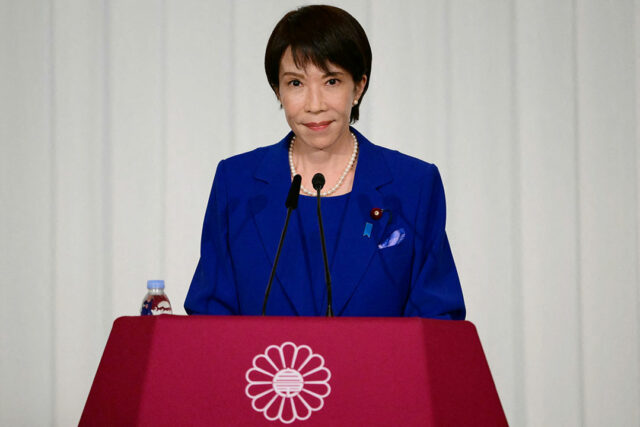
Japan PM Takaichi calls Feb 8 election seeking mandate for spending plans, defense build-up

Sanae Takaichi, the newly elected leader of Japan’s ruling party, the Liberal Democratic Party (LDP), attends a press conference after the LDP presidential election in Tokyo on October 4, 2025. — YUICHI YAMAZAKI/POOL VIA REUTERS

TOKYO — Japan’s Prime Minister Sanae Takaichi said she will call a national election for February 8 to seek voter backing for increased spending, tax cuts, and a new security strategy expected to accelerate Japan’s defense build-up.

“I am staking my own political future as prime minister on this election. I want the public to judge directly whether they will entrust me with the management of the nation,” Ms. Takaichi said in a press conference.

She promised a two-year halt to an 8% consumption tax on food and said her spending plans would create jobs, boost household spending, and increase other tax revenues.

The prospect of consumption tax cut, which would reduce government revenue by 5 trillion yen ($32 billion) a year, according to government estimates, sent the yield on Japan’s 10-year government bonds to a 27-year high earlier on Monday.

The snap vote will decide all 465 seats in parliament’s lower house and mark Ms. Takaichi’s first electoral test since becoming Japan’s first female premier in October.

Calling an early election would allow her to capitalize on strong public support to tighten her grip on the ruling Liberal Democratic Party and shore up her coalition’s fragile majority.

The election will test voter appetite for higher spending at a time when the rising cost of living is the public’s top concern. A poll released by public broadcaster NHK last week found 45% of respondents cited prices as their main worry, followed by diplomacy and national security at 16%. — Reuters

South Korea’s Lee, Italy’s Meloni agree to strengthen cooperation in AI, chips

REUTERS FILE PHOTO

SEOUL — South Korean President Lee Jae Myung and Italian Prime Minister Giorgia Meloni agreed on Monday to expand cooperation in sectors such as artificial intelligence, aerospace, chips, and critical minerals, according to the Blue House.

Ms. Meloni is visiting South Korea for summit talks with Mr. Lee.

South Korea is a global leader in semiconductors and the countries signed a memorandum of understanding for chip industry cooperation, including those related to AI, Seoul’s presidential Blue House said in a statement.

The two leaders also agreed to intensify joint efforts to develop resilient and reliable critical mineral supply chains, the statement said.

Ms. Meloni and Mr. Lee also discussed collaboration in joint research projects and exchanges, tourism and culture cooperation, and reaffirmed their commitment to the denuclearization of the Korean Peninsula.

Italy is one of South Korea’s four largest trading partners in the European Union, the Blue House said.

Ms. Meloni, who is on an Asian tour also taking in Japan and Oman, is on the first state visit by an Italian leader to South Korea in 19 years, it said.

The Italian Prime Minister renewed expectations that Mr. Lee may pay a state visit to Italy this year. — Reuters

India’s central bank proposes linking BRICS’ digital currencies, sources say

A token of the virtual currency Bitcoin is seen placed on a monitor that displays binary digits in this illustration picture, December 8, 2017. — REUTERS

MUMBAI/NEW DELHI — India’s central bank has proposed that BRICS countries link their official digital currencies to make cross-border trade and tourism payments easier, two sources said, which could reduce reliance on the US dollar as geopolitical tensions rise.

The Reserve Bank of India (RBI) has recommended to the government that a proposal connecting the central bank digital currencies (CBDCs) be included on the agenda for the 2026 BRICS summit, the sources said. They requested anonymity because they were not authorized to speak publicly.

India will host the summit, which will be held later this year. If the recommendation is accepted, a proposal to link the digital currencies of BRICS members would be put forward for the first time. The BRICS organization includes Brazil, Russia, India, China and South Africa, among others.

The initiative could irritate the US, which has warned against any moves to bypass the dollar.

US President Donald Trump has previously said the BRICS alliance is “anti-American” and he threatened to impose tariffs on its members.

The RBI, India’s central government and the central banks of Brazil and Russia did not respond to emails seeking comment. The People’s Bank of China said it had no information to share on the subject in response to a Reuters request for comment; the South African central bank declined to comment.

The RBI’s proposal to link BRICS’ CBDCs for cross-border trade finance and tourism has not been previously reported.

BUILDING BRIDGES
The RBI’s proposal builds on a 2025 declaration at a BRICS summit in Rio de Janeiro, which pushed for interoperability between members’ payment systems to make cross-border transactions more efficient.

The RBI has publicly expressed interest in linking India’s digital rupee with other nations’ CBDCs to expedite cross-border transactions and bolster its currency’s global usage. It has, however, said its efforts to promote the rupee’s global use are not aimed at promoting de-dollarization.

While none of the BRICS members have fully launched their digital currencies, all five main members have been running pilot projects.

India’s digital currency — called the e-rupee — has attracted a total of 7 million retail users since its launch in December 2022, while China has pledged to boost the international use of the digital yuan.

The RBI has encouraged the adoption of the e-rupee by enabling offline payments, providing programmability for government subsidy transfers and by allowing fintech firms to offer digital currency wallets.

For the BRICS digital currency linkages to be successful, elements like interoperable technology, governance rules and ways to settle imbalanced trade volumes would be among the discussion topics, one of the sources said.

The source cautioned that hesitation among members to adopt technological platforms from other countries could delay work on the proposal and concrete progress would require consensus on tech and regulation.

One idea that is being explored to manage potential trade imbalances is the use of bilateral foreign exchange swap arrangements between central banks, both the sources said.

Previous attempts by Russia and India to conduct more trade in their local currencies hit roadblocks. Russia accumulated large balances of the Indian rupee for which it found limited use, prompting India’s central bank to permit the investment of such balances in local bonds.

Weekly or monthly settlements for transactions are being proposed to be made via the swaps, the second source said.

LONG ROAD
Founded in 2009 by Brazil, Russia, India and China, BRICS later expanded to include South Africa and has since broadened further, adding newer members like the United Arab Emirates, Iran and Indonesia.

The bloc has returned to the limelight thanks to Trump’s revived trade-war rhetoric and tariff threats, including warnings aimed at countries aligning with BRICS. At the same time, India has edged closer to Russia and China as it faced trade friction with the US.

Past efforts to turn BRICS into a major economic counterweight have run into hurdles, including an ambition to create a common BRICS currency, an idea that was floated by Brazil but was subsequently nixed.

While interest in CBDCs has been dampened globally by rising stablecoin adoption, India continues to position its e-rupee as a safer, more regulated alternative.

CBDCs “do not pose many of the risks associated with stablecoins,” RBI Deputy Governor T Rabi Sankar said last month.

“Beyond the facilitation of illicit payments and circumvention of control measures, stablecoins raise significant concerns for monetary stability, fiscal policy, banking intermediation and systemic resilience,” Sankar said.

India fears widespread stablecoin use could fragment national payments and weaken its digital payments ecosystem, Reuters reported in September. — Reuters

Iranian official says verified deaths in Iran protests reaches at least 5,000

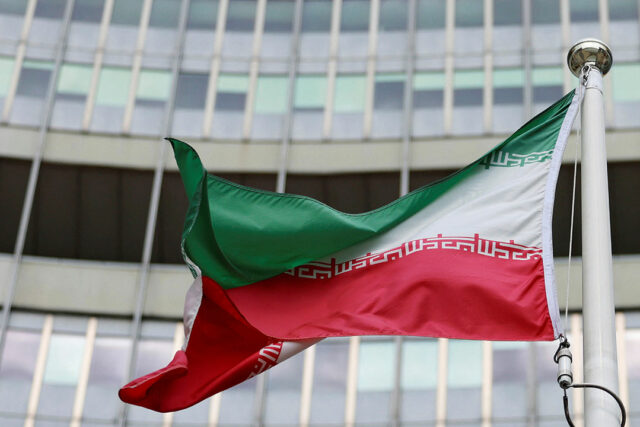
THE Iranian flag flutters outside the IAEA headquarters in Vienna, Austria, June 9, 2025. — REUTERS/LISA LEUTNER

AN IRANIAN official in the region said on Sunday the authorities had verified at least 5,000 people had been killed in protests in Iran, including about 500 security personnel, blaming “terrorists and armed rioters” for killing “innocent Iranians”.

The official, who declined to be named due to the sensitivity of the issue, also told Reuters some of the heaviest clashes and highest number of deaths were in the Iranian Kurdish areas in northwest Iran, a region where Kurdish separatists have been active and where flare-ups have been among the most violent in past periods of unrest.

“The final toll is not expected to increase sharply,” the official said, adding that “Israel and armed groups abroad” had supported and equipped those taking to the streets.

The Iranian authorities regularly blame unrest on foreign enemies, including Israel, an arch foe of the Islamic Republic which launched military strikes on Iran in June.

The US-based HRANA rights group said on Saturday the death toll had reached 3,308, with another 4,382 cases under review. The group said it had confirmed more than 24,000 arrests.

The Iranian Kurdish rights group Hengaw, based in Norway, has said that among regions where there were heavy security measures during protests in late December were Kurdish areas in the northwest. — Reuters

France edges towards budget deal with Socialists welcoming PM’s concessions

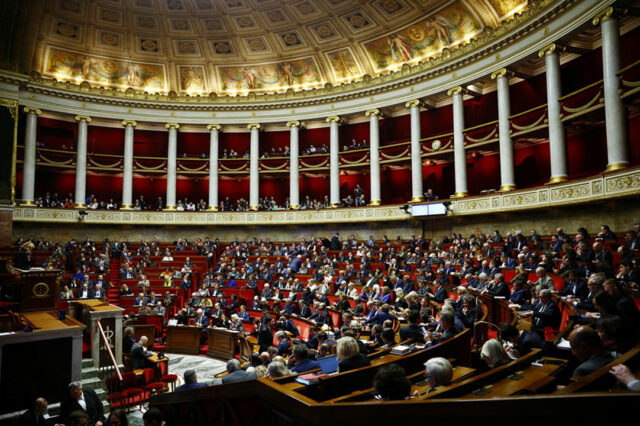
Members of Parliament during a discussion before the final vote on the Social Security Financing Bill (PLFSS) for 2026 at the National Assembly in Paris, France, December 16, 2025. — REUTERS

PARIS — France was moving closer to a 2026 budget deal on Monday after the government presented a last-ditch proposal that made concessions to most political parties, senior Socialist lawmaker Boris Vallaud told daily newspaper Le Parisien.

President Emmanuel Macron’s government lacks a majority in parliament and 2026 budget negotiations in the fragmented legislature have dragged on for months, forcing a rollover budget in the meantime to keep the country afloat.

Needing to win support from the Socialists without alienating conservatives, Prime Minister Sebastien Lecornu on Friday said he would no longer cut a tax rebate on pensions, and that a monthly income supplement benefit for low‑income workers would rise by some 50 euros per month for 3 million households.

Cheap meals for students in university canteens would be extended, and steps would also be taken to boost affordable housing. To help finance these measures, a corporate surtax on large companies, which was supposed to last only one year, would be extended through 2026 and raise 8 billion euros.

“The Prime Minister’s announcements allow us to imagine that we will not need to vote no-confidence,” Mr. Vallaud, who leads the Socialists in the National Assembly, told Le Parisien in comments published on Monday.

Mr. Lecornu’s office said late last week that it was impossible to adopt a budget by a vote in parliament, meaning he will have no choice but to bypass parliament either by invoking special constitutional powers or adopting the budget by executive order.

Both options would mean a no-confidence vote against the centrist government, making the Socialists’ support critical for its survival.

Mr. Vallaud said “assurances” were still needed on the reintroduction of a property wealth tax and the taxation of holding companies to improve the country’s deficit levels.

Mr. Lecornu repeated on Friday the budget deficit would be no higher than 5% of GDP, and possibly lower.

Cabinet ministers will meet on Monday to discuss options for pushing the budget through without a vote in parliament, government spokeswoman Maud Bregeon told Franceinfo on Sunday.

Budget Minister Amelie de Montchalin told BFM TV on Monday it was necessary to avoid the collapse of the government which would leave the country without a budget.

“Article 49.3 is a very dangerous path. Guarantees are needed”, she said, referring to an article in the constitution allowing the budget to be pushed through without a vote.

“The good news is that the prospect of early legislative elections is receding, and the government should remain in place for the moment,” ING analysts said in a note on Sunday.

“However, the final budget is far from business‑friendly, and the tax increases are likely to weigh on investment and hiring in 2026, with a negative impact on economic growth.” — Reuters

Death toll from high-speed train collision in Spain rises to 39, RTVE reports

STOCK PHOTO | Image by Hands off my tags! Michael Gaida from Pixabay

MADRID — The death toll from Sunday’s collision between a derailing high-speed train and a second oncoming train in southern Spain has risen to 39, with 152 people injured, state broadcaster RTVE reported on Monday, citing police sources.

The accident happened at 7.45 p.m. local time (1845 GMT) on Sunday near Adamuz in the province of Cordoba, about 360 kilometers (223 miles) south of the capital Madrid.

Over 200 trains between Madrid and the southern Andalucia region – including major cities Cordoba, Seville and Granada – have been cancelled throughout Monday, according to RTVE.

Prime Minister Pedro Sanchez has cleared out his agenda for the day, his office said in a statement on Monday.

Video from the scene shared on social media on Sunday showed rescuers pulling passengers from twisted carriages lying on their side under the glare of floodlights. Some passengers climbed out of smashed windows, while others were wheeled away on stretchers.

There were around 400 passengers on the two trains, most of them Spaniards traveling back to and from Madrid after the weekend. It was unclear how many tourists could be onboard as January is not holiday season in Spain.

The cause for the crash is not yet known, Spanish Transport Minister Oscar Puente told reporters at a press conference at Atocha station in Madrid on Sunday. — Reuters

Marcos faces impeachment complaint over flood-control graft scandal

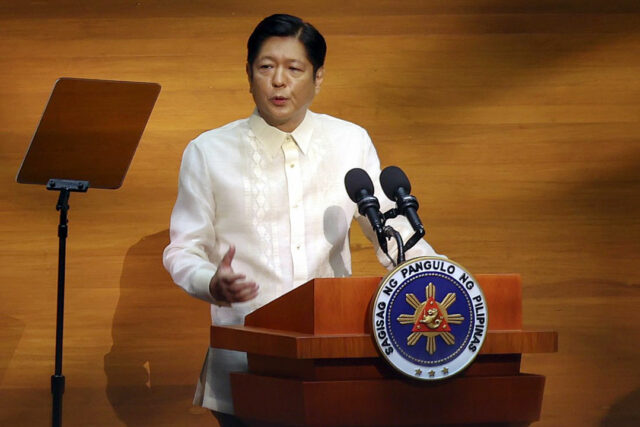
PHILIPPINE STAR/KRIZ JOHN ROSALES

Philippine President Ferdinand R. Marcos, Jr. is facing an impeachment complaint over allegations he profited from anomalous infrastructure contracts, escalating political pressure amid a multibillion-peso graft scandal.

The complaint, endorsed on Monday by House Deputy Minority Leader and Party-list Rep. Jernie Jett V. Nisay and filed by lawyer Andre R. de Jesus, cited five grounds for removal, including three directly tied to the flood-control scandal, according to mobile phone photos of the 12-page impeachment complaint circulated to media.

“The proliferation of ghost flood-control projects nationwide confirms the existence of a coordinated and deliberate effort to plunder public funds,” it said.

House of Representatives Secretary-General Cheloy Velicaria-Garafil confirmed receiving the impeachment complaint.

‘This complaint will be transmitted to Speaker Faustino ‘Bojie’ G.   Dy III in accordance with the Constitution and the rules of the House of Representatives,” she said in a statement.

Mr. Nisay, whom the Independent Commission for Infrastructure last year sought to be charged by the ombudsman with plunder due to his alleged links to anomalous flood-control projects, said he expects the impeachment process against Mr. Marcos to start when the complaint gets referred to the justice committee on Jan. 26, when Congress resumes session.

“We believe that in the Constitution… no one, not even the President, is above the law,” he told reporters after the complaint’s filing.

The complaint comes as Mr. Marcos’ administration struggles to contain fallout from a scandal involving billions of pesos in flood control funds. Several officials, politicians and private contractors are accused of diverting P100 billion from P545 billion spent on flood-control projects since 2022 to a handful of contractors, according to government reports.

The President’s office established an independent fact-finding body to investigate the controversy, but the complaint describes it as “a ploy reeking of desperation,” claiming the panel selectively targets political opponents while shielding allies.

Last week, Mr. Marcos suggested the commission’s mandate might end after two top commissioners resigned, leaving doubts over its effectiveness.

The complaint also accuses Mr. Marcos of betraying public trust by failing to veto unprogrammed funds in past budgets, which critics say are prone to corruption.

It also cites his decision to send former President Rodrigo R. Duterte to The Hague for alleged crimes against humanity in his anti-drug campaign, alleging he bypassed domestic legal processes.

“From the outset of his term, his administration has been plagued with corruption scandals, budgetary manipulation and systemic misuse of public funds — all traceable to decisions made or sanctioned at the highest level,” according to the complaint.

Lawmakers from the opposition party Makabayan welcomed the filing. Party-list Reps. Antonio L. Tinio, Renee Louise M. Co, and Sarah Jane Elago said their bloc would pursue its own impeachment initiative.

“We believe that the basis for impeachment is present in the systematic plunder of the budget,” they said in a statement.

Under the 1987 Constitution, impeachment can be pursued for culpable violation of the Constitution, bribery, graft and corruption, other high crimes, or betrayal of public trust. A complaint requires endorsement from at least one-third of House members before it can be sent to the Senate, which convenes as an impeachment court.

House officials said the complaint is ready for review.

“The judgment rests upon the individual members, and this will be voted on by the plenary and the justice committee,” House Justice Committee member Batangas Rep. Gerville R. Luistro said. She added that the process would examine whether the filing is “sufficient in form and substance.” — Kenneth Christiane L. Basilio

EU scrambles to avert Trump Greenland tariffs, prepares retaliation

A EUROPEAN UNION’S flag flutters outside the European Commission headquarters in Brussels, Belgium, Oct. 15, 2020. — REUTERS

BRUSSELS — European Union ambassadors reached broad agreement on Sunday to intensify efforts to dissuade US President Donald Trump from imposing tariffs on European allies, while also preparing retaliatory measures should the duties go ahead, EU diplomats said.

Mr. Trump vowed on Saturday to implement a wave of increasing tariffs from February 1 on EU members Denmark, Sweden, France, Germany, the Netherlands and Finland, along with Britain and Norway, until the US is allowed to buy Greenland, a step major EU states decried as blackmail.

EU leaders are set to discuss options at an emergency summit in Brussels on Thursday. One option is a package of tariffs on 93 billion euros ($107.7 billion) of US imports that could automatically kick in on February 6 after a six-month suspension.

The other is the so far never used “Anti-Coercion Instrument” (ACI), which could limit access to public tenders, investments or banking activity or restrict trade in services, in which the US has a surplus with the bloc, including in digital services.

The tariff package appeared to command broader support as a first response than anti-coercion measures, where the picture was currently “very mixed”, according to an EU source.

DIALOGUE IN DAVOS
European Council President Antonio Costa, who chairs EU summits, said in a social media post that his consultations with EU members had shown their strong commitment to support Denmark and Greenland and readiness to defend against any form of coercion.

Danish Foreign Minister Lars Lokke Rasmussen, visiting his Norwegian counterpart in Oslo, said Denmark would continue to focus on diplomacy, referring to an agreement Denmark, Greenland, and the US made on Wednesday to set up a working group.

“The US is also more than the US president. I’ve just been there. There are also checks and balances in American society,” he added.

The EU’s efforts at dialogue are likely to be a key theme of the World Economic Forum in Davos, where Mr. Trump is set to deliver a keynote address on Wednesday in his first appearance at the event in six years.

“All options on the table, talks in Davos with the US and leaders gather after that,” said one EU diplomat in summarizing the EU’s plan.

The eight targeted countries, already subject to US tariffs of 10% and 15%, have sent small numbers of military personnel to Greenland, as a row with the United States over the future of Denmark’s vast Arctic island escalates.

“Tariff threats undermine transatlantic relations and risk a dangerous downward spiral,” they said in a joint statement published on Sunday, adding they were ready to engage in dialogue, based on principles of sovereignty and territorial integrity.

Danish Prime Minister Mette Frederiksen said in a written statement she was heartened by the consistent messages from the rest of the continent, adding: “Europe will not be blackmailed”.

The tariff threat unsettled global markets, with the euro and sterling falling against the dollar and a return to volatility expected.

QUESTION MARKS OVER US TRADE DEALS
A source close to French President Emmanuel Macron said he was pushing for activation of the ACI. Irish Prime Minister Micheal Martin said that while there should be no doubt that the EU would retaliate, it was “a bit premature” to activate the as yet unused instrument.

Italian Prime Minister Giorgia Meloni, who is closer to the US President than some other EU leaders, described the tariff threat on Sunday as “a mistake”, adding she had spoken to Mr. Trump a few hours earlier and told him what she thought.

Asked how Britain would respond to new tariffs, Culture Secretary Lisa Nandy said allies needed to work with the United States to resolve the dispute.

“Our position on Greenland is non-negotiable … It is in our collective interest to work together and not to start a war of words,” she told Sky News on Sunday.

The tariff threats do though call into question trade deals the US struck with Britain in May and the EU in July.

The limited agreements have already faced criticism about their lopsided nature, with the US maintaining broad tariffs, while their partners are required to remove import duties.

The European Parliament looks set to suspend its work on the EU-US trade deal. It had been due to vote on removing many EU import duties on January 26-27, but Manfred Weber, head of the European People’s Party, the largest group in parliament, said late on Saturday that approval was not possible for now.

German Christian Democrat lawmaker Juergen Hardt also mooted what he told Bild newspaper could be a last resort “to bring President Trump to his senses on the Greenland issue”, a boycott of the soccer World Cup that the US is hosting this year.— Reuters

Marcos announces Malampaya gas discovery

PRIME ENERGY, operator of Service Contract No. 38, said it has successfully drilled the Malampaya East-1 reservoir. — COURTESY OF PRIME ENERGY

The Philippines has made its first major natural gas discovery in more than a decade, a development that could strengthen domestic energy supply and support rising power demand, President Ferdinand R. Marcos, Jr. said on Monday.

The reservoir, called Malampaya East-1, lies about 5 kilometers east of the existing Malampaya gas field off Palawan province

“This additional resource can help support the government’s efforts for the stabilization of our power supply,” Mr. Marcos said in a video posted on his Facebook page.

The field is estimated to hold about 98 billion cubic feet of gas in place. This is equivalent to roughly 14 billion kilowatt-hours of electricity a year, enough to supply about 5.7 million households annually.

The discovery is expected to extend Malampaya’s role in the country’s energy mix and reinforce domestic gas supply in the coming years.

Initial tests showed the well flowing at about 60 million cubic feet of gas per day, a level Mr. Marcos said is comparable to the original Malampaya wells and indicates strong productivity.

The find also includes condensate, a high-value liquid fuel that could further support efforts to stabilize electricity supply. — Chloe Mari A. Hufana

Vietnam’s Communist Party begins congress to choose its leader

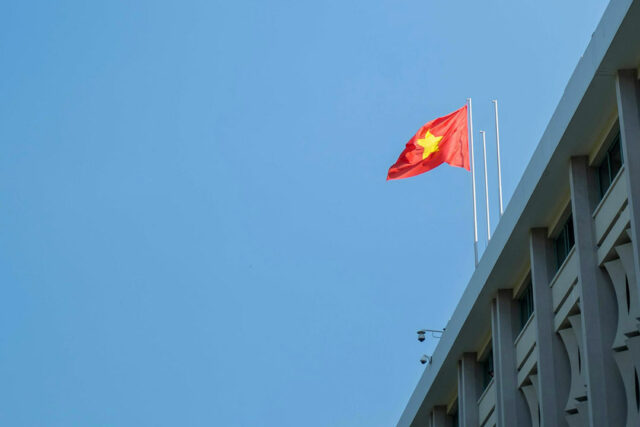
MATT W NEWMAN-UNSPLASH

HANOI — Hundreds of delegates from Vietnam’s ruling Communist Party will gather Monday under tight security for a congress that will select the single-party country’s top leader and set economic goals for the remainder of the decade.

The week-long event, which operates under opaque rules and convenes every five years, could cement and possibly expand power for the party’s current general secretary, To Lam, who has launched sweeping bureaucratic reforms at home and become Vietnam’s public face overseas.

About 1,600 delegates will elect a 200-person Central Committee, which then will pick up to 17 to 19 members of the Politburo from which the general secretary is chosen.

Mr. Lam is seeking to retain his role and possibly take on the state presidency, which has recently been held by a military leader, officials briefed on the matter said.

The congress is likely to confirm him as general secretary, according to multiple officials, although surprises cannot be ruled out, while the decision about the presidency is expected to be made at a later meeting where the outcome is even less clear.

After the congress, the Politburo will nominate the heads of state, government and Parliament. Parliamentary elections will take place only after leaders are chosen by the party.

RISK-TAKING LEADER
Mr. Lam, 68, has launched several major reforms during his brief tenure as party chief, the country’s most powerful job. He ascended to the position following the death of his predecessor, Nguyen Phu Trong, in July 2024.

Widely viewed as a risk-taker, Mr. Lam introduced the most significant administrative reform in decades when he cut tens of thousands of jobs in an effort to speed up decisions. The impact has yet to be fully assessed as officials adapt, but approval timelines for some investment projects have shortened.

That acceleration is tied in part to the scaling back of a sweeping anti‑corruption drive launched under Mr. Trong, an effort that Mr. Lam helped lead as public security minister. The campaign, which was meant to combat systemic bribery, at times paralyzed government decision‑making and led to the downfall of senior figures – including two presidents – clearing Mr. Lam’s path to the top.

Mr. Lam has also launched economic reforms and a burst of infrastructure projects, winning favor with foreign investors while stoking concerns about favoritism and waste.

In a country that allows no opposition, Mr. Lam has presided over a strengthening of the security forces and a tightening of controls over media and dissidents.

ECONOMIC GROWTH, SECURITY TOP NEXT FIVE-YEAR AGENDA
The congress’ delegates represent 5.6 million party members in a country of 100 million.

Under tight security – mobile phones will be jammed in the Hanoi building where the congress will take place – they will also refine the text of a resolution to be approved by the end of the congress, which is scheduled to wrap up on January 25.

A party draft released in October on the party’s website suggests the final text will prioritize security and ambitious growth, targeting at least 10% annually over the next five years, from the 6.5% to 7.0% target that was missed in the first half of the decade.

The draft mentions security dozens of times and highlights the importance of diplomacy and defense in a “more dangerous” world. The party intends to increase its defense forces, especially in border areas, the draft text says.

Environmental protection, which has been increasingly debated recently in the heavily polluted country, has also gained prominence, according to Politburo member Nguyen Xuan Thang.— Reuters

ADVERTISEMENT
ADVERTISEMENT