Home Blog Page 4234

WHO recommends malaria vaccine to be rolled out next year
UNITED STATES MISSION GENEVA

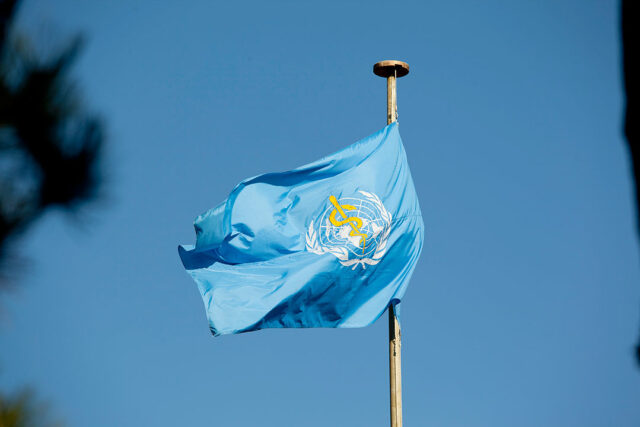
GENEVA — The World Health Organization (WHO) recommended on Monday the use of a second malaria vaccine to curb the life-threatening disease spread to humans by some mosquitoes.

“Almost exactly two years ago, WHO recommended the broad use of the world’s first malaria vaccine called RTS,S,” WHO chief Tedros Adhanom Ghebreyesus told a briefing in Geneva.

“Today, it gives me great pleasure to announce that WHO is recommending a second vaccine called R21/Matrix-M to prevent malaria in children at risk of the disease.”

R21/Matrix-M, developed by Britain’s University of Oxford, will become available by mid-2024, Mr. Tedros said, adding that doses would cost between $2 and $4.

“WHO is now reviewing the vaccine for prequalification, which is WHO stamp of approval, and will enable GAVI (a global vaccine alliance) and UNICEF to buy the vaccine from manufacturers,” Mr. Tedros said.

R21/Matrix-M is mass manufactured by Serum Institute of India and uses Novavax’s Matrix M adjuvant.

Adar Poonawalla, chief executive officer of Serum Institute of India, said it had already produced more than 20 million doses in anticipation of WHO’s recommendation.

“We will ramp it up as per what the demand requirements are,” he said in an interview. “We hope that by the end of 2024, there will be zero mismatch of demand and supply, with our supply coming into the system.”

The vaccine will compete against the RTS,S shot by GSK Plc, which was recommended by the United Nations-agency in 2021 and sold under the brand Mosquirix.

The WHO said both vaccines had shown similar efficacy in separate trials, but without a head-to-head trial there was no evidence showing whether one performed better.

The agency has left it to countries to decide which product to use based on various factors, including the affordability and supply.

“GSK has always recognized the need for a second malaria vaccine, but it is increasingly evident that RTS,S, the first ever malaria vaccine and the first ever vaccine against a human parasite, set a strong benchmark,” GSK said in a statement.

The company added that over 1.7 million children in Ghana, Kenya and Malawi had received at least one dose of the shot and it would be rolled out in another nine malaria endemic countries from early next year.

Malaria kills over 600,000 each year globally, most of them children in Africa.

DENGUE VACCINE
Mr. Tedros added the agency had also recommended Takeda Pharmaceuticals’ vaccine against dengue called Qdenga for children aged 6 to 16 in areas where the infection is a significant public health problem.

Dengue, common in tropical and subtropical climates, is a viral infection spread from mosquitoes to people.

Takeda’s vaccine was shown in trials to be effective against all four serotypes of the virus in people who were previously infected by dengue, Hanna Nohynek, chair of WHO’s Strategic Advisory Group of Experts on Immunization, told journalists.

She added, however, uncertainty lingered about its performance against serotype 3 and 4 in people who have not been infected previously.

The WHO’s strategic advisory group also recommended a simplified single dose regime for primary immunization for most COVID-19 vaccines to improve acceptance of the shots at a time when most people have had at least one prior infection.

Any monovalent or bivalent vaccine could be used given that monovalent vaccines that target the XBB.1.5 variant, which has been dominant in many places this year, are unavailable in many countries, the agency added. — Reuters

Death of dolphins in Amazon linked to severe drought, heat

MANAUS – The carcasses of 120 river dolphins have been found floating in a tributary of the Amazon River over the last week in circumstances that experts suspect was caused by severe drought and heat.

Low river levels during a severe drought have heated water in stretches to temperatures that are intolerable for the dolphins, researchers believe. Thousands of fish have died recently on Amazon rivers due to a lack of oxygen in the water.

The Amazon river dolphins, many of a striking pink color, are a unique freshwater species found only in the rivers of South America and are one of a handful of freshwater dolphin species left in the world. Slow reproductive cycles make their populations especially vulnerable to threats.

Amid the stench of decomposing dolphins, biologists and other experts in white personal protective clothing and masks continued on Monday to recover the dead mammals from a lake and conduct autopsies on the carcasses to determine the cause of death.

The scientists do not know with certainty that drought and heat are to blame for the spike in dolphin mortality. They are working to rule out other causes, such as a bacterial infection that could have killed the dolphins on a lake formed by the River Tefé before it runs into the Amazon.

At least 70 of the carcasses surfaced on Thursday when the temperature of Lake Tefé’s water reached 39 degrees Celsius (102 degrees Fahrenheit), more than 10 degrees higher than the average for this time of the year.

The water temperature declined for a few days but rose again on Sunday to 37 C (99 F), worried experts said.

Environmental activists have blamed the unusual conditions on climate change, which makes droughts and heat waves more likely and severe. Global warming’s role in the current Amazon drought is unclear, with other factors such as El Nino at play.

“We have documented 120 carcasses in the last week,” said Miriam Marmontel, a researcher at the Mamiraua environmental institute that focuses on the mid-Solimoes river basin.

Roughly eight of every 10 carcasses are pink dolphins, called “botos” in Brazil, which could represent 10% of their estimated population in Lake Tefé, she said.

The boto and the gray river dolphin called the “tucuxi” are on the International Union for Conservation of Nature’s red list of threatened species

“Ten percent is a very high percentage of loss, and the possibility that it will increase could threaten the survival of the species in Lake Tefé,” Marmontel said.

Brazil’s Chico Mendes Institute for Biodiversity Conservation has rushed veterinarians and aquatic mammal experts to rescue dolphins that are still alive in the lake. They cannot be moved to cooler river waters until researchers rule out a bacteriological cause of the deaths. — Reuters

Philippines sees ‘stable’ rice supply in Q4

PHILIPPINE STAR/ MICHAEL VARCAS

The Philippines will have a stable supply of rice in the last quarter of the year, an agriculture official said on Tuesday.

Gerald Glenn F. Panganiban, director of the Bureau of Plant Industry, said the country is expected to harvest 1.9 million metric tons of rice this month which will boost national buffer stocks of the staple to 74 days from 52 days at present.

Mr. Panganiban also said it is possible the price cap on rice imposed last month will be lifted soon but the decision will have to be made by President Ferdinand R. Marcos, Jr. who is also agriculture secretary.

A drop in rice prices has been observed following the imposition of ceilings last month, Mr. Panganiban told a media briefing. — Reuters

LGBTQ+ Indians demand end to ‘discriminatory’ blood donation ban

STOCK PHOTO | Image by Chandlervid85 from Freepik

 – When his mother fell ill, Karan, a 25-year-old gay man from New Delhi, hurried to donate blood. But as he filled out the mandatory form for donors, he realized he would be turned away because of his sexuality and made a snap decision.

Karan, the only member of his family with the same blood group as his mother, decided to lie about being gay, potentially risking prosecution.

“I was … scared of being caught (but) at that time, the only thing that mattered to me was my mother,” said Karan, whose full name is not being published to protect his identity.

“It was only later that I realized it was so dehumanizing, harmful to my dignity and a breach of my privacy as a queer person in this country,” Karan told the Thomson Reuters Foundation.

India’s current laws prohibit trans people, gay and bisexual men, and female sex workers from donating blood, despite acute shortages in the world’s most populous country and a global shift away from bans on blood donation by LGBTQ+ people.

The rules, which date back to the start of the HIV/AIDS crisis in the 1980s, exclude members of those groups on the grounds that they are at high risk for the virus – even though all donated blood is screened for HIV.

An estimated 2.5 million people are living with HIV in India according to UNAIDS. Among Trans Indian, 3.8% are living with the virus, while 3.3% of men who have sex with men have HIV.

It is mandatory for donors to be free from diseases that are transmissible by blood transfusion, and the donor should not be at any risk “for HIV, Hepatitis B or C infections”.

But critics, who say the policies excluding LGBTQ+ people were determined by fear and discrimination rather than medical science, are calling on the government to follow other countries and scrap the ban.

“The government argues on the basis of sexual behavior of the community but that puts all transgender people under the same blanket and that’s not okay,” said Santa Khurai, a transgender activist from the northeastern state of Manipur.

Khurai filed a petition to the Supreme Court in 2021 that challenged the constitutional validity of two clauses of the blood donation policy, but the government has defended its guidelines, stating that they were based on scientific fact.

Khurai is awaiting the date of the next hearing in the case.

India’s Health Ministry, the National AIDS Control Organisation (NACO) and the National Blood Transfusion Council (NBTC) – government bodies which oversee blood donation – did not respond to requests for comment.


GLOBAL SHIFT

LGBTQ+ rights campaigners say India is falling behind on the issue as countries around the world scrap restrictions on LGBTQ+ blood donors.

This year, the US Food and Drug Administration, which administers the country’s blood supply, lifted curbs on gay and bisexual men donating blood, following similar measures in Canada, France, Greece, Britain and Germany.

They say the devastating impact of the COVID-19 pandemic in India spotlighted the need for reform.

“Several queer people struggled to get donors from their community due to the ban,” said Aqsa Shaikh, associate professor of community medicine at Hamdard Institute of Medical Science and Research.

Shaikh, who is trans, said it was “not only unscientific but also illogical” to ban all trans people from donating blood even when they might not participate in higher risk activities such as sex work or penetrative sex.

Because of India’s blood shortages, many patients have to rely on family members to donate.

For LGBTQ+ people, many of whom are estranged from their families due to their sexuality or gender identity, the current restrictions make it impossible for them to receive donations from their partners or friends within the community instead.

Delhi-based lawyer and bioethicist, Rohin Bhatt was unable to donate blood and plasma for his friend’s husband who was in hospital with COVID in 2021, despite undergoing regular testing for sexually transmitted infections.

“The government’s policy can’t be to marginalize and impose a blanket ban but to improve their testing policies for blood donors. I am not a disease vector,” said Bhatt, who identifies as a non-binary queer person.

It is already mandatory in India to test every unit of donated blood for HIV/AIDS as well as Hepatitis B, Hepatitis C, syphilis and malaria.

Anant Bhan, a public health researcher at Sangath, a mental health nonprofit, said the current policy of excluding LGBTQ+ donors was misguided.

Inclusivity should be a key element of government health programs, and can focus on individualized risk-assessment rather than a blanket one based on gender identity,” he said.

If India’s Supreme Court decides to allow same-sex marriage in a case currently being heard at the top court, the blood donation rules would look even more outdated, campaigners say.

“If same-sex marriage is legalized, what happens when a married gay man needs blood to save his life? His partner won’t be able to donate blood because of these guidelines,” said Khurai.

Critics say the issue demonstrates persistent discrimination faced by LGBTQ+ people in India five years since the country decriminalized homosexuality by scrapping part of Section 377, a law introduced by India’s former British colonial rulers that had stood for almost 160 years.

“This ban is discriminatory,” Bhan said. “(It) also precludes their ability to donate blood which is an essential life-saving resource.” – Reuters

Striking Hollywood actors resume contract talks with studios, networks

GABE—UNSPLASH

 – Negotiators for striking Hollywood actors resumed contract talks on Monday with representatives of major studios, television networks and streaming services, marking the first time the two sides have returned to the bargaining table since mid-July.

Renewed talks between the SAG-AFTRA actors union and the Alliance of Motion Picture and Television Producers (AMPTP) came eight days after the producers clinched a separate contract deal with Hollywood writers, who launched their own strike on May 2, about 10 weeks before the actors.

“SAG-AFTRA and the AMPTP met for a full day bargaining session and have concluded,” the two sides said in a joint statement at the end of the day. It said negotiations would resume on Wednesday.

No further details were immediately available. Both sides agreed to observe a news “blackout” during their talks.

The tentative accord reached Sept. 24 between the producers and the 11,500-member Writers Guild of America not only paved the way for ending their labor dispute three days later, it could serve as a template for settling the actors strike.

SAG-AFTRA, Hollywood’s largest union, representing 160,000 television and film performers, walked off the job on July 14 demanding higher base wages and residual pay from streaming TV as well as restrictions on the use of artificial intelligence (AI) in entertainment.

The same issues were at the center of the writers strike.

In the area of artificial intelligence, actors want to protect their images and work from being replaced by computer-generated “digital replicas.”

At the same time, they are seeking compensation that reflects the value they bring to the relatively new frontier of streaming, specifically in the form of revenue sharing.

Other demands from actors include limits on self-taped auditions used in casting, which they argue are more costly to them than in-person readings. They also demanding assurances of greater racial equity on the set, including provision of hair and makeup artists capable of working with varied hair textures and skin tones.

The resumption of contract talks between the actors and studios also coincided with network television’s late-night hosts – Jimmy Fallon, Stephen Colbert, Seth Meyers and Jimmy Kimmel – bringing their shows back to television on Monday. Comedian John Oliver returned to HBO’s “Last Week Tonight” on Sunday. – Reuters

New Zealand starts new tourism campaign as post-COVID visits lag

STOCK PHOTO | Image by Kerin Gedge from Unsplash

 – New Zealand is launching a new tourism campaign with Kiwi director and actor Taika Waititi to attract visitors after the sector was hammered by COVID-19 and border closures.

Tourism New Zealand on Wednesday will premiere a 3-1/2 minute promotional film featuring the Oscar winner and Jade Daniels, his stunt double in the HBO romantic comedy series “Our Flag Means Death” which is filmed in New Zealand.

Visitors from United States are a major target audience, said Rene de Monchy, chief executive for Tourism New Zealand. The film, shot in December 2022, will also play on social media platforms in Australia, Germany, the UK and parts of Asia.

“Competition is heating up and economic times are a bit tough in many parts of the world so we’ve got to keep being innovative and top of mind for people.”

Prior to COVID and the closure of New Zealand’s borders, international tourism was New Zealand’s largest source of foreign exchange and accounted for about 5.5% of gross domestic product.

Tourists are returning but overseas visitors in July were still 16% lower than in July 2019.

The film, which cost NZ$689,000($409,890) to make, highlights activities like dolphin watching in Kaikoura on the South Island’s east coast and wine tasting in the country’s largest city Auckland. – Reuters

Mexico sends buses for migrants in the south, as thousands reach US border a day

STOCK PHOTO | Image by Mike from Pixabay

 – Several hundred migrants in southern Mexico on Monday awaited buses north in a new government program meant to help manage the number of people arriving, as Mexico’s president said 10,000 people have been reaching the U.S. border daily.

Thousands of migrants have crossed into the US from Mexico in recent weeks, alarming officials in US border cities and prompting delays to trade.

In the northern city of Tijuana on Monday, opposite San Diego, California, several dozen people scrambled over a part of the US border wall that cuts across the beach at the Pacific Ocean in a video seen by Reuters.

More than 3,000 km (1,864 miles) south, at a bus terminal in the city of Juchitan in Oaxaca state, some migrants said they would enter the U.S. with appointments secured via a U.S. government app, CBP One, and request asylum.

“Let’s wait for the appointment, because we’ve suffered so much just to get this far,” said Victor Salma, from Venezuela.

Salma was among about 400 people, including families with small children, awaiting buses headed to the state capital or Mexico City.

Oaxaca officials opened the site last week in an effort to reduce risks for migrants, who had been gathering in large numbers at local bus terminals while trying to buy bus tickets north.

Jesus Gonzalez, a representative of the local civil protection agency, said 800 to 1,000 migrants pass through the Juchitan site per day.

Migrants must pay their own fares, ranging from 386 to 1,500 pesos (about $22-$85), and some people said they were awaiting money transfers from relatives, or seeking work, to raise funds.

Mexican President Andres Manuel Lopez Obrador at his morning news conference on Monday said about 6,000 people are entering southern Mexico daily, and that last week 10,000 migrants reached the U.S.-Mexico border every day.

In September, the number of migrants encountered at the U.S.-Mexico border was on pace to approach, or surpass, previous monthly highs.

Lopez Obrador called for countries to address root causes driving migration and lamented the deaths of 10 Cuban migrants in a traffic accident in southern Mexico on Sunday.

Many migrants have been undeterred by the challenges of the journey. Last week at the border in Ciudad Juarez, opposite Texas, a man crawled beneath coils of barbed wire as a young boy followed behind crying, “Papa, Papa.”

According to four videos of the incident seen by Reuters, an armed man in Texas National Guard uniform then stepped in the man’s path, and yelled, “I have no mercy, animals. Why did you send a baby? Why did you send a boy?”

Texas officials did not immediately respond to a request for comment.

US Customs and Border Protection (CBP) did not immediately respond to a request for comment about the people seen climbing over the border wall at the beach between Tijuana and San Diego.

The agency previously said it would impose consequences, including deportation, on migrants without a legal basis to stay in the US. – Reuters

Fed policymakers see rates staying high for ‘some time’

REUTERS

U.S. Federal Reserve officials say that monetary policy will need to stay restrictive for “some time” to bring inflation back down to the Fed’s 2% target, but their unity around that phrase masks an ongoing debate over another possible rate hike this year.

“I remain willing to support raising the federal funds rate at a future meeting if the incoming data indicates that progress on inflation has stalled or is too slow to bring inflation to 2% in a timely way,” Fed Governor Michelle Bowman said Monday in prepared remarks to a banking conference.

Despite considerable progress, she said, “Inflation continues to be too high, and I expect it will likely be appropriate for the (Fed) to raise rates further and hold them at a restrictive level for some time.”

Inflation, as measured by the consumer price index, is down from around 9% last year to around 3.7% at last read, slowed at least in part by the Fed’s 5.25 percentage points of interest-rate increases over the last 18 months.

The Fed targets 2% inflation.

Given that progress, U.S. central bankers last month opted to keep the policy rate in its current 5.25%-5.50% range even as most signaled another rate hike would likely be needed before year’s end.

Speaking at a separate event in New York on Monday, Fed Vice Chair for Supervision Michael Barr said he believes rates are now “at or very near” a sufficiently restrictive level.

“In my view, the most important question at this point is not whether an additional rate increase is needed this year or not, but rather how long we will need to hold rates at a sufficiently restrictive level to achieve our goals,” Mr. Barr said in remarks prepared for delivery to the Forecasters Club of New York. “I expect it will take some time.”

Fed Chair Jerome Powell, who on Monday was visiting York, Pennsylvania to get an up-close view of how businesses and workers are experiencing the economy, last month also said restrictive policy would be needed “for some time,” as did the influential chief of the New York Fed, John Williams, on Friday.

Meanwhile, speaking Monday evening, Cleveland Fed leader Loretta Mester also said the Fed’s work is likely not done.

“I suspect we may well need to raise the fed funds rate once more this year and then hold it there for some time as we accumulate more information on economic developments and assess the effects of the tightening in financial conditions that has already occurred,” Ms. Mester said in a speech to a group in Cleveland.

Fed forecasts published last month show there is some divergence – though as a group they expect fewer rate cuts next year than they did in June, only a bare majority see rates ending 2024 any higher than 5%, with 9 of 19 policymakers expecting them to be lower.

The same Fed forecasts also show policymakers as a group expect stronger economic growth and a stronger job market than they had expected just three months earlier. But they also made only small adjustments to their forecasts for inflation.

“The only way to square those would be to have a somewhat higher-for-longer rate path,” Richmond Fed President Thomas Barkin said in an interview on Bloomberg’s “Odd Lots” podcast conducted last Thursday but aired Monday. “I think there is case to be made that the U.S. economy is a lot more resilient than we thought it was, resilient to interest rate hikes, resilient to all the shocks we’ve talked about.”

Even so, he said, “One of the things I liked about our posture coming out of the last meeting is that, with demand relatively strong by all accounts, the labor market still relatively strong, and inflation cooling, we have the latitude to say, let’s see how this develops.” — Reuters

Manufacturing PMI expands in Sept.

A worker uses a microscope at an electronics manufacturing assembly plant in Biñan, Laguna, April 20, 2016. — REUTERS

By Luisa Maria Jacinta C. Jocson, Reporter

MANUFACTURING ACTIVITY in the Philippines expanded in September, driven by resilient domestic demand and growth in new orders, S&P Global said.

The S&P Global Philippines Manufacturing Purchasing Managers’ Index (PMI) rose to 50.6 in September, a turnaround from the 49.7 contraction in August, reflecting an improvement in the health of the manufacturing sector.

“September PMI data signaled renewed growth across the Filipino manufacturing sector as new orders emerged out of contraction territory, thereby supporting a quicker expansion in output and a fresh rise in staffing levels,” Maryam Baluch, economist at S&P Global Market Intelligence, said in a statement.

Manufacturing Purchasing Managers’ Index (PMI) of Select ASEAN economies, September 2023A PMI reading above the 50 mark denotes improvement in operating conditions, while a reading below 50 signals deterioration.

However, Ms. Baluch noted the pace of growth is still “historically subdued,” indicating the sector remains weak.

“Moreover, latest data suggested that growth was supported by the domestic market as export sales fell for the first time in nine months,” she added.

In September, the Philippines had the second-highest PMI reading among Southeast Asian countries with available data. It was just behind Indonesia (52.3) but ahead of Myanmar (50.1). Meanwhile, Vietnam (49.7), Thailand (47.8) and Malaysia (46.8) all recorded contractions in September.

The headline PMI measures manufacturing conditions through the weighted average of five indices: new orders (30%), output (25%), employment (20%), suppliers’ delivery times (15%), and stocks of purchases (10%).

S&P Global noted the latest PMI survey data showed a renewed expansion among Filipino manufacturers at the end of the third quarter.

A modest rise in new orders was seen in September, thanks to improved demand conditions and new clients.

“However, latest data also revealed a fall in new business from abroad, thereby marking the first month of contraction in the year-to-date. Moreover, the rate of decrease was solid overall and faster than the historical average,” S&P Global said.

The increase in factory orders was mainly driven by domestic demand, with the pace of growth accelerating from the 12-month low seen in August.

S&P Global noted manufacturers also ramped up hiring in September, ending three months of job cuts. However, the pace of job creation remained “marginal,” it added.

“Despite firms seeing their business requirements rise and in turn increasing their workforce numbers, backlogs of work fell for the third month running in September, and to the greatest extent in seven months. The data thus suggested that there is still spare capacity within the sector,” S&P Global said.

Manufacturers in the Philippines also showed “diverging trends in inventory holdings” in September.

“While stocks of finished goods increased amid anticipation of greater demand in the coming months, pre-production inventories fell in September, with companies often utilizing their stocks to meet current demand requirements,” S&P Global said.

It noted that stocks were depleted at the fastest rate in nearly three years. “The fall in stocks of purchases also aligned with a stagnation in purchasing activity, thereby ending the period of expansion in input buying that began in September 2022,” it added.

The latest data also showed that cost pressures were generally subdued despite selling prices rising at the fastest pace in four months.

“Despite increasing material, fuel and supplier costs exerting pressure on operating expenses and pushing up selling prices at a faster pace, both input prices and output charges rose at historically muted rates,” Ms. Baluch said.

Manufacturing firms reported weaker sentiment for the next 12 months, although they were still generally optimistic.

“Looking ahead, sentiment slipped to a 15-month low in September and was historically muted amid some concerns of whether demand can be sustained. Nonetheless, 40% of panelists anticipate growth in output in the year ahead,” it added.

Ms. Baluch noted that global headwinds weighed on overall growth in September, with many firms concerned over the sustainability of future demand.

ING Bank N.V. Manila Senior Economist Nicholas Antonio T. Mapa said that the uptick in domestic orders helped push the Philippines’ PMI back into expansion mode.

“Domestic demand helped offset slowing exports orders. Another positive was the pickup in employment as manufacturers geared up for upcoming holiday demand,” he said in a Viber message.

Rizal Commercial Banking Corp. Chief Economist Michael L. Ricafort also noted that the improvement in output was due to the “seasonal increase in manufacturing, production, and importation activities in the third quarter in preparation for the holiday season.”

However, Mr. Ricafort noted that persistent inflation and high interest rates weighed on manufacturing firms’ operations.

Headline inflation may have settled at 5.4% in September, according to a BusinessWorld poll of 17 analysts. This is at the low end of the 5.3-6.1% forecast range of the Bangko Sentral ng Pilipinas (BSP).

The local statistics authority is set to release September inflation data on Oct. 5, Thursday.

From May 2022 to March 2023, the Monetary Board has raised rates by 425 basis points. It kept its benchmark policy rate at a near 16-year high 6.25% for four straight meetings.

NG debt hits record P14.35T as of end-Aug.

BW FILE PHOTO

THE NATIONAL GOVERNMENT’S (NG) outstanding debt reached a record P14.35 trillion as of end-August, mainly due to the peso depreciation against the US dollar, the Bureau of the Treasury (BTr) said on Monday.

Outstanding debt inched up by 0.7% from P14.24 trillion as of end-July, data from the BTr showed.

“The P105.28 billion or 0.7% increment from the previous month’s level was primarily due to the peso depreciating from P54.834 to P56.651 against the US dollar over the reference period,” the BTr said in a statement.

National Government outstanding debtThe debt stock rose by 10.2% year on year from P13.02 trillion as of end-August 2022.

Year to date, outstanding debt went up by 6.9% from P13.42 trillion as of end-December 2022.

More than two-thirds or 68.2% of the NG’s debt portfolio came from domestic sources, while the rest were from foreign borrowings.

As of end-August, domestic debt increased by 9.5% to P9.79 trillion from P8.94 trillion a year ago.

However, domestic borrowings slipped by 0.2% from P9.81 trillion in July, due to “large retail bond maturities.”

“New domestic debt issued during the month totaled P229.29 billion with debt redemption of P253.43 billion, resulting in a net repayment of P24.14 billion,” the BTr said.

“This was partially offset by the P2.9-billion incremental value caused by peso depreciation on foreign currency-denominated domestic securities,” it added.

Data from the Treasury showed that the peso closed at P56.651 versus the greenback as of end-August, depreciating by 3.2% from P54.834 as of end-July.

In the eight months to August, the domestic debt mix consisted almost entirely of government securities.

On the other hand, external debt stood at P4.56 trillion at the end of August, up by 11.8% from P4.08 trillion in the same month a year ago.

Month on month, it rose by 2.9% from P4.43 trillion as of end-July.

“Peso depreciation against the US dollar caused a P146.85-billion upward revaluation of US dollar-denominated debt in August, although partially offset by the P22.11-billion downward revaluation of the third-currency debt component,” the BTr said.

“Net availment of foreign loans also added P1.78 billion to the reference month’s external debt stock,” it added.

Broken down, foreign debt consisted of P2.07 trillion in loans and P2.48 trillion in global bonds.

As of end August, the NG’s overall guaranteed obligations inched up by 0.9% to P366.58 billion from P363.4 billion as of end-July.

“The higher level of guaranteed debt is attributed to the net availment of domestic guarantees amounting to P2.44 billion and the P4.03-billion revaluation effect of peso depreciation on external guarantees surpassing the P3.29 billion in repayments,” the BTr added.

Year on year, guaranteed debt dropped by 6.7% from P392.76 billion.

Rizal Commercial Banking Corp. Chief Economist Michael L. Ricafort said the higher NG outstanding debt as of end-August was mainly due to the weaker peso.

The local currency almost breached the P57-level during the month, depreciating to as low as P56.84 on Aug. 15.

Mr. Ricafort said that elevated inflation and interest rates also pushed borrowings higher.

“The new record high in the outstanding National Government debt may be attributed to wider budget deficits amid higher prices that also bloated government expenditures,” he said in an e-mail.

Headline inflation spiked to 5.3% in August, the first time it accelerated in seven months. It was also the 17th consecutive month that inflation surpassed the central bank’s 2-4% target range.

For the first eight months of 2023, inflation averaged 6.6%, still above the revised 5.8% full-year forecast of the Bangko Sentral ng Pilipinas (BSP).

The BSP has raised borrowing costs by a total of 425 basis points from May 2022 to March 2023. This brought the key policy rate to 6.25%, the highest in almost 16 years.

The NG’s debt as a share of gross domestic product (GDP) stood at 61% at the end of June. This remained above the 60% threshold considered by multilateral lenders to be manageable for developing economies.

The government aims to cut the debt-to-GDP ratio to less than 60% by 2025. — Luisa Maria Jacinta C. Jocson

World Bank expects Philippine growth to be fastest in SE Asia

The World Bank cut its gross domestic product (GDP) growth forecast for the Philippines for 2023 and 2024. — CATHY ROSE A. GARCIA

THE WORLD BANK expects the Philippines to be the fastest-growing economy in Southeast Asia this year, despite trimming its gross domestic product (GDP) growth projection due to persistent inflation and global headwinds.

In its East Asia and the Pacific Economic Update released on Monday, the World Bank cut its GDP growth forecast for the Philippines to 5.6%, from the 6% projection given in June. The latest forecast is the same as the GDP outlook it gave in April.

Aaditya Mattoo, World Bank Chief Economist for East Asia and the Pacific, said the global economic slowdown is a major concern for countries like the Philippines.

World Bank GDP growth forecasts for select East Asia and Southeast Asia economies

“The Philippines, like other countries in the region, depends on the rest of the world for exports (of) goods and especially services. A lot of Filipinos work abroad and send remittances back. All those factors are tied to the state of the global economy,” Mr. Mattoo said during a briefing on Monday.

World Bank Senior Economist for East Asia and the Pacific Ergys Islamaj said Philippine economic growth this year will moderate from the 7.6% GDP expansion in 2022 due to elevated inflation, tighter financial conditions, and a weak external environment.

“High inflation, tight fiscal and monetary policies, budget execution delays, and subdued global growth dampened the Philippines’ growth momentum,” the World Bank said.

The Philippine economy expanded by 4.3% in the second quarter, its slowest growth in over two years. For the first half, economic growth averaged 5.3%, below the government’s 6-7% target.

Despite the lower growth projection, the World Bank expects the Philippines to post the fastest expansion among Southeast Asian countries this year. At 5.6%, this is also above the 5% GDP growth average for East Asia and the Pacific.

Philippine growth will likely outpace Cambodia (5.5%), Indonesia (5%), Vietnam (4.7%), Malaysia (3.9%), Laos (3.7%), Thailand (3.4%), and Myanmar (3%).

At the same time, the World Bank trimmed its growth forecast for the Philippines to 5.8% for 2024 from 5.9% previously. This was below the government’s 6.5-8% target for next year.

If realized, the Philippines would be the second-fastest growing economy in Southeast Asia in 2024, behind only Cambodia’s 6.1%.

According to the World Bank, Philippine GDP growth is also projected to average 5.7% from 2023 through 2025.

“The good news for the Philippines, I should say, is that we expect economic activity to be supported by domestic demand, led by private consumption and declining inflation,” Mr. Mattoo said.

Recent economic reforms like the amended Public Service Act (PSA) would help ramp up investments, he added.

The amended PSA, which took effect in April, allows full foreign ownership in more public services such as telecommunications, airlines, and railways.

INFLATION
In its Macro Poverty Outlook analysis, the World Bank projects Philippine inflation to average 5.9% this year, before easing to 3.6% in 2024.

Both forecasts are a tad higher than the  Bangko Sentral ng Pilipinas’ (BSP) 5.8% and 3.5% projections for 2023 and 2024, respectively.

“Inflation will increase marginally in 2023 due to the materialization of risks to food inflation, before returning to within the target range in 2024 amid improvements in food supply and lower global commodity prices,” the World Bank said.

The World Bank also sees inflation further easing to 3% by 2025, below the 3.4% estimate of the BSP.

“In the near term, essential factors for boosting growth include containing price pressures and improving budget utilization,” the World Bank added.

Meanwhile, the World Bank also urged economies to take advantage of opportunities in the services sector, which will be central to the region’s development.

“Services now account for at least about half of employment and value added in most East Asia and the Pacific economies,” Mr. Mattoo said.

In the Philippines, Mr. Mattoo said that service-oriented firms are more likely to use digital technologies if they are foreign-owned and especially if they have access to fiber broadband.

“The services firms that adopt these technologies have seen a big increase in productivity,” he added.

The World Bank recommended promoting reforms to pursue liberalization and regulation of services trade; address the infrastructure and skill gaps; and maximize cooperative international action. — Luisa Maria Jacinta C. Jocson

ASEAN financial integration to boost Philippine growth

In this photo illustration, the Association of Southeast Asian Nations (ASEAN) emblem is seen on a smartphone screen in front of the ASEAN flag. — PAVLO GONCHAR / SOPA IMAGES/SIPA VIA REUTERS CONNECT

FINANCIAL INTEGRATION in the Association of Southeast Asian Nations (ASEAN) region could boost economic growth in the Philippines by about 3.5 percentage points (ppts), the International Monetary Fund (IMF) said.

In a September 2023 working paper, the IMF Asia and Pacific Department economists said boosting trade and financial integration among ASEAN-5 members may enhance the region’s resilience against global headwinds.

“While all countries have potential gains from financial integration, Indonesia, and the Philippines, which have the lowest level of financial development, would gain more with an average growth impact of about 3.5 ppts,” it said.

The ASEAN-5 region includes the Philippines, Indonesia, Malaysia, Singapore and Thailand. Financial integration is where financial markets in regional or global economies are closely linked together.

According to the IMF, the region has made little progress on financial integration due to regulatory and institutional constraints.

The IMF said digitalization can support regional integration as this could help firms, especially small and medium enterprises, take part in global value chains.

“Further, digitalization can also help countries raise the value chain by the production of more sophisticated products,” the IMF said.

However, the Philippines still has room to improve on its digital competitiveness compared with the rest of its ASEAN neighbors.

“Indonesia and the Philippines have room to improve on various dimensions including IT (information technology) integration, training and education, talent, and regulatory framework,” the IMF said.

The multilateral lender also recognized the ongoing cross-border payment initiatives in the region, where economies link domestic instant payment systems with another country.

“Cross-border payment initiatives could contribute to financial integration in the region through an enhanced financial flow across borders and improved regional interconnectivity,” the IMF said.

This includes the tripartite cross-border payment agreement between the Philippines, Malaysia, and Singapore through BancNet, Inc., which have been under discussion for implementation.

In June 2022, BancNet President Fabian S. Dee said the operator is exploring how to facilitate cross-border payments. It is also collaborating with the Bangko Sentral ng Pilipinas (BSP), the Philippine Payments Management, Inc., and InstaPay Automated Clearing House.

However, the IMF said ASEAN economies should be careful not to compromise financial stability, as financial integration may pose some risks and challenges.

“Efforts toward more financial openness should be preceded by strong macroeconomic fundamentals and efforts to increase the resilience of domestic financial systems, including through enhanced information sharing, surveillance and crisis management, and a regional safety net,” it said.

The IMF said a gradual approach in promoting more regional integration would be appropriate to maximize benefits while minimizing risks.

“Pursuing greater integration with the ASEAN-5 region could help build a layer of resilience for countries in the region, which would prove useful in a shock-prone global economy that is in the midst of policy-induced reversal of globalization reflected by heightened geoeconomic fragmentation risks,” the IMF added.

In November last year, the BSP signed a cooperation pact with other central banks in ASEAN to strengthen collaboration on payment connectivity.

The MoU on Cooperation in Regional Payment Connectivity was signed with the Bank of Indonesia, Bank Negara Malaysia, Monetary Authority of Singapore, Bank of Thailand, and the State Bank of Vietnam.

The cooperation includes several modalities, including QR-code and fast-payment based cross-border payments.

To further strengthen the gains from financial integration, the IMF recommended trade liberalization in the region, improving regulatory and institutional quality, as well as reducing restrictions on capital flows.

Meanwhile, regional trade integration can also be strengthened within ASEAN, the IMF said.   

“Non-tariff barriers should be reduced in line with the Non-Tariff Measures (NTM) Guidelines, including through improved notification and stronger discipline in simplifying and harmonizing rules and regulations impacting trade,” it said.

Facilitating more free trade agreements, eliminating non-tariff barriers, strengthening global value chains, and boosting digitalization to facilitate cross-border e-commerce, are a few ways to boost regional trade integration, it added.

The IMF working paper was written by Nuri Baek, Kaustubh Chahande, Kodjovi M. Eklou, Tidiane Kinda, Vatsal Nahata, Umang Rawat, and Ara Stepanyan. — Keisha B. Ta-asan

ADVERTISEMENT
ADVERTISEMENT