Home Blog Page 423

BDO sells controlling stake in DHI
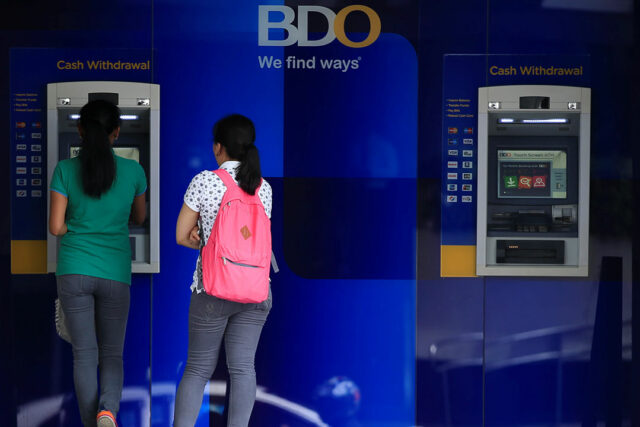
A woman withdraws money at the Automated Teller Machine (ATM) of the Banco de Oro (BDO) Unibank, Inc. building in Makati City, Metro Manila, Philippines, June 23, 2016. — REUTERS

BDO UNIBANK, Inc. (BDO) is selling its controlling stake in its listed investment holding company Dominion Holdings, Inc. (DHI) for P2.54 billion.

The bank on Jan. 19 signed a share purchase agreement with Monte Sur Equity Holdings, Inc. to sell 1,513,732,718 shares or 70% of DHI at P1.68 per share, it said in a disclosure to the stock exchange on Tuesday.

Following the sale, DHI will no longer be a subsidiary of BDO.

“The disposition of DHI is aligned with BDO Group’s continuing policy of streamlining its organizational structure following the conversion of DHI into an investment holding company,” the bank said.

On Tuesday, DHI requested a voluntary trading suspension that will be lifted at 9 a.m. on Jan. 21 to give investors time to consider the news.

The transaction is still subject to the necessary regulatory approvals and closing conditions, which include the conduct of a mandatory tender offer by Monte Sur Equity Holdings.

DHI, formerly BDO Leasing and Finance, Inc., holds or owns real estate properties, securities or shares of stocks, and other assets of companies and engages in investment and business activities involving these assets.

The Securities and Exchange Commission in July 2022 approved DHI’s change of name and the shift in its purposes to that of a holding company from a leasing and financing company.

DHI booked a net income of P34.81 million in the third quarter of 2025, down from P36.53 million in the prior year. This brought its nine-month profit to P106.43 million, declining from P171.01 million previously.

Its shares last closed at P1.40 each on Jan. 19.

Meanwhile, its parent BDO’s attributable net income rose by 6.1% year on year to P22.47 billion in the third quarter, bringing its nine-month earnings to P63.09 billion, up 4.07% from the prior year.

Its shares dropped by P3.30 or 2.34% to close at P138 apiece on Tuesday.

BDO ENDS BOND OFFER
Meanwhile, BDO closed its public offering of sustainability bonds ahead of schedule as it saw robust demand, it said in a separate disclosure on Tuesday.

“Originally set to run from Jan. 7 to 19, the bank decided to close the offer period early, on Jan. 16, following strong demand from both retail and institutional investors,” the bank said.

It has yet to announce the final issue size. The bonds will be issued, settled, and listed on the Philippine Dealing & Exchange Corp. on Jan. 26.

BDO earlier said it wants to raise at least P5 billion from its offering of three-year papers that marks its fifth issuance of peso-denominated ASEAN Sustainability Bonds.

The bonds carry a coupon rate of 5.7125% per annum. They were offered at a minimum investment amount of P500,000 and in additional increments of P100,000 thereafter.

“The net proceeds of the issuance are intended to finance and/or refinance eligible assets as defined in the bank’s Sustainable Finance Framework, support the bank’s lending activities, and diversify the bank’s funding sources,” BDO said.

Standard Chartered Bank was the sole arranger for the transaction and was also a selling agent along with BDO. BDO Capital and Investment Corp. was the financial advisor.

BDO has issued a total of P286.7 billion in sustainability bonds since January 2022.

It last tapped the domestic market in July last year via its fourth ASEAN Sustainability Bond issuance, raising P115 billion via 1.5-year papers, well above the initial P5-billion plan and marking the largest peso bond issuance in the country to date. — A.M.C. Sy
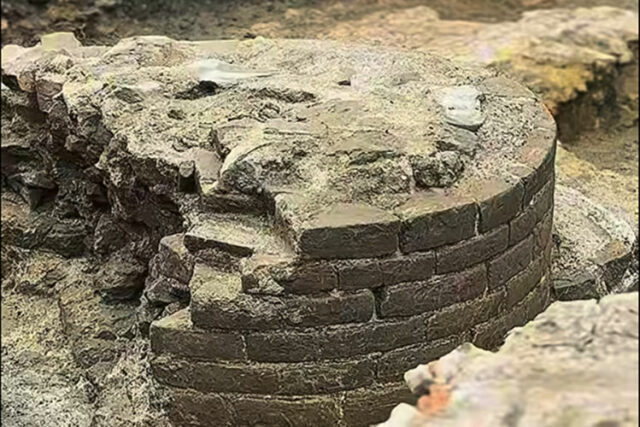
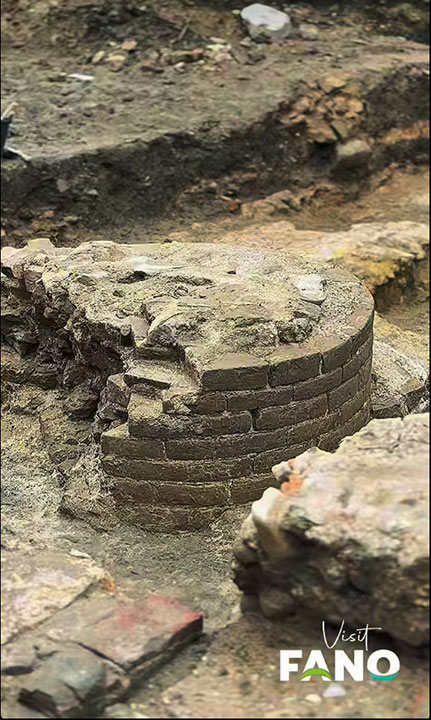
Italy uncovers basilica designed by Vitruvius, the ‘father of architecture’

ROME — Italian officials on Monday hailed the discovery of a more than 2,000-year-old public building attributed to Vitruvius, the ancient Roman architect and engineer known as the “father of architecture.”

“It is a sensational finding… something that our grandchildren will be talking about,” Italian Culture Minister Alessandro Giuli told a press conference.

Vitruvius, who lived in the 1st century BC, is celebrated for having written De architectura, or The Ten Books on Architecture, the oldest surviving treatise on the subject.

His teachings on the classical proportions of buildings have inspired artists over centuries, including Leonardo da Vinci, whose famous drawing of the human body is known as the Vitruvian Man.

BASILICA BELIEVED TO BE ‘DISCOVERY OF THE CENTURY’
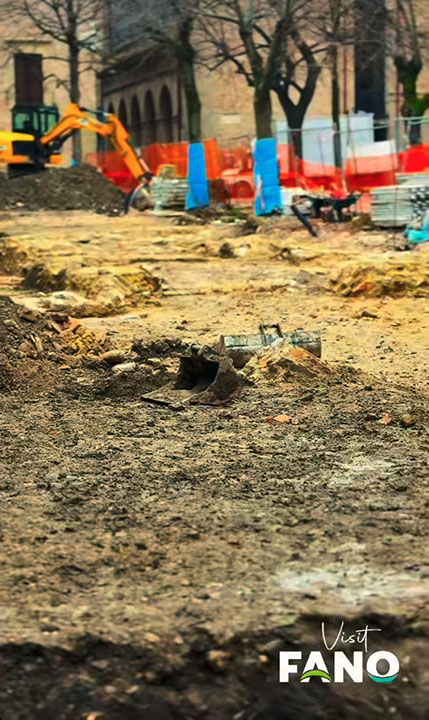
Archaeologists believe they have found the remains of an ancient basilica, or public building, in the central Italian city of Fano northeast of Rome, that was created by Vitruvius.

“I feel like this is the discovery of the century, because scientists and researchers have been searching for this basilica for over 500 years,” said the Mayor of Fano Luca Serfilippi.

“We have [an] absolute match” between what was discovered and the descriptions given by Vitruvius in his books, regional archaeological superintendent Andrea Pessina told reporters.

PRECISE LAYOUT DESCRIPTIONS
The basilica had a rectangular layout, with 10 columns on the long side, and four on the short ones, Mr. Pessina said.

During excavation, when traces of four columns emerged, archaeologists used Vitruvius’ descriptions to calculate where the top right corner column should be. When they started digging, they found it immediately, Mr. Pessina said.

“There are few certainties in archaeology… but we were impressed by the precision” of the match, he added.

Further digging will determine whether more of the basilica lies underground and if the site can be shown to the public, the superintendent said. — Reuters

Salesforce launches startup support program in Philippines

SALESFORCE.COM

US SOFTWARE company Salesforce on Tuesday rolled out its Startup Program in the Philippines, aiming to support local tech startups by giving them access to its products, mentors and global business network.

The program seeks to help Philippine startups build, test and scale technology-based products, particularly those using artificial intelligence (AI), Salesforce said in a statement.

“The Philippines is a dynamic market for technology and innovation, driven by a young, skilled and tech-savvy population,” the company said. “This launch reflects Salesforce’s recognition of the country’s vibrant startup landscape.”

The move comes as the Philippines continues to lag regional peers in global startup rankings. Research firm StartupBlink ranked the country 64th out of 100 economies in its 2025 Global Startup Ecosystem Index, marking the fourth straight year of decline. The Philippines ranked 52nd in 2021 and slipped steadily in subsequent years.

StartupBlink cited infrastructure gaps and regulatory hurdles as key challenges holding back the growth of local startups.

Salesforce said its startup program is designed to help founders navigate these obstacles by offering access to AI-powered tools, mentorship, joint go-to-market opportunities, fundraising support and a startup community.

“The Philippines is a vibrant hub for startups, with a growing pool of talent and a dynamic market ready for innovation,” Salesforce Philippines Regional Vice-President and Country Manager Abraham Cuevas said.

“The Salesforce Startup Program arrives at a pivotal moment, enabling Philippine startups to leverage cutting-edge tools, including Agentforce and a network of experts and founders to rapidly develop, test and scale solutions,” he added.

Salesforce said the initiative aligns with the government’s Innovative Startup Act 2030 roadmap, which aims to produce four Philippine unicorns by 2030 and attract $10 billion in startup investments within five years.

The Startup Program was first launched in South Asia in 2021 and has since supported more than 435 startups in markets such as India and Singapore, including more than 230 companies focused on AI.

Apart from startup support, Salesforce has also expanded its local presence. The company opened its Philippine office in November to support businesses adopting AI-driven customer relationship tools.

Salesforce said it plans to train 12,000 Filipino workers over the next five years in artificial intelligence and customer relationship management skills, as demand grows for digital and automation solutions across industries.

The company said it sees long-term potential in the Philippines as more firms adopt cloud-based platforms and AI to improve productivity, customer engagement and business efficiency. — Almira Louise S. Martinez

Tubig Pilipinas targets to complete 50-MLD Cebu water project this year

STOCK PHOTO | Image by Pvproductions from Freepik

TUBIG PILIPINAS Holdings, Inc. is targeting to complete the construction of its bulk water supply project in Talisay City, Cebu, within 2026, which could deliver 50 million liters per day (MLD) to local residents.

“The Tubig Pilipinas continues to expand its national footprint with the ongoing construction of the 50 MLD Jaclupan Bulk Water Supply Project in Talisay City, Cebu, that will be operational within the year,” the company said in a media release on Tuesday.

The project follows the recent inauguration of a P1.5-billion water treatment plant serving Bacolod City and the municipality of Murcia, led by Tubig Pilipinas’ subsidiary Bacolod Bulk Water, Inc.

The facility currently supplies about 40 MLD, roughly 40% of Bacolod City’s total water demand, and has expansion capacity of up to 60 MLD.

“This project demonstrates how strong public-private partnerships and foreign investments deployed into strategic and focused water companies such as Tubig Pilipinas can deliver critical infrastructure that supports SDG (sustainable development goals),” Bacolod Bulk Water Chairman Ryan Yapkianwee said.

Tubig Pilipinas now operates water plants across Nueva Ecija, Negros Occidental, Samar, Camarines Sur, Isabela, Cavite, Palawan, Pangasinan, and Cebu.

In December, Coal Asia Holdings, Inc. announced plans to raise its authorized capital stock by 160% to P13 billion from P5 billion.

The expansion forms part of a broader overhaul, which includes renaming Coal Asia to Tubig Pilipinas, a move designed to enable a public listing via backdoor listing. — Sheldeen Joy Talavera

Leadership in action: How the Philippines can lead ASEAN in the digital age

THIS RESOURCE WAS GENERATED WITH AI/FREEPIK

Over the past year, as I have written about artificial intelligence, blockchain, and cybersecurity, one question has continued to surface.

We often talk about digital transformation in the Philippines in the language of catching up. Catching up with infrastructure. Catching up with regulation. Catching up with skills. That framing is understandable, but it may also be limiting. Perhaps the more important question is whether we are aiming too low. Can the Philippines actually lead ASEAN in the digital realm, not by copying what others have done, but by offering a model shaped by our own realities?

I believe we can, but only if we are clear about what leadership in the digital age truly means.

Digital leadership today is no longer defined by who deploys technology first or who has the most sophisticated systems. It is defined by who uses technology to build trust, strengthen institutions, and support inclusive growth. In a region as diverse as the ASEAN, that distinction matters. Technology without trust does not scale. Innovation without governance does not last.

Several ASEAN countries are already ahead of us in specific domains, and that should be acknowledged honestly. Singapore, for example, has clearly taken the lead in artificial intelligence (AI). Its National AI Strategy is focused, disciplined, and practical. AI is already embedded in healthcare, urban services, logistics, and financial systems. More importantly, these deployments are supported by clear governance frameworks and strong coordination between government and industry.

But Singapore is a city-state. Its strength lies in precision and control. The Philippines operates in a very different environment. We deal with geographic dispersion, uneven access to services, varying institutional capacities, and a population that spans urban centers and remote communities. These are often cited as weaknesses. They can also be our greatest advantage.

If artificial intelligence can be deployed effectively in the Philippines, across public education systems, agriculture, disaster preparedness, and healthcare delivery in far-flung areas, then it can work anywhere in ASEAN. That kind of leadership is not about being the most advanced. It is about being the most relevant. It is about showing how AI can function in complexity, not just in controlled environments.

Blockchain offers a similar lesson. Vietnam has made notable progress in this space. Vietnamese companies are deploying blockchain solutions in supply chains, manufacturing verification, and export documentation. The technology is tied directly to economic activity, particularly in trade and production. That practical orientation is important, especially in a region where technology must serve development goals.

What Vietnam has done well is integrate blockchain into industry. What remains less developed across the region is the use of blockchain as national trust infrastructure. This is where the Philippines has a distinct opportunity. Ongoing policy discussions, including the proposed CADENA bill, reflect a growing recognition that blockchain is not merely a technology choice, but a governance tool. When applied to procurement, compliance, identity systems, and transparency initiatives, blockchain strengthens institutional credibility.

This matters because trust is not an abstract concept. In economies where trust in systems is uneven, credibility becomes a competitive advantage. Investors look for it. Businesses depend on it. Citizens demand it. Blockchain, when applied correctly, helps create that credibility at scale.

Cybersecurity completes the picture. Malaysia invested early in national cybersecurity frameworks and centralized coordination. Policies are defined, agencies are structured, and readiness assessments are conducted. These are important foundations, especially as digital adoption accelerates.

Yet cybersecurity across the ASEAN, and even globally, is still too often treated as a technical or regulatory issue. Something delegated to IT departments or compliance teams. That framing no longer reflects reality. Cybersecurity today is about protecting confidence in banks, telecommunications networks, digital payment systems, e-commerce platforms, and online government services. It is about protecting economic activity itself.

The Philippines can lead by reframing cybersecurity as economic defense. When cyber risk discussions reach boardrooms, when small and medium enterprises are engaged, and when consumers are made aware of digital risks, cybersecurity becomes a shared responsibility. This cultural shift is as important as any technical framework.

When we step back and look across the ASEAN, a clear pattern emerges. Excellence exists, but it is fragmented. One country leads in AI deployment. Another in blockchain applications. Another in cybersecurity policy. What is missing is integration.

This is where the Philippines can differentiate itself.

Our first advantage is talent. Filipino professionals already power global digital, creative, and services industries. We are not new to technology. More importantly, we understand both systems and people. That combination matters when deploying technologies that affect daily life, livelihoods, and public trust.

Our second advantage is institutional diversity. Our public sector, private sector, and civil society do not always move in unison, but that diversity allows experimentation. Solutions that work in the Philippines tend to be adaptable, precisely because they have been tested in varied and imperfect conditions.

Our third advantage is necessity. Unlike countries that are optimizing already strong systems, we are still strengthening trust in many of our institutions. That creates urgency. It forces us to think about governance, integrity, and protection alongside innovation. In the long run, that may be our strongest asset.

Leadership in action requires deliberate choices. It means deploying artificial intelligence with purpose, not hype. It means using blockchain to reinforce integrity, not chase trends. It means treating cybersecurity as economic infrastructure, not an afterthought.

The ASEAN does not need another digital success story measured by rankings, adoption rates, or valuations. It needs a model of digital growth that is inclusive, resilient, and trusted.

If the Philippines can demonstrate how artificial intelligence, blockchain, and cybersecurity work together in a complex, real-world environment, we do more than lift our own nation.

We help shape the region’s digital future.

And that is what leadership in action, lifting the nation, looks like in the digital age.


Dr. Donald Patrick Lim is the founding president of the Global AI Council Philippines and the Blockchain Council of the Philippines, and the founding chair of the Cybersecurity Council, whose mission is to advocate the right use of emerging technologies to propel business organizations forward. He is currently the president and COO of DITO CME Holdings Corp.

Peso extends slide on trade war fears

BW FILE PHOTO

THE PESO slipped against the dollar on Tuesday to move closer to its all-time low due to fresh tariff threats from the United States.

The local unit closed at P59.455 versus the greenback, weakening by 1.5 centavos from its P59.44 finish on Monday, data from the Bankers Association of the Philippines data showed.

This is just a tad stronger than its record-low close of P59.46 recorded on Jan. 15.

The peso opened Tuesday’s trading session steady at P59.44 against the dollar. Its best showing was at P59.42, while it dropped to a low of P59.50 — a new historic intraday trough for the local currency.

Dollars traded rose to $1.212 billion from $1.119 billion on Monday.

“The dollar-peso closed a tad higher on risk-off sentiment amid tariff jitters due to renewed threats against Greenland, [resulting in the peso] touching the all-time high of P59.50,” a trader said in a telephone interview.

The peso traded weaker against the dollar on Tuesday as players sought safer assets on concerns that US President Donald J. Trump’s tariff threats could lead to another trade war, Rizal Commercial Banking Corp. Chief Economist Michael L. Ricafort said in a Viber message.

For Wednesday, the trader sees the peso trading between P59.30 and P59.60 per dollar, while Mr. Ricafort expects it to range from P59.35 to P59.55.

The dollar retreated for a second day in Asian trading on Tuesday after threats from the White House towards the European Union over the future of Greenland triggered a broad sell-off across US stocks and government bonds, Reuters reported.

The dollar index, which measures the greenback’s strength against a basket of six currencies, fell as much as 0.3% to 98.841 — reaching its lowest level since Jan. 12 — as investors worried about exposure to US markets.

On Monday, US President Donald J. Trump’s renewed tariff threats against European allies triggered a repeat of the so-called “Sell America” trade that emerged after last year’s Liberation Day tariff announcement in April, with stocks, Treasury bonds and the dollar all declining. US markets will return on Tuesday following a public holiday for Martin Luther King, Jr. Day. — Aaron Michael C. Sy with Reuters

Digital scans unveil new love notes and sketches on ancient Pompeii wall

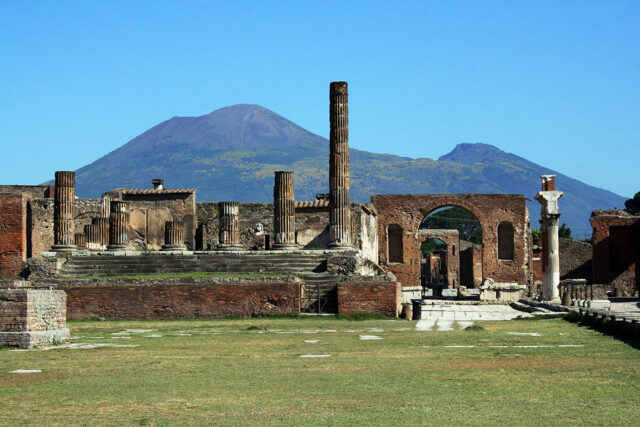
THE Ancient Ruins of Pompeii — FLICKR/GLEN SCARBOROUGH

POMPEII, Italy — A love note, a gladiatorial combat scene, a barrage of insults and everyday confessions have emerged on a wall in Pompeii, thanks to new imaging technology that has revealed nearly 80 previously unseen inscriptions.

The once-thriving city of Pompeii, near Naples, was buried in the eruption of Mount Vesuvius in AD 79, preserving buildings, objects and graffiti under meters of ash.

Rediscovered in the 18th century, it is now one of the world’s most significant archaeological sites.

The latest discoveries were found etched into the plaster of a long corridor connecting Pompeii’s theaters to the city’s busy Via Stabiana that was first uncovered more than 230 years ago.

Researchers used a computational photography method known as Reflectance Transformation Imaging (RTI) that captures an object under multiple lighting angles — to expose faint scratches invisible to the naked eye after centuries of erosion.

Archaeologists had not expected fresh discoveries on a surface considered thoroughly documented, but their work identified around 300 inscriptions, including 79 new ones.

The so-called “corridor whispers” project was developed by researchers Louis Autin and Eloïse Letellier-Taillefer of the Sorbonne University in Paris and Marie-Adeline Le Guennec of Quebec University, working with the Pompeii authorities.

“This technology is the key that opens new rooms of the ancient world,” said Gabriel Zuchtriegel, director of the vast archaeological site, adding that Pompeii’s more than 10,000 known inscriptions form an “immense heritage” of the ancient world.

The team is developing a 3D platform that will combine photogrammetry, RTI data, and epigraphic metadata to allow full visualization and annotation of the graffiti.

Examples of previously known texts include a hurried farewell to a lover — “I am in a hurry. Farewell, my Sava, make sure you love me!” Another inscription records the devotion of Methe, a slave from Atella, to her beloved Cresto, with a plea for the favor of Venus, the Roman goddess of love.

Among the new discoveries were a faint sketch of two gladiators fighting and the beginnings of a declaration of love — “Erato loves…” — Reuters

AI chip startup FuriosaAI plans $500-M round before IPO

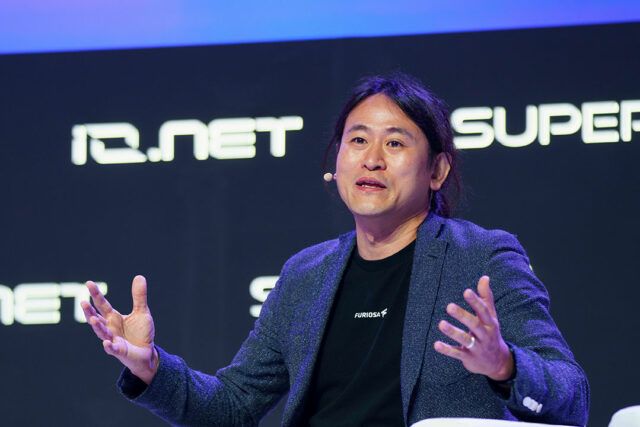
JUNE PAIK, chief executive officer of FuriosaAI, Inc., during the Super AI Conference in Singapore in June 2025. — ORE HUIYING/BLOOMBERG

ARTIFICIAL INTELLIGENCE (AI) chip designer FuriosaAI is seeking to raise as much as $500 million in a funding round before an initial public offering (IPO) as it gears up to challenge industry titan Nvidia Corp., according to people with knowledge of the matter.

The Seoul-based startup has appointed Morgan Stanley and Mirae Asset Securities Co. as co-advisers for the Series D round, and is targeting $300 million to $500 million in the round, the people said, asking not to be identified because the details aren’t public.

Proceeds will fund FuriosaAI’s mass production of its second-generation RNGD chip, global business expansion and the development of a third-generation chip, the people said. The startup is eyeing a potential public listing as early as 2027, they said. FuriosaAI is set to receive its first mass-produced shipment of RNGD AI chips from Taiwan Semiconductor Manufacturing Co. later this month, one of the people said.

Representatives for FuriosaAI and Morgan Stanley declined to comment. Mirae Asset officials weren’t immediately reachable for comment.

Founded in 2017 by June Paik — a veteran of Samsung Electronics Co. and Advanced Micro Devices, Inc. — FuriosaAI specializes in high-efficiency AI inference chips. The RNGD, pronounced “renegade,” delivers 2.25 times the inference performance-per-watt of traditional graphics processing units, according to the company.

The milestone comes amid a boom in AI hardware investment. Groq, Inc., raised $750 million in a round last year ahead of a strategic partnership with Nvidia. Other recent deals include Cerebras Systems, Inc.’s pursuit of $1 billion in new capital at a $22-billion valuation and Etched’s $500-million funding round. — Bloomberg

Jollibee’s Chickenjoy earns Well-Known Mark status from IPOPHL

BW FILE PHOTO

LISTED food giant Jollibee Foods Corp.’s (JFC) Chickenjoy was granted Well-Known Mark status by the Philippine Intellectual Property Office (IPOPHL) in 2025, making it the group’s third asset to receive the designation after the Jollibee Mascot and Jollibee Stacked Logo.

“Chickenjoy is more than fried chicken to Filipinos. It’s part of family memories, celebrations, and everyday moments of joy,” Jollibee Philippines’ Vice-President for Marketing Dorothy Dee-Ching said in a statement on Tuesday.

“We take pride in every step of its preparation because we know how much it means to our customers. Every piece carries that same flavor and happiness that people have loved for generations,” she added.

In the same statement, JFC announced the launch of its “Jollibee Chickenjoy: Masterfully Made Sarap” campaign, highlighting the detailed process behind its signature fried chicken and featuring the brand’s long-time ambassador.

At the local bourse on Tuesday, JFC shares slipped 1.6% to P209.40 apiece. — Alexandria Grace C. Magno

Cement is hitting a wall. There’s no coming back

STOCK PHOTO | Image by Jcomp from Freepik

By David Fickling

WHAT’S THE MOST important commodity for modern civilization? There’s a good argument that it’s not the ones we think about — oil, gas, copper, iron ore, gold — but something that’s ubiquitous and rarely grabs the attention of financial markets: concrete.

After water, it’s the substance we use most abundantly, with somewhere between 25 billion and 30 billion metric tons poured annually. That’s roughly three times as much as all the coal we dig up. It’s also a major contributor to the world’s carbon footprint. Cement — the crucial mineral glue that holds concrete together, made from fire-treated limestone and clay — accounts for roughly 8% of our annual emissions.

Something striking is happening right now, however. After decades of growth, cement consumption has hit a wall. On current trends, we may never return to the peak 4.4 billion metric tons that was produced in 2021, even as India, Southeast Asia, and Africa continue to industrialize and urbanize. China has driven the global cement market for three decades, and still accounts for nearly half of output. But its boom is now well and truly over, with further yet to fall.

Output has already slumped almost 30% since 2020, according to data released on Monday, and CSCI Pengyuan, a credit-rating company, expects it will decline for the sixth year in a row in 2026.

Prices are around their lowest levels in a decade, and factories are saddled with more than twice the capacity they need. Despite regular predictions that the market is bottoming out, the floor area of newly started commercial buildings through December, a key leading indicator, was the lowest since 2003. Yet China is still producing nearly twice as much cement as it was back then.

If this was a one-time effect of the housing crash, it might be expected to eventually correct itself. But cement doesn’t work that way.

With most commodities — energy, for instance, or copper, or plastics — consumption keeps growing as income rises, before hitting a plateau at developed-economy levels. Cement, however, drops off a cliff once a country industrializes. Per-capita cement emissions — a decent proxy for output — are about the same in the upper-income UK as they are in low-income Burkina Faso and Syria. Those in Albania and Cambodia are about three times what they are in the US.

Even by those standards, China’s construction boom was extraordinarily cement-intensive. At the peak in 2014, the country was consuming about 1.8 tons per person, per year, compared to 0.25 tons in the US. At current levels it’s still sitting at about 1.2 tons, higher than any other major economy barring Saudi Arabia, and four times the global average.

Where will this number head over the coming years? It’s unlikely to fall quickly to the low levels seen in high-income countries. Infrastructure development is too important as a tool of Beijing’s economic management for that to happen. China also has more high-rise buildings and earthquake-prone regions than Europe and North America, so it’s natural that the entire economy is more cement-intensive. It’s impossible to predict how much government stimulus will distort the picture in the medium- to long-term.

Still, a relatively modest decline in such a vast market would have an immense impact. If the annual drop in per-capita consumption slows from the average 6% over the past five years to 4% between now and 2030, China would still be left at nearly three times the levels found in seismically active Japan. Output would fall by 20%, or about 350 million tons.

No other country could come close to making up for such a monumental shortfall. Growth in the likes of Egypt, Indonesia, Turkey, and Vietnam is likely to be on the order of five to 10 million tons apiece, rising to about 40 to 50 million tons from India.

This is good news, because our efforts to clean up cement’s carbon footprint have been glacial. Each ton of cement releases about 0.8 tons of carbon dioxide into the atmosphere — not that much when compared to metals and plastics, but huge when accounting for the sheer volume we produce. Technological fixes, by adding volcanic ash to the concrete mix, or waste materials from steel production and coal-fired power, are only likely to cut emissions by 5% to 10%.

Carbon capture and storage is a nice idea, but it’s hardly ever been seen in the wild. The countries most likely to adopt such measures, moreover, tend to be the rich ones where concrete consumption is already in decline. They’re not going to make more than a marginal difference to the big picture.

A plunge in consumption is likely to be our best bet of cleaning up this industry. Luckily, it’s coming about through ineluctable processes of economic development and industrialization. Cement’s best years are in the past. Its future is already crumbling.

BLOOMBERG OPINION

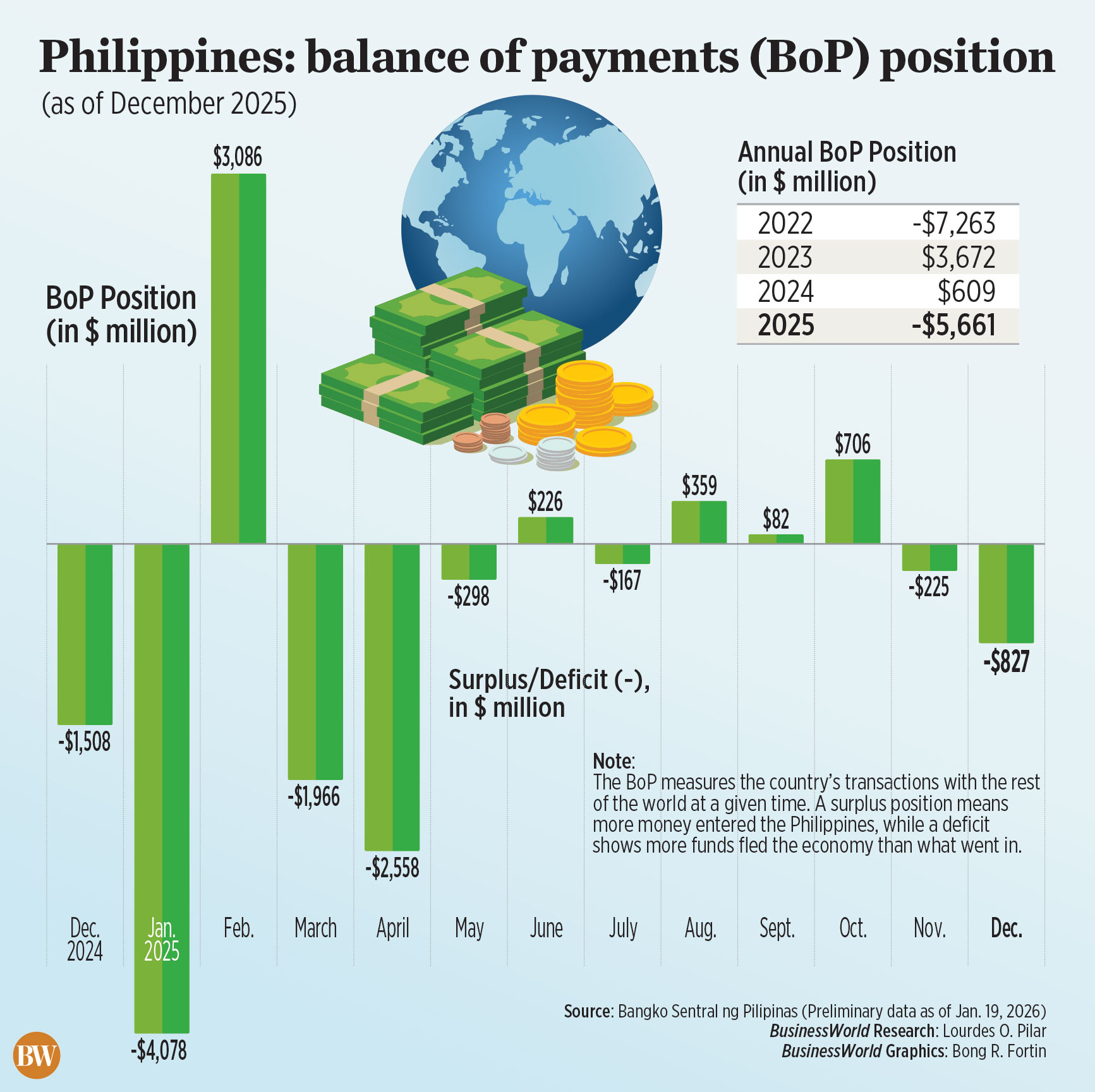
Philippines: balance of payments (BoP) position

THE PHILIPPINES’ balance of payments (BoP) deficit in 2025 settled below the central bank’s full-year forecast despite posting a wider deficit in December. Read the full story.

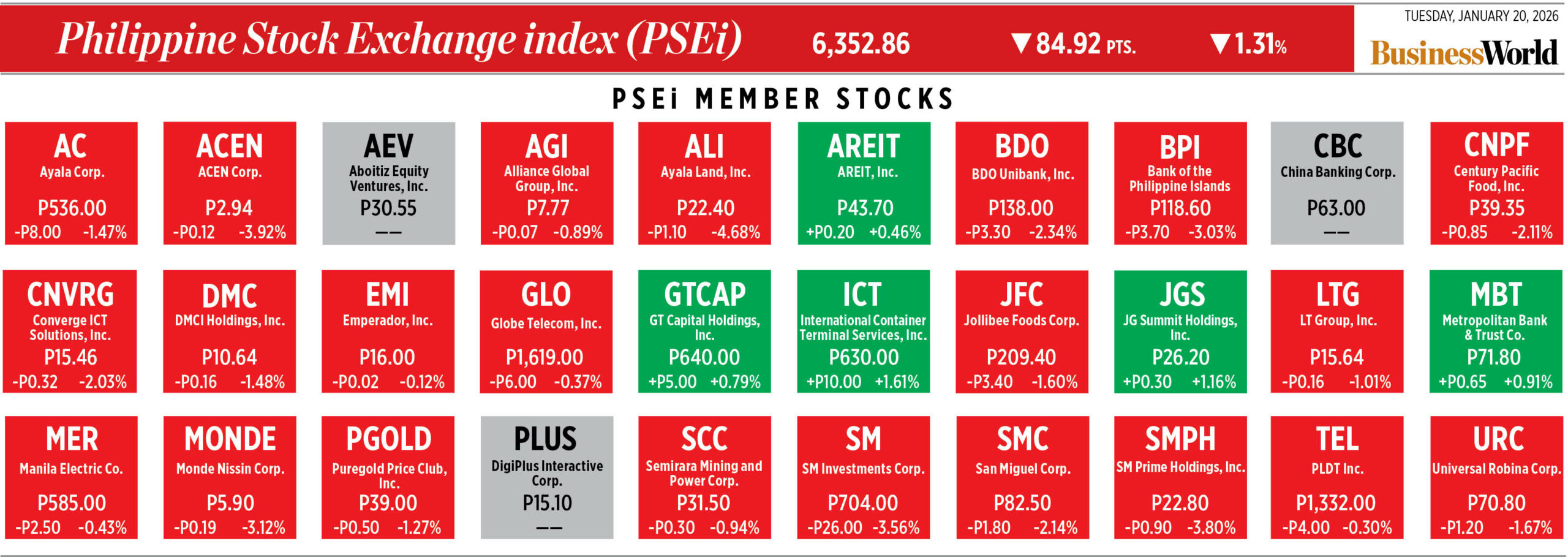
How PSEi member stocks performed — January 20, 2026

Here’s a quick glance at how PSEi stocks fared on Tuesday, January 20, 2026.