Home Blog Page 419

CoA tightens oversight, launches reforms after flood control anomalies
The Commission on Audit (CoA) has announced sweeping reforms to strengthen transparency and accountability in response to the flood control project anomalies that recently rocked the Department of Public Works and Highways (DPWH).

During the Senate Finance Committee hearing on Monday, Oct. 13, CoA Chairman Gamaliel Cordoba said the Commission is now investigating its own ranks for possible negligence or complicity in the irregularities, while rolling out new safeguards such as mandatory geotagging for all infrastructure projects nationwide.

“Fraud auditors also look into the possible negligence or complicity of our resident auditors on the ground,” Mr. Cordoba told senators, confirming that an internal probe is under way.

He said findings from these audits are being submitted to the CoA’s Internal Affairs Office for possible sanctions, while those elevated to the Office of the Ombudsman have already resulted in the suspension of DPWH engineers implicated in ghost or nonexistent projects.

Mr. Cordoba explained that the investigation covers the DPWH–Bulacan First District Engineering Office, where resident auditors handled 11 municipalities and three cities, a workload that may have contributed to oversight lapses.

“We are looking at every layer of accountability. Those who failed to act or allowed wrongdoing to happen will be held responsible,” Mr. Cordoba said.

Mr. Cordoba also addressed questions about CoA Commissioner Mario Lipana, who was mentioned during the Senate investigation into the flood control anomalies.

He said Mr. Lipana has been on medical leave abroad since Aug. 1 and has extended his leave until Oct. 30, while the Ombudsman’s office continues its investigation.

“While the CoA has no disciplinary authority over an impeachable official, we are fully coordinating with the Office of the Ombudsman,” Mr. Cordoba said.

To prevent conflicts of interest, Mr. Cordoba said the CoA will now require all officials and personnel to declare any possible personal or financial interest related to their assignments.

At the same time, Mr. Cordoba told senators that resident auditors will now be periodically reshuffled to avoid familiarity with their assigned agencies or local offices, while fraud auditors will conduct surprise inspections to monitor compliance and detect anomalies early.

“We recognize the limitations in manpower, but we are instituting stronger oversight systems. Our fraud auditors will conduct random checks to ensure resident auditors are doing their jobs,” he said.

CoA Commissioner Douglas Michael Mallillin also revealed that the audit body is drafting a memorandum circular requiring geotagging for all infrastructure projects, not only those under DPWH but also those implemented by other agencies such as the National Irrigation Administration (NIA), Department of Health (DoH), government-owned and -controlled corporations (GOCCs), and local government units (LGUs).

Alam natin na ang DPWH, NIA, DoH, and not only national agencies pati mga GOCC, pati mga LGU po ay may infrastructure projects,” Mr. Mallillin said.

He explained that geotagging falsification has occurred in the past, where contractors take photos of projects but use incorrect location data.

Mr. Mallillin added that satellite-based geotagging will be used moving forward to enhance accuracy and prevent falsification.

“We will pursue criminal charges against anyone found tampering with geotags or falsifying documentation,” he told the committee.

Mr. Mallillin also said the CoA is reviewing proposals to reintroduce pre-audit procedures for agencies with weak internal controls.

“If an agency has weak internal controls, we are studying the resources required to conduct a pre-audit, especially in terms of manpower and facilities, and we will balance this with the agency’s operational speed,” Mr. Mallillin said.


Spotlight is BusinessWorld’s sponsored section that allows advertisers to amplify their brand and connect with BusinessWorld’s audience by publishing their stories on the BusinessWorld Web site. For more information, send an email to online@bworldonline.com.

Join us on Viber at https://bit.ly/3hv6bLA to get more updates and subscribe to BusinessWorld’s titles and get exclusive content through www.bworld-x.com.
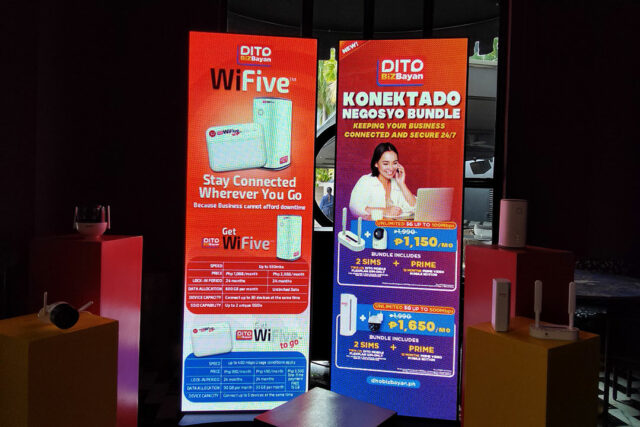
DITO launches ‘BizBayan’ to empower Filipino MSMEs 

DITO’s Konektado Negosyo Bundle offers flexible connectivity plans for businesses. — EDG ADRIAN A. EVA

DITO Telecommunity Corp. on Wednesday unveiled its new business unit, BizBayan, which focuses on serving local micro, small, and medium enterprises (MSMEs) through dedicated internet plans and various initiatives. 

“We are unveiling a new enterprise brand conceived to meet the dynamic and evolving demands of all Filipino MSMEs,” Eric R. Alberto, DITO’s chief executive officer (CEO), said during the launch event.  

“(It is) a strategic endeavor to equip every Filipino entrepreneur with the right tools, vital connectivity,” Mr. Alberto said.  

Under BizBayan, DITO launched its ‘Konektado Negosyo Bundle,’ its introductory MSME-dedicated internet plan starting at P1,150 per month, offering unlimited 5G wireless connectivity of up to 100 Mbps and an indoor CCTV (Closed-Circuit Television) unit. 

For businesses with greater connectivity needs, there is also a 500 Mbps option priced at P1,650 per month, which comes with an outdoor CCTV unit. 

DITO BizBayan head Gabriel Marco “Gabby” R. Cui told BusinessWorld that the company has several plans in the pipeline for MSMEs, including the development of a dedicated point-of-sale (POS) system, training programs in partnership with the Trade Department, and other products aimed at promoting digital connectivity. 

The launch of BizBayan recognizes the invaluable contribution of MSMEs to the country’s economy, Mr. Alberto said, noting that they account for 99% of the one million registered enterprises and provide 67% of total employment. 

“Yet despite their critical role, many MSMEs sadly remain underserved. And under-equipped by limited access to affordable, scalable, and relevant digital tools and solutions,” Mr. Alberto said.  

To further support the enhanced wireless connectivity of MSMEs, Mr. Alberto said the company plans to expand its more than 7,000 existing cell sites nationwide within the next three years. 

He did not mention the exact number of additional sites but said the expansion will focus on highly populated areas. 

DITO said it has already achieved 86% population coverage nationwide and is currently serving more than 15 million subscribers. Edg Adrian A. Eva

Curate your sanctuary with Rockwell at Nepo Center’s Move-in Fair at The Glass House

As Rockwell at Nepo Center prepares for the highly anticipated turnover of its first residential building, The Manansala, set for January 2026, future homeowners and design enthusiasts are invited to elevate their living spaces at the Move-In Fair happening from Oct. 17-31, 2025 at The Glass House at Rockwell at Nepo Center.

This event showcases premium furniture, home accents, and kitchen essentials from some of the most sought-after lifestyle brands, offering attendees an opportunity to experience firsthand the quality and style that will define modern living at Rockwell’s premier community in Angeles City, Pampanga.

Elevate Your Living Space with Flair and Function

The Manansala Show Unit offers a glimpse into the thoughtfully designed living spaces that future residents will soon enjoy.

From Oct. 17 to 23, guests can explore furniture offerings from Triboa Bay, known for combining expert craftsmanship with relaxed sophistication; Casa Selma, specializing in bespoke home décor that adds timeless charm to any space; and Studio Blac, whose modern minimalist designs offer clean lines and versatile aesthetics perfect for modern living. These brands exemplify Rockwell’s commitment to delivering both flair and function in every corner of its living spaces.

The second week, running from Oct. 24 to 31, highlights premium kitchen and home essentials from MAV, pioneers in innovative furniture designed to elevate daily living with functional style; Philiana, known for blending sleek, contemporary designs with locally sourced wood; and Saladmaster, the industry leader in health-conscious cooking technology known for its durable and versatile cookware systems. Together, they offer homeowners the tools to easily craft flavorful meals, adding warmth and character to every gathering and turning everyday moments into memorable experiences.

Beyond showcasing distinct products, the Move-In Fair is a celebration of the lifestyle that awaits the community of Rockwell at Nepo Center, to be experienced first by the residents of The Manansala. As turnover draws near, this event offers a seamless transition for homeowners ready to personalize their new spaces with curated selections that embody comfort, function, and timeless elegance.

Visit The Glass House at Rockwell Nepo Center, located along Juan D. Nepomuceno Avenue, Angeles City, Pampanga from Oct. 17 to 31, 2025 and enjoy exclusive event-only promotions!


Spotlight is BusinessWorld’s sponsored section that allows advertisers to amplify their brand and connect with BusinessWorld’s audience by publishing their stories on the BusinessWorld Web site. For more information, send an email to online@bworldonline.com.

Join us on Viber at https://bit.ly/3hv6bLA to get more updates and subscribe to BusinessWorld’s titles and get exclusive content through www.bworld-x.com.

Apple’s CEO vows to boost investment in China, ministry says

STOCK PHOTO | Image by matcuz from Pixabay

BEIJING — Apple will boost investment in China and further step up cooperation there, Chief Executive Tim Cook told the industry minister during a meeting on Wednesday in the capital, Beijing, the ministry said in a summary of their remarks.

The comments come as the iPhone maker looks to sidestep US tariffs on shipments from countries including its production hubs, China and India, by boosting already hefty investment in the United States to $600 billion over the next four years.

China hopes Apple will continue to explore the Chinese market, Li Lecheng, who is also in charge of infotech, told Cook, adding that China would continue to foster a good business environment for foreign firms, including Apple.

The summary gave no details of the size of the projected investment. Apple did not immediately respond to a Reuters request for comment.

Cook, who is in China this week, visited Apple’s store in Shanghai and met Chinese game developers and the designer of the popular Labubu dolls, he said in posts on China’s X-like Weibo.

On Monday he said the iPhone Air would be available for pre-order in China after the ministry cleared the way for major telecom operators to support its eSIM functionality.

When Cook visited China in March, Apple unveiled plans for a new clean energy fund there worth 720 million yuan ($101 million). — Reuters

METS Cold Storage commits to greener cold chain through partnership with First Gen

METS officials led by (from left) Benedict Uy, vice-president for Business Development; Rafael Caunga, VP for Supply Chain, Engineering and Production; (2nd from right) Donna Robles, chief operating officer; and (rightmost) Eileen Tio-Ty, VP for Finance, Human Resources and Technology, signed the supply agreement with First Gen, represented by Assistant VP and Head of Sales Arlene Sy Soriano and Mindanao Business Development and Sales Head Nina Butil (3rd and 4th from right, respectively).

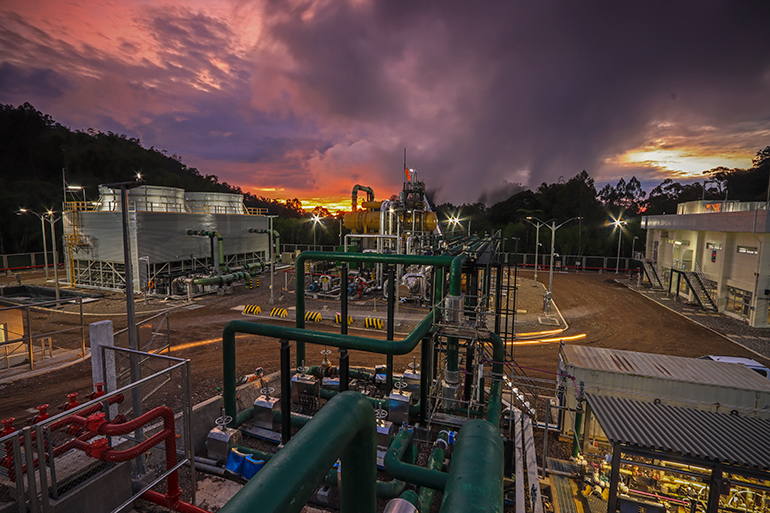
METS Cold Storage Services, Inc. (METS), a trusted name in Philippine cold chain logistics, has taken a monumental step in its sustainability journey by partnering with First Gen Corp. (First Gen), the country’s leading renewable energy (RE) company, to power its massive Cagayan de Oro facility entirely with geothermal energy.

This landmark agreement marks METS as one of the first major logistics providers in the region to transition cold chain operations to a 100% clean energy source, significantly reducing its carbon footprint and setting a new industry standard for sustainable food preservation.

Securing Sustainable and Reliable Power

The Mt. Apo Geothermal Power Plant has over 106MW of capacity, drawing steam from the foothills of the tallest mountain in the Philippines.

METS will source up to 2,050 kilowatts (kW) of RE for its Cagayan de Oro facility from the Mt. Apo Geothermal Power Plant, operated by Energy Development Corp. — a subsidiary of First Gen. The latter is among the biggest developers of geothermal power in the world, with over 1,200 megawatts of installed capacity.

The METS Cagayan de Oro facility is a critical pillar in the company’s national cold chain infrastructure. Offering over 22,000 metric tons of cold storage capacity, this hub is essential for extending the company’s market reach in Northern Mindanao and consolidating its leadership position in the Philippine logistics market.

The partnership between METS and First Gen also strategically secures the power needed for the facility’s upcoming expansion.

“This shift to geothermal energy is more than a power supply agreement; it’s a tangible demonstration of our commitment to a low-carbon future. We are simultaneously ensuring operational stability, achieving our ambitious sustainability goals, and driving down long-term energy costs,” said Eileen Tio-Ty, chief financial officer of METS. “Clean, reliable power is non-negotiable for safeguarding the food and medical supply chain.”

A Greener Chain for Essential Logistics

Strategically located in Tablon, Cagayan de Oro, the METS facility has over 22,000 metric tons of cold storage capacity and serves as a hub for expansion in Northern Mindanao.

For the cold chain sector — which is inherently energy-intensive — this move underscores how essential logistics can be executed with environmental responsibility.

“Our partnership with METS demonstrates the critical role that indigenous geothermal energy plays in strengthening the Philippine cold chain while promoting genuine environmental stewardship,” said Arlene Sy-Soriano, head of Sales at First Gen.

Since its founding in 2010, METS has grown nationwide, operating across Cavite, Bulacan, Cebu, and Cagayan de Oro, and providing over 100,000 pallet positions to importers, distributors, traders, and quick-service restaurant (QSR) chains. Its growth is consistently tied to its commitment to food safety, operational efficiency, and technological modernization.

By integrating renewable energy solutions and modern cold storage technologies, METS is positioning itself as a pioneer — proving that dependable logistics and sustainable, eco-friendly choices can go hand-in-hand.


Spotlight is BusinessWorld’s sponsored section that allows advertisers to amplify their brand and connect with BusinessWorld’s audience by publishing their stories on the BusinessWorld Web site. For more information, send an email to online@bworldonline.com.

Join us on Viber at https://bit.ly/3hv6bLA to get more updates and subscribe to BusinessWorld’s titles and get exclusive content through www.bworld-x.com.

Pfizer CEO says US pharma industry needs to collaborate with China

STOCK PHOTO | Image by Mike Ramírez Mx from Pixabay

NEW YORK — Pfizer Chief Executive Albert Bourla said on Tuesday that the US pharmaceutical industry needs to collaborate with China’s, where speedy processes have vaulted it to 30% of global drug development over the past decade.

“In biopharma, China’s dramatic speed, cost and scale have triggered a shift in the global competitive landscape,” Bourla said, speaking at the National Committee on US-China Relations Gala in New York.

He said the country currently has around 1,200 novel drug candidates, compared with 10 years ago when there was about 60.

The remarks come as US President Donald Trump has targeted top economic rival China with a cascade of tariff orders on billions of dollars of imported goods that he says is aimed at narrowing a wide trade deficit, bringing back lost manufacturing and crippling the fentanyl trade.

The US House of Representatives also passed a bill last year that aimed to restrict US business with Chinese pharmaceutical companies. The measure ultimately did not pass the Senate, but a new version of the bill was reintroduced earlier this year.

Nonetheless, US and European drug companies have also looked to China to replenish their drug pipelines, despite the trade war between Beijing and Washington.

Earlier this year, Pfizer struck a deal to license an experimental cancer treatment from China’s 3SBio Inc. paying $1.25 billion upfront and up to another $4.8 billion if developmental milestones are met.

“Chinese biotech firms accounted for nearly 1/3 of all large pharma drug licensing deals last year, a major shift in where innovation is sourced,” Bourla said.

He added that Chinese biopharmaceutical companies are able to recruit patients for clinical trials 2 to 5 times as quickly as US companies. — Reuters

Philippines cash remittances jumps 3.2% August

Money sent home by overseas Filipino workers (OFWs) rose by 2.7% year on year in January, central bank data showed. — PHILIPPINE STAR/WALTER BOLLOZOS

MANILA — Cash remittances rose by 3.2% in August from a year earlier to $2.98 billion, the Philippine central bank said on Wednesday.

For the January to August period, cash remittances through banks increased by 3.1% from a year earlier to $22.9 billion. — Reuters

Adapting to Filipino preferences

Lamoiyan Corp.’s toothpaste products are formulated according to Filipinos’ preferences, its founder said.

Related story: https://www.bworldonline.com/bw-launchpad/2024/08/21/615150/how-hapee-toothpaste-became-known-through-the-olympics/.

Interview by Patricia Mirasol
Video editing by Arjale Queral

Malaysia to discuss sectoral tariffs with US at ASEAN summit

In this photo illustration, the Association of Southeast Asian Nations (ASEAN) emblem is seen on a smartphone screen in front of the ASEAN flag. — PAVLO GONCHAR / SOPA IMAGES/SIPA VIA REUTERS CONNECT

KUALA LUMPUR — Malaysia will hold talks with the US secretary of commerce on sectoral tariffs, including on semiconductors, during a meeting of the ASEAN regional bloc next week, Malaysian state media reported on Wednesday, citing the trade minister.

President Donald Trump’s administration in August imposed a tariff of 19% on Malaysian exports to the United States, though items like semiconductors are currently exempt pending a US national security probe.

Trump in August proposed a 100% levy on imported chips, though he said it would not apply to companies that already had a manufacturing footprint in the United States or planned to build one.

Malaysia, the world’s sixth-largest exporter of semiconductors, has warned that any removal of tariff exemptions on its semiconductor exports by Washington could hurt its competitiveness and strain supply networks.

Trade Minister Tengku Zafrul Aziz said he will hold discussions with US Commerce Secretary Howard Lutnick on tariffs for semiconductors and other sectors, which have yet to be finalised, state news agency Bernama reported.

“I will hold discussions with Lutnick. He will also be attending the ASEAN Leaders Summit next week,” Tengku Zafrul said, referring to a meeting of leaders of the Association of Southeast Asian Nations set to run from October 26 to October 28 in the Malaysian capital of Kuala Lumpur.

He said Malaysia and the United States were currently negotiating a final tariff agreement, which is expected to be signed by both countries at next week’s meeting.

Malaysia’s agriculture, industrial, and manufacturing sectors, as well as those involved in trade and investment with the United States, are likely to benefit from the agreement, Tengku Zafrul added.

Several other countries are also expected to sign trade agreements with Washington at the upcoming ASEAN meeting, Tengku Zafrul said, without elaborating.

US tariff rates for export-reliant Southeast Asia have been set at 19% and 20% for most of the region. Laos and Myanmar have been hit with a 40% rate, while Singapore has a 10% tariff. — Reuters

The Philippines wins big at the World Expo with a Silver Award for Exhibition Design

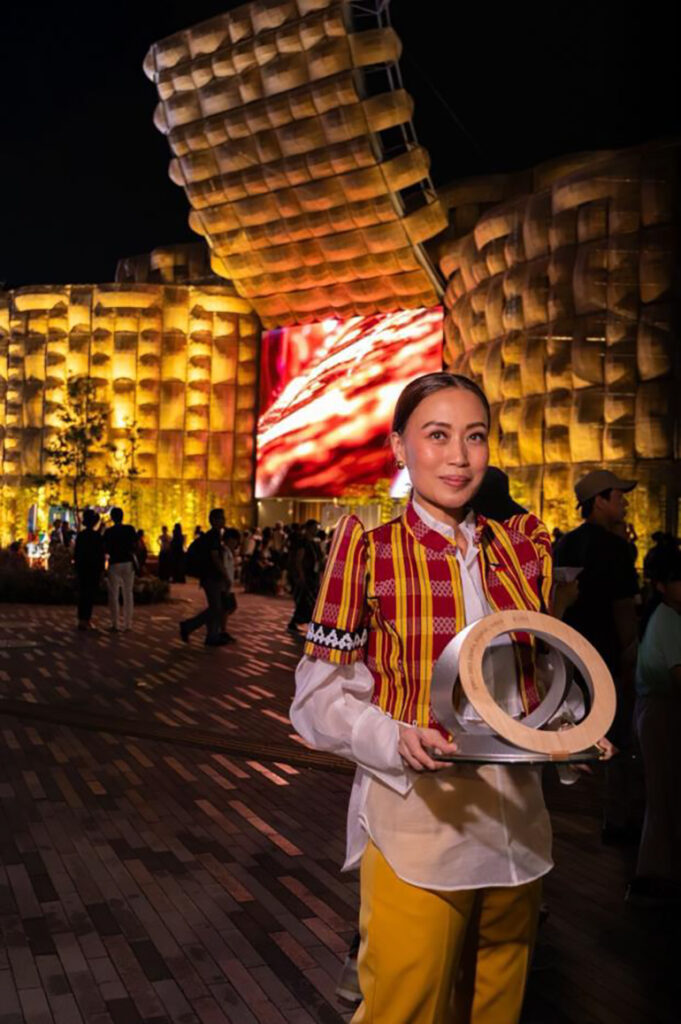
Philippine Pavilion Committee Head for Central Information Raquel Tria-Joya (L) receives the Silver Award for Exhibition Design at the World Expo 2025 Osaka. Together with her on stage are representatives from Poland (gold) and Austria (bronze).

OSAKA, JAPAN — The Philippine Pavilion at Expo 2025 Osaka received the Silver Award for Exhibition Design, recognizing its outstanding creativity, craftsmanship, and visitor experience.

Presented by the Bureau International des Expositions (BIE) — the organization that oversees and regulates World Expos — the award honors self-built pavilions with plots under 1,500 square meters that demonstrate exceptional exhibit design and storytelling.

On the same day, the Philippines also held the official closing ceremony of its Pavilion, celebrating six months of cultural exchange and collaboration. The event, held at the heart of the Yumeshima site, gathered dignitaries, partners, artists, and visitors in a vibrant tribute filled with messages of gratitude, unity, and forward vision — a fitting close to a Pavilion that left a lasting mark on global audiences.

Since opening its doors in April, the Philippine Pavilion has welcomed over 1.1M visitors, serving as a dynamic platform to showcase the country’s creativity, craftsmanship, and commitment to sustainability and community. Under the theme “Nature, Culture & Community — Woven Together for a Better Future,” the Pavilion stood out as a multisensory experience that combined AI-powered installations, traditional weaves, culinary showcases, and live performances.

Tourism Promotions Board (TPB) Philippines Chief Operating Officer and Secretary-General of the Philippine Organizing Committee Margarita Montemayor Nograles led the closing program. It was also attended by Ambassador Mylene Garcia-Albano of the Philippine Embassy in Japan and Tourism Undersecretary Myra Abbubakar reading the keynote speech of Tourism Secretary Christina Garcia Frasco.

Tourism Promotions Board Philippines Chief Operating Officer and Philippine Organizing Committee Secretary-General Marga Nograles with the Silver Award for Exhibition Design at the World Expo 2025 Osaka

“From the very beginning, when this was just an idea drawn on paper, we knew that the Philippine Pavilion was going to be more than just a physical structure. It was going to be our nation’s heartbeat at Expo 2025 — a living expression of who we are: strong, creative, and bound by community. And now, as the curtains close, I stand before you knowing — with all certainty — that we did not just build a Pavilion.”

“We built pride. We built hope. We built a home for the Filipino spirit — here in Japan, and in the eyes of the world.”

A Legacy That Lives On

Designed as the first-ever live performance façade for the Philippines in World Expo history, the Pavilion featured over 200 handwoven panels created by Filipino weaving communities across all 18 regions of the country — the largest collaboration of its kind. Inside, 18 large-scale handwoven art pieces, the generative algorithm-powered “Dancing with Nature” experience, AI photobooths, Habi Shop, and the Hilot wellness corner engaged guests in an immersive journey through Philippine nature, culture, and healing traditions.

As part of the Pavilion’s second life, its key elements will be repatriated to the National Museum of the Philippines and select regional sites. Plans are also under way for the use of some of the elements in the upcoming ASEAN Tourism Forum (ATF) and Travex which will be held in Cebu in January 2026, extending the Pavilion’s impact beyond Expo.

“What we created here was both a space and a feeling — of warmth, of welcome, of wonder. And we carry that spirit home with us,” added Ms. Nograles. “Through the Pavilion, we invited the world to rediscover the Philippines — and we thank every visitor who answered that invitation. We look forward to welcoming more of you to our country very soon.”

A Platform for People, Partnerships, and Possibility

Throughout Expo 2025, the Philippine Pavilion served as a hub for cultural diplomacy, trade networking, and tourism promotion. From the Philippine National Day festivities to the MICE roadshow and investor meetings, the Expo participation catalyzed cross-sector partnerships that will continue long after the Expo gates close.

With Japan as one of the Philippines’ top tourism and trade partners, the Pavilion also played a key role in strengthening bilateral ties — fostering new collaborations with Japanese prefectures, travel agencies, media, and cultural institutions.

Looking Ahead

As the Philippines closes this remarkable chapter in Osaka, the message is clear: the work continues. Through community-based tourism, heritage-driven storytelling, and strategic partnerships, the country remains committed to positioning the Philippines as both a destination and a nation that’s rich in heart, history, and hope.


Spotlight is BusinessWorld’s sponsored section that allows advertisers to amplify their brand and connect with BusinessWorld’s audience by publishing their stories on the BusinessWorld Web site. For more information, send an email to online@bworldonline.com.

Join us on Viber at https://bit.ly/3hv6bLA to get more updates and subscribe to BusinessWorld’s titles and get exclusive content through www.bworld-x.com.

Eyeing a Christmas wellness gift from Nano ProTech

This Christmas, why not give the gift of wellness and style in one? With so much of life spent in front of screens and outdoors under the sun, protecting our eyes has never been more important. Nano ProTech Eyewear, now available in the Philippines, offers an innovative way to safeguard vision—making it a thoughtful holiday gift for loved ones of all ages.

What makes Nano ProTech Eyewear special is its fusion of advanced nanotechnology and natural components embedded in the frame, including Germanium Stones, Negative Ions, Far Infrared (FIR), Silver Ions, and Multi-minerals. Working together, these elements create subtle natural interactions that promote balance, comfort, and a relaxing wearing experience.

Beyond comfort, Nano ProTech Eyewear delivers multi-featured protection with lenses that are Anti-UV, Anti-blue light, Anti-radiation, Anti-reflection, Anti-glare, Anti-static, and Anti-fog. Whether your loved ones are working from home, studying, scrolling on devices, or spending time outdoors, their eyes stay supported and shielded from modern stressors.

And because gifting should be as stylish as it is practical, Nano ProTech Eyewear is designed for everyday wear. From sleek sunglasses to photochromic glasses that adapt to changing light, there are options for adults, teens, and even kids. Each piece is lightweight, durable, and fashion-forward, embodying the brand’s philosophy: “See the World in Style, Shielded by Science.”

“Through Nano ProTech, we bring the power of nanotechnology to everyday living—helping people protect their vision while enhancing their overall well-being. This Christmas, Nano ProTech Eyewear makes the perfect gift, offering clearer vision, lasting comfort, and stylish protection for every lifestyle,” said Jit Enano, Executive Vice President for Business Development and Marketing of Nano ProTech.

But Nano ProTech isn’t just about eyewear; it’s also about empowerment. Beyond the product, Nano ProTech offers a unique business opportunity, giving Filipinos the chance to share the benefits of wellness technology while building a sustainable livelihood. For OFWs, this can even be a meaningful gift to their families back home, a business opportunity that goes beyond material presents and instead opens the door to stability and growth. It’s the perfect embodiment of Nano ProTech’s promise: “a gift that protects, a business that empowers.”

 So, this holiday season, if you’re eyeing a Christmas gift that truly cares, choose Nano ProTech Eyewear—or even the Nano ProTech business opportunity. It’s more than a present. It’s protection, wellness, empowerment, and style—all in one.

For more information, visit www.nanoprotech.biz.

For updates, follow their official Facebook page, or contact the Nano ProTech Office at Landline: (02) 8.687.5868 | Mobile: +63 917 160 2677 / +63 948 159 0803. Please look for Caressa or Rosel for inquiries about product details or business opportunities.

#GiftThatProtectsBusinessThatEmpowers #NanoProTechEyewear #ChristmasWellnessGift #ProtectYourVision #EmpowerThroughWellness


Spotlight is BusinessWorld’s sponsored section that allows advertisers to amplify their brand and connect with BusinessWorld’s audience by publishing their stories on the BusinessWorld Web site. For more information, send an email to online@bworldonline.com.

Join us on Viber at https://bit.ly/3hv6bLA to get more updates and subscribe to BusinessWorld’s titles and get exclusive content through www.bworld-x.com.

Fed’s Powell says the end of balance sheet drawdown process may be nearing

US Federal Reserve Chair Jerome H. Powell — REUTERS

Federal Reserve Chair Jerome Powell said on Tuesday the end of the central bank’s long-running effort to shrink the size of its holdings, widely known as quantitative tightening, or QT, may be coming into view.

Given the central bank’s long-running goal of leaving enough liquidity in the financial system to allow for firm control of short-term rates and normal money market volatility, Powell said “we may approach that point in coming months, and we are closely monitoring a wide range of indicators” to know if that has happened.

As a signal the end stage is getting closer, “some signs have begun to emerge that liquidity conditions are gradually tightening, including a general firming of repo rates along with more noticeable but temporary pressures on selected dates,” Powell said at a gathering held by the National Association for Business Economics in Philadelphia.

In his remarks, Powell also defended the central bank’s use of the balance sheet and other tools for monetary policy.

The endgame for QT has been a topic of market debate for some time but has gained urgency over recent weeks as the Fed’s reverse repo facility, or RRP, has fallen to effectively near-zero usage. The RRP tool helps set a soft floor underneath short-term rates and assists the Fed in keeping its interest rate target within the desired range, now set at between 4% and 4.25%. That facility peaked at $2.6 trillion at the end of 2022.

The RRP facility has largely existed to mop up the excess liquidity the Fed created during the pandemic and now that it has been effectively drained out, QT will now lower reserves.

The further reserves fall, the more likely liquidity scarcity could emerge with little warning and rattle money markets, in turn complicating the Fed’s ability to keep its monetary policy interest rate target where it wants it to be.

Something like that played out in September 2019 during the last period of QT, forcing the Fed to intervene unexpectedly to add liquidity back to the system. Since then, the Fed has added something called the Standing Repo Facility – it provides fast cash loans to eligible financial firms – as a shock absorber for market liquidity needs.

Money markets and the Fed got through the end of the third quarter smoothly, with markets not needing to turn to the Fed for liquidity needs in any substantial size.

STILL NOT ENTIRELY CLEAR WHEN QT MIGHT END

The QT process, which has been running since 2022, is designed to remove excessive amounts of liquidity the Fed added to financial markets during the COVID-19 pandemic. Cash was pumped into the financial system via large-scale purchases of Treasury and mortgage bonds, which were aimed at stabilizing markets and providing stimulus when the Fed’s short-term rate target was at near-zero levels.

The asset buying helped Fed holdings more than double to around $9 trillion. Allowing a set amount of bonds to mature each month and not be replaced has helped take the Fed balance sheet down to $6.6 trillion.

It’s unclear how much further the Fed can go with QT but some officials have said there remains plenty of liquidity in the financial system. Powell did not say how far the Fed would be able to shrink its holdings.

A survey of large banks, money managers and others conducted before the Fed’s September 16-17 Federal Open Market Committee meeting projected a January 2026 end-date for QT, with the overall size of the Fed’s balance sheet at $6.2 trillion. Survey respondents also said they saw bank reserve levels at $2.9 trillion from their current level of $3 trillion.

FED CHIEF DEFENDS USE OF BALANCE SHEET, OTHER TOOLS

Powell noted in his remarks that broadly speaking, “our ample reserves regime has proven remarkably effective for implementing monetary policy and supporting economic and financial stability.”

The Fed’s usage of its balance sheet as a policy tool, as well as the tools it uses to help manage interest rates, has been controversial, no less so than with the current Trump administration. Treasury Secretary Scott Bessent has accused the central bank of broad mission creep with the use of the balance sheet, which he believes has distorted financial markets.

The Fed has also caught heat for its interest rate management tools, which have paid out so much money to eligible financial firms that the Fed is now managing a $244 billion loss, causing some politicians to weigh whether those powers should be removed.

Powell cautioned against such a move, saying “if our ability to pay interest on reserves and other liabilities were eliminated, the Fed would lose control over rates.”

To get it back, “large sales of securities over a short period of time would be needed to shrink our balance sheet and the quantity of reserves in the system,” Powell said, adding “the volume and speed of these sales could strain Treasury market functioning and compromise financial stability.” — Reuters