Home Blog Page 417

Little Women musical premieres in London after three-decade wait

JOTHEMUSICAL.COM

DECADES after three Californian youth theater students decided to write a musical based on Louisa May Alcott’s coming-of-age classic Little Women, they have achieved a sell-out world premiere at London’s Theatre Royal.

“We were the age of the kids when we wrote it,” said composer Dan Redfeld, speaking before Sunday’s concert performance. “Now we’re coming back to it at the age of the adults.”

Jo – The Little Women Musical began when Redfeld saw and loved the 1994 film of Little Women, starring Winona Ryder as the young heroine Jo March and Susan Sarandon as her mother Marmee.

“As you do in youth theater,” Mr. Redfeld said, he thought: “Let’s write a musical.”

Together with lyricists Christina Harding and John Gabriel Koladziej, he did. That was the easy part.

WORKSHOPPING WITH ELAINE STRITCH
Years of false starts followed, including workshopping the project with Broadway star Elaine Stritch.

The 9/11 attacks in 2001 led funding to disappear. After that, COVID slowed their attempt to revive it, but gave them time to revise.

The show at last has funders and big stars. Following Sunday’s one-night premiere, the team is working to arrange more performances, but said they could not yet disclose details.

A selling point is the show’s lush sound provided by a nearly 30-strong orchestra that harks back to the West End musicals of the late eighties and nineties that were the creators’ influences when they began writing Jo.

Kerry Ellis, who sings Marmee, and has previously starred in dozens of major musicals, said such “luscious orchestras” have become rare. “This is very special because of that,” she said.

The West End premiere was preceded by an album, released last year, and recordings at London’s Abbey Road Studios, where The Beatles and so many others have gone before.

For everyone in the show, Abbey Road Studios is a setting they never take for granted. Working there was full of “pinch me moments,” Mr. Koladziej said after a rehearsal session at the Studios late last week. — Reuters


In the doldrums

STOCK PHOTO | Image from Freepik

THE eponymous expression refers to a mental state of inactivity and listlessness that is hopefully temporary. The “doldrums” refer to a nautical term. As a term for lethargy, it is synonymous to the more contemporary slang of a “bad hair day.” This equivalent though hints of irritability and snarling behavior.

There are just random days that feel blah. There’s nothing in the appointment calendar to get excited about, nothing to look forward to. (What’s for dinner?)

Even tycoons at the peak of their powers can get caught in a day where nothing seems to go right. There are no goals that have been surpassed, no empires to acquire with debt, and no ambush interviews.

One is feeling lost. Being in the doldrums involves a sense of malaise, ennui, tedium, and listlessness. This may be caused by something totally out of one’s control like the outcome of a tennis game, the indifference of a chat group, or having a persistent cough.

An ordinary day just feels lost. It’s not yet Holy Week, but everything seems to be in slow motion. Nothing to be worried about. A bad-hair day requires the grooming of the spirit.

How do you snap out of the doldrums?

Meditate. Contemplation gives you a chance to catch up on your reading. Try Marcus Aurelius who takes a long view of things. He advises eating a raw frog in the morning, so that the rest of your day will seem more pleasant in comparison. (What could be worse?) This kind of advice is part of his Meditations. Maybe, it’s not just any kind of frog?

Have coffee with long lost friends. They have forgotten your sense of humor and its manifest absence. They will not ask — why are you in the doldrums? What do they know? Go out with accountants, constitutional lawyers, or a proselytizer for AI and how robots will replace real reservation clerks. Your silence will not bother them. And you don’t really have to listen closely to what they’re saying. Just nod every three minutes.

Check out your former preoccupations. There are always unread books that have been downloaded and waiting to be given some attention. It’s a good time to catch up and get back into the rhythm of diverse subjects to delve into, like mysteries and biographies of famous people.

It’s all right to be a recluse. People will mistake your isolation for being in the doghouse, which is an entirely different experience and involves having lost out in some competition. Saying “regrets” to all sorts of invitations for dinner or out-of-town fireworks displays from high school classmates is not as strange as it seems. Expect the invitations from the Viber group to abate after a while. (Can you put me back in the chat group?)

While it is true that there is a region of the ocean near the equator designated as the Doldrums and characterized by calm and gentle breezes, tedium is not a place at all. So you can leave it anytime. The doldrums are a mental signal, much like the low percentage of remaining charge of a hand phone that needs to be plugged in.

The body too needs to be turned off temporarily and recharged. This process of rebooting may be in the form of physical exercise. It may be traveling to a new place or joining a support group like Doldrums Anonymous. Recharging your mental and physical batteries probably entails new experiences and getting out of a rut.

A pause, hopefully not indefinitely stretched into a depression, is useful for taking stock and acquiring perspective.

Isn’t this what a closed retreat is supposed to achieve? This is usually an out-of-town respite of prayers and short talks accompanied by silence. It’s a scheduled pause that has a designated beginning and end.

How do you know that the doldrums are over?

You get back your appetite and resume your scheduled peristaltic movements every morning. You don’t go back to sleep after waking up to the alarm clock.

Being in the doldrums is a temporary state. Sometimes, it’s over before you realize you were ever there. Anyway, like Sagada, the blahs are a nice place to visit, even if you don’t really want to live there.


Tony Samson is chairman and CEO of TOUCH xda

ar.samson@yahoo.com

PCC clears FPG-Mercantile merger

THE Philippine Competition Commission (PCC) said on Wednesday that it has cleared the proposed merger between nonlife insurers FPG Insurance Co., Inc. and The Mercantile Insurance Co., Inc.

In a statement, the PCC said its Mergers and Acquisitions Office Review Team found that the merger “likely poses no substantial lessening of competition in the relevant markets.”

“The parties’ combined market shares remain low, preventing them from unilaterally influencing market conditions or engaging in foreclosure strategies,” it added.

It added that they have multiple competitors, which gives consumers various options for insurance providers.

“The commission’s approval allows the merger to proceed, with the finding that competitive dynamics in the relevant markets will be preserved, thereby protecting consumer interests and maintaining a competitive marketplace,” it added.

The PCC was first notified about the merger on Nov. 19. Under the law, the agency reviews consolidations to ensure that they do not harm competition in their respective sectors.

For the Mercantile Insurance-FPG Insurance transaction, the PCC looked at the merger’s potential impact on the provision of aviation, fire, marine, motor car, casualty, engineering, personal accident, and suretyship nonlife insurance locally and globally.

The companies announced their plan in August last year. The merged company will be named FPG Mercantile and will have estimated combined gross written premiums of P10 billion, which would place it among the top four nonlife insurers in the Philippines, they earlier said. — Justine Irish D. Tabile

WhatsApp unveils high-security mode, latest tech firm to offer users stronger protection

SYIFA5610-FREEPIK

WASHINGTON — Meta’s WhatsApp messaging service is offering users an advanced security mode, joining a growing number of US tech firms that are letting users opt into stronger protections against hackers in exchange for a more restrictive experience.

The new option, rolling out on Tuesday and called “Strict Account Settings,” is a one-click button in WhatsApp’s settings that activates a series of defenses.

These include blocking media and attachments from unknown senders, disabling link previews — the thumbnails that appear when a URL is entered into a chat — and silencing calls from unknown contacts. All three have been identified as potential vectors for surveillance and advanced hackers.

In a blog post, WhatsApp said that while all its users’ conversations were protected by end-to-end encryption, “we also know that a few of our users — like journalists or public-facing figures — may need extreme safeguards against rare and highly sophisticated cyberattacks.”

Meta Platforms is the third major tech firm to offer a security boost for high-risk users.

In 2022, Apple launched “Lockdown Mode,” which it describes as “an optional, extreme protection” designed for the “very few individuals” who might be targeted by advanced digital threats. Available on iPhone and macOS, the feature disables most message attachment types and link previews and includes restrictions on FaceTime calls and web browsing.

Last year, Alphabet’s Android began offering “Advanced Protection Mode,” for users with “heightened security awareness.”

Like “Lockdown Mode,” Alphabet’s more secure option trades some functionality for enhanced security, including restricting users from downloading potentially risky apps from outside its in-house Play Store.

A researcher who helps defend civil society figures from hacking said WhatsApp’s announcement was “a very welcome development.”

The feature will help protect dissidents and activists while encouraging other tech firms to up their game, said John Scott-Railton, who works at The Citizen Lab, a research group based out of the University of Toronto.

“My hope is that others follow suit,” he said. — Reuters

Agricultural output inches up to 0.5% in Q4

THE PHILIPPINES’ agricultural production grew by 2.6% in 2025, the fastest pace in eight years, as gains in crop output and strong poultry performance offset the decline in livestock and fisheries, the Philippine Statistics Authority (PSA) said. Read the full story.

Torres brandy debuts in PHL through Tanduay distribution deal

Global Spanish brand debuts in the Philippines with Torres 5 Light — TANDUAY DISTILLERS, INC.

TANDUAY has entered a distribution agreement with Spain’s Torres to bring its brandy to supermarkets nationwide, starting with Torres 5 Light, with additional products arriving in the first quarter as part of the latter’s Philippine market debut.

“The arrival of Torres in the Philippines marks the coming of two great houses that are united by a shared commitment to excellence and growth. This partnership reflects our vision to offer Filipino consumers world-class spirits,” Tanduay President and Chief Executive Officer Lucio Tan III said in a statement on Wednesday.

Tanduay International Business Development Manager Roy Kristoffer Sumang said the company has been negotiating with Torres as part of the Spanish brand’s European expansion.

“We approached them during one of our visits in Europe, way back in 2024,” he told reporters on Tuesday.

For its Philippine launch, Tanduay plans to lead with Torres 5 Light in the mainstream market, while gradually introducing higher-end Torres variants through upscale channels such as specialty liquor stores, membership shopping stores, and wine shops, Mr. Sumang said.

Torres 5 Light is a smooth, light brandy with 25% alcohol, made from grapes and aged in oak barrels.

Torres Spirits Global Managing Director Christian Visalli said the partnership aims to bring Torres 5 Light and Spanish brandy heritage to the Philippine market.

Since the 16th century, the Torres family has cultivated vineyards in Spain’s Penedès region, founding Casa Torres in 1870 for winemaking and launching its brandy production in 1928 using oak-aged spirits from the area’s finest white wines.

“With Tanduay as our distributor, we are confident that Torres products will reach Filipino consumers who appreciate exceptional spirits with authentic Spanish tradition,” Mr. Visalli said.

Tanduay is a rum brand produced by Tanduay Distillers, Inc., a subsidiary of the Tan-led conglomerate LT Group, Inc.

On Wednesday, LT Group shares fell 1.27% to close at P15.50 apiece. — Alexandria Grace C. Magno

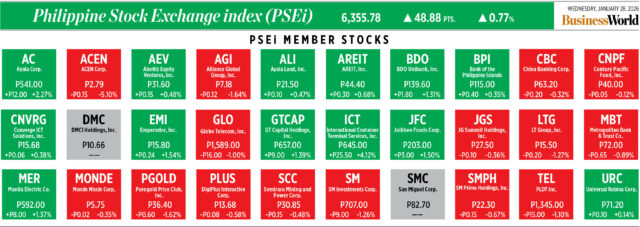
How PSEi member stocks performed — January 28, 2026

Here’s a quick glance at how PSEi stocks fared on Wednesday, January 28, 2026.


PHL stocks rise on strong peso before GDP data

REUTERS

PHILIPPINE SHARES climbed further on Wednesday amid a stronger peso and as investors took positions before the release of fourth-quarter and full-year 2025 gross domestic product (GDP) data.

The Philippine Stock Exchange index (PSEi) increased by 0.77% or 48.88 points to end at 6,355.78, while the broader all shares index rose by 0.44% or 15.96 points to close at 3,597.04.

“The local bourse moved higher as investors positioned ahead of the GDP print announcement tomorrow while seeing sustained weakness in the dollar,” AP Securities, Inc. said in a market note.

“The local market advanced, backed by the appreciation of our local currency against the US dollar,” Philstocks Financial, Inc. Research Manager Japhet Louis O. Tantiangco likewise said in a Viber message. “The bourse had its negative moments within the day, reflecting investors’ cautiousness while waiting for the Federal Reserve’s policy decision and the Philippines’ fourth quarter and full-year 2025 GDP data.”

The PSEi opened Wednesday’s trading session at 6,303.34, a tad lower than the previous day’s finish of 6,306.90. It sank to an intraday low of 6,287.04 but recouped its losses to close at its high for the session.

On Wednesday, the peso soared to a one-month high versus the greenback as US President Donald J. Trump said the dollar’s value remains “great” despite its recent slide.

The local unit surged by 34.5 centavos to end at P58.74 from its P59.085 finish on Tuesday, data from the Bankers Association of the Philippines showed.

This was the peso’s strongest close in more than a month or since it ended at P58.71 on Dec. 26.

Meanwhile, Philippine GDP likely grew by 4.2% in the fourth quarter, based on a BusinessWorld poll of 18 economists and analysts. This would put the full-year average at 4.8%, below the government’s 5.5%-6.5% target.

Most sectoral indices closed in the green on Wednesday. Services jumped by 2.53% or 64.22 points to 2,600.12; mining and oil increased by 2.22% or 412.77 points to 18,928.16; financials climbed by 0.38% or 8.12 points to 2,116.72; and industrials went up by 0.23% or 21.11 points to 9,008.63.

Meanwhile, property dropped by 0.22% or 5.01 points to 2,247.06, and holding firms declined by 0.14% or 7.49 points to 5,080.91.

“International Container Terminal Services, Inc. was the day’s index leader, climbing 4.12% to P645. ACEN Corp. was the main index laggard, falling 5.1% to P2.79,” Mr. Tantiangco said.

Decliners narrowly outnumbered advancers, 106 to 102, while 54 names closed unchanged.

Value turnover went down to P7.53 billion on Wednesday with 1.58 million shares traded from the P15.85 billion with 2.23 billion issues that changed hands on Tuesday.

Net foreign buying decreased to P463.37 million from P7.41 billion. — Alexandria Grace C. Magno

Filipinos see China as top security threat, OCTA Research poll shows

REUTERS

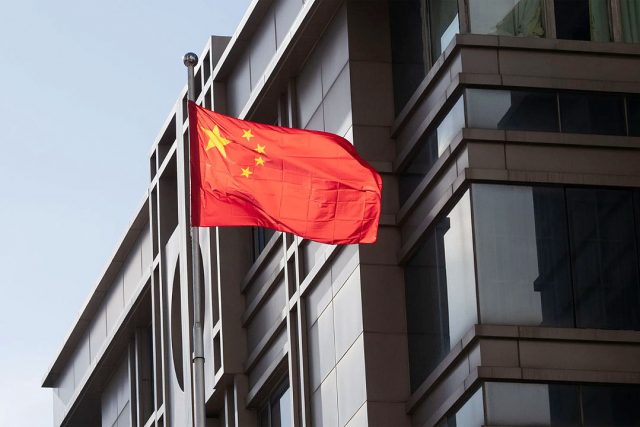
A GROWING majority of Filipinos see China as the country’s biggest external threat, according to a December survey by OCTA Research, as tensions between Manila and Beijing continue to simmer over disputed areas in the South China Sea.

About 79% of adult Filipinos identified China as the Philippines’ greatest threat, up from 74% in a similar poll conducted in July, OCTA said in a report released on Wednesday.

The increase points to a deepening and widespread perception that has remained dominant for years.

“Across all major areas, China is consistently viewed as the country’s top threat,” OCTA said. “This reflects a broad and geographically widespread national consensus.”

The Chinese Embassy in Manila did not immediately reply to a Viber message seeking comment.

OCTA said the rise between July and December did not signal a sudden change in sentiment but rather an intensification of an already entrenched view.

Public concern, the group added, appears responsive to recent developments while remaining anchored to a high baseline of threat perception.

Relations between the Philippines and China have deteriorated in recent years as Beijing continues to assert expansive claims in the South China Sea, a strategic waterway through which trillions of dollars in global trade pass each year.

China claims most of the area under its U-shaped nine-dash line, overlapping with the exclusive economic zones of the Philippines, Vietnam, Malaysia, Brunei, Indonesia and Taiwan.

Manila has repeatedly rejected China’s claims, citing a 2016 ruling by a United Nations-backed arbitral tribunal that voided Beijing’s position under international law. China has refused to recognize the decision.

Confrontations between Philippine and Chinese vessels have become more frequent, with Manila accusing Chinese coast guard and maritime militia ships of harassment and dangerous maneuvers, including the use of water cannons near contested features.

The survey showed that perceptions of China as a threat were strongest in the National Capital Region, where 84% of respondents shared that view. This was followed by Mindanao at 79%, and both Luzon and the Visayas at 78%.

“China has been identified by a clear majority of Filipinos as the country’s greatest threat consistently from January 2021 to December 2025, far outpacing all other countries across survey waves,” the pollster said.

Other countries trailed far behind in perceived threat levels. About 5% of respondents named Russia, 4% pointed to the US and 2% cited North Korea. Another 4% said the Philippines had no external threats.

The poll also showed persistent distrust toward China. 60% of Filipinos said the Philippines should not trust China, while only 13% said they trusted the country. About 23% were undecided.

“Overall, the findings indicate broad-based distrust toward China across demographic, regional and socioeconomic groups,” OCTA said.

Distrust was highest in Luzon at 63%, followed by the National Capital Region at 62%, Mindanao at 58%, and the Visayas at 56%. Trust in China was highest in Mindanao at 18%, compared with 12% in Luzon and the Visayas and 8% in Metro Manila.

“While small pockets of higher trust exist in specific regions and among younger age groups, skepticism remains the dominant sentiment nationwide,” according to the report.

The OCTA survey was conducted through face-to-face interviews with 1,200 respondents aged 18 and above from Dec. 3 to 11. It has a margin of error of ±3 percentage points. — Adrian H. Halili

NMC urges restraint, clarity after Chinese Embassy spat

PHILIPPINE COAST GUARD/FACEBOOK PAGE

THE NATIONAL Maritime Council (NMC) on Wednesday urged restraint and factual clarity in public discourse on the South China Sea, after a series of sharp exchanges between Chinese diplomats and Philippine officials that have further strained bilateral ties.

In a statement, the council said discussions on the West Philippine Sea should be guided by respect for international law and conducted through established diplomatic and legal channels, rather than through public rhetoric.

“The NMC calls for restraint, factual clarity, and respect for international law in all discussions relating to the West Philippine Sea,” it said, adding that official engagement between states should remain institutional and rules-based.

The Chinese Embassy in Manila did not immediately reply to a Viber message seeking comment.

The council’s remarks come after Beijing’s embassy in Manila issued several statements criticizing Philippine politicians and security officials who have taken a more vocal stance in asserting Philippine maritime claims.

Those statements, some of which directly called out individual officials, prompted pushback from Philippine authorities, who said the messaging crossed diplomatic norms.

The NMC warned that public exchanges marked by “rhetoric, misinformation and disinformation” risk inflaming sentiment and undermining efforts to manage disputes peacefully.

“Such engagements are governed by international law and mutual respect, not by… attempts to inflame public sentiment,” it said.

The council stressed that the Philippines does not seek confrontation in the South China Sea, instead pursuing what it described as a measured and responsible approach aimed at protecting citizens, defending sovereign rights and maritime entitlements and resolving disputes through lawful and diplomatic means.

“Our approach is measured and responsible: to protect our people, uphold our sovereign rights and maritime entitlements, and pursue peaceful resolution of disputes through lawful and diplomatic means, consistent with our obligations as a responsible member of the international community,” the NMC said.

China claims most of the South China Sea under its U-shaped nine-dash line, overlapping with the maritime zones of several Southeast Asian countries, including the Philippines. Manila has consistently rejected Beijing’s claims, citing a 2016 arbitral ruling that invalidated China’s position under international law. China has refused to recognize the ruling.

The NMC said it fully supports the Department of Foreign Affairs’ recent move to lodge a “firm representation” with the Chinese Embassy over what it described as unfounded and misleading claims about developments in the disputed waters.

“We remain united with the Department of Foreign Affairs and other government institutions in advancing a principled, coherent, and credible national position that safeguards our sovereignty, sovereign rights, and jurisdiction,” the council said.

It also underscored the importance of evidence-based public discourse on maritime issues, noting that documented facts gathered through lawful and transparent means remain central to national maritime policy and informed public understanding.

Tensions between Manila and Beijing have intensified amid repeated encounters at sea. Philippine officials have reported incidents involving Chinese coast guard and maritime militia vessels, including harassment and dangerous maneuvers such as the use of water cannons near features Manila considers part of its exclusive economic zone.

Local authorities have said the Philippines remains committed to diplomacy and international law as the primary tools for managing disputes in one of the world’s most strategically important waterways. — Adrian H. Halili

Palace eyes scaled-down anti-dynasty law before 2028 elections

PHILIPPINE STAR/KRIZ JOHN ROSALES

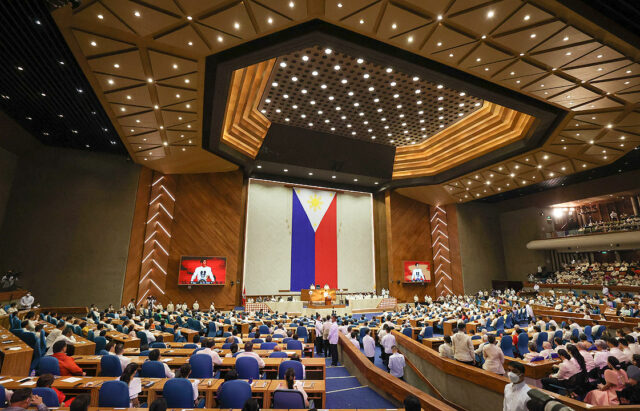
PROPOSALS to regulate political dynasties in the Philippines should avoid being “extreme,” Executive Secretary Ralph G. Recto said on Wednesday, as the Marcos administration pushes the passage of a long-delayed measure ahead of the 2028 elections.

Mr. Recto said the objective of an anti-political dynasty law should be incremental reform rather than sweeping prohibitions, expressing confidence that a version of the measure could be enacted before the filing of certificates of candidacy for the next national elections.

“As long as it’s not too extreme and the idea is to move the needle, so to speak, we should have a version of the anti-political dynasty law,” he said on the sidelines of an event at Malacañan Palace.

Political power in the Philippines has long been concentrated in families, with elected posts often passed from one generation to the next.

This has entrenched political dynasties across provinces and cities, shaping both local and national governance.

About eight of 10 lawmakers belong to political families, according to the Philippine Center for Investigative Journalism, underscoring the difficulty of advancing legislation that would limit dynastic rule.

President Ferdinand R. Marcos, Jr. comes from a political family in Ilocos Norte, while Mr. Recto is also a member of a prominent political clan. Both have acknowledged the sensitivity of regulating dynasties in a Congress dominated by such families.

Mr. Recto said proposals are being reviewed by lawmakers and the Office of the President, signaling coordination between the Executive and Legislature.

“That is being studied by the House, the Senate and the Office of the President,” he said. “That is a priority.”

Mr. Marcos earlier called on Congress to prioritize an anti-dynasty bill, and some lawmakers have urged him to certify the measure as urgent to fast-track deliberations.

The 1987 Constitution explicitly prohibits political dynasties “as may be defined by law,” but Congress has failed for decades to pass an enabling law. Past efforts have repeatedly stalled, largely due to resistance from lawmakers who would be directly affected.

Election watchdogs and governance advocates have said the absence of an anti-dynasty law weakens political competition and reinforces inequality in access to public office, particularly at the local level.

The renewed push comes as the administration seeks to advance governance reforms ahead of the 2028 elections, with the filing of certificates of candidacy expected in late 2027.

The Palace has said Mr. Marcos supports regulating political dynasties after seeing how the system has been abused, a shift from earlier remarks made when he was still a presidential aspirant, when he said there was nothing inherently wrong with political dynasties. — Chloe Mari A. Hufana

BARMM parliamentary elections deferred

@BANGSAMOROGOVT

THE Commission on Elections (Comelec) has deferred the March 30, 2026 Bangsamoro Autonomous Region in Muslim Mindanao (BARMM) parliamentary elections, citing legal restrictions and operational hurdles after the delayed passage of a parliamentary districting law.

In a minute resolution issued after its Jan. 28 en banc meeting, the agency announced that the Bangsamoro parliamentary elections are postponed “until a new date is fixed by law,” and terminated all activities under previous election calendars.

The postponement stems from the belated approval of Parliament Bill No. 415 on Jan. 13, which establishes parliamentary districts in BARMM. The measure, however, has yet to be signed by the chief minister and published, a prerequisite for its effectivity.

The Comelec Law Department said the delay conflicts with election rules meant to protect voters from confusion. “No territory comprising an election precinct shall be altered or a new precinct be established at the start of the election period,” according to the Voter’s Registration Act.

The districting arrangement would inevitably change town, municipal and voting cluster boundaries — a process that the election law freezes once the election period begins.

The Supreme Court earlier warned that late redistricting could render preparations useless, disrupt precincts anchored in villages and disfranchise voters.

Comelec also stressed that partial elections could not be held while some district seats remain unsettled. “The laws governing the conduct of the BARMM Parliamentary Elections do not contemplate piecemeal polls,” according to the resolution.

The Supreme Court has cautioned that electing only a portion of Parliament members would create governance gaps, noting that a Parliament composed of only 60% of its legal membership has “no legal basis.”

Operational constraints were also cited. Key processes such as ballot printing, machine configuration, personnel training and voter education rely on finalized districts and candidate lists, both of which remain incomplete.

“An election held in haste defiles the people’s right to vote,” the commission said, adding that proceeding without proper preparation could compromise the integrity of the election.

Until legislation sets an election date, all election-related activities for the March 2026 BARMM parliamentary polls are terminated. — Erika Mae P. Sinaking