Home Blog Page 41

Oil prices rise as US-Israeli war with Iran continues to disrupt supply

Miniatures of oil barrels and a rising stock graph are seen in this illustration. — REUTERS/DADO RUVIC/ILLUSTRATION

OIL PRICES climbed on Monday on continuing fears of supply losses because of shipping disruptions in the key Middle East producing region from the US-Israeli war with Iran.

Brent crude futures rose $1.71, or 1.6%, to $110.74 a barrel by 0057 GMT. US West Texas Intermediate crude futures gained $0.71, or 0.6%, to trade at $112.25 per barrel.

On Thursday, the last trading day before the Good Friday holiday break, WTI settled up more than 11% and Brent soared nearly 8% in volatile trading, recording their biggest absolute price increase since 2020, as US President Donald Trump promised to continue attacks on Iran.

The Strait of Hormuz, which carries oil and petroleum products from Iraq, Saudi Arabia, Qatar, Kuwait, and the United Arab Emirates, remains largely closed by Iranian attacks on shipping after the war began on February 28.

Because of the Middle East supply disruptions, refiners are seeking alternative sources for crude, particularly for physical cargoes in the US and the UK North Sea.

“Global buyers are bidding aggressively for (US) Gulf Coast barrels and Brent is rallying even faster,” the Schork Group said in a client note on Monday.

On Sunday, Mr. Trump ratcheted up pressure on Tehran, threatening in an expletive-laden Easter Sunday social media post to target Iran’s power plants and bridges on Tuesday if the strategic Strait of Hormuz is not reopened.

Still, some vessels, including an Omani-operated tanker, a French-owned container ship and a Japanese-owned gas carrier, crossed the Strait of Hormuz since Thursday, shipping data showed, reflecting Iran’s policy to allow passage for vessels from countries it deems friendly.

The war threatens to linger on as Iran has officially told mediators it is not prepared to meet with US officials in the Pakistani capital Islamabad in coming days and efforts to produce a ceasefire have reached a dead end, the Wall Street Journal reported on Friday.

On Sunday, OPEC+, consisting of some members of the Organization of the Petroleum Exporting Countries and allies such as Russia, agreedto a modest rise of 206,000 barrels per day for May.

However, that decision will largely exist on paper as several of the group’s key producers are unable to raise output due to the war.

Russian supply has been disrupted recently by Ukrainian drone attacks on its Baltic Sea export terminal. Media reports on Sunday said its Ust-Luga terminal resumed loadings on Saturday after days of disruptions. — Reuters

Puregold highlights sari-sari stores’ role in driving grassroots commerce and MSME growth

With Puregold Channel’s Sari-Sari Stories, the company honors the enduring impact of sari-sari stores as drivers of commerce and MSME growth.

In its final installment of the Sari-Sari Stories, Puregold releases “Pangalan,” a moving tribute to the sari-sari stores that continue to power daily life, grassroots enterprise, and community connection across the Philippines.

Following “Ways,” “The Sign,” and “The Witness,” Puregold broadens the conversation from nostalgia to economic relevance, highlighting how sari-sari stores continue to serve as accessible retail touchpoints, community anchors, and entry-level enterprises that support household livelihoods in the country.

The short film, “Pangalan,” showcases the resilience and relevance of sari-sari stores amid the changing retail landscape.

Sari-sari stores go beyond informal neighborhood retail. They function as last-mile commerce points that respond to everyday consumer needs with proximity, familiarity, and flexible purchasing options. Their resilience has allowed them to remain relevant even as the retail landscape continues to evolve.

That economic role is matched by social relevance. At the heart of Pangalan is the idea that sari-sari stores are more than neighborhood shops: they are trusted spaces that people turn to not only for essentials, but for connection and reliability. The film captures this dual role in distinctly Filipino terms: the store as tanungan, tambayan, and takbuhan.

The narrative is reinforced by appearances of OPM artists Jhoanna Robles of BINI, Stell Ajero of SB19, and Skusta Clee, whose personal recollections reflect the deep familiarity of sari-sari stores in Filipino life. Their participation adds cultural relevance to a message ultimately anchored in enterprise, accessibility, and community-based retail.

Through the short film series, Puregold hopes to reinforce its commitment to MSMEs by spotlighting the role that grassroots enterprises play for Filipino neighborhoods.

Puregold’s focus on this segment remains rooted in mass-market demand and the practical realities of everyday consumption. By spotlighting community-based retail, the company reinforces its relevance at the grassroots level while drawing attention to the vital contribution of MSMEs to the domestic economy.

In “Pangalan,” Puregold mentions the upcoming Tindahan Ni Aling Puring Convention, another effort to support sari-sari store owners and entrepreneurs nationwide.

The timing is equally strategic, with MSMEs already looking ahead at the upcoming Puregold Tindahan Ni Aling Puring Sari-Sari Store Convention in May. The annual event has become a key platform for sari-sari store owners, entrepreneurs, and partner suppliers, underscoring Puregold’s enduring commitment to small business development and ecosystem growth.

Watch the full video here:

Stay in the loop. Subscribe to the Puregold Channel on YouTube, like @puregold.shopping on Facebook, and follow @puregold_ph on Instagram and X, and @puregoldph on TikTok for updates and behind-the-scenes content.


Spotlight is BusinessWorld’s sponsored section that allows advertisers to amplify their brand and connect with BusinessWorld’s audience by publishing their stories on the BusinessWorld Web site. For more information, send an email to online@bworldonline.com.

Join us on Viber at https://bit.ly/3hv6bLA to get more updates and subscribe to BusinessWorld’s titles and get exclusive content through www.bworld-x.com.

Poll: Inflation likely hit 20-month high in March

AN ATTENDANT fills a tank at a gasoline station in Quezon City, March 20, 2026. — PHILIPPINE STAR/MIGUEL DE GUZMAN

By Katherine K. Chan, Reporter

SHARP OIL PRICE increases driven by supply disruptions from the Middle East war, along with pricier rice, may have pushed Philippine inflation to its fastest pace in nearly two years, analysts said.   

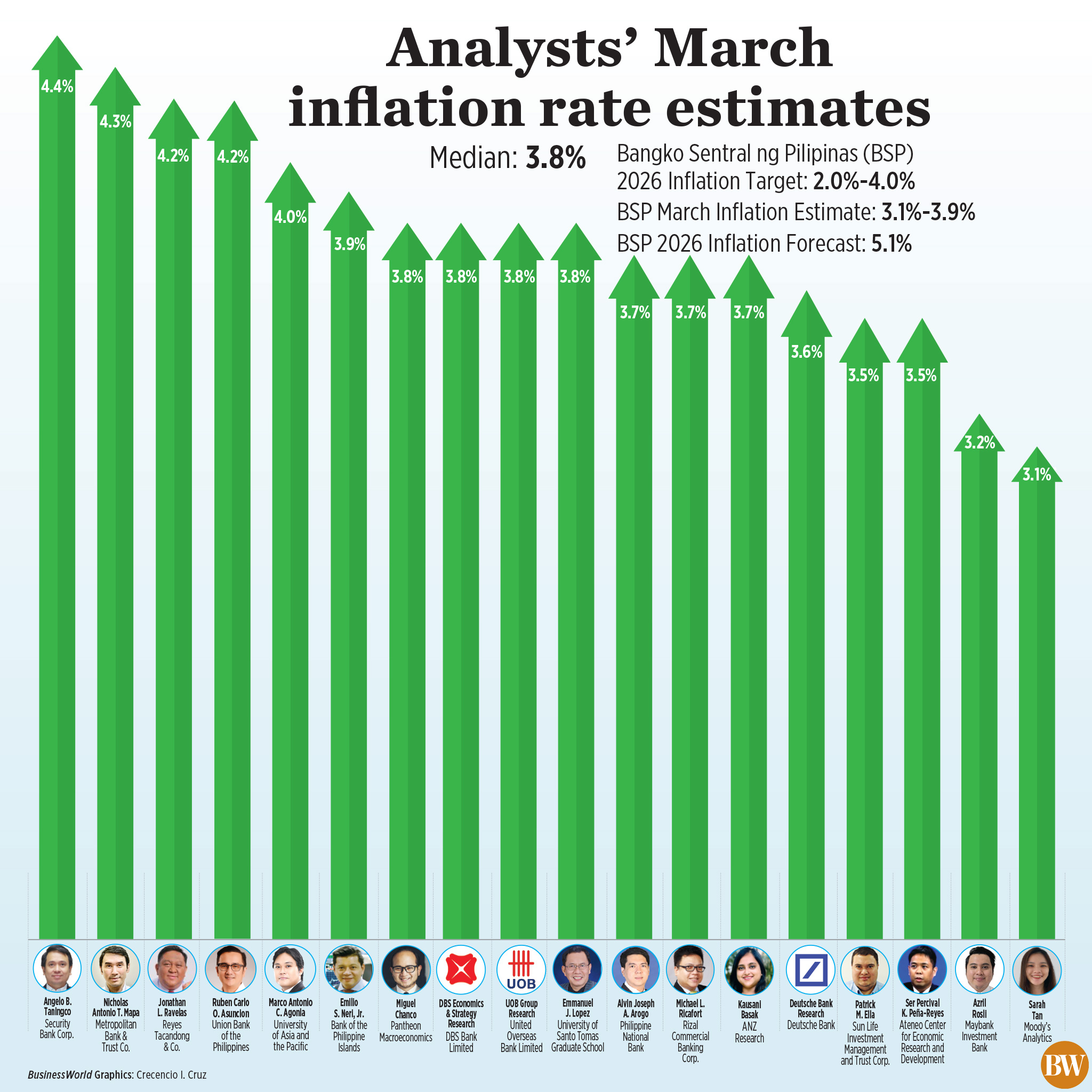
A BusinessWorld poll of 18 analysts yielded a median estimate of 3.8% for the consumer price index in March, accelerating from the 2.4% in February and 1.8% a year ago.

This is near the upper end of the Bangko Sentral ng Pilipinas’ (BSP) 3.1%-3.9% forecast for the month.

If realized, the headline print would be the fastest in 20 months or since 4.4% seen in July 2024.

This would also mark the third straight month that inflation settled within the central bank’s target.

The Philippine Statistics Authority (PSA) will release the March inflation data on Tuesday, April 7.

“I’m looking at 3.8% for the March inflation print, with most of the acceleration from 2.4% in February coming from transport deflation coming swiftly to an end on the back of the major fuel price hikes seen in recent weeks,” Miguel Chanco, chief Emerging Asia economist at Pantheon Macroeconomics, said in an e-mail.

He said transport inflation likely quickened to 8.5% last month from -0.3% in February.

“On top of this, we’re expecting a further rise in food inflation where low base effects are still doing a lot of heavy lifting,” Mr. Chanco added.

In March, local fuel retailers raised pump prices by double digits as the US-Iran war sent crude oil prices soaring. Pump price adjustments stood at a net increase of up to P43.50 a liter for gasoline, P67.35 per liter for diesel and P70.90 per liter for kerosene last month.

The Philippines is a net importer of crude oil and sources most of its crude oil as well as liquefied petroleum gas supply from the Middle East. This makes the country extremely vulnerable to global crude price swings.

Analysts also attributed the faster headline clip to higher rice prices and electricity rates during the month.

“In addition, higher rice and power prices, coupled with the continued depreciation of the peso, likely amplified imported inflation pressures, especially for fuel, food, and other essential goods,” Maybank Investment Bank economist Azril Rosli said in an e-mail.

“Some offset may have come from softer prices for vegetables, fish, and meat, but overall price pressures appear to have been dominated by energy-led cost increases and second-round effects in services and utilities,” he added.

Based on PSA data, the average cost of local regular milled rice climbed by 5.8% to P48.69 a kilo in the second half of the month from P46.02 a year earlier. The price of well-milled rice went up by 8.02% year on year to P56.68 a kilo, while the price of special rice rose by an annual 3.79% to P64.07 a kilo.

Manila Electric Co. hiked electricity rates by 64.27 centavos per kilowatt-hour (kWh) to P13.8161 per kWh for its customers in the greater Metro Manila area. This meant households consuming 200 kWh monthly paid about P129 more in their electricity bill for March.

TARGET BREACH?
Meanwhile, several analysts see inflation potentially breaching the BSP’s target in March, as base effects and elevated prices of rice and other staple foods add to the inflationary impact of oil shocks.

“We forecast March inflation at 4.2% year on year, up from 2.4% in February, mainly reflecting unfavorable base effects and higher food prices, particularly rice and other key staples, amid tighter domestic supply conditions and lingering import‑related cost pressures,” Union Bank of the Philippines Chief Economist Ruben Carlo O. Asuncion said in an e-mail.

“Transport and utility costs also likely contributed following recent movements in global oil prices, while core inflation remains relatively stable for now,” he added.

Emerging supply-side pressures could also drive second-round price effects on transport fares, electricity rates and wage-related adjustments, Mr. Asuncion noted.

The BSP wants to keep inflation within the 2%-4% range, with 3% as their point target.

However, the central bank is now expecting the headline print to overshoot the band amid price pressures from elevated oil costs and second-round inflation effects.

If the BusinessWorld poll’s median forecast materializes, headline inflation would average 2.7% as of March, still below the BSP’s revised inflation estimate of 5.1% for the entire year.

Meanwhile, Security Bank Chief Economist Angelo B. Taningco projects inflation to accelerate to 4.4% in March, citing the peso’s slump as one of the drivers.

The peso touched back-to-back record lows last month as uncertainties over the Middle East war took a toll on the local currency.

On Tuesday, the peso closed at a fresh low of P60.748 against the dollar, down 5.8 centavos from its previous record finish of P60.69 on Monday, Bankers Association of the Philippines data showed.

PAUSE OR HIKE?
Still, most analysts polled by BusinessWorld said the current macroeconomic backdrop calls for a pause at the BSP’s upcoming meeting later this month.

“Easing would risk fueling inflation expectations, while aggressive tightening would weaken growth without addressing the root cause of the shock,” Moody’s Analytics Assistant Director and Economist Sarah Tan said in an e-mail.

“In this context, we expect the BSP to adopt a wait-and-see approach, assessing whether the increase in oil prices proves temporary or sustained. For now, a prolonged pause appears the most realistic path, and we expect the BSP to hold fire at the April meeting,” she added.

However, Security Bank’s Mr. Taningco sees the BSP tightening in a move to temper inflationary pressures.

“We still expect the BSP to raise the policy rate by 25 basis points (bps) to 4.5% at its April 23 meeting,” he said via e-mail. “This is largely in response to March inflation topping the 4% upper bound of the BSP’s target range.”

On March 26, the central bank maintained the key rate at 4.25% in an off-cycle meeting as it sought to soothe markets amid uncertainties arising from the Middle East war.

The BSP last reduced its benchmark rate by 25 bps for a sixth straight meeting in February, extending its easing cycle to a year and a half. It has cut a total of 225 bps since August 2024.

BSP Governor Eli M. Remolona, Jr. said they opted to hold steady as policy adjustments will have little impact on taming supply-driven inflation pressures, adding that tightening may delay economic recovery.

Still, the central bank chief said the Monetary Board will monitor second-round price effects to guide their upcoming policy decisions, with a rate hike likely if the price of crude oil reaches $200 per barrel.

The Monetary Board will hold its second policy review this year on April 23.

Middle East war darkens outlook for Philippine economy — BMI

A clear view of the setting sun is seen above the skyline of Taguig, March 13, 2026. — PHILIPPINE STAR/RYAN BALDEMOR

THE PHILIPPINE ECONOMY is likely to expand by 4.7% this year, amid sluggish government spending and oil supply disruptions arising from the ongoing war in the Middle East, Fitch Solutions unit BMI said.

In a report dated March 31, BMI said Philippine gross domestic product (GDP) growth may have recovered in the first quarter, expanding by 3.6% due to strong exports and factory activity.

If realized, this would be faster than the post-pandemic low of 3% in the fourth quarter of 2025, but much slower than 5.4% in the first quarter of 2025.

At the same time, BMI said it cut its full-year Philippine GDP growth projection to 4.7% from 5.1%, reflecting its shift to a scenario where oil prices remain higher for longer.

“Subdued government capex (capital expenditures) continued to weigh on overall activity. Furthermore, the US-Iran conflict darkens our outlook for the rest of the year,” BMI said.

Latest data from the Bureau of the Treasury showed that government spending fell year on year for a sixth straight month in January. State spending slumped by 23.9% to P303.5 billion from the P398.8 billion logged in the same month last year.

The Fitch unit also noted that elevated energy prices amid the war will likely weaken consumers’ purchasing power, eventually taking a toll on the consumption-driven economy.

“Already, this has fed through to higher domestic energy prices, with diesel and gasoline prices rising by around 80% and 50% respectively, compared with pre-conflict levels,” BMI said.

“Higher fuel costs will erode household purchasing power and weigh on growth, while government measures to curb energy consumption — including a four-day workweek for public sector workers — will add further to this drag,” it added.

The month-long Middle East conflict sent oil prices soaring after the closure of the Strait of Hormuz disrupted crude oil shipments.

The Philippines, a net importer of oil, sources most of its supply from the Middle East, making the country vulnerable to swings in global oil prices.

Last month, President Ferdinand R. Marcos, Jr. placed the Philippines under a state of national energy emergency for a year amid concerns over the country’s energy supply.

Mr. Marcos also signed into law a measure temporarily authorizing the Executive department to suspend or reduce the excise tax on petroleum products.

Since the US and Israel began its war on Iran in late February, local pump prices have jumped up by P43.50 a liter for gasoline, P67.35 per liter for diesel and P70.90 per liter for kerosene.

However, the Department of Foreign Affairs said last week that it has secured a deal with Iran, allowing Philippine-flagged vessels shipments and seafarers safe passage through the Strait of Hormuz.

BMI sees consumer prices soaring in the coming months, raising its full-year inflation forecast to 3.6% from 3.2% previously.

“Even so, we are revising up our inflation forecast by 0.4 (percentage point) to 3.6%, with implications for monetary policy,” it said.

This also came after the Bangko Sentral ng Pilipinas (BSP) stood pat in an off-cycle meeting last month as it noted that inflation may breach its 2%-4% target at 5.1% this year.

The central bank’s benchmark rate currently stands at an over three-year low of 4.25%, following 225 basis points (bps) in total cuts since August 2024.

For BMI, the BSP’s easing cycle has now hit a dead end, with no room for any further reductions at least until yearend.

“This decision suggests that the BSP is willing to look past short-term supply-shock inflation spikes and signals the bar for a rate hike remains high,” it said. “Taken together, this meeting reinforces our revised call for no additional easing in 2026.”

The Monetary Board is scheduled to hold a policy meeting on April 23. — Katherine K. Chan

Maharlika’s top exec says investment plans on track

By Justine Irish D. Tabile, Senior Reporter

MAHARLIKA INVESTMENT Corp. (MIC) said capital deployment will remain on track and focused on its core pillars even as global uncertainty remains high amid the ongoing war involving the US, Israel, and Iran.

“We are not slowing down. The current geopolitical headwinds and volatile currency fluctuations, in fact, validate exactly what we were built to do,” MIC President and Chief Executive Officer Rafael D. Consing, Jr. told BusinessWorld.

“Rather than pulling back, we are responding with highly strategic and calibrated capital deployment,” he added.

The Philippines has been under a one‑year state of national energy emergency since March as it faces heightened risk of fuel supply disruptions due to the war in the Middle East.

Mr. Consing said the sovereign wealth fund will be anchoring its investments in energy, infrastructure, agriculture, and mineral extraction and processing to build natural hedges for the Philippine economy.

“The current market volatility presents us with unique opportunities to acquire high-value, critical assets at reasonable valuations,” he said.

Mr. Consing said the MIC views the critical mining sector as a vital sovereign hedge and has already earmarked specific investment amounts for opportunities under evaluation.

“We recognize how indispensable copper is to the global energy transition and the growth of artificial intelligence,” he said.

“We are actively evaluating a pipeline of critical mineral projects, and we will share specific project and company details once binding agreements are signed,” he added.

Meanwhile, the MIC is looking to finalize its acquisition in Synergy Grid & Development Phils., Inc. (SGP), following its acquisition of a stake in Asian Terminals, Inc. (ATI).

On March 17, MIC announced the completion of its acquisition of 101.19 million common shares in ATI, securing a stake in the port and logistics operator.

This is after the settlement of the tender offer, which resulted in the acquisition of 177.61 million shares, was completed.

“Our immediate priority is finalizing our acquisition in SGP to lock in our stake in the National Grid Corp. of the Philippines,” Mr. Consing said, citing a P19.7-billion investment deal to acquire a 20% stake in SGP.

Asked for the timeline, he said: “I have to defer to SGP’s own disclosures, since they are a publicly traded company.”

In a disclosure dated Dec. 3, 2025, SGP said that although a binding term sheet was executed between the two “the parties are in the negotiation and due diligence stage.”

SGP previously said there is no set date of closing, citing the scale and strategic nature of the investment.

Meanwhile, Mr. Consing said that the MIC is also making headway on joint initiatives in agriculture and sustainable energy “as we aggressively transition into the active capital deployment mode.”

For 2026, he said that the outlook on MIC’s financials remains optimistic.

“This year marks a pivotal shift for MIC as foundational investments like ATI begin to generate resilient cash flows,” he said.

“[The year] 2026 will be defined by robust capital deployment, risk-adjusted returns, and measurable socioeconomic impact,” he added.

BoI-approved investment pledges up 27% in Feb.

BW FILE PHOTO

By Beatriz Marie D. Cruz, Senior Reporter

THE BOARD of Investments (BoI) approved P36.5 billion worth of investment pledges in February, mainly driven by investment commitments in the renewable energy (RE) sector.

In a statement on Sunday, the BoI said February approvals were 27.2% higher than the P28.7 billion recorded in the same month last year.

The number of approved investment projects in February jumped to 21 from the six projects recorded a year earlier.

The BoI greenlit P20.4 billion worth of investment pledges in the RE sector, accounting for 55.9% of the total approved pledges.

By location, P21.5 billion worth of investments will go to Central Luzon, followed by the National Capital Region with P4.2 billion, and the Ilocos Region with P3.5 billion.

In the first two months of the year, the BoI approved 35 projects worth P47 billion, up from the eight projects approved in the same period last year.

Foreign investments during the period surged by 943.4% to P3.1 billion from P300 million recorded last year, which the BoI said signaled “growing investor interest” in the country.

Singapore was the top source of foreign investments as of end-February, accounting for P1.8 billion or 55.2% of the total. This was mainly driven by the 85% Singaporean-owned Intramuros Solar Energy Corp., which pledged P1.7 billion worth of investments.

It was followed by China at P500 million (16.8% of the total pledges), while Canada (6.5%), Australia (6.3%), and the United States (5%) each contributed around P200 million.

The energy sector, which includes RE, accounted for the largest share of approved investments at P22.4 billion or 47.7% of the total in the January-to-February period.

Accommodation and food service activities attracted P7.6 billion in investment approvals, followed by real estate activities (mass housing) with P6.4 billion, manufacturing with P5.3 billion, and transportation and port storage with P3 billion.

Central Luzon received the largest share of approved investments with P21.5 billion as of end-February. This included a P16.4-billion solar power project of Aboitiz-led Cleanergy 2 Power, Inc.

The second-largest recipient of investment pledges was Central Visayas (P8.2 billion), followed by the National Capital Region (P4.5 billion), Ilocos Region (P3.7 billion), and Mimaropa (P2.9 billion).

“The strong increase in BoI-approved projects reflects growing investor confidence in the Philippines and the continued inflow of high-value investments that support our economic priorities,” Trade Secretary and BoI Chairman Ma. Cristina A. Roque said in a statement.

She noted that the uptick in energy-related investments align with the need to boost energy security amid uncertainties in the global oil supply.

“Notably, the significant investments in renewable energy will play a crucial role in strengthening our energy security amid current challenges, while accelerating the country’s transition to a more sustainable and resilient energy future,” Ms. Roque said.

RE accounts for 25% of the country’s energy mix. The Philippines is looking to raise the share of renewables in the power generation mix to 35% by 2030 and 65% by 2050.

BoI Investments Promotion Services Executive Director Evariste M. Cagatan said the latest approvals reflect confidence in the Philippines as an investment destination.

“The increase in BoI-approved projects reflects strong investor confidence in the country’s evolving investment environment, driven by CREATE MORE (Corporate Recovery and Tax Incentives for Enterprises to Maximize Opportunities for Reinvigorating the Economy, and our efforts to build a greener and more competitive economy,” she said.

Rizal Commercial Banking Corp. Chief Economist Michael L. Ricafort said RE‑related investments are expected to account for a bigger share of the country’s investment pledges in the future.

“RE-related pledges have been among the largest foreign investments into the country over the past two years and could still continue, as there is greater imperative for more RE supply to further reduce reliance on imported petroleum products,” he said in a Viber message.

PLDT builds infrastructure to prepare Filipino youth for AI future

Blums Pineda, senior vice-president and head of Enterprise Business Group at PLDT and Smart, and PLDT Group AI Business lead

PLDT, Inc. is expanding its digital infrastructure and training programs to prepare Philippine universities and the local workforce for the integration of artificial intelligence.

During a forum for the Mendiola Consortium at Centro Escolar University in Manila, Blums Pineda, senior vice-president and head of Enterprise Business Group at PLDT and Smart, and PLDT Group AI Business lead, said universities will play a central role in preparing the workforce for an economy increasingly shaped by machine-assisted decision-making.

“Artificial intelligence is not just another technology cycle,” Mr. Pineda said. “It’s a general-purpose technology like electricity or the internet — one that changes how entire industries operate and how professionals do their work.”

The shift carries particular weight for the Philippines, whose economy is closely tied to global services and knowledge-based work. Global research show that roughly 25% to 35% of jobs may be exposed to AI at the level of individual tasks, while only 3% to 5% face a high risk of full displacement.

Instead, the more common outcome is job transformation. That is already visible in the Philippines’ IT-BPM industry, which employs nearly two million workers, where AI supports tasks such as summarizing interactions and retrieving information, allowing workers to focus on more complex and value-driven roles.

“What we’re seeing is not the disappearance of human roles,” Mr. Pineda said. “AI handles repetitive tasks, while people focus on decision-making, relationships, and solving more complex problems.”

For universities, the implications go beyond adding new technology courses. Students graduating today will enter a workforce where machines can assist with writing software, analyzing markets, and supporting medical diagnoses.

“Every technological revolution eventually walks into a classroom,” he said. “The difference with AI is that it didn’t politely wait for curriculum committees. It has already arrived.”

The shift is influencing how universities design courses, conduct research, and manage administrative operations, with AI increasingly supporting teaching and analytics. At the same time, institutions are navigating challenges around academic integrity, bias, and responsible AI.

In this space, PLDT Enterprise and ePLDT have also been working closely with universities to support early-stage adoption. One example is an ongoing engagement with De La Salle University (DLSU), where the team is exploring the ePLDT SwiftStart AI Program. Designed as an immersive introduction to generative AI, SwiftStart enables institutions to understand foundational concepts such as prompt engineering, while experiencing practical applications using tools like Google Workspace with Gemini.

For the PLDT Group, the critical enabler of AI adoption lies in infrastructure — particularly high-performance computing, connectivity, and secure data environments.

Through its corporate business arm PLDT Enterprise and subsidiaries ePLDT and VITRO, Inc., which deliver integrated digital, connectivity, and ICT solutions to public and private institutions in the Philippines and abroad, the PLDT Group has been investing in hyperscale data centers capable of supporting AI workloads.

Among them is VITRO Sta. Rosa, the country’s first hyperscale data center designed for AI applications. The facility hosts Pilipinas AI, a sovereign AI solutions stack that allows organizations to run AI workloads while keeping data within Philippine borders.

“The invisible infrastructure behind AI — fiber networks, computing power, and data centers — will determine how quickly institutions can innovate,” Mr. Pineda said.

Beyond infrastructure, PLDT and Smart are expanding access to AI through initiatives such as AI-in-a-Box, which provides literacy training, connectivity, and practical tools for institutions. “Technology only transforms society when ordinary institutions can use it,” Mr. Pineda said.

Ultimately, preparing students for an AI-driven economy will require not only technical knowledge but also skills that machines cannot easily replicate, including critical thinking, ethical judgment, and interdisciplinary problem-solving.

“The future of AI in education won’t be determined by how quickly we buy new tools,” Mr. Pineda said. “It will be determined by how carefully we build the systems behind them.”

The PLDT Group’s efforts support its commitment to inclusive innovation, quality education, and workforce development aligned with the United Nations Sustainable Development Goals.


SparkUp is BusinessWorld’s multimedia brand created to inform, inspire, and empower the Philippine startups; micro, small and medium enterprises (MSMEs); and future business leaders. This section will be published every other Monday. For pitches and releases about startups, e-mail to bmbeltran@bworldonline.com (cc: abconoza@bworldonline.com). Materials sent become BW property.

UP to hold first innovation summit, launch system research and innovation office

The University of the Philippines (UP) will bring together researchers, entrepreneurs, government officials, and industry leaders for its first Innovation Summit on May 5-6 at the SMX Convention Center Aura in Bonifacio Global City.

The summit will feature plenary sessions and panel discussions focused on how research and collaboration can address national challenges, and on ways to strengthen science, technology, and innovation to support national development goals.

Dubbed “Inoblasyon: The UP Innovation Summit,” the two-day event will also mark the formal launch of the UP System’s Office of the Vice-President for Research and Innovation, which will help coordinate the university’s systemwide technology development and partnerships aimed at supporting national priorities.

Eight innovation clusters focused on research priority sectors will also be launched. These are (a) health, biotech, and biomedical systems; (b) agri-aqua biotechnology and smart food systems; (c) functional foods and nutraceuticals; (d) climate, energy, and environmental technologies; (e) sustainable materials, circular economy, and green manufacturing; (f) creative industries and cultural enterprises; (g) digital governance and public sector innovation; and (h) education and human capital technologies.

The summit will also feature technology showcases, startup and research exhibits, and networking opportunities to foster and deepen partnerships among academia, government, industry, and investors — including the signing of collaborative agreements to accelerate the transfer, adoption, deployment, and scaling of UP-developed technologies.

The event is spearheaded by the OVPRI, the Technology Transfer and Business Development Office, and the Office of the Vice-President for Public Affairs. Seats for the summit may be limited due to venue capacity and event arrangements.

Interested parties may inquire at techtransfer@up.edu.ph or follow the summit’s official Facebook page at facebook.com/Inoblasyon.UPInnovationSummit.


SparkUp is BusinessWorld’s multimedia brand created to inform, inspire, and empower the Philippine startups; micro, small and medium enterprises (MSMEs); and future business leaders. This section will be published every other Monday. For pitches and releases about startups, e-mail to bmbeltran@bworldonline.com (cc: abconoza@bworldonline.com). Materials sent become BW property.

SEC move to end freeze on new online lending firms draws cautious support

SEC.GOV.PH

By Alexandria Grace C. Magno, Reporter

THE Securities and Exchange Commission’s (SEC) move to lift its 2021 moratorium on new online lending platforms (OLPs), alongside proposed stricter capital and compliance requirements, is drawing cautious support from industry players, amid concerns over enforcement and regulatory consistency.

Global Dominion President and Chief Executive Officer Patricia Poco-Palacios said the moratorium addressed earlier concerns about lending practices, and lifting it with stricter requirements could help strengthen industry regulation and consumer protection.

“I think the intent behind lifting the moratorium, paired with strong regulatory safeguards, reflects an advancing approach to financial regulation in the Philippines — and that is a welcome development,” she told BusinessWorld in an e-mail.

“What really matters is that the requirements are applied consistently and that new entrants are held to the same standards from day one,” she added.

The SEC imposed the moratorium in November 2021 on the registration of new online lending platforms run by financing and lending companies as it worked on rules to curb predatory lending and abusive debt collection practices.

This year, the SEC is moving to lift the moratorium and sought public feedback, which ended on March 25, on a proposed framework requiring up to P100 million in capital for the largest operations and a three-year compliance period for existing firms.

Published on March 11, the SEC’s draft circular seeks to lift the moratorium on new OLPs and introduce a “pay-to-scale” framework aimed at enhancing consumer protection and market stability.

Moritz Gastl, general manager at Tala Philippines, said stronger enforcement against unregistered lenders, copycat applications, and abusive collection practices will be needed once the moratorium is lifted.

“Social impact-driven fintech companies, like Tala, and regulators must work hand in hand to balance responsible innovation and consumer protection, so new players should be strictly screened to ensure their operations will truly improve Filipinos’ quality of life beyond access to credit,” he told BusinessWorld in a separate e-mail.

On the proposed capital threshold, Mr. Gastl said higher capital requirements indicate a maturing industry and may help filter out bad actors, but he added that stricter oversight of collection agencies and broader coordination on borrower protection will also be needed to improve trust.

He also noted that rising living costs and stagnant incomes are driving demand for reliable credit, adding that transition measures should ensure continued supply.

“Clear and predictable regulations allow us to factor them into our business and focus on providing credit to underserved Filipinos,” he added.

“As long as new rules do not impose disproportionate administrative burdens on reputable companies nor disrupt legitimate business operations, Tala will gladly satisfy capitalization requirements,” Mr. Gastl said.

“We also hope that processing times and licensing fees are in line with our Southeast Asian neighbors to ensure regional competitiveness.”

The draft circular links the right to operate digital platforms directly to a company’s paid-up capital.

For financing companies, the requirements are graduated based on the number of apps they manage: P30 million for one OLP, P60 million for two to five, and P100 million for the maximum allowable limit of 10 platforms.

Lending companies face a similar but lower-scaled requirement, topping out at P50 million for 10 platforms.

The Commission will also grant existing financing and lending companies a three-year transition period to comply with revised paid-up capital requirements and require affected entities to submit a compliance plan within 60 days of the circular’s effectivity.

Ms. Poco-Palacios said stricter requirements could help level the playing field, adding that the three-year transition period for capital increases appears manageable for operators.

“At the end of the day, those of us who have invested in compliance, in people, and in responsible lending practices should welcome a higher bar because it distinguishes us from those who are exploiting regulatory gaps,” she said.

“Ultimately, more responsible players in the online lending space mean more Filipinos gaining access to credit. And access to credit, when delivered responsibly, is transformative,” Ms. Poco-Palacios noted.

Semirara confident it can meet requirements for contract extension

SEMIRARAMINING.COM

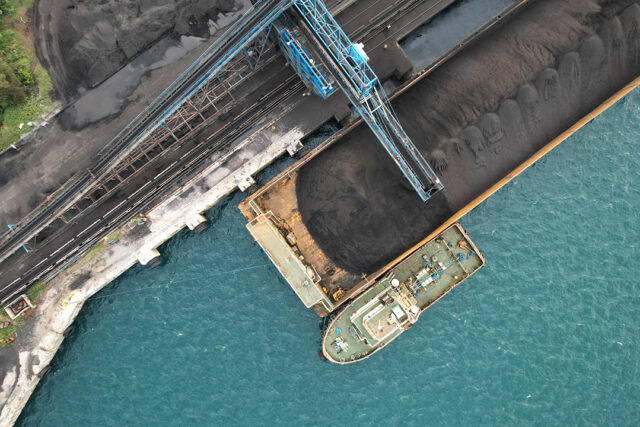
SEMIRARA MINING and Power Corp. (SMPC) said it is confident it can submit a mining plan that meets Department of Energy (DoE) requirements to extend its coal operating contract on Semirara Island.

“It’s not easy. The first time we went to the Semirara site, it failed — even the first attempt before we came in. Because once it reaches around 160 meters below sea level, water starts to enter and everything begins to slide. If you don’t know how to prevent the water from coming in, you cannot mine,” SMPC Chairman Isidro A. Consunji said at a briefing in March.

He added that Semirara is unique, noting that few coal mines worldwide operate below sea level.

“Assuming the policy of the DoE is to minimize disruption and optimize production, who’s qualified? Who’s got the track record to mine below sea level? Nobody in the country. Semirara’s the only mine below sea level,” he said.

SMPC, which has held the coal operating contract for nearly 50 years, said new operators would face technical and logistical challenges. These include hundreds of dump trucks, dozens of high-power water pumps, and specialized equipment such as diaphragm walls that extend more than 100 meters deep — far beyond standard systems.

“There are many challenges for any new operator, even experienced ones. If the goal is to improve the mine plan, it is difficult to outperform an existing operator — whether it’s Semirara, Atlas Mining, or others — because the one already operating has the advantage,” Mr. Consunji said.

The mine’s contract expires in July 2027, but the DoE is offering the area for bidding this year, along with other confirmed mineable reserves.

The auction covers 18 coal blocks across about 18,000 hectares, including 10 blocks on Semirara Island in Caluya, Antique.

Bidders must submit documents by April 28, the same day as the bid opening.

SMPC said uninterrupted coal production is critical, as Semirara supplies about 38% of the country’s baseload power. Any disruption could raise electricity costs, increase inflation, and require coal imports, potentially affecting energy security and foreign exchange reserves.

The company said its mining plan is designed to maintain continuous operations, prevent seawater intrusion, and mitigate potential economic, social, and political impacts from production disruptions.

Meralco PowerGen Corp. has expressed interest in partnering with SMPC if it participates in the auction, while San Miguel Corp. has reportedly explored government-offered coal sites, including the Semirara area. — Alexandria Grace C. Magno

PASIA Shared Services collaborates with Quotable AI to modernize SMEs

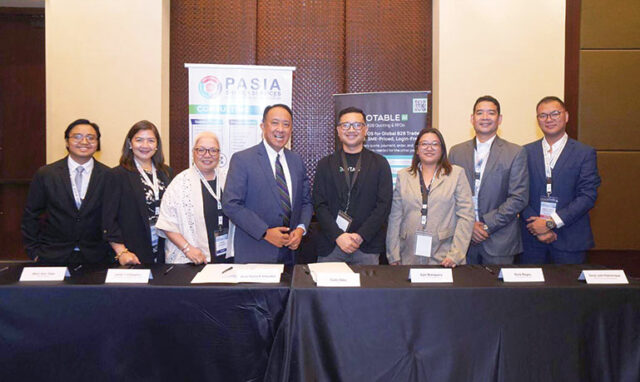
PASIA Shared Services, the solutions and services arm of the Procurement and Supply Institute of Asia (PASIA), has partnered with Quotable AI, an AI-powered operating system originally founded in the Philippines and now available globally.

The partnership aims to modernize how suppliers engage with SMEs in managing quotations and B2B engagements. Today, many suppliers are forced to coordinate through fragmented tools like spreadsheets, emails, and messaging platforms, which slow down response times and reduce visibility.

Quotable AI brings these interactions into a single system, enabling suppliers to submit quotations more efficiently, collaborate seamlessly with buyers, and gain clearer insight into operations status. By streamlining sourcing and communication, suppliers can strengthen relationships with SMEs, reduce administrative overhead, and position themselves as more responsive and competitive partners.

Charlie Villasenor, chairman and CEO of PASIA Shared Services said, “This partnership represents a major step forward in our mission to empower suppliers and SMEs with smarter and more efficient ways to modernize quotations. Through this collaboration with Quotable AI, we can deliver transformative solutions that reduce costs, improve compliance, and accelerate traditional workflows.”

Quotable AI enables companies to receive benefits ranging from centralized RFQ and quotation management, to frictionless supplier participation. The platform also offers universal parser for business documents and Quotable Wallet for B2B payments in the Philippines. Quotable AI connects with existing financial systems, allowing organizations to modernize supplier collaboration without replacing their ERP infrastructure.

Carlo Silva, co-founder & CEO of Quotable AI, said: “Suppliers often spend hours coordinating quotations and responses across email threads and spreadsheets. Quotable AI brings these workflows into one structured system so teams can move faster and operate with better visibility. Partnering with PASIA allows us to introduce these capabilities to organizations across Asia and beyond.”

Through this partnership, PASIA Shared Services will introduce Quotable AI to its network of procurement professionals, helping accelerate the digital transformation of business operations across the region.


SparkUp is BusinessWorld’s multimedia brand created to inform, inspire, and empower the Philippine startups; micro, small and medium enterprises (MSMEs); and future business leaders. This section will be published every other Monday. For pitches and releases about startups, e-mail to bmbeltran@bworldonline.com (cc: abconoza@bworldonline.com). Materials sent become BW property.

Converge reviews plan to create separate fiber unit

ONVERGE ICT SOLUTIONS, INC.

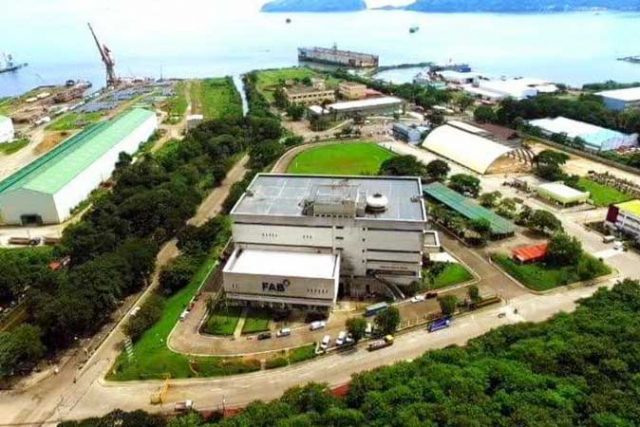
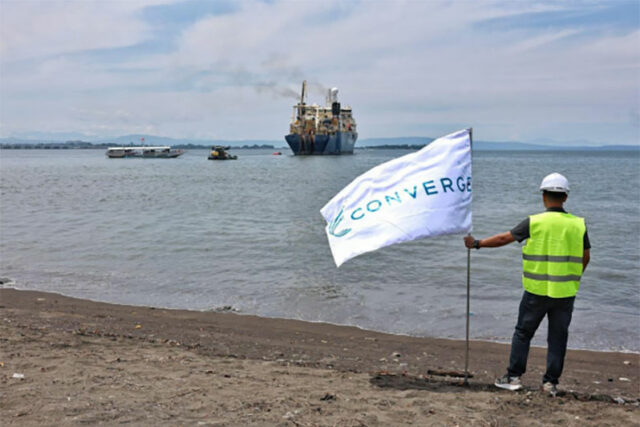
CONVERGE ICT Solutions, Inc. said its plan to carve out fiber assets into a new unit remains under review as the company continues to monitor industry developments.

“It is still on the study table. It takes a while because you need to make everything available including network sizing, automation and everything, the back end should also be ready,” Converge ICT Chief Executive Officer Dennis Anthony H. Uy told reporters on the sidelines of the company’s data center inauguration on March 20.

He said the plan could be beneficial if implemented alongside the Konektadong Pinoy Act, which emphasizes infrastructure sharing.

Maganda na sabay yan sa Konektadong Pinoy (It’s good that this goes hand in hand with the Konektadong Pinoy Act). The reason why you set up KP (Konektadong Pinoy) is sharing the infrastructure,” Mr. Uy said.

Converge said last year that it was studying the creation of a new unit for infrastructure co‑sharing, noting that its decision would likely depend on the rules under the Konektadong Pinoy Act.

Bloomberg previously reported that Converge plans to spin off its fiber business, valued at around $1 billion, and sell about a 40% stake in the new unit.

The Konektadong Pinoy Act, or the Open Access in Data Transmission Act, streamlines the licensing process for new entrants and aims to boost competition in data transmission.

The measure, which lapsed into law on Aug. 24, 2025, relaxes regulations to favor more entrants in the data transmission industry.

For 2026, the company set a capital expenditure (capex) guidance of P18 billion to P23 billion, following a 2025 period in which it used P17.7 billion in cash capex, despite an original budget of P25 billion.

The 2026 budget is primarily allocated for a network expansion program targeting the installation of 900,000 new ports in the Visayas and Mindanao regions, alongside investments to improve network reliability.

Mr. Uy noted that Converge is seeing rising demand from prepaid users in remote areas, which the company aims to capture as it expands its reach.

The listed fiber broadband and technology provider launched its P5-billion, 12-megawatt (MW) data center in Angeles, Pampanga last month.

Overall, the company has a total data center capacity of about 20 MW, including its Caloocan and Pasig facilities.

The Angeles data center, which sits on a 5,000-square-meter property, is scalable to 36 MW and is artificial intelligence-ready to meet growing demand for content and cloud services.

Converge is also strengthening its network by integrating the transpacific link Bifrost and the intra-Asia SEA-H2X cable system into its operations. — Ashley Erika O. Jose