Home Blog Page 404

Palace flags risks if peso slides to P60 versus dollar

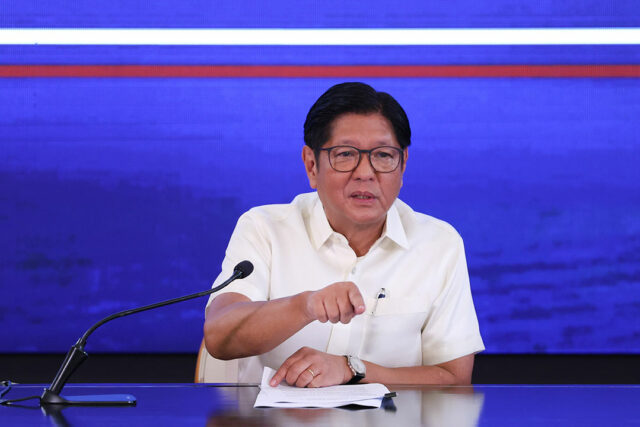
BW FILE PHOTO

PHILIPPINE President Ferdinand R. Marcos, Jr. hopes the peso does not weaken to P60 against the dollar since a sharper depreciation would raise costs across the economy and add pressure to government debt, Malacañang said on Thursday.

Palace Press Officer Clarissa A. Castro said Mr. Marcos remains in close coordination with the Bangko Sentral ng Pilipinas (BSP), though the central bank continues to see no need for immediate intervention in the foreign-exchange market.

“The BSP is more focused on preventing excessive volatility in the peso rather than targeting a specific exchange rate level,” she told a Palace news briefing in Filipino.

A weaker peso would push up the cost of imports for the Philippines, which depends heavily on overseas supplies of fuel, energy and pharmaceutical products.

Higher import prices could feed into broader inflation pressures and weigh on household spending.

The peso hit a record low of P59.46 a dollar on Jan. 15 and has hovered around the P59 level since then, following the eruption of a large graft scandal involving substandard and nonexistent flood control projects.

The controversy has weighed on investor confidence and contributed to market volatility.

This week, however, the peso gained ground as investors trimmed exposure to US assets, including the dollar, amid fresh global trade concerns linked to renewed tariff threats from Washington.

Traders said the peso’s recovery reflected broader dollar weakness tied to geopolitical risks and uncertainty over the timing of US interest rate cuts.

Some market participants, however, cautioned that the peso could soften again ahead of key US economic data, which could revive demand for the dollar if figures point to a resilient US economy.

Ms. Castro said Mr. Marcos met BSP Governor Eli M. Remolona, Jr. on Tuesday to discuss the country’s economic outlook for 2026.

She added that the President would prefer the exchange rate to stay below P60 to the dollar, noting that further depreciation would increase the peso cost of paying the country’s foreign debt.

The President is also concerned about the impact of currency weakness across all sectors of the economy, Ms. Castro said. She added that the peso’s struggles are not isolated, pointing to currency depreciation across several Asian markets in 2025.

“This reflects the broad strength of the US dollar and expectations that the US Federal Reserve will delay interest rate cuts,” she said, adding that trade imbalances and capital flows have also played a role.

Malacañang expects economic growth to improve from the second quarter of this year and extend into 2026. Still, Ms. Castro said risks remain, particularly if investor and consumer confidence recovers more slowly than expected following the multibillion-peso graft scandal.

The Philippine economy expanded 4% in the third quarter of 2025, the slowest in more than four years. Economic Secretary Arsenio M. Balisacan has attributed the slowdown partly to reduced infrastructure spending after the flood control controversy.

Mr. Balisacan said full-year growth for 2025 likely settled at 4.8% to 5%, below the government’s 5.5% to 6.5% target. Official full-year gross domestic product data are due on Jan. 29.

The Palace said it remains confident that inflation would stay contained. Inflation averaged 1.7% in 2025, the weakest in nine years, staying well below the central bank’s 2% to 4% target.

While prices edged up in December due to higher holiday-related food costs, core inflation continued to ease, supporting expectations of a stable price environment in the year ahead. — Chloe Mari A. Hufana
Manila may lose aid as US pulls out of global treaties

REUTERS

By Adrian H. Halili, Reporter

THE Philippines may face risks to funding for disaster preparedness and climate resilience programs following the US withdrawal from several international treaties, analysts said, warning that reduced participation by Washington in multilateral frameworks could weaken development assistance flows.

Chester B. Cabalza, founding president of Manila-based think tank International Development and Security Cooperation, said the US exit from international conventions could erode support for climate and humanitarian initiatives, areas where the Philippines has long relied on external assistance.

While Manila continues to benefit from strong defense ties with Washington, the US decision to step back from multilateral organizations “could reduce or remove international development aid, particularly for climate change and natural disaster response,” he said in a Facebook Messenger chat.

US President Donald J. Trump this month issued a memo ordering the country’s withdrawal from dozens of international organizations and treaties, many of which focus on climate change and environmental cooperation.

Among them is the United Nations Framework Convention on Climate Change, a key global treaty aimed at addressing global warming, along with about 30 other UN-linked bodies and 35 non-UN groups.

Mr. Trump, at the start of his second term, also cut funding for several UN programs, including those supporting climate adaptation and disaster preparedness, raising concerns among aid-dependent countries vulnerable to extreme weather events.

The US Embassy in Manila did not immediately respond to a Viber message seeking comment.

Mr. Cabalza said Washington’s retreat from multilateral institutions could signal a broader weakening of international norms, potentially allowing major and middle powers to sidestep established rules.

“This creates challenges for countries like the Philippines, which seeks to uphold international law and a rules-based order, particularly as a middle power,” he said.

Manila has consistently stressed its commitment to international rules, especially in relation to its maritime disputes in the South China Sea.

Other analysts, however, said the immediate impact on the Philippines may be limited. Francis M. Esteban, associate dean at the Far Eastern University Institute of Arts and Sciences, said the country’s core relationship with the US remains anchored on longstanding defense arrangements.

“As far as the Philippines is concerned, our bilateral relations with the US center on the Mutual Defense Treaty, so this move may not directly affect us,” he said in a Facebook chat.

The 1951 Mutual Defense Treaty commits both sides to help each other in the event of an armed attack in the Pacific region.

Josue Raphael J. Cortez, a diplomacy lecturer at De La Salle-College of St. Benilde, said Manila should continue broadening its partnerships to reduce exposure to uncertainty arising from policy shifts by any single ally.

“This is important so the Philippines avoids overdependence, especially during a period marked by volatility and uncertainty,” he said in a Messenger chat.

The Philippines has stepped up efforts to forge economic and defense agreements with other countries in recent years, aiming to diversify trade links and strengthen its capacity amid tensions in the South China Sea.

“At the same time, we will continue close collaboration with the US, as shown by the roughly 500 joint military activities slated for 2026, while also maintaining other alliances,” he added.

Mr. Cortez also said Manila could use its bid for a nonpermanent seat on the United Nations Security Council to advocate continued support for climate and disaster-related agreements.

“It can use that platform to engage other nations, particularly in the Global South, to ensure these agreements continue to shape the international order,” he said.

Elections for five nonpermanent Security Council seats are expected by mid-2026, with successful candidates serving two-year terms.

PHL: China patrols edging closer to Luzon

PHILIPPINE STAR/MICHAEL VARCAS

CHINESE MARITIME FORCES moved closer to Philippine shorelines last year as Beijing sought to tighten control over the contested Scarborough Shoal, prompting Manila to extend the deployment of its coast guard vessels in the South China Sea, Philippine authorities said on Thursday.

The Philippine Coast Guard (PCG) said China increased the number of navy and coast guard ships operating near the shoal, with patrols edging nearer to the coastline of Luzon, the country’s main island.

The agency described the activities as illegal and said they marked a shift in China’s posture compared with the previous year.

“China Coast Guard vessels conducting illegal patrols have been operating progressively closer to the Luzon coasts,” the PCG said in a statement. It added that the change prompted Manila to maintain a longer and more sustained presence in the area.

The Chinese Embassy in Manila did not immediately reply to a request for comment.

Scarborough Shoal — known as Panatag Shoal and Bajo de Masinloc in the Philippines and Huangyan Dao in China — is claimed by both countries. China has effectively controlled access to the feature since 2012, limiting the activities of Filipino fishermen.

A United Nations-backed arbitral tribunal ruled in 2016 that the shoal is a traditional fishing ground, a decision Beijing continues to reject.

The shoal lies about 240 kilometers (km) west of Luzon and roughly 900 km from Hainan, the nearest major Chinese landmass. It is prized for its fishing grounds and sits near key shipping routes in the South China Sea.

The PCG said Chinese patrols last year forced Filipino fishermen farther away from the shoal, pushing them closer to the Luzon coastline. In response, the agency said it significantly increased its deployments around the shoal.

“On average, PCG vessels spent nearly 27 days per month at sea in the vicinity of Bajo de Masinloc in 2025,” the agency said, adding that the sustained presence was aimed at preventing the normalization of illegal Chinese patrols and protecting local fishermen.

Tensions between Manila and Beijing have intensified over the past year as China presses its expansive claims in the South China Sea, much of which overlaps with the Philippines’ exclusive economic zone.

Maritime monitoring group SeaLight said in May last year that Chinese activity around Scarborough Shoal had risen sharply, with patrol patterns gradually shifting eastward toward Luzon.

The group recorded about 1.5 million Chinese ship identification pings around the shoal, up from roughly 724,000 a year earlier, while Philippine maritime activity in the area rose fourfold.

China has said it plans to strengthen monitoring of the shoal while carrying out conservation work.

In September, Beijing approved the creation of a 3,500-hectare marine reserve at the shoal’s northeast rim, a move Manila has criticized as a pretext for further entrenching Chinese control. — Kenneth Christiane L. Basilio

Marcos hospitalized overnight

PHOTO SHOWS President Ferdinand R. Marcos, Jr. holding a news briefing at the Presidential Palace last year on his government’s anti-corruption drive.. — PHILIPPINE STAR/NOEL B. PABALATE

PRESIDENT Ferdinand R. Marcos, Jr. spent Wednesday night in the hospital due to diverticulitis, the Palace said on Thursday, assuring his condition is now stable.

“The President was observed at St. Luke’s Medical Center Quezon City. He has been discharged and is back in Malacañang,” Palace Press Officer Clarissa A. Castro told reporters via Viber. She did not specify what type of discomfort Mr. Marcos felt.

Mr. Marcos later confirmed he was feeling better after he was diagnosed with diverticulitis, which was attributed to stress and aging.

“What happened was I apparently now have diverticulitis. It’s a common complaint amongst apparently people who are heavily stressed and people (who) are — I have to admit — growing old,” Mr. Marcos said in an interview with Ms. Castro, according to a transcript shared to reporters.

He also assured that it was not life-threatening.

In a separate briefing, Ms. Castro said he possibly fell ill due to “overworking” as he extends his work hours until early morning.

The Palace said his doctors advised rest and monitoring.

“The President continued to carry out his responsibilities while under medical observation and has returned to Malacañang,” Ms. Castro said, noting the President has scheduled two private meetings on Thursday afternoon. — Chloe Mari A. Hufana

Gov’t working to address bad traffic

PHILIPPINE STAR/WALTER BOLLOZOS

PRESIDENT Ferdinand R. Marcos, Jr.’s administration and the Metropolitan Manila Development Authority are working to address road congestion in Manila, according to Malacañang.

“You can be assured that this is being addressed and is not being neglected by the government,” Palace Press Officer Clarissa A. Castro told a news briefing in Filipino on Thursday.

“It just so happens that there are times when traffic issues arise, but these are being handled by the agency.”

This comes as the TomTom Traffic Index for 2025 placed the capital city as the 40th most congested city in the world, where motorists cover only an average of 4.4 kilometers in 15 minutes. This translates to an estimated 143 hours lost to traffic jams or five days and 23 hours.

As the country hosts the Association of Southeast Asian Nations this year, Ms. Castro assured Filipinos preparations included the rehabilitation of the capital region’s busiest thoroughfare, the Epifanio de los Santos Avenue and traffic measures in venues and nearby areas. — Chloe Mari A. Hufana

No Filipinos hurt in Spain collision

STOCK PHOTO | Image by Hands off my tags! Michael Gaida from Pixabay

NO Filipinos were injured or killed in the two deadly train collisions in Spain, the Department of Foreign Affairs (DFA) said on Thursday.

“As of this time, the Philippine Embassy in Madrid has confirmed that no Filipinos have been identified among those injured or killed in the collision of two trains in Adamuz, Cordoba,” the agency said in a statement.

The Philippine Consulate General in Barcelona also reported that it has not yet received confirmed information on Filipino casualties following a separate train collision.

The DFA added that it will continue to coordinate with Spanish authorities and train operators, through the embassies in Madrid and Barcelona.

“The Embassy and the Consulate General stand ready to assist any Filipino nationals who may have been affected by these incidents,” it added.

Two deadly train crashes occurred in Spain last week, one involving high-speed trains near Madrid, and another a commuter train outside Barcelona.

Local authorities reported that the collision in Cordoba resulted in 43 deaths and 157 injuries, while the train crash near Barcelona killed at least one person and injured 37. — Adrian H. Halili

Gov’t to boost dev’t cooperation

ARSENIO M. BALISACAN — PHILSTAR FILE PHOTO

THE government has adopted the Philippine Action Plan for Effective Development Cooperation, which seeks to boost coordination and improve results of development cooperation in the country, the Department of Economy, Planning, and Development (DEPDev) said.

The plan was formalized at a high‑level forum on Jan. 20, which marked the conclusion of the Philippines’ participation in the Fourth Monitoring Round of the Global Partnership for Effective Development Co‑operation (GPEDC), it said in a statement on Thursday.

At the forum, participants reviewed monitoring results and agreed on a set of practical, time‑bound actions anchored in existing mandates, policies, and systems.

“The proposed GPEDC Action Plan brings together areas of convergence from these consultations and translates them into a coherent set of actions, with indicative responsibilities and timelines,” DEPDev Secretary Arsenio M. Balisacan said. — Aubrey Rose A. Inosante

PNRI pushes for nuclear liability bill

FREEPIK

THE Philippine Nuclear Research Institute (PNRI) is pushing for the passage of a bill that will establish civil liability and compensation to those affected by nuclear damage.

“No private company can survive a nuclear accident. But with this (bill) they will have some hope, at least some assurance, that they will be covered in case an accident happened,” PNRI Director Carlo A. Arcilla told a Senate hearing on Thursday.

Senate Bill No. 1209, the Philippine Nuclear Liability bill, establishes rules for responsibility and compensation in case of nuclear incidents.

The proposed measure ensures nuclear operators are strictly and exclusively liable for nuclear damage, setting clear liability limits.

The bill also provides a multi-tiered compensation system, including access to international public funds, and establishes a dedicated mechanism for handling claims.

 “Accidents are very rare, in fact nuclear is the safest energy source. If you total the operating number of hours divided by the number of deaths, the lowest is in nuclear energy,” Mr. Arcilla added.

He said that the government is close to fulfilling major institutional conditions for nuclear power advancement, notably the creation of an autonomous nuclear regulator.

“From our perspective, number one the Philippine Atomic Energy Regulatory Authority (PhilAtom) has to be established and we’re close to that, we are writing the implementing rules and regulations now,” Mr. Arcilla said.

PhilAtom is the country’s nuclear energy regulator mandated to oversee the safe, secure, and peaceful use of nuclear energy and radiation sources, it was formalized under Republic Act No. 12305, the Philippine National Nuclear Energy Safety Act.

The Philippine government plans to have a commercial nuclear power facility by 2032, targeting a power output of 1,200 megawatts (MW), scaling to 4,800 MW by 2050. — Adrian H. Halili

Barzaga files counter-affidavit over PNP-CIDG complaints

CAVITE REP. Francisco “Kiko” A. Barzaga on Thursday filed counter-affidavits with the Department of Justice (DoJ) to contest complaints by the Philippine National Police-Criminal Investigation and Detection Group (PNP-CIDG), citing his constitutional right to free speech.

The lawmaker, who is currently suspended from the House of Representatives, is under preliminary investigation for alleged violations of Article 153 (Tumults and Disturbance in Public Places), Article 155 (Alarm and Scandal), and BP 880 (Public Assembly Act of 1985) in connection with a protest rally allegedly held without a permit in Makati City.

“I filed counter-affidavits to two separate cases. One is relating to my statements on Mindanao secession and the second is about the Forbes Park Oct. 12 protest,” Mr. Barzaga told reporters.

Mr. Barzaga said his actions were protected speech, citing a video he posted on Facebook last October and his presence at the anti-Marcos protest rally, which he stressed remained peaceful, negating claims of criminal intent or public disorder.

He added that his legal team is prepared in case the cases proceed to court. — Erika Mae P. Sinaking

Local journalist, human rights worker convicted for terror financing

A REGIONAL COURT on Thursday found community journalist Frenchie Mae Cumpio and human rights worker Marielle Domequil guilty of terrorism financing, while acquitting them of separate charges for illegal possession of firearms and explosives.

The ruling, presided over by Judge Georgina Uy Perez of Tacloban Regional Trial Court Branch 45, convicted the pair of violating Republic Act No. 10168, a law criminalizing the provision of funds to designated terrorist organizations.

The defense team expressed sharp disagreement with the conviction, describing the legal basis for the terrorism financing charge as being in “legal limbo.” Ruben Palomino, counsel for the accused, noted that the weapons charges — which were filed first — were all dismissed for lack of evidence, suggesting the financing charge was an “afterthought” by the prosecution.

Kyle Domequil, spokesperson for the Tacloban 5 Network, said the family had expected a full acquittal based on a recent Court of Appeals decision that found insufficient evidence linking the accused to the Communist Party of the Philippines, the New People’s Army and the National Democratic Front.

The National Union of Journalists of the Philippines (NUJP) condemned the conviction, labeling it an act of injustice and a threat to press freedom. Prior to their 2020 arrest, Ms. Cumpio served as the executive editor of Eastern Vista where she reported on military and police abuses, while Ms. Domequil worked as a staff member for the faith-based group Rural Missionaries of the Philippines.

The NUJP argued that the verdict creates a chilling effect, making it harder for journalists to cover sensitive community issues without fear of state retribution.

International observers and rights groups, including Reporters Without Borders and the Committee to Protect Journalists, have closely monitored the proceedings. The NUJP acknowledged that the solidarity of the diplomatic corps and the Media Freedom Coalition was vital in ensuring the well-being of the defendants during their lengthy detention since the February 2020 raids.

The lawyers added they will immediately seek a motion for reconsideration and apply for bail while the case is elevated to higher courts. — Erika Mae P. Sinaking

UNDP names new PHL resident representative

THE United Nations Development Programme (UNDP) has announced the appointment of Christophe Bahuet as the new Resident Representative in the Philippines.

Mr. Bahuet succeeded Selva Ramachandran as the UNDP Philippines Resident Representative, the UNDP said in a statement on Jan. 15.

The UNDP said the new officer will bring renewed leadership and commitment to advancing inclusive, resilient, and sustainable development in the Philippines, aligned with national priorities and the 2030 Agenda for Sustainable Development.

“In the Philippines, the UNDP continues to work to improve the lives of all Filipinos. I hope to get to know the nation better and visit its different parts,” Mr. Bahuet said in Filipino in a video message.

The UNDP said he will lead its delivery of integrated solutions linking governance, digital transformation, peacebuilding, climate action, and resilience to address the country’s interconnected development challenge. — Aubrey Rose A. Inosante

RTC orders clearing of road to Dupax del Norte mine site

A REGIONAL trial court (RTC) in Nueva Vizcaya has ordered the full enforcement of a writ of preliminary injunction sought by mining firm Woggle Corp., directing the removal of all obstructions along a barangay road leading to its exploration site in Dupax del Norte.

In an order dated Jan. 19, Presiding Judge Paul R. Attolba, Jr. of the Regional Trial Court Branch 30 in Bambang cited reports that alleged protesters, after allowing the removal of a physical gate, formed a human barricade to block the passage of the company’s employees and contractors.

“The formation of a human barricade after the removal of the physical obstruction is a clear circumvention of the writ and a patent act of disobedience,” the court said.

The order authorizes court sheriffs, with assistance from the Philippine National Police, to immediately and fully enforce the injunction and arrest, without further court approval, any person who obstructs or defies its implementation.

“When a party openly defies a writ duly issued, the Court is not only empowered but duty-bound to employ all lawful means to secure obedience thereto,” the order read.

“Arrest becomes necessary, not as a punitive measure, but as a coercive process to compel compliance, preserve public order, prevent further obstruction, and uphold dignity and authority of the judiciary,” it added.

The court also directed law enforcement authorities to initiate appropriate criminal and contempt proceedings against those who resist the writ and ordered the submission of the identities of all alleged protesters involved within five days of enforcement. — Erika Mae P. Sinaking

ADVERTISEMENT
ADVERTISEMENT