Home Blog Page 4032

Will the Philippine Development Plan 2023-2028 targets be met?

PHILIPPINE STAR/MICHAEL VARCAS

EARLY THIS YEAR, President Ferdinand Marcos, Jr. signed the Philippine Development Plan 2023-2028 (PDP). The document contains hundreds of targets. Some of the key targets to be attained by 2028 are as follows (in fact, the Plan provides yearly targets):

1.) an annual growth rate of 6.5-8% (since 2024); 2.) a gross national income per capita of $6,044-$6,571 (50% higher than that in 2023); 3.) inflation between 2%-4% (from 2.5%-4.5% in 2023); 4.) a government fiscal deficit of 3% (from 6.1% in 2023); 5.) a debt-to-GDP ratio of 48%-53% (from 60%-62% in 2023); 6.) an unemployment rate of 4%-5% (from 5.3%-6.4% in 2023); and, 7.) poverty incidence of 8.8%-9% (from 16.4% in 2023).

Will these targets be met?

To assess this question, I have used the De La Salle University model of the Philippine economy (called Animo). The model is a set of about 1,000 statistical relationships that describe how the Philippine economy (consumption, investment, employment, interest rates, etc.) works. For example, the model consumption depends on households’ disposable income, remittances, prices, and the short-term interest rate. Likewise, underemployment (percentage of workers who want to work additional hours) depends on the wage rate and prices. A third example is the average wage rate, which depends on prices, productivity, and the share of employment in agriculture in total employment. Using statistical methods, we estimate the numerical impact of disposable income, remittances, prices, and interest rates on consumption (and similarly for the other relationships in the model).

By making some assumptions (about variables such as the US or China’s growth rates), the model produces forecasts and allows us to generate scenarios. Results indicate that most of the PDP targets mentioned above will not, strictly speaking (that is, by the National Economic and Development Authority’s own numerical targets), be met. Only inflation and unemployment will be within the projected ranges. Inflation will return to the 2%-4% Bangko Sentral ng Pilipinas target and unemployment is on track to decline to the 4%-5% range.

The Animo model tells us that the Philippine economy will not be able to attain an annual growth rate of 6.5%-8%. Growth will oscillate between 5.5% and 5.7% until 2027, then decline to 4.9% in 2028. As a consequence, gross national income per capita in 2028 will fall short of the 50% target increase with respect to the 2023 value. We think income per capita will be just about 33% higher than that in 2023. We will need another three years (to 2031) to achieve the PDP target. This is the result of the employment structure: most workers are in sectors of low productivity (agriculture) and are moving into other sectors of not much higher productivity (wholesale and retail trade). Sectors of high productivity (real estate, electricity, finance) employ a very small portion of the Filipino labor force.

The poverty incidence rate in 2028 will be 12.5%. Even in 2030, it will be about 10.8%. Poverty is definitely coming down, but it will take maybe until 2032 to bring it down to 9%. Poverty was coming down until 2019 but COVID-19 reversed the trend in 2020 and 2021. Poverty is a phenomenon associated with the countryside, the rural, agricultural areas. The reduction in poverty depends on how fast the share of employment in agriculture falls, as well as on remittances and prices. The share of agricultural employment is declining as fast as it can, close to a percentage point per annum. This is fast by historical standards, but it will still be a high 17% in 2028 and 15% in 2030.

Despite these outcomes, our assessment is not negative. The Philippine economy is moving in the right direction but at a slower pace than that projected in the PDP. The problem does not lie in the underperformance of the economy but in having set overly ambitious targets and a poor understanding of the constraints of the Philippine economy. These two aspects are related. While a government has to send positive messages to its constituency, unrealistic targets end up doing more harm than good.

To wit: if policymakers had understood the most important constraints of the Philippine economy, they would not have set a growth target of 6.5%-8%. The key constraint on growth is the need to avoid current account deficits. This implies that we need to export to earn foreign currency to pay for imports. The Philippines has a significant deficit in the trade account that is compensated by the service account (BPO exports) and also by remittances. The latter requires maintaining the flow of OFWs. This is not a great development model. We run a significant trade deficit because our exports concentrate on electronics (assembly) and agriculture. This trade structure reflects what the country manufactures (virtually nothing as the country did not industrialize), its lack of international competitiveness, and its low wages. With this trade structure and employment moving out of agriculture into activities of low productivity growth in services, the Philippine economy cannot grow sustainably by more the 6%-6.5%. To progress (have faster growth), the country’s production and trade structures need to shift toward the production and export of more complex manufactures and services. This is our major constraint — not corruption, digitization, higher taxes/sound fiscal management, or improving the ranking in the World Competitiveness Report. It is the economic structure of the economy… duh! The economy (private sector) needs to create jobs in activities that pay higher wages. This is not so simple as this is a low-productivity (non-tradable) service economy.

Also, the growth rate of a small open economy like the Philippines’ depends on that of the rest of the world. The latter is projected to grow this year and the next by about 3% (there are lots of headwinds). It is next to impossible for the Philippines to maintain (not just one year) a growth rate twice as high as that of its trading partners.

I have left for the end the most misunderstood targets: our estimates indicate that it will be difficult to bring the fiscal deficit below 6% of GDP during the next few years; and the debt-to-GDP ratio in 2028 will be about 55%. The latter will reach the PDP target only in 2029-2030. These two targets, however, are unnecessary and meaningless, even dangerous.

It is annoying that our economic managers think in terms of models of the gold standard era that naturally do not apply to the Philippine economy. They do not seem to understand that because today we use fiat money (government-issued money backed by the power of the state to enforce payments in it; and not backed by any commodity such as gold), the Philippine economy (the Department of Finance) does not face a financial constraint like those of a family or a company (the Government will never go broke); that government spending increases non-government’s (private sector) income (government deficits are peso for peso private sector surpluses); that the fiscal balance is not a discretionary outcome of the government (it is the result of policy choices taken by the government and the spending and saving behavior of the private sector); that government debt provides a risk-free financial asset to strengthen the non-government portfolios; or that the 60% debt ceiling that some economic managers flag as dangerous, is a lie. Simulations with our model clearly show that a decrease in the budget deficit leads to a lower growth rate of the Philippine economy.

Summing up: the Philippine economy is moving forward but perhaps not as projected in the PDP. It is just a bit behind in the key targets. I would urge economic managers to focus on the structure of the economy. Unless this changes, it will be very difficult to sustain a high growth rate and see productivity, wages, and income per capita increase. Second, forcing the economy to reduce the fiscal deficit to 3% of GDP, will have a negative impact on the economy.


Jesus Felipe is a distinguished professor of economics and director of the Angelo King Institute at De La Salle University.
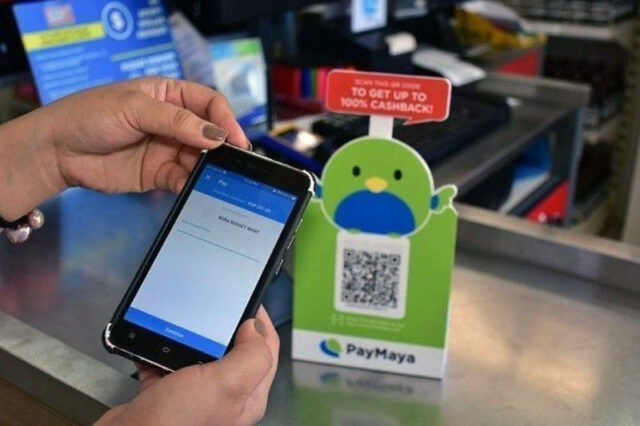
UK’s TerraPay partners with Maya to boost transactions

PHILSTAR FILE PHOTO

SINGAPORE — United Kingdom-based TerraPay has partnered with Maya to expand its network and boost cross-border transactions, it announced on Wednesday.

The partnership was announced during the Singapore Fintech Festival being held here.

“This collaboration aims to make international remittances more accessible, convenient, and secure for Filipinos across the world,” TerraPay said in a statement.

“With this partnership, users of the Maya app can now experience seamless money transfers from Korea, the USA, Singapore, and the Middle East through TerraPay’s extensive global network,” it said.

The partnership aims to improve customers’ experience through “faster transfer times, competitive exchange rates, and affordable borderless payment options.”

TerraPay co-founder and Chief Business Officer Ani Sane said the partnership will help drive financial inclusion.

“By teaming up with Maya, we can serve customers in the Philippines with innovative solutions, empowering them with fast and affordable cross-border payment options. We remain committed to making digital transactions more secure and faster for remitters and customers in the Philippines,” Mr. Sane added.

Maya Chief Operating Officer Khurram Malik said it will also make international remittances more accessible and convenient.

“Cross-border payments are integral to the increasingly global Filipinos with family or virtual work opportunities overseas. By leveraging the seamlessness of the Maya app, we are making it easier for them to receive money, save, and spend smartly,” he added.

TerraPay is a global cross-border payments network regulated in 29 global markets, enabling payments in over 120 recipient countries and over 210 send countries.

It is headquartered in London with offices in Bangalore, Dubai, Miami, Bogota, Dar es Salaam, Kampala, Hague, Dakar, Joburg, Nairobi, Milan, and Singapore.

Maya is enabled by the digital payments company Maya Philippines, Inc, and digital lender Maya Bank, Inc.

Maya Bank is owned by Voyager Innovations, Inc. PLDT Inc. is Voyager’s main shareholder. Hastings Holdings, Inc., a unit of PLDT Beneficial Trust Fund subsidiary MediaQuest Holdings, Inc., has a majority stake in BusinessWorld through the Philippine Star Group, which it controls. — L.M.J.C. Jocson

Guinness World Records day celebrates the super skilled and superlative

REUTERS

BRITAIN’S Paul Swift has spent most of his life on two wheels — starting with the garden lawn mower.

Now he is among the super-skilled people, expert at doing unusual and difficult things that are being celebrated on Thursday by Guinness World Records Day.

Mr. Swift, who has graduated to driving a pickup truck on only two of its wheels managed a record-breaking squeeze through an 88-centimeter gap set up in a stunt area at Britain’s Silverstone racecourse.

“I’ve been driving on two wheels since the age of seven — I started on the garden lawn mower — so to get a world record that recognizes that is fantastic,” he said.

Guinness World Records Editor-in-Chief Craig Glenday, who was on hand to adjudicate Mr. Swift’s record ride, said this year’s theme is super skills.

“Guinness World Records Day is a global celebration of the superlative,” he said.

Other record-breakers being lauded include a team in Japan. It broke the record for consecutive, double-dutch-style handstand-skipping with two people, which involves skipping while performing handstands as ropes are turned in opposite directions.

In China, the extremely agile Zhou Quan set a record for the highest number of consecutive leg full twist back somersaults, managing 11 in a row.

The United States, meanwhile, boasts Henry Cabelus who holds eight world records after achieving the highest backflip Pogo Stick jump, making it over a height of 3.07 meters (10.07 ft). “I feel pretty good about that, that just makes me want to go for 10 now. So I’ve got to start thinking about the other ones,” he said. — Reuters

PHL firms seen unprepared for AI

STOCK PHOTO | Image by Rawpixel.Com from Freepik

ONLY 17% of organizations in the Philippines are ready to utilize and deploy artificial intelligence (AI), with the majority of them expressing concerns about the impact of not adopting these technology advances, a study released on Wednesday said.

In a report issued by Cisco, the technology firm said that about 44% of the organizations in the country are considered chasers or those that are moderately prepared; 35% are followers or those with limited preparedness and about 4% are laggards or those that are not prepared to leverage AI technologies at all.

The report noted that almost all or about 97% of businesses recognized the urgency of adopting AI technologies while its adoption has been slower in the past years.

“AI has so much propensity to help across the business. There’s so many different aspects around how AI can help,” said Carl Solder, Cisco chief technology officer for  Australia and New Zealand.

AI-powered technology will greatly contribute to boosting the digital economy as it is seen to help raise revenues for businesses, Mr. Solder said.

He said driving better levels of proficiency through the use of artificial intelligence is “ultimately going to translate into better customer experiences, better levels of productivity for those organizations, which is hopefully going to drive better levels of profitability and revenue as well.”

The Philippines’ digital economy is projected to reach a value of as high as $150 billion by 2030 as the e-commerce boom continues, according to a recent report by Google, Temasek Holdings, and Bain & Company.

According to the report, the country is expected to reach between $80 billion and $150 billion in gross merchandise value by the end of the decade.

While AI-powered technology is considered revolutionary in the digital landscape, this advancement also comes with great threats amid cybersecurity attacks getting more sophisticated.

Mr. Solder said that while there is a danger in utilizing AI as it can be leveraged to create new forms of compromise, many organizations will benefit from it to also combat any cyber threats in the digital space.

“Analyzing inspecting and understanding and learning about all those new threats then it’s about building the software tool sets on top of that and leveraging the power of artificial intelligence to scan and look across the network in order to identify potential attack vectors, maybe anomalous behavior that might be happening,” he said. — Ashley Erika O. Jose

Global challenges, collective solutions: AI, Web3, and human expertise

JOHN SCHNOBRICH-UNSPLASH

The world is grappling with tough global problems, such as climate change, healthcare crises, and poverty. Solving these issues requires people and technology to work together. At the forefront of this partnership are Artificial Intelligence (AI), Web3, and human expertise.

In my previous article, we delved on the differences between Web2 and Web3, highlighting how Web3’s decentralized principles and data ownership are transforming the digital landscape. Web3 has a pivotal role to play in addressing these global challenges.

Imagine a world where AI, Web3, and human skills combine to tackle our most pressing global problems. AI is like a powerful assistant that can help with healthcare by diagnosing diseases, predicting climate patterns to save resources, and identifying areas where poverty needs attention. Web3, with its innovative approach to data and transparency, offers a robust foundation for this collaborative effort.

Human expertise is crucial in making the right decisions. Our creativity, empathy, and ethical judgment play a big role in solving complex problems, like making medical discoveries and finding ways to combat climate change. But while there’s a lot of potential for this teamwork, there are challenges to overcome. We need to be careful with how we handle data, ensure algorithms are fair, and make ethical choices.

Now, let’s explore in more detail how AI, Web3, and human expertise contribute to solving complex global issues:

1. AI in Healthcare: Artificial Intelligence has revolutionized healthcare. It can analyze vast amounts of medical data, helping doctors make more accurate diagnoses. AI-powered tools like chatbots offer round-the-clock patient support and assistance. Moreover, predictive analytics can forecast disease outbreaks, aiding in resource allocation and preparedness.

2. Web3 for Transparent Supply Chains: Web3’s decentralized ledger technology is ideal for supply chain management. It provides transparency from the source to the end consumer. Consumers can trace the origin of products and verify their authenticity. This is particularly critical in food safety and pharmaceuticals, where knowing the supply chain is a matter of life and death.

3. Human Expertise in Ethical Decision-Making: Complex global challenges often require navigating ethical dilemmas. Humans bring ethical judgment to the table, ensuring that AI and Web3 are used responsibly. This includes decisions on data privacy, algorithmic bias, and the ethics of technology deployment.

4. Education and Advocacy: Fostering collaboration between AI, Web3, and human expertise requires education and advocacy. Educational institutions, organizations, and governments need to play a role in promoting the responsible use of these technologies. This includes developing curriculum and offering training to prepare the future workforce for the digital age.

5. Sustainable Practices: Sustainability is a key consideration in addressing global problems. AI and Web3 can contribute to sustainability efforts by optimizing resource allocation, reducing waste, and enhancing energy efficiency. Sustainability practices also include responsible AI development and blockchain technology’s energy-efficient capabilities.

6. Multi-Stakeholder Collaboration: To tackle complex global challenges, multi-stakeholder collaboration is essential. Governments, businesses, non-profits, and individuals must come together. AI, Web3, and human expertise can facilitate this collaboration, ensuring that all parties have access to necessary information and resources.

As we explore these facets, it’s evident that AI, Web3, and human expertise are instrumental in addressing complex global challenges. These technologies are tools in our quest for a better world, but their success depends on responsible use, ethical considerations, and cooperation among all stakeholders.

Challenges like data privacy, algorithmic bias, and ethical dilemmas remind us of the need for responsible technology use. Ethical AI development and transparent Web3 governance are vital for maintaining trust. Navigating these challenges reinforces the importance of responsible technology use in global initiatives.

Together, we can create a more resilient, sustainable, and equitable world. Embrace this synergy, and together, we can overcome the seemingly insurmountable challenges that lie ahead. Let us remember that the power to address global challenges lies in our collective hands. As we venture into this era of unprecedented collaboration, the immense potential of combining AI, Web3, and human ingenuity to tackle complex global problems becomes evident. It’s a testament to what we can achieve when we harness technology responsibly, leverage human creativity, and work collectively for a brighter future.


Dr. Donald Patrick Lim is the founding president of the Blockchain Council of the Philippines and the lead convenor of the Philippine Blockchain Week. He is also the Asian anchor of FintechTV.

Micro-credentials seen key to lifelong learning

INSTRUCTURE.COM

EDUCATIONAL institutions and technology partners need to look into “micro-credential” programs to encourage lifelong learning, global edtech firm Instructure said.

In a 2023 report on the global state of student success and engagement, Instructure found that Filipino respondents are increasingly taking a skills-based approach to gaining credentials, citing the desire to expand their areas of expertise (77%), advance their careers (68%), take advantage of flexible programs (59%), and be ready for new opportunities (56%).

It noted that respondents are considering certificates (43%) and apprenticeships (39%) as a means of equipping themselves for their planned profession.

“Students today recognize that the modern workforce requires a diverse and rapidly adaptable skill set,” Harrison Kelly, Asia-Pacific managing director at Instructure, said in a virtual briefing on Thursday.

“As a result, they are opting for more flexible, skills-focused learning avenues that offer quicker routes to employment and a broader range of career opportunities,” he added.

“Institutions will have to look at a fixed yet agile way to draw on these ever-evolving demands,” he added, noting that the current job market stresses skills-based hiring over traditional degree-based qualifications.

Ryan Lufkin, vice-president for global strategy at Instructure, noted that edtech systems can serve as demonstrable proof of workplace skills.

“Even degree programs are breaking down into component skills,” he said. This can help showcase attractive qualities to employers even for candidates that have not earned degrees.

Mr. Lufkin also noted the role of artificial intelligence (AI) in fueling productivity, creativity, and critical thinking among learner.

The report indicated that 46% of Filipino students attend institutions have introduced rules governing generative AI use, while 28% said their institutions’ guidelines were strict.

It found that generative AI tools helped students with creating class content (62%), research and writing (56%), and personalize their learning (53%). AI chatbot ChatGPT was described as helpful in research and writing (83%), test preparation (52%), and learning foreign languages (47%).

“We need to be providing tutorials and guidelines on educator expectations,” Mr. Lufkin said.

“Institutions should be saying how these tools work to understand when and how they are being misused.”

“We shouldn’t be creating a tiered system, a digital divide with AI. We need an equitable approach,” he added, noting the paid releases of ChatGPT having access to significantly more datasets than the free version.

Instructure’s 2023 State of Student Success and Engagement in Higher Education report is on its  its fourth year, covering 17 countries, including 571 students, administrators, and faculty from the Philippines. — Miguel Hanz  L. Antivola

Most Filipinos prefer to save money than borrow to fund large purchases

FREEPIK

ONLY 21% of Filipinos plan to borrow or use credit to make purchases in the coming months, based on a study from TransUnion Philippines. 

“The decision to avoid the future use of credit is indicative of a conservative financial mindset, where it isn’t always understood and seen as an opportunity for economic mobility,” TransUnion Philippines President and Chief Executive Officer Pia Arellano said in a statement.

“This coincides with a longstanding stigma across our nation surrounding credit, as it’s often viewed as a gateway to bad unmanageable debt and financial irresponsibility,” Ms. Arellano added.

Based on TransUnion Philippines’ Credit Perception Index (CPI) study, about 79% of respondents said they considered themselves to have a strong understanding of their finances.

About 72% said they can easily afford their daily necessities. But half (51%) of the respondents often find themselves with limited money at the end of every month.

“In terms of their expectations on how their finances will change in the future, most respondents indicated a desire to save more, as they expect their household incomes to rise,” TransUnion Philippines said.

“However, few respondents had plans to borrow or use credit to make purchases in the future. In fact, 21% reported plans to do so in the next three months, 21% in the next year, and 24% in the next five years,” it added.

Meanwhile, more than half of the respondents (57%) are open to learning more innovative ways of transacting.

About 41% said they are comfortable paying for big purchases either with one-time payments or through installments.   

Most respondents (90%) said they would be open to use more credit-based products in the future if they are informed about how credit influences loan approvals and job applications.

“This presents an opportunity for the formal financial sector to bridge any misperceptions that Filipinos might have about responsible credit use through credit education,” TransUnion Philippines said.

The study also revealed that banks and other financial institutions are not the most preferred sources for credit information among the Gen Z and millennials, even as they are seen to be credible.

Family and friends were the most preferred sources for credit information among the Gen Z (66%) and millennials (69%).

On the other hand, banks and financial institutions were the most preferred source of information of credit products among Gen X (71%) and boomers (79%).

“For younger generations who are just beginning to build wealth, the formal financial sector must focus its efforts on educating Filipinos about how the responsible use of credit can help them achieve their goals in life. Alongside the promotion of good financial habits, the responsible use of credit can help more Filipinos enjoy economic mobility by enabling them to access opportunities for better lives,” Ms. Arellano said.

Across generations, most Filipinos consider themselves lower middle class, TransUnion Philippines said.

The study showed the majority (71%) of respondents consider themselves to be middle class. Most respondents from Gen Z (45%), millennials (49%), Gen X (51%), and boomers (48%) identified themselves part of the lower middle class.

According to TransUnion Philippines, this may be attributed to views on personal wealth, as more than a third of the population (39%) see themselves as having low total wealth. — Keisha B. Ta-asan

Jimmy Kimmel chosen to host Oscars for fourth time

TV host Jimmy Kimmel in a publicity shot for The Oscars in 2017. He will be hosting the awards show for a 4th time in 2024. — IMDB

LOS ANGELES — Comedian Jimmy Kimmel will host the 96th Oscars next year, his fourth time helming the pinnacle event of the Hollywood awards season, the Academy of Motion Picture Arts and Sciences said on Wednesday.

“I always dreamed of hosting the Oscars exactly four times,” Mr. Kimmel said in the Academy statement.

The 96th Oscars will air on Walt Disney-owned ABC and broadcast outlets around the world on March 10, 2024.

Mr. Kimmel also hosted the 95th Oscars at the Dolby Theater last March and delivered a back-to-basics show that sought to celebrate a moviegoing rebound from the COVID-19 pandemic, earning an Emmy nomination for his stint.

The host and executive producer of ABC’s Jimmy Kimmel Live also hosted the Oscars in both 2017 and 2018. — Reuters

Filinvest Land’s bond offering now rendered effective by regulator

LISTED property developer Filinvest Land, Inc. (FLI) said its shelf registration of debt securities is now rendered effective after its registration statement was cleared by the Securities and Exchange Commission (SEC).

In a stock exchange disclosure on Thursday, FLI said it received the SEC order on Nov. 15 rendering effective the company’s registration statement for the shelf-registered peso-denominated fixed-rate bonds and the corresponding certificate of permit to offer securities for sale for the first tranche.

According to FLI, its bonds have an aggregate total of up to P35 billion, with the P12 billion bond offering being the first tranche consisting of P10 billion with an over-subscription option of up to P2 billion denominated fixed rate bonds.

Recently, FLI’s bond offering secured the PRS Aaa credit rating, which is the highest rating, as well as a stable outlook from Philippine Rating Services Corp.

The joint lead underwriters and bookrunners of the offering are BDO Capital and Investment Corp., BPI Capital Corp., China Bank Capital Corp., East West Banking Corp., First Metro Investment Corp., PNB Capital and Investment Corp., RCBC Capital Corp., and SB Capital Investment Corp.

Rizal Commercial Banking Corp. Trust and Investments Group will serve as the trustee.

As of September this year, FLI logged a 22% increase in its attributable net income to P2.44 billion while total consolidated revenues and other income rose 11% to P15.72 billion led by growth from its residential and mall business segments.   

On Thursday, shares of FLI fell one centavo or 1.79% to 55 centavos apiece. — Revin Mikhael D. Ochave

Warts and all, international law is still better than no law

FREEPIK

PUNDITS of all stripes are tearing into one another right now about how to interpret international law. Hamas has indubitably broken it in the worst possible ways. But is Israel doing so as well? As political as it is legal, that controversy raises an older question: What is international law, and does it even exist?

There’s no question that Hamas committed heinous war crimes on Oct. 7, when it attacked Israel and sadistically slaughtered about 1,200 people, mostly civilians. It broke additional international laws when it took civilian hostages, and yet more when it started using 2 million Gazan civilians as human shields. All of these acts are illegal in both customary and treaty-based international law.

As for Israel, the victim nation, international law expressly gives it the “right to war” (jus ad bellum) in self-defense. But it also governs how it must fight “in war” (jus in bello). Here, the legal reasoning is clear in theory but slippery in practice. Israel must do its utmost to spare civilians, for example, although legitimate military objectives may justify some civilian deaths, as long as the toll is “proportionate.” Is a Gazan body count of 11,000-and-counting proportionate?

Moreover, international law prohibits collective punishment. Is that what Israel exacted when it turned off water, fuel, and electricity to the entire Gaza Strip? Israel says no. Others say yes, and point to comments like the Israeli defense minister’s, who, in ordering “a complete siege on the Gaza Strip,” added that “we are fighting human animals and we are acting accordingly.” Prime Minister Benjamin Netanyahu ominously cited Deuteronomy 25:19, where God tells the Israelites to “blot out the name of Amalak from under heaven.” Are the Gazans today’s Amalekites?

Ambiguity in international law is one thing; ambiguity about who would even enforce it, and how, is another. That becomes clear in a different context, concerning Russian President Vladimir Putin. He broke a cardinal rule of international law when his troops invaded a sovereign country, Ukraine. But the United Nations has done little — because Russia holds a veto on its Security Council.

Putin’s troops then committed additional atrocities, from maiming, torturing, raping, and murdering Ukrainian soldiers and civilians to abducting their children, which is part of the definition of genocide. For that latter crime, the International Criminal Court in the Hague — established by the Rome Statute of 1998, a crown jewel of international law — has issued an arrest warrant against Putin and another Russian leader.

But neither Russia nor Ukraine is a party to the Rome Statute. (Nor are the US, China, or Israel, for that matter, although Palestine is.) As long as Putin doesn’t set foot in one of the 123 signatory nations, and arguably even if he does, he therefore won’t, in any plausible scenario, get arrested.

The apparent impunity of perpetrators like Putin raises the bigger question hanging over international law: whether it is in fact “law” at all. Thinkers from Thomas Hobbes to Hans Morgenthau stipulated that law only deserves that label when it can be enforced. The enforcer, moreover, needs what the sociologist Max Weber called a monopoly on legitimate violence. Typically that means a national government, which can legally arrest, incarcerate, expropriate, or even kill.

But there is no corresponding world government, and hence no international body with a monopoly on legitimate violence. The global system is therefore said to be an “anarchical society.” To some legal philosophers, international law is thus little more than “positive morality,” a set of norms and suggestions, easily ignored and unenforceable.

Others throughout the ages, however, have felt that something is missing in that analysis. The greatest thinker in that tradition was Hugo Grotius, a 17th century Dutch humanist and polymath who once smuggled himself out of prison by hiding in a bookcase and survived a shipwreck.

Grotius lived during the Thirty Years War, when more than 60% of the population in some parts of Central Europe perished. Europe’s great powers as well as private armies did the slaughtering, and there was nothing to restrain them. As an intellectual — and later as ambassador from one belligerent, Sweden, to another, France — Grotius helped conceive the modern states’ system that would emerge from this bloodbath.

Along the way, Grotius also developed the foundational texts of international law, from rules governing ocean navigation (which live on in the UN Convention on the High Seas) to the norms of going to war, and then of waging it — that is, the jus ad bellum and the jus in bello. To Grotius and his heirs, international law was part of natural law, the way things just ought to be.

In the centuries since, a body of customary international law developed, based on precedent and analogous to case law in common-law countries. On top of that are treaties, conventions, and agreements, the equivalent of statutes in national law. Starting in the 19th century and into the 20th, the International Committee of the Red Cross pushed international humanitarian law in particular (a modern synonym for jus in bello) and helped birth the Geneva Conventions and its protocols. The Charter of the United Nations and conventions on everything from trade to labor standards and space exploration round out the system.

International law is thus both ubiquitous and indispensable. It works best during peacetime, when countries feel most bound by reciprocity — I won’t drill for oil on your continental shelf, as long as you don’t drill on mine. But once countries or leaders feel that vital interests are at stake, and especially once they go to war, they often ignore the law, as Putin does. (That said, he did skip a summit in South Africa, which is a signatory to the ICC — perhaps he was nervous about getting arrested after all.)

However imperfect, though, international law makes life for many people less nasty, brutish and short than it would otherwise be — than it was during the Thirty Years War, say. It restrains combatants by separating the why of war from the how — as Charli Carpenter at the University of Massachusetts-Amherst puts it, by distinguishing“between ‘civilized’ violence and outright barbarity.” It gives moderates in every society a language in which to address and temper the bloodthirsty in their own ranks and to hold them individually accountable after the guns fall silent. It maintains norms of humanity.

You may lean Hobbesian or Grotian, realist or idealist. You may doubt international law is even a thing or swear by it. You may think it is failing in the Gaza Strip or preventing even worse suffering. But let us be grateful that international law exists, for the alternative is worse. That’s enough reason to defend it.

BLOOMBERG OPINION

Enhanced job-matching for youth expected to raise quality of work, productivity in Asia

Applicants look at job postings at a job fair in Manila. — PHILIPPINE STAR/EDD GUMBAN

ONE key to improving productivity in Asia is to more intensively target the working youth and better match them to higher-quality jobs, the Asian Development Bank (ADB) said.

“The region’s developing economies are home to over 580 million young people ages 15–29 years. Their energy, skills, and expertise are needed to power growth and innovation as economies in the region transform, grow older, and seek to address climate change,” the ADB said in a report.

“Yet over 80% of youth who work in the region do so informally, and one in four young workers are moderately or extremely poor. Working youth are often stuck in precarious, low-quality, low-paid jobs,” it added.

In many Asian countries,  youth unemployment rate is two to three times more than the adult rate, it said.

Better job matching “reduces the time needed for job seekers to identify vacancies and for employers to fill them. It also improves the quality of the match so that young people obtain jobs suited to their capabilities and aspirations, and employers acquire the right talent,” the ADB said.

The matching process can include job preparation and search, as well as skills training, social networking, and post-placement activities.

“When job matching is linked to other services, this tends to help youth with their nonlinear transitions, reach disadvantaged youth cohorts, and strengthen matches for improved job quality,” it said.

Digital technology will also help further access, such as through online job-matching platforms.

“Young job seekers gain remote and convenient access to a larger and more relevant pool of jobs. Complementary support can easily be linked. Employers benefit from reaching more prospective talent as well as other recruitment services. Providers leverage scalability,” it said. Luisa Maria Jacinta C. Jocson

SSS taps LANDBANK, DBP as fund managers

PATRICK ROQUE

STATE PENSION FUND Social Security System (SSS) has selected Land Bank of the Philippines (LANDBANK) and the Development Bank of the Philippines (DBP) to manage P2 billion in funds, it said on Thursday.

LANDBANK’s Trust Banking Group and DBP’s Trust Banking Group received P1 billion in investible funds received in two tranches on Oct. 13 and 17, SSS President and Chief Executive Officer Rolando L. Macasaet said in a statement on Thursday.

“We see that SSS will greatly benefit from tapping external fund managers to manage a portion of our investible funds. We can take advantage of their expertise to help grow the SSS funds and diversify the investment portfolio,” he said.

LANDBANK and DBP will manage the fund for the next three years, SSS said.

The state-run lenders join BPI Asset Management and Trust Corp. and Security Bank Corp.’s Trust and Asset Management Group in managing SSS’ pure fixed-income investments.

As of Nov. 16, SSS has awarded the management of seven investment mandates for its pure fixed income, balanced and pure equity funds worth P8 billion to five local fund managers.

SSS began hiring local fund managers as part of its investment strategy since 2016, SSS Executive Vice-President for Investments Sector Rizaldy T. Capulong said.

Under Republic Act No. 11199 or the Social Security Act of 2018, the SSS can appoint local or foreign fund managers to handle its Investment Reserve Fund (IRF).

The IRF is a portion of the SSS Reserve Fund allocated for investments whose income will go back directly to the reserve fund to help it grow.

“Tapping more investment-savvy fund managers is a best practice worldwide, particularly with pension funds. This strategy allows pension funds like SSS to access the expertise of fund managers in frontier markets where they do not have a competitive advantage like foreign investments,” SSS Senior Vice-President for Fund Management Group Ernesto D. Francisco, Jr. added. — AMCS

ADVERTISEMENT
ADVERTISEMENT