Home Blog Page 40

ABB energizes VITRO Santa Rosa data center

EPLDT.COM

GLOBAL ELECTRICAL engineering company ABB Ltd. has energized VITRO Santa Rosa, providing a complete electrification solution and scalable power distribution across the data center’s 50-megawatt (MW) facility.

“VITRO Santa Rosa marks a significant leap in the country’s digital transformation and AI (artificial intelligence) adoption. Through our partnerships with ABB and DCPI (Distribution & Control Products, Inc.), we’re able to scale faster and deliver world-class infrastructure built for businesses in the age of AI,” ePLDT Inc. and VITRO Inc. President Victor S. Genuino said in a media release on Thursday.

VITRO is a fully owned subsidiary of ePLDT, the ICT holding company of the Pangilinan-led PLDT Inc. group.

ABB noted that growing demand for AI infrastructure, cloud services, and streaming requires high availability and reliability for mission-critical workloads. The data center integrates three independent fiber routes, the company said.

“The integrated design ensures compliance with Philippine market requirements and gives VITRO Santa Rosa the flexibility to scale as AI workloads grow and demand for digital services accelerates,” ABB added.

Together with DCPI, ABB delivered a medium- and low-voltage electrification solution designed to provide continuous uptime and energy efficiency.

“Delivering the world’s most advanced data centers takes global expertise and strong local partnerships. High performance starts with reliability — smart solutions that ensure critical power is always available,” said ABB Philippines Marketing and Sales Director for Electrification Smart Buildings and Smart Power Christine Macadamia Penequito.

Earlier this year, PLDT inaugurated VITRO Sta. Rosa, its 11th data center, as part of its plan to expand its data center business.

The facility, located on a five-hectare site in Sta. Rosa, Laguna, is the country’s largest data center campus, with a capacity of up to 50 MW. Across all VITRO sites, the combined capacity is nearly 100 MW.

PLDT is also advancing plans for its 12th and largest data center, to be built in General Trias, Cavite, with a capacity of up to 100 MW — double that of VITRO Sta. Rosa.

Hastings Holdings, Inc., a unit of the PLDT Beneficial Trust Fund subsidiary MediaQuest Holdings, Inc., holds a majority stake in BusinessWorld through the Philippine Star Group, which it controls. — Ashley Erika O. Jose

BSP to deepen domestic money market amid financial integration

THE BANGKO SENTRAL ng Pilipinas (BSP) is working to strengthen the domestic capital market and promote cross-border payments as financial markets become more integrated.

“The BSP is working to deepen the money market and introduce more market-oriented operations,” BSP Deputy Governor Zeno Ronald R. Abenoja said during the fourth ASEAN+3 Economic Cooperation and Financial Stability Forum held on Nov. 25 in Hong Kong.

He said the central bank wants to boost liquidity to improve monetary policy transmission and strengthen the Philippines’ integration into regional and global financial markets. These will also help ensure the integrity of the Philippine financial system amid global uncertainties and rapid digitalization.

In a report on Wednesday, the ASEAN+3 Macroeconomic Research Office flagged the slow and limited transmission of the BSP’s monetary policy adjustments.

This comes even as it has been nearly a decade since the central bank adopted an interest rate corridor (IRC), which introduced the overnight lending facility and the overnight deposit facility alongside the target reverse repurchase rate. The IRC was designed to guide the short term market rates toward the central bank’s key interest rate.

During the forum, Mr. Abenoja also said that the Philippine central bank is open to the concept of tokenization for digital retail payments and remittances, adding that stablecoin technology could help make transactions faster, cheaper, and more accessible.

Stablecoins are pegged to a fiat currency or commodity to give it a stable value, unlike other cryptocurrencies like Bitcoin or Ethereum, which have volatile prices as they are not backed by assets.

In line with the Philippine Development Plan, the BSP wants digital payments to account for 60-70% of the total volume of retail payments by 2028.

The ASEAN+3 is made up of Association of Southeast Asian Nations (ASEAN) member countries Brunei, Cambodia, Indonesia, Laos, Malaysia, Myanmar, Philippines, Singapore, Thailand and Vietnam plus China, Japan and South Korea.

The central bank has said it will promote financial health within the region as part of the Philippines’ chairmanship of the ASEAN next year.

In 2026, the Philippines will also co-chair the ASEAN+3 Finance Process with Japan. — Katherine K. Chan

Jeproks: The Musical wins big at the 2025 Aliw Awards

Zsa Zsa Padilla returns Lifetime Achievement Award

TANGHALANG UNA OBRA’s Jeproks: The Musical bagged seven awards, including Best Musical, at the 38th Aliw Awards held on Dec. 15 at the Manila Hotel.

Directed by Frannie Zamora, written by Nicholas Pitchay, and with musical direction by Jed Balsamo, Jeproks: The Musical brings to life the story of Pinoy rock musician Mike Hanopol, featuring his compositions.

The second big winner of the night was Tanghalang Pilipino’s Kisapmata, which clinched five awards, including Best Play. Written and directed by Guelan Luarca, it is an adaptation of the 1981 film of the same name.

Meanwhile, Lifetime Achievement Awards were also given to Zsa Zsa Padilla, Gary Valenciano, Lani Misalucha, Jed Madela, composer Arturo Lui Pio, tenor Frankie Asiniero, and House Speaker Faustino “Bojie” Dy.

Ms. Padilla is set to return her Aliw statuette as per her disappointed social media post published on Dec. 16. This after she and her fellow Lifetime Achievement awardees were not given time to say their acceptance speeches at the ceremony.

When she was interviewed by a vlogger afterwards, that was the only time she was able to give the speech that she had expected to deliver onstage.

“Afterward, I felt like crying. I was still dumbfounded by how the awarding was handled,” she said in her post. “To be dismissed so abruptly after supposedly being ‘honored’ was shocking and embarrassing. What was the point of being there with our families? So, Aliw, please do better. Honor people properly.”

The Aliw Awards have yet to release a statement regarding this matter.

Founded by Alice H. Reyes in 1976, the Aliw Awards Foundation, Inc., aims to develop Philippine live entertainment through the awards. — BH Lacsamana


The list of winners follows:

Best Musical: Jeproks: The Musical, Tanghalang Una Obra

Best Play: Kisapmata, Tanghalang Pilipino

Best Director for a Play: Guelan Luarca, Kisapmata

Best Lead Actor in a Play: Jonathan Tadioan, Kisapmata

Best Lead Actress in a Play: Jackie Lou Blanco, The Foxtrot

Best Lead Actor in a Musical: David Ezra, Jeproks: The Musical

Best Lead Actress in a Musical: Shiela Valderrama and Nikki Valdez, Next to Normal

Best Featured Actor in a Play: Marco Viaña, Kisapmata

Best Featured Actress in a Play: Toni Go Yadao, Kisapmata

Best Featured Actor in a Musical: Jett Pangan, Jeproks: The Musical

Best Featured Actress in a Musical: Geneva Cruz, Jeproks: The Musical

Best Composer for Original Musical: Jonathan Manalo, Delia D.

Best Musical Director/Arranger for a Musical: Joed Balsamo, Jeproks: The Musical; Vince Lim, Delia D.

Best Ensemble in a Musical or Play: Jeproks: The Musical

Aliw Breakthrough Performance: Si Faust After Goethe

Entertainer of the Year 2025: Jona

Best Child Performer (Male): Theodore Tiu

Best Child Performer (Female): Natalie Grace, Zia Dantes

Best Female Classical Performer: Ana Feleo

Best Male Classical Performer: Ronan Ferrer

Best Pop Artist: Jona

Best Rap Artist: Andrew E., Gloc-9

Best Major Concert (Male): Maki, Kolorcoaster; and Raymond Lauchengco, Everybody Loves Raymond

Best Major Concert (Female): Regine Velasquez, Reset

Best Male Performance in a Concert: Rannie Raymundo

Best Female Performance in a Concert: Dulce

Best Collaboration in a Major Concert: Martin Nievera and Pops Fernandez, Always and Forever

Best Ensemble Performance in a Concert: Odette Quesada and Ogie Alcasid

Best Director for a Major Concert: Maki, Kolorcoaster

Best Concert Stage Director: Rowell Santiago, Wagi

Best Musical Director for a Concert/Dance: Rodel Colmenar, JL 75th Beatles Concert

Best R&B/Jazz Artist: Jeannie Tiongco

Best Jazz Artist Group: UP Jazz Ensemble

Best Stand-Up Comedian: Super Tekla

Best New Group Artist: VVink

Best New Male Artist: Rouelle Cariño

Best New Female Artist: Simone Valderrama Martinez

Best Instrumentalist: Mary Ann Espina (Piano)

Best Male Crossover Performer: Armand Ferrer

Best Female Crossover Performer: Niña Campos

Best Inspirational/Gospel Singer: Dindo Fernandez

Best Filipino Male Artist Based Abroad: Cipriano de Guzman, Jr.

Best Filipino Female Artist Based Abroad: Rachel Alejandro

Best Solo Performer in Hotels, Bars and Music Lounges: Esay Kirstin

Best Group Performer in Hotels, Bars and Music Lounges: InnerVoices, Progeny, Replay Band

Best Choral Group: Los Cantates De Manila, University of Mindanao Chorale

Best Cultural Group: Tanghalang Bagong Sibul Dance Company

Best Dance Production: Swan Lake, Ballet Manila

Best Festival Practices and Performances: Mammangi Festival (Ilagan, Isabela); Kneeling Carabao Festival (Pulilan, Bulacan); Paru-Paru Festival (Dasmariñas, Cavite)

Best Festival Catalyst/Organizer: Mayor Jose Mari Diaz, Ilagan, Isabela; Mayor Rolando Peralta, Pulilan, Bulacan; Mayor Jenny Barzaga, Dasmariñas, Cavite

Best Male Host: Raymond Gorospe, Tim Yap

Best Female Host: Nicole Ramos

Best Special Events Director: Nazer Salcedo, That’s Amore

Best Special Events Production: That’s Amore, RMA; 75th The Beatles Concert, JL; Tanghal Tertulia, UP

Best Venue for Theaters and Concerts: GSIS Theater

Lifetime Achievement Award 2024: Zsa Zsa Padilla, Gary Valenciano, Lani Misalucha, Jed Madela, composer Arturo Lui Pio, tenor Frankie Asiniero, House Speaker Faustino “Bojie” Dy


Tanduay partners with Denmark’s Bastard Spirits to enter Nordic market

PHILSTAR FILE PHOTO/TANDUAY

TANDUAY has entered a distribution partnership with Denmark-based Bastard Spirits to sell its products in the Nordic country.

“Tanduay has a very strong portfolio, great price points, and excellent support. Their offerings simply don’t exist in the current Danish market, so it was easy to say yes to this opportunity,” International Sales Manager of Bastard Spirits Jesper Kjaer said in a statement on Thursday.

Founded in 2021 by industry veterans from global brands and niche ventures, Bastard Spirits distributes high-quality spirits across the Nordic region to physical shops such as Vild med Vin and Rombo, online retailers Ginbutikken and Vault of Spirits, and various segments including fixed portfolios, bulk sales, and premium gifts.

Through this collaboration, Tanduay seeks to expand its international presence and introduce new rum experiences to the region.

“Denmark is an exciting market marked by curiosity and openness to new flavors. We see strong potential for Tanduay to thrive, especially with Bastard Spirits’ premium-focused distribution network and deep understanding of Nordic consumer preferences,” International Business Development Manager of Tanduay Brands International, Inc. Roy Kristoffer Sumang said.

Tanduay said it initially plans to place its products in wine and gifting shops, partner with wholesalers such as Sprit&Co for on-trade distribution, and enter bars across Denmark.

Longer-term goals include listings in duty-free shops and selected retail chains, the company added.

“Our priority is always to let consumers experience our products firsthand. Tastings, events, and on-trade visibility are crucial pillars of our approach. We are confident that Danish consumers will appreciate the craftsmanship and heritage behind Tanduay,” Mr. Sumang said.

Tanduay is a rum brand produced by Tanduay Distillers, Inc., a subsidiary of the Tan-led conglomerate LT Group, Inc.

On Thursday, LT Group’s shares rose by 1.67% or 24 centavos to P14.60 apiece. — Alexandria Grace C. Magno

Peso climbs to fresh two-week high on Fed bets

BW FILE PHOTO

THE PESO on Thursday jumped to its strongest close against the dollar in over two weeks as US jobs data supported further rate cuts.

The local unit closed at P58.555 per dollar, rising by 17 centavos from its P58.725 finish on Wednesday, data from the Bankers Association of the Philippines showed.

This was the peso’s best finish in over two weeks or since it closed at P58.521 per dollar on Dec. 2.

The local currency opened Thursday’s session slightly stronger at P58.70 against the dollar. It hit an intraday high of P58.49, while its worst showing was at P58.72 against the greenback.

Dollars exchanged jumped to $1.65 billion from $1.34 billion on Wednesday.

“The peso appreciated after the latest US labor reports solidified the dovish case for further US rate cuts,” a trader said in a Viber message.

The US Labor department reported a nonfarm payroll increase of 64,000 jobs last month and that the unemployment rate rose to 4.6%, Reuters reported. November represented a bounce-back from October’s 105,000 jobs decline, which included the departure of more than 150,000 federal employees who took deferred buyouts as part of the Trump administration’s push to shrink the government’s footprint.

However, the clouding of the data from the 43-day US government shutdown through October and into mid-November created some uncertainty about what the report really means for the economy and the Federal Reserve’s outlook for interest rate policy after its 25-basis-point cut last week.

While relatively low wage growth and anemic November job creation provided hope for more Fed rate cuts, David Wagner, portfolio manager at Aptus Capital Advisors, said the return to job increases in November could also support more hawkish views that rates should hold steady.

While the Fed’s estimate last week was for one rate cut for 2026, traders have been betting on two or more cuts, according to CME Group’s FedWatch tool.

While bets were little changed after Tuesday’s data, Adam Rich, deputy CIO and portfolio manager at Vaughan Nelson, said that the stock market’s decline suggests concern about the interest rate outlook.

Meanwhile, Rizal Commercial Banking Corp. Chief Economist Michael L. Ricafort attributed the peso’s strength to increased remittance inflows before the holidays.

The trader noted that the release of the latest US inflation data could drag the peso lower again on Friday.

The trader expects the peso to range from P58.45 to P58.70 per dollar, while Mr. Ricafort sees the peso moving between P58.40 and P58.65. — Katherine K. Chan with Reuters

It ain’t over ’til the fat lady sings

STOCK PHOTO | Image by Towfiqu barbhuiya from Unsplash

For years now, we have written — perhaps too often — about the extraordinary plunder of public money involving politicians, public works engineers and officials, and their collaborating private contractors. What distinguishes the current moment is not the novelty of corruption but its scale, persistence and institutional embeddedness. The evidence has become both abundant and disturbingly familiar: ghost projects, substandard construction, unfinished infrastructure and flood-control works located in vastly different geographic and hydrological contexts yet priced almost identically — as if designed, costed and implemented by the same template, if not by the same favored contractors sourcing materials from a single supplier.

These are not isolated lapses. Over time, corruption and weak governance in the Philippines have evolved into systemic, durable features of the political economy. If the recent flood control scandals have accomplished anything, it is to strip away any remaining illusion that corruption is confined to the margins. Based on hearings conducted by the House of Representatives, the Senate and the Independent Commission for Infrastructure, corruption appears to have penetrated multiple layers of governance — political, bureaucratic and contractual. The problem is no longer about a few bad actors; it is about institutional failure.

Against this backdrop, one might reasonably expect that the government would respond by reforming the budget process itself, the primary instrument through which public priorities are translated into concrete programs and projects. One would expect a recalibration toward discipline, transparency and performance.

Yet the ongoing deliberations on the 2026 national budget suggest that such expectations remain, at best, premature.

The repeated involvement of even high-ranking elected officials in corruption cases underscores a deeper governance breakdown. The immediate determinants are well known and well documented: political corruption, weak legislative and administrative oversight, and entrenched collusion among politicians, public works officials and preferred contractors. Together, these conditions produce what amounts to syndicated crime against the Filipino people. This is not merely a failure of compliance or ethics; it is a structural pathology. And as with any systemic disease, superficial remedies — procedural transparency without enforcement, hearings without consequences — are unlikely to suffice.

It is therefore difficult to be optimistic about the prospects of a genuinely performance-based 2026 budget — one that is consistent with constitutional mandates and existing laws governing public health, education, climate resilience and other critical social infrastructure. The budget process, in theory, should be a forum for aligning public spending with national priorities, evidence of effectiveness, and fiscal constraints. In practice, civil society participation remains minimal, largely confined to brief interventions during public hearings of the two chambers. Such limited engagement does little to meaningfully influence outcomes or impose accountability. With weak external scrutiny, the government retains wide latitude to pursue discretionary priorities while invoking reformist language.

Some observers initially took heart from the political backlash generated by the flood-control scandals. Congress appeared, at least symbolically, to respond to public pressure by opening the bicameral conference committee deliberations to public observation as it moved to reconcile the House and Senate versions of the proposed P6.793-trillion national budget for 2026. This was a departure from long-standing practice, where bicameral negotiations, arguably the most consequential stage of the budget process, were conducted largely behind closed doors.

The expectation was straightforward: greater transparency would translate into better outcomes. With public scrutiny, the thinking went, legislators would be compelled to justify allocations more rigorously, align projects with strategic needs, and abandon questionable insertions. The flood-control scandal, after all, pointed unmistakably to the need for a result-oriented budget — one that links funding to measurable outcomes, institutional capacity, and demonstrable public value.

Yet transparency alone has proven insufficient. Old incentives remain firmly in place.

Nowhere is this more evident than in the budget of the Department of Public Works and Highways (DPWH). Despite revised construction material pricing and the absence of more convincing cost justifications, there has been persistent resistance among some legislators to substantially reduce DPWH allocations. Recent media reports indicate that as many as 8,499 proposed projects worth approximately P144 billion remain classified as “risky and problematic.” According to assessments by the People’s Budget Coalition (PBC), there is credible evidence of overpricing and the recycling of projects that have already appeared in previous General Appropriations Acts.

The details are troubling. The PBC reports that 2,346 projects have appeared repeatedly in the budgets from 2020 to 2025; that 1,374 out of 3,677 highway segments are characterized by unusually high costs; and that a large proportion of farm-to-market roads and multipurpose halls are priced in conspicuously round numbers, often a red flag for weak or arbitrary costing. These patterns point not to technical oversight but to systematic manipulation of the project pipeline.

More broadly, the House and the Executive have continued to resist significant expenditure cuts proposed by the Senate. This inter-branch tug-of-war is not new. What is new is that the process now unfolds before a watching public whose interests should be central, not peripheral, to budgetary decision-making. Public observation, however, has not altered the fundamental bargaining dynamics that shape final allocations.

Transparency has likewise failed to meaningfully restrain the continued expansion of unprogrammed appropriations. Originally conceived as a contingency mechanism, a fiscal reserve to be tapped when revenues exceed targets or unforeseen emergencies arise, unprogrammed appropriations have increasingly functioned as a parallel budget. Over time, they have become a convenient vehicle for backdoor insertions of nonstrategic, politically expedient projects. In effect, they operate as a modernized form of pork barrel, one that is less visible but no less consequential.

For 2026, unprogrammed appropriations remain firmly embedded in the budget, carrying enormous allocations and retaining the same opacity that has long made them vulnerable to misuse. The Department of Budget and Management initially proposed almost P250 billion for unprogrammed appropriations — funds that have historically financed many of the anomalous flood-control and infrastructure projects now under scrutiny. If recent scandals have failed to prompt a fundamental rethinking of unprogrammed appropriations, it raises serious questions about the political will for reform.

The growth trajectory of unprogrammed appropriations is, by any measure, alarming. Under the current administration, they reached P807.2 billion in 2023 — more than three times the P251.6 billion recorded in 2022. Although allocations declined to P731.4 billion in 2024 and P531.7 billion this year, these figures remain extraordinarily high. Only those deeply embedded within Congress and the Executive know how much of these funds remain exposed to discretionary manipulation, despite efforts by some legislators to trim allocations for specific programs.

Budget officials acknowledge that unprogrammed appropriations were introduced four decades ago to address genuine contingencies. What has changed is not the formal justification but the function. They have effectively been institutionalized as standby pork, available for deployment in ways that undermine planning discipline, weaken fiscal credibility, and entrench patronage politics. This transformation reflects not a technical flaw but a political choice.

Equally concerning is the persistence of so-called “allocables” and targeted programs. Budget watchdogs estimate that hundreds of billions of pesos in discretionary or patronage-linked allocations remain embedded in the 2026 budget. These include medical assistance funds, livelihood programs and local government support funds that, while socially framed, often operate outside coherent sectoral strategies or performance frameworks. When allocations behave like pork, are distributed like pork, and are defended like pork, semantic distinctions offer little comfort. Confidential and intelligence funds, predictably, remain largely insulated from meaningful scrutiny.

It is in this context that some legislators — most notably Senator Panfilo Lacson — have argued that a reenacted budget may be preferable to rushing the passage of a potentially “graft-ridden” spending plan. His concerns, particularly regarding farm-to-market road projects involving billions of pesos without adequate justification, may involve smaller sums than major flood-control projects. But the underlying principle is the same: a budget process that tolerates weak justification in one sector weakens credibility across all sectors.

Civil society would therefore do well to temper any premature celebration of procedural openness. Opening the bicameral conference to public view is not, by itself, a guarantee of reform. Transparency is a necessary condition for accountability, but it is not a sufficient one. Without changes in incentives, enforcement and institutional design, transparency risks becoming performative — a ritual of openness that leaves underlying practices intact.

The flood-control scandals were explosive precisely because they revealed how deeply corruption is woven into the fabric of public investment management. Whether these revelations will translate into durable reform remains an open question. Congress has demonstrated, time and again, its capacity to operate in unorthodox — and often troubling — ways.

Indeed, when it comes to the national budget, it ain’t over ’til the fat lady sings.


Diwa C. Guinigundo is the former deputy governor for the Monetary and Economics Sector, the Bangko Sentral ng Pilipinas (BSP). He served the BSP for 41 years. In 2001-2003, he was alternate executive director at the International Monetary Fund in Washington, DC. He is the senior pastor of the Fullness of Christ International Ministries in Mandaluyong.

Hot air balloons and flying drones

FILE PHOTO of the Philippine International Hot Air Balloon Fiesta. — FACEBOOK.COM/PIHABF

ASIDE from the usual hot air balloons set to fill the skies of New Clark City (NCC), Tarlac, in February of 2026, the 26th Philippine International Hot Air Balloon Fiesta (PIHABF) is preparing more flying spectacles, like helicopters, kites, radio-controlled aircraft, and even drones.

With the theme “A Weekend of Everything that Flies,” the festival will run from Feb. 13 to 15, 2026, offering families, friends, and aviation enthusiasts an opportunity to witness non-stop flying exhibitions.

One of these is a nightly drone show, one of the biggest in the Philippines, lighting up the night sky for the three-day festival. It will use 550 drones in total.

“The drone show at night I think is something very different from all the other drone shows that we’ve had in the previous years,” said PIHABF founder and director Capt. Jose Mari C. Roa, at the press conference held on Monday in Pasay City.

This year, the festival also marks the largest display of special-shape balloons in its history, with 22 colorful designs flown by pilots from the United Kingdom, the United States, Belgium, the Netherlands, Macedonia, Switzerland, Germany, and Brazil.

Mr. Roa told BusinessWorld that this is the most that they’ve had in any edition of the balloon fiesta.

Another highlight is a locally made manned drone, known as the Hoverbike Air X1. A one-seater version was previewed at the press conference, but a two-seater version is being finalized to be showcased in time for the event, according to its inventor Kyxz Mendiola.

“It can carry up to 80 kilos in weight,” he told the press. “All Pinoy engineers ang gumawa nito at nag-welding nito, so kami ng team ko (It was made and welded by all Pinoy engineers, so me and my team).”

Aerobatic superstars like the Breitling Jet Team, Wing Walkers, and world-renowned stunt pilot Mark Jeffries will also be at the event to provide unique forms of entertainment.

Aero sports like paragliding and paramotor, with support from the Philippine Sports Commission, are scheduled across the three days. Other international competitions slated are first-person view drone racing, paper planes, and soccer drones. Some of the competitions are sanctioned by the Fédération Aéronautique Internationale.

In terms of attendees, Mr. Roa said that they hope to exceed the previous record crowds from their original venue in Pampanga.

“At our old venue, we used to have over 130,000 people over the weekend. The difference with New Clark City is that it’s a new location and people are still learning about it,” he explained. “We hope to maybe go beyond that number because we now have the space for it.”

The country’s longest-running aviation sports event moved from its home in Clark, Pampanga, to NCC in Capas, Tarlac, back in 2024.

NCC, a sports hub developed by the Bases Conversion and Development Authority (BCDA) for the Southeast Asian Games back in 2019, features a 20,000-seat Athletics Stadium and expansive open grounds ideal for large-scale outdoor events.

Mark P. Torres, BCDA’s senior vice-president for conversion and development, said that they have been working on making NCC “more accessible to the public.”

For the festival, BCDA will provide shuttles from SM Clark in Pampanga and from Bamban and Capas in Tarlac to the venue. Meanwhile, the Tarlac local government will provide a free shuttle from Tarlac City. Commute options from Metro Manila are buses from Manila and Cubao.

Mr. Torres explained that NCC contains public infrastructure that visitors can enjoy outside of the fiesta grounds.

“There are many sites and parks that BCDA was able to develop in New Clark City, like the River Park, which is a public park that stretches to around 2 kilometers, just along the river,” he said.

Asked about what families with children can get out of the experience, Mr. Roa shared that they will have an array of kid-friendly events at the festival.

“There will be a petting zoo, horseback riding, bow-and-arrow target shooting, and seminars about aviation for those who want to be pilots when they grow up,” he said.

Frances Margaret Canlas, local economic development and investment promotions officer of the Tarlac provincial government, added that the PIHABF is able to “amplify local tourism because it caters to different age ranges through the micro experiences within the big event.”

“It really gives a new identifier for the province as a tourist destination. It’s a point of attraction for investors and it will contribute to the vitality of local economic development,” she said.

Entrance tickets to the festival cost P750, with a percentage of the amount going to the PIHABF Foundation Scholarship Fund, which grants scholarships to underprivileged students who want to pursue a career in the aviation industry.

For details, visit www.philballoonfest.net or https://www.facebook.com/pihabf/. Tickets are also available via SM Tickets. — Brontë H. Lacsamana

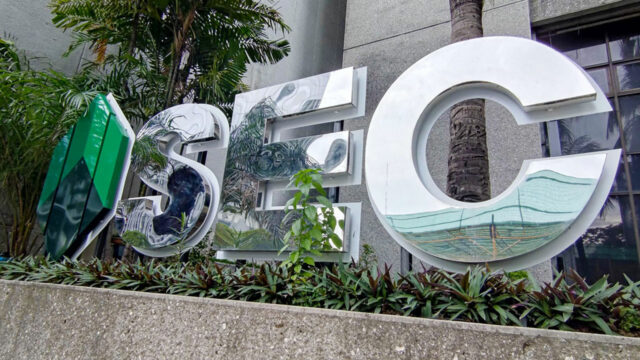
SEC proposes cyber resilience requirements for publicly listed companies

BW FILE PHOTO

THE SECURITIES and Exchange Commission (SEC) has released a draft memorandum circular for public comment requiring capital market participants to implement cyber resilience frameworks.

The draft circular, issued on Dec. 17, is open for comments until Jan. 16, 2026. It mandates regulated entities to establish frameworks that define objectives, risk tolerance, and procedures to identify, mitigate, and manage cyber risks.

“The proposal is in line with the government’s National Cybersecurity Plan 2023 to 2028, which recognizes cybersecurity as critical to peace, security and economic development,” the commission said in a statement on Thursday.

The guidelines cover publicly listed companies, broker-dealers, investment firms, exchanges, self-regulatory organizations, clearing agencies, securities depositories, transfer agents, and other capital market participants of similar nature.

The SEC said boards of directors must oversee cybersecurity risks and establish or appoint a Computer Emergency Response Team (CERT) led by a chief information security officer (CISO).

“The CISO will be responsible for carrying out the responsibilities of the chief information officer and serve as the primary liaison to the company’s authorizing officials, information system owners, and information system security officers,” the commission added.

The draft also holds regulated entities accountable for cybersecurity and resilience even when third parties manage their systems. Entities relying on third-party Critical Information Infrastructure must secure legally binding agreements to ensure compliance with standards such as incident reporting, auditing, and risk assessment.

“If a covered entity experiences a cyber incident that is determined to be material, it should disclose to the SEC within five days after the occurrence of the event the nature, scope, and timing of the incident. The company should also report its material impact or reasonably likely material impact on the entity, including its financial condition and results of operation,” the SEC said. — Alexandria Grace C. Magno

Sun Life Grepa offers new insurance plan

SUN LIFE Grepa Financial, Inc. has launched a new life insurance product that allows customers to tap various investment funds.

The Sun Grepa EasyLink Protect investment-linked life insurance plan has an easy application process through its guaranteed insurability offer that eliminates the need for medical exams.

Policyholders can also select from various local and global investment funds.

“Sun Grepa EasyLink Protect is thoughtfully designed to meet both protection and growth needs,” Sun Life Grepa President Richard S. Lim said in a statement on Thursday.

“It provides lifetime financial security for families while offering opportunities to build wealth through various investment funds. The simplified application process and flexible payment options make it an ideal solution for busy professionals and those looking to optimize their financial planning.”

The plan offers fund boosters and bonuses to planholders, the insurer said.

“It also supports legacy planning as the product provides lifetime protection ensuring financial security for beneficiaries.”

Meanwhile, Sun Life Grepa also announced that it has partnered with rural bank Top Bank Philippines, Inc. to make its financial protection plans more accessible to micro, small and medium enterprises, as well as agri-entrepreneurs and professionals.

“Through this collaboration, we are answering the call to bring wider financial access and meaningful protection to more communities across the country,” Mr. Lim said in a separate statement. “By combining Sun Life Grepa’s expertise in insurance with Top Bank Philippines’ strong community presence, we can deliver innovative solutions that address the real needs of Filipinos.”

“By working with Sun Life Grepa, we are equipping our clients with the financial protection and security they need to thrive,” Top Bank Philippines President and Chief Executive Officer Mike Sandig said. “This partnership allows us to go beyond traditional banking by integrating meaningful insurance solutions into our services — helping individuals, families, and businesses achieve financial peace of mind,” he added. — Katherine K. Chan

The US needs to welcome immigrants, not demonize them

STOCK PHOTO | Image from Freepik

By The Editorial Board

EVEN for an administration that makes no secret of its antipathy toward immigrants, recent rhetoric from the White House has been alarming and inflammatory — and at odds with reality.

The facts are: Immigrants are more likely to be in the workforce, and start businesses, than native-born Americans. They are less likely to commit crimes. Even unauthorized immigrants pay more in taxes than they get back in benefits, many of which they’re ineligible to receive.

Nor is it true that they’re taking jobs away from Americans, as the president claims. The US currently has about 7 million job openings, far above historic norms. In some cases, employers can’t find workers with the right skills. In others, they can’t find workers at all — and the decline of immigration is one big reason why. Compared to a year ago, there are more than 300,000 fewer immigrants working in construction, landscaping and food service. Earlier this month, some 2,000 businesses and industry groups signed a letter highlighting the “dire shortage of seasonal labor” and urging the administration to make more visas available.

Yet in one statement last month, the president claimed that “most” immigrants “are on welfare, from failed nations, or from prisons, mental institutions, gangs, or drug cartels”; blamed them for “failed schools, high crime, urban decay, overcrowded hospitals, housing shortages, and large deficits”; and cast them as predators “looking for ‘prey’ as our wonderful people stay locked in their apartments and houses hoping against hope that they will be left alone.”

The White House called this missive “one of the most important messages ever released” by the president. Homeland Security Secretary Kristi Noem doubled down, calling for “a full travel ban on every damn country that’s been flooding our nation with killers, leeches, and entitlement junkies.”

The apparent impetus for these repugnant outbursts was the Nov. 26 shooting of two National Guard members by an Afghan immigrant in Washington, as well as a long-running benefits scam in Minnesota that has led to charges against dozens of people in the state’s Somali community. Both crimes were abhorrent and should be prosecuted. The administration, however, seems to view them as a pretext to undertake a broad closure of legal immigration routes — to “permanently pause migration from all Third World Countries,” as the president put it.

Whatever a “permanent pause” turns out to mean, such an effort would be of a piece with the administration’s broader anti-immigrant agenda, which has included imposing new travel restrictions on more than a dozen countries, gratuitously revoking visas, detaining international students and researchers over social media posts, levying huge fees on H-1B visas, reducing opportunities for foreign graduates to legally work, and even making it harder for the children of legal immigrants to become permanent residents. That’s to say nothing of the mass deportations.

Immigrants are essential to the broader American economy, filling skills gaps, stimulating demand, increasing economic growth, encouraging innovation and boosting productivity. They’ve been a crucial element of Silicon Valley’s world-beating success — founding 60% of the country’s top artificial intelligence companies — while dominating US graduate programs in the most demanding fields. Needlessly harassing these workers makes no sense. As the US ages and its birth rate declines, immigrants are only going to become more important in the years ahead.

Rather than demonizing them, what’s really needed is what Congress has been avoiding for two decades: a comprehensive reform that secures the border, increases the number of legal immigrants and creates a pathway to legal status for those currently in the country illegally.

A deal of this kind would acknowledge reality while making the country richer, stronger and safer. It would also recognize that welcoming immigrants is, and always has been, the American way.

BLOOMBERG OPINION

Oscars telecast to move off broadcast TV to YouTube in 2029

WIKIMEDIA COMMONS

THE annual Academy Awards telecast will move from the ABC broadcast network to stream live on YouTube around the world starting in 2029, organizers said on Wednesday.

Walt Disney-owned ABC has televised the Oscars, the film industry’s highest honors, every year since 1976. Ratings for the show, along with all Hollywood awards shows, have declined as audiences moved to streaming platforms. The 2025 Oscars in March brought in 19.7 million US viewers, a five-year high but far below the show’s biggest audience of 57 million in 1998. This year’s ceremony also streamed live on Hulu.

Financial details for the pact with YouTube were not disclosed.

ABC made a bid to keep the Oscars but did not want to overpay, according to a source familiar with the matter. The network had found it harder in recent years to turn a profit from the show, the source said.

YouTube will provide closed captioning and audio tracks in multiple languages to make the show accessible to a global audience, according to a statement from the Academy of Motion Picture Arts and Sciences and YouTube. The agreement will start with the 2029 Oscars ceremony and run through 2033.

“The Oscars are one of our essential cultural institutions, honoring excellence in storytelling and artistry,” YouTube Chief Executive Officer (CEO) Neal Mohan said in a statement.

The film academy said it would benefit from YouTube’s global reach.

“We will be able to celebrate cinema, inspire new generations of filmmakers and provide access to our film history on an unprecedented global scale,” Academy CEO Bill Kramer and Academy President Lynette Howell Taylor said in a statement.

In addition to the Oscars, YouTube will stream events including the Academy’s Governors Awards and Oscar nominees luncheon, two events that have typically taken place off-camera.

ABC will air the Academy Awards telecast in the United States as planned in 2026, 2027 and 2028, the year that marks the Oscars’ 100th anniversary. — Reuters

PAL launches nonstop Cebu-Guam flights

PHILIPPINE STAR/EDD GUMBAN

FLAG CARRIER Philippine Airlines (PAL) has started nonstop flights between Cebu and Guam, offering direct service from Central Visayas to the western Pacific Islands.

The Cebu-Guam route, which began operations on Dec. 16, complements PAL’s daily Manila-Guam flights. The airline uses Airbus A321ceo aircraft for the new service.

Flights from Cebu to Guam operate three times weekly — on Tuesdays, Thursdays, and Saturdays — while return flights from Guam are on Wednesdays, Fridays, and Sundays.

Earlier this month, PAL announced it would revive its Manila-Saipan service by March to further expand connectivity across the Pacific. The airline will operate the route twice weekly, with departures from Manila every Wednesday and Sunday and return flights on Mondays and Thursdays.

Saipan, a US territory, will become PAL’s seventh US destination, joining Los Angeles, San Francisco, New York, Seattle, Guam, and Honolulu. The Manila-Saipan route will complement PAL’s existing Pacific network, which includes flights to Guam, Honolulu, and Palau via Cebu. PAL first launched seasonal Manila-Saipan flights in 2016.

On the financial side, PAL Holdings, Inc., the operator of PAL, reported a 33.58% jump in attributable net income to P9.03 billion from P6.76 billion a year ago, driven by higher passenger revenues of P116.56 billion, up from P115.66 billion.

Cargo and ancillary revenues contributed P6.71 billion and P12.67 billion, respectively.

Total revenues for the nine-month period rose 2.68% to P136.01 billion from P132.45 billion, while gross expenses increased 3.96% to P124.85 billion from P120.09 billion. — Ashley Erika O. Jose