Home Blog Page 3983

The economic nature of security and the importance of international collaboration

RAWPIXEL.CFOM-FREEPIK

There have been many security challenges to the Philippines, both within its borders and in the context of the Indo-Pacific region. In recent years and months, we saw an aggressive and antagonistic state’s repeated incursions into what had been established by international law as belonging to our country. Numerous incidents in the West Philippine Sea showed the brazenness and desperation of that country, resorting to tactics that ranged from pointing military-grade lasers at members of our Coast Guard, using water cannons against our vessels, installing floating barriers in our own territory, and dangerous maneuvers against Philippine vessels. Such activities have also damaged our coral reefs, endangering not only Filipinos but marine life within our bounds, and compromising the future of the next generation.

In facing these challenges, we have looked to our international partners which have given us support in many forms. They have articulated their support for our victory at the Permanent Court of Arbitration and have provided much-needed opportunities to upgrade our military defense capabilities through joint exercises, shared technology, and shared best practices.

Similarly, in our pursuit of security in cyberspace, where individual, group, or state-sponsored bad actors proliferate to commit crimes for material gain, disruption, or to advance their own agenda, we can learn much from our international partners. These tech-based attackers are unseen enemies that are difficult to keep track of, much less catch and prosecute. The very nature of the internet provides the perfect opportunities for cybercrime.

We recognize, however, that robust military defense mechanisms and sophisticated cybersecurity techniques are but one aspect of security.

A more common, visible, and fundamental kind of security is economic in nature. There is economic security when individuals in a nation enjoy a stable source of income and are consistently able to meet their basic needs. No less than the President said that economic security is national security.

This is not pure rhetoric, either. When people know where their next meal is coming from, and when they can plan how they spend their own resources and enjoy the agency to set their own economic goals, that is security. When they are confident that their children can attend school and contemplate a prosperous future, that is security as well. When they go to sleep at night knowing that they have some savings put away in times of emergency or for their old age, that is security.

But how exactly do we work toward that kind of security, not only for a small segment of the Filipino population but for the majority of the people?

This was the central theme of the 2023 Pilipinas Conference of the Stratbase ADR Institute, titled “The Path Towards Economic Security: Turning Global Risks into Opportunities.” This is the eighth year the Institute has held such a conference, and last week’s event was attended, as always, by top leaders in government and the private sector as well as members of the diplomatic community.

Our panel with the ambassadors reminded us that the Philippines can only achieve prosperity through the support and cooperation of the international community. Shared prosperity results from shared responsibilities in being a true and beneficial partner to each other. It validated the results of a Stratbase-commissioned September 2023 survey by Pulse Asia that said Filipinos are keen for the Marcos Jr. administration to work with like-minded states in strengthening economic security. Indeed, with robust trade relations, the Philippines continues to elevate its ties with these countries and initiatives are expanding.

During the forum, Australian Ambassador Hae Kyong (HK) Yu PSM recognized the Philippines as a long-standing partner and highlighted the importance of sustainable long-term economic growth. She expressed optimism on the Philippine economy, stating that the country’s sound fiscal and monetary policies, good regulatory framework, and active private sector create an enabling investment environment.

British Ambassador Laure Beaufils emphasized that maintaining economic security is dependent on cooperation and partnerships, which translates to working together to protect the international rules-based economic order.

Delegation of the European Union Ambassador Luc Véron underscored the significance of simultaneously maximizing the benefits of economic partnerships and minimizing the risks from economic dependencies. The EU’s strategy, he said, is composed of three Ps: promoting competitiveness, protecting economic security, and partnering with reliable partners to address shared security concerns.

For Canadian Ambassador David Hartman, collective prosperity relies on a fair, predictable, and open international trading system. Building economic security relies on trade diversification, developing new commercial partnerships, investing in supply chain infrastructure, supporting a rules-based international trade system that is stable and inclusive, developing a robust national security review system, protecting critical infrastructure, and investing in cyber security, protecting intellectual property, technologies, and data. Collective prosperity relies on a fair, predictable and open international trading system, he said.

United States Chargé d’affaires Y. Robert Ewing, who represented Ambassador MaryKay Carlson, emphasized that economic and political stability are critical for the Indo-Pacific region to flourish. The region must be equipped to mitigate and respond to shocks ranging from territorial disputes, climate change, and energy to ensure a positive trajectory of economic growth. He reaffirmed the commitment of the United States to principles, norms, and standards of the international community to ensure a stable and prosperous region.

These assurances from our international partners were helpful as we anticipate both the risks and opportunities of 2024 and the coming years, and as we continue to pursue an investment-led growth anchored on the core democratic values of transparency and accountability, responsive public service, and the rule of law. After all, global investors will only come — and stay — if they feel that the government is keen on true governance.

Together let us work to create and maintain a sound economic environment, for sustainable growth and development, and for the shared prosperity and security of all Filipinos.


Victor Andres “Dindo” C. Manhit is the president of the Stratbase ADR Institute.

Debt watchers assign ratings to PHL Sukuk issue

REUTERS

FITCH RATINGS, Moody’s Investors Service and S&P Global Ratings and have given investment-grade ratings to the Philippines’ proposed maiden issue of Sukuk bonds.

Moody’s has assigned the proposed bond issue a “Baa2” rating, Fitch rated the notes “BBB,” and S&P Global gave a preliminary “BBB+” score, all at par with their current ratings for the Philippines’ sovereign debt.

The government on Monday launched its first-ever offering of Sukuk bonds as it mandated banks for the sale of benchmark-sized 5.5-year papers. Benchmark-sized issues are worth at least $500 million.

On Tuesday, Finance Secretary Benjamin E. Diokno said at a Palace briefing that the Sukuk issue is targeted to be settled by mid-December.

“According to the transaction documents available to Moody’s, the Sukuk will constitute direct, unconditional and unsubordinated obligations of the Government of the Philippines (the issuer). It will be issued by a special purpose vehicle (ROP Sukuk Trust) and rank pari passu with all of the issuer’s current and future senior unsecured external debt obligations,”Moody’s said in a statement on Monday.

“The ratings mirror the Government of the Philippines’ issuer rating of ‘Baa2’. Moody’s notes that its Sukuk ratings do not express an opinion on the structures’ compliance with Shari’ah law,” it added.

Moody’s rating for the Philippines as an issuer is supported by the country’s high potential growth and moderate government debt, it said.

The country has also improved its fiscal position and has enough foreign exchange buffers against external risks, Moody’s added.

“Even as it emerges from the pandemic with a degree of economic scarring, Moody’s expects the recovery in real GDP (gross domestic product) growth to persist amid the deterioration in global credit conditions in the near term, and converge towards potential rates of around 6% per annum,” it said.

“At the same time, the Philippines has sustained strong access to domestic and international funding markets, a stable banking system and ample foreign-currency reserves to weather global capital flow volatility,” it added.

The Philippine economy will likely continue to expand amid favorable demographics and better investment conditions, Moody’s said, unless there is a significant weakening in its growth drivers. Other risks to the outlook include elevated inflation and climate shocks.

For its part, S&P Global likewise said its preliminary “BBB+” grade for the Sukuk bonds “reflects the sovereign credit rating on the Philippines, the obligor.”

“ROP Sukuk Trust will use at least 55% of the proceeds of the Sukuk issuance to purchase real estate assets from the sponsor, the Philippines, and the remaining portion to purchase Shari’ah-compliant commodities,” it said.

S&P said its preliminary rating is based on details in draft documents as of Oct. 23 provided to them and could change if there are significant modifications in the final legal documents for the issue.

Lastly, Fitch said its rating on the Sukuk issue “is driven solely by the Philippines’ Issuer Default Rating (IDR), which we affirmed at ‘BBB’ with a ‘stable’ outlook in November 2023.”

“We have not considered any underlying assets or collateral provided when assigning the rating, as we believe the issuer’s ability to satisfy payments due on the proposed Sukuk will ultimately depend on the government satisfying its unsecured payment obligations to the issuer under the transaction documents, as described in the offering memorandum and other supplementary documents,” it said.

“We also believe the government would be required to ensure full and timely repayment of ROP Sukuk Trust’s obligations due to the government’s various roles and obligations under the Sukuk structure and documentation,” Fitch added.

The debt watcher’s rating on the Sukuk issue will be affected by any changes to the Philippines’ long-term foreign currency IDR, it said.

Global list of best employers includes San Miguel at 43rd

ANG-LED San Miguel Corp. (SMC) climbed by 131 spots to 43rd place on the annual World’s Best Employers list this year issued by Forbes Magazine and research company Statista in October. 

In a statement on Tuesday, SMC said its 2023 ranking improved from 174th in last year’s list to make it the only Philippine company to be included in the top 50. 

Other Philippine companies included in the 2023 version of the rankings were Security Bank Corp. (54th), Metropolitan Bank and Trust Co. (162nd), Ayala Corp. (186th), Alliance Global Group, Inc. (283rd), Land Bank of the Philippines (304th), LT Group, Inc. (361st), and SM Investments Corp. (420th).

“It’s a great honor to make it to this list of the world’s 700 best employers, along with some of the most recognized and most successful Philippine firms. This just goes to show that Filipinos can compete and run proudly with the very best in the world,” SMC President and Chief Executive Officer Ramon S. Ang said.

“It also shows that given the right training, motivation, support, and a sense of a higher purpose, the Filipino workforce is highly motivated, effective, dedicated, and therefore fulfilled in their work,” he added.

According to Forbes, the rankings were determined via a survey done by Statista that covered over 170,000 employees working for various companies across 50 countries.

The companies were ranked based on criteria such as talent development, remote working options, parental leave benefits, diversity, work-life balance, and pride in the offered products or services. Respondents were also asked if they would recommend their company to family and friends as well as rate companies within their own industries and countries.

“Specific to us in SMC, I believe that our strong emphasis on business for nation-building, our core value of malasakit (concern for others), coupled with our decisive and impactful actions related to greater sustainability, has really resonated with our employees,” Mr. Ang said.

“We have also always strived to provide our employees an environment where they can learn, realize their potential, build good relationships with colleagues, and feel they are part of not just a great heritage, but also of something bigger. We believe this has greatly contributed to whatever successes we’ve had over the years,” he added. 

SMC recorded a 141% increase in its nine-month net income to P31.2 billion despite the conglomerate’s consolidated revenues falling 5% to P1.1 trillion. 

Shares of SMC at the local stock market dropped 90 centavos or 0.84% to P106 apiece on Tuesday. — Revin Mikhael D. Ochave

Construction of C5 link segment set in early 2024

PHOTO FROM CIC

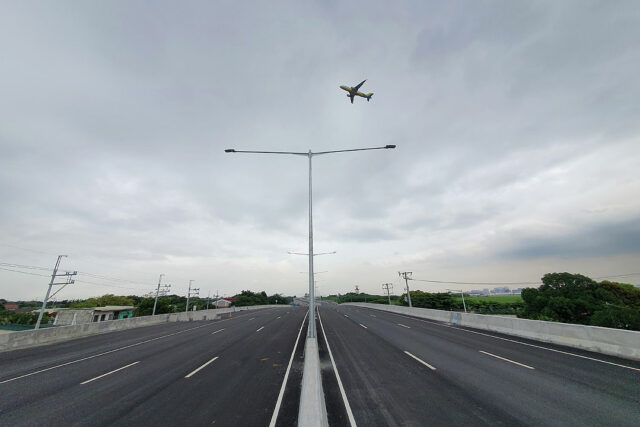
METRO Pacific Tollways Corp. (MPTC) unit MPT South Corp. expects to begin the construction of its C5 link segment 3-B by the first quarter of next year.

“We are taking an aggressive position. There is a commitment that they will partly fund the remaining right of way, we are hoping that we will be able to attain at least 80%,” Raul L. Ignacio, president and general manager of MPT South, told reporters.

Once right-of-way acquisition reaches about 80%, construction is expected to begin by January, Mr. Ignacio said.

The C5 Southlink project’s segments 2 and 3 include a 7.70 kilometers six-lane toll road project divided into 2×3 expressways and stretches from the R-1 expressway to the southern section of the C5 road.

The project is valued at P1.5 billion and is expected to reduce travel time by 30 to 45 minutes from Cavite Expressway to Makati and Taguig.

Segment 3B of the project is expected to be completed by March 2025 and has only acquired 68% of its right of way.

For the next two years, MPT South has said that it is allocating about P11.95 billion for its capital expenditure, which will mainly fund the ongoing construction of its existing projects.

MPTC is the tollways unit of Metro Pacific Investments Corp., which is one of three key Philippine units of Hong Kong-based First Pacific Co. Ltd., the others being Philex Mining Corp. and PLDT Inc.

Hastings Holdings, Inc., a unit of PLDT Beneficial Trust Fund subsidiary MediaQuest Holdings, Inc., has a majority stake in BusinessWorld through the Philippine Star Group, which it controls. — Ashley Erika O. Jose

Ancient artefacts returned to Ukraine after long dispute with Russia

ANCIENT Scythian artefacts from museums in Russian-occupied Crimea have been returned to Ukraine after a legal dispute over ownership rights during which they spent almost a decade in the Netherlands, a Ukrainian museum said on Monday.

More than a thousand artefacts, including a solid gold Scythian helmet and golden neck ornament, were on loan to Amsterdam’s Allard Pierson Museum when Russian troops seized and annexed the peninsula in 2014.

Both Ukraine and the museums located on the Moscow-controlled territory claimed ownership rights to the pieces when the exhibition ended. The items date from when the Scythian people lived in the area between the 7th and 3rd centuries BC.

“After almost 10 years of court hearings, artefacts from four Crimean museums that were presented at the exhibition Crimea: gold and secrets of the Black Sea in Amsterdam have returned to Ukraine,” the National Museum of History of Ukraine said.

It said the Allard Pierson Museum had returned 565 items including ancient sculptures, Scythian and Sarmatian jewelry, and Chinese lacquer boxes.

It said the collection would be stored in the museum until the de-occupation of Crimea.

The Allard Pierson Museum said the artefacts had been returned to Kyiv on Sunday.

“This was a special case, in which cultural heritage became a victim of geopolitical developments,” said Els van der Plas, director of the Allard Pierson. “We are pleased that clarity has emerged and that they have now been returned.” In June, the Dutch Supreme Court ruled the items should be returned to Ukraine. Kyiv sees the artefacts as part of its national heritage, while the Moscow-controlled museums said they had to return to the peninsula due to loan terms.

On Monday, Kremlin spokesman Dmitry Peskov was quoted by TASS state news agency as saying the artefacts “belong to Crimea and should be there.”

The Moscow-installed governor of the peninsula, in comments on Telegram, suggested they should be returned by “achieving the goals of the special military operation,” Russia’s official title for its war in Ukraine.

Ukrainian customs services reported on Monday that a truck carrying “2,694 kg of cultural property” entered the 980-year-old Kyiv-Pechersk Lavra monastery complex, where a further identification process would take place. — Reuters

Startup seeks to empower, elevate Filipino art entrepreneurs

By Miguel Hanz L. Antivola, Reporter

THERE is a growing recognition of the commercial value of creative work among Filipino artists, fueled by the emergence of online and offline showcase platforms, according to Ma. Roma Agsalud-Agsunod, co-founder of local arts and crafts retail hub Common Room PH.

Ms. Agsunod said that when she and her sister set up a hub in Katipunan, Quezon City, eight years ago, their primary goal was not to establish a community of art entrepreneurs but to expand their home-based craft business, Popjunklove.

The business grew its initial P5,000 starting capital in 2007 through profits from weekend bazaar hustles, she said in an interview with BusinessWorld. In 2015, they finally had their own brick-and-mortar space but realized it was too large for their needs.

“In other countries, you see a thriving creative industry, gathering together in one space,” Ms. Agsunod said. “Somehow that idea was planting bigger dreams for us, but we never really thought it was something we could do.”

“If together we can somehow make that individual smallness have an impact, then maybe we can give that bigger dream a shot,” she added, noting the 33 fellow art entrepreneurs whom she met through bazaars and first made up the hole-in-the-wall in Katipunan.

Even with four branches to date, there are obvious physical limitations to the roster of artists Common Room can accommodate, which is currently at over 200 from the more than 2,000 applicants the business has had over the years, Ms. Agsunod noted.

To address this challenge, Common Room introduced in-store popup spaces to its business model this year to showcase new makers on a rolling basis of three months, compared to the three-day duration of a typical popup, she added.

“For the top brands that we were able to welcome that year, they get a chance to come back for the holidays,” she said.

ONLINE OPPORTUNITIES
Alongside such an initiative, the business also invested in creating videos to strengthen its online and e-commerce presence — a lesson Ms. Agsunod mentioned they learned from the pandemic when the whole business almost closed down.

“We realized it was so hard to put all your eggs in one basket,” she said on previously relying solely on physical store sales.

“E-commerce helped us survive the pandemic years,” she added, noting the business’ pursuit to continue fortifying its e-commerce arm even when online profits are lower than those from their physical stores.

Aside from its marketplace website, Common Room regularly uploads videos on YouTube and TikTok regarding its business journey, craft and business tutorials, and artists’ stories, hoping to further cultivate the potential of the local creative industry and small businesses alike, Ms. Agsunod said.

“Common Room is also an incubation space, even for those not in our retail space yet,” she added.

“Our shoppers are very mindful now, seeing the importance of supporting an artist,” she said, highlighting the growing appreciation and support for local creatives in the country given the business’ successes.

Additionally, she noted how Common Room patrons largely contributed to the virtual fundraising campaign they held during the pandemic, which helped them weather through a few more months before they opened again.

“We have a very solid community of makers and both shoppers who really understand the story of the business,” she said.

GROWTH AND OUTLOOK
While physical growth is limited to an extent, Ms. Agsunod said the business aims to double down on its “temporary activations” for artists and patrons next year.

“Our plan is really to focus on our weakness, which is making space for more amazing Filipino makers and artists,” she said. “We see right now there are so many cons, art fairs, and bazaars popping up, and people are really going to see these experiences.”

However, she noted that Common Room will conduct such opportunities as gathering experiences in line with their advocacy, and not just buying events. “It’s most likely something that will involve workshops and talks with other makers.”

Ms. Agsunod has observed progress in local creatives recognizing the value of their work, especially amid exploitation through lowballing clients.

“It’s really a process… an artist’s journey of discovering their value,” she said on how some price their work low or settle for X-deals to build up their portfolio.

“There is still a lot of work to do on this front,” she added, noting that some brands, businesses, and government projects have rightfully started compensating artists fairly.

China is a rich country. It can no longer cry poor on climate

LI YANG-UNSPLASH

AT THE TIME of the first major climate change conference, in Rio de Janeiro in 1992, China was one of the least developed nations. Its per capita income was below Haiti, Niger, and Pakistan. The export sector was smaller than that of Sweden or Austria, and its airports saw fewer departures than Norway’s.

Its emissions were just 12% of the global total, and on a per-capita basis it wasn’t even in the top 50 emitters. As recently as 1985, China had generated less electricity than Canada, and produced less steel than West and East Germany.

With nations set to gather for the latest such meeting in Dubai this week, things have changed beyond recognition.

China is likely to produce half the world’s steel and coal this year, and emit more carbon than every developed nation put together. Even adjusting for its huge population, it now consumes more energy and generates more pollution per person than most countries in western Europe. Visitors to its sparkling cities find a country whose amenities rival those of the richest nations. China’s roads, railways, power facilities, public buildings and other infrastructure now add up to a richer stock of public capital per capita than can be found in Australia, Spain, or the UK.

One last crucial measure may soon flip. When China joined the World Trade Organization in 2001, it was barely outside of the ranks of low-income countries, a category the World Bank reserves for the least developed nations. That gave considerable weight to the claim that its emissions needed to be given a pass — that it should, in the language of climate diplomacy still quoted today, benefit from “common but differentiated responsibilities.”

Rapid growth relative to the world since the COVID-19 pandemic means it is now closely tracking the dividing line the World Bank uses to separate high-income nations from upper-middle-income countries. Low inflation and a stable exchange rate may push it above that level in a matter of months.

“It is very close to reaching the threshold for a high-income country,” said Penny Goldberg, a Professor at Yale University and the Bank’s chief economist from 2018 to 2020, by e-mail. “It may not happen this coming year, but it will happen very soon.”

Economically, this would count as one of the most remarkable transformations in human history, and comes decades earlier than anticipated. In the same year as the Rio conference, former leader Deng Xiaoping said it would be “an extraordinary achievement” if China was able to attain the status of a moderately developed country by 2049.

In terms of global warming and the diplomacy centered around it, however, it will shake up assumptions held for decades. United Nations climate conferences typically break into debates between large voting blocs of member states. The prime negotiators on one side are the Group of Seven, representing developed states; on the other, the Group of 77, a caucus of developing nations which counts China as its most important constituent, though it’s not formally a G77 member.

It’s an alliance that is looking less and less tenable as China’s wealth, development, and financial capacity — not to mention its carbon footprint — come more and more to resemble the developed nations of the G7. Close to 60% of the increase in global emissions since 1992 has come from China alone, while pollution from developed countries has essentially stood still.

“We are an inbetweener now,” said Li Shua, the incoming director of the Asia Society’s China climate hub. Despite the transformation in the country’s wealth and power, “our muscle memory is still very much in the developing world and the Global South. The result is we have an identity crisis.”

The bigger question will be around how others perceive this. Countries in South Asia, Southeast Asia, sub-Saharan Africa, and small island nations make up the bulk of G77 members, and are already finding themselves most at risk from the growing effects of climate change. Flooding last year that caused more than $30 billion of damage in Pakistan, and years of droughts that have left 4.35 million people in the Horn of Africa dependent on aid, were both exacerbated by human emissions.

Increasingly, it is China that is causing that pollution. Even if you factor in its late start to industrialization, since 1850 its cumulative emissions from fossil fuels and land-use practices have amounted to 309 billion metric tons, according to the Global Carbon Project, ahead of the 306 billion tons in the European Union and trailing only the US.

The US and EU are aiming to reduce emissions in 2030 to around half of their level in 2005, but China is on track to roughly double the size of its footprint. The galloping pace of its renewables installations and the weakened state of its real estate market may well ensure that pollution starts falling from as soon as next year — but the government has no commitment to do so until 2030, or even a promise about what the peak level will be.

One possible breakthrough will come from finance. A traditional bargain in climate meetings has been that rich countries should rein in emissions at home while providing funding for other nations to invest in preventing and adapting to climate change. Wealthy nations may have finally hit a target to provide $100 billion a year for such initiatives, the Organization for Economic Cooperation and Development said this month.

That’s an area where China has natural advantages. One of President Xi Jinping’s signature policies has been the Belt and Road Initiative, a project to build infrastructure projects in strategically significant countries in Asia and beyond. Promises to “green” the initiative have seen emphasis shift from projects like the fleet of coal-fired power plants constructed in Pakistan over the past decade to providing an export market for the terawatts of solar equipment that Chinese factories will produce over the coming years. With the country’s current account surplus now as large in dollar terms as it was during the peak of the late-2000s export surge, there is no shortage of capital.

The best way for China to escape its current dilemma is to accept that it is now a rich country, and behave accordingly. Lean toward the fall in emissions as the economy grows beyond the carbon-intensive phase of its industrialization. Pump money into a fund for less developed allies to prepare their own infrastructure for a net-zero world. Take the opportunity of US President Joe Biden’s absence from this year’s UN conference to seize the role of the world’s undisputed climate leader, and start pushing for more, not less, ambition.

The environment has for several years been an area where Beijing has sought to practice “major country diplomacy” — behaving as a rich and responsible power that others can look up to and seek to emulate. The longer it waits before accepting that it’s already cashed the moral benefits of carbon-intensive industrialization, the harder it will be for it to make common cause with nations that will look to follow its development path.

BLOOMBERG OPINION

BSP allows trust firms to join auctions

BW FILE PHOTO

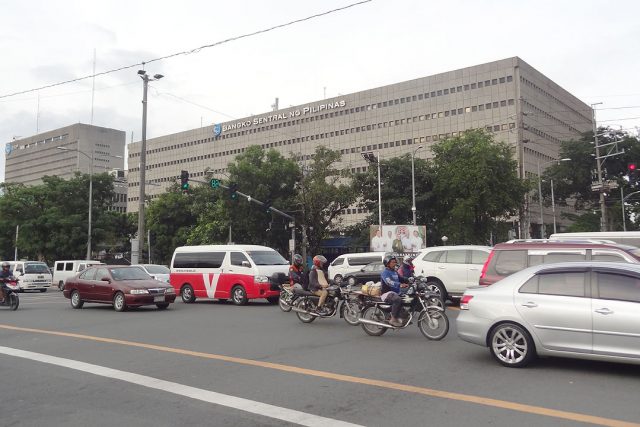
THE BANGKO SENTRAL ng Pilipinas (BSP) is now allowing trust entities to participate in the auctions of central bank securities, it said in a circular.

BSP securities in the primary and secondary markets are now available to all counterparties, namely universal and commercial banks, digital banks, thrift banks, quasi-banks and trust entities, according to a circular signed by BSP Governor Eli M. Remolona Jr. on Nov. 24.

The circular amends sections of the Manual of Regulations for Banks and the Manual of Regulations for Non-Bank Financial Institutions.

The amendments were made to allow “the participation of trust entities, which are trust departments of banks and stand-alone trust corporations, to access the primary market of the Bangko Sentral Issued Securities,” the central bank said.

“The issuance of Bangko Sentral Securities is a part of the monetary operations of the Bangko Sentral to manage short-term liquidity in the financial system and guide market interest rates,” it added.

Previously, trust firms were only allowed to participate in secondary market trading of BSP securities and could not join the auctions.

The BSP offers both bills and bonds, but only universal and commercial banks, thrift lenders, and nonbanks with quasi functions were initially allowed to participate in auctions of central bank securities.

A trust entity provides services involving a trustor-trustee relationship for the management of funds or properties to its clients.

BSP securities are considered high-quality liquid assets for the computation of liquidity coverage ratio, net stable funding ratio, and minimum liquidity ratio.

Based on BSP data, trust entities traded a total of P1.8 trillion in BSP securities in the secondary market last year. Outstanding holdings of trust entities stood at P135.5 billion in 2022. — K.B. Ta-asan

Globe boosts 5G network coverage with 716 new sites

GLOBE Telecom, Inc. said on Tuesday that it is continuing to boost its fifth generation (5G) network coverage with 716 new sites.

“With the robust expansion of our 5G network, we are not just enhancing connectivity; we are shaping a future where every Filipino is empowered with global, cutting-edge communication capabilities,” Rebecca Eclipse, chief customer experience officer at Globe, said in a media release on Tuesday.

The company said it had expanded its 5G network coverage as of September with new sites, increasing its outdoor coverage to 97.67% in the National Capital Region and 92.06% in Visayas and Mindanao.

The listed telecommunications company said that for September, 5.2-million 5G devices had been connected to Globe, “signifying growing adoption among Filipinos.”

It added that its 5G roaming coverage also expanded to  Guatemala, South Africa, Nigeria, Kazakhstan, Laos, Seychelles, India, Peru, Aland Islands, Crete, Croatia, and Romania.

Further, Globe said its capital expenditure stood at P54 billion as of September this year, the majority of which, or about 91%, was allocated towards data improvement services.

Separately, the company said it is targeting to maintain its mobile data growth after recording at least a 3% increase in its mobile business.

At the local bourse on Tuesday, shares in the company shed P21 or 1.21% to end at P1,719 apiece. — A.E.O. Jose

SCG reports 26% increase in operating profit

SIAM CEMENT Group (SCG), a regional conglomerate with subsidiaries in the Philippines, recorded a 26% increase in third-quarter operating profit to P4.81 billion despite registering a decline in revenues.

In a media release on Tuesday, SCG said revenues decreased by 12% in the third quarter to P200.24 billion “due to the slow economic revival in the region.”

“The reduced sales across all business units, petrochemical trough in the chemicals business and the ongoing economic uncertainties were considered the key factors,” SCG said.

Without giving a comparative figure, it said profit for the third quarter of the year was at P3.89 billion.

“The result was that SCG has continuously adjusted its business strategy and has operated with caution and prudence, thereby maintaining financial stability,” the company said.

Roongrote Rangsiyopash, president and chief executive officer of SCG, said the group expects the economy of the Association of Southeast Asian Nations to improve, “especially in Indonesia, which will see increased investment and consumption due to the construction of the new capital ‘Nusantara.’ ”

“Meanwhile, the Thai economy is projected to recover, driven by the real estate and tourism sectors, benefiting from an increase in tourists. Furthermore, electricity costs and diesel prices might adjust downward, leading to better control over energy costs,” the official said, adding that “electricity costs and diesel prices might adjust downward, leading to better control over energy costs.”

In the Philippines, SCG’s marketing unit said it had partnered with the United Architects of the Philippines (UAP) and industry influencers.

“With UAP, SCG introduced a smart pointing system to reward purchase loyalty,” it said.

SCG, which has a presence in the Philippines since 1993, has about 1,400 employees in the country through its seven subsidiaries: United Pulp and Paper Co., Mariwasa Siam Ceramics, Inc., SCG Roofing Philippines, Inc., SCG Trading Philippines, Inc., SCG Marketing Philippines, Inc., Green Siam Resources, Inc., and Green Alternative Technology Specialist, Inc.

It said Mariwasa’s commitment to environmental, social, and corporate governance was through partnerships with a socio-civic organization to facilitate social programs and outreach to the public, and a free online platform that helps nonprofit organizations with building projects and social housing developers.

Filipinos trust e-wallets despite issues

CHRISTIANN KOEPKE-UNSPLASH

FILIPINOS continue to trust e-wallets and use them frequently for low-value transactions despite encountering issues with them in the past six months, a survey by Nomura Research Institute (NRI) showed.

“Despite issues encountered, consumers’ behaviors toward e-wallets remain positive among survey respondents. Filipino consumers display remarkable preference for e-wallets, undeterred by the issues encountered in the ever-evolving digital payment landscape,” NRI-Singapore-Manila Branch said in a statement on Tuesday.

NRI conducted an online survey of 477 e-wallet users from various age groups in Metro Manila from Sept. 10 to Oct. 9.

Of the 477 respondents, 40.9% said they encountered integration, technical, and security issues in their e-wallets in the last six months.

The three most commonly encountered issues were downtime, not receiving one-time passwords (OTP), and not being able to open the app.

Despite these issues, 55.4% of the respondents said they were using e-wallets more often than before, while 39% said they were using it at the same frequency as before.

According to the survey, the increase in e-wallet usage came on the back of their convenience versus traditional means of payment (70%), easier cash-in (59%), discounts (43%), and added security features (20%).

Almost all or 95% of the respondents who encountered issues also said they still trust e-wallets as a digital platform.

NRI said this is a product of necessity and convenience, as “the use of e-wallet has already become integral to consumers’ lives, motivated by wider adoption of e-commerce and digital financial platforms in the Philippines.”

Meanwhile, 52.6% said they would continue to use e-wallets at the same frequency as before, with the rest saying they expect to increase their usage. 

The top uses of e-wallets, according to the respondents, were for sending money to family and friends (87%), paying online merchants (83%), and as an alternative to carrying cash for everyday purchases (61%).

The survey also showed Filipinos use e-wallets for low-value transactions, with 48% of respondents using e-wallets for transactions worth P1,000 to P5,000.

“Most of the average transactions are still less than P10,000. This can be attributed to (1) different preference for larger value transactions and (2) transaction limits imposed by e-wallet platforms,” NRI said.

Meanwhile, respondents who said they decreased their e-wallet usage said this was due to security issues (43%), more reliable traditional means (35%), difficult cash-in methods (26%), and the low adoption of cashless payments (9%).

“Despite developments, there are still a few that are concerned with their security while using e-wallets. Difficulty in integration and reliability are also key reasons why some have decided to use e-wallets less,” NRI said.

More than half or 53% of the respondents said the government has insufficient support for e-wallets.

Users noted it is difficult to file complaints for fraudulent activity and there is no penalty for loss or theft of money. There are also no sufficient tools to trace cyber criminals, they said.

Moving forward, users expect improvements in e-wallets related to insurance for lost money (68%) and stricter security policies and features (55%).

“It is clear that the appeal of these digital platforms far outweighs the occasional inconveniences experienced by users. Furthermore, consumers are expressing the growing preference for stronger security measures from e-wallet platforms, indicating an anticipation for more robust financial loss protection,” NRI said. — AMCS

Hybrid work adoption crucial for small businesses, says GoTo

STOCK PHOTO | Image by our team from Freepik

SMALL BUSINESSES and companies must adopt a hybrid workplace to boost productivity and growth and meet the overall demand for flexibility, global mobile device management solution company GoTo said.

In the age of digital transformation, consolidated software capabilities allow enterprises to spend less and focus more on the needs of both employees and customers, Lindsay Brown, vice-president and general manager at GoTo Asia Pacific and Japan, said in an interview with BusinessWorld.

“There are probably eight key IT management capabilities you’d have to get eight software licenses for,” he noted. “Especially as a small business, it becomes very expensive.”

Mr. Brown said digital adoption has grown as a necessity for the survival of any business today. “For a small business, it can end them.”

He added that the increased demand for flexibility across all generations can be observed, catalyzed by the pandemic. “Older employees want flexibility for more time with their family, while the younger ones for multiple jobs.”

Results of the Asia Pacific Workforce Hopes and Fears Survey 2023 showed the Filipino workforce preferring hybrid work (51%) and full-time remote work (24%) arrangements.

The 2023 PhilCare Wellness Index, which studied Gen Z — the digital-native cohort born in the late 1990s and early 2000s, found flexible work arrangement and having multiple sources of income as their priorities.

GoTo, originally known as 3am Labs, started two decades ago in the river-bisected city of Budapest, Hungary when its founder finally refused to drive through traffic from the Buda district to Pest where he worked, Mr. Brown said.

“He created remote software to allow him to access his computer from Buda,” he added, noting that the company eventually included remote support, management, and communications for businesses over the years.

GoTo aims to open such opportunities for small and medium businesses and simplify the complex environment of hybrid work with all-in-one automated IT management and business communications software solutions, Mr. Brown said.

These include remote access and support, conversational ticketing, visual engagement, and remote monitoring and management for its Resolve product, he noted.

It also allows phone and messaging, video meetings, webinars, and contact centers for its Connect platform, he added.

He added that GoTo’s solutions portfolio employs zero-trust security by design. “Any transaction has to be authenticated before it happens, which makes it almost impossible for anyone to get in,” Mr. Brown said, noting the potential data and financial risks associated with digital adoption.

The company also caters to large enterprises in the country like the Philippine National Bank and business process outsourcing company Inspiro Relia, Inc. for off-network support through its Rescue tool, he added.

Mr. Brown said the company has plans to set up servers in Southeast Asia beyond Singapore in the coming months, and continue the growth it has recorded in the Philippines.

“We’ve seen about 65% revenue growth, 30% customer growth, and 40% channel growth [in the Philippine market],” he added. — Miguel Hanz L. Antivola