Home Blog Page 3967

AirAsia parent considers IPO of Philippine operations

REUTERS

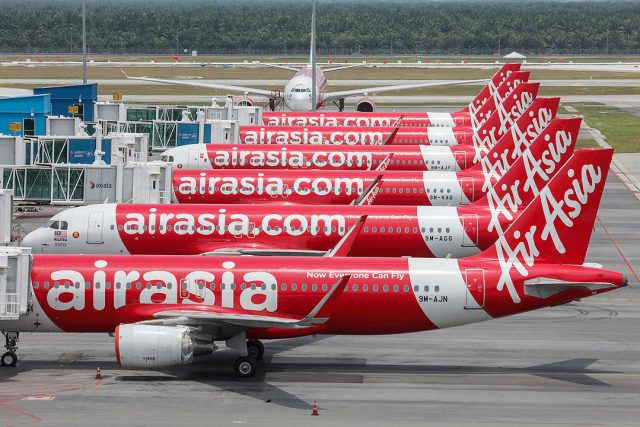
AirAsia parent Capital A said on Thursday it was exploring financing options for its Indonesian and Philippine operations, including a potential initial public offering (IPO) for AirAsia Philippines in the near term.

Capital A Chief Executive Tony Fernandes said in June the Philippine unit was looking at an IPO next year, reviving a fundraising plan that had been shelved numerous times because of market volatility.

Bursa Malaysia stock exchange had classified both AirAsia X and Capital A as PN17, a tag given to financially distressed company, last year.

Such firms may be de-listed from the exchange if they fail to stabilize their finances within a set time frame.

Capital A said it was in the “last stretch” of finalizing its PN17 regularization plan, aiming for a full submission to Malaysia’ stock exchange in the near future.

The company reported a loss attributable of 178.8 million ringgit ($38.39 million) for the quarter ending Sept. 30, compared with a loss of 901.3 million ringgit a year earlier.

Meanwhile AirAsia X, a unit of Capital A, earlier this month met the conditions for “waiver and upliftment” from the PN17 classification. — Reuters

China rejects Philippine claim of fighter jet fly-by

REUTERS

BEIJING – China’s defense ministry on Thursday rejected a Philippine claim that Chinese fighter jets flew past joint patrols being conducted by the Philippines and Australia.

What the Philippines said is “groundless” and “not true”, said a ministry spokesperson at a monthly press conference.

Manila said on Sunday that two Chinese fighter jets were seen “orbiting” a Philippine aircraft participating in patrols with Australia in the South China Sea but did not cause any untoward incident.

What the Philippines said is sheer “malicious” hype, the spokesperson said.—Reuters

SMC’s Ramon Ang named among Forbes Asia’s top philanthropists

RAMON S. ANG


RAMON S. ANG

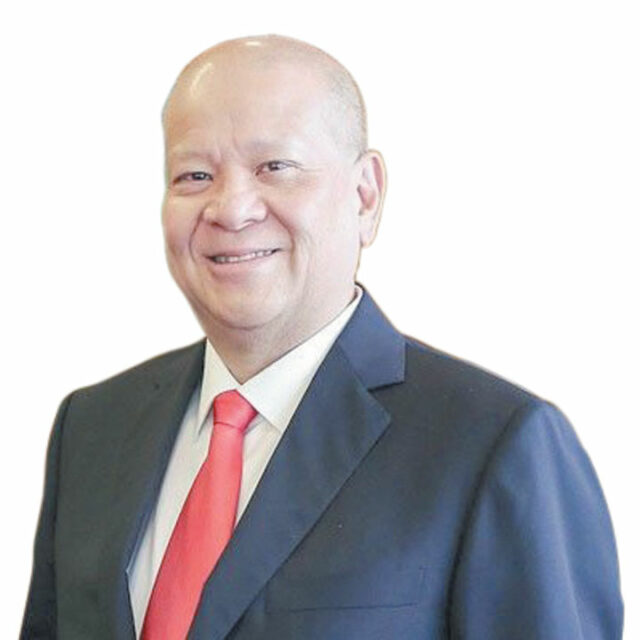
Forbes Asia announced on Thursday its annual list of leading philanthropists in the Asia-Pacific region, which included Ramon S. Ang, president and chief executive officer of San Miguel Corp. (SMC).

Mr. Ang is among the 15 business leaders recognized for “donating from their own fortunes and giving personal time and attention to their select causes,” Forbes Asia said in an e-mailed press statement.

During the September inauguration of a San Miguel Foundation (SMF) community center in Tondo, Mr. Ang pledged to donate P500 million to aid the government of Manila in building schools for underserved communities.

This is also in line with one of SMC’s targets to uplift the lives of at least 15 million people by 2030, he noted in the company’s sustainability report last year.

“I strongly believe that empowering a wide range of Filipinos with education and skills is key to unlocking the country’s potential,” Mr. Ang said.

“This includes not only the youth but also adults in less privileged areas who seek better jobs or want to start their own businesses,” he added.

Additionally, he contributed over P150 million to scholarship grants and medical aid through his RSA Foundation, according to Forbes.

Separately, SMF has spent P1 billion for the construction of five schools in Metro Manila, P14.8 billion for relief measures during the pandemic, and P3 billion for its Pasig River cleanup initiative, it added.

According to Forbes, its annual Heroes of Philanthropy unranked list “does not include corporate philanthropy except for privately held companies where the individual is a majority owner.”

Other Southeast Asian philanthropists on the list include Vikrom Kromadit, founder and chairman of Amata Corp. (Thailand); Low Tuck Kwong, founder and president director of Bayan Resources (Indonesia); Kwek Leng Beng, executive chairman of City Developments (Singapore); and Eddy Kusnadi Sariaatmadja, co-founder and president commissioner of Elang Mahkota Teknologi or Emtek (Indonesia). — Miguel Hanz L. Antivola

SME superapp Enstack to integrate AI for marketing advancements

Enstack, a superapp for small and medium enterprises (SMEs), said on Thursday that it has invested in developing marketing tools powered by generative artificial intelligence (AI) to assist its community of entrepreneurs.

“We want to remove that bottleneck for them to start selling just because they can’t write something like a product description, etc.,” Macy Castillo, co-founder, and chief executive officer of Enstack, told BusinessWorld on the sidelines of the company’s EmpowHER Christmas bazaar.

“That’s what we’re working on for next year, and we’re just going to keep building on that,” she added, referring to the company continuously refining its in-house large language model based on how the platform’s users and merchants interact on the app.

“We hope to continue concentrating on building the app with R&D [research and development] and tech.”

Ms. Castillo noted the capacity of generative AI tools to kickstart entrepreneurship, facilitate an easier store setup experience, and help the company grow as an omnichannel store builder.

She said the tools being developed for release next year will automatically create assets such as logos, product images, and captions, for which businesses “will not need a graphic designer.”

Ad spending in the Philippine digital advertising market is projected to reach $1.608 billion this year, according to Statista.

As Enstack reached the onboarding of 100,000 merchants since its official launch in October last year, Ms. Castillo noted it also aims to grow the quality of the company’s merchant base next year through its customer experience team.

“If you try to sign up on Enstack now, somebody should be calling you tomorrow to ask if you have any questions,” she said. “You automatically have an account manager who can help you upload products, set up your store, or get you verified to get specific payment channels.”

Enstack has raised $3 million from a funding round led by Mangrove Capital Partners in March, with participation from payments startup Xendit and Shinsegae International chief executive officer William Kim.

Additionally, it will close its Build-A-Biz nationwide competition yearend, which will prize P1 million, mentorship, and brand exposure in February next year to the business with the highest sales in a two-month period.

Enstack is eyeing expansion to Thailand and other Southeast Asian markets with increasing digital adoption among businesses, as reported by BusinessWorld in January. — Miguel Hanz L. Antivola

Israel and Hamas agree to extend temporary ceasefire

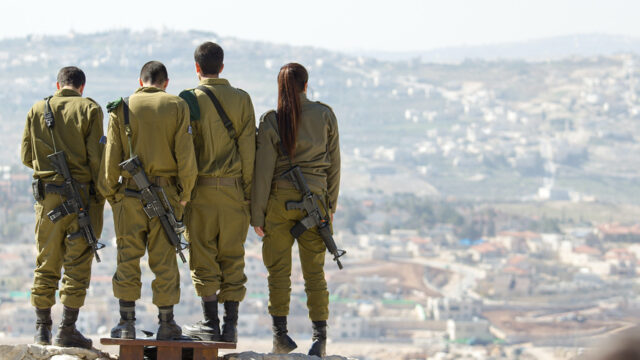
GAZA/JERUSALEM — Israel and Hamas struck a last-minute agreement on Thursday to extend their six-day ceasefire by at least one more day to allow negotiators to keep working on deals to swap hostages held in Gaza for Palestinian prisoners.

The truce has allowed much needed humanitarian aid into Gaza after much of the coastal territory of 2.3 million was reduced to wasteland in response to a deadly rampage by Hamas militants into southern Israel on Oct. 7.

“In light of the mediators’ efforts to continue the process of releasing the hostages and subject to the terms of the framework, the operational pause will continue,” the Israeli military said in a statement, released minutes before the temporary truce was due to expire at 5 a.m. GMT.

Hamas, which freed 16 hostages in exchange for 30 Palestinian prisoners on Wednesday, said in a statement the truce would continue for a seventh day.

The conditions of the ceasefire, including the halt of hostilities and the entry of humanitarian aid, remain the same, according to a foreign ministry spokesperson from Qatar, which has been a key mediator between the warring sides, along with Egypt and the United States.

“A short time ago, Israel was given a list of women and children in accordance with the terms of the agreement, and therefore the truce will continue,” the Israeli prime minister’s office said in a statement.

Hamas earlier said Israel had refused to receive a further seven women and children and the bodies of three other hostages in exchange for extending the truce.

Hamas had said a family of three Israeli hostages, including the youngest hostage, 10-month-old Kfir Bibas, had been killed during Israel’s bombardment of the enclave.

Before the agreement, both Israel and Hamas had said they were ready to resume fighting.

Ninety-seven hostages have been freed since the start of the truce, according to a Reuters tally. The Israeli military says 145 hostages remain in Gaza.

On Wednesday night, two Russian citizens and four Thai citizens were released outside the framework of the agreement while the 10 Israeli citizens freed included five dual nationals, officials said. They were a Dutch dual citizen, who is also a minor, three German dual citizens and one US dual citizen.

DIPLOMATIC PUSH
Israel has sworn to annihilate Hamas, which rules Gaza, in response to the Oct. 7 rampage by the militant group, when Israel says gunmen killed 1,200 people and took 240 hostages.

Before the truce, Israel bombarded the territory for seven weeks and killed more than 15,000 Palestinians, according to health authorities in the coastal strip.

US Secretary of State Antony Blinken had arrived in Tel Aviv earlier on Thursday, his third trip to the region since the Oct. 7 attack, to discuss extending the pause in fighting.

US President Joseph R. Biden was determined to secure the release of all hostages held by Hamas after American Liat Beinin was freed on Wednesday, the White House said in a statement.

The US is urging Israel to narrow the zone of combat and clarify where Palestinian civilians can seek safety during any Israeli operation in southern Gaza, US officials said on Wednesday, to prevent a repeat of the massive death toll from Israel’s northern Gaza attacks.

Jordan will host a conference attended by the main UN, regional and international relief agencies on Thursday to coordinate aid to Gaza, official media said.

UN Secretary-General Antonio Guterres warned on Wednesday the Gaza Strip was in the midst of an “epic humanitarian catastrophe,” and he and others called for a ceasefire to replace the temporary truce.

China called on the Security Council on Thursday to formulate a “concrete” timetable and roadmap for a two-state solution to achieve a “comprehensive, just and lasting” settlement of the Palestinian issue. — Reuters

Defying Pope’s calls for climate action, US Catholic bishops cling to fossil fuels

REUTERS

Nov. 29 — Hundreds of Catholic institutions around the globe have announced plans to divest their finances of oil, gas and coal to help fight climate change since Pope Francis published his landmark encyclical on environmental stewardship in 2015 urging a break with fossil fuels.

But in the United States, the world’s top oil and gas producer and where about a quarter of the population is Catholic, not a single diocese has announced it has let go of its fossil fuel assets.

US dioceses hold millions of dollars of stock in fossil fuel companies through portfolios intended to fund church operations and pay clergy salaries, according to a Reuters review of financial statements. And at least a dozen are also leasing land to drillers, according to land records.

The US Conference of Catholic Bishops (USCCB), an assembly of the hierarchy of US Catholic Church that sets policy guidance, told Reuters that its guidance on socially responsible investing was updated in 2021 to account for the pope’s encyclical but confirmed that it does not require divestment from fossil fuels.

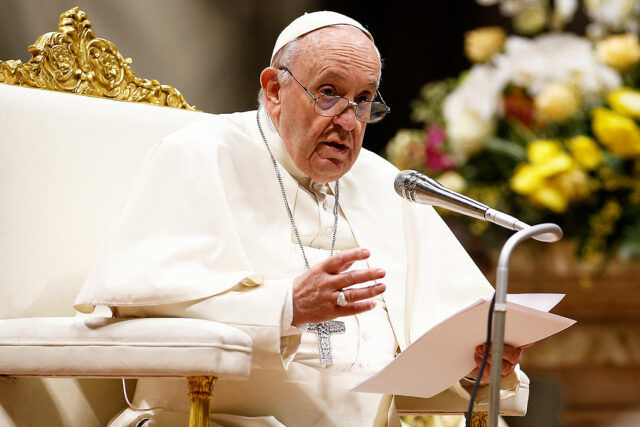
Pope Francis had planned to attend the COP28 conference in Dubai this week but canceled on Tuesday due to health concerns. The Vatican said it was weighing options to ensure a presence at the summit and Vatican sources said most likely a senior official would read the pope’s speech for him in Dubai, or the pope would use a video link.

“He’s making another appeal,” said Dan DiLeo, director of the Justice and Peace Studies Program at Creighton University in Nebraska. “This is a call and a plea for fidelity.”

The ongoing investments in the US reflect a long-running rift between US Catholic bishops and the pope on how to address global warming.

The pope’s Laudato Si encyclical urged immediate action against climate change, declaring that “highly polluting fossil fuels need to be progressively replaced without delay.” Since then, the Vatican has repeatedly, and explicitly urged Catholic institutions to divest.

APSA, the department that manages the Vatican’s portfolio, adheres to the policy of not investing in fossil fuels and makes “all possible checks” to ensure funds in which it has shares do not, according to a senior Vatican finance official. The Vatican bank, which is separate from APSA, also does not invest in fossil fuels, a bank official said.

BIG OIL STOCK
Some 354 Catholic institutions across more than 50 countries have divested of fossil fuels since the 2015 encyclical, including scores of dioceses in the UK, Ireland and Germany, according to the Laudato Si Movement, a Catholic environmental advocacy group tracking divestment.

Notably absent are any dioceses in the US

Reuters reviewed the financial reports published by two dozen of the nation’s more than 170 Catholic dioceses, including several of its largest, and found that few provide details on specific investments.

The Archdiocese of Boston held over $6 million in energy stock in its Income Opportunity Fund and Collective Investment Partnership at the end of June, according to its annual reports. None of the reports identified the underlying companies, and a spokesman for the Archdiocese did not answer questions about the investments.

The Boston diocese held around $2 million in gas and electric corporate bonds in another portfolio.

The assets made up a small fraction of the archdiocese’s roughly $240 million in total investments.

Dioceses in Chicago, San Francisco and Erie, Pennsylvania, also listed energy assets, without providing details about the underlying companies. Financial reports of eight other dioceses examined by Reuters contained little or no information about which industries were represented in their investments.

Reuters also examined a database of oil and gas leases in Texas and found a dozen US dioceses — seven based in Texas and five from out of state — were involved in deals with drillers.

The Texas dioceses included San Antonio, Austin, and Fort Worth. Erie and San Francisco dioceses also held leases.

“We engage a third party to review our compliance with the USCCB guidelines, and these guidelines do not prohibit investments in fossil fuels,” said Peter Marlow, a spokesman for the Archdiocese of San Francisco, in response to Reuters questions about its investments and lease deals.

A spokeswoman for the Diocese of Erie confirmed it had “arrangements with two companies in Texas that provide minimal dividends, in the range of $15/year,” and was seeking to have them terminated.

“This effort will continue until we are successful,” spokeswoman Anne-Marie Welsh said.

The Archdiocese of Baltimore declined to comment on its investments but pointed to an open letter from Archbishop William Lori in October supporting the pope’s message of environmentalism and listing initiatives including the archdiocese’s use of solar and a program to plant 1,000 trees.

Archbishop Bernard Hebda of Saint Paul and Minneapolis told Reuters he supports the pope’s environmental leadership, and pointed out that the archdiocese has invested with the  Catholic Community Foundation of Minnesota.

A CCF official said energy and fossil fuels stocks make up between 3.5% and 6% of archdiocese investment funds, and that CCF uses its shareholder status to press for corporate environmental improvements.

CCF also said it screens out high-impact companies like coal miners, and has been increasing investment in renewables.

Officials at other dioceses did not comment.

“As a Church we need to walk the talk of Laudato Si,” said Father Joshtrom Kureethadam, an official in the Vatican’s Integral Human Development department, which formulates environmental policy. He called the enormous financial gains by oil companies “immoral profits.”

The American Petroleum Institute, which represents US oil companies, said the industry was “committed to driving further innovation to accelerate global climate goals while providing the energy consumers around the world need.”

PRACTICAL GUIDANCE
The USCCB investment guidance calls on dioceses to “consider divestment from those companies that consistently fail to initiate policies intended to achieve the Paris Agreement goals.”

The Paris Agreement is an international deal struck in 2015 to limit global warming to 1.5 degrees C above pre-industrial times to avert the worst consequences of climate change.

“The 2021 update endeavored to provide a practical guidance for investments based on the teaching of Pope Francis,” said Chieko Noguchi, a spokeswoman for the USCCB.

Ms. Noguchi declined to answer follow up questions, including whether USCCB had identified any companies for divestment, or whether engaging directly in oil and gas leasing could be reconciled with the pope’s call to shun fossil fuels.

The USCCB’s 2021 recommendations were guided by the Christian Brothers Investment Service (CBIS), a global investment manager serving Catholic investors and institutions, according to a press release issued at the time by the USCCB.

The CBIS, which manages nearly $10 billion, has rejected wholesale fossil fuel divestment, arguing instead for active shareholder engagement to improve companies from within.

The “Catholic Responsible Investment” funds that it offers to US dioceses and other clients include major oil and gas companies like BP, Shell, Saudi Aramco, PetroChina and ONGC India, according to LSEG data.

“CBIS is leading shareholder engagements with the largest players in the oil and gas sector to influence the industry towards a transformation to a low carbon future,” the investment service told Reuters. It added that it had introduced “targeted divestment from a subset of fossil fuel producers and users” that have the highest impact on carbon emissions, including those heavily involved in coal and oil sands.

Sabrina Danielsen, a professor at Creighton University who has studied the engagement of US bishops on the issue of climate change, said the US Catholic hierarchy is rejecting the pope’s calls for divestment in part because of its traditionally conservative leanings.

Fewer than 1% of the more than 12,000 columns by US bishops in official publications since 2014 mentioned climate change, Ms. Danielson found in a 2021 study, and many of those that did downplay the urgency of global warming or described the topic as controversial.

“I think bishops might be very afraid of upsetting politically conservative Catholics in their dioceses, and especially afraid of upsetting wealthy conservative donors,” she said.

The USCCB did not comment on her research. — Reuters

Japan asks US military to ground Osprey aircraft after fatal crash

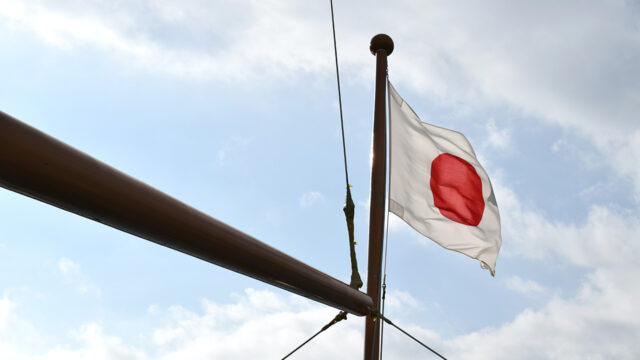
TOKYO — Japan said it has asked the United States (US) to suspend all nonemergency V-22 Osprey flights over its territory after one fell into the sea on Wednesday in western Japan, marking the country’s first fatal US military plane crash in five years.

The US Air Force, which was operating the tilt-rotor aircraft, said the cause of the mishap, which killed at least one person, is unknown. The condition of the other seven people on board was not known. “The occurrence of such an accident causes great anxiety to the people of the region… and we are requesting the US side to conduct flights of Ospreys deployed in Japan after these flights are confirmed to be safe,” Minoru Kihara said in Parliament on Thursday, reversing a decision yesterday to allow such flights to continue. 

The Japan Self-Defense Forces (SDF), which also operates Ospreys, will suspend flights of the transport aircraft until the circumstances of the incident are clarified, another senior defense ministry official said in parliament.

A spokesperson for U S military forces in Japan did not immediately respond to a request for comment.

Witnesses said the aircraft’s left engine appeared to be on fire as it approached an airport for an emergency landing in clear weather and light winds, media reported.

Developed by Boeing and Bell Helicopter, the hybrid V-22, which can land and take off like a helicopter and fly like a fixed-wing aircraft, is operated by the U S Air Force, Marines and Navy, and the SDF.

The deployment of the aircraft in Japan has been controversial, with critics of the U S military presence in the southwest islands saying it is prone to accidents. The U S and Japan say it is safe.

Japan hosts the biggest overseas concentration of U S military power, with the country home to the only forward-deployed U S carrier strike group, its Asian airlift hub, fighter squadrons and a U S Marine Corps expeditionary force.

In August, a U S Osprey crashed off the coast of northern Australia while transporting troops during a routine military exercise, killing three U S Marines.

Another crash-landed in the ocean off the southern island of Okinawa in December 2016, the first such incident in Japan, prompting a temporary U S military grounding of the aircraft.

The last fatal U S military aircraft crash in Japan was 2018, when a mid-air collision during a training exercise killed six people, according to the defense ministry. — Reuters

Syrians lead push to create global chemical weapons tribunal

THE HAGUE/BEIRUT — Illegal chemical weapons attacks killed and injured thousands during Syria’s civil war, many of them children, but more than a decade later the perpetrators go unpunished.

That could change under an initiative to create a new tribunal for such atrocities launched in The Hague on Thursday.

A dozen Syrian rights groups, international legal experts and others have quietly spent two years laying the groundwork for a new treaty-based court which could put on trial alleged users of banned toxic agents worldwide.

“The tribunal for us Syrians is hope,” said Safaa Kamel, 35, a teacher from the Jobar suburb of Syria’s capital Damascus, recalling the Aug. 21, 2013, sarin gas attack in the Ghouta district which killed more than 1,000 people, many in their sleep.

“The symptoms that we had were nausea, vomiting, yellowing of the face, some fainting. Even among the little ones. There was so much fear,” she told Reuters from Afrin, a northwest Syrian town where she sought refuge. “We’ll never be able to erase from our memories how they were all lined up.”

Many diplomatic and expert meetings between states have been held to discuss the proposal, including the political, legal and funding feasibility, documents seen by Reuters showed.

Diplomats from at least 44 countries across all continents have been engaged in the discussions, some of them at ministerial level, said Ibrahim Olabi, a British-Syrian barrister, a key figure behind the initiative.

“While it’s Syrians that are calling for it, for the use of chemical weapons in Syria, if states so wish, it could be far beyond Syria,” Olabi told Reuters.

The Exceptional Chemical Weapons Tribunal proposal was launched on Nov. 30, the day victims of chemical attacks are remembered worldwide. The next step will be for states to agree on the wording of a treaty.

‘SOME KIND OF JUSTICE’
The use of chemical weapons is banned under the Geneva Conventions that codified the laws of war. That ban was strengthened by the 1997 Chemical Weapons Convention, a non-proliferation treaty joined by 193 states which is overseen by the Organization for the Prohibition of Chemical Weapons (OPCW).

But political division over the Syrian war at the OPCW and the United Nations led to the blocking of efforts to bring accountability for the widespread violations in international law in hundreds of suspected chemical attacks.

Syrian President Bashar al-Assad’s government has denied using chemical weapons against its opponents in the civil war, which broke out in March 2011 and has now largely settled into a stalemate. Its information ministry did not respond to a Reuters request for comment.

Countries including France have opened prosecutions under so-called universal jurisdiction for war crimes, but in those situations where the International Criminal Court is not able to act there is no legal body that can prosecute individual suspects of chemical weapons use globally.

“Having those voices say ‘we need some kind of justice,… I think that’s going to be powerful,” Dapo Akande, a British barrister and member of the United Nations International Law Commission, told Reuters.

There have been international courts for war crimes, from the Balkans to Rwanda and Lebanon, but none that focused on the specific crime of deploying chemical weapons, Akande said.

“It would be trying to fill a gap in the sense that it would essentially be for cases where the International Criminal Court is unable to exercise jurisdiction. And that would, I think, be particularly innovative about it.”

The ICC, the world’s permanent war crimes court in The Hague, has no jurisdiction in Syria.

The OPCW has the power to investigate claims of chemical weapons use and in some cases identify alleged perpetrators, but it has no prosecutorial powers. It said in January that Syrian was responsible for an attack in Douma in 2018 that killed 43 people.

A UN-OPCW Joint Investigative Mechanism (JIM) found that the Syrian government used the nerve agent sarin in an April 2017 attack and has repeatedly used chlorine as a weapon. It blamed Islamic State militants for mustard gas use.

Syria’s ally Russia has repeatedly vetoed attempts to extend the JIM’s mandate, which expired in November 2017.

TEN YEARS LATE
For Dr. Mohamad Salim Namour, who helped treat hundreds of patients after the 2013 Ghouta attack, the images of the choking and dying still bring him to tears. He recalled one child survivor lying among the bodies asking him: “Am I still alive?”

“We feel bitter that accountability is coming 10 years late…We hope that we don’t have to wait another 10 years,” he told Reuters in The Hague.

“Let international law and justice take its course.”

Only a tiny fraction of about 200 investigations into Syrian war crimes conducted by mostly European countries relate to chemical attacks, the UN body tasked with investigating Syria crimes, the International, Impartial and Independent Mechanism (IIIM) told Reuters.

IIIM head Catherine Marchi-Uhel said there are not enough justice opportunities for chemical weapons attacks in Syria and that her agency was ready to work with a new court.

“An international body with dedicated resources and a team that has developed expertise on building cases around chemical weapons incidents might be well placed to deal with these types of cases,” she said. — Reuters

Taiwan president: China too ‘overwhelmed’ to consider invasion

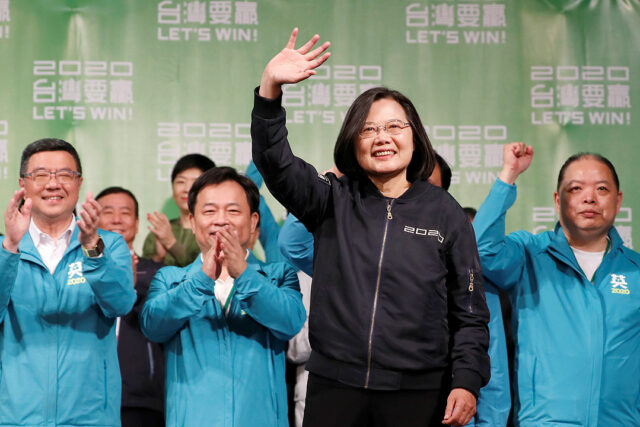
TAIWAN President Tsai Ing-wen — REUTERS

 – China‘s leadership is too “overwhelmed” with its internal problems to consider an invasion of Taiwan, President Tsai Ing-wen said in an interview with the New York Times.

China, which views democratically governed Taiwan as its own territory, has ramped up military pressure against the island over the past four years, leading to concerns of a conflict that would have global repercussions.

But Ms. Tsai, in a transcript of the interview her office published on Thursday, said China had too many issues at the moment.

“Well, I think the Chinese leadership at this juncture is overwhelmed by its internal challenges. And my thought is that perhaps this is not a time for them to consider a major invasion of Taiwan,” she said.

“Largely because the internal economic and financial as well as political challenges, but also, the international community has made it loud and clear that war is not an option, and peace and stability serves everybody’s interests.”

Ms. Tsai and her government have repeatedly called for talks with China but been rebuffed, as Beijing views Ms. Tsai and the ruling Democratic Progressive Party (DPP) as separatists.

Ms. Tsai says only Taiwan‘s people can decide their future.

Taiwan is in the middle of campaigning for presidential and parliamentary elections to be held on Jan. 13. The DPP’s Lai Ching-te, currently vice president, is the frontrunner to be Taiwan‘s next president according to opinion polls.

Ms. Tsai said it was “no secret” that China was trying to interfere in Taiwan‘s elections.

“But I think they’re probably not particularly successful in their effort of trying to influence the election here. Primarily, because this is a democracy and people know that they have made their best decisions as to who is going to be the next leader of Taiwan,” she added.

China‘s Taiwan Affairs Office on Wednesday stepped up its attacks on Lai and his running mate Hsiao Bi-khim, formerly Taiwan‘s envoy to the United States.

Taiwan independence means war. The DPP pushing this dangerous independence double act will only poison the interests and well being of compatriots on the island,” spokesperson Chen Binhua told a news conference.

Speaking to reporters in Taipei on Thursday, top China-policy maker Chiu Tai-san dismissed Beijing’s criticisms.

“Honestly speaking, those comments show they don’t even know what democratic politics and elections are,” said Chiu, who heads Taiwan‘s Mainland Affairs Council. – Reuters

China’s factory activity contracts for second month in November

REUTERS

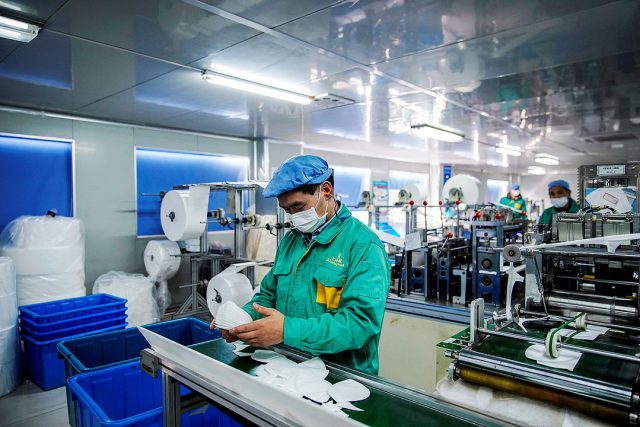
 – China’s manufacturing activity contracted for a second straight month in November and at a quicker pace, suggesting more stimulus will be needed to shore up economic growth and restore confidence that the authorities can ably support industry.

Better-than-expected data for the third quarter led many banks to upgrade their growth forecasts for the world’s second-largest economy, but despite a flurry of policy support measures negative sentiment among factory managers appears to have become entrenched in the face of weak demand both at home and abroad.

The official purchasing managers’ index (PMI) fell to 49.4 in November from 49.5 in October, staying below the 50-point level demarcating contraction from expansion, data from the National Bureau of Statistics showed on Thursday. It missed a forecast of 49.7, and only Goldman Sachs and Standard Chartered predicted it would come in so low out of 31 respondents.

The new orders sub index contracted for a second consecutive month, while the new export orders component extended its decline for a ninth month.

“Today’s PMI reading will further raise expectations towards policy support,” said Zhou Hao, economist at Guotai Junan International. “Fiscal policy will be under the spotlight and take centre stage over the coming year and will be closely monitored by the market.”

China’s economy has struggled this year to mount a strong post-pandemic recovery, held back by a deepening crisis in the property market, local government debt risks, slow global growth and geopolitical tensions.

Factory PMI has contracted for seven out of the past eight months – rising above the 50-point mark only in September. The last time the indicator was negative for more than three consecutive months was in the six months to October 2019, before the COVID-19 pandemic.

The patchy recovery has prompted many analysts to warn that China may decline into Japanese-style stagnation later this decade unless policymakers take steps to reorientate the economy towards household consumption and market-allocation of resources.

China’s central bank governor on Tuesday said he was “confident that China will enjoy healthy and sustainable growth in 2024 and beyond,” but urged structural reforms to reduce reliance on infrastructure and property for growth.

Policy advisers say the government will need to implement further stimulus should it wish to sustain an annual economic growth target of “around 5%” next year, which would match this year’s goal.

But the central bank is constrained when it comes to implementing further monetary stimulus over concerns a widening interest rate differential with the West may weaken the currency and spur capital outflows.

In October, China unveiled a plan to issue 1 trillion yuan ($138.68 billion) in sovereign bonds by the end of the year, raising the 2023 budget deficit target to 3.8% of GDP from the original 3%.

A separate PMI reading on the non-manufacturing sector also weakened, falling to 50.2 in November from 50.6 last month, indicating activity in the vast service sector and construction continues to slow. – Reuters

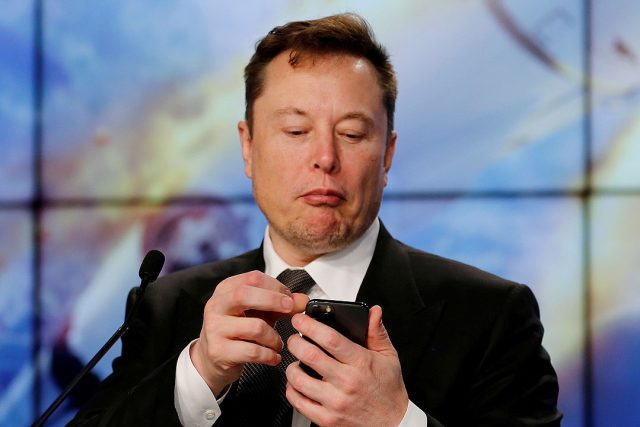
Elon Musk curses out advertisers who left X over antisemitic content

ELON MUSK — REUTERS

Billionaire Elon Musk told advertisers that have fled his social media platform X over antisemitic content to “Go fuck yourself” in a fiery Wednesday interview.

His profanity-laced remarks followed a moment of contrition in a New York Times DealBook Summit interview. Mr. Musk said repeatedly he was sorry for publishing a tweet on Nov. 15 that agreed with an anti-Jewish post.

Mr. Musk has faced a torrent of criticism ever since he agreed with a user who falsely claimed Jewish people were stoking hatred against white people. Mr. Musk in his post said the user, who referenced the “Great Replacement” conspiracy theory, was speaking “the actual truth.”

On Wednesday Mr. Musk said he had “handed a loaded gun” to both detractors and antisemitic people, describing his post as possibly the worst he had made during a history of messages that included many “foolish” ones.

The Tesla CEO bristled at the idea that he was antisemitic and said that advertisers who left X, formerly known as Twitter, should not think they could blackmail him.

“If somebody’s gonna try to blackmail me with advertising, blackmail me with money? Go fuck yourself,” he said.

“Go. Fuck. Yourself. Is that clear? I hope it is. Hey, Bob, if you’re in the audience,” he added, in an apparent reference to Robert Iger, chief executive of Walt Disney, which pulled ads on X. Mr. Iger spoke earlier at the event and said that Disney felt the association with X following Mr. Musk‘s move “was not a positive one for us”. A spokesperson from Disney did not immediately respond to a request for comment.

“What I care about is the reality of goodness, not the perception of it. And what I see all over the place is people who care about looking good while doing evil. Fuck them,” Mr. Musk said.

Musk‘s expletives against advertisers is the “closing chapter” for brands doing business with X, said Lou Paskalis, founder of marketing consultancy AJL Advisory and the former head of global media at Bank of America. “They’re not going to forget that,” he said.

Customers who did not like him should consider the products his company make based on their quality, Mr. Musk said, pointing to electric cars from Tesla and SpaceX rockets. “I will certainly not pander,” he said.

Mr. Musk added that he himself arguably had done more for the environment, at Tesla, than anyone in the world, based on Tesla’s massive sales of electric vehicles.

“It would be fair to say, therefore, as a leader of the company, I’ve done more for the environment than everyone — any single human on Earth.”

Mr. Musk‘s comments came on the same day that US Senate Majority Leader Chuck Schumer warned that the rise in antisemitism since the start of the Israel-Hamas war has reached a crisis point, saying it threatens the safety of Jews worldwide and the future of Israel. “To us, the Jewish people, the rise in antisemitism is a crisis. A five-alarm fire that must be extinguished,” Mr. Schumer said in an emotional, 40-minute Senate speech.

Mr. Musk‘s post drew condemnation from the White House for what it called an “abhorrent promotion of antisemitic and racist hate.”

The “Great Replacement” theory falsely claims that Jewish people and leftists are engineering the ethnic and cultural replacement of white populations with non-white immigrants that will lead to a “white genocide.”

Following the post, major US companies including Walt Disney DIS.N, Warner Bros Discovery and NBCUniversal parent Comcast suspended their ads on X. A report from liberal watchdog group Media Matters precipitated the advertiser exit, which said it found ads next to posts that supported Nazism. The platform filed a lawsuit last week against Media Matters for defamation.

Mr. Musk‘s comments have put pressure on X overall, including Chief Executive Linda Yaccarino. An executive told Reuters that she would remain at the company.

Mr. Musk himself appeared resolved that X could fail financially and blamed advertisers.

“If the company fails because of advertiser boycott, it will fail because of an advertiser boycott. And that will be what bankrupt the company and that’s what everybody on earth will know,” he said. “Let the chips fall where they may.”

In the wake of the condemnation around his post, Mr. Musk traveled to Israel and toured the site of Hamas’ assault in the country on Oct. 7. On Monday, he spoke with Israeli Prime Minister Benjamin Netanyahu in a live-streamed conversation on X.

Mr. Musk on Wednesday said the trip had been planned before his message and was “independent” of the issue.

Mr. Musk in Israel said he is against antisemitism and anything that “promotes hate and conflict” and stated that X would not promote hate speech. While there, he received a symbolic dog-tag from the father of an Israeli hostage taken captive by Hamas, which he promised to wear until all the hostages were free. He wore the dog-tag on stage on Wednesday.

“The fact that you came here speaks volumes of your commitment to try to secure a better future,” Netanyahu told Mr. Musk during the conversation in Israel.

Mr. Musk‘s wide-ranging interview on Wednesday included discussions from freedom of speech to the environment to U.S. presidential politics. Musk said he thought he would not vote to re-elect President Joe Biden but did not say he would vote for his likely challenger, Donald Trump. – Reuters

Thai foreign minister fights back tears, welcomes Hamas release of Thai workers

 – Thai Foreign Minister Parnpree Bahiddha-Nukara held back tears when he met fellow Thais released to Israel by Hamas after seven weeks of captivity and said on Wednesday he hoped for freedom soon for the remaining 13 hostages.

Another two Thai workers were set free on Tuesday, bringing the total released to 23. With their arrival at Shamir Medical Center, the workers embraced one another. “We survived! We survived!” they cheered, and one was seen wiping away tears.

“We are not part of the conflict,” Mr. Parnpree said in a Reuters interview later on Wednesday after an emotional meeting with the workers on Tuesday. He said there were no conditions for their release.

Mr. Parnpree held talks with his counterparts in several Middle Eastern countries with Hamas contacts. He said they remain in contact with him and send him updates about the release of hostages even before the news breaks.

“I went around to speak to various countries who can connect with the Hamas group to explain that the Thai workers are innocent, they are not involved in politics, they are not part of anyone’s conflict, and they probably don’t even know how the situation came to be, who’s fighting with whom. They were there to earn a living,” he said in the interview.

Thailand says Palestinian Hamas gunmen from Gaza killed 39 Thais during an Oct. 7 rampage into Israel where around 30,000 Thai laborers had been working in the agriculture sector, one of Israel’s largest migrant worker groups.

The Thai foreign ministry said three Thais were being treated for wounds in hospital. On Wednesday night, four additional Thai hostages were released. Of the 32 taken hostage, nine remain in captivity. Mr. Parnpree said he had pinned his hopes on winning their release soon.

Without revealing which countries he was in direct contact with, the top Thai diplomat said upon hearing the news of the first group of hostages’ release on Friday, he was wondering why Thais were not among the list.

Shortly afterwards, he received the good news from his sources even before the news broke.

“I get updates sporadically and I get the alerts before anyone else – that 10 (workers) are being released, four have been released, three have been released and then two have been released,” said Mr. Parnpree. “I was able to gauge which country has the most accurate information and that they were really able to connect with Hamas.”

He added that diplomacy played the key role in Thais getting swiftly released from captivity compared to other nationalities who were among the hostages. In his perspective, it also plays a crucial role in places where there are high geopolitical conflicts.

On Monday, a Thai Muslim group that spoke directly with Hamas said its efforts were key to ensuring that Thai hostages were among the first to be released in Gaza during a temporary truce with Israeli forces.

“We were the sole party that spoke to Hamas since the beginning of the war to ask for the release of Thais,” Thai-Iran Alumni Association President Lerpong Syed told Reuters on Monday.

Israel says Hamas killed 1,200 people and took about 240 hostages back to Gaza on Oct. 7. More than 15,000 people have been killed in Israel’s military campaign, say Palestinian health authorities in Hamas-run Gaza. – Reuters

ADVERTISEMENT
ADVERTISEMENT