Home Blog Page 3934

University of Pennsylvania president resigns after antisemitism testimony

WASHINGTON — University of Pennsylvania President Liz Magill, who came under fire for her stance on antisemitism on campus, has resigned, the Ivy League school said on Saturday.

Ms. Magill was one of three top university presidents who were criticized after they testified at a congressional hearing on Tuesday about a rise in antisemitism on college campuses following the outbreak of the Israel-Hamas war in October.

She has agreed to stay on until an interim president is appointed, Scott Bok, chair of the Philadelphia-based university’s board of trustees, said on Saturday in a statement posted on the university’s website. Mr. Bok also stepped down.

“I write to share that President Liz Magill has voluntarily tendered her resignation as President of the University of Pennsylvania,” Mr. Bok said in the announcement released by the university. Ms. Magill will remain a tenured faculty member at the university’s law school, Mr. Bok said.

Ms. Magill, Harvard University President Claudine Gay, and Massachusetts Institute of Technology (MIT) President Sally Kornbluth testified before a US House of Representatives committee on Tuesday.

As they tried to walk a line that protected freedom of speech, they declined to give a definitive “yes” or “no” answer to Republican Representative Elise Stefanik’s question of whether calling for the genocide of Jews would violate their schools’ codes of conduct regarding bullying and harassment.

Calls for Ms. Magill’s and Ms. Gay’s resignations in particular mounted in the days after that testimony. Ms. Magill released a video on Wednesday in which she expressed regret, Ms. Gay apologized on Friday.

Jewish students, families and alumni have accused the schools of tolerating antisemitism, especially in statements by pro-Palestinian demonstrators since the Islamist group Hamas attacked Israel on Oct. 7 and killed around 1,200. That attack prompted a massive counterattack by Israel that has left over 17,700 Palestinians dead, according to the Gaza health ministry.

“One down. Two to go. This is only the very beginning of addressing the pervasive rot of antisemitism that has destroyed the most ‘prestigious’ higher education institutions in America,” Ms. Stefanik said on social media site X after Penn’s announcement.

She said Ms. Magill’s resignation was the “bare minimum of what is required” and urged Harvard and MIT to take similar action.

Antisemitism and Islamophobia have risen sharply in the United States and elsewhere since October.

Antisemitic incidents in the United States rose by about 400% in the two weeks after the Hamas attack on Israel, according to the Anti-Defamation League.

The Council on American-Islamic Relations said this week that in the two months after the war began, incidents motivated by Islamophobia and bias against Palestinians and Arabs rose by 172% compared with the same period last year. 

Eyal Yakoby, a University of Pennsylvania student who has sued the school alleging insufficient response to antisemitism, said on CNN that Ms. Magill’s resignation was one step toward a broader change at the university.

“This has been something that myself and many alumni and fellow students, parents been working on for a while… (but) this is just the first domino in a culture for many leaders including Chairman Bok who have allowed this to happen,” Yakoby said. — Reuters

North Korea condemns US veto of Gaza ceasefire call at UN

FREEPIK

SEOUL — A North Korean senior official criticized the United States for blocking a U.N. resolution calling for an immediate humanitarian ceasefire in Gaza, claiming the veto showed Washington’s “double standards”, North Korean state media KCNA said on Sunday.

The United States vetoed a resolution calling for a ceasefire in the war between Israel and Palestinian militant group Hamas in Gaza at the United Nations Security Council on Friday.

The ceasefire resolution at the U.N. failed to pass after the United States vetoed the proposal and Britain abstained.

“The United States’ abuse of its veto power to protect an ally that massacred tens of thousands of civilians is not only a manifestation of illegal and unreasonable double standards, but also the height of inhumane evil,” Kim Son Gyong, North Korea’s vice foreign minister for international organisations, said via KCNA.

Kim argued the United States was contradicting itself by condoning continued fighting in Gaza while condemning North Korea’s recent satellite launch that caused no harm to any other country.

The national security advisers of the U.S., South Korea and Japan met on Saturday to reaffirm their coordinated response to North Korea’s threats, as North Korea warned it would deploy more spy satellites. — Reuters

Premature to talk of rate cuts — BSP

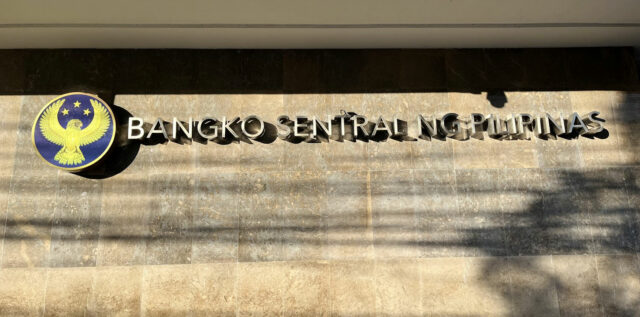
The main office of the Bangko Sentral ng Pilipinas in Manila. — BW FILE PHOTO

By Keisha B. Ta-asan, Reporter

BANGKO SENTRAL ng Pilipinas (BSP) Governor Eli M. Remolona, Jr. said it is premature to discuss policy easing in 2024, with the Monetary Board still prepared to hike borrowing costs if needed to make sure inflation returns to the 2-4% target range. 

“The risks are still there so we have to assess the situation. I think it’s premature to say we will start to ease,” he told reporters on Wednesday evening.

Mr. Remolona said the BSP remains hawkish as frequent supply shocks could lead to higher inflation expectations and second-round effects. 

“We want to be sure (inflation) stays within the target range, comfortably within the target range, and then when we are comfortable about that, we can start to think about easing,” he said.

“If inflation is within the target range for one month, it’s not enough. It has to be there and it has to look like it will stay there until we can start to consider not being hawkish,” he said.   

The BSP chief said the goal is to keep inflation expectations anchored to mitigate second-round effects.   

Headline inflation slowed for a second straight month in November to 4.1%, its lowest in 20 months. Year to date, inflation averaged 6.2%, still above the central bank’s 6% forecast.   

From May 2022 to October this year, the BSP has raised interest rates by 450 basis points (bps), bringing the benchmark interest rate to a 16-year high of 6.5%.

Mr. Remolona also said there will be no cut in banks’ reserve requirement ratio (RRR) while the central bank remains hawkish.   

The RRR for big banks is currently at 9.5%, while the ratio for digital banks is at 6%. The BSP also set the RRR for thrift banks, and rural and cooperative banks to 2% and 1%, respectively.

Despite the aggressive rate increases since last year, Mr. Remolona noted Philippine economic growth is still very strong and robust. He noted the impact of policy tightening is gradual, with the effects taking some time to materialize due to prolonged lags. 

“We wish (the lags) were shorter,” he said. “We have to improve the transmission mechanism of monetary policy.”   

Mr. Remolona also said the central bank does not want to make any unnecessary tightening.

“We want to make just enough tightening so that we get within the target range and expectations remain anchored to our target,” he said.   

However, monetary policy may be kept tighter for longer since inflation may go up again next year. 

“It’s sort of tricky because we think inflation should be within the (2-4%) target range in the next month or so, and then there’s kind of a base effect then it will go up and maybe exceed the target range (again),” Mr. Remolona said. “Hopefully not, we hope we could settle within the target range for the rest of 2024.”   

In early 2024, he noted inflation may ease to below 3% before picking up again to 4% by midyear.

At its November meeting, the BSP lowered its risk-adjusted inflation forecast for 2023 to 6.1% (from 6.2%), to 4.4% (from 4.7%) for 2024, and to 3.4% (from 3.5%) for 2025. 

On the other hand, the BSP’s baseline inflation forecast stood at 6% in 2023 and at 3.7% in 2024, before easing to 3.2% in 2025.   

Moving forward, Mr. Remolona said the BSP will use the risk-adjusted inflation forecast and emphasized that policy will be based on “likely events.”

Meanwhile, HSBC economist for ASEAN Aris Dacanay in a note said the BSP will keep its policy rate steady on Dec. 14 after inflation eased in November.

“All in all, the economy’s macroeconomic fundamentals are improving and there is no impending need to adjust monetary policy to be even more restrictive,” he said.   

However, inflation may rise again and breach the 2-4% target in the second quarter of next year when the tariff rates for agricultural items could increase due to the expiration of Executive Order No. 10 on Dec. 31. 

“With upside risks to inflation still heavily tilted to the upside, it may still be too early to put rate cuts on the table. The economy will need time to pause, to ensure that the BSP’s tight monetary stance filters through to the economy,” Mr. Dacanay said.   

The BSP may also begin its easing cycle gradually after the US Federal Reserve does its first rate cut within the third quarter of 2024. 

“By then, we expect headline CPI to be softening on a consistent basis. Cutting at the same rate as the Fed will also mitigate the volatility of the peso against the dollar given how wide the current account deficit still is for the Philippine economy,” Mr. Dacanay said.   

The BSP projects the current account deficit to reach $11.1 billion, or equivalent to -2.5% of gross domestic product (GDP).

In the first semester, the current account deficit stood at $8.2 billion (-4% of GDP), 32.2% lower than the $12.1 billion deficit (-6.1% of GDP) a year ago.

Unemployment rate drops to 18-year low in October

An applicant fills out a form at a job fair in Pasay City, Nov. 7, 2023. — PHILIPPINE STAR/EDD GUMBAN

By Jomel R. Paguian

THE PHILIPPINES’ unemployment rate fell to the lowest in 18 years in October, underscoring the strength of the country’s labor market.

The jobless rate was 4.2%, the slowest since April 2005 and matching the level in November last year, the Philippine Statistics Authority (PSA) said on Thursday.

The employment rate also rose to 95.8%, the highest in 18 years and consistent with sustained labor demand that’s at the root of renewed economic momentum.

Philippine Labor Force Situation

The statistics agency revamped the definition of “unemployed” in April 2005 to refer to people aged 15 years and older without a job, are available for work and actively seeking one or not because of a valid reason.

Preliminary results of the PSA’s Labor Force Survey (LFS) showed the 4.2% unemployment rate translated to 2.09 million jobless Filipinos in October, 150,000 lower than 2.24 million in the same month last year.

The unemployment rate was an improvement from 4.5% in both October 2022 and in September.

However, the National Capital Region had the highest jobless rate of 5.4% in October, while Davao Region had the lowest with 2.9%

National Economic and Development Authority (NEDA) Secretary Arsenio M. Balisacan said the labor market is expected to further improve amid the government’s efforts to boost trade and investment in the country.

“We can make the labor market more inclusive with the entry of more investments, especially those that bring in new and better technology,” Mr. Balisacan said in a statement. “We need to expand and enhance learning opportunities to ensure that we equip Filipinos for future jobs.”

Year to date, the unemployment rate stood at 4.6%, which is below the 5.3%-6.4% target for 2023 under the Philippine Development Plan.

“We are now closer than ever to achieving the President’s vision of bringing down the Philippines’ unemployment rate to 4-5% in 2028,” Finance Secretary Benjamin E. Diokno said in a statement.

UNDEREMPLOYMENT
Meanwhile, job quality improved as the underemployment rate fell to 11.7% in October, from 14.2% in the same month last year. This translated to 5.6 million underemployed Filipinos or persons already working but still looking for more work or longer working hours.

Month on month, job quality slightly deteriorated from 10.7% in September.

Year to date, the average underemployment rate stood at 12.5%, lower than 14.2% during the comparable period.

PSA data also showed that the size of the labor force increased by 589,000 to 49.89 million in October from 49.3 million in the same month last year.

This brought the labor force participation rate (LFPR) — the share of the Filipino workforce to the total working age population of 15 years old and older — to 63.9% in October. This was lower than 64.1% in the same month last year.

For the January-to-October period, the average LFPR stood at 64.6% which is higher than the records for the previous years, PSA Undersecretary and National Statistician Claire Dennis S. Mapa said at a news briefing.

The employment rate climbed to 95.8% in October, which the PSA said was the highest rate since April 2005 and the same rate in November 2022. This meant 47.8 million Filipinos aged 15 and older had jobs, higher than 47.06 million in October 2022.

On average, an employed Filipino worked 41.2 hours a week in October, higher than the 40.2 hours logged in the same month in 2022.

Antonio A. Ligon, a business and law professor at De La Salle University in Manila, said the jobless rate dropped in October amid higher demand for workers from labor-intensive industries and the government’s infrastructure projects.

“There is high demand for skilled and construction workers nowadays,” he said via Facebook Messenger.

Sonny A. Africa, executive director of think tank Ibon Foundation, said the unemployment figures may be underestimated since only those actively seeking employment in the past six months and ready to immediately take up work are considered part of the labor force.

“Over the last year-and-a-half from March 2022 to October 2023, the labor force stayed stagnant at a little less than 50 million despite the working age population growing by 1.8 million or a 2.3% increase to 78 million. This is likely from so many jobless being dropped from the labor force and no longer counted as unemployed by official statistics,” he said in a Facebook Messenger chat.

PSA data showed the number of Filipinos classified as “not in the labor force” increased to 28.1 million in October, higher than 27.6 million in the same month a year ago.

“Job creation is weak. Moreover, jobs available are evidently of poor quality. One indicator of this is that poverty is increasing. Another indicator is the irregularity of work as shown by extreme volatility in net employment creation on a month-to-month basis,” Mr. Africa said.

PSA data showed the services sector employed 47.8 million, accounting for 60.1% of the total. Agriculture and industry sectors made up 22.2% and 17.8% of employed persons, respectively.

Year on year, employment rose significantly in accommodation and food service activities (up by 291,000), administrative and support (up by 224,000), and transportation and storage (up by 149,000).

However, employment declined in wholesale and retail trade and repair of motor vehicles and motorcycles (down by 193,000), mining and quarrying (down by 75,000), and manufacturing (down by 73,000).

PSA data showed agriculture and forestry industry saw a 1.09 million increase in employment at the start of the fourth quarter in October from the start of the third quarter in July.

PSA’s Mr. Mapa said the agricultural sector helped boost employment in the Davao Region which holds the highest regional employment rate of 97.1%, and in Bangsamoro Region which holds the highest regional LFPR of 74%.

However, Roehlano M. Briones, a senior research fellow at the Philippine Institute for Development Studies, said agricultural jobs typically increase in October as harvest season begins in some regions.

“October marks the start of the harvest season for key crops such as rice, the planting season for maize, and rice in some areas,” he said in a Viber message.

Philippines unlikely to be included in FATF blacklist, says Remolona

BW FILE PHOTO

THE PHILIPPINES is unlikely to be included in the Financial Action Task Force’s (FATF) blacklist of countries with high risk of money laundering and terrorism financing, the Bangko Sentral ng Pilipinas (BSP) chief said.

“We will know whether we stay on the (gray) list or leave the list entirely (in February), which is what we want. There might be a chance that we’ll go into the blacklist but that is very unlikely,” BSP Governor Eli. Remolona, Jr. said on Wednesday evening.

“But all hands on deck… we’re doing everything we can to show that we’re making progress in all those areas,” he added.

The Philippines has been in the global financial crime watchdog’s “gray list” of jurisdictions under increased monitoring for dirty money risks since June 2021.

In October 2023, the FATF said the Philippines remains on the gray list, citing the need to further strengthen its action plan to address strategic deficiencies related to casino junkets, nonprofit organizations, and beneficial ownership.

As part of its efforts to exit the gray list, the Philippines committed to comply with numerous action plan items.

Mr. Remolona said if the Philippines failed to exit the gray list by January next year, correspondent banks may start to cut ties with the Philippines. These are financial institutions that provide services to another bank, usually in another country.

“There are fewer banks that are willing to deal with us (now that we’re on the gray list). If we’ll be in the blacklist, that gets worse… When (correspondent banks are) in doubt, they won’t deal with the Philippines,” he said in mixed English and Filipino. 

Only three countries are currently in the FATF’s blacklist — North Korea, Iran and Myanmar.

Mr. Remolona noted that if the Philippines would be included in the blacklist, correspondent banks would ask for more requirements amid heightened due diligence.

In 2002, the FATF blacklisted the Philippines for having no legal anti-money laundering framework.

The passage of Republic Act (RA) No. 9160 or the Anti-Money Laundering Act of 2001 as well as its amendments through RA 9194 paved the way for the removal of the Philippines from the blacklist in 2003.

Mr. Remolona said the FATF may also cite the recent bombing incident in the Islamic city of Marawi in southern Philippines as a concern.

“(The incident) makes the (FATF) more demanding. They’re scrutinizing the terrorist financing. The bombing implies there was some terrorist financing,” he said.

“But the other side of the story is, the bombing was in retaliation for us being more strict on terrorist financing. We can argue that that shows we’re trying harder, but we don’t know how they will see it,” he added. 

A deadly blast killed four people during a Catholic mass at a gymnasium in the Mindanao State University campus in Marawi City on Dec. 3. — Keisha B. Ta-asan

Factory output growth slowest in over a year

REUTERS

By Luisa Maria Jacinta C. Jocson, Reporter

FACTORY PRODUCTION grew at its slowest pace in over a year in October as elevated inflation may have dampened demand.

Preliminary results of the Monthly Integrated Survey of Selected Industries (MISSI) released by the Philippine Statistics Authority (PSA) showed manufacturing output, measured by the volume of production index (VoPI), inched up by 1.7% year on year in October.

This was slower than the 6.7% annual increase in October 2022 and the 9.9% logged in September.

October marked manufacturing’s weakest growth since the 0.04% decline in June 2022.

On a month-on-month seasonally adjusted basis, the manufacturing sector’s VoPI contracted by 4.1%, a reversal of the 1.5% growth in the previous month.

Year to date, average factory output growth stood at 5.6%, much slower than 17.5% in the same period in 2022.

Rizal Commercial Banking Corp. Chief Economist Michael L. Ricafort also said the softer manufacturing production reflected the impact of elevated inflation, which pushed input costs higher.

Headline inflation eased to 4.9% in October from 6.1% in September and 7.7% in October 2022. However, this marked the 19th straight month that inflation breached the central bank’s 2-4% target band.

“Slower factory output growth may stem from lower demand from manufactured goods due to low purchasing power of consumers despite slowing inflation seen in October,” John Paolo R. Rivera, president and chief economist at Oikonomia Advisory & Research, Inc., said in a Viber message.

Mr. Rivera said the slower increase in factory production can also be attributed to delays in the delivery of raw materials amid “constraints in international trade brought about by conflicts in major trade routes in Europe and the Middle East.”

High interest rates may have also affected manufacturing firms’ operations.

“Manufacturing also partly weighed by higher local interest rates that increased borrowing and financing costs of manufacturers, thereby reducing new investments and expansion projects,” Mr. Ricafort said.

The Bangko Sentral ng Pilipinas (BSP) has raised borrowing costs by a cumulative 450 basis points (bps), bringing the benchmark rate to a 16-year high of 6.5%.

PSA data showed the slower annual growth of the VoPI in October was mainly due to the 33.9% contraction in beverages from the 13% growth in September, and the 1.9% decline in computer, electronic and optical products from the 4.2% growth in September.

Coke and refined petroleum products increased at a slower pace of 46.8% in October from 78.5% in the prior month.

The PSA said that 13 industry divisions recorded annual declines during the month. This was led by wood, bamboo, cane, rattan, articles and related products (-41.8% from -8.7%), tobacco products (-18% from -6.6%), chemical and chemical products (-10.1% from -8.1%), other manufacturing and repair and installation of machinery and equipment (-7.9% from -3.1%) and textiles (-7.7% from -3%).

On the other hand, industry divisions that showed faster annual increases included electrical equipment (32.1% from 28%), printing and reproduction of recorded media (26.3% from 16.6%) and basic metals (19.9% from 18.6%).

PSA data showed the capacity utilization rate in October averaged 74.3%, a tad lower than 74.4% in the month earlier. All industry divisions also exceeded 50% utilization during the month.

“The top three industry divisions in terms of reported capacity utilization rate were manufacture of machinery and equipment except electrical (83.3%), manufacture of rubber and plastic products (81.2%), and manufacture of tobacco products (80.5%),” the PSA added.

For the coming months, Mr. Ricafort said that easing global oil prices would help tame inflation.

“(This) would reduce input costs of manufacturers and would also support a pause and possibly cuts in Fed and local policy rates by 2024, thereby would reduce borrowing/financing costs that would support continued pickup/recovery in the local manufacturing sector,” he added.

ACEN unit signs $100-M loan to finance international expansion

ACEN Corp. on Thursday said its subsidiary had signed its first $100-million green term loan facility with a Japanese banking group to support its overseas expansion.

In a stock exchange disclosure, the listed firm said its Singapore-based unit ACEN Renewables International Pte. Ltd. (ACRI) secured the loan from MUFG Bank, Ltd., which is part of global financial institution Mitsubishi UFJ Financial Group.

“This green long-term facility is part of ACEN’s strategic expansion into several international markets including Australia, which stands as the company’s largest market outside of the Philippines,” the Ayala-led energy platform said.

“The funding aligns with ACEN’s ambitious goal of achieving 20 GW (gigawatts) of renewables by 2030,” it added.

MUFG acted as the sole arranger and green loan coordinator for the loan, which operates under a five-year term, “and is encompassed within ACEN’s green finance framework,” the renewable energy firm said.

The term loan facility forms part of ACRI’s term fund-raising efforts, which have current approvals in place for up to $422 million, with forecast use of the funds in the next two years.

“We are delighted to collaborate with MUFG once again, a move that signals a significant step forward in our mission to expand our renewable energy portfolio globally,” ACEN Treasurer Ma. Cecilia T. Cruzabra said.

“This funding will play a pivotal role in accelerating our projects beyond the Philippines, bringing us closer to our goal of a greener, more sustainable future,” she said.

Randy Loo, MUFG’s Singapore head of global corporate banking, said that the transaction reaffirms its partnership with ACEN.

“We look forward to further leverage our extensive network and expertise in renewables financing in support of its 2030 renewables goal,” the official said.

Currently, ACEN has approximately 4,430 megawatts of attributable capacity spanning the Philippines, Vietnam, Indonesia, India, and Australia.

At the local bourse on Thursday, shares in ACEN closed unchanged at P4.60 apiece. — Sheldeen Joy Talavera

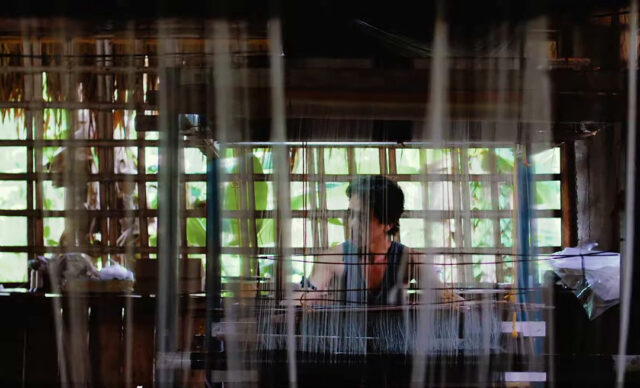
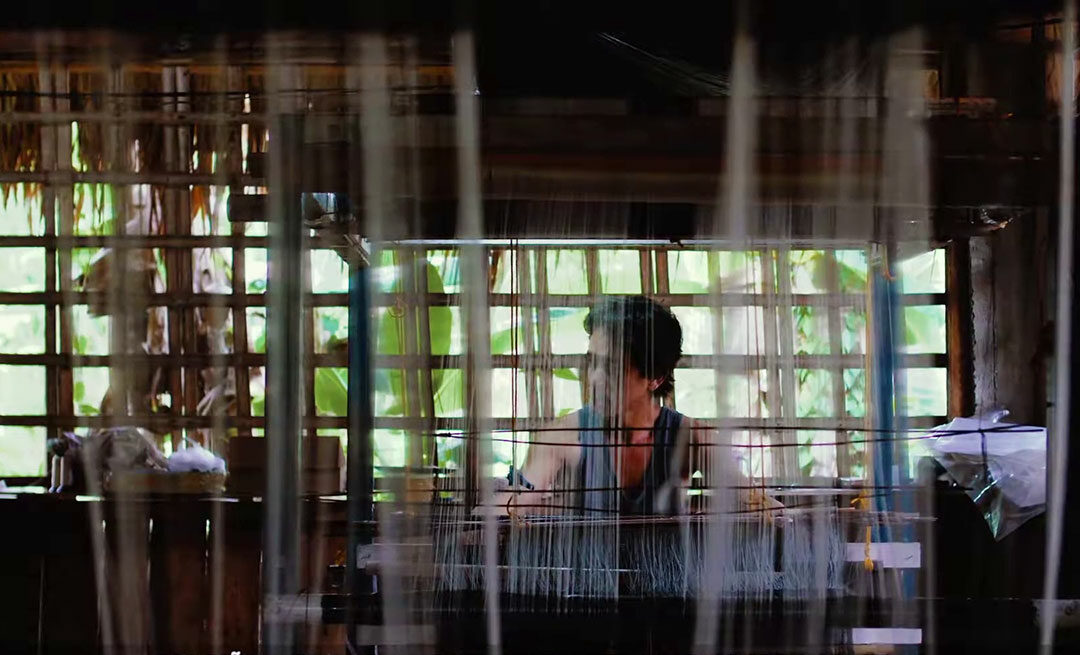
UNESCO adds Aklan piña handloom weaving to list of intangible cultural heritage

SCHOOL OF LIVING TRADITIONS: AKLAN/DTI - DESIGN CENTER PH YOUTUBE CHANNEL

THE UNITED Nations Educational, Scientific and Cultural Organization (UNESCO) has inscribed Aklan Piña Handloom Weaving in its list of Intangible Cultural Heritage of Humanity.

UNESCO’s committee for safeguarding intangible cultural heritage meets annually to decide on cultural practices and expressions to recognize. At a session in Kasane, Botswana, this month, the committee added 45 elements to the list, including Aklan piña handloom weaving, Italian opera, the bolero of Mexico and Cuba, Switzerland’s alpine pasture season, the Jamu wellness culture of Indonesia, and loincloth weaving in Côte d’Ivoire, among many others (see Browse the Lists of Intangible Cultural Heritage and the Register of good safeguarding practices — intangible heritage — Culture Sector – UNESCO for full list, https://tinyurl.com/ysy5z373)

Piña, a textile woven using a handloom, is harvested from the leaves of the pinya Bisaya, a specific pineapple species, its fibers extracted by hand. UNESCO notes that “the knowledge and skills of piña handloom weaving are primarily passed on within families.”

“Children grow up observing older family members engaged in pinya Bisaya cultivation and piña weaving, and eventually learn the craft under their guidance. The practice is also transmitted through the Schools of Living Traditions, initiated by local communities in partnership with the government to help safeguard intangible cultural heritage in the Philippines,” it said.

The National Commission for Culture and the Arts (NCCA) received UNESCO’s draft decision last November, which stated that it found the nomination of Aklan Piña Handloom Weaving “satisfactory to the criteria for inscription on the Representative List of Intangible Cultural Heritage of Humanity.”

It was inscribed on the list on Dec. 5 at 8 p.m., Botswana Time.

“This is the Philippines’ fourth element to be inscribed in the Representative List of Intangible Cultural Heritage of Humanity,” said the NCCA in a statement. “It is the first to be inscribed under the domain of traditional craftsmanship, and the first from Visayas.”

The first three are the Hudhud chants of the Ifugao, the Darangen epic of the Maranao people of Lake Lanao, and the Punnuk tugging ritual held at the Hapao River in the province of lfugao.

Adelaida Lim, board member of HABI Philippine Textile Council, said in a Viber message to BusinessWorld: “We have waited for this recognition for the longest time. Piña deserves to be recognized for it is truly a beautiful textile that embodies our traditions. This inscription of Aklan piña handloom weaving to the UNESCO Intangible Heritage List shines a light as well on the many and varied natural fiber textiles of the country. There are great imagined possibilities for other weaves and I hope these also materialize soon.” — Brontë H. Lacsamana

Three entities secure gov’t deals for RE projects

FREEPIK

THE Department of Energy (DoE) has awarded service contracts to three entities for their renewable energy (RE) projects, the listed companies behind the planned power sources separately said on Thursday.

Basic Energy Corp., Alternergy Holdings Corp., and A Brown Co., Inc. said they had received their respective service agreements with the government, giving them an exclusive right to explore, develop, and utilize energy sources in their chosen project areas.

Basic Energy’s wind energy service contract (WESC) is for the proposed Ilocos Nearshore Wind Power Project located in Pasuquin, Ilocos Norte, which covers 5,502.54 hectares.

“The Ilocos Norte WESC is the latest addition to Basic Energy’s growing portfolio of wind projects which the Company looks forward to developing,” the company said.

The project’s service contract took effect on Sept. 15. It is expected to generate and deliver electricity to the grid ranging from 90- to 112-megawatt (MW) power based on a four-model simulation done by a foreign third-party consultant.

“With the effectivity of the said contract, [Basic Energy] will now initiate the deployment of its resources for the wind resource assessment campaign to validate wind regime in the said area,” the company said.

Alternergy Holdings Corp., through its subsidiary Liberty Solar Energy Corp. (LSEC), has been awarded a solar energy operating contract for its proposed Apulid Solar Power Project in Paniqui, Tarlac.

The project has a potential capacity of 49.9 MW of alternating current or 80 MW in defined conditions.

“Alternergy is excited to immediately pursue the development. Consistent with Alternergy’s pioneering initiatives in the RE industry, the Apulid Solar Power Project will be one of the first solar aquavoltaic projects in the country,” Alternergy Chairman and LSEC President Vicente S. Pérez said in a media release.

The planned solar farm is a ground-mounted facility to be co-located and integrated within an operational aquaculture farm.

Mr. Pérez said that the project “will serve a dual purpose which is to supply clean power to the grid and to sustain the aquaculture’s farm production.”

LSEC’s board of directors has approved the relinquishment of the award for the solar power project under the second round of the green energy auction (GEA), the government’s program of procuring RE supply through competitive bidding at a set maximum or ceiling price.

Mr. Pérez said that LSEC has opted not to pursue the second round of GEA as an offtake mechanism as “there are other potential markets which could bring better value to the project while at the same time continue to contribute to achieving the government’s renewable energy target.”

In a disclosure to the stock exchange, Alternergy said that LSEC’s board of directors approved the delivery to the DoE of P50 million by way of security for the company’s participation.

“It’s the option of the bidder. It was disqualified and the bid bond was called as a consequence of such decision,” Marissa P.  Cerezo, director of DoE-Renewable Energy Management Bureau, said in a Viber message.

The DoE has also awarded a WESC to Hydro Link Projects Corp. (HLPC), a subsidiary of listed A Brown Co., Inc., for its proposed wind power projects in Bukidnon and Misamis Oriental.

The service contracts are effective starting on Nov. 28.

HLPC has been duly registered as a renewable energy developer of the Bukidnon Wind Power Project and Misor Wind Power Project.

“With the award of the service contract, HLPC will proceed with pre-development activities and studies to ascertain the feasibility of the applied areas,” the company said. — Sheldeen Joy Talavera

Personal history and identity in public space

Simultaneous exhibitions present the potential of art tourism

“THE MORE recent artists keep making the same things and, despite the growing number of galleries in the Philippines, you rarely find an immersive yet well-curated art exhibition,” declared Prim Paypon, lead curator of experimental art initiative THE ANNEXT, short for The Alternative Nest for the Next Rising and Emerging Artists.

“Last year, I had the privilege of staging the first-ever contemporary art exhibition in two of the most well-kept dungeons in Intramuros. We were not thinking of creating so much impact as an art tourism platform — that was indirect. The direct impact was to tell or retell the forgotten history of Intramuros through contemporary art.”

Over 600 visitors came in, which was a success for Intramuros’ first initiative to revive their local economy through new opportunities. Now, ANNEXT moves forward in partnership with the office of the Department of Tourism (DoT) in staging “Sentiment Debris” by Sid Natividad and “(an)other” by Marc Aran Reyes.

Aside from being an example of the potential of art tourism, it is the first ever contemporary art exhibition at the National Museum of Natural History.

“A lot of people don’t find common threads in Sid and Marc’s works, but I think if we put them in a very contemporary venue like this museum, it will naturally surface. Without any second thought, I asked for this venue,” said Mr. Paypon.

Mr. Natividad is represented by the Ysobel Art Gallery while Mr. Reyes is from Art Underground. Their works, conceptualized and created completely independently of each other, came together for the first time on opening night on Dec. 5, under Mr. Paypon’s curation.

Inspired by the architectural double helix concept of the National Museum of Natural History, Mr. Paypon hopes to define and establish a shared creative DNA as Filipino artists through the simultaneous and blended one-man exhibitions of the two contemporary artists.

EGO AND IDENTITY
According to Mr. Reyes, it is the journey of one’s ego and identity in perceiving oneself that forms the idea behind his exhibition “(an)other.”

“Every time we see a copy of us, from looking in the mirror and seeing better or worse versions of ourselves, to the way we create our image using technology, something is lost in the process. We battle with our ego,” he said.

His work (Con)sumed shows three figures sucking the soul out of a woman’s body, a haunting scene that can be interpreted as three versions of a person eating her whole. In m(e)irrored, the struggle of identity amid the effects of technology is more evident, as a woman faces an image of herself on a screen, both of their visages blurred.

Another take on the battle with ego is Visions, versions surpass us, which shows a girl curled up in front of a book from which a large, seemingly holographic image of herself projects up in the air and looks down at her.

“The idea is the effect of our value in society on how we see ourselves,” said Mr. Reyes.

PERSONAL EXPLORATION
For Mr. Natividad, his exploration of identity is more personal, drawing from images he remembered from childhood.

“We used to play in a quarry with many old objects, which I saw as maybe important to some and unimportant to others,” he said.

His work Chambered Nautilus is a poignant depiction of a mollusk glistening amid the water, its distinct shape and the fluid textures evoking memories in the viewer. The series Maquette I, Maquette II, Maquette III shows unfinished sculptures seemingly abandoned, again obscured in water.

The other series of objects and vessels reveal more items that Mr. Natividad portrays in a new light, from old articles of clothing to loose pieces of metal. Many find comfort in how he paints with striking, almost photographic detail.

“By placing my paintings of these random objects in a museum, they can gain new meaning,” he added.

PAIRING ARTISTS WITH THE MUSEUM
Mr. Paypon told BusinessWorld that he had only the two contemporary artists in mind for the rare paired exhibition. Here, they managed to reveal personal histories, through vast spaces and key objects for Mr. Reyes and through bodies of water and memorabilia for Mr. Natividad.

“I felt that their ideas of how to evolve one’s personal story to create a bigger story of people might be relevant in this contemporary art space,” he said.

As part of the art tourism effort, ANNEXT and the DoT will be bringing groups of students to the museum for school tours during the exhibition’s short run.

“Sentiment Debris” by Sid Natividad and “(an)other” by Marc Aran Reyes are on view at the Shell Centennial Courtyard of the National Museum of Natural History, Teodoro F. Valencia Circle, Ermita, Manila, until Dec. 10. — Brontë H. Lacsamana

Manila Water signs P10-B loan for capital spending

MANILA Water Co., Inc. said on Thursday that it had signed a P10-billion term loan facility with a local bank to partly fund its capital expenditure projects.

In a disclosure to the stock exchange, the east-zone water concessionaire said the 10-year term loan facility was extended by Metropolitan Bank and Trust Co.

The loan comes after Manila Water subsidiary Laguna AAA Water Corp., or Laguna Water, signed In August a P1.6-billion term loan facility with Bank of the Philippine Islands to finance its capital spending until 2025.

Laguna Water is a joint venture between the provincial government of Laguna and Manila Water Philippine Ventures, Inc. It operates in the cities of Biñan, Santa Rosa, Cabuyao, and the municipality of Pagsanjan. It also supplies Alaminos, Calamba, San Pablo, Sta. Cruz, and Victoria.

Currently, Manila Water is seeking approval for the extension of its revised concession agreement with the Metropolitan Waterworks and Sewerage System (MWSS).

In line with the extension application, Manila Water has committed to allocate P1.15 trillion for investments, primarily to ensure the continuous provision of water and wastewater services to its customers in the east zone.

Last month, the company held a public hearing for the contract extension, citing the support it could give to the government by funding an estimated expenditure of approximately P721 billion.

The MWSS is currently reviewing the application of Manila Water, along with west-zone concessionaire Maynilad Water Services, Inc.

In the third quarter, Manila Water saw its attributable net income rise by 38.1% to P2.21 billion from P1.6 billion in the same quarter last year, based on its quarterly report.

Gross revenues during the period increased by 33.9% to P7.75 billion while gross expenses slightly grew by 0.3% to P3.9 billion.

At the local bourse on Thursday, shares of Manila Water went down by 10 centavos or 0.55% to close at P18 apiece.

The water concessionaire serves the east zone network of Metro Manila, covering parts of Marikina, Pasig, Makati, Taguig, Pateros, Mandaluyong, San Juan, portions of Quezon City and Manila, and several towns in Rizal province. — Sheldeen Joy Talavera

Taylor Swift named Time’s ‘Person of the Year,’ capping her record-breaking 2023

AFTER launching a record-shattering global tour and becoming the world’s most-streamed musical artist in 2023, Taylor Swift notched yet another accolade on Wednesday when Time magazine named the mega pop star as its “Person of the Year.”

Ms. Swift took the award in a year when her nearly two decades of fame and influence came to a peak, the magazine said in announcing the title. She was the first person from the arts to be honored for her success as an entertainer, it said.

The 33-year-old artist spent the year traveling the world on her Eras Tour, showcasing music from her entire career, smashing records for ticket sales, and boosting the economies of every city she visited.

“This is the proudest and happiest I’ve ever felt, and the most creatively fulfilled and free I’ve ever been,” Ms. Swift told Time, which has bestowed the award on almost every US president since its inception in 1927.

The Eras Tour, which will continue in 2024 across Asia, Australia, Europe, and the US, is on track to become the highest-grossing tour in world history, according to Billboard It made about $900 million of revenue in 2023, and pulls in about $14 million per show, Billboard reported.

Demand for the US stadium tour surged so much last year that resale prices reached as high as $28,000 per ticket, prompting lawsuits and a federal investigation into how online sales were conducted. The tour also spawned a movie Taylor Swift: The Eras Tour that provided a welcome jolt to cinemas facing a lackluster autumn slate. There’s even a comic book devoted to Ms. Swift.

She’s also inspired newfound interest among her fans in NFL games by attending Kansas City Chief games to support her new boyfriend, tight end Travis Kelce. Time magazine named Ukrainian President Volodymyr Zelensky “Person of the Year” in 2022. Past winners have also included Tesla chief executive officer Elon Musk, climate activist Greta Thunberg, former President Donald Trump, and Russian President Vladimir Putin.

Forbes Magazine this week also named Ms. Swift the world’s fifth most powerful woman, behind top political power brokers such as European Commission President Ursula von der Leyen and US Vice-President Kamala Harris. The magazine reported that Ms. Swift’s tour made her a billionaire in October.

Outside the arenas where she performs, Ms. Swift was the most-streamed artist in the world in 2023, according to Spotify. Her music was streamed more than 26.1 billion times between Jan. 1 and Nov. 29. — Reuters

ADVERTISEMENT
ADVERTISEMENT