Home Blog Page 3933

China fires water cannons at three Philippine ships on resupply mission

FILE PHOTO/SCREENGRAB FROM PHILIPPINE COAST GUARD FB PAGE

By Kyle Aristophere T. Atienza, Reporter

CHINESE ships on Sunday fired water cannons at three Philippine vessels on a resupply mission to a military outpost at Second Thomas Shoal, as tensions over claims in the South China Sea escalate.

The Philippine Coast Guard (PCG) also accused China of ramming a smaller resupply boat, while China’s coast guard said the Philippine vessel had intentionally rammed its ship.

Two Philippine Navy-operated supply boats and Philippine coast guard escort ships were on their way to deliver food and other supplies to BRP Sierra Madre when Chinese coast guard and maritime militia vessels “harassed” them and “executed dangerous maneuvers” at close range, a national task force said in a statement.

It said the water cannon attack by Chinese Coast Guard vessel 5204 had caused severe damage to the engines of a smaller boat named M/L Kalayaan, disabling the vessel and “seriously endangering the lives of its crew.” 

The fiberglass boat, owned by the municipal government of Kalayaan, was towed back to Palawan province after the incident, it said. The local government has jurisdiction over Second Thomas Shoal and other features in the Kalayaan Island Group — the northeastern section of the Spratly Islands.

The Philippine Coast Guard’s patrol-class BRP Cabra suffered damage to its mast after being directly targeted by the full strength of the water cannon, the Philippine task force said.

Also subjected to China’s “reckless and dangerous harassment at close range” was Unaizah Mae 1 (UM1), which was allegedly rammed by Chinese Coast Guard vessel 21556.

“Despite these extreme and reckless actions, UM1 successfully reached BRP Sierra Madre,” the task force said.

Western powers quickly condemned the Chinese actions.

The Chinese ships’ aggression undermines stability in the region “in defiance of a free and open Indo-Pacific,” US Ambassador to the Philippines MaryKay L. Carlson said in an X post.

European Union Ambassador Luc Veron described the Sunday attack as “deeply troubling,” saying “water cannons and dangerous sea maneuvers aren’t a legitimate alternative.”

French envoy Marie Fontanel said France is “seriously concerned” about the use of water cannons within the Philippines’ exclusive economic zone (EEZ). “France recalls the value of international law to ensure freedom of navigation.”

Second Thomas Shoal is about 200 kilometers from the Philippine island of Palawan and more than 1,000 kilometers from China’s nearest major landmass, Hainan Island.

The Philippine task force China’s claim that its actions were a legitimate exercise of law enforcement measures “has no basis in international law.”

“Further, we express grave concern over the deliberate disinformation conducted through official channels that distort facts on the ground,” it said.

China claims almost the entire South China Sea, a conduit for more than $3 trillion (P167 trillion) of annual ship-borne commerce, including parts claimed by the Philippines, Vietnam, Indonesia, Malaysia and Brunei. A United Nations-backed tribunal in 2016 said China’s claims had no legal basis. 

Beijing and Manila have been playing cat-and-mouse around the uninhabited Second Thomas Shoal in the Philippines’ exclusive economic zone when the Philippines deploys resupply missions for Filipino soldiers living aboard an aging warship deliberately run aground in 1999 to protect Manila’s maritime claims.

‘MORAL HIGH GROUND’
On Saturday, Chinese Coast Guard maritime militia ships used water cannons to prevent three research vessels of the Philippines fishery bureau from delivering supplies to Filipino fisherfolk near Scarborough Shoal, which is about 120 nautical miles west of the Philippine island of Luzon.

The three research vessels of the Bureau of Fisheries and Aquatic Resources were hit several times by the Chinese Coast Guard ships, which started their blocking attempts at about 8 a.m., while the Philippine vessels were still 15 nautical miles (28 kilometers) from the shoal.

In Sunday’s incident, China’s coast guard said in a statement that two Philippine vessels, ignoring repeated warnings, had “illegally entered the waters adjacent to Ren’ai Reef in the Nansha Islands without the approval of the Chinese government.”

It said Unaizah Mae 1 “made an unprofessional and dangerous sudden turn, intentionally ramming into China Coast Guard vessel 21556.” It said the Philippine side bore full responsibility.

Senate President Juan Miguel F. Zubiri said President Ferdinand R. Marcos, Jr. should “send the current Chinese Ambassador home” since “he has done nothing to address the continued attacks of his government on our troops and on our people.”

Speaker Martin G. Romualdez said China’s aggression against Filipino fisherfolk is “not only a violation of their rights but also an affront to human dignity.”

“To prevent the distribution of humanitarian support, as was the case in this incident, is not only illegal but also inhumane,” he said, demanding that Beijing “take immediate and concrete actions to cease these aggressive activities and uphold the principles of international law.”

“We will neither be intimidated, nor will we stand down in the face of these unwarranted and illegal actions,” said the House leader. The House of Representatives has taken steps to boost funding for agencies on the frontline of defending Philippine-occupied features in the South China Sea.

Don Mclain Gill, who teaches international relations at De La Salle University in Manila, said the Philippines has not been using water cannons to fight back because it wants to keep engaging China “while maintaining the moral high ground.”

“This also illustrates Manila’s consistent approach of being on the defensive while keeping channels open,” he said in a Facebook Messenger chat.

Raymond Powell, a fellow at Stanford University’s Gordian Knot Center for National Security Innovation, said China wants nothing more than for the Philippines to meekly go back to the negotiating table, “where China holds all the cards and can bargain from a position of strength.”

“The Philippines’ assertive transparency campaign has imposed severe reputational costs on China and rallied international opinion to its side — this is real leverage and should not be abandoned for empty promises,” he said in an X message.

“Beijing will continue to pursue its narrowly driven interests in the West Philippine Sea at the expense of our sovereignty and sovereign rights whether we securitize it or not at the domestic level,” Mr. Gill said.

In a related development, China and Japan accused each other of maritime incursions after a confrontation between their coast guards in waters around disputed islands in the East China Sea.

China’s coast guard said on Sunday a Japanese fishing boat and several patrol vessels intruded the previous day into waters around the tiny islands, called Diaoyu in China and Senkaku in Japan.

The uninhabited islands are controlled by Japan but also claimed by China.

China’s coast guard said in a statement it had taken necessary measures in accordance with the law to warn away the Japanese vessels.

Japan’s coast guard said on Saturday that two Chinese maritime patrol boats left Japan’s territorial waters around the islands after receiving warnings. It said its patrol vessels were protecting a Japanese fishing boat that had been approached by the Chinese ships.

Similar incidents occurred in November and October. — with Reuters

Senate to ratify 2024 budget on Monday, says Senate president

PHILIPPINE STAR/PAOLO ROMERO

THE PHILIPPINE SENATE will ratify the bicameral conference committee report on the proposed P5.768-trillion 2024 budget on Monday, before Congress adjourns this week for the Christmas holiday, according to the Senate president.

“We’re ratifying the budget tomorrow. Confirmed,” Senate President Juan Miguel F. Zubiri told reporters in a Viber message on Sunday.

Philippine lawmakers started reconciling disagreeing provisions of the budget bill on Nov. 30. Congress will adjourn on Dec. 16 for a month-long break. President Ferdinand R. Marcos, Jr. is expected to sign the measure before his trip to Japan this month.

Mr. Marcos is set to attend the 50th anniversary of the Association of Southeast Asian Nations-Japan Friendship and Cooperation commemorative summit from Dec. 16 to 18.

The Senate on Nov. 28 approved on final reading its version of the budget bill, with senators boosting the budgets of defense agencies amid increasing tensions with China.

Senators had also approved the National Economic and Development Authority’s request to establish an innovation revolving fund that will provide grants to innovation programs and projects.

Lawmakers did not see any provisions that were “too contentious” during their bicameral meetings, the Office of Party-List Rep. Elizaldy S. Co, who heads the House committee on appropriations, told BusinessWorld in a Viber message on Dec. 5.

Senator Juan Edgardo M. Angara, who heads the Senate finance committee, earlier said lawmakers were unlikely to restore the confidential funds sought by civilian agencies, noting that the Senate had followed the House in transferring these to security agencies.

Meanwhile, senators are also expected to ratify the 2019 International Labor Organization (ILO) convention to eliminate workplace violence and harassment on Monday, Mr. Zubiri told BusinessWorld in a separate Viber message.

The Philippines will be the first country in Southeast Asia to ratify the global treaty, which seeks to protect both informal and formal sector workers.

Last month, Mr. Marcos asked the Senate to ratify ILO Convention 190, citing the need for zero tolerance for violence and harassment against members of the Philippine workforce.

The treaty was adopted during the general conference in Geneva in June 2019. — John Victor D. Ordoñez

Philippine civilian convoy in disputed waters diverted

A CONVOY of civilian boats panning to deliver provisions to Filipino fishermen and troops in the South China Sea left the Philippines on Sunday but changed course after a confrontation between Philippine and Chinese vessels at Second Thomas Shoal at the weekend.

The vessels carrying more than 50 volunteers from the Atin Ito (It is Ours) coalition left El Nido, Palawan on Sunday morning and are expected to reach Lawak Island at 5 a.m. on Monday, volunteer Emman Hizon said by telephone on Sunday.

“Upon their arrival, they will start their donation drop-off as originally planned,” he said. “It will take them at least two three hours and after that, they will make their way back to El Nido.”

Fishermen in 40 wooden outrigger boats are expected to join the “Christmas convoy” led by volunteers on two larger ships carrying food, water and other donations.

The convoy originally planned to pass through Second Thomas Shoal before heading for Lawak Island. Mr. Hizon said the convoy would instead pass through the shoal on their way back to El Nido.

Chinese ships on Sunday fired water cannons at three Philippine vessels on a resupply mission to a military outpost at Second Thomas Shoal.

The Philippine Coast Guard (PCG) also accused China of ramming a smaller resupply boat, while China’s coast guard said the Philippine vessel had intentionally rammed its ship.

Two Philippine Navy-operated supply boats and Philippine coast guard escort ships were on their way to deliver food and other supplies to BRP Sierra Madre when Chinese coast guard and maritime militia vessels “harassed” them and “executed dangerous maneuvers” at close range, a national task force said in a statement.

Philippine Coast Guard vessels escorted the civilian convoy as it sailed through the Spratly Islands in the South China Sea, which China claims almost in its entirety.

The people in the convoy included fishermen, students and youth leaders.

Local security officials last month said they would protect the civilian convoy to Philippine-occupied features in the South China Sea, days after rejecting the plan amid worsening tensions with China.

The National Security Council (NSC) said it would allow the Christmas convoy to pass through Second Thomas Shoal, which has been a major source of tensions with China in recent months.

The group originally planned to hold a convoy to BRP Sierra Madre, a World War II-era vessel that the Philippines deliberately grounded at Second Thomas, locally called Ayungin, in 1999 to serve as an outpost for Filipino troops.

The NSC had opposed the plan, saying it could escalate tensions with China.

The council told the organizers to pass only near the reef, where Chinese vessels regularly patrol. — Kyle Aristophere T. Atienza

PHL confident in hosting UN’s Loss and Damage Fund

By Kyle Aristophere T. Atienza, Reporter

THE PHILIPPINES has the expertise to host the board of a global fund that aims to assist nations vulnerable to climate change since it has shown its commitments to a rules-based and a sustainable future, Philippine Environment Secretary Maria Antonia Yulo-Loyzaga said over the weekend.

“We stand ready to offer our knowledge grounded in our long history and culture of human resilience,” she said in a national statement on Dec. 9 at the United Nations’ (UN) climate conference as quoted by President Ferdinand R. Marcos, Jr.’s office on Sunday.

Ms. Yulo-Loyzaga stressed that the Philippines has both the “institutional capacity” and “expertise” to host the United Nations’ Loss and Damage Fund’s board since it has already “hosted various international and regional organizations.

She cited the country’s “footprint” in various United Nations negotiations, including the Convention on the Law of the Sea, the Convention on Biological Diversity, the Convention on Climate Change and its Paris Agreement, and the Biodiversity Beyond National Jurisdiction Agreement, among others.

“[It] bears witness to our abiding interest in promoting equitable and just rules in the governance of the global commons,” she said. “Our commitment to multilateralism, strengthened international cooperation and global solidarity remains steadfast, recognizing that no single country can tackle the complexities of climate change alone.”

In a breakthrough on Nov. 30, delegates at the climate talks adopted the proposed loss and damage fund to help developing nations cope with the climate crisis. Countries, among them the United Kingdom, Germany and the United Arab Emirates, contributed approximately a total of $400 million to the fund.

Ms. Yulo-Loyzaga said the international community should make the Philippines a host of the fund’s board to ensure that the experiences of the most affected countries are considered.

The World Bank would only have a temporary oversight over the fund, amid questions of its connections to the United States, which is among the world’s largest climate polluters.

The US has gained backlash for contributing only $17.5 million to the fund, an amount described by many as “embarrassing” considering the size of its economy. It’s less than a fifth of the United Arab Emirates’ contribution and over a dozen times less than the European Union’s.

Ms. Yulo-Loyzaga said the Philippines, which seeks to have a seat at the board, is in the final stages of completing its National Action Plan (NAP) and Nationally Determined Contribution Implementation Plan (NDCIP), which would set the Philippines’ greenhouse gas emission reduction targets.

“We have also actively engaged in advancing climate action, disaster risk reduction and resilience-building efforts across the Asia-Pacific region and with ASEAN,” she added.

The Philippines in 2012 institutionalized a survival fund that seeks to assist local government units in their climate mitigation projects, appropriating at P1 billion for it annually.

Finance Minister Benjamin E. Diokno, on the sidelines of COP28, said the Philippine government wants to replenish the Peoples Survival Fund with the help of multilateral financing institutions, including the Asian Development Bank (ADB).’

“I think the idea is maybe really to replenish that fund from donors. And I think there are some possible donors that we’ve talked to,” he said.

The fund, which was institutionalized through a 2012 law that amended the Climate Change Act of 2009, has not moved for a long time, he noted.

The Peoples Survival Fund Board, which is chaired by Mr. Diokno, earlier this month approved P539 million worth of new climate adaptation projects. Projects that are typically supported by the fund include, among others, irrigation infrastructure, early warning and drainage systems, and reforestation programs.

Groups rally for human rights

PHILIPPINE STAR/KRIZ JOHN ROSALES

PRESIDENT Ferdinand R. Marcos, Jr.’s administration has continued the human rights violations committed under former president Rodrigo R. Duterte, a coalition of human rights groups said as they marched in Manila on Sunday to mark the 75th anniversary of the Universal Declaration of Human Rights (UDHR).

“The Marcos-Duterte regime has failed miserably in its obligation to comply with the international human rights norms and standards under the UDHR,” said pro-human rights coalition Karapatan in a statement.

Karapatan noted the documented 87 extrajudicial killings in the course of Marcos Jr.’s counter-insurgency program. “The victims range from a nine-year-old girl to a mentally ill farmer.”

According to Karapatan, the National Task Force to End Local Communist Armed Conflict (NTF-ELCAC) has adopted a “militarist” approach that fails to address the underlying causes of the armed conflict in the country. Instead, this approach is alleged to have resulted in thousands of cases of human rights violations.

In addition to the reported killings, Karapatan stated records indicating 12 cases of enforced disappearance, 316 incidents of illegal and arbitrary arrest, 22,391 cases of bombing, 39,769 incidents of indiscriminate firing, 24,670 cases of forced evacuation, 552 cases of forced surrender, and 1,609,496 instances of threats, harassment, and intimidation, including red-tagging.

The group also cited the cases of political prisoners which they said totaled 795 who contend with the unjust bases of their imprisonment and sordid conditions in detention facilities.

Support group for political prisoners, Kapatid, last week appealed to the Department of Justice (DoJ) to approve the release of Gerardo Dela Peña, the country’s oldest political detainee at 84, before Christmas Day due to his deteriorating physical condition.

DoJ spokesman Jose Dominic F. Clavano IV told reporters on the sidelines of a jail decongestion summit in Manila last week that the justice department is looking into the legality of his early release. “We will look into the eligibilities, we have to study the record to make sure that everything goes into the proper process.”

Mr. Dela Peña has been in jail at the New Bilibid Prison for more than a decade, accused of charges that some groups say were trumped up. The Board of Parole and Pardon deferred his clemency application on Sept. 6.

The coalition also called for an International Criminal Court probe into former president Duterte’s war on drugs, and the continuance of peace talks between the national government and rebel groups. — Jomel R. Paguian

Free destruction of drugs sought

PHILIPPINE STAR/MIGUEL DE GUZMAN

A CONGRESSMAN has filed a bill mandating cremation facilities to destroy seized illegal drugs for free and, in exchange, avail of a 10% tax credit.

“If this is enacted into law, we may stop the pilferage and recycling of illegal drugs and anti-drug agents will not have excuses to allow confiscated drugs to stay longer in their custody,” House dangerous drugs panel chairman and Surigao del Sur Rep. Robert Ace S. Barbers said in a statement.

House Bill No. 9668 would mandate cremation facilities to offer free services for the destruction of confiscated, seized, or surrendered illegal drugs.

A cremation facility that offers free services in destroying drugs will be entitled to a 10% tax credit but up to P50,000 of the taxable gross income for a period of two years. 

Mr. Barbers said cremation facilities must be equipped with “extensive new infrastructure” that can handle high temperatures in destroying drugs.

The Philippine Drug and Enforcement Agency (PDEA) would be tasked to assign cremation facilities, with preference to those nearest to the court having jurisdiction over the drug case or the facility where the drugs were seized.

The actual destruction will be done under a court order. It should also be witnessed by a PDEA officer, an elected public official, a representative from the National Prosecution Service, and representatives from media and civil society groups.

The PDEA must also issue a certification on the destruction and disposal process in 24 hours.

“Failure or refusal to render free destruction of any seized illegal drugs by the concerned facilities would be a ground for the suspension, revocation, or non-renewal of license or permit to operate said businesses,” Mr. Barbers said.

The House dangerous drugs committee last month recommended charges against former cops involved in the recycling of 990 kilograms of crystal meth, locally known as shabu, which were seized in Manila City last year. — Beatriz Marie D. Cruz

TUCP criticizes quality of jobs

PHILIPPINE STAR/EDD GUMBAN

THE QUALITY of jobs in the Philippines has diminished despite a recent improvement in the country’s underemployment and joblessness rates, labor and human rights groups said at the weekend as they cited reports of unprotected and unfair labor practices.

Last week, preliminary results of the Philippine Statistics Authority’s (PSA) Labor Force Survey for October revealed an 18-year low unemployment rate of 4.2%.

Pro-labor coalition Trade Union Congress of the Philippines (TUCP) said the decrease in unemployment might be due to temporary holiday jobs, noting that in October, 5.6 million Filipinos were underemployed or seeking additional work or longer working hours, PSA data showed.

The TUCP said it should be noted that the underemployed individuals cited in the PSA report are seeking other jobs or additional working hours because their earnings are diminished by inflation and insufficient to provide for their families or ensure a decent standard of living.

The underemployment rate, at 11.7%, increased month on month from 10.7% in September but decreased year on year from 14.2% in the same month last year.

“Putting Filipinos back to work and ensuring that we are not only restoring but creating new, permanent, and decent jobs requires a whole-of-society response,” said TUCP Legislative Officer Carlo Oñate in a Viber message, noting that the government should pursue a public employment program instead of merely relying on the private sector alone.

Meanwhile, in a press briefing held following the release of the PSA report, the Philippine Human Rights Information Center (PhilRights) discussed the condition of workers in the informal sector which it claimed to cover a large share of the labor force.

“Despite a stabilizing employment rate, around 44.8% of employed workers are estimated to be involved in the informal economy, which is unstable and lacks protection,” PhilRights said in a statement. “The lack of available jobs with sufficient salaries, coupled with uneven regional development and disparities in opportunities, compounds the challenges faced by the labor force.”

PhilRights executive director Nymia P. Simbulan said workers in the informal sector, such as barkers and street vendors, are not protected under labor rules and regulations. “Workers who are employed in those jobs are highly vulnerable to exploitation, abuse by employers and substandard working conditions,” she said. — Jomel R. Paguian

Kennon Road reopening eyed

PHILSTAR FILE PHOTO

BAGUIO CITY — The Joint Inter-Agency Task Force (JIATF) said over the weekend that it will study and consider reopening Kennon Road for the general public following an inspection of the major artery to this city which is frequently visited during the holiday season.

Responding to requests from the Baguio City Peace and Order Council (BPOC) and the Metropolitan Baguio City, La Trinidad, Itogon, Sablan, Tuba, Tublay Development Authority (MBLISTTDA) Council, the JIATF has agreed to look harder into the situation and consider Kennon Road’s reopening.

The road was closed for the implementation of a rehabilitation and enhancement project of the Department of Public Works and Highways to secure the road from erosions, rock falls among others that bring danger to motorists and the public.

In making the request, the BPOC cited the traffic congestion along Marcos Highway and Naguillan Road as visits to Baguio near its peak this month.

So far, only residents in the barangays where the road runs through are allowed to access Kennon Road. — Artemio A. Dumlao

DFA inks overseas voting deals

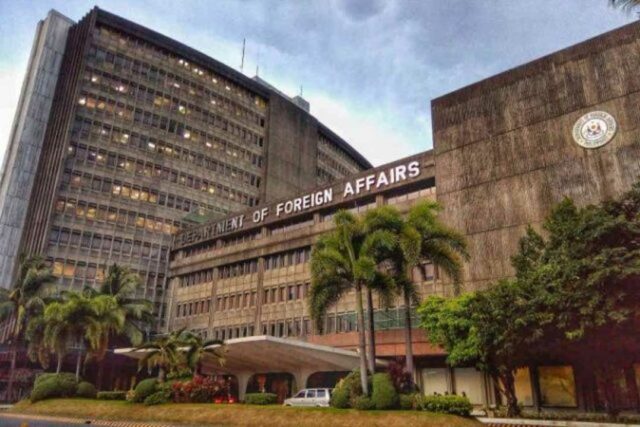
DEPARTMENT OF FOREIGN AFFAIRS FACEBOOK PAGE

THE DEPARTMENT of Foreign Affairs (DFA) has partnered with UBE Media, Inc. and UBE Express, Inc. to produce information materials for overseas voting for the 2025 national and local elections.

In a statement on Dec. 7, the DFA said two firms would work with the DFA Overseas Voting Secretariat (OVS) to promote media campaigns that will help overseas Filipinos vote on time and correctly.

“This is not just a renewal of the wonderful cooperation we have with UBE Media and UBE Express, but also we stand to reaffirm our commitment to promote every overseas Filipino’s right to vote,” DFA-OVS Chairperson and Undersecretary Jesus S. Domingo said during the partnership signing event Pasay City held on Nov. 21.

Under the deal, both firms will assist the DFA in the development of information materials and other avenues for informing Filipinos abroad about overseas voting.

Registration for overseas voting in the 2025 elections will end on Sept. 30 next year. — John Victor D. Ordoñez

Appointment of 3 women to sensitive BARMM posts hailed

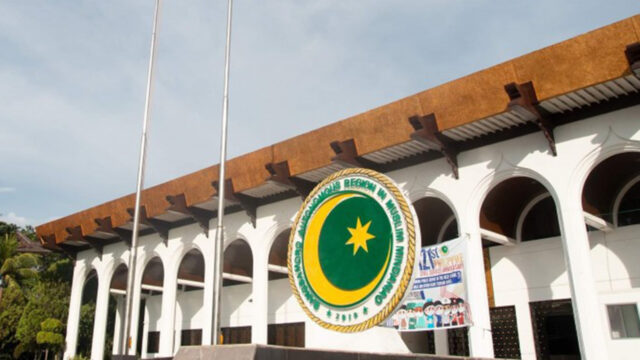
COTABATO CITY — Advocates of women empowerment and groups helping protect their rights expressed elation and support over the weekend for the appointment of three women to high positions in the Bangsamoro government.

The three appointees — lawyers Sha Elijah D. Alba and Anna Tarhata S. Basman, and long-time peace advocate Susana S. Anayatin — are the newest members of the 80-seat regional parliament of the Bangsamoro Autonomous Region in Muslim Mindanao (BARMM).

BARMM Chief Minister Ahod B. Ebrahim last week appointed Ms. Alba as regional local government minister and Ms. Basman and Ms. Anayatin as regional attorney-general and director of the Office of Settler Communities, respectively.

Aileen Kesa Marie U. Hualde, executive director of the Women’s Organization of Rajah Mamalu Descendants, said on Sunday that she is grateful to Mr. Ebrahim for entrusting to Ms. Alba, Ms. Basman, and Ms. Anayatin key positions in the regional government covering provinces where there is strong dominance, as a culture, by men in community affairs, governance and politics.

“We in our organization, composed of women from the ethnic Teduray community, are happy to see three very qualified women get to the helm of three big offices in BARMM,” Ms. Hualde said.

Lawyer Suharto Ambolodto, also a member of the regional parliament, said that the three appointees have good public service track records and are known for being supportive of programs meant to foster cultural and religious solidarity among Muslims, Christians and non-Moro indigenous people, or IPs, in the autonomous region.

Ms. Anayatin, a devout Catholic, had served as chairperson of the Multi-Sector Advisory Board of the Army’s 6th Infantry Division for nine years. The group is helping 6th ID formulate plans and policies pertaining to its community service efforts and peacebuilding activities in parts of BARMM and in Region 12.

The Muslims Ms. Alba, a Maguindanaon, and Ms. Basman, who is of Maranaw descent, are both human rights lawyers and are popular for their cordial ties with Christian communities.

“We hail their having been given vital positions in the regional government in concurrent capacities, them being members of the regional parliament too,” Mr. Ambolodto said.

A physician-ophthalmologist in the BARMM parliament, Kadil Sinolinding, Jr., said there is Muslim, Christian and IP representation in their regional law making body and in agencies under their chief minister, Mr. Ebrahim, who is chairperson of the Moro Islamic Liberation Front.

“And that is so good in fostering peace and sustainable development in BARMM,” Mr. Sinolinding said. — John Felix M. Unson

Canada’s high cost of living, rental shortages fuel reverse immigration

SINGLE family homes are seen against the skyline of Vancouver, British Columbia, Canada, Sept. 30, 2020. — REUTERS

TORONTO — The dream of making it big in Canada is turning into a battle for survival for many immigrants due to the high cost of living and rental shortages, as rising emigration numbers hint at newcomers being forced to turn their back on a country that they chose to make their adopted home.

Prime Minister Justin Trudeau has made immigration his main weapon to blunt Canada’s big challenge of an aging and slowing population, and it has also helped fuel economic growth. That drove Canada’s population up at its fastest clip in more than six decades this year, Statistics Canada said.

But now a reversal of that trend is gradually taking hold. In the first six months of 2023 some 42,000 individuals departed Canada, adding to 93,818 people who left in 2022 and 85,927 exits in 2021, official data show.

The rate of immigrants leaving Canada hit a two-decade high in 2019, according to a recent report from the Institute for Canadian Citizenship (ICC), an immigration advocacy group. While the numbers went down during pandemic lockdowns, Statistics Canada data shows it is once again rising.

While that is a fraction of the 263,000 who came to the country over the same period, a steady rise in emigration is making some observers wary.

For a nation built on immigrants, a rising trend of people leaving Canada risks undermining one of Prime Minister Justin Trudeau government’s signature policies, which granted permanent residency to a record 2.5 million people in just eight years.

Reuters spoke with a half a dozen people who have either left the country or are preparing to do so, because of the high cost of living.

Cara, 25, who came to Canada in 2022 as a refugee from Hong Kong, now pays C$650 ($474) in monthly rent for a single-room basement apartment in Scarborough in eastern Toronto, which is about 30% of her monthly take-home salary.

“I never realized that living in a Western country, you can only afford renting a room in the basement,” she said. She declined to give her real name because she fled Hong Kong after participating in the 2019 protests triggered by a now-abandoned extradition bill.

Cara works three part-time jobs, making Ontario’s minimum wage of C$16.55 per hour, and goes to an adult learning school to earn university credits.

“I almost use every single penny,” she said, while in Hong Kong she was able to save about a third of her monthly salary.

To be sure, emigration as a percentage of Canada’s overall population touched a high of 0.2% in the mid 1990s, and currently stands at about 0.09%, according to official government data.

While the numbers are small now, lawyers and immigration consultants warn that a pick-up could cast a shroud over Canada’s appeal as the one of the favoured destinations for newcomers.

“There’s a real importance in creating positive experiences in those early years” so that people decide to stay, said Daniel Bernhard, chief executive officer of ICC.

Immigrants blame the sky-rocketing housing costs as the biggest reason for their decision to consider a new country.

On average in Canada about 60% of household income would be needed to cover home ownership costs, a figure that rises to about 98% for Vancouver and 80% for Toronto, RBC said in a September report.

Myo Maung, 55, migrated to Canada from Myanmar over three decades ago and made a successful career as a real estate agent and a restaurateur. But he plans to retire in a country like Thailand since he cannot see himself maintaining his living standard in Canada on his retirement income.

Phil Triadafilopoulos, a political science professor specializing in immigration at the University of Toronto (UofT), said rapid immigration is exacerbating the housing shortage.

“It’s not surprising then that people who have options… either go to another country or go back home having had a taste of the situation in Canada,” Mr. Triadafilopoulos said.

Last month Mr. Trudeau’s government capped its target for new residents at a half million per year from 2025 onwards to ease pressure on the housing market.

But for some it is too little too late.

Justinas Stankus, 38, who came to Canada from Lithuania in 2019 to pursue a doctorate in political science at the UofT is considering relocating to Southeast Asia where the cost of living is lower and where he could still pursue his research.

Ms. Stankus, who pays C$2,000, including utilities, for a one-bedroom apartment, said increasing living expenses has made it difficult to afford basic necessities.

“With a graduate student’s budget, it is not sustainable,” Ms. Stankus said.

Cara from Hong Kong says she feels trapped and wants to go. “Whenever I get a chance to leave, I will take the chance.” — Reuters

Seoul says Japan inaction means ‘comfort women’ court ruling upheld

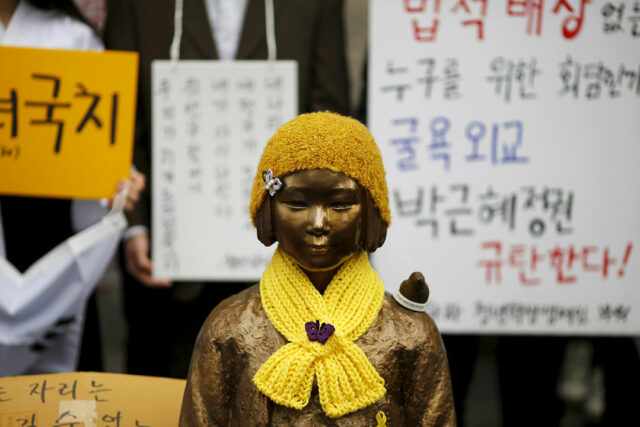
A STATUE symbolizing “comfort women” is seen during a weekly anti-Japan rally in front of Japanese embassy in Seoul, South Korea, Dec. 30, 2015. — REUTERS

SEOUL — A South Korean court ruling in favor of a group of 16 women who were forced to work in Japanese wartime brothels was confirmed on Saturday by Japan’s decision not to appeal the verdict, Seoul’s foreign ministry said.

An appellate court in South Korea last month ordered Japan to compensate the 16 “comfort women,” overturning a lower court ruling that had dismissed the case.

Appeals must be filed within two weeks after a court’s written judgment, which made Friday the deadline.

“Comfort women” is a Japanese euphemism for those forced to work in its wartime brothels during its 1910-45 colonization of the Korean peninsula and has been a point of contention between the countries for decades.

Under conservative President Yoon Suk Yeol, Seoul and Tokyo have sought to improve relations dogged by historical disputes stemming from Japan’s colonial rule.

South Korea’s foreign ministry said in a statement it would continue efforts to recover the honor and dignity of “comfort women” while seeking future-oriented cooperation with Japan.

Tokyo has said the issue was settled under a 1965 treaty that normalized diplomatic relations, and the two neighbors agreed to “irreversibly” end the dispute in a 2015 deal.

When asked about the latest court ruling, Japanese Foreign Minister Yoko Kamikawa said on Friday that Japan had expressed to the South Korean side that it is “unacceptable” and in violation of the agreement between the two countries.

She said the government had no intention of appealing against the court ruling because Japan is not subject to South Korea’s jurisdiction under international law.

Earlier this year, Seoul announced South Korean companies would pay to resolve a dispute over forced labor under Japan’s 1910-1945 occupation, seeking to end what has undercut US-led efforts to present a unified front against China and North Korea.

The move was hailed by US President Joseph R. Biden, Jr. as “groundbreaking.” — Reuters

ADVERTISEMENT
ADVERTISEMENT