
Philippine Merchandise Trade Performance (October 2023)
THE Philippines’ trade-in-goods deficit widened to a three-month high of $4.17 billion in October, as exports declined by double digits amid sluggish global demand. Read the full story.
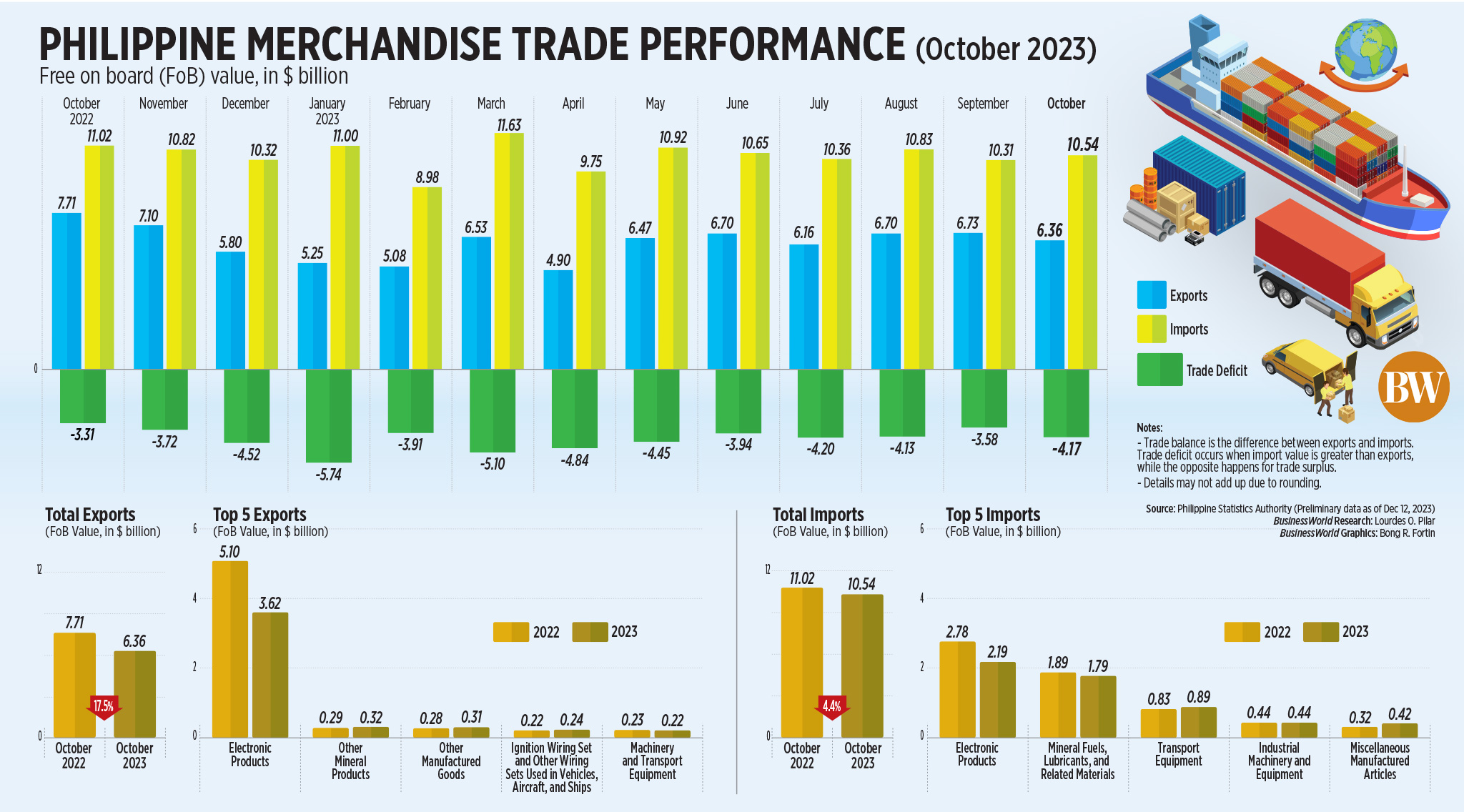
THE Philippines’ trade-in-goods deficit widened to a three-month high of $4.17 billion in October, as exports declined by double digits amid sluggish global demand. Read the full story.

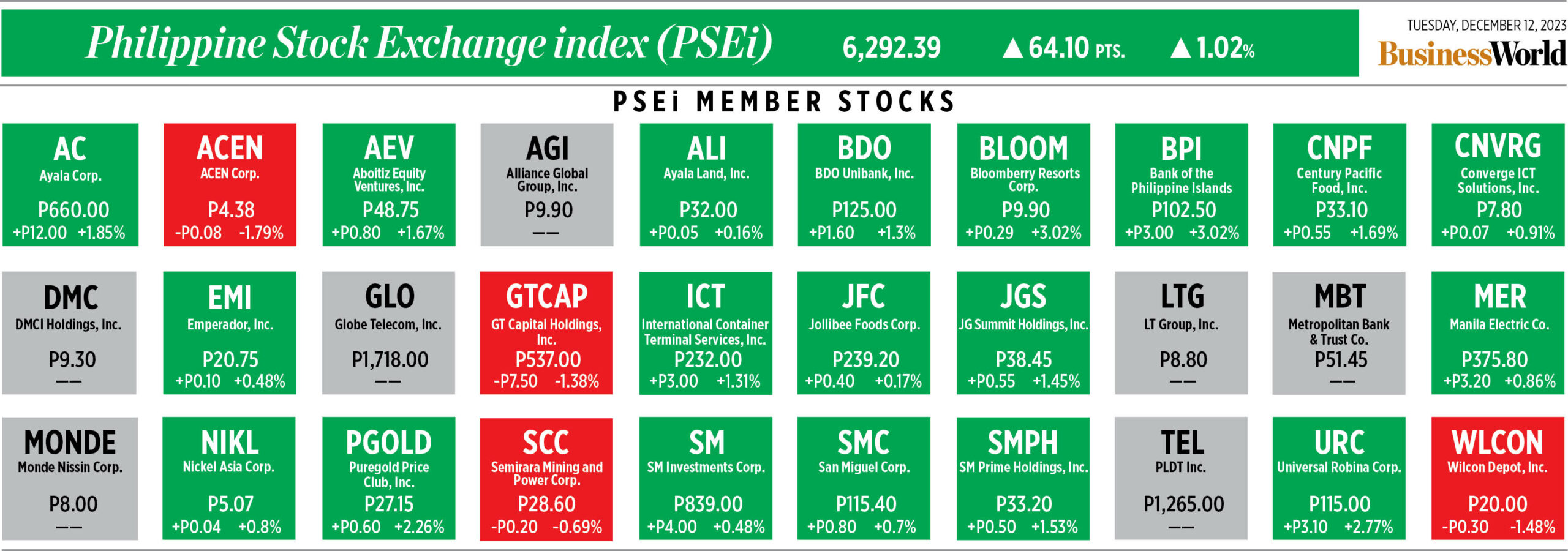
Here’s a quick glance at how PSEi stocks fared on Tuesday, December 12, 2023.

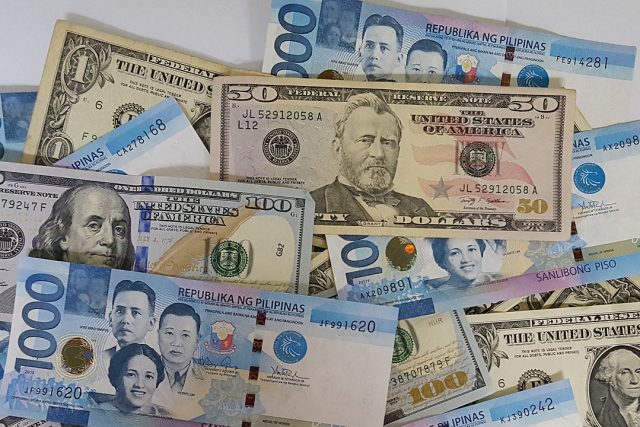
THE PESO strengthened anew against the dollar on Tuesday ahead of the release of the November US consumer inflation data overnight.
The local unit closed at P55.57 per dollar on Tuesday, rising by eight centavos from the near one-month low finish of P55.65 on Monday, data on the Bankers Association of the Philippines’ website showed.
The peso opened Tuesday’s session stronger at P55.60 against the dollar. Its intraday best was at P55.55, while its weakest showing was at P55.65 versus the greenback.
Dollars exchanged rose to $1.005 billion on Tuesday from $888.88 million recorded on Monday.
“The peso appreciated amid potentially a softer US consumer inflation report for November 2023,” a trader said in an e-mail.
The dollar slightly ahead of the release of November US consumer inflation data, Rizal Commercial Banking Corp. Chief Economist Michael L. Ricafort said in a Viber message.
The November US consumer price index (CPI) report was set to be released overnight.
In October, the US CPI was unchanged for the first time in more than a year following a 0.4% rise in September.
In the 12 months through October, the CPI was up by 3.2% after climbing by 3.7% in September.
The peso was also supported by the rollback in local fuel and energy prices, as it could help bring down inflation to the Bangko Sentral ng Pilipinas’ (BSP) 2-4% annual target, Mr. Ricafort added.
Headline inflation rose by 4.1% year on year in November, easing from the 4.9% in October and 8% in November 2022.
This was the slowest rate in 20 months or since the 4% seen in March 2022.
In the 11 months through November, headline inflation averaged 6.2%, faster than 5.6% in the same period last year. This is still above the BSP’s 2-4% goal.
For Wednesday, the trader said the peso could climb further as the Federal Reserve starts its two-day policy meeting.
The trader sees the peso moving between P55.40 and P55.64 per dollar on Wednesday, while Mr. Ricafort expects it to range from P55.45 to P55.65.
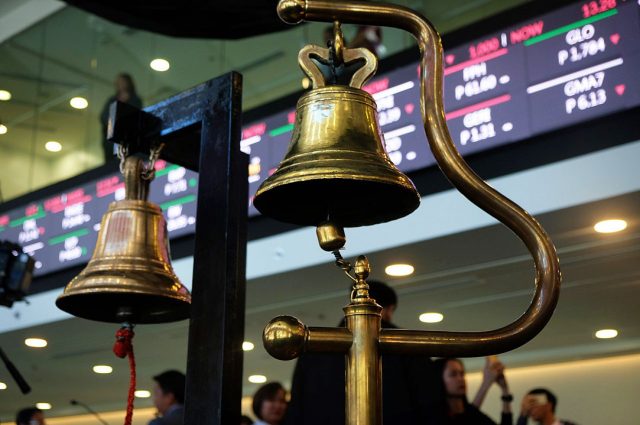
PHILIPPINE STOCKS rose on Tuesday to end a three-day skid as investors await the release of November US consumer price index (CPI) data and the policy meetings of the US Federal Reserve and the Bangko Sentral ng Pilipinas (BSP).
The bellwether Philippine Stock Exchange index (PSEi) climbed by 64.10 points or 1.02% to end at 6,292.39 on Tuesday, while the broader all shares index jumped by 25.81 points or 0.77% to close at 3,353.46.
“The index surged on market-on-close buying as traders continued to position ahead of the release of US November inflation data as well as the much-awaited policy meetings of the Federal Reserve and Bangko Sentral ng Pilipinas,” China Bank Capital Corp. Managing Director Juan Paolo E. Colet said in a Viber message.
“This Tuesday, the local market rose… as investors took positive cues from Wall Street overnight amid expectations that US inflation further slowed down in November. Additionally, the anticipation that both the Federal Reserve and the BSP will be holding key policy rates amid cooling inflation in the US and at home contributed to the climb,” Philstocks Financial, Inc. Research and Engagement Officer Mikhail Philippe Q. Plopenio said in a Viber message.
The November US CPI report was set to be released overnight.
Meanwhile, the Fed will hold its final review for the year on Dec. 12-13, while the BSP’s Monetary Board will meet to discuss policy on Dec. 14.
The US central bank is widely expected to keep its target rate at the 5.25%-5.5% range for a third straight meeting this week.
It has hiked rates by a cumulative 525 basis points (bps) since it began its tightening cycle in March 2022.
On the other hand, a BusinessWorld poll last week showed 15 out of 17 analysts expect the Monetary Board to keep its target reverse repurchase rate steady at a 16-year high of 6.5% on Thursday, with the BSP remaining vigilant amid lingering risks to prices despite easing inflation recently.
The BSP has raised benchmark interest rates by a cumulative 450 bps since May 2022.
All sectoral indices closed higher on Tuesday. Financials went up by 25.76 points or 1.54% to 1,698.23; property rose by 24.53 points or 0.88% to 2,786.97; holding firms climbed by 50.94 points or 0.85% to 6,007.55; services increased by 12.21 points or 0.79% to 1,549.91; industrials added 56.92 points or 0.65% to end at 8,795.41; and mining and oil gained 21.33 points or 0.22% to close at 9,565.27.
Value turnover dropped to P3.25 billion on Tuesday with 314.76 million shares changing hands from the P4.06 billion with 392.39 million issues seen on Monday.
Advancers beat decliners, 97 to 61, while 55 names closed unchanged.
Net foreign buying stood at P158.02 million on Tuesday versus the P32.81 million in net selling posted on Monday. — R.M.D. Ochave

THE Department of Transportation (DoTr) said it is hoping to begin partial operations of the North-South Commuter Railway (NSCR) by 2027.
In a statement, Philippine National Railways (PNR) General Manager Jeremy S. Regino said the construction of the Tutuban-Malolos (N1) and Malolos-Clark (N2) segments are on schedule, with full operations set for 2029.
Partial operations of the Malolos, Bulacan to Clark, section of the NSCR project were initially scheduled for 2026, according to the PNR website.
The DoTr said that the partial operations from West Valenzuela to Malolos are expected to begin by the second quarter of 2027, while full operations will likely start in the third quarter of 2029.
The DoTr said right-of-way has been obtained by the contractor for four out of the six stations.
The 147-kilometer NSCR will connect Malolos, Bulacan with Clark International Airport, and Tutuban, Manila with Calamba, Laguna.
The P873-billion project is being co-financed by the Japanese International Cooperation Agency and the Asian Development Bank. It will have 35 stations and three depots.
Once fully operational the entire NSCR system is projected to reduce travel time between Clark and Calamba to two hours, against the current four to 4.5 hours. — Ashley Erika O. Jose
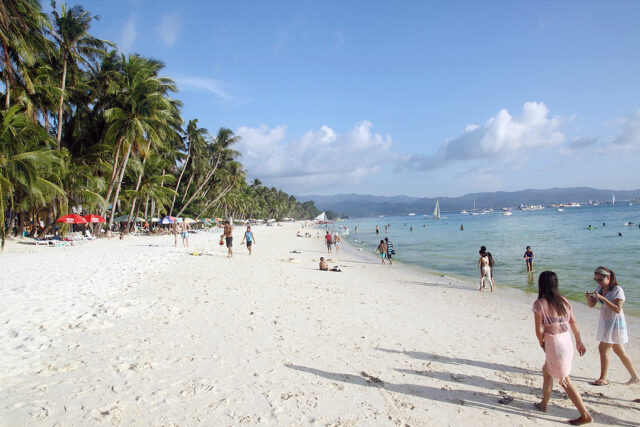
THE Department of Tourism said on Tuesday that it hopes to attract 7.7 million international visitors and book at least P440 billion in tourist receipts next year.
“We have now recovered 95% of our visitor receipts (from) international arrivals and in conjunction with our 7.7 million target for international visitors for 2024, we are hopeful that we can reach the P440 billion mark next year for international receipts,” Tourism Secretary Maria Esperanza Christina G. Frasco said.
The 2024 target of at least P440 billion in tourist receipts would match the actual total for the year to date as of Dec. 12, 2023
“I understand that this is not yet our pre-pandemic number of over 8.2 million international arrivals, but what I can assure you is that we will push as hard as we can and fully activate our convergences with other government agencies in order to reach this target and bring us closer to pre-pandemic numbers,” she said.
Citing the United Nations World Tourism Organization, Ms. Frasco said that the Philippines posted a tourism industry recovery rate of 65.54%, exceeding the Asia and the Pacific average of 62% in the first nine months.
As of Dec. 12, the Philippines recorded 5.07 million international visitor arrivals.
“With the holiday break fast approaching we are confident that we will further reach the target that was set this year at 4.8 million international arrivals, underscoring our commitment to continuous growth and transformation in Philippine tourism,” Ms. Frasco said.
Asked whether 5.5 million international arrivals is achievable this year, she said: “It’s a moving target, as they say. And we’re hopeful that with the holiday rush, our international arrivals will be a little over 5 million.”
In the year to date as of Dec. 12, the top source market of international arrivals was South Korea which accounted for 1.34 million visitors.
Rounding up the top five source markets were the US (836,694), Japan (285,655), China (252,171), and Australia (238,487).
Ms. Frasco said that she has requested more direct flights to and from Italy and the UK.
“We have proposed this to Philippine Airlines and we’re hopeful that the organization will be able to provide the flights because they are in high demand,,” Ms. Frasco said.
She added that the department is also batting for more direct flights to the US and Europe.
“Meanwhile, we have also been in close collaboration with our international aviation partners that have actually added more flights to the country not just to Manila, but also to Cebu and Davao for certain international airlines,” she added. — Justine Irish D. Tabile

PRESIDENT Ferdinand R. Marcos, Jr. has ordered the Department of Science and Technology, the Department of National Defense, and other agencies to prepare programs that will mitigate the impact of El Niño, which will bring about a dry spell that is expected to last until the second quarter of 2024.
Science and Technology Secretary Renato U. Solidum, Jr. said at a Palace briefing on Tuesday that the National Action Plan for El Niño “will include a comprehensive strategy covering water security, food security and energy security.”
Mr. Solidum said its part of the plan, which will be executed with the Office of Civil Defense and the government weather service, known as PAGASA (Philippine Atmospheric, Geophysical and Astronomical Services Administration), seeks to minimize power interruptions and the outbreak of illnesses resulting from the weather phenomenon.
He said moderate to severe drought conditions are likely to occur between February and May.
In a Dec. 6 advisory, PAGASA said a strong El Niño has intensified in the Tropical Pacific, with sea temperature anomalies exceeding 1.5 degrees centigrade from normal levels.
Mr. Solidum said that 77% of the provinces in the country might experience drought, while 65% of the provinces may see a dry spell.
PAGASA defines a drought as three consecutive months of below-normal rainfall or two straight months of significantly below-normal rainfall. A dry spell means two straight months of below-normal rainfall.
At a meeting with the President on Tuesday, Defense Secretary Gilberto C. Teodoro, Jr. presented an online database on the impact of El Niño, state-run Radio Television Malacañang said in a Facebook post.
“We need to further intensify our efforts to make sure that we are ready for this, especially in the various fields that were already mentioned like health, water, agriculture, sanitation, and of course, peace and order; and we also need to involve everyone in this effort,” Mr. Solidum said. — John Victor D. Ordoñez

METAL production rose 7.28% year on year by value to P189.08 billion in the nine months to September, according to the Mines and Geosciences Bureau (MGB).
In a report, the MGB said nickel ore and other nickel byproducts accounted for 47.6% of the total, generating P89.99 billion during the period.
By volume, nickel direct shipping ore rose 24.08% year on year to 28.9 million dry metric tons (DMT), valued at P53.54 billion.
“Caraga, the nickel capital of the Philippines, accounted for 62% with 17.75 million DMT, followed by Mimaropa with about 15% or 4.43 million DMT, while Regions VIII and III accounted for about 14% or 3.94 million DMT and 9% or 2.53 million DMT, respectively,” it said.
Prices for nickel ore declined to $10.39 per pound during the period from $11.97 per pound a year earlier.
Gold accounted for 41.07% of metal output by value during the period with P77.65 billion. It was followed by copper at P18.79 billion and the combination of silver, chromite, and iron at P2.64 billion.
The price of gold increased 5.78% or $105.6 from a year earlier to $1,932.07 per troy ounce.
“The increased interest in gold investment brought about by the continued high inflation rate together with the economic slowdown pushed prices of these metals higher,” the MGB said citing analysts.
Gold production increased to 22,935 kilograms (kg) for the nine-month period.
Cagayan Valley accounted for 21% or 4,829 kg of the gold produced, followed by Bicol with 20% or 4,601 kg, and Davao region with 2,062 kg.
The average price of copper during the period fell to $3.9 per pound from $4.12 a year earlier.
The production of copper rose 2% to 195,533 DMT, with increased production accompanied by a decline in value to P18.79 billion.
Carmen Copper Corp. accounted for 56% of the total. The company reported an 11% increase in volume to 110,252 DMT.
“Both Philex Mining Corp. and OGPI (OceanaGold Philippines, Inc.) sustained production shortfalls of 11% and 3%, respectively,” the report said.
Silver prices rose 7.32% to $23.55 per troy ounce. Output fell 14% to 35,784 kg.
“Backed up by industrial demand in the solar sector, the price of silver, on the other hand, is projected to stay high,” it added.
Iron ore production rose 37% to 78,213 DMT, while chromite output grew to 67,877 DMT during the period.
The MGB said that due to the shift to renewable technology, critical minerals like gold, nickel, cobalt, copper, and iron, will continue to be in demand.
“Founded on this premise the outlook for the mining industry remains strong,” it added.
Asked to comment, Rizal Commercial Banking Corp. Chief Economist Michael L. Ricafort said that the supply chain for renewable energy and electric vehicles will continue to drive growth in the metallic minerals industry.
“Demand will be sustained by the shift towards renewable power from coal and other petroleum power sources amid the commitment by more companies and countries to reduce carbon emissions… these will sustain demand for mineral resources used as inputs,” Mr. Ricafort said in a Viber message.
Regina Capital Development Corp. Head of Sales Luis A. Limlingan said that the recovery of the Chinese economy will drive demand for critical minerals.
“Many will be watching whether China’s economy can recover heading into next year as they are one of the world’s major consumers and drivers of demand for metal prices,” Mr. Limlingan said in a Viber message.
The MGB also said that due to domestic nickel supply concerns in Indonesia, Chinese demand for nickel ore from the Philippines will rise.
It added that it expects 12 projects to start within the next six months, which could further boost exports given the high demand in global markets. — Adrian H. Halili

THE Department of Trade Industry (DTI) said the supply of items typically served in the Christmas feast — known in the Philippines as Noche Buena — will be adequate until the end of the holidays.
The DTI released this assessment of supply-demand conditions after meeting with the manufacturers on Monday.
“As part of our commitment to ensure that Noche Buena items remain affordable and of good quality this holiday season, we are intensifying our price monitoring efforts all over the country,” Trade Secretary Alfredo E. Pascual said in a statement on Wednesday.
“Through this meeting with manufacturers, we aim to assure consumers that the DTI remains at the forefront of ensuring that the rights of consumers are protected,” he added.
The meeting was initially called to address reports of certain Christmas food products being sold above the prices indicated in the DTI’s Noche Buena price guide.
These include the Edam-style cheese product known as queso de bola, fruit cocktail, ham, all-purpose cream, and mayonnaise, the DTI said.
“In response, the manufacturers agreed to verify with their retail partners to address this concern,” the department said.
“Further, some manufacturers in the meeting committed to intensify their own price and supply monitoring efforts to ensure that their products are sold in accordance with the Noche Buena price guide until the end of the year,” it added.
The DTI said manufacturers had confirmed the sufficiency of supply of Noche Buena items at a previous meeting.
“The manufacturers assured DTI of the sufficient supply and stability of prices during their meeting held on Nov. 7 prior to the release of the price guide,” the department said.
Mr. Pascual also called on manufacturers and retailers to adhere to the price guide, adding: “That is what the price guide is for — that consumers will be informed so they may exercise their right to choose.”
“I also instructed our price monitors to ramp up their activities,” he added. — Justine Irish D. Tabile

A STUDY has revealed a measure of skepticism towards companies declaring climate change objectives.
Communications firm Havas Ortega said in its Prosumer Report that only 5% of Filipinos believe that companies are putting in significant effort to reduce their environmental impact.
Havas Ortega defines “prosumers” as the 15-20% of the population with the power to shape new attitudes, behaviors, trends, and brands.
“Our findings are a dire warning for Filipino businesses and brands amid an escalating climate crisis,” Havas Ortega President and Chief Executive Officer Jos Ortega said.
Mr. Ortega added that prosumers expect companies to take the lead in sustainable innovations to reduce their carbon footprint and are acutely aware of the environmental stakes.
The report said that 41% of respondents expect corporations and brands to tackle climate change.
“This gap exposes a harsh reality: mere acknowledgment of responsibility by corporations and brands is insufficient,” Havas Ortega said.
It added that to satisfy the demands of eco-conscious consumers, companies should take bold and uncompromising steps in environmental leadership.
The firm said that about 60% of consumers avoid brands that are in conflict with their environmental beliefs.
“This change presents a dual-faced scenario: a formidable challenge and a golden opportunity for businesses to remodel their practices towards authentic sustainability and environmental guardianship,” it added.
It said that 82% of respondents believe that large companies are more capable of implementing climate change action, while 83% believe profit-rich enterprises should lead in funding environmental initiatives.
“Businesses must not only adopt but also openly communicate their environmental initiatives, aligning them with the United Nations Sustainable Development Goals (SDGs),” Havas Ortega said.
It added that active engagement with various sectors is crucial to implementing sustainability projects, while better technology and infrastructure can significantly reduce environmental impact. — Adrian H. Halili
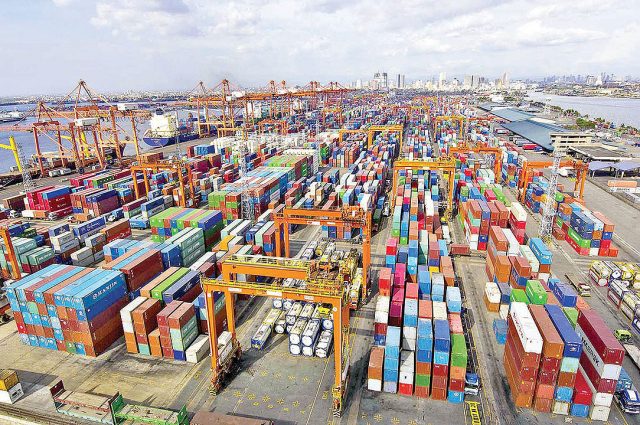
THE Department of Trade and Industry (DTI) said export targets to 2028 will depend greatly on the levels of investment attracted to the Philippines.
It added that such targets are set to be recalibrated this week.
“What is very critical in achieving our export targets are investment-driven exports,” DTI Export Marketing Bureau Director Bianca Pearl R. Sykimte told reporters.
“The Philippine Export Development Plan (PEDP) 2023-2028 recognizes that we cannot simply grow without foreign investment . We have also seen the experience of other countries,” she added.
She cited the example of Vietnam and Malaysia.
“In Vietnam, their exports of telephones or Samsung phones accounted for about $65 billion,” she said.
“Another example is Malaysia’s exports of integrated circuits, (which were worth) about $78 billion – roughly the total exports of the Philippines in 2022. So most of it, if not all, are investment-driven,” she added.
At the National Export Congress last week, Undersecretary for the Industry Development, Trade and Investment Promotion Group Ceferino S. Rodolfo said the Philippines has the potential to exceed the goals set out in the PEDP.
“In the PEDP, the target was to double our 2021 exports by the end of the President’s term … and I think that doubling the 2021 exports is (a modest goal),” Mr. Rodolfo said.
“With all of the collaboration, maybe we should work to achieve four times or maybe five times 2021 exports,” he added.
In 2021, total exports – which include services – amounted to $87.8 billion, while the PEDP target for 2028 is $240.5 billion.
Ms. Sykimte said that the department has yet to discuss how to achieve four to five times the level of 2021 exports by 2028.
“We will have a meeting internally with DTI to review the export targets so we will have to recalibrate,” she said.
The Philippine Statistics Authority (PSA) on Tuesday released a preliminary estimate for the value of merchandise exports, which contracted 17.5% to $6.36 billion in October, reversing the 20.1% growth from a year earlier.
The PSA said manufactured goods, which comprised 81.5% of total export receipts, declined 21.1% year-on-year to $5.19 billion in October. — Justine Irish DP Tabile

THE House of Representatives on Tuesday approved a bill tying the motor vehicle user charge (MVUC) proceeds to support the public utility vehicle (PUV) modernization program.
With 247 yes votes, four no votes, and one abstention, legislators passed House Bill No. 9647.
The bill seeks to amend Republic Act No. 8794 or the Motor Vehicle Users’ Charge law, which gives the President the authority to adjust MVUC rates.
For-hire vehicles will enjoy a 50% discount from fees, while motorcycles below 400 cubic centimeters and tricycles will be exempt.
The proposed law also allocates 45% of incremental revenue from the program to finance the PUV modernization program, while 5% will go to government road safety programs.
House ways and means committee chairman and Albay Rep. Jose Ma. Clemente S. Salceda called the measure “progressive,” as 52% of car-owning households belong to the “richest percentile.”
Party-list Rep. Arlene D. Brosas, who voted against the bill, said many small-vehicle owners will be affected.
“Instead, fixing the current public mass transport system will reduce dependence on imported vehicles,” she told the plenary.
Also on Tuesday, legislators approved on third and final reading a bill proposing to create a multi-year strategy that would help link domestic enterprises to global value chains.
During the plenary session, 251 legislators voted in favor of House Bill No. 8525 or the Tatak Pinoy bill. None voted against or abstained on the measure.
“At a time of a globally integrated development, this bill seeks to promote the Filipino brand to be recognized as a world-class brand that offers high quality products and services,” Marikina Rep. Stella Luz A. Quimbo, the principal author of the bill, said in its explanatory note.
The proposed law aims to establish the Tatak Pinoy strategy to improve and diversify local enterprises, linking them to global value chains.
It also seeks to expand the capacities of micro, small and medium enterprises to produce world-class products.
Ms. Quimbo said that the proposed law was drafted in response to Philippine participation in the Regional Comprehensive Economic Partnership (RCEP).
The RCEP is considered the world’s largest free trade agreement, involving Association of Southeast Asian Nations, Australia, China, Japan, New Zealand, and South Korea.
Citing the International Trade Center, Ms. Quimbo said the Philippines has an estimated $27.8 billion in unrealized export potential to RCEP partners over the next five years.
The five “pillars” of the Tatak Pinoy Strategy include manpower, infrastructure, technology and innovation, investment, and public fiscal management.
The measure also seeks to establish a supervisory council that would manage and propose improvements to the strategy, with the National Economic and Development Authority Secretary as chair and the Trade and Finance Secretaries as vice-chairs.
During the Tuesday plenary, 251 legislators voted in favor of amending the procurement law, with a measure granting preference to domestic suppliers and establishing a single portal for electronic procurement. Three legislators voted against the bill, while none abstained.
The measure aims to adopt a single electronic portal known as the Philippine Government Electronic Procurement System for all procurement activities from planning to implementation.
It also seeks to establish an electronic payment system through the Budget department and the central bank for procuring entities.
Meanwhile, the proposed blue economy bill was approved on third and final reading with 254 yes votes, three no votes, and zero abstentions.
House Bill No. 9662 seeks to establish a framework for the sustainable use of the Philippines’ marine resources through a National Marine Council and rename the National Coast Watch System to the National Maritime Monitoring System.
The blue economy is an economic model seeking the sustainable utilization of ocean resources through green infrastructure and technology. — Beatriz Marie D. Cruz
