Home Blog Page 388

Avida Land invests P3.1B in new Quezon City condo project

The Heights Katipunan — AVIDALAND.COM

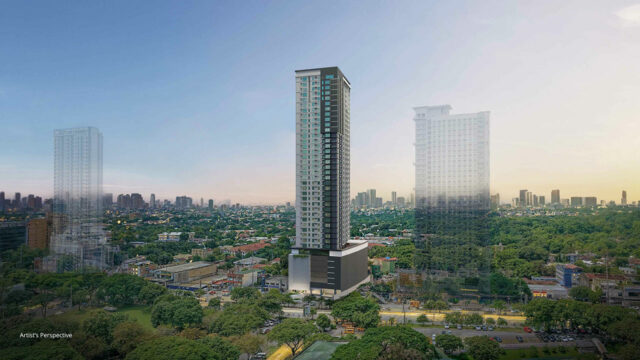
AVIDA LAND CORP., the middle-income residential brand of Ayala Land, Inc., is investing P3.1 billion in its newest high-rise condominium project along Katipunan Avenue in Quezon City.

The upcoming development, called The Heights Katipunan, will cater to students from nearby schools as well as investors seeking steady income streams, Avida Land Chief Operating Officer Aristides Antonio C. Gonzales told a briefing on Tuesday.

“The Heights Katipunan is designed to serve both end-users and investors — offering efficient, climate-resilient homes that align with how people live, study, and work today,” he said.

Avida Land is looking to generate P6 billion in revenues from the project.

The Heights Katipunan will rise on a 1,833-square-meter land area and will have 758 residential units across 33 floors. The development is slated for completion by September 2030.

Available unit types include studio, one-bedroom, and two-bedroom layouts ranging from 21 sq.m. to 68 sq.m., with prices starting at P6.7 million.

The development will feature CLIMADAPT innovations such as heat-reducing materials and rainwater harvesting systems. Security and safety features include RFID access control, digital locks, CCTV surveillance, and emergency power supply.

Key amenities include a swimming pool, meeting room, study hall, multi-purpose hall, and gym. Units offer various orientations, including east-facing with mountain range views, west-facing overlooking low-density cityscapes, as well as north- and south-facing options.

Avida Land collaborated with The Buchan Group Australia Pty Ltd. to design the project’s façade.

Bing C. Gumboc, core residential business group national sales head at Avida Land, said the project has recorded P900 million in reservation sales since its launch earlier this month.

For the first quarter, the company plans to launch three horizontal residential projects, Avida Land President Raquel S. Cruz told BusinessWorld on the sidelines of the event.

“This is our target because we’re just waiting for the permits to come out,” she said, noting that the projects will be located in Nuvali in Laguna, Tarlac, and Rizal.

“We also saw that the demand continues to be strong in the horizontal [segment], so that’s where we want also to be able to focus and provide inventory,” Ms. Cruz noted.

She added that the company will be deliberate in launching vertical residential projects, with several mid-rise and high-rise developments lined up.

“I think we’ll have to balance it all — the inventory of RFO (ready-for-occupancy), the pre-selling units, and then these new launches,” she said.

To date, Avida Land has launched 106 mid-income residential projects across 36 locations nationwide. — Beatriz Marie D. Cruz

RLC raises P7B from block sale of RCR shares

ROBINSONSLAND.COM

By Beatriz Marie D. Cruz, Reporter

GOKONGWEI-LED property developer Robinsons Land Corp. (RLC) has completed the overnight block placement of shares in its real estate investment trust (REIT), raising proceeds of around P7 billion to support its expansion plans.

In a stock exchange disclosure on Tuesday, RLC’s board of directors authorized the sale of 945.95 million common shares of RL Commercial REIT, Inc. (RCR).

The sale had a transaction price of P7.40 per share and is anchored by high-quality institutional local and international investors, the company said.

The proceeds from the block sale are to be settled on Jan. 29 under a Secondary Block Trade Agreement, RLC also said.

Following this placement, the public float of RCR increased to 8.64 billion common shares or 44.18% of the total issued and outstanding common shares.

The company will submit a reinvestment plan outlining the use of proceeds from the transaction.

The shares were sold via transactions exempt from registration under the Securities Regulation Code (SRC) and offered offshore under Regulation S of the US Securities Act of 1933. They will not be registered with the Securities and Exchange Commission.

“Any future offer or sale of the placement shares by the buyers thereof in the Philippines is subject to the registration requirements of the SRC unless such offer or sale qualifies as an exempt transaction in accordance with the applicable requirements of the SRC,” RLC added.

China Bank Capital Corp. Managing Director Juan Paolo E. Colet said the block transaction signals that RLC is looking to infuse additional properties into its REIT.

“The block sale helps raise the public float of RCR, giving the company enough headroom for future asset-for-share swaps with RLC,” he said in a Viber message.

The share sale proceeds would also provide RLC with fresh capital for its project pipeline, Mr. Colet said.

The company earlier said it is aiming to reach P25 billion in net income by 2030, in time for its 50th anniversary.

“The block sale allows RLC to monetize part of its REIT stake to fund its expansion pipeline and improve liquidity now that passive funds tracking the index will eat up more RCR shares,” Shawn Ray R. Atienza, equity research analyst at AP Securities, Inc., said in a Viber message.

“However, the transaction could exert downward pressure on RCR’s price short-term given the timing of the sale,” he added.

Last year, RLC raised P7.75 billion from an overnight block sale of one billion common shares of RCR at P7.75 each.

In June, the company also infused nine lifestyle malls into RCR, bringing its total assets to 38 and increasing its gross leasable area to 1.15 million square meters.

On the local bourse on Tuesday, RLC shares declined 0.54% or 10 centavos to close at P18.30 apiece, while RCR shares fell 3.57% or 28 centavos to P7.56 each.

The emotional landscape of travelers

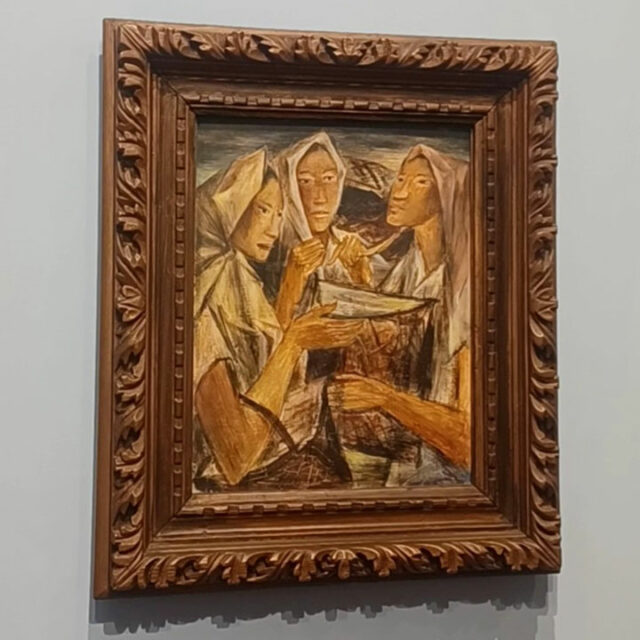
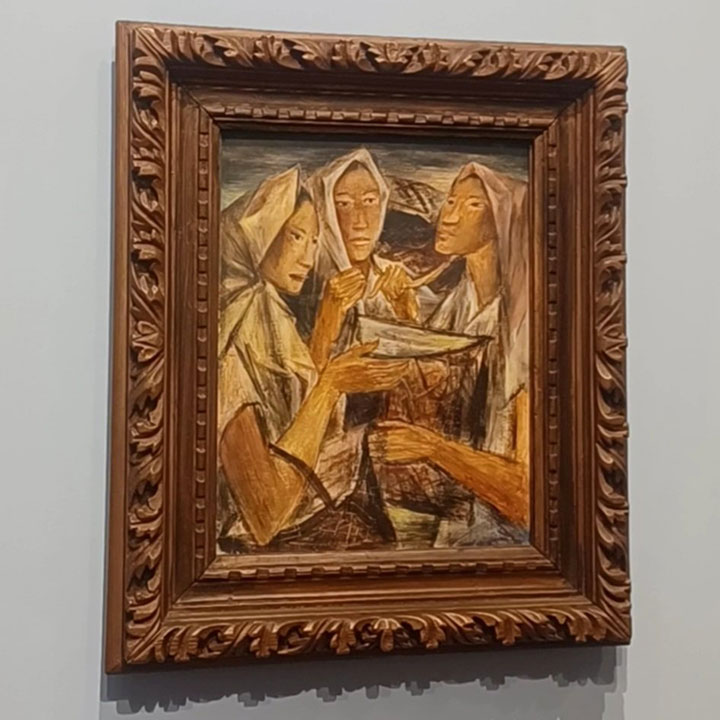
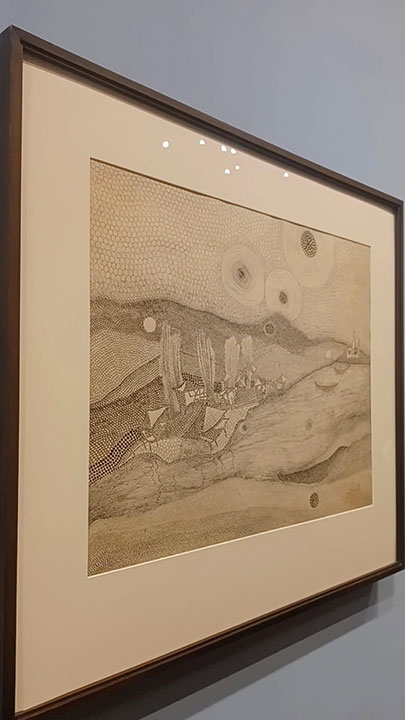
A PAINTING by Anita Magsaysay-Ho on view at the exhibit Sown by the Traveler: Women and Migrants in Philippine Art at the UP Visayas Museum of Art and Cultural Heritage in Iloilo City.

WHEN he was studying in Germany in 1886, Philippine national hero Jose Rizal wrote a poem titled “To the Flowers of Heidelberg.” Since then, many Filipinos have experienced the same melancholy of missing one’s homeland — a distinct sense of transience that only migrants pursuing a life outside of their home know.

From moving between provinces to settling in distant parts of the world, Filipinos leave home in pursuit of opportunity and discovery. To highlight the meaningful contributions of migrants in Philippine art, the Lopez Group Foundation, Inc., has once again partnered with the University of the Philippines Visayas (UPV) Museum of Art and Cultural Heritage in Iloilo to present an exhibition of works by renowned Filipino diaspora artists.

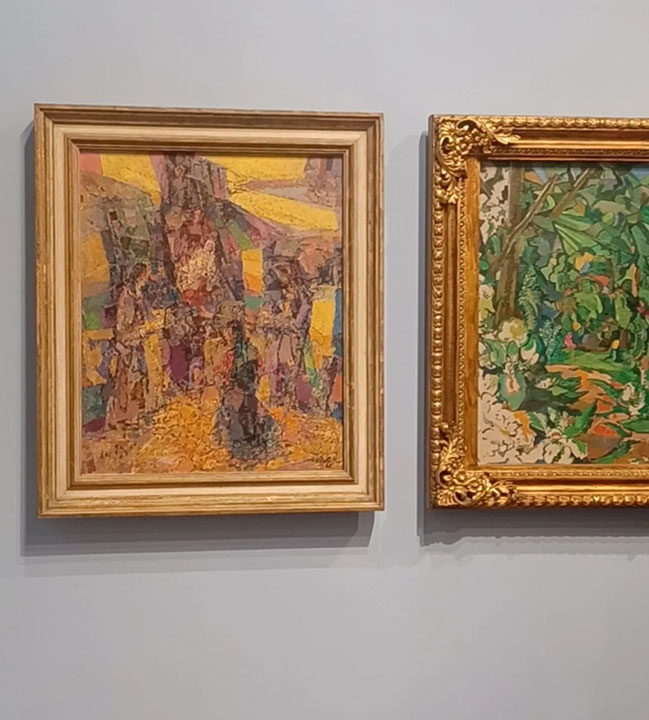
Running until the first week of June, Sown by the Traveler: Women and Migrants in Philippine Art tells stories of the Filipino people through the shared experience of migration. The paintings on display — by Macario Vitalis, Alfonso Ossorio, Anita Magsaysay-Ho, Nena Saguil, Fernando Zobel, and Juvenal Sansó — all come from the Lopez Museum and Library collection.

“The title evokes the desire of Filipinos to fill the world with the imagination of homeland. This wistful vision of a common world is sourced from the gifts of nature, like flowers which know no borders and can bring faraway places together,” said exhibit curator Patrick Flores in a video message.

He added that the artists were all shaped by the considerable time they each spent in various countries: Zobel in Spain; Ossorio in the US; Vitalis, Sansó, and Saguil in France; and Magsaysay-Ho in the US and Hong Kong.

Last year, the Lopez Foundation and the museum in UPV mounted The Patrimony of All: Paintings from the Lopez Museum and Library Collection, featuring the paintings of Juan Luna, Felix Resurreccion Hidalgo, Fernando Amorsolo, and Juan Arellano.

For Mr. Flores, this second exhibition born from that institutional partnership provides a different perspective from the first.

“It overcomes the exalted patriarchy of Philippine artistry as well as the confines of the nation,” he said.

There are two to three paintings by each artist on display, giving ample opportunity for visitors to chart both shared and varying styles and sensibilities among the six artists.

Lopez Museum director Mercedes Lopez-Vargas said at the vernissage on Jan. 23 that they aim to “honor Iloilo as a vital part of the [Lopez] family’s roots.”

“Like the Dinagyang Festival, this exhibition is not just a cultural event, but also a commemoration, an expression of the Lopez family’s enduring spirit of giving back to the community that has shaped our history,” she said. “By bringing the museum’s collections to Iloilo, the family affirms its belief that heritage is a shared legacy by all.”

The UP Visayas Museum of Art and Cultural Heritage is in the UP campus in Iloilo City. Its mission is to be a center of art and culture in Western Visayas while also welcoming visitors from all over the Philippines, according to Martin G. Genodepa, director of UPV’s office of initiatives for culture and the arts.

Meanwhile, the Lopez Museum and Library hopes to help Filipinos uncover connections that foster deeper understanding and empathy through its Filipiniana collection, which comprises artworks, books, manuscripts, and artifacts that span from the pre-colonial era to the present.

Sown by the Traveler: Women and Migrants in Philippine Art runs until the first week of June at the UP Visayas Museum of Art and Cultural Heritage in Iloilo City. — Brontë H. Lacsamana

PLDT plans P1.22- billion subscription to Kayana shares

WIKIMEDIA COMMONS/PATRICKROQUE01

PANGILINAN-LED PLDT Inc. said its board of directors has approved its subscription to additional shares in Kayana Solutions, Inc. for P1.22 billion.

The listed telecommunications company will subscribe to 1.22 billion additional common shares in Kayana, priced at P1 apiece, pending the execution of definitive agreements, it said in a regulatory filing on Tuesday.

PLDT’s investment in Kayana Solutions is part of its initiative to create new opportunities for value and growth within the Pangilinan-led companies, it said, noting that its stake in Kayana Solutions will remain unchanged.

PLDT holds a 45% stake in Kayana Solutions, while its parent company, Metro Pacific Investments Corp., and affiliate Manila Electric Co. each own 27.5%.

Kayana Solutions, formerly DigiCo, is a data-powered digital experience company launched to accelerate digital transformation by leveraging data assets to provide personalized customer experiences.

In September last year, PLDT executed a subscription agreement for 594 million additional common shares of Kayana Solutions.

At the local bourse on Tuesday, shares of PLDT closed P12, or 0.89% higher, at P1,360 per share.

Hastings Holdings, Inc., a unit of PLDT Beneficial Trust Fund subsidiary MediaQuest Holdings, Inc., has a majority stake in BusinessWorld through the Philippine Star Group, which it controls. — Ashley Erika O. Jose

First butoh gathering in Asia platforms dance performances, cultural discourse

THE Asia Butoh Gathering (ABG) 2026, led by the Kapwa Movement and the Japan Foundation, Manila, is set to take place on the first week of February. The inaugural edition of the festival will have a lineup of performances, workshops, talks, and exchanges exploring butoh as a dance practice responding to various social, cultural, and ecological contexts in Asia.

ABG will serve as “a space for cross-border dialogue, artistic research, and collective reflection through movement and performance.” With the theme “Moving Roots, Moving Cultures,” it also marks 70 years of Japan-Philippines diplomatic relations.

Sasa Cabalquinto, Kapwa Movement founder and ABG program director, said at the media launch on Jan. 19 that the gathering will be the first time that butoh practitioners from all over Asia will convene.

“The artists featured here in the festival have been actively pursuing butoh in their own communities, contexts, and cultures,” said Ms. Cabalquinto.

Butoh is seen as a solitary underground practice. In many parts of Asia, artists usually work in isolation without much access to dialogue, history, or collective community. This festival creates that rare space. This is a once in a blue moon opportunity,” she added.

SHARED PULSE
ABG will run for three days, welcoming butoh artists from Japan, Thailand, Taiwan, Singapore, South Korea, Malaysia, Indonesia, Hong Kong, and the Philippines. It invites participants to “explore the shared pulse of an Asian identity through embodied movement.”

“Originating from Japan, butoh has a very rich and complex history as a dance, as a movement. Brought as a seed to different lands, to different countries, how did it grow and what does it look like now as a tree, as a plant, as a flower?” said Ms. Cabalquinto. “That’s what ABG is all about, discussing the Japanese artistry but also separating the ways it has rooted, grown, and continued to move forward.”

Butoh emerged in post-war Japan, but the festival’s theme of “Butoh in the Time of Ecological Crisis” addresses a world grappling with environmental collapse and holding on to a desperate hope for renewal.

Ms. Cabalquinto said that the art form “responds to the ecological consciousness,” especially in the Philippines where a lot of natural disasters had led practitioners in the Kapwa Movement to sit and reflect on what has been happening to the earth.

For Vinci Mok from Hong Kong, there’s a line that can be traced from the origins of butoh in Japan to the present day, where many people of different cultures welcome it as a healing practice.

“The spirit of it is very important because it comes from World War II and hard times in Japan. Right now, there are hard times in Hong Kong, so it helps us experience calm,” Mr. Mok explained. “How do we survive in a limited space? Our body is limited, so how do we find our way out? When we live with this kind of philosophy, we move in a way that’s detailed.”

Xue from Singapore told the press that different communities find empowerment in butoh depending on their respective contexts.

“In our community in Singapore, people are quite repressed and shy about our bodies and movement. Butoh is an extremely liberating form of movement for people who are not trained in dance. The community aspect, being able to move together, has inadvertently empowered practitioners to feel more empowered in their movement,” she said.

On Feb. 6, there will be a dialogue held at WhyNot Manila in Karrivin Plaza, Makati City. This includes roundtable conversations featuring speakers from nine different parts of Asia, moderated by Katrina Stuart Santiago. The evening will transition into a physical workshop led by Yuko Kawamoto.

On Feb. 7, attendees can experience a screening of the 84-minute film Darkness Princess Bamboo, followed by lecture-presentations from Japanese masters Kae Ishimoto, Tenko Ima, and Yuko Kawamoto.

Butoh started in Japan, so we wanted to emphasize in this festival that there have been efforts from the Japanese themselves to bring butoh across Asia,” said Ms. Cabalquinto. “That’s one of the highlights, the Japanese film screenings documenting archives, and lecture presentations.”

The festival will culminate on Feb. 7 at the Carlos P. Romulo Auditorium in RCBC Plaza, Makati City, with the ticketed performance of Falling Earth, Moving Sky, an exploration of ancestry, land, and gender.

“Performances represented here are an embodied response to the world that has been unraveling, remaking itself, and how it affects us as human beings,” Ms. Cabalquinto said.

While the entire festival is free, the general admission tickets for the final performance cost P1,000, with an early bird rate of P800 applicable until Jan. 31. — Brontë H. Lacsamana

ACEN keeps P30-B stock rights offering on the table

ACENRENEWABLES.COM

ACEN CORP., the listed energy platform of the Ayala group, is likely to pursue its P30-billion stock rights offering (SRO) by the second half of the year as it assesses its capital expenditure (capex) plans, its president said.

“Hopefully, we’ll be making a decision maybe in the second quarter on the latest plans for capital raising. But it’s on the table,” ACEN President and Chief Executive Officer Eric T. Francia told reporters last week.

He said the company will hold the SRO “indefinitely” and will revisit the plan in the middle of the year.

ACEN had planned to hold its SRO by September last year, offering shares at a floor price of P2.30 each.

The company later postponed the offering due to a revised schedule for its capex across Southeast Asian markets.

“We will revisit it middle of the year to assess where we stand in terms of the pace of capex deployment,” Mr. Francia said.

He added that proceeds from the SRO would be allocated to growth capital projects.

An SRO is a capital-raising mechanism that allows existing shareholders to purchase additional shares, usually at a discounted price.

For 2026, ACEN has earmarked more than P80 billion to fund large-scale energy projects.

The company currently operates 4.3 gigawatts of renewable energy projects across its markets, including the Philippines, Australia, Vietnam, India, Indonesia, Laos, and the United States.

At the local bourse on Tuesday, ACEN shares dipped 0.34% to close at P2.94 apiece. — Sheldeen Joy Talavera

Ye apologizes for antisemitic remarks, says he was treated for bipolar disorder

YE, formerly known as Kanye West, in Lollapalooza Chile, 2011. — COMMONS.WIKIMEDIA.ORG/RODRIGOFERRARI

LOS ANGELES — American rapper and record producer Ye, formerly known as Kanye West, took out a full-page advertisement in the Wall Street Journal on Monday to apologize for antisemitic remarks that drew years of backlash.

“I lost touch with reality,” Ye wrote in the ad, attributing his behavior to an undiagnosed brain injury and an untreated bipolar disorder.

“I regret and am deeply mortified by my actions in that state, and am committed to accountability, treatment and meaningful change. It does not excuse what I did, though. I am not a Nazi or an antisemite. I love Jewish people,” he added.

Ye also voiced regrets for past expressions of admiration for Adolf Hitler and the use of swastika imagery.

The Anti-Defamation League (ADL), which tracks antisemitism, issued a statement describing his apology as overdue and noting his prior antisemitic remarks.

“Ye’s apology to the Jewish people is long overdue and doesn’t automatically undo his long history of antisemitism — the antisemitic ‘Heil Hitler’ song he created, the hundreds of tweets, the swastikas and myriad Holocaust references — and all of the feelings of hurt and betrayal it caused,” an ADL spokesperson said in a statement to Reuters.

“The truest apology would be for him to not engage in antisemitic behavior in the future. We wish him well on the road to recovery,” the statement added.

Ye’s next album, Bully, is due out on Friday, according to the Spotify website.

The rapper referred in the full-page ad to his struggles with his mood disorder over the years.

“Bipolar disorder comes with its own defense system. Denial. When you’re manic, you don’t think you’re sick. You think everyone else is overreacting. You feel like you’re seeing the world more clearly than ever, when in reality you’re losing your grip entirely,” he wrote.

Ye wrote that 25 years ago he was in a car accident that caused significant brain damage that he said wasn’t properly diagnosed until 2023. He added that the medical oversight caused mental health problems that led to his bipolar type-1 diagnosis.

The songwriter said that being in “a four-month-long manic episode of psychotic, paranoid and impulsive behavior” in early 2025 destroyed his life.

Ye added that he “hit rock bottom a few months ago” and had thoughts of not wanting “to be here anymore.”

The “Gold Digger” rapper also addressed the Black community with both appreciation and more apologies. He said it was “unquestionably, the foundation of who I am. I am so sorry to have let you down. I love us.”

The “Stronger” rapper previously said he was on the autism spectrum rather than having bipolar disorder. However, looking through Reddit posts of other “manic” people helped him feel “not alone” and understand that he has a chronic mood disorder. — Reuters

Robina Farms firms up cage-free eggs capacity with cage-free certification from Animal Kingdom Foundation

Animal Kingdom Foundation team together with Robina's representatives at the awarding ceremony

The Animal Kingdom Foundation (AKF) is proud to announce that Robina Farms has officially received another cage-free certification, marking a significant milestone not only in the company’s commitment to ethical farming practices and animal welfare but also in providing healthy and credible cage-free egg options to its consumers.

The certification recognizes Robina Farms’ adherence to AKF’s cage-free standards, which prioritize humane treatment, improved living conditions, and the natural behavior of laying hens. Through this achievement, Robina Farms reaffirms its dedication to responsible agriculture, sustainability, and continuous improvement across its farming operations.

“We are deeply honored to receive this NGO Cage-Free Certification. This certification reflects the hard work of our team and our ongoing commitment to raising animals with care, respect, and accountability,” said Lina Macailing, Farm Operations head manager.

Mary Jane C. Bernardo, marketing director of Robina Agri Partners, noted that the certification further strengthens Robina Farms’ position as a trusted producer aligned with evolving consumer expectations and global best practices in animal welfare. “Kabalikat namin kayo (AKF) in ensuring na what we are bringing our consumers are of the highest quality. We are continuously fulfilling our purpose of delighting our consumers with good food choices,” she shared.

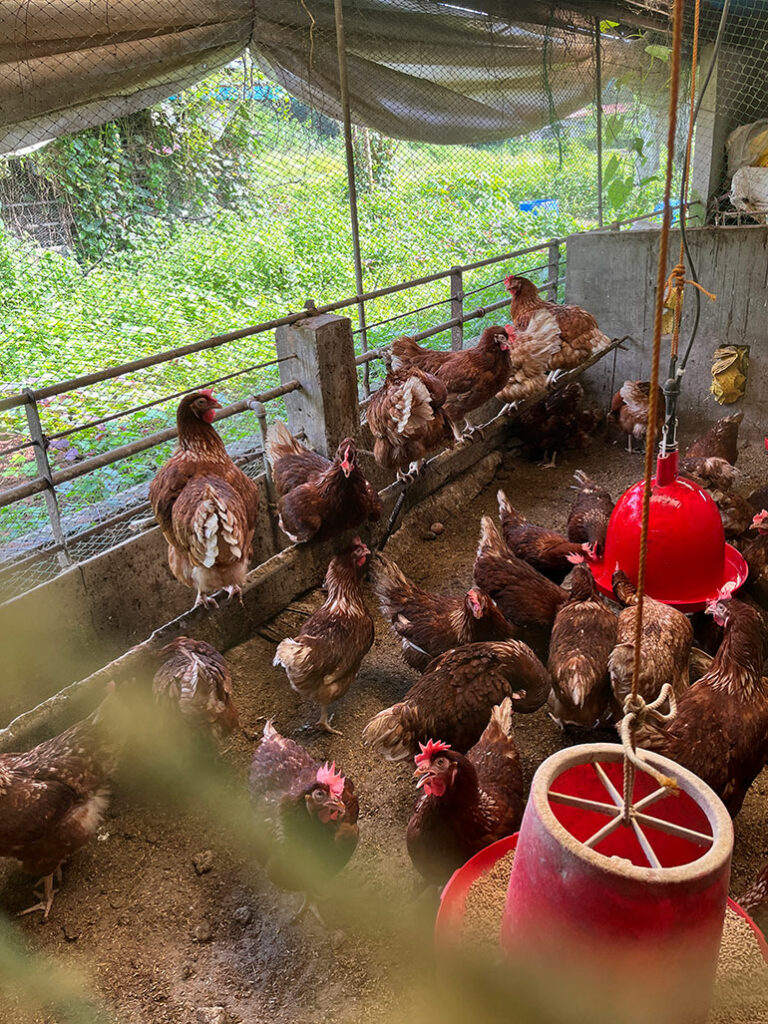
In photo: A look inside the newly certified cage-free house where the layer hens are raised

Growing Demand for Cage-Free Eggs in the Philippines

Beyond Robina’s operations, the development carries wider significance for the Philippine egg industry. Food companies are increasingly expected to honor their cage-free commitments, and that expectation is translating directly into stronger demand at the farm level.

AKF’s Program Director, Atty. Heidi Caguioa, emphasized that cage-free initiatives should go beyond compliance. “It’s important that cage-free initiatives are not seen merely as regulatory milestones, but as trust-building measures. By highlighting certified cage-free systems, we help consumers make informed choices and encourage the industry to move beyond minimum compliance toward leadership in responsible production,” she said.

Advancing Sustainable Poultry Farming Standards

AKF’s cage-free certification process involves a comprehensive evaluation of housing systems, animal care practices, and farm management protocols to ensure compliance with established welfare standards consistent with international standards, including the Philippine National Standards (PNS) for Cage-Free Egg Production that was also spearheaded by AKF and the Bureau of Agriculture and Fisheries Standards (BAFS) in 2021. This framework supports farms transitioning toward sustainable poultry farming while ensuring animal welfare remains at the core.

The Animal Kingdom Foundation is an organization committed to improving animal welfare standards through certification, advocacy, and education, supporting humane and sustainable farming practices in the Philippines.

For inquiries on the Cage-Free Certification process, contact AKF at gocagefree@akfrescues.org or visit www.akfrescues.org.


Spotlight is BusinessWorld’s sponsored section that allows advertisers to amplify their brand and connect with BusinessWorld’s audience by publishing their stories on the BusinessWorld Web site. For more information, send an email to online@bworldonline.com.

Join us on Viber at https://bit.ly/3hv6bLA to get more updates and subscribe to BusinessWorld’s titles and get exclusive content through www.bworld-x.com.

Megawide ordered to pay P368.92 million in Mandani Bay Quay dispute

MEGAWIDE.COM.PH

MEGAWIDE CONSTRUCTION CORP. has been ordered to pay P368.92 million to HTLand, Inc. (HTLI) as part of a settlement in their dispute over the Mandani Bay Quay project.

In a regulatory filing on Tuesday, Megawide said the Construction Industry Arbitration Commission (CIAC) rendered a net award of P368.92 million in favor of HTLI.

“The company is currently evaluating the final award and will take such actions as may be appropriate under applicable laws and CIAC rules,” it said.

The dispute arose from an arbitration request filed by HTLI under the all-inclusive construction works agreement in 2019 for Mandani Bay Quay – Phase 2 Block 1 in Mandaue City, Cebu. HTLI is claiming a total of P1.3 billion, excluding interest on all claims from Megawide.

Megawide said it will file counterclaims in the arbitration in due course.

HTLI is a joint venture of Hongkong Land, a listed property investment, management, and development group in Asia, and Taft Properties, a Cebu-based residential, commercial, and mixed-use property developer.

HTLI initiated arbitration after alleging that Megawide failed to fulfill certain contractual obligations, prompting its payment demand.

The Mandani Bay Quay development is a high-rise residential and commercial project in Cebu, for which Megawide serves as the engineering, procurement, and construction contractor for Phase 2.

At the local bourse on Tuesday, Megawide shares closed eight centavos, or 2.42% lower, at P3.22 apiece. — Ashley Erika O. Jose

BTr partially awards bond offer at mixed yields

BW FILE PHOTO

THE GOVERNMENT made a partial award of the dual-tenor Treasury bonds it offered on Tuesday at mixed yields as lingering global uncertainties kept market players cautious, dampening demand for long-term debt.

The Bureau of the Treasury (BTr) raised a combined P41.599 billion via its dual-tranche T-bond sale, below the P50-billion plan, even as total bids reached P127.724 billion or more than double the amount placed on the auction block.

Broken down, the Treasury borrowed P30 billion as programmed via the reissued seven-year bonds, with total bids reaching P102.739 billion or more than triple the amount on offer.

This brought the total outstanding volume for the bond series to P325.6 billion, the BTr said in a statement.

To accommodate the strong demand attracted for the tenor, the BTr on Tuesday opened its tap facility window to raise P15 billion more through the reissued seven-year bonds.

The papers, which have a remaining life of two years and six months, were awarded at an average rate of 5.324%. Accepted yields ranged from 5.285% to 5.335%.

The average rate of the reissued papers was lower by 14.3 basis points (bps) from the 5.467% fetched for the series’ last award on Jan. 6, but was 157.4 bps above the 3.75% coupon for the issue.

This was also 5 bps below the 5.374% fetched for the same bond series and 12.8 bps lower than the 5.452% quoted for the three-year bond, the benchmark tenor closest to the remaining life of the papers on offer, at the secondary market before Tuesday’s auction, based on PHP Bloomberg Valuation Service (BVAL) Reference Rates data provided by the BTr.

Meanwhile, the government raised just P11.599 billion from the reissued 20-year T-bonds as total bids reached P24.985 billion, just above the P20-billion offer.

This brought the total outstanding volume for the bond series to P256.2 billion.

The papers, which have a remaining life of 18 years and three months, were awarded at an average rate of 6.572%, with tenders awarded carrying yields from 6.5% to 6.6%.

The 20-year bond’s average rate rose by 14.8 bps from the 6.424% fetched for the series’ last award on Nov. 18, but was 30.3 bps below the 6.875% coupon for the issue.

This was also 8.3 bps higher than the 6.489% seen for the same bond series and 7.8 bps above the 6.494% quoted for the 20-year debt at the secondary market before Tuesday’s auction, PHP BVAL Reference Rates data showed.

The auction results were in line with market expectations, but the 20-year bonds saw weak demand as players remain reluctant to lock in their cash in longer tenors due to uncertainties regarding the US Federal Reserve’s policy path and US President Donald J. Trump’s shifting trade policies, a trader said in a phone interview.

The Fed was scheduled to begin its two-day policy meeting overnight. The Fed is widely expected to keep rates unchanged, according to CME’s FedWatch Tool, while investors will monitor comments from Chair Jerome H. Powell for clues on the path of monetary policy, Reuters reported.

Meanwhile, Mr. Trump provided temporary relief to markets last week when he appeared to back down from threats to slap tariffs on European allies unless they let him take over Greenland.

But Mr. Trump said on Monday he was increasing tariffs on South Korean imports into the United States related to autos, lumber and pharmaceuticals to 25%, accusing the country’s legislature of “not living up” to its trade deal with Washington.

Meanwhile, the reissued seven-year bonds were fully awarded at lower rates as investors swamped the shorter tenor on expectations of further easing by the Bangko Sentral ng Pilipinas (BSP) amid weak economic prospects, Rizal Commercial Banking Corp. Chief Economist Michael L. Ricafort said in a Viber message.

On Friday, BSP Governor Eli M. Remolona, Jr. said that another cut remains uncertain, adding that while they will consider the latest Philippine gross domestic product (GDP) data when the Monetary Board meets on Feb. 19, weaker-than-expected growth wouldn’t automatically warrant further easing as inflation remains their primary concern.

The central bank has slashed benchmark borrowing costs by a total of 200 bps since its rate-cut cycle began in August 2024, bringing the policy rate to an over three-year low of 4.5%.

The government will release fourth-quarter and full-year 2025 GDP data on Thursday, Jan. 29. Analysts said slower government spending and weakening investor confidence due to a wide-ranging corruption scandal involving anomalous flood control and infrastructure projects likely continued to drag economic growth. 

Tuesday’s auction was the last for this month. Pending the result of the Tuesday tap facility offering, the government raised P324.199 billion from the domestic market in January, above the P268-billion plan as all Treasury bill (T-bill) awards were upsized and as it also opened its tap facility for another T-bond offer.

For February, the BTr aims to raise P308 billion from the domestic market, or P108 billion via T-bills and up to P200 billion through T-bonds.

The government borrows from local and foreign sources to help fund its budget deficit, which is capped at P1.647 trillion or 5.3% of gross domestic product this year. — Aaron Michael C. Sy with Reuters

Civic mindedness is a must to fight corruption: Lessons from Singapore

AI GENERATED IMAGE/FREEPIK

(Part 4)

The focus of Japanese character formation is always group responsibility, in great contrast with the philosophy of individualism prevalent in Western societies. Students work in small teams (han) for activities, cleaning tasks, and projects. Cooperation, peer support (not rivalry), and self-governance are encouraged. Children learn to adjust their behavior to help the group succeed. The mandatory use of uniforms minimizes economic differences and emphasizes belonging. Strict punctuality and structured routines instill discipline and respect for time, especially the time of others.

Much value is given to extracurricular activities (bukatsu). After-school clubs are central to Japanese education. Students commit long hours to sports, music, or arts groups. They learn team loyalty, endurance, hierarchy, and collective responsibility. Older students mentor the younger ones, reinforcing what is called a senpai-kohai (senior-junior) social structure. Social virtues are also taught through community involvement. Neighborhood associations teach children civic responsibility. Festivals, local cleanups, and disaster-preparedness drills build public-mindedness or concern for the common good. Children walk to school in groups, fostering cooperation and mutual care.

Broader culture and media reinforce social virtues through cultural norms. Public behavior expectations are instilled in the young at a very young age: quiet trains, orderly queues, polite behavior. Stories in anime/manga often promote perseverance, loyalty, and integrity. National emphasis on collective harmony shapes the appropriate attitudes from childhood. It is clear that what makes Japan effective is alignment: family teaches respect; school reinforces; society expects it. Virtues are modeled everywhere: teachers, elders, public figures, and peers. To summarize, Japan inculcates social virtues through a holistic system: families teach empathy and respect; schools teach discipline, responsibility, and teamwork; communities teach participation and self-restraint; and culture reinforces harmony and self-restraint. The result is that social virtues, by constant repetition and reinforcement, become habits, not abstract lessons.

To demonstrate that these Japanese practices can be replicated in another society, we now examine how the late authoritarian leader of Singapore, Lee Kuan Yew, was able to systematically follow the example of Japan in the 1960s when he took over the reins of a disorderly and undisciplined group of individuals who separated themselves from the state of Malaysia.

Prime Minister Lee intentionally looked at Japan as a model for transforming the economically backward society that Singapore was into a state-guided, multicultural, and meritocratic system in order to cultivate civic virtues. The people of Singapore were fortunate that they had a leader who was totally committed to the common good of their society, which explains the very low level of corruption in that small city state.

Lee Kuan Yew made sure that the inculcation of civic virtues would start with the family. Families teach respect and responsibility, supported by long-term national efforts like learning how to speak good English while at the same time striving for bilingualism through Good Mandarin movements.

Learning from Japan, the early years of schooling the school system focused not on academics but on the cultivation of such civic virtues as politeness, cleanliness, and civic duty. I can never forget what I saw in the 1970s at the Luneta, which at that time was being transformed as an exceptional oasis of order and cleanliness through the efforts of the famous journalist, Doroy Valencia. There was this Singaporean couple with three children enjoying the sights of the park. The children were eating candies that had wrappers. Once they had consumed the delicacies, the kids were visibly looking for a garbage can. Unfortunately, there was none close by. Just one look from their parents prompted all three to put the candy wrappers into their pockets.

Singapore has a structured nationwide program broken down into Character and Citizenship Education (CCD) which is a major pillar of the education system. It inculcates in the children, through both words and deeds, the virtues of respect for others, responsibility, resilience, national identity, cultural harmony, and integrity. Like in Japan, virtues formation does not stop with exhortations and lectures. In school, the children are assigned concrete tasks through which they exercise everyday responsibilities such as cleaning their classroom, serving meals during lunch, and learning how to live punctuality and discipline. Work assignments are in project groups, developing a keen sense of cooperation.

There is a big difference between Japan and Singapore as regards ethnicity. Japan is monoethnic. Singapore is multiethnic (Chinese, Malay, Indian, and others). For this reason, the schools in Singapore teach racial harmony, understanding different religions, and shared national identity (analogous to the US), celebrating the festivals of all major groups. Events like Racial Harmony Day train children to respect diversity as a core virtue.

Obligatory military service is another means of inculcating discipline among the youth. For boys, National Service (NS) at age 18 contributes to strengthening discipline, unity across races, leadership, and resilience. For younger children, volunteer programs and community-service programs build civic engagement early on.

There is continuous cultural messaging sponsored by the State. There are constant reminders, school posters, social campaigns, and media messages that emphasize orderliness, lawfulness, kindness, cleanliness, and national pride.

Mr. Lee stressed that parents are the first teachers. The State supported families through parenting education, health and nutrition programs, and community-based childcare. Schools complemented, not replaced, the family. Mr. Lee’s strong belief in this reminds me of the motto of Parents for Education Foundation (PAREF), the Philippine NGO inspired by the teachings of Opus Dei founder St. Josemaria Escriva, that owns and manages several private schools run by parents: “Parents first, then teachers and in the third place the students.”

In Singapore, early childhood teachers are carefully trained, professionally certified, and continuously evaluated. Singapore has avoided rapid expansion that would dilute quality. The lesson we can learn from Singapore is that in early education, who teaches matters more than what is taught. Lee Kuan Yew viewed early childhood education as the most decisive battleground for national character, competence, and cohesion.

Some lessons for Philippine education that are possible takeaways from the Singaporean experience are:

we should be investing more on ages 0 to 6, and less in universities;

• we should elevate teacher status and training in preschool;

• we should integrate character formation, language mastery, and family support; and,

we should treat early education as economic and moral infrastructure.

(To be continued.)


Bernardo M. Villegas has a Ph.D. in Economics from Harvard, is professor emeritus at the University of Asia and the Pacific, and a visiting professor at the IESE Business School in Barcelona, Spain. He was a member of the 1986 Constitutional Commission.

bernardo.villegas@uap.asia

Arts & Culture (01/28/26)


Ateneo Press releases Julian Tongson, Jr. book

THE latest release from the Ateneo University Press is Memoirs of an Art Forger: A Novel, in which Julian Tongson, Jr. brings his expertise as an artist and forensic art historian into the narrative. The novel follows one man on a path to punish those who have wronged him and his loved ones through the art underworld. The main character is a Jesuit-trained art restorer who creates a forged art masterpiece to bring down the people implicated in the deaths of his loved ones, and their auction house which is responsible for large-scale money laundering. The book retails at P550 and is available at the Ateneo University Press Bookshop in Bellarmine Hall in Quezon City and its official Lazada and Shopee stores.


Bagets The Musical opens with sold-out shows

BAGETS THE MUSICAL opened to a packed theater at Newport World Resorts on Jan. 23, followed by more sold-out shows on its first weekend, as the production debuted as a stage adaptation inspired by the 1984 coming-of-age film. The musical follows teen boys through live performance and Original Pilipino Music. The opening week performances drew audiences across different age groups, including longtime Bagets fans and theatergoers discovering the barkada story for the first time. Tickets are now available online at https://tickets.newportworldresorts.com/products/bagets-the-musical and all Ticketworld and Ticket2Me outlets. Prices range from P1,000 to P4,000.


FEU Center for the Arts presents Walang Sugat

TO CELEBRATE Far Eastern University’s (FEU) 98th founding anniversary, the FEU Center for the Arts (FCA) is presenting Walang Sugat, a historic sarswela written by Severino Reyes over a century ago, with music by Fulgencio Tolentino. This special production features arrangements and additional music by Josefino Toledo, an FEU Outstanding Alumnus. Under the direction of Alegria O. Ferrer from the University of the Philippines College of Music, the production brings to life one of the most beloved works in Philippine theater. The cast is composed of both current students and alumni from the FEU Chorale, FEU Theater Guild, and FEU Guides. The show will also feature special performances from the FEU Bamboo Band, FEU Dance Company, FEU Theater Guild, FEU Drum and Bugle Corps, and FEU Drummers. It takes place on Feb. 4, 5:30 p.m., at the FEU Auditorium. Admission is free. Register through the link: https://forms.office.com/r/TLQwAUQYBF.


Pasig Art Club members exhibit at Kapitolyo

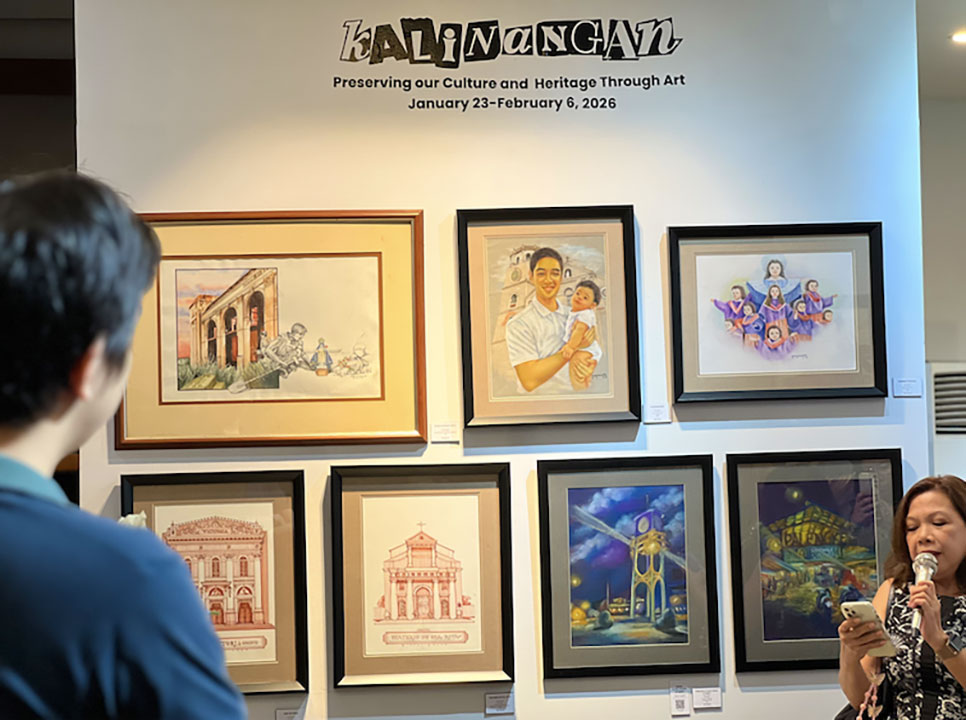
THE exhibition Kalinangan: Preserving our Culture and Heritage Through Art showcases Pasig in both historical and contemporary lenses. Now on display at the Kapitolyo Art Space, the exhibit aims to be “the refinement of our collective spirit, shaped by the land, the sea, and centuries of history.” The collection brings together works of Pasig Art Club members and guest artists with diverse styles who draw inspiration from traditional forms to contemporary voices. It is open until Feb. 6 at the Kapitolyo Art Space, Pasig City.


PETA stages Kislap and Algo

AFTER their debut at PETA’s Control + Shift: Changing Narratives in 2024 and 2025, the bold experimental works Kislap at Fuego and Children of the Algo are now back on the stage until Feb. 7 at the PETA Theater Center in Quezon City. Moving from the experimental fringes to the spotlight, these two productions headline the Philippine Educational Theater Association’s (PETA) Main Theater Season as a twin bill performance. Dominique La Victoria’s Kislap at Fuego, directed by Maribel Legarda and J-mee Katanyag, with a Filipino translation by Gentle Mapagu, revolves around an unexpected fairytale between a kapre and a country girl, set amidst the Philippine Revolution against Spain. Mixkaela Villalon’s Children of the Algo, directed by Johnnie Moran, delves into the lives of Gen Z content creators, hiding their deeper realities while navigating the digital age with wit and vulnerability. For more information, including performance dates, ticketing, and educational engagements, visit PETA’s social media channels.


The M holds paper pop-up card workshop

THE workshop activity Hearts and Crafts, scheduled for Valentine’s Day, is inviting couples (and friends) to discover self-expression together through interactive paper design. Guided by paper artist April Capalungan (APRL), whose practice celebrates paper’s interactive materiality, participants can learn foundational techniques like pop-ups, collage, shaping, and tearing. The Hearts and Crafts workshop costs P3,000 per pair and will take place on Feb. 14, 1-2:30 p.m. for couples and 4-5:30 p.m. for friends and families, at the Metropolitan Museum of Manila in BGC.


Exclusive viewing of Mezcla exhibit, flamenco

THERE will be an exclusive viewing of Ayala Museum’s latest special exhibition, MEZCLA: Interwoven Cultures and Mantón de Manila, followed by performances by flamenco dancers Angel Gomez and Jameela Perez, with guitarist Carlo Antonio B. Juan, on Feb. 14, 6 to 10 p.m. At the event will be complimentary savory bites from Terry’s Bistro, the official restaurant partner of Mezcla at Night. Light drinks will be available for purchase. Prices are: P1,300 for a regular ticket, P1,200 for a discounted ticket for Ayala employees, and P1,040 for seniors and PWDs. It takes place at the Ayala Museum in Makati City.


UP honors National Artists Bencab, Mojares, Locsin

THE University of the Philippines (UP) will honor three National Artists in the third Tanghal Tertulia on Feb. 21, 6 p.m. (cocktails at 5 p.m.) at the Amphitheater of the Executive House, UP Diliman, Quezon City. The night will pay tribute to the three National Artists and their enduring contributions to Philippine arts and culture. They are: Benedict “BenCab” Cabrera, recognized for his mastery of contemporary Philippine art; Resil Mojares, widely celebrated as the “Visayan Titan of Letters” that advanced Cebuano studies; and Agnes Locsin, renowned for her pioneering work in neo-ethnic Filipino dance choreography blending indigenous ritual and ethnic traditions with Western classical and modern techniques. Tanghal Tertulia is open to the public but on a first-come, first-served basis. Interested attendees may RSVP through this link https://docs.google.com/forms/d/e/1FAIpQLSfVMFe9E9yy6tp3uFv_yLo3IitfNAjWCx_jeE07PKdseqO9WA/viewform.


MADE Competition now accepting entries

THE 2026 Metrobank Art & Design Excellence (MADE) Competition is now open to entries for its three categories: Painting, Sculpture, and Mixed Media. Emerging Filipino artists can submit their entry forms and upload photos of their entries via the competition’s online portal. It can be accessed at metrobankartanddesign.awardsplatform.com. Returning participants from last year can log in using their existing accounts. Each entrant may participate in only one category and submit only one entry in their chosen category. Entry submission is free and open until March 31.