Home Blog Page 3863

BPO group calls CREATE law amendments crucial if industry is to meet 2024 revenue, employment goals

THE IT and Business Process Association of the Philippines (IBPAP) expressed support for amendments to the Corporate Recovery and Tax Incentives for Enterprises (CREATE) law, saying that such reforms would help the industry hit its revenue target of $39 billion next year.

“IBPAP is looking at a continued growth of 7% to 8% in 2024 with a projected revenue of $39 billion and 1.84 million full-time employees. We support House Bill No. 8968 (CREATE MORE) as this would support the projected growth of the industry,” Celeste Ilagan, chief of policy and regulatory affairs officer for the organization, said via text.

The CREATE MORE measure (CREATE to Maximize Opportunities for Reinvigorating the Economy) was approved by the House Ways and Means Committee on Nov. 21.

CREATE MORE seeks to allow domestic market-focused companies and exporters, even those inside ecozones and freeports, to continue to enjoy duty exemptions, VAT exemptions on imports, and VAT zero-rating of local purchases as authorized by their respective investment promotion agency (IPA) registrations.

“It is important to maintain the cross-border doctrine/separate customs’ territory principle for ecozones and freeports to ensure consistency and clarity in VAT exemption and zero-rating privileges for industry players registered with IPAs,” she said.

IBPAP, which represents an industry also known as the business process outsourcing sector, also sought clarification of the bill’s work-from-home arrangements, particularly for companies registered with the Philippine Economic Zone Authority.

“We must become more responsive to the changing needs of existing and potential investors. In the past three years, industry players have implemented various remote work models,” Ms. Ilagan said.

She added that the CREATE MORE bill would help attract investors and ease the process of doing business.

“IPAs are the investors’ primary contact from their initial exploration of setting up operations in the country. Their confidence in the country’s business environment and ease of doing business is driven by their engagement with their IPAs,” Ms. Ilagan said.

IBPAP also urged Congress to approve the proposed Open Access in Data Transmission act, amendments to the Cybercrime law, and the Critical Information Infrastructure Protection Act.

“To enhance the country’s IT-BPM (information technology and business process management) investment attractiveness, we also need to prioritize digital connectivity and cybersecurity,” Ms. Ilagan said. — Beatriz Marie D. Cruz

Poverty rate not declining rapidly enough, Ibon Foundation says

PHILSTAR

THE GOVERNMENT must find sustainable and long-term solutions to generate quality jobs to reduce poverty more rapidly, according to the Ibon Foundation.

“Falling poverty should always be good news. But the government should be asking why poverty is still above pre-pandemic levels after a year and a half of the economy reopening, and despite growth hyped as among the fastest in Asia,” Ibon Foundation Executive Director Sonny A. Africa said in a Viber message.

“Poverty persists not because there aren’t enough welfare programs but because the economy isn’t creating enough jobs and incomes,” he added.

The Philippine Statistics Authority reported a poverty rate of 22.4% in the first half of 2023, lower than the 23.7% from a year earlier. This was equivalent to a poor population of 25.242 million.

The government is hoping to bring the poverty rate to single-digit levels by 2028.

“Poverty incidence even according to the much too low poverty threshold will not be reduced to single digit levels by 2028. Poverty reduction from reopening after 2021 is already an artificially fast pace but even this isn’t enough; what more with poverty incidence actually increasing between 2018 and 2023,” Mr. Africa said.

“Poverty is stubborn from high disguised joblessness and because there is so much informality in the economy,” he added.

The National Economic and Development Authority (NEDA) said in a statement that the reopening of the economy and lifting of coronavirus disease 2019 (COVID-19) restrictions helped the country recover from the pandemic. 

It also noted the government’s efforts to hold down inflation and improve labor market conditions.

“The reopening of the economy is certainly the main factor in the reported decline between the first semester of 2021 and the same period in 2023. This isn’t a constructive action to reduce poverty though, and is just a passive lowering of restrictions that were too harsh and too long to begin with,” Mr. Africa said.

“It’s also odd to claim successful efforts to combat inflation — inflation averaging 7.2% in the first semester of 2023 is much higher than the 4% in the same period in 2021,” he added. 

The NEDA said it will implement initiatives and policy interventions to further reduce poverty, citing food stamp programs, ramping up investment to generate jobs, and improving the government’s fiscal situation.

“Substantial amounts of cash assistance will provide momentary relief for poor families and can reduce officially reported poverty,” Mr. Africa said.

“This kind of statistical improvement is artificial, though, and sustainable poverty reduction comes from more jobs and better incomes for every Filipino. This can only come from structural transformation of the economy with Filipino industrialization astride modernized agriculture,” he added. — Luisa Maria Jacinta C. Jocson

MSME training platform launched

BW FILE PHOTO

THE Department of Trade and Industry (DTI) said it launched a training platform designed to guide more micro, small, and medium enterprises (MSMEs) seeking to venture into international markets.

In a statement, the Philippine Trade Training Center (PTTC), an arm of the DTI, said the platform contains export rules and procedures for those engaging in international trade.

The platform was launched in collaboration with the International Trade Centre (ITC), a joint agency of the World Trade Organization and the United Nations.

“This new platform… offers MSMEs practical resources for navigating the complex regulations and processes to sell their products in foreign markets,” it said.

The training takes the form of interactive training workshops. The platform was launched on Dec. 5.

“This approach harnesses innovative teaching techniques, digital tools, and detailed trainer instructions to ensure participatory, consistently high-quality, and easily replicable training experiences,” it added.

The PTTC aims to further strengthen its capacity to sustain both online and in-person training and integrating them into their core training offerings for MSMEs.

The initiative is part of ARISE Plus Philippines, with DTI as the lead implementor in collaboration with the Department of Agriculture, Food and Drug Administration, Bureau of Customs, the Department of Science and Technology, and the private sector.

The project is funded by the European Union with the ITC acting as technical adviser for the project. — Adrian H. Halili

Post-audits and CARs: The enforcement of taxable gifts

This time of the year marks the peak of giving and receiving gifts among friends and family. As a tax professional, I have often wondered: “Are all gifts subject to donor’s tax?” and “Are all transactions that are subject to donor’s tax gifts?” These are the questions taxpayers ponder when applying for a Certificate Authorizing Registration (CAR) for share sale transactions.

Under the Philippine Tax Code, in case property (other than real property) is transferred for less than adequate or full consideration, the amount by which the fair value has exceeded the consideration is deemed a gift and subject to donor’s tax. An exemption is provided where the transfer is made in the ordinary course of business (e.g., bona fide, at arm’s length, and free from donative intent), in which case consideration will be recognized as adequate.

In determining whether a transaction is made in the ordinary course of business, there are no clear-cut guidelines as to what factors or conditions would qualify transactions as bona fide, and free from donative intent. As for the arm’s length requirement, it was clarified under Revenue Memorandum Circular 30-19 that the determination of whether the sale of shares of stock not listed and traded in the stock exchange is done at arm’s length is a question of fact and not of law. Since an arm’s length transaction is a question of fact, it therefore behooves the party seeking to apply the exception to prove that indeed the sale involves no irregularity between unrelated and independent parties.

This would require presentation and reception of reasonable evidence to prove that the sale of the shares is without intent to evade tax and defraud the government (of the tax due thereon). The evidence that should be presented should be viewed in accordance with its relation and relevance to the transaction on a case to case basis.

The Bureau of Internal Revenue (BIR), in some of its rulings, has mentioned that the issuance of a CAR is a ministerial duty, when it appears that the share sale transaction is a bonafide sale and the corresponding capital gains tax and documentary stamp tax were shown to have been paid.

In an application for a CAR, once it is determined that the sale of shares is done for less than adequate or full consideration, the BIR usually requires that the corresponding donor’s tax be paid prior to the issuance of the CAR. If the taxpayer takes the position that the transaction is made in the ordinary course of business (hence not subject to donor’s tax), this usually prolongs the process of securing the CAR since additional supporting documents and information are usually requested to support the taxpayer’s claim. Notwithstanding the fact that donor’s tax is a liability of the seller, the delay in resolving the issue impacts the buyer since the absence of the CAR also defers the transfer of the legal title after the consummation of the transaction from the seller to the buyer.

Usually, a comparison is made by the BIR between the consideration and book value of the shares transferred. Under the current regulations, the book value based on the latest available audited financial statements prior the date of sale, but not earlier than the immediately preceding taxable year, is considered the prima facie fair market value of the shares of stock. In case of contrary evidence of the fair market value, this may necessitate further review which consequently prolongs the issuance of the CAR.

Should the determination of whether a transaction is subject to donor’s tax delay the issuance of a CAR? Comparing the CAR application process in cases where the consideration is at less than book value with CAR applications covering a tax-free exchange, the latter scenario’s CAR is usually issued upon submission of the required documents and stating in the CAR application letter that the transaction involved is a tax-free exchange under Section 40(C)(2) of the Philippine Tax Code. Fortunately, securing a confirmatory tax-free exchange ruling prior to the issuance of a CAR is no longer required. The recent changes to the tax rules provide that following the issuance of the CAR, the tax-free exchange transaction is subject to a post-audit. In fact, in case it is found during the audit that the transaction is subject to tax, it does not invalidate the CAR previously issued for the transfer.

Perhaps the same conduct of post-audits can be done for transfers at less than adequate or full consideration as a better approach in the processing of a CAR. In this case, the CAR may be issued to the buyer while the liability of the seller to the donor’s tax may be settled separately under a post-audit of the transaction. This affords the buyer the opportunity to mark the end of the transaction and look forward to beginning new ones to further stimulate our economy.

The views or opinions expressed in this article are solely those of the author and do not necessarily represent those of Isla Lipana & Co. The content is for general information purposes only, and should not be used as a substitute for specific advice.


Marvin Joseph Manuel is a manager at the Tax Services department of Isla Lipana & Co., the Philippine member firm of PricewaterhouseCoopers global network.

manuel.marvin.joseph@pwc.com

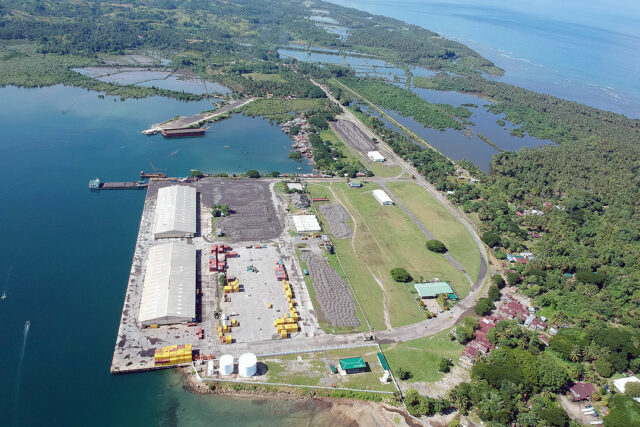
Economic zone in every district sought

POLLOC FREEPORT AND ECOZONE — BARMM FACEBOOK PAGE

By Beatriz Marie D. Cruz, Reporter

A LAWMAKER has filed a bill proposing the creation of economic zones in each legislative district in the Philippines to spur economic activity, especially in the provincial regions.

“This measure intends to initiate targeted small-scale economic activity on all legislative districts with the objective to regionalize economic growth and employment boom,” Tarlac Rep. Christian Tell A. Yap said in House Bill No. 9679.

“Despite the positive feedback and significant contribution of ecozones to our economy, much can be done for the Philippines to revitalize the national economy, outcompete our Asian neighbors in attracting foreign investments in strategic industries, and stimulate economic activity in rural and underdeveloped areas,” Mr. Yap said.

Under the proposed law, each legislative district in the Philippines will have at least one Legislative District Economic Zone (LDEZ) in an area of up to 50 hectares.

The economic zones will be entitled to fiscal incentives under the Special Economic Zone Act as well as Executive Order No. 226 as amended, or the Omnibus Investment Code of 1987.

Enterprises registered under the LDEZ may enjoy an income tax holiday or the net operating loss carryover granted by the council prior to the availment of the 5% gross income earned, according to a copy of the bill. The incentives will be granted for up to 20 years.

Business establishments will pay a tax rate of 5% on their gross income, with 3% going to the National Government, 1% to the host province, and 1% to the host city or municipality.

A foreign national who invests $75,000 (P4.18 million) cash or equipment in a registered enterprise will be entitled to an investor’s visa.

An inter-agency council will be tasked to manage and develop the economic zone consistent with the government’s medium-term Philippine development plan. It will also be tasked to establish a one-stop-shop for the registration of enterprises under the proposed LDEZ.

The council will be composed of the governor, district representative, city or municipal mayor or any of their authorized representatives, regional director of the Trade department, and a representative from the Philippine Economic Zone Authority (PEZA).

At present, the bill is pending before the House Committee on Economic Affairs.

The PEZA Board has pre-qualified 25 big-ticket locator projects for the period of July 2022 to November 2023.

The projects are estimated to generate P217.21 billion in investments, $1.5 billion in exports and 16,414 jobs.

DMW: Over 150,000 OFWs to benefit from Taiwan, HK pay hikes

PHILIPPINE STAR/EDD GUMBAN

By John Victor D. Ordoñez, Reporter

WAGE HIKES being implemented by Taiwan and Hong Kong (HK) are expected to benefit more than 150,000 overseas Filipino workers (OFWs) working there starting the end of this year, the Department of Migrant Workers (DMW) said on Wednesday.

Taiwan’s Ministry of Labor in September issued a wage order increasing the monthly minimum salary from NT$26,400 (P46,378.70) to NT$27,470 (P48,223.43), which is a 4.05% increase.

In a statement, the DMW said that 123,768 of the 151,562 OFWs in Taiwan are expected to benefit from the wage order, with about 17,721 expected to be hired in the manufacturing sector by the end of the year.

Meanwhile, in October, Hong Kong’s Labor Department raised the minimum monthly pay for foreign domestic workers to HK$4,870 (P38,010.35) from HK$4,730 (P36,917.65).

Based on DMW data, there are 196,364 OFWs working as domestic helpers in Hong Kong with about 40,000 new hires expected to directly benefit from the new wage order.

The Migrant Workers Office in Hong Kong expects about 205,000 Filipino domestic workers to be working in Hong Kong by January.

“We thank Taiwan’s Ministry of Labor and the Hongkong Special Administrative Region Labor Department, respectively, for enacting wage legislation that recognizes the work of our OFWs and their contribution to the economic development of their host countries,” DMW Officer-in-Charge Hans Leo J. Cacdac said.

The International Labor Organization has urged the Philippines to work with the ILO and other global partners to help migrant workers who are struggling and not being afforded their basic rights.

Cash remittances from overseas Filipino workers (OFWs) rose by 3% in October, as migrant Filipinos sent more money home ahead of the holiday season.

The amount of money sent by was the highest in 10 months or since the $3.16 billion in December last year.

DoJ maintains pressure on P6.7-B Manila drug raid probe

PHILSTAR FILE PHOTO

By Jomel R. Paguian

THE DEPARTMENT OF JUSTICE (DoJ) said on Wednesday that it is not letting up on its probe into alleged anomalies in one of the country’s biggest drug raids ever, which exposed the involvement of a police official and the subsequent pilfering of volumes of the drug haul by several officers.

The drug bust in Tondo, Manila on Oct. 8, 2022, yielded 990 kilos of crystal meth or shabu worth P6.7 billion. The drugs were discovered at the lending firm owned by an anti-narcotics officer who is now dismissed from the service.

During the raid, 49 policemen allegedly looted 42 kilos of the controlled substance.

The DoJ said it had formed a panel of prosecutors to evaluate the case, ensuring all necessary elements for the charges are present. A “voluminous” amount of evidence submitted before the panel is said to be currently under “detailed examination.”

“Once the evaluation of the complaint and evidence is thoroughly completed, the panel will immediately initiate the preliminary investigation of the additional complaint,” the DoJ said in a statement. “This process is critical to ascertain the facts and to hold accountable those who may have violated the law.”

The justice department added that it is working with the Philippine National Police (PNP) in investigating the controversy concerning some of its officers, citing that a conference was convened this month to discuss developments in the said case.

DoJ said: “This new development indicates a continuing commitment by both the PNP and DoJ to ensure integrity and thoroughness in the fight against illegal drug trafficking.”

The dangerous drugs committee of the House of Representatives last month recommended the indictment of the dismissed police general and his sergeant for the alleged coverup of the drug bust operation.

The committee, in its report, stated that the 990 kilos of crystal meth seized during the bust was a product of “drug recycling,” as it was the same drugs illegally taken from previous anti-drug operations of the PNP.

Makati suspends amusement taxes

THE MAKATI City government has suspended the collection of amusement taxes for performers in public places as part of its efforts to boost local tourism in the city.

In a statement, the local government unit said its city council on Wednesday approved an ordinance that suspended the collection of taxes, as Mayor Marlen Abigail “Abby” Binay-Campos said the move would encourage more investment in creative projects and pave the way for more economic growth in the tourism sector.

“By suspending amusement taxes, we are promoting economic sustainability and empowering the creative force within our city,” she said in a letter to the council.

Under the Revised Makati Revenue Code, the city collects amusement fees for any theatrical, musical, or other performance in public areas.

The Makati mayor added that the suspension is in accordance with the national government’s efforts to foster local creative industries spearheaded by the Department of Trade and Industry (DTI).

Earlier this month, Trade Undersecretary Rafaelita M. Aldaba said the creative industry is expected to grow between 6% and 8% next year in terms of gross value added, citing a 15.5% year-on-year growth in the third quarter of the year.

In the third quarter, the creative industry generated P52.8 billion in gross value added. It accounts for 7.3% of the Philippine economy or P1.6 trillion in 2022.

The creative industry employed 6.98 million workers in 2022, mostly involved in traditional cultural activities.

“We can foster the growth and sustainability of the creative industries within our city, thereby stimulating economic activity and attracting tourism,” Ms. Binay said. — John Victor D. Ordoñez

8 PNP camps named after cops

PRESIDENT Ferdinand R. Marcos, Jr. has named eight police camps and real properties of the Philippine National Police (PNP) after exemplary policemen.

Under Proclamation No. 429, the newly named camps and properties include Camp Brigadier General Ludovico Padilla Arejola in Camarines Sur; Camp Captain Salvador Jaucian del Rosario, Sr. in Legazpi City and Camp Colonel Juan Querubin Miranda, which used to be the Camarines Sur Police Provincial Office.

The 50th Maneuver Company Regional Mobile Force Battalion 5 was also renamed Camp Police Max Jim Ramirez Tria and the Police Regional Office of MIMAROPA Headquarters as Camp Brigadier General Eugenio C. Navarro.

In a separate proclamation, No. 430, he also renamed Police Regional Office 12 in General Santos City to Camp General Paulino T. Santos and the Biliran Police Provincial Office as Camp Private Andres P. Dadizon.

The Camarines Sur 1st Provincial Mobile Force Company Headquarters was also renamed the Camp 2nd Lieutenant Carlos Rafael Paz Imperial.

The presidential proclamations were made available on the Official Gazette website

Mr. Marcos said renaming the PNP camps was in line with the Republic Act. No. 10086, the Strengthening Peoples’ Nationalism Through Philippine History Act, aims to boost Philippine nationalism and the love of the country by honoring exemplary Filipinos. — John Victor D. Ordoñez

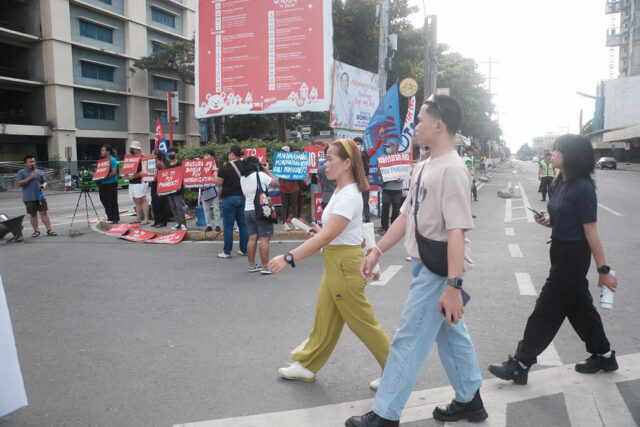
Transport strike hits Davao

JEEPNEY drivers in Davao City protest the impending Public Utility Vehicles Modernization Program and the Davao Bus Project on Wednesday. — MAYA M. PADILLO

A GROUP of jeepney drivers and operators in Davao City went on strike on Wednesday to oppose the implementation of the Davao Bus Project which the group claims would phase out their traditional jeepney units in favor of modern buses.

A regional unit of the transport group Pinagkaisang Samahan ng mga Tsuper at Operators Nationwide (PISTON), called Transmission-Piston Southern Mindanao, said in a statement that the strike achieved an 80%-90% paralysis rate in some major routes in the city.

The Land Transportation Franchising and Regulatory Board-Region XI (LTFRB-XI), however, reported that the road traffic situation remained normal despite the strike.

In an interview with Transmission-Piston Spokesperson Larry Argilles, the group claimed that the modernization project will overtake the livelihoods of small PUV operators who cannot afford the cost of new buses, which is at least P2 million. 

“The Davao Bus Project is anti-small operator and anti-poor,” said Mr. Argilles in Filipino. “Only the rich and big businesses with enough capital would be able to adjust to the modernization scheme.”

Apart from the city’s bus project, the transport group is protesting the year-end deadline for franchise consolidation of public utility vehicles (PUVs), a component of the nationwide PUV Modernization Program.

In a previous notice, the LTFRB-XI clarified that PUV operators and drivers in the city are not subject to the year-end consolidation deadline, as the Davao Bus Project will be implemented instead.

The P73.3-billion city bus plan known as the Davao Public Transport Modernization Project is a joint project of the Department of Transportation (DoTr), the Asian Development Bank (ADB), and the local city government of Davao, which aims to be fully operational by 2025.

Out of the said amount, 60% will be provided through an ADB loan, while the DoTr will cover the remaining 40%. The city government will also contribute an additional P1.5 billion.

The Davao City government reported that a total of 1,105 buses will be procured for the project. Nearly 400 units will be electric vehicles, and the remainder will comply with Euro-5 standard diesel buses.

For Mr. Argilles, the bus project is part of the city’s goal to set a precedent for advanced transportation in other cities. He noted that the current modernization plan comes at the expense of the livelihood of those who cannot keep up with the cost of modern transportation.

“We are not against modernization, but it should not neglect small operators and drivers,” he said in Filipino. — Jomel R. Paguian

DA to build seed storage facility

A SEED storage facility for local farm producers is set to be opened under Bangsamoro’s special geographical area in North Cotabato, according to the Department of Agriculture (DA).

In a statement, the DA said that the P5.34-million facility would be able to hold about 10,000 seed bags, while there would be a solar dryer with a capacity of 80 to 100 bags.

The DA funded the construction project, while the Ministry of Agriculture, Fisheries, and Agrarian Reform (MAFAR) of the Bangsamoro regional government will be its implementer.

The construction of the facility is expected to be completed on or before June 17, 2024, with about 330 square meters as the seed storage floor and 600 square meters as drying pavement.

The facility would ensure that seeds are kept in physical and physiological condition from harvest until planting starts. — Adrian H. Halili

Alert up vs fake Baguio veggies

BAGUIO CITY — Vegetable traders in La Trinidad, Benguet warned the public on Wednesday that volumes of potatoes and carrots being sold in the country are falsely labeled as highland produce from this city or Benguet.

The La Trinidad Vegetable Trading Areas, Inc. said these carrots and potatoes are sold in boxes deceptively marked, “A.B.C. Baguio,” but are not locally sourced. They have made their way to markets in Metro Manila, Sariaya in Quezon, and other places.

The group is appealing to the government to investigate this deception at the expense of their local farming industry, especially since they believe that the products were smuggled into Olongapo City on Nov. 10, 2023 and supposed to be confiscated by the Bureau of Customs. 

It also stressed that highland farmers in the region do not mass produce carrots and potatoes. — Artemio A. Dumlao

ADVERTISEMENT
ADVERTISEMENT