In photo are (from left to right) Meralco First Vice-President and Head of Networks Froilan J. Savet, Meralco Executive Vice-President and Chief Operating Officer Ronnie L. Aperocho, PNP Chief General Benjamin Acorda Jr. and Meralco Senior Vice-President and Chief External and Government Affairs Officer Arnel Paciano D. Casanova.
The Manila Electric Company (Meralco) has reaffirmed its support to the Philippine National Police (PNP), with the commitment to ensure reliable and stable electricity service for all its camps within the franchise area.
In a recent courtesy call, Meralco Executive Vice President and Chief Operating Officer Ronnie L. Aperocho (second from the left) assured PNP Chief General Benjamin Acorda Jr. (third from the left) of Meralco’s continued assistance through the proactive maintenance of electric facilities servicing police camps.
Meralco, through its corporate social responsibility arm One Meralco Foundation, also helped boost the modernization efforts of the PNP with a donation of over 100 sets of ICT equipment, including computers and printers. As a dependable nation-building partner of the government, Meralco also plays an active role in the community engagement projects of the PNP. These include the electrification of rural communities supported by the PNP and the National Task Force to End Local Communist Armed Conflict, wire-clearing operations, and outreach programs.
During the courtesy call, Mr. Aperocho expressed appreciation to Gen. Acorda Jr. for the PNP’s support in Meralco’s efforts to reduce system loss. Police officers help bolster this campaign by providing security assistance to Meralco crews who terminate and confiscate illegal service wires.
“Meralco recognizes how crucial reliable and stable electricity service is for the PNP to effectively and efficiently fulfill its duty of protecting our communities’ safety and welfare. We share in this responsibility by continuously innovating and upgrading our facilities to deliver high-quality electricity service 24/7,” Mr. Aperocho said.
Also seen in the photo are Meralco First Vice President and Head of Networks Froilan J. Savet (leftmost) and Meralco Senior Vice President and Chief External and Government Affairs Officer Arnel Paciano D. Casanova (rightmost).
Spotlight is BusinessWorld’s sponsored section that allows advertisers to amplify their brand and connect with BusinessWorld’s audience by enabling them to publish their stories directly on the BusinessWorld website. For more information, send an email to online@bworldonline.com.
Join us on Viber at https://bit.ly/3hv6bLA to get more updates and subscribe to BusinessWorld’s titles and get exclusive content through www.bworld-x.com.
DOHA/GAZA/JERUSALEM — Israel and Hamas have moved closer to agreement on a 30-day ceasefire in Gaza when Israeli hostages and Palestinians prisoners would be released, sources told Reuters, as Israel pressed ahead with its assault on southern Gaza’s main city of Khan Younis.
Qatar, the US, and Egypt have held shuttle diplomacy since Dec. 28 seeking to bridge differences between Israel and the Palestinian militant group on a framework for a break in hostilities, which would also allow an increase in humanitarian aid to Gaza.
But the two sides remain at odds over how to permanently end the Gaza war, and Hamas has refused to move forward until this is resolved, the sources said.
The US State Department and White House, Qatar’s foreign ministry, and Egypt’s State Information Service did not immediately respond to requests for comment on the Reuters report.
Meanwhile, in its biggest operation in a month, the Israeli military pressed ahead with encircling Khan Younis where hundreds of thousands of displaced Palestinians are sheltering.
Israeli tanks on Tuesday shut the road from Khan Younis towards the Mediterranean coast, blocking the escape route for civilians trying to reach Rafah on Gaza’s southern edge bordering Egypt – now crammed with more than half the enclave’s 2.3 million people.
Israeli forces killed more than 100 militants in western Khan Younis in 24 hours, military spokesperson Rear Admiral Daniel Hagari said on Tuesday evening. Israel says it has killed around 9,000 militants in total. Reuters was unable to verify the number.
On Monday, Israel’s military suffered its deadliest day in over three months of conflict as 24 soldiers were killed in two incidents, bringing the Israeli military death toll in Gaza since late October to 220. Hamas claimed responsibility for a rocket attack that killed 21 of the soldiers.
The latest deaths prompted Israeli officials to reiterate that the objectives of the war against the Palestinian Hamas movement that runs Gaza were unchanged and that efforts were being made to gain the release of more than 100 hostages.
“In the name of our heroes, for the sake of our lives, we will not stop fighting until absolute victory,” Prime Minister Benjamin Netanyahu said.
Israeli government spokesperson Eylon Levy said there would be no ceasefire that left Hamas in power and hostages in Gaza, following the militant group’s cross-border rampage on Oct. 7 in which some 1,200 Israelis were killed.
Palestinian health officials said at least 195 Palestinians were killed over the prior 24 hours, raising the documented death toll to 25,490. Thousands more are feared lost in the rubble.
“The entire population of Gaza is enduring destruction at a scale and speed without parallel in recent history,” United Nations Secretary-General Antonio Guterres told the Security Council.
“Nothing can justify the collective punishment of the Palestinian people,” he said, denouncing Israel’s opposition to creation of a Palestinian state that would exist alongside Israel.
‘CAUSE FOR OPTIMISM’
Diplomacy around a ceasefire deal appeared intense. Qatar said on Tuesday the country had “presented ideas to both sides, we are getting a constant stream of replies from both sides, and that in its own right is a cause for optimism.”
Later, White House spokesperson John Kirby said US Middle East envoy Brett McGurk was in Cairo and would travel in the region for “active” discussions on ensuring release of hostages and securing a humanitarian pause.
“The conversations are very sober and serious about trying to get another hostage deal in place,” Kirby told reporters.
Each side blamed the other for the collapse of a seven-day truce in November by rejecting terms to extend the daily release of hostages held by militants in exchange for Palestinian detainees.
Women, children, and foreign hostages were freed, but mediators failed at the final hour to find a formula to release more, including Israeli soldiers and civilian men.
In southern Gaza, Israel has blockaded hospitals, which Palestinian officials say makes it impossible to rescue the wounded. Israel says Hamas fighters operate in and around hospitals, which hospital staff and Hamas deny.
At the European Hospital, reached by Reuters in southern Khan Younis, Ahed Masmah brought in five corpses, piled on a mattress on his donkey cart.
“I found them face down in the street,” he said.
At Khan Younis’ main Nasser hospital, the biggest still functioning in the Gaza Strip, bodies were being buried on the grounds because it was unsafe to go to the cemetery.
Martin Griffiths, UN coordinator of emergency relief, said on Tuesday that 24 people were killed in strikes on an aid warehouse, UN center and humanitarian zone in the Khan Younis area. A distribution center where families receive aid came under heavy bombardment, he said on social media platform X. — Reuters
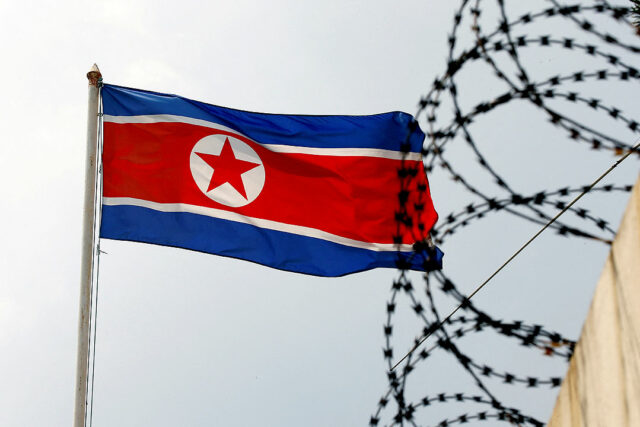
A North Korea flag flutters next to concertina wire at the North Korean embassy in Kuala Lumpur, Malaysia March 9, 2017. — REUTERS/EDGAR SU/FILE PHOTO
SEOUL — North Korea fired multiple cruise missiles towards the sea off its west coast on Wednesday, South Korea’s Joint Chiefs of Staff said.
The missiles were fired at around 7 a.m. (2200 GMT on Tuesday) and were being analysed by South Korean and US intelligence, the JCS said in a statement.
Further activities by the North were being monitored, the JCS added.
Tensions have spiked on the Korean peninsula following intensifying military maneuvers by the South Korean and US militaries in response to weapons testing by the North.
The latest firing of missiles comes after Pyongyang said it tested a solid-fuel hypersonic missile with intermediate-range earlier this month in a move that was condemned by the United States, South Korea, and Japan. — Reuters
BANGKO SENTRAL ng Pilipinas Governor Eli M. Remolona, Jr. — COURTESY OF BANGKO SENTRAL NG PILIPINAS
By Keisha B. Ta-asan, Reporter
THE BANGKO SENTRAL ng Pilipinas (BSP) is unlikely to cut borrowing costs at its meeting next month, as rates need to be sufficiently tight amid evolving risks to inflation, its governor said late Monday.
In a gathering with newspaper editors, BSP Governor Eli M. Remolona, Jr. said a rate cut is unlikely on Feb. 15, the Monetary Board’s first policy review this year, noting the risk-adjusted inflation forecast in 2024 is still above the 2-4% target.
“At this point, a rate cut is not likely (on) Feb. 15,” Mr. Remolona said in mixed English and Filipino, adding that the “numbers we are seeing” show the need to keep policy settings sufficiently tight for some time.
The Monetary Board hiked borrowing costs by 450 basis points (bps) from May 2022 to October 2023, bringing the key interest rate to a 16-year high of 6.5% to tame inflation.
At the December meeting, the BSP’s risk-adjusted inflation forecast stood at 4.2% this year and 3.4% for 2025.
Meanwhile, the BSP’s average inflation baseline forecast is 3.7% for 2024 and 3.2% for next year.
Rising tensions in the Red Sea and a prolonged El Niño weather episode are upside risks that are included in the risk-adjusted forecast, BSP Deputy Governor Francisco G. Dakila, Jr. said.
Houthi militants have continued to attack commercial shipping vessels traveling through the lower Red Sea since November last year.
Mr. Dakila noted El Niño is now expected to continue through the second quarter, instead of the first quarter as expected.
The state weather agency expects El Niño to persist until May this year. Earlier estimates by the BSP also showed that the dry weather event could raise inflation by 0.02 percentage point.
Mr. Remolona said inflation is projected to slow in January from 3.9% in December due to base effects, which could also drive inflation down in February or March.
Inflation peaked at 8.7% in January last year as food prices soared. It has since come down to a 22-month low in December.
For 2023, inflation averaged 6%, slightly higher than 5.8% in 2022. This marked the second straight year that inflation breached the BSP’s 2-4% target.
Security Bank Corp. Chief Economist Robert Dan J. Roces said that despite base effects, inflation might remain elevated in the coming months due to external risks.
“The BSP will (and should) maintain a tight monetary policy stance in the medium term to stabilize prices,” he said.
He added that El Niño could lead to droughts and agricultural price hikes, which could push up inflation. Disruptions in the Red Sea may also increase import costs.
However, a weaker global demand could lead to lower commodity prices and dampen domestic demand. An improvement in the supply chain might also drive input costs lower, which could put a downward pressure on inflation, Mr. Roces added.
CHINA SLOWDOWN The projected economic slowdown in China could dampen the Philippines’ growth outlook this year, according to Mr. Remolona.
“I’m more optimistic about the Philippine economy, but less about the global (economy),” he said.
“China is a concern… It looks like a long slowdown, not a temporary slowdown,” he said, adding that market players now see the Chinese economy expanding by about 5% in 2023 from earlier projections of 10%.
Mr. Remolona noted that China is one of the Philippines’ major trading partners and a good source of investments.
The Philippines should diversify its trade and investment partners, he added.
Mr. Roces said a slowing Chinese economy could impact the economy via trade, investments and tourism. The Philippines needs diversification strategies to mitigate its impact.
“Reduced demand for Philippine exports, especially electronics, garments and agricultural products would shrink the country’s economic pie. This slowdown could also disrupt supply chains, causing production bottlenecks and price hikes across various industries,” he said.
Based on data from the local statistics agency, the United States was the top destination of locally made products in November with a 16% share worth $1.14 billion. It was followed by Japan (13.2% share worth $938.3 million) and China (12.3% share valued at $876.27 million).
Meanwhile, China remained the Philippines’ main source of imported goods with a value of $2.6 billion, accounting for 24% of the total.
“A potential decrease in Chinese foreign direct investment (FDI), which is crucial for infrastructure and tourism, could hamper economic growth and job creation. Capital flight from the region due to the slowdown might weaken the peso, further boosting import costs and fueling inflation,” Mr. Roces said.
Central bank data showed FDI inflows from China fell by 19.1% to $12.53 million as of October 2023 from $15.49 million a year ago.
Meanwhile, fewer Chinese tourists visiting the Philippines would affect local businesses and the hospitality industry, Mr. Roces said.
“I agree with BSP Governor Remolona’s assessment that the Philippines should diversify its trade and investment partners to mitigate the risks associated with a slowdown in China,” he said.
“Diversification could involve focusing on other regional markets like Southeast Asia or the United States, developing domestic industries and attracting investments from diverse sources,” he added.
A HOUSE of Representatives panel on Tuesday restored the local tax on both local and foreign companies under proposed changes to the Corporate Recovery and Tax Incentives for Enterprises (CREATE) Act, as requested by Philippine President Ferdinand R. Marcos, Jr., according to the Ways and Means Committee chairman.
Under the report approved by the committee on Tuesday, corporations will now have to pay 2% local tax — from the original 1.5% proposal — on top of a 20% income tax.
Albay Rep. Jose Ma. Clemente S. Salceda, who heads the ways and means committee chairman, told a hearing the President had asked them to restore the local tax “in lieu of all local taxes to be collected by investment promotion agencies for concerned local government units.”
House Bill (HB) No. 9794, also known as CREATE MORE (CREATE to Maximize Opportunities for Reinvigorating the Economy), seeks to amend Republic Act (RA) No. 11534 or the CREATE law. The measure will be sent to the plenary soon for debates.
Eleanor L. Roque, tax principal at P&A Grant Thornton, said lawmakers should ensure that the local business tax rate for companies with incentives should be lower than the regular rate for companies without incentives.
“If you look at the local business tax rate based on the Local Government Code, the rate variesfrom 0.375% to 2%, so lawmakers should compare the rates to arrive at a logical incentive rate,” she said in a Viber message.
The Ways and Means Committee also introduced several changes to the committee report, such as value-added tax (VAT) exemptions for enterprises whose total sales are solely for export, and including a list of local tax exemptions following the imposition of a registered business enterprises’ local tax.
Another amendment is to turn the Fiscal Incentives Review Board (FIRB) into a review and monitoring body for investment promotion agencies (IPA).
The bill seeks to limit the FIRB’s power to approve or deny incentives, and to reinstate the power to grant tax incentives to IPAs.
Lawmakers also agreed to incorporate the Organization for Economic Co-Operation and Development’s (OECD) Base Erosion Profit Shifting (BEPS) framework for multinational enterprises in the CREATE MORE bill.
“Under the current OECD, the US, Japan, Korea, China and Singapore are major investors… They’re already implementing the 15% global minimum tax so if they are given an income tax holiday and they don’t pay anything, when they return to their home country, they will have to pay the 15% [global minimum tax,] so our income tax holiday is useless,” Mr. Salceda told the committee.
Finance Assistant Secretary Juvy C. Danofrata said the Philippines would “lose out” if it does not recognize the 15% global minimum tax implemented in OECD countries.
“If we don’t make amendments to our tax system, what will happen is if we give an income tax holiday to a multinational that is also paying its taxes in other countries, the tax that we don’t collect will eventually be paid in the other country,”she said in mixed English and Filipino.
The CREATE MORE bill seeks to impose a 20% corporate income tax on local and foreign corporations under the enhanced deduction income tax regime.
“The incentive really for the enhanced deduction is to encourage them to get more employees to invest more because there’s also an incentive on the capital investment,” Ms. Danofrata told the committee.
Under the bill, domestic and export companies, including those inside ecozones and freeports, will be entitled to duty exemptions, VAT exemption on imports, and VAT zero-rating for local purchases.
Enterprises would also be entitled to a 200% additional deduction for power costs during the income tax holiday period. They may also enjoy a 100% additional deduction in expenses for trade fairs, missions or exhibitions.
VAT incentives for companies that enjoy incentives before the enactment of CREATE will be extended from 10 to 12 years, if there is no tax refund or credit granted. They may also enjoy duty incentives for the remainder of the 10-year transitory period.
“We gave two more years because the BIR (Bureau of Internal Revenue) has been coming up with all RMCs (revenue memorandum circulars) that of course negate the benefits that accrue to those that we have provided incentives to but went through a transition,” Mr. Salceda said.
The bill also allows the information technology and business process outsourcing sector to “conduct business under alternative work arrangements.”
The bill also seeks to include the Bangsamoro Board of Investments and the Bangsamoro Economic Zone Authority under the list of investment promotion agencies.
Mr. Salceda said the bill also proposes to grant an income tax holiday to domestic market enterprises in creative industries listed under RA 11904 or the Philippine Creative Industries Development Act “for as long as they have at least a minimum of $500 million.”
Filomeno S. Sta. Ana III, coordinator of Action for Economic Reforms, said issues with the CREATE law could be fixed under its implementing rules and regulations.
“Sure it has imperfections, but its flaws can be corrected through implementing rules and regulations and other administrative measures. We should not forget that CREATE lowered the corporate income taxes for all business enterprises,” he said in a Viber message.
He earlier said a looming fiscal crisis due to a “generous tax incentive system” could “block the new flow of investments and thus impede growth and employment.”
The government is targeting to reduce the poverty incidence rate to single-digit levels by 2028. — PHILIPPINE STAR/MIGUEL DE GUZMAN
THE NATIONAL Economic and Development Authority (NEDA) said it expects the poverty incidence to continue to decline if economic growth remains robust and inclusive and if vulnerable sectors such as agriculture are further supported.
“We expect the poverty incidence to go down even further during the second semester, and therefore the full year will be even better,” NEDA Undersecretary Rosemarie G. Edillon said on the sidelines of a briefing last week.
Latest data from the Philippine Statistics Authority (PSA) showed that the Philippines’ poverty incidence, or the proportion of poor Filipinos whose per capita income is not sufficient to meet their basic food and nonfood needs, decreased to 22.4% in the first half of 2023 from 23.7% two years earlier.
This was equivalent to 25.24 million poor Filipinos, lower than 26.137 million two years earlier.
PSA data also showed that poverty incidence across the country fell in 14 of 17 regions in the first half of 2023.
Meanwhile, the subsistence incidence, or the proportion of Filipinos whose income is not enough to buy even basic food, slipped to 8.7% from 9.9% in 2021. This was equivalent to 9.795 million Filipinos, lower than 10.945 million in 2021 and 9.031 million in 2018, respectively.
Ms. Edillon said the poverty rate is historically lower during the second semester of the year due to seasonal factors.
“That’s always been the case for the Philippines, mainly because we get more income during the second half. We have our bonuses… and that means for those who are on the entrepreneurship side, then there’s higher demand for their products during the second half,” she added.
Under the Philippine Development Plan, the government is targeting to reduce the poverty incidence rate to 12.9-13.2% by 2025 and to single-digit levels by 2028.
It also aims to have a “prosperous, predominantly middle-class society where no one is poor” by 2040.
To further reduce poverty, Ms. Edillon said the government must “grow the economic pie.”
“We’re talking about economic growth, income growth, especially of the poor, and then you need to make sure that the poor can participate and benefit from that growth process,” she said.
The government is targeting 6.5-7.5% gross domestic product (GDP) growth this year.
“You also need to make sure that those sectors that will grow can actually employ the poor and the vulnerable sectors. And then of course, very important as well is to make sure that you have the safety nets, so that when shocks come then they will not slide back into poverty,” Ms. Edillon added.
She noted the need to prioritize the agriculture sector in particular, because it is one of the more vulnerable sectors.
“It will still be the agricultural sector that remains vulnerable to weather shocks and even incidents of pests and diseases. We really need to make sure that we increase the resiliency of the sector,” the NEDA official said, citing increased support for crop insurance and production inputs.
Agriculture contributes about a tenth to the economy. In the third quarter, agriculture, forestry and fishing production inched up by 0.9%, slower than 2.1% a year ago but better than 0.2% in the previous quarter.
John Paolo R. Rivera, president and chief economist at Oikonomia Advisory & Research, Inc., said the poverty incidence is also seen to decline further as jobs and income levels continue to recover.
“Standards of living are relatively better in 2023 than in 2022. Poverty is more pronounced in rural agricultural areas. Government can focus on this so we see significant improvements in poverty, agricultural performance and employment generation that will lift people out of poverty,” he said in a Viber message.
“Investments on job-creating ventures and productive activities can stimulate gains in welfare,” he added.
‘CRUCIAL BILLS’ Meanwhile, the NEDA in a separate statement urged Congress to pass “crucial bills” that will support the administration’s goal of “inclusive and sustainable social and economic transformation.”
The agency cited the bill seeking to create the Department of Water Resources, which is currently pending before the House Committee on Government Reorganization.
“In his second State of the Nation Address (SONA), President Ferdinand R. Marcos, Jr. underscored the importance of the proposed Department of Water Resources, which will serve as the primary agency responsible for the comprehensive and integrated water resources development and management in the Philippines,” the NEDA said.
It said that there are over 30 agencies with overlapping functions on water resource management, which is causing “uncoordinated planning efforts and inconsistent implementation of policies that adversely affect the country’s water supply.”
The NEDA said it is also pushing for enacting the proposed Open Access in Data Transmission Act as part of the common legislative agenda of the Legislative-Executive Development Advisory Council. It is currently pending at the Senate committee level.
“The said bill aims to narrow the digital divide in the country by encouraging the development of data transmission infrastructure, removing barriers to competition in data transmission services, and enabling the full potential of e-commerce, digital trade, and applications in the fields of education, health, and agriculture, among others,” it added.
The NEDA also cited other priority bills such as the real property valuation and assessment reform; the value-added tax on digital services, proposed amendments to the Corporate Recovery and Tax Incentives for Enterprises, and the Economy, Planning, and Development bill. — Luisa Maria Jacinta C. Jocson
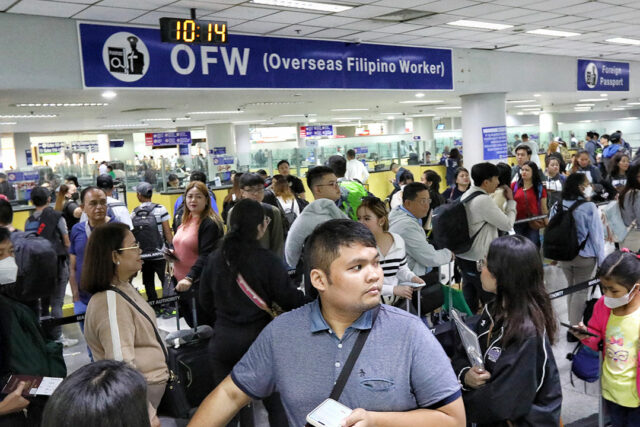
Overseas Filipino workers (OFWs) are seen at the Ninoy Aquino International Airport Terminal 3. — PHILIPPINE STAR/WALTER BOLLOZOS
By Luisa Maria Jacinta C. Jocson, Reporter
REMITTANCES will likely remain resilient this year despite an expected slowdown in the global economy, particularly in the United States, analysts said.
Oxford Economics economist Makoto Tsuchiya said he expects Philippine remittances to grow by 3% this year, slightly faster than the estimated 2.7% in 2023.
“We believe remittances are counter-cyclical in nature, so the global slowdown that we expect, particularly in the US, should not bar overseas Filipino workers (OFW) from remitting money back home,” he said in an e-mail.
The BSP expects remittance growth of 3% in 2023 and 2024.
For January to November, cash remittances coursed through banks rose by 2.8% to $30.211 billion from $29.38 billion a year ago, latest data from the Bangko Sentral ng Pilipinas (BSP) showed.
The World Bank in its latest Migration and Development brief projected remittance flows to expand by 5% to $42 billion this year.
Remittances to the Philippines alone account for about 48% of the total remittances to East Asia and the Pacific Islands, excluding China, it said.
Remittances also account for 10% of the Philippines’ gross domestic product (GDP), the World Bank said.
“I think the World Bank’s 5% (remittance growth) forecast for 2024 is a fair assessment, partly because the momentum in remittances month on month improved materially in the second half of 2023, heading into this year,” Pantheon Macroeconomics Chief Emerging Asia Economist Miguel Chanco said in an e-mail.
“Fundamentally, 2023 also saw a significant jump in overseas manpower placements, based on official statistics,” he added.
However, Mr. Chanco said the main risk to remittance growth this year is a slowdown in the US economy.
“We expect US economic growth to soften this year, which could, in turn, have a detrimental impact on its labor market and, by extension, cash transfers from overseas Pinoys in that country,” he said.
Latest data from the BSP showed that the United States was the top remittance source with a 41.2% share in January to November.
This was followed by Singapore (6.9%), Saudi Arabia (6%), Japan (5%), the United Kingdom (4.7%), United Arab Emirates (4.3%), Canada (3.6%), Qatar (2.8%), Taiwan (2.7%) and South Korea (2.5%).
Mr. Tsuchiya said he does not expect a “very strong surge” in remittances this year.
“First, we expect the Philippines to post a healthy growth of 4.9%, only slightly slower than 5% in 2023. While this is low by the Philippines’ standards, it is not too weak to entice higher remittances when the rest of the world where OFWs are based are suffering more,” he said.
The government is targeting 6.5-7.5% growth this year.
“Second, recent surveys suggest the share of households that use remittances for savings rose to 37.6% in 2023 from 33.6% in 2022. In fact, the figure in 2023 is higher than 35.7% in 2019, before the pandemic. This means there is currently no urgent need for OFWs to remit their money in a hurry,” Mr. Tsuchiya added.
Ateneo de Manila economics professor Leonardo A. Lanzona said higher remittances are normally expected during periods of economic difficulty.
“Since economic growth is not expected to increase significantly this year due to various constraints, including El Niño, one would expect remittances to fill in the gap between the incomes and consumption needs of households,” he said in an e-mail.
The World Bank report noted that remittance inflows could also be used to help support the country’s debt management due to their “large size relative to other sources of foreign exchange, countercyclical nature and indirect contribution to public finances.”
Mr. Chanco said more dollar remittances coming in would help “service external debt obligations denominated in foreign currency, mitigating any strains on the exchange rate.”
“I’d be wary, though, if the government starts to see these inflows as a potential source of tax revenue to help service public debt, as implementing any sort of such levy might have a structural impact on the level of inflows thereafter,” he added.
Mr. Lanzona said remittances are unlikely to help address the country’s debt problem.
“Remittances are only limited to meeting the households’ debt and social security which is lower than the country’s debt obligations. Hence, it is unlikely that it will be sufficient in solving the country’s debt problem,” he added.
Marking its 125th founding anniversary this month, the Department of Transportation (DoTr) has been at the helm of enabling viable, efficient, and reliable transportation for roads, railways, maritime, airports, and aviation that serves as a tool for the country’s economic growth and recovery. With a rich history in public service, the DoTr has played a crucial role in the country’s transport sector, improving mobility and connectivity in the archipelago.
The department, throughout its several evolutions as an organization, has been a witness to more than a hundred years of progress, adapting to changing transport needs and demands of the country, all in pursuit of offering a seamless transportation experience, connecting individuals and communities, and a transport system that is more interconnected and efficient.
It has become responsible for planning, coordinating, and implementing policies in the country’s transport system. Further, it develops and promotes a well-connected network of transportation services, projects, and programs that ensure safety and convenience on our roads, railways, skies, and seas.
The DoTr was first born in 1899 as the Department of Public Welfare. When a Congress general assembly approved the establishment of the Malolos Constitution, the DoTr had become part of the First Philippine Republic’s Council of Government. Gracio Gonzaga served as the Secretary of Public Welfare, which covered the transportation and communications portfolio, from Jan. 21, 1899 to May 7, 1899.
The department then underwent several change of names, beginning with the Department of Commerce and Police, and Department of Commerce and Communications.
Then, it was renamed the Department of Public Works and Communications in 1931; Department of National Defense, Public Works, Communications, and Labor in 1944; and the Department of Public Works, Transportation, and Communications in 1951.
In 1978, the department was changed into the Ministry of Public Works, Transportation, and Communications, which was divided into two agencies, namely the Ministry of Public Works and Highways (MPWH) and the Ministry of Transportation and Communications (MoTC).
To ensure a reliable and well-coordinated transport system, MoTC was tasked with managing operations of public transport such as the Philippine National Railway (PNR) and the then Metro Manila Transit Corp. (MMTC), as well as the registration and licensing of motor vehicles and bus leasing programs.
In 1987, the department became the Department of Transportation and Communications (DoTC). The DoTC was then put under the helm of Secretary Jesus B. Garcia in 1992, and has since seen a significant growth in terms of investments, facilities and technology onwards.
Fast-forward to 2016, the DoTC transformed into the Department of Transportation (DoTr).
Aligning with Build Better More program
Groundbreaking for the construction of Anonas and Camp Aguinaldo stations of the Metro Manila Subway Project
2024 is another year of delivering essential transport systems and enhancing infrastructure to provide a better life for Filipinos. Through the Build Better More Program, expressways, bridges, airports, railways, and ports are set to open up new opportunities for businesses, and promote innovation and economic growth.
In the department’s 2023 annual report, from 2022 to the present, the DoTr has completed 88 airport development projects, 32 maritime projects, and 18 road projects, enhancing mobility and connectivity across regions.
To improve the modern railway experience, the DoTr seeks to continue developing railway systems, including the Metro Manila Subway, Metro Rail Transit Line 7 (MRT-7), LRT-1 Cavite Extension, MRT-3 Rehabilitation, and the North-South Commuter Railway System.
Metro Manila Subway is the country’s first subway system that spans 33 kilometers (km) consisting of 17 stations, running from Valenzuela City to Parañaque City. In partnership with Japanese telecommunications company KDDI, the Metro Manila Subway will include telecom infrastructure, which intends to alleviate traffic congestion and air pollution in the city. The subway is set for completion by 2029.
The MRT-7 is a 22-km transit rail line that includes 14 stations connecting Quezon City to San Jose del Monte in Bulacan. The new train line is expected to reduce travel time from a two-hour drive to a 35-minute train ride. According to the DoTr, MRT-7 was 63.28% done last October and is expected to be up and running by November 2025.
Meanwhile, LRT-1 Cavite Extension project expands to 20 stations and connects major cities such as Quezon City, Caloocan, Manila, Pasay, and Parañaque, to Bacoor, Cavite. This expansion will add 11 km to the current railway system and accommodate 800,000 daily passengers in a comfortable and modern integrated transport. LRT-1 Cavite Expansion is expected to be completed by 2027.
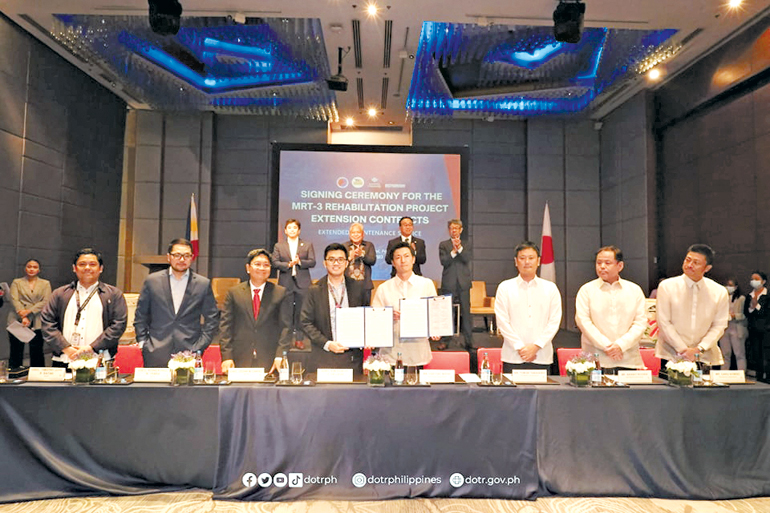
Contract signing ceremony for the MRT-3 Rehabilitation Project Extension — www.facebook.com/DOTrPH
For MRT-3, the DoTr’s goal is to upgrade the train capacity, providing commuters with more convenient and faster transportation. The project target is to enable four railing cars to run at the same time, which allows them to accommodate 500,000 commuters every day. Also, it includes upgrading track and signaling systems, power supply, and communication systems. The project is ongoing and is to be finished by July 2025.
Furthermore, the DoTr’s highly anticipated railway, the North-South Commuter Railway (NSCR) is in the works. The project is a 147-km railway, running from Pampanga to Laguna in less than 2.5 hours. Additionally, the project is expected to be completed by 2029, which can accommodate 800,000 commuters every day.
The DoTr is also aiming to improve and advance airports nationwide. Among the projects mentioned is the new international airport in Panglao Island, Bohol. The new airport aims to meet domestic and international standards, as well as promote tourism development in this region.
The Puerto Princesa Airport Development, meanwhile, includes developing a new passenger and cargo terminal complex, control tower, administration buildings, and more. Additionally, the airport will also include air navigation, taxiways, and other support facilities.
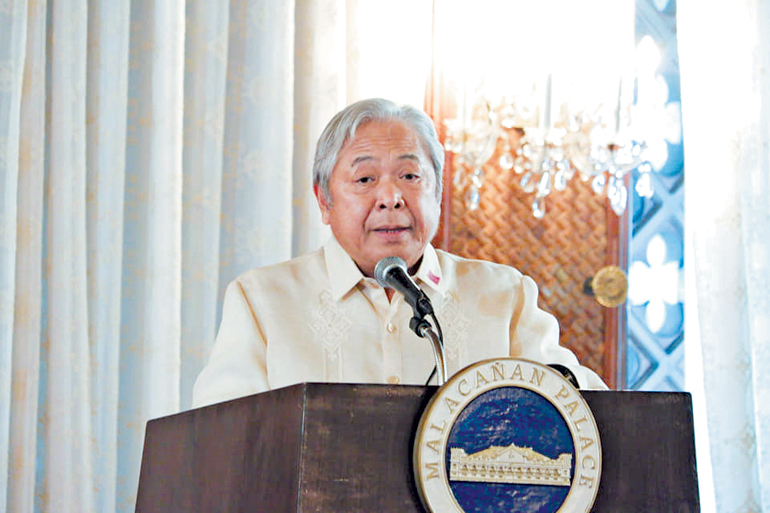
Transportation Secretary Jaime J. Bautista
To improve air traffic control, the department will also upgrade the sector’s communication, navigation, and surveillance system for air traffic management. The department shared the project includes an upgraded automated air traffic management system, navigation surveillance, and meteorological system.
Other major airport projects include the Ninoy Aquino International Airport, Clark International Airport, Busuanga Airport Development, Bicol (New Legazpi) International Airport, Naga Airport Development, Mactan Cebu International Airport Development, New Manila (Bulacan) Airport Development Project, Iloilo International Airport, Bacolod-Silay International Airport, and Davao International Airport Development.
The DoTr also aims to boost port areas across the country. For instance, the new Cebu International Container Port, which aims to create a high-quality container port, will support the growth of the region.
Phase I of the Maritime Safety Capability Improvement for the Philippine Coast Guard is also in the works, which aims to enhance maritime response abilities. — Angela Kiara S. Brillantes
RENEWABLE energy (RE) commercial projects with awarded service contracts increased by 26% in 2023, led by solar technology, according to the Department of Energy (DoE).
Data from the DoE released on Tuesday showed that RE projects totaled 1,220 last year with a potential capacity of 134,813.79 megawatts (MW), higher than the 965 recorded in 2022 with a capacity of 80,396.61 MW.
Of the total, there are 434 solar projects in the country with 28,913.78 MW potential capacity. This was followed by 428 hydropower projects with 18,902.96 MW and 252 wind power projects with 85,692.964 MW.
There are also 58 biomass projects with 206.88 MW; 39 geothermal projects with 1,063.20 MW; and nine ocean energy projects with 34 MW.
Terry L. Ridon, a public investment analyst and convenor of think tank InfraWatch PH, attributed the increase in RE projects to a “better business climate under the current administration, the commitment of the Energy department to a better energy mix in the medium-term, and the relatively lower costs of building RE facilities compared to legacy facilities like coal and gas plants.”
“This is a step in the right direction as this significantly contributes to our climate commitments, and balances our reliance on coal and gas technologies,” he said in a Viber message.
He added that this momentum towards RE should prompt the government to further streamline permitting processes, particularly in local government units, to expedite the establishment of RE facilities.
As of the end of 2022, RE accounted for about 22% of the Philippines’ energy mix, with coal-fired power plants providing nearly 60%.
Looking ahead, the government aims to increase the share of renewables to 35% by 2030 and 50% by 2040. — Sheldeen Joy Talavera
As an archipelago composed of 7,107 islands and strategically located as the gateway to Asia, the Philippines is surrounded by vast seas and valuable resources that it must utilize to develop and boost its economy. With the constant threat of monsoons and typhoons along with the looming tensions in the West Philippine Sea, the country’s maritime capabilities are often tested.
The Department of Transportation (DoTr), tasked to take on the challenge of protecting the country’s waters and developing the maritime workforce, has worked on several projects to realize President Ferdinand “Bongbong” Marcos, Jr.’s dream, for the country to be a “global maritime hub,” as he stated during his second State of the Nation Address in July last year. In the previous year, the DoTr completed nine major projects in different parts of the Philippines that were financed by loans and foreign aid from South Korea and Japan.
The first of these is the Philippine Ports and Coast Guard Capability Development Project formerly known as the Greater Manila Access (GMA) Modular RoRo Ports Project. This involves the acquisition of four brand new units of 24-meter patrol boats along with one unit of 82-meter patrol boat worth P5.142 billion collectively for the Philippine Coast Guard (PCG).
The second project aimed to improve the capabilities of the PCG to quickly respond to maritime incidents and unforeseen circumstances. The first phase of the Maritime Safety Capability Improvement Project for the Coast Guard involves the acquisition of 10 44-meter Multi-Role Response Vessels (MRRVs) while the second phase encompasses the procurement of two 94-meter MRRVs. The purchase of the response vessels was sourced from the Japan International Cooperation Agency (JICA) and was bought for P9.267 billion and P8.017 billion, respectively.
Thirdly, the DoTr envisioned providing a modern international container port facility needed to sustain and further Cebu’s maritime development. The Philippine Ports Authority, quoting Drewry Maritime Research, noted that the port of Cebu was the 13th most effective seaport in Southeast Asia in 2022. The government agency’s program, the New Cebu International Container Port Project, aims to better these statistics and facilitate faster transactions in the Queen City of the South’s sea hub.
Construction is yet to start for the new port in Consolacion, Cebu. However, funding for the P9.962-billion program has already been secured and sourced through Official Development Assistance as recommended by the Korean International Cooperation Agency (KOICA).
The DoTr’s Economic and Social Development Program called for the procurement of fast boats and anti-terrorist equipment that will enhance the competence of the PCG in the performance of its vital functions such as maritime safety, maritime security, and maritime law enforcement. The equipment and vessels were worth ¥600 million in total and were funded through JICA grant aid.
Another endeavor that the agency completed last year was the acquisition of seven maritime disaster response helicopters. Just like the second project, the new choppers are meant to enhance response capabilities, particularly during maritime incidents, natural disasters such as typhoons, and calamities, with an estimated project cost of P5.846 billion. The program also includes training for pilots and technical crew who will be using the aircraft.
Additionally, the DoTr is also working on the Central Spine Roll-on Roll-off (RoRo) Development Project. The endeavor could potentially provide the Philippines with an efficient “spine” to facilitate the safe and speedy movement of passengers, vehicles, and goods between the Luzon Island-Panay-Negros-Cebu-Bohol-Mindanao zone. Once the project is completed, these areas will be connected by a highway system and RoRo ferry services with matching port and terminal facilities.
Moreover, the DoTr’s Maritime Safety Enhancement Project aims to improve aid-to-navigation technician capability, develop maritime traffic routes through safe facilities, acquire international standards, prevent maritime accidents, and lessen pollution in the sea. The project involves the acquisition of two buoy tenders and the construction of two buoy bases which will be used in the implementation of the program.
Completing this list of accomplishments last year is the acquirement of 40 Filipino-made 15-meter patrol boats last Oct. 17. Announced by Mr. Marcos during the 122nd anniversary of the PCG in Manila, the patrol crafts will give increased capability and are intended to help the Coast Guard perform its function.
Aligned with the administration’s vision to upgrade and strengthen the country’s maritime capacities, the President was quoted as saying in a report from the Philippine Star, “We are continuing with the upgrading of the equipment, the training, and the capabilities of all our people, especially the coast guard, not only because they are in the frontline (of) the problems that we are facing in the West Philippine Sea, but also because of the very important function that they play when it comes to search and rescue, (and) maritime incidents when it comes disaster assistance.”
Aside from these major projects, there were also a total of 32 completed locally funded maritime projects from 2022 up to October last year. 21 of these projects were finished in 2022 while 11 were implemented last year. These programs involved civil works such as the construction/rehabilitation of causeways and seawalls, the construction of access roads, and other port improvements all over the country.
Recently, the President ordered the Maritime Industry Authority (MARINA), another government agency under the DoTr, to standardize maritime systems in the country and bring them in line with international standards. This is in light of the European Commission’s decision to continue honoring the certificates issued by the Philippines to Filipino seafarers even as it has previously found that seafarer training in the country was deficient.
Presently, three maritime projects are ongoing, and 89 are Memorandum of Agreement-implemented projects. — Jomarc Angelo M. Corpuz
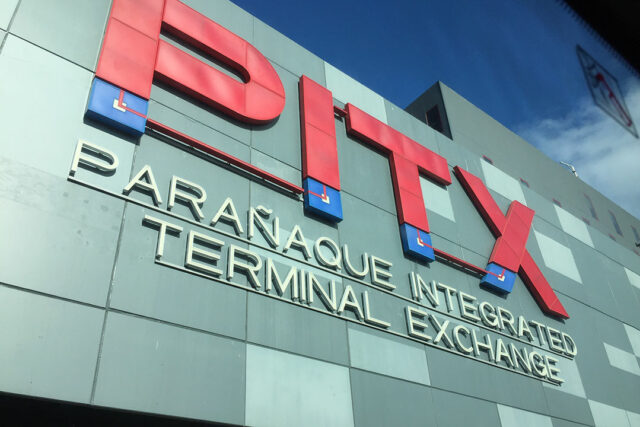
PARAÑAQUE INTEGRATED Terminal Exchange (PITX), a subsidiary of listed infrastructure company Megawide Construction Corp., plans to add six routes this year as it targets a passenger volume of 40 million.
The expansion includes destinations like Tuguegarao City, San Carlos City, and Dagupan City in Pangasinan, along with San Pedro and Southwoods in Laguna, and Guimaras in Western Visayas, enhancing the current 100-route network, PITX said in a statement on Tuesday.
The landport has served 127 million passengers between 2019 and 2023 and anticipates reaching a total of 150 million passengers this year, it added. PITX was formally launched in November 2019.
“The addition of new routes will contribute to PITX’s mission of becoming the central hub for domestic transportation, enabling travelers to reach their destinations with ease,” the landport said.
“We are thrilled to see this milestone come to fruition this year,” PITX Corporate Affairs and Government Relations Head Jason T. Salvador said.
PITX is the country’s first landport. It is operated by Megawide’s MWM Terminals, Inc. under a 35-year build-transfer-operate contract.
On Tuesday, shares of Megawide rose by three centavos or 0.91% to P3.34 apiece. — R.M.D. Ochave
The Department of Transportation, together with President Ferdinand R. Marcos, Jr., broke ground for the Cebu Bus Rapid Transit Project — Package 1 last February 2023. — www.facebook.com/DOTrPH
As part of the International Monetary Fund’s (IMF) consultation with the Philippines in December last year, the organization affirmed that the country’s economy has come out stronger, in part due to the authorities for their appropriate policy response and the recent implementation of key structural reforms to stimulate exports, spur foreign investment, and raise growth potential. Moving forward, the IMF recommended maintaining prudent policies to further rein in inflation, preserve fiscal sustainability, and increase financial resilience.
Sustaining efforts to address structural challenges is also important, particularly efforts to reduce infrastructure and education gaps, and to harness the digital economy. The organization emphasized the significance of enhancing corporate ease of doing business and fortifying governance.
Perhaps most importantly, directors at the IMF emphasized that poverty and inequality could be drastically decreased by improving infrastructure in two fronts: first, for social safety, education, and providing high-quality jobs; and, second, increasing resiliency to climate hazards and natural catastrophes.
On the latter point, the current administration is investing a substantial portion of the proposed P214.3-billion budget of the Department of Transportation (DoTr) for 2024 for the implementation of its “Build Better More” infrastructure program, the government’s multi-pronged program that aims to modernize the country’s infrastructure backbone to sustain rapid growth, attract investments and spread economic opportunities for all Filipinos.
The flagship public transportation projects with the most significant infrastructure impacts approved by the National Economic and Development Authority will receive a total of P176.4 billion from the DoTr’s planned 2024 allocation, according to a statement from the Department of Budget and Management (DBM).
The DoTr’s aviation and maritime infrastructure programs, the Land Public Transportation Program, the North-South Commuter Railway System, and the Metro Manila Subway Project Phase I are among such infrastructure projects.
Of all these, the Rail Transport Program would be allocated the lion’s share of about 76.4% of the proposed budget for infrastructure development, which is intended to support the advancement and building of modern railway systems all over the country.
“The investment will include projects, such as the North-South Commuter Railway System, the Metro Manila Subway Project Phase I, LRT (Light Rail Transit) Line 1 Cavite Extension Project, the Philippine National Railways South Long Haul Project, and the Metro Rail Transit Line 3 (MRT-3) Rehabilitation Project,” the department said.
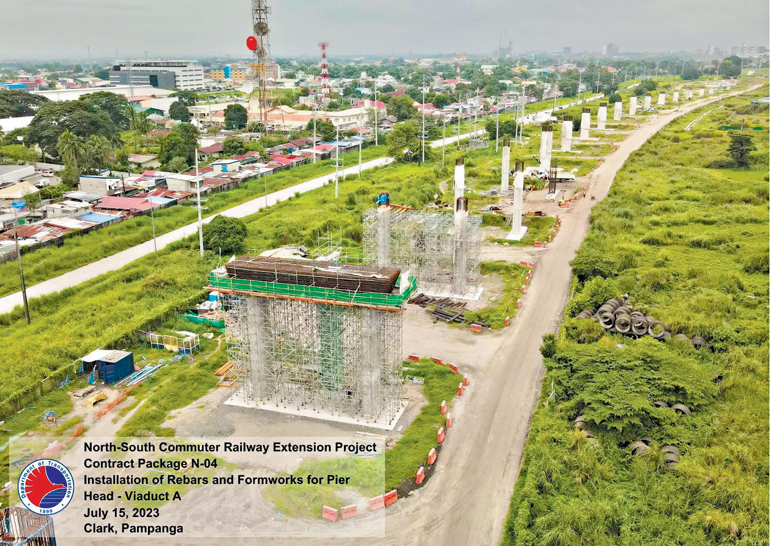
The DBM said that around P76.3 billion would be set aside for the construction of the North-South Commuter Railway System, which will link Calamba, Laguna, and New Clark City in Capas, Tarlac.
The Metro Manila Subway Project Phase I, which will include 15 stations from Valenzuela City to Pasay City, would cost a total of P68.4 billion.
A Philippine National Railways train along the Naga-Ligao route, which officially opened last July 31
The Philippine National Railways South Long Haul Project, which will reconstruct the PNR South Main Line, will receive P3.1 billion from the government; the MRT-3 Rehabilitation Project will receive P2.9 billion; and the LRT Line 1 Cavite Extension Project, which will add 11 kilometers to the current railway system, will receive P4.7 billion.
Meanwhile, the Land Public Transportation Program will receive roughly P6.4 billion for a number of infrastructure initiatives.
The Davao Public Transport Modernization Project would receive approximately P1 billion; the EDSA Busway Project, P909 million; the Cebu Bus Rapid Transit Project, P700 million; the Active Transport Bike Share System and Safe Pathways Program in Metropolitan Areas, P500 million; and the EDSA Greenways Project, P263 million.
The Cebu Bus Rapid Transit (BRT) Project aims to establish a modern transport system utilizing approximately 176 buses operating on dedicated and exclusive bus-ways. This system will cover a 23-kilometer corridor from Bulacao to Talamban in Cebu City, with a link to Cebu South Road Property. Part of the funding for this initiative is provided by the World Bank.
Another project co-financed by the World Bank is the Quezon Avenue BRT Line 1 project, which envisions the establishment of a 12.3-kilometer bus system connecting Philcoa in Quezon City to Manila City Hall. This route will traverse Quezon Avenue and España Boulevard, providing an efficient and modern public transportation option.
The EDSA BRT Line 2 project, meanwhile, is a comprehensive initiative aimed at establishing a BRT system along the 48.6-kilometer EDSA route. The bus system will cover the Monumento to Diosdado Macapagal Ave./Roxas Blvd. stretch, with integrated routes connecting Ortigas Business District, Bonifacio Global City, and Makati Business District.
A portion of the ongoing North-South Commuter Railway Extension Project in Clark, Pampanga
The DoTr has also broken ground for the expansion of active transportation infrastructure across the country, primarily involving putting up bike lanes and creating the necessary infrastructure for safer cycling and promote active transportation within local government units. Among the areas where such infrastructure are being expanded are Laoag City, Ilocos Norte; San Fernando, Pampanga; Lipa City, Batangas; Intramuros in Manila; Quezon City; and Kalibo, Aklan.
“Expanding the Active Transport program here at Laoag will entail more than just putting up more bike lanes,” Transportation Secretary Jaime J. Bautista said in a statement.
“We also want to promote the safety of cyclists. We want to establish the necessary infrastructure to ensure cycling is a safe mode of daily travel, no longer just for leisure,” he added.
The project covers the establishment of 3.20 kilometers (both ways) of Class 1 and 2 bike lanes along several parts of the Laoag Bypass Road. It is targeted to be completed by the fourth quarter of this year, which shall benefit thousands of active transport users in the city.
“This push on infrastructure development is aligned with the Philippine Development Plan 2023-2028, and the country’s Medium-Term Fiscal Framework,” the DBM said.
President Ferdinand R. Marcos, Jr. underlined in his Budget Message the importance of augmenting the DoTr’s funding in 2024, pointing out the critical role that transportation policy plays in promoting sustainable economic growth.
“Transportation policy can have significant and lasting impacts on overall economic growth. Hence, with the urgent need to improve our country’s public mass transport system and reduce road congestion, we have doubled the budget for the DoTr from P106.0 billion in the fiscal year 2023 General Appropriations Act to P214.3 billion for 2024,” Mr. Marcos said. — Bjorn Biel M. Beltran