Home Blog Page 3738

Chery Auto Philippines grows 64% in 2023

IMAGE FROM CHERY AUTO PHILIPPINES

CHERY AUTO PHILIPPINES (CAP) concluded 2023 with healthy growth of 64% versus its 2022 sales performance. CAP recorded total sales of 3,600, cornering 1.2% share of the passenger vehicle segment.

“This previous year was a challenge for the automotive industry as the competition becomes tougher with more and more players especially China brands coming in. We attribute our success last year to the attractive sales and marketing promotions, flexible financing offers extended by our bank partners and the increasing confidence of the market toward our vehicles and after-sales support,” Chery Auto Philippines Managing Director Froilan Dytianquin said.

The Tiggo 5 was CAP’s sales driver last year with 1,851 units sold. Year on year, Tiggo 5 sales significantly increased by 169% compared to 2022, maintaining its fourth place in the subcompact SUV segment with 11% market share.

Meantime, the Chery Tiggo 7 performed well in the compact SUV segment last year with 31% sales growth, selling a total of 910 units in 2023. Based on the data presented by the Chamber of Automotive Manufacturers of the Philippines, Inc. (CAMPI), the Tiggo 7 was also fourth in its class.

Midsize SUVs continued to dominate the SUV category with more than 40,000 sales in 2023 which is equivalent to 12% growth. This paved the way for Chery’s midsize SUV Tiggo 8 to register a 6% sales growth with a total of 473 units sold last year.

“As we welcome the New Year, Chery Auto Philippines remains confident as it aims to double its sales for this year. This will be triggered by the refreshed and new additions to our vehicle model lineup as well as the new Chery dealerships to rise this year,” Mr. Dytianquin added.

The ‘invisible hand’ or the ‘visible hand’?

STEFANO POLLIO-UNSPLASH

A basic economic concept I learned in school is the “invisible hand” — the metaphor Adam Smith used for the unseen forces of self-interest moving prices and production to meet at an “equilibrium point” where the demand and supply curves meet. “It is not from the benevolence of the butcher, the brewer, or the baker,” Smith wrote, “that we expect our dinner, but from their regard to their own self-interest.” Self-interest, therefore, makes markets self-correcting, self-regulating, and self-sustaining in terms of what to produce, what to charge, or how to organize distribution — as if guided by an “invisible hand.”

I explored whether the invisible hand thesis may explain why smallholders turn to illicit opium and coca cultivation in Afghanistan, Myanmar, Colombia, and Bolivia. It did not. Instead, what I found more useful was the visible hand of political entrepreneurship, interdependent relationships, and the metrics of precarity. I believe this story offers useful lessons for economists in the Philippines and elsewhere.

A dominant version of the invisible hand is embedded in claims made by various agencies tracking the illicit drug trade. In 1999, the UN Office on Drugs and Crime (UNODC) said that “prices are among the most complex indicators of markets, reflecting not only the interaction of supply and demand but also various other factors relating to quality (purity), competition, and risk.” Prices, therefore, provide market-based signals that influence the decision of producers, traders, consumers, and other actors. Hence, when drug price data is analyzed, weaknesses and vulnerabilities in the market and structure of the illicit drug economy may be identified and exploited, and thus contribute to a more effective counternarcotics strategy.

There are problems with such an approach, however. Firstly, there is an empirical anomaly — the expected higher prices triggered by reductions in supply due to tougher law enforcement have generally not emerged in practice. From 1990 to 2005, for example, researchers found that the prices of cocaine and heroin in Western Europe and the US dropped by 50% to 80%, despite intensified wars on drugs globally and the 1998 launch by the UN General Assembly of a 10-year program for a “drug-free world.” It is as if the actual market went against the so-called “law” of supply and demand. Second is the chicken-and-egg problem — are price levels a cause or consequence of movements in the supply and demand curves? I dove into actual historical cases to probe further.

The first case I examined was Bolivia. Sometime in June 1980, poor subsistence farmer Paulino Vasquez was on his way to the town of Chimore to sell the 100 pounds of coca leaves he carried on his back, worrying about wildly fluctuating prices. Paulino was interviewed by Bolivian economist Roberto Laserna. In February, Paulino got P6,000 for a similar 100-pound load (about US$240). However, in April and May, the prices dropped to about P1,500 ($60). At least, Paulino reassured himself, coca always had buyers, unlike his other crops. Moments later, a truck driver pulled up and offered P16,000 ($640) for his coca leaves. The unexpected price rise and Paulino’s windfall began what Laserna described as Bolivia’s “coca boom” of the 1980s.

In 1980, Bolivia’s economy was collapsing due to the sharp decline in the global prices of its main exports — tin and gas. Suddenly, mine workers were unemployed, foreign currency ran scarce, and debt service payments multiplied. As the financial crisis deepened, inflation started to spiral out of control — reaching a staggering 8,000% by some accounts. On top of these economic convulsions were political crises. Between 1978 and 1982, there were three general elections and 10 presidential changes — four by military coup, three by legitimate processes through Congress, and three by internal disputes in the Armed Forces.

A structural adjustment package was prescribed by international creditors led by the International Monetary Fund. Critics called it “The Brick” that was dropped on the heads of the Bolivian public. It eliminated food subsidies, canceled almost all price controls, hiked oil prices by 300%, froze government wages, cut government spending, opened Bolivia’s borders to unrestricted imports, and downsized state companies in preparation for privatization. Bolivians eligible for social security between 1983 and 1988 dropped by 61%.

As crisis after crisis and the impact of The Brick overwhelmed Bolivia, coca production, intriguingly, was expanding. Although illicit, coca-growing rapidly rose to become an alternative source of income. The lure of high coca prices induced more migration to the sparsely populated, flat, low-lying eastern provinces, which became the main coca-producing areas. Coca production significantly increased, peaking in 1986-87, thereby acting, according to another expert, James Painter, “as a huge social safety net, absorbing labor from the collapsed mining and industrial sectors, and replacing large portions of dollars previously generated by minerals, gas, and other exports.”

Both Laserna and Painter argued separately that the clandestine coca-cocaine economy facilitated Bolivia’s most radical restructuring of its economy and created the conditions necessary for structural adjustment to work — a matter that international economic experts have never acknowledged.

So, to what extent did the “invisible hand” shape outcomes? Laserna’s answer was that although global demand for cocaine played a role, the crisis conditions, he contends, primarily stimulated and initiated the coca boom. Producing coca and cocaine made sense — like an emergency measure taken because nothing else was working (like a kapit sa patalim — holding tight to the knife’s edge — strategy). He further points out that “whether they were effectively protected, or they simply knew that the possibility of repression was minimal, the illegal purchasers of coca and coca paste exerted tremendous pressure on the coca market, forcing prices to rise rapidly and thus initiating the coca boom.” Actual actors with visible hands in real markets, rather than a predetermined invisible hand of supply and demand, were the main reasons behind price changes.

It thus emerged that illicit crop markets, like it or not, bring a certain level of productivity. It can generate income that can tame crises or relieve pressures in the national economy. Most importantly, coca growing as experienced by Paulino provided predictability and reduced risks, especially because coca harvests “will always be sold.”

To conclude, it seems the “invisible hand” is only an attribution to outcomes generated by what actually are visible hands. The notion of an invisible hand becomes distorted when taken as an a priori metaphor emerging from purely theoretical deduction. Rather, it is posteriori, i.e., it proceeds from observation and experience, as Smith himself used it. It seems, therefore, that while the dynamics of supply and demand are real, whether in licit or illicit markets, there really is no “law” — it is only a suggestion.


To read the other cases, Eric D. U. Gutierrez’s open-access article on “Precarity, illicit markets, and the ‘mystery’ of prices’” is freely available in the The Journal of Peasant Studies. See https://tinyurl.com/yscslccx. He has written on corruption, governance, political families and the conflict in the Muslim areas of Mindanao. Since 2000, he has worked for three international NGOs running programs and policy advocacy in Africa, Asia, and Latin America.


CAR vegetable farmers targeted for assistance

BW FILE PHOTO

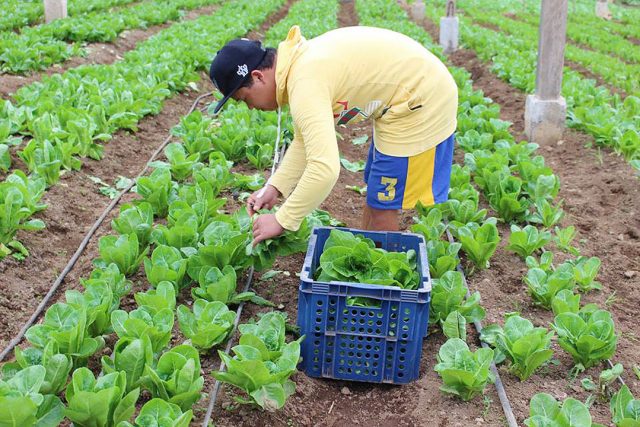
THE Department of Agriculture (DA) said it will help vegetable producers in the Cordillera Administrative Region (CAR) to raise their output, with P130 million worth of financial aid, equipment, and irrigation projects.

In a statement on Sunday, Agriculture Secretary Francisco P. Tiu Laurel, Jr. said that the assistance is designed to increase the output of highland crops.

“To further enhance the region’s output, we are turning over P417,000 worth of farm machinery to three cooperatives and associations in Mountain Province,” Mr. Laurel added.

The region produces 80% of the country’s highland vegetables.

He said that P454 million was also earmarked to fund three infrastructure projects in the area, while P13.9 million was allocated for an unspecified agriculture project. The works are set to be completed within the year.

“The assistance we’re providing will promote sustainable growth through better production, processing, marketing, and distribution of high-value crops,” he added.

Mr. Laurel said that the DA is planning to tap local government units in the region to promote crop diversification, in an effort to stabilize farmer incomes and encourage the cultivation of other crops.

“The government can also tap the abundant harvests of farmers for distribution and sale in Kadiwa centers,” he added, referring to the government-subsidized direct-from-farmers outlets.

CAR farmers earlier sought government intervention due to the low prices offered by traders for highland vegetables, forcing some of them to dump their crops.

The DA’s regional office in CAR reported that the drop in prices was due to a lack of buyers for the upland vegetables between Dec. 28 and Jan. 3.

Additionally, Mr. Laurel said that the agency has allotted P25.9 million for the rehabilitation of rice farms affected by Super Typhoon Egay (international name: Doksuri). The storm had affected 14,714 farmers in the area.

The Philippine Center for Postharvest Development and Mechanization disbursed P82.9 million worth of rice production and post-harvest equipment and facilities in Kalinga and Ifugao provinces.

Some P41.2 million worth of irrigation projects were also turned over to CAR irrigator associations, according to Mr. Laurel.

“These irrigation systems will increase yields on 195 hectares tilled by 299 farmers,” the DA said. — Adrian H. Halili

Benilde offers textile design program

THE De La Salle-College of Saint Benilde (DLS-CSB)is now offering a Bachelor in Textile Design (BTD).

“BTD aims to champion textile innovations rooted in Filipino culture and heritage with a multidisciplinary approach. It is a radical paradigm that considers the ecological, cultural, social, and economic impacts in a way that will not compromise the needs of future generations,” says a press release.

The undergrad program is made up of fundamental courses that will equip students with advanced knowledge, technical skills, and sustainable business essentials. Classes will cover experiences from design conceptualization, until the production processes.

Students will have access to the Design + Arts Campus’ laboratories dedicated to Computer-aided Drafting and Design (CADD), Cloud-based Infrastructure, Industrial Design, Textile, Architecture, and Sewing.

Print and digital materials are likewise available through the Br. Fidelis Leddy Center for Learning Resource, which also covers subscriptions to the global trend forecast WGSN and design authority Material ConneXion.

Students will also have access to the laboratories of the Department of Science and Technology (DoST) Philippine Textile Research Institute (PTRI), as well as the Museo Negrense De La Salle in Bacolod, which houses a large collection of international textiles.

Graduates may pursue careers as textile designers and fabric technologists, to textile engineers, technical consultants, and haute couture textile developers. They may delve into the craft sector as weavers, embroiderers, knitters, printmakers, and illustrators or in design studios as creative directors, colorists, trend forecasters, and trend analysts.

Applicants for the course’s first term of Academic Year 2024 to 2025. It will run for 10 trimesters, which include electives, capstone projects, as well as practicum training.

For more information, visit https://www.benilde.edu.ph/undergraduate-textile-design/.

CTA affirms ruling granting part of Ginebra San Miguel’s refund claim

CTA.JUDICIARY.GOV.PH

THE Court of Tax Appeals (CTA) has affirmed its ruling, granting part of Ginebra San Miguel, Inc.’s (GSMI) refund claim for wrongly paid excise taxes on distilled spirits, totaling P319.76 million for the period from Jan. 1 to May 31, 2013.

In a 26-page decision dated Jan. 18, the CTA full court upheld its previous finding that GSMI demonstrated paying excise tax twice on raw materials and finished liquor products, amounting to P319.76 million.

“The imposition of excise taxes on the finished liquor products manufactured from tax-paid ethyl alcohol is contrary to law,” said Associate Justice Marian Ivy F. Reyes-Fajardo in the decision.

GSMI initially sought a total refund claim of P715.26 million for its excise tax liabilities.

The tax court disallowed the remaining amount due to GSMI’s failure to include the in-transit ethyl alcohol, measuring 4,063,500 proof liters, in its claim. This alcohol was in transit to its factory during a year-end inventory count.

“Notably, GSMI acknowledges that it failed to include the in-transit volume in its petition, as well as in its administrative claim,” the CTA noted.

“All in all, there is no reason for us to deviate from the Court in Division’s (Third Division) conclusion.” — John Victor D. Ordoñez

China says banks are ‘doing well’ despite financial turmoil — Yellen

US Treasury Secretary Janet Yellen — REUTERS

MILWAUKEE — US Treasury Secretary Janet Yellen said on Friday that Treasury officials visiting Beijing recently received assurances that Chinese banks are “doing well” despite turmoil in the country’s financial and real estate markets, adding that she did not see large spillovers to the US economy at this stage.

Ms. Yellen told reporters during a visit to a Milwaukee job training center that a US-China Economic Working Group would meet in Beijing shortly for larger discussions on China’s economic situation.

The Financial Working Group met last week and US Treasury officials “focused on pressures in the financial sector, in the banking sector, stemming from debt problems of local governments and the real estate sector,” Ms. Yellen said. “They received assurances that banks in China are doing well.”

Chinese financial markets, however, sold off heavily this week as investors both international and domestic grow frustrated with the Chinese government’s reluctance to take bold measures to shore up the economy amid a protracted crisis in its real estate sector and debt pressures.

Asked about the potential for spillovers from China’s turmoil to the US economy, Yellen said that there could be impact.

“If growth slows to Asian countries that are important trade partners, we may see some spillovers. But I don’t think they’re going to be very large,” she said.

Regarding calls to confiscate hundreds of billions of dollars in frozen Russian assets, Yellen said she expected the Group of Seven (G7) finance ministers to soon receive a report reviewing potential legal justifications and risks associated with seizing the funds and diverting them to aid Ukraine.

Asked if the report would be ready by the end of February, Ms. Yellen said: “We’re working to do it quickly.”

She has previously said that an international law justification agreed by G7 countries would be needed and that the US Congress would need to pass legislation to enable seizure of Russian assets held in the US. — Reuters

Share of new car sales in 2023

SHARE OF NEW CAR SALES IN 2023
INFOGRAPHICS BY THEA MAIRI A. CASTILLO/IMAGE FROM FREEPIK

Combatting antimicrobial resistance

WIRESTOCK-FREEPIK

Antimicrobial resistance (AMR) is one of the top global public health and development threats identified by the World Health Organization (WHO). The agency estimated that bacterial AMR was directly responsible for 1.27 million global deaths in 2019, and contributed to 4.95 million deaths.

The WHO identifies misuse and overuse of antimicrobials in humans, animals, and plants as the main drivers in the development of drug-resistant pathogens. AMR affects countries in all regions and at all income levels. Its drivers and consequences are exacerbated by poverty and inequality, and low- and middle-income countries (LMICs) including the Philippines are most affected, the WHO said.

In 2019, there were 15,700 deaths attributable to AMR and 56,700 deaths associated with AMR in the Philippines. Our country has the 128th highest age-standardized mortality rate per 100,000 population associated with AMR across 204 countries. These are among the key findings of the Global Research on AntiMicrobial resistance (GRAM) project co-implemented by the University of Oxford and the Institute for Health Metrics and Evaluation (IHME).

Antimicrobials — including antibiotics, antivirals, antifungals, and antiparasitics — are medicines used to prevent and treat infectious diseases in humans, animals, and plants. AMR occurs when bacteria, viruses, fungi, and parasites no longer respond to antimicrobial medicines. As a result of drug resistance, antibiotics and other antimicrobial medicines become ineffective and infections become difficult or impossible to treat, increasing the risk of disease spread, severe illness, disability and death, the WHO explains.

AMR is a natural process that happens over time through genetic changes in pathogens. Its emergence and spread are accelerated by human activity, mainly the misuse and overuse of antimicrobials to treat, prevent, or control infections in humans, animals, and plants, the WHO stated.

Cultural misconceptions and inadequate regulation and enforcement of antibiotic use have shaped provider and patient attitudes and behavior that contribute to AMR in the Philippines, according to a letter to the editor published in the April 2022 issue of The Lancet Microbe. The op-ed authors, which included researchers from the Ateneo de Manila University, University of the Philippines Manila, and Philippine General Hospital, noted that self-medication is rampant in the country, with a prevalence rate ranging from 31% to 66%.

“Self-medication provides some semblance of healthcare, especially for low-income households that avoid economic and opportunity costs (i.e., productive work hours compromised by long clinic wait times) of medical consultation and diagnostics. Self-medication is also common among higher-income earners in LMICs, who have easier access to health information, and have the financial and social means to acquire medicine. Non-medical professionals commonly prescribe antimicrobials, and antibiotic sharing remains a common practice among Filipino families and communities,” the authors wrote.

The authors also noted that many Filipinos in rural areas still seek first-line treatment from traditional healers who provide herbal treatments, some of which contain suboptimal levels of antibiotics, as well as perform outdated practices such as crushing antibiotics to apply to skin injuries. These non-scientific practices may enhance pathogen resistance.

To address these challenges in combatting AMR in the country, the authors recommended legislation to regulate antibiotic prescription and dispensation and ensure accessibility and affordability of antimicrobials; partnerships between academic and private sectors to understand local AMR patterns and design culturally appropriate solutions; public education on AMR involving healthcare providers, public health experts, and community leaders, especially from rural regions; and the creation of global health networks to share best practices in addressing AMR in LMICs.

The research-based pharmaceutical industry believes that cross-sectoral collaboration is vital to address the growing threat of AMR. The education and cooperation of the public and healthcare professionals is paramount to identify and improve appropriate antimicrobial prescribing, dispensing, and adherence. Shared decision making with informed patients will help prescribers to ensure antibiotics are only given when needed.

Member states of the United Nations are called upon to establish national guidelines aligning with the WHO AWaRe guidance and to ensure that diagnostics are prioritized and made widely available to prescribers so that the effectiveness of new and old antibiotics is preserved, for as long as possible for as many patients as possible.

The establishment of national comprehensive surveillance systems will enable accurate characterization of resistance patterns globally. Sharing resistance data through international networks such as Global Antimicrobial Resistance and Use Surveillance System (GLASS) will allow for a better coordinated global effort to curb AMR.


Teodoro B. Padilla is the executive director of Pharmaceutical and Healthcare Association of the Philippines (PHAP). PHAP represents the biopharmaceutical medicines and vaccines industry in the country. Its members are in the forefront of research and development efforts for COVID-19 and other diseases that affect Filipinos.

Farmers call for focus on streamlined gov’t, not Constitutional amendments

PHILSTAR FILE PHOTO

FARMERS said on Sunday that legislators need to pay more attention to governance issues and reducing red tape, rather than pushing plans to amend the 1987 Constitution, calling the need to shore up food security more urgent.

Gregorio A. San Diego, Jr., chairman of the Philippine Egg Board Association, said seven foreign broiler producers and large Philippine integrators are mainly concerned about red tape.

“All of them including us are all complaining about the increasing chicken meat-import and LGU (local government unit) regulations, (and) not about land ownership,” Mr. San Diego said in a Viber message, referring to one of the proposed  Constitutional reforms.

Last week, Albay Rep. Jose Ma. Clemente S. Salceda said amending the Constitution to ease restrictions on land ownership will help address food security issues.

“The key to boosting food production and reducing food prices in the Philippines is investment in agriculture,” he said in a statement.

“These restrictions cover ownership, lease, transfer, and even foreign management — leaving foreign investors very little room for involvement in local agriculture,” Mr. Salceda, who also heads the House ways and means committee, added.

United Broiler Raisers Association (UBRA) President Elias Jose M. Inciong said amending the charter is not the answer to the Philippines’ agricultural crisis, especially if imports remain a priority over local production.

“The crisis is mainly traceable to the failure to implement the design of our treaty commitments (domestic support, trade remedies, and quarantine systems [in] sanitary and phytosanitary systems) in the World Trade Organization (WTO),” he said in a Viber chat.

Mr. Inciong, a lawyer, said that past administrations have focused on import liberalization, weakening producers.

“The sector is a victim not only of neglect but also of an insidious false narrative that it is protected by high tariffs,” he said, also citing the government’s poor implementation of current agricultural laws as well as insufficient budget support.

He urged Congress to instead focus on implementing the Agriculture and Fisheries Modernization Act (Republic Act No. 8435), the magna carta for small farmers (RA 7607), and the Food Safety Act (RA 10611). 

Provisions of the Local Government Code must also be reviewed, particularly on zoning, imposition of fees, and LGUs authority over quarantine and food safety matters, Mr. Inciong added.

Leonardo A. Lanzona, who teaches economics at the Ateneo de Manila, said passing laws that would allow agrarian reform beneficiaries to negotiate fair and efficient contracts with foreign corporations without giving away their land ensures a more equitable partnership that will make robust production more likely.

“In effect, the agrarian reform beneficiaries can be part-owners of these corporations with their land as their input to the potential production,” Mr. Lanzona said via Facebook Messenger chat.

He added that ownership does not correlate with agricultural production. “Land is so contentious that we cannot just open the constitution and allow big foreign corporations to take over the land.”

Congress has revived talks to amend the 1987 Constitution to soften economic restrictions and admit more foreign investors.

The Senate is set to conduct its own review of the charter, specifically on easing economic constraints on public utilities, advertising, and education. — Beatriz Marie D. Cruz

Fake online images of Taylor Swift alarm White House

WIKIMEDIA.ORG

WASHINGTON — The White House said on Friday it was alarmed by fake online images of the pop singer Taylor Swift and said social media companies have an important role to play in enforcing their own rules to prevent the spread of such misinformation.

Fake sexually explicit images of Ms. Swift proliferated across social media this week, including one image shared on X, formerly Twitter, that the New York Times said was viewed 47 million times before the account was suspended.

“This is very alarming. And so, we’re going to do what we can to deal with this issue,” White House Press Secretary Karine Jean-Pierre said at a news briefing, adding that Congress should take legislative action on the issue.

Lax enforcement against false images, possibly created by artificial intelligence (AI), too often disproportionately affects women, Ms. Jean-Pierre said.

“So while social media companies make their own independent decisions about content management, we believe they have an important role to play in enforcing, enforcing their own rules to prevent the spread of misinformation, and nonconsensual, intimate imagery of real people,” Ms. Jean-Pierre said. — Reuters

PLDT, Smart report blocking 16 billion cyberattacks in 2023

TELECOMMUNICATIONS provider PLDT Inc. and its wireless arm Smart Communications, Inc. reported stopping 16 billion cyberattacks last year as they sought to enhance customer experience.

In a weekend statement, PLDT noted that the blocked cyberattacks in 2023 were nearly 9,000% higher than the 182 million recorded in 2022.

“PLDT and Smart’s… cybersecurity culture has enabled us to fend off these attempts from breaching our network and assets,” PLDT, Smart, and ePLDT Chief Information Security Officer Angel T. Redoble said.

“Our cybersecurity agents undergo regular training. We upgrade our tools. And we engage partners who can help us secure our most important asset —our customers,” he added.

At the same time, he said that the Philippine government must oversee the country’s cybersecurity master plan to address escalating threats.

“We are in the middle of a cyberwar. We need to secure our country’s vital infrastructures like energy, telecoms, and financial services. If we talk about cyber resiliency, stakeholders — both private entities and government units — must collaborate. And we need the government to orchestrate our efforts,” Mr. Redoble said.

“Cyberattacks surge during holidays because that’s when people are distracted by the festivities. But for us, that’s when we are at the highest alert level. We’re not only protecting the company, but the entire Filipino people who rely on our services, especially in an increasingly digital landscape,” he added.

Hastings Holdings, Inc., a unit of PLDT Beneficial Trust Fund subsidiary MediaQuest Holdings, Inc., has a majority stake in BusinessWorld through the Philippine Star Group, which it controls. — Revin Mikhael D. Ochave

UGEP aims for 700 MW in solar projects by 2028

ENERGY company Upgrade Energy Philippines, Inc. (UGEP) is planning to install up to 700 megawatts (MW) of solar projects by 2028, encompassing utility-scale, commercial, and industrial solar rooftop and ground-mounted projects, a company official said.

“We are very bullish on the growth of solar in the country,” UGEP President and Chief Executive Officer Ruth Yu-Owen said on Saturday.

UGEP is a joint venture between renewable energy company PhilCarbon, Inc. and Belgian company Upgrade Energy.

The company collaborated with Merbau Corp. to construct a 13.811-MW-peak rooftop-mounted solar project in Batangas, serving as the engineering, procurement, and construction contractor. Merbau is the renewable energy arm of Gokongwei-led JG Summit Holdings, Inc.

UGEP announced the completion of the solar project in November last year, designed to fulfill the energy requirements of JG Summit’s petrochemical complex.

In the previous year, UGEP partnered with AboitizPower Distributed Renewables, Inc., a subsidiary of AboitizPower Corp., for a joint venture focused on commercial and industrial solar projects.

UGEP is also in the process of developing multiple utility-scale solar projects, including a 150-MW utility-scale solar project in Luzon.

“We believe that the future energy landscape will be one of 100% renewable energy, strategically located close to demand centers and sized appropriately to limit grid constraints and minimize losses,” Ms. Yu-Owen said. — Sheldeen Joy Talavera