Home Blog Page 3721

Explorer may have found the wreckage of Amelia Earhart’s plane in Pacific

WIKIPEDIA.ORG

A FORMER US Air Force intelligence officer says he believes he has found the wreckage of Amelia Earhart’s plane, which disappeared nine decades ago, on the bottom of the Pacific Ocean using sonar data from a deep-sea drone.

Hoping to solve an 87-year-old mystery, explorer Tony Romeo plans to launch a mission later this year or next to find the long-lost plane, which a massive US search failed to do in 1937.

“She’s America’s most famous missing person, right? As long as she’s missing, there’s always going to be somebody out there searching,” Mr. Romeo said. “If we can help bring closure to this story and bring Amelia home, we’d be super excited.”

Ms. Earhart, an American aviator, became the first woman and second person ever to fly solo and nonstop across the Atlantic in 1932, five years after Charles Lindbergh accomplished the feat. Along with navigator Fred Noonan, she was attempting to fly around the world when their plane went missing over the Pacific. If she succeeded, she would have become the first female pilot to do so.

Mr. Romeo, chief executive of the private exploration company Deep Sea Vision, believes the wreckage of Earhart’s plane lies on the ocean floor more than 5,000 meters (16,400 feet) beneath the surface, about 160 km (100 miles) from Howland Island, roughly halfway between Hawaii and Australia.

Blurry sonar images from the deep-sea drone show a plane-like shape on the flat, sandy ocean bottom, he said.

Deep Sea Vision’s 16-member crew searched more than 13,400 square km (5,200 square miles) over 100 days at the end of last year.

Mr. Romeo said the images showed what appeared to be a plane matching the size of Ms. Earhart’s Lockheed Model 10-E Electra. The image, he said, appeared to show a distinguishing characteristic of the plane: its twin vertical stabilizers on the tail.

Romeo supposes Earhart ran out of fuel and landed the plane on the ocean surface and that the craft later sank to the bottom, where it would have lay ever since, little disturbed by the light currents.

“The first step is to confirm it,” he said. “The next step would be, if it’s possible, to raise it to the surface and restore it,” Mr. Romeo said, adding that the process could take years. — Reuters
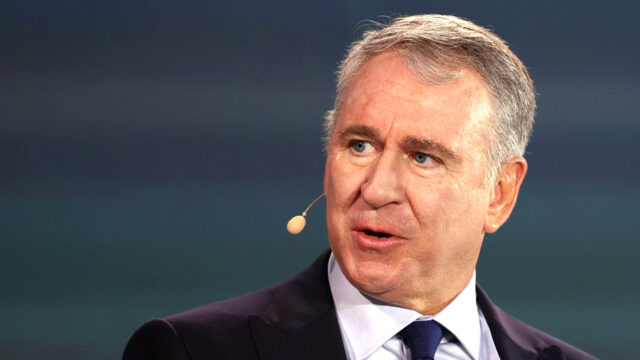

Billionaire rips Harvard, says colleges spawn ‘whiny snowflakes’

KEN GRIFFIN — LIONEL NG, BLOOMBERG

Ken Griffin, one of the largest donors to Harvard University, said he won’t support the school financially unless it makes significant changes and accused elite US colleges of producing “whiny snowflakes” instead of future leaders.   

“I’m not interested in supporting the institution,” Mr, Griffin said of Harvard at the MFA Network conference in Miami on Tuesday. The billionaire said the university must make clear that it will “resume its role educating young American men and women to be leaders and problem solvers.”

Mr. Griffin, an alumnus who donated $300 million to Harvard last year, joins a wave of wealthy donors who have halted gifts because of concerns over the school’s handling of antisemitism on campus since Hamas’ Oct. 7 attack on Israel, in addition to broader concerns over the influence of diversity initiatives and left-wing bias at the university.

Harvard is still struggling to resolve tensions even after President Claudine Gay resigned this month amid an onslaught of criticism over her response to antisemitism, as well as accusations of plagiarism in her scholarship.

The school has also come under intense scrutiny from lawmakers, students and alumni. Two congressional committees have begun investigations, with one of them criticizing Harvard last week for providing “woefully inadequate” responses to its questions. The US Education Department is conducting its own probe of discrimination including antisemitism and Islamophobia at Harvard and other schools.

Harvard didn’t immediately respond to a request for comment about Mr. Griffin’s remarks.

The founder of hedge fund Citadel, whose net worth is valued at $36.8 billion according to the Bloomberg Billionaires Index, said he was concerned after watching Ms. Gay’s Dec. 5 testimony in Congress, where she declined to condemn calls for genocide against Jews as a violation of university policies.

Mr. Griffin said he told members of Harvard Corp., the university’s top governing board, that he won’t support the school unless it makes changes. The council is led by Penny Pritzker, a former US commerce secretary.

“Where are we going with education in elite schools in America?” Griffin said, questioning whether Harvard can re-prioritize. “Or are they going to maintain being lost in the wilderness of microaggressions and a DEI (diversity, equity and inclusion) agenda that seems to have no real end game.”

After his gift to Harvard last year, the Graduate School of Arts and Sciences was renamed in his honor. Mr. Griffin, who graduated from Harvard College in 1989, also gave $150 million to the school in 2014, mainly to support financial aid.

His decision to pull back now will deepen the university’s financial pain. Harvard alumnus Len Blavatnik, whose family foundation has given at least $270 million to Harvard, paused donations last month. Donors such as billionaires Idan Ofer and Leslie Wexner had earlier halted support, and US Senator Mitt Romney accused the university of ignoring the safety of Jewish students.

Harvard depends on gifts from donors large and small to pay for expenses and add to its $51 billion endowment. The fund, which was built on donations that have been invested, has returned an annualized 8.2% in the past decade.

During its latest fiscal year, 37% of Harvard’s revenue came from  endowment distributions, its largest source of income. Another 8% came from current-use gifts. — Bloomberg 

Thai court rules election winners violated constitution on royal insults law

REUTERS

BANGKOK — A Thai court on Wednesday ruled the biggest party in parliament had violated the constitution in seeking to change a law against insulting the monarchy, in what could set a precedent for any future review of one of the world’s strictest lese majeste laws.

The Move Forward Party won last year’s election on a progressive platform that included a once unthinkable proposal to amend the lese majeste law, which carries penalties of up to 15 years in jail for each perceived insult of Thailand’s powerful crown.

The Constitutional Court ordered Move Forward to abandon that plan, which it ruled was tantamount to an attempt to “overthrow the democratic regime of government with the king as a head of state” and therefore in violation of the constitution.

In a country where reverence for the monarch has for decades been promoted as central to national identity, the law, under which at least 260 people have been prosecuted in the past few years, is seen by many royalists as sacrosanct.

Move Forward’s proposal outraged conservatives and saw the party’s attempt to form a government torpedoed last year by lawmakers allied with and appointed by the royalist military.

Though the court had no remit to prescribe punishments for Move Forward, some politicians have suggested there could be legal efforts to seek its dissolution and political bans for its leaders over its stance on the monarchy law.

The court case was the latest twist in a two-decade battle for power in Thailand that broadly pits a nexus of royalists, military and old money families against parties elected on populist or progressive platforms.

Its predecessor, Future Forward, was disbanded for violating campaign funding rules and its former leader and prime minister candidate Thanathorn Juangroongruangkit was disqualified over a shareholding issue. — Reuters

‘Narrower’ models sought for generative AI platforms

FREEPIK

By Miguel Hanz L. Antivola, Reporter

Technology developers must build well-defined large language models (LLMs) for artificial intelligence (AI) to optimize business processes responsibly, according to global professional services company Accenture.

“It’s how you set it up for primary function,” Arvin Yason, innovation lead at Accenture Technology in the Philippines, said during a briefing on Wednesday.

“The narrower you set up the LLM, the more effective it is, also at preventing hallucinations,” he added on knowledge conflicts and gaps as avoidable circumstances in such rapidly evolving tech advancements.

However, seeking AI solutions must first identify business dimensions and functions it can benefit.

“Look at it in terms of your business use case and target outcome,” said Mike Lao, data and AI lead at Accenture Technology in the Philippines.

“What is the long term value for your employees and customers?” Mr. Yason added, noting the importance of human-centric design when introducing tech solutions in business.

In Accenture’s Technology Vision 2024 report, AI-curated responses through advice and a summation of results are expected to grow, where “searching now becomes synthesizing.”

“Business leaders who reimagine how information works in the organization and equip their people with AI-enabled enterprise knowledge tooling will realize exponential performance gains and competitive advantages,” the study said.

According to the Accenture Pulse of Change 2024 index, Asia Pacific companies are already moving toward customizing foundation models with proprietary data from proof of data.

It noted 77% of C-suite executives in the region planning an increase in AI-related spending this year.

The company is set to expand its network of generative AI studios in the Philippines as part of its $3 billion global investment announced last year, targeting industry-specific solutions and doubling of AI talent to 80,000.

“The studios will cater to a wide range of industry and functional needs, but each will also specialize in one or more industries including banking, insurance, telecommunications, public sector, manufacturing, renewable energy, chemicals, and mining,” Accenture said in a press statement.

The platforms, which were introduced during the briefing, include Companion, which enables utility and field service with optimized routes and chatbot inquiries, reducing manual inspection time.

It also allows field personnel to quickly assess damages via image input and generate a corresponding work order with bill of materials.

CareCoach, the training tool for tech support representatives, is able to build scenarios and simulate customer persona, even according to specifications like churn or level of difficulty.

It can be customized according to industry relevance, also providing personalized feedback and scores depending on the criteria set.

Moreover, Gen-E, the new innovation team member at the Accenture Philippines office, is an internal AI assistant prompt-engineered by the company’s own knowledge sources to simulate the viewpoint of an employee.

It can operate via text, image, and speech input, able to conduct tours in the office.

With such AI developments available to the market this year, Mr. Lao emphasized a close and continuous loop with companies leading with value, building its digital core, transforming work and talent, and fostering responsibility.

“It’s not something that is just technology-led,” he said. “It is making sure everyone is empowered for productivity and creativity in the workplace.”

Yemen’s Houthis say they will target US, British warships in self defense – Al Massirah

STOCK PHOTO | Image by Gerhard Traschütz from Pixabay

DUBAI — Yemen’s Iran-aligned Houthis said on Wednesday they plan to continue targeting US and British warships in the Red Sea in self defense, the group’s military spokesperson said in a statement carried by Al-Massirah TV.

The Houthis fired missiles at US warship USS Gravely, the statement added. On Tuesday night, the US military’s central command said they had shot down one anti-ship cruise missile fired from Yemen towards the Red Sea with no damage reported.

The Houthis, who control the most populous parts of Yemen, have been attacking ships in and around the Red Sea in solidarity with Palestinians in the Gaza war.

The US and British have launched strikes on Houthi targets in Yemen, and returned the militia to a list of “terrorist” groups. — Reuters

South Korea’s Yoon warns North Korea may try to disrupt April poll

South Korean President Yoon Suk-yeol. — REUTERS

SEOUL — South Korean President Yoon Suk Yeol warned on Wednesday that North Korea could stage provocations such as armed actions near the shared border, drone intrusions, cyber attacks or spreading fake news in a bid to interfere in an election in April.

Yoon made the remarks as he convened an annual meeting of the central integrate defense council that brings together the military, government and civil defense entities.

In recent weeks, Pyongyang has ramped up tensions on the Korean peninsula with missile tests and verbal threats against Seoul and Washington, while scrapping its decades-long goal of a peaceful reunification and redefining the South as a separate, enemy state.

Yoon warned that North Korea could stage “numerous provocations” to intervene in the upcoming election and called for a tighter security posture.

South Korea is set to elect new members of parliament on April 10, with 300 seats up for grab.

“The North Korean regime is going through fire and water solely for the sake of maintaining its hereditary totalitarian regime, while blatantly ignoring international law and UN Security Council resolutions by trading arms with Russia,” Yoon told the meeting.

Russia and North Korea have overseen a series of high-level exchanges since last year amid growing criticism of Pyongyang’s role in the Ukraine war by allegedly shipping artillery and missiles to Russia.

Both North Korea and Russia deny the accusation and also the charge that Pyongyang has been receiving advanced technology for developing strategic military capability from Moscow in return.

Yoon called for greater cooperation between his country’s military, government, police, and private actors, as well as additional measures to prevent possible cyber attacks on national infrastructure, and attempts to disseminate false propaganda.

“Cyber attacks can paralyze national functions and people’s daily lives in an instant. Fake news and false propaganda may also cause great chaos in society,” he said.

Seoul’s defense council meeting this year was specifically designed to examine practical ways of responding under various scenarios to North Korean provocations, including long-range artillery and electromagnetic pulse (EMP) attacks, Yoon’s office said. — Reuters

Philippines says China’s claim over Scarborough shoal have no legal basis

A LANDSAT 7 image of Scarborough Shoal in the West Philippine Sea. — WIKIPEDIA

MANILA — China’s repeated claims of sovereignty over the Scarborough shoal in the South China Sea has no legal basis under international law, a senior Philippine security official said on Wednesday.

“Since the Philippines exercises sovereign rights over Bajo de Masinloc and its surrounding waters under international law, only the Philippines has the authority to exercise maritime law enforcement functions to the exclusion of other countries,” Jonathan Malaya, spokesperson at the Philippines’ national Security Council said in a statement, referring to the disputed shoal by the Philippine name.

China’s coastguard late on Tuesday said Beijing indisputable sovereignty over the shoal, which is located within the Philippines’ exclusive economic zone. — Reuters

Pacific Islands need to boost digital security to join undersea cable, says US official

FREEPIK
SYDNEY — Pacific Islands nations that want to connect to US-funded undersea cables will need to secure their digital ecosystems to guard against data risks from China, a senior US State Department official said.
The United States pledged last year to jointly fund two undersea cables, to be built by Google connecting the US territory of Guam with hubs in Fiji and French Polynesia, and further branching out across remote Pacific Islands.
The proposed intra-Pacific cable project has offered to branch out to Papua New Guinea, Samoa, Tuvalu, Fiji, Nauru, Marshall Islands, Kiribati, Cook Islands, Wallis and Futuna, and the Federated States of Micronesia.
The US Department of State’s ambassador at large for cyberspace and digital policy, Nathaniel Fick, visited Fiji this week as Washington prioritizes which islands will have the opportunity to plug in.
The digital ecosystems in countries connecting to the cables need to be secured “from end to end”, which excluded what he called “untrusted” Chinese-built datacenters or phone towers, he told reporters in Sydney on Wednesday.
“Investing a lot of money in these nodes is going to require these states to behave in some ways that mitigate the risk, to the greatest possible extent,” he said.
“It’s going to be in their interests to do that if they want to be trusted nodes for the long haul and attract continued investment.”
China and the US are jostling for influence in the Pacific Islands with competing offers for infrastructure. The Solomon Islands, which struck a security pact with Beijing, is rolling out a Chinese-funded mobile network built by Chinese telecommunications company Huawei.
Australian telecommunications company Telstra, a partner in the new US-backed project, said in a statement this month the cables will “dramatically improve the diversity of paths between Guam to Australia via Fiji and other Pacific islands, and between the US mainland and Australia”.
Guam is home to US military facilities that would be key to responding to any conflict in the Asia-Pacific region, and Microsoft warned last year it had been targeted by a Chinese hacker group, Volt Typhoon, seeking to disrupt critical communications infrastructure between the US and Asia in any future crisis. China said the hacking allegations were disinformation. – Reuters

Mexican leak of journalists’ personal data raises security worries

REUTERS/KACPER PEMPEL/FILE PHOTO
MEXICO CITY — The theft of the personal data of hundreds of journalists in Mexico, including addresses and copies of voter ID cards and passports, has raised fresh safety concerns in one of the most dangerous countries in the world for media professionals.
After media reports, Mexican authorities on Monday said government computers were hacked on Jan. 22 and promised an investigation. Officials said the personal data of at least 263 journalists, whom they did not publicly identify, was illegally accessed and released.
The officials said an individual, whom they did not name, used a former government employee’s account to take the data. The individual had a Spanish IP address, they said.
The leak exposes the journalists to potential identity theft and could compromise their physical security because the data includes home addresses. Among the victims are reporters at leading media such as La Jornada, El Universal, and Expansion, as well as Reuters. La Jornada and Expansion did not immediately respond to a request for comment.
“The safety of our journalists is paramount, and we are deeply troubled by this leak of personal data. We await the results of the investigation by Mexico’s transparency institute, which we hope will be prompt and thorough,” a Reuters spokesperson said. The institute is an autonomous government agency.
The reporters provided the personal data at the request of Mexico’s presidential office as part of its vetting of journalists who participate in President Andres Manuel Lopez Obrador’s daily morning press conference.
Lopez Obrador said the unlawful disclosure was the result of a hack, and suggested it was perpetrated by his political opponents “in an attempt to sow the idea that we pursue and censor, that we’re dictators,” though he provided no evidence.
Alberto Morales Mendoza, an El Universal reporter whose data was breached, expressed concern about his address becoming widely known and being at risk of financial crimes.
“What I’m most worried about is possible identity theft and that someone misuses my personal data to commit fraud,” said Mr. Morales, designated as the paper’s spokesman on the matter.
A Mexican journalist whose data was taken and who has previously faced death threats said, “I obviously feel like the risks I face have grown.”
Mexico is one of the world’s most dangerous countries for journalists outside active war zones as reporters investigate its notorious organized crime and corruption. International free-speech organization Article 19 has documented 163 journalist murders in Mexico since 2000.
Photos of passports, Mexican government-issued identity cards and work visas, all containing potentially sensitive data, began circulating online and in some local media reports on Friday following the data leak.
Officials informed journalists of the “possible violation” on Monday after some saw images of their personal documents in news reports.
The government’s digital strategy coordinator said computer systems did not send an alert about the hack because the data was accessed with a password. — Reuters

Philippine economy loses some steam in Q4, misses full-year 2023 growth target

Buildings are seen along EDSA in Quezon City, July 3. PHOTO BY MIGUEL DE GUZMAN, The Philippine Star

MANILA – The Philippines missed its full year growth target after the economy lost some steam in the last quarter of the year as a contraction in government spending offset a slight rebound in domestic demand.

Gross domestic product in the fourth quarter expanded 5.6%, ahead of the 5.2% pace forecast in a Reuters poll, but slower than the 6.0% growth in the prior quarter, the statistics agency said on Wednesday.

That brought full-year growth to 5.6%, below the government’s 6.0%-7.0% target, but it still remained one of the fastest growing economies in Asia.

On a seasonally adjusted basis, the Philippine economy grew 2.1% quarter-on-quarter, above the 1.4% growth forecast in a Reuters poll, and weaker than the 3.8% pace in the third quarter.

“We need to relentlessly manage elevated prices,” National Economic and Development Authority Secretary Arsenio Balisacan told a media briefing.

Data showed consumption in the fourth quarter grew 5.3%, slightly better than the previous quarter’s 5.1%, while government spending contracted 1.8%, reversing the previous three month’s 6.7% growth. — Reuters

US needs to work with greater intensity in the Pacific – NZ foreign minister

STOCK PHOTO | Image by Kerin Gedge from Unsplash
WELLINGTON — New Zealand will start talks on Wednesday with Australia about cooperating with the AUKUS trilateral defense partnership between, Foreign Minister Winston Peters said, adding Washington needed to do more in the Pacific to counter other political influences there.
Mr. Peters heads to Australia on Wednesday for an inaugural joint meeting of New Zealand and Australian foreign and defense ministers, and said the talks would also canvas what joining an expanded AUKUS grouping of Australia, Britain and the US would mean for Wellington.
“Pillar two (of AUKUS) is the examination we’re going to look at beginning tonight and tomorrow and going forward,” he told Reuters in an interview.
“Pillar two” of the AUKUS pact is separate from the first pillar designed to deliver nuclear-powered attack submarines to Australia, but what any new agreement would entail is not yet public. New Zealand has had a nuclear free policy since the 1980s, damaging defense ties with the US, and there has been no indication this will change.
Mr. Peters also said the US has neglected the Pacific since the Second World War, and that created a vacuum that others had filled.
“They have certainly upped their game, but they need to work with greater intensity on the immediate problems at the ground level of many of the island nations,” he said.
Mr. Peters did not mention China by name, but jostling between Washington and Beijing for influence in the Pacific has increased in recent years over issues including security, defense, aid and infrastructure.
Mr. Peters, who held the role of foreign minister from 2005 to 2008 and again from 2017 to 2020, returned to the role in late 2023 when a new conservative coalition government was elected.
In 2017, he launched a “Pacific Reset” pouring aid and boosting engagement with the region in an effort to woo small neighbouring Pacific island nations at a time when China was dramatically increasing its presence in the region.
Mr. Peters criticized the prior government for not taking a stand on political issues.
“Taking some glorified isolationist stance in this new environment is not in our national interest,” he said.
“It’s so fundamental that if you don’t have capacity to ensure you’ve got peace in any environment then there’s a high likelihood that you’re not going to have it.”
The current New Zealand government has asked ministries to cut spending since they came into office as they try to return the country’s accounts to surplus. Mr. Peters, however, said that he would like to be able to expand the reach of the country’s foreign office.
“We are not an indulgent Foreign Service, we are undercooked compared to those countries we compare ourselves to,” Mr. Peters said. “We need more people out there particularly on the trade side.”
New Zealand was not in a “benign security environment” and the country needed to build secure relationships and partnerships in the region, he said.
“We are going to make, alongside our friends, a stand for the safety and the security of the part of the world we live in.” — Reuters

Universal Music to not renew licensing agreement with TikTok

REUTERS
UNIVERSAL Music Group (UMG) will cease licensing content to TikTok and TikTok Music services, as the music label said on Tuesday that its agreement with the social media platform expiring on Jan. 31 has not been renewed.
UMG has been pressing TikTok for appropriate artist and songwriter compensations in their contract renewal discussions, among other things, it said in a letter addressed to its artist and songwriter community.
If UMG fails to reach an agreement with TikTok, all of its songs will be removed from the service once the deal expires on Wednesday, a UMG spokesperson said.
In its letter, UMG accused TikTok of “trying to build a music-based business, without paying fair value for the music.”
UMG said TikTok proposed paying artists and songwriters at a rate that is a “fraction of the rate” that similarly situated major social platforms pay.
TikTok accounts for only about 1% of UMG’s total revenue, the music label said.
TikTok did not immediately respond to a Reuters request for comment.
The company had reached a deal with social media platform TikTok in February 2021, which allowed users on the app to be able to incorporate clips from UMG’s music catalog on their videos. — Reuters
ADVERTISEMENT
ADVERTISEMENT