Home Blog Page 369

ERC to study impact of easing bill deposit rules

THE ENERGY Regulatory Commission (ERC) said it will assess the potential impact of no longer requiring distribution utilities (DUs) to collect bill deposits from consumers applying for new or additional electricity service.

At an open commission meeting on Thursday, ERC Chairperson and Chief Executive Officer Francis Saturnino C. Juan said the agency will gather data after receiving comments from stakeholders on the proposal.

He noted that some stakeholders had urged the ERC to carefully review the plan to limit the collection of bill deposits.

The initiative forms part of a proposed resolution adopting the Magna Carta for Electricity Consumers, which covers DUs’ collection of bill deposits — an amount paid by customers to power distributors as a guarantee for the payment of electricity bills.

Under the draft, the ERC plans to amend the definition of a bill deposit so that it would “appear not to be a mandatory requirement anymore for connection for an application, for a new application,” Mr. Juan said.

“It is the DU’s prerogative. They may require (payment of bill deposit). Unlike in the previous provision that it would seem it is mandatory for DUs to collect these bill deposits,” he said.

The ERC is also proposing that consumers in good standing for two consecutive years may qualify for an automatic refund of their bill deposits.

Mr. Juan said the agency will collect data to determine whether easing the requirement for bill deposits would have any impact on electricity rates.

“This will help us determine what the proper decision should be once our data is complete, including whether there will be any rate impact,” he said. — Sheldeen Joy Talavera

Yearlong path to healthier daily routines

Yanalya / Freepik

Sedentary routines now define daily life for millions of people, and health authorities warn the pattern carries growing health risks.

Data from the World Health Organization (WHO) show that physical inactivity stands among the leading risk factors tied to noncommunicable diseases. Adults who do not meet recommended activity levels face a 20% to 30% higher risk of death than those who remain active, according to the agency.

In 2022, about 31% of adults worldwide failed to meet activity guidelines. That figure has risen by roughly five percentage points since 2010. If current patterns hold, inactivity could reach 35% by 2030, placing global targets out of reach and adding pressure to health systems.

Asia-Pacific countries post the highest inactivity rate at 48%, followed by South Asia at 45%. Other regions range from 28% in high-income Western countries to 14% in Oceania.

Globally, 34% of women fall short of activity guidelines compared with 29% of men. In some countries, the gap reaches 20 percentage points. Adults ages 60 and older report lower activity levels than younger groups, a trend that draws concern as populations age.

The agency links rising inactivity to social and environmental factors, including city layouts that favor cars over walking, limited public transport and scarce recreation areas. Cost and safety issues also deter participation in sports and exercise programs.

WHO recommends coordinated efforts across different sectors to increase activity levels in communities. Policies that encourage active mobility, like walking and cycling, make daily movement easier and more accessible. Likewise, schools, workplaces, and healthcare facilities can integrate physical activity into everyday schedules.

For its part, the Department of Health (DoH) has outlined a yearlong framework it calls “PinaSiglang 2026,” a plan that assigns practical habits to each month and frames wellness as a steady routine that fits into everyday life.

The framework places physical activity at the top of the list. The DoH calls on adults to build movement into the day through walking, cycling , or similar aerobic activity. The agency says repeated short sessions matter, especially for people who sit for long hours because of office work or screen-heavy jobs.

In terms of nutrition, the DoH recommends following the government-backed plate guide that divides food into major groups meant to support energy and overall condition. The visual guide, according to the agency, helps people make fulfilling food choices.

The program also calls on immunization. The DoH repeats that vaccines protect against diseases and work best when people follow schedules. Regular medical checkups and routine health visits are likewise encouraged, as they help identify health issues early, even in the absence of symptoms.

Mental wellness is incorporated through short daily meditation sessions. The DoH notes that even a few minutes of focused quiet time can help adults manage stress.

Handwashing anchors the list of habits, with emphasis on proper timing and technique. Experts say clean hands remain a basic defense against common infections.

The DoH also addresses alcohol use, warning that drinking carries health risks even at low levels and should not be viewed as harmless. Meanwhile, tobacco and electronic cigarettes are discouraged under the same lens.

Sexual health education is another component of the program. The DoH notes that access to accurate information helps individuals make informed decisions and reduces the stigma of seeking care, particularly amid rising cases of sexually transmitted infections.

The framework places sleep on equal footing with diet and exercise. Adults are urged to treat adequate rest as a daily requirement rather than a sacrifice. Proper sleep, the DoH explains, supports both physical recovery and mental clarity, reinforcing overall wellness.

By building these habits throughout the year, individuals across demographics can reap the benefits of maintaining an active lifestyle.

For children and adolescents, staying active strengthens bones, develops muscles, and improves motor skills. Movement also supports cognitive growth and mental health, providing young people with the foundation to perform well in school and daily life.

Adults who maintain an active lifestyle show lower rates of cardiovascular disease, high blood pressure, type 2 diabetes, and certain site-specific cancers. Exercise also contributes to better sleep quality, stronger mental health, and a reduced risk of falls in older age. — Mhicole A. Moral

In defense of the Holy Fiscal Deficit: Accounting and economics

Part I: The dislike for fiscal deficits and the reality of their role in the economy

By Jesus Felipe and Mariel Monica Sauler

THERE APPEARS to be a broad consensus across the different sectors of our society that fiscal deficits are to be avoided. The rationale is that a government cannot spend more than it collects in taxes, certainly not routinely. With some nuances, the business community, government officials, academics, bankers, journalists, and the average person on the street, are aligned in thinking that a fiscal deficit damages the economy. We need to be fiscally responsible, like a good family. Fiscal deficits bring back memories of the 1980s, today even more so in the face of the corruption scandal. On top of this, we have been influenced by the IMF and the World Bank’s policies and way of thinking.

In this three-part series, we will argue that this widespread understanding of fiscal deficits is incorrect. Underlying it are three fundamental errors — deeply entrenched beliefs. One is that the finances of the nation are like those of a family or a firm. Second, that the money that the government uses to make payments is taxes. Indeed, society at large believes that taxes finance spending, in the sense that the government needs to collect taxes prior to spending, and that taxes are used by the central government to spend. And third, that pesos are a resource, something scarce like oil. All three are incorrect, and do not correspond to the reality of government spending and taxation in a modern economy.

In what follows, we elaborate upon a series of arguments, based on facts, that explain what a fiscal deficit is and its role in the economy, and argue that apprehensions about it are, in most cases, groundless. We hope the article contributes to dispelling this widespread belief.

Before we proceed, we stress that it is obvious that government spending has to be judicious and that corruption has to be eradicated. But it is important to understand that running a fiscal deficit is not tantamount to being corrupt or inefficient. Our government might be criticized but not because it runs a deficit.

Let us start with the simple fact, missed by most people, that a government (fiscal) deficit means that the government spent more on services for all of us than it collected in taxes from us. If the government runs a deficit, the private sector must run, on aggregate, a surplus. Naturally, it matters what the government spent on but that is a different issue, however important. This point is crucial so let us stress it: a fiscal (government) deficit occurs when the difference between what the government collects in taxes and what it spends as summarized in the national budget (roads, bridges, schools, hospitals, etc.), is negative. To make this crystal clear, it means that the private sector receives more from the government in terms of infrastructure payments (a company that was awarded a contract to build a road or a school; civil servant salaries) than it pays in taxes. A fiscal deficit increases the net worth, that is, saving, of the private sector. Complain about this? Want to reverse it? It is ironic that the business community does not seem to grasp what a fiscal surplus would do to the private sector, namely, we would pay more in taxes than the government would spend on services. Is this what they advocate?

Looking at the government’s fiscal position in isolation is bad economics. The reason is that there is a crucial connection between the fiscal position (Taxes minus Government Spending, let’s call this difference A) and the other two key sectoral balances of the economy: that of the domestic private sector (Private Saving minus Investment, let’s call this difference B,) and the current account (the foreign sector, essentially exports minus imports, let’s call it C). The three sectoral balances add up to zero by construction as follows: A + B – C = 0 (with these signs). It is the result of how the national accounts are built. This is the same in every country and it has to be so for good economic reasons. Not understanding the economics that underlies the link among the sectoral balances leads to erroneous statements.

As noted above, the three sectoral balances, government, domestic private sector, and foreign sector, add up to zero by construction. This means that if the government runs a deficit of, for example, 5% of GDP (A = -5%), the private sector (jointly domestic and foreign sectors) must run a surplus of 5% of GDP (B – C = +5%). Likewise, if the government runs a surplus of 5% (A = +5%), you can be certain that the private sector will run a deficit of 5% of GDP (B – C = -5%). This is not a theory. It is factual.

We hope the reader starts thinking about what this means and why looking at the fiscal deficit in isolation is dangerous. Let’s put all this in the context of the Philippines economy. We know that in all countries, the domestic private sector prefers to run a surplus (for example, B = +5%). This means that the fiscal balance and the foreign sector must run, together, a deficit of the same size (A – C = -5%). Now consider the following fact. Most of the time the Philippines runs current account deficits (C is negative). The algebra of the sectoral balances tells us that for the domestic private sector to be able to run a surplus (B positive), in the face of a current account deficit, the government has to run a fiscal deficit (A must be negative). There is no other way. This is neither good nor bad but the reality. We are not an exporting nation hence the current account deficit. Moreover, we also know that domestic private sector deficits are a good predictor of crises. If we want to prevent a crisis like the one in 2008-09 in the West (caused by large domestic private sector deficits during the years before), we need to ensure that the government provides the domestic private sector the funds to run a surplus. It is the fiscal deficit what brings macroeconomic stability to our economy.

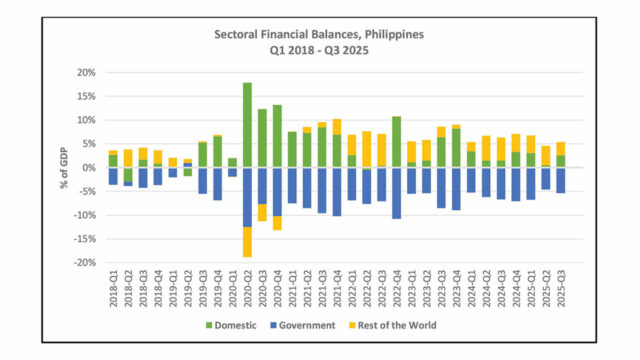
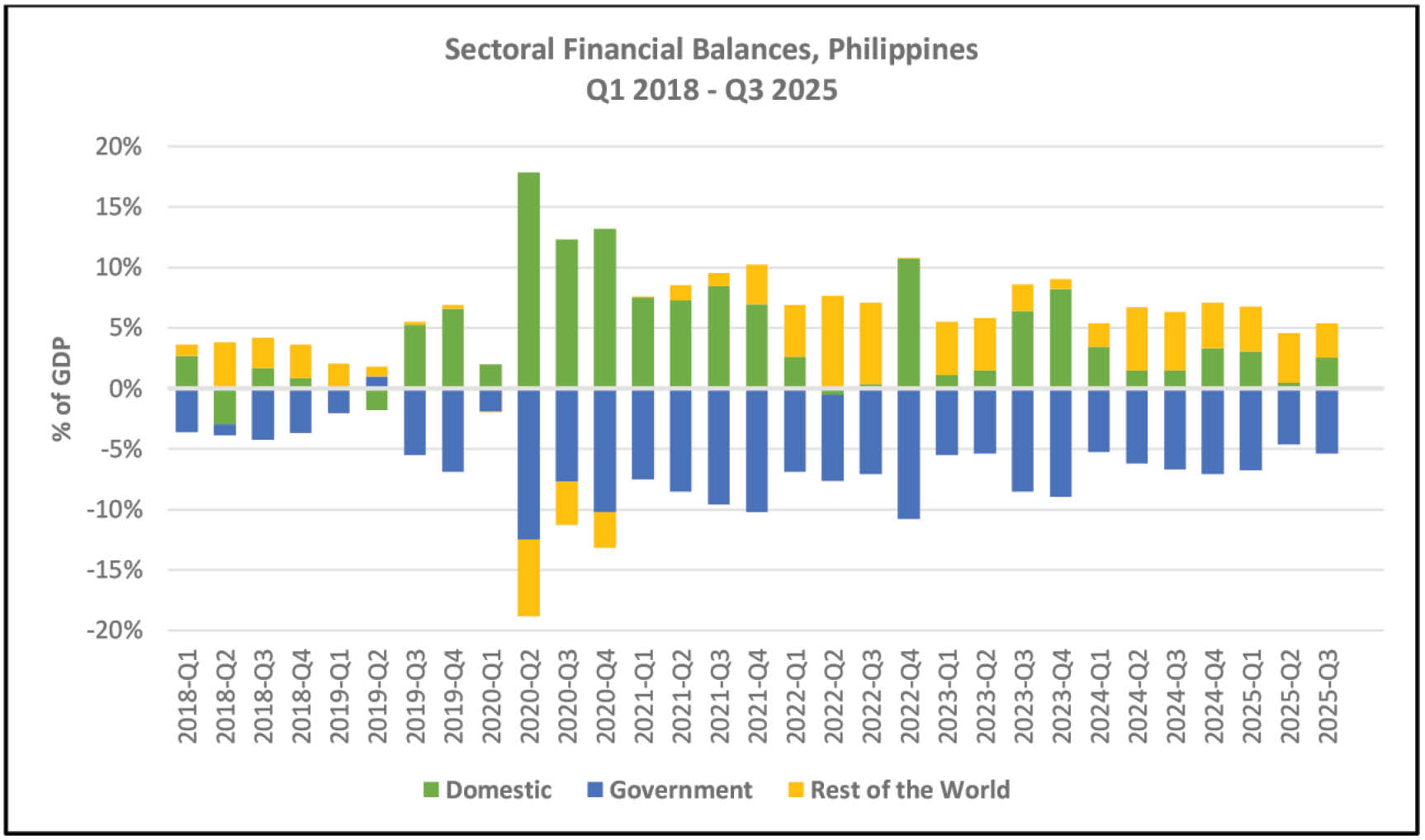
The sectoral balances figure (shown as percent of GDP) documents these arguments. The three bars (sectoral balances) add up to zero, by construction, for each quarter. In most quarters, the Philippines runs a current account deficit (bars above zero in the graph), a fiscal deficit, and a domestic private sector surplus.

Notice the quarters in 2020: large domestic private sector surpluses that mirror large fiscal deficits (up to 10% of GDP). Government deficit hawks do not understand this. Actually, it is the economies with a private sector in deficit the ones that run into crises, as happened just prior to the 2008-09 global financial crisis, not economies with budget deficits above 3%. It was a lack of understanding of private debt that led the entire profession of neoclassical economists to famously miss the build-up of the largest household debt bubble of all time in the 2000s, while simultaneously labeling the period as “the Great Moderation.”

What is difficult to comprehend is that government officials do not seem to understand the economics of the sectoral balances either, and they aim at reducing the fiscal deficit to A = -3% of GDP by the end of the administration, as if it was a great objective and achievement. They think that this helps the economy. This is a self-imposed constraint that reduces the sustainable policy space of the nation. The reason is simple: this forces the overall private sector (B – C) to run a surplus of 3% of GDP. Suppose we run a current account deficit of C = -4%. This implies that the domestic private sector will run a deficit of B = -1% of GDP. We insist that if with the economy that we have, including the current account deficit, the government does not run a deficit, we’d better start reciting all our prayers. The economy would enter a depression.

On the other hand, if we do not want the government to run a fiscal deficit, while maintaining the private sector surplus, we need to change the economy and be able to run a current account surplus (C positive), that is, we need to become Germany, Singapore, or Japan at some point in their history, and have their manufacturing-exporting companies. The current account surplus is the injection into the economy. They do not need another one. In fact, they need to avoid it if such a surplus is large, in which case they have to run a fiscal surplus. Changing the structure of the economy requires an industrial policy, a topic that we leave for another article.

The solution to the corruption scandal is not to kill the fiscal deficit. We would need it with and without corruption. The solution is to improve governance and punish the culprits.

(To be continued.)


Jesus Felipe is a distinguished professor and research fellow at the Carlos L. Tiu School of Economics, De La Salle University. Mariel Monica Sauler is an associate professor and chair of the Carlos L. Tiu School of Economics, De La Salle University. The authors are grateful to Eunice Gerenia, economics student, De La Salle University, for her excellent research assistance.


LearningBOX launches AI training tools in PHL

JAPANESE digital learning platform learningBOX entered the Philippine market with three local partners, seeking to deliver secure, AI-assisted training for businesses and educational institutions.

A memorandum of understanding was signed between learningBOX and its three partners at Shangri-La The Fort in Bonifacio Global City, Taguig, on Tuesday, the company said.

The collaboration seeks to address Philippine skills deficiencies, which is being reflected in unemployment data as companies struggle to find candidates to fill their needs. In October, unemployment was 5%.

The new venture proposes digital learning solutions that could address this issue via scalable tools for employee training and skills verification.

Shintaro Nishimura, director of learningBOX, told BusinessWorld that the platform will allow companies and educational institutions to design industry-specific training programs. “By the end of 2026, we aim to have several local agencies promote these model cases to each industry,” Mr. Nishimura added.

Kotaro Adachi, CEO and co-founder of TechShake Pte. Ltd., an Asian innovation ecosystem enabler, cited the importance of local partnerships and government collaboration. “Even if the technology from overseas is good, it doesn’t work without local relationships,” Mr. Adachi said, noting TechShake’s engagement with the Department of Trade and Industry and the Department of Information and Communications Technology.

“Japan is facing a saturated and aging market, whereas ASEAN countries have a young and growing economy. This trend allows even smaller Japanese companies to expand globally,” Mr. Adachi added. 

Dominic de Leon, director of logistics firm Pac Atlantic Group, said he sees the platform facilitating onboarding and continuous learning, particularly in the area of logistics processes and regulatory updates. “The challenge is educating people to use the system properly, but it has the potential to improve efficiency and skills within the workforce,” he said.

Danica Elpidama, business development lead at Digiteer, said such platforms have applications for small businesses and large enterprises alike. “The adoption is positive, especially for Gen Z learners who are already familiar with digital learning environments,” Ms. Elpidama said. 

learningBOX provides tools for creating and delivering online exams and training courses with a focus on security and AI-assisted learning. As of August, the platform supports over 850,000 active users and is used by more than 1,600 organizations, including educational institutions and government agencies. The platform was active in over 120 countries and regions as of October 2024. — Erika Mae P. Sinaking

CIC credit reports rise to 27M in 2025 on strong demand from online lenders

STOCK PHOTO | Image by Tirachardz from Freepik

CREDIT INFORMATION CORP. (CIC) generated 27 million reports last year, nearly tripling from 2024, driven by demand from online lenders and e-commerce channels as consumers availed of credit products like buy now, pay later and cash loans.

“[Around] 27 million credit reports generated last year. For the prior year, I think it was only around nine (million). So, it almost tripled,” CIC President and Chief Executive Officer Ben Joshua A. Baltazar told reporters on the sidelines of a central bank event on Friday, adding that they expect to generate “far more” credit reports this year.

Last year’s growth was mainly driven by online lenders, which accounted for about half of the total credit reports generated last year as credit product providers like Shopee, BillEase, or Lazada use CIC data for their underwriting process since they are unable to conduct traditional credit investigation, he said.

“It (online lending) will probably face its own set of risks because it’s largely done online. But it’s a thriving business right now. A lot of Filipinos are consumers. They are putting their earnings into spends. The way we see it right now, there are no internal alarm bells or issues on systemic risk. But what’s important is we have a tool to monitor and be transparent on the financial health of the borrowers,” Mr. Baltazar said.

The inclusion of data on postpaid mobile subscriptions from the country’s major telecommunications companies has allowed CIC to provide more credit information about borrowers, the official said.

“We’re making a push for utilities like electricity, water, maybe even internet for this year. So, that will complete the picture of a person’s financial health.”

Mr. Baltazar added that they are also still looking to onboard insurance information into their database, although there is a pending court case on the matter.

“In other jurisdictions, insurance information is reported. And if, let’s say, lenders find out that they’re actually insured, your credit score goes up. So, this is an opportunity for the insurance sector to be able to improve the value proposition to their clients.”

In 2019, the Makati Regional Trial Court Branch 56 nullified a circular issued by the CIC that required insurers to submit data on premium payments, insurance contracts, and policy loans of its clients.

The court ruled that the requested data are not in line with the basic credit data required to be submitted under the Credit Information System Act.

Mr. Baltazar said the use of credit information makes lending decisions “fairer and more transparent.”

“So, it becomes merit-based now, rather than arbitrary, or in some cases, palakasan (patronage). So, this is exactly the mandate of the law… We’re proud to say that we’re delivering on that mandate,” he said.

“The great thing about it is, if you have a low credit score, you can rehabilitate it and build it up.” — Aaron Michael C. Sy

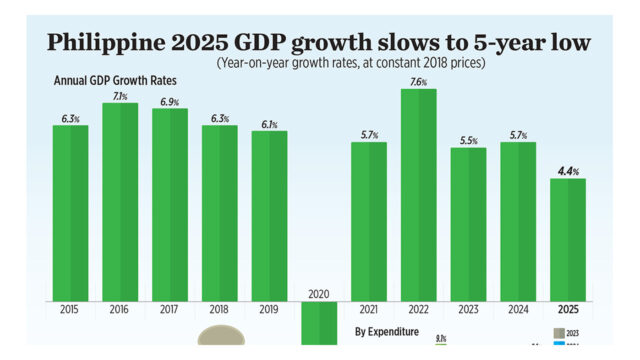
Philippine 2025 GDP growth slows to 5-year low

PHILIPPINE economic growth sharply slowed to a post-pandemic low in the fourth quarter of 2025 as the flood control scandal continued to weigh on government spending, investments and consumer spending, dragging full-year expansion below target for the third straight year. Read the full story.

New documentary showcases King Charles’ work as nature campaigner

WINDSOR, England Britain’s King Charles hosted the first film premiere at a royal palace on Wednesday when a documentary chronicling his lifetime work of championing nature was shown at his historic Windsor Castle home.

Filmed over seven months last year, Finding Harmony: A King’s Vision, which will be shown on Amazon Prime next month, is billed as providing a deeply personal insight into the 77-year-old monarch’s decades of environmental activism and the philosophy which has motivated him.

It shows Charles wistfully reflecting on his experiences, from being dismissed as crazy for talking to plants to his hope that his vision of sustainability, which is being taken up in projects across the world, will save the planet.

“It all boils down to the fact that we are actually nature ourselves, we are a part of it, not apart from it, which is really how things are being presented for so long,” Charles says in the film, which was made in collaboration with the King’s Foundation, a charity he founded in 1990.

“Maybe, by the time I shuffle off this mortal coil, there might be a little more awareness… of the need to bring things back together again.”

PRAISE AND RIDICULE
From organic farming to architecture and town planning, the king has long been outspoken on how human behavior needs to be in harmony with nature, drawing both praise for being ahead of his time on green issues as well as ridicule and charges of inappropriate meddling from a man constitutionally required first as Prince of Wales and now as king to be above politics.

“All this sort of thing was considered completely bonkers,” he says with a chuckle at one point, while in another scene he is shown collecting eggs from a hen coop bearing the name “Cluckingham Palace.”

Among those who contributed to the documentary is former US Vice-President Al Gore, while actors Kate Winslet, who narrates the film, Judi Dench, and Kenneth Branagh were among the guests joining Charles and Queen Camilla at the 1,000-year-old castle where a cinema has been set up for the occasion.

While the documentary aims to convey a message of hope on the environment, it also comes at a time when US President Donald J. Trump, who is not mentioned in the film, has described climate change as “the greatest con job” in the world.

“It’s rapidly going backwards. I’ve said that for the last 40 years but anyway, there we are,” Charles ruefully says on the battle to save the planet. “So, that’s why I get a bit, anyway… I can only do what I can do, which is not very much.”

The documentary will be available globally to viewers on Amazon Prime from Feb. 6.

“It would be nice to try and see if we can get through to people, but who knows?” Charles says. Reuters

DoJ recommends charges vs Opsytech over investment solicitation — SEC

BW FILE PHOTO

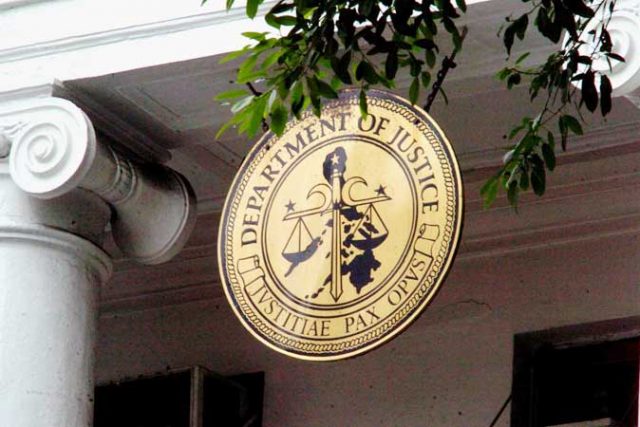
THE Securities and Exchange Commission (SEC) said the Department of Justice (DoJ) has recommended the filing of criminal charges against Opsytech Corp. and its agents for allegedly soliciting investments from the public without proper authorization.

In a statement on Thursday, the SEC said state prosecutors found sufficient evidence with reasonable certainty of conviction to charge Opsytech and its president for violations of the Securities Regulation Code (SRC) and the Cybercrime Prevention Act.

Two Opsytech agents were also implicated for allegedly violating Sections 26.3 and 28 of the SRC, in relation to Section 6 of the Cybercrime Prevention Act.

Under Sections 8 and 28 of the SRC, entities offering securities to the public must first secure registration and a secondary license from the SEC. Section 26.3 prohibits any person from directly or indirectly engaging in fraudulent acts, transactions, practices, or business courses related to securities that deceive others.

The case stems from complaints received by the Commission regarding Opsytech offering a business loan scheme to raise funds for capital expenditures.

According to the SEC, Opsytech promoted returns of 2% to 9% per month on a minimum P100,000 investment, locked in for one year and backed by postdated checks.

A total of 16 complainants reportedly invested around P14.95 million, initially receiving payouts for a few months. The checks later bounced due to insufficient funds or closed accounts, prompting the investigation.

“Indeed, [the] respondents falsely represented that Opsytech has legitimate projects and business dealings. Unbeknownst to the investors, these were mere part of an elaborate show on the part of the respondents… in order to convince them to part with their money,” the resolution read.

“The concerted actions among respondents to deceive the public supports the existence of conspiracy in the commission of this violation,” it added.

The SEC said the DoJ determined that Opsytech’s business loan agreements qualify as investment contracts, as they involved the use of private investors’ funds for capital expenditures in return for fixed profits.

The finding also noted that Opsytech lacked the required registration or authority to sell, offer, or distribute securities under the SRC.

BusinessWorld tried to reach Opsytech for comment, but no working contact information was available. — Alexandria Grace C. Magno

If the US leaves NATO, Europe can protect itself

By James Stavridis

AS A FORMER supreme allied commander of the North Atlantic Treaty Organization (NATO), I never contemplated the idea of the US leaving the world’s most vital security alliance. But the crisis over Greenland’s sovereignty of the last two weeks has me thinking seriously about what NATO would look like without its most important member.

NATO was formed from the ashes of World War II by a dozen nations, 10 European and two North American. Lord Ismay, the first secretary general, famously said that NATO existed to “keep the Russians out, the Americans in, and the Germans down.” He saw the Cold War unfolding, the threat to Western Europe posed by the Soviet Union, and the danger of an unchecked Germany. He also knew the US might repeat the mistake it made after World War I: Simply walking away from the continent after the fighting was over.

From 1949 to the present, the alliance has largely held to Ismay’s objectives: through the Cold War, the collapse of communism and reunification of Germany, the endless disputes about burden-sharing, and the post-9/11 NATO mission to Afghanistan, which I commanded for four years. Despite a lot of internal quarreling, the alliance has grown to 32 nations and remains vital for security not only in Western Europe but in the Balkans, the Middle East, the Arctic, and the waters off Europe and Africa.

But the Greenland controversy is as tense as any previous rift in the alliance. Nearly 10 European nations sent small troop contingents to the island over the past two weeks, ostensibly to survey defenses against Russian and Chinese intrusion, but mostly to forestall US military intervention threatened by President Donald Trump. Cooler heads have prevailed so far, but the matter is hardly closed, and there are plenty of other issues where Team Trump appears poised to threaten transatlantic unity.

It is worth asking: What does NATO look like without the US?

Washington has by far the largest military budget in the alliance, clocking in around $900 billion, with Trump recently floating the idea of increasing it to $1.5 trillion. But Europe’s collective defense budget is quite large — the second in the world — at around $400 billion. For perspective, Russia checks in at around $140 billion and China about $250 billion. And with new pledges by European nations to get to 5% of GDP (3.5% of pure military spending and 1.5% on related infrastructure and cyber capability), there is a lot of money being used on defense across the Atlantic.

Another big loss for the alliance with a US departure would be the reduction in the defense industrial base and all its associated technological capability. Lockheed Martin, Northrop Grumman, Boeing, General Dynamics and RTX (formerly Raytheon) are huge prime contractors, and roughly half of the world’s top 25 defense firms are in the US. But Europe has a reasonably strong industrial base, with eight of the top 25 contractors, including BAE (UK), Leonardo (Italy), Airbus (France/Germany), Thales (France), Saab (Sweden), and Rheinmetall (Germany).

The US produces the highest levels of technology, including the lion’s share of stealth fifth-generation fighter planes such as the F-35; the best long-dwell drones for reconnaissance and strike; the top air-defense systems, including Patriot and THAAD; and better satellites, the key to overall intelligence. Yet Europe makes warships and diesel submarines more rapidly and with equal capabilities to many US classes. And thanks to their recent support to Ukraine, the Europeans are rapidly overtaking the US in production of tanks, howitzers, and ammunition.

Europe would be able to quickly come up to speed in lower-tech systems like short-dwell drones; small arms; helicopters and transport aircraft; and shorter-range air defenses and surface-strike missiles. How fast could continental firms replicate departing US military tech? Probably five years of development, but not forever out of reach.

As for troop strength, while the US is able to rely on an all-volunteer force, many European members of the alliance are comfortable with some form of conscription. Nine nations have it already, including both Nordic members, and Germany is about to reinstitute it.

There is of course the major problem of a nuclear shield. Although the UK and France have small (but well-trained) nuclear strike forces, Europe would no longer have the strategic umbrella supplied by Washington. So, the European states might be forced to build up their own capabilities, with Germany and Poland likely joining the nuclear club. Or they could possibly negotiate a framework with the US to maintain a shared nuclear force for some period.

A huge factor on Europe’s side is that a NATO without the US would not have the kind of global responsibilities — driven by American priorities — that led the alliance into wars in Afghanistan and Iraq. NATO could be far more focused on its neighborhood, particularly with protecting Ukraine — which is more likely to eventually join a post-US NATO. The alliance would still have six nations in the Arctic.

If the US moves toward a narrow focus on the Western Hemisphere — as both the new National Security Strategy and the National Defense Strategy say it should — I suspect the remaining 31 nations of NATO will ultimately be just fine. And adding Ukraine — with 40 million people, a highly experienced army, and a deeply motivated populace — would bring the alliance back to 32.

Let’s hope the US stays the course, but I suspect the Europeans are starting to think about other options for their defense. People ask me all the time, “Who will win the war in Ukraine — the Russians or the Ukrainians?” The real winner could be the Europeans — if they band together and build a stronger pan-continental defense. Let’s hope this would be inside NATO, and alongside the US. But if necessary, I think they could go it alone.

BLOOMBERG OPINION

James Stavridis is dean emeritus of the Fletcher School of Law and Diplomacy at Tufts University. He is on the boards of Aon, Fortinet and Ankura Consulting Group.

Energizing workers without spending

We’re a small business. We can’t afford to pay high salaries. How do we motivate workers without spending much? — Silver Anchor.

Of course there’s a way. First, be kind to your people — just be aware that it’s not a magic bullet. Kindness can help win loyalty, but true happiness can’t be secured over the long term.

Imagine this. If engagement is low, what’s the usual management reaction? For some managers, the first instinct is to order pizza. When morale dips again, they raise the pizza budget. It’s a cycle. Eventually, the team becomes overfed, under-inspired, and yet suspicious of anything round and delivered in 30 minutes.

Here’s the painful truth. No amount of free pizza can sustain motivation. Workers become demotivated because they feel they’re being taken for a ride. They’re disengaged because their work feels meaningless or they’re being micromanaged.

ROOTED IN PSYCHOLOGY
For many organizations, big or small, the most effective motivators cost nothing. They are rooted in psychology, not in procuring the best coffee machine or the most expensive pizza. Here are some non-traditional and inexpensive ways to energize people without necessarily breaking the bank:

One, give the workers control over their work. Motivation goes up if they’re empowered and trusted, subject to certain limitations. Let them solve problems that make it difficult to perform their task. Or let them choose their schedule for certain days with the concurrence of other workers.

Also, let the workers report at 15-minute morning meetings the problems they are encountering and the solutions they may have developed. When workers are allowed to design how they work, they commit much harder when they’re given assignments.

Two, recognize people with a personal touch. It’s as simple as giving them a handwritten note on a Post-it, a quick “thank you” at the beginning of a meeting, or an e-mail copied to top executives. Avoid being overly mechanical.

Research supports authentic recognition. Many people don’t need formalities. They need any evidence they’re seen and heard in public while being commended by their bosses.

Three, involve other workers in the recognition process. Sometimes, being recognized by colleagues is more powerful when the accolade doesn’t come from a department manager. Some examples include a micro-award for “you made my work easy last week.”

This could be done by establishing a one-hour “Fabulous Friday” event where team members name someone who helped them in the past few days. The idea behind this is simple — recognition from work colleagues promotes a sense of belonging.

Four, consult the workers before making a final decision. Some managers ask for feedback after they’ve already made up their mind. That’s not consultation. Co-ownership becomes strong when the workers feel their fingerprints were on the plan since its inception.

This approach alone sends an important message. Your contribution to this idea is important, not just your attendance and cooperation.

Five, require people to become visible. Create opportunities for them. But don’t force the issue with introverts. Many people would rather be seen working, especially outside their work stations. For example, give people about three minutes in a cross-functional meeting.

Ask them to introduce an improved work process. Let them be the spokesperson for every small win. Visibility, no matter how small is the corporate equivalent of sunlight. Nothing grows without it.

Six, give them small privileges. Allow them to bask in prestige and other symbolic perks. This includes giving them the first choice of being assigned in certain branches, especially if they’re located near their residence.

Another example is to give them a “VIP desk” close to a window, if not close to the air-conditioning. These things cost nothing but feel like status. Never underestimate the magic of low-cost prestige.

Seven, identify and remove all stupid policies. Some workers who are perceived to be demotivated are simply frustrated with unreasonable policies, like requiring five approvals on an application for a one-day vacation leave.

It’s also a friction point for some line supervisors who feel they’re not sufficiently trusted by management. Allow people to identify their challenges and propose solutions with the help of their team leaders.

Eight, let the workers showcase their hobbies. People feel proud when they’re not just treated as plain workers, but become models for extracurricular interests. This could be done during a bite-sized “tell me something in 15 minutes” segments during a town hall meeting.

Sharing workers’ skills or anything they know well is a booster for them. Allowing the workers to share their interests outside of work turns them into visible contributors that lead them to become “experts.”

In conclusion, people are motivated because they’re being treated as adults whose contributions matter. When people are trusted, they reciprocate by being responsible. And when they’re allowed to “bask in the sun,” they put in a lot of effort.

When they feel valued, they stay committed.


Consult Rey Elbo on your workplace situations for free. E-mail elbonomics@gmail.com or DM him on Facebook, LinkedIn, X or via https://reyelbo.com.

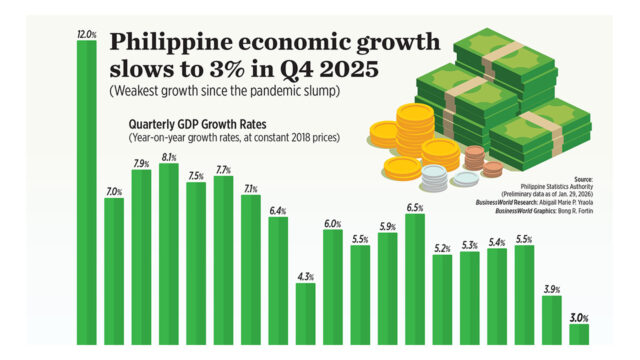
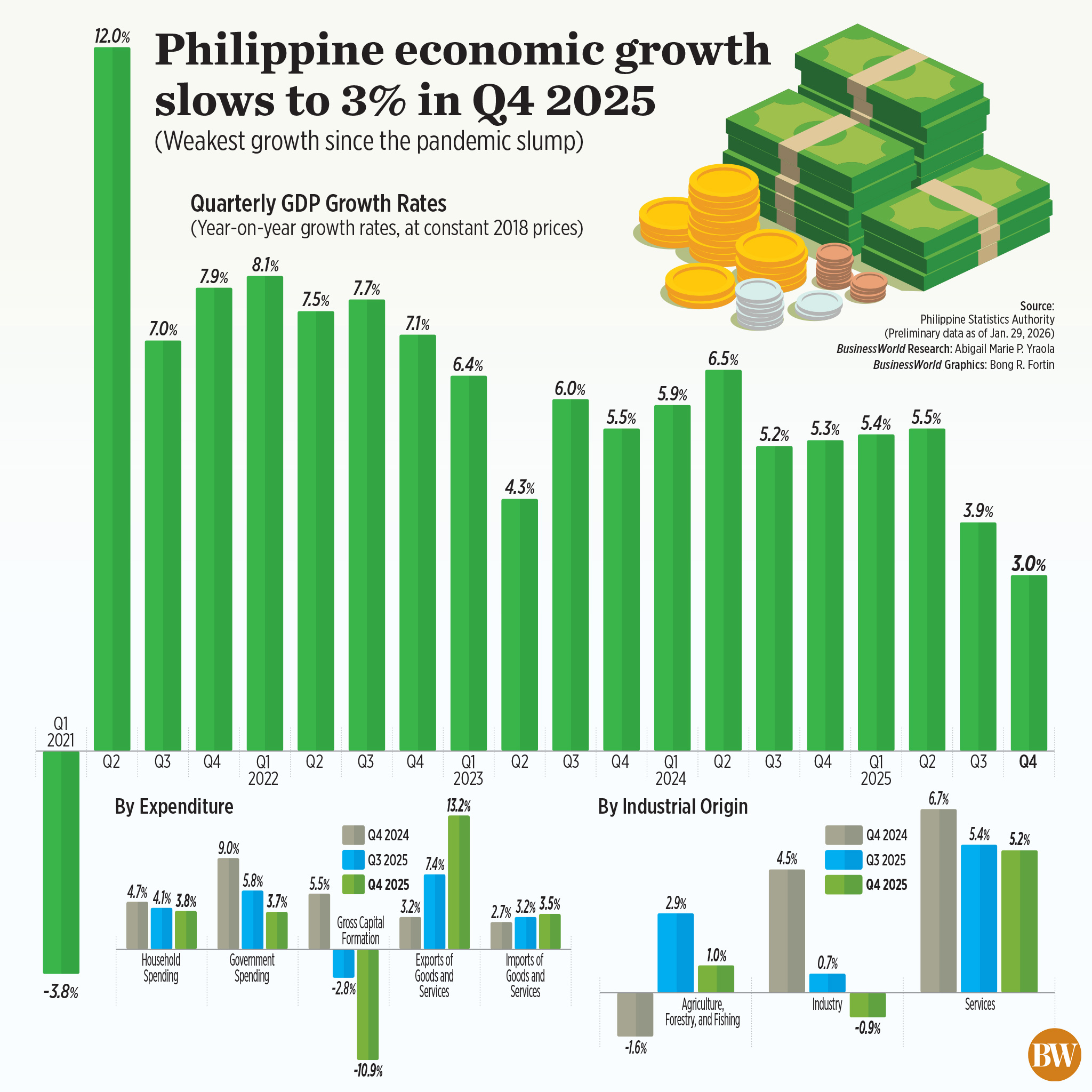
Philippine economic growth slows to 3% in Q4 2025

PHILIPPINE economic growth sharply slowed to a post-pandemic low in the fourth quarter of 2025 as the flood control scandal continued to weigh on government spending, investments and consumer spending, dragging full-year expansion below target for the third straight year. Read the full story.

New beginnings, continuities and endings

The start of 2026 feels like standing at a crossroads — new beginnings emerge, meaningful work continues, and inevitable endings remind us what truly matters. Life, in all its seasons, invites us to pause, reflect, and move forward with gratitude and purpose.

This year ushers in important leadership transitions. At the Philippine Bible Society (PBS), Laura Valledo, formerly deputy general secretary, assumed the role of General Secretary upon the retirement of Perry Cartera, who faithfully served PBS for 37 years. January, Philippine Bible Month, carries the theme “God’s Word Brings LIFE — Love, Integrity, Faith, and Engagement — to our Hearts and Homes.” A fitting reminder as we step into the year.

Also, congratulations to the new FINEX President, DES Financing Corp. CEO Carlo Lazatin. Continuing a family legacy of service, Carlo’s father, Ric Lazatin now serves as president of Tulay sa Pagunlad Inc. (TSPI) following the passing of former president Rene Cristobal.

With beginnings come endings. Over the past year we lost dear friends: Cesar Buenaventura, Gil Buenaventura, Oscar Hilado, Xavier Loinaz, Joe Facundo, Chito Sobrepeña, and recently, our beloved cousin Dr. Jaime Lapus.

Losing a loved one is difficult. Riva Galvez Tan, daughter of Dr. Jimmy Galvez Tan, founded Joyful Grieving, a memorial coordination service that helps families navigate loss with dignity and grace. We coordinate weddings and milestones — why not the memorial of our own lives? Her manual, Building a Lasting Legacy Before Your Inevitable Flight, reminds us to prepare and not wait for the last two minutes of life.

The Filipina CEO Circle (FCC) continues its mission with the 2nd FCC CEO Next program, mentoring 19 future CEOs. This batch featured masterclasses with Doris Magsaysay Ho (with panelists Riza Mantaring, Sharon Daoyon and Carol Dominguez), Senator Grace Poe, Margot Torres of McDonald’s, Shell’s Lorelie Osial and Aboitiz InfraCapital’s Cosette Canilao .

For the January Masterclass, Accenture’s Ambe Tierro invited me to share my journey with the title “Legacy That Lasts: Reinventing and Thriving Through Multiple Career Stages.” She suggested I share my experiences from line management to board work, from finance and banking to writing and gardening — and the lessons along the way.

From my parents, I learned enduring principles: live within your means, expand your means, guard your integrity, commit to lifelong learning, nurture relationships, and pray without ceasing.

Graduate school at UCLA tested my confidence. I struggled to understand my professors’ accents and thought I had failed — surprise! I topped the Master’s comprehensive exams. I knew it was God’s grace, much like how Senator Bam Aquino described his own election victory. This opened doors at Bancom and Citibank.

At Citi, training took me immediately to a Penang credit seminar. As the youngest in our family, I have never traveled alone. When my two companions failed to show up for our connecting flight from Hong Kong, I faced a choice: wait and miss the training, or go alone. Responsibility overcame fear. I left — and made it on time. They arrived the next day and missed the opening day.

Lesson: Step out of your comfort zone. After that, traveling alone anywhere became easy.

Upon retiring from Citi, then Secretary of the Department of Finance (DoF) Jose Pardo handed me my appointment papers as Finance Undersecretary already signed by the President of the Philippines — so how could I say no? The DoF expanded my board experience as alternate of the Finance secretary in the Bangko Sentral ng Pilipinas’ Monetary Board, Land Bank of the Philippines, and Philippine Deposit Insurance Corp. After DoF, I joined the Philippine National Bank board as director, eventually becoming its first chairwoman.

What pushed me towards writing was that at a Citibank party with non-bankers, the bankers talked only about work. A spouse lovingly called our attention. That made me realize I should widen my interests — and writing was a way to do that. I’ve been writing for some 30 years now.

Gardening began when Nanay planted talinum — which I almost threw away. Maur Lichauco, Ninoy Aquino’s eldest sister, told me it sustained many during the Japanese occupation. That started our book “Oops! Don’t Throw Those Weeds Away!” which led to my “Hardin ng Buhay” garden advocating “No Filipino should be Hungry.”

Some lessons in my journey:

• Always do your best. Ensure continuous learning.

• Guard your integrity. Practice ethics.

• Value network, health, family, and friends.

• Count your blessings.

• Trust God — the source of everything and ALL we need.

The future is so uncertain. Still, lets be confident of the future as our God is already there. Let’s all be bankers — someone who BANKS on God!

The views expressed herein are the author’s own and do not necessarily reflect the opinion of her office as well as FINEX.


Flor G. Tarriela is a banking professional. She was the first Filipina vice-president of Citibank and was former undersecretary of Finance and chairman of PNB. She is currently a board advisor at PNB and LTG and director at Nickel Asia. She is a gardener and environmentalist and founded Flor’s Garden in Antipolo.

ADVERTISEMENT
ADVERTISEMENT