

GSIS net profit rises by 70% in 2023

THE GOVERNMENT Service Insurance System (GSIS) saw its net income surge by 70% in 2023 amid higher revenues.
GSIS’ net profit stood at P113.3 billion last year, up from P66.4 billion in the previous year, while its comprehensive income grew by almost 40 times or 3,903% to P143.4 billion from P3.6 billion, it said in a statement on Monday.
The higher net earnings came amid a 33% increase in its revenues to P311.3 billion from P234.9 billion.
“GSIS remains to be strong as we continue to search for yield to boost its generation of revenue. To this end we have increased focus on alternative investment including PE (private equity) and real estate,” GSIS President and General Manager Jose Arnulfo A. Veloso said.
“We continue to push and do our best to boost long-term profitability of the GSIS and support the overall economy. We strive to establish a diversified portfolio by securing new investment opportunities. Our risk profile has remained balanced with our fixed income having extended its average tenor to 7.8 years while maintaining average yield at 7.3% in a climate of declining rates,” he added.
The state-run pension fund saw a mark-to-market gain of P8.2 billion in 2023 versus the P37.4-billion loss in 2022 amid steady interest rates.
“Additionally, management’s strategic move in accumulating 3.6 billion MPIC (Metro Pacific Investments Corp.) shares resulted in a one-time gain of P13.6 billion,” GSIS said.
GSIS also invested $300 million in the Global Infrastructure Partners Emerging Markets Fund this year.
Meanwhile, its multipurpose loans (MPL) rose by 51.9% year on year to P209.6 billion from P157.7 billion following the launch of MPL Flex.
“The GSIS also revisited the granting of corporate loans and project finance transactions,” it added.
Meanwhile, gross premiums written rose by 44% to a record P9.8 billion. GSIS is the largest nonlife insurer in the country with a net worth of P51.26 billion.
Social insurance premiums increased by 17% to P177 billion. GSIS paid P166 billion in pension and other benefits last year, up from P157 billion in 2022.
Other comprehensive income grew by 148%.
“Of the P93-billion increase in other comprehensive income, P57 billion or 62% is attributed to the mark-to-market gains of the GSIS’ holdings of peso-denominated Treasury bonds. This is driven by the investment of GSIS in high-interest rate peso fixed-income products amid favorable market conditions,” it said.
“Now, the GSIS has been strategic in its purchases of government bonds, ensuring that the weighted average coupon rate of its government portfolio remains at 7.294% by end of the year.”
GSIS’ total assets increased by 11% to P1.7 trillion. — AMCS
The meltdown in chocolate is coming

The evening I learned the unspoken truth about the cocoa market I was in Yamoussoukro, the colossal capital city of Ivory Coast.
“The problem with cocoa is that’s a poor man’s crop,” explained my dining companion, a government official-turned-businessman. “Do you see any commercial plantation around here? No,” he said. “And do you know why? Because prices aren’t high enough.”
Only because millions of West African farmers saw cocoa as their only way to escape abject poverty, the world had plentiful supply and low prices. As a result, you and I have been enjoying the pleasures of chocolate on the cheap for decades.
Unlike most other agricultural commodities, cocoa hasn’t developed into a plantation business. At the prevailing prices of the 1990s and 2000s, it simply didn’t make commercial sense. The money was made around trading the beans, and processing them into chocolate — not planting, growing, and harvesting cocoa trees.
Today, the crop is still grown overwhelmingly by poor smallholders.1 Just making enough to subsist, most lack the means to re-invest in their plots. And finally, the decades of underinvestment have caught up with growing chocolate demand. For the third consecutive crop season, global consumption in 2023-24 will meaningfully surpass production — something unseen since the early 1960s.
We are all now confronting the inevitable chocolate crisis.
In the world of commodities, price records have fallen everywhere on the back of the industrialization of China. At the end of 2023, cocoa was one of only four major commodities that still traded below their price peaks set in the 1970s, the previous commodity boom.2
But the 46-year-old record finally fell this month, when the cost of cocoa jumped in New York to more than $5,500 per metric ton. The industry is now abuzz with hyperbole, including predictions of prices doubling again to $10,000 a ton. I don’t think it will get to that. It’s worth remembering that the cocoa beans traded a year ago for $2,500, and that in 2000 they changed hands at just $650.
What’s happening in West Africa will soon be felt in supermarkets around the world. In a conference call with investors on Feb. 8, the day that cocoa prices blew past their previous record, Michele Buck, chief executive officer of The Hershey Co., warned about what’s coming: “We will be using every tool in our toolbox, including pricing, as a way to manage the business.”
While today’s predicament could very well lead to price gouging and shrinkflation at the end of the supply chain, the cause of the crisis resides at the start of the chain in West Africa. There, four countries — Ivory Coast, Ghana, Cameroon, and Nigeria — produce nearly 75% of the world’s cocoa. The king is Ivory Coast, which in a normal year produces 2 million tons — compared with global consumption of 5 million tons.
The father of the nation’s outsized role in the global chocolate industry is Félix Houphouët-Boigny, the cocoa farmer who became the first Ivorian president after independence from France. Under his rule, from 1960 until his death in 1993, he transformed his nation into the world’s largest producer, overtaking Ghana. Banking on the high prices of the 1970s, he used the brown gold to reshape the country, building a new capital city — Yamoussoukro, including a replica of the Vatican’s St. Peter’s Basilica — and for a while turning Abidjan, the commercial hub, into the Manhattan of West Africa.
Houphouët-Boigny attracted millions of African farmers with generous incentives, including land ownership for whoever planted cocoa trees.3 For the last few decades, the world has benefited from the massive production expansion he triggered.
But the low prices have had consequences. The last wave of tree planting in West Africa took place in the early 2000s, particularly around the northwest of Ivory Coast. Those trees are nearly 25 years old, well past their prime. Husbandry has decayed, too, with little use of fertilizer and pesticide. Old cocoa trees mean two problems: lower yields, and plants particularly vulnerable to bad weather and disease. Both factors are at play this year — punishing farmers who are missing out on the record prices.4
The local markets in Ivory Coast and Ghana are tightly controlled by their governments, which set official prices. By selling forward, officials guarantee a price, but that also means that farmers miss out on rallies. For the 2023-24 crop, Ivorian farmers are getting 1,000 central African francs ($1.63) per a kilogram, about 70% below the current wholesale price.
The upshot is a brutal gap between supply and demand. Even when accounting for the damping impact of high prices on consumption, the market is heading for a deficit of 300,000-to-500,000 tons, according to my soundings within the industry. If confirmed, that would be the largest shortfall in at least 65 years — and probably ever.
With demand outstripping output by so much, inventories will fall for the third consecutive year. Inside the industry, I hear that by the end of the season, cocoa stockpiles, measured by the stock-to-consumption ratio, could drop to as little as 25%, comparable to the record lows seen in the 1970s. Considering shipping lags, it means the industry is running on virtually no inventory at all. Cocoa brokers report that’s almost impossible to find offers for beans right now — despite the fact that February marks the harvest peak, when warehouses at West African ports should be full.
There’s another side to the supply problem. In the last 30 years, demand has doubled, and only much higher prices are likely to slow the trend. Still, beyond the US and Europe, global chocolate consumption remains small on a per capita basis, creating new markets for expansion.5
Solutions are elusive. And what consumers want clashes with producers’ needs. Everyone from chocolate executives to cocoa traders to non-governmental organizations has spent the 21st century fretting about the unsustainable supply and demand balance. When I spoke to my interlocutor in Yamoussoukro more than a decade ago, I was travelling throughout Ivory Coast documenting the problem of aging trees and farmers seeking a better way of life.
For all of that time, farmers have been cash cows for all interests except their own: governments have taxed the sector heavily; traders and the confectionary industry have had more than enough beans to keep chocolate prices affordable, expanding sales to a growing class of sweet lovers; and ultimately the consumers, who saw chocolate transforming from a luxury item into an everyday treat.
Not everyone agrees that current prices are a problem. The farmers outside West Africa with beans to sell — and the ability to do so at prevailing market prices — are enjoying a windfall unseen in generations. For those in Ecuador, Brazil, Indonesia, and Peru, the crisis in Africa is a blessing. They’re sure to turn the current boom into more cocoa trees.
Even in West Africa, the views are more nuanced. While farmers have missed out on the best cocoa market ever, authorities in Yamoussoukro had encouraged less tree planting in recent years to both shore up prices and stop deforestation. By the next season, Ivorian farmgate prices are likely to pick up, giving farmers a cash infusion. In many ways, the current situation would please Houphouët-Boigny, who dreamed of a one-country cocoa cartel, with Ivory Coast fixing the global price.
I’m unconvinced that climate change has anything to do with the current crisis — despite many pundits pinning the trouble on it. The unseasonal rains that have hurt the crop are more likely linked to the El Niño weather phenomenon than to global warming. Yet, it’s clear that more unpredictable weather in the future could be another handicap for the cocoa sector.
For the confectionary industry, the prices present an acute problem. I doubt the sector will be able to pass all the higher costs onto consumers. So margins could fall, and demand growth for chocolate slow down, or even reverse. The producers of mass-market chocolate — think the cocoa that goes into a pain au chocolate, for example — would suffer. Consumers, inevitably, would pay more.
The crisis is a necessary one. The world needs higher prices to encourage the re-planting millions of old trees — and take better care of the current ones. If every farmer applied a little more fertilizer, and had pesticides at hand, production could recover. That, or projected chocolate demand growth needs to slow, if not to fall. Clearly, global cocoa inventories can’t drop much further. Ultimately, cocoa is just another boom-and-bust commodity. Over the next few years, market forces will rebalance the market, but everyone must brace for a few years of higher prices. Bittersweet. — Bloomberg Opinion
1Around 90% of the world’s cocoa is produced by smallholders, each owning less than two hectares of land (equivalent to the size of about three soccer fields). The average farmer harvests between 600 and 800 kilograms of cocoa beans per year.
2The three other major commodities trading below the nominal price peaks set during the late 1970s commodities boom are: sugar (the record was set in 1974); Arabica coffee (1977); and silver (in 1980).
3Ivory Coast attracted hundreds of thousands of farmers from its northern neighbors of Burkina Faso, Niger, and Mali, particularly during the 1970s period of high cocoa and coffee prices. Whatever the penuries of cocoa cultivation were, life was still better in Ivory Coast.
4The weather has been unusually wet in Ivory Coast, and to a lesser extent in Ghana, in the current growing season. The unseasonal rains affected flowering and pod setting, two crucial moments of the development of the crop, according to cocoa traders and agronomists. On top, the region has been badly affected by the so-called swollen shoot disease. The virus, which affects particularly cocoa trees, sharply reduces yields, and ultimately kills the plants. Although the swollen shoot has affected the region for nearly a century, cocoa traders say it’s now more widespread than ever.
5While the average German gulps eight kilograms of chocolate per year — one of the highest per capita consumptions in the world —, the average Chinese only consumes 200 grams. Americans eat about five kilograms of chocolate a year.
How PSEi member stocks performed — February 19, 2024
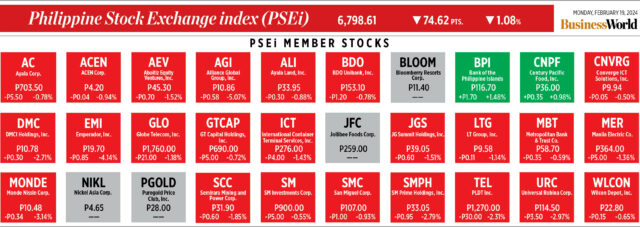
Here’s a quick glance at how PSEi stocks fared on Monday, February 19, 2024.


House proposal seeking to ease foreign ownership restrictions in Charter filed
By Beatriz Marie D. Cruz, Reporter
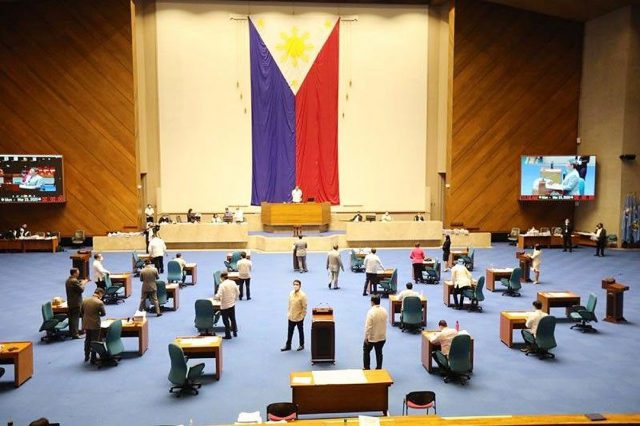
CONGRESSMEN filed on Monday a measure to ease economic provisions in the 1987 Constitution, the same as the Senate’s Resolution of Both Houses (RBH) No. 6, to speed up congressional moves toward Charter change (“Cha-cha”).
In filing Resolution of Both Houses No. 7, House Senior Deputy Speaker and Pampanga Rep. Aurelio D. Gonzales, Jr. said it carries the same proposals being tackled in the Senate’s RBH 6, particularly on lifting restrictions on foreign ownership in public utilities, education and advertising.
“We need to deliberate on the proposed amendments simultaneous with the Senate to fast-track the process,” Mr. Gonzales told a news briefing in Filipino.
“We would rather work with what the Senate wants to amend,” Camarines Sur Rep. Luis Raymund F. Villafuerte told the same briefing, adding that having a separate set of amendments might delay Charter change proceedings.
As such, RBH 7 also seeks to include the phrase “unless otherwise provided by law” in Article 12, 14, and 16 of the Charter.
“It will give Congress the discretion to adjust the percentage of ownership of franchises, educational institutions and advertising industries,” Mr. Gonzales said.
The Charter currently mandates the state to protect Filipino enterprises against unfair foreign competition and trade practices and limits land ownership to Filipino citizens and corporations that are at least 60% Filipino-owned.
The identical version of the RBH will be deliberated “exhaustively” in a committee of the whole, which would include all members of the House.
The House’s legislative timeline would be shorter than the Senate’s RBH 6, which must undergo deliberations in a subcommittee, public hearings, and approval in its mother committee before it sent to the plenary for debate.
“As a co-equal partner in Congress, we are doing this so we can already also start in the House hearings [and] discussions on this matter,” Mr. Villafuerte said.
“We will try our best to work double time on this,” House Majority Leader and Zamboanga City Rep. Manuel Jose M. Dalipe told the same briefing.
House lawmakers are seeking to fast-track the measure by the middle of the year, before Congress becomes busy with its budget deliberations for next year.
“We have more or less three months [or] four months of legislative time to actually tackle this,” House Deputy Speaker and Quezon Rep. David C. Suarez said during the briefing.
Last year, congressmen approved its own version of the resolution calling for Charter change via a constitutional convention, wherein delegates will be elected per district to amend the Constitution. Its counterpart measure in the Senate only reached the committee level.
President Ferdinand R. Marcos, Jr. backed proposals to amend the Constitution, as it is “not written for a globalized world.”
“We have to adjust so that we can increase the economic activities in the Philippines. We can attract more foreign investors,” he had said.
Philippine security council wants fishery report on cyanide use in S. China Sea

By Kyle Aristophere T. Atienza, Reporter
THE PHILIPPINES is keen on coming up soon with its complete report on the alleged use of cyanide by Chinese fishermen encroaching Scarborough Shoal, locally known as Bajo de Masinloc.
On Monday, National Security Council (NSC) Spokesman Jonathan Malaya told a news briefing that the Bureau of Fisheries and Aquatic Resources (BFAR) has been ordered to finish its post-mission reports and submit all the evidence it has gathered to the country’s West Philippine Sea task force.
“We at the National Security Council are alarmed by this development that is happening, but we have to be careful also, so we have to validate and investigate [the use of cyanide by Chinese fishermen].”
In a forum last week, BFAR spokesman Nazario Briguera said Chinese fishermen have been using the deadly chemical compound in the area, 124 nautical miles off the Philippines’ main northern island of Luzon.
He said the practice of foreign fishermen have caused damage potentially exceeding P1 billion. “They intentionally destroy Bajo de Masinloc to prevent Filipino fishing boats from fishing in the area,” Mr. Briguera said.
In a statement, the Chinese Embassy in Manila belied the allegations of use of cyanide by its fishermen.
“The allegation against Chinese fisherman is totally baseless and sheer fabrication. China has indisputable sovereignty over Huangyan Dao and its adjacent waters,” it said of Scarborough Shoal.
“The Chinese Government attaches great importance to the protection of ecological environment and conservation of fishery resources, and have taken resolute measures to crack down on any illegal fishing activities,” it added.
The Philippine Coast Guard (PCG) had said that President Ferdinand R. Marcos, Jr. had instructed stricter patrols in the area.
Scarborough Shoal has been a major source of tensions between the countries, with the Chinese Coast Guard preventing Filipino fishermen from accessing the fishing ground, which falls within Manila’s 200-nautical mile exclusive economic zone.
In mid-January, a China Coast Guard ship deployed a rubber boat to chase a small boat of Filipino fishermen collecting shells in the vicinity of the shoal.
One of the five Chinese personnel forced them to return the shells to the sea before being allowed to leave. They were subsequently driven away.
A 2016 arbitral ruling that invalidated China’s expansive claims in the South China Sea recognized the traditional fishing rights of small-scale Filipino and Chinese fishermen in the shoal.
Mr. Malaya said once the report is validated, it would be sent to the Department of Justice and the Office of the Solicitor General, which are working on a case against China for environmental degradation.
“The challenge here is to prove the responsibility for the coral degradation and the impact to the environment is coming from these specific people,” he said at the Monday briefing.
“We need to connect them. We have to have solid evidence to prove so that once we file the case, we won’t have a hard time proving it to the court,” he said in mixed English and Filipino.
“When we go to court, we have to have solid evidence to back your claim.”
ESTABLISH SEA LANES — LOCSIN
In Congress, Philippine Ambassador to the United Kingdom Teodoro L. Locsin, Jr. called on the government to push for measures that would establish archipelagic sea lanes to safeguard the country’s marine resources.
“Our archipelagic sea lanes must include normal passage routes or international navigation and overflight and of course innocent passage,” Mr. Locsin told a Senate Maritime and Admiralty Zones committee hearing.
“They [sea lanes] should be required to show sufficient capability to put in place mechanisms that enhance maritime safety and give convincing proof that our proposals will enhance the positive impact of orderly vessel traffic,” he said.
Under the United Nations Convention on the Law of the Sea (UNCLOS), an archipelagic state such as the Philippines may designate these sea lanes to ensure the “continuous and expeditious passage” of foreign vessels and aircraft in or over its archipelagic waters.
Mr. Locsin said that the International Maritime Organization would be in-charge of adopting Philippine proposals for archipelagic sea lanes, which he said would take time to process.
“We are [one of] the only two serious archipelagos on the planet,” Mr. Locsin said. “As sprawling archipelagos, we are most vulnerable in this particular aspect; our major islands are the sizes of many countries; the waterways between them offer wide approaches.”
Senator Francis N. Tolentino, who heads the committee, formed technical working groups composed of officials from the Departments of Foreign Affairs (DFA), of Justice (DoJ), the NSC, the National Mapping and Resource Information Authority (NAMRIA), and the PCG.
He said the measure would likely be submitted to plenary by March.
Last year, NAMRIA said it would finish mapping Philippine territories in the South China Sea by 2028.
Mr. Tolentino has said the special committee on maritime and admiralty zones would craft a Philippine map to assert the country’s claim in the South China Sea in response to China’s so-called 10-dash line map.
The Philippines, Vietnam, India and Taiwan have criticized the map for covering regions beyond China’s borders and claiming most of the South China Sea. — with a report from John Victor D. Ordoñez
Media worker protection bill OK’d on final reading

By John Victor D. Ordoñez, Reporter
THE PHILIPPINE Senate has approved on third and final reading a bill seeking to ensure the protection and welfare of workers in the movie and television industry.
With 22-0-0 affirmative votes, senators approved Senate Bill No. 2505, the proposed Eddie Garcia Act — named after the late multi-awarded Filipino actor who accidentally tripped on a filming set and died.
The measure seeks to ensure those working in the film and television industry are safe from dangerous working environments, harassment, extended working hours, and are provided with decent pay.
It would set working hours for the media workers to a maximum of 14 hours a day or 60 hours a week.
Workers would also be afforded employment contracts that would include complete details about the job description and accompanying benefits.
A Movie and Television Tripartite Council composed of film industry workers, government officials and employers would be also established.
“This measure is the Senate’s recognition of the immense talent, dedication, and contribution not just of Filipino artists, but also those behind the camera who put their heart and soul to come up with material for the movie and television industry,” Senator Jose “Jinggoy” P. Estrada, Jr. who sponsored the measure, said at the plenary.
8,500 cops securing People Power anniversary

THE PHILIPPINE National Police (PNP) said on Monday that it will deploy 8,500 cops to sites of activities celebrating the EDSA People Power anniversary, the popular uprising that toppled a dictatorial regime 38 years ago this week.
Police chief Benjamin Acorda Jr. said they were looking at possible rallies in the central Philippine province of Cebu and in Metro Manila on Feb. 25, the anniversary of former strongman Ferdinand E. Marcos’ flight from Malacañang in February 1986 to go into exile in Hawaii with his family.
“In Cebu, we intend to deploy more or less 2,500 police personnel and in Metro Manila we also prepared for it, more or less 6,000,” he told reporters.
“And of course, these numbers will adjust depending on how the intelligence reports will come in,” he added.
Mr. Acorda said they had not monitored any imminent security threats for the occasion. “We will be exercising maximum tolerance,” he said, “but I hope nobody would sow chaos.”
The office President Ferdinand R. Marcos, Jr., son and namesake of the late former leader of the Martial Law regime, did not include Feb. 25 in the list of holidays for 2024.
The office earlier said there is “minimal socio-economic impact” in declaring Feb. 25, which falls on a Sunday, a special non-working holiday “since it coincides with the rest day for most workers and laborers.” — Kyle Aristophere T. Atienza
Remulla: Speed up drug probe
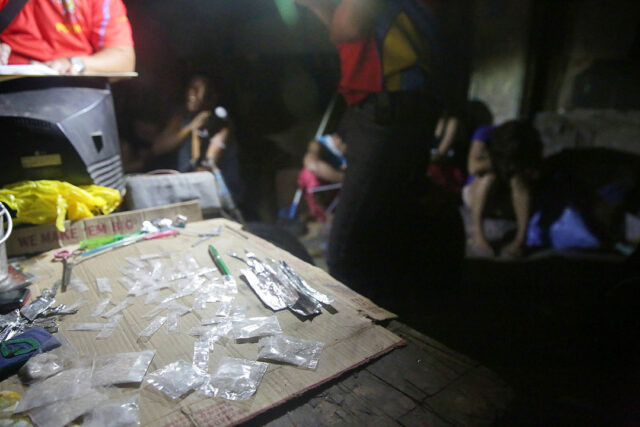
THE PHILIPPINE Justice Secretary on Monday urged state prosecutors to ensure timely results in their probe of officers linked to a cover-up of police involvement in a P6.7-billion drug bust in 2022.
“As the prosecution arm of the government, it is but imperative that we uphold the Rule of Law in the most efficient and expeditious way and at the same time within the bounds of truth, fairness and justice,” Justice Secretary Jesus Crispin C. Remulla said in a statement. “I strongly urge the panel to work closely with the concerned law enforcement agencies and to thoroughly study all pieces of evidence to ensure that there will be no let-up in this case.”
Officers allegedly attempted to cover up the arrest of Sgt. Rodolfo Mayo, Jr., a former intelligence officer of the PNP-Drug Enforcement Group, had been dismissed after police found that the shabu was kept at a lending firm he owned. Mr. Remulla said evidence build-up is “moving swiftly” after the state prosecutors and the Philippine National Police-Criminal Investigation and Detection Group met on Feb. 15 to discuss the case.
The buy-bust operation had yielded 990 kilograms of crystal methamphetamine, known in the Philippines as shabu. — John Victor D. Ordoñez
BIR employee falls for extortion
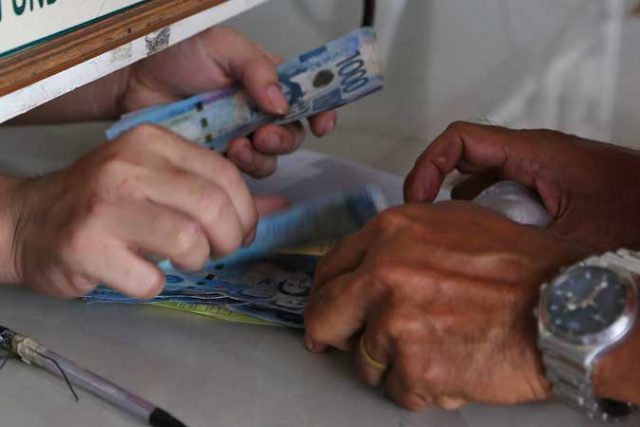
THE BUREAU of Internal Revenue (BIR) confirmed on Monday the arrest of one of its employees on Valentine’s Day for allegedly extorting money from a business establishment.
In a statement, the BIR said the suspect was arrested in a joint operation by the BIR and officers of the Philippine National Police.
“Reports were received by the BIR of a certain individual that was repeatedly extorting money from a business establishment selling kid’s bikes, under the guise of an official BIR tax compliance verification drive,” it said. “It was not in the official function of this BIR employee to be in the taxpayer’s place of business or vicinity.”
Charges of robbery, grave coercion, and usurpation of official functions have since been leveled against the BIR employee.
The BIR reminded the public that any of its personnel conducting enforcement activities must have a letter of authority or mission order with them.
“Taxpayers can always ask and verify the authority by which a BIR employee is visiting their office or business,” it said. “You can report any individual, whether a BIR employee or a stranger, if he/she cannot show any official document that warrants his/her presence in your business establishment.” — Luisa Maria Jacinta C. Jocson
4 soldiers killed in clash

FOUR Philippine soldiers were killed in an encounter with members of Dawlah Islamiyah-Maute Group in the southern province of Lanao del Norte on Sunday, the military said.
The Feb. 19 operation, which was aimed at neutralizing alleged perpetrators of a university bombing in December, also wounded four soldiers, the Armed Forces of the Philippines said in a statement on Monday. The wounded were being treated at a military hospital in Cagayan de Oro province, it said.
The military said two members of the extremist group were killed in the same operation.
It said 18 members of the Dawlah Islamiyah-Maute Group have already been killed in its recent operations, including the one who “masterminded” the blast at the Marawi State University in mid-December.
The bombing happened while a Catholic mass was being held in the university’s gymnasium, killing 11 people.
Marawi City is still recovering from a five-month war in 2017 between state forces and the Maute group. — Kyle Aristophere T. Atienza