In this B-Side episode, BusinessWorld explores the evolving Filipino workforce through the lens of executive coaching. Tina Sioson, President of the International Coaching Federation (ICF) Philippines, breaks down skills-based hiring, common recruitment pitfalls, and strategies for Filipino professionals to thrive in 2026 and beyond.
Interview by Erika Sinaking Audio editing by Jayson John Marinas
By Bjorn Biel M. Beltran,Special Features and Content Assistant Editor
THE PHILIPPINE economy entered 2026 with a jolt. Gross domestic product grew just 3% in the fourth quarter of 2025, pulling full-year growth down to 4.4%. While earlier analyst estimates hoped for a high 4% or even 5% finish, the official numbers show a much sharper deceleration in the final months of the year.
Even the country’s economic managers admitted they were caught off guard by the scale of the slowdown.
“To be honest, I did not expect that this would be this sharp,” Secretary Arsenio M. Balisacan of the Department of Economy, Planning, and Development (DEPDev) said in a press conference, adding that while a deceleration was anticipated, the magnitude of the impact highlighted how sensitive the country’s growth had become to sudden shock.
Much of the decline was attributed to a massive corruption scandal involving P545 billion in anomalous infrastructure projects that stalled public spending and shook consumer and investor confidence.
According to the Philippine Statistics Authority (PSA), the fourth-quarter slowdown was accompanied by a sharp contraction in gross capital formation, reflecting delayed investment decisions. Data showed that investment shrank by 10.9% in the quarter, the sharpest decline since the height of the coronavirus disease 2019 (COVID-19) lockdowns in 2021.
Meanwhile, household consumption grew 3.8%, but slower from 4.1% recorded in the prior quarter. Data shows that spending shifted toward essentials and services such as food, non-alcoholic beverages, and restaurants, while discretionary categories such as furnishings, clothing, alcohol and tobacco contracted. This is in the final three months of the year, the period typically considered the strongest for consumption due to holiday spending, bonuses, and year-end purchases.
The most significant drag on growth came from public construction. Government spending on infrastructure construction plunged in the second half of 2025, as much as 40.1% in October after four straight months of decline following the exposure of misappropriated funds linked to infrastructure and flood-control projects.
Freepik
Mr. Balisacan noted that the pullback in public spending was deliberate, aimed at preventing “business as usual” while accountability mechanisms were strengthened.
“It is better to have a slowdown. Correct the problems, build back the trust of our people in their institutions and in their government.”
But the economic cost was substantial. Mr. Balisacan quantified the impact bluntly during the PSA briefing: had public construction spending merely remained flat, full-year growth would have reached a rou nd 5.5% instead of 4.4%. In the fourth quarter alone, he estimated that the contraction in public construction subtracted about 2.2 percentage points from growth.
Infrastructure spending plays an outsized role in the Philippine economy. It creates jobs, feeds into supply chains, and creates positive investment signals for investors. When it stalls, the effects ripple outward: businesses delay new projects and stall hiring plans, while consumers lose discretionary income and tighten their belts.
A TIME FOR REFLECTION
The central question now is whether the reforms planned for this year will be sufficient to rebuild trust and accountability.
Mr. Balisacan mentioned the following planned reforms: the New Government Procurement Act; the proposed Anti-Dynasty Bill; and amendments to the Party-List System Reform Act, the Bank Deposits Secrecy Law, and the Anti-Money Laundering Act.
The DEPDev Secretary added that they are already working on a report centered on making 2026 the rally point for Philippine economy. The report, to be shared with the public mid-February, aims to revitalize the implementation of the Philippine Development Plan and outline strategies to address governance challenges.
“The reform efforts we have begun and continue to pursue have affected the recent growth performance. They are necessary and critical steps,” he said, emphasizing that accepting weaker growth in the short term is preferable to sustaining higher growth built on compromised governance.
“Growth may be higher in the short term, but with corruption all over the place, that would not be expected to last,” he said. The government ’s response has focused on tightening procurement rules, improving transparency, and aligning budgets more closely with approved development plans.
Beyond governance reforms, the government is re-emphasizing investments in education, health, human capital, and climate adaptation as the foundation for long-term growth, with Mr. Balisacan noting that raising productivity through these fundamentals can lift the economy ’s potential growth rate and make it more resilient to future shocks.
From the perspective of long-term investors, successful growth must be “steady, broad-based, and sustainable,” according to Frederic C. DyBuncio, SM Investments Corp. president and chief executive officer, who says this means stable inflation, continued job creation and investments that increase productive capacity rather than relying on short-term demand.
“From our experience as a long-term investor, this kind of growth is supported by consistent policy signals, timely execution, and an environment that allows businesses to plan and invest with confidence,” he told BusinessWorld in an email. “We also need disciplined capital allocation and sustained investment in productivity, technology, and people so growth translates into higher incomes and competitiveness.”
Real estate developer Federal Land NRE Global Inc. (FNG) echoed the sentiment, saying that success in 2026 means more than impressive GDP headline, but restoring confidence at the ground level. “When households feel secure enough to make long-term decisions like buying a home and businesses feel that this is the right time to invest again instead of waiting on the sidelines, that’s when growth becomes meaningful, and success for the country as a whole becomes ensured,” Thomas F. Mirasol, vice-chairman of Federal Land and president of FNG, said in an email.
DEPDev shared that target GDP growth rates for this year and the next are at around 5-6% and 5.5-6.5% respectively. Much of this expectation hinges on the public sector’s ability to make good on their promises of accountability, as firms are now prioritizing projects with clearer timelines and lower exposure to regulatory or operational delays. There is little tolerance for ambiguity in this environment.
“Real estate, in particular, responds strongly to clarity. When people feel they can plan ahead, the broader economy follows. After that point, success becomes all about discipline and execution on our part, to make sure we are positioned to seize the opportunities when and where they arise,” Mr. Mirasol said.
Uncertainty, Mr. DyBuncio added, tends to delay capital decisions in the private sector more than difficult news for diversified corporations with exposure to consumption, finance, and infrastructure. “Consistency and follow-through matter,” he said.
Freepik
WHAT MATTERS MOST
Restoring trust is but one factor for growth this year, however. External risks remain, even if their impact is indirect. The International Monetary Fund, in its January update to its World Economic Outlook, cited that while global growth is projected to remain resilient, “risks to the outlook remain tilted to the downside.”
The world is quickly reevaluating its expectations around artificial intelligence (AI) and how much their investments into AI companies can actually deliver in return. Such a reassessment could trigger market corrections that spill over from technology firms to broader financial markets, eroding household wealth and confidence. Trade tensions could also resurface, prolonging uncertainty and dampening global economic activity, while renewed geopolitical or domestic political disruptions risk unsettling markets, supply chains, and commodity prices.
Fiscal pressures add another layer of risk. Larger government deficits and elevated public debt in major economies could push long-term interest rates higher, tightening financial conditions worldwide.
For an economy like the Philippines, such external shocks can quickly feed through financial markets and trade channels. In particular, the weaker-than-expected growth print for 2025 has renewed expectations of further monetary easing. With inflation recorded at 1.7% in 2025, the lowest level in nine years and below the government’s 2-4% target band, the Bangko Sentral ng Pilipinas (BSP) has greater room to cut rates without immediately risking price instability.
BSP Governor Eli M. Remolona had previously said the slower growth would factor into the central bank’s decision at its Feb. 19 policy meeting. The BSP has already cut its benchmark rate by a cumulative 200 basis points to a three-year low of 4.5% in the current cycle.
These factors do not necessarily derail growth, but they amplify volatility and complicate policy trade-offs.
Mr. DyBuncio is optimistic. “Recent steps to strengthen oversight, transparency and institutional safeguards are constructive. From an investor’s perspective, what matters most is that governance continues to improve while priority infrastructure and social investments proceed without disruption. Clear rules, strong controls, and consistent execution encourage greater private-sector participation alongside public spending,” he said.
FNG noted that future growth can slow and compound if consumers delay major decisions and companies wait for an environment with clearer signals. But such hesitation can reverse very quickly once confidence in the economy improves.
“In real estate we often see that when people feel more certain about the direction of rates and the economy and their own personal expectations, business activity can pick up faster than most might expect,” Mr. Mirasol said.
If there is to be a defining theme that investors hope to see in 2026, it is execution.
“These reforms protect public funds, strengthen our institutions, build a more resilient, inclusive economy, and ultimately, rebuild trust between government and the people we serve,” Mr. Balisacan had said of the government’s plans.
“With discipline, better governance, and sustained reforms. We are decisively moving to ensure that growth in 2026 and beyond is stronger, more inclusive, more resilient, and truly felt by all Filipinos,” he added.
“In its Final Report, the Second Congressional Commission on Education (EDCOM 2) highlighted the problems linked to students’ plummeting proficiency rates, and how ‘mass promotion’ further amplifies the gaps in the education system.
“Mass promotion is many things. There is no real policy of DepEd (Department of Education) to promote students automatically, but it is a confluence of multiple factors,” EDCOM 2 Executive Director Karol Mark R. Yee told BusinessWorld in an interview.
“The ‘mass promotion’ culture in the Philippines could leave a lasting effect on the nation’s economy and workforce if not addressed immediately, according to an expert.
“We would have hollow foundations and we would not be able to reap what is expected to be a lot of gains from that demographic window,” Karol Mark R. Yee, executive director of the Second Congressional Commission on Education (EDCOM 2), told BusinessWorld in an interview.
The commission highlighted its call to end mass promotion culture and its link to other issues within the education system in its final report, launched on Monday.
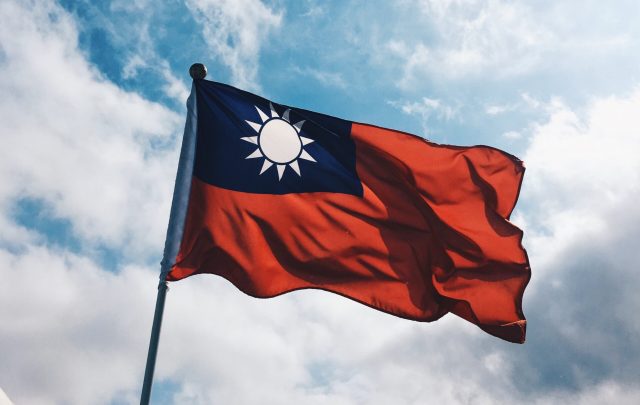
TAIPEI — Taiwan completed the maiden underwater sea trial for its first domestically developed submarine on Thursday, a big milestone in a project aimed at strengthening deterrence against the Chinese navy and protecting vital sea lanes in the event of war.
Taiwan, which China claims as its own territory, has made the indigenous submarine program a key part of an ambitious project to modernize its armed forces as Beijing stages almost daily military exercises to assert its sovereignty claims.
The submarine program has drawn on expertise and technology from several countries, including the United States and Britain, a breakthrough for diplomatically isolated Taiwan, whose government rejects Beijing’s territorial claims.
Taiwan’s CSBC Corp which is leading construction of what is eventually planned to be eight submarines, said in a statement late on Thursday that the first ship, named the Narwhal, had completed its first underwater test at sea.
It said the submarine had carried out a “shallow-water submerged navigation test”.
“Submarines are a key strategic capability with deterrent power,” it said, after the test off the southern Taiwanese port of Kaohsiung.
The Narwhal had been due to be delivered to the navy in 2024, joining two existing submarines purchased from the Netherlands in the 1980s, but the program has been hit with delays.
“Due to constraints in the international environment and pressure from the Chinese communists, Taiwan’s indigenous submarine program has faced various difficulties and challenges from the beginning to the present,” CSBC said.
Taiwan has said it hopes to deploy at least two such domestically developed submarines by 2027, and possibly equip later models with missiles.
The first submarine, with a price tag of T$49.36 billion ($1.58 billion), will use a combat system by Lockheed Martin Corp and carry U.S.-made Mark 48 heavyweight torpedoes.
Taiwan’s armed forces are dwarfed by those of China, which has three operational aircraft carriers and ballistic missile submarines and is developing stealth fighter jets.
Taiwan is modernizing its military to be able to fight “asymmetric warfare,” using mobile and agile systems like submarines, drones and truck-mounted missiles to fend off its much larger adversary China.
Taiwan President Lai Ching-te announced in November 2025 that his government would spend an additional $40 billion on defense. — Reuters
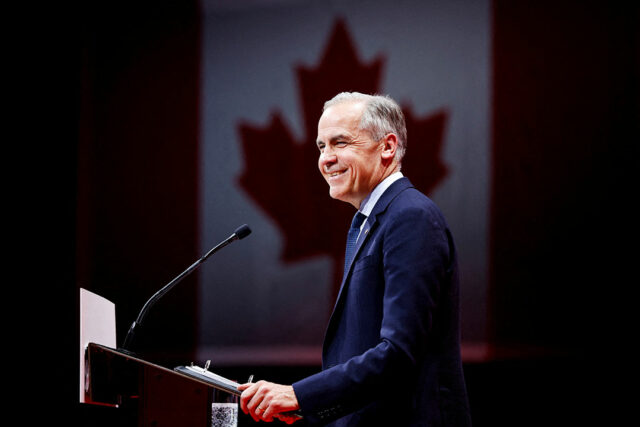
OTTAWA — Canadian Prime Minister Mark Carney, asked about reports that US officials had met separatists seeking independence for the province of Alberta, on Thursday said he expected the US administration to respect Canadian sovereignty.
The Financial Times said State Department officials had held three meetings with the Alberta Prosperity Project, a group that is pushing for a referendum on whether the energy-producing Western province should break away from Canada.
“We expect the US administration to respect Canadian sovereignty. I’m always clear in my conversations with President Trump to that effect,” Mr. Carney told a press conference.
Mr. Trump, he added, had never raised the question of Alberta separatism with him.
The APP, which says Ottawa’s policies are stifling the province, wants another meeting next month with State and Treasury officials to ask for a $500 billion credit facility, the Financial Times reported.
Alberta premier Danielle Smith said she wanted to stay part of Canada but noted that polls show 30% of the population was fed up with what it saw as Ottawa’s excessive interference.
Alberta is landlocked and Ms. Smith is pressing for another oil pipeline to the Pacific Coast. That would have to cross the neighboring province of British Columbia, whose premier David Eby has ruled out the idea.
Mr. Eby, whose relations with Ms. Smith are usually chilly, told reporters earlier that “to go to a foreign country and to ask for assistance in breaking up Canada … is treason”.
Last week, US Treasury Secretary Scott Bessent told a radio station: “I think we should let them come down into the US.”
Asked about a possible Alberta referendum, he replied: “People want sovereignty. They want what the US has got.”
Mr. Carney and Mr. Trump have repeatedly traded barbs in recent weeks. Mr. Carney, who calls the US president a skilled negotiator, suggests some of Mr. Trump’s recent comments could be tied to a review of the US-Mexico-Canada trade pact that is due to start later this year. — Reuters
WILMINGTON, Delaware — Former Google software engineer Linwei Ding was convicted by a federal jury in San Francisco on Thursday of stealing AI trade secrets from the US tech giant to benefit two Chinese companies he was secretly working for, the US Department of Justice said on Thursday.
Mr. Ding, a 38-year-old Chinese national, was found guilty after an 11-day trial of seven counts of economic espionage and seven counts of theft of trade secrets for stealing thousands of pages of confidential information.
Each economic espionage charge carries a maximum 15-year prison term and $5 million fine, while each trade secrets charge carries a maximum 10-year term and $250,000 fine.
Mr. Ding is scheduled to appear at a status conference on February 3, according to the DOJ.
An attorney for Mr. Ding, also known as Leon Ding, did not immediately respond to a request for comment.
Mr. Ding was originally indicted in March 2024 on four counts of theft of trade secrets. A superseding indictment in February expanded the charges.
Mr. Ding’s case was coordinated through an interagency Disruptive Technology Strike Force, created in 2023 by the Biden administration.
Prosecutors said Mr. Ding stole information about the hardware infrastructure and software platform that lets Google’s supercomputing data centers train large AI models.
Some of the allegedly stolen chip blueprints were meant to give Google, owned by Alphabet, an edge over cloud computing rivals Amazon.com, and Microsoft, which design their own, and reduce Google’s reliance on chips from Nvidia.
Prosecutors said Mr. Ding joined Google in May 2019 and began his thefts three years later, when he was being courted to join an early-stage Chinese technology company.
Google was not charged and has said it cooperated with law enforcement. The company did not immediately respond to a request for comment. — Reuters
NIAMEY — Niger’s military ruler Abdourahamane Tiani on Thursday blamed French, Benin, and Ivory Coast presidents for sponsoring the attack on Niamey international airport, an accusation he made without offering any evidence.
Gunfire and loud explosions echoed around Niger’s international airport in Niamey shortly before midnight in what two security sources described as a “terrorist attack”, before calm returned to the capital on Thursday morning.
Mr. Tiani accused French President Emmanuel Macron, Benin’s Patrice Talon, and Ivory Coast President Alassane Ouattara by name, while speaking on Niger’s state television after visiting the air base. He vowed retaliation.
“We have heard them bark, they should be ready to hear us roar,” he said, signaling further worsening of relationship between the Sahel nation, its neighbors he sees as French proxies in the region, and former colonial power.
The offices of the presidents of France, Benin, and Ivory Coast could not be immediately reached for comment.
Mr. Tiani also thanked the Russian troops stationed at the base for “defending their sector.”
Since seizing power, the military rulers in Niamey, like the military rulers in neighboring Mali and Burkina Faso, have cut ties with western powers and turned to Moscow for military support to tackle the insurgencies.
Niger state television reported that one of the several assailants killed was a French national, as footage showed several bloodied bodies on the ground. It provided no evidence.
URANIUM
Businesses and schools were open in the city of about 1.5 million, and people were moving about freely, apart from a cordoned-off zone near the airport which was heavily patrolled by defense and security forces, the Reuters witness said.
Two security sources described the overnight incident to Reuters as a “terrorist attack” and said security had been reinforced around the airport following an internal alert about an imminent attack on the site.
They said a store of uranium currently held at the airport had not been affected by the attack.
Nigerien authorities moved the uranium yellowcake late last year from the Somair mine in Arlit to the Niamey base for export after seizing control of the mine from French nuclear group Orano, according to two other sources, who estimated it to be around 1,000 metric tons of uranium.
Two more sources confirmed that the uranium was still at the airport at the time of the incident Wednesday night. Yellowcake, or uranium oxide concentrate, is a powdered form of uranium which can be processed to make fuel for nuclear power production.
AIRCRAFT DAMAGED DURING ATTACK Pan-African carrier ASKY Airlines said two of its aircraft sustained minor damage during the incident while parked on the tarmac, while Ivory Coast’s national airline Air Cote d’Ivoire said an Airbus A319 was hit, damaging its fuselage and right wing.
Both companies said no passengers or crew were injured as the incident occurred outside operational hours.
An assessment was under way for the Airbus and the jet could be grounded for an extended period, potentially disrupting schedules, Air Cote d’Ivoire said in a statement.
The heavy gunfire began shortly before midnight on Wednesday and continued for over an hour, the Reuters witness said.
A video shared on social media platform X appeared to show the city’s night skyline illuminated by gunfire, though Reuters has not independently verified the footage.
The West African nation, like its Sahel neighbors Mali and Burkina Faso, has struggled to contain attacks from jihadist groups linked to al Qaeda and Islamic State that have killed thousands and displaced millions in the three nations. — Reuters
Gross domestic product (GDP) grew by 3% in the fourth quarter of 2025, which brought full-year growth to 4.4%. — PHILIPPINE STAR/RYAN BALDEMOR
By Katherine K. Chan, Reporter
PHILIPPINE economic growth sharply slowed to a post-pandemic low in the fourth quarter of 2025 as the flood control scandal continued to weigh on government spending, investments and consumer spending, dragging full-year expansion below target for the third straight year.
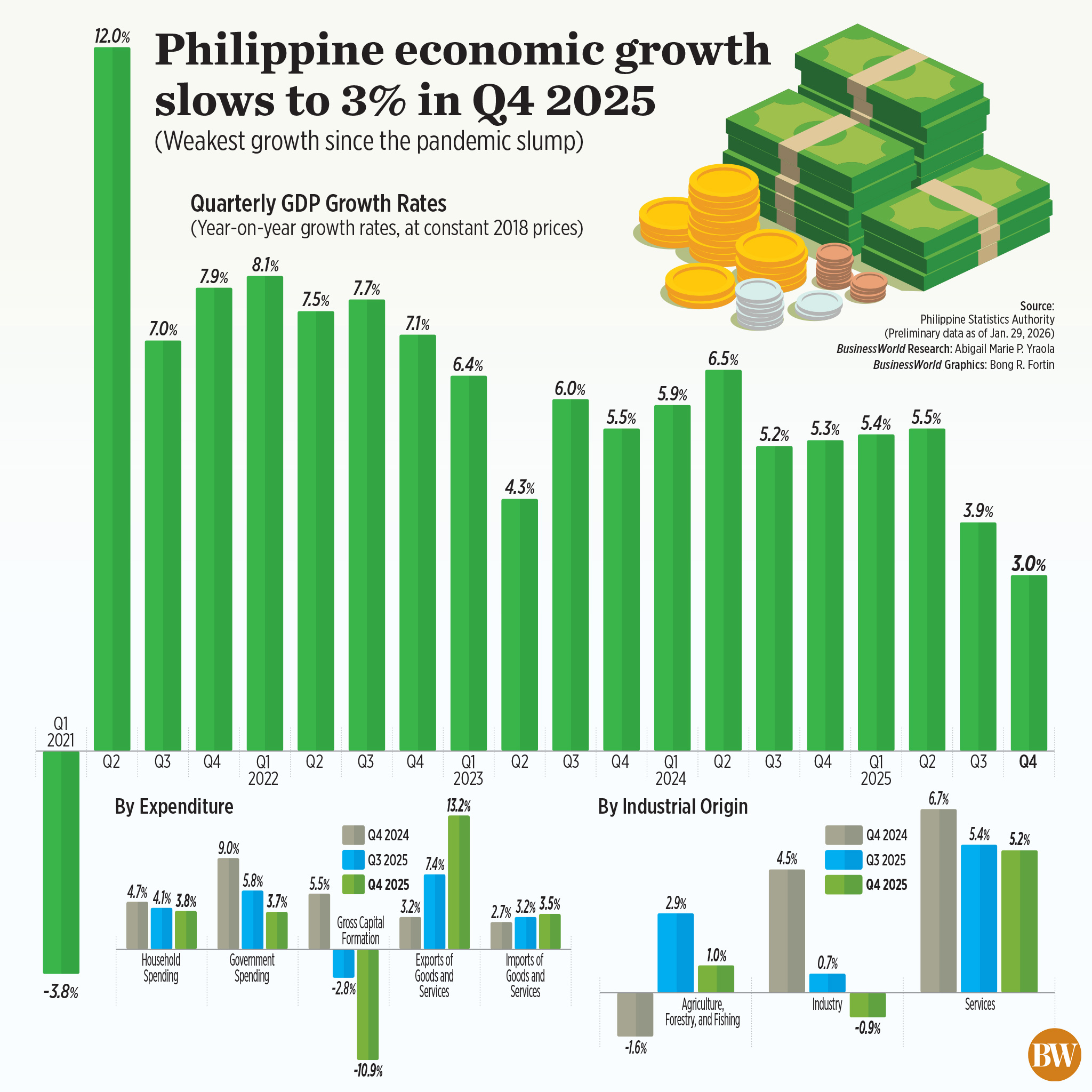
The Philippine Statistics Authority (PSA) reported on Thursday that the fourth-quarter gross domestic product (GDP) expanded by 3%, from 5.3% in the fourth quarter of 2024 and the revised 3.9% print in the third quarter of 2025.
The slowdown came as a surprise as the fourth quarter is typically a strong period for growth, thanks to holiday spending. The latest print stands out as the weakest fourth-quarter performance in five years or since the 8.2% contraction in the fourth quarter of 2020.
Excluding the pandemic period, it was the worst quarterly growth rate in 16 years or since the 1.8% in the fourth quarter of 2009, but matched the 3% in the third quarter of 2011.
On a seasonally adjusted quarter-on-quarter basis, the economy grew by 0.6%.
In 2025, the economy expanded by 4.4%, much weaker than the 5.7% growth in 2024.
This was the weakest pace in five years or when GDP declined by 9.5% in 2020. Excluding the pandemic, it was the slowest growth since the 3.9% expansion in 2011.
The full-year average also fell below the Development Budget Coordination Committee’s (DBCC) 5.5%-6.5% goal.
The latest growth likewise turned out weaker than market expectations, as a BusinessWorld poll of 18 economists last week yielded a median estimate of 4.2% for the October-to-December period and 4.8% for 2025.
Economy Secretary Arsenio M. Balisacan said the slower growth reflected the impact of adverse weather on economic activity and the corruption scandal on consumer and investor sentiment.
“Admittedly, the flood control corruption scandal also weighed on business and consumer confidence. These challenges unfolded alongside lingering global economic uncertainties,” he said during a briefing on Thursday.
Mr. Balisacan, who earlier expected full-year growth to come in at 4.8-5%, said he did not expect such a “sharp” slowdown. However, he said economic managers had expected there would be consequences for the reforms that were put in place in the aftermath of the graft scandal.
“It cannot be business as usual. Because otherwise, we may have growth this year, or last year, growth may be higher, but with corruption all over the place, or in infrastructure. That (growth) would not be expected to last. We would better have a slowdown, correct the problems, and build the trust of our people in the government,” Mr. Balisacan said.
A scandal linking government officials, lawmakers and private contractors to multibillion-peso corruption in flood control projects had dragged government spending and household consumption since the third quarter last year.
WEAK CONSUMPTION In the fourth quarter, household consumption, which accounts for over 70% of the country’s GDP, rose by 3.8%, slowing from 4.7% a year ago and 4.1% in the third quarter. This was the slowest household spending growth since the -4.8% seen in the first quarter of 2021.
For the full-year, consumption growth slowed to 4.6% from 4.9% in 2024.
Meanwhile, government spending grew by 3.7% in the fourth quarter, weakening from 9% in the same period in 2024 and 5.8% in the third quarter. It was also the slowest since 2.6% in the first quarter of 2024.
Of the total, state expenditures in construction declined by 41.9% during the last three months of 2025, as the government increased scrutiny over infrastructure projects.
In 2025, government spending grew by 9.1%, faster than 7.3% in the previous year.
Mr. Balisacan said the government’s catch-up plan could help boost public spending, particularly construction, in the first quarter.
“The release of the approval of the budget for 2026 was delayed a bit,” he added. “And so that could also have a negative effect on spending, particularly for public construction.”
PSA data also showed that the country’s gross capital formation, the investment component of the economy, declined by 10.9% in the fourth quarter, the biggest drop since early 2021. This was a steeper decline than the -2.8% in the third quarter and a reversal from the 5.5% growth in the fourth quarter of 2024.
For 2025, investments fell by 2.1%.
BETTER EXPORTS Meanwhile, exports growth provided some relief for the economy as it climbed by 13.2% in the fourth quarter, from 3.2% a year earlier and 7.4% in the third quarter. For the entire year, exports grew by an annual 8.1%.
Imports, meanwhile, expanded by 3.5% in the October-to-December period, from 2.7% in the previous year and 3.2% in the previous quarter, bringing its full-year growth to 5.1%.
The government forecasts goods exports and services exports to rise by 2% and 5%, respectively, this year.
According to the PSA, the agriculture, forestry, and fishing (AFF) sector posted 1% growth in the fourth quarter, while services expanded by 5.2%. However, the industry sector saw a 0.9% contraction in the fourth quarter.
In 2025, the AFF, services and industry sectors grew by 3.1%, 5.9%, and 1.5%, respectively.
National Statistician Claire Dennis S. Mapa said wholesale and retail trade and repair of motor vehicles and motorcycles were the top contributors to the country’s expansion.
Meanwhile, the Philippines’ gross national income went up by 3.9% in the fourth quarter. By yearend, it rose by 6.1%, easing from 7.7% in 2024.
The country’s net primary income likewise increased by 10.9% in the October-to-December period, bringing the 2025 average to 19.1%. This slowed from 26.6% in the prior year.
DELAYED RECOVERY Meanwhile, Mr. Balisacan said the country’s chances for an early rebound might now be lower.
“(W)e see 2026 as a rally point for us,” he said. “And with all these developments taking place and our chairmanship of the ASEAN (Association of Southeast Asian Nations), it should be able to turn the corners around and get the economy back on its track as early as the… second quarter of this year.”
He noted that the lingering effects of the corruption mess and the delayed approval of the 2026 budget could prevent the economy from recovering in the first quarter of the year.
“We don’t expect that growth will recover to its peak in the first quarter because we expect some still lingering effects of those measures, especially that the budget for this year was released or was approved late,” he said.
On Jan. 5, President Ferdinand R. Marcos, Jr. signed the 2026 General Appropriations Act, allotting a P6.793-trillion budget for the government.
Pantheon Macroeconomics Chief Emerging Asia Economist Miguel Chanco said the economic lags experienced in the fourth quarter may continue to spill over to the country’s near-term growth prospects.
“All this weakness looks set to bleed into the early part of this year, as we’ve yet to see any bottoming-out in government infrastructure spending in the monthly numbers, while surveyed expansion plans in the private sector continue to roll over sharply,” Mr. Chanco said in an e-mailed note.
The outlook for the Philippine economy remains dim, especially if persisting governance issues will be left unresolved, ANZ Research Chief Economist for Southeast Asia and India Sanjay Mathur noted.
“Looking forward, growth is likely to remain weak until governance-related issues are resolved, and public spending begins to improve,” he said in a report. “While support from net exports will likely be sustained over the next few months due to the AI (artificial intelligence)-related technology cycle, its overall impact will be limited.”
Meanwhile, Chinabank Research said the economy’s underperformance in the fourth quarter calls for a more urgent implementation of reforms, adding that the global uncertainties endanger the country’s external position.
“This underscores the need to further weather-proof the economy and quickly rebuild public confidence to support domestic demand, especially since the external front faces persisting headwinds from a highly uncertain and volatile global environment,” it said.
This year, the DBCC is targeting 5%-6% GDP growth.
The main office of the Bangko Sentral ng Pilipinas in Manila. — BW FILE PHOTO
THE BANGKO SENTRAL ng Pilipinas (BSP) may deliver a sixth straight cut in February, despite the US Federal Reserve’s decision to stand pat, amid weaker-than-expected Philippine economic growth in the fourth quarter, analysts said.
“Despite the Fed standing pat, we believe BSP will be looking to domestic developments (such as) low inflation and disappointing GDP (gross domestic product) to make its call,” Metropolitan Bank & Trust Co. (Metrobank) Chief Economist Nicholas Antonio T. Mapa told BusinessWorld in a Viber message.
On Wednesday, the Fed held its benchmark rates steady at the 3.5%-3.75% range, maintaining its total cuts since September 2024 at 175 basis points (bps).
The BSP’s key policy rate stands at an over three-year low of 4.5%, bringing its interest rate differential with the Fed to 75 bps.
The Monetary Board has so far lowered benchmark borrowing costs by a cumulative 200 bps since it began its easing cycle in August 2024.
BSP Governor Eli M. Remolona, Jr. said last week that the Fed’s moves are only one of the many data points they are considering in their monetary policy decision. He added that they are now uncertain about delivering one more cut under the current easing cycle, even with a weak economy and benign inflation.
Philippine economic growth slumped to a five-year low of 3% in the fourth quarter of 2025, bringing the full-year print to 4.4%. This was below the government’s 5.5%-6.5% target for the year, as well as the BSP’s 3.8% forecast for the fourth quarter and 4.6% for the entire year.
This, Mr. Mapa said, raises the odds of deeper easing by the Monetary Board, especially as inflation remains muted.
“The disappointing (fourth-quarter) print bolsters the case for additional easing from BSP while inflation remains subdued,” he said. “(The) window for BSP to provide accommodation remains open for the time being with monetary authorities likely opting to frontload cuts while the inflation objective is still in hand.”
Metrobank sees the BSP delivering a total of 50 bps in cuts this year to bring the key interest rate to 4% by yearend.
On the other hand, John Paolo R. Rivera, a senior research fellow at the Philippine Institute for Development Studies, said the central bank may opt to preserve easing space at its first meeting this year as the peso remains “sensitive.”
“A possible move for the BSP is a pause with a bias to cut later if inflation stays benign and growth remains soft,” he told BusinessWorld via Viber. “It helps keep the Philippine peso and inflation expectations better-anchored, especially with the currency still sensitive, while preserving easing space.”
The peso marked a new all-time low of P59.46 against the dollar on Jan. 15.
On Thursday, the local unit lost 20.5 centavos to close at P58.945 versus the greenback from its P58.74 finish on Wednesday, Bankers Association of the Philippines data showed.
“Matching the Fed’s stand is generally healthier for the peso in the near term, while any further BSP cut should be framed as contingent on inflation staying within target and on clearer evidence that demand is weakening enough to warrant added support,” Mr. Rivera said.
The Monetary Board is set to hold its first policy review this year on Feb. 19. — Katherine K. Chan
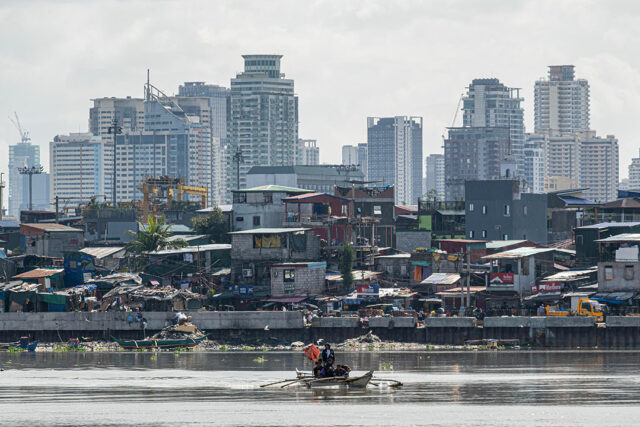
A small boat crosses Manila Bay with the central business district’s skyline in the background. — PHILIPPINE STAR/RYAN BALDEMOR
By Aubrey Rose A. Inosante, Reporter
THE PHILIPPINES remains on track to graduate to upper middle-income country (UMIC) status this year, despite a sharp growth slowdown in 2025, the Department of Economy, Planning, and Development (DEPDev) said.
Economy Secretary Arsenio M. Balisacan said the Philippines can still achieve UMIC status this year despite the weaker-than-expected 4.4% gross domestic product (GDP) growth last year.
“We still have to redo the numbers, but with the 4.4% growth in 2025, we should still be able to reach the average income class status,” he told a briefing on Thursday.
The Philippines is still stuck in the lower middle-income bracket, having failed to advance out of it since 1987, despite posting a higher gross national income (GNI) per capita of $4,470 in 2024.
Under the World Bank’s latest country classification, the Philippines’ GNI per capita was only $26 shy of the World Bank’s adjusted GNI per capita requirement of $4,496-$13,935 for UMIC status.
The Washington-based lender is scheduled to release its updated annual country status thresholds in July.
Last year, Mr. Balisacan said the Philippines needs to sustain 6% growth from 2025 to 2026 to ensure its GNI per capita meets the UMIC threshold.
In 2025, Philippine GDP growth sharply slowed to 4.4%, from 5.7% in 2024. This was the weakest print in five years or since 2020 when GDP contracted by 9.5% amid the pandemic. Excluding the pandemic, it was the slowest growth since the 3.9% expansion in 2011.
Mr. Balisacan said the economy’s potential growth still stands at 6%, which makes the government confident about achieving its long-term goal of building a predominantly middle-class society under AmBisyon Natin 2040.
“Actually, the investments that we are making in human capital, particularly education and health and infrastructure, these can elevate that potential to an even higher one — 6.5% or even 7%,” Mr. Balisacan said.
Analysts said the Philippines achieving UMIC status carries symbolic weight but cautioned that it is a weak measure of real development.
“Graduation to UMIC is important symbolically but its real economic value will depend on whether it comes with deeper structural shifts that raise living standards more broadly,” John Paolo R. Rivera, a senior research fellow at the Philippine Institute for Development Studies, said in a Viber message.
Even modest growth can lift per capita income if supported by stable employment, remittance inflows, and manageable inflation, Mr. Rivera added.
Jose Enrique “Sonny” A. Africa, executive director of IBON Foundation, said UMIC status is a “mere bureaucratic category” used by the World Bank to guide lending and grant-making.
“It’s an extremely poor indicator of real development because, for instance, any UMIC status the Philippines might get will be amid growing poverty, hunger, and volatile poor quality work,” he said in a Viber message.
TEMPERED TARGETS At the same briefing, Mr. Balisacan said the Development Budget Coordination Committee (DBCC) had tweaked the macroeconomic assumptions for foreign exchange rate and export growth, after cutting growth targets.
On external trade assumptions, the DBCC kept the goods export growth at 2% this year, unchanged from the June meeting.
It raised its goods export growth projection to 3% in 2027, from the earlier forecast of 2%.
“For the exports of services, we are assuming 5% for 2026 and the same growth for 2027,” he said.
The peso forecast range was widened to P58-P60 per dollar for 2026-2027, from the earlier projection of P56-P58 per dollar for 2025 until 2028, Mr. Balisacan said.
The peso has repeatedly breached the P59-a-dollar mark several times since November and sank to a record low of P59.46 on Jan. 15.
At its December meeting, the DBCC cut its GDP growth target to 5-6% for this year, from 6-7% previously. It set a 5.5-6.5% growth goal for 2027.
“Now, obviously, the lower growth for next year… will impact revenue collections relative to what we initially expected,” Mr. Balisacan said.
The government is targeting to collect P4.824 trillion this year, about 3.19% less than the P4.983 trillion goal set in the June 2025 meeting.
For 2027, the revenue collection target was cut by 4.55% to P5.122 trillion, while the revenue target for 2028 was also reduced by 5.86% to P5.568 trillion.
Mr. Balisacan said government efforts, particularly in light of the flood control project scandal, were focused not only on expanding expenditures but also on enhancing spending quality.
“(This will make) sure that what we spend will actually end up with better services and in the case of income transfers with the intended target groups and in many cases with low-income households,” he added.
Representations of virtual currency Bitcoin are placed on US dollar banknotes in this illustration taken on May 26, 2020. — REUTERS/DADO RUVIC/ILLUSTRATION
THE BANGKO SENTRAL ng Pilipinas (BSP) is working on regulations to tighten oversight on cryptocurrencies as part of efforts to deter crimes involving dirty money.
BSP General Counsel Roberto L. Figueroa said they plan to issue regulations that would complement the Anti-Money Laundering Act (AMLA).
“It’s been discussed several times how else we can make the law… have more teeth,” he told BusinessWorld on the sidelines of a central bank event on Friday.
“But at the same time, you know, these are new technologies,” he added. “When the AMLA was enacted into law… I mean, nobody was even thinking about cryptocurrency (back then), right? So, definitely, there are ongoing discussions about issuing regulations to cover (them).”
Last month, a former lawmaker linked to the flood control corruption scandal allegedly used cryptocurrency to move billions of pesos from the country to overseas.
Mr. Figueroa noted that authorities are struggling to trace financial crimes involving cryptocurrencies as its user data is treated with confidentiality.
“The problem with crypto is how are you going to… find it,” he said. “It’s like anonymous — you can’t tell who owns it, who sent it and who received it?”
The Anti-Money Laundering Council (AMLC) said last year that it was pushing amendments to the AMLA, including tighter monitoring of virtual asset service providers (VASP), in a move to keep the Philippines off the Financial Action Task Force’s list of countries with dirty money risks.
It also sought to align its regulations with international standards on anti-money laundering and countering the financing of terrorism.
The BSP has several regulations on virtual assets (VA), such as Circular No. 944, or the guidelines for virtual currency exchanges, and Circular No. 1108, which outlines guidelines for VASPs.
Asked if they plan to implement further regulations to address anonymity issues, Mr. Figueroa said: As we learn more about (the) technology that we can use to be able to… penetrate that anonymity, then definitely a regulation can be issued.”
However, the BSP official noted that they have yet to determine when they will roll out the regulation.
Based on the AMLC’s latest National Risk Assessment, VAs and VASPs in the country have medium to high vulnerability to money laundering risks.
“Inherent vulnerability is ‘high’ due to the anonymity and speed of VA transfers, including exposure to DeFi (decentralized finance) platforms, 24/7 availability, peer-to-peer transactions, transfers to/from unhosted wallets, and use of anonymity-enhancing features that enable rapid settlement,” according to the report.
VAs, such as cryptocurrencies, refer to a type of digital unit that can be traded, transferred, or used for payments and investments.
Meanwhile, VASPs are entities that handle the exchange of VAs for fiat currencies, as well as transferring or safeguarding them. — Katherine K. Chan