Home Blog Page 350

Hard times in the wine world

APOLO- PHOTOGRAPHER-UNSPLASH

Aussie wine exports shrank as drinkers sober up; French cognac producers to pay to rip out vines as demand sinks

CANBERRA/PARIS — The value of Australia’s wine exports fell by 8% to A$2.34 billion ($1.6 billion) in 2025 as a global decline in drinking led to lower shipments to key markets including China and Britain, an industry body said on Wednesday.

This as tariffs hit French cognac producers who now plan to pay to tear their vines out to cut output.

Australia is the world’s fifth-largest wine exporter. Like other wine producing regions, it is dealing with oversupply and declining sales.

“Consumers are reducing overall alcohol consumption in line with wellness trends and in order to save money as the cost-of-living increases,” said Peter Bailey, head of market insights at Wine Australia.

“For wine exporters around the world, trade barriers and regional conflicts are also making it more difficult and costly to get product into markets,” he said.

The value of Australian exports to China, its most lucrative market, fell the most sharply, dropping 17% last year to A$755 million ($530 million).

Australian winemakers logged strong sales to China in 2024 when Beijing removed tariffs that had blocked trade, but a rapid shrinking of Chinese wine demand is now taking its toll.

“The Chinese wine market is one-third of the size it was five years ago,” Mr. Bailey said.

FRENCH COGNAC PRODUCERS
Meanwhile, French cognac producers plan to pay to tear their vines out by the roots to cut output in order to address a drop in demand for the high-end liquor due to tariffs.

Cognac was one of the main casualties of the recent trade tensions between the European Union (EU), the United States, and China, which have threatened to jack up tariffs on it.

An anti-dumping probe has also hit brandy sales in China.

France’s main association of cognac wine growers will pay its members €6,000 ($7,145) per hectare of vineyard destroyed, on top of €4,000 already offered by the French agriculture ministry, the UGVC’s head said on Tuesday.

“We need to re-align the volume of production with demand,” UGVC head Anthony Brun told Reuters.

The UGVC estimates the total volume of cognac sold has fallen by more than a third in the past three years, to about 140 million bottles in 2025.

Mr. Brun said it will borrow money over a 10-year period to finance the handouts. He declined to estimate how many hectares will be destroyed.

Recent trade deals between the EU and Mercosur, as well as the EU and India, may open new markets for cognac, but it will take years to build lasting demand, Mr. Brun said, adding India seems to offer significant potential for the industry. — Reuters

US conditions funding to global vaccine group on dropping mercury-based preservative from shots

STOCK PHOTO | Image by Mufid Majnun from Unsplash

LONDON — The Trump administration has told global vaccine group Gavi to phase out shots containing the preservative thimerosal as a condition of providing the group with funding, a US official and a Gavi spokesperson told Reuters.

The request, which Reuters is the first to report, is the latest sign of efforts by the administration of President Donald Trump to influence health policy globally.

Anti-vaccine groups, including one founded by US Health Secretary Robert F. Kennedy Jr., have for decades claimed that thimerosal, a mercury-based preservative used in vaccines, is linked to autism and other neurodevelopmental disorders, despite many studies showing no related safety issues.

In June last year, Mr. Kennedy cut $300 million in annual funding for Gavi, which helps the world’s poorest and lower-income countries buy vaccines to prevent diseases such as measles and diphtheria.

Mr. Kennedy, who has long promoted anti-vaccine views contrary to scientific evidence, says the group ignores safety issues with the immunizations it provides. Gavi says vaccine safety is its utmost concern.

“Until a plan for removal of thimerosal-containing vaccines is developed and the plan initiated, the United States will withhold future new funding,” an official for the US Department of Health and Human Services told Reuters.

The official would not comment on when the request was made, but claimed Gavi has so far refused to develop such a plan. A Gavi spokesperson confirmed the request to remove thimerosal from its portfolio, and said the group remained in contact with the US government on the subject.

“While we very much hope to find a pathway to welcoming the US back as a donor, any decision related to Gavi’s portfolio would require a decision by Gavi’s board and input from preceding governance committees, which will be guided by scientific consensus,” the spokesperson said.

OFTEN USED IN LOW- AND MIDDLE-INCOME COUNTRIES
Thimerosal is mainly used to ensure vaccines in multi-dose vials remain stable. That helps immunization campaigns in low- and middle-income countries because multi-dose vials are cheaper and simpler to distribute, Gavi and the World Health Organization say.

The preservative has largely been phased out in high-income countries, where vaccines usually come in a single-use format, although its use is not prohibited. Under Mr. Kennedy, the US moved last summer to stop use of influenza vaccines containing thimerosal, representing around 5% of flu shots given in the country, despite US health agencies having declared them safe.

The US official said the request of Gavi aims to bring its policies in low- and middle-income countries in line with the US, Canada, and most European nations.

The safety of thimerosal has been studied for decades, after concerns were raised in the 1990s about exposure to mercury in vaccines, according to the WHO.

No compelling scientific evidence has been found to suggest that there is a risk, particularly when compared to the dangers of keeping children unprotected against deadly diseases, the WHO says.

The US request applies both to the remaining $300 million that the Biden administration had pledged to Gavi with Congressional approval, but which is still outstanding, and to any future funding, the official said.

The US previously contributed around 13% of Gavi’s funding, and the organization has embarked on a series of cost-cutting measures to try to address the shortfall, which has been exacerbated by cuts from other high-income nations.

The Trump administration has cut billions of dollars in health funding internationally and withdrawn from the WHO.

The US government has said it is still committed to global health and is pursuing bilateral agreements with countries under Mr. Trump’s ‘America First’ agenda.

Last week, the US health department said a hepatitis B vaccine study in Guinea Bissau would help inform global policy.

The study, funded by the US Centers for Disease Control and Prevention, is now undergoing further ethical review after international criticism.

The US CDC last month withdrew its longstanding recommendation that all newborns should get the hepatitis B vaccine, drawing a swift rebuke from vaccine experts. — Reuters

India reports two Nipah virus infections as Thailand, Malaysia step up screening

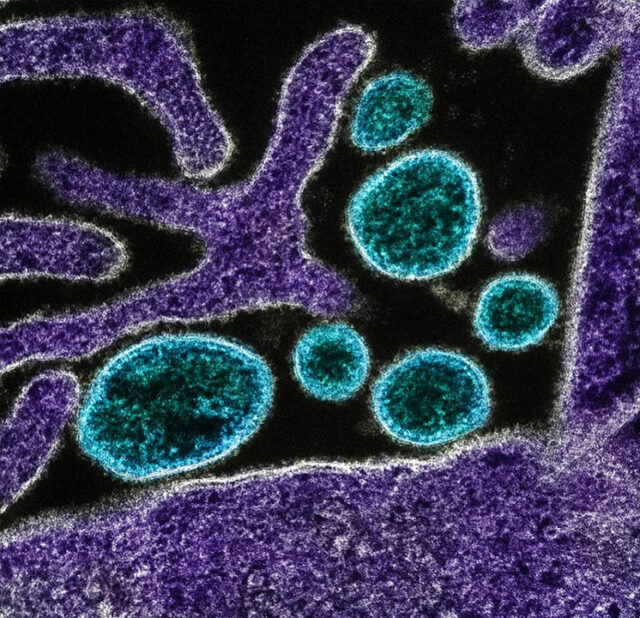
Colorized transmission electron micrograph of mature extracellular Nipah virus particles (blue) near the periphery of an infected VERO cell (purple). — NATIONAL INSTITUTE OF ALLERGY AND INFECTIOUS DISEASES (NIAID)

INDIA is monitoring Nipah virus infections, with two reported from its eastern state of West Bengal since December, the health ministry said, as some Southeast Asia nations step up scrutiny of air travelers.

Tuesday’s confirmation came a day after Thailand said it had tightened airport screening measures, with neighboring Malaysia following suit.

“Speculative and incorrect figures regarding Nipah virus cases are being circulated,” the Indian ministry warned in a statement that put the tally of infections at two.

Authorities have identified and traced 196 contacts linked to both cases, it added, with none showing symptoms and all testing negative for the virus.

Thailand has assigned designated parking bays for aircraft arriving from areas with Nipah outbreaks, its health ministry said, while passengers must make health declarations before clearing immigration.

Malaysia’s health ministry said it was beefing up preparedness via health screening at international ports of entry, especially for arrivals from countries at risk.

“The ministry remains vigilant against the risk of cross-border transmission following sporadic infections in several other countries,” it added in a statement on Wednesday.

The World Health Organization (WHO), which estimates Nipah’s fatality rate at 40% to 75%, ranks it as a priority pathogen for its potential to trigger an epidemic. There is no vaccine to prevent infection and no treatment to cure it. — Reuters

Crypto money-laundering hit $82 billion in 2025, researchers say

Representations of cryptocurrency Bitcoin are seen in this illustration picture taken in Paris, France. — REUTERS/BENOIT TESSIER/ILLUSTRATION/FILE PHOTO

MONEY LAUNDERERS received at least $82 billion in cryptocurrencies last year, up sharply from $10 billion in 2020, driven in part by fast growth among Chinese-speaking groups, blockchain researchers said on Tuesday.

The fastest-growing category has been Chinese-language money-laundering networks, which emerged during the pandemic and processed almost $40 million worth of crypto per day in 2025, US-based blockchain research company Chainalysis said in a report.

Blockchains create a record of the wallet addresses involved in cryptocurrency transactions, but identifying who is behind the wallets is difficult.

However, Chainalysis said it had identified nearly 1,800 active wallets used by Chinese-language money-laundering networks to process $16.1 billion worth of crypto in 2025, and that its numbers were likely an underestimate.

A spokesperson for Chainalysis declined to detail the company’s methodology but directed Reuters to its website, which said it connects real-world activity to blockchain records using machine learning and forensic experts.

Crypto trading is banned in China and digital tokens are not recognised as legal tender or assets there. In 2024, China sued 3,032 people involved in crypto-related money laundering, the country’s top procurator has said.

Regulators and authorities worldwide have warned for years about crypto’s role in crime, as it is generally subject to less specific regulation than mainstream finance. Still, experts say it is just one of many ways criminals move funds.

Crypto money-laundering networks’ techniques to avoid detection include using “guarantee” platforms, which provide escrow services and allow money launderers to advertise their services, Chainalysis said.

“Chinese-language guarantee platforms, money movement services and associated financial crime networks reveal a complex and resilient ecosystem that continues to adapt despite enforcement efforts,” Chainalysis said.

“As with other genres of illicit on-chain activity, actions against guarantee services can be disruptive, but the core networks persist and migrate to alternative channels when challenged.” — Reuters

Thai parties tap nationalist mood as Cambodia clashes roil rural voters

A girl eats a meal at Chong Kal refugee camp on Dec. 11, 2025 after evacuation amid deadly clashes between Thailand and Cambodia along a disputed border area in Chong Kal, Oddar Meanchey Province, Cambodia. — REUTERS

KANTHARALAK, Thailand — Thai lawmaker Phumin Leethiraprasert has switched party allegiances in his re-election campaign for a February 8 poll, aiming to show voters he can make tough decisions to help border communities scarred by clashes with neighboring Cambodia.

“I am not running for Pheu Thai this time around because of the border conflict,” said Mr. Phumin, 62, referring to the party of billionaire former premier Thaksin Shinawatra that dominated swathes of Thailand’s mainly agrarian northeast for decades.

Nationalist sentiment has surged across Southeast Asia’s second largest economy after a perception that the Pheu Thai-led administration’s handling of a border crisis led to the worst fighting with Cambodia in decades, killing 149 people.

“Bombs hit our homes, and our people died,” the former doctor, who has forged new ties with one of the political parties racing to harness the nationalist fervor in the final stretch of the campaign, told a small crowd at a rally.

Voters angered by the damage in his district of Kantharalak had urged Mr. Phumin to defect, he said last week.

So he is now running as a candidate of the Kla Tham Party, an ally of the ruling Bhumjaithai, which took power after the border row led to the removal of Thaksin’s daughter Paetongtarn Shinawatra, who was then prime minister.

‘MAKE THEM AFRAID’
Anger and anxiety linger in the area after 19 Thais were killed and hundreds of thousands evacuated from border communities, such as Kantharalak, in two bouts of fighting in July and December.

“We have to make them afraid,” said Uthai, a 58-year-old in the village of Sam Meng, referring to Cambodia. “We have been too soft.”

Thailand and Cambodia agreed to a second ceasefire in late December, ending weeks of clashes following the collapse of a July truce brokered with the help of US President Donald Trump.

Many voters are backing the Thai army’s plans for a border wall along parts of the 817-kilometer (508-mile) land frontier, Mr. Phumin said, though construction has yet to begin.

“They don’t want to see border crossings reopened or trade with Cambodia resume.”

PARTIES SEEK TO RIDE WAVE
In the midst of the intense border fighting, Prime Minister Anutin Charnvirakul dissolved parliament in December after fewer than 100 days in power, setting the stage for snap polls, designed to gain from the wave of intense nationalism unleashed.

At rallies, Mr. Anutin and his Bhumjaithai expressed strong support for the military and the construction of the border wall, a policy echoed by other conservative, pro-army groups.

That has forced key rivals, the progressive People’s Party, which is leading in the polls, and Pheu Thai, to redraw campaign planks to avoid appearing unpatriotic, said political scientist Thitinan Pongsudhirak at Bangkok’s Chulalongkorn University.

“They are being portrayed as not nationalist enough, not patriotic enough, and not anti-Cambodian enough,” he said, describing the efforts of pro-military parties to undercut the competition.

The People’s Party, long associated with calls for military reforms, has softened its anti-establishment stance, underlining plans to exert diplomatic pressure on Cambodia to ensure stable ties with Thailand.

Pheu Thai, facing widespread criticism over Mr. Thaksin’s once- close ties with former Cambodian premier Hun Sen, is redoubling efforts to show it is committed to defend Thailand’s sovereignty.

“We can live alongside them,” said Samrong Narasa, whose home in the village of Sam Meng, about 10 km (6 miles) from the border, was destroyed by Cambodian shelling in December.

“But we don’t want to be friends with them,” added the 52-year-old, who wants the new government to do more to protect people and their livelihoods. — Reuters

Amazon bungles Wednesday layoff plan with misfired internal email

REUTERS

SAN FRANCISCO — Amazon  on Tuesday appeared to have prematurely alerted Amazon Web Services cloud-computing employees to layoffs planned for Wednesday morning by sending a commiseration email and team-wide meeting invitation hours early.

Reuters reported on Friday that Amazon intended to lay off thousands of corporate employees starting this week. But the company has not yet informed impacted employees, nor has it confirmed the layoff plan.

The email sent on Tuesday signed by Colleen Aubrey, senior vice president of applied AI solutions at AWS, wrongly said that impacted employees in the US, Canada, and Costa Rica had already been informed they lost their jobs.

In Slack messages viewed by Reuters, AWS employees who received the email said the Wednesday meeting was almost immediately canceled. Amazon referred in the email to the layoffs as “Project Dawn.”

“Changes like this are hard on everyone,” Ms. Aubrey wrote in the email, reviewed by Reuters. “These decisions are difficult and are made thoughtfully as we position our organization and AWS for future success.”

Amazon did not immediately respond to a request for comment.

Jobs in the company’s units covering AWS, retail, Prime Video, and human resources were slated to be affected, people familiar with the matter told Reuters, though the full scope of this week’s cuts was unclear.

Amazon laid off about 14,000 people in October as part of a broader plan to reduce corporate staff by around 30,000, people familiar with the matter said at the time.

On Tuesday, Amazon cut jobs in its Fresh grocery and Go market divisions as it plans to close existing brick-and-mortar stores and convert some of them to Whole Foods stores. It did not disclose the number of affected employees.

The size of the cuts to be announced on Wednesday remained unclear. The full 30,000 jobs flagged in October would represent a small portion of Amazon’s 1.58 million employees, but nearly 10% of the firm’s corporate workforce.

Amazon, in an October blog post, tied those job cuts to the increased use of artificial intelligence. That post from the head of human resources, Beth Galetti, indicated more job cuts were likely in the future.

The errant email Tuesday referred to a blog post by Ms. Galetti, which has not yet appeared on Amazon’s website. — Reuters

Impactful investing with LANDBANK ASENSO Bonds

Invest with purpose. Grow with impact. LANDBANK ASENSO Bonds are peso-denominated ASEAN Sustainability Bonds that let investors earn fixed returns while supporting projects that drive agriculture, sustainability, environmental protection, and inclusive socioeconomic development across the Philippines.

With a minimum investment of ₱10,000 and a coupon investment rate or as much as 5.1714% (1.5 years) and 5.5615% (3 years), ASENSO Bonds offer Filipinos a simple way to invest in the country’s sustainable future. The bonds will be available from Jan. 28 to Feb. 6 (or until an earlier closing date based on market demand) via the LANDBANK Mobile Banking app, over-the-counter at LANDBANK branches nationwide, or through authorized Selling Agents.

#PoweredByLANDBANK
#SustainableFinance
#ASENSOBonds


Spotlight is BusinessWorld’s sponsored section that allows advertisers to amplify their brand and connect with BusinessWorld’s audience by publishing their stories on the BusinessWorld Web site. For more information, send an email to online@bworldonline.com.

Join us on Viber at https://bit.ly/3hv6bLA to get more updates and subscribe to BusinessWorld’s titles and get exclusive content through www.bworld-x.com.

[B-SIDE Podcast] How Filipino Generations Define Success in the Workplace

Follow us on Spotify BusinessWorld B-Side

For the first time, employees from as many as five generations are working side by side—each bringing distinct expectations, work habits, and communication styles. It’s a dynamic that offers both opportunity and friction.

In this B-Side episode, BusinessWorld talks with Acumen Strategy Consultants—VP for Organization Transformation, Cherry Tantoco-Daniels, and Consulting Project Manager & Consulting Associate, Trizia “Trish” Magalino about how companies can manage a multigenerational workforce to boost productivity and group.

Interview by Beatriz Cruz
Audio editing by Jayson John Marinas

Follow us on Spotify BusinessWorld B-Side

Phishing threat accelerates in PH as risky URLs surge nearly fourfold in 2025 — Whoscall PH Scam Report

Phishing has overtaken traditional scam channels as the fastest-growing digital threat in the Philippines, with risky URLs climbing sharply throughout 2025 and driving renewed urgency in consumer protection efforts.

Data from the Whoscall 2025 Philippines Scam Report by Gogolook show that risky URLs rose from 13,602 in the first quarter to 49,431 by the fourth quarter — a near fourfold increase within the year.

The sustained quarter-on-quarter growth points to phishing becoming the primary scam vector heading into 2026, affecting SMS, messaging apps, email, and other online channels.

Leading the local response, Mel Migriño, who serves as General Manager and Country Head of Gogolook Philippines, said this trend reflects how scam tactics are rapidly evolving.

“Scammers are shifting from calls and texts toward malicious links and fake social media sites because URLs are easier to spread, harder to verify, and far more scalable,” Ms. Migriño said.

“This can be a source for actionable intelligence. When scam data is responsibly shared, it allows us to spot patterns, trace digital footprints, and respond faster to emerging threats,” Cybercrime Investigation and Coordinating Center (CICC) Executive Director Renato “Aboy” Paraiso said.

“We thank Gogolook with the support of Scam Watch Pilipinas for turning public reports into valuable insights and for strengthening partnerships that help protect more Filipinos,” Mr. Paraiso added.

Rapid shift in scam behavior

While scam calls and SMS show mixed trajectories, the rise in link-based attacks is unmistakable. Scam calls fell by 21.84% year-on-year in some segments, and SMS scam volumes also declined in parts of 2025 due to improved filtering and enforcement, according to the report.

However, link-based phishing — particularly via URLs embedded in messages and social media — surged, underscoring the growing sophistication of scammers.

Cross-sector push for awareness

Ms. Migriño highlighted that addressing this phishing surge requires coordinated action across government, industry, and civil society.

“Technology alone can’t solve this — we need to empower Filipinos with knowledge and tools to recognize and avoid scams before they take the bait,” she said.

Joint campaigns, community training, and digital campaigns translate scam data into practical guidance while reinforcing official reporting channels and support mechanisms.

What consumers can do now

Ms. Migriño urged consumers to take immediate, practical steps to protect themselves. She recommended downloading the Whoscall app, which helps users screen incoming communications and provides tools to check URLs for safety before clicking.

The app’s features also include identifying dangerous or unwanted calls by flagging numbers associated with known scams and fraud — bringing extra visibility to suspicious communications.

“Before you click a link or answer a call from an unknown number, pause and check,” Ms. Migriño said. “These tools give consumers an extra layer of protection, especially now that phishing has become more pervasive.”

Business and consumer risk

The rapid growth of phishing poses heightened risks not only for individual consumers but also for banks, e-wallet providers, e-commerce firms, and enterprises whose brands are spoofed. Once a malicious link is clicked, financial losses and reputational damage can escalate quickly.

Community reporting platforms are already reflecting this trend. As of the end of 2025, Scam Vault PH — a community reporting initiative of Gogolook, Scam Watch Pilipinas and CICC— logged hundreds of real-world scam reports, including a growing share linked to malicious URLs and phishing attempts.

Outlook for 2026

With phishing on an upward trajectory, Ms. Migriño said 2026 will require faster takedowns, stronger URL intelligence sharing, and broader consumer participation in reporting.

“Phishing is now the frontline,” she said. “If users, platforms, and institutions move together, we can slow it down. If not, it will only grow more aggressive.”

The data suggest that while progress has been made against traditional scam channels, phishing has become the country’s most urgent digital-fraud challenge — one that businesses and consumers alike can no longer afford to ignore.


Spotlight is BusinessWorld’s sponsored section that allows advertisers to amplify their brand and connect with BusinessWorld’s audience by publishing their stories on the BusinessWorld Web site. For more information, send an email to online@bworldonline.com.

Join us on Viber at https://bit.ly/3hv6bLA to get more updates and subscribe to BusinessWorld’s titles and get exclusive content through www.bworld-x.com.

A fresh start with bathroom revamp essentials

And just like that — it’s the second month of the brand new year. But the act of gift-giving does is a yearlong passion for many especially with so many festivities. A new beginning is also an opportunity to treat yourself. And treating yourself doesn’t have to be momentary; it can be a long-term investment — something that brings comfort, value and peace into your everyday life.

Keep in mind spaces like The Bathroom. As a place you visit early each morning and the last spot you visit at night, it’s the perfect space to embrace a fresh start — quite literally, with a bathroom shower that sets the tone for the year ahead.

Designing a bathroom that feels new begins with the surfaces that frame the experience. Walls and Floors can influence the overall mood of the space. Clean and glossy finishes such as the white Basel Chex Arkos Wall Tile brightens up the room, allowing it to feel breathable. Grounding the area is the Saigres Porcelain Floor Tile, a matte-finished tile that’s available in four colors (gris, white, anthracite, and graphite) and whose subdued texture gives personality and a modern look. For those who wish to add depth without visual noise, the Emigres Alba Decor Wall Tile works as a thoughtful accent — with its matte-relief texture, it brings character while still being gentle on the eyes. Together, these elements create a space that feels refreshed yet calm, even within limited square footage.

Attention naturally turns to the fixtures that define everyday comfort. Thoughtfully chosen sanitaryware brings quiet efficiency into the routine. The Pozzi Clove Watercloset with tank fittings and seat cover offers dependable functionality wrapped in a clean, modern form. Paired with it, the Pozzi Coldline Lavatory Faucet and the Sefa Exposed Shower Set, both visually pleasing with its classic design and glossy finish that feels sleek. Completing the setup is the Birke Leeds Recess Wall Shower and Bath Mixer, designed to blend shower and bath functions into one unit featuring a clean, minimalistic look that encourages a more pleasing bathing experience.

Tranquility is sustained through order, and storage plays a crucial role in maintaining that balance. The Pozzi Bathroom Cabinet keeps essentials tucked away, allowing space to remain uncluttered. Enhancing daily hygiene is the Sefa Hand Bidet Set, with its brass material and satin finish, it offers clean aesthetics beyond function. For those ready to fully embrace renewal this year, the Pozzi Cuboid Whirlpool Massage Tub transforms the bathroom into a personal haven where relaxation, restoration, and quiet moments take priority.
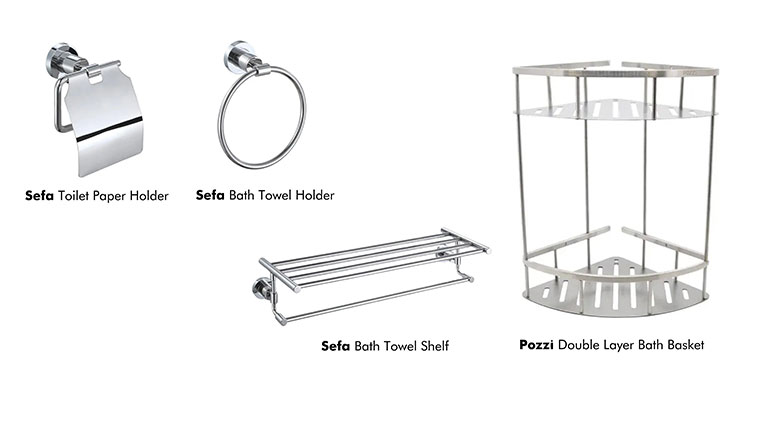
The space is completed through subtle yet intentional details. Accessories such as the Sefa Toilet Paper Holder, Sefa Bath Towel Holder, and Sefa Bath Towel Shelf contribute to functionality while maintaining visual harmony. The Pozzi Double Layer Bath Basket offers practical storage, ensuring everyday items remain accessible without disrupting the room’s clean lines. These complementary pieces work together quietly, reinforcing the sense of balance and ease within the space.

Renewal goes beyond resolutions — it’s about creating spaces that support how we live, rest, and recharge. Just as the holidays reminded us of the joy of gift-giving, the new year invites us to invest in ourselves and our homes.

At Wilcon Depot, bathroom revamp is more than just a design upgrade, it’s a fresh start — one that greets you every morning and welcomes you home every night. With modern, innovative, and carefully chosen essentials, your bathroom can reflect the new beginnings you want to embrace this year!

For more information about Wilcon, visit www.wilcon.com.ph or follow their social media accounts on Facebook, Instagram, and TikTok, or subscribe and connect with them on Viber Community, LinkedIn, and YouTube. Or you may contact the Wilcon Depot Hotline at 88-WILCON (88-945266) for inquiries.


Spotlight is BusinessWorld’s sponsored section that allows advertisers to amplify their brand and connect with BusinessWorld’s audience by publishing their stories on the BusinessWorld Web site. For more information, send an email to online@bworldonline.com.

Join us on Viber at https://bit.ly/3hv6bLA to get more updates and subscribe to BusinessWorld’s titles and get exclusive content through www.bworld-x.com.

Philippines revises Q3 GDP down to 3.9% from 4.0%

People flock to Divisoria ahead of the holiday season, Dec. 21, 2023. — PHILIPPINE STAR/WALTER BOLLOZOS

MANILA – The Philippines statistics agency has revised third quarter economic growth downwards to 3.9% from 4.0%, reflecting changes in the contributions made by sectors like real estate, electricity and food service activities, it said Wednesday.

Official fourth quarter gross domestic product (GDP) and full0tear numbers will be released on Thursday. — Reuters

Manila Water secures up to P27-B BDO loan facility for Wawa project

THE UPPER WAWA DAM — PRIMEINFRA.PH

Razon-led Manila Water Co., Inc. has secured a loan facility of up to P27 billion from BDO Unibank, Inc. to partially finance its acquisition of the Wawa bulk water supply project.

In a regulatory filing on Wednesday, Manila Water said the 15-year term loan facility will be used to fund the purchase of a 92.97% stake in WawaJVCo, Inc., the project’s operator.

Last year, Manila Water acquired the Wawa Bulk Water Supply Project from its parent firm Prime Infrastructure Capital, Inc. (Prime Infra) for P37.8 billion, giving the listed water concessionaire full ownership of the project.

WawaJVCo, a joint venture between Prime Infra and San Lorenzo Ruiz Builders & Developers Group, was formed to develop, operate, and maintain the Wawa Bulk Water Supply Project in Rizal province.

The project is a major raw water source infrastructure facility intended to help augment Metro Manila’s water supply, which remains largely dependent on Angat Dam. — Sheldeen Joy Talavera