Home Blog Page 35

IMF sees Philippine recovery by early 2027 if oil shocks are short-lived
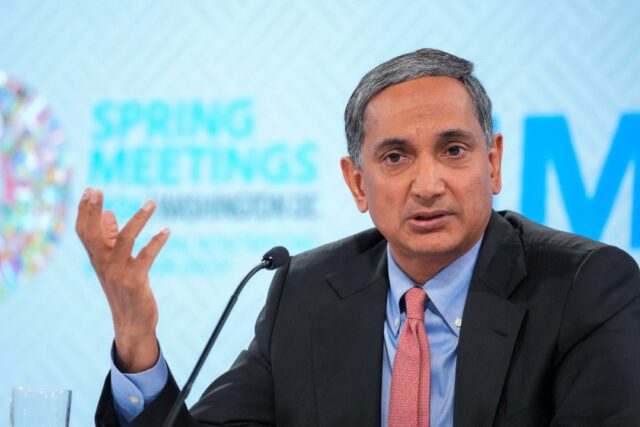
Krishna Srinivasan attends the 2026 annual IMF/World Bank Spring Meetings in Washington, D.C., U.S., April 16, 2026. REUTERS/KEN CADENO

By Katherine K.Chan, Reporter

WASHINGTON, D.C. — The Philippines could regain its economic momentum later this year or by early 2027 if the energy shocks prove temporary and the local investment climate improves, the International Monetary Fund (IMF) said.

In an exclusive interview with BusinessWorld, Krishna Srinivasan, director for Asia-Pacific Department at the IMF, said easing external pressures from the Middle East conflict and recovering domestic demand, particularly investments, could bring the country’s growth to 5.8% in 2027.

“So, the assumption there would be that if the shock is temporary, then things normalize and the Philippines goes back to a pickup in domestic demand and external demand,” he said on the sidelines of the IMF and World Bank’s Spring Meetings last week.

“If the shock dissipates, you could see the momentum starting later this year and beginning of next year,” he added.

The multilateral lender’s Philippine growth outlook for 2027 is significantly faster than its downgraded 4.1% estimate for this year and the 4.4% output recorded last year.

Still, Mr. Srinivasan noted that the Philippines may be worse off if the conflict intensifies, or in which energy price increases are higher and more persistent as well as if energy infrastructure takes more hits.

“I think the risk, all the numbers I’m quoting are from the reference scenario, which assumes that the shock is temporary. It’s a transient shock. It doesn’t last for that long. It dissipates very quickly,” he said.

“Now, if that doesn’t happen, right, then we have two scenarios in the WEO (World Economic Outlook) where we talked about the fact that growth could come down by one to two percentage points in Asia. And that, if you do the numbers of (the) Philippines, I think it would be much more significant,” he added.

For this year, lingering governance woes from the flood control corruption scandal in late 2025 and potential supply shocks from impending natural disasters are also clouding the growth outlook for the Philippines.

A widescale controversy linking Public Works officials, lawmakers and private contractors to corruption behind the government’s flood control projects stalled investments, public spending, and household consumption. This dragged the economy last year to its weakest growth since the pandemic.

Meanwhile, Mr. Srinivasan said a quick resolution to the war would also put the Association of Southeast Asian Nations (ASEAN) in a good position.

Efforts to boost domestic demand and a pickup in investments once uncertainties over the Middle East war fade could push the region’s gross domestic product (GDP) growth up next year, he added.

In its latest WEO report, the IMF said it sees ASEAN-5, comprised of Indonesia, Malaysia, the Philippines, Singapore and Thailand, expanding by 4.1% this year before improving to 4.4% next year.

“For ASEAN, this is a highly integrated region,” Mr. Srinivasan said. “So, if the external shocks subside, then you will see a fillip from external demand. And also in many regions where they are trying to boost domestic demand, that will start kicking in, whether it’s consumption or investment.”

“If the uncertainty in the world dissipates, you would expect investment to pick up, both to service domestic demand and to service external demand,” he added.

FURTHER INTEGRATION
The Philippines took the helm of ASEAN this year, a position Mr. Srinivasan said gives the country an opportunity to advance regional integration as it shares similar economic woes with its neighbors.

He noted that better integration would help cushion the region against external shocks.

“If ASEAN integrates more, it’s that much more of a buffer against external shocks. So, you know, you could have the demand coming from just within Asia that provides a fillip for investment and consumption,” he said.

Mr. Srinivasan said ASEAN could use this time to strengthen intra-regional trade, financial integration, and digitalization.

“ASEAN can talk about the fact that at a time when the region has been subject to… trade shocks (and) trade tensions, trade within the region can be a good buffer,” he said. “So, the Philippine (chairmanship) of the ASEAN could make that point even more vigorously, (and) to facilitate greater financial integration, greater digitalization. All that could help promote greater integration and greater trade within the region.”

The 11-member regional bloc should also enhance its domestic revenue mobilization, which the IMF’s APAC chief noted remains low in terms of its share to GDP, to build resilience against external shocks.

“If you look at countries in the ASEAN, their intake of revenues as a share of GDP is on the lower side, right? And so that is also an area where ASEAN as a group can do better, right, to make themselves more resilient to shocks,” he said.

The Philippines may also push for better use of the region’s services sector, he added.

Meanwhile, Mr. Srinivasan noted that ASEAN+3’s move to reinforce its regional crisis financing initiative comes timely amid the growing need for stronger trade and financial integration.

He said improving regional integration will also allow the Chiang Mai Initiative Multilateralization (CMIM) to gain more support than in the past.

“Only 20% of (ASEAN’s) trade is accounted for intra-regional trade,” Mr. Srinivasan said. “So, there is an impetus towards strengthening both trade integration and financial integration, right? And part of that is to see what kind of support you can provide to countries when they are subject to shocks.”

“And that’s where the CMIM is an important thing. It complements other aspects of the global safety net,” he added.

Philippine central bank Governor Eli M. Remolona, Jr. earlier said ASEAN leaders are expanding and strengthening the CMIM a multilateral currency swap arrangement within the region, to serve as their safety net amid the crisis.

The CMIM was established by the ASEAN member countries with China, Japan and South Korea following the 1997 Asian Financial Crisis to address crisis-driven liquidity concerns in the region.

NG debt service bill surges in February

By Justine Irish D. Tabile, Senior Reporter

THE NATIONAL Government’s (NG) debt service bill surged more than sixfold in February, mainly due to a massive increase in domestic amortization, data from the Bureau of the Treasury (BTr) showed.

Debt payments jumped by 725.7% to P430.64 billion in February from the P52.15 billion recorded a year earlier.

Month on month, debt service went up by 212.8% from P137.67 billion in January.

Debt service refers to payments made by the NG on its domestic and foreign debt.

In February, the government’s repayment of its loan principal or amortization accounted for the bulk or 88.6% of total debt service, while the rest went to interest payments.

Principal payments sharply increased by 10,191.5% to P381.71 billion in February from P3.71 billion a year ago.

This was mainly due to the surge in amortization on domestic debt to P378.51 billion in February from just P121 million in the same month in 2025.

“Domestic amortization reflects actual principal repayments to creditors, including those serviced by the BSF (Bond Sinking Fund),” the Treasury said.

External principal payments, on the other hand, declined by 10.8% to P3.2 billion in February from P3.59 billion in the same month last year.

Meanwhile, interest payments inched up by 1% to P48.93 billion in February from P48.45 billion in the same month a year earlier.

Domestic interest payments fell by 11.9% to P37.08 billion in February from P42.07 billion a year ago. Broken down, P19.78 billion went to interest payments for fixed-rate Treasury bonds, P11.95 billion for retail Treasury bonds, and P4.63 billion for Treasury bills.

Interest payments on external debt jumped by 85.8% to P11.85 billion in February from P6.38 billion a year ago.

For the first two months of 2025, the government’s debt service surged by over three times or 258.2% to P568.31 billion from P158.66 billion in the same period last year.

Amortization payments for the January-to-February period jumped by 6,669.8% to P391.57 billion from P5.78 billion a year ago.

Principal payments accounted for 68.9% of the total debt payments in the first two months of 2026.

Principal payments on domestic debt went up by 88,166.4% to P386.61 billion from P438 million, while those for external debt slipped by 7.3% to P4.96 billion from P5.34 billion.

On the other hand, interest payments rose by 15.6% to P176.75 billion as of end-February from P152.88 billion in the same period a year ago.

Interest payments on domestic debt jumped by 15.2% to P131.68 billion from P114.35 billion, while external debt payments went up by 17% to P45.06 billion from P38.53 billion.

“(The increase is) largely due to lump-sum and timing-related payments, particularly large maturities or scheduled principal repayments falling within the month,” Philippine Institute for Development Studies Senior Research Fellow John Paolo R. Rivera said in a Viber message.

“Debt service figures tend to be volatile and should be interpreted in the context of the overall annual financing program,” he added.

In the Budget of Expenditures and Sources of Financing 2026, the government has set a P2-trillion debt service program for the year, of which P1.05 trillion is for principal payments and P950 billion is for interest payments.

Michael L. Ricafort, chief economist at Rizal Commercial Banking Corp., said that the surge is largely due to the P232-billion 7-year Treasury bond that matured on Feb. 14.

“Furthermore, the higher US dollar-peso exchange rate led to higher debt servicing in pesos of US dollars and other foreign currency-denominated debts, both principal and interest payments,” he said in a Viber message.

Mr. Ricafort said wider budget deficits, which are partly due to higher prices that have inflated government expenditures in recent years, also contributed to increased debt servicing costs over time.

The National Government’s budget deficit inched down by 0.14% to P171.2 billion in February from P171.4 billion in the same month a year ago.

Inflation rose 2.4% in February, the quickest pace since 2.9% in January 2025.

For the coming months, Mr. Ricafort said that the NG debt service bill could go up amid the maturity of a P282-billion 5-year Treasury bond by April 8.

“Higher US dollar-peso exchange rate, higher prices that could bloat the budget deficit, and higher interest rates since the war in the Middle East started on Feb. 28 could lead to higher debt servicing costs, both principal and interest payments, going forward,” he added.

Mr. Rivera said debt payments are expected to remain “elevated but manageable.”

“While higher global interest rates may keep debt servicing costs up, the key is that these are planned obligations, and the government is likely to continue managing them through a mix of domestic and external borrowing and prudent debt strategy,” he added.

Philippines, Canada to finalize text for FTA in July

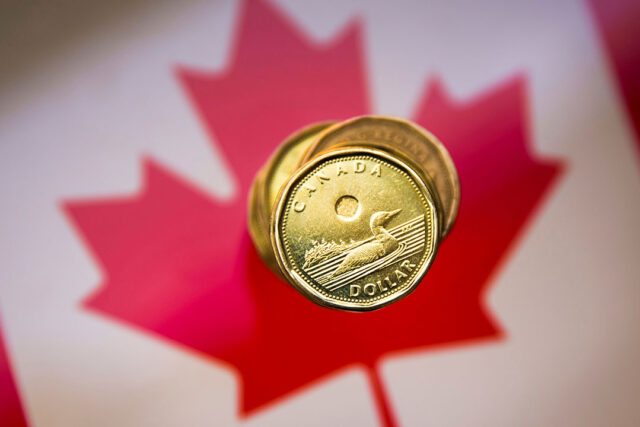
A Canadian dollar coin is pictured in this illustration picture taken in Toronto. — REUTERS FILE PHOTO

By Beatriz Marie D. Cruz, Senior Reporter

THE DEPARTMENT of Trade and Industry (DTI) is looking to finalize the text for the Philippines’ free trade agreement (FTA) with Canada by its third round of negotiations in July.

Trade Undersecretary Allan B. Gepty told BusinessWorld via Viber that the recently concluded second round of FTA talks was “very productive,” and “[has] achieved substantial progress in almost all the text-based negotiations.”

He said the Philippines and Canada are on track to finish FTA talks within the year.

“We have two more rounds, and we hope to stabilize the text by the third round in July. In the meantime, we will continue with intersessional work as well as consultations,” Mr. Gepty said.

The July round of FTA talks will be held in Ottawa, he noted.

An FTA with Canada, which is set to be the Philippines’ first trade deal in North America, is anchored on the two countries’ aim to diversify their respective export markets.   

“For Canada, it broadened its trade partnerships, particularly in the Indo-Pacific region, especially that we are also negotiating the ASEAN (Association of Southeast Asian Nations)-Canada FTA,” Mr. Gepty said.

The DTI earlier said that the Philippines is expected to finish FTA negotiations with Canada ahead of the ASEAN-Canada Free Trade Agreement (ACAFTA) this year.

The ACAFTA is one of the priority economic deliverables of the Philippines as chairman of the ASEAN this year.

A trade deal between the Philippines and Canada comes amid global trade uncertainties that have prompted countries to expand market access and reduce trade barriers.

For the Philippines, the trade pact presents opportunities to access high-value markets like Canada, Mr. Gepty said.

He noted that the country’s young workforce, strong macroeconomic fundamentals, and strategic location align with Canada’s push to diversify its trade partners.

“The Philippines stands not only as a trading partner, but as a strategic gateway, an economy with strong growth fundamentals, a dynamic workforce, and an advantage position within ASEAN,” Mr. Gepty said.

“This presents also a clear opportunity to embed the country within Canada’s diversification framework, and to secure a more stable and expanded access to a high-value market,” he added.

Trade Undersecretary Ceferino S. Rodolfo earlier said the FTA would help the Philippines secure wider access to the Canada-United States-Mexico Agreement. Likewise, Canada would benefit from the Philippines’ proximity to the ASEAN and regional neighbors like South Korea and China.

The trade deal would also help Philippines promote key sectors like mining and mineral processing, digital infrastructure, tourism, and high-value manufacturing with Canadian investors, the DTI noted.

“The Philippines views its relationship with Canada not merely as a bilateral engagement but as a forward-looking alliance anchored in resilience, diversification strategy, and shared values especially commitment to a rules-based system,” Mr. Gepty said.

As of end-February, Philippine exports to Canada inched up by 0.7% to $100.39 million, while imports grew by 0.5% to $112.59 million, data from the Philippine Statistics Authority showed.

Commonly traded products between the Philippines and Canada include agri-food and seafood products like wheat, pork meat, and pork products, as well as electronic goods like integrated circuits and electrical transformers.

Data from the Global Affairs Canada (GAC) showed that Canada-Philippines bilateral merchandise trade reached C$3.2 billion in 2024.

Canada’s stock in direct investments in the Philippines stood at C$844 million in 2024, GAC data showed.

Looks good on you

LOOKBOOKSTYLESTUDIO.COM

IF YOU THINK color analysis, as popularized on social media, just means draping cloths to determine which color looks good on you, then you’ve got to talk to Carla Pamela Florin, president and chief executive officer of The Lookbook Style Studio.

Ms. Florin was a guest lecturer at the Korean Cultural Center’s K-Beauty Week at its Taguig site. The event runs from April 15 to 23. During her class, she explained what goes on into color analysis and how it helps everyday life.

For example, it’s not just a matter of vanity. She said that it saves time and energy: “When you go shopping, you just go directly to that specific color,” she said, eliminating trial and error.

Colors are grouped according to season: Spring and Autumn are warm; Summer and Winter depend on cool tones. How they interact with your skin depends on one’s undertone: more pinkish undertones mean one has a cooler palette while more yellowish undertones mean a warmer palette. The skin’s surface is affected by things like sun exposure and genetics. Contrary to popular belief, many Filipinos, despite what seems to be a uniformly brownish tone, lean more towards cooler palettes due to pink undertones. “It’s actually based on your blood,” she says about the science of it. More hemoglobin in your blood gives you a pink undertone, while more carotene in your body gives the yellow tones.

During her demo, she showed with a volunteer what goes on in a class. Despite the numerous white lights on the model, she says that during consultations, they depend more on natural light. They can’t use yellow light as it gives a person a deceptive warm glow, while they need to control the brightness of the white light because it will then make a person look too pale.

She works with the Korean color system, which she says differs from the Western system. The Korean system is based more on lightness, or color value, due to the nature of East Asian pale skin. The Western system depends on the color’s saturation, due to the diversity of hair, eye, and skin color present in the West.

Lighting is a factor as well (just look at how sunlight differs here and in other countries). That’s why she’s planning to develop a more Filipino-centric color analysis course. “We have a different concept of beauty here in the Philippines. We have a different climate. And our average color is different,” she said in a mixture of English and Filipino. “I think it would be more into saturation as well. We’re medium-colored.

“We’re also researching what are the usual colors from our local brands,” she says, the better to fit this Filipino-centric color analysis, should it come to fruition. For this she uses her background as a sales analyst. She went into personal image consultancy and color analysis (earning her certifications from Malaysia, Japan, and Korea) as a second chapter after retirement (while being helped by her daughters: one an interior designer and the other in business).

One assumes a large celebrity clientele (which is true), but many of her clients come from the professional class: doctors, lawyers, accountants. One such doctor, an oncologist, asked for her advice. “She wears dark colors. She felt that it’s more professional.” After figuring out that she looked good in cooler, paler summer tones, she concluded with the doctor: “It also helps how your patients see you. It’s not going to be so dark,” since the doctor’s work in cancer was very serious.

Of course, we don’t have to follow what color analysts say — clothing is a way to express ourselves in the world, and a specific color palette might disrupt that. “At the end of the day, it still boils down to your preference and what you want.”

Visit https://lookbookstylestudio.com/ for more information. — Joseph L. Garcia

Premium off-road sub-marque to make inroads

With the Jetour G700 at the Manila International Auto Show (MIAS) are (from left): United Asia Automotive Group, Inc. (UAAGI) Vice-Chairman Kenneth Sytin; UAAGI Chairman Rommel Sytin; Jetour GAIA Managing Director Miguelito Jose; and Jetour International Vice-President Tim Zheng. — PHOTO BY KAP MACEDA AGUILA

Jetour brings in upmarket GAIA line, opens dedicated flagship store

By Joyce Reyes-Aguila

JETOUR’S GENERATION of All-Terrain Intelligent Architecture (GAIA) has officially arrived in the Philippines. According to the company, the premium brand will deliver the “future of intelligent, electrified SUVs (sport utility vehicles)” by integrating off-road capability, advanced electrification, and luxury into a single driving experience.

At one of the brand’s past conventions in China, Jetour International President Ke Chuandeng told members of the media that the marque’s aspiration is to be to China what Land Rover is to the United Kingdom, and what Jeep is to the United States. GAIA surely figures heavily in the brand’s push to realize this. GAIA, through the G700 (just launched here) and its bigger G900 sibling, enables Jetour to move into what the company calls the “third era” of its brand journey. The first had been marked by “family-focused” releases such as the X70, X90, and Dashing; the second was the “off-road” era as evidenced by the T1 and T2.

The “3.0 era” signals “deeper investment in off-road technology and a clear shift toward hybridization, intelligence, and premium in off-road mobility.”

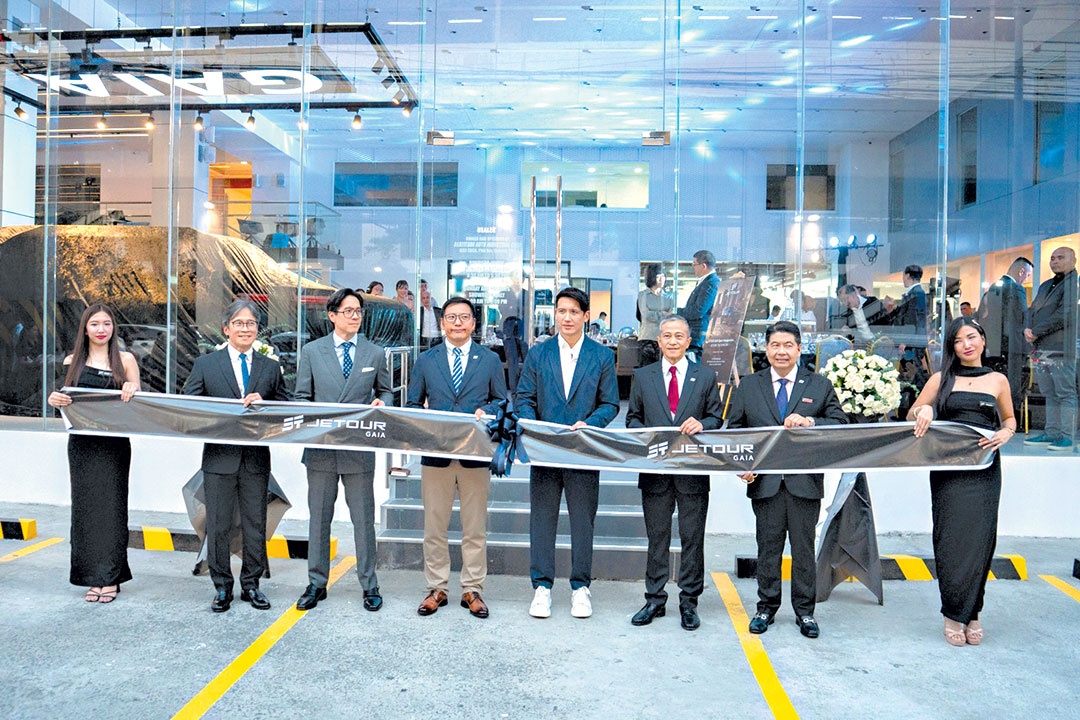
GAIA’s local debut is marked by two milestones: the introduction of its flagship model, the Jetour GAIA G700 plug-in hybrid (PHEV) SUV; and the opening of its flagship showroom, Jetour GAIA Space in Quezon City. Jetour is distributed in the Philippines by United Asia Automotive Group, Inc. (UAAGI), led by its chairman, Rommel Sytin.

The G700 is powered by a turbocharged 2.0-liter i-DMO (Intelligent Dual Motor Offroad) engine paired with dual electric motors; the system delivers a massive 904ps and 1,135Nm of torque. The plug-in hybrid can accelerate, according to Jetour, from a standstill to 100 kph in 4.6 seconds, while offering a combined range of up to 1,200km. The GAIA Advanced Vehicle Architecture integrates hybrid powertrain engineering, intelligent systems, and a body-on-frame chassis into one platform. It also enables AI (artificial intelligence)-driven torque distribution and off-road features such as tank-turn and crab-walk modes for improved maneuverability in confined or uneven terrain.

“Jetour GAIA reflects who we are as a brand: pushing boundaries, embracing progress, and confidently stepping into the premium space,” Jetour GAIA Managing Director Miguelito Jose told guests and brand representatives at the showroom opening. “It isn’t just about unveiling a new vehicle; it’s about sharing a vision we truly believe in. With Jetour GAIA, we challenged ourselves to go beyond expectations — not only in performance and technology, but also in the feeling it creates the moment you experience it. For us, true innovation is not just seen; it is felt. As the future moves toward electrification, we are embracing a smarter, more refined way forward — one that elevates performance, enhances efficiency, and delivers effortless power.”

The seven-seater PHEV has a 2.5-ton towing capacity and 230mm of ground clearance, and boasts a 900-mm wading depth and a waterproof engine system. Its adaptive air suspension offers multi-mode damping and variable height adjustment that responds to driving conditions in real time, while its Vehicle-to-Load (V2L) function can power external devices. Safety features include an 11-air bag system, advanced driver assistance systems (ADAS), and a body structure rated to withstand up to 15 tons of crush resistance.

Inside, the G700 can be personalized via integrated ambient lighting and even a built-in fragrance system. A four-screen configuration includes a 35.4-inch Skyline Screen, a 15.6-inch central HD control display, a 17.3-inch ceiling-mounted entertainment screen, and an 8.8-inch rear climate control interface. Audio comes from a Harman Kardon 18-speaker sound system with a 900W amplifier. The driver’s seat offers eight-way power adjustment, while the front passenger seat has four-way adjustment; both include four-way lumbar support. Rear passengers also get eight mode massage functions.

The G700 is available in three colors — Horizon Blue, Frontier Black, and Himalaya White — with interior themes in Black Technology and Beige Warm. Pricing starts at P4.488 million. Clients are offered a 10-year engine warranty, a six-year general warranty, and coverage of up to one million kilometers.

The G700 is on display at Jetour GAIA Space, 933 EDSA Southbound, Philam, Quezon City. The location will serve as Jetour’s “official home,” according to Mr. Jose. “This is where the future of mobility lives and breathes. It is territory of the premium plug-in hybrid SUV segment, where you will experience the engineering marvel of the GAIA architecture up close.”

CTA orders BIR to refund Petron P389.5M in excise taxes

PETRON.COM

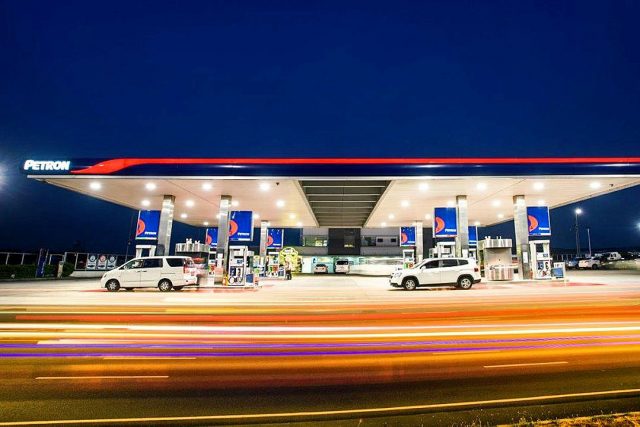
THE Court of Tax Appeals (CTA) has ordered the Bureau of Internal Revenue (BIR) to refund Petron Corp. P389.49 million in excise taxes, in a ruling that clarifies refund claims on fuel sold to international carriers.

In a 31-page decision, the tax court’s Special Third Division partially granted the consolidated petitions filed by Petron, which originally sought a refund of P586.96 million.

The court ruled that Petron is entitled to the refund under Section 135 of the National Internal Revenue Code (NIRC), which exempts petroleum products sold to international carriers for use outside the Philippines and to entities exempt under existing laws or international agreements.

The case involved two consolidated petitions covering fuel sales from January to June 2020 and July to December 2020. The Commissioner of Internal Revenue argued that the exemption under Section 135 applies only to buyers, not to sellers such as Petron, but the CTA rejected this position.

“The Petitions for Review are partially granted,” the ruling read.

“Accordingly, respondent [commissioner of internal revenue] is ordered to refund in favor of petitioner in the total amount of P389,493,496, representing petitioner’s erroneously paid excise taxes for its imported and locally-produced Jet A-1 fuel for the periods from Jan. 1, 2020 to June 30, 2020, and from July 1, 2020 to Dec. 31, 2020, which were subsequently sold and delivered to various international carriers and tax-exempt entities,” it added.

Jet A-1 is a kerosene-based fuel used in turbine engines and is the standard fuel for commercial aviation.

The decision, penned by Associate Justice Marian Ivy M. Reyes-Fajardo, said “the tax exemption under Section 135 must correspondingly benefit the one who actually bears the liability to pay the same (i.e., the importers/manufacturers of petroleum products sold to international carriers, among others), and not the one who simply bears the economic burden thereof.”

The CTA said Petron filed its administrative and judicial claims within the required two-year prescriptive period.

However, the court disallowed P197.47 million of the claim due to insufficient documentation, unsupported delivery receipts, and instances where fuel withdrawals were made before the earliest official release date.

In clarifying the tax treatment, the court said international carriers “do not manufacture or import petroleum products and hence, are not statutory taxpayers to which the exemption under Section 135 could pertain.”

It added that carriers “merely bear the tax burden when the costs therefor are passed on to them by the actual manufacturers or importers,” which remains a “contractual affair between the parties” and does not affect the statutory tax liability.

The court ruled that Petron “as the statutory taxpayer can claim a refund under Section 135 of the NIRC for the sale of its imported and locally manufactured Jet A-1 fuel.” It ordered the BIR to issue the refund or a tax credit certificate for the approved amount.

Petron reported an 84% increase in net income to P15.6 billion for 2025, supported by steady domestic volume growth, improved refinery performance, and lower operating costs.

Revenues fell by 7% to P810 billion from P868 billion in 2024, which the company attributed to weaker global oil prices.

The company’s operations in the Philippines and Malaysia posted a 3% increase in total volumes to 113.4 million barrels.

Petron said it maintained its leadership in the domestic market despite competition.

In Malaysia, volumes were largely unchanged due to softer demand following adjustments to the government-regulated fuel pricing system.

The company remained the Philippines’ largest oil player, with a 27.8% market share as of the first half of 2025, based on Department of Energy data.

Petron operates 50 terminals across the region and about 2,700 service stations, with a refining capacity of nearly 270,000 barrels per day. — Erika Mae P. Sinaking

Genteelhome unveils unique pieces for Sibol Series

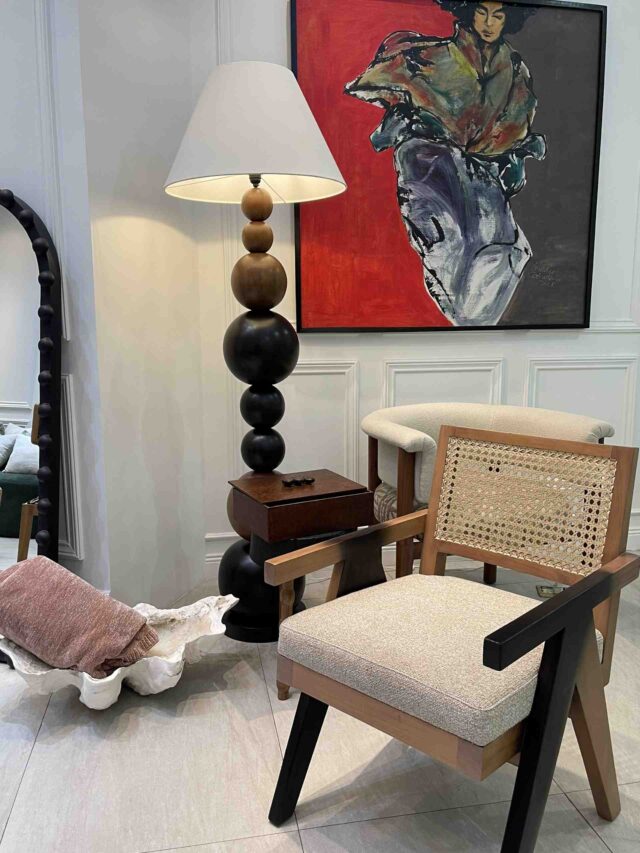
Part of the Burnt Collection, each Sibol chair has a unique look.— ALMIRA MARTINEZ

PAMPANGA-BASED furniture maker Genteelhome launched Sibol, the first series of the Burnt Collection, unveiling uniquely crafted bespoke wood pieces.

Founder Katrina Blanca de Leon told reporters in a media briefing on Wednesday that Sibol, which means to emerge or to rise, reflects the pieces from the collection.

“It speaks about growth, but not the usual kind of growth, not the natural kind of growth. It’s a growth to pressure about transformation through challenge,” Ms. de Leon said.

“The burnt collection is not just about the burnt wood, it’s about transformation,” she added. “It’s about us communicating with you that allowing a process to unfold, making room in our lives, and trusting that what emerges will have its own kind of hope.”

Ms. de Leon noted that Filipino artisans craft each piece of furniture from the collection. “Usually, we hire an unskilled artisan, and we train them. We have our own training team or training department to really develop the artisan.”

The signature burnt look, with varying cracks, highlights a light-to-dark brown and black appearance created by burning the wood with a blue flame using a torch-like tool.

“You have to get the blue flame, and then there’s a distance, and then you have to let that fire sit on the wood for a certain time, depending on the size of the wood,” Ms. de Leon said.

“It’s really important to be precise with what you do because one mistake, the finish will look different,” she added.

The thickness of the wood also plays an important role in perfecting the burnt look.

“The project planner will compute it. For example, it’s like 80×1.4, we already have a time there,” she said. “So during the R&D process, we already have the swatches that we color, so there’s a recipe for each process.”

The majority of the collection’s pieces, such as tables and chairs, were made from mahogany wood sourced both locally, specifically in Batangas, Mindanao, and internationally. The company also uses “remnants” to promote sustainability.

“We keep our remnants and then assemble it and form them,” she said. “Our goal in Genteelhome is zero waste, that’s why we’re intentional on how we can beautify our remnants.”

Genteelhome is expected to release several new collections this year, each designed to bring unique personality, depth, and character into homes and living spaces.

“This year, our brand Genteelhome is diving deeper into exploration of studying how these finishes can live across different forms, cabinets, tables, chairs, and how they can translate into pieces that are both functional and emotionally resonant,” Ms. de Leon said.

“If you are buying a furniture for a home, it should be something to connect with,” she added. “It should be something that you can relate with.” — Almira Louise S. Martinez

Previewed: BYD Sealion 7 and BYD Atto 2 EV

BYD Cars Philippines Managing Director Bob Palanca and BYD brand ambassador Alden Richards pose with the Sealion 7. — PHOTO BY JOYCE REYES-AGUILA

BYD PHILIPPINES held its biggest exhibit to date at the recently concluded Manila International Auto Show (MIAS), saying it showcased its “vision for an electrified and connected Philippines through a massive display of its full new energy vehicle (NEV) lineup and the introduction of two new vehicles.” Previewed were the BYD Atto 2 EV and BYD Sealion 7, slated for launch “later this year.”

“The BYD Atto 2 EV is a smart and stylish urban electric crossover. Perfectly sized for the modern Filipino family, the Atto 2 EV is designed to balance everyday utility with a chic, contemporary design,” said the company in a release.

Meanwhile, the BYD Sealion 7 is positioned as a “premium, performance-led electric SUV designed to thrill. It combines a bold, aerodynamic aesthetic with a sophisticated all-wheel drive system, offering a glimpse into the high-performance capabilities of the brand.” Interested customers may reserve at any BYD dealership for P50,000.

BYD said it also demonstrated how the electric transition is made possible through ACMobility’s integrated charging infrastructure. “We have continuously been building the ecosystem that makes electric travel a reality for every Filipino. By expanding the Philippine EV Spine, our nationwide network of over 160 charging locations and counting, we are eliminating range anxiety and fortifying the country’s readiness for EV adoption alongside BYD’s extensive lineup,” said ACMobility CEO Jaime Alfonso Zobel De Ayala.

Luxurious summer

RUSTAN’S gave a taste of its summer offerings at a fashion show at Rustan’s Makati on April 17 that unveiled their summer campaign, “Beneath the Riviera Sun.”

While the word “riviera” comes from Italy (it means “coastline”), it’s become more closely associated with its neighbor, France and its southeastern coast. Either way, wherever there’s a shoreline, one can wear Riviera-style fashions.

The show began with a white embroidered blouse paired with jean shorts and a luxury wicker bag from Rodo. Next came three flower-sprigged dresses in different cuts: one was draped on one shoulder like on a Greek statue, the other one had a high neck and cap sleeves but a tiered skirt, while the last one had a bit of a plunging neckline. Darker dresses and a matching set appeared, more appropriate for evening, when there’s less sun. After this was a heavily embroidered pink coat from Criselda, but paired with a green swimsuit.

It’s a little more staid with the men: think a taupe chore jacket with a white T-shirt and jeans, then a crumpled sky-blue linen shirt. A couple came out in matching pink shirts and white pants, showing that the color travels between sexes. Kids were in on the fun too: there was a boy in beige separates looking like he was wearing a safari suit, flanked by a girl in a shift dress with a red pattern. Finally, a family in white and navy came out on the runway.

In a statement, the store said, “Rustan’s presents more than just a seasonal update. It offers a complete expression of summer living, where style, experience, and atmosphere come together in a way that feels effortless, refined, and distinctly its own.” — JL Garcia

DoTr reviews airline surcharges after Level 8 increase

PHILIPPINE STAR/ WALTER BOLLOZOS

THE Department of Transportation (DoTr) is reviewing airline fuel surcharges after regulators raised rates to Level 8 this month, as jet fuel prices remain elevated.

The DoTr, through the Civil Aeronautics Board (CAB), is assessing jet fuel prices to determine possible adjustments to passenger surcharges, following recent increases linked to the ongoing conflict in the Middle East.

“We started implementing the reduction of terminal fees for government-operated airports to help lower costs. But the problem really is jet fuel prices, so we are in talks with CAB to make necessary adjustments if needed. We are adjusting the fuel surcharge; it follows a matrix that goes up and down depending on the changes in fuel prices,” Transportation Acting Secretary Giovanni Z. Lopez said in a forum on Saturday.

Starting April, the CAB moved from a monthly review of fuel surcharges to a 15-day monitoring cycle to respond more quickly to price movements.

For April 1 to 15, the CAB imposed a Level 8 surcharge, up from Level 4 in March. This is the highest level since Level 6 in August 2024, though below the peak Level 12 recorded in August 2022.

At Level 8, airlines may charge fuel surcharges ranging from P253 to P787 for domestic flights. For international flights, surcharges range from P835.05 to P6,208.98, depending on distance.

The CAB has yet to release its advisory for the second half of April. Mr. Lopez said some countries have already imposed a Level 20 surcharge, the maximum allowed under the CAB framework.

At Level 20, airlines may collect surcharges ranging from P661 to P1,933 for domestic flights per way. For international flights, surcharges range from P2,183.11 to P16,232.44 per way, depending on distance.

For reference, passengers may pay an additional P2,183.11 for flights to Taiwan, Hong Kong, Vietnam, Cambodia, and Brunei; P3,396.10 for travel to Japan or South Korea; and about P15,459.47 for flights to North America and the United Kingdom.

“As of now, countries abroad have already imposed a Level 20 surcharge. We are talking to CAB to make necessary adjustments if needed. We are hoping not to reach Level 20,” Mr. Lopez said.

Fuel surcharges are variable fees collected on top of base fares to offset changes in jet fuel costs. These are adjusted based on movements in jet fuel prices using the Mean of Platts Singapore benchmark.

According to the International Air Transport Association, jet fuel prices fell 5.3% week on week to $197.83 per barrel. Year on year, however, jet fuel prices surged 119.7%. — Ashley Erika O. Jose

Electrified BAIC B40e Trailmaster, P2.888M

The BAIC B40e Trailmaster rEV is priced at P2.888 million. — PHOTO BY KAP MACEDA AGUILA

BAIC PHILIPPINES introduced the BAIC B40e Trailmaster rEV at the recent MIAS, saying that the release signals a “bold new chapter in electrified off-road mobility.” A plug-in hybrid electric vehicle (PHEV), the off-roader is said to “(redefine) rugged mobility for the modern Filipino driver.” Its setup is expected to deliver a combined range of over 1,200km, with an ability to run on EV mode for up to 152km.

“For longer journeys, the plug-in hybrid system seamlessly extends the range while delivering stronger power and torque. This makes it highly suited for Philippine conditions, where traffic, distance, and road variety all play a role,” said BAIC Philippines in a release.

Priced at P2.888 million, the B40e Trailmaster rEV joins the similarly electrified BAIC B30e Dune Hybrid, priced at P1.479 million (for the 4×2) and P1.788 million (4×4). Also at the show were the BAIC B60 Beaumont Hybrid, with a promo price starting at P2.878 million, the B60 Beaumont rEV P3.398 million, and the BAIC B80 Wagon Special Edition (P4 million). For more information on models, dealerships, and after-sales support, visit https://baic.ph/.

STT GDC signs 10-year RE deal with MPower

STTELEMEDIAGDC.COM

DATA CENTER operator ST Telemedia Global Data Centres (STT GDC) Philippines has entered into a 10-year renewable energy (RE) supply agreement with MPower, the electricity supply arm of Manila Electric Co. (Meralco), to power its two data center facilities.

“By securing long-term renewable energy, we are ensuring that the mission-critical platforms our customers depend on every day are powered by sustainable sources, keeping carbon neutrality at the core of our operations,” STT GDC Philippines President and Chief Executive Officer Carlomagno E. Malana said in a statement on Sunday.

The company said it secured a 40.5-megawatt (MW) renewable energy supply for its STT Fairview and STT Cavite data center facilities.

STT GDC is a joint venture among Globe Telecom, Inc., Ayala Corp., and ST Telemedia Global Data Centres. It operates seven data centers in the Philippines with a combined IT load of 150 MW.

The company said the partnership would support the country’s digital infrastructure by helping meet demand for cloud services, artificial intelligence (AI), and online platforms. It added that securing a green energy supply would help sustain digital infrastructure expansion.

“AI and digital services are evolving at an unprecedented pace, and the infrastructure supporting them must scale responsibly,” Mr. Malana said.

STT GDC Philippines is expanding its footprint to meet growing digital demand, the company said. Its STT Fairview 1 facility began operations in 2025, while STT GDC Cavite 2 is undergoing testing and commissioning.

STT GDC aims to achieve carbon-neutral operations by 2030. In 2024, it expanded its renewable energy use to 78.5%, based on information from its website.

Earlier this year, Globe said it expects growth in its data center business after Singapore-based STT GDC secured new backing from global investment firms KKR and Singtel.

MPower holds more than a 35% share of the competitive retail electricity market within Meralco’s franchise area. It serves contestable customers, including large corporations.

Meralco’s controlling stakeholder, Beacon Electric Asset Holdings, Inc., is partly owned by PLDT Inc. Hastings Holdings, Inc., a unit of PLDT Beneficial Trust Fund subsidiary MediaQuest Holdings, Inc., has an interest in BusinessWorld through the Philippine Star Group, which it controls. — Ashley Erika O. Jose

ADVERTISEMENT
ADVERTISEMENT