Home Blog Page 334

Super Bowl injury report: Pats QB Drake Maye practices in full

SANTA CLARA, California — New England Patriots fans can breathe a sigh of relief. Quarterback (QB) Drake Maye was a full participant in practice on Wednesday as the Patriots prepare to face the Seattle Seahawks in Super Bowl LX on Sunday.

Maye was limited due to a shoulder injury when New England practiced last week, and then he sat out the team’s Friday session because of an illness.

Ahead of the Wednesday workout, Maye said, “Feel great. I don’t see any way I’d be limited.”

The only New England player who sat out the full practice on Wednesday was linebacker Robert Spillane, who sustained an ankle injury in the Patriots’ AFC Championship Game win over the Denver Broncos. However, Spillane was asked earlier in the day if he would be ready to play on Sunday, and he replied, “100%.”

Patriots tackle Thayer Munford, Jr. (knee) and linebacker Harold Landry III (knee) were limited on Wednesday.

The Seahawks’ injury report is topped by quarterback Sam Darnold, who was listed as limited due to an oblique ailment. That isn’t a necessary cause for alarm, as he had the same designation ahead of Seattle’s NFC Championship Game victory over the Los Angeles Rams.

Seahawks safety Nick Emmanwori sustained an ankle injury late in practice. That led to him also being on a “limited” list that also included tackle Charles Cross (foot), tackle Josh Jones (ankle/knee) and fullback Robbie Ouzts (neck). — Reuters

NBA trades

There are trades that definitively shape futures and there are trades enveloped in uncertainty. When the Clippers sent James Harden to the Cavaliers for Darius Garland and a second-round pick, it was far more than just another deadline deal. It was a collision of narrative arcs, incentive timetables, and the unrelenting pursuit of a title that has eluded both player and team.

Needless to say, Harden heads to the Cavaliers with an impressive resume. That said, it is likewise incomplete. He may be an 11-time All-Star and one-time Most Valuable Player awardee, but he has yet to wrap his arms around the Larry O’ Brien Trophy. In fact, his reputation, not exactly undeserved, has been tainted by early playoff exits and abbreviated stints; each stop is laced with controversy, feeding into a recurring theme. He seems to leave before long for whatever reason, complicating his legacy.

To be fair, the Cavaliers understand the stakes, enough, at least, to accept the baggage that comes with Harden. Hitherto built around their core four that included Donovan Mitchell, Evan Mobley, and Jarrett Allen, they found themselves at a crossroads and questioning the soundness of their future. Garland, once an embodiment of continuity, had battled injuries and inconsistent play. And the result was decidedly in the negative. The offense of the wine and gold, previously elite, had flagged too often for comfort, and the specter of another early postseason exit loomed large. 

Trading Garland for Harden signified, for the most part, the Cavaliers’ intent to go all in for the near term. Prior to the player swap, Mitchell’s status was a question mark at best. After getting a name he figures to share equal billing with on the marquee, however, he may well be motivated to stay. A lot will depend on how well they do in the next five months, of course, but now they have a chance. If nothing else, they get to maximize their current window with a proven ball-handling creator who can take pressure off their resident superstar’s shoulders.

Meanwhile, the trade defines the horizon from the Clippers’ vantage point. In a play-in fight out West, they had wrestled with roster construction, salary elasticity, and the reality that their championship window with Kawhi Leonard and Harden was much narrower than expected. Garland, a decade younger and under contract for multiple seasons, gives them a potential long-term cornerstone as they transition to what comes next. Linking him with Ivica Zubac and John Collins is tantamount to betting on time.

In the ruthless arithmetic of the National Basketball Association (NBA), hope is volatile currency. The Cavaliers just chose to spend it all. The Clippers, meanwhile, recalibrate with youth. And for Harden, the next chapter begins with the same question he has faced before: Is he finally home? The answer is anybody’s guess.


Anthony L. Cuaycong has been writing Courtside since BusinessWorld introduced a Sports section in 1994. He is a consultant on strategic planning, operations and human resources management, corporate communications, and business development.

Britain to work with Microsoft to build deepfake detection system

REUTERS

LONDON — Britain will work with Microsoft, academics and experts to develop a system to spot deepfake material online, the government said on Thursday, as it moves to set standards for tackling harmful and deceptive AI-generated content.

While manipulated material has circulated online for decades, the rapid adoption of generative AI chatbots – made possible through the launch of ChatGPT and others – has amplified concerns about the scale and realism of deepfakes.

Britain, which recently criminalized the creation of non-consensual intimate images, said it was working on a deepfake detection evaluation framework to set consistent standards for assessing detection tools and technologies.

“Deepfakes are being weaponized by criminals to defraud the public, exploit women and girls, and undermine trust in what we see and hear,” technology minister Liz Kendall said in a statement.

GOVERNMENTS SPURRED INTO ACTION BY NON-CONSENSUAL IMAGES

The framework will evaluate how technology can be used to assess, understand and detect harmful deepfake materials, regardless of its source, the government said, by testing deepfake detection technologies against real-world threats like sexual abuse, fraud and impersonation.

That would help the government and law enforcement obtain better knowledge on where gaps in detection remain, it said, adding that the framework would be used to set clear expectations for industries on deepfake detection standards.

An estimated 8 million deepfakes were shared in 2025, up from 500,000 in 2023, according to government figures.

Governments and regulators worldwide, who are struggling to keep pace with the rapid evolution of AI technology, were spurred into action this year, as Elon Musk’s Grok chatbot was found to generate non-consensual sexualized images of people, including children.

The British communications watchdog and privacy regulator are carrying out parallel investigations into Grok. — Reuters

UN chief calls New START expiration ‘grave moment’

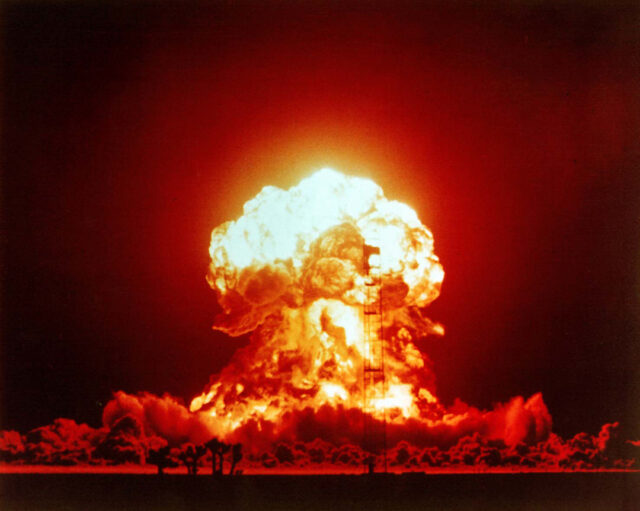
US nuclear weapons test in Nevada in 1953. — US Government

UNITED NATIONS Secretary-General Antonio Guterres on Wednesday called the expiration of the New START (Strategic Arms Reduction Treaty) a grave moment for international peace and security and urged Russia and the United States to negotiate a new nuclear arms control framework without delay.

New START, which was due to run out at midnight on Wednesday, capped the number of strategic nuclear warheads that the United States and Russia can deploy, and the deployment of land- and submarine-based missiles and bombers to deliver them.

“For the first time in more than half a century, we face a world without any binding limits on the strategic nuclear arsenals of the Russian Federation and the United States of America – the two States that possess the overwhelming majority of the global stockpile of nuclear weapons,” Mr. Guterres said in a statement.

He said the dissolution of decades of achievement in arms control “could not come at a worse time – the risk of a nuclear weapon being used is the highest in decades.”

At the same time, Mr. Guterres said there was now an opportunity “to reset and create an arms control regime fit for a rapidly evolving context” and welcomed the appreciation by the leaders of both Russia and the United States of the need to prevent a return to a world of unchecked nuclear proliferation.

“The world now looks to the Russian Federation and the United States to translate words into action,” Mr. Guterres said.

“I urge both states to return to the negotiating table without delay and to agree upon a successor framework that restores verifiable limits, reduces risks, and strengthens our common security.” — Reuters

Australia says attempted bombing of national day protest was act of terror

REUTERS

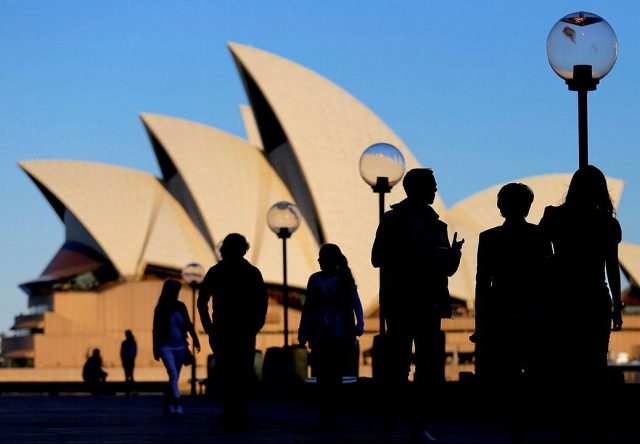
SYDNEY — Australian authorities said on Thursday they were treating as a terrorism incident an attempt to bomb a rally protesting against the country’s national day on January 26, the first such charge in the state of Western Australia.

They arrested a 31-year-old man on accusations of hurling a homemade bomb into a crowd of several thousand people in the city of Perth. No one was injured because the bomb did not explode.

Police and state leader Roger Cook said the man held white supremacist views and the attack was an attempt to target Aboriginal people, one of Australia’s two main Indigenous groups.

“This charge … alleges the attack on Aboriginal people and other peaceful protesters was motivated by hateful, racist ideology,” Mr. Cook told a news conference. If proved, it carries a maximum sentence of life in prison.

Australia Day, which commemorates Britain’s colonization of the country in 1788, is a public holiday marked by picnics, barbecues and ceremonies for new citizens but it has also attracted criticism from some including in the Indigenous community, with “Invasion Day” protest rallies nationwide.

Polling shows a majority of Australians oppose moving the date of the holiday. — Reuters

Taiwan Strait missions are about international law, not provocation, French diplomat says

EN.WIKIPEDIA.ORG

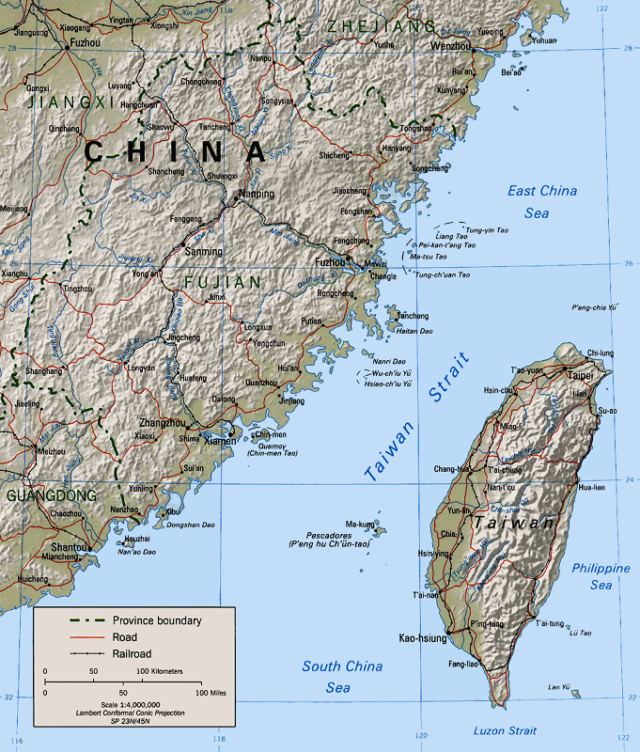
TAIPEI — Naval missions by foreign countries in the Taiwan Strait are about asserting international law, rather than offering provocation, France’s de facto ambassador in Taipei said on Thursday, speaking of voyages that routinely infuriate China.

In addition to claiming sovereignty over democratically governed Taiwan, Beijing views the narrow, highly strategic strait as Chinese territorial waters and has responded aggressively on occasion to foreign navies sailing there.

“We are careful to send these naval assets into international waters without any provocation,” Franck Paris, director of the French Office in Taipei, told reporters.

They aimed to send a clear message that international law prevails in the waters and should remain so, added Paris, whose country is chairing the Group of Seven nations for the coming year.

US warships traverse the strait every few months, enraging Beijing, and some US allies, such as France, Australia, Britain and Canada, have also made occasional transits.

Paris said it had now become routine for G7 statements to include language on maintaining the status quo across the strait and opposing use of force or coercion.

“This is a clear message that we repeat all the time, and I think there is a good choreography between a number of G7 partners to send this message,” he added, pointing to past naval trips by Canada and the Netherlands, among others.

The last publicly confirmed sailing by a French navy ship in the strait, a conduit for trade running into billions of dollars a year, was in 2024.

The government of Taiwan, which rejects Beijing’s sovereignty claims, welcomes such transits as support for freedom of navigation. China’s military routinely operates in the waterway in what Taipei views as a pressure campaign.

France, like most countries, has no formal diplomatic ties with Taiwan, but is viewed by Taipei as an important partner and fellow democracy.

Three decades ago it sold Mirage fighter jets and frigates to Taiwan, although the United States is the island’s most important international source of arms.

“These assets are still used by the Taiwanese defense,” Paris said, adding that French companies helped maintain them by providing necessary equipment.

“This is the framework that we are committed to and this framework has not been questioned for years.” — Reuters

Interest rate swap volumes surge in Philippines, Remolona says

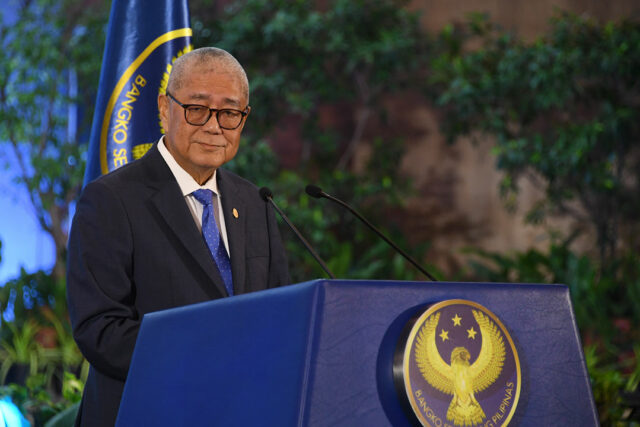
BANGKO SENTRAL ng Pilipinas Governor Eli M. Remolona, Jr. — COURTESY OF BANGKO SENTRAL NG PILIPINAS

Interest-rate swap transactions in the Philippines have jumped more than 60-fold since the launch of a peso IRS facility in late 2024, the nation’s central bank chief said, citing that a deepening market may improve the effectiveness of monetary policy.

Trading volume in the derivatives have jumped to P43.5 billion ($739 million) in January from P700 million in 2024, Bangko Sentral ng Pilipinas (BSP) Governor Eli M. Remolona Jr. said late Wednesday with one- and three-year tenors active.

The surge in peso interest-rate swap trading shows investors are embracing the revamped facility to hedge any uncertainties in the central bank’s policy path. Growing activity is also helping improve price discovery.

“The market is starting to form interest-rate expectations and starting to hedge interest rate risk over policy-relevant horizons,” Mr. Remolona said in a keynote speech during a Bloomberg event in Makati City. “A deeper IRS market strengthens our monetary policy transmission mechanism, improves reference pricing, and it helps anchor expectations.”

Over time, Mr. Remolona said, he’d like to see the bond markets converge around the swaps curve. “This market is, to us, a backdoor to building a benchmark yield curve, something our markets need very badly,” he said.

Interest rate swaps, a staple hedging facility in more developed fixed-income markets, allows parties to protect themselves against changes in market interest rates or take positions on the direction of borrowing costs by exchanging one stream of future interest payments for another.

Clients’ use of the derivative is “very nascent,” said Paul Favila, chairman of the Bankers Association of the Philippines’ open market committee and a country manager for Citibank. Even so, the early activity is “very encouraging,” he said, as the build-up of historical data and volumes are a “clear indication of the market evolving.” — Bloomberg

Signal No. 2 up in more than a dozen areas due to Tropical Storm Basyang

DOST-PAGASA FB PAGE

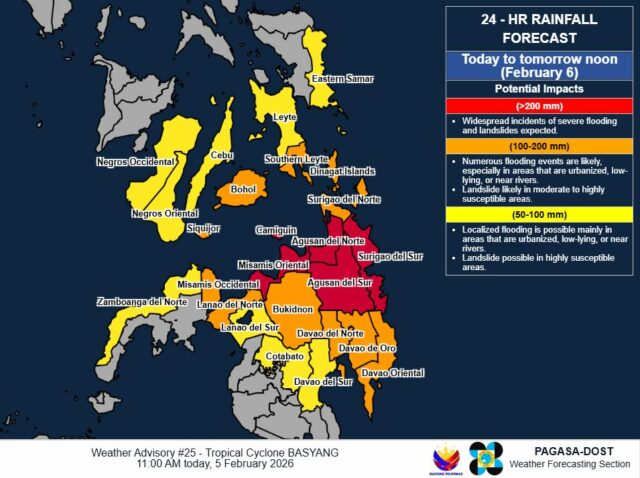
More than a dozen areas are under Storm Signal No. 2 due to the effects of Tropical Storm Basyang, which will bring life-threatening winds and heavy rainfall to affected areas, according to the state weather bureau on Thursday.

In its 11:00 a.m. bulletin, the Philippine Atmospheric, Geophysical and Astronomical Services Administration (PAGASA) stated that Signal No. 2 is in effect over Siquijor, the southeastern portion of Negros Oriental, the southern portion of Cebu, and the southern portion of Bohol in the Visayas.

It is likewise in effect over Surigao del Norte (including Siargao and Bucas Grande Islands), Surigao del Sur, the extreme northern portion of Davao Oriental, Agusan del Norte, Agusan del Sur, Misamis Oriental, the northern portion of Bukidnon, the northeastern portion of Lanao del Norte, the northeastern portion of Misamis Occidental, and Camiguin.

Under this wind signal, houses made of old or light materials are expected to sustain minor to moderate damage.

Meanwhile, Signal No. 1 is in place over Cagayancillo and Cuyo Islands in Luzon. In the Visayas, the signal covers the southern portion of Eastern Samar, the southern portion of Samar, Biliran, Leyte, Southern Leyte, and the rest of Bohol, Cebu, and Negros Oriental, as well as Negros Occidental, Guimaras, Iloilo, Capiz, Aklan, and Antique.

In Mindanao, the affected areas include Dinagat Islands, the northern and central portions of Davao Oriental, Davao de Oro, Davao del Norte, the northern portion of Davao del Sur, the rest of Bukidnon, and the northern portion of Cotabato. It also covers Lanao del Sur, the northern portion of Maguindanao del Norte, and the rest of Lanao del Norte, Misamis Occidental, the eastern and central portions of Zamboanga del Norte, the northern and central portions of Zamboanga del Sur, and the northern portion of Zamboanga Sibugay.

PAGASA noted that under this signal, light structures may sustain minimal to minor damage.

As for its track, Tropical Storm Basyang was last located 295 kilometers east of Hinatuan, Surigao del Sur, moving westward and accelerating to 25 kilometers per hour (km/h).

It has maximum sustained winds of 65 km/h and gustiness of up to 80 km/h. Strong to gale-force winds extend outwards up to 300 kilometers from the center, meaning areas not directly hit by the eye can still experience severe conditions.

Basyang is forecast to make its first landfall over Surigao del Sur tonight. It will then cross Mindanao and emerge over the Bohol Sea by Friday morning, potentially making a second landfall over Siquijor or the southern portion of Negros Oriental by Friday afternoon.

The storm is also likely to traverse Palawan by Saturday afternoon.

As a proactive measure, the provincial government of Surigao del Sur has announced the suspension of classes at all levels and work in government offices.

Meanwhile, the Department of Social Welfare and Development (DSWD)-CARAGA said in a statement that it has already activated its Division and Quick Response Teams.

PAGASA continues to remind the public, especially those in high-risk areas, to follow evacuation orders and instructions from local officials. — Edg Adrian A. Eva

Malaysia imposes ban on e-waste imports

STOCK PHOTO | Image by Freepik

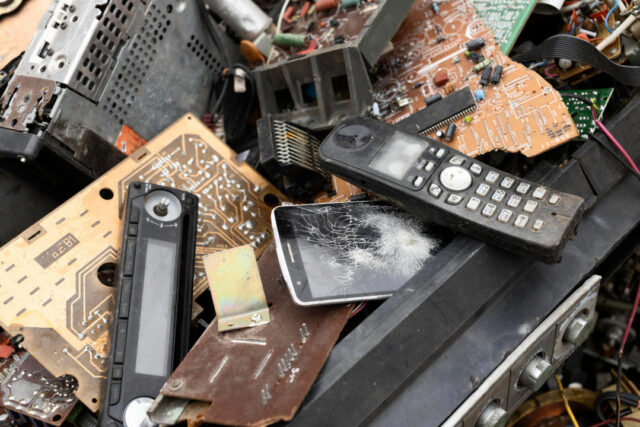
KUALA LUMPUR — Malaysia has imposed a ban on imports of electronic waste, as it looks to tighten controls on the entry of hazardous materials and safeguard the environment, the head of the country’s anti-graft body said.

The Southeast Asian nation is among the world’s top destinations for plastic waste and other scrap, but has struggled to fend off a deluge of generally illegal unrecyclable garbage.

Malaysia Anti-Corruption Commission chief commissioner Azam Baki, who chairs a government taskforce on the issue, said e-waste would be reclassified under the “Absolute Prohibition” category in customs regulations effective immediately.

“E-waste is no longer allowed to enter the country and strict enforcement will be needed involving all agencies,” Mr. Azam said in a statement on Wednesday.

The taskforce is also discussing a proposal for a three-month moratorium on the importation of plastic waste, he said.

The announcement comes amid a probe into corruption linked to e-waste management.

Last week, MACC detained the director-general and two other top officials of the environment department as part of an investigation into graft linked to illegal e-waste disposal activities, state news agency Bernama reported.

It is unclear how much e-waste is imported illegally into Malaysia. Environmental group Basel Action Network in a report last year estimated that the United States alone exported about 32,947 metric tons of e-waste per month with Malaysia being the primary recipient.

Many of the exports were likely illegal, it said. — Reuters

Rights group criticizes detention of Chinese journalists after graft report

TIM HUFNER —UNSPLASH

BEIJING — Reporters Without Borders (RSF) condemned on Tuesday the detention of two independent Chinese journalists, one a prominent investigative reporter, after they published a report accusing an official in southwestern China of corruption.

The Paris-headquartered advocacy group said journalists Wu Yingjiao and Liu Hu, who gained national recognition more than a decade ago for uncovering graft among high-profile figures, were detained on Sunday in the province of Sichuan.

“We call on the international community to intensify pressure on the Chinese regime, rather than pursue a normalization of relations that only enables further repression,” said RSF’s advocacy manager for the Asia-Pacific region, Aleksandra Bielakowska.

Such repression allowed authorities to continue targeting reliable reporters, Ms. Bielakowska said.

The detention of the two journalists highlighted a “restrictive and hostile” environment for independent reporting in China, she said in a statement.

At a regular news briefing, the Chinese foreign ministry stressed that the country was governed by the rule of law, and its judicial organs handled cases in accordance with the law.

“All are equal before the law,” spokesperson Lin Jian said to reporters when asked to comment on the case.

REPORT PUBLISHED, THEN DELETED FROM WECHAT
In a statement on Monday, police in the provincial capital of Chengdu said they were investigating a 50-year-old man surnamed Liu and a 34-year-old surnamed Wu as well as others, on suspicion of “making false accusations” and “illegal business operations”.

The men were placed under “criminal coercive measures”, the statement added, using a legal term that typically refers to detention.

Several Chinese media and RSF identified the two detained reporters as Liu Hu and Wu Yingjiao.

Police in Chengdu did not immediately respond to a Reuters request for comment.

The arrests followed the January 29 publication of a joint investigative report on social media platform WeChat that examined alleged corruption involving Pu Fayou, the Communist Party secretary of the Sichuan county of Pujiang.

Mr. Pu could not be immediately reached for comment.

The report has since been deleted from WeChat, a common step by censors in cases involving sensitive government exposes.

Mr. Liu is a former investigative reporter of the New Express newspaper, based in the southern city of Guangzhou.

He was detained by Beijing police in 2013 on charges of “picking quarrels and provoking trouble” for allegedly “fabricating and spreading rumors”, but released on bail after 364 days in detention, RSF said.

REACH OF CHINESE CENSORSHIP
Leaders of democratic nations such as Canada, South Korea, and Britain have visited Beijing this year, seeking better ties amid trade and security tensions with the United States.

While human rights issues figured in some of the talks, they were not a prominent feature.

China ranked 178 of 180 countries in the 2025 press freedom index of Reporters Without Borders, which identifies the country as the world’s largest jailer of journalists.

In its 2026 world report released on Wednesday, Human Rights Watch flagged the global impact of China’s censorship, going beyond curbs on domestic media to apply pressure in foreign countries.

It said leaked documents showed a major Chinese company had exported some domestic internet censorship and surveillance technologies to countries such as Pakistan and Myanmar.

“The Chinese government controls all major channels of information and implements one of the world’s most stringent surveillance and censorship regimes,” HRW said.

The legal system, controlled by the ruling Communist Party, encompassed punishment for critics and measures such as forcible disappearance or jail, it added.

In response, China’s foreign ministry said the New York-based organization has no credibility as it has always been prejudiced against China. — Reuters

US and Iran agree to Friday talks in Oman but still at odds over agenda

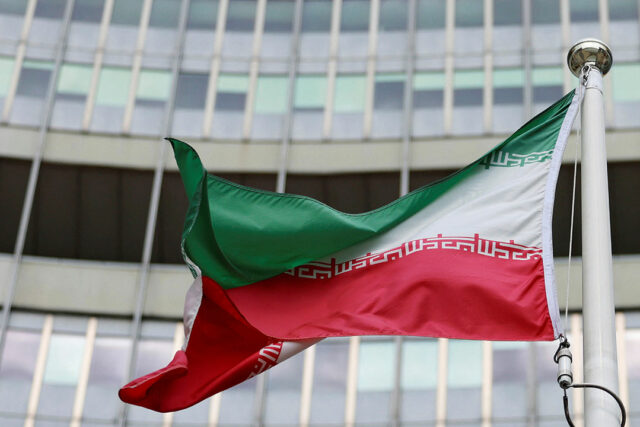
THE Iranian flag flutters outside the IAEA headquarters in Vienna, Austria, June 9, 2025. — REUTERS/LISA LEUTNER

WASHINGTON/DUBAI — The US and Iran have agreed to hold talks in Oman on Friday, officials for both sides said, even as they remained at odds over Washington’s insistence that negotiations include Tehran’s missile arsenal and Iran’s vow to discuss only its nuclear program.

The delicate diplomatic effort comes amid heightened tensions as the US builds up forces in the Middle East and regional players seek to avoid a military confrontation that many fear could escalate into a wider war.

Differences in recent days over the scope and venue for the talks have raised doubts whether the meeting would take place, leaving open the possibility that US President Donald Trump could carry out his threat to strike Iran.

Asked on Wednesday whether Iran’s Supreme Leader Ayatollah Ali Khamenei should be worried, Mr. Trump told NBC News: “I would say he should be very worried. Yeah, he should be.” He added that “they’re negotiating with us” but did not elaborate.

After Mr. Trump spoke, US and Iranian officials said the two sides had agreed to shift the talks’ location to Muscat after initially accepting Istanbul.

But there was no indication they had found common ground on the agenda.

Iran has pushed to restrict the negotiations to discussing its long-running nuclear dispute with Western countries.

But US Secretary of State Marco Rubio presented a different view on Wednesday. “If the Iranians want to meet, we’re ready,” Mr. Rubio told reporters. But he added that talks would have to include the range of Iran’s ballistic missiles, its support for armed proxy groups around the Middle East and its treatment of its own people, besides nuclear issues.

A senior Iranian official said, however, that Iran’s missile program was “off the table.” A second senior Iranian official said Tehran would welcome negotiations over the nuclear dispute but that US insistence on dealing with non-nuclear issues could jeopardize the talks.

Mr. Trump’s son-in-law, Jared Kushner, was due to take part in the talks, along with US special envoy Steve Witkoff and Iranian Foreign Minister Abbas Araqchi, officials said.

CHANGE OF VENUE
While the talks were originally slated for Turkey, Iran wanted the meeting to take place in Oman as a continuation of previous talks held in the Gulf Arab country that had focused strictly on Tehran’s nuclear program, a regional official said.

Iran says its nuclear activities are meant for peaceful, not military purposes, while the US and Israel have accused it of past efforts to develop nuclear weapons.

A Gulf official said the talks could be mediated by several countries, though Iran has indicated that it wants a two-way format limited to Washington and Tehran.

The diplomatic efforts follow Mr. Trump’s threats of military action against Iran during its bloody crackdown on protesters last month and the deployment of more naval power to the Gulf.

The US has sent thousands of troops to the Middle East since Mr. Trump threatened Iran last month – including an aircraft carrier, other warships, fighter jets, spy planes, and air refueling tankers.

After Israel and the United States bombed the Islamic Republic last summer, renewed friction has kindled fears among regional states of a major conflagration that could rebound on them or cause long-term chaos in Iran.

Mr. Trump has continued to weigh the option of strikes on Iran, sources say. Oil prices have risen on the tension.

NUCLEAR DISPUTE
Mr. Trump has warned that “bad things” would probably happen if a deal could not be reached, ratcheting up pressure on the Islamic Republic in a standoff that has led to mutual threats of airstrikes.

Iran’s leadership is increasingly worried a US strike could break its grip on power by driving an already enraged public back onto the streets, according to six current and former Iranian officials.

Mr. Trump, who stopped short of carrying out threats to intervene during last month’s crackdown, has since demanded nuclear concessions from Iran, sending a flotilla to its coast.

Iran also hopes for an agreement that could help lift Western sanctions over its nuclear program that have ravaged its economy – a major driver of last month’s unrest.

BALLISTIC MISSILE STOCKPILE
Iranian sources told Reuters last week that Mr. Trump had demanded three conditions for the resumption of talks: zero enrichment of uranium in Iran, limits on Tehran’s ballistic missile program, and an end to its support for regional proxies.

Iran has long said all three demands are unacceptable infringements of its sovereignty, but two Iranian officials told Reuters its clerical rulers saw the ballistic missile program, rather than uranium enrichment, as the bigger obstacle.

An Iranian official said there should not be preconditions for talks and that Iran was ready to show flexibility on uranium enrichment, which it says is for peaceful, not military purposes.

Since the US strikes in June, Tehran has said its uranium enrichment work has stopped.

In June, the United States struck Iranian nuclear targets, joining in at the close of a 12-day Israeli bombing campaign and Iran struck back at Israel with missiles and drones.

Iran said it replenished its missile stockpile after the war with Israel last year, warning it would unleash its missiles if its security is under threat.

Adding to tensions, on Tuesday the US military shot down an Iranian drone that “aggressively” approached the Abraham Lincoln aircraft carrier in the Arabian Sea, the US military said, in an incident first reported by Reuters.

In another incident in the Strait of Hormuz, the US Central Command said Iran’s Islamic Revolutionary Guard Corps had approached a US-flagged tanker at speed and threatened to board and seize it. — Reuters


Inflation heats up to near one-year high in January

Inflation accelerated to 2% in January, from 1.8% in December, the statistics agency reported. Photo by EDD GUMBAN, THE PHILIPPINE STAR

By Katherine K. Chan, Reporter

Philippine inflation accelerated to its fastest pace in nearly a year in January amid a faster increase in rental rates and electricity prices, the Philippine Statistics Authority (PSA) reported.

Headline inflation stood at 2% in January, picking up from the 1.8% in December but slowing from the 2.9% in the same month last year.

This was the fastest pace seen in 11 months or since the 2.1% in February 2025.

It also marked the first time in almost a year that inflation hit the Bangko Sentral ng Pilipinas’ (BSP) 2%-4% target.

The January clip was also faster than the median forecast of 1.8% from a BusinessWorld poll of 18 economists, but was within the central bank’s 1.4%-2.2% estimate for the month.

This, as inflation for housing, water, electricity, gas and other fuels settled at 3.3%, the fastest since the 3.8% in August 2024.

Broken down, inflation for electricity quickened to 6.5% in January from the revised 4% in December, while rental prices picked up by 2.9% during the month from 2.4% in December.

Core inflation likewise accelerated to 2.8% in January, from 2.6% in the same month last year and 2.4% in December.

ADVERTISEMENT
ADVERTISEMENT