Home Blog Page 325

P8-B irrigation initiatives to boost Ilocos Region farm productivity

URDANETA CITY, Pangasinan — Some P8 billion worth of irrigation projects are expected to expand irrigated farmlands, stabilize water supply and boost rice production benefitting farmers across the Ilocos Region.

Acting Regional Manager Engr. Geffrey B. Catulin said the funding will support major irrigation lines, rehabilitation of national and communal systems, solar-powered pumps, and critical repairs, with 236 projects lined up for implementation. These are expected to improve farm productivity and reduce farmers’ dependence on rain-fed agriculture, he added.

The National Irrigation Administration (NIA) in the region is also racing to complete 79 irrigation projects from 2025 worth P2.7 billion, with 65.5% already accomplished.

Mr. Catulin said construction schedules are timed around harvest seasons to avoid disrupting farming activities, with most projects expected to be completed before the end of June.

Among the flagship projects is the P37.5-billion Ilocos Norte-Ilocos Sur-Abra Irrigation Project, which aims to open thousands of hectares to irrigation once completed.

Other key initiatives include small reservoir irrigation projects in Ilocos Norte, La Union, and Pangasinan, designed to provide reliable water during dry months and protect crops from climate-related losses.

NIA said the expanded irrigation network will directly support farmers by increasing cropping cycles, lowering production risks, and raising yields — key steps toward achieving rice self-sufficiency in the Ilocos Region and strengthening the agricultural backbone of Northern Luzon. — Artemio A. Dumlao

ASEAN digital economy deal seen lowering business costs

A WOMAN in a remote meeting via videoconference works from her living room. — REUTERS

BUSINESSES are expected to enjoy lower costs and smoother cross-border digital trade within five years at the earliest as the Association of Southeast Asian Nations (ASEAN) prepares for the signing of the Digital Economy Framework Agreement (DEFA) this year, the Philippine Chamber of Commerce and Industry said. 

In a policy brief, the chamber said that although no immediate changes, particularly in Philippine laws, are expected, regulatory alignment and cooperation can begin to take shape in the first three years.

“Bigger benefits such as lower compliance costs and smoother cross-border digital trade are expected over five to 10 years,” it added.

Once signed, the DEFA will set common rules for e-commerce, digital trade, data flows, cybersecurity, digital payments, emerging technologies, and movement of digital talent.

“The stakes are enormous. ASEAN’s digital economy is already on track to reach about $1 trillion by 2030. With DEFA in place, that number could double,” it said.

“For the Philippines — one of the fastest-growing digital economies in the region — this represents a historic opportunity to scale up exporters, attract investment, and position Filipino workers at the center of regional digital value chains,” it added.

The benefits of the agreement include lower compliance costs, more predictable rules, and easier access to customers across the region.

“For micro, small and medium enterprises (MSMEs), it could reduce the uncertainty that often discourages small firms from selling abroad,” it said.

“For the information technology and business process management and digital services sector, DEFA could support trusted data flows, regional recognition of skills, and new demand for high-value services,” it added.

However, the group said that the DEFA is no substitute for domestic reform, which presents the need for the country’s continued investment in broadband, digital skills, logistics, MSME financing, and competition policy.

“The agreement opens doors, but we still need to help Philippine firms and workers walk through them,” it said.

“DEFA positions ASEAN and the Philippines as a serious trade bloc. For Philippine firms, it means more customers, more opportunities, and a clearer path to compete regionally in the digital economy,” it added. — Justine Irish D. Tabile

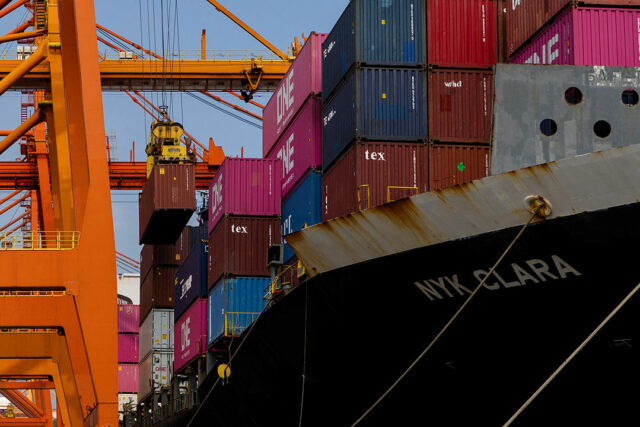
Refrigerated-container congestion crisis seen looming at Manila port

HAPAG-LLOYD.COM

THE Bureau of Customs (BoC) needs to address congestion at the reefer yard utilization at the Manila International Container Port, with overcapacity raising the threat of spoilage for refrigerated goods, the United Port Users Confederation of the Philippines (UPC) said.

In a letter to Customs Commissioner Ariel F. Nepomuceno on Feb. 3, UPC President Ma. Flordeliza C. Leong flagged the port’s reefer yard utilization rate.

“Operating at over 100% capacity in the reefer segment indicates that the facility has exceeded its designed electrical and spatial limits for temperature-controlled cargo,” she said.

According to a Customs report, reefer yard utilization at Manila International Container Port hit 105.98% on Feb. 2, while overall yard use stood at 81.99%.

By Feb. 6, utilization for refrigerated-container storage had eased to 95.87%, while overall utilization edged up to 82.15%.

Ms. Leong cautioned that power fluctuations and cooling shortfalls could compromise cargo integrity.

She also noted the risk of operational bottlenecks as saturated reefer yards force “double-handling,” slowing truck turnarounds, raising logistics costs for port users, spilling over into general operations.

The UPC urged authorities to fast-track reefer processing and clearance to ease congestion and to review overstaying units.

The group also pressed Mr. Nepomuceno to spell out contingency measures for the 5.98% excess volume at the reefer yard and called for full enforcement of Customs Memorandum Order No. 13-2019 on empty container returns.

Ms. Leong separately appealed to the BoC to order haulers to move empty containers to depots such as EMME Depot Hub in Binakayan, Cavite, which can hold up to 5,000 TEUs, at shipping lines’ expense.

“This can be a temporary or permanent solution for haulers and brokers currently reeling from the problems brought about by these unreturned containers,” she said. — Aubrey Rose A. Inosante

PHL urged to fortify cybersecurity via legislation

REUTERS

THE PHILIPPINES must pass legislation and strengthen its national cybersecurity plan to safeguard critical infrastructure networks, which remain highly vulnerable, cybersecurity advocates said.

“After (open access, the next issue) is improving accessibility and security. Cybersecurity and critical information infrastructure protection should be next step,” Mary Grace Mirandilla-Santos, ICT policy analyst at Secure Connections told reporters on the sidelines of Philippine Telecommunications Summit last week. 

Ms. Mirandilla-Santos was referring to the Konektadong Pinoy Act, also known as the Open Access in Data Transmission Act, which lapsed into law last year. This  law streamlines the licensing process for new entrants, boosting competition in data transmission.

She said that as the government works to expand connectivity, it must also strengthen cybersecurity measures, since opening up connectivity can magnify threats.

“When you have more connectivity, the threat landscape becomes larger. We need to make sure that everything is secure, we need to have minimum cyber security standards across the board,” she said.

The Philippines does not have a cybersecurity law and relies on issuances and policies set by the Department of Information and Communications Technology (DICT).

Ms. Mirandilla-Santos said that while the issuances are effective because the DICT proactively addresses issues, legal barriers remain that need to be resolved.

“We need a law,  a cybersecurity law that will require both the government and the private sector, those who are operating critical infrastructure, to comply with minimum standards for cybersecurity, to make sure that they have personnel that are trained for cybersecurity,” she said. 

Samuel V. Jacoba, founding president of the National Association of Data Protection Officers of the Philippines, said legislation must define a unified cybersecurity framework including government agencies but also critical information industries.

The proposed Philippine Cybersecurity Act seeks to establish a National Cybersecurity Agency as the central authority for safeguarding critical information infrastructure, managing cyberthreats, and strengthening the country’s cyber defenses. — Ashley Erika O. Jose

BCDA to retain SCTEx stake as investment

NLEX.COM.PH

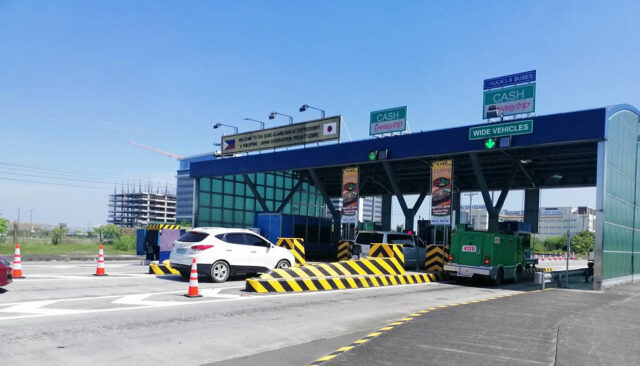
THE Bases Conversion and Development Authority (BCDA) said it now plans to retain its stake in the Subic-Clark-Tarlac Expressway (SCTEx) instead of disposing of it.

Ayaw na namin, pang investment na namin ’yon. (We aren’t going for disposal; the stake can remain an investment),” BCDA President and Chief Executive Officer Joshua M. Bingcang told reporters last week, “the future revenue (can help us) build more and accelerate more projects.”

The BCDA had announced plans to sell its stake to the tollways unit of Metro Pacific Investments Corp. (MPIC), Metro Pacific Tollways Corp. (MPTC), for at least P20 billion.

The MPTC and BCDA have a 50:50 revenue-sharing agreement for the toll road, which is operating under a 30-year concession. It is currently being managed by NLEX Corp., a unit of MPTC.

Mr. Bingcang said the BCDA will instead focus on upgrading SCTEx amenities, for which it has allocated P1 billion.

“We have three billion shares now. So we are looking at three interchanges, streetlights, and store service facilities,” he added.

The interchanges will be in Luisita, Tarlac; Hermosa, Bataan; and Mabalacat, pampanga.

Noong sinimulan ang SCTEx, (When SCTEx started) these interchanges were already part of the design, but the budget was not enough. These were just deferred, so there’s no problem with the right of way,” he said.

“So we will complete these interchanges na hindi nagawa noon. The one in Tarlac has been put up for bidding,” he said.

“It is time to give back to the motorists who are also affected by the toll rate adjustments. So we need to make sure (that the added charges are returned to them) through better services,” he added.

The 93.7-kilometer SCTEx connects the Clark Freeport and Special Economic Zone, the Subic Bay Freeport Zone, and the Central Techno Park in Tarlac.

MPTC is the tollways unit of MPIC, one of three key Philippine units of Hong Kong-based First Pacific Co. Ltd., the others being Philex Mining Corp. and PLDT Inc.

Hastings Holdings, Inc., a unit of PLDT Beneficial Trust Fund subsidiary MediaQuest Holdings, Inc., has a majority stake in BusinessWorld through the Philippine Star Group, which it controls. — Justine Irish D. Tabile

Transport plan seen as key to Market! Market! renewal — BCDA

TAGUIG.COM

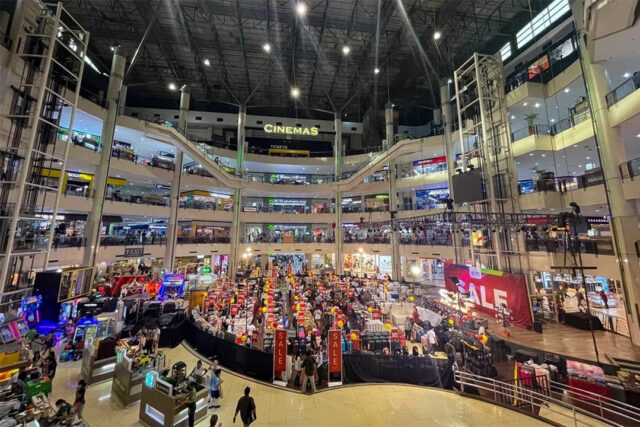
ORIGINAL LOCATOR Ayala Land, Inc. (ALI) is in talks to redevelop the Market! Market! site at Bonifacio Global City (BGC), with the lease renewal to depend largely on the attractiveness of its transport amenities, the Bases Conversion and Development Authority (BCDA) said.

“We are discussing the arrangement for Market! Market!” with ALI, BCDA President and Chief Executive Officer Joshua M. Bingcang told reporters last week. “We are appreciative of their project with us; they were the first-mover locator in BGC.”

“They are cooperative in terms of commercial arrangements … We are just finalizing,” he added.

“In the contract, one year before it ends, you should finalize the renewal … it is a possibility that we will renew them depending on the phasing plan of the transit-oriented development project,” he said.

The Market! Market! site was leased to Ayala Land until 2027.

The centrality of transport arrangements is the result of Market! Market! being near a subway stop, he said.

The BCDA tapped the Japan International Cooperation Agency to do a transit-oriented development plan for the Market! Market! site, on the assumption that a subway stop will be built nearby.

“We want to maximize and fully utilize the potential and use of that area … But I think no single developer can (handle) that transit-oriented development project,” he said.

Nakikita ko ngayon (What I foresee is) two or three developers so there is competition. And we are glad that Ayala Land has stepped forward to say that it wants to be part of the redevelopment,” he added.

“We will really issue a request for expression of interest. The Japanese are very much interested, especially since they have good experience in Uptown with Federal Land,” he said.

“So, we can have Federal Land, as well as the other big developers,” he added.

Meanwhile, he said that the BCDA has signed an agreement with the Department of Transportation on the right of way for the subway project.

“Anytime soon, they will be announcing the start of construction for three stations in BGC — at  Market! Market!, the Senate Building, and Uptown,” he added — Justine Irish D. Tabile

Partnership with US seen helping PHL move up critical minerals value chain

FREEPIK

By Justine Irish D. Tabile, Senior Reporter

THE Philippine critical minerals industry is expected to move up the value chain due to its partnership with the US, business groups said.

“The critical minerals agreement will provide a pathway for the Philippines for more value-added mineral processing,” Philippine Chamber of Commerce and Industry President Ferdinand A. Ferrer said via Viber.

The agreement is also expected to help the Philippines join the critical minerals supply chain alongside Australia, Canada, Japan, South Korea, and other Association of Southeast Asian Nations (ASEAN) countries.

Additional benefits include technology transfer and higher-skill jobs, he said.

“In the future, this will also benefit new semiconductor processes, renewable energy, and electric vehicle sectors,” he added.

The Department of Environment and Natural Resources (DENR) announced the signing of a memorandum of understanding (MoU) with the US to support the development of critical minerals and rare earths in the Philippines.

“The MoU aims to advance Philippine economic policy away from the export of raw mineral ores toward increased domestic processing and value addition, supporting the country’s integration into global supply chains,” the DENR said.

The MoU was signed on the sidelines of the 2026 Critical Minerals ministerial meeting on Feb. 4.

The Philippines exported $7.13 billion worth of minerals and mineral products in 2025. This accounted for 8.4% of merchandise exports, the Philippine Statistics Authority reported, citing preliminary data.

Last year, merchandise exports amounted to $84.41 billion, up 15.2%.

Chamber of Mines of the Philippines Chairman Michael T. Toledo said the partnership will help in strengthen responsible mining and sustainable resource development.

“We see this as an opportunity to attract investment, promote technology transfer, and reinforce high environmental standards while supporting economic growth and local communities,” he said via text message.

“We look forward to working closely with government and stakeholders to ensure that the benefits of this cooperation are realized responsibly and inclusively,” he added. 

This year, the Department of Trade and Industry is hoping to see improved exports, despite worries that the front-loading of shipments to beat a US tariff deadline, which drove exports last year, will not be replicated in 2026.

“We have the free trade agreements (FTAs), and with those we can really boost our exports,” Trade Secretary Ma. Cristina A. Roque told reporters last week.

“Those give confidence to the different industries to really pursue different countries and we are really joining trade shows abroad,” she added.

She also noted the opening of the Likhang Filipino Exhibition Halls, which she said present possibilities for exports.

“Because of ASEAN 2026, a lot of the trade ministers are coming here so we are bringing them to those places also so that they can see the products of the Philippines,” she said.

“They will also be meeting with a lot of businessmen here so we are really hoping for better numbers actually this year,” she added.

Wholesale rice prices rise slightly in January

PHILIPPINE STAR/WALTER BOLLOZOS

THE wholesale price of rice declined year on year in January, but inched up from a month earlier, according to the Philippine Statistics Authority (PSA), citing preliminary data.

The PSA said the national average wholesale price of regular-milled rice declined 6.9% year on year to P39.81 per kilo, but increased 4.5% from December.

The average price of well-milled rice was down 3.7% year on year to P45.16 per kilo, but rose 5.3% from a month earlier.

The average price of premium rice remained little changed in January at P50.60 per kilo, compared with P50.70 a year earlier. However, it was up 5.8% from December.

The wholesale price of special rice averaged P53.07 per kilo in January, slightly lower than the P53.10 recorded a year earlier. It increased 4.3% from a month earlier.

The national rice inventory as of Jan. 1 grew 6.4% year on year to 2.34 million metric tons (MMT), according to a separate PSA report.

Of the total stock, 44.6% was held by households, 36.7% by commercial traders, and 18.7% by the National Food Authority (NFA).

The PSA said rice held by households fell 1.1% year on year to 1.04 MMT.

Commercial inventory declined 0.2% year on year to 858,880 MT.

NFA holdings, meanwhile, jumped 54.1% year on year to 438,750 MT.

Month on month, the rice inventory fell 13.5%. — Vonn Andrei E. Villamiel

Indian refiners avoid Russian oil in push for US trade deal

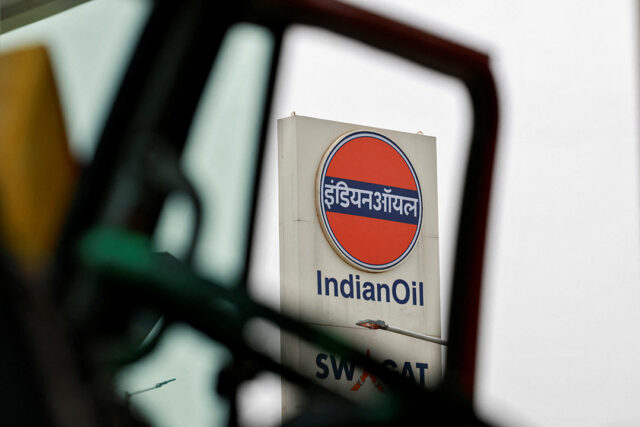
THE LOGO OF INDIAN OIL is pictured outside a fuel station in Baghola, Haryana, India. — REUTERS/PRIYANSHU SINGH

NEW DELHI — Indian refiners are avoiding Russian oil purchases for delivery in April and are expected to stay away from such trades for longer, refining and trade sources said, a move that could help New Delhi seal a trade pact with Washington.

The US and India moved closer to a trade pact on Friday, announcing a framework for a deal they hope to conclude by March that would lower tariffs and deepen economic cooperation.

Indian Oil, Bharat Petroleum and Reliance Industries are not accepting offers from traders for Russian oil loading in March and April, said a trader who approached the refiners.

These refiners, however, had already scheduled some deliveries of Russian oil in March, refining sources said. Most other refiners have stopped buying Russian crude.

TRUMP SAYS INDIA ‘COMMITTED’ TO HALTING PURCHASES
The three refiners and the oil ministry did not respond to requests for comment. The trade minister on Saturday referred questions about Russian oil to the foreign ministry.

A foreign ministry spokesperson said: “Diversifying our energy sourcing in keeping with objective market conditions and evolving international dynamics is at the core of our strategy” to ensure energy security for the world’s most populous nation.

Although a US-India statement on the trade framework did not mention Russian oil, President Donald J. Trump rescinded his 25% tariffs on Indian goods, imposed over Russian oil purchases, because, he said, New Delhi had “committed to stop directly or indirectly” importing Russian oil.

New Delhi has not announced plans to halt Russian oil imports.

India became the top buyer of discounted Russian seaborne crude after Russia invaded Ukraine in 2022, spurring a backlash from Western nations that had targeted Russia’s energy sector with sanctions aimed at curtailing Moscow’s revenue and making it harder to fund the war.

INDIA’S RUSSIAN-OIL IMPORTS A FRACTION OF 2025 LEVELS
One regular Indian buyer is Russia-backed private refiner Nayara, which relies solely on Russian oil for its 400,000-barrel-per-day (bpd) refinery. Sources said Nayara may be allowed to keep buying Russian oil because other crude sellers pulled back after the European Union sanctioned the refiner in July.

Nayara also does not plan to import Russian crude in April due to a month-long refinery maintenance shutdown, a source familiar with its operations said.

Nayara did not respond to an e-mail seeking comment.

Indian refiners may change their plan and place orders for Russian oil only if advised by the government, sources said.

Mr. Trump’s order said US officials would monitor and recommend reinstating the tariffs if India resumed oil procurement from Russia.

Sources said last month that India was preparing to cut Russian oil imports below 1 million bpd by March, with volumes eventually falling to 500,000-600,000 bpd, compared with an average 1.7 million bpd last year. India’s Russian oil imports topped 2 million bpd in mid-2025.

The intake of Russian oil by India, the world’s third-biggest oil consumer and importer, declined to its lowest level in two years in December, data from trade and industry sources show.

Indian refiners have been buying more oil from Middle Eastern, African and South American countries as they scale back Russian oil purchases. — Reuters

Australia’s opposition coalition reunites after split over hate laws

REUTERS

SYDNEY — Australia’s conservative opposition coalition reunited on Sunday after the junior partner National Party severed ties last month with the Liberal Party over its decision to back government hate speech laws drafted in the wake of the Bondi massacre.

“The coalition is back together and looking to the future, not to the past,” Liberal Party leader Sussan Ley said alongside National Party leader David Littleproud in a media conference televised from Canberra.

The coalition split, the second in less than a year, was triggered after Australia’s parliament passed the center-left Labor government’s anti-hate laws in the wake of the mass shooting that killed 15 in December. The laws were backed by the Liberal Party but opposed by some National Party senators.

“It’s been disappointing, we’ve got to where we are, but it was over a substantive issue,” Mr. Littleproud said.

Under the long-standing partnership, the Nationals broadly represent the interests of rural communities and the Liberals city seats.

The coalition has come under recent pressure from populist Senator Pauline Hanson’s anti-immigration One Nation party, which has surged in polling, while the Liberal Party lost a swath of seats at last year’s federal election, won by Labor in a landslide. Reuters

South Africa keen to utilize new ECB repo lines, central bank governor says

STOCK PHOTO | Image by Willfried Wende from Pixabay

COVENTRY — South Africa would be keen to utilize new European Central Bank (ECB) repo lines if available, the country’s central bank head Lesetja Kganyago said on Saturday, adding that his country’s interest-rate-cutting cycle still had some way to go.

ECB President Christine Lagarde said this week the bank was planning to make its repo liquidity lines cheaper and easier to access in an effort to boost the euro’s international role. The repo lines allow foreign central banks to borrow euros against collateral denominated in the single currency and are designed for times of crisis.

South Africa’s veteran central bank head Mr. Kganyago said his country would benefit from the lines, given the vast amount of trade and investment that comes from Europe.

“To the extent that you’d have a repo line with the ECB, that would help to underpin that trade,” Mr. Kganyago said in an interview on the sidelines of the Warwick Economics Summit in Coventry, England. “It would be a welcome development.”

CENTRAL BANK WATCHING FOR SLOWING INFLATION
On South Africa’s own interest rates, he said last month’s decision to keep them at 6.75% meant they were “still distant from the terminal rate.”

Policymakers want to see inflation slow further before it starts moving again, but their current projection is for two more 25-basis-point rate cuts this year, plus another next year.

“This forecast of the rate path is not a policy commitment; it’s a guideline that changes from meeting to meeting,” Mr. Kganyago said.

One of the things that has helped drive inflation down over the last year has been the sharp rise of the rand.

That has only started to falter in recent weeks amid jittery global markets, including gold, of which South Africa is a major producer. But Mr. Kganyago sees little issue, viewing the broader rise as an acknowledgement of improvements in economic policies.

“What is also important to note here is that the volatility of the currency has declined. The rand used to be a very volatile currency.”

BUILDING BRICS
Mr. Kganyago, in his third term as governor, also talked about the “weaponization” of the international financial system.

He stressed emerging market economies were not engaged in any deliberate attempt to dethrone the US dollar but are looking to protect themselves from the kind of treatment Russia saw when it was cut off from critical financial plumbing such as the SWIFT messaging system.

Access to dollar channels is clearly “a privilege, not a right,” Mr. Kganyago said, but stressed the dollar would remain dominant and that he sees little prospect of a Brazil, Russia, India, China, South Africa (BRICS) currency.

It is an idea floated by Russia and Brazil and is expected to be a topic of discussion when India hosts the BRICS summit later this year, despite US President Donald J. Trump threatening 100% tariffs on any nation that joins it.

“I do not see how they (BRICS countries) do it without a BRICS central bank,” Mr. Kganyago said.

He also said South Africa’s currency reserves composition — roughly 60% in dollars at the moment — reflected trade patterns and will not change unless those flows shift.

The true motivation for fast‑payment system interoperability, he argued, is reducing the high cost and friction of cross‑border payments, especially in Africa, where non‑convertibility forces trade to be invoiced in dollars through multi‑bank chains. Reuters

India, Malaysia renew pledges to boost trade, collaboration

A container is loaded at the Manila International Container Terminal at the Port of Manila, Aug. 11, 2025. — REUTERS/ELOISA LOPEZ

KUALA LUMPUR — India’s Prime Minister Narendra Modi and his Malaysian counterpart Anwar Ibrahim renewed pledges on Sunday to bolster trade and explore potential collaborations in semiconductors, defense and other fields.

Mr. Modi is on a two-day visit to the Southeast Asian nation, his first since the two countries elevated ties to a comprehensive strategic partnership in August 2024.

Mr. Anwar said the partnership included deep collaborations in multiple fields, including trade and investments, food security, defense, healthcare, and tourism.

“It’s really comprehensive, and we believe that we can advance this and execute in a speedy manner with the commitment of our both governments,” he told a press conference after hosting Mr. Modi at his official residence in the administrative capital Putrajaya.

Following their meeting, Mr. Anwar and Mr. Modi also witnessed the exchange of 11 cooperation agreements, including semiconductors, disaster management, and peacekeeping.

Mr. Anwar said India and Malaysia would continue efforts to promote the use of local-currency settlement for cross-border activities and expressed hope that bilateral trade would surpass last year’s $18.6 billion.

Malaysia will also support India’s efforts to open a consulate in Malaysia’s Sabah state on Borneo island, Mr. Anwar said. Reuters