How PSEi member stocks performed — February 6, 2026

Here’s a quick glance at how PSEi stocks fared on Friday, February 6, 2026.


Here’s a quick glance at how PSEi stocks fared on Friday, February 6, 2026.

PHILIPPINE STOCKS may move sideways this week as investors stay on the sidelines in anticipation of the release of companies’ financial results and economic data.
On Friday, the bellwether Philippine Stock Exchange index (PSEi) inched up by 0.13% or 8.87 points to end at 6,390.91, while the broader all shares index went down by 0.09% or 3.40 points to close at 3,584.43.
Week on week, the PSEi increased by 61.94 points from its Jan. 30 finish of 6,328.97.
“The PSEi staged a volatile rebound as record-high January manufacturing output and within-target inflation (2%) countered a more cautious growth outlook from Fitch’s BMI, lifting the index 61 points up at 6,390,” 2TradeAsia.com said in a market note.
It said the inflation uptick could mean “tighter breathing room” for monetary policy.
“The local market bounced back last week on satisfactory inflation figures and hopes of economic growth recovery. Trading has weakened however, implying that many investors are turning more cautious,” Philstocks Financial, Inc. Research Manager Japhet Louis O. Tantiangco said in a Viber message.
For this week, players may continue to stay on the sidelines as they wait for new trading drivers, he said.
“Focus now is expected to be directed towards fourth-quarter and full-year 2025 corporate results,” Mr. Tantiangco said.
“Investors may also take cues from our upcoming foreign direct investments data. Investors are also expected to look at the local currency’s movement. A further appreciation of the peso against the US dollar may give the local market a boost.”
On Friday, the peso closed at a new seven-week high of P58.585 per dollar, rising by 10.5 centavos from its P58.69 finish on Thursday, data from the Bankers Association of the Philippines showed.
Week on week, the peso jumped by 23 centavos from its P58.86 close on Jan. 30.
“The local market remains attractive from a marketability standpoint. As of Friday’s closing, the market’s price-to-earnings ratio stands at 10.7 times, below its historical average of 14.4 times and the regional average of 18.9 times,” Mr. Tantiangco said.
“Chart-wise, the local market is still having a difficult time getting past its 6,400-resistance line. On a positive note, it is still trading above its 10-day, 50-day, and 200-day exponential moving averages (EMA),” he added. “Its 50-day and 200-day EMA have already formed a golden cross, which signals a possible uptrend in the medium to long run.”
He said the PSEi will continue to test its 6,400 resistance this week, with its major support at 6,150.
2TradeAsia.com placed the PSEi’s immediate support at 6,300, secondary support at 6,100, and resistance at 6,500.
“Themes of caution and rotation define the outlook… The recent surge in safe havens is not to be ignored, but it is just as important to not confuse a consolidation phase for a bear market.” — Alexandria Grace C. Magno

(First of two parts)
IN BRIEF:
• The global energy landscape is transforming due to rising electricity demand driven by factors such as data center proliferation, electrification, and increased manufacturing, with businesses expected to account for a significant portion of this growth in the Philippines.
• Energy providers must rethink their strategies to meet the complex needs of business clients, focusing on diverse energy sources and customer-centric solutions to capitalize on the growing demand for clean and reliable electricity.
• The Philippines faces challenges such as high electricity costs and grid constraints, but opportunities exist for energy providers to deliver innovative, adaptive solutions that prioritize sustainability, operational flexibility, and customer satisfaction.
Globally, the energy landscape is undergoing a profound transformation, with businesses at the forefront of rising electricity demand. Factors such as the proliferation of data centers, increased electrification, and heightened manufacturing activities have led to unprecedented growth in electricity consumption. As companies navigate uncertainties and shifting trade dynamics, they are prioritizing energy strategies to secure their operational futures.
This surge in demand presents a unique opportunity for energy providers and the broader energy ecosystem. However, many providers focus primarily on residential consumers, leaving the complex needs of business clients untapped. While it is happening in the global stage, the Philippines is at a strategic position to capitalize on this opportunity.
During the Philippine Energy Transition Dialogue on Sept. 2, Energy Secretary Sharon S. Garin reaffirmed the government’s commitment to energy transition and stated, “We are serious, not just the government but also the private sector, in making this country greener and more secure as far as energy is concerned.” To seize this opportunity, energy providers and other stakeholders along the entire value chain must be willing to rethink their approach, exploring diverse energy sources and redefining their roles in the energy landscape.
The important question now is, “How will the Philippines drive sustainable energy solutions?”
THE GLOBAL PERSPECTIVE
The demand for industrial electricity is expected to escalate significantly, with businesses driving much of this growth. Research by the EY Navigating the Energy Transition research program, which has surveyed nearly 100,000 residential energy consumers and more than 2,400 energy leaders and decision-makers across eight countries (Australia, Germany, Canada, Ireland, UK, US, Sweden, and Malaysia), indicates that three-quarters of the projected increase in electricity demand will come from business customers. Factors such as the adoption of electric vehicles (EVs), advancements in technology, reshoring of manufacturing, policy mandates, and the need for new equipment are contributing to this trend. In fact, 80% of businesses anticipate an increase in their electricity consumption within the next three years.
In the Philippines, these global trends are playing out against a backdrop of rising electrification and an ambitious green energy transition. With the recent Power Development Plan (PDP) 2023-2050, the Department of Energy (DoE) projects peak demand to grow from 16,596 megawatts (MW) in 2022 to 68,483 MW by 2050, an annual average increase of 5.2%.
The following are some of green reasons that drive the enterprise load in the Philippines:
• Electrification of the transport sector: Since the passing of the Electric Vehicle Industry Development Act (EVIDA), EV adoption has seen increasing numbers and is expected to move from niche to scale. EVs will be accompanied by 7,300 charging stations targeted to roll out by 2028.
• Growing digital economy: The Philippines has been beefing up its data infrastructure with 300 MW in the pipeline. Currently, data centers are housed in Cavite, Laguna, Rizal, Tarlac, and Metro Manila. The data center market is projected to approach $2 billion by 2030 driven by surging digital demand and hyperscaler interest.
• Industry-led growth: Simultaneously, businesses are increasingly sourcing renewable energy through programs like the Green Energy Option Program (GEOP) which allows firms to cut costs and significantly reduce emissions while ongoing industrial modernization is on the way.
These are a few of the several reasons why the industrial electricity demand is expected to spike in the next few years. Persistent grid constraints and limited digital customer solutions remains pain points, creating both urgency and opportunity for energy providers to deliver smarter, more resilient, and customer-centric offerings.
This means that businesses will not merely consume more electricity; they will call for more dependable, more predictable, clean electricity, delivered with new and better services front-lined both by the public and private sectors.
MEETING THE CHALLENGE OF EVOLVING ENERGY NEEDS
The Philippines has some of the region’s highest electricity costs, largely because the grid is powered by imported fossil fuels, exposing users to global price volatility and recurrent rate spikes. That cost pressure comes in addition to increasing climate risks and grid resilience challenges, especially in high-density hubs like Metro Manila, where outages and dry-season peak cooling demand affect productivity and margins. In this regard, additional businesses are in search of affordable decarbonization options that minimize costs, emissions, and increase resilience.
Global utility trends project that suppliers must return to focusing on customer needs and framing sustainable solutions in terms of language that speaks to fundamental values and cost-effectiveness. Filipino consumers, for example, prioritize integrity, customization, and compassion throughout the service journey — expectations increasingly prioritized with energy partners.
In the Philippines, the winning players that will secure and hold onto business customers will not be those who simply sell kilowatt‑hours. They will be the ones who provide guaranteed savings, operational flexibility, and quantifiable emissions reductions — all wrapped in a modern, customer‑centered experience. With facilitating policies, favorable economics, and an engaged innovation environment, energy providers have the opportunity to develop sophisticated, adaptive, and data‑replete solutions to address the diverse requirements of businesses. They will need to adapt and evolve in order to transition with credible, customer‑centric offerings.
In the second part of this article, we will discuss the evolving role of energy providers as they seek to enhance their offerings and better serve business clients by focusing on customized solutions, digital innovation, and strategic partnerships that align with the growing demand for clean energy and operational flexibility.
This article is for general information only and is not a substitute for professional advice where the facts and circumstances warrant. The views and opinions expressed above are those of the authors and do not necessarily represent the views of SGV & Co.
Smith C. Lim is the energy sector leader and a strategy and transactions partner, and Chip A. Maalihan is a strategy and transactions associate director, both of SGV & Co.
By Chloe Mari A. Hufana, Reporter
PHILIPPINE President Ferdinand R. Marcos, Jr.’s possible move to wind down the Independent Commission for Infrastructure (ICI) need not weaken the government’s anti-corruption drive if its work is absorbed by permanent oversight institutions, political analysts said, as the body awaits its fate after submitting its 125-day report to Malacañang on Feb. 6.
Special commissions such as the ICI are designed to be temporary responses to urgent governance failures, Ederson DT. Tapia, a political science professor at the University of Makati, said in a Facebook Messenger chat. Their role, he added, is to gather evidence, expose systemic weaknesses and recommend reforms that should outlast the commission itself.
“Winding down the ICI is not inherently problematic, provided that its functions are not simply discontinued but are deliberately transferred and strengthened within existing accountability institutions,” he told BusinessWorld.
Created through Executive Order No. 94 in September, the ICI marked Mr. Marcos’ first concrete step in his anti-graft drive following his exposé of corruption in flood control projects during his fourth address to Congress in July.
The President accused senior officials and private contractors of colluding to deliver substandard or even nonexistent infrastructure in a country highly vulnerable to climate risks.
The commission was tasked to examine infrastructure projects over the past decade, making it one of the most wide-ranging fact-finding bodies formed under the Marcos administration.
It was initially composed of former Supreme Court Associate Justice Andres B. Reyes, Jr. as chairman, with former Public Works Secretary Rogelio L. Singson and former Commission on Audit Commissioner Rossana A. Fajardo as members.
Mr. Singson and Ms. Fajardo resigned in December, saying their roles had been completed. Their departure left the commission with only Mr. Reyes, Executive Director Brian Keith F. Hosaka and Special Adviser Rodolfo S. Azurin, Jr.
Mr. Azurin later said the lack of a quorum hampered the ICI’s work, particularly its ability to vote on referrals of cases involving anomalous infrastructure projects to prosecutorial and investigative agencies.
‘MISSING ANOTHER CHANCE’
Gary G. Ador Dionisio, dean of De La Salle-College of St. Benilde’s School of Diplomacy and Governance, said the commission could have stood as a “signature governance reform” had it consistently demonstrated transparency and institutional stability from the outset.
“Instead, the resignations left the ICI in something like an intensive care state,” he said via Messenger.
To remain relevant, Mr. Dionisio said, the commission would have needed to evolve beyond a narrow fact-finding mandate and into a strategic reform instrument that strengthens transparency, accountability and the overall architecture of public infrastructure governance.
“Simply winding down or closing the ICI without maximizing its key findings means this administration risks missing another chance to pursue meaningful public sector reforms,” he said.
Both analysts warned that shutting down the commission without reinforcing core watchdog agencies could deepen public skepticism, feeding perceptions that accountability efforts are episodic and tied to political pressure rather than embedded in the state’s governance framework.
The central question, Mr. Tapia said, is what happens after the ICI completes its mandate.
If its findings are fully integrated into permanent bodies such as the Office of the Ombudsman, Commission on Audit and other executive oversight agencies — coupled with added investigative capacity and follow-through — the commission’s closure could still strengthen the broader anti-corruption effort.
“In that scenario, the commission becomes a catalyst for institutional reform rather than a stand-alone intervention,” Mr. Tapia said. “The risk arises if the commission is wound down without corresponding strengthening of these core institutions.”
From a governance perspective, temporary commissions should function as diagnostic tools, he added, while permanent institutions provide the enforcement backbone that operates consistently across administrations. Long-term public trust, he said, depends less on high-profile task forces and more on durable systems that deliver accountability regardless of political cycles.
The ICI’s success should be measured not by how long it exists but by whether it leaves behind stronger and more resilient oversight mechanisms, Mr. Tapia said.
Palace Press Officer Clarissa A. Castro earlier said Mr. Marcos would leave it to the remaining members of the ICI to decide whether the body would continue its investigations or begin winding up its operations.
At the same time, lawmakers in both chambers of Congress are pushing bills to establish an Independent People’s Commission, an effort aimed at institutionalizing oversight mechanisms and ensuring continuity beyond ad hoc bodies such as the ICI. Mr. Marcos has urged legislators to prioritize these measures.
The commission submitted its 125-day accomplishment report to Malacañang on Friday, detailing its work since operations began in September 2025.
The ICI filed nine referrals with the Office of the Ombudsman involving 65 people and coordinated the referral of 66 others to the Department of Justice for immigration lookout bulletin orders, it said in its report.
In its probe of irregularities in flood control projects, it conducted 32 hearings with 36 witnesses including senators, congressmen and agency heads, and carried out 16 site inspections nationwide.
The commission also reported contributing to the freezing of 6,692 bank accounts and the preservation, seizure or surrender of assets worth P24.7 billion, based on data from the Anti-Money Laundering Council. It processed more than 1,000 documents and issued roughly 160 investigative communications, including subpoenas and official invitations.
As part of its transparency efforts, the ICI said it issued guidelines for livestreaming its proceedings.
Mr. Marcos is expected to decide on the commission’s future after reviewing the report, though Malacañang has yet to say whether the President has already done so.

By Adrian H. Halili, Reporter
A PROPOSED term-sharing arrangement in the Senate is aimed at keeping the chamber’s majority bloc intact as lawmakers brace for a possible impeachment trial of Vice-President (VP) Sara Duterte-Carpio, political analysts said.
Dennis C. Coronacion, chairman of the Political Science Department at the University of Santo Tomas, said the plan is less about strengthening leadership and more about preserving unity within the majority as the Senate confronts the prospect of sitting as an impeachment court.
“The move is not really to bolster leadership but to make sure that the majority remains intact while the Senate tackles the impeachment complaint against Vice-President Sara,” he said in a Facebook Messenger chat.
He added that senators tend to decide impeachment votes based on political loyalties rather than strictly on the merits of the case, making bloc cohesion a central concern for Senate leaders.
The proposal surfaced after Senate President Vicente C. Sotto III said last week that members of the majority bloc were considering appointing Senator Loren Regina B. Legarda as Senate president toward the end of the 20th Congress. Mr. Sotto said the arrangement was floated to head off a leadership challenge in the chamber.
The idea of rotating leadership underscores internal strains within the Senate majority, Mr. Coronacion said.
“This only shows that the majority bloc is not monolithic,” he said. “It consists of senators with diverse and sometimes conflicting interests, making it difficult for the Senate president to balance them.”
“In this case, Senator Sotto has even come to the point of being willing to give up his position just to keep the majority together,” he added.
Hansley A. Juliano, a political science lecturer at the Ateneo de Manila University, said the leadership plan highlights a deeper institutional weakness, where Senate politics remains driven by personalities rather than policies.
“Term-sharing is not unheard of,” he said in a Facebook chat. “But it reinforces the perception that Senate leadership is shaped by partisan convenience rather than policy agenda.”
Mr. Juliano said the move also appears to be a defensive measure against the possibility of a stronger pro-Duterte push in the upper chamber should impeachment proceedings advance.
“These things belie the overall hold of personality and partisan ties in an institution defined by clientelistic loyalties,” he said.
Anthony Lawrence A. Borja, an associate political science professor at De La Salle University, said the effectiveness of any term-sharing deal would depend on where Mr. Sotto and Ms. Legarda stand politically, as well as their ability to influence undecided senators.
“It is more accurate to see senators as individuals rather than fixed blocs, except for the Duterte bloc and the Liberal bloc,” he said in a Messenger chat. “Those blocs tend to remain solid, but the rest can still swing either way depending on their 2028 prospects and legislative calculations.”
Mr. Borja added that the impact of a term-sharing arrangement on legislative priorities would hinge on whether it is merely symbolic or reflects deeper disagreements within the majority.
“If it is cosmetic or based on a clear agreement on priorities, the impact on priority measures will not be as severe,” he said. If it reflects “deeper differences” between Mr. Sotto and Ms. Legarda, then it could lead to a kind of paralysis.
The maneuvering comes as impeachment efforts against Ms. Duterte regain momentum. Two impeachment complaints were filed against the Vice-President in the House of Representatives on Feb. 2, accusing her of misuse of public funds, corruption, unexplained wealth and betrayal of public trust.
The filings revive an attempt to remove Ms. Duterte from office after a previous effort stalled last year, when the Supreme Court ruled that earlier impeachment complaints violated constitutional rules.
If the House transmits articles of impeachment to the Senate, senators would be required to sit as an impeachment court, placing further strain on bloc unity and leadership stability in the upper chamber.
By Kenneth Christiane L. Basilio, Reporter
PHILIPPINE LAWMAKERS should consider banning foreigners from owning communications-interference devices and penalizing possession even without proof of criminal use, the National Bureau of Investigation (NBI) said, as Manila steps up efforts to counter espionage and foreign interference risks.
In a position paper submitted to the House of Representatives’ National Defense and Security Committee, the NBI urged tighter regulation of equipment capable of intercepting or manipulating communications, warning that existing laws are ill-suited to modern surveillance threats.
“Foreign nationals found in possession of devices such as IMSI (international mobile subscriber identity) catchers, signal manipulators and mass-text systems typically have no lawful purpose for possessing such equipment within Philippine jurisdiction,” the bureau said in the document obtained by BusinessWorld. “Their possession alone indicates a high likelihood of misuse.”
IMSI catchers, which mimic mobile phone towers, can force nearby devices to connect and allow operators to intercept calls, text messages and location data.
Other tools can disrupt networks, harvest personal information or manipulate signals. The NBI said these technologies pose risks to national security, economic stability and individual privacy.
The recommendation follows arrests last year of suspected foreign spies accused of operating near the Presidential Palace, military bases and other sensitive locations. Authorities said the suspects used communications-interference devices and digital mapping technology to monitor activity in restricted areas.
“Over the past decade, cases involving foreign interference in the Philippines have increasingly been associated with Chinese nationals who utilize advanced communication and digital exploitation equipment,” the NBI said. It added that the same tools have been linked to mass-text spam, scam operations and identity theft.
The Chinese Embassy in Manila did not immediately reply to a Viber message seeking comment.
The bureau said foreign actors could now orchestrate large-scale interference that undermines public trust, compromises private communications and threatens critical infrastructure. It said requiring proof of actual misuse often allows suspects to evade prosecution, creating gaps in enforcement.
To address this, the NBI said proposed legislation should penalize foreigners for mere possession of communications-interference devices, even without evidence that a crime has been committed.
“This presumption of illicit intent recognizes the inherent risk such technology poses and addresses gaps in existing law,” the bureau said, arguing that the danger lies in the capability of the devices themselves.
Lawmakers are drafting an anti-foreign interference law, with several bills referred last week to a technical working group tasked with refining recommendations from security agencies, regulators and legal experts.
Jemy Gatdula, dean of the University of Asia and the Pacific Law School, said lawmakers should consider whether restrictions should apply beyond foreigners.
“If such devices indeed pose a security threat, then it makes sense to prohibit their possession regardless of who holds them,” he said in a Facebook Messenger chat, including Filipinos acting on behalf of a foreign country.
The NBI also urged Congress to allow authorities to immediately examine seized interference devices without securing a court warrant, citing the risk of remote deletion or encryption.
“Immediate forensic examination of seized devices is necessary to prevent the loss, encryption or remote destruction of critical data,” it said. “Traditional warrant processes are often too slow to preserve volatile digital evidence, as these devices may be programmed to self-delete or transmit data to remove servers.”
Security analysts said the proposal underscores how outdated the country’s espionage framework has become. “The Philippines is still operating under espionage laws crafted in the 1940s, which are no longer suited to the digital age,” said Chester B. Cabalza, founding president of the International Development and Security Cooperation think tank.
He said restricting possession of such devices would raise the cost and risk for foreign groups seeking to run covert intelligence or influence operations.
The National Privacy Commission said efforts to curb foreign interference should also cover paid online campaigns aimed at shaping public opinion.
Lawmakers should “define foreign influence or interference to include paid digital and social media campaigns intended to influence public opinion,” it said in a separate document obtained by BusinessWorld.
China has been accused of running information campaigns to weaken US interests in the Philippines while promoting pro-Beijing narratives, Reuters reported last year.
Sherwin E. Ona, an international fellow at Taiwan’s Institute for National Defense and Security Research, said any new law must clearly distinguish malign interference from legitimate diplomacy and soft-power activities.
He added that foreign organizations should be required to register with the government and declare their activities to separate legitimate operations from those meant to undermine the government.

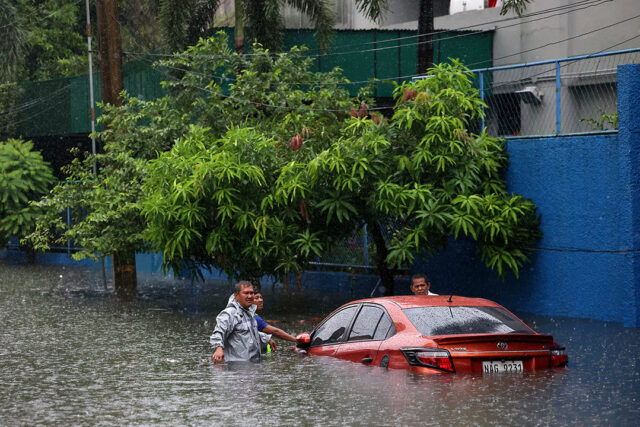
LARGE parts of Luzon and the Visayas remain vulnerable to heavy rain from a shear line and the northeast monsoon, the state weather bureau said on Sunday.
The Philippine Atmospheric, Geophysical and Astronomical Services Administration (PAGASA) said rainfall will be driven by a shear line, which is expected to bring cloudy skies, scattered rains and thunderstorms over Southern Luzon and portions of the Visayas.
Northern Luzon will continue to see intermittent rain due to the northeast monsoon, locally known as amihan.
Metro Manila, Mimaropa, the Bicol Region, Quezon, Laguna, Rizal, Cagayan Valley and the Cordillera Administrative Region are among the areas forecast to experience rain.
PAGASA warned that rainfall of 50 to 100 millimeters may fall over Quezon, Camarines Norte, Camarines Sur, Albay, Sorsogon, Catanduanes and Oriental Mindoro, levels that could trigger localized flooding in low-lying and urban areas.
Similar rainfall amounts are forecast to persist on Monday across parts of Bicol and Eastern Visayas, including Northern and Eastern Samar.
The agency also issued gale warnings over northern coastal waters, including Batanes, the Babuyan Islands, Ilocos Norte and Ilocos Sur, advising small sea vessels to remain in port as seas may become rough to very rough. — Chloe Mari A. Hufana
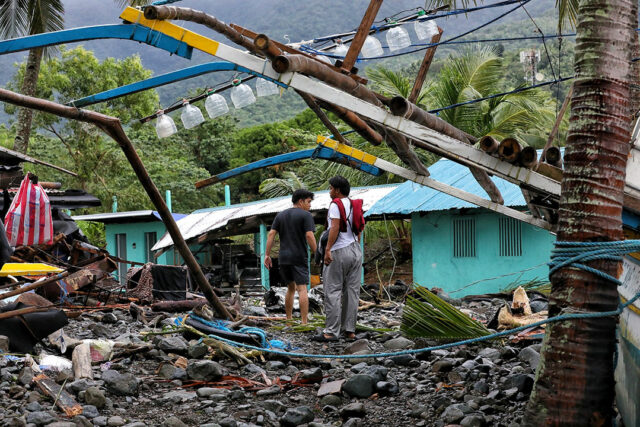
THE Philippine government has yet to tap its disaster‑response funds this year, leaving P40.15 billion unspent as of end‑January, according to the Department of Budget and Management (DBM).
In its latest National Disaster Risk Reduction and Management Fund (NDRRMF) report, the DBM showed no disbursements from P23.49 billion for the NDRRMF, P15.33 billion for the Disaster Rehabilitation and Reconstruction Assistance Program, and P1.32 billion for the People’s Survival Fund (PSF).
The PSF budget reflects P1 billion from the 2026 budget plus continuing appropriations from the prior year.
Last year, calamity funds released totaled P20.68 billion, with P322.86 million left undisbursed.
NDRRMF is meant for aid, relief and rehabilitation services to areas affected by human-induced and natural calamities, as well as the repair and reconstruction of permanent structures, including other capital expenditures for disaster operation, and rehabilitation activities.
Meanwhile, the annual PSF is intended for local government units and accredited local/community organizations to implement climate change adaptation projects. — Aubrey Rose A. Inosante

A SENATOR has filed a bill seeking to provide better incentives to remote workers in the country, in a bid to institutionalize flexible work arrangements.
Senate Bill No. 1739, filed by Senator Joseph Victor G. Ejercito, proposes to provide telecommuting workers with at least P1,000 monthly non-taxable telecommuting allowance.
He added that the bill seeks to amend Republic Act No. 11165, the Telecommuting Act, which allowed employees in the private sector to work from an alternative workplace.
“This bill aims to amend the Telecommuting Act to further strengthen and institutionalize telecommuting as a mainstream work option in the Philippines and not as a mere contingency plan,” he said in the explanatory note.
The proposed measure states that monthly allowances must not eliminate or diminish supplements, allowances, or other employee benefits serving a similar purpose.
Mr. Ejercito added that the bill proposes guidelines and safeguards to ensure that both employers and employees would benefit from flexible working arrangements.
“It promotes equity, protection, and productivity in a modernized labor environment,” he said.
The proposed measure mandates the Department of Labor and Employment, the Civil Service Commission, the Department of Finance, and the Bureau of Internal Revenue to craft implementing rules and regulations. — Adrian H. Halili

A CONGRESSMAN on Sunday urged the Senate to fast-track its approval of a bill proposing a “reintegration” scheme for returning overseas Filipino workers (OFWs), amid an expected influx in the first quarter.
In a statement, Party-list Rep. Jude A. Acidre said senators should swiftly pass their version of a measure that would support the assimilation of OFWs, helping them transition back into local employment after working abroad.
The House approved House Bill No. 6643 in December 2025, sending it directly to the Senate for their counterpart action, he said.
“Every first quarter of the year, we see OFWs come home with plans to rebuild their lives,” Mr. Acidre, who heads the House Overseas Workers Affairs Committee, said. “This bill ensures they are not left to navigate that transition alone, but are met with clear pathways to work, livelihood, and family stability.” — Kenneth Christiane L. Basilio

THE Commission on Human Rights (CHR) urged the Philippines to shift from awareness campaigns to sustained enforcement as online child sexual abuse and exploitation continue to grow alongside wider digital access and persistent poverty.
The CHR said that future child protection efforts will depend on how effectively authorities implement existing laws and strengthen safeguards in both physical and online spaces, warning that risks have become more complex and entrenched since the pandemic.
“Protecting children now requires sustained vigilance and robust safeguards across both offline and online spaces,” it said in a statement on Sunday.
Data from the commission’s Child Rights Center show more than 2.7 million cyber tipline reports were recorded in 2023, highlighting a sharp rise in online sexual abuse cases driven by economic vulnerability, family involvement, and chronic underreporting.
The CHR stressed the need for full enforcement of Republic Act No. 11930, the Anti-OSAEC (online sexual abuse and exploitation of children) law, alongside the country’s obligations under the United Nations Convention on the Rights of the Child, to ensure accessible, child-sensitive, and trauma-informed systems for reporting, rescue and prosecution.
It said protecting victims will require wider use of measures such as prerecorded testimonies to prevent re-traumatization, as well as expanded psychosocial services and livelihood support for households at most risk.
“Beyond annual observance, protecting children from sexual abuse and exploitation demands a consistent and collective willingness to confront uncomfortable truths, challenge harmful norms, and strengthen protection systems so they can respond more effectively to evolving risks,” said the CHR.
It also called for stronger collaboration with internet service providers and digital platforms to detect and disrupt online exploitation, while continuing to monitor related risks such as child labor, displacement, and early marriage. — Chloe Mari A. Hufana

AN OVERSEAS Filipino workers (OFWs) group on Sunday urged President Ferdinand R. Marcos, Jr. to order the release of drug convict Mary Jane F. Veloso, stressing that petitions for her release have long been filed by migrant advocates and rights groups.
“Now, as Marcos, Jr. refuses to hear her every appeal for her freedom, let us collectively amplify Mary Jane’s story and voice from prison to Malacañang and win her the justice and freedom she deserves,” Migrante International Chairperson Joanna Concepcion said in a statement.
The group added that the Marcos administration has already received petitions and appeals to grant Ms. Veloso clemency. Groups have also filed an appeal to the Supreme Court to expedite cases against her recruiters.
Ms. Veloso continues to claim innocence, and echoed calls for her immediate release.
“I wish for nothing more than to be with my family who have been separated from me for more than 16 years. I hope to be given the opportunity to take care of my parents while they are still alive and especially,” she said in a letter sent by Migrante.
“For some reason, after one year, I am still here in prison even though I have not committed any wrongdoing, even in our country,” she added.
She said that her family has experienced difficulties in visiting her in prison, having to travel eight to 10 hours.
Ms. Veloso was arrested in Yogyakarta, Indonesia in 2010 with 2.6 kilograms of heroin concealed in a suitcase, she claims that she was coerced to be a drug mule.
She was spared from death row in 2024 after Manila and Jakarta signed an agreement transferring her custody and is currently being detained in the Correctional Institute for Women in the Philippines. — Adrian H. Halili