Home Blog Page 3215

Luzon Economic Corridor to receive US support for feasibility studies
ICTSI.COM

THE US Trade and Development Agency will assist with feasibility studies for projects to develop the Luzon Economic Corridor, a White House adviser said.

At the Indo-Pacific Business Forum on Tuesday, Amos Hochstein, a deputy assistant to the US President and Senior Adviser for Energy and Investment, said that the US government will help identify the projects that need to be in place to attract companies to invest in Luzon.

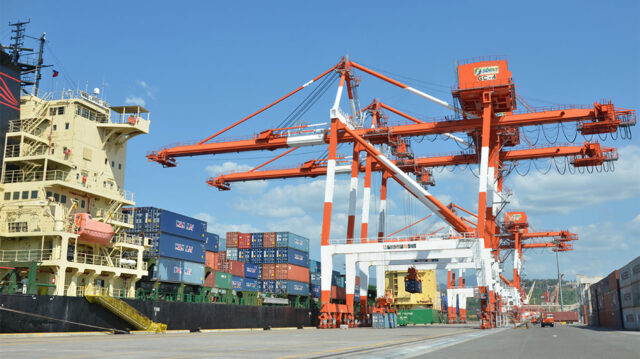
Mr. Hochstein said the initial works are likely to be infrastructure projects like port modernization and rail lines.

“What we want to do is look at what kinds of projects can be invested in and what kinds of projects can be supported first. So we’ve worked with the government of the Philippines on identifying the exact infrastructure projects,” he said.

“That includes port development in Batangas and in Subic Bay, building the freight rail from the ports to Clark, and connecting Subic to Clark to Manila to Batangas. If you can have that kind of integrated investment in infrastructure, that will support the companies coming in,” he added.

Once the feasibility studies are done and the Philippine government starts to put out the tenders for the project, the US government will then come in again through its agencies to provide financing via debt, equity, political risk insurance, and other financial instruments.

“Again, the US government is not here to make investments in the sector, whether it’s in the semiconductor sector or anything else, but rather to look at what kinds of things are the necessary infrastructure that make the private sector come in and make the investments,” he added.

President Ferdinand R. Marcos, Jr. called the Luzon Economic Corridor one of the most important collaborations among the Indo-Pacific Economic Framework for Prosperity (IPEF) partner countries.

“Given Luzon’s critical status as the host of most of the Philippines’ export manufacturing and high-technology industries, upgrading infrastructure in this area is essential,” Mr. Marcos said in his remarks.

“These enhancements are crucial for empowering the workforce and facilitating the smooth flow of goods and services,” he added.

Aside from key projects in the Luzon Economic Corridor, Mr. Marcos also pitched the Philippines’ 491,821-megawatt renewable energy potential, semiconductor, electronics, and critical minerals industries, digital transformation initiatives, and information technology and business process management industry, among others.

Meanwhile, he said that foreign direct investment (FDI) has expanded for four consecutive months, providing support for further growth.

“Notably, IPEF partner countries play a significant role in our robust economic growth, contributing substantially to our FDI and other approved investments,” he added.

To support further growth, he said his government will continue to implement reforms to ensure a conducive business environment, develop a competitive workforce, and drive industrial transformation.

“Through these steadfast efforts, we are attracting foreign investments that are not only fueling our growth, but also broadening our economic base,” he added. — Justine Irish D. Tabile

Challenges to Bohol, Iloilo airport upgrade proposals expected this year, DoTr says

DOTR PHOTO

CHALLENGES to the original proponents are expected this year for the New Bohol-Panglao International Airport and the Iloilo International Airport this year, the Department of Transportation (DoTr) said.

“When we publicize the instructions to bidders, it will also be the publication of the concession agreement,” Roberto C.O. Lim, Transportation undersecretary for aviation and airports, told reporters at a forum last week.

Mr. Lim was responding to a query on the government’s timetable for inviting parties to challenge the unsolicited proposal of Aboitiz InfraCapital, Inc. for the P4.53-billion contract to upgrade New Bohol-Panglao International Airport.

The Public-Private Partnership (PPP) Center estimates that the Bohol airport is targeted for award by year’s end.

The Aboitiz group secured in 2018 the original proponent status (OPS) for the New Bohol-Panglao International Airport’s operations and maintenance which will feature a 25-year concession period.

The government is hoping to finalize its negotiations with the Aboitiz group, and issue its instruction to challengers within one month.

Mr. Lim said once the negotiations are finalized, the government will publish the instruction to bidders and the proposal opened to challenge.

“We hope we can do that in one month, we hope. Because we are talking with the same party as Laguindingan. Now, we will talk to Aboitiz again about this airport. We’ll do it using the same process, but it should be shorter,” Mr. Lim said.

The DoTr invited challengers for the unsolicited proposal of Aboitiz InfraCapital for the P12.75-billion operation, maintenance, and upgrade contract for Laguindingan International Airport, which serves northern Mindanao.

Aboitiz InfraCapital also holds OPS for the Laguindingan contract, which has attracted two challengers, Mr. Lim said.

The PPP Code, or Republic Act No. 11966, amended the Build-Operate-Transfer Law to create a unified legal framework for all PPPs at both national and local levels.

Under the PPP Code, unsolicited proposals must undergo a comparative challenge following a right-to-match mechanism within a given time period.

The grant of OPS gives the original bidder the option to match offers made by challengers.

The government’s negotiations with Prime Asset Ventures, Inc. which secured the OPS for the right to operate, maintain, and upgrade Iloilo International Airport, are expected to be completed by September, Mr. Lim said, adding that the awarding of the contract will take place by the first quarter of 2025.

“The negotiations will be finished in September… right now we are looking at the first quarter for the issuance of the award,” Mr. Lim said.

Nigel Paul C. Villarete, senior adviser on PPP at the technical advisory group Libra Konsult, Inc., said the government’s approach to privatizing regional airports has proven to be faster and has led to better outcomes, following the success of Mactan-Cebu International Airport.

In 2022, Aboitiz InfraCapital finalized a deal with Megawide Construction Corp. and GMR Airports International, B.V., allowing it to acquire shares in GMR-Megawide Cebu Airport Corp., the company behind Mactan-Cebu International Airport.

“This is a big boost to the aviation sector which will benefit from improved and more efficient operations by the private sector,” Mr. Villarete said in a Viber message on Tuesday.

He said the government’s PPP approach has proven beneficial as it structures airport deals that generate positive financial returns. 

“Many of the other smaller airports are still government-subsidized and may not qualify for PPP. These can still be offered but with a government subsidy factored in. But that’s for the government to decide,” he said.

“Good for the country, and the aviation sector, if the three regional airports go the way of Mactan Cebu. But I don’t expect the government to privatize more regional airports soon — for the simple reason that there are few, if any, in the pipeline,” Rene S. Santiago, former president of the Transportation Science Society of the Philippines, said in a Viber message.

Mr. Lim said the government is also looking at the possibility of bundling smaller airports to offer as PPPs.

“Part of the strategy we are looking at is how to bundle, how many and which ones to make it attractive to be offered for PPP,” he said.

For now, Mr. Lim said other regional airports have attracted unsolicited offers.

“Other airports remain candidates, of course — General Santos, Busuanga, even Bacolod, Bicol. There are bigger airports — Laoag, Tacloban… that can be the central airport to bundle with,” he added. — Ashley Erika O. Jose

Puerto Princesa Port expansion bidders invited

PPA PMO PALAWAN FACEBOOK PAGE

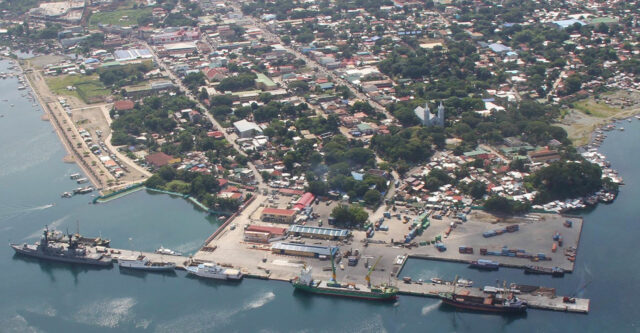
THE Philippine Ports Authority (PPA) has issued an invitation to bidders for the first phase expansion of the Puerto Princesa Port, valued at nearly P600 million.

“The Philippine Ports Authority now invites bids for the Procurement Project. Completion of the Works is required in Six Hundred Sixty (660) calendar days from the receipt by the successful bidder of the Notice to Proceed,” the PPA said.

In PPA’s invitation to bid notice on Tuesday, it said it is investing P599.15 million for the phase 1 expansion of the Port of Puerto Princesa.

“Bids received in excess of the approved budget for the contract (ABC) shall be automatically rejected at the bid opening,” PPA said.

Bidders should have completed a similar project beforehand, the PPA said. It said the format will be open competitive bidding with pass or fail criterion.

Bidding documents for interested parties may be acquired for P75,000, with a pre-bid conference set for May 30 and bid opening scheduled for June 14.

Phase 1 of the Puerto Princesa Port Expansion project includes removal and excavation works, and enclosure and upgrading of the port operational area. — Ashley Erika O. Jose

Customs collections top P330B as of mid-May

BW FILE PHOTO

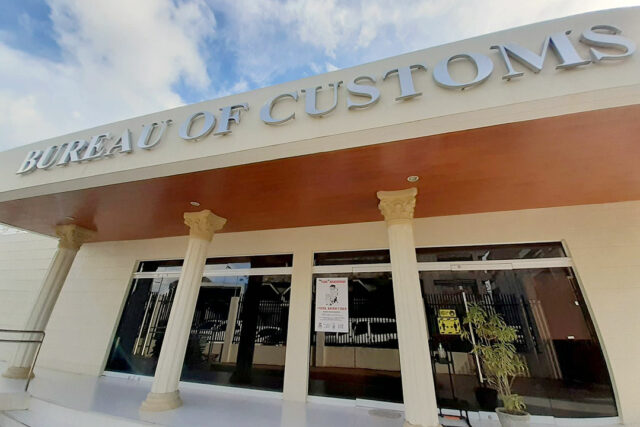
THE Bureau of Customs (BoC) has collected P330.27 billion as of May 13, exceeding its target for the period.

Citing preliminary data, the BoC said collections were 3.9% ahead of target and up 7% from collections generated over the same period a year earlier.

The BoC also reported that it conducted 132 apprehensions in the first quarter with seizures valued at about P28.02 billion.

 “These seizures encompassed a range of items, including general merchandise, counterfeit goods, cigarettes/tobacco, and illicit drugs discovered at various ports,” it added.

The BoC marked 7.01 billion liters of fuel worth P908.52 billion for since the start of the fuel marking program in 2019 to May 9, 2024.

“The BoC remains committed to contributing to the Department of Finance’s goal of fostering national socio-economic growth by collecting additional revenue and safeguarding the country’s borders,” Customs Commissioner Bienvenido Y. Rubio said.

The BoC said it is also working with the World Bank on the next steps of the Customs Modernization Project as well as reforms to the value-added tax refund process.

This year, Customs is expected to generate close to P1 trillion in revenue. — Luisa Maria Jacinta C. Jocson

Biofuel decision seen requiring study due to impact on poor

REUTERS

THE decision to raise the biofuel blend must undergo an impact study to consider the possible impact on more vulnerable commuters, an economist said.

Leonardo A. Lanzona, an economics professor at the Ateneo de Manila, said that while the new policy “may be socially acceptable, the burden will be carried disproportionately by the lower-income populations who spend a larger proportion of their incomes on transportation.”

“While the long-term benefits of this program on health may be gained eventually by the poor, careful consideration and impact assessments would be necessary to ensure a just and equitable transition to more environmentally friendly fuels like biodiesel, without unduly burdening vulnerable populations,” he said via chat.

On Monday, the Department of Energy (DoE) announced the guidelines for raising the biofuel content of the biodiesel blend.

Oil companies have been directed to increase the coco diesel blend to 3% starting Oct. 1, to 4% by Oct. 1, 2025, and to 5% by Oct. 1, 2026.

The Biofuels Act of 2006 requires that all liquid fuels for motors and engines contain locally sourced biofuel components.

Since February 2009, fuel retailers have been required to offer a 2% biodiesel blend by volume on all diesel fuel.

Under the new policy, oil companies can also offer gasoline consisting of 20% bioethanol, on a voluntary basis.

At present, the DoE has required a 10% bioethanol blend by volume on all gasoline sold in the Philippines.

The DoE said an estimated net savings of P4.17 per liter of diesel could be realized with an increase of around 10% in mileage, based on a 30,000-kilometer road test using a coco methyl ester blend of 5%.

Meanwhile, increasing the bioethanol blend to 20% could result in a P3.21 per liter reduction in gasoline pump prices.

DoE Director for Energy Policy and Planning Michael O. Sinocruz said raising the biofuel content could help reduce pollution, and generate additional jobs. — Sheldeen Joy Talavera

Collins Aerospace may expand PHL aircraft interiors product lineup

PRNEWSWIRE.COM

COLLINS AEROSPACE, a division of US-listed RTX, is considering making more products at its facility in the Philippines over the next five years, in the process expanding its supply chains in the region.

“It would be interior aircraft products. So it would be a complement to what we do today, which is main cabin seating, galleys, lavatories, and galley inserts. So it would be along those product lines,” according to Mary DeStaffan, general manager of the Collin Aerospace facility in Tanauan, Batangas.

“This is all part of the strategic plan as we continue to grow the business here and support Asian customers. It is still in the works, but the Philippines has the commitment of Collins Aerospace, as (the facility) has a very competitive advantage,” she added.

She said the company prepares a strategic and financial plan over a five-year period, and the company is looking to roll out the additional product lines within the same period.

“Right now, we are looking to do the expansion at our current site. We have an additional footprint available, and once (we get the go signal) and the right products, we will consider expanding at our current location,” she added.

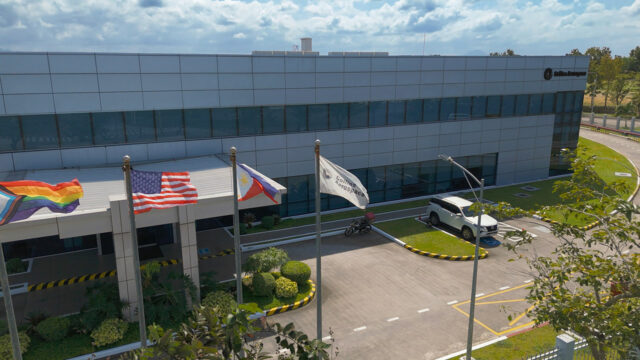
The Collins Aerospace facility is located at the First Philippine Industrial Park in Tanauan, Batangas. It is the largest US manufacturer in the country.

“So it could be a new assembly line, but truly, there is nothing firm right now. We are just exploring different options, and we continue to partner with airlines to understand what they need and how we can support that,” Ms. DeStaffan said.

Collins Aerospace supplies parts to Boeing and Airbus.

“Our (Philippine) site is one of the largest sites within Collins Aerospace, and so the investment that we’ve made here from 2012 until now shows our commitment to be here in the Philippines,” she said.

“I’m excited to lead the site, to continue to advocate for growth here in the Philippines, and to just be a good partner here,” she added.

Ms. DeSteffan said that regionalizing Collins Aerospace’s supply chain does not only mean more revenue for the Philippines but will also allow the company to respond faster to customer demands. — Justine Irish D. Tabile

Agri dep’t sees need for facility to condemn seized farm products

PHILSTAR/MIGUEL DE GUZMAN

THE Department of Agriculture (DA) said it is considering setting up a facility to condemn seized farm goods to prevent them from leaking out onto makets.

“It is better that the DA condemn all the products caught at the pier that are illegal, or probably diseased, or contraband,” Agriculture Secretary Francisco P. Tiu Laurel, Jr. told reporters.

He added that there have been reports of condemned good being diverted to unauthorized uses.

“But as far as the last few months are concerned all condemned goods were (handled) properly,” Mr. Tiu Laurel said.

Separately, Agriculture Assistant Secretary and Spokesperson Arnel V. de Mesa said that the Secretary is proposing to give the DA regulatory powers to condemn smuggled agricultural goods.

“That is to avoid the problem of (the goods) being diverted to the markets,” he added.

“To keep it from happening again, let the DA handle the condemnation,” he said.

Mr. De Mesa added that agricultural goods which have been apprehended should be handled by the Agriculture department.

“Right now there is a third party that’s condemning and (disposing) of the seized goods,” he said. — Adrian H. Halili

Red Planet Hotels targets 20% revenue growth

RED PLANET

By Justine Irish D. Tabile, Reporter

RED PLANET HOTELS is expecting revenue growth of 20% this year, driven by the opening of a new site in Taguig.

“In terms of revenue, we are expecting double-digit growth. We already started that way, and we expect a lot from this (Taguig) hotel. This hotel will be the number one in revenue for sure,” according to Florent Humeau, chief executive officer of Red Planet Hotels, in a roundtable discussion on Monday.

“I think (the revenue) will be 20% higher than last year, or maybe more. (The Department of Tourism) is working to bring more tourism, and I think what makes us also optimistic is that we saw a surge in demand in business last year,” Mr. Humeau added.

He said that revenue in the first four months of the year is already 20% ahead of the year-earlier pace.

“Usually, the best time for our hotel is in October, November, and December, as there is very high demand … So there is no reason for (revenue) to start going down,” he added.

He said that the company was already back at its 2019 occupancy levels as of this year.

“We’re back to what we used to do in 2019 in terms of occupancy… Some properties have already surpassed pre-pandemic sales, while others are in line,” he added.

He said that Metro Manila sites in general have recovered faster than Red Planet hotels outside Metro Manila.

“All the hotels were doing quite well. But the rate of flights has increased quite noticeably in the last few months and is somehow impacting destination hotels (or hotels in Cebu, Cagayan de Oro, and Davao),” Mr. Humeau said.

Set to fully operate this month, Red Planet Bonifacio Global City The Fort marks the company’s 14th branch in the Philippines. It will offer 245 rooms, the company’s biggest hotel in the country.

“There is no other budget hotel (in BGC) yet, so being the first one and the most affordable hotel within BGC, it definitely makes a good opportunity for Red Planet,” Mr. Humeau said.

To date, the company manages 14 properties in the Philippines, ten of which are in Metro Manila, with the others in Clark/Angeles City, Cebu, Cagayan de Oro, and Davao.

Asked about expansion plans, he said that the company is looking to acquire and manage four hotels in the next five years.

“We are looking more outside of Metro Manila. We already have 10 hotels in Manila, so we cover pretty much the whole Metro already. So, yes. We are looking more outside Manila,” he said.

Among the areas that the company is looking for expansion are Iloilo, Bacolod, and General Santos, which are being marketed heavily by the Tourism department.

El Niño farm damage hits P9.5 billion

REUTERS

AGRICULTURAL damage caused by El Niño has been estimated at P9.5 billion, with rice and corn the most affected crops, according to the Department of Agriculture (DA).

In its 11th El Niño bulletin, the DA said crop damage by volume as of May 16 was 426,798 metric tons across 163,694 hectares of farmland, with 175,063 farmers and fisherfolk affected.

Damage to rice was estimated at P4.6 billion or 48.5% of the total. The volume of rice lost was 185,561 MT spanning 83,862 hectares.

Agriculture Assistant Secretary and Spokesperson Arnel V. de Mesa said damage to the rice crop remained below the DA’s estimates.

“The total area affected is 83,000 (hectares)… Still below is our expected total area of 150,000 hectares to be affected,” he told reporters on Tuesday.

The DA said that 71.22% of the affected farmland was partially damaged, with the remainder suffering total losses.

“Most of the damage and losses involved rice in the reproductive and maturing stages,” it added.

Damage to corn was estimated at 180,807 MT valued at P3.17 billion. This made up 33.42% of total damage brought on by El Niño.

It added that high value crops lost amounted to 49,949 MT across 12,856 hectares of farmland. The losses were valued at P1.65 billion, or 17.36% of the total.

Damage to fisheries was estimated at P57.72 million, affecting 2,261 fisherfolk, while livestock and poultry damage was estimated at P10.47 million.

Malaking inakyat nito from the last bulletin. Kasi last bulletin 6.3 billion. So ito na siguro ’yung mga huling papasok ng mga report. (Damage estimates have gone up a lot since the last bulletin (which was) P6.3 billion. So these are probably the last reports to come in),” he added.

Mr. De Mesa said that Mimaropa had suffered the most damage with crop losses valued at P2.6 billion.

This was followed by Cagayan Valley with P2.1 billion and the Western Visayas P1.7 billion.

In a May 6 bulletin, the government weather service, known as PAGASA (Philippine Atmospheric, Geophysical and Astronomical Services Administration), said El Niño is weakening and the likelihood of La Niña to occur is 60% between June and August.

The hotter and drier conditions from El Niño are also expected to persist.

On Monday, the DA said that it had begun monitoring prices of farm goods as the climate transitions to La Niña. — Adrian H. Halili

Spot prices rise in early May on higher power demand

BW FILE PHOTO

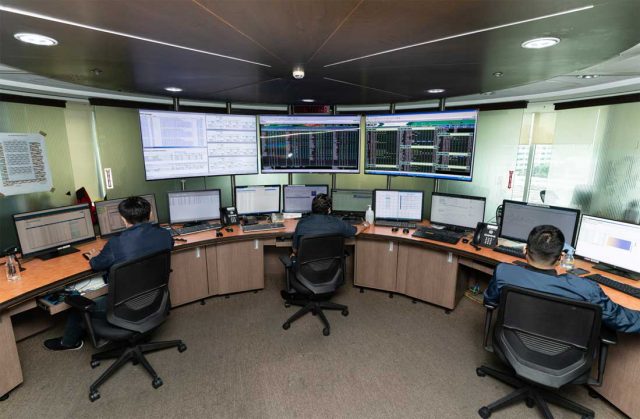
ELECTRICITY spot prices rose in early May, driven by higher demand, the Independent Electricity Market Operator of the Philippines (IEMOP) said on Tuesday.

Average electricity prices at the Wholesale Electricity Spot Market (WESM) rose 12.1% to P7.85 per kilowatt hour (kWh) a month earlier.

“Demand in May is around 15,651 (megawatts) which is relatively high compared to the April billing as the heat index continues to increase,” Chris Warren C. Manalo, assistant manager of IEMOP’s market simulation and analysis division, said in a briefing.

Supply during the period was 19,786 MW, 3.1% higher compared to the 19,199 MW a month prior.

The WESM price in Luzon increased 18.9% month on month to P7.88 per kWh.

Supply was 14,144 MW, up 6.3% from a month earlier, while demand rose 10.1% to 11,348 MW.

In the Visayas, the average spot price declined 3.4% to P8.43 per kWh.

IEMOP said supply in the Visayas was 2,425 MW, up 3.2% from a month earlier. Demand rose 8% to 2,162 MW.

“For the ongoing May billing for Mindanao, the price is around P6.98 (per kWh),” Mr. Manalo said. The spot price in Mindanao a month earlier had been P6.43 per kWh.

Mindanao’s supply fell 9.4% to 3,218 MW from a month earlier while demand rose 3.7% to 2,140 MW.

Arjon B. Valencia, manager of corporate planning and communications at IEMOP, said that the demand is expected to ease during the transition to the wet season.

“The expectation is as we transition to the wet season, the temperature we’re experiencing will gradually fall, and with that, consumption will be lower,” Mr. Valencia.

“Historically, as you know, when the second half of June comes, that’s when it rains. Of course, that means our demand will ease,” IEMOP Vice-President for trading operations Isidro E. Cacho, Jr. said.

In its advisory, the government weather service, known as PAGASA (Philippine Atmospheric, Geophysical and Astronomical Services Administration), said that El Niño continues to weaken but impacts such as hotter and drier conditions still persist.

PAGASA said the likelihood for La Niña to develop from June to August is 60%.

YELLOW ALERT
In an advisory early Tuesday, the National Grid Corp. of the Philippines (NGCP) placed the Luzon grid on yellow alert between 1 p.m. and 4 p.m. and between 7 p.m. and 10 p.m.

The NGCP said that the available capacity was 14,687 MW while peak demand was 13,507 MW.

Some 18 power plants were on forced outage between 2023 and May 2024 while six are running at derated capacity, resulting in 2,075.8 MW lost to the grid, according to the grid operator.

The Visayas grid was also put under yellow alert between 2 p.m. and 4 p.m. and between 6 p.m. and 9 p.m.

Available capacity was 2,933 MW while peak demand was 2,614 MW.

One power plant in the Visayas has been on forced outage since 2022, two since 2023, and two between January and March. A total of 11 power plants were out between April and May while five are running derated.

Some 514.1 MW was unavailable to the grid.

A yellow alert is issued when the operating margin is insufficient to meet the transmission grid’s contingency requirements. —  Sheldeen Joy Talavera

Sugar farmers seen benefiting from higher demand after biofuel ruling 

FACEBOOK.COM/VICTORIASMILLINGCOMPANY

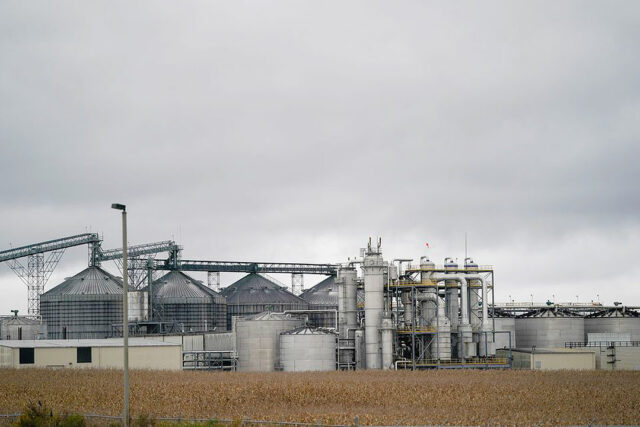
A GOVERNMENT order to increase the biofuel content in diesel and gasoline may benefit the sugarcane industry, the Sugar Regulatory Administration (SRA) said.

“It will bring more opportunity for our sugarcane farmers, as there will be bigger demand for cane or molasses,” SRA Administrator Pablo Luis S. Azcona said via Viber, referring to two ingredients in bioethanol production.

According to the US Department of Agriculture (USDA), Philippine fuel ethanol consumption is expected to increase by 8% this year, amounting to 682 million liters.

On Monday, the Department of Energy (DoE) required oil companies to offer gasoline with 20% bioethanol content.

“The increase in blend will also allow ethanol plants to maximize production using local feedstock,” Mr. Azcona added.

The USDA also projected fuel ethanol imports into the Philippines to increase to 280 million liters, servicing about 42% of demand.

“Also, the increase in blend will lower the price of gasoline and diesel. The five million people dependent on the sugarcane industry use fuel for farming and in their daily life,” he added.

The DoE said that the increase in the bioethanol blend could bring down gasoline pump prices by P3.21 per liter.

The SRA reported that milled sugarcane amounted to 21.45 million metric tons (MT) during the 2023-2024 milling season.

The USDA also estimates that sugarcane production will hit 21.5 million MT this year.

However, Mr. Azcona said earlier that El Niño has affected the sugarcane planted for the next harvest season.

It added that the supply of molasses was 1.08 million MT, higher than the 961.9 thousand MT the previous year.

The DoE will also begin increasing the biodiesel blend to B3 (3% coco oil content) by October. This begins the government’s plan to raise the blend to B5 (5%) in the next five years. — Adrian H. Halili

PHL shares retreat as peso sinks to P58:$1 level

BW FILE PHOTO

PHILIPPINE STOCKS retreated on Tuesday as the peso’s drop to the P58 level soured sentiment and amid a lack of catalysts.

The Philippine Stock Exchange index (PSEi) dropped by 0.73% or 49.12 points to end at 6,633.66 on Tuesday, while the broader all shares index fell by 0.36% or 12.93 points to close at 3,535.77.

“This Tuesday, the local market dropped by 49.12 points (0.73%) to 6,633.66 as investors worried over the weakness of the local currency against the US dollar,” Philstocks Financial, Inc. Research and Engagement Officer Mikhail Philippe Q. Plopenio said in a Viber message.

“The Philippine peso breached the P58-per-dollar mark, which has been the lowest in nearly two years. Also, the lack of strong positive leads weighed on the market,” Mr. Plopenio said.

The peso closed at a near 19-month low of P58.27 against the dollar on Tuesday, dropping by 37 centavos from the previous day’s finish of P57.90, data from the Bankers Association of the Philippines showed.

This was the local unit’s worst close since it ended at P58.275 on Nov. 8, 2022.

Year to date, the peso has lost P2.90 from its end-2023 close of P55.37.

“Philippine shares weakened as investors watched the peso slide below the P58 towards the US dollar,” Regina Capital Development Corp. Head of Sales Luis A. Limlingan likewise said in a Viber message.

“Wall Street kicked off the week with a mixed start. The Nasdaq Composite hit a new high, fueled by Nvidia’s 2.5% rally ahead of its earnings report. The S&P 500 edged up slightly, while the Dow Jones Industrial Average dipped nearly 0.5%, largely due to a 4.5% decline in JPMorgan following Jamie Dimon’s retirement comments,” Mr. Limlingan added.

Wall Street was mixed on Monday while gold jumped to an all-time high as investors weighed hawkish statements from the US Federal Reserve against evidence of cooling US inflation, Reuters reported.

The tech-heavy Nasdaq led the pack with a boost from chips, while the blue-chip Dow dipped below 40,000 after closing on Friday above that level for the first time.

At home, almost all sectoral indices ended lower, except for services, which rose by 0.77% or 15.28 points to 1,986.40.

Property fell by 1.28% or 33.32 points to 2,567.48; holding firms went down by 1.09% or 64.53 points to 5,831.03; financials decreased by 1.09% or 22.37 points to 2,027.57; mining and oil retreated by 0.53% or 52.04 points to 9,666.46; and industrials declined by 0.53% or 49.44 points to 9,200.38.

Value turnover rose to P9.8 billion on Tuesday with 2.95 billion shares changing hands from the P5.8 billion with 513.47 million issues traded on Monday.

Decliners beat advancers, 99 against 86, while 48 names closed unchanged.

Net foreign selling declined to P70.56 million on Tuesday from P248.11 million on Monday. — R.M.D. Ochave with Reuters

ADVERTISEMENT
ADVERTISEMENT