Home Blog Page 312

Discaya’s Rolls-Royce sold for P29M

CONSTRACTORS Pacifico F. Discaya II and Cezarah Rowena C. Discaya attends a Senate investigation on anomalous flood control projects, Sept. 8, 2025. — SENATE PRIB FILE PHOTO

THE Bureau of Customs (BoC) raised P29.04 million from the sale of a Rolls‑Royce Cullinan once owned by Cezarah Rowena “Sarah” C. Discaya and Pacifico “Curlee” F. Discaya II, the lone luxury vehicle successfully auctioned on Wednesday.

In a public auction, the BoC said the luxury vehicle was snagged by the winning bidder, Igorot Stone Kingdom, Inc. Chief Executive Officer Pio Velasco.

The auction featured 10 high‑end vehicles, eight of which were linked to contractors tied to flood control projects.

Other cars on the block included a 2024 Lincoln Navigator, 2021 Cadillac Escalade, and 2022 GMC Yukon XL Denali.

Among the registered bidders in the public auction were celebrity television host Wilfredo “Willie” Revillame and R33 Car Exchange Corp. — Aubrey Rose A. Inosante

DoLE backs TESDA’s digital initiative

THE Department of Labor and Employment (DoLE) on Wednesday said it supports the Technical Education and Skills Development Authority’s (TESDA) latest digital initiative, citing the platform as a key measure to strengthen the link between skills training, certification, and employment

In a statement, DoLE said the newly launched Skills Passport mobile application aims to ease the transition of trainees into the workforce by consolidating essential services into a single, accessible digital platform.

TESDA Secretary Jose Francisco “Kiko” B. Benitez highlighted that the app functions as a digital portfolio, allowing users to store and present their skills, credentials and generate QR code-enabled resumes for potential employers.

He added that this feature makes workers’ skills “visible, verifiable, and valuable,” and emphasized that the app ensures training leads to proper employment.

The mobile application was officially launched last Feb. 5, spearheaded by President Ferdinand R. Marcos, Jr. and TESDA officials. — Erika Mae P. Sinaking

Nueva Ecija biobank to help improve cacao, banana disease management

JICA.GO.JP

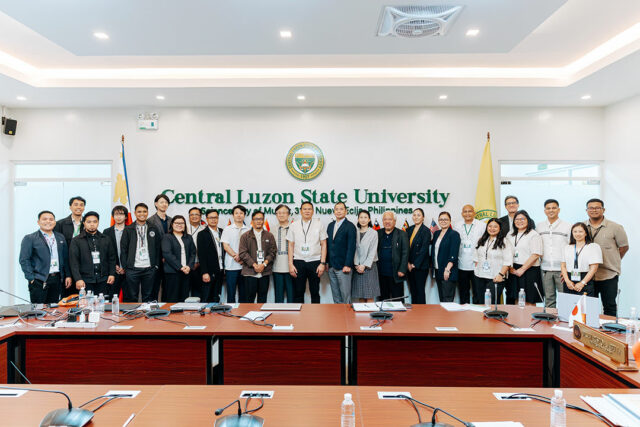
A FUNGAL BIOBANK at Central Luzon State University in Nueva Ecija is expected to improve disease management practices for high-value crops for cacao and banana.

The facility, built with support from the Japan International Cooperation Agency (JICA), will serve as a centralized repository of fungal isolates in Luzon linked to major diseases affecting high-value crops.

“By improving sample preservation, the biobank is expected to support better crop disease diagnosis, strengthen research continuity, and improve disease management,” JICA said in a statement.

The biobank is part of the Science and Technology Research Partnership for Sustainable Development’s Project for the Development of Novel Disease Management Systems for Banana and Cacao.

JICA said isolates from bananas are also currently conserved at Tamagawa University in Japan, with the support of the Department of Agriculture’s Bureau of Plant Industry (BPI).

In September last year, BPI and JICA signed a memorandum of agreement to promote plant health, particularly in sustainable banana and cacao production, part of a five-year initiative that began in 2021. — Vonn Andrei E. Villamiel

Plunder case filed vs NFA employee

REUTERS

THE National Food Authority (NFA) said it has filed a plunder case against one of its employees over the disappearance of rice stocks valued at roughly P53 million.

“On Dec. 19, we filed a case with the Ombudsman. It’s a plunder and malversation case against one of our employees,” NFA Administrator Larry R. Lacson told reporters on the sidelines of the Bureau of Plant Industry’s anniversary event on Wednesday.

He said the agency has yet to receive feedback from the Ombudsman and is awaiting further developments.

The case stems from the reported loss of rice stocks, which was uncovered following intensified audits conducted by the agency. Mr. Lacson earlier said the missing stocks likely dated back to 2020 to 2021 and accumulated over several years.

He said the NFA is also investigating other possible irregularities but declined to give details.

“We are still investigating other cases. I don’t want to pre-empt that. Let’s see the results of our investigation,” he said.

Mr. Lacson said the NFA remains firm in holding erring personnel accountable as part of broader reforms within the agency.

“We’re continuously making our mandate to hold people accountable. Our reform is continuous. It’s continuous because our reform is not only the management and the people. It also entails our overhauling of the standard operating procedures,” he said. — Vonn Andrei E. Villamiel

PHL hoping to regain spot as top banana exporter to Japan

BW FILE PHOTO

THE Department of Trade and Industry (DTI) said the Philippines is hoping to regain its former status as the leading banana exporter to Japan when the Japan-Philippines Economic Partnership Agreement (JPEPA) is reviewed.

“Our bananas reclaimed the number two position last year … We are continuously talking to the Japanese government if we could, of course, start the talks,” Trade Secretary Ma. Cristina A. Roque told reporters on Wednesday.

“We are hoping that with the Japanese support, (as we are) trying to really push for the JPEPA,” she added, through the help of which “we could really get the top spot again.”

She is scheduled to meet her Japanese counterpart within the first quarter to discuss JPEPA.

“We talked to their foreign affairs official who came here last month… they are aware of (our position). But I still have to talk to my (trade) counterpart,” she said.

“I am setting a meeting very soon, within the first quarter definitely. We hope that we can sit down and get this going,” she added.

For this year, she said the Philippines is also looking to conclude free trade agreements (FTAs) with the European Union, Chile, and Canada.

“Our President will go down in history (as the one with) the most FTAs that were signed during his term,” she said. “And we hope to do more (with countries like) Brazil and many others.”

She said an FTA with Brazil is on the wish list of Philippine exporters.

She said the Philippines should also prepare its logistics to help micro, small, and medium enterprises (MSMEs) tap global markets.

On Wednesday, the DTI onboarded more private sector partners to its logistics network, which includes Toyota Motor Philippines (TMP) Corp.

“Through our partnership with the DTI’s Supply Chain and Logistics Center, we aim to strengthen businesses by improving their logistics capabilities — making them more efficient, accessible, and resilient,” TMP President Masando Hashimoto said.

“Our shared goal is simple: to empower businesses to move forward, expand opportunities, and succeed — with trusted mobility and stronger logistics support at every step,” he added.

During the event, Mr. Hashimoto also welcomed the resolution of the funding for the Comprehensive Automotive Resurgence Strategy program.

“This support secures our local manufacturing and industrial systems,” he said.

He said that the company’s operations have been boosted by the production of the Toyota Tamaraw light business truck.

“As of end-January, we have proudly produced over 21,000 units, made possible by the dedication of 4,500 Filipino workers and the support of 44 parts suppliers — many of whom are MSMEs themselves,” he added.

Among its new partners were the Association of International Shipping Lines (AISL) and the Philippine Chamber of Customs Brokers, Inc. (PCCBI).

“As Philippine exports continue to climb, the DTI is ensuring local logistics capabilities can keep pace with international demand. The inclusion of AISL and PCCBI is designed to bridge the gap between local production and global markets,” the DTI said.

Established in June, the Supply Chain and Logistics Center is meant to help MSMEs access real-time service referrals and cost-saving regulatory guidance. — Justine Irish D. Tabile

EEI opens Cavite training academy

EEI.COM.PH

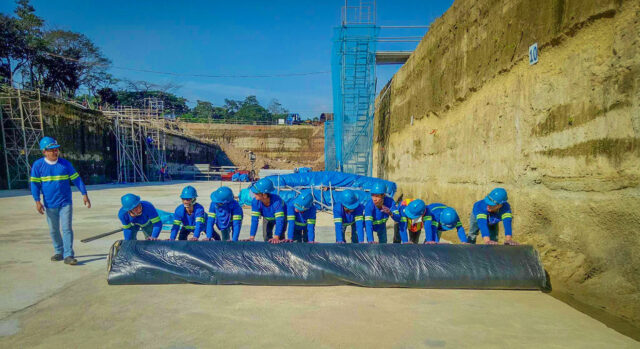
LISTED construction company EEI Corp. has inaugurated its three-hectare training facility in Cavite as part of its strategy to enhance workforce skills.

“The academy reflects our vision to not only attract the best talent, but also to nurture and retain them. EEI will continue to drive change and improvement in the Philippine construction industry by providing necessary training to elevate the skills of our workforce,” EEI Training Academy President Jesus Teodoro C. Reyes said in a statement on Wednesday.

EEI described the training academy as a strategic initiative designed to boost skills and knowledge of its workforce while also supporting capacity-building programs that enhance its capability to deliver projects.

The training facility can accommodate 500 participants, EEI said, adding that it offers training and development to ensure that workers and professional staff stay competent.

The training academy is also a Technical Education and Skills Development Authority-accredited facility.

EEI said that it will also integrate a non-construction-related training program aside from the technical training and upskilling program being offered at the academy.

EEI is primarily engaged in the construction of power-generating facilities, oil refineries, chemical production plants, rails, ports, expressways, and high-rise towers.

At the local bourse on Wednesday, shares in the company gained five centavos, or 2.30%, to end at P2.22 apiece. — Ashley Erika O. Jose

Unilab signs on to upgrade capacity of pharma workforce in PEZA economic zones

DATEM.COM.PH

THE Philippine Economic Zone Authority (PEZA) said Unilab Foundation, Inc., has agreed to help strengthen pharmaceutical manufacturing and workforce capacity in economic zones (ecozones).

“This partnership will position the Philippines as a regional hub for advanced pharmaceutical manufacturing and innovation by strengthening research and development (R&D), quality production, and an artificial intelligence (AI)-enabled workforce,” PEZA said in a social media post  on Wednesday.

PEZA signed the memorandum of understanding to that effect on Feb. 2.

“The agreement focuses on developing pharma-specific competencies, adopting advanced production and quality systems, and enhancing readiness for emerging drug technologies and evolving regulatory requirements,” it added.

The partnership is also expected to improve operational efficiency, elevate product quality and patient safety, and raise occupational health and safety standards for ecozone locators.

“As PEZA and Unilab explore areas of cooperation for the establishment of the Manufacturing Development Alliance, the partnership will drive workforce development through targeted training programs for manufacturing firms in the ecozones,” PEZA said.

“Research and development will likewise be bolstered through joint projects that promote a highly skilled, future-ready workforce,” it added.

As one of the largest healthcare companies in the Philippines, Unilab is expected to bring in global insights in advancing health education, Science, Technology, Engineering, and Mathematics capacity-building, and inclusive workforce development.

“By leveraging PEZA’s AI Tech Academy and Knowledge, Innovation, Science, and Technology (KIST) Parks, we aim to attract more companies into pharma and workforce development, manufacturing, and R&D,” PEZA Director General Tereso O. Panga said.

These will help in “building an integrated value chain that advances the Philippines as a net exporter of pharmaceutical products while helping lower the cost of medicines.” — Justine Irish D. Tabile

PDEA 12 dismantles two cohort drug rings linked to terrorists

COTABATO CITY — The multi-sector Regional Peace and Order Council (RPOC) 12 lauded on Wednesday the Philippine Drug Enforcement Agency (PDEA) 12 for having neutralized two connected drug rings linked to remaining members of the now defunct Dawlah Islamiya terror group.

Citing a report from PDEA 12, Governor Reynaldo S. Tamayo, Jr., presiding chairperson of the RPOC 12, said on Wednesday that anti-narcotics agents first arrested two drug peddlers in an entrapment operation on Thursday last week in Sitio Dalangdang in Barangay Nagpan in Malungon, Sarangani.

Officials of intelligence units of the Army’s 10th Infantry Division and the Police Regional Office (PRO) 12 said three companions of the arrested duo immediately relocated somewhere outside of the municipality after learning about the entrapment.

In a subsequent operation on Monday, four accomplices of the two suspects entrapped in Malungon were arrested by PDEA 12 agents and operatives from different units of the PRO 12 after selling to them shabu in Purok Maunlad in Barangay Apopong in General Santos City.

The four suspects are from Datu Salibo town in Maguindanao del Sur, one of the five provinces in the Bangsamoro region.

Charlene R. Magdurulang, regional director of the PDEA 12, told reporters on Wednesday that their agents have confiscated a total of P380,800 worth of crystal meth (shabu) during both operations, planned with the help of officials of PRO 12 and members of the Tamayo-led RPOC 12.

Mr. Tamayo, now in his last term as governor of South Cotabato, told reporters on Wednesday that he is grateful to the confidential tipsters, among them vigilant Moro datus in Maguindanao del Sur and leaders of the Moro communities in his province.

“Public support for the anti-narcotics operations of the Philippine Drug Enforcement Agency and the Philippine National Police in all regions in the country is so important. We in the Regional Peace and Order Council 12 are supporting both law-enforcement organizations extensively,” Mr. Tamayo said.

Ms. Magdurulang said they have separately charged the two peddlers and their four accomplices with violation of the Comprehensive Dangerous Drugs Act of 2002. — John Felix M. Unson

ADB sees tax compliance, process upgrades as key to boosting ease of doing business

The Asian Development Bank (ADB) said improving tax processes and compliance remains critical to boosting ease of doing business (EoDB). 

Governments face increasing pressure to strengthen economic competitiveness and improve their attractiveness to investors, ADB Country Director Andrew Jeffries said at a briefing Wednesday.  

“Fiscal and tax compliance are regulatory requirements for every business—you know the saying, death and taxes are the only certainties. Therefore, a central element of any ease of (doing) business is … improving these processes,” he said. 

Mr. Jeffries, speaking at the 2026 Economic-EoDB Briefing of the Anti–Red Tape Authority (ARTA), said improving such systems is a “key reform priority.” 

The Philippines ranked 53rd out of 101 economies in the World Bank’s 2025 Business-Ready (B-Ready) report, which measures the state of the business environment. 

In taxation, the Philippines scored 60.46 out of 100. The scores break down into 67.86 for the quality of tax regulation, 52.08 for public services for corporate taxpayers, and 61.44 for the operational efficiency of the tax system. 

However, the ADB official said private firms continue to face hurdles. 

“We also hear the feedback of the private sector that many challenges remain, including the need for greater digitalization, transparency, and timeliness around the processes for tax filings, assessments, and refunds,” he added. 

Earlier this month, the BIR resumed issuing letters of authority and mission orders after two months of suspension amid allegations of misuse. 

”The idea of replacing red tape with red carpet represents a shift from barriers to a welcoming approach that makes processes easier and more accessible,” ARTA Secretary Ernesto V. Perez said. 

“Together, we aim to create a system that works efficiently and responds to the needs of the people,” he added. 

Meanwhile, the Department of Finance (DoF) said ease of doing business is a “constant commitment in building trust with investors and the public.” 

”As we continuously implement reforms, we are ultimately creating an environment that will be attractive to business and investment,” Chief Privatization Officer Michael Peter A. Alejandro said on behalf of Finance Secretary Frederick D. Go. 

European Chamber of Commerce of the Philippines (ECCP) President Paulo Duarte said the B-Ready survey showed progress, but the reality is different when it comes to BIR audits. 

“The European Chamber of Commerce (has) 930 members; they might put the BIR tax audits as one of the most painful elements (of doing business in the Philippines),” he said in a panel discussion. 

Mr. Duarte also noted that processes are long and unclear, with legislative loopholes and “ending with these so-called negotiations in the end that nobody understands.” 

“We see the reforms that the administration is pursuing, especially on the BIR… But we still have a way to go to make (the reforms) tangible,” he said. 

Former Makati Business Club Executive Director Guillermo M. Luz said the BIR remains not only complicated to deal with but also inequitable, with smaller and legitimate businesses bearing the brunt. 

“When we take a look at the case like the flood control scandal, we’re shocked at the amounts of corruption that never surfaced. The BIR has never been mentioned as finding any of these non-tax payments by the contractors,” he said. 

Mr. Luz added that restoring trust requires greater transparency and seamless processes, alongside building confidence that the tax system works fairly for all, rather than favoring a few while penalizing many. 

BIR Deputy Commissioner Marissa O. Cabreros said transparency should come from not just from the BIR side, but also from taxpayers. 

“The BIR is steadfast in (monitoring) compliance … by our revenue officers,” she said. 

Ms. Cabreros also urged taxpayers to embrace transparency to improve compliance, saying this would strengthen the audit selection process. – Aubrey Rose A. Inosante 

Kalinga peace pact system now codified

TABUK CITY, Kalinga — The Provincial Government of Kalinga officially launched this week the codified Pagta, the written version of the province’s traditional Bodong or peace pact system.

The ceremony was held at the Kalinga Sports Center and attended by Governor James Edduba, local officials, tribal elders, and community members.

The Bodong is a long-standing agreement between tribes or sub-tribes to prevent conflict and settle disputes peacefully. For generations, these rules were passed down orally.

The new 137-page Pagta document puts these customary laws into writing to help preserve them and guide future leaders.

Mr. Edduba said the codified Pagta will complement national laws and serve as a bridge between indigenous practices and the formal justice system. He described it as a step toward protecting Kalinga’s culture while strengthening peace and order in the province.

The document was prepared through years of consultations involving the Kalinga Bodong Council of Elders, the Matagoan Bodong Consultative Council, the Provincial Legal Office, Kalinga State University, the Public Attorney’s Office and the National Commission on Indigenous Peoples.

During the launch, traditional chants such as the “Uggayam” were performed, highlighting the cultural importance of the event.

Officials said the written Pagta will serve as a lasting guide to maintain unity, resolve disputes and preserve Kalinga’s heritage for future generations. — Artemio A. Dumlao

Keeping up with SEC updates

The Securities and Exchange Commission (SEC) has rolled out several issuances this year to update the regulatory framework for corporations. More than just procedural changes, the updated requirements represent reforms to help simplify and improve the ease of doing business.  For registered corporations, keeping abreast with the new rules is necessary to avoid potential violations and penalties. Let’s take a closer look at what these changes mean.

STATUTORY AUDIT REQUIREMENT
One of the key changes introduced by the SEC is the increase in the threshold at which corporations must submit audited financial statements (AFS).

Previously, following the Revised Corporation Code (RCC), corporations with total assets or total liabilities of at least P600,000 were required to file AFS. Now, to align with current economic conditions, the SEC exercised its authority under Section 74 of the RCC (with the approval of the Department of Finance) and raised the threshold to more than P3 million in total assets or total liabilities.

In lieu of the AFS, exempt corporations need only to submit the financial statements accompanied by the Statement of Management Responsibility signed by the Chairman of the Board, President/Chief Executive Officer, and Treasurer/Chief Financial Officer duly authorized by the Board of Directors. In their absence, the Board may expressly designate another signatory.

This new threshold is covers fiscal years ending or after Dec. 31, 2025. The higher threshold is expected to benefit startups and small enterprises by removing the need to comply with audit requirements. Nonetheless, businesses should note that the Bureau of Internal Revenue still requires the preparation of the AFS for corporations with gross sales/receipts exceeding P3 million for the taxable year in compliance with the Tax Code.

SPECIAL AUDIT REPORT
Another significant move from the SEC is the expanded use of subscription contracts as supporting documents for applications to increase the Authorized Capital Stock (ACS).

Previously, a cash-funded ACS increase only required the submission of a subscription contract except when the increase amounts to more than P50 million, in which case a Special Audit Report (SAR) was also necessary.

The SEC removed this distinction under Memorandum Circular 6-2026. Under the relaxed rules, a notarized subscription contract executed by the subscriber/s, the president, and the treasurer of the corporation will now suffice, regardless of the amount of increase. If the president and/or treasurer are unavailable to sign the subscription contract, a director or officer may sign, as long as he has been duly authorized by a Board Resolution.

However, the Special Audit Report must still be submitted in case the applicants for increase in ACS are corporations which are either listed, public as defined under the Securities Regulations Code, offering/selling securities to the public or holders of secondary licenses regulated by the SEC. It should be emphasized that these changes only apply to increase in ACS settled in cash. In case the increase in ACS is paid in kind, specific SEC requirements depending on the form of payment must be followed.

This move is expected to shorten the preparation of the documentary requirements and, hopefully, the review process for increase in ACS applications. This would also allow companies to save costs normally incurred in the preparation of the SAR.

BENEFICIAL OWNERSHIP REGISTRY
Another notable change in SEC rules affects the disclosure requirements for Beneficial Owners. As most people are aware, Beneficial Owners refer to any natural person who ultimately owns or controls or exercises effective control over a corporation or legal entity. To ensure that corporations are misused for purposes contrary to law such as corruption, money laundering, terrorism and the like, the SEC requires corporations to disclose their beneficial owners.

Previously, beneficial ownership information was reported through a separate page of the General Information Sheet (GIS). This has now changed with the SEC’s launch of the Hierarchical and Applicable Relations and Beneficial Ownership Registry, or HARBOR, the SEC’s new beneficial ownership registry. Beginning Jan. 30, corporations are now required to file the beneficial ownership information via HARBOR, and will no longer form part of the GIS.

As part of this transition, new versions of GIS have also been released. Access to HARBOR requires the authorized filer to log in through their eSECURE account, which is integrated with the SEC’s electronic filing system (eFAST).

For new corporations, beneficial ownership information must be provided during the incorporation process. For existing corporations, the rule would depend on when the GIS is filed. If the 2026 GIS was submitted with the beneficial ownership information before Jan. 30, 2026, then no separate HARBOR filing is required for 2026. The beneficial ownership information must only be uploaded via HARBOR when the 2027 GIS is filed.

On the other hand, if the GIS is submitted on or after Jan. 30, 2026, then the new GIS template must be used, and the beneficial ownership information must be disclosed via HARBOR. Any change in the beneficial ownership information must be reported within seven days of its occurrence. Similarly, if a GIS submitted before Jan. 30, 2026 needs to undergo amendment, then the GIS using the new template must be filed, and separate HARBOR disclosure is required.

Under this new system, corporations only need to input beneficial ownership information once through HARBOR (except when changes occur). Since HARBOR is integrated with the SEC’s eFAST, the submission of the beneficial ownership declaration form will be done (by clicking submit) as part of the GIS filing process. This effectively reduces the information needed to be manually inputted in the GIS on a yearly basis.

With all accounts now interconnected (eSECURE, eFAST and HARBOR), it is important to ensure that all information encoded is consistent across accounts to avoid any discrepancies or complications.

The SEC’s digitalization efforts demonstrate meaningful reforms. While the initial transition may present challenges, such as account creation and portal navigation, these initiatives hold promise for delivering long-term benefits to the public, enhancing transparency, streamlining compliance, and improving the overall compliance experience. They say every journey begins with a single step, so it is extremely encouraging that the SEC has already taken several steps to carry out its reform agenda.

The views or opinions expressed in this article are solely those of the author and do not necessarily represent those of Isla Lipana & Co. The content is for general information purposes only and should not be used as a substitute for specific advice.


Aimee Dela Cruz is a principal at the Tax Services department of Isla Lipana & Co., the Philippine member firm of the PwC network.

aimee.rose.d.dela.cruz@pwc.com

Russia, facing labor crunch worsened by war, pivots to India for workers

A RUSSIAN FLAG flies with the Spasskaya Tower of the Kremlin in the background in Moscow, Russia, Feb. 27, 2019. — REUTERS

MOSCOW — A group of weary-looking Indian men carrying sports bags queued at passport control at a busy Moscow airport one recent evening after flying over 2,700 miles — and via Uzbekistan — to get work.

“I have a contract for one year. In the rubbish disposal business. The money is good,” said Ajit, one of the men, speaking in English.

Faced with what the authorities say is an immediate shortage of at least 2.3 million workers, a shortfall exacerbated by the strain of Russia’s war in Ukraine and one that Russia’s traditional source of foreign labor — Central Asians — is not able to fill, Moscow is turning to a new supplier: India.

INDIAN INFLUX HELPS RUSSIA MAKE UP LABOR SHORTFALL
In 2021, a year before Russia sent its troops into Ukraine, some 5,000 work permits were approved for Indian nationals. Last year, almost 72,000 permits were okayed for Indians — nearly a third of the total annual quota for migrant workers on visas.

“Currently, expatriate employees from India are the most popular,” said Alexei Filipenkov, director of a company that brings in Indian workers.

He said workers from ex-Soviet Central Asia, who do not need visas, had stopped coming in sufficient numbers. Official figures show they still made up the majority of some 2.3 million legal foreign workers not requiring a visa last year, however.

But a weaker ruble, tougher migration laws, and increasingly sharp anti-immigrant rhetoric from Russian politicians have eroded their numbers and encouraged Moscow to boost visa quotas for workers from elsewhere.

The choice of India for unskilled labor reflects strong defense and economic ties between Moscow and New Delhi.

India has been buying discounted Russian oil that Moscow — due to Western sanctions — cannot easily sell elsewhere, although that may now be in question.

President Vladimir Putin and Indian Prime Minister Narendra Modi signed a deal in December to make it easier for Indians to work in Russia. Denis Manturov, Russia’s first deputy prime minister, said at the time that Russia could accept an “unlimited number” of Indian workers.

At least 800,000 people were needed in manufacturing, and another 1.5 million in the service and construction sectors, he said.

INDIANS WORKING IN RUSSIAN FACTORIES AND FARMS
Brera Intex, a Moscow textiles company, has hired around 10 workers from South Asia, including Indians, to make curtains and bed linen.

Sat at a sewing machine, 23-year-old Gaurav from India said he had been working in Russia for three months.

“I was told to come (over) to this side, that the work and money are good,” he said. “Russian life is very good.”

Married with two children, he said he spoke to his family back in India by phone every day and told them he missed them.

Olga Lugovskaya, the company’s owner, said the workers — with the help of samples and supervision — had picked up the work in time and were highly motivated.

“Some of the guys who came in didn’t even know how to switch on a sewing machine,” she said. “(But) after two or three months, you could already trust them to sew a proper finished item.”

Outside Moscow, the Sergiyevsky farm relies on Indian workers too, using them to process and pack vegetables for an average salary of about 50,000 rubles ($660) per month, a salary for which the farm says locals will not work.

“I have been working here, at Sergiyevsky, for one year,” said Sahil, 23, who said he was from India’s Punjab region.

“In India there is little money, but here there is a lot of money. The work is here.”

US pressure on India to halt its purchases of Russian oil — something President Donald J. Trump has linked to a trade deal between the United States and India announced this month — could yet dampen Moscow’s appetite for Indian workers.

But for now, it’s unclear how New Delhi will recalibrate its oil purchases, and Moscow has played down any suggestion of tensions. — Reuters

ADVERTISEMENT
ADVERTISEMENT