Home Blog Page 309

Meralco proposes P247-billion spending plan in rate reset filing

THE PHILIPPINE STAR

Power distributor Manila Electric Co. (Meralco) has proposed a capital expenditure (capex) budget of approximately P247.14 billion for its first regulatory period covering 2027 to 2030.

In a 13-page filing with the Energy Regulatory Commission (ERC), Meralco said it plans to invest P51.81 billion in 2027, P61.19 billion in 2028, P61.08 billion in 2029, and P73.07 billion in 2030.

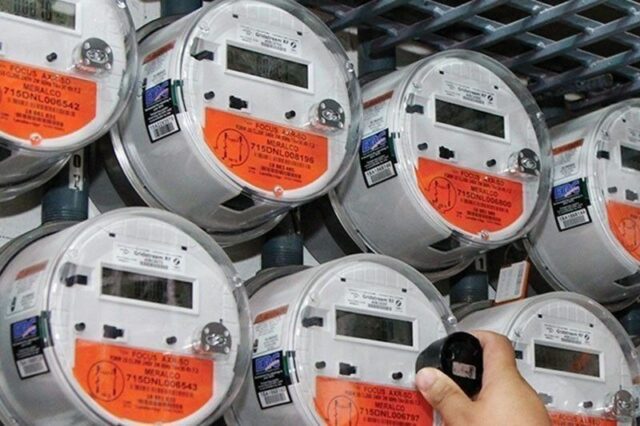
The proposed capex will fund projects aimed at increasing network capacity to meet demand growth, relocating assets, acquiring non-network assets needed for the normal and efficient operation of the electric distribution system, and deploying automation and technology projects, including its Advanced Metering Infrastructure program.

Meralco is projecting a total revenue requirement of P532.12 billion for the period, broken down into P116.04 billion for 2027, P126.864 billion for 2028, P138.75 billion for 2029, and P150.47 billion for 2030.

The proposal forms part of the company’s rate reset application for the first regulatory period under the ERC’s newly adopted rationalized rules for setting distribution wheeling rates for privately owned distribution utilities.

Meralco is the country’s largest private electric distribution utility, serving more than 8.1 million customers in Metro Manila and nearby provinces, including Bulacan, Cavite, Rizal, and parts of Laguna, Batangas, Pampanga, and Quezon.

Meralco’s controlling shareholder, Beacon Electric Asset Holdings, Inc., is partly owned by PLDT Inc. Hastings Holdings, Inc., a unit of PLDT Beneficial Trust Fund subsidiary MediaQuest Holdings, Inc., has an interest in BusinessWorld through the Philippine Star Group, which it controls. — Sheldeen Joy Talavera

EU lawmakers approve tougher asylum rules as anti-migration feeling grows

RAWPIXEL

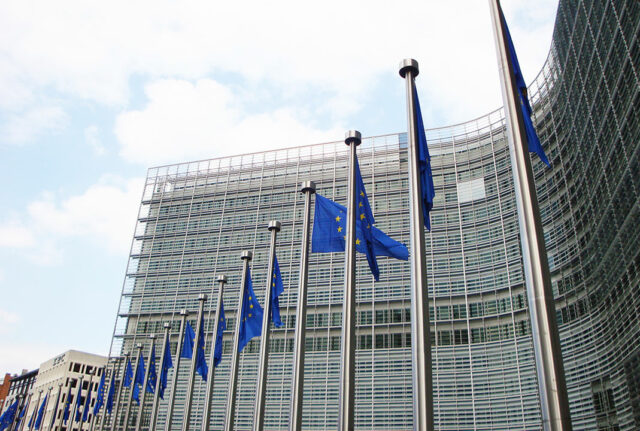
EU lawmakers approved changes to the European Union asylum system on Tuesday, paving the way for fast-track asylum rejections and the possible transfer of asylum seekers to countries with which they have little or no connection.

The move underlines the rise in anti-immigration sentiment across the European Union over the past decade that has broadened popular support for far-right parties.

The text, which requires final formal approval from the 27 EU member governments, marks a sharp hardening of EU migration policy that has taken shape since an influx of over a million refugees and migrants in 2015-16.

The move drew heavy criticism from humanitarian groups who said it could lead to human rights violations and a diminution of asylum rights under a 1951 convention that prohibits returns of asylum seekers to countries where they could be in danger.

The European Parliament approved changes to the Asylum Procedures Regulation to introduce a list of countries deemed “safe” to which failed asylum seekers could be returned. The list includes countries such as Egypt and Tunisia whose human rights records have come under scrutiny.

PROTECTION IN ‘SAFE’ COUNTRY?
Under the new rules, EU countries may reject an asylum application if the person could have received protection in a country the bloc considers safe.

“Today’s vote will mean that people seeking asylum in the EU could have their applications rejected without review, and be sent to countries to which they have no connection and where they have never even set foot,” said Olivia Sundberg Diez, the EU Advocate on Migration and Asylum at Amnesty International.

“These measures mark an abdication of the EU’s commitment to refugee protection and pave the way for EU member states to broker agreements with third countries for the offshore processing of asylum claims,” she said in a statement.

The new rules move a step closer towards allowing EU countries to set up “return hubs” outside the EU, similar to those established by Italy in Albania, although specific rules on return regulations are still under discussion in parliament.

The changes stem from an EU set of rules and processes for handling migration known as the Migration Pact, approved in 2023 but not due to be fully implemented until June 2026.

Anti-immigration rhetoric has surged throughout the EU since more than a million people, mainly from Syria, arrived via the Mediterranean in 2015. That sentiment has boosted public support for right-wing nationalist parties, pushing governments to adopt increasingly restrictive migration policies focused on returns.

“The text on safe countries of origin will place hundreds of thousands of people in situations of great danger. Third countries will be deemed safe despite an extremely worrying human rights situation,” said French Green lawmaker Mélissa Camara.— Reuters

US Vice President Vance’s office deletes post referring to ‘Armenian genocide’

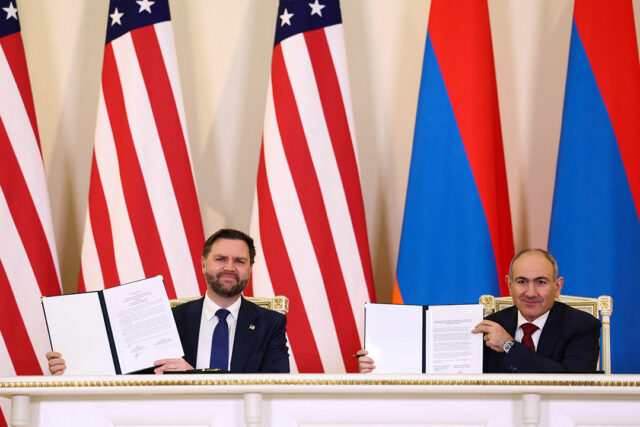
US VICE-PRESIDENT JD Vance and Armenia’s Prime Minister Nikol Pashinyan hold signed copies of ‘Joint Statement on the Completion of Negotiations on an Agreement for Peaceful Nuclear Cooperation between the United States of America and the Republic of Armenia,’ at the President’s Residence in Yerevan, Armenia, Feb. 9. — REUTERS/KEVIN LAMARQUE/POOL

YEREVAN — The White House on Tuesday deleted a social media post from Vice President JD Vance’s account that commemorated massacres of Armenians as a “genocide,” saying the message, which contradicts the stance of US-allied Turkey, was posted in error.

Mr. Vance, who was on a two-day trip to Armenia, visited the Tsitsernakaberd Armenian Genocide Memorial in the capital Yerevan during the first visit by a US vice president to the South Caucasus republic.

Mr. Vance’s official account on X described the visit as intended “to honor the victims of the 1915 Armenian genocide,” and then deleted the post. A Vance aide who declined to be named said the message was posted in error by staff who were not part of the traveling delegation.

The incident marked the second time in days that the Trump administration has deleted a social media post. Late last week, the White House defended, and then deleted, a post to President Donald Trump’s Truth Social account that included a racist depiction of former President Barack Obama and first lady Michelle Obama as apes. Mr. Trump later told reporters he had not watched the entire video before a White House aide posted it to his account.

The social media post on Tuesday reflected Mr. Vance and his wife Usha’s participation in a ceremonial laying of a wreath of carnations, chrysanthemums, and roses at the memorial site, which honors the 1.5 million Armenians who lost their lives in the final years of the Turkish-led Ottoman Empire.

“This is an account managed by staff that primarily exists to share photos and videos of the vice president’s activities,” said a spokesperson for Mr. Vance, adding that his views were best described by his own remarks to reporters. In those remarks, the Republican politician did not use the word “genocide.”

TRUMP’S TIES TO TURKEY
Turkey accepts that many Armenians living in the Ottoman Empire were killed in clashes with Ottoman forces during World War One, but contests the figures and denies the killings were systematically orchestrated and constitute a genocide.

Although the US Congress and Mr. Trump’s predecessor, Joe Biden, have both recognized the 1915 massacres as a genocide, Mr. Trump did not use that language in his own statement on the killings last year.

Turkey is a NATO ally of the United States and President Tayyip Erdogan has maintained close ties with Mr. Trump, including supporting the US diplomatic initiative on Gaza.

The Turkish foreign ministry and the Armenian embassy in Washington did not respond to a request for comment.

The White House said there had been “no change of policy at this time” since Mr. Trump’s 2025 statement on the historical incident, which did not include the word “genocide.”

Spokeswoman Karoline Leavitt, asked whether the White House had a broader problem with its social media protocols, said “no.”

The White House’s handling of the situation drew criticism from some Democratic lawmakers and members of the Armenian diaspora in the United States.

“Vance is a coward for deleting this post,” said Alex Galitsky, policy director for the Armenian National Committee of America, an advocacy group, on X, adding that it was an “insult to the memory” of those who had died.

VANCE’S VISIT TO ARMENIA AND AZERBAIJAN
In Armenia, Mr. Vance signed a deal with Prime Minister Nikol Pashinyan that could pave the way for the US to build a nuclear power plant there.

Asked by a reporter whether his visit to the memorial was intended to recognize a genocide, Mr. Vance said: “Obviously, it’s a very terrible thing that happened little over 100 years ago, and something that was just very, very important to them culturally.

“So I thought out of a sign of respect, both for the victims, but also for the Armenian government that’s been a very important partner for us in the region, to Prime Minister Pashinyan, I wanted to go and pay a visit and pay my respects.”

Mr. Vance’s visit was aimed at promoting agreements the Trump administration struck with Armenia and Azerbaijan to build towards peace after nearly 40 years of war between the Caucasus rivals. Mr. Trump has presented those diplomatic efforts as among the chief accomplishments of his time in office.

On Tuesday, Mr. Vance traveled to Azerbaijan and signed a strategic partnership deal encompassing economic and security cooperation, as Washington seeks to expand its influence in a region where Russia was once the main power broker. — Reuters

UK defense minister pledges ‘vital’ role in NATO’s Arctic Sentry mission

KRISTINA GADEIKYTE-UNSPLASH

LONDON — British armed forces will play a vital part in NATO’s Arctic Sentry mission, Defense Minister John Healey is to say on a visit to Norway on Wednesday, while also pledging to double the number of UK troops to the country to 2,000 over three years.

The mission is aimed at bolstering security in the Arctic region, which includes Greenland, after US President Donald Trump’s repeated remarks that he wants to acquire the island – an overseas, autonomous territory of NATO member Denmark.

“Demands on defense are rising, and Russia poses the greatest threat to Arctic and High North security that we have seen since the Cold War,” Mr. Healey was quoted as saying in the government statement.

“We see (Russian President Vladimir) Putin rapidly re-establishing military presence in the region, including reopening old Cold War bases.”

Mr. Healey is expected to discuss proposals for the mission with his counterparts at NATO headquarters in Brussels on Thursday.

The meeting will take place against the backdrop of Mr. Trump’s accusations that European allies have failed to properly secure Greenland against Russia or China, comments that have strained US ties with Western military alliance NATO.

The government has committed to the largest sustained increase in defense spending since the end of the Cold War following pressure from Mr. Trump on Europe to do more to secure the continent.

The move comes as the UK-led Joint Expeditionary Force security alliance plans major military activity in the High North, with hundreds of personnel due to be deployed across Iceland, the Danish Straits, and Norway in an exercise due in September, the government said. — Reuters

FDI net inflows hit 4-month high

SHEETS of $5 bills are seen through magnifying glass at Bureau of Engraving and Printing in Washington. — REUTERS

By Katherine K. Chan, Reporter

NET INFLOWS of foreign direct investments (FDIs) into the Philippines hit a four-month high in November, even as inflows slipped year on year, the Bangko Sentral ng Pilipinas (BSP) said.    

Preliminary BSP data released on Tuesday showed that FDI net inflows dipped by 0.3% to $897 million in November from $900 million in the same month in 2024.

Month on month, inflows jumped by 39.7% from $642 million in October.

November saw the highest FDI inflows in four months or since $1.271 billion in July.

“Foreign direct investments into the Philippines posted net inflows of $897 million in November 2025,” the central bank said in a statement. “South Korea was the leading source of FDIs, with most inflows directed to the manufacturing industry during the month.”

Based on BSP data, investments in equity and investment fund shares soared by 71.6% to $187 million in November from $109 million a year ago.

Net investments in equity capital other than reinvestment of earnings more than tripled to $122 million in November, from the $35 million logged in November 2024.

This, as equity capital placements doubled year on year to $142 million from $71 million, while withdrawals dropped by 44.4% to $20 million from $36 million previously.

Meanwhile, reinvestment of earnings stood at $64 million, down by 12.7% from $74 million a year earlier.

Net investments in debt instruments fell by 10.2% annually to $711 million in November from $791 million a year ago.

According to the BSP, net investments in debt instruments include mainly intercompany borrowing or lending between foreign direct investors and their subsidiaries or affiliates in the Philippines. The rest are investments made by nonresident subsidiaries or associates in their resident direct investors, or known as reverse investment.

SM Investments Corp. Group Economist Robert Dan J. Roces said the nearly flat year-on-year change in FDI net inflows reflects steady but still selective investor sentiment.

“(It) shows stabilization after a softer stretch,” he said in a Viber message. “Some delayed equity placements and reinvested earnings likely came through, which tells you investors are pacing commitments, not exiting.”

11-MONTH SLUMP
Meanwhile, FDIs went down by 22.1% to $7.077 billion at end-November from $9.084 billion in the same period last year.

“For the first eleven months of 2025, equity capital placements were sourced primarily from Japan, the United States, Singapore, and South Korea, and were channeled largely into the manufacturing, wholesale and retail trade, and real estate industries,” the central bank said. 

BSP data showed that investments in equity and investment fund shares reached $2.297 billion in the 11-month period, declining by 10.8% from $2.576 billion the year prior.

This, as net foreign investments in equity capital, excluding reinvestment of earnings, fell by 23.3% year on year to $1.144 billion during the period from $1.491 billion.

Of the total, placements dropped by 12.2% annually to $1.741 billion, while withdrawals rose by 21.1% to $596 million.

On the other hand, reinvestment of earnings edged up by 6.2% to $1.152 billion in the period ending November from $1.085 billion in the previous year.

However, nonresidents’ net investments in debt instruments of local affiliates amounted to $4.78 billion, down 26.6% from the $6.508 billion logged as of November 2024.

FDIs account for foreign investors’ investments in local businesses where they hold at least a 10% equity capital, as well as investments by a nonresident subsidiary or associate in its resident direct investor. It can be in the form of equity capital, reinvestment of earnings or borrowings.

The BSP’s FDI data cover actual investment flows, compared to the Philippine Statistics Authority’s foreign investments data which include investment commitments that may not be fully realized in a given period.

Jonathan L. Ravelas, a senior adviser at Reyes Tacandong & Co., said the decline in FDI net inflows during the 11-month period shows that investors were more cautious last year.

“That mix suggests the Philippines hasn’t lost investor interest — sentiment just became more selective,” he said in a Viber message.

“The decline likely reflects global uncertainty, domestic policy noise, and tougher competition from our ASEAN (Association of Southeast Asian Nations) neighbors,” Mr. Ravelas added. “But the November bump signals that when investors see clearer direction and more stability, they begin to re‑engage.”

Mr. Roces said there could be annual growth in FDI inflows at the end of 2025 if companies log year-end reinvestments or intercompany loans, “but that will depend more on timing of flows than a sudden shift in confidence.”

Meanwhile, Mr. Ravelas said credible reforms, reduced uncertainty and faster execution could enhance the country’s investment climate.

“If the government sustains that clarity, we could turn that November momentum into a broader recovery,” he said.

Philippines sinks to new low in corruption perceptions index

A MURAL depicts corrupt government officials involved in the anomalous flood control projects as crocodiles. — PHILIPPINE STAR/MIGUEL DE GUZMAN

By Justine Irish D. Tabile, Senior Reporter

THE PHILIPPINES fell six spots to its worst-ever ranking in 2025 in a global corruption perceptions index by Transparency International, as the country grappled with a corruption scandal that slowed economic growth and weighed on investor and consumer confidence.

In the 2025 Corruption Perceptions Index (CPI), the Philippines ranked 120th out of 182 countries and territories with a score of 32 out of 100. It ranked 114th place with a score of 33 in the previous index

This was the country’s worst showing since the index began using the 0-100 scale in 2012.


The country’s score for the 2025 CPI was also lower than the regional average score of 45 and the global average score of 42.

The index ranks countries based on perceptions of public sector corruption on a scale of zero (highly corrupt) to 100 (very clean). It uses data from 13 external sources, including the World Bank, the World Economic Forum, private risk and consulting companies, and think tanks.

“In the climate-change-impacted Philippines, citizens were outraged by allegations that a substantial amount of public funds were lost to a fake flood relief project,” Transparency International said.

The country was rocked last year after allegations that government officials, lawmakers and contractors received billions of pesos in kickbacks from substandard or nonexistent flood control projects. This has triggered widespread protests, slowed government spending, and hurt investor and consumer sentiment.

Transparency International said that corruption continues to pose a serious threat in the Asia-Pacific region.

“With an average regional score of 45 out of 100, high levels of corruption appear to have remained largely unaddressed over the past decade,” it said.

“Frustration within the region at weak governance and limited accountability was clearly felt in 2025, with a surge in young people taking to the streets to demand action and accountability from their governments,” it added.

Among Asia-Pacific economies, Singapore had the highest score (84) and ranked third in the overall index. It was followed by New Zealand (81), Australia (76), Hong Kong (76), Japan (71), Taiwan (68), Brunei Darussalam (63), South Korea (63) and Malaysia (52).

Other Asia-Pacific economies that had scores below 50 include China (43), Vietnam (41), Indonesia (34), Laos (34) and Thailand (33).

The Philippines had one of the lowest scores among Asia-Pacific countries, only better than Mongolia (31), Pakistan (28), Papua New Guinea (26), Bangladesh (24), Cambodia (20), Myanmar (16), and North Korea (15).

“In many countries across Asia-Pacific, good governance is being undermined by weak law enforcement, unaccountable leadership, and opacity in political funding,” said Ilham Mohamed, Asia-Pacific advisor of Transparency International.

“With young people demanding better, leaders must act now to curb corruption and strengthen democracy. Meaningful reforms can rebuild public trust and show those in power are finally listening,” she added.

With a score of 32, the Philippines tied with Angola, El Salvador, and Togo.

For the eighth year in a row, Denmark had the highest score on the index with 89, followed by Finland (88) and Singapore (84). The United States logged its lowest-ever score of 64 on the index.

FLOOD CONTROL SCANDAL
Analysts said that the Philippines’ worst showing in the index could be attributed to the revelations of widespread corruption linked to flood control projects last year.

“This lower ranking in the CPI is closely linked to the government’s handling of the ongoing flood control issues and the creation of a weak ICI (Independent Commission for Infrastructure),” Arjan P. Aguirre, an assistant political science professor at the Ateneo de Manila University, said via Facebook messenger.

“Reliance on testimonial evidence and insufficient documentary support has undermined efforts to address the problem effectively,” he added.

President Ferdinand R. Marcos, Jr. had created the ICI as part of his anti-graft drive following his exposé of corruption in flood control projects during his fourth address to Congress in July. The ICI was tasked to examine infrastructure projects over the past decade.

Mr. Aguirre said the current situation is becoming more complicated due to political maneuvering, “with some key Duterte allies derailing proceedings in the Senate Blue Ribbon Committee hearings.”

Ranjit Singh Rye, an OCTA research fellow and an assistant political science professor at the University of the Philippines, said the worsening perception of corruption in the country reflects the “perceived abuse of power for private interest at the expense of public welfare.”

“The report highlights public outrage over allegations that substantial public funds were lost  to a ‘fake flood relief project,’ a particularly damaging issue given the country’s vulnerability to climate change,” he said in a Viber message.

“This incident, coupled with a broader sense that those in charge are failing to deliver stable economic opportunities and quality public services, has fueled a surge in citizen frustration and social unrest across the region,” he added.

Mr. Aguirre said that the Marcos administration should prosecute accountable individuals and implement meaningful reforms to address concerns over corruption.

“The Marcos administration must step up its efforts to hold individuals accountable by rigorously collecting documentary evidence, identifying all those truly responsible — not just those initially named — pursuing proper prosecution, and implementing meaningful reforms to prevent systemic corruption from recurring,” he added.

Joy G. Aceron, convenor-director of transparency group Government Watch, said that she expected the drop in the index to be worse given the extent of the corruption in the flood control mess.

“It is clear that anti-corruption in all governance is imperative. Anti-corruption is a challenging and complex undertaking, and political will is central. Leaders in national and local governments should work hand in hand with civil society and the private sector to undertake comprehensive and sustainable anti-corruption efforts,” she said in a Facebook Messenger chat.

Ms. Aceron also said that the government should aim for broader public participation to “stop the normalization of corruption.”

For Mr. Rye, the Philippines will need to prioritize structural reforms that will break monopolies of discretion and strengthen oversight institutions.

“It is critical to improve the prosecution of corruption, including increasing conviction rates, and to commit to integrity in the funding of political parties and candidates to prevent private interests from capturing public policy,” he said.

Philippine banks’ loan growth slows to near 2-year low

CONSUMER LOANS to residents went up by 23.6% to P1.27 trillion from a year ago -- UNSPLASH

By Katherine K. Chan, Reporter

THE PHILIPPINE BANKING sector’s lending activity expanded at its slowest pace in nearly two years at the end of 2025 as loans for both consumers and business activities eased as a corruption scandal dampened sentiment, the Bangko Sentral ng Pilipinas (BSP) reported.

Based on preliminary BSP data released late on Monday, the total outstanding loans of universal and commercial banks, net of reverse repurchase agreements, grew by 9.2% year on year at end-December to P14.349 trillion from P13.138 trillion.

This was the slowest loan growth seen in 22 months or since 8.6% in February 2024.

It was also the first time since April 2024 that bank lending grew at a single-digit pace.

Month on month, the pace of lending eased from the 10.3% growth posted at end-November.

On a seasonally adjusted basis, bank lending fell by 2% month on month.

Outstanding loans to residents stood at P14.046 trillion by yearend, up by 9.7% year on year from P12.808 trillion. This was slower than the 10.7% expansion seen in November.

Lending for residents’ production activities accounted for the bulk or 84.4% of banks’ outstanding loans at the end of December. The rest were consumer loans (13.5%) and loans to nonresidents (2.1%).

BSP data showed that loans for production activities grew by 8% annually to P12.114 trillion last year from P11.216 trillion in 2024. This eased from the 9% growth seen in the 11 months to November.

This was driven by the 26.8% jump in lending for the electricity, gas, steam, and air-conditioning supply sector. Loans extended for wholesale and retail trade, repair of motor vehicles and motorcycles also grew by 10.8%, followed by real estate activities (8.3%) and financial and insurance activities (3.9%).

Meanwhile, consumer loans to residents reached P1.932 trillion at end-December, up 21.4% from P1.592 trillion a year ago. However, consumer loan growth eased from the 22.9% at end-November.

Credit card loans jumped by 27.7% to P1.193 trillion at end-December, softening from the 29.5% growth the prior month.

Loans for motor vehicles also rose by 15.5% to P524.86 billion, slower than the 16.3% growth as of November.

Loans for general-purpose salaries rose by 5.6% to P166.807 billion at end-December, easing from 6.4% at end-November.

On the other hand, lending to nonresidents contracted by 8.1% to P303.208 billion, marking a steeper decline from the -4.5% logged at end-November. These include loans disbursed by big banks’ foreign currency deposit units.

Michael L. Ricafort, chief economist at Rizal Commercial Banking Corp., said the slower growth in bank lending and domestic liquidity may have stemmed from infrastructure underspending that dampened activity in key sectors, such as construction.

“Slower bank loans growth and M3 (domestic liquidity) growth are largely consistent with the economic slowdown in the latter part of 2025 largely due to government underspending especially on infrastructure that reduced sales, earnings, profits, employment and other business activities,” he said via Viber.

Union Bank of the Philippines (UnionBank) Chief Economist Ruben Carlo O. Asuncion also attributed banks’ subdued loan growth to the country’s recent economic slowdown.

“Business loans softened as manufacturing, construction, and trade‑related sectors remained weighed down by weak demand, while consumer loan growth also eased as both households and banks turned more cautious,” he said in a Viber message.

Weak sentiment amid the graft scandal also prompted investors to adopt a cautious approach “thereby reducing the demand for loans amid the decline in investments that are financed by loans,” Mr. Ricafort added.

Multiple public officials and private contractors had faced corruption allegations linked to government flood control projects, which sparked public outrage and later weighed on consumer and business confidence.

Loan demand could improve this year with the help of the government’s spending catch-up plan and the central bank’s further easing, Mr. Ricafort noted.

“Lower interest rates by the BSP and by the Fed, as well as possible further reduction in large banks’ RRR (reserve requirement ratio) that also increase further banks’ loanable or investible funds would further reduce borrowing costs and that would increase demand and growth in bank loans,” he said.

The benchmark interest rate currently stands at an over three-year low of 4.5%. Since August 2024, the Monetary Board has so far lowered borrowing costs by a cumulative 200 basis points (bps).

BSP Governor Eli M. Remolona, Jr. earlier said that they could ease for a sixth straight meeting on Feb. 19 if the fourth-quarter growth slowdown proves to be demand-driven.

He also left the door open for a potential RRR cut, though noted that they are still looking for the right timing to do so.

“BSP’s rate cuts continue to support credit conditions, but the impact is being tempered by soft domestic demand and tighter risk management by banks,” UnionBank’s Mr. Asuncion said. “Monetary easing is helping prevent a sharper deceleration, though it cannot fully offset the broader economic slowdown.”

He also noted that bank lending may get some lift from the loan demand in the energy sector, particularly for renewable energy projects.

LIQUIDITY GROWTH SLOWS
Meanwhile, separate BSP data showed that liquidity growth fell to its weakest in four months at 7% as of December. This was also slower than the 7.6% increase in the previous month.

M3 — a measure of the amount of money in the economy that includes currencies in circulation, bank deposits, and other financial assets easily convertible to cash — stood at P20.108 trillion by yearend.

“After adjusting for seasonal fluctuations, M3 remained broadly stable from November,” the central bank said in a statement.

Domestic claims, which include claims from private and government entities, climbed by 10.1% year on year to P22.588 trillion, slowing from the 10.6% growth as of November.

This came as subdued bank lending to nonfinancial private corporations, and households dragged growth of claims on the private sector down to 10.1% from 11.1% a month ago. Private sector claims reached P14.512 trillion during the period.

Meanwhile, the BSP said higher borrowings lifted net claims on the central government by 10.8% to P6.135 trillion. However, this was slower than the 11% growth seen at end-November.

Central bank data also showed that net foreign assets (NFA) in peso terms climbed by 6.1% as of December from 4.4% a month prior.

Broken down, the BSP’s NFAs edged up by 5.3%, picking up from 1.9% in the previous month.

On the other hand, banks’ NFAs went up by 13% annually driven by larger holdings of foreign currency-denominated debt securities. However, this marked a sharp slowdown from the 26.9% pace as of November.

NFAs reflect the difference between depository corporations’ claims and liabilities to nonresidents.

“The BSP monitors bank loans because they are a key transmission channel of monetary policy,” the central bank said. “Looking ahead, the BSP will ensure that domestic liquidity and bank lending conditions remain consistent with its price and financial stability mandates.”


DA eyes higher tariffs on sugar substitutes to protect local industry

FREEPIk

By Vonn Andrei E. Villamiel

THE DEPARTMENT of Agriculture (DA) said it is considering higher tariffs on artificial sweeteners to protect the local sugar industry amid a surge in imports.

Agriculture Secretary Francisco P. Tiu Laurel, Jr. said the DA is currently studying an appropriate tariff rate for sugar substitutes, with an initial plan to raise the existing 5% duty.

“I was with Finance Secretary [Frederick D.] Go at an event with the President. I discussed with him what he can say regarding artificial sweeteners. We’re going to formulate and calculate what the tariff rate is,” he told reporters on the sidelines of an Economic Journalists Association of the Philippines event late on Monday.

Mr. Laurel said the increase “should not be too high” but sufficient to encourage greater demand for domestically produced sugar.

The department said the proposed increase in duty follows a surge in imports and use of artificial sweeteners last year, which dampened demand and farmgate prices for locally produced sugar.

Mr. Laurel said imports of artificial sweeteners increased by 200,000 metric tons in raw sugar equivalent last year, contributing to discrepancies in the DA’s sugar demand projections.

To protect the domestic industry, the DA earlier announced a suspension of sugar imports until the end of the year, except for volumes in exchange for exported sugar.

Mr. Laurel said the DA will also tighten the regulation of molasses imports, which he said are currently unregulated.

“We have a problem with molasses. The importation of molasses is unregulated. Molasses just arrived in our ports. That’s the only time they declare it, and a permit is just issued,” he said.

The DA said it will also audit molasses users, particularly those involved in alcohol production, following discrepancies it observed in molasses usage.

Sugar producers welcomed the proposal to increase the import duty on artificial sweeteners.

Manuel R. Lamata, president of the United Sugar Producers Federation of the Philippines, told BusinessWorld that the surge in sugar substitute imports contributed to the decline in farmgate prices.

“More sweeteners came in. The effect was a big drop in our millgate prices from a high of P2,600 per 50-kilo bag of raw sugar to P2,100 per bag, which was way lower than our production cost,” he said in a Viber message.

Mr. Lamata said a higher import duty could help increase millgate prices for farmers, as industrial companies would have to prioritize buying locally produced sugar.

Meralco rates rise this month on higher transmission charges

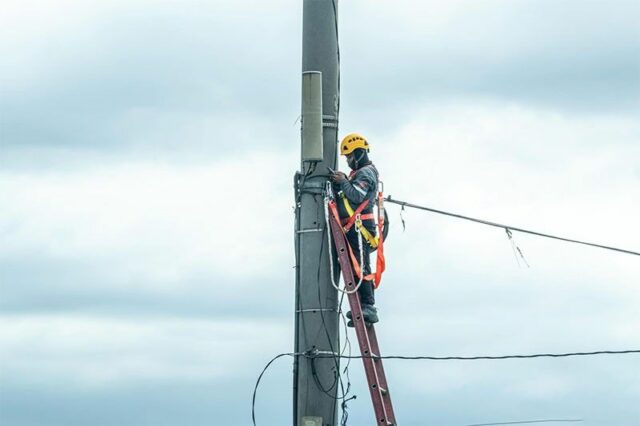
A LINEMAN works on an electric post along Road 10 in Tondo, Manila. — PHILIPPINE STAR/RYAN BALDEMOR

RESIDENTIAL customers of Manila Electric Co. (Meralco) will see higher electricity bills this month after the power distributor raised rates, mainly due to higher transmission charges.

In a statement on Tuesday, Meralco announced an increase of P0.2226 per kilowatt-hour (kWh), ending two consecutive months of reductions. This brought the overall rate for a typical household to P13.1734 per kWh this month from P12.9508 per kWh in January.

Households consuming 200 kWh will pay about P45 more this month. Those consuming 300 kWh, 400 kWh, and 500 kWh will see increases of around P67, P89, and P111, respectively.

Meralco attributed the rate hike mainly to higher transmission charges, which rose by P0.1975 per kWh due to a significant increase in ancillary service charges from the reserve market and higher power delivery service charges.

The company also cited the start of the collection of an additional P0.0770 per kWh in the universal charge for missionary electrification (UCME). This followed the Energy Regulatory Commission’s (ERC) approval of a new UCME rate of P0.2763 per kWh, up from P0.1993 per kWh previously.

UCME is collected from all on-grid electricity end-users to help subsidize power costs in remote areas not connected to the main transmission grid.

Other charges, including taxes, posted a net increase of P0.0554 per kWh.

Cushioning the impact of these increases was a decline in the generation charge, which fell by P0.1073 per kWh to P7.6398 per kWh.

Charges from independent power producers (IPPs) decreased by P0.8108 per kWh, partly offsetting higher charges from the Wholesale Electricity Spot Market (WESM) and power supply agreements (PSAs).

Tighter supply conditions in the Luzon grid led to an increase of P1.5682 per kWh in WESM costs sourced by Meralco.

Meanwhile, lower dispatch due to the planned maintenance shutdown of two major gas plants contributed to a P0.0483-per-kWh increase in PSA charges.

IPPs, WESM, and PSAs accounted for 24%, 10%, and 66%, respectively, of Meralco’s total energy requirement for the period.

“Pass-through charges for generation and transmission are paid to the power suppliers and the grid operator, respectively, while taxes, universal charges, and renewable energy subsidies are all remitted to the government,” Meralco said.

Meralco’s distribution charge has remained unchanged since the P0.0360-per-kWh reduction for a typical residential customer in August 2022.

With the summer season approaching, Meralco Vice-President and Head of Corporate Communications Joe R. Zaldarriaga said the company has been ensuring its supply requirements are covered as demand is expected to rise due to hotter weather.

“Since our responsibility really is to provide all our customers with electricity during the crucial period of the summer months, we make sure we have our supply adequately covered,” he said in a briefing.

Meralco is the country’s largest private electric distribution utility, serving over 8.1 million customers in Metro Manila and surrounding provinces, including Bulacan, Cavite, Rizal, and parts of Laguna, Batangas, Pampanga, and Quezon.

Meralco’s controlling shareholder, Beacon Electric Asset Holdings, Inc., is partly owned by PLDT Inc. Hastings Holdings, Inc., a unit of PLDT Beneficial Trust Fund subsidiary MediaQuest Holdings, Inc., has an interest in BusinessWorld through the Philippine Star Group, which it controls. — Sheldeen Joy Talavera

ERC allows NGCP to collect additional P0.06 per kWh starting August

NGCP.PH

THE Energy Regulatory Commission (ERC) has authorized the National Grid Corp. of the Philippines (NGCP) to collect an additional P0.06 per kilowatt-hour (kWh) from consumers starting August as part of the rate reset process.

This follows the ERC’s approval for NGCP to recover P63.45 billion in revenues for the 2023 period, according to a decision promulgated Jan. 30.

The implementation covers the first year of NGCP’s fifth regulatory period (5RP), spanning 2023 to 2027. Overall, the ERC has set a maximum allowable revenue (MAR) for NGCP at P376.4 billion.

The ERC approved an annual revenue of P63.4 billion for 2023, P69.1 billion for 2024, P74.3 billion for 2025, P81 billion for 2026, and P88.5 billion for 2027.

It also approved an annual revenue requirement (ARR) of P374.98 billion, 15.28% lower than the P442.60 billion applied for by NGCP.

MAR refers to the revenue ceiling the ERC allows the utility to collect, while ARR represents the amount NGCP needs to recover to cover its costs and expenses.

The Electric Power Industry Reform Act tasks the ERC with setting transmission and distribution wheeling rates that allow utilities to recover “just and reasonable costs and a reasonable return on rate base,” ensuring the entity can operate viably.

Part of this is the rate reset process, a periodic review in which the ERC examines a utility’s costs, investments, and performance, and then sets revenue limits to ensure reliable service while protecting consumers from excessive charges.

The Commission said the decision “strikes a balance between ensuring adequate funding for critical power infrastructure and safeguarding consumers from excessive transmission charges.”

“Only costs and investments that passed regulatory scrutiny were included in the approved revenue cap,” it added.

Last year, the ERC completed NGCP’s fourth regulatory period (4RP), approving a MAR of P335.78 billion for the 4RP covering 2016 to 2022.

This allowed NGCP to collect P28.29 billion from consumers over seven years as part of cost recovery, translating to an increase of P0.1013 per kWh in transmission charges. — Sheldeen Joy Talavera

Kaliwa Dam project set for 2028 completion, MWSS says

A MAN arrives at a shallow part of Agos River, where the Metropolitan Waterworks and Sewerage System is planning to build a dam. — PHILSTAR FILE PHOTO / EFIGENIO TOLEDO IV

THE P15.3-BILLION Kaliwa Dam project, a water supply infrastructure initiative intended to boost water security, is on track for completion by 2028, according to the Metropolitan Waterworks and Sewerage System (MWSS).

“We are still looking for the 2028 target as this was the approved timeline approved by the Economy and Development Council,” Patrick James B. Dizon, department manager at MWSS Corporate Office, told BusinessWorld.

As of end-2025, the project has achieved a progress rate of 26%, with MWSS still reviewing the target pace.

Mr. Dizon said the agency is in the process of securing the required permit from the municipality of Infanta in Quezon province and is also obtaining project endorsement from the Regional Development Council.

The Kaliwa Dam is part of the MWSS New Centennial Water Source program. The proposed structure will stand 60 meters tall and feature a 27.7-kilometer conveyance tunnel, designed to deliver an initial capacity of 600 million liters per day.

The project is funded through a $211-million loan agreement between MWSS and the Export-Import Bank of China, executed in November 2018.

Once completed, the dam is expected to ease demand on the Angat Dam, which supplies approximately 90% of Metro Manila’s water needs.

Last year, the Economy and Development Council, formerly known as the National Economic and Development Authority, approved an increase in the total project cost to P15.3 billion from the previous P12.2 billion. — Sheldeen Joy Talavera

ALT Art holds biggest edition yet at SMX Pasay

TICKET2ME.NET

ALT ART 2026, in partnership with BDO Private Banking, is set to return for its biggest edition yet, featuring works by over 300 artists and moving to a larger venue this weekend.

Led by ALT Collectives — a consortium of nine of the country’s premier galleries, namely Artinformal, Blanc, The Drawing Room, Galleria Duemila, Finale Art File, MO_Space, Underground, Vinyl on Vinyl, and West Gallery — the collective’s 4th edition will be held at the SMX Convention Center in Pasay City from Feb. 13 to 15.

The ALT Collective said the exhibition’s Project Spaces will continue to push conceptual possibilities, and this year will feature works by Christina Quisumbing Ramilo, Buen Calubayan, Julie Lluch, Kiri Dalena, Ben Brixx, Raffy Napay, MM Yu, Kolown and Christina Lopez, Mauro “Malang” Santos, Lesley-Ann Cao, and Iwan Effendi.

A dedicated space for multimedia artist Miguel Lorenzo Uy will also be showcased, co-presented by food brand Nagaraya.

The exhibition also introduces the Discoveries section, a new platform that focuses on emerging and critically engaged artistic practices. Designed to amplify fresh perspectives, the inaugural lineup is made up of JC Mariategue, Jomari T’leon, Joar Songcuya, Allyza Tresvalles, Eric Bico, Gelo Cinco, Joanolasco, Rhaz Oriente, and Marco Ortiga.

Vinyl on Vinyl gallery owner Gabby B. Dela Merced told BusinessWorld that the expanded venue, spanning 5,000 square meters, has allowed the collective to feature more artists and project spaces while offering greater freedom to experiment with the layout.

“Before, we only had, I think, four or five project spaces — a very selected number of artists that we collectively agreed upon. This time, each gallery had the opportunity to select a particular artist, so there’s a lot more personal voice that comes into the mix,” Ms. Dela Merced said at the sidelines of the ALT Art press conference on Monday.

The ALT Collective gave a walkthrough of the upcoming exhibition layout, which has been intentionally designed to create a cohesive flow that connects audience members with works presented by the artists from each gallery.

“We don’t call it a booth; we call it a space, because we’ve broken down the usual three-wall setting, which is very strict in terms of parameters,” she added.

Despite each gallery bringing its own approach and curatorial vision, Ms. Dela Merced said the collective found common ground in the exhibition’s overall programming.

During all public days, a conversation program is set to take place at the BDO Conversations Lounge, scheduled between 2 and 4 p.m. daily, during which time the stories behind the artworks will be discussed, alongside conversations on contemporary art and creative practices.

ALT ART 2026 tickets are available online at http://www.ticket2me.net/event/22773 and are priced at P250 for students and P500 for regular visitors. — Edg Adrian A. Eva

ADVERTISEMENT
ADVERTISEMENT