Home Blog Page 299

SSS net profit rises 58.4% in 2025

BW FILE PHOTO

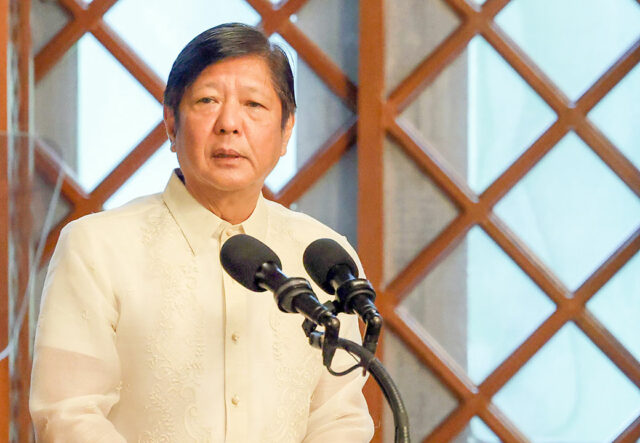
THE SOCIAL Security System (SSS) said net profit rose 58.4% to P142.97 billion last year, with its reserve fund exceeding P1-trillion mark.

“This record performance and over P1-trillion reserve fund level send a clear message to SSS members: your pensions are secure; your benefits sustained,” Finance Secretary and Social Security Commission (SSC) Chair Frederick D. Go said in a statement on Sunday. 

“Guided by President Ferdinand R. Marcos, Jr.’s directive to enhance benefits and strengthen governance, we are building a social security system that is financially resilient and more responsive to the needs of every Filipino,” he added.

SSS President and Chief Executive Officer Robert Joseph M. De Claro said the state pension fund’s financial performance was driven by sustained fiscal discipline, strengthened fund governance, and long-term reforms designed to safeguard member contributions and preserve the fund’s actuarial soundness.

“Surpassing the P1-trillion mark in our Reserve Fund is a milestone and a strong affirmation of our duty to every worker and pensioner who relies on SSS. This performance reflects prudent stewardship of member contributions, strengthened governance, and our continuing commitment to deliver secure and sustainable benefits — today and for generations to come,” he said.

In 2025, the SSS disbursed P304.94 billion in pensions and benefits to 5.66 million members.

Meanwhile, loan releases hit P61.11 billion at the end of 2025.

The SSS noted that the pension loan program extended benefits to an additional 1.2 million members last year.

Total assets grew 22.1% to P1.26 trillion, it said. — Aaron Michael C. Sy

House panel asks DA to explain absence of rice safeguard action

PHILSTAR FILE PHOTO

A HOUSE of Representatives special committee has asked the Department of Agriculture (DA) to explain why it has not pursued safeguard action for rice.

In a letter addressed to Agriculture Secretary Francisco P. Tiu Laurel, Jr., Special Committee on Globalization Vice Chairman Ryan S. Recto said farmer raised concerns about the uneven application of special safeguards.

“It was noted that while the Department of Trade and Industry (DTI) has been proactive in exercising its mandate to protect non-agricultural industries through provisional and definitive safeguards, a similar level of protection has not been extended to local agricultural producers,” Mr. Recto said in the letter, a copy of which was obtained by BusinessWorld.

Special safeguard measures allow the government to temporarily raise duties on specific imported products when their prices or volumes breach certain trigger levels, in order to protect domestic industries from cheap imports.

Under Republic Act No. 8800 or the Safeguard Measures Act, the DA may request the Bureau of Customs to impose an additional duty on the product under review equivalent to not more than a third of its current duty.

In his letter, Mr. Recto asked the DA to explain why it has not resorted to safeguard measures for rice and other “sensitive” products.

The committee also sought more details on the administrative or technical constraints preventing the DA from prioritizing domestic production even though agricultural products are exempt from the “public interest” test under Section 5 of RA 8800.

The Committee said the DA’s response would help legislators fine-tune proposed amendments to the Safeguard Measures Act.

Leonardo Q. Montemayor, former Agriculture secretary and chairman of the Federation of Free Farmers, said it has been nearly five months since the group and MAGSASAKA Party-List petitioned the DA to initiate safeguard measures.

“Almost five months have elapsed since we petitioned Secretary Laurel to apply safeguard measures to protect rice farmers against the serious injury caused by the surge in rice imports in 2025,” he said in a Facebook message. “Until now, the good Secretary has not even started the investigation.”

The DA was asked via Viber to comment but had not replied at the deadline. — Vonn Andrei E. Villamiel

BIR planning to streamline requirements for companies seeking to shut down

BW FILE PHOTO

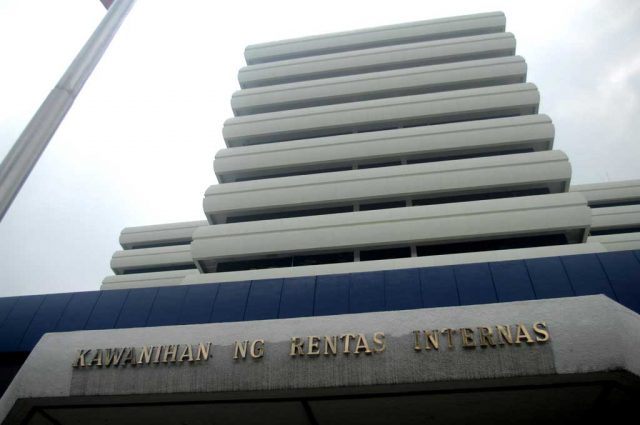
THE Bureau of Internal Revenue (BIR) said it is working to streamline the requirements for companies planning to shut down, Commissioner Charlito Martin R. Mendoza said.

“Since we make registration simple when starting a business, and tax compliance fair and predictable while businesses operate, then the BIR must be efficient and streamlined when enterprises close,” he said in his speech during the National Tax Campaign Kickoff last week.

Mr. Mendoza, who took office in November, said the bureau is pushing its digitalization efforts to make filing easier for taxpayers.

“We make payment easier. We streamline our processes. We revisit our existing issuances. Revenue generation. Revenue memorandum circulars. Let’s see if we can make it easier,” he said, noting this will help value-added tax collections.

Last year, the BIR surpassed its collection target, posting P3.105 trillion and exceeding the P3.101 trillion emerging collection target, which had been lowered in December.

For 2026, Mr. Mendoza said the P3.58-trillion goal is “very challenging but we will do our best,” and will focus more on real-time monitoring to prevent revenue leakages.

He is also banking on sustained economic growth, expanded digitalization, and taxes on digital services platforms to meet its ambitious collection target this year.

The government also expects P21 billion in revenue from the foreign digital platforms this year after collecting P8 billion in 2025.

“I remind the BIR that revenue collection rests on public trust. And therefore, ensure that our reforms are geared towards making our tax system more transparent and more productive,” President Ferdinand R. Marcos, Jr. said in a video message.

Mr. Marcos added that micro and small enterprises should be guided to ensure they are compliant with taxation requirements. — Aubrey Rose A. Inosante

Reduced BoI investment approvals goal reflects review of RE service contracts

PIXABAY

By Justine Irish D. Tabile, Senior Reporter

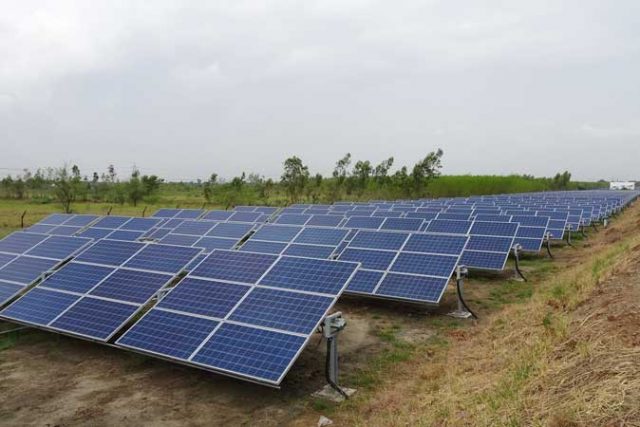
THE reduced investment approvals target for the Board of Investments (BoI) for 2026 reflects a slowdown in the renewable energy (RE) segment after a number of contracts were reviewed.

John Paolo R. Rivera, senior research fellow at the Philippine Institute for Development Studies (PIDS), said: “Over the past few years, large-scale RE projects, especially solar and wind, significantly boosted total approvals because of their capital-intensive nature,” he told BusinessWorld.

“With some contracts under review or revoked and the pipeline recalibrated, approvals are now expected to be driven more by mineral processing, infrastructure, and high-value manufacturing, which typically involve smaller project sizes but potentially stronger value-added and employment effects,” he added.

He said the lower investment approval target does not reflect weaker investor interest in the Philippines but rather “a normalization in project composition and a shift toward more strategic, industry-focused investments.”

In January, the Department of Energy (DoE) said 163 terminated and relinquished service contracts since 2024 accounted for nearly 18,000 megawatts worth of potential capacity.

These contracts consisted of hydro, solar, wind, geothermal, and biomass projects that had been  awarded via green energy auctions (GEAs).

The Department of Trade and Industry (DTI) said on Saturday that it set a P1-trillion target for BoI investment approvals this year.

This is lower than the P1.56 trillion worth of investment pledges approved in 2025. The BoI expats approvals to be driven by mineral processing, infrastructure, and high-value manufacturing projects.

“As these typically have lower investment costs per project than RE, we are therefore targeting lower BoI registrations this year,” the DTI said.

For 2026, Trade Undersecretary and BoI Managing Head Ceferino S. Rodolfo said the government expects the investment picture to reflect the benefits of various investment-related reforms.

“The biggest driver of investments is not promotions in a marketing sense but policy reform,” he told BusinessWorld.

“We have seen this in RE, with the surge of investments following the lifting of foreign equity caps on RE projects, or with telecommunications, with the issuance of policy on shared telco towers,” he added.

He said the focus in 2026 will be on mining and mineral processing, digital infrastructure, tourism, and high-value manufacturing.

The government expects to reap benefits from the Enhanced Fiscal Regime for Large-Scale Metallic Mining Act, the conclusion of the critical minerals agreement with the US, and the Konektadong Pinoy Act.

The BoI also expects to see results from the visa-free entry policy for key source markets, full implementation of the value-added tax refund for tourists, and the implementation of a Semiconductor Industry Roadmap, among others.

Rizal Commercial Banking Corp. Chief Economist Michael L. Ricafort said the corruption scandal of 2025 remains a risk clouding the investment picture.

“For the coming months, improved governance standards and reforms will help improve investor confidence and sentiment, could lead to a pickup in investment,” he said via Viber, citing as a prerequisite the effectiveness of anti-corruption measures and other reforms related to further improving governance standards.

Meanwhile, exporters said it might be possible to achieve the export target set by the DTI assuming no changes in the Trump tariffs.

“I think we might even exceed it because in 2025, surprisingly, we made something like $135 billion,” Philippine Exporters Confederation, Inc. President Sergio R. Ortiz-Luis, Jr. said via telephone.

“Unless there are surprises from Trump, I think it will be easy to beat the upper-end target set by the DTI,” he added.

He said that the main export drivers this year are the electronics, agricultural products, minerals and mining products, and tourism.

Meanwhile, exporters are on the lookout for US tariffs on electronics and agricultural products.

For 2026, the DTI said it expects total exports — consisting of merchandise and services — to range between $116 billion and $120 billion, in line with the Philippine Development Plan (PDP).

“We expect electronics, information technology and business process management (IT-BPM), and key food exports such as coconut, banana, and pineapple products to continue driving growth,” the DTI said.

“At the same time, we are working to develop new export winners,” it added, noting that hopes are being pinned on garments, footwear, travel goods, personal care, and unique Filipino flavors such as ube.

Bianca Pearl R. Sykimte, director of the DTI-Export Marketing Bureau, said that electronics remain the backbone of Philippine merchandise exports.

“In 2025, electronic products accounted for nearly $50 billion, representing more than half of total exports and growing by 16% year on year,” she said via Viber.

“This momentum is expected to continue in 2026, especially since Philippine semiconductor exports were not covered or affected by recent Section 232 tariffs imposed by the US on semiconductors,” she added.

She said electronics, along with IT-BPM and food exports, showcase the broadening of the export base.

“In addition, projected increases in export‑oriented investments by Investment Promotion Agencies (IPAs) are expected to further widen Philippine capabilities,” she added.

Foreign Buyers Association of the Philippines (FOBAP) President Robert M. Young said that it might be hard to achieve the DTI export target.

“The very reason, I think, that they are having these very ambitious numbers is due to merchandise export, which rose 15%,” he said by telephone.

“They must understand that the reason behind this was because the whole Philippine export industry got rattled … they rushed the production (to front-load shipments before the US tariffs took effect),” he added.

However, he said the same rate of export growth cannot be expected for 2026.

“For Thailand, Malaysia, and Cambodia (the rates are) zero, and the Philippines is still at 19%,” he said.

“We will have a hard time competing on price because these are the guys are our direct competitors,” he added.

For the garments sector, he said that the industry is now expecting exports to be flat this year.

“We will only be plateauing, so it will not increase … We think reality will bite in 2026 due to factors such as the number of free trade agreements of the Philippines compared to other neighboring economies,” he added.


PHL hoping technical exchanges open Australia’s doors to banana exports

DA

THE Philippine push to export fresh Cavendish bananas to Australia are currently the subject of negotiations and technical exchanges between the two governments, the Bureau of Plant Industry (BPI) said.

BPI Director Gerald Glenn F. Panganiban said the agency remains in regular contact with Australia’s Department of Agriculture, Fisheries and Forestry (DAFF) to revive the stalled export bid.

“We are in constant communication with the Australian Government, through their agriculture department,” he told reporters. “We have exchanged technical information again because we want to revive that.”

Australian authorities had planned an inspection visit in late 2025, but the trip did not materialize. The visit is now scheduled for early 2026.

According to the DAFF, the technical visit aims to gather information on Philippine commercial production, pest management, and export practices.

Australia currently does not permit the import of fresh bananas from any country. Its first import risk analysis for Philippine Cavendish bananas, conducted in 2008, concluded that imports could be allowed under strict biosecurity conditions.

The 2008 assessment of the Philippine banana industry flagged key pests and diseases of concern, including Moko disease, black Sigatoka, and banana freckle, as well as several arthropod pests.

Mr. Panganiban said the Philippines is proposing alternative measures to address these biosecurity concerns.

“What we are pushing now is a holistic way on how to sanitize our farms, our Philippine good agricultural practices, and basically our protocols before export. Even in our residue levels, we are testing before we can supply,” he said.

The DAFF said Australian authorities are reviewing Philippine proposals to determine whether the measures can adequately manage the identified risks.

The review also covers additional requests from Manila, including the inclusion of another banana cultivar and an additional export area.

Aside from scientific assessments and the planned technical visit, the DAFF said the process would require the publication of an issues paper, and eventually a draft report for public consultation before any final decision on market access can be made.

“This assessment is complex, and the full process could take several years to complete. If imports commence, the feasibility of trade ultimately depends on Australian consumers,” the DAFF said. — Vonn Andrei E. Villamiel

World Bank sees 2027 approval for $250-M disaster early-warning loan

PHILSTAR FILE PHOTO

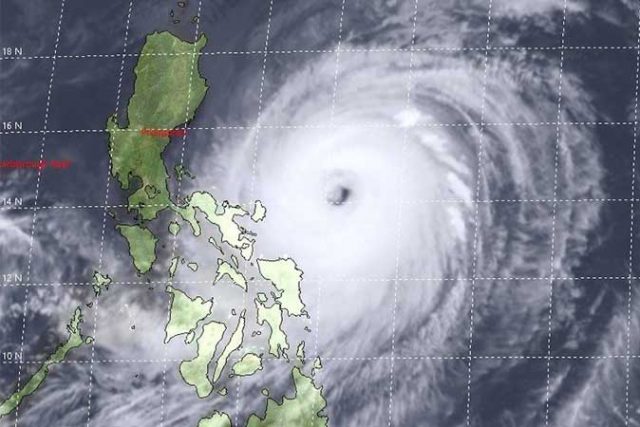
A $250-MILLION LOAN for the Philippines to fund monitoring and early warning systems and scale up disaster risk management is expected to be approved by the board by 2027, the World Bank said.

The Technology-driven, Human-centered climate and disaster Resilience through Innovation for Vulnerable Empowerment (THRIVE) Project is targeted for approval by the bank’s board on Feb. 25 next year, according to a document uploaded to the bank’s website on Feb. 13.

The total project cost is $250 million, with the Department of Science and Technology (DoST) serving as the implementing agency.

The project seeks to “strengthen the country’s capacity for monitoring of natural hazards and improve risk information and early warning systems to better prepare for disaster and climate risks,” the World Bank said.

The Philippines tops the WorldRisk Index for vulnerability to disasters, with about 20 tropical storms each year.

The Philippine Institute of Volcanology and Seismology, the Philippine Atmospheric, Geophysical and Astronomical Services Administration, and the Advanced Science and Technology Institute will be the DoST agencies overseeing the project.

Elements of the project include “the modernization and rehabilitation of geophysical and hydrometeorological monitoring stations and supporting infrastructure.”

The World Bank added that the investments, particularly for the monitoring stations are likely to be placed in both urban and rural settings, which can pose social risks, given the possibility of setting up on indigenous land and ecologically sensitive zones, including protected areas and coastal regions. — Aubrey Rose A. Inosante

BCDA targets 2026 revenue of P10 billion

POROPOINTFREEPORT.GOV.PH

THE Bases Conversion and Development Authority (BCDA) said it set a revenue target of P10 billion this year.

“We scan the environment and study the market, and those are the things that are under our control,” BCDA President and Chief Executive Officer Joshua M. Bingcang told reporters, adding that there may be some upside from ”unexpected, last-minute” items.

He said the target that was given to the BCDA by its regulator, the Governance Committee for Government-Owned and -Controlled Corporations  (GCG) is P8 billion.

“Internally, we set the target at P10 billion,” he said, noting that it has less and less land to commit “so we are looking for non-traditional sources of revenue.”

This year, he said that the BCDA is not expecting payment of P300 million from the lessor of its Market! Market! Site.

“For this year they won’t pay (because) under our contract their advance payment will be applied to their last year,” he said.

“We need to offset the lost income there. So we will look for a replacement,” he added.

Meanwhile, the BCDA expects to award the permanent operations and maintenance contract for the Poro Point Seaport by the third quarter of 2027.

He said that the Public-Private Partnership Center  shortlisted four international companies to draft the master plan for the Poro Point Seaport.

“We are looking to award the master plan (contract) in April, and then (after the feasibility study)… we want to have the permanent operator by the third quarter of 2027,” he added.

Currently, the seaport is operated by BCDA subsidiary Poro Point Management Corp.

He said the BCDA will also look for a partner to execute the master plan for the airport at Poro Point.

“We also want to modernize the airport because right now, it is just a chartered aviation school. My goal is for 2027 or 2028 is to make it a commercial-grade airport,” he said.

As such, he said the BCDA will be investing in a new terminal, twice the size of the existing terminal at the Poro Point Airport.

“The construction needs to start this year. Our initial budget for this is P250 million,” he said. — Justine Irish D. Tabile

Poultry imports from Illinois, Wisconsin resume; shipments from Kansas banned

DA.GOV.PH

THE Department of Agriculture (DA) said it lifted the temporary ban on poultry and poultry product imports from the US states of Illinois and Wisconsin, while imposing a ban on shipments from Kansas due to avian influenza outbreaks there.

In a statement on Sunday, Agriculture Secretary Francisco P. Tiu Laurel, Jr. said the order follows updated animal health reports showing Illinois and Wisconsin no longer meet the threshold for state-wide trade restrictions.

Meanwhile, poultry imports from Kansas are temporarily banned after the US Animal and Plant Health Inspection Service reported on Jan. 19 that several outbreaks of H5N1 HPAI were confirmed in multiple counties across the state, breaching the three-county threshold.

The DA said the temporary restriction is necessary to protect the Philippine poultry industry.

“Our priority is food security, but that cannot come at the expense of public health or the safety of our local poultry population. The poultry sector represents billions in investments and supports thousands of jobs, especially in rural communities,” Mr. Laurel said.

All imports of domestic and wild birds and their products from Kansas, including poultry meat, eggs, day-old chicks, and semen, are prohibited. Only shipments already in transit and produced on or before Dec. 19 may enter, provided they meet strict documentation requirements, the DA said. — Vonn Andrei E. Villamiel

Accountability test looms for Marcos after surviving House impeachment

PRESIDENT FERDINAND R. MARCOS, JR. — PHILIPPINE STAR/KRIZ JOHN ROSALES

By Chloe Mari A. Hufana and Aubrey Rose A. Inosante, Reporters

PRESIDENT Ferdinand R. Marcos, Jr. now faces a different test after lawmakers dismissed impeachment complaints against him: proving his administration can deliver accountability as scrutiny over flood control spending grows, analysts said.

“The real test is whether the administration can translate this political reprieve into demonstrable institutional reform and credible anti-graft outcomes,” Ederson DT. Tapia, a political science professor at the University of Makati, said via Facebook Messenger, adding that surviving impeachment does not end public scrutiny.

He noted that once impeachment is no longer an immediate threat, attention shifts to performance. “The more important question is what this means for public expectations of accountability, particularly in relation to the flood control controversy.”

Lawmakers voted 284-8, with four abstentions, to uphold the House Justice Committee’s recommendation to dismiss two impeachment complaints against Mr. Marcos for being insufficient in substance. The vote stopped the process before it could move to a Senate trial.

The complaints accused the President of corruption, betrayal of public trust and constitutional violations linked to irregularities in multibillion-peso flood control projects. The projects have drawn scrutiny after repeated severe flooding in several regions, prompting questions about procurement and implementation.

Hansley A. Juliano, who teaches political science at the Ateneo de Manila University, said the outcome reflects entrenched partisan alignments in Congress that could limit impeachment as a check on executive power.

“While the dismissal of the impeachment case allows Mr. Marcos’ survival in the short term, it highlights the difficulty of accountability if the House and Senate remain divided into clear partisan factions,” he said.

Political analysts said the result was widely anticipated. The administration holds a commanding majority in the lower chamber, making it unlikely that the complaints would advance.

The vote underscored the importance of legislative numbers in impeachment proceedings, which are political as well as legal in nature.

Mr. Tapia noted that impeachment is an extraordinary constitutional mechanism. Dismissal at the committee level, he said, does not resolve the governance issues raised by the allegations.

In the near term, the decision strengthens Mr. Marcos by removing an institutional threat and reinforcing alignment between the Executive and the House. But analysts said political survival increases the burden to show tangible results.

Flood control projects remain sensitive because they involve large public spending and public safety. Recurring floods have intensified scrutiny of whether infrastructure funds are being used effectively.

“If the administration wishes to convert political survival into durable legitimacy, it must demonstrate concrete action,” Mr. Tapia said. He cited transparent audits, prosecutions where evidence warrants them and reforms in procurement and project monitoring.

Mr. Juliano warned that prolonged partisan divisions could erode public trust in institutions, especially if accountability efforts are seen as selective.

While the situation increases the stakes for long-term accountability, it also risks alienating the public if Congress is viewed as unreliable, he said.

The impeachment episode unfolded against tensions between allies of Mr. Marcos and supporters of Vice-President Sara Duterte-Carpio, exposing fractures within the country’s dominant political coalition.

‘ECONOMIC CONSEQUENCES’
Attention now shifts to separate impeachment complaints filed against Ms. Duterte, signaling that institutional conflict among senior officials would continue.

Persistent impeachment battles involving the country’s top leaders could weigh on the economy and dampen medium-term growth prospects, according to GlobalSource Partners.

In a Feb. 14 report, GlobalSource country analysts Diwa C. Guinigundo and Wilhelmina C. Mañalac said efforts to unseat Mr. Marcos and Ms. Duterte risk eroding investor confidence and slowing capital inflows.

“Prolonged confrontation at the highest political level carries tangible economic consequences through investor uncertainty, reputational risk and reduced capital inflows,” the analysts said.

GlobalSource said the renewed impeachment efforts against Ms. Duterte carry implications beyond the corruption allegations. A conviction would permanently bar her from holding public office, raising the stakes ahead of the 2028 election.

While impeachment is meant to uphold accountability, the analysts warned that its use amid elite political rivalry could weaken public trust if it is seen as selective or strategic.

They added that political instability does not have to escalate into a full crisis to hurt the economy. Even small shifts in investor expectations can build over time and result in broader macroeconomic effects.

GlobalSource also pointed to irregularities in infrastructure projects that have weighed on growth, limited public spending and weakened both consumer and investor confidence.

“Executive and legislative focus diverted toward political survival reduces attention to structural reforms, fiscal strategy, and infrastructure execution, indirectly affecting medium-term growth prospects,” it added.

ICC charge sheet puts pressure on 2 senators

PHILIPPINE STAR/MIGUEL ANTONIO DE GUZMAN

By Erika Mae P. Sinaking

THE International Criminal Court’s (ICC) recent release of a less redacted charge sheet has intensified scrutiny on two sitting Philippine senators over their alleged involvement in the country’s anti-drug campaign, analysts said over the weekend.

Kristina C. Conti, ICC assistant to counsel for the victims, told BusinessWorld via Viber that the disclosure increases pressure on Senators Ronald “Bato” M. dela Rosa and Christopher Lawrence “Bong” T. Go to clear their names.

“They could either play to the public and the media or cooperate with the court,” she said.

The senators, along with six others, are named in the ICC filing as co-perpetrators in crimes against humanity allegedly committed during the administration of former President Rodrigo R. Duterte. The Office of the Prosecutor recently uploaded a less redacted version of the document containing the charges, similar to an “information” under Philippine law, revealing for the first time significant details and naming alleged co-perpetrators from Davao-based police units and close associates.

The charge sheet alleges that Mr. Duterte and his associates shared a “common plan or agreement to neutralize alleged criminals” through violent means, including murder.

Ms. Conti said the decision to release the names ahead of the confirmation of charge hearing on Feb. 23 was likely strategic. She noted that discussions of Mr. Duterte’s role would be “impossible to describe without mentioning his co-perpetrators.”

The filing also suggests the existence of a structured plan to implement the anti-narcotics campaign while ensuring impunity through the involvement of investigative units, according to Ms. Conti.

Ephraim B. Cortez, president of the National Union of Peoples’ Lawyers, said the revelations were expected. “We were not surprised. These are the architects and implementers of Duterte’s drug war,” he told BusinessWorld in a Viber chat.

“This will greatly impact accountability because the ones prosecuted are not the ordinary policemen who carried out orders, but the policymakers, implementers, and those who issued the orders,” he said. “They are the ones most responsible.”

Mr. Go denied the allegations in a statement on Saturday, describing them as “entirely unfounded” and unrelated to his previous roles as special assistant to the President and executive assistant to the mayor of Davao City.

Israelito P. Torreon, a lawyer for Mr. Dela Rosa, said the disclosure is procedural and does not equate to a finding of guilt.

“International criminal proceedings, by their nature, evolve in stages, and public disclosures are often strategic and procedural rather than definitive findings of liability,” he said via Viber. “It is important to emphasize that any naming of individuals in the course of ICC proceedings does not amount to a finding of guilt.”

ICC prosecutors said Mr. Duterte is criminally responsible for three counts of crimes against humanity, including at least 76 murders. These include 19 killings while he was mayor of Davao City, 14 murders of so-called high-value targets, and 43 killings of lower-level drug suspects nationwide from 2016 to 2018.

Vitaliano N. Aguirre II, listed as a co-perpetrator, denied participation in or support for extrajudicial killings during his tenure as Justice secretary from 2016 to 2018.

Mr. Cortez said Senators Dela Rosa and Go “played a key role in systematizing the policy and implementing it, while Aguirre was complicit, and police generals were the implementers.”

There are concerns that the senators may use political influence or seek sanctuary within the Senate to avoid potential arrest.

“Bato and Bong Go will definitely use their influence and resources to evade arrest,” Mr. Cortez said. “Seeking sanctuary with the Senate is a possibility, as floated earlier when news of a warrant of arrest against Bato surfaced.”

He added that the senators are likely to pursue judicial remedies to prevent the Philippine government from surrendering them to the ICC, as it did with Mr. Duterte.

Philippine House moves to modernize anti-espionage laws

FREEPIK

By Kenneth Christiane L. Basilio, Reporter

THE House of Representatives National Defense and Security Committee seeks to boost the Philippines’ decades-old anti-spying laws, broadening the definition of espionage to include modern surveillance technologies and applying penalties even during peacetime.

The proposed legislation comes as security experts warn of rising espionage risks tied to the Southeast Asian nation’s sea dispute with China.

“The fight against espionage, clandestine acquisition of sensitive information, and unlawful obtaining of classified information that affects national security or national defense requires a comprehensive approach,” according to a copy of the substitute bill jointly drafted by the Defense committee with the House Committee on Revision of Laws obtained by BusinessWorld. “Interference by foreign jurisdictions on our political and governmental affairs poses a threat to our sovereignty and independence.”

The substitute bill represents the first consolidated effort since 2024 to modernize the country’s 84-year-old anti-espionage laws. At that time, Defense Secretary Gilberto C. Teodoro, Jr. had pushed for reform after the arrest of a former town mayor accused of spying for China.

The National Security Council also urged lawmakers to update the framework, citing last year’s arrests of alleged foreign spies under laws that still largely rely on World War II and Commonwealth-era statutes.

Authorities accused several Chinese nationals of spying near the Presidential Palace, military bases and other sensitive locations, claiming they used message-interception devices and digital mapping tools to monitor restricted areas. Beijing dismissed the accusations as “baseless speculation and accusation.”

Under the substitute bill, espionage includes receiving, collecting, or transmitting “classified matters” even in peacetime without proper authority, whether through physical, electronic, or cyber means. Unauthorized access to “sketch, drawing, map, layout, blueprint, graphical or multimedia representation” of sensitive sites would also qualify as espionage.

Those convicted could face life imprisonment without parole and fines of as much as P20 million. Foreign nationals found guilty would be deported immediately after serving their sentence and permanently barred from re-entering the Philippines.

The draft bill grants authorities the power to “secretly wiretap” suspected spies, including intercepting or collecting private messages, provided a court order is issued on reasonable grounds.

It also lets the Anti-Money Laundering Council examine the bank accounts of suspected spies to determine if they are receiving funds from foreign intelligence agencies, even without a court order.

Additionally, the proposal bans the possession of surveillance and mapping equipment, such as drones, cameras or tracking devices if used to spy on government officials or sensitive locations. Violators could face up to 12 years in prison and fines of up to P20 million.

Analysts noted that the Philippines’ anti-espionage laws fall short of addressing modern threats. The Revised Penal Code defines espionage mainly as unauthorized entry into military facilities to obtain confidential defense information or disclosing it to foreign powers, while Commonwealth Act No. 616 of 1941 covers intelligence gathering that could aid enemy forces in wartime.

“Modern anti-espionage efforts must evolve to address the convergence of emerging technologies and sophisticated misinformation campaigns,” Chester B. Cabalza, founding president of Manila-based think tank International Development and Security Cooperation, said in a Facebook Messenger chat. “Intelligence agencies are shifting from traditional human-centric methods to digital-first strategies to counter state-sponsored actors and cyber-threats.”

Sherwin E. Ona, an international fellow at Taiwan’s Institute for National Defense and Security Research, said spying could occur even in peacetime, particularly with advances in cyberspace, the Internet and electronic signal interception. “Space and sub-sea cables are also emerging areas of concern,” he said via Viber.

Security experts framed the legislation as part of Manila’s response to China’s so-called “grey-zone tactics” — strategic activities that advance national interests without triggering open conflict.

“Espionage threats in the Philippines are imminent as it becomes a competing field of tactics and hegemonic rivalry,” Mr. Cabalza said.

Mr. Ona noted that espionage and foreign influence operations could be used as part of a “hybrid assault” in which cyberspace and information are weaponized against the country.

PHL warship joins India drills

THE BRP MIGUEL MALVAR. — ARMED FORCES OF THE PHILIPPINES

THE Philippine Navy said on Sunday one of its warships arrived in India to participate in multinational drills there, as part of Manila’s drive to broaden security ties and maritime cooperation.

In a statement, the Philippine Navy said the guided missile frigate BRP Miguel Malvar’s deployment to India is part of its participation in a major international exercise hosted by New Delhi featuring warships from the US, Russia, Japan and other navies.

“BRP Miguel Malvar’s deployment represents a historic milestone for the Philippine Navy, reflecting its expanding role in international naval diplomacy,” it said.

The navy’s involvement in the major drills “places the Philippines together with major maritime partners in a forum designed to promote peace, maritime stability, and cooperative security in the Indo-Pacific region.”

The BRP Miguel Malvar is armed with missiles and torpedo systems and fitted with sonar, radar, and electronic warfare capabilities. It was built by South Korean shipbuilder HD Hyundai Heavy Industries Co. The namesake of its class ship, the Philippine frigate left South Korea in March 2025 and was commissioned in late May. — Kenneth Christiane L. Basilio

ADVERTISEMENT
ADVERTISEMENT