Home Blog Page 2906

Private initiatives fostering marriage inviolability: Pre-Cana and Cachet programs

FREEPIC.DILLER-FREEPIK

(Part 3)

There are two major reasons why the Philippines stands out among nations in the world — both developed and developing — in the strong presence of nongovernmental organizations (NGOs) and people organizations (POs).

The first, as explained in the first article of this series, is a negative one: the Philippine Government often is in default in its primary responsibility of promoting the common good or, through incompetence and corruption, actually makes matters even worse. People in the private sector have no alternative but to take matters into their own hands to address public needs. Remember our rather cynical reference to the plot of the blockbuster film Godzilla Minus One in which, because of the inability of the ordinarily competent Japanese Government to meet the challenge after Japan was defeated in the Second World War, it had to take a rag tag group of private individuals to vanquish the nuclear-energized version of the monster Godzilla.

The second reason, though, in the case of many Catholic lay organizations involved in strengthening the institution of marriage and defending the sanctity of the family in the Philippines, is the application by the ordinary lay person and clergy in the Philippines of the most important principle of subsidiarity, one of the pillars of Catholic social doctrine. The principle states that what can be accomplished effectively by individuals and smaller groups of society in pursuing their common good should not be taken over by higher bodies, least of all by an all-powerful State. This principle is complemented by the principle of solidarity which mandates that individuals in a society should always promote the common good to the extent they can through their individual actions.

For example, in hundreds of Catholic parishes around the Philippine archipelago, the clergy, recognized lay groups like the ones described in the first two articles of this series, and authorized/licensed lay individuals, systematically conduct marriage preparation courses for soon-to-be-married couples. These courses usually consist of a few hours (in some instances one to two days) of a highly interactive process of affirming and better appreciating their motivations, intentions, strengths, weaknesses, opportunities and threats regarding their intention of committing themselves for life, “until death do they part.” Through these marriage preparation or “pre-Cana”* conferences, the couples contemplating marriage have a final opportunity to determine if they are really meant for one another. The effectiveness of some styles of pre-Cana program is verifiable by the “long, indefinite range” fidelity of married couples concerned, or the eventual decision after the pre-Cana conference of couples not to push through with the wedding because of irreconcilable differences which can be discovered before they actually get married. One of the leading examples of pre-Cana courses is that offered by the Cenacle Sisters which lasts two nights and one full day. Among the Catholic dioceses, those that stand out when it comes to marriage preparation programs are the Diocese of Tagbilaran, the Prelature of Infanta, and the Prelature of Batanes. These have been noted for championing family solidarity through family forums, directed homilies, family-based pilgrimage tourism, and interventions by the basic ecclesial communities.

Some of these initiatives to strengthen the institution of marriage have targeted specialized groups. For example, the Chaplaincy of the Bureau of Jail Management and Penology (BJMP), led by the head Chaplain, and the Bishop of the Military Vicariate, joined forces with several NGOs to put up a boot camp for uniformed personnel (Fire department, Police department and the BJMP national headquarters, staff, and jail officers nationwide). The purpose of the boot camp — which can last for two or three days — is to motivate the participating officials to work for personal integrity based on the principles of family, family life, and family unity. Among the participating NGOs are the EDUCHILD Foundation, the Consuelo “Chito” Madrigal Foundation, Inc., Defending Family Values Foundation, and the Mariano and Estelita de Jesus Que Professorial Chair of the University of Asia and the Pacific.

Then there is the Alalay sa Pamilya Foundation (APF), Inc. that targets millennials and centennials through values formation programs that include the appropriate preparation for marriage. The program is called Campaign for Character Education Tenacity (Cachet). As early as possible in their youth, Filipino girls and boys are being helped to make good and responsible day-to-day decisions in relation to such areas as family and family life, friendships and social responsibility; love, courtship, and marriage; and teenage lifestyle. This program has reached directly and personally students in 400 public elementary and high schools in the two largest education regions of the country, i.e., the NCR and Calabarzon.

As early as possible in the lifelong process of character formation, the participating youth are provided with the means to address the human weaknesses that can be obstacles to lifelong commitment to the inviolable institution of marriage. The tools include the items listed below, all with the help of continuing development formation through regular access to the Sacrament of Penance for the Catholics, spiritual guidance from their respective pastors, and tutoring from teachers and other elder mentors with the very close cooperation from the parents. To inspire other groups to replicate this well-structured program in preparing young people for married life, let me go into details about the components of Cachet:

1. Regular personal one-on-one mentoring of students and teacher-coaches, with continuing development of adult and young mentors in the art and approaches, the basics and nuances of personal mentoring.

2. Monthly Virtues-of-the-Month sessions related to the hallmarks of Personal Integrity, Family Solidarity, Civic Responsibility, and Universal Charity as well as the core values being promoted by the Department of Education such as Maka-Diyos, Maka-Tao, Maka-Kalikasan, at Maka-Bayan.

3. Providing those who freely request for them the audio called “Ten Minutes with Jesus” that can help the listeners grow in their Christian faith, the religion of most of them.

4. A Quiz Bee and Art Summit, for example, on the 500 Years of Christianity in the Philippines, or on the Life, Loves, and Works of St. Josemaria Escriva, the Modern Saint of Ordinary Life, who preached and wrote the most on the sanctity of marriage and of family life.

5. Competitions on video crafting about heroic family stories and descriptive-narrative-argumentative essays on current moral and spiritual issues, especially related to the inviolable institution of marriage and the sanctity of family life.

As an illustration of what can be done in individual public schools, let me cite two examples: the Bangkal High School in Makati and the Muntinlupa High School. In partnership with the Boy Scouts and the student body of different grade levels of the Bangkal High School in Makati, Cachet organized seminar forums with a focus on character building and values/virtues education. A similar program was organized at a larger scale with the Muntinlupa Science High School, targeting the star sections. The Variety program included writing essays or poetry on select videos featuring fatherhood and family life (with a special appearance of the famous composer singer Joe Mari Chan); self-direction; overcoming grave challenges in life; interactive sessions with young professionals on family life and love-courtship-relationships; and even cultural tours of historical places like Intramuros that involved comments on profile of family life during different stages of Philippine history.

(To be continued.)

*Pre-Cana is a course or consultation for couples preparing to be married in a Catholic church. The name is derived from John 2:1–12, the wedding feast at Cana in Galilee, where Jesus performed the miracle of turning water into wine.


Bernardo M. Villegas has a Ph.D. in Economics from Harvard, is professor emeritus at the University of Asia and the Pacific, and a visiting professor at the IESE Business School in Barcelona, Spain. He was a member of the 1986 Constitutional Commission.


bernardo.villegas@uap.asia

Shang Properties expects close to P50B in sales from QC project

LISTED luxury property developer Shang Properties, Inc. said it expects to generate close to P50 billion in sales value from its new two-tower Shang Summit residential development in Quezon City (QC).

“Our total sales value for the two towers is close to P50 billion based on current prices,” Shang Properties Executive Vice-President for Commercial Maria Rochelle S. Diaz told reporters on the sidelines of a media briefing in Taguig City on Tuesday.

Ms. Diaz noted that the sales forecast is the highest for any Shang Properties project. The property will have its soft launch on Sunday.

Shang Summit units are priced at P280,000 per square meter, excluding value-added tax. The development is situated on a 6,000-square-meter lot in South Triangle, Quezon City.

“The project includes two towers. The first tower will have 1,020 units, and the second will have nearly 900 units, totaling almost 2,000 units available on the market,” she said.

At 250 meters, Shang Summit will be the tallest residential development in the country and is the first residential project of Shang Properties in Quezon City.

The two towers are designed by the architectural firm P&T Group and the interior design firm FM Architettura.

The first tower is expected to be completed by the fourth quarter of 2030.

Shang Summit will feature amenities including a tropical swimming pool, a state-of-the-art fitness center, wellness facilities, co-working lounges, and extensive play areas for children. It will also include the Summit Lounge and Summit Gallery for relaxation and entertainment, and the Alcove, which will serve as quiet spaces for work or study.

“Shang Properties is committed to offering a luxurious living experience that caters to a wide demographic. Our vision with Shang Summit is to make luxury more accessible,” Ms. Diaz said.

Additionally, Shang Properties announced that the North Tower of its Haraya Residences in Pasig City will open in the third quarter. Haraya North will feature one- to three-bedroom units ranging from 67 to 203 square meters, all with a unique loggia extending the living space.

Residents will have access to 2,500 square meters of outdoor amenities and 2,270 square meters of indoor amenities, including children’s play areas, a swimming pool, and various communal spaces.

Haraya North is developed by Shang Robinsons Properties Inc., a joint venture between Shang Properties and Robinsons Land Corp. 

On Tuesday, Shang Properties shares fell by 0.27% or one centavo, closing at P3.75 per share. — Revin Mikhael D. Ochave

Artist swaps British Museum coin with fake

A SCREENSHOT from Ile Sartuzi’s Sleight of Hand, 2023-2024, a two-channel video installation, which documents how he swapped a historic British coin for a fake at the British Museum. — ILESARTUZI.COM

A BRAZILIAN conceptual artist swapped a historic British coin for a fake in the British Museum to highlight the large number of foreign objects it holds.

Ile Sartuzi said the idea came to him when he saw a museum volunteer handing visitors coins to handle.

He asked for an English Civil War-era silver coin because “It is one of the few British things in the British Museum” and then created a diversion while he swapped it for the fake.

Mr. Sartuzi told Reuters he deposited the original coin in the museum’s collection box on the way out. The Art Newspaper first reported his act, which he recounted in a video made for his master’s degree at Goldsmiths, University of London.

The British Museum said it would inform police about the incident, which took place in June.

“This is a disappointing and derivative act that abuses a volunteer led service aimed at giving visitors the opportunity to handle real items and engage with history,” a museum spokesperson said when asked for comment.

Mr. Sartuzi said institutions such as the British museum and France’s Louvre view themselves as the “holders of the treasures of humanity. The problem is that these institutions are the basis of imperialist cultures that looted a lot of these objects from the global south and world.”

The British Museum has been under scrutiny over the way it acquired some of the artefacts it holds, with some countries asking for pieces to be returned. Examples include the Parthenon Sculptures and Nigeria’s bronzes looted by British troops in 1897. It did not respond to Mr. Sartuzi’s allegations.

Mr. Sartuzi, who has exhibited in Brazil, Portugal, and London, said he had sought advice from an art lawyer before swapping the coin.

The Museum dismissed an employee a year ago and ordered a review of security after it discovered hundreds of items had been stolen from its collection or were missing. — Reuters

Federal Reserve may be on the cusp of emerging from ‘elevated’ inflation blues

REUTERS

WASHINGTON — In September 2021, after absorbing three months of price hikes that were more than double the US Federal Reserve’s 2% target, US central bank staff and policy makers shifted from their more passive tone about inflation and began describing it as “elevated.”

Triggered after the personal consumption expenditures (PCE) price index used by the Fed to set its inflation target topped 4% in May, June and July of that year, the elevated inflation description remains in the rate-setting Federal Open Market Committee’s policy statement to this day, even with the PCE now down to 2.6% and, it seems, still falling.

The Fed’s policy meeting next week may finally usher the word out the door. If so, it would mark the strongest signal yet that the central bank plans to cut interest rates as soon as September and begin the easing part of its monetary policy cycle, something investors now see as a near-certainty.

Downgrading how inflation is described to something milder than elevated could also lead the Fed to edit the other key sentence in its current policy statement: That rates would not be cut until officials “gained greater confidence that inflation is moving sustainably toward 2%.”

Fed staff stopped describing inflation as elevated in January after the PCE fell below 3%, and policy makers heading into the July 30-31 meeting noted inflation was slowing more broadly across the economy and building their confidence that the slowdown would continue.

They have started using phrases like “drawing closer” to describe the distance remaining to a policy shift, and hinted at possible thresholds that could warrant changes in how the Fed describes the economy and its policy reaction to it.

In comments to reporters in late June, Atlanta Fed President Raphael Bostic said he would be “surprised if … anything more than half a percentage point would be viewed as not elevated,” pointing indirectly to inflation of 2.5% or lower as a benchmark to at least consider changing the description of inflation.

Many economists feel that threshold will be hit or exceeded when PCE data for June is released on July 26.

The opening sentences of the policy statement, with descriptions of growth, the job market and inflation, are used “to call balls and strikes” about the economy, Richmond Fed President Thomas Barkin told reporters last week. With new PCE data coming ahead of the meeting, “we’ll see what the number is and make whatever adjustments are appropriate.”

SHAPING THE DISCUSSION
Some economists feel a change is justified.

“They should make a more aggressive acknowledgment that inflation has cooled,” said Neil Dutta, head of economic research at Renaissance Macro, who noted in a recent analysis how aspects of inflation that had troubled Fed officials now seemed to be turning their way.

A new housing inflation indicator, for example, developed by the Bureau of Labor Statistics to capture shelter inflation trends more quickly than the slow-changing measurements used for the benchmark consumer price index, showed “a meaningful deceleration” with rents falling through the second quarter.

“There is additional slowing in housing rental inflation in the pipeline,” Dutta added.

Fed staff have already made a shift, the minutes of recent US central bank policy meetings show.

During last December’s meeting, with available data showing inflation at 3%, central bank staff said inflation “had eased over the past year but remained elevated.”

But at the meeting the following month, with PCE inflation having dipped to 2.6% in December, the elevated description was missing from the staff report. The staff said only that inflation “remained above 2%” after falling “markedly over the course of the year.”

Staff commentary about the economy doesn’t typically capture the limelight, since the Fed’s deep bench of economists aren’t the ones deciding on actions that can have lasting implications for the financial wellbeing of US households.

But staff views do shape the discussion, and changes in tone can offer a signal about where policy is heading.

As price rises accelerated in 2021, Fed staff and policy makers first acknowledged that inflation “has risen,” a phrase used in the April, June and July policy statements that year.

Year-over-year PCE inflation was still just 1.8% in February 2021 but rose to 2.7% in March. That figure had not actually been released when the Fed met in April of that year, but economists could have closely estimated it from other data.

Staff made the shift to describing it as elevated in September 2021, and so did the policy statement.

The Fed’s inflation benchmark would continue rising from there, peaking at 7.1% in June 2022. The decline since then has been precipitous, and increasingly across the board.

Goods prices have been falling — a dependable drag on inflation in the decade before the COVID-19 pandemic that has resumed, at least for now.

Wages are moderating, and increases in a “sticky” set of services prices are as well.

The US was “closer to a disinflationary trend that we’re looking for,” New York Fed President John Williams said in a Wall Street Journal interview last week.

Omair Sharif, head of Inflation Insights and a close watcher of price trends, said the evidence seems clear.

Excluding high readings in early 2024 that now seem like noise and not the trend, Mr. Sharif noted that underlying inflation for 10 of the past 13 months had on average hit the Fed’s 2% target.

“I look at it from the perspective of last summer,” when underlying inflation, excluding noisy food and energy prices, began to fall, Mr. Sharif said. In that context, dropping the reference to elevated inflation was not only warranted but “might be a good way to go at the July meeting to signal that September is on the table as the first (rate) cut.” — Reuters

Hearing the people’s clamor: Why this year’s SONA got it right

PHILIPPINE STAR/KJ ROSALES

To be chief executive means being able to meet all challenges that a country is facing on all fronts. The concerns are by no means few, with each government agency and their stakeholders having their own universe of complex challenges. It is the job of a President to acknowledge that these issues exist, to take measures to respond to them, yet also choose from the myriads of concerns, identify priorities, and distinguish the “important” from the “important and urgent.”

This was apparent in Monday’s State of the Nation Address (SONA), the third by President Ferdinand Marcos, Jr. The main message delivered by the President was a direct response to what Filipinos were saying. The people’s clamor was, in fact, loud and unequivocal, coming from the people’s gut.

A June survey by Pulse Asia, commissioned by Stratbase, revealed that 57% of Filipinos wanted to hear the President’s plans on controlling inflation during the SONA. An earlier survey by the same polling firm showed that 72% of Filipinos believe inflation to be the most urgent concern in the country.

Meanwhile, a survey by OCTA, conducted between June 26 and July 1, revealed that controlling the increase in the prices of basic goods and services remains the top concern of 65% of adult Filipinos, spanning all geographic areas and income classes.

Further, according to OCTA, other most urgent national concerns for adult Filipinos are “Access to affordable food like rice, vegetables, and meat” (40%), “Increasing/improving wages or salaries of workers” (33%), “Creating more jobs” (33%), and “Reducing poverty” (28%).

Such findings complement the findings of another firm, Social Weather Stations, that found last month that 16 million families considered themselves poor.

The Pulse Asia survey also found that 36% of Filipinos would like to hear the concrete actions of the Marcos Jr. administration on improving the national economy, and 35% of Filipinos wanted to hear how the current administration is working to create more employment opportunities for the people.

These are what the people believe are urgent, demand action, and by which they will measure the responsiveness success of this administration.

To the President’s credit, at the outset of his speech he acknowledged that good economic statistics meant nothing if the people cannot feel these in their daily lives.

This SONA gave us a clear idea of what the administration has made a priority so far, and what we can expect in the next three years. Then again, inflation, an inevitability in any economy, spills over to other issues and impacts the prices of goods, the pace of growth, and the quality of life of every Filipino.

For example, the Philippines has long been a consumption-driven economy and remains to be so. This is not sustainable for the economy, because mere consumption makes the economy vulnerable to external and internal disruptions.

For instance, the growing concern over inflation was reflected in the latest Consumer Outlook Index of the Bangko Sentral ng Pilipinas (BSP) where it showed that consumer sentiment for the second quarter of 2024 was more pessimistic as the percentage of pessimists outweighed the increase in the percentage of optimists.

Because of this, the national economy must shift to investment-led growth. Pursuing investment-led and job-generating growth creates a ripple effect that significantly boosts the nation’s productivity and economic output.

However, a deal-breaking factor raised by investors, which also drives inflation, is the cost of power generation because of our dependence on expensive and volatile imported fuel. The government should consider removing the VAT on electricity and fuels used for generating electricity to reduce the financial burden on consumers, stimulate economic growth by lowering operational costs for businesses, make energy more affordable, ultimately boosting both macroeconomic stability and microeconomic welfare.

We have been hearing the word “security” a lot lately. This has many contexts. For instance, we can be referring to ensuring that the West Philippine Sea, as established by international law and upheld by the Permanent Court of Arbitration in 2016, remains ours. But economic security — when ordinary citizens are able to meet their daily needs consistently and sustainably — is also a form of security.

A shift to investments will ensure that the above-mentioned benefits will redound to the welfare of Filipino families, today and in the foreseeable future. Security also means enabling the people to protect themselves against scammers, fraudsters, and hackers, from individual accounts to national critical infrastructure. In this regard, there remains much to do, even as we are assured of help from like-minded partners from other countries. The recently released National Cybersecurity Plan must be implemented as intended and periodically evaluated to ensure it keeps up with technological trends.

Finally, we cannot underscore enough the importance of making the Philippine economy resilient to external threats and economic coercion. Working with like-minded states such as the United States, Japan, Australia, Canada, and the EU to form strategic partnerships to promote trade and collectively address global challenges such as inflation and economic instability can also help the country achieve national security.

Now that the SONA has been delivered, the work cut out for us is clear. We should remember that the betterment of society does not merely rely on government actions. It is, instead, a collaborative effort on the part of the public sector, the private sector, civil society, and the rest of the Filipino people. This whole-of-society approach will ensure that nobody is left behind and we are all aware that everybody, whatever our political leanings or advocacies, has a stake and a duty in ensuring a sound and promising state of our nation.


Victor Andres “Dindo” C. Manhit is the president of the Stratbase ADR Institute.

US-based data center firm Equinix enters Philippines

GLOBAL digital infrastructure company Equinix, Inc. is set to enter the country’s data center space after acquiring three data centers from Total Information Management Corp. (TIM).

“This strategic acquisition, combined with our recent expansions in Malaysia and Indonesia, as well as the awarded data center capacity in Singapore, will greatly enhance our footprint in the region,” Equinix Asia-Pacific President Jeremy Deutsch said in a statement on Tuesday.

Headquartered in California, USA, Equinix has acquired three data centers in the Philippines from TIM, including its recently opened data center in Metro Manila.

With this recent acquisition, Equinix is boosting its presence in Southeast Asia following its announcement of expansion in Malaysia and Indonesia.

The company’s expansion in the Philippines hinges on the expected digital economy growth and the growing demand for digital infrastructure services.

According to a report by Google, Temasek Holdings, and Bain & Company issued in 2023, the Philippines is expected to reach between $80 billion and $150 billion in gross merchandise value by 2030.

It projected that the Philippines’ internet economy will grow by an annual 20% to reach $35 billion by 2025.

“This strategic move aims to help businesses expand and capitalize on the digital opportunity of the fast-growing Southeast Asia region,” Equinix said.

Its recently acquired data centers will provide the needed capacity to address the digital needs of businesses locally and abroad, the company said.

TIM’s data centers are located in Cavite and Metro Manila, information from its website showed.

Equinix said these three data centers have a total of 1,000 data cabinets capacity and have enough land for further expansion.

“Enterprises, cloud and IT service providers, and network service providers around the world can leverage Platform Equinix to interconnect and exchange data privately and securely within a vibrant ecosystem of business partners and customers,” Equinix said.

The US-based digital infrastructure company also said that TIM’s existing network and financial services companies will also gain access to Equinix’s cloud and IT service providers.

“Equinix’s strong reputation and expertise in the industry make them the ideal partner to take our data center business to new heights. While TIM will continue to remain as a system integrator, helping our customers through their digital transformation strategies, this deal will bring immense benefits to our customers,” said TIM Chairman Jose Mari M. Antunez.

To date, Equinix owns and operates a total of 260 data centers globally; of these, 56 are in the Asia-Pacific region.

Equinix is also eyeing to expand in Indonesia and India within the year. — Ashley Erika O. Jose

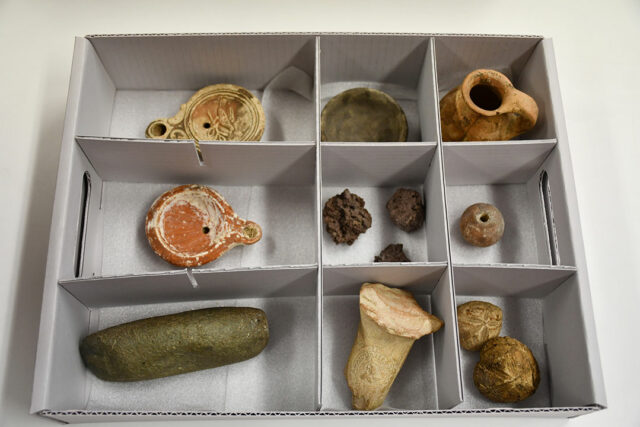
Looted after a war, priceless antiquities brought back to Cyprus

CULTURE.GOV.CY

NICOSIA — Cyprus has taken delivery of priceless antiquities looted after war split the island in 1974, as part of an ongoing effort to trace and repatriate thousands of artefacts fenced worldwide.

Authorities say thousands of antiquities were stolen and sold across the world after a Turkish invasion triggered by a brief Greek-inspired coup.

Items recovered range from church doors traced to Japan, bronze age antiquities in Australia, and priceless examples of early Christian art in the United States, taken from northern Cyprus, now a breakaway Turkish Cypriot state.

On Monday, authorities formally received 60 artefacts, including items from the chalcolithic and bronze age and a wall painting from a church. Cypriot officials say looting is a concerted assault on the island’s cultural heritage.

“Hundreds of churches and archaeological sites have been plundered, with thousands of relics exported illegally from our occupied country,” Cypriot President Nikos Christodoulides told an event at the Cyprus Museum, a few meters away from a ceasefire line splitting the capital Nicosia.

The museum’s entire contents, chronicling Cyprus from 9,000 BC, was emptied and sent to Athens for safekeeping during 1974.

Monday’s collection are items repatriated from Germany, where in 1997 police found hundreds of artefacts at addresses leased by a Turkish art dealer who died in 2020.

Authorities have a dedicated taskforce of specialists who trawl the internet and auctions daily for red flags.

“In most cases the items on sale are not accompanied by a record of legal acquisition to show it was legally exported from Cyprus,” said Eftychia Zachariou, Curator of Antiquities.

One of the starkest examples of looting covered the removal of a mosaic at the village of Lythrangomi in north Cyprus in the late 1970s.

The 6th century mosaic — one of a few surviving pieces of religious art in the region before Byzantine emperors briefly banned images and icons — was hacked off the wall and broken into pieces and sold. Authorities have since recovered a number of pieces which are now on display in Cyprus’s Byzantine Museum. — Reuters

Filipinos want ‘frictionless’ banking experience, survey shows

PHILIPPINE STAR/WALTER BOLLOZOS

FILIPINO CONSUMERS have a “low tolerance” for inefficient processes when using financial services or applying for new products, a survey by analytics software firm FICO showed, highlighting the need for banks to ensure ease of use even as they ramp up their fraud controls.

While Filipinos value good fraud protection, they tend to get turned off by complex identity checks, with one in four of consumers in the country saying they stopped or reduced the use of their existing accounts if the identity verification experience is “cumbersome and time-consuming,” according to FICO’s Consumer Survey 2023, which covered 1,001 Filipino adults and about 12,000 other consumers in Canada, the United States, Brazil, Colombia, Mexico, India, Indonesia, Malaysia, Singapore, Thailand, United Kingdom, and Spain.

“The growing ubiquity of digital banking services means that Filipinos now increasingly expect a frictionless banking experience, especially when opening accounts,” Aashish Sharma, Asia-Pacific segment leader for risk lifecycle and decision management at FICO, said in a statement on Tuesday. “Our research reveals that streamlining these processes will be key in financial institutions retaining customers and enhancing satisfaction.”

“Ease of use should not be compromised in favor of security and anti-fraud measures. Consumers are expecting banks to fulfill both demands by leveraging technologies like improved identity verification, transaction history analysis, open banking and government databases. They are seeking smarter onboarding processes and identity checks, not riskier processes, and the key to this is ensuring the appropriate friction for each product and transaction,” Mr. Sharma added.

The survey showed that in the past year, more than half or 58% of Filipinos have noticed more identity checks when they log in to their bank accounts, or when they make online purchases (61%).

“This increase in identity checks by Filipino banks is a direct response to the significant issue of identity theft in the country. Just 5% have confirmed that their identity has been fraudulently used to open an account, but one in four (26%) suspects that it has,” FICO said. “Despite this, frustration with identity checks can alter consumer behavior.”

The same behavior was seen among consumers opening new financial accounts or applying for financial products, it said, as 59% of Filipinos expect to answer 10 questions or less or they will abandon a personal bank account application, while 26% will drop out if asked more than five questions, according to the survey.

“Filipino consumers show varying levels of patience for different account opening processes. They are most likely to abandon personal bank account applications (32%) due to complex or time-consuming identity checks. Close to one in three (30%) have abandoned savings account applications for the same reason, while roughly one in five (21%) have been frustrated enough to abandon mortgage applications,” FICO said.

“As banks encourage more customers to use digital services by promising faster online loan approvals, reducing consumer frustration caused by lengthy identity checks must be an imperative,” Mr. Sharma said. “Nearly half of Filipinos (49%) will not complete a digital mortgage application if it has more than ten questions, and more than half (59%) of personal loan applicants will abandon the process after 10 questions.”

It added that only 6% of the Filipino consumers surveyed said they are comfortable opening mortgage accounts through online platforms and 52% prefer applying for personal loans via bank branches.

About 70% of survey participants see the ability to open financial accounts digitally at any time via a bank’s mobile app or website as a top advantage, FICO said.

Meanwhile, 82% said in-person account applications via branches are more secure than doing so through digital channels. — ARAI

Lhoopa raises $80M to cut home backlog in SEA

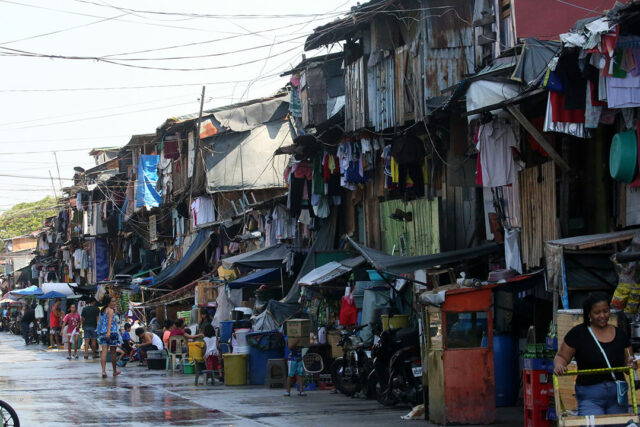
Informal settlers go about their daily routine in Binondo, Manila, April 23, 2024 — PHILIPPINE STAR/EDD GUMBAN

PROPERTY-TECHNOLOGY startup Lhoopa has raised $80 million (P4.7 billion) to spur affordable housing projects in the Philippines, the company said in an e-mailed statement.

This is the biggest funding round by a startup in the Philippines to date, and one of the largest in Southeast Asia (SEA) this year, the startup said, citing CB Insights data.

Lhoopa, which leverages data and technology in its large-scale development of affordable homes in the Philippines, said the new capital would let it expand in the Philippines and to other emerging markets, strengthen its technology capabilities and launch its green housing options.

“Additionally, the company will hire more executives, senior managers and product developers,” it added.

Lhoopa, founded in 2018, has sold more than 2,500 affordable houses in more than 58 cities in the Philippines. It has expanded its team from 30 to 95 employees and aims to provide over 15,000 affordable homes in the next three years.

Of the funding, $20 million was in the form of equity, which was co-led by the World Bank’s International Finance Corp. and Wavemaker Partners, with participation from Pavilion Capital, 10X Group, Concentric Equity Partners, UAE-based Mirath Investments and US-based NataRock Partners Fund.

The equity round facilitated the commitment of $60 million worth of debt facilities for Lhoopa from development finance institutions like the Asian Development Bank and United States International Development Finance Corp., and Lendable, which provides debt to fintech firms in emerging markets.

“It is uncommon for startups to raise this much debt at an early stage,” Lhoopa said. “Achieving a 3:1 debt-to-equity ratio from these respected institutions is also notable. This reflects the strength of Lhoopa’s business and the social impact it provides.”

The funding marks a pivotal moment for Lhoopa as it scales its operations to meet the growing demand for affordable housing in Southeast Asia, Lhoopa founder Marc-Olivier Caillot said in the statement.

“Our dream is to create a much-needed paradigm shift in real estate. Toward this end, as a proptech, our unique model of leveraging technology and local partnerships allows us to deliver quality,  affordable homes quickly and efficiently,” he added.

Paul Santos, managing partner at Wavemaker Partners, said affordable housing is not typically seen as a venture play, “but we believe Lhoopa is solving a long-standing problem that will only worsen unless it is addressed.”

The Philippines has an affordable housing backlog of more than 6.5 million units and is expected to reach 22 million by 2040.

“Lhoopa is demonstrating that with boldness, innovation and differentiated execution, affordable housing can be both profitable and impactful,” he said. — NPA

China’s cement boom is over. We can all breathe easier

FREEPIK

IMAGINE if France, or Taiwan, or the United Arab Emirates eliminated their carbon dioxide emissions in a couple of years — and no one noticed. Something similar is happening with China’s construction sector.

Cement production has been collapsing ever since the real estate bubble popped in 2021. Despite signs that the housing market may finally be stabilizing, the decline has accelerated this year: First-half output fell 10.8% from a year earlier. That suggests the full-year total will be in the region of 1.85 billion metric tons — roughly 20% below the average 2.34 billion tons in the decade through 2021, and the lowest since 2009.

In climate terms, that’s a hugely significant drop. Concrete is one of the most polluting materials. For every 100 tons of Portland cement, about 57 tons of carbon dioxide is released into the atmosphere, and the sector worldwide accounts for about 8% of emissions. China consumes half the total, so a 20% fall in local cement output translates into a decline in global carbon pollution of nearly 1%.

There’s little sign of a stimulus sufficient to cause a blowout second half. Shares in major cement producers have fallen since the close of the Communist Party’s Third Plenum meeting last week, indicating investors see little reason to expect government support. Furthermore, usage of building materials so far outstrips what we see in every other major economy that it’s hard to see it ever regaining the levels seen in the past.

That 1.85 billion tons of likely production for this year, for instance, translates into about 1.32 tons per person — between three and five times higher than in other industrialized nations. China’s in-use cement stock — a measure of all the material in buildings, roads, and structures — was about the same in 2013 as the roughly 15 tons per person in the US. Since then, it’s approximately doubled. Even if output slows drastically from here, China will be left with far more concrete, in both absolute and per-capita terms, than any major nation the world has ever seen.

The country’s building boom has gone on for so long that we tend to see it as an unchanging fact of nature. That leads analysts to underestimate the extent to which its passing is changing the world as dramatically as its initiation.

If you’re wondering, for instance, why the market keeps overestimating Chinese oil demand, it’s worth considering the trajectory of two products refined from crude: asphalt and jet fuel. For many years, China consumed as much of the former (used by builders in surfacing roads and roofing materials) as the latter (used in flying planes around). While jet fuel has bounced back as people start traveling again after COVID, construction-exposed asphalt seems to have reset at a permanently lower level. That’s what you’d expect from in the aftermath of a once-in-history orgy of house-building. If you’re anticipating that every economic indicator will revert to the trendlines of the 2010s, you’re going to be disappointed.

All roads to net zero run through China. With about a third of the world’s carbon pollution and more than half of its annual renewable power installations, it’s both the biggest contributor to a warming planet, and the place where we’re most likely to turn a corner on centuries of emissions. Where the cement sector leads, the rest of industry will follow. That will result in a more balanced Chinese economy, as well as a healthier planet. Cement’s decline is one burst bubble we should welcome.

BLOOMBERG OPINION

TMP leverages tariff breaks to boost hybrid vehicle sales

PHILSTAR FILE PHOTO

BUYERS of Toyota Motor Philippines’ (TMP) hybrid electric vehicles (HEVs) can expect lower prices after the issuance of Executive Order (EO) No. 62, the company said.

In an advisory, TMP said that following the exemption of HEVs and plug-in HEVs (PHEVs) from import duty, it has reduced the suggested retail prices for the Toyota RAV4, Alphard, and Lexus HEVs.

“Toyota and Lexus encourage customers to visit the nearest authorized dealership for more information on how to enjoy these attractive prices for their HEVs,” it added.

On June 20, President Ferdinand R. Marcos, Jr. signed EO 62, which modified the nomenclature and rates of import duty on various products.

A part of which covered the expansion of the reduced Most Favored Nation tariff rates of the products covered under EO No. 12 to other battery EVs, HEVs, PHEVs, and certain parts and components.

The National Economic and Development Board approved in May the expansion of the coverage of EO 12, which temporarily reduces tariffs on EVs to zero until 2028.

Aside from the 34 lines of EVs covered by EO 12, it will now also cover e-motorcycles, e-bicycles, nickel metal hydride accumulator batteries, e-tricycles and quadricycles, HEVs, and PHEV jeepneys or buses.

Data from a joint report by the Chamber of Automotive Manufacturers of the Philippines, Inc. and the Truck Manufacturers Association showed that the six-month sales of TMP totaled 104,350 units, up 11.5% from 93,575 in the same period last year.

Its first six-month showing accounted for 46.12% of the industry’s total sales of 226,279.

In June alone, the company sold 18,093 cars, up 10.5% from 16,381 in the same month a year ago. This accounted for 46.29% of the industry’s total sales last month. Justine Irish D. Tabile

Nigerian artist aims at world record for largest individual drawing

TIKTOK.COM/@PULSENIGERIA247

LAGOS — Nigerian artist Fola David is seeking the Guinness World record for the largest drawing by an individual after spending six days on his piece in a stadium in the commercial capital Lagos.

David, also a medical doctor, said his 1,050-square meter Unity in Diversity artwork showing two giant hands holding Nigeria’s map was meant to showcase the country’s cultural heritage.

Nigeria, Africa’s most populous nation, is made up of about 250 ethnic groups, split roughly equally between Muslims and Christians, with ethnic frictions common.

“Our diversity should be seen as something that unites us, as something that strengthens us, rather than something that should create that divide between us,” Mr. David said after completing his work on Sunday night.

The Guinness World Record body has been informed and will need to certify his work if he is to surpass the record set in 2021 by Indian artist Ravi Soni who drew a 629.98-square meter piece. — Reuters