Home Blog Page 29

Filmmakers defend Val Kilmer movie made with AI

AI RENDITION of Val Kilmer in As Deep as the Grave.

LAS VEGAS — The makers of a new film with an artificial intelligence (AI)-generated performance by late actor Val Kilmer defended their work last Thursday and said they believed their approach demonstrated an ethical path to future use of the technology in Hollywood.

Brothers Coerte and John Voorhees said they had gained consent from Mr. Kilmer’s children to use AI to create his role in As Deep as the Grave, the story of archaeologists who explore the history of the Navajo people in New Mexico. They said they used archival footage, photos, and voice recordings to help craft the performance.

“We are 100% confident it’s really the right move with this specific film, and we’re really, really looking forward to everyone being able to judge it for themselves,” Coerte Voorhees, the movie’s writer and director, said in an interview at the CinemaCon convention for theater owners in Las Vegas.

Mr. Kilmer, best known for his role in the Top Gun movies, had signed on to star in As Deep as the Grave several years ago but was unable to make it onto the set because of poor health. He died a year ago at age 65 after a battle with throat cancer.

A trailer from the movie, released this week, showed Mr. Kilmer in the role of Father Fintan, a Catholic priest and Native American spiritualist.

“Don’t fear the dead. And don’t fear me,” Mr. Kilmer’s likeness says in the trailer.

The trailer drew criticism on social media, with some commenters calling it “terrifying” and “disgusting.” “It’s called REST IN PEACE for a reason,” one said.

Coerte Voorhees said he did not think audiences that see the film will be able to tell that Mr. Kilmer’s role was not a human performance.

The brothers also said they hoped they were showing Hollywood how to use the technology in a positive way. Many actors are worried about unauthorized uses of their images that appear lifelike. The Voorhees brothers said they had followed all guidelines on AI use set forth by the SAG-AFTRA actors union.

“We’re making a bold claim, (a) bold statement, which is that we believe we’re doing this in an ethical way,” John Voorhees said. He said that not only had Mr. Kilmer’s estate given consent, but that the family had collaborated artistically “in every possible way.”

He added: “There’s so much change happening that of course it’s scary and it’s something that people are uncertain about.” — Reuters

Treasury bill yields move lower as market eyes BSP policy meet

BW FILE PHOTO

YIELDS of Treasury bills (T-bills) offered on Monday went down across all tenors on strong demand ahead of the Bangko Sentral ng Pilipinas’ (BSP) meeting this week, where it could hike benchmark rates to quell rising inflation risks.

The Bureau of the Treasury (BTr) raised P40.65 billion via the T-bills it auctioned off, above the P33-billion program as total tenders reached P127.256 billion or more than thrice the amount on offer. This was also higher than the P99.425 billion in demand recorded on April 13.

Strong demand for the 91-day and 182-day papers prompted the Auction Committee to double its acceptance of noncompetitive bids for both tenors to P9.6 billion, upsizing the awarded amounts, it said in a statement. Meanwhile, it partially awarded the one-year T-bill to cap its average rate.

Broken down, the Treasury raised P16.8 billion via the 91-day T-bills, above the P12 billion it placed on the auction block as demand for the tenor reached P60.371 billion. The three-month paper fetched an average rate of 4.542%, falling by 20.8 basis points (bps) from 4.75% last week. Bids accepted had yields ranging from 4.5% to 4.596%.

The government likewise borrowed P16.8 billion via the 182-day debt, higher than the P12-billion offering as tenders reached P44.21 billion. The average rate of the six-month T-bill was at 4.649%, dropping by 41.3 bps from 4.882% previously. Tenders awarded carried rates from 4.598% to 4.7%.

Meanwhile, the BTr sold only P7.05 billion in 364-day securities, below the P9 billion on offer even as bids totaled P22.675 billion. The one-year paper fetched an average yield of 5.052%, easing by 11.6 bps from 5.168% last week. Accepted bids had rates from 4.95% to 5.097%.

At the secondary market before Monday’s auction, the 91-, 182-, and 364-day T-bills were quoted at 4.618%, 4.708%, and 5.097%, respectively, based on PHP Bloomberg Valuation Service Reference Rates data provided by the Treasury.

“The upsized offering in this week’s T-bill auction reflected heightened demand from investors prior to the BSP policy meeting later this week,” the first trader said in an e-mail.

Yields at the secondary market were mostly lower on Monday, which could show that players have already priced in a potential rate hike by the central bank, the second trader said in an e-mail.

T-bill yields continued to move lower amid easing inflation concerns amid the recent decline in global oil prices and prospects of BSP policy tightening, Rizal Commercial Banking Corp. Chief Economist Michael L. Ricafort said in a Viber message.

A BusinessWorld poll showed that 11 out of 19 analysts expect the Monetary Board to hike its target reverse repurchase rate by 25 bps to 4.5% at its meeting on Thursday (April 23), which would mark the first increase since October 2023.

BSP Governor Eli M. Remolona, Jr. told BusinessWorld last week that the central bank has room to tighten to temper inflation risks amid the Middle East conflict as second-round effects may emerge sooner than expected, with the global oil price shock expected to spill over into domestic food and transport costs.

In March, elevated oil prices due to the war drove inflation to a near two-year high of 4.1%, faster than the BSP’s 3.1%-3.9% forecast and 2%-4% target for the year.

On Tuesday, the government is targeting to raise P20 billion to P30 billion from reissued 10-year Treasury bonds (T-bonds) with a remaining life of seven years and three months.

The BTr wants to borrow up to P248 billion from the domestic market this month or P140 billion via T-bills and P108 billion through T-bonds.

The government borrows from local and foreign sources to help fund its budget deficit, which is capped at P1.61 trillion or 5.3% of gross domestic product this year. — Aaron Michael C. Sy

ABS-CBN attributable net loss widens to P4.39 billion

BW FILE PHOTO

ABS-CBN CORP. widened its attributable net loss to P4.39 billion for 2025 from P4.37 billion a year earlier, as revenues declined.

For 2025, the company posted consolidated revenue of P15.85 billion, down 8.54% from P17.33 billion a year earlier, while total expenses reached P20.48 billion, a 17.92% decline from P24.95 billion.

Revenue from content production and distribution totaled P12.59 billion, up 5.44%, driven mainly by advertising revenues of P7.13 billion. Consumer revenues contributed P5.46 billion.

The company said advertising revenue growth was supported by regular and election-related spending, including placements from its primetime programs and digital platforms such as YouTube.

It added that live events also contributed to advertising growth.

“iWant’s relaunch in July introduced a modernized interface and refreshed branding, enhancing the streaming experience across devices. This contributed to the subscriber base growth, both domestically and internationally,” the company said in its annual report, adding that the relaunch included new exclusive content.

Cable TV and broadband revenues fell to P3.27 billion, down 39.33% from P5.39 billion a year earlier, due to a continued decline in the subscriber base.

Following the non-renewal of its franchise, Sky Cable discontinued its direct-to-home service in August 2020 and shifted its focus to broadband.

“Despite ABS-CBN Corp.’s franchise not being renewed, the Company continued to explore and pursue strategic business relationships with local and foreign entities to ensure maximum exposure and monetization of its content assets,” ABS-CBN said.

The company has expanded its presence on digital platforms such as YouTube and Facebook following the loss of its broadcast franchise.

Operating costs and expenses for the content production and distribution segment reached P14.3 billion, down 9% year on year, according to its financial statement.

The company said higher expenses from events and concerts were offset by cost-control measures, including lower general and administrative expenses and employee costs.

Expenses for its cable TV and broadband segment totaled P6.15 billion, down 33% year on year, due to cost-control measures and lower service-related costs.

For 2025, ABS-CBN said capital expenditures and program rights acquisition reached P473 million, mainly allocated to content production and distribution at P239 million.

Last year, the company said it expects to return to profitability within 18 months, citing higher advertising revenues and contributions from its digital, film and music operations.

At the local bourse on Monday, ABS-CBN shares fell by six centavos, or 1.84%, to close at P3.20 each. — Ashley Erika O. Jose

Entertainment News (04/21/26)


Sanrio x Pokémon pop-up at Eastwood City

EASTWOOD CITY is hosting an interactive Sanrio x Pokémon pop-up at the Eastwood Mall Atrium until April 21, bringing together two iconic franchises in one setting. In partnership with Keepplay, the experience features themed displays, Build & Play zones, and collectible modular sets that blend Sanrio’s charm with the adventurous world of Pokémon.


Michael in Philippine cinemas

MICHAEL JACKSON’S life is unfolding in cinemas nationwide as his nephew Jaafar Jackson steps into his shoes in Michael. The film features moments of Michael’s life as never seen before, as well as his most iconic shows and the making of his hit music videos. Michael is directed by Antoine Fuqua and also stars Nia Long, Laura Harrier, Juliano Krue Valdi, Miles Teller, and Colman Domingo. Michael opens in Philippine cinemas starting April 22.


Singer-songwriter dwta releases new single

BICOL-BORN singer-songwriter dwta has dropped “Tabi!,” a genre-blurring birthday track. While the song marks a shift in sonic direction and imagery, it remains grounded in the artist’s voice. Recognized for her soft, introspective sound and earnest songwriting, dwta melds alt-pop sensibilities with folk textures, country-inspired banjo, driving percussions, and grunge-inflected electric guitars. “Tabi!” is out now on digital music streaming platforms.


Stars On The Floor 2026 reveals permanent duos

THROUGH an anonymous vote cast by the contestants themselves, preferred partners for the next phase of GMA’s Stars On The Floor 2026 competition have been selected, setting the stage for the final matchups. Marian Rivera, Coach Jay, and Rayver Cruz take a vote as well as the online audience. Viewers can scan the QR code onscreen or log on to gmanetwork.com/SOTFVote during the airing of the final episodes to get to the online voting portal. The show airs on Sundays, 7 p.m., on GMA Network, and is livestreamed on the Kapuso Stream and the ATM YouTube Channel.


Concert series returns with Parokya, 4 more bands

AFTER more than a decade, the concert series Tanduay First Five is making a comeback. Set to tour three major cities this May and June, it gathers five of the biggest names in the Philippine music scene. This year’s lineup features Parokya ni Edgar, Kamikazee, Zack Tabudlo, Flow G, and December Avenue. The concert series will kick off on May 15 at the Gaisano Capital Mall Open Grounds in Iloilo, and will next be held on May 29 at the SM Seaside City Cebu Concert Grounds in Cebu, and on June 26 at the Davao Crocodile Park & Zoo in Davao. It was last held in 2013. For updates and more information about Tanduay First Five, follow Tanduay’s official social media accounts.


Kids fair Tiny Tycoon coming to The Podium

THIS MAY, a new kind of playground is opening, where children are encouraged to build, lead, and create. Happening on May 23 and 24 at The Podium, Tiny Tycoon is designed to equip young minds with real-world skills in a fun and immersive environment. Its experiences include Tiny Traders, where kids launch their own mini businesses selling in booths; Kiddie Crew, where participants work alongside real store owners; Interactive Workshops, offering brief classes; and Kid-Friendly Music Festival, where kids can unwind, connect, and express themselves. For registration details and partnerships, contact: Czarina / Feliz at 0917-806-3788.

The promise of AI — millions of jobs created or destroyed?

STOCK PHOTO | Image by DC Studio from Freepik

I was born in the 1960s, and it would be an understatement to say that the world has undergone a massive change. We grew up without cell phones, video games, personal computers, e-mail, chat, and the internet. I remember back in the early 1980s, after graduating high school, some of our classmates went to Manila to study. As there was still no e-mail and cellphones, we stayed in touch by writing letters. We handwrote letters and mailed them, and it would take a week for the letters to reach Manila. After they received them, they would take a week or two to write back and it would take another week after they mailed it for us to receive it. So, writing and getting a reply took around a month normally.

Today’s generation does not have that patience. When they text or chat, they are used to getting a reply within a minute. If after a few minutes, they don’t get one, they call and ask why there was no reply. And this is true whether the person is in Manila or halfway around the world.

When I was in college, my dream was to own a bookstore, and most of my allowance went to buying records and books. Now most bookstores are gone, and few musicians look forward to making or selling physical records anymore. But as things change, some things stay the same. The artist a hundred years ago made money by holding concerts. Apparently today, most musicians now make money not by making records, but by doing live concerts.

Today, there is another massive development that threatens millions of jobs — AI or artificial intelligence. A famous venture capitalist, Vinod Khosla, even ventured to say that most office jobs might be gone in five years. Receptionists or telephone operators are no longer required. People in tech support can be wholesale replaced as machines answer the calls and converse like humans or reply to e-mails. Computers can now make PowerPoints, and letters, and even dissertations. They can even draft legal contracts on the fly. They can analyze businesses and review documents. They can even make pictures or videos without any actors necessary.

This is particularly threatening to our country, because unlike most of our Asian neighbors, like China, Vietnam, or Thailand, who have become progressive by building factories and producing machines, cars, clothes, food, and consumer products sold all over the world. The Philippines has been left behind in manufacturing. Instead, it attracted a different kind of investment — BPO or business process outsourcing. As of end 2025, it was reported that over $35 billion and close to 2 million jobs were generated by BPOs. The gleaming high rises in Cebu IT Park and Bonifacio Global City light up at night and are testament to the fact that we have been successful in this industry.

The next few years will be crucial to the Philippines. Before the industrial revolution hit England, around 50% of the population was involved in the textile industry. Most of them were afraid to lose their jobs due to industrialization. After 200 years, the ability to make clothes is now largely automated, and faster by over a hundred times. But people went from owning less than 10 pieces of clothes in their lifetime to buying 10 at a time. Millions of people are now employed in the industry. If we know how to adjust, our BPO industry could massively grow — or a million people would be out of a job.

Another example would be the banking industry. A hundred years ago, everything was manual and a bank with a few hundred employees and a handful of branches was already considered big and complex to manage. Then innovations came — computers, networks, the internet, electronic banking, money counters. Suddenly it took just one person to count a few million banknotes instead of several people, and they can do it much more accurately. Suddenly, instead of taking days to send money to another branch, or transfer your money, it now takes seconds. But the same development behind the massive productivity made more people reliant on banking, and banks now grow to have thousands of branches all over the world, and millions more people become employed. Would AI do the same?

Then there is the restaurant industry. Sixty years ago, a trip to a restaurant would mean that you would order a meal and they would cook it. A restaurant with 20 workers would serve 100 diners, and most patrons would stay an hour to enjoy the dinner. Now a similar-sized fast-food restaurant, with the same number of attendants, could serve over 1,000 to 2,000 meals, and many would be served immediately at the counter upon order, and patrons can finish their meal and leave the restaurant in 15 minutes.

What will AI have in store for us? Will it mean that with enough of it that we can all enjoy great living standards and earn even more even if we get to work only three days a week? Or will millions of people become unemployed? It really depends on how we retrain and adjust our way of working and our industries. It can massively push the country up to developed status, or it can whittle us down to even lower depths.

This article reflects the personal opinion of the author and does not reflect the official stand of the Management Association of the Philippines or MAP.


Wilson P. Ng, a member of the MAP, is president and CEO of the Ng Khai Development Corp., an ICT systems integrator in the southern Philippines. He also heads various companies in BPO providing service to Japanese and American companies, in network cabling, logistics, and cold storage warehousing.

map@map.org.ph

wilson@ngkhai.com

RCBC Trust’s AUMs rise to P220.6 billion

RCBC TRUST Corp., the stand-alone trust and investment arm of listed Rizal Commercial Banking Corp. (RCBC), recorded a 13% increase in assets under management (AUM) in 2025 as it continued to grow its fee-based income and wealth management services.

RCBC Trust Corp.’s AUMs rose to P220.6 billion last year from P194.8 billion in 2024, it said in a statement on Monday.

“The growth in our AUMs reflects increasing client trust in professionally managed investment solutions and the continued expansion of our wealth management platform,” RCBC Trust President and Chief Executive Officer Robert B. Ramos said.

He said they saw strong performance across their main product lines as unit investment trust funds (UITFs) grew by 28% year on year and fiduciary accounts rose by 14%, supported by better market conditions and increased client participation.

They saw robust demand for UITFs and fixed-income portfolios as investors opted for professionally managed and diversified investment solutions due to market volatility, he added.

“Institutional clients remain the primary growth engine for RCBC Trust, with the segment reaching more than P110 billion in AUM. RCBC Trust attributed the performance to long-standing client relationships and the resilience of its institutional franchise, which anchored the trust business through varying market cycles,” the company added.

It said it is “cautiously optimistic” on prospects of a sustained double-digit AUM increase this year with the global economic outlook in flux. “This growth is predicated on the continued delivery of innovative products and the steady expansion of its wealth management footprint, even as it navigates market shifts.”

“We recognize that market volatility requires more than just standard financial services; it demands a partnership built on transparency, proactive risk management, and unwavering support,” Mr. Ramos said.

“Our clients can rest assured that our strategic focus remains centered on protecting their interests and identifying opportunities for long-term resilience, ensuring that we move forward together with confidence and purpose, regardless of the shifting economic landscape,” he added.

RCBC Trust began operating in January 2024 after its listed parent RCBC spun off its trust group into a stand-alone company.

RCBC reported an 11% increase in its 2025 net income to P10.6 billion. Its shares closed at P24.50 each on Monday, rising by 90 centavos or 3.81%. — Aaron Michael C. Sy

Filipino Fund, Inc. to hold 2026 Annual Stockholders’ Meeting on May 12 via remote communication


Spotlight is BusinessWorld’s sponsored section that allows advertisers to amplify their brand and connect with BusinessWorld’s audience by publishing their stories on the BusinessWorld Web site. For more information, send an email to online@bworldonline.com.

Join us on Viber at https://bit.ly/3hv6bLA to get more updates and subscribe to BusinessWorld’s titles and get exclusive content through www.bworld-x.com.

Ascott Ortigas Manila set to open this year

Joy-Nostalg Hotel & Suites Manila — DISCOVERASR.COM

THE ASCOTT Ltd. is set to open its flagship Ascott brand in the Ortigas central business district this year, as the Singapore-based lodging operator builds on its expansion across Southeast Asia following a record year of signings.

Ascott Ortigas Manila, a 229-unit serviced residence, will be redeveloped from the former Joy-Nostalg Hotel & Suites Manila, which closed in January 2026 for a comprehensive renovation covering guest rooms, public areas and food and beverage facilities.

Located directly across from the Asian Development Bank headquarters, the property is positioned to serve corporate, long-stay and leisure travelers, the company said in a statement on Monday. It will offer dining outlets, a spa, a fitness center, and event spaces upon reopening.

The project marks the debut of the flagship Ascott brand in the Ortigas central business district and is part of the company’s broader expansion in Southeast Asia.

Ascott said it recorded its strongest-ever signing performance in the region in 2025, adding more than 7,300 units, up 55% from 4,700 units in 2024, placing it among the top three hospitality companies in Southeast Asia by new signings, according to Horwath HTL.

The company has more than 200 operational properties in the region and a pipeline of about 150 properties across Southeast Asia, spanning multiple typologies and markets. More than 25 of these properties are expected to open within the next 12 months.

Its pipeline includes projects across Vietnam, Thailand, Indonesia, Malaysia, Singapore and the Philippines, reflecting strong owner confidence in its brands and its ability to convert signings into operational properties at scale.

In the Philippines, expansion includes new cities such as Davao and Biñan, as part of efforts to extend its footprint beyond established gateway markets.

Ascott said about 30% of its Southeast Asia pipeline will be delivered through property conversions, allowing it to reposition existing assets and accelerate market entry. The Ortigas project is part of this strategy.

The company said its regional growth is supported by improving tourism fundamentals, including rising intra-ASEAN travel demand, higher visitor spending and improving regional connectivity following the near-complete recovery of the travel sector in 2025.

At the same time, Ascott noted that Southeast Asia’s hotel market remains highly fragmented, with independent and unbranded properties accounting for most supply, creating opportunities for international operators to expand through branding, distribution and management capabilities.

“Southeast Asia continues to be one of the most dynamic hospitality markets in the world and Ascott is well positioned to capture the opportunity,” Serena Lim, chief growth officer at Ascott, said, citing the firm’s multi-typology strategy spanning serviced residences, hotels, resorts, social living properties and branded residences.

The company said its expansion is anchored on long-term partnerships with property owners and a “flex-hybrid” model that allows it to scale across different asset types.

Wong Kar Ling, chief strategy officer and managing director for Southeast Asia, said the upcoming wave of openings reinforces the region’s role as both a core growth engine and a showcase for Ascott’s multi-typology brand strategy.

“The upcoming wave of openings reinforces Southeast Asia’s role as both a core growth engine and a showcase for Ascott’s multi-typology brand strategy,” she said.

Ascott’s pipeline includes developments such as mixed-use and meetings-focused properties, beachfront resorts in emerging leisure destinations and heritage conversions, as well as social living concepts across the region.

Resort developments are expected to be a major growth driver, with projects planned across Vietnam, Indonesia, the Philippines, Malaysia and Thailand. — Juliana Chloe A. Gonzales

PhilRealty secures PSE approval for property-share swap

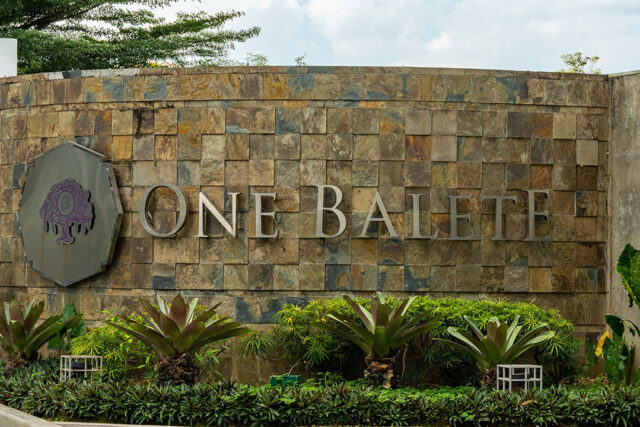
PhilRealty project One Balete in New Manila, Quezon City. — PHILREALTY.COM.PH

PHILIPPINE Realty and Holdings Corp. (PhilRealty) said the Philippine Stock Exchange (PSE) approved the listing of more than 4.18 billion common shares to be issued under a property-for-share swap with Greenhills Properties, Inc. (GPI).

In a disclosure on Monday, the company said the shares are priced at P0.54 each, representing a total transaction value of about P2.26 billion.

Under the deal, the company will acquire two adjacent lots in Bonifacio Global City with a combined area of about 3,200 square meters in exchange for the shares.

“The approval is subject to all conditions as set forth in the post-approval requirements and Conditions and any other condition that the Securities and Exchange Commission (SEC) and/or the PSE may hereafter impose in relation to the issuance and/or listing of the swap shares,” the company said.

PhilRealty has subsidiaries engaged in property management, insurance brokerage, travel services, and real estate leasing and sales, including PRHC Property Managers, Inc., Tektite Insurance Brokers, Inc., Universal Travel Corp., Sultan Power, Inc., and Three Corners Realty Corp.

Its property developments include The Alexandra, Tektite Towers, The Alexis, La Isla Condominium, Casa Miguel, One Balete Compound, The Icon Residences, The Icon Plaza, and El Retiro.

At the local bourse on Monday, RLT shares fell by 4% to P0.096 each. — Alexandria Grace C. Magno

Sibling rivalry takes center court in Running Point season two

LOS ANGELES — Sibling rivalry reaches new levels in season two of Netflix’s sports comedy Running Point, as Kate Hudson’s character, Isla Gordon, faces a renewed power struggle within her family’s pro basketball team.

“The stakes just become higher and higher for her, because her brother comes back into the picture,” Ms. Hudson told Reuters.

In the first season that premiered last year, Isla was appointed president of fictional team the Los Angeles Waves after her older brother Cam, played by Justin Theroux, stepped aside.

Now Cam’s return is set to threaten Isla’s authority.

Co-creator Mindy Kaling said the sibling tension was inspired by real-life NBA executive Jeanie Buss, the Los Angeles Lakers governor, who in 2020 became the first female controlling owner to guide a team to an NBA championship.

Ms. Kaling — a comedian known for creating and starring in The Mindy Project — drew from Ms. Buss’ memoir to make Isla’s story feel as authentic as possible, although it is not intended to mirror her life exactly.

Instead, the show captures a universal truth about family businesses, said Ms. Kaling. It’s a “constant competition” of siblings seeking approval, she added.

Although Cam’s return drives much of the drama in the new season, Isla has other struggles, too, that will be familiar to many female viewers.

“She has to worry about not only being excellent at her job, but also how she talks, how she’s perceived and how she looks,” Ms. Kaling said, adding that Isla is continually having to prove herself in a historically male-dominated sports world.

“There’s so much more that she has to think about, and I think that’s what makes it so juicy, and what makes it so fun,” Ms. Kaling added.

Season two of Running Point premieres on Netflix on April 23. — Reuters

Calling it ‘political’ does not make the Constitution disappear

STOCK PHOTO | Image from Freepik

With the Supreme Court’s oral arguments on the constitutionality of unprogrammed appropriations now winding down, a defining question remains:

What happens when a constitutional issue is labeled “political”?

Does it cease to be a constitutional question?

Or does the Constitution continue to impose limits — whether or not they are convenient to enforce?

The Solicitor General’s position, presented with clarity and discipline, is that the issues raised in the petitions belong to the political branches: to Congress, to the Executive, and ultimately to the electorate.

It is a position that calls for restraint. It warns against judicial overreach. It invokes separation of powers.

But calling an issue “political” does not make the Constitution disappear.

THESE ARE NOT SUGGESTIONS
The Constitution does not merely allocate powers. It imposes limits. Among them:

• A financed fiscal program — expenditures must match real sources of financing.

• A budget ceiling — Congress cannot expand total appropriations beyond the President’s recommendation.

• And the rule that public funds may be spent only as appropriated by law — a power solely vested in Congress.

These are not policy preferences. They are constitutional commands.

And when such commands are implicated, the issue is not political. It is legal.

WHAT COURTS ARE FOR
Courts do not decide whether budgets are wise. They do not choose between roads and hospitals.

But they do decide whether the rules of the Constitution are followed.

That is the question before the Court.

WHERE POWER ACTUALLY MOVES
Labels do not resolve constitutional questions — operation does.

In a system defined by deficits, new revenues rarely cover all authorized spending.

Someone must decide:

• Which appropriations are funded.

• Which are not.

• And in what amounts.

If those decisions occur during execution, then allocation no longer happens solely in Congress.

It shifts — inevitably — to the Executive. That is not implementation. That is power moving.

NOT POLITICAL — CONSTITUTIONAL
The Constitution gives Congress the power of the purse. That includes deciding what gets funded and how much.

If that decision is deferred or diluted, the issue becomes constitutional — not political.

Elections, oversight, and public debate are important. But they are not substitutes for constitutional compliance. The ballot cannot answer whether a fiscal structure violates the Constitution.

Only the Court can.

PRACTICE IS NOT PERMISSION
That unprogrammed appropriations have existed for decades does not settle the issue.

Practice cannot override the Constitution.

Even precedent does not foreclose review. In Araullo v. Aquino III, the Court examined how funds were used — not just how they were authorized. In Belgica v. Executive Secretary, it upheld the concept of unprogrammed funds — but within constitutional limits.

The question now is whether those limits still hold — in practice.

THE QUESTION THAT REMAINS
Are the Constitution’s safeguards over public spending real — or merely formal?

If they are real, they must be enforceable.

If enforceable, they must be justiciable.

To call them “political” is to suggest they may be acknowledged in principle, yet set aside in practice.

That cannot be the Constitution we are sworn to uphold.

Because in the end, the Constitution is not a suggestion — and it does not disappear simply because it is called “political.”


Florencio B. Abad was formerly chairman of the Committee on Appropriations of the House of Representatives and secretary of the Department of Budget and Management. Currently, he is professor of Praxis at the Ateneo School of Government and senior professional lecturer at the De La Salle Tañada-Diokno School of Law.

Peso ends higher in cautious trade amid war, BSP rate bets

BW FILE PHOTO

THE PESO strengthened versus the dollar on Monday in cautious trading as markets monitored developments between the United States and Iran and before the Bangko Sentral ng Pilipinas’ (BSP) policy meeting this week.

The local unit climbed by 6.5 centavos to close at P59.97 against the greenback from its P60.035 finish on Friday, data from the Bankers Association of the Philippines showed.

The currency opened Monday’s session stronger at P59.97 per dollar. Its intraday best was at P59.80, while its worst showing was at P60.08 versus the greenback.

Dollars traded increased to $1.54 billion from $1.22 billion on Wednesday.

“The dollar-peso closed a little lower but remained rangebound amid uncertainties on the Strait of Hormuz and ahead of the Monetary Board meeting, resulting in cautious trading,” a trader said in a phone interview.

Hawkish signals from the BSP chief also supported the peso as traders look ahead to the Monetary Board’s policy review on Thursday (April 23), Rizal Commercial Banking Corp. Chief Economist Michael L. Ricafort said in a Viber message.

For Tuesday, the trader sees the peso ranging from P59.70 to P60.20 per dollar, while Mr. Ricafort expects it to move between P59.85 and P60.05.

BSP Governor Eli M. Remolona, Jr. earlier told BusinessWorld that they have room to raise rates to temper growing inflation risks amid the Middle East conflict.

He added that second-round effects may emerge sooner than expected as the global oil shock is expected to spill over into domestic food and transport prices.

A BusinessWorld poll showed that 11 out of 19 analysts expect the Monetary Board to hike the target reverse repurchase rate by 25 basis points at this week’s meeting. This would bring the benchmark rate to 4.5% and mark the BSP’s first tightening move since October 2023.

Meanwhile, the US dollar rose to its highest level in a week against major currencies on Monday before paring gains as renewed US-Iran tensions and fading hopes for a Middle East peace deal sent investors toward safe havens, Reuters reported.

The United States said on Sunday that it had seized an Iranian cargo ship that tried to run its blockade, while Iran said it would retaliate, stoking fears about a resumption of hostilities. Tehran also said it would not participate in a second round of negotiations that the US had hoped to kick off before its two-week ceasefire with Iran expires on Tuesday.

The dollar index, which measures the US currency against six peers, recouped some of its recent losses to rise to its highest in a week at 98.47, before dipping to trade at 98.34. — Aaron Michael C. Sy with Reuters

ADVERTISEMENT
ADVERTISEMENT