Yellow Pad
By Ma. Dhelyn Dela Cruz and Sheic Sims
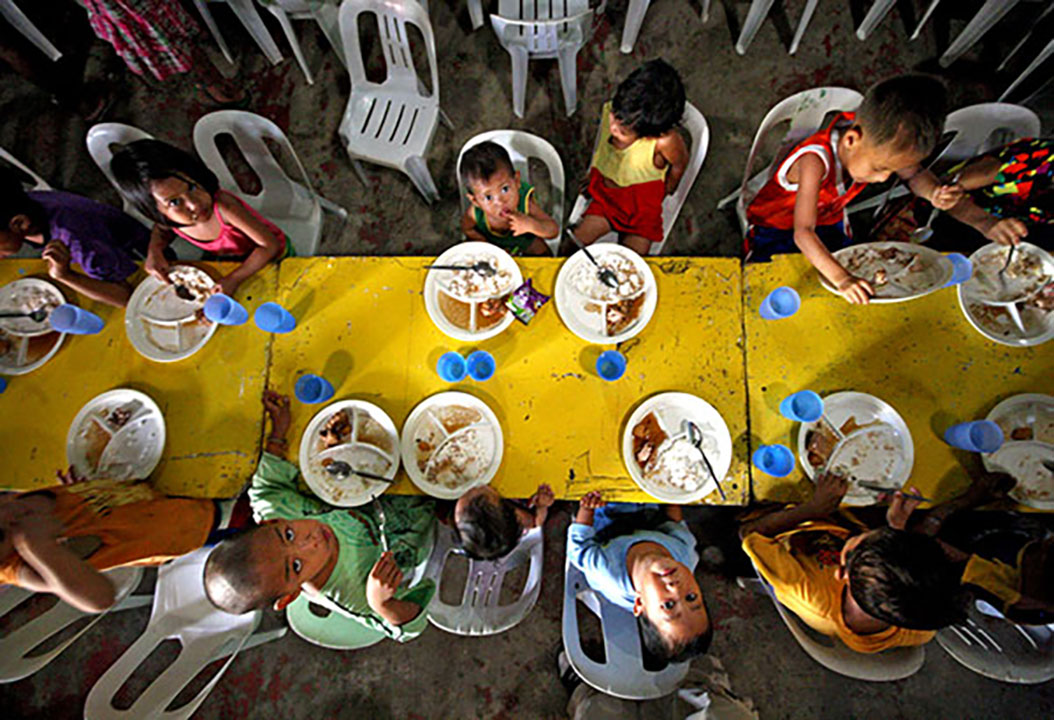
Amid limited access to affordable healthy food, rising disease prevalence, and high out-of-pocket healthcare costs, the Filipino people face the triple burden of malnutrition, a crisis reflected in empty plates, hidden hunger, and heavy scales.
In our communities, persistent undernutrition — most visible in wasted or stunted children and energy-deficient adults — exists alongside the rising prevalence of obesity and micronutrient deficiencies. These overlapping challenges not only deepen the daily struggles of Filipino families but also underscore the urgent need for comprehensive nutrition solutions.
Stunting affects 23.6% of infants and young children, 17.9% of school-age children, and 20.7% of adolescents. Wasting affects 5.6% of infants and young children, 8.4% of school-age children, and 11.5% of adolescents. The decline in stunting in the Philippines is slower than in the rest of Southeast Asia. At this rate, reaching the zero malnutrition Sustainable Development Goal by 2030 seems unlikely.
On the other hand, the prevalence of overweight and obesity among Filipinos, especially among the adult population, is increasing at an alarming rate. The 2023 National Nutrition Survey reports that 29.5% of the Filipino adult population aged 20 years and above are overweight, while 10.3% are afflicted with obesity. This means, the estimated number of Filipino adults — most of whom are in their most productive age — with overnutrition is at a staggering 27.5 million.1
Micronutrient deficiencies, particularly among children and women, remain a high public health concern. While micronutrient deficiencies may result in visible and severe health problems such as increased risk of infectious illness, they can also manifest more subtly through symptoms like low energy, difficulty concentrating, and declines in physical and mental functioning. Over time, this can contribute to lower educational achievement, diminished work productivity, and heightened vulnerability to other illnesses.2
Alarmingly, one in five pregnant Filipinas is anemic, which is also reflected in the high prevalence of anemia among infants and young children, with one in 10 affected. In addition to anemia, the high prevalence of Vitamin A deficiency and iodine deficiency persists, affecting pregnant and lactating mothers and their infants.
These problems are rooted in systemic issues such as persistent poverty, food insecurity, inadequate water and sanitation, insufficient maternal and child health services, aggressive marketing of unhealthy products, and gaps in policies that prevent sectors such as agriculture, education, and social protection from effectively addressing nutrition.
Malnutrition places Filipinos, particularly children, at heightened risk of infections and diseases, jeopardizing not only their health today but the country’s collective future. Addressing this challenge requires urgent interventions, including substantial investment in nutrition programs, as many consequences of malnutrition are long-lasting and difficult to undo.
Unfortunately, the Philippines’ limited fiscal space makes it difficult to fully invest in nutrition programs, despite their crucial role in addressing the country’s worsening health challenges. In fact, we have seen that, in an attempt to address hunger, the current administration resorted to foreign loans to fund the Walang Gutom 2027 Food Stamp Program. This temporarily alleviates the problem, but ultimately, we have to rely on sustained domestic financing to address malnutrition, which is both an acute and chronic problem. Given the current limited fiscal resources, we need new money to implement long-term nutrition interventions.
Against this backdrop, a proposal to improve the sweetened beverage (SB) tax is a triple win policy. It will reduce consumption of harmful sweetened drinks — a risk factor for obesity, dental caries, diabetes, and heart diseases; lessen the economic burden arising from diseases associated with sweetened beverages; and, raise substantial revenue not only for the economy’s fiscal health for funding health and nutrition.
Currently, the “Tres Marias” of the Liberal Party — Representative Krisel Lagman of the 1st District of Albay, Representative Kaka Bag-ao of the Lone District of Dinagat Islands, and Leila De Lima of the Mamamayang Liberal (ML) Party-list — and Bataan 1st District Rep. Antonino Roman III, have filed sweetened beverage (SB) tax bills in the 20th Congress, namely House Bill 5003 and House Bill 5969. Let us support them and their other co-authors.
The SB tax in the Philippines was introduced in 2018 as part of the Tax Reform for Acceleration and Inclusion (TRAIN) Law, imposing an excise tax on drinks with added sugar and certain artificial sweeteners to discourage sugary beverage consumption and promote public health. However, its effectiveness is limited by several policy gaps, such as the one-time increase that has since been eroded by inflation, exemptions for some high-sugar products, a lack of regular tax rate adjustments, and insufficient mechanisms to ensure tax revenues are directed toward nutrition and health programs, ultimately reducing its potential impact on malnutrition and non-communicable diseases.
The aforementioned bills aim to raise excise taxes on sweetened drinks, expand coverage to more sugary and artificially sweetened beverages, and adjust tax rates regularly for inflation.
The bills address the triple burden of malnutrition.
Similarly the bills address undernutrition and hidden hunger among the poor through an earmarking provision. The bills earmark the revenues for nutrition-specific and nutrition-sensitive programs, and for the Universal Health Care Act.
Nutrition-specific interventions include ensuring adequate nutrition for pregnant and lactating mothers, supporting exclusive breastfeeding for the first six months, continuing breastfeeding alongside appropriate and nutritious food up to two years of age, food fortification, micronutrient supplementation, dietary supplementation, treatment for severe malnutrition, complementary feeding, and school-based feeding programs. Nutrition-sensitive programs include improved water, sanitation, and hygiene (WASH) and conditional cash transfers to vulnerable populations.
Effective action against malnutrition requires an integrated strategy that addresses overnutrition, undernutrition, and micronutrient gaps simultaneously. We must see excess weight and undernutrition as interconnected challenges affecting Filipinos across all backgrounds.
1Action for Economic Reform’s estimation using prevalence data from the 2023 National Nutrition Survey of the Department of Science and Technology – Food and Nutrition Research Institute and the 2020 Census-Based National Population Projections of the Philippine Statistics Authority.
2World Health Organization: WHO. (Dec. 20, 2019). Micronutrients. https://www.who.int/health-topics/micronutrients#tab=tab_1
Ma. Dhelyn Dela Cruz and Rosheic Sims are researchers for the fiscal and health policy team of Action for Economic Reforms.