Home Blog Page 2857

Banking, property boost SMIC’s Q2 profit to P21.8B

SMSUPERMALLS.COM

By Revin Mikhael D. Ochave, Reporter

SM Investments Corp. (SMIC) reported a 13% increase in its net income for the second quarter (Q2), reaching P21.8 billion, primarily driven by a strong performance in the banking and property sectors, which offset the impact of lower retail sales.

“[O]ur banks, property, and portfolio investments continued to deliver,” SMIC President and Chief Executive Officer Frederic C. DyBuncio said in a statement on Wednesday.

“We remain cautiously optimistic for the balance of the year,” he added.

Second-quarter consolidated revenue increased by 6% to P157.7 billion, SMIC said.

SMIC saw a 10% increase in its first-half consolidated net income to P40.2 billion from P36.5 billion last year.

Its January to June consolidated revenue rose by 5% to P301.4 billion from P286.7 billion in 2023.

The conglomerate’s banking segment accounted for 50% of total net earnings, followed by property at 27%, retail at 14%, and share of portfolio investments at 9%.

Sought for comment, AP Securities, Inc. Research Head Alfred Benjamin R. Garcia said that SMIC is expected to have another “banner year,” with its first-half performance meeting expectations.

“It is in line with estimates. It’s only slightly behind the P40.4 billion we expected for the first half,” he said in a Viber message.

“Considering that the seasonality of SM’s earnings leans heavily towards the second half of the year, we can safely assume that the company is headed for another banner year,” he added.

However, he also said that SMIC’s property segment faces risks following the recent government ban on Philippine offshore gaming operators (POGOs).

“The biggest risk would be the effect of the POGO ban on SMIC’s property arm. Granted, they have limited exposure to POGOs, but they have a sizable portfolio of office spaces in the Bay Area. That’s one of the areas where we expect office vacancy to rise following the POGO ban, which could directly translate to lower lease rates. There could also be a knock-on effect on the residential side in terms of vacancies,” he said.

“Another potential risk is the return of weakness in consumer spending if the latest jump in inflation numbers is not a one-off as we expected,” he added.

The conglomerate’s banking business led by BDO Unibank, Inc. grew its first-half net earnings by 12% to P39.4 billion, driven by the momentum of its core lending and fee-based services.

Net interest income rose by 11% to P99.6 billion. Gross customer loans grew by 13% across all market segments, while total deposits increased by 13%.

China Banking Corp. recorded a 6% increase in its first-half net income to a record P11.4 billion on improved core lending and deposit-taking activities.

Net interest income rose by 19% to P30.4 billion as higher interest income offset the increase in interest expense. Gross loans climbed by 10% to P817 billion led by higher demand across market segments, while deposits increased by 14% to P1.3 trillion.

SMIC’s property unit, SM Prime Holdings, Inc., generated P22.1 billion in first-half consolidated net income, up by 13% from P19.4 billion in 2023.

Consolidated revenue increased by 8% to P64.7 billion from P59.9 billion in 2023.

SMIC said its retail business, led by SM Retail, saw a 9.5% decline in first-half net income to P7.6 billion from P8.4 billion as a result of a “high base effect from the impact of the lifting of mobility restrictions on consumption in 2023.”

SM Retail grew its first-half revenue by 4% to P196.9 billion from P188.5 billion in 2023.

“The second quarter reflected higher growth by 6% in retail revenues and 2% in net income, indicative of spending on discretionary items such as appliances, beauty, and fashion. Specialty retail revenues increased by 5%. Food retail revenues grew by 7%,” SMIC said.

As of end-June, SM Retail added 355 stores, bringing its total network to 4,208 stores.

Among its portfolio investments, SMIC said Atlas Consolidated Mining and Development Corp. more than doubled its first-half net income to P2.07 billion as revenue went up by 23% to P12.5 billion on higher copper metal prices.

The Philippine Geothermal Production Co., Inc. recently started the exploration and development of new geothermal energy sources in various parts of Luzon. This aims to support power security in Luzon and advance the country’s renewable energy objectives.

Logistics company 2GO Group, Inc. launched the 2GO M/V Masigla and 2GO M/V Masikap vessels in the second quarter, which will sail from Manila to destinations in Visayas and Mindanao. Both vessels will carry containerized freight and rolling cargo to businesses and consumers.

On July 18, SMIC listed $500 million worth of debt notes on the Singapore Exchange Securities Trading Ltd. The issuance came from the conglomerate’s $3-billion Euro Medium-Term Notes program established in May.

Final demand for the issuance reached $1.6 billion, marking SMIC’s largest offshore bond issuance since 2014.

“We were also pleased with the demand and positive feedback on our recent maiden Euro Medium-Term Notes issuance, highlighting the quality of our financials and the investability of strong Filipino companies,” Mr. DyBuncio said.

In a separate stock exchange disclosure, SMIC said its board also approved a property-for-share swap with its subsidiary Intercontinental Development Corp. (ICDC). The transaction involves ICDC landholdings in Muntinlupa City in exchange for new SMIC shares.

The conglomerate did not provide further details on the deal.

On Wednesday, SMIC shares rose by 1.14% or P10 to P890 apiece.

CEB profits halved to P1.31B amid soaring Q2 costs

CEBUPACIFICAIR.COM

CEBU Air, Inc. (CEB), the operator of budget carrier Cebu Pacific, saw its attributable net income plunge by 50.9% to P1.31 billion for the second quarter from P2.67 billion, mainly due to higher expenses during the period.

In a regulatory filing, Cebu Air reported a combined revenue of P26.14 billion, higher by 15.3% from the P22.67 billion in the same period last year.

Broken down, the company recorded passenger revenues of P17.85 billion for the second quarter, up by 12.7% from the P15.84 billion a year ago; cargo revenues increased to P1.38 billion, significantly higher from last year’s P866.9 million, and its ancillary revenues climbed by 15.6% to P6.9 billion, compared with P5.97 billion in the same period a year ago.

Cebu Pacific carried a total of six million passengers in the second quarter alone, the company said, describing the feat as its highest passenger count in a quarter in its entire history.

The company said its cargo business also soared, flying nearly 36 million kilograms of cargo for the April to June period.

Still, despite posting higher revenues, Cebu Air’s attributable net income for the second quarter declined, attributed to higher expenses during the period, its financial statement showed.

The operator of the budget airline registered gross expenses of P23.3 billion for the second quarter, marking a 15.6% increase from the P20.15 billion in the same period last year.

For the six-month period, Cebu Pacific’s attributable net income also declined to P3.55 billion, lower by 5.3% from the P3.75 billion in the first half of 2023.

Cebu Air reported gross revenue of P51.44 billion for the first half of 2024, climbing by 18.1% compared with the P43.55 billion in the January to June period last year.

Passenger revenues account for the majority of the company’s increase in top line for the period, at P35.68 billion, up by 18.4% year on year.

For the first half, Cebu Air’s gross expenses soared to P45.95 billion, higher by 15.5% from last year’s P39.79 billion, mainly driven by flying operations expenses.

Its flying operations expenses for the first semester increased to P19.15 billion, higher by 14.2% from P16.77 billion a year ago; however, its expenses in repairs and maintenance decreased slightly to P7.38 billion, down from P7.41 billion last year.

Despite posting lower earnings for the second quarter and first six months, Cebu Pacific Chief Executive Officer Michael B. Szucs described the company’s developments for the period as a “significant achievement.”

“This has been a very important quarter for our airline, marked by significant achievements and crucial milestones. We’ve set new highs in terms of passengers flown, finalized our quasi-reorganization, and made the historic order of up to 152 aircraft from Airbus,” Mr. Szucs said.

Earlier this month, Cebu Air secured the approval of the Securities and Exchange Commission for its restructuring plan aimed at clearing the company’s deficit.

On July 17, 2023, Cebu Air’s board of directors approved its proposal to pursue an equity restructuring of its deficit.

The company proposed to use its additional paid-in capital of P20.66 billion to clear its deficit amounting to P16.27 billion, leaving it with a capital of P4.39 billion.

In June, the company announced that it would order up to 152 A321neos worth P1.4 trillion, or $24 billion, described as the largest aircraft order in the country.

“This substantive commitment, through the new aircraft order, aligns CEB’s ability to grow with the robust economic story in the Philippines and its ongoing investment in infrastructure,” Mr. Szucs said.

Alexander G. Lao, president and chief commercial officer of Cebu Air, has said that the airline is actively exploring various financing strategies for its pending aircraft acquisition.

The company anticipates the commencement of aircraft deliveries in 2028, with the procurement contract slated to be finalized by the third quarter of this year.

At the stock exchange, shares in the company gained five centavos or 0.18% to end at P27.85 apiece. — Ashley Erika O. Jose

Sales boost Megaworld’s Q2 income to P4.15 billion

LISTED property developer Megaworld Corp. saw a 9% increase in its second-quarter attributable net income to P4.15 billion from P3.79 billion last year, driven by higher real estate sales.

Consolidated revenue for the April to June period rose by 27.8% to P20.22 billion from P15.82 billion in 2023, Megaworld disclosed in a stock exchange filing on Wednesday.

Second-quarter real estate sales increased by 31.5% to P12.7 billion from P9.66 billion the previous year.

Megaworld launched P18 billion worth of residential projects for the second quarter. These include 9 Central Park – West Wing at Northwin Global City in Bulacan, One Portwood Residences at Newport City in Pasay City, CostaVida Residential Resort at The Mactan Newtown in Lapu-Lapu City, Cebu, Lialto Beach and Golf Estates – Phase 1 at Lialto Beach and Golf Estates in Lian, Batangas, and Sonrisa Gardens at Baytown Palawan in Puerto Princesa, Palawan.

For the first half, Megaworld’s attributable net income grew by 8.6% to P8.55 billion from P7.88 billion in 2023.

From January to June, consolidated revenue increased by 22% to P39.1 billion from P32.04 billion last year.

Real estate sales during the first six months surged by 30% to P24.82 billion, spurred by strong bookings and high demand for Megaworld’s residential properties across township developments in Taguig City, Cavite, Bulacan, Palawan, and Cebu.

“We continue to see robust demand for our residential properties outside of Metro Manila. Before the year ends, we hope to launch more projects in the provinces as we remain on track to finish 2024 with 35 townships,” Megaworld President Lourdes T. Gutierrez-Alfonso said.

Megaworld Hotels & Resorts’ revenue during the first half jumped by 38% to P2.36 billion, bolstered by the resurgence of meetings, incentives, conventions, and exhibitions (MICE) activities and local tourism.

First-half leasing revenue increased by 6% to P9.33 billion. Megaworld Lifestyle Malls’ revenue grew by 19% to P3.02 billion, thanks to higher tenant sales and increased foot traffic. Occupancy rates reached 93% as of the end of June.

Megaworld Premier Offices maintained stable revenue at P6.31 billion despite challenges in the Philippine office industry. The company secured new leases of office spaces totaling about 55,000 square meters, mostly in McKinley Hill, Eastwood City, and The Mactan Newtown.

The occupancy rate across its office developments reached 87%, surpassing the current industry average.

Megaworld recently announced its 33rd township, San Benito Private Estate, which will be a 25-hectare integrated active wellness township developed in partnership with the group that owns and operates The Farm at San Benito medical wellness resort.

On Wednesday, Megaworld shares fell by 0.56% or one centavo to P1.77 per share. — Revin Mikhael D. Ochave

Nickel Asia says new projects target EV market

NICKEL ASIA Corp. on Wednesday said that it expects the operation of its three new mines to bolster the company’s nickel production amid increased demand.

“Our three new nickel projects, namely Dinapigue, Bulanjao, and Manicani, will supplement our annual nickel ore production volumes to help supply the ever-growing demand for nickel ore driven by both the stainless steel and electric vehicle (EV) markets,” Nickel Asia President and Chief Executive Officer Martin Antonio G. Zamora said in a statement.

Mr. Zamora added that the company has pipelined three new renewable energy projects to increase its goal of one gigawatt by 2028.

The company is expecting to start construction of the Subic-Cawag solar project by the fourth quarter of 2024.

Commercial operations are expected in the fourth quarter of the following year.

The company said that its solar project in Leyte is planned to be completed by the first quarter of next year. It is a joint venture between its unit Emerging Power, Inc. and Shell Overseas Investments B.V.

“Pre-development activities for a 45-MWp (megawatt-peak) solar project in Botolan, Zambales, are also ongoing,” it added.

For the second quarter, Nickel Asia reported that revenues declined by 3.7% to P5.81 billion from P5.82 billion a year ago.

The sale of ore and limestone for the April to June period slipped by 0.17% to P5.81 billion from P5.82 billion in 2023.

For the first semester, the company reported that its net income fell by 59.3% to P1.12 billion compared to P1.75 billion in the same period last year.

Revenues declined by 14.8% to P9.29 billion from P10.92 billion in the same period last year.

Due to lower nickel ore prices, the company’s ore and limestone sales dropped by 16.7% to P7.8 billion from P9.37 billion.

“The company realized P57.5 per US dollar from these nickel ore sales, a 4% increase from P55.33 last year,” it said.

The weighted average nickel ore sales price declined by 26% to $16.60 per wet metric ton (WMT) from $22.32 per WMT in the same period last year.

Shares of Nickel Asia rose by 4.76%, or 15 centavos, to close at P3.3 per share on Wednesday. — Adrian H. Halili

Expense cuts offset Globe’s Q2 revenue slide

GLOBE Telecom, Inc. saw an attributable net income of P7.74 billion for the second quarter, representing a 9.5% increase from the same period last year.

Gross revenues for the second quarter reached P44.32 billion, lower by 0.38% from P44.49 billion a year ago, the company’s financial report showed.

The company’s lower expenses for the period managed to offset its lower revenues, according to Globe’s financial report.

For the April to June period, Globe’s combined expenses reached P38.93 billion, marking a drop of 1.04% from the P39.34 billion previously.

For the six-month period, the Ayala-led telecommunications company managed to eke out an increase in its attributable net income despite flat revenue growth.

Globe also registered flat earnings of P14.55 billion, up by 1.6% from last year’s P14.32 billion.

Globe’s combined revenue for the first semester reached P89.63 billion compared with last year’s P89.52 billion.

Globe’s core net income, which excludes nonrecurring items and mark-to-market gains, reached P11.7 billion, higher by 20.6% from the P9.7 billion previously.

Broken down, service revenues reached P82.23 billion, marking an increase of 2.3% from P80.4 billion a year ago.

Among its service revenues, mobile revenues accounted for the biggest share at 71%, with P58.39 billion; home broadband at P12.1 billion; corporate data at P9.79 billion; fixed-line voice at P763 million.

To date, Globe said it is expecting mobile revenues to extend its gains, citing improving data consumption across all its brands.

The company is banking on a surge in mobile data traffic, which increased by 16% to 3,256 petabytes year on year, despite its mobile subscribers declining by 28% to 59.5 million.

“We are also thrilled that our landmark tower deal is nearing completion, with 88% of the covered towers successfully transferred to the towercos as of July, and we are on track to complete this transaction within the second half of the year,” Globe President and Chief Executive Officer Ernest L. Cu said.

Globe said it has generated P85.2 billion from its tower sales after fully transferring some of its tower assets to Frontier Tower Associates Philippines, Inc. (Frontier Towers).

The telco has closed the sale of 1,037 towers valued at P13.17 billion, marking the completion of 3,529 towers to be acquired by Frontier Towers.

Rizza Maniego-Eala, Globe’s chief financial officer, said the company will complete its tower sales within the year.

“We are hoping to complete 100% of our tower sales by this year. If we only complete about 92% by the end of December, we are still on track,” she said.

In total, Globe has transferred 6,628 towers, generating a total of P85.2 billion, out of the 7,506 towers planned for the sale and leaseback arrangement.

At the local bourse, shares in the company gained P52 or 2.39% to close at P2,230 each. — Ashley Erika O. Jose

ALI says ‘robust demand’ led to P13.1-B profit

LISTED property developer Ayala Land, Inc. (ALI) recorded a 15% increase in its first-half net income to P13.1 billion on “robust property demand and consumer activity.”

First-half consolidated revenue increased by 28% to P84.3 billion, ALI said in a stock exchange disclosure on Wednesday.

Residential reservation sales rose by 17% to P68.4 billion led by the premium and vertical segments.

The sales growth was driven by properties such as AyalaLand Premier’s Park Villas in Makati central business district and The Courtyards Phase 3 in Vermosa, Alveo’s Park East Place in Bonifacio Global City, and Sereneo in Nuvali, and Avida’s Verge Tower 1 in Mandaluyong.

ALI launched P33.7 billion worth of projects for the first half, of which 92% were from premium brands and 52% were horizontal developments.

Leasing and hospitality revenues increased by 10% to P22.1 billion due to the higher occupancy of Ayala Malls Manila Bay, the contribution of One Ayala Mall and Offices, Ayala Triangle Tower Two, Seda Manila Bay, and the higher occupancy of Seda Nuvali and Lio.

Shopping center revenues climbed by 8% to P11.1 billion while office leasing surged by 6% to P6.1 billion. Hotel and resort revenues improved by 19% to P5 billion.

Meanwhile, ALI’s service businesses, comprised of construction, property management, and airlines, saw a 51% increase in first-half revenue to P8.4 billion.

Net construction revenue of Makati Development Corp. doubled to P5.5 billion led by additional contracts from external projects.

Boutique airline AirSWIFT, property management, and retail electricity supply companies generated revenues of P2.9 billion, up by 2% on airline sales and property management fees.

“ALI is hitting its growth targets across all business lines and market segments. Residential sales outperformed expectations. We will continue to pursue our growth trajectory with a keen eye on capital efficiency,” ALI President and Chief Executive Officer Anna Ma. Margarita Bautista-Dy said in a media briefing in Makati City on Wednesday.

“We are reinventing our assets to deliver elevated and differentiated experiences to our customers, and we will continue to bring compelling and market-shaping residential offerings to Filipino homeowners,” she added.

ALI has spent P36.5 billion in capital expenditures as of end-June, of which 51% were spent on residential projects, 27% on estate development, 11% on commercial leasing assets, and 11% on land acquisition commitments.

On Wednesday, ALI shares rose by 5.08% or P1.45 to P30 per share. — Revin Mikhael D. Ochave

Exports drive Century Pacific Food’s profit up by 12% to P1.9B

LISTED Century Pacific Food, Inc. (CNPF) generated a 12% jump in its net profit for the second quarter to P1.9 billion from P1.7 billion in 2023, led by the exports segment.

The company increased its April-to- June revenue by 10% to P19.59 billion from P17.79 billion last year, CNPF said in a regulatory filing on Wednesday.

For the first half, CNPF recorded a 14% climb in its first-half attributable net income to P3.63 billion from P3.2  billion in 2023, led by “favorable trends in commodity costs.”

January-to-June consolidated revenue rose by 13% to P37.74 billion from P33.41 billion last year due to the recovery of its original equipment manufacturer (OEM) exports.

The bulk of CNPF’s revenues came from the branded business, composed of marine, meat, and milk & other segments, catering predominantly to the domestic market. The OEM exports segment, including tuna and coconut exports, accounted for about a fifth of its business.

OEM export sales rose by 36% versus the second quarter of last year, bringing the segment’s six-month growth rate to 42% year on year. Coming from a soft 2023, the segment rebounded in the first half on the back of improving commodity costs and favorable foreign exchange market conditions.

“Following a high base, the branded segment delivered a 5% growth rate during the three-month period amid a strained consumer environment, laddering up to a 7% year-on-year increase in first-half sales versus the same period last year,” CNPF said.

Meanwhile, CNPF reiterated its outlook of aiming for a low double-digit growth for both its top line and bottom line for 2024.

On Wednesday, CNPF shares rose by 1.96% or 65 centavos to P33.75 per share. — Revin Mikhael D. Ochave

TCL’s growth reflected in big fridge

SCREENGRAB FROM TCL ELECTRONICS FACEBOOK PAGE

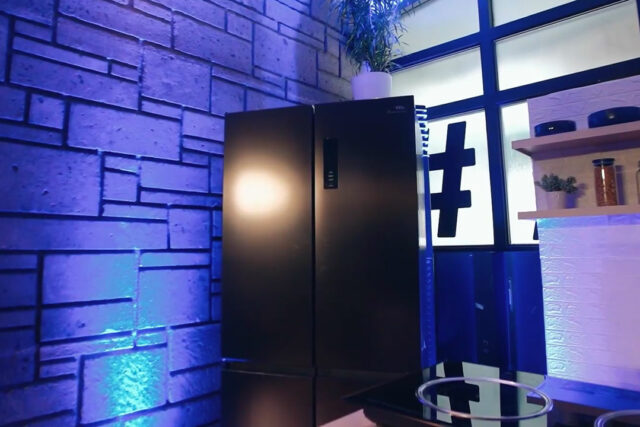
WHAT’S BIG, gray, and cool? TCL’s new refrigerator, that’s what.

On July 26, TCL had a live cooking demo with celebrity chef and award-winning cookbook author Myke “Tatung” Sarthou at his Quezon City restaurant, Azadore. The chef is a convert: he changed the fridge in his studio to TCL’s Free Built-in Series Refrigerator.

The fridge has a 170-liter freezer capacity, while the chiller compartments have a 351-liter capacity. It has zero-frost, and a freezer compartment that could be converted into a chiller.

Mr. Sarthou says, “Straightforward lang, I’m so impressed by the advanced cooling system, the convertible zone that I can adjust anytime I want to, and of course, the spacious interior that allows me to organize my ingredients efficiently, making meal prep a breeze for my daily content also.”

Mr. Sarthou, next to content creator Joyce Pring-Triviño, prepared chopped salad with toasted nuts, chicken steak with mushroom fried rice, and mango jubilee for dessert (they used the fridge during the demo, of course).

In an interview with BusinessWorld, the chef said that he switched his old fridge to this new one because, “Hindi siya nao-organize ng maayos (it couldn’t be organized well),” referring to his old fridge. “It turns out really messy, and ang daming sayang (it made me waste a lot of food).”

TCL Brand Manager Joseph Cernitchez told BusinessWorld in an interview that what they were proud of in the fridge was the precise temperature control. While other brands just have low, medium, or high settings, theirs are measured in centigrade, from -20 for the lowest temperature in the freezer, to -1 for the chiller.

TCL, better known for its televisions, released their fridge category only four years ago in the Philippines, and in 2022 to 2023, they grew 193%, according to Mr. Cernitchez. Currently it has a 25% to 30% market share, he said. “For 2023 and 2024, we’re trying to push it more,” he said.

TCL is a brand by the TCL Technology Group Corp., based in China and founded in 1981. Chinese brands, despite their ubiquity, don’t always enjoy stellar reputations due to perceptions of their low price and their quality (among other things). Mr. Cernitchez, speaking about the fridge (which costs about P70,000 — others in their category can cost up to the hundreds of thousands) said that almost all of their competitors have their parts manufactured in China, anyway.

“Some of our competitors, we’re the ones who manufacture their parts,” he said.

Their end-to-end model of manufacturing their own parts for their own products is one of the ways they keep their prices low. “We manufacture our products. Unlike with competitors, they ask other factories to build parts for them and they assemble everything in their warehouses.” — Joseph L. Garcia

San Miguel Food’s income rises 6% on stronger sales

LISTED San Miguel Food and Beverage, Inc. (SMFB) saw a 6% growth in its net income for the first half to P20 billion, led by higher sales across its categories.

Consolidated sales for the first six months rose by 4% to P192.9 billion, while operating income increased by 16% to P26.6 billion, SMFB said in a regulatory filing on Wednesday.

SMFB’s food business, led by San Miguel Foods, registered a 3% increase in first-half sales to P87.8 billion, led by double-digit revenue growth in prepared and packaged foods along with “resilient poultry sales.”

The food business doubled its first-half operating income to P6.4 billion, while higher volumes, improved pricing, and lower raw material costs led to a 41% increase in earnings before interest, taxes, depreciation, and amortization (EBITDA) to P10 billion.

“Key products such as Tender Juicy Hotdogs, Purefoods Luncheon Meat, Magnolia dairy, and San Mig Coffee also maintained strong sales,” it said.

SMFB’s beer segment, led by San Miguel Brewery, Inc., saw a 1% increase in first-half consolidated revenue to P75.1 billion, carried by better sales volume in the second quarter.

“The company expects stronger performance in the second half of 2024, supported by targeted sales initiatives and increased focus on specific channels,” SMFB said.

Meanwhile, SMFB’s spirits business, led by Ginebra San Miguel, Inc., had an 18% sales increase to P30 billion for the first half due to a 10% volume growth. Operating income rose by 31% to P4.4 billion.

“SMFB has had a strong start to the year, and we remain focused on leveraging our strengths to drive growth and efficiency,” SMFB Chairman Ramon S. Ang said.

“We are also committed to supporting our nation’s food security and economic growth by expanding access to essential products. We are very optimistic about the opportunities ahead and confident in our ability to deliver continued value to all our stakeholders,” he added.

SMFB stocks gained by 0.32% or 15 centavos to P46.70 apiece on Wednesday. — Revin Mikhael D. Ochave

The fear factor behind that culinary F word

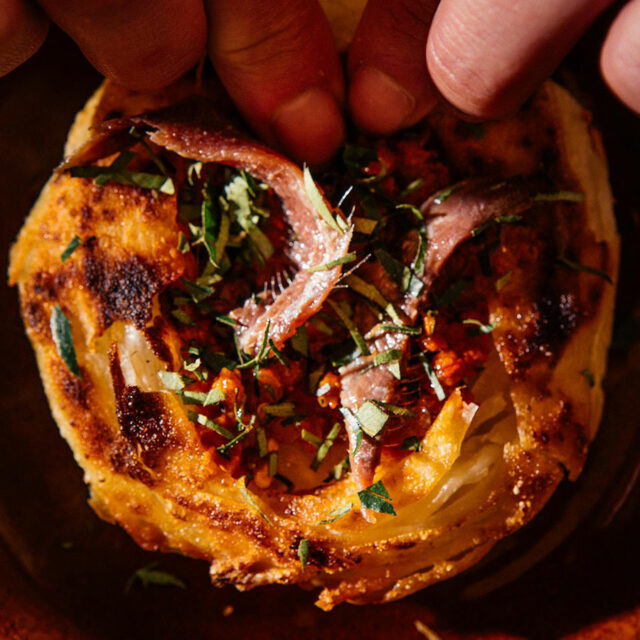
DEEP FRIED ROTIS, known as coin parotta on the streets of Tamil Nadu, are on the menu at London’s Rambutan restaurant. — INSTAGRAM.COM/RAMBUTAN_LDN

By Howard Chua-Eoan

WHEN is a restaurant like a handbag? A private dining room reservation — drink pairing included — for 12 people at the coming Kyoto residency of Danish chef Rene Redzepi’s Noma costs around $16,000. You can spend that much on a single pink Birkin bag from Hermes on the secondary market. Yes, used.

Despite the disparity in per-unit cost, restaurants have something to learn from the current state of the luxury industry. LVMH Moet Hennessy Louis Vuitton SE — which has made Chief Executive Officer Bernard Arnault one of the richest people in the world — last month suffered “the biggest bling bust” in a decade, according to my colleague Andrea Felsted. She’d been seeing signs of it months before. In April, she offered the big luxury houses some advice: Democratize or be prepared lose aspirational consumers to companies that know how to sell more affordable opulence.

The restaurant scene may ripe for a plebeian upheaval, too. Word of, ahem, mouth in New York, Copenhagen, London and other foodie capitals has diners choking over almost-extortionate tabs. The industry recovered dramatically after COVID, but in the pursuit of growth, it’s passed along tons of the cost to diners. The strategy has been to cater to ever-richer customers. But there aren’t enough plutocrats out there to eat all those caviar-bloated tasting menus.

There’s a lot to be done, but perhaps cooks and investors can head toward forbidden territory. Judging from movies, books, and social media, chefs aren’t afraid of spouting the F word — unless the initial leads to the sequence U, S, I, O and N.  I can barely say it myself because of all the bad multi-culti cooking that has been served to us under the name. Some of the excess persists — say, the Yorkshire burrito, an all-in-one Sunday roast wrapped in a Yorkshire pudding roll, or the chicken katsu from the United Kingdom’s chain bakery Gregg’s — though no one dares utter the word fusion.

There, I said it.

But all cuisines are to a large extent the product of historic fusions. Creative kitchens never really have borders and good chefs always looking to be inspired by unfamiliar flavors and products. For example, Portuguese seafarers kindled culinary innovation from India to China to Japan. Tempura originates from a cooking technique (and possibly word) used by the first Western European traders to visit Japan. India, Indonesia, and the Philippines have a dessert that sounds like bebinca — though the preparation varies from country to country. The egg custard staple of Cantonese bakeries, dan tat, is a Macanese version of Lisbon’s famous pasteis de nata. These cross-cultural innovations were the results of natural culinary impulses — to create delightful food, something shared with the fad for fusion in the 20th century. The better word, I think, is diffusion — the spread of ideas, condiments, techniques from one culture to another.

It’s still going on today. I was at a pop-up in north London and I asked the young French-trained British chef what made his dishes so refreshingly different. He smiled and said, a touch of Vietnamese fish sauce. Tempura cooking technique has also become ubiquitous in all kitchens, further popularized by Nobu, the global chain co-owned by Robert De Niro.

Rambutan, a Sri Lankan restaurant in London where I’m a regular, has begun a series of collaborations called “Cousins,” bringing together chefs to meld and shape their cuisine with the styles and produce of the South Asian nation. The first guest chef in the series was Rahel Stephanie, the Indonesian cook with a cult following in the city. One of her contributions, a marvelous dip made of silken tofu and andaliman peppers — which are similar to mouth-numbing Sichuan pepper corns but with a distinctly brighter flavor. Andaliman are from Stephanie’s home region in Sumatra. It was a revelation — and piquantly delicious not just with the gundu dosas of Rambutan but with everything else on the menu. The influences are self-perpetuating. Chef-owner Cynthia Shanmugalingam noted that the fruit from which her restaurant takes its name was originally brought to Sri Lanka by traders from Java, which is part of Indonesia. She’s looking for future guest chefs who will find culinary congruences with her country’s cooking. Together, they’d collaborate to enhance each other’s traditions. No more the culinary chimeras of the unforgiving past.

That kind of creativity — melding, not grafting, influences — could make fusion respectable again; or, at the very least, make the impulses behind it more pervasive. There’s also a business application. Many cuisines from Asia, Latin America, and Africa are unjustly relegated to the cheap eats category, even when they require more prep work, kitchen technique, and culinary knowledge than goes into many middle-of-the road Western menus. This is an opportunity for them to raise their profiles and market value by collaborating with established restaurant developers looking for a way out of the beggar-your-customer race.

I tend to be unrealistic about these things, but I see hope. Wagamama, the fusion-y noodle chain now owned by Apollo Global Management, Inc.’s Restaurant Group, was once a relatively good choice for travelers stuck in airports or wandering aimlessly through global tourist hubs. The food — Japanese-inspired but with infusions of Chinese influence — has lost its culinary way since Alan Yau, its Hong Kong-born founder, sold it in 2018. The good news: Wagamama announced in June that its experimental noodle lab is partnering with a young chef to help revitalize its fare. That chef’s name: Rahel Stephanie.

I’m going to have to eat there again.

BLOOMBERG OPINION

Dennis Uy’s Chelsea optimistic after narrowing losses in 2023

DENNIS A. UY’S Chelsea Logistics and Infrastructure Holdings Corp. narrowed its 2023 net loss to P1.14 billion, improving from a P2.53 billion loss in the prior year.

“Our 2023 results reflect our unwavering commitment to delivering value to our stakeholders through strategic investments and operational excellence,” Chelsea Logistics President and Chief Executive Officer Chryss Alfonsus V. Damuy told the stock exchange on Wednesday.

According to the company’s annual report, Chelsea Logistics’ gross revenue reached P7.05 billion, up by 9.6% from P6.43 billion in 2022.

“As we continue to navigate a dynamic business environment, our focus remains on sustainable growth and innovation to meet the evolving needs of our customers,” Mr. Damuy said.

The company said its passage and freight segments continued to post an increase in revenues by 50% and 3%, respectively.

It said its cost of sales and services decreased to P5.6 billion, declining by 0.71% from P5.64 billion in 2022.

“These improvements in revenues were in part driven by the increase in average rates to cover the rising fuel prices in the early part of the year,” Chelsea Logistics said.

The company also said it benefited from the lifting of COVID-19 (coronavirus disease) restrictions, which allowed the company to carry more passengers.

“The continued financial progress we have made this year is a testament to our team’s dedication and strategic focus. We are optimistic about the future as we continue to strengthen our financial position and pursue opportunities for growth,” it said.

Further, the company will continue its re-fleeting and vessel modernization efforts, the company said, adding that it is planning to acquire new and optimally-sized tankers and roll-on/roll-off passenger (RoPax) vessels while also exploring new routes.

“The Company capitalizes on first-mover advantage by expanding into areas in the Philippines which show superior growth,” Chelsea Logistics said. — Ashley Erika O. Jose

Cravings returns

QUEZON CITY residents (and well, fans of Cravings from wherever they live) can get their cake fixes again. Cravings in Katipunan, a casualty of the pandemic, is returning, albeit in a new space in Maginhawa St.

Cravings is reopening in Maginhawa as The House of Cravings, pegged as a dessert bar and events place. While the Aug. 1 launch featured the brand’s signature lasagna and roast beef, the new House of Cravings is pulling out all the stops with a monthly Unlimited Cake and Coffee Buffet showcasing Cravings’ signature offerings. Selections will include their Chocolate Caramel, Devil’s Food Cake, Carrot Cake, Cherry Walnut Cheesecake, Mango Cashew Torte, and Strawberry Shortcake. To make the selection more exciting, seasonal favorites such as the unique Polvoron Cake and Dayap Cake will also be featured. Outside of the cake buffet, these will be offered on sale.

The selection extends to Fudge Walnut Bars, Mango Butterscotch, and Red Velvet Brownies. Freshly baked croissants and Pain Au Chocolat add a touch of classic elegance, while Gelato Manila flavors and Homemade Chocolate Sauce with Bread-and-Butter Pudding offer delightful pairings.

House of Cravings will also offer savory items such as the aforementioned Classic Lasagna, Monte Cristo Sandwich, Beef and Mushroom Pie, and Chicken Pot Pie.

A retail area will focus on artisanal goods such as root chips and organic vinegar. Since they occupy the space once held by chef Waya Araos-Wijangco’s former restaurant, Gourmet Gypsy, she’ll have some representation from her Baguio base: Strawberry Balsamic Jam, Mango Kaffir Lime Jam, Rhubarb Ginger Jam, and Sugar-Free Chia Seed Jam.

This won’t be the brand’s only opening this year: next month, Cravings is opening Cravings Signatures, a take-out counter in White Plains, Quezon City. There customers can enjoy the Chocolate Caramel Cake a la mode, topped with the founder’s secret chocolate sauce, or savor the premium Baked Lasagna with five kinds of cheeses.

Cravings has been around for 36 years, established by Annie Guerrero in 1988. The family’s other business, the school Center for Culinary Arts (CCA)-Manila, followed in 1996. The family has had a hand in changing the country’s culinary landscape, if only by their graduates and the restaurants they founded.

Bea Trinidad, of the family’s third generation (interestingly just a couple of years younger than Cravings), talked to BusinessWorld about how Cravings as an entity, separate from CCA, contributed to the culinary scene.

“A couple of things that really stood out were the pastries,” she said. “You always see these things now,” she said, but before Cravings, one couldn’t just get a chicken pot pie or blueberry cheesecake in a snap.

“I would say that Cravings is very humble. They don’t really like to brag, but somehow, a lot of the dishes they have — people copy it, and it always starts with what is comforting at home, but then it’s different.”

Ms. Trinidad, the PR and Communications director at CCA, talked about the recent trimming down they’ve had to do (such as the closure of the flagship Cravings branch in Katipunan, Quezon City, as well as CCA’s move to BGC in Taguig). “Nowadays, traffic is a killer. We’ve been very intentional on where to really open,” she said.

“After the pandemic, a lot of restaurants really struggled. I think that was a big change. When we saw that people were ordering online, and the sales were better during the pandemic, we realized you don’t actually have to rush and be pressured to open.”

They plan to open another Cravings in Bonifacio Global City (BGC), at the site of their BGC facilities in the University of the Philippines – BGC campus. That place will serve the surrounding community. “Be intentional,” she emphasized.

The family had the option to go on operating just CCA and let Cravings become a memory. We asked Ms. Trinidad why the name, and everything that came along with it, had to be saved. “A lot of people were looking for it… there’s a nostalgic sense here. Let’s just bring back that word,” she said.

“I think ‘cravings’ is a word that people can resonate with. The things that you do for cravings — some people would call at 5 p.m, ‘I’m craving cake,’ and then we’ll get it delivered.” She told a story about an old woman alighting from her car at the new House of Cravings to say, “Matagal ko nang hinahanap ito (I’ve been looking for this for a long time).”

“You just realize that people have such a strong pull from it: a strong memory towards it.”

The House of Cravings is located at 28 Maginhawa St., Quezon City. — JL Garcia

ADVERTISEMENT
ADVERTISEMENT