Home Blog Page 273

Resilient homes, resilient communities

Expanded 4PH and sustainable urban development

The Expanded 4PH Program integrates housing delivery with sustainability, resilience, and inclusive urban development. Under the Marcos administration, housing is designed not only to address shortages but also to foster safe and livable communities.

President Ferdinand R. Marcos, Jr. emphasized the enduring value of housing:

Mga kababayan, ang bahay ay hindi lamang istruktura. Sa tahanan unang nahuhubog ang pagkatao, umuusbong ang pag-ibig, at binubuo ang mga pangarap. Kaya’t hangga’t may mga Pilipinong nagnanais ng sariling tahanan, hindi po titigil ang pamahalaan sa aming pagkilos. Walang hihinto sa trabaho. Walang maiiwanan sa Bagong Pilipinas.”

Expanded in 2025, the program now includes high-density housing for urban areas, strengthened community mortgage programs, rental housing initiatives, and the accelerated disposition of lands under Presidential Proclamations.

Housing sites under Expanded 4PH are designed as livable communities, with significant portions allocated for open spaces such as parks and playgrounds. These design principles promote health, safety, and social interaction.

“Together, we are not just constructing buildings; we are building a nation of hope, resilience, and progress,” President Marcos said.

Through these integrated approaches, Expanded 4PH continues to contribute to a more resilient and inclusive Philippines.


Spotlight is BusinessWorld’s sponsored section that allows advertisers to amplify their brand and connect with BusinessWorld’s audience by publishing their stories on the BusinessWorld Web site. For more information, send an email to online@bworldonline.com.

Join us on Viber at https://bit.ly/3hv6bLA to get more updates and subscribe to BusinessWorld’s titles and get exclusive content through www.bworld-x.com.

Valentine’s Day likely rainy in some key cities, says PAGASA

The City of Manila has set up a themed public space for its celebration of Valentine's Day, Feb. 12, 2026.— PHILIPPINE STAR/RYAN BALDEMOR
Some key cities in the country are expected to experience occasional rain showers and thunderstorms on Saturday, Valentine’s Day, due to the effects of three weather systems, according to the state weather bureau on Thursday.

In a weekly weather outlook, the Philippine Atmospheric, Geophysical and Astronomical Services Administration (PAGASA) said that cities including Tagaytay, Lipa, Legazpi, Puerto Princesa, Bacolod, Iloilo, and Metro Cebu are expected to experience cloudy to at times cloudy skies with rain showers and thunderstorms on Saturday.

The same conditions are likewise expected in Cagayan de Oro, Valencia, Metro Davao, Zamboanga, and Tacloban, PAGASA added in its weekly outlook.

Meanwhile, Metro Manila is expected to experience partly cloudy to cloudy skies with occasional rain showers during the same period, PAGASA said in a 5:00 p.m. advisory. However, it noted that the chance of rainfall over the capital remains low, especially on Saturday.

The northeast monsoon, which has been bringing cooler winds and rainy weather to the northern and eastern parts of the country, is likely to weaken by March, or by April in rare scenarios.

No low-pressure area has been spotted within the Philippine Area of Responsibility as of the forecast period, the bureau said. — Edg Adrian A. Eva

Peru lawmakers gather support to call for debate to oust president Jeri

FREEPIK

LIMA — Peru’s congress on Thursday secured enough signatures to begin a debate on the removal and censure of President Jose Jeri, according to congressional documents, in the latest fallout from a scandal involving reports of his undisclosed meetings with a Chinese businessman.

Once Congress formally files a motion calling for Mr. Jeri’s removal, the Congress president has 15 days to summon Mr. Jeri to the floor. Mr. Jeri then will face lawmaker concerns before Congress votes on his potential removal. A censure would also strip Mr. Jeri of his prior role as Congress president, leaving him as a congressman. Mr. Jeri took office in October following the removal of former President Dina Boluarte.

In January, he told lawmakers that calls for his removal over the meetings with the Chinese businessman, Zhihua Yang, were an attempt to destabilize his government and disrupt upcoming elections. Peruvians will head to the polls to elect a new president on April 12.

The Andean nation has struggled with deep-seated political instability, with seven presidents, including Mr. Jeri, taking the oath of office since 2016.

Ollanta Humala, who served from 2011 to 2016, was the last president to complete a full term. Mr. Humala was sentenced to 15 years in prison for money laundering earlier this year. — Reuters

Japan says issues remain in finalizing first deals under US trade package

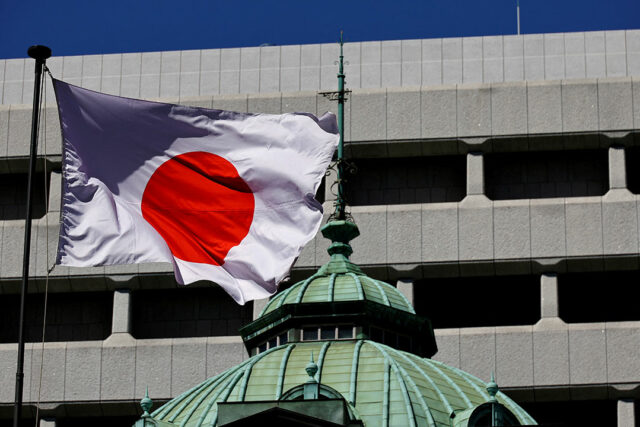
THE Japanese national flag waves at the Bank of Japan building in Tokyo, Japan on March 18, 2024. — REUTERS/KIM KYUNG-HOON/FILE PHOTO

JAPAN has agreed with the United States to accelerate talks on the first batch of deals under Japan’s $550 billion investment package as some issues still need to be worked out, Trade Minister Ryosei Akazawa said on Thursday.

“As there remain areas where Japan and the United States need further coordination, we agreed to work closely together to develop projects,” Mr. Akazawa told reporters in Washington.

Japan has been under pressure to move faster on implementing the investment package agreed as part of Tokyo’s deal with Washington to lower tariffs on Japanese exports.

Asked about the issues that need to be resolved, Mr. Akazawa said it takes time to assess various metrics, such as projected interest rates for each project.

“Because of that, the talks have become extremely tough. I cannot say at this point when or what kind of projects will be finalized,” Mr. Akazawa said, adding that the talks are being conducted with Prime Minister Sanae Takaichi’s planned US visit in mind to ensure it is fruitful.

President Donald Trump is threatening to raise tariffs on South Korea, which he accuses of dragging its feet on adopting a similar agreement reached last year.

Japan’s investment package would include equity, loans, and loan guarantees from state-owned agencies Japan Bank for International Cooperation (JBIC) and Nippon Export and Investment Insurance (NEXI). — Reuters

2025 foreign investments fall 50%

MEN ARE AT WORK at a shipyard in Subic, Zambales, Sept. 2, 2025. — PHILIPPINE STAR/NOEL B. PABALATE

By Heather Caitlin P. Mañago, Researcher

APPROVED foreign investments in the Philippines plunged by 50.1% year on year to P272.38 billion in 2025, its sharpest fall in five years, the Philippine Statistics Authority (PSA) reported on Thursday.

Preliminary data from the PSA showed that the value of foreign commitments approved by the country’s investment promotion agencies (IPA) in 2025 was lower than P546.19 billion in 2024.

This was the steepest drop in foreign investments since the 71.3% drop recorded during the pandemic in 2020.

By value, this was the lowest amount of approved foreign investments since the P241.89 billion recorded in 2022.

Singapore was the top source of investment pledges for 2025 after committing P92.78 billion, or 34.1% of the total. It was followed by the Netherlands with P35.98 billion (13.2% share) and Japan with P34.03 billion (12.5%).

Analysts attributed the sharp drop in foreign investment pledges to the sluggish investor confidence in the Philippines arising from global trade uncertainties, natural disasters and the flood control corruption scandal.

“In a nutshell, the decline in approved foreign investment pledges in 2025 was driven by a mix of weaker investor confidence due to governance and corruption issues, global economic uncertainties, cautious corporate behavior, and an unusually high base of comparison from the previous year,” said Ser Percival K. Peña-Reyes, director of the Ateneo Center for Economic Research and Development.

Marco Antonio C. Agonia, an economist at the University of Asia and the Pacific, said uncertainty over the US tariffs may have also dissuaded foreign investors from setting up operations in the Philippines.

The United States imposed a 19% tariff on most Philippine goods beginning Aug. 7, 2025.

“Similarly, weaker growth prospects from repeated natural disasters and the flood control scandal may have encouraged foreign companies to scrap or defer their investment plans in the country,” Mr. Agonia said in an e-mail.

The Board of Investments (BoI) approved P150.34 billion worth of investment pledges in 2025, accounting for 55.2% of the total. It was followed by the Philippine Economic Zone Authority (PEZA) with investment pledges worth P107.06 billion (39.3% share), and the Bases Conversion and Development Authority (BCDA) with P7.01 billion (2.6%).

For 2025, about 45% or P122.48 billion of the total approved foreign investments will go to the energy sector, followed by manufacturing with P81.41 billion (29.9% share) and real-estate activities with P26.31 billion (9.7%).

In 2025, Calabarzon (Cavite, Laguna, Batangas, Rizal, and Quezon) cornered around P100.43 billion worth of these investment pledges. Central Luzon will get P70.74 billion while the Bicol Region got P50.76 billion.

SHARP RISE IN Q4
PSA data also showed foreign investment pledges surged by 79.1% to P103.33 billion in the fourth quarter of 2025, from P57.7 billion in the same period in 2024. This was the fastest growth since the third quarter of 2024 when approved foreign investments soared by 423.4% to P143.74 billion.

“The jump in [fourth-quarter] approved foreign investments may be attributed to base effects. The Q4 2025 reading saw a rebound coming from the low base but is still historically lower than previous Q4 pledge readings,” said Mr. Agonia, noting that pledges fell sharply in the fourth quarter of 2024 over tariff uncertainties.

Mr. Peña-Reyes said agencies may have also “back-loaded” approvals of large investments in the last months of 2025.

“There was sectoral project momentum in strategic areas like energy, IT-BPM, and infrastructure,” he said. “There was relative improvement in sentiment and continued policy support, which encouraged the finalization of deals that had been delayed earlier in the year.”

In the fourth quarter, investment commitments were approved by six IPAs — BoI, PEZA, Subic Bay Metropolitan Authority (SBMA), BoI-Bangsamoro Autonomous Region in Muslim Mindanao, Clark International Airport Corp., and Zamboanga City Special Economic Zone Authority.

The BoI approved foreign pledges worth P66.19 billion accounting for 64.1% of the total, followed by PEZA with P35 billion (or 33.9% share) and SBMA with P1.29 billion worth of commitments (1.2%).

In the fourth quarter, the Netherlands was the biggest source of approved investments with P33.05 billion, accounting for 32% of the total. This was followed by Japan with commitments worth P17.88 billion (17.3%) and Singapore with commitments worth P17.66 billion (17.1% share).

During the October-to-December period, the Authority of the Freeport Area of Bataan, BCDA, Cagayan Economic Zone Authority, Clark Development Corp., Poro Point Management Corp., John Hay Management Corp., and Tourism Infrastructure and Enterprise Zone Authority did not approve any investment pledges.

The energy sector also cornered the largest approved foreign investments with P49.41 billion in the fourth quarter, about 47.8% of the total pledges during the period.

Around 33.6% or P34.68 billion of the approved foreign investments will go into the manufacturing industry, while 4.6% or P4.76 billion worth of pledges will be invested in the information and communication industry.

For the period, 45.3% of the foreign investment commitments worth P46.85 billion will go to projects located in Calabarzon.

Central Luzon cornered P35.36 billion worth of investment commitments while Negros Island Region got P7.79 billion.

Should these foreign commitments materialize, these projects are expected to generate 101,164 jobs, 0.8% lower than 101,966 projected jobs a year earlier.

Meanwhile, PSA data showed combined investment commitments from both foreign and Filipino investors surged by 193.8% to P1.1 trillion in the fourth quarter, from P373.7 billion in the same period in 2024. Filipino investors contributed P994.44 billion, or 90.6% of the total.

In 2025, total investment commitments from foreign and Filipino nationals fell by 1.7% to P1.92 trillion, from P1.96 trillion in the previous year. Investment pledges by Filipinos reached P1.65 trillion last year, accounting for 85.8% of the total.

Mr. Peña-Reyes said there will likely be a “moderate recovery” in foreign investment pledges in the first quarter of 2026.

“This view is supported by project pipelines and sector prospects, but it is still influenced by cautious investor sentiment,” he said.

“For the rest of the year, there could be gradual strengthening if reforms and policy clarity improve, with key sectors attracting sustained interest. Actual FDI (foreign direct investment) flows may lag pledges, but they could trend upward as confidence returns,” he added.

On the other hand, Mr. Agonia said investment pledges may remain subdued for the rest of the year.

“The fallout of a weaker growth outlook from the corruption scandal, its effects on government spending and consumer and investor confidence will likely extend into this year, barring any major improvements to the business environment,” he said.

The PSA data on foreign investment commitments, which may materialize shortly, differ from actual foreign direct investments tracked by the BSP. The central bank’s monitoring goes beyond the projects and includes other items such as reinvested earnings and lending to Philippine units via their debt instruments.

PHL urged to phase out VAT exemptions for seniors, schools

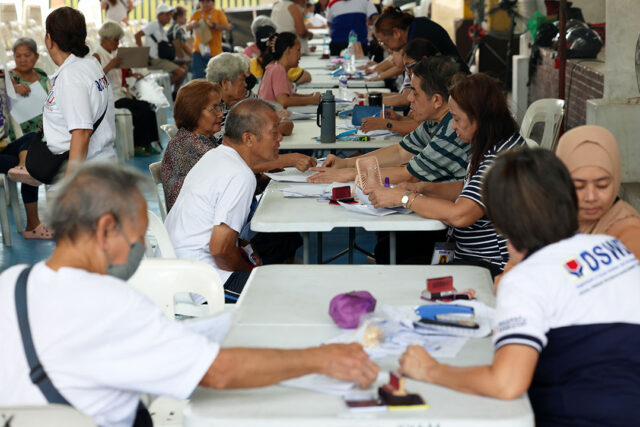
Senior citizens receive cash handouts at a welfare office in Quezon City, July 31, 2025. — PHILIPPINE STAR/MIGUEL DE GUZMAN

THE PHILIPPINES should reduce fiscal incentives and phase out value-added tax (VAT) exemptions for senior citizens and private education to trim debt and narrow the budget deficit, the Organisation for Economic Co‑operation and Development (OECD) said.

The Philippine government must accelerate its pace of fiscal consolidation, with reforms to mobilize revenues and enhance spending efficiency to put “public debt on a more prudent path,” the OECD said in the maiden launch of its Economic Survey of the Philippines.

“There are three avenues to optimize fiscal consolidation. One is to optimize growth and let the increased revenue go to the bottom line,” OECD Secretary-General Mathias Cormann said at the launch event on Thursday.

“Two is to better control expenditure growth and three is to optimize your revenue mix including by reform to relevant tax arrangements including those related to VAT.”

The Philippines’ total outstanding debt stood at P17.71 trillion in 2025, bringing the debt ratio to 63.2% of gross domestic product (GDP), the highest annual ratio in 20 years, or since the 65.7% in 2005.

The OECD projected that the public debt share of the GDP will hit 62.4% in 2026, before easing to 61.6% in 2027.

“Combining fiscal consolidation with structural reforms lifting the economy’s growth potential by around 1 percentage point, the same fiscal strategy would reduce public debt to around 51% of GDP by 2040. This would limit debt servicing costs and create fiscal space to deal with future domestic and international economic shocks, including natural disasters to which the Philippines is highly exposed,” it said.

As part of its key recommendations, the OECD said the government should phase out VAT exemptions and corporate tax incentives such as tax holidays.

“Phasing out VAT exemptions for private healthcare, education and senior citizens, combined with targeted social transfers, would raise revenues while improving the efficiency and equity of the tax and benefit system,” it said.

For instance, senior citizens are entitled to a 12% VAT exemption under the Expanded Senior Citizens Act.

The OECD’s recommendation is similar to the International Monetary Fund’s (IMF) earlier suggestion that the Philippine government increase VAT revenue by removing exemptions and zero-ratings, such as senior citizens’ VAT exemption.

The government should also gradually phase out tax holidays and shift to expenditure-based corporate tax incentives “to realign incentives with efficiency and fiscal discipline,” the OECD said.

The OECD also said the government should consider the introduction of a tiered social protection system, including a gradual expansion of non-contributory pensions and lower mandatory social contributions for low-wage workers.

It noted that only around one-third of employed Filipinos have formal sector jobs with full social and labor market protections.

“Establishing a universal basic pension that includes the remaining third of the old-age population who currently do not receive any pension benefit could prevent old-age poverty, regardless of individual work histories in the formal and informal sectors,” it said.

The government should also shift the financing of universal healthcare to general taxes from social security contributions, the OECD said.

It also backed public administration reform and the overhaul of the pension system for military and uniformed personnel (MUP) to enhance public spending efficiency.

“(These) are positive steps to enhance the efficiency of spending and bolstering long-term fiscal sustainability but would only yield limited savings in the short term. For instance, the envisaged MUP pension reform would yield savings of less than 0.05% of GDP in the short term,” the OECD said.

SLOWING GROWTH
Meanwhile, the Philippines is facing “significant headwinds” to maintaining high growth amid slowing population growth and rising climate risks, the OECD said.

In its report, the OECD kept its Philippine GDP growth forecasts at 5.1% for 2026 and 5.8% for 2027, “as inflation remains low and financial conditions ease.”

These forecasts are within the government’s 5-6% target this year and the 5.5-6.5% goal for 2027.

This would be faster than the 4.4% expansion in 2025 when a corruption scandal dragged growth, investment, public spending, and consumer confidence.

“Slower global trade and population ageing imply that previous growth engines can no longer be taken for granted. Sustaining high growth will increasingly depend on boosting productivity,” it said.

To achieve the country’s ambition of becoming a predominantly middle-class society by 2040, the OECD said average annual productivity growth will have to rise from 4.5% in the pre‑pandemic period to 5.2% until 2040. It noted that GDP growth would have to average around 6% from 2025 to 2040, well-above the 2011-2024 average of 4.8%.

“The Philippines set a clear ambition to triple per capita income by 2040. We are building on a solid foundation of sustained growth, poverty reduction, and macroeconomic stability,” Finance Secretary Frederick D. Go said in a speech.

Under the AmBisyon Natin 2040, the Philippines aims to triple Filipinos’ income per capita relative to 2015 to $11,000 by 2040.

Meanwhile, the OECD said risks to the economic outlook remain skewed to the downside.

“A more persistent-than-expected weakness in public investment related to tighter corruption controls and weaker investor confidence could weigh on domestic demand over 2026,” it said.

On the upside, recent liberalization of foreign investment rules and expanded fiscal incentives may help attract stronger capital inflows, helping offset headwinds from exports.

COMPETITION REFORMS
Meanwhile, the OECD also called for reforms that would open up competition in the energy and telecommunication sectors, as well as ease barriers to foreign investment and trade.

“Enhancing competition in network industries — especially electricity and telecommunications — is a precondition for rapid digitalization and can lower input costs and enhance productivity in downstream sectors, including manufacturing,” it said.

For the power sector, the OECD recommended the vertical separation of electricity generation and distribution companies, as well as requiring distributors to exit retail supply activities.

In the telecommunication sector, the OECD said telecommunication network owners should be required to provide nondiscriminatory access to infrastructure at regulated tariffs. It also said the National Telecommunications Commission should be granted full autonomy and transparent oversight powers.

“But legislative franchise requirements could be lifted for the telecommunications industry more broadly, replacing them with standardised licences issued directly by the NTC, thus removing political interference and procedural delays,” it said.

The OECD also said establishing a single‑window approval system with simplified procedures, strict turnaround times, and digital tracking would strengthen the investment climate.

It also called for a more aggressive anti-corruption campaign through prevention, investigation, and prosecution, noting that perceptions of corruption among citizens and businesses remain “very high.”

CLIMATE CHANGE
The Philippines, already vulnerable to heat waves, typhoons, and flooding, may face mounting economic losses as climate change intensifies, the OECD warned.

Growth shocks, inflationary pressures, and fiscal strain from reconstruction spending could erode long-term stability, it said.

The OECD recommended prioritizing adaptation in disaster-prone regions, particularly in rural areas, through climate-resilient infrastructure, early warning systems, and integrated land-use planning. 

“Increasing the coal excise tax and aligning all energy excise taxes with carbon dioxide content would strengthen price signals and support climate objectives,” the OECD said.

Despite a moratorium on new coal-fired power plants since 2020 to reduce emissions, it remains the dominant source of electricity, and low excise taxes undermine incentives to shift to cleaner energy, it added.

The OECD also urged the government to broaden its moratorium on new coal-fired plants to include extensions of existing facilities, proposing a reverse auction scheme in which operators bid for compensation to shut down generation in exchange for carbon credits.

The current levy of P150 per metric ton, equivalent to about 1.04 euros per ton of carbon dioxide, falls short of global estimates of the social cost of carbon.

Under a high-emissions scenario, Philippine GDP losses are projected to reach 5% by 2040, accelerating to 20% by 2070 relative to a no climate-change baseline. — Aubrey Rose A. Inosante


Banks’ bad loan ratio slips to more than five-year low

BW FILE PHOTO

By Katherine K. Chan, Reporter

THE PHILIPPINE BANKING industry’s gross nonperforming loan (NPL) ratio eased to its lowest in over five years at the end of 2025, as overall lending activity slowed, preliminary central bank data showed.

The banking industry’s gross NPL ratio fell to 3.08% at end-December from 3.32% in the previous month and the 3.27% logged as of December 2024.

This was the lowest bad loan ratio recorded since 2.84% in August 2020.

Based on Bangko Sentral ng Pilipinas (BSP) data, banks’ soured loans slipped by 3.34% to P526.68 billion at end-December from P544.863 billion at end-November.

Year on year, it rose by 5.24% from P500.434 billion.

Loans are considered nonperforming once they are unpaid for at least 90 days after the due date. These are deemed risk assets since borrowers are unlikely to pay.

At end-December, the total loan book of Philippine banks stood at P17.105 trillion, up 4.23% month on month from P16.411 trillion in November. It also climbed 11.62% from the P15.324-trillion loan portfolio at the end of 2024.    

Past due loans slipped by 3.1% to P674.384 billion as of December from P695.982 billion at end-November. Year on year, it grew by 11.43% from P605.216 billion.

This brought the past due ratio to 3.94% in December, the lowest since the 3.79% seen in December 2022. It also eased from 4.24% in November and 3.95% at end-2024.

Meanwhile, restructured loans climbed by 1.56% to P336.457 billion by yearend from P331.276 billion in the previous month, and by 8.38% from P310.439 billion in December 2024.

Still, restructured loans had a lower share in banks’ total loan portfolio at 1.97%, versus 2.02% at end-November and 2.03% in the comparable year-ago period.

Lenders’ loan loss reserves reached P510.537 billion at the end of December, down by 1.29% from P517.185 billion in the prior month. However, it was up by 6.22% from P480.638 billion at end-2024.

With this, the ratio dropped to 2.98% in the last month of 2025 from 3.15% in November and 3.14% a year earlier.

On the other hand, banks’ NPL coverage ratio, which gauges the allowance for potential losses due to bad loans, climbed to 96.93% by end-2025 from 94.92% in the previous month and 96.04% as of December 2024.

Michael L. Ricafort, chief economist at Rizal Commercial Banking Corp., said the over five-year low NPL ratio may indicate recovering economic and business conditions and better loan repayment capabilities amid the holiday season.

“This could signal some improvement in the economy and business conditions towards the end of the year, in view of the Christmas holiday spending, in terms of higher sales, incomes, bonuses, livelihood, all of which improved the ability of borrowers to pay their loans,” he said via Viber.

“Improved credit risk management practices that are better aligned with global best practices also led to slower growth in bad loans,” he added.

Meanwhile, Jonathan L. Ravelas, a senior adviser at Reyes Tacandong & Co., said the easing of banks’ NPL ratio at end-December may be traced to the slow lending activity during the same period.

“The decline in the NPL ratio reflects both real improvement and caution,” he said in a Viber message.

“Asset quality has genuinely strengthened as borrowers’ repayment capacity improved and banks tightened underwriting,” he said. “At the same time, slower loan growth also played a role — fewer new loans mean fewer potential problem accounts entering the system.”

Separate BSP data showed that bank lending grew by 9.2% year on year as of December last year, the weakest pace seen in about two years. It was also the first time in over a year that banks recorded a single-digit loan growth.

“The real test is whether NPLs stay low once credit growth accelerates again,” Mr. Ravelas noted.

NGCP aims to finish P18.5-B transmission projects this year

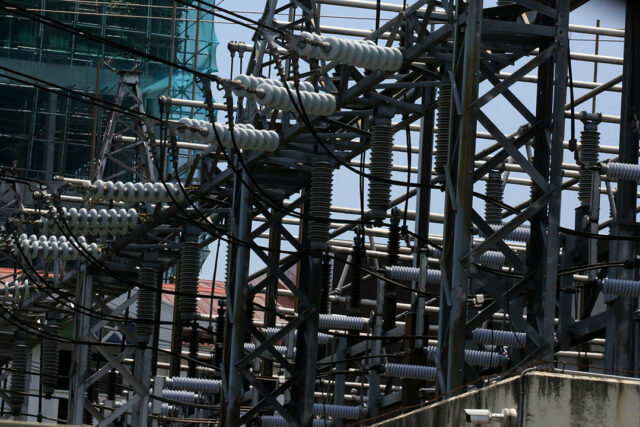
A power substation is seen in Malate, Manila, April 18, 2024. — PHILIPPINE STAR/EDD GUMBAN

THE NATIONAL GRID Corp. of the Philippines (NGCP), the country’s sole grid operator, is aiming to finish P18.5 billion worth of transmission projects this year to improve delivery of electricity amid increasing demand.

In a statement on Thursday, NGCP said it is set to energize seven transmission projects following the completion of several critical project components including facility upgrades, expansion, and improvements for grid stability and reliability.

Among the projects set to come online is the P8.1-billion Tuy 500/230-kilovolt (kV) Substation Stage 1 in Batangas, which will accommodate the connection of a coal-fired power plant. It will also allow dispatch of bulk generation capacity additions in Batangas.

The NGCP is also planning to complete the P4.2-billion Nabas-Caticlan-Boracay 138-kV transmission line in Aklan, which will provide reliable power to customers in the Boracay and Caticlan areas.

The company’s P2.4-billion Tuguegarao-Lal-lo (Magapit) 230-kV transmission in Cagayan is also on track for completion to address the imminent overloading of the existing line due to the forecasted load growth in the northern part of Cagayan province.

NGCP also seeks to activate the P1.9-billion Amlan-Dumaguete 138-kV transmission line in Negros Oriental this year to cater to growing demand and provide operational flexibility and reliability to customers in Southern Negros.

To address overloading during an outage, the grid operator is set to complete the P1.02-billion Stage 2 of the Visayas Substation Reliability project.

The company is also expected to energize the P757.98-million Tacurong-Kalamansig 69-kV transmission line in Sultan Kudarat. It is also completing a P123.84-million project to relocate steel poles along the Hermosa-Duhat 230-kV transmission line in Bataan.

“These will address economic drivers such as load growth, system reliability and security. power quality and technology, entry of new generating plants (both renewable and nonrenewable), as well as to complement major projects such as power grid backbones and island interconnections,” NGCP said.

Last year, NGCP completed the upgrade of 14 substations to enhance grid reliability and stability. It also conducted voltage improvement initiatives in its Tigaon, Malvar, Baybay Load-end Station, Sta. Barbara, and Zamboanga substations.

The grid operator said it is on track to finish the pipeline of projects this year despite persistent challenges in right-of-way and permitting.

“We continue to seek the support of government agencies and LGUs (local government units) by ensuring the expedited release of permits related to our projects. Their assistance is vital to ensuring unhampered project implementation,” NGCP Assistant Vice-President Cynthia P. Alabanza said at a briefing on Thursday.

NGCP has appealed for support from the Department of Energy, other government agencies, and LGUs for the swift approval and release of permits for the implementation of critical transmission projects.

Under a congressionally granted 50-year franchise, NGCP has the right to operate and maintain the transmission system and related facilities, and to exercise the right of eminent domain as needed to construct, expand, maintain, and operate the transmission system.

The Energy Regulatory Commission (ERC) recently issued its decision on NGCP’s rate reset for the fifth regulatory period spanning 2023 to 2027, setting an annual revenue requirement of P374.98 billion.

The figure, however, was lower than the P442.6 billion sought by NGCP.

Asked for comment, Ms. Alabanza said the company is studying ERC’s decision to assess the items approved by the commission.

HIGHER BILLS
Meanwhile, power consumers will be charged higher transmission rates in their February electricity bills, reflecting the increase in the transmission wheeling rates and the cost of ancillary services.

The overall rate will increase by 13.55% to P1.5279 per kilowatt-hour (kWh) in the February bills from P1.3455 per kWh in the prior month, according to Julius Ryan D. Datingaling, NGCP head of business and regulatory development.

NGCP’s transmission wheeling rate, meanwhile, went up by 14.25% to P0.6921 per kWh. The transmission wheeling rate is the cost of delivering electricity from power generators to the distribution system.

Mr. Datingaling attributed the increase to lower energy consumption and the collection of under-recoveries of NGCP.

Ancillary services, or power reserves deployed by grid operators to support transmission of power and maintain reliable operations, rose by 12.81% month on month to P0.6736 per kWh. — Sheldeen Joy Talavera

Pacific Online exits HHRPI, E-Lotto deals as policy tightens

ORIGINAL PHOTOS FROM FREEPIK

PACIFIC ONLINE Systems Corp. (LOTO) said it is exiting its investment in HHR Philippines, Inc. (HHRPI) following the government’s adoption of a stricter policy against online betting platforms.

Pacific Online, a listed gaming unit of Belle Corp., provides and manages online lottery systems, terminals, and software for the Philippine lottery industry.

“Because of the firm policy adopted by the national government against the licensing of online betting platforms, please be advised that the Company and HHRPI have mutually agreed to revisit their investment arrangement and unwind the same, with a private third party investor agreeing to assume the rights and obligations of the Company from its HHRPI investment,” Pacific Online said in a disclosure on Thursday.

During a Senate hearing on online gambling on Wednesday, Philippine Amusement and Gaming Corp. (PAGCOR) Assistant Vice-President for Offshore Gaming Licensing Department Jessa Mariz R. Fernandez said the agency would further evaluate and implement tougher regulations, including ad bans and stronger player identification checks.

She said PAGCOR continues to review and update its regulatory frameworks to keep pace with rapid technological changes, including emerging game formats and scams.

Pacific Online said it expects to cease being a shareholder of record after securing the necessary regulatory clearances.

“As HHRPI is still in early operation stage, the unwinding of LOTO’s investment in the company is not expected to have any significant impact on LOTO’s financials,” it said.

HHRPI is a PAGCOR-licensed software and professional service provider of electronic gaming platforms for land-based and online gaming operators. It also holds a PAGCOR online gaming license under the “Buenas” brand.

On Jan. 29 last year, Pacific Online signed an investment agreement to acquire a 37.5% stake in HHRPI for P150 million as part of efforts to expand its presence in online gaming. Under the deal, the company subscribed to 81,000 HHRPI common shares, to be paid in three tranches.

Pacific Online previously said that the investment would allow it to expand its presence in the online gaming business through a PAGCOR-licensed company.

It said the capital to be infused into HHRPI would be used to fund the latter’s expansion activities.

E-LOTTO PROJECT
In a separate disclosure on Thursday, Pacific Online said it had decided to withdraw from the Philippine Charity Sweepstakes Office’s (PCSO) electronic lotto (E-Lotto) project following years of delays linked to the government’s broader crackdown on online gambling.

“In a meeting held today, the company’s board of directors, recognizing that the National Government’s policy will no longer be retracted, ordered as follows: that the Corporation’s involvement in E-Lotto be already unwound, and that the company refocus its efforts and resources on other available and more feasible opportunities,” it said.

The company first disclosed on June 19, 2024, that it had received a notice of award from PCSO for a contract covering a web-based application for the E-Lotto initiative. However, the project stalled amid controversies surrounding other online gaming activities, including e-Sabong and Philippine offshore gaming operations (POGOs).

The government later adopted a strict policy against the licensing of online betting platforms, placing PCSO’s E-Lotto project in what the company described as “a prolonged suspended animation.”

In a statement to BusinessWorld in August last year, PAGCOR Chairman and Chief Executive Officer Alejandro H. Tengco said there were no immediate plans to lift the moratorium on new online gaming licenses, noting that regulators would first assess whether doing so would be appropriate.

Pacific Online shares rose by 2.38% to P1.72 apiece on Thursday. — Alexandria Grace C. Magno

Raslag, Verdant take over 16-MW wind farm in Mindoro

STOCK PHOTO | Image by Pvproductions from Freepik

PAMPANGA-BASED solar developer Raslag Corp. and its partner Singapore-based Verdant Philippines Alpha Pte. Ltd. have taken over a 16-megawatt (MW) wind farm in Puerto Galera, Oriental Mindoro, a move expected to diversify their renewable energy portfolio.

In a regulatory filing on Thursday, Raslag said it had closed the joint acquisition of PHESI Holdings Corp., the controlling owner of Philippine Hybrid Energy Systems, Inc. (PHESI).

“The acquisition was undertaken as part of [Raslag’s] strategy to expand its renewable energy portfolio and expand its presence into the wind energy sector,” the company said.

Under the joint venture, Raslag will hold 60% of PHESI, while Verdant will hold 40%.

PHESI operates the 16-MW wind farm, integrated with a 6-megawatt-hour battery energy storage system designed to address the challenge of intermittency by storing excess energy to deliver a reliable, continuous power supply to the Mindoro island grid.

The company is also preparing for a 10-MW expansion of the wind farm.

The transaction was completed after conditions were met, including regulatory approvals from the Philippine Competition Commission, Department of Energy, and the Department of Environment and Natural Resources. The parties also executed definitive agreements, including the deed of absolute sale of shares.

Raslag develops, owns, and operates utility-scale solar plants and plans to expand its total renewable energy capacity to at least 1,000 MW by 2035.

At the local bourse on Thursday, Raslag shares closed unchanged at P0.84 apiece. — Sheldeen Joy Talavera

PT&T names Jeffrey Julian as acting president

Jeffrey E. Julian — PTT.COM.PH

PT&T CORP. said its board of directors has approved the appointment of Jeffrey E. Julian as acting president.

In a regulatory filing on Thursday, PT&T said Angel S. Mercado, the company’s acting president, chief revenue officer, and senior vice-president, will step down effective Feb. 15, citing personal reasons.

With this, the company named Mr. Julian, its current vice-president and chief technical officer, as acting president while the board finalizes the selection of a new president and chief executive officer.

Mr. Julian will concurrently retain his roles as vice-president and chief technical officer, PT&T said, adding that he will serve as acting president until the company’s annual stockholders’ meeting on June 26 or until a new president is appointed by the board.

He has served as PT&T’s vice-president since June 2019 and leads the company’s technical operations, focusing on innovation and end-to-end project delivery.

Mr. Julian also led the company’s modernization project, including a backbone upgrade that strengthened PT&T’s network capabilities. The upgrade included a total cable length of 156 kilometers, translating to more than 8,000 fiber kilometers of capacity.

Incorporated in 1962, PT&T serves corporate, small and medium businesses, and residential customers.

The company is preparing to return to trading on the Philippine Stock Exchange after a voluntary suspension in December 2004 due to financial and reporting challenges. — Ashley Erika O. Jose

PHL property sector may face uneven recovery this year, says Cushman & Wakefield

PHILIPPINE STAR/MIGUEL DE GUZMAN

THE PHILIPPINE property sector is likely to experience an uneven recovery across its segments this year, as economic uncertainty and geopolitical tensions continue to dampen investor sentiment, according to property consultancy firm Cushman & Wakefield (C&W).

However, the firm expects short-term appetite for prime assets with strong demand, it said in its latest Philippine Office and Investment MarketBeat Report.

“Over the next 12 to 18 months, expect renewed appetite for acquisitions — particularly in logistics and industrial assets, which remain strong demand drivers, as well as prime office and residential properties,” said Claro dG. Cordero, Jr., C&W director and head of research, consulting, and advisory services.

The uneven recovery across property segments is also being influenced by recent policy rate adjustments, which are affecting financing costs and investor sentiment.

The benchmark interest rate currently stands at 4.5%, the lowest in over three years. The Monetary Board has delivered 200 basis points (bps) in cuts since beginning its easing cycle in August 2024, including five straight 25-bp reductions last year.

“Sustained monetary easing by the Bangko Sentral ng Pilipinas (BSP) and supportive reforms can drive renewed capital inflows and enhance risk-adjusted returns across investment-grade real estate,” Mr. Cordero said.

BSP Governor Eli M. Remolona, Jr. earlier said a cut is possible at this month’s meeting if there is a need to support domestic demand, particularly after economic growth slumped to a five-year low in 2025.

However, he noted on Wednesday that inflation returning within the target range last month and expectations of economic recovery amid renewed confidence may have narrowed the room for further easing. The Monetary Board’s next policy meeting is scheduled for Feb. 19.

This year, office developments in prime central business districts (CBDs) are expected to stabilize, with quicker rental rate rebounds projected in the second half, while non-CBD areas may lag due to sluggish demand, slow space absorption, and gradual vacancy improvements.

“Overall, market demand is being supported by a mix of expanding IT-BPM (information technology and business process management) operations and renewed leasing activity from traditional occupiers, which are helping to underpin the recovery momentum across the office sector,” the firm said.

Global Capability Centers (GCCs) in the Philippines are also poised for sustained growth, driving demand for high-quality office spaces in CBDs tailored to their operational needs.

The report noted that landlords are increasing redevelopment and retrofits of aging buildings with green upgrades.

“While this may temporarily remove older stock from the market, the trend is expected to strengthen long-term competitiveness and enable aging buildings to better compete with newer office developments,” Mr. Cordero said, adding that these upgrades should match tenant expectations, enhance building value, and help properties stand out in competitive urban hubs.

Metro Manila office vacancy rates improved slightly in the fourth quarter of 2025, driven by CBD demand exceeding new supply despite rental and availability pressures.

CBD-led demand outpaced new supply in key districts, alongside shifts in occupier preferences toward modern, sustainable workspaces.

“The Philippine office market continued to gain traction in 2025, with expansion in the IT-BPM industry and new entrants supporting demand. While the overall vacancy rate remains elevated, outperforming sub-markets such as Bonifacio Global City (BGC) and Makati reflect stronger occupier interest, indicating a growing preference for high-quality, centrally located spaces,” Tenant Advisory Group Director Zory Mangelen said.

Vacancy rates in core CBDs such as Makati, BGC, and Ortigas Center improved to 10.4% from 10.9%, supported by steady IT-BPM and multinational leasing.

However, this was not enough to prevent rents from falling from P1,114 to P1,093 per square meter (sq.m.) per month, as some high-vacancy buildings reduced rates in the fourth quarter to attract tenants.

“CBD rental rates contracted by 1.89% quarter on quarter, with average rents declining by 1.9% to P1,093 per sq.m. per month, as some landlords implemented rate reductions to improve occupancy,” the firm said.

“Decentralized markets remain subdued, with rents flat at P815 per sq.m. per month and vacancies still elevated at 25.7%,” it added.

According to the report, limited space in core CBDs means landlords in other submarkets should review project timelines and increase supply delivery to meet ongoing demand in stronger segments.

“Early indicators of renewed activity in the prime office segment suggest that developers and landlords need to anticipate evolving occupier requirements by prioritizing modern designs, sustainability certifications, and flexible configurations,” Mr. Cordero said.

Prime and Grade A properties in Makati, BGC, and Ortigas held steady, but rental softening continued. Prime and Grade A office vacancies across Metro Manila narrowed by 40 bps quarter on quarter, from 18.3% to 17.9% in Q4 2025.

Estimated average office yields for Prime and Grade A developments dipped slightly to 6.92% — a one-bp decline both quarter on quarter and year on year — indicating cautious investor sentiment. — Alexandria Grace C. Magno