LOCAL government units (LGUs) will receive P21 billion from the excise taxes collected from domestically manufactured tobacco and cigarettes, the Department of Budget and Management (DBM) said.
In a memorandum, the DBM said P17 billion in excise taxes on Virginia tobacco cigarettes will go to provinces, pro-rated based on the volume of production.
Some P4 billion worth of Burley and native tobacco excise taxes will go to the provinces in accordance with the volume of their leaf production.
The sharing scheme for Burley and native tobacco is 50% to the provinces and the remaining 50% shared out by volume of production among municipalities and cities.
The volume of production and trade acceptances of the beneficiary LGUs were identified based on certifications issued by the National Tobacco Administration, as endorsed by the Department of Agriculture.
Programs and projects funded by the tobacco tax allocations must be in line with the Agricultural and Fisheries Modernization Program and the Roadmap for the Philippine Tobacco Industry, the DBM said.
“Moreover, beneficiary LGUs are highly encouraged to allocate at least 25% of their total share for cooperative programs, livelihood projects, and financial support for registered tobacco farmers,” it added. — Beatriz Marie D. Cruz
THE Philippine Ports Authority (PPA) said it awarded the contract to expand the Port of Dumaguete to BNR Construction and Development Corp.
The PPA said a total of 12 companies participated in the auction for the P533.31-million port expansion project won by the Cebu construction company, which was the low bidder.
The PPA issued the bid invitation for the Port of Dumaguete project in July. The contractor of the project must finish the project within 720 days from the receipt of the notice to proceed.
Meanwhile, the PPA is set to conduct another auction round for the P626,859 Ports of Buenasuerte and San Fernando, El Nido, Palawan project after its bids and awards committee declared a failure of bidding.
In a resolution issued by the PPA’s bids and awards committee, it said no bids were received during the bid opening.
“The BAC, after a motion duly made and properly seconded, declared the bidding for the project MPF-PLW-05-2025 Maintenance of Various Port Physical Facilities, Ports of El Nido (Buenasuerte) and San Fernando, El Nido, Palawan, a failure,” the PPA said. — Ashley Erika O. Jose
PORK PRODUCERS from Taiwan are looking to expand their footprint in the Philippines, the Taipei-based Commerce Development Research Institute (CDRI) said.
“We will work with local distributors, and based on the demand we could expand their markets further,” CDRI Team Leader Hsieh Chung An, who helped organize a Taiwan pork expo last week, told BusinessWorld. “We are also looking at restaurants and hotels.”
He added that the Taiwan-based food companies are seeking to establish themselves with Philippine businesses and consumers.
Mr. Hsieh said that the CDRI had also promoted Taiwan pork products with Philippine supermarkets.
He said that the expo could also head to various cities in the Philippines, depending on demand.
Hog raisers have reported that consumers are reluctant to buy pork amid a surge in African Swine Fever (ASF) cases.
“Taiwan pork is considered among the best in the world in terms of sanitary conditions, so we want to promote our products to the Philippine market,” Mr. Hsieh said.
He added that the industry is “strictly regulated. We do not use ordinary water but purified water… we also have strict requirements for the personnel working in the slaughterhouses,” Mr. Hsieh said, adding that Taiwan has experienced no ASF outbreaks.
The recent surge in Philippine cases was due to the recent rains, which may have helped spread contaminated water in the farms, as well as the transportation of infected pigs outside the known disease zones, the Department of Agriculture has said.
As of Aug. 21, there are 115 municipalities with active ASF cases across 32 provinces, according to the Bureau of Animal Industry. — Adrian H. Halili
• 60% of Asia-Pacific board directors identify economic conditions as their top concern for 2024
• Despite the increasing severity of climate-related risks, only 21% of Asia-Pacific board directors consider climate change a priority
• Demand for data analysts in the Philippines outpaces graduate supply, creating a skills gap due to misalignment between education and industry needs
The Asia-Pacific region is proving its mettle amidst increasing economic and geopolitical complexities. However, for boardrooms across the region, maintaining a competitive edge will require more than just resilience. The situation calls for an agile, globally interconnected approach that can quickly adapt to the shifting landscape.
While much of the world braces against economic headwinds, the Asia-Pacific region is positioned to lead the charge and expected to account for nearly 60% of global GDP growth in 2024, surpassing pre-pandemic benchmarks. Underpinned by robust performance across national economies, this optimistic outlook has nearly three-quarters of Asia-Pacific CEOs forecasting higher revenue growth and profitability for the year ahead.
However, this promising forecast comes with its own set of challenges. Boardrooms are under pressure to navigate a mix of pressures — with inflation, rising labor costs, and geopolitical tensions topping the list of concerns.
The latest 2024 EY Asia-Pacific Board Priorities survey shows that economic conditions are the primary agenda of 60% of board directors this year. Beyond these economic pressures, capital allocation and talent shortages are also emerging as key pain points that boards need to tackle head-on. Given these dynamics, boards must keep their finger on the pulse of economic indicators to be able to pivot strategies effectively — and quickly — across multiple fields of play when required.
This article will discuss the critical challenges Asia-Pacific boards face in 2024 and strategies to turn them into competitive advantages in the evolving global marketplace.
CAPITAL ALLOCATION PRESSURE As inflation, rising operating costs, and diminishing pricing power bite the bottom line, Asia-Pacific boards are moving their focus from growth-at-all-costs strategies to a more nuanced focus on financial discipline. The survey reveals that two-thirds of directors are increasingly concerned about capital availability, with 56% grappling with the complexities of mergers and acquisitions, restructuring initiatives, and divestiture decisions.
Despite the unique challenges of the current economic landscape, boards can still rely on fundamental oversight practices in capital strategy. These practices include regular reviews of capital budgeting and strategic plans to ensure agility and alignment with corporate objectives, maintaining a competitive edge in the global marketplace.
Boards should also prioritize the right metrics, balancing short-term key performance indicators with long-term value creation goals and using a balanced scorecard that integrates financial, non-financial, and qualitative indicators.
THE RISE OF GEN Z WORKFORCE Talent management is one of the most crucial priorities for Asia-Pacific boards as they prepare for an AI-driven future. By 2025, Generation Z — those born between the mid-1990s and 2010 — is expected to make up 27% of the region’s workforce. This generation is characterized by being digital savvy, having a purpose-driven mindset, and a preference for flexibility.
Given these traits, boards are challenged to reimagine their approach to talent development. Those that successfully integrate the unique perspectives and skills of this generation can gain fresh insights, enhancing their capacity to innovate and stay competitive. However, achieving this requires more than merely recognizing the value of younger talent. Boards must foster an organizational culture that prioritizes innovation and embraces diversity, equity, and inclusion.
AI-FUELED PEOPLE-CENTRIC FUTURE Asia-Pacific boards are rapidly embracing Generative AI, with 40% of directors prioritizing digital transformation and business model changes in 2024. As AI-generated data becomes more prevalent, boards must ensure executives exercise proper oversight, making data governance a key priority. Companies must establish guardrails and ensure compliance with evolving regulations.
Meanwhile, the growing reliance on data-driven decision-making and AI is sharply increasing demand for specialized skills in data science and AI. A report by the Philippine Institute for Development Studies (PIDS) highlights a rising demand for data analysts, but higher education institutions are currently falling short in producing enough graduates to meet this need. The report highlights that data science and analytics skills remain underdeveloped within the Philippine workforce due to a disconnect between educational institutions and industry requirements.
Although several undergraduate degrees, such as computer science, business administration, statistics, and others, serve as pathways for data science and analytics (DSA) careers, they currently lack specific training tailored to industry demands. This highlights the need for boards to recognize the strategic value of these skills and take proactive steps to develop the talent essential for long-term growth and innovation.
THRIVING IN ASIA’S GREEN ECONOMY As Asia continues to position itself as a key player in the global green economy, businesses across the region have a unique opportunity to capitalize on this shift. The Philippines, for instance, has made significant strides in climate action, ranking sixth out of 67 countries in the 2024 Climate Change Performance Index (CCPI) and fifth out of 10 countries in the Southeast Asia Green Economy Index.
These feats underscore the country’s progress in reducing greenhouse gas emissions and developing renewable energy. However, both highlight the country’s ongoing challenges in climate policy and ambition, revealing a significant gap in government and corporate decarbonization strategies.
For businesses to thrive in Asia’s burgeoning green economy, boards must adopt a long-term, strategic approach. While current returns on clean energy investments may lag behind traditional sectors, the potential for future growth is immense. As highlighted in the 2023 EY Global Board Risk Survey, the most resilient boards are those willing to sacrifice short-term financial gains for the long-term benefits of environmental, social, and governance (ESG) commitments.
To truly capitalize on Asia’s green economy, businesses must align their capital allocation with ESG objectives, ensuring that their strategies are not just reactive but proactive in driving sustainability. This requires a commitment to meticulous planning, sustainable investments, and the integration of ESG into the core business model.
THE CLIMATE URGENCY Despite the urgency of the climate crisis, it remains a secondary concern for many Asia-Pacific boards, with only 21% of respondents identifying it as a critical issue. Nearly half of these directors cite insufficient information as a barrier.
The recent EY Sustainable Value Study reveals that some organizations are scaling back their commitments to net zero and modestly reducing investments in sustainability. Larger organizations, particularly those with revenues exceeding $5 billion, are more likely to prioritize climate action (47%) compared to their smaller counterparts (13%). However, this shortsightedness threatens the long-term sustainability and resilience of these businesses.
To thrive in a decarbonizing economy, boards must recognize climate action as essential to long-term value creation rather than a mere compliance issue. By embedding ESG considerations into their strategies, boards can move sustainability from aspiration to committed action.
WHAT IT MEANS TO BE FUTURE-FIT Asia-Pacific boards must embrace a transformative mindset and develop tailored governance models to navigate 2024 and beyond. While the need for change is evident, the path forward will vary by organization, depending on their current state, maturity, and strategic vision.
Prioritizing key issues, reassessing long-term purpose, and defining what it means to be future-fit will be essential for boards.
This article is for general information only and is not a substitute for professional advice where the facts and circumstances warrant. The views and opinions expressed above are those of the author and do not necessarily represent the views of SGV & Co.
Marie Stephanie C. Tan-Hamed is a Strategy and Transactions (SaT) partner and the PH Government and Public Sector leader of SGV & Co.
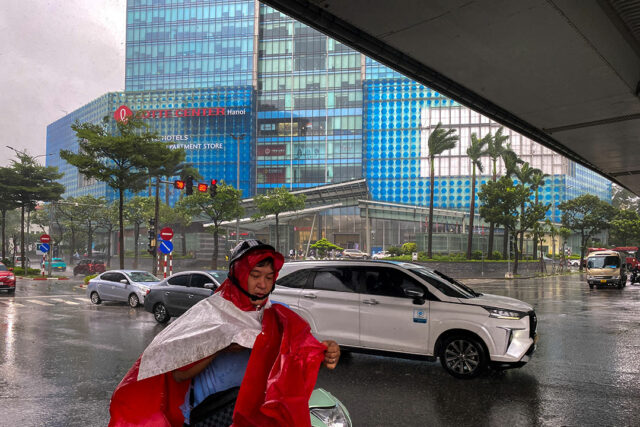
A MAN puts on waterproof clothing amid the impact of Typhoon Yagi in Hanoi, Vietnam, Sept. 7, 2024. — REUTERS/THINH NGUYEN
HANOI — Typhoon Yagi, Asia’s most powerful storm this year, was downgraded to a tropical depression on Sunday, after wreaking havoc in northern Vietnam, China’s Hainan and the Philippines, claiming dozens of lives, according to preliminary reports.
Vietnam’s meteorological agency issued the downgrade on Sunday but cautioned about the ongoing risk of flooding and landslides as the storm, the strongest to hit the country in decades, moves westwards.
On Saturday, Yagi disrupted power supplies and telecommunications in Vietnam’s capital, Hanoi, causing extensive flooding, felling thousands of trees and damaging homes.
The government said the storm has led to at least three deaths in Hanoi, a city of 8.5 million, with these figures being preliminary. Fourteen people have died in Vietnam so far, according to reports, including four from a landslide in the province of Hoa Binh, about 100 km (62 miles) south of Hanoi.
A 53-year-old motorcyclist was killed after a tree fell on him in the northern Hai Duong province, state media reported. At least one body was recovered from the sea near the coastal city of Halong, where a dozen people were missing at sea, with rescue operations expected to start on Sunday when conditions allow.
Yagi has claimed the lives of four people on the southern Chinese island of Hainan, according to the latest update from local authorities. The civil defence office in the Philippines, the first country Yagi hit after forming last week, raised the death toll there on Sunday to 20 from 16 and said 22 people remained missing.
RISK OF FLASH FLOODS After it made landfall in Vietnam on Saturday afternoon, Yagi triggered waves as high as 4 meters (13 feet) in coastal provinces, leading to extended power and telecommunication outages that have complicated damage assessment, the government said.
The meteorological agency warned of continued “risk of flash floods near small rivers and streams, and landslides on steep slopes in many places in the northern mountainous areas” and the coastal province of Thanh Hoa.
Relative calm returned on Sunday morning to Hanoi, where authorities rushed to clean up streets from toppled trees scattered across the city centre and other neighborhoods.
“The storm has devastated the city. Trees fell down on top of people’s houses, cars and people on the street,” said 57-year-old Hanoi resident Hoang Ngoc Nhien.
Hanoi’s Noi Bai international airport, the busiest in northern Vietnam, reopened on Sunday after closing on Saturday morning.
In Hainan, preliminary estimates suggested significant economic losses and widespread power outages, according to emergency response authorities cited by state-run Hainan Daily. — Reuters
US TREASURY SECRETARY Janet Yellen said on Saturday that she is “probably done” serving at the highest levels of government after President Joseph R. Biden’s term ends in January, but will likely meet again soon with her Chinese counterpart.
Asked at the Texas Tribune Festival in Austin, Texas whether she was “done” when a new administration takes over in January, or might continue in her job or take on a new administration role, Ms. Yellen said: “Probably done, but… we’ll see.”
The comments are the closest that Ms. Yellen, 78, has come to announcing her future plans as the presidential race between Vice-President Kamala Harris and former president Donald Trump heats up. Ms. Yellen has been the first woman to serve as Treasury Secretary, Federal Reserve chair and director of the White House National Economic Council.
Ms. Yellen told the event in Austin that she still has a lot of work to do at Treasury in coming months, including another likely meeting with Chinese Vice Premier He Lifeng, her Beijing counterpart, to try to manage an often tense relationship.
The two met in April in Beijing, where Ms. Yellen warned China to rein in excess industrial capacity ahead of Mr. Biden’s decision to impose steep tariff increases on Chinese-made electric vehicles, batteries, solar products and semiconductors.
Ms. Yellen said she would welcome a visit to the U.S. but also may return to China herself, adding: “My guess is that we will have, one way or another, a visit.”
The Treasury’s top economic diplomat, Undersecretary Jay Shambaugh, will lead a delegation to Beijing “very soon” to discuss economic issues. Shambaugh leads a US-China economic working group that has made addressing China’s excess factory production a top issue
Ms. Yellen said the US-China relationship “needs to be prioritized and nurtured” by the next US administration, with discussions at the highest levels and among agency staffs.
“We have enough differences and without a chance to discuss them and put them in context, it’s certainly possible for tensions to rise,” Ms. Yellen said. “So this is something that really requires ongoing attention. I hope that it would get it.”
‘SOLID ECONOMY’ Ms. Yellen also said the US economy has largely reached a “soft landing” with lower inflation after US August jobs data on Friday showed a slight decline in the unemployment rate despite slower hiring.
“When you see pace of job creation diminishing over time, what I love to see is that it stabilizes roughly where it is now, and we have to be careful to make sure that it’s not going to weaken further,” Ms. Yellen said.
She said consumer spending remains “quite solid” and while there is “less frenzy” in hiring, there are not meaningful layoffs
“I’m attentive to downside risks now on the employment side, but I what I think we’re seeing, we will continue to see, is a good, solid economy,” Ms. Yellen said. — Reuters
SYDNEY — Australia will include questions on sexual orientation and gender in its census for the first time, after more than a week of controversy over the centre-left Labor government’s earlier decision to exclude them.
Treasurer Jim Chalmers said on Sunday the 2026 census would include sexual orientation and gender, although he declined to specify the questions and said the Australian Bureau of Statistics (ABS) would design them later.
“We have listened to the LGBTIQ+ community to make sure that we can work with the ABS to deliver this really important change when it comes to the 2026 census,” he said.
“We say to Australians from the LGBTIQ+ community: you matter, you’ve been heard, you will be counted.”
The questions will be optional and only asked of those over 16 years of age.
The move reverses an August decision to exclude questions about LGBTIQ+ identity.
Deputy Prime Minister Richard Marles said then the government did not want to open up divisive debates. He denied any political motives behind the decision amid media reports that the government was apprehensive about sparking a culture-war-style campaign ahead of an election likely to be called within nine months.
The United Kingdom added an optional question on sexual orientation in its 2021 census for the first time. — Reuters
PITTSBURGH — Democratic presidential candidate Kamala Harris said on Saturday endorsements of her by Republican former Vice-President Dick Cheney and his daughter Liz Cheney, a former US Representative, were “courageous” for putting country ahead of political party.
Ms. Harris was in Pittsburgh preparing for the Sept. 10 debate against her Republican rival Donald Trump, with whom she is locked in a tight race for the Nov. 5 vote.
“I’m honored to have their endorsement,” said Ms. Harris at Penzeys Spices in the Strip District, on a break from debate preparation where she greeted patrons and bought spices. She said both Cheneys were making a courageous statement that “it’s okay, if not important, to put the country above party.”
Dick Cheney, who served as vice-president under Republican George W. Bush from 2001 to 2009, said on Friday that “in our nation’s 248-year history, there has never been an individual who is a greater threat to our republic than Donald Trump.”
Ms. Cheney said on Wednesday she would vote for Harris, calling Trump a “danger.”
Mr. Trump called Dick Cheney an “irrelevant RINO along with his daughter” in a social media post on Friday, using a term he applies to Republicans not loyal to him, which stands for “Republicans in Name Only.” — Reuters
A MAn rides a bike on a street in Shanghai, China, Oct. 13, 2022.
— REUTERS
SHANGHAI — A modern China with a huge population is an opportunity, not a threat, for the United States, China’s Ministry of Commerce reported commerce vice minister Wang Shouwen as saying on Saturday as trade talks were held in the city of Tianjin.
The talks, co-chaired by US Undersecretary of Commerce for International Trade Marisa Lago, are the second this year involving the two officials and come amid trade tensions between the two powers.
China’s commerce ministry said earlier this week that the United States should lift all tariffs on Chinese goods, ahead of an announcement by the Biden administration on expected hikes in levies on Chinese-made items, including electric vehicles.
In a statement on Saturday the Chinese ministry said the two sides had conducted “professional, rational and pragmatic” talks on policy and business issues raised by the business communities of both countries.
It added that China was focused on expressing concerns about issues including US tariffs on Chinese goods, and said China was opposed to the implementation of trade and investment restrictions under the pretext of overcapacity. — Reuters
Workers are seen at an electronics manufacturing assembly plant in Biñan, Laguna, April 20, 2016. — REUTERS/ERIK DE CASTRO
FACTORY OUTPUT growth rose to its fastest pace in three months in July, the Philippine Statistics Authority (PSA) reported on Friday.
Preliminary results in the PSA’s latest Monthly Integrated Survey of Selected Industries (MISSI) showed factory output, as measured by the volume of production index (VoPI), quickened by 5.3% year on year in July, faster than the revised 3.6% growth in June and the 3.6% a year ago.
This was also the fastest growth in three months since the revised 7.5% growth in April.
On a month-on-month basis, the manufacturing sector’s VoPI rose by 4.7%, a turnaround from the 3.4% decline in June. Stripping out seasonality factors, output rose by 3.9% from the 1.3% drop a month earlier.
For the January to July period, VoPI growth averaged 2.1%, lower than 5.3% in the same period a year ago.
In comparison, the country’s manufacturing purchasing managers’ index (PMI) by S&P Global for that month stood at 51.2, easing from 51.3 in June.
A PMI reading below 50 marks a contraction in the manufacturing sector, while 50 marks an expansion.
Robert Dan J. Roces, chief economist at Security Bank Corp., said that the higher VoPI in July was due to a combination of better domestic demand and increased exports.
“The notable growth in computer, electronic, and optical products may be attributed to rising global demand for technology, particularly in areas like artificial intelligence and semiconductors,” Mr. Roces said in a Viber message.
For Ruben Carlo O. Asuncion, chief economist at Union Bank of the Philippines, the increase may have come from the improvement of trade within the region.
“Note that manufacturing production index remains to be in expansionary region in the covered months of June and July,” Mr. Asuncion said in a separate Viber message.
The PSA attributed the leap in July’s factory output growth to computer, electronic and optical products, which increased by 12.5% from 1.9% growth in June. The electronic and optical products account for second-largest weight (17.6%) of total manufacturing, after food products (18.7%).
Also contributing to the rise in July’s factory output growth were the production of transport equipment, which inched up by 0.4% from -8.1%, and food products (up by 14% from 11.4%).
The capacity utilization rate in July improved to 75.6%, from 73.6% last year and 75.3% last June.
All 22 industry divisions reported capacity utilization rates of above 60% percent in July.
Mr. Roces said that based on current indicators, positive performance in the manufacturing sector will continue in August and for the rest of the year.
“It (VoPI) will continue to improve, but at a slow pace as the market adjusts to the easing of restriction in the financial system (lower interest rate),” Mr. Asuncion said.
Last August, the Bangko Sentral ng Pilipinas (BSP) cut the interest rates by 25 basis points (bps) to 6.25% for the first time in nearly four years, which started of what BSP Governor Eli M. Remolona, Jr. called to as “calibrated” easing cycle amid an improving inflation and economic outlook.
However, prior to the cut, the central bank kept its policy rate at an over 17-year high of 6.5% for six straight meetings following cumulative hikes worth 450 bps between May 2022 and October 2023 to combat inflation.
The central bank signaled another 25-bp rate cut in the final three months of the year. — Charles Worren E. Laureta
Forest Lake Memorial Park, Digos, Davao Del Sur. The stunning facade of Forest Lake Memorial Park in Digos, welcoming you with elegance and
serenity
Long affirmed as the Philippines’ leading memorial park developer, Forest Lake continues to uphold its commitment to compassionate care, innovative services, and customer-centric core values — factors that, to this day, help the industry pioneer sustain its position in the deathcare industry.
Established in 1997 with parks initially built in Zamboanga and Iloilo, Forest Lake now has 37 operational memorial parks across Luzon, Visayas, and Mindanao.
Forest Lake subsequently demonstrated consistent growth, with significant expansions between 2005 and 2015, doubling its network from 2016 to 2020, and launching eight new parks from 2021 to 2023. To top this off, Forest Lake surpassed Php 3 billion in sales in 2023.
Forest Lake Memorial Park, Bauang, La Union. Captivated by the winding road amid the vibrant greenery of Forest Lake Memorial Park, Bauang
Dedicated to creating “A Better Place” for families to honor and celebrate the lives of their loved ones, Forest Lake continues to grow and set an example for property developers in the country.
Holding the fort as front-runner, Forest Lake’s total revenues in 2023 reached Php 2.47 billion, surpassing its 2022 revenues of Php 2.17 billion (signifying a 12% increase), driven by a higher demand for memorial lots, the introduction of new parks, improved collection efficiency, increased development investments, and higher interment service revenues.
Sales revenues were bolstered by an 18.2% increase, rising from Php 1.73 billion to Php 2.04 billion, while interment revenues grew by 11%, from Php 190 million to Php 210 million.
Forest Lake Memorial Park, Koronadal. A peaceful sanctuary with lush greenery and stunning views, perfect for reflection and remembrance.
Likewise, net income before tax increased by 15% (from Php 527.8 million in 2022 to Php 607.2 million in 2023), with an EBITDA increase from Php 608 million in 2022 to Php 733.3 million in 2023, driving profitability upwards, from 28% to 30%.
Additionally, the company’s assets saw a 20% increase, including a 51% rise in cash reserves and a 31% increase in sales receivables. Total equity also grew by 18%, supported by a 48% rise in issued capital stock and a 25% increase in unappropriated retained earnings.
Forest Lake Memorial Park, Legazpi Albay. Nestled against the majes c Mayon Volcano, Forest Lake Memorial Park in Legazpi offers a serene and breathtaking backdrop for reflection.
“We have our core values to thank for our stature in the industry: Personalized Service, Value Creation, Teamwork, Innovation and Creativity, and Professionalism,” says Alfred Xerez-Burgos III, President and CEO of Forest Lake Development Inc. “These values have always guided us in everything we do and have led us to provide the best kind of care to the families we serve.”
For almost three decades, Forest Lake has set its “eyes on the prize,” with its mission of “offering accessible and affordable memorial parks and services, managed by a professional team that is dedicated to providing value, innovation, and personalized service.” Meanwhile, its vision is “to build a better place where generations of family memories are treasured, immortalized, and celebrated by the living.”
Forest Lake Memorial Park, Davao. Experience tranquility at Forest Lake Memorial Park in Davao, surrounded by natural beauty and serene landscapes.
With these guiding principles, Forest Lake continues to expand its services and meet the evolving needs of its customers. It now offers a comprehensive array of products and services designed to provide a complete memorial experience. Lawn Lots are available in standard, premium, and special premium options, with prices ranging from Php 50,000 to Php 250,000. Estate Lots, designed for above-ground interment, are priced between Php 720,000 and Php 3 million per block.
Forest Lake also offers a full range of interment and funeral services, including burial setup, funeral arrangements and preparation, all ensuring a seamless experience for memorial lot buyers. Forest Lake’s “Libing Anywhere” feature even provides customers the flexibility of using memorial lots at any Forest Lake park nationwide, while the “Libre Burol” feature grants free funeral services with each interment.
Forest Lake Memorial Park, Pozorrubio, Pangasinan. The beautiful entrance of Forest Lake Memorial Park in Pozzorubio, invites visitors to reflect on cherished memories amidst a peaceful setting.
In October 2015, Forest Lake Biñan became the first of Forest Lake’s parks to offer chapel services. Currently, chapels are under construction in Iloilo, set for completion this year. These services include body retrieval, preparation, casketing, use of a hearse, and a viewing chapel — all aiming to provide total memorial care.
Forest Lake’s parks are designed with convenience and aesthetics in mind, featuring well-manicured lawns, rock gardens, and Mediterranean-inspired gates and guardhouses. Other amenities include well-maintained restrooms, high concrete perimeter and security walls, water sprinkler systems, drainage facilities, street and park lighting, and 24-hour security.
“Our many years of commitment to innovation and customer satisfaction made us the industry leader that we are today,” adds Xerez-Burgos III. “We assure our present and future customers that we will continue this legacy and provide them the highest standard of care.”
Forest Lake Memorial Park, San Juan, La Union. A place of eternal peace amidst nature’s beauty
As Forest Lake celebrates its stature in the industry, it invites everyone to connect and stay updated through Facebook and Instagram at @forestlakememorialparks.
For over 27 years, Forest Lake has established itself as a leader in providing thoughtfully designed, family-friendly memorial parks throughout Luzon, Visayas, and Mindanao. These parks are more than places of remembrance; they are vibrant spaces where families gather, connect, and celebrate their loved ones’ memories.
Forest Lake Memorial Park Chapel, Zamboanga. A serene chapel nestled among swaying palm trees
As the foremost memorial park developer in the Philippines, with over 37 parks nationwide, Forest Lake is committed to expanding its offerings to include total memorial care services such as chapels, columbariums, and cremation. This expansion underscores the company’s dedication to meeting the evolving needs of Filipino families.
Guided by its mission to create “A Better Place,” Forest Lake upholds values of innovation, creativity, teamwork, personalized service, value creation, and professionalism. The company integrates cutting-edge technology to enhance service delivery and foster a seamless, personalized experience for every client. Forest Lake’s collaborative approach ensures that each park is a testament to thoughtful design and professional excellence, offering significant value to both clients and investors through low-risk, high-yield opportunities.
Forest Lake Memorial Park, Zamboanga. Explore the beauty of Forest Lake Memorial Park from above, where trees sway gently and open grass invites peaceful contemplation.
Forest Lake Memorial Parks is headquartered on the third floor of Alexcy One Building, 51 President’s Avenue, 1718, Parañaque City. For more information, email info@forestlakeparks.com or visit forestlakeparks.com. Follow Forest Lake on Facebook @ForestLakeMemorialParks and Instagram @forestlakememorialparks.
Join Forest Lake in its vision to provide spaces where the memories of loved ones are celebrated and immortalized, and where families can create new, lasting memories together.
Spotlight is BusinessWorld’s sponsored section that allows advertisers to amplify their brand and connect with BusinessWorld’s audience by publishing their stories on the BusinessWorld Web site. For more information, send an email to online@bworldonline.com.
Join us on Viber at https://bit.ly/3hv6bLA to get more updates and subscribe to BusinessWorld’s titles and get exclusive content through www.bworld-x.com.
Commuters wait for public transportation along Ortigas Extension in Cainta, Rizal, Sept. 14, 2022. — PHILIPPINE STAR/ WALTER BOLLOZOS
The country’s jobless rate rose to a one-year high of 4.7% in July as fresh graduates entered the workforce, the Philippine Statistics Authority (PSA) said on Friday.
Preliminary data from the PSA’s Labor Force Survey (LFS) showed the jobless rate in July picked up from two-decade low of 3.1% in June. It is the highest jobless rate since the 4.9% recorded a year ago.
This translated to 2.38 million unemployed Filipinos in July, up by 755,000 from 1.62 million in June.
Year on year, the ranks of the unemployed was up by 86,000 from 2.29 million in July 2023.
In the first seven months of the year, the unemployment rate averaged 4%, lower than the 4.7% average in the same period last year.
“Our youth unemployment this July increased. In terms of numbers, it reached 1.02 million and makes a 43% contribution to jobless Filipinos. It means that in the 2.38 million unemployed Filipinos, 1.02 million youth or Filipinos aged 15 to 24 years, contributed to the total unemployed population,” PSA Undersecretary and National Statistician Claire Dennis S. Mapa said in mixed English and Filipino during the press briefing on Friday.
Mr. Mapa also added that those who graduated from college and K-12 that entered the labor market but were not able to find a job also contributed to the total unemployment.
Youth unemployment rate rose to 14.8%, higher than the 8.6% in June and 14.2% in July 2023.
This translated to 1.02 million unemployed youth in July, up by 440,000 from June and 172,000 in July 2023.
Ruben Carlo O. Asuncion, chief economist at Union Bank of the Philippines, said that inadequate quality jobs for the young workers contributed to the youth sector’s unemployment.
“With still elevated interest rates and the challenge of inflation volatility, finding a quality job may prove to be difficult. Even as easing key rates are expected, there exists a lag before firms and other businesses like SMEs (small and medium enterprises) respond to the less restrictive financial environment. I just hope it can be faster so that the youth can get jobs that they need,” Mr. Asuncion said in an e-mail.
Job quality was unchanged in July, as the underemployment rate steadied to 12.1%, but lower than the 15.9% in July 2023.
This translated to 5.78 million underemployed Filipinos or persons already working but still looking for more work or longer working hours, versus the 6.08 million in July and 7.07 in July 2023.
As of end-July, the average underemployment rate stood at 12.3%, lower than 13% in the same period last year.
The size of the Filipino labor force is estimated to be around 50.07 million in July, down by 1.82 million from June. However, the workforce size rose by 3.23 million from 46.85 million in July last year.
This brought the labor force participation rate (LFPR) — the share of the Filipino workforce to the total working age population of 15 years old and over — to 63.5% in July, declining from 66% in June but rising from 60% in July 2023.
Meanwhile, July employment rate dipped to 95.3% in July, lower than the 96.9% seen in June but slightly higher than the 95.1% in the same period a year ago.
This was equivalent to 47.70 million employed Filipinos, down by 2.58 million from 50.28 million in June, but up 3.14 million from 44.56 million in July 2023
From January to June, the employment rate averaged 96%, up from 95.3% a year ago.
The average Filipino employee worked for 41.1 hours per week, higher than the 40.9 hours in June but down from the 42.4 hours in June 2023.
The services sector remained the top employer in July with an employment rate of 60.8% followed by agriculture at 21.2% and industry at 18%.
“While welcoming the still-high employment rate as a positive development, despite our critique of the leniency of the technical definition that those working for even just one hour during the reference week as ‘employed,” we remain concerned about the quality of jobs and the labor market situation in the country,” Carlos Miguel S. Oñate, Trade Union Congress of the Philippines (TUCP) legislative officer, said in an e-mail.
Month on month, job losses in July were seen in construction (down 1.02 million); wholesale and retail trade; repair of motor vehicles and motorcycles (down 821,000 million) and agriculture and forestry (down 750,000).
Meanwhile, public administration and defense; compulsory social security 344,000 jobs in July on a monthly basis. Other sectors that posted monthly job gains were fishing and aquaculture (up 238,000) and financial and insurance activities (up 142,000).
Manufacturing recorded the largest annual drop in July (down 154,000), followed by professional, scientific and technical activities (down 100,000) and information and communication (down 76,000).
On the other hand, wholesale and retail trade added the biggest year-on-year employment gain in July (up 1.07 million), followed by agriculture and forestry (up 936,000) and accommodation and food service activities (up 512,000).
“It may take time for jobs creation and eventually rapid hiring. Nonetheless, the job environment is still expected to be better in the coming months,” said Mr. Asuncion. — Lourdes O. Pilar