Trail Rated like its Jeep siblings, the new Jeep Wrangler Rubicon is priced at P5.78 million for the four-door (in photo) while the two-door Rubicon retails for P5.59 million. — PHOTO FROM INCHCAPE PHILIPPINES
1 of 5
Trail Rated like its Jeep siblings, the new Jeep Wrangler Rubicon is priced at P5.78 million for the four-door (in photo) while the two-door Rubicon retails for P5.59 million. — PHOTO FROM INCHCAPE PHILIPPINES
PHOTO FROM INCHCAPE PHILIPPINES
The new Wrangler Rubion’s 12.3-inch infotainment touchscreen is the largest ever for the model line. — PHOTO FROM INCHCAPE PHILIPPINES
PHOTO FROM INCHCAPE PHILIPPINES
PHOTO FROM INCHCAPE PHILIPPINES
INCHCAPE PHILIPPINES, country distributor of Chrysler, Dodge, Jeep, and RAM Trucks through IC Automotive, Inc., brings the new Jeep Wrangler Rubicon into the country.
In a release, Inchcape Philippines said that the SUV is the “most off-road capable and recognized SUV in the world,” and builds on its history with an “unmatched combination of off-road capability, authentic Jeep design, open-air freedom, advanced powertrains, superior on- and off-road dynamics, and a host of innovative safety and advanced technology features.”
It bears the trademark seven-slot Jeep grille, flanked by automatic LED premium reflector headlamps with LED daytime running lamps. The headlights feature off time delay, and are supplemented with LED front lamps. The Wrangler Rubicon gets a new infotainment system, bigger tires, upgraded off-road features, luxurious and premium seats, and enhanced safety features. The vehicle is positioned as an off-roader that can be used as a daily driver.
On both sides, the model sports the classic Wrangler design elements such as a Rubicon hood decal, red and gray Jeep badge, Wrangler decal, and “Trail Rated” badge. The Rubicon exclusively features power heated mirrors; while in its rear are LED taillamps and full-size spare tire. An integrated antenna is in its Corning Gorilla Glass windshield. To let occupants experience open-air riding and driving, the black three-piece hard top may be removed.
The new Wrangler Rubicon is powered by a turbocharged 2.0-liter inline-four engine, mated with an eight-speed automatic transmission. Maximum power is 268hp at 5,250rpm and peak torque is 400Nm at 3,000rpm.
The model is loaded with 4×4 features and heavy-duty components such as a new 4:1 Rock-Trac HD Fulltime 4WD System, Dana M220 Wide Full-Floating Rear Axle, Dana M210 Wide Heavy-Duty Tube Front Axle, e-locker for front and rear axles, 4:10 rear axle ratio, front disconnecting stabilizer bar, performance suspension, high-clearance fender flares, rock-protection sill rails, skid plates, aux switches, integrated off-road camera with integrated washer, and front and rear tow hooks.
It gets 17-inch black aluminum wheels wrapped in 285/70 33-inch all-terrain tires.
All Jeep Wranglers are “awarded” with a Trail Rated badge, denoting that they have all been tested for their ability to maneuver well on trails with obstacles and rough terrain. The new Jeep Wrangler is said to excel in the five following 4×4 key areas: water fording, ground clearance, articulation, maneuverability, and traction.
Inside, the Wrangler Rubicon features leather upholstery. Its driver and passenger seats get Nappa leather, and are 12-way power-adjustable. The new model sports a 12.3-inch infotainment touchscreen — the “most advanced and largest display ever offered on Wrangler.” It houses a fifth-generation, award-winning Uconnect 5 system that sits atop the center stack.
Aside from delivering faster performance compared to the previous generation, the Uconnect 5 is said to offer more features as well such as wireless Apple CarPlay and wired Google Android Auto, GPS navigation, off-road information, five user profiles plus a valet mode, fully customizable home screen, and Bluetooth connectivity that allows the connection of up to two phones. The system is hooked up to a nine-speaker Alpine sound system.
Functionality is enhanced for front-row passengers with standard USB Type C ports that allow devices to charge up to four times faster. Standard 12-volt accessory outlets are also found in the center console and cargo area of the new Wrangler. In front of the driver is a seven-inch TFT color display instrument cluster. Its safety and security features include first- and second-row side curtain air bags, which complement standard driver and passenger front air bags, and front seat-mounted driver and passenger side air bags. Driver-assistive components are adaptive cruise control with stop, Selec-Speed Control, advanced brake assist, electronic roll mitigation, anti-lock four-wheel FNC disc HD brakes, electronic stability control, Full-Speed Forward Collision Warning Plus, hill start assist, traction control, trailer sway damping, blind spot monitoring, ParkSense Rear Park Assist System, and ParkView Rear Backup Camera.
The model is available at any of the five Jeep dealerships in Alabang, Cebu, Clark, Greenhills, and San Fernando.
LONDON — The United Nations’ (UN) world food price index eased slightly in August, data released on Friday showed, as lower prices for sugar, meat, and cereals more than offset higher dairy and vegetable oil prices.
The price index, compiled by the UN Food and Agriculture Organization (FAO) to track the most globally traded food commodities, slipped to 120.70 points in August from a revised 121 in July.
The FAO index hit a three-year low in February this year as food prices retreated from a record peak set in March 2022 following Russia’s invasion of Ukraine.
The August value was 1.1% lower than its level a year ago and 24.7% below its peak from March 2022.
In a separate report, the FAO lowered its forecast for global cereal production in 2024 by 2.8 million metric tons to 2.851 billion tons, putting it almost on a par with the previous year’s output.
The decrease largely reflects reduced prospects for coarse grain crops in the European Union, Mexico, and Ukraine, thanks to hot and dry weather conditions.
The forecast for world cereal utilization in 2024/2025 was lowered by 4.7 million tons versus July to 2.852 billion tons, reflecting a 0.2% increase from 2023/2024.
The agency also cut its forecast for world cereal stocks at the close of seasons in 2025 by 4.5 million tons to 890 million. — Reuters
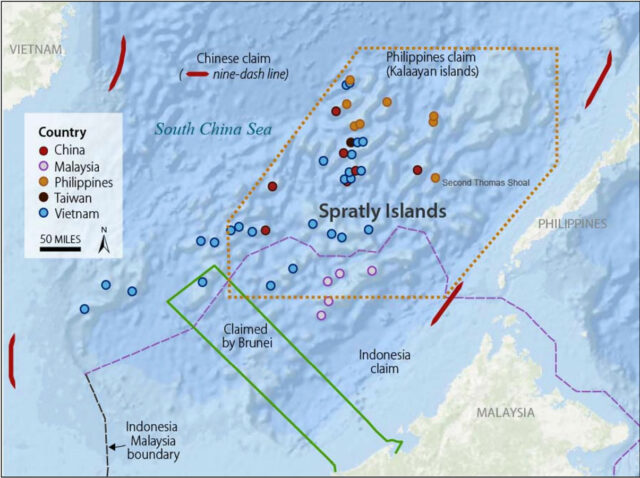
China’s insistence on its own “nine-dash line” as its demarcation of its territorial and sovereign rights in the South China Sea has caused conflicts of interest with and among its neighbors. Its self-serving boundaries cover most of the South China Sea (SCS), overlapping with the exclusive economic zone (EEZ) claims of Brunei, Indonesia, Malaysia, the Philippines, Taiwan, and Vietnam.
What is mine is mine. What is yours is mine, China says.
This was heightened since 1982, when the United Nations Convention on the Law of the Sea (UNCLOS) determined the very specific 200-nautical miles EEZ for each country. Article 56 of UNCLOS affirmed that coastal states have the right to the exploration and management of all resources within their EEZ. Southeast Asian countries’ EEZ stress the geographical fact that their coastlines are really much closer to the disputed areas than China’s is, UNCLOS said.
Still, nearly the whole South China Sea is claimed by China with its nine-dash line. This line cuts into half of the Philippine’s EEZ.
Filipino ships and small fishing boats have been repeatedly attacked by Chinese patrol boats in the Philippine EEZ. On Sept. 5, 2012, Philippine President Benigno Simeon Aquino III promulgated Administrative Order No. 29, naming the maritime areas on the western side of the Philippine archipelago as the West Philippine Sea (WPS), and defining “sovereign jurisdiction” in its EEZ. China ignored this, controlling fishing, reclaiming land and building military outposts in the WPS.
On Jan. 22, 2013, the Philippines instituted arbitral proceedings against China in a dispute concerning their respective “maritime entitlements” and the legality of Chinese activities in the South China Sea. On Feb. 19, 2013, China expressed its rejection of the arbitration in a diplomatic note to the Philippines.
On July 12, 2016, the Arbitral Tribunal in the South China Sea Arbitration (The Republic of the Philippines v. The People’s Republic of China) issued a unanimous award largely favorable to the Philippines. China’s nine-dash line is invalidated by the 200-nautical mile EEZ of countries in the South China Sea. Scarborough Shoal and rocks like Spratly Islands that cannot sustain human habitation or economic life of their own and accordingly shall have no exclusive economic zone or continental shelf (and are therefore under Philippine control). There is no possible entitlement by China to any maritime zone in the area of either Mischief Reef or Second Thomas Shoal and these are within the Philippine EEZ.
China has rejected the arbitral ruling. And China continues to act like “What is yours is mine.”
International law experts worry that “There is no enforcement mechanism as such under UNCLOS in the event that China fails to comply with the tribunal’s decision, but the Philippines could either resort to diplomatic ways (bilateral or multilateral negotiations within the framework of international organizations) or have recourse to further arbitration under UNCLOS. Moreover, other states and non-state actors could take further actions (i.e., economic sanctions) to put pressure on Beijing to shift its behavior” (Department of International Law, The Graduate Institute, Geneva).
But perhaps the more defeating quirk of fate is that the Arbitral ruling came out in July 2016, when national elections had just installed the new president of the Philippines, Rodrigo Duterte. He and Chinese president Xi Jinping created the biannual Bilateral Consultation Mechanism on the South China Sea, a process allowing the two nations to peacefully manage disputes and strengthen their relations. Wasn’t that a good thing for Philippine-Chinese relations?
It could have been. But China did not lay off its coveted areas in the West Philippine Sea.
In March 2017, China occupied Benham Rise, a protected food supply exclusive zone of the Philippines (to the east of the country), on the pretext of “oceanic research,” claimed to be approved by Duterte (Asia Times, Archived from the original on May 6, 2024). Speculations were that China was aiming for naming rights for Benham Rise, which was hurriedly countered by it being renamed “Philippine Rise.”
In June 2019, a Chinese ship, Yuemaobinyu 42212, rammed and sank a Philippine fishing vessel, F/B Gem-Ver, near Reed Bank, west of Palawan. The fishermen were caught by surprise as they were asleep during the event. The Chinese ship afterwards left the sinking Philippine vessel, leaving the 22 Filipino fishermen adrift in the middle of the sea. They were later rescued by a ship from Vietnam (ABS-CBN News, April 14, 2020).
Concerned Filipinos sank to a sickening distress when, just before he stepped down as president at the end of his term, Rodrigo Duterte said that the victory of the Philippines over China at the Permanent Court of Arbitration in The Hague is just a “piece of paper, trash to be thrown away” (Inquirer.net, May 6, 2021). And it seemed that China had paraphrased itself with its mantra, “What is yours is mine” — in Duterte’s betrayal of patriotic loyalty.
The election of Ferdinand “Bongbong” Marcos, Jr. as president of the Philippines in 2022 saw the onset of worsening Philippine-China relations and frequent skirmishes in the South China Sea.
Among the escalations seen in the news since 2023 include the China Coast Guard’s firing on Philippine military ships in the Spratly Islands waters; the Philippines accusing China of parking its navy and coast guard vessels near Scarborough Shoal in an apparent attempt to block Philippine vessels from passing through the area; the Philippine Coast Guard accusing China Coast Guard ships of jamming their automatic identification system (AIS); and, amidst Chinese and Philippine military operations around the disputed Scarborough Shoal in August 2024, the Armed Forces of the Philippines accusing China of “dangerous and provocative actions” after two Chinese Air Force aircraft dropped flares in the path of a Philippine plane that China claimed was “illegally intruding” into its airspace.
Additionally, in May 2024, the Philippines’ Department of Foreign Affairs said it would probe Chinese diplomats’ activities around wiretapping after reports surfaced of a recording of an agreement between a Philippine military official and Chinese officials over the South China Sea.
A week ago, China and the Philippines accused each other of causing a collision between their two vessels in the latest flareup of tensions over disputed waters and maritime features in the South China Sea. It was the second confrontation in days near Sabina Shoal, about 140 kilometers (85 miles) west of the Philippine province of Palawan, in the internationally recognized EEZ of the Philippines (Associated Press, Aug. 31, 2024). The ramming by the Chinese vessel damaged the 97-meter (320-foot) Teresa Magbanua, one of the Philippines’ largest coast guard cutters (Reuters, Aug. 31, 2024).
But didn’t former president Duterte admit to have had a (verbal) “secret agreement” with Chinese President Xi Jin Ping to “maintain the status quo” in the West Philippine Sea? Duterte’s former spokesman Harry Roque recently divulged the status quo deal, which he also called a “gentleman’s agreement.” He made the statement following a series of acts of Chinese aggression against Philippine vessels on resupply missions to the BRP Sierra Madre (ANC News, April 12, 2024).
Duterte said the secret deal involved not bringing construction materials for the repair and upkeep of BRP Sierra Madre in Ayungin Shoal. “As is where is nga. You cannot bring in materials to repair and improve the ship. If you rile China, there may be war.” Duterte challenged his successor, President Marcos Jr., to repair the BRP Sierra Madre that was deliberately grounded by the Philippine Coast Guard on Ayungin Shoal to establish Philippine ownership (ABS-CBN News, April 12, 2024).
What is mine is mine, the Philippines says.
What is yours is mine, China says.
Amelia H. C. Ylagan is a doctor of Business Administration from the University of the Philippines.
PANGILINAN-LED Metro Pacific Tollways Corp. (MPTC) said on Saturday that a limited data breach may have compromised Easytrip user accounts.
Easytrip is used on MPTC’s North Luzon Expressway, Subic-Clark-Tarlac Expressway, Manila-Cavite Expressway, and Cavite-Laguna Expressway.
“We would like to inform our motorists that a limited data breach took place tonight, and some user accounts may have been accessed and possibly compromised,” MPTC said in a Facebook post on Sept. 7.
The company said the affected system had been contained by its information security team.
“We assure our Easytrip account holders that their toll wallet balances are intact and secure,” the company said.
“We will reach out to the affected account holders.”
On Sept. 7, cybersecurity watchdog group Deep Web Konek said that MPTC had been hit with a data breach by a hacker group and allegedly compromised almost one million Easytrip records.
“A card number inventory of 247,324 cards (both used and unused) has been compromised, alongside MPTC’s internal telephone directory containing 3,000 entries,” Deep Web Konek said in an X post on Sept. 7.
MPTC is the tollways unit of Metro Pacific Investments Corp., one of three key Philippine units of Hong Kong-based First Pacific Co. Ltd., the others being Philex Mining Corp. and PLDT, Inc.
Hastings Holdings, Inc., a unit of PLDT Beneficial Trust Fund subsidiary MediaQuest Holdings, Inc., has a majority stake in BusinessWorld through the Philippine Star Group, which it controls. — Aubrey Rose A. Inosante
By Kristine I. Aguirre, Advisory Partner and Head of ESG, KPMG in the Philippines (R.G. Manabat & Co.)
SUSTAINABILITY HAS become a driver to what shapes corporate behavior and decision-making for companies not just in the Philippines, but also globally. According to the “KPMG 2023 CEO Outlook,” as much as 69% of CEOs have fully embedded ESG into their business as a means to value creation.1 As awareness of climate change and sustainable development rises, companies face increasing pressure to adopt more responsible business practices. The same survey mentions that 68% of CEOs deem that their current ESG progress is not strong enough to withstand potential scrutiny.1 This has shifted how organizations now approach environmental stewardship and social responsibility with ESG and transparency emerging as a key element in building public trust.
The business world is changing as leaders in sustainability drive positive change in their respective organizations. Companies are reducing their environmental footprint and creating efficient and responsible systems. However, this transition is not without challenges, ranging from the implementation of new and complex practices to the need for high-quality data to measure and report on progress.
Over the years, the Philippines has taken significant steps to promote Environmental, Social, and Governance (ESG) practices. In 2019, the Securities and Exchange Commission (SEC) issued Memorandum Circular No. 04, which requires publicly listed companies (PLCs) to submit sustainability reports. These reports aim to assess and manage non-financial performance across the economic, environmental, and social aspects of organizations and enable PLCs to measure and monitor their contributions towards achieving universal targets of sustainability as well as national policies and programs.2
The Philippine government is actively working to enhance its ESG regulatory framework, thus the country has also expressed its intention to adopt the International Sustainability Standards Board (ISSB) standards, indicating a commitment to align with international best practices.3 Last October 2021, the Sustainable Finance Taxonomy Guidelines (SFTG) for the Philippines were developed through cooperative efforts between the Securities and Exchange Commission (SEC), the Bangko Sentral ng Pilipinas (BSP) and the Insurance Commission (IC). The Financial Sector Forum (FSF) has developed these guidelines extensively drawing on the ASEAN Taxonomy’s Foundation Framework. The SFTG will initially focus on the objectives of climate change mitigation and climate change adaptation, with a view to adding ecosystems and biodiversity, and circular economy, as well as potential social objectives in future iterations.4 The SEC is also planning to fully implement the Association of Southeast Asian Nations Sustainable and Responsible Fund Standards (ASEAN SRFS) to enhance transparency and uniformity in reporting.5
Addressing environmental issues, particularly the Philippines’ plastic pollution problem, the Extended Producer Responsibility Act (EPRA) of 2022 requires large, obliged enterprises to establish programs for the effective recovery of plastic waste. Under EPRA, companies must meet target recovery rates, 40% in 2024 and increasing by 10% annually until 2028.6 These are just some of the mandates that reflect the growing emphasis on sustainability in the Philippine landscape.
CREATING SUSTAINABLE VALUE While implementing ESG initiatives can seem costly, this should be seen as long-term investments in creating sustainable value for organizations. Companies face many obstacles in implementing these new practices and measuring sustainability progress. However, compliance can bring benefits such as fostering a motivated workforce and increasing public and investor interest.
ESG reporting has gained prominence over the past decade, with a growing trend towards integrating ESG information into mainstream financial reporting. According to “KPMG’s 2022 Global Survey of Sustainability Reporting,” 79% of leading companies in surveyed countries report on sustainability, while this figure rises to 96% among the world’s top 250 companies.3 The demand for ESG information from investors and stakeholders has increased, with 69% of CEOs reporting significant stakeholder demand for increased transparency and reporting on ESG matters.3
Companies have encountered challenges in gathering and validating data, particularly for ESG reporting. Despite the growing demand for ESG information, a recent KPMG survey on readiness revealed that only 29% of companies have a clear audit trail to support their non-financial disclosures.7 As the amount of reported data increases, ensuring the accuracy and reliability of ESG disclosures has become increasingly difficult. To address this, companies are relying on third-party assurance and verification services. These services validate ESG data, increasing investor confidence and supporting companies’ compliance processes. Assurance standards are used to evaluate reporting procedures, controls, and data-gathering processes. This process allows companies to validate their claims and enhance their credibility, ensuring compliance with jurisdictional requirements.
DRIVING POSITIVE CHANGE Companies are increasingly recognizing the critical importance of assessing and managing ESG risks and integrating it into already existing systems. The climate crisis and recent global pandemic have heightened interest in ESG issues, prompting companies to reevaluate how they conduct business. According to the “KPMG Global Survey on Sustainability Reporting,” companies acknowledging that climate change is a risk to their business has increased significantly, with 64% of the G250 and 46% of N100 companies reporting on environmental risks in 2022. Nearly all of the world’s top 250 companies (G250) report on sustainability, reflecting the growing realization that ESG matters are not separate but integral to achieving long-term value creation.8
Companies that prioritize ESG have been found to have a positive correlation with financial performance and attractiveness to investors. Many business leaders are aware of the importance of having strong ESG governance, oversight and accountability. There is a growing consensus that sustainability risk is also a financial risk. Company strategies need to consider this expanding scope. By integrating ESG, companies can future-proof their operations against climate-related risks and promote inclusive growth.9 By embracing these principles, businesses can drive real and positive change.
Commitments to ESG principles are also driving positive innovation — one example is through the convergence of AI and sustainability efforts. In the Philippines, AI-powered solutions are helping businesses tackle environmental challenges like deforestation, pollution, and climate change through enhanced monitoring and management. Companies are using AI to bridge social gaps by improving access to education and healthcare, further advancing their ESG commitments.10
The Commission on Audit of the Philippines has started using AI and data analytics to detect anomalies in government transactions.10 Their proactive approach helps curb corruption and promote good governance, fostering synergies between technological progress and sustainable development.
This ESG shift impacts how companies now view long-term value creation, helping them attract responsible investors and fostering stakeholder trust. While businesses continue to face new challenges in implementing sustainability, measuring progress, and navigating the complex regulatory landscape, this change remains crucial as part of future-proofing operations.
Technology will play a significant role in advancing ESG, enhancing reporting, scalability of impact, and the effective management of risks. Companies are focusing on preparing accurate and reliable reports as a measure of progress and accountability, often verified by third-party assurance.
ESG is driving a holistic approach to business, emphasizing sustainability, ethics, and long-term resilience. This trend is here to stay and will continue to shape responsible business practices not only in the Philippines but globally.
Kristine I. Aguirre has 20 years of experience in External Audit, Internal Audit, Internal Control over Financial Reporting, Sarbanes-Oxley Assistance Services, Enterprise Risk Management, Board Advisory, Forensic and Sustainability Services. She graduated from University of Santo Tomas with a degree in BS Accounting. She then went on to become a Certificate Public Accountant both in the Philippines and USA. She is also a Certified Internal Auditor.
By Mhicole A. Moral, Special Features and Content Writer
FOR DECADES, traditional media — comprising print newspapers, magazines, television, and radio — served as primary channels for information dissemination and entertainment. However, there has been a recent shift towards digital media consumption, facilitated by the rapid proliferation of smartphones, the availability of the internet, and the rise of social media platforms, which have redefined how audiences engage with content.
As a result, traditional media, which once dominated the information and entertainment space, has had to evolve to remain relevant as digital consumption becomes the norm.
BusinessWorld, the oldest business newspaper in the Philippines and the first business daily in Southeast Asia, has been a trusted source of business news and analysis for over three decades. Founded in 1967 as BusinessDay by the esteemed journalist Raul L. Locsin, its mission was to provide “competent and responsible reporting on the news.”
In 1987, BusinessDay was rebranded as BusinessWorld, signifying a significant change in its identity. This change occurred during political and economic disruption in the Philippines as the country shifted to a more democratic government after years of Martial Law. The new identity symbolized a renewed dedication to serving as a public trust, emphasizing the provision of precise and timely news to business leaders and decision-makers.
Over the years, BusinessWorld has weathered various challenges, particularly with the rise of digital media and shifting consumer habits. In response, the publication has embarked on a digital transformation journey, striving to maintain its reputation as a leading source of business news in the country while adapting to the demands of an evolving media environment.
Today, BusinessWorld operates as a multimedia company, providing news and content not only through print but also through digital platforms, continuously aiming to bridge the gap between traditional and new media by effectively engaging audiences and maintaining the integrity of information dissemination.
“The very inspiration that helped BusinessWorld transform into a multimedia company is understanding its audience, which is the business community, from what information they would like to consume and what they need,” said Lucien C. Dy Tioco, executive vice-president of BusinessWorld and its umbrella organization, the PhilSTAR Media Group (PMG).
According to BusinessWorld Digital Services Head Jose Niño D. Nicolas III, the integration of multimedia content into traditional news workflows has been one of the most significant challenges for BusinessWorld as the digital age demands a multi-platform approach where content must be engaging, interactive, and available in various formats.
“Print is very conscious of the physical space occupied, while television worries about airtime,” he explained. “Multimedia, by definition, is the ability to relay information or produce content that utilizes different forms of media cohesively. In effect, multimedia journalism has to take into account not just the written literature, but also the visual and audible content. With digital, it adds more layers to the complexity of multimedia, which include interactivity and engagement.”
FUTURE-PROOFING BUSINESSWORLD Even before the pandemic drastically altered the business environment, BusinessWorld had already laid the groundwork for digital transformation.
“During the pandemic, we were able to come up with digital-only projects. All of these are done in order for us to be present and accessible to our audience. Wherever they are, we continue to be available for them,” BusinessWorld Digital Sales Lead Jao A. Malapo shared.
For instance, BusinessWorld Insights, which initially launched as an online-only initiative, expanded into in-person events once restrictions eased. The flexibility of BusinessWorld’s digital platforms allowed the company to remain agile, swiftly adapting to changes in the media landscape while maintaining consistent engagement with its audience.
Mr. Malapo said that the company’s adaptability has proven crucial in addressing the evolving needs of clients, particularly those looking for multimedia and digital solutions to traditional print campaigns.
Meanwhile, digital sales have become a viable and significant revenue stream, supplementing traditional print-based revenue. Mr. Malapo mentioned that the company’s ability to offer comprehensive digital services, such as sponsored content, video production, and online events, has broadened its appeal to clients.
“These platforms allow for deeper collaborations between BusinessWorld and its clients, moving beyond simple advertising to more integrated solutions that meet specific business needs,” he added.
As mentioned, a key factor in BusinessWorld’s digital expansion is its emphasis on partnerships and collaborations. Collaborations with clients, sponsors, and partner organizations are not just important but crucial to the success of the company’s digital platforms. These collaborations promote BusinessWorld’s capabilities and enable the company to stay in tune with industry trends and the evolving needs of the business community.
“By working closely with clients, we gain valuable insights into market trends and challenges, which in turn helps shape our future offerings. For example, through our collaborations with various industries, we were able to develop more relevant content, programs, and platforms that resonate with our target audience,” said Mr. Malapo.
SHARING CREDIBLE BUSINESS NEWS IN THE DIGITAL AGE
BusinessWorld is one of the first news organizations in the Philippines to ever have a website, recalled Mr. Nicolas. In fact, this foresight of the late Mr. Locsin enabled the company to acknowledge the importance of digital in the future.
The launch of BusinessWorld Online (www.bworldonline.com) marked the beginning of the publication’s digital journey, providing readers with easy access to its rich archive of articles and up-to-date news in real-time.
To further extend its reach, the media company has effectively leveraged social media platforms such as Facebook, X (formerly Twitter), Instagram, and — recently — Threads. These channels serve as key mediums for engaging with a broader audience, sharing timely news updates, and driving traffic to other platforms.
Aren Mae M. Cayetano, social media specialist at BusinessWorld, said, “We continue to use various social media platforms to connect with our target audience. By customizing our content to fit our audience’s preferences, BusinessWorld maximizes its reach and influence across different social media channels.”
“BusinessWorld is unlike any other mainstream news media organization. As most live and die by social media, BusinessWorld enjoys a very good niche of professionals and entrepreneurs, which is evidently shown in the organization’s web analytics. Direct and organic search traffic make up 90% of BusinessWorld’s web analytics,” Mr. Nicolas said.
However, maintaining its niche while producing quality content presents a challenge, according to the Digital Services Head.
“Social media has always been influenced by algorithms on trends and relevance, but organizations such as BusinessWorld cannot sacrifice their identity just to be able to go with the flow,” he stressed.
“A delicate balance between identity, relevance, and engagement has to be struck,” he continued. “That is what BusinessWorld is relentlessly trying to achieve, and it will not resort to brute-force strategies just to be noticed.”
Meanwhile, the addition of digital services requires not only a change in how content is produced but also how it is presented and consumed. BusinessWorld has embraced various digital platforms, including explainer videos on YouTube, podcasts on Spotify, and interactive multimedia content on its website and social media platforms, to engage with its audience in new ways.
DIGITAL MEANS FOR EXPANDING REACH One of the standout initiatives in BusinessWorld’s digital strategy is the BusinessWorld B-Side podcast. Launched as a way to reach professionals who may not have time to read or watch the news, B-Side has become a popular source of business and economic information.
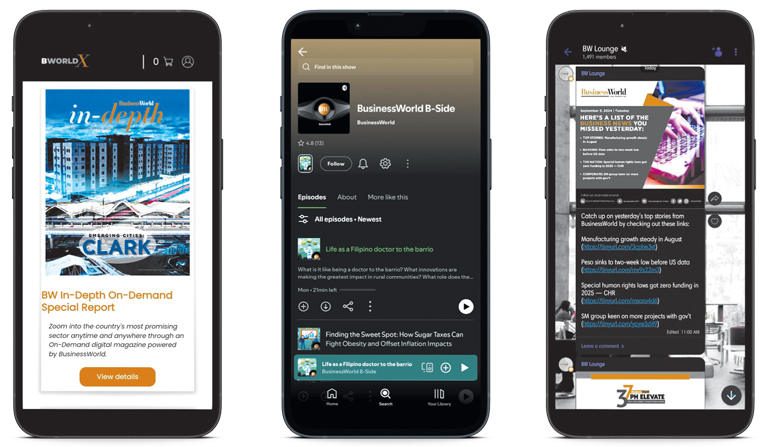
From left: BWORLDX, BUSINESSWORLD B-SIDE and BW LOUNGE
“BusinessWorld’s niche is composed of highly educated professionals and entrepreneurs who have a natural hunger for information. However, being always on the go, it is a reasonable assumption that these people do not have the time to read or watch the news. Podcasts fill in that void since it only entails the audience to consume information by just listening,” said Mr. Nicolas.
To date, the B-Side podcast has almost 6,000 listeners, usually from the Philippines, Singapore, India, Canada, and Saudi Arabia, who mostly found the podcast through searches.
Another way that BusinessWorld demonstrates its multimedia capabilities is Launchpad, a weekly section dedicated to micro, small, and medium-sized enterprises (MSMEs). It covers business advice, market trends, funding opportunities, and relevant government regulations, among others. Launchpad releases a story published in print, coupled with a video published on BusinessWorld’s website and social media channels expounding further on the subject featured in the story. With such content, Launchpad aims to be a valuable resource for entrepreneurs looking to stay updated about the country’s MSME industry.
Moreover, BusinessWorld has wielded the power of multimedia through multimedia reports that bring together written content, images, and videos to deliver a more engaging reading experience. These can be seen in the publication’s multimedia report back in 2022 titled “The Promise of Power,” which looked into the Bataan Nuclear Power Plant. Last year, BusinessWorld has also presented “Letters to the Mountains: A day in the life of a Cordillera mailman,” a multimedia report on the postal service challenges in the country, highlighting the Philippine Post Office.
Aside from BusinessWorld Online, the multimedia content provider has extended its reach in the digital space through a subscription-based e-commerce site BWorldX (www.bworld-x.com).
Serving as a one-stop shop for BusinessWorld’s library of content, from print and digital publications to access to BusinessWorld’s events, BWorldX collates the print and e-paper versions of BusinessWorld; print and digital copies of the Top 1000 Corporations in the Philippines; the BusinessWorld In-Depth digital magazine; BusinessWorld Insights webinars; live access and videos from BusinessWorld One-on-One interviews and BusinessWorld Economic Forum; episodes of the BusinessWorld B-Side podcast; and access to BusinessWorld’s Viber community, The Lounge, into a single site.
Mr. Dy Tioco previously mentioned that BWorldX seeks to address the needs of its distinct audience for “a constant stream of timely, truthful, and substantial information that will further grow and nurture their learning,”
“As we bring all these (contents) together, and add much more, into a single accessible space, BWorldX is more than your typical subscription-based website. We intend it to be the place you turn to whenever you need the business intelligence that BusinessWorld excellently provides,” Mr. Dy Tioco added.
Part of BWorldX’s exclusive offerings, BusinessWorld In-Depth is an on-demand digital magazine that serves as a venue to take a closer look into issues and developments in business, for instance the country’s mall culture or the prospects of Clark as an emerging city, which were featured in recent issues. The digital magazine also brings timely information much closer to one’s fingertips, as regularly done with BusinessWorld’s Quarterly Banking Reports.
BusinessWorld has also created a Viber community for content promotion and event announcements, named The Lounge. According to Mr. Malapo, this initiative further illustrates how BusinessWorld is leveraging new media to stay connected with its audience.
AMPLIFYING BRANDS’ MESSAGES Besides expanding BusinessWorld’s presence among its audiences beyond print, its digital channels have also served as a venue for brands to amplify their messages and get them further across their target audiences among BusinessWorld’s followers and subscribers.
BusinessWorld One-on-One interview series, in partnership with EastWest Ageas Insurance, helped audiences get to know its chief executive officer and president, Sjoerd Smeets.
Back in December last year, the BusinessWorld One-on-One interview series, in partnership with EastWest Ageas Insurance, helped audiences get to know Sjoerd Smeets, chief executive officer and president of EastWest Ageas Insurance. On that video, which can be viewed on BusinessWorld’s Facebook and YouTube pages, Mr. Smeets shared his vision for EastWest Ageas Insurance and how the Filipino customer is at the heart of it all.
From left: BusinessWorld In-Depth has collaborated with some institutions to commemorate their events. BusinessWorld’s Quarterly Banking Reports are also delivered as In-Depth issues, available on BWorldX.
In-Depth, meanwhile, had been putting the spotlight on organizations as they observe significant events in their industries. Together with the Trust Officers Association of the Philippines, BusinessWorld In-Depth released last March an issue celebrating the Trust Consciousness Week, which was then themed “Trust: Reshaping the Industry Through Innovation.” Bankers Institute of the Philippines, Inc. (BAIPHIL) also collaborated with BusinessWorld last March for an In-Depth issue commemorating both the BAIPHIL Training and Development Week and the institute’s 83rd anniversary.
Last March, BusinessWorld B-Side released a special edition in partnership with IBM Philippines, where Commercial Territory Sales Leader Christine Llanto-Ravelo shared the opportunities that generative artificial intelligence (genAI) opens to women in workplaces and boardrooms.
BusinessWorld Spotlight, in partnership with Lazada, features a video interview with SukiGrocer.
Most recently, last August, BusinessWorld’s Spotlight section featured a video interview with SukiGrocer as they discussed about the ease of doing business as a seller in the popular e-commerce platform Lazada.
LEVERAGING ANALYTICS, GENAI BusinessWorld also leverages web and social media analytics to gain insights into its audience’s preferences and habits. For example, the organization has found that its audience frequently checks for the foreign exchange (FOREX) and stock market news before 9 a.m., prompting BusinessWorld to share relevant updates during that time.
“We use different key performance indicators (KPIs) to evaluate the success of our digital initiatives for BusinessWorld. By monitoring these KPIs, we can determine the effectiveness of our strategies, make data-driven adjustments to upcoming digital projects, and work on improving our presence online to meet our business objectives,” said Ms. Cayetano.
In addition to traditional analytics, BusinessWorld has begun to experiment with genAI to further refine its content strategy.
“GenAI is not meant to write stories in place of journalists,” Mr. Nicolas explained, “but it can help speed up analyzing relevant points and topics so that content is richer, more engaging, and comprehensive. BusinessWorld strives to combine web and social media analytics with the power of genAI to deliver the best experience and most relevant information to its audience.”
Looking ahead, BusinessWorld aims to expand its multimedia offerings, with plans to introduce more video content and interactive reports, striving to have a significant impact on the Philippine business community.
“BusinessWorld has the tenacity to thrive on each platform and to apply and leverage its strengths on them. This is how we refine our content. I believe what sets us ahead is creating an entrepreneurial culture, which is a key ingredient in our digital transformation. Innovation has the potential to generate exciting growth for the company that we have never imagined before,” said Mr. Dy Tioco.
BusinessWorld President and CEO Miguel G. Belmonte — PHILIPPINE STAR/JESSE BUSTOS
BusinessWorld’s growth amid an ever-changing media landscape
By Bjorn Biel M. Beltran, Special Features and Content Assistant Editor
The story of media has always been one of constant change. The printing press gave rise to radio, which then gave way into television, each new medium expanding the reach of information further than ever before. What once lived exclusively in newsprint became available as pixels on a computer screen. Today, every headline, broadcast, and television program can be accessed through a mobile phone — literally an entire world of information at the swipe of a finger.
But while change is inherent in media, this does not make it any easier for those who have built their legacies within it. The media industry in a way is an empire built on sand that is constantly shifting with the tide of technology — one that lives by one eternal rule: adapt, or become irrelevant.
Miguel G. Belmonte, president and chief executive officer of BusinessWorld, has been keenly aware of this since assuming his position nearly a decade ago.
“The media landscape is in some ways very different from what it was for so many years before. Whenever there were issues concerning traditional media back then, we always knew immediately how to handle it. It was practically second nature to us,” he recalled in an interview.
“The world has changed so much. I have to admit that sometimes, I worry about it.”
When he joined the company back in 2015, BusinessWorld was already struggling to adjust to a world that was becoming increasingly digital very quickly. It took only a few years of refining its operational strategy and strengthening its core for the company to turn it around.
Photo by Joy D. Dagun
Now, on its 37th anniversary, BusinessWorld has become not only the leading business newspaper in the Philippines but a formidable multimedia presence. Despite a multitude of challenges, BusinessWorld has found success for itself in hosting events and conferences, and gaining substantial revenues from advertising across different platforms, to the point that it had even started outperforming its print-era earnings.
Mr. Belmonte attributes this success to the company’s focus on its niche market and strengths, rather than trying to compete directly with other English broadsheets in the country.
“Before, it was really so basic. We earned from advertising and circulation. Those were really the two main revenue-generating departments,” he said. “It’s not that way anymore.”
“One of the things that we’re doing better now is to determine our niche, where our strength is. We don’t try to compete with other broadsheets. We don’t try to step on their territory. What we’re doing is we develop our own territory. We build on that, we defend it, we continuously try to grow within that territory. That has proven to be very successful so far,” he added.
This strength lies in BusinessWorld’s journalistic reputation and credibility. Editor-in-Chief Cathy Rose A. Garcia noted that BusinessWorld has always provided insights into market trends, corporate developments, and economic policies, and this forte has never changed since the company’s foundation.
BusinessWorld Editor-in-Chief Cathy Rose A. Garcia — Photo by Jayson John Marinas
“We have always been a key resource for business professionals, investors, and policy makers,” she said. “BusinessWorld also provides a platform for discussion and debate on important economic and business issues. Through our business news reporting, we aim to help the public understand complex issues, policies, and trends facing the Philippines. For instance, our analysis reports aim to help the public understand how policy changes may impact [not only] the economy but also their lives.”
The emphasis on clear and accurate reporting is paramount. “We want to demystify business and finance for a broader Filipino audience, especially the younger generation. Financial literacy is very important. When individuals and businesses make informed financial decisions, this can lead to a stronger and more resilient economy,” she added.
As the way audiences consume news is constantly evolving, however, and it is not always easy to find the best method to achieve this goal. Associate Editor Bettina V. Roc said that nowadays, news organizations have to compete with content creators on social media platforms, forcing them to experiment with new, more easily digestible methods for news delivery like short-form reels.
“Since I edit for the newspaper, the written medium still allows for context and background, which I feel is largely omitted when social media is used for reporting,” she said.
And while concessions have to be made to more effectively inform the public — she herself admits to actively limiting her use of technical jargon in editing stories — the standards of journalism remain the same as ever.
“Regardless of medium, I still stand by that principle, along with accuracy and fairness, when covering stories or deciding which articles to prioritize. I think it should never come to a point where journalism values have to be sacrificed for the sake of being first, riding on a trend, or getting the most clicks,” she said.
Not all change is good, after all. Associate Editor Arjay L. Balinbin noted that the most recent shake-up in journalism, the coronavirus disease 2019 (COVID-19) pandemic, saw many journalists adopt a hybrid or even fully virtual model of covering news. But while such virtual formats provide more convenience and efficiency, they come with the irreconcilable drawback of having limited access to sources and in-depth information.
“Balancing traditional journalism values with the demands of the digital age means upholding standards of accuracy, fairness, and thoroughness, while leveraging digital tools for broader audience engagement,” he said.
For Mr. Belmonte, he is content in leaving BusinessWorld’s future in the hands of the company’s new generation of editors and reporters.
“I believe in our young team. And I know that the future of our company is more in their hands than it is in mine or my generation,” he said.
“My position is that I’m going to put my trust on our young people to determine the direction that our company will take. We’re just going to support them and guide them where we can guide them.”
The faith in the next generation is mirrored across BusinessWorld’s leadership. Executive Vice-President Lucien C. Dy Tioco acknowledged that the past few years at the company have been turbulent, particularly because of the accelerated adoption of digital platforms that resulted from the pandemic, but he sees these challenges as opportunities to innovate.
BusinessWorld Executive Vice-President Lucien C. Dy Tioco — Photo by Arjale Jayrie Queral
“In my years of experience being in the media business, I have kept my competitive edge by building a culture of innovation,” he said. “Even with the challenges that print has faced, innovation has kept us excited over the opportunities over the threats.”
He further explained that by strengthening what BusinessWorld is and by taking care of its equity, its command of influence, and its engagement with the business community, the company continues to remain a strong and reliable partner for both its audience and its advertisers.
“First and foremost, we help brands and companies bridge their business objectives through our platforms and the community, industry and government sectors that we are engaged in. I am proud to say how much we kept our advertisers through our multimedia initiatives,” he said.
“The very purpose of BusinessWorld is to grow our business community by igniting programs and initiatives that will keep our economy healthy and progressive, where a vast amount of wealth and opportunities will be spread to the Filipino people. This is what keeps us inspired to keep innovating.”
Vice-President for Sales and Marketing Jay R. Sarmiento pointed out that for BusinessWorld, the pivot to digital and events while maintaining its presence as a print newspaper has been instrumental in sustaining the business and making it even more profitable post-pandemic.
“Transformation does not necessarily mean technology. Transformation can take the form of ways, culture and even mindset,” she added.
BusinessWorld’s office in New Manila, Quezon City — Photo by Thea Mairi A. Castillo
As for the future, Mr. Belmonte hopes that would be enough. In an ever-changing industry like media, nothing is ever assured. What was once tried-and-true may not be so a few years down the line. After all, a few decades ago all they had to think to make a profit about was advertising and circulation. Digital transformation, audience engagement, and content diversification may be enough today; but what of tomorrow?
“We’re still looking,” he said. “We’re still experimenting.”
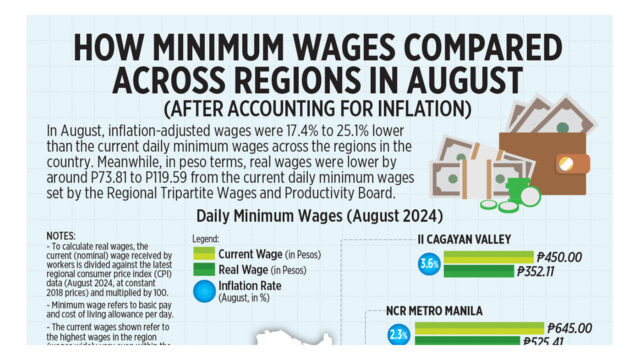
In August, inflation-adjusted wages were 17.4% to 25.1% lower than the current daily minimum wages across the regions in the country. Meanwhile, in peso terms, real wages were lower by around P73.81 to P119.59 from the current daily minimum wages set by the Regional Tripartite Wages and Productivity Board.
WHILE the pandemic accelerated the online shopping game, some habits die hard. While many people do buy hard-to-find items and very cheap staples online, there’s still something to be said about feeling and testing luxury merchandise in person.
We proved that at a visit to Rustan’s Makati on Sept. 5 for the Rustan’s Beauty Addict: Race Off to Beauty, patterned after Formula One races.
Games were played at brands like L’Occitane, Diptyque, Malin+Goetz, Grown Alchemist, L:a Bruket, Saturday Skin, RMS Beauty, Stila, Phyto, Aveda, and Chanel for a chance to win prizes. There were also talks on various topics relating to beauty (inside and out) from speakers like Jeanette Ipapo-Tuason, founder and CEO of Tuason Racing (who talked about self-empowerment and maintaining grace under pressure) and masterclasses by celebrity make-up artists, RB Chanco and Justin Soriano using products from Laura Mercier.
Jackie Avecilla, head of Marketing for Rustan’s, told BusinessWorld about the advantages of in-person shopping. “We take pride in two things: namely our authenticity. When you shop in Rustan’s, you’re sure that the products that you get are really the real deal. Online? You can’t be sure where it’s coming from, if it’s really authentic,” she said. The other thing they’re proud of is their customer service: “You can always buy products online or wherever, but when you come here, you are really treated like a VIP.”
On that note, Rustan’s itself has an online store, but its stocks are comparatively bare next to their in-store shelves, not to mention other online platforms. Ms. Avecilla says, “True. A lot of our brands are not yet on the rustans.com website. We are working on that.
“It’s not as simple [setting things up online]… there are commercial deals when it comes to that. Contracts and all. We work with the likes of Chanel and Tom Ford, and all that,” she said. “But everything’s here. Everything you can’t buy on our online site, you can definitely get here [in the store].”
The Beauty section, according to Ms. Avecilla, is still a top performer at their stores. “Beauty is like our number one category in Rustan’s. We have several [strong categories],” she says, listing their home, jewelry, and men’s and women’s fashions. But, “Beauty remains to be our strongest and number one, even through the pandemic, and even up to now.
“We just love to look and feel beautiful inside and out. The easiest way to do that is through beauty products. It can just be a red lipstick, or fragrance,” she added. “That’s a gateway. It’s an entry point for customers who really want to get into luxury.”
While Rustan’s Makati’s beauty and menswear floors have been renovated, more changes are planned. “We’re slowly renovating other parts as well. Soon — I can’t give you a definite timeline — we’re even renovating the exterior,” she said. Renovations are also on the horizon for their other stores in Shangri-la, Alabang, and Cebu.
Meanwhile, members of the Beauty Addict loyalty program can look forward to a series of specials from The Beauty Source. From Sept. 6 to 30, members can take advantage of a “times five” points multiplier on all beauty purchases at Rustan’s The Beauty Source. From Sept. 1 to Oct. 31, members making a minimum purchase of P30,000 at The Beauty Source will receive a JBL Go 4 Ultra-Portable Bluetooth Speaker, available in three colorways: black, blue, and red. From Sept. 1 to Nov. 30, every P5,000 spent at there earns Beauty Addict members one e-raffle entry for a chance to win prizes. The grand prize is a four-day, three-night stay for two in the Executive Suite of The Ritz-Carlton, Dubai International Financial Center — inclusive of roundtrip Business Class flights, courtesy of Philippine Airlines. In addition, the Grand prize winner will also get the chance to rent a Ferrari 488 Spyder for a day or enjoy the Caravanserai Desert Safari for two. The second prize is a P100,000 shopping spree at Rustan’s The Beauty Source, and the third prize is a pair of His and Hers Apple Watch Series 9 with Sport Band. — Joseph L. Garcia
ACMOBILITY, through BYD Cars Philippines, recently showcased the BYD Seagull during the BYD Tech Tour at Ayala TriNoma Mall, Quezon City. Set to formally be launched later this September, the pure-electric hatchback’s early appearance before its official launch is set to “excite the market with an all-new, (value-rich) battery electric vehicle from the global number-one nEV brand,” said the company in a release.
The BYD Seagull bears a “distinctive angular design, offering a fresh and contemporary edge in the growing EV landscape.” Notably, ACMobility is positioning the product as its entry-level offering while still offering “state-of-the-art features,” and predicts the Seagull will “significantly impact the entry-level EV segment.”
Said BYD Philippines Managing Director Bob Palanca, “We at BYD Cars Philippines are excited to give the public a sneak peek of what we believe will redefine what affordable, fun, and practical electric mobility is in the country. For those in the market for their first electric vehicle, the BYD Seagull is the ideal entry into the electric mobility lifestyle. BYD dealerships, our website, and our social media channels will gladly answer your inquiries and handle your reservations for the BYD Seagull.”
BYD Philippines said that interested parties may leave their details to get dibs on test driving, and to make reservations, at a BYD dealership through social media channels. For more information about the BYD Seagull, visit https://bydcarsphilippines.com/byd-seagull-teaser.
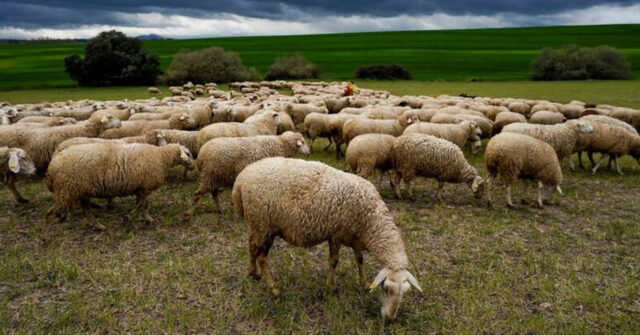
PARIS — Norway has reported an outbreak of bluetongue disease on a sheep farm in the southern part of the country, the World Organisation for Animal Health (WOAH) said.
Bluetongue can be deadly for domestic ruminants such as sheep, cattle, and goats. A new variant of the disease has been circulating in northern Europe since late last year, leading to vaccination campaigns in affected countries like France.
The outbreak in Norway was the country’s first since 2010, though the strain of the virus was not yet identified, WOAH said in a note, citing information from the Norwegian authorities.
“Two affected sheep were killed for animal welfare reasons before disease confirmation. Samples were taken on those two animals and sent to be analyzed to the Norwegian Veterinary Institute, which confirmed the disease,” WOAH said in the note. The sick animals were part of a flock of 56 sheep, it said. — Reuters
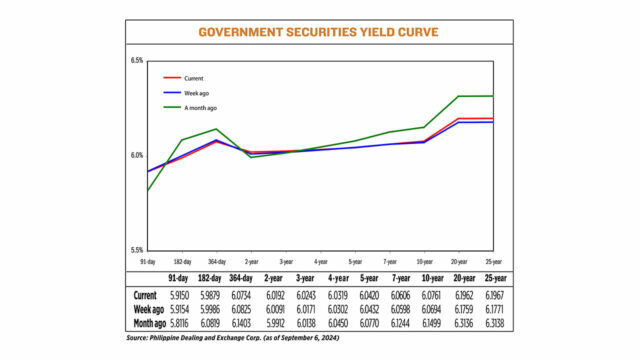
YIELDS on government securities (GS) ended mixed last week as the market mainly consolidated ahead of key US economic data and following slower-than-expected Philippine headline inflation in August.
GS yields, which move opposite to prices, inched up by 0.41 basis point (bp) on average week on week on Friday, according to PHP Bloomberg Valuation Service Reference Rates data published on the Philippine Dealing System’s website.
Yields on the short end of the curve dropped. Rates of the 91-, 182-, and 364-day Treasury bills (T-bills) slipped by 0.04 bp (to 5.9150%), 1.07 bps (to 5.9879%), and 0.91 bp (6.0734%) week on week, respectively.
At the belly, most tenors rallied except for the five-year bond, which saw its yield decline by 0.12 bp to 6.0420%. Rates of the two- three-, four-, and seven-year Treasury bonds (T-bonds) went up by 1.01 bps (to 6.0192%), 0.72 bp (6.0243%), 0.17 bp (6.0319%), and 0.08 bp (6.0606%) respectively.
Lastly, rates of all tenors at the long end rose. The 10-, 20-, and 25-year debt papers saw their yields increase by 0.67 bp (to 6.0761%), 2.03 bps (6.1962%), and 1.96 bps (6.1967%) respectively.
GS volume traded was at P30.76 billion on Friday, higher than the P16.01 billion recorded a week earlier.
“Despite well-subscribed T-bills and 20-year bond auctions and a better-than-expected inflation print, yields were consolidating last week as the market was focused on US numbers and anticipation of a Federal Reserve action by the middle of this month,” Security Bank Corp. Chief Investment Officer for Trust and Asset Management Group Noel S. Reyes said in an e-mail.
Mr. Reyes said US economic data released last week, including reports on manufacturing and employment, pointed to an “increased dovish bias for the Fed, fueling further division about how much the Fed will cut (25 bps or 50 bps).”
“A 50-bp cut may lead market to believe the Fed is behind the curve, hence the caution last week. The market did see pockets of buying when yields went up midweek, but still not enough to stir a rally given the focus on the US economy and the Fed’s possible action. Overall, week on week, yields were up 1-3 bps,” he added.
US employment increased less than expected in August, but a drop in the jobless rate to 4.2% suggested the labor market was not falling off the cliff to warrant a half-point interest rate cut from the Federal Reserve this month, Reuters reported.
The closely watched employment report from the Labor department on Friday also showed solid wage growth last month, which should help to support consumer spending and keep the economy out of recession for now. Nonetheless, labor market momentum has slowed, with 86,000 fewer jobs added in June and July than previously reported.
The report led to a chorus of Fed officials declaring that the US central bank was ready to start cutting rates at its policy meeting in about two weeks. Higher borrowing costs are curbing overall demand in the economy.
Nonfarm payrolls increased by 142,000 jobs last month after a downwardly revised 89,000 rise in July, which was the smallest gain since an outright decline in December 2020, the Labor department’s Bureau of Labor Statistics said. Economists polled by Reuters had forecast payrolls increasing by 160,000 jobs after a previously reported 114,000 gain in July.
June payrolls were revised down by 61,000 jobs to 118,000. The slowdown in employment growth is coming from a step-down in hiring. Layoffs remain at historic low levels.
In addition to waning demand evident in declining job openings, the below-expectations rise in employment last month likely reflected a seasonal quirk, characterized by a tendency for August payrolls to initially print lower relative to the consensus estimate before being revised higher later.
Financial markets initially raised the chances of a half-point rate cut at the Fed’s Sept. 17-18 policy meeting to above 50% before slashing them to 25%, CME Group’s FedWatch Tool showed. The odds of a 25-bp rate reduction increased to 75% from 57% earlier.
Fed Governor Christopher Waller said on Friday “the time has come” for the central bank to begin a series of interest rate cuts this month, adding “if the data suggests the need for larger cuts, then I will support that as well.”
The Fed has maintained its policy rate in the current 5.25%-5.5% range for more than a year, having raised it by 525 bps in 2022 and 2023.
Meanwhile, Philippine headline inflation eased to a seven-month low of 3.3% in August from 4.4% in July and 5.3% in the same month a year ago, the government reported on Thursday.
This was within the Bangko Sentral ng Pilipinas’ (BSP) 3.2-4% forecast for the month and was well below the 3.7% median estimate in a BusinessWorld poll of 15 analysts.
“With August inflation lower than expected at 3.3%, prospects of another 25-bp cut before the end of the year is likely,” Jonathan L. Ravelas, senior adviser at professional service firm Reyes Tacandong & Co., said in a Viber message.
The BSP on Aug. 15 reduced its policy rate by 25 bps to 6.25%, marking its first easing move in nearly four years.
BSP Governor Eli M. Remolona, Jr. has said they could cut rates by another 25 bps within the year. The Monetary Board’s last two policy-setting meetings this year are on Oct. 17 and Dec. 19.
For this week, both Mr. Reyes and Mr. Ravelas said GS yields could move sideways amid a lack of leads.
“All eyes will focus on the US CPI (consumer price index) midweek since there are not much economic data coming out in the Philippines. Expectations are for a low print, which should intensify talks of how much the Fed cuts…,” Mr. Reyes said.
US consumer inflation data will be released on Sept. 11 (Wednesday).
Local GS yields may remain range-bound before the Fed’s policy review next week, he added. — P.O.A. Montalvowith Reuters