Home Blog Page 27

Britney Spears enters rehab after arrest on suspicion of driving under the influence

Britney Spears — FACEBOOK.COM/BRITNEYSPEARS

LOS ANGELES — Britney Spears voluntarily checked into rehab on Sunday following her March arrest on suspicion of driving under the influence, a representative for Ms. Spears confirmed to Reuters on Monday.

The California Highway Patrol said the pop singer was arrested in Ventura County after officers stopped her black BMW following a report that it had been traveling erratically at high speed.

The highway patrol said in a statement that Spears, the sole occupant of the vehicle, “showed signs of impairment” due to what officers suspected was the influence of a combination of alcohol and drugs. It added she underwent a series of field sobriety tests.

Ms. Spears was booked into the Ventura County Main Jail and is due for a court appearance on May 4.

Ms. Spears, who became one of the biggest pop stars in the world in the late 1990s while still a teenager, has struggled for years with intense media speculation into her personal life, use of drink and drugs, and questions over her mental state.

In 2007, she was charged with one count of a hit-and-run causing property damage and one count of driving without a valid license, both misdemeanors. The first charge was later dropped and the other dismissed.

After she had a public breakdown that year, she was hospitalized for undisclosed mental health issues and her father granted a conservatorship.

Ms. Spears regained control of her personal life and her money in 2021 when a judge ended the conservatorship that had become a cause celebre for fans and that had governed her personal life and $60-million estate since 2008. — Reuters
Financial system’s resources up 9.16% at end-February

The main office of the Bangko Sentral ng Pilipinas in Manila. — BW FILE PHOTO

THE TOTAL RESOURCES of the Philippine financial system grew by 9.16% as of February, preliminary data from the Bangko Sentral ng Pilipinas (BSP) showed.

Resources held by banks and nonbank financial institutions increased to P36.784 trillion at end-February from P33.696 trillion a year prior. This was also up by 1.25% from the P36.33 trillion at end-January.

These include funds and assets such as deposits, capital, and bonds or debt securities.

Broken down, resources held by banks increased by 9.98% year on year to P30.56 trillion at end-February from P27.78 trillion previously.

Universal and commercial banks’ resources went up by 9.17% to P28.344 trillion at end-February from P25.963 trillion last year.

Thrift banks’ resources surged by 26.25% year on year to P1.469 trillion from P1.16 trillion, while those held by rural and cooperative banks climbed by 7.19% to P565 billion from P527.1 billion.

Digital banks’ resources also jumped by 41.07% to P179.3 billion from P127.1 billion, BSP data showed.

On the other hand, resources of nonbank financial institutions rose by 5.25% to P6.226 billion as of September 2025 from P5.916 billion at end-February 2025.

Nonbanks include investment houses, finance companies, security dealers, pawnshops, and lending companies.

Institutions such as nonstock savings and loan associations, credit card companies, private insurance firms, the Social Security System, and the Government Service Insurance System are also considered nonbank financial firms.

The expansion in the Philippines’ financial resources reflected continued growth in bank lending, deposit growth, and asset accumulation as domestic demand remained resilient, Philippine Institute for Development Studies Senior Research Fellow John Paolo R. Rivera said in a Viber message.

However, this growth may moderate for the rest of the year as faster inflation, elevated borrowing costs, and geopolitical uncertainty could dampen credit demand and risk appetite, he said.

“The outlook is one of continued but more measured growth, with the financial system remaining broadly stable.” — A.M.C. Sy

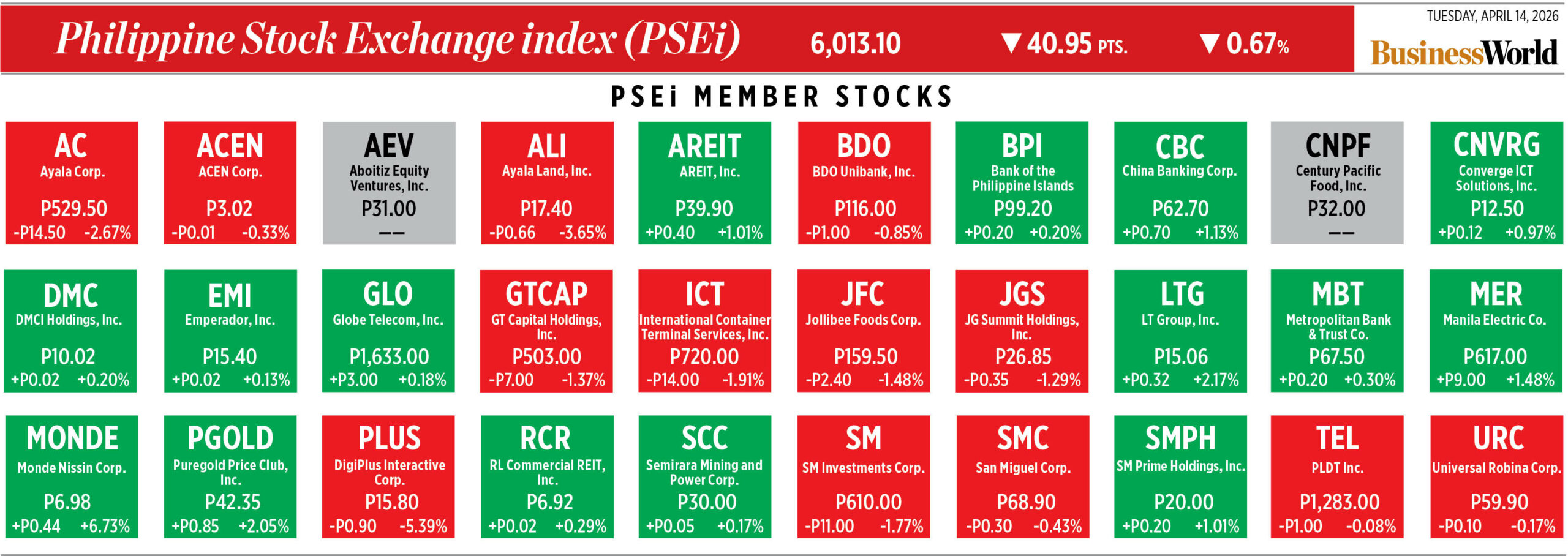
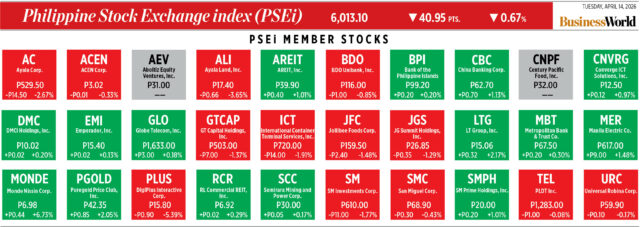
How PSEi member stocks performed — April 14, 2026

Here’s a quick glance at how PSEi stocks fared on Tuesday, April 14, 2026.


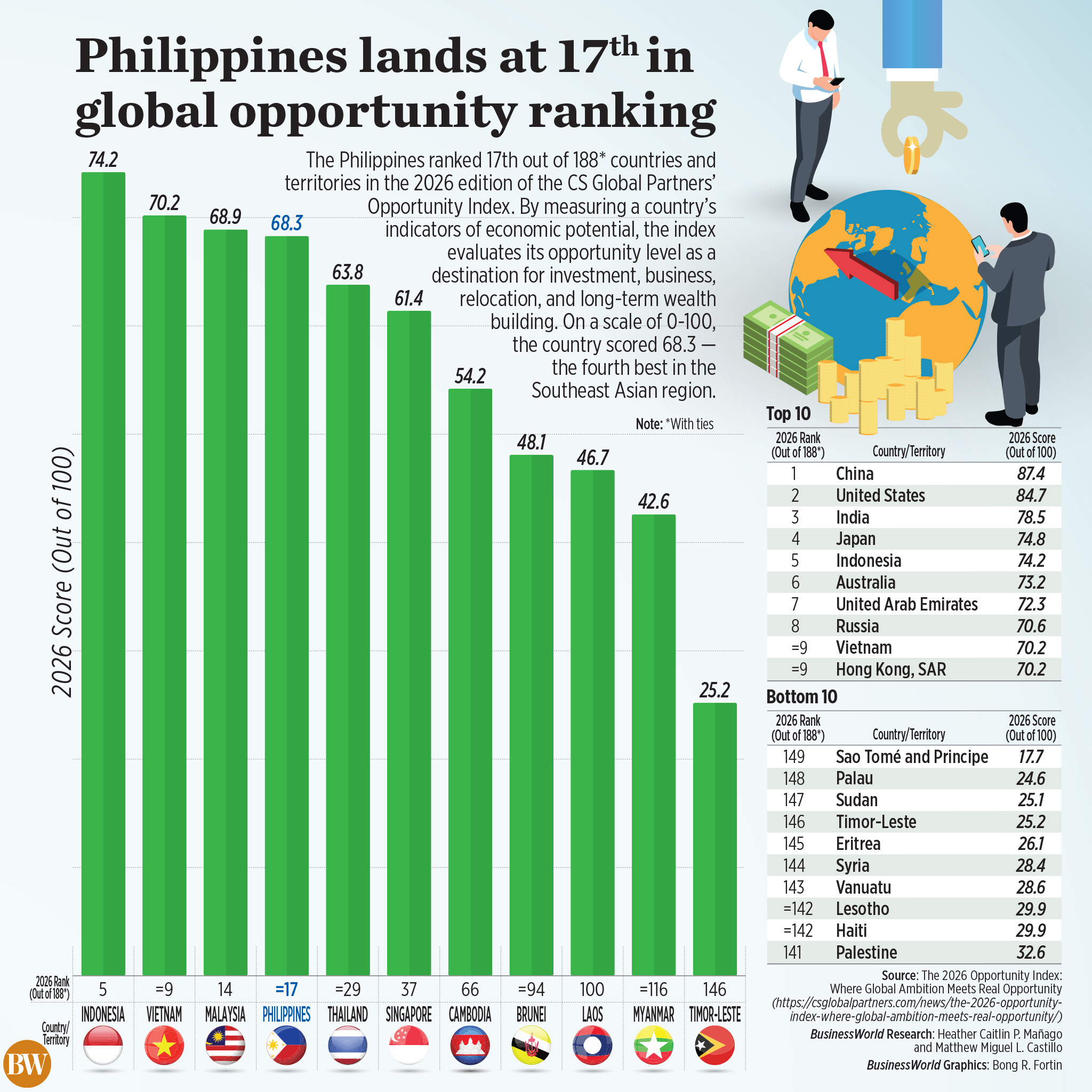
Philippines lands at 17th in global opportunity ranking

The Philippines ranked 17th out of 188* countries and territories in the 2026 edition of the CS Global PartnersOpportunity Index. By measuring a country’s indicators of economic potential, the index evaluates its opportunity level as a destination for investment, business, relocation, and long‑term wealth building. On a scale of 0-100, the country scored 68.3 — the fourth best in the Southeast Asian region.

Sanofi, PhilCare ink partnership to promote preventive workplace health

PhilCare President and CEO Jaeger L. Tanco. — PHILCARE

Biopharma company Sanofi Philippines and PhilCare, a health maintenance organization (HMO), signed a partnership on Tuesday to promote workplace vaccination and a proactive health approach for the local workforce.

The agreement is aligned with the upcoming celebration of World Day for Safety and Health at Work on April 28 and World Immunization Week from April 24 to 30.

The partnership underscores the importance of taking preventive measures for safer and healthier working environments in workplaces and communities.

With the Philippine labor force participation rate at 63.8%, or people aged 15 years and above, translating to 52.09 million as of February, according to the Philippine Statistics Authority.

Diseases that could have been prevented by vaccines, such as influenza, are a common factor that disrupt workforce productivity and economic growth, the partnership statement said.

“As the country’s workforce continues to grow, maintaining employee health is important to sustaining productivity and economic growth,” Vanessa Yabut-Gomez, head of vaccines for Sanofi Philippines said in a statement.

“Immunization is one of the most viable ways to support the health of Filipino employees.”

The flu season in the Philippines typically peaks from June to November. Despite this seasonality, experts note that year-round protection remains important for working adults.

Unvaccinated adults, especially those managing underlying conditions, face severe impacts from the flu.

The World Health Organization emphasizes the critical role of vaccines in controlling disease outbreaks.

However, adult immunization remains overlooked due to significant barriers, including high costs, limited access to vaccines, and a general lack of awareness.

Through the partnership between Sanofi Philippines and PhilCare, these barriers are being addressed by expanding access for corporate members and strengthening vaccination awareness.

For PhilCare, the partnership reinforces the company’s commitment to delivering comprehensive healthcare services to Filipinos across the country.

“By integrating critical vaccination options, such as the flu shot, into our broad range of healthcare offerings, we aim to address the gaps in adult preventive care,” Jaeger L. Tanco, president and chief executive officer (CEO) of PhilCare said in a statement. — Edg Adrian A. Eva

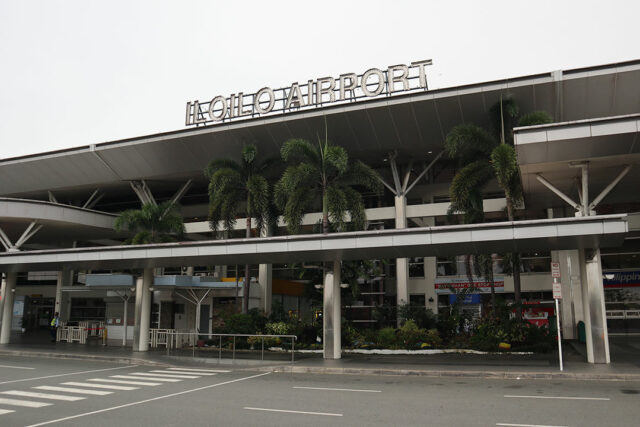
Unsolicited Iloilo International Airport bid rejected

PATRICKROQUE01-WIKIPEDIA

THE P21‑billion unsolicited proposal of Prime Asset Ventures, Inc. (PAVI) to upgrade and operate Iloilo International Airport has been rejected due to deficiencies in documentation, the Civil Aviation Authority of the Philippines (CAAP) said.

CAAP Deputy Director-General Danjun G. Lucas told BusinessWorld that PAVI, controlled by the Villars, “can always refile but the Department of Transportation (DoTr) is seriously considering solicited mode.”

CAAP said the group’s proposal lacked an endorsement to the Department of Economy, Planning, and Development (DEPDev). DEPDev approval is needed for projects of over P15 billion.

The DoTr and CAAP were designated the implementing agencies for the project.

The rehabilitation, expansion, operation, and maintenance of the Iloilo International Airport was structured as an operate‑and‑transfer scheme.

PAVI was named the original proponent for the project, which covers the expansion and renovation of the passenger terminal building.

The company also holds original proponent status for the Puerto Princesa International Airport rehabilitation, operation, and maintenance project which had an estimated project cost of P11.63 billion, according to Public-Private Partnership Center (PPP Center).

“We have already proven that  PPPs work better for public infrastructure, which generate revenue and (hold the potential to) improve through private sector involvement,” Nigel Paul C. Villarete, senior adviser on public-private partnerships at the technical advisory group Libra Konsult, said via Viber.

Solicited PPP projects are government-initiated, with competitive tenders issued after the government generally sets the project’s terms of reference and overall coverage. In contrast, unsolicited PPPs are private sector-led proposals.

The Iloilo International Airport is considered to have strong revenue potential, making it attractive for further development via PPP, Mr. Villarete said.

Rene S. Santiago, an international consultant on transport development and former president of the Transportation Science Society of the Philippines, said the government should just go ahead and pursue its plan for the Iloilo International Airport.

“In theory, competitive bidding attracts more participants. In the Philippines, I have doubts when it comes to airports, especially domestic ones,” Mr. Santiago said.

Libra Konsult’s Mr. Villarete said the solicited mode gives the government greater flexibility in defining project terms and coverage, being responsible for preparing the technical and financial studies for procurement.

“Between solicited and unsolicited modes, I would strongly suggest doing it through solicited mode… (unsolicited) is easier to do since the government won’t go through the steps of bid preparation and the bidding itself, but it binds the government to the party that submitted the proposal,” he said. 

Last year, the DoTr said it is hoping to privatize at least 15 airports by 2026 as the government seeks to make regional airports more economically viable. — Ashley Erika O. Jose

NFA to offer as much as P30 to buy palay in some areas

PHILIPPINE STAR/EDD GUMBAN

THE National Food Authority (NFA) said it increased its buying price for dry palay (unmilled rice) to as much as P30 per kilo in selected areas, from the previous P21, citing the need to support rice farmers.

In a document shared with reporters, the NFA said the higher procurement price of P30 per kilo will be implemented this week in Bulacan, Nueva Ecija, Sorsogon, Capiz, Aklan, Bohol, and Negros Oriental.

The grains agency said it will also buy dry palay at P30 per kilo in most parts of Southern and Central Mindanao and the Bangsamoro Autonomous Region in Muslim Mindanao.

In other provinces and regions, the NFA said buying prices will range from P25 to P29 per kilo.

The NFA earlier signaled an increase in buying prices during the dry-season harvest to match the higher prices offered by private traders.

“Right now, traders are buying at very high prices, so we cannot keep up,” NFA Administrator Larry R. Lacson earlier told reporters.

The Philippine Statistics Authority, citing preliminary data, said the national average farmgate price of dry palay rose 28% year on year in March to P23.91 per kilo, the highest level since the P24.68 recorded in July 2024.

The highest farmgate price for dry palay in March was reported in Northern Mindanao at P26.99 per kilo, up 41.8% from a year earlier.

The Bangsamoro Autonomous Region in Muslim Mindanao recorded the lowest average price at P19.42 per kilo, down 10.4% year on year, making it the only region to post a decline during the period.

In Central Luzon, the country’s top rice-producing region, the average farmgate price of dry palay was P24.42 per kilo, up 33.1% from a year earlier.

Cagayan Valley, another key producer, reported an average farmgate price of P24.22 per kilo for dry palay, 34.6% higher than a year earlier. — Vonn Andrei E. Villamiel

Pork, corn MAV could rise instead of lowering tariffs

REUTERS

THE Department of Agriculture (DA) said it is studying the possibility of increasing the minimum access volume (MAV) for pork and corn, after President Ferdinand R. Marcos, Jr. ordered his officials to find ways to keep food affordable.

Agriculture Secretary Francisco P. Tiu Laurel, Jr. said the DA is considering a “MAV Plus” scheme for pork and corn as an alternative to lowering tariff rates.

“The DA’s suggestion is to use MAV Plus. The minimum access volume will simply be increased so that it will not affect farmers,” he told reporters on the sidelines of the DA’s P20 rice program launch in Makati City on Tuesday.

The MAV scheme is a feature of the international trade regime in which participating countries allow limited volumes of agricultural commodities at a favorable tariff rate. Volumes exceeding the quota are charged a higher rate.

For pork, shipments within the MAV are subject to a 15% tariff, while volumes beyond the quota are charged the regular 25% rate. Corn imports within the MAV are levied a 5% tariff, while shipments outside the quota are charged 15%.

If approved, the proposed MAV Plus scheme would expand the current quotas of 55,000 metric tons (MT) for pork and 216,900 MT for corn.

Mr. Laurel said the department is still studying the appropriate additional MAV volume for the commodities.

“We will follow the recommendation of the industry so we can find common ground. If supply proves insufficient, we can adjust accordingly,” he said.

Mr. Laurel said the proposed MAV Plus could be implemented within three weeks, once a consensus with industry participants is reached.

The DA said it is not yet considering an increase in the MAV for chicken, which is currently at around 24,000 MT, citing opposition from poultry producers and prevailing market conditions.

“There is currently overproduction, and chicken prices remain low. While MAV Plus could be considered in the future, we will not trigger it unless necessary,” Mr. Laurel said.

Agriculture groups have expressed opposition to proposals to reduce duties on pork, corn, and chicken, arguing that imports are already cheap and do not require further tariff relief.

Rosendo O. So, chairperson of the Samahang Industriya ng Agrikultura, said pork, for instance, is already cheap due to lower production and fuel costs in the source countries.

“For pork from Brazil… export prices are only around $1.60 to $2.50 per kilo. That’s how low they are. Their fuel prices are also lower,” he said at a briefing.

Elias Jose M. Inciong, chairman of the United Broiler Raisers Association, said there is also no reason to reduce tariffs on chicken as farmgate prices remain depressed.

“We do not see any reason to reduce tariffs further because chicken prices are currently low. Liveweight price is at around P82 per kilo against the industry’s breakeven range of P100 to P110, so producers are incurring losses,” he said. — Vonn Andrei E. Villamiel

Impact of fertilizer crisis seen reflected in food prices by Q3

PHILIPPINE STAR/RYAN BALDEMOR

FOOD PRICES are expected to reflect the impact of the fertilizer crisis as early as the third quarter, via increased costs of the input for growers of crops for human or animal consumption, a private-sector executive said. 

“We were calculating maybe by the third or fourth quarter, you will see the full impact of the fertilizer spike on food pricing and protein pricing,” Jose Rene D. Almendras, private sector representative to the Legislative-Executive Development Advisory Council, told the Money Talks with Cathy Yang program on One News on Tuesday.

He said it will take a few months before the rise in fertilizer prices shows up in food prices.

“The price of the urea, which was at about P400, is now going towards P800, and the farmer that buys that fertilizer will now charge more for his produce, which eventually will be used for feed. So that’s going to take a few months.

Fighting around the Persian Gulf has disrupted the supply of fertilizer, affecting farm production costs, IBON Foundation Executive Director Jose Enrique A. Africa said.

“The US attack on Iran is causing a systemic price shock on food systems not just through oil prices but also through fertilizer, and these are being transmitted through the country’s overly import-dependent energy and agricultural systems,” he said via Viber.

Fertilizer production is energy-intensive as it relies mainly on natural gas as feedstock. The Middle East is a key producer of fertilizer.

“The pass-through of price shocks will be aggravated if marginal rural producers stop producing, and cause localized supply gaps to aggregate to regional and national shortfalls,” Mr. Africa added.

Danilo V. Fausto, president of the Philippine Chamber of Agriculture and Food, Inc., said shipping and logistics costs also will drive up food prices, which will likely manifest in the coming months.

“Replenishment of inventories by food manufacturers will result in increased prices due to high cost of raw materials,” he said via Viber.

Boat fares and ship cargo rates have been allowed to rise as much as 30%, the Maritime Industry Authority said in March. 

Mr. Fausto also cited the need to provide targeted support for farmers in light of the upcoming planting season this May. — Beatriz Marie D. Cruz

Importer accreditations now valid for three years

PHILIPPINE STAR/WALTER BOLLOZOS

THE Bureau of Customs (BoC) said importer accreditations are now valid for three years instead of one, citing the need to improve the ease of doing business for users of Customs services.

“We are removing unnecessary burdens on compliant importers while strengthening our systems to ensure transparency and fairness,” BoC Commissioner Ariel F. Nepomuceno said in a statement on Tuesday.

First proposed in July 2025, the measure is intended to reduce the administrative burden and cost of businesses, allowing accredited entities to plan operations with greater certainty.

The previous one-year validity required repeated document submissions and multiple stages of compliance, which resulted in delays, increased administrative costs, and added burdens on importers.

Importers will now pay a P5,000 accreditation fee for the three-year period, representing savings compared to the previous P2,000 annual fee.

“The BoC will grant automatic renewal to importers with at least six consecutive years of good standing or those accredited under the Authorized Economic Operator (AEO) and Super Green Lane programs,” it added.

However, importers must still submit annual reports within 30 days of their accreditation anniversary or risk suspension or revocation.

“By extending the validity of importer accreditation, we are reducing red tape and enabling a more efficient trade system that can meet growing consumer demand and support local industries,” Finance Secretary Frederick D. Go said. 

“This reform allows businesses to focus more on operations and growth rather than administrative requirements,” he added.

In 2025, the BoC processed 17,757 importer accreditation applications and 2,685 customs broker applications.

In a separate statement, the BoC said it confiscated 22 abandoned refrigerated containers of contaminated frozen meat and fish worth P178 million at the Manila International Container Port.

The shipments consisted of thawed beef, pork, chicken and fish weighing 576,911 kilograms. Sixteen of the containers came from Brazil, while the others were from the Netherlands, the US, the UK, France and Australia.

Since 2025, the BoC has filed 72 criminal cases before the Department of Justice, 24 of which involve the smuggling of agricultural products. — Justine Irish D. Tabile

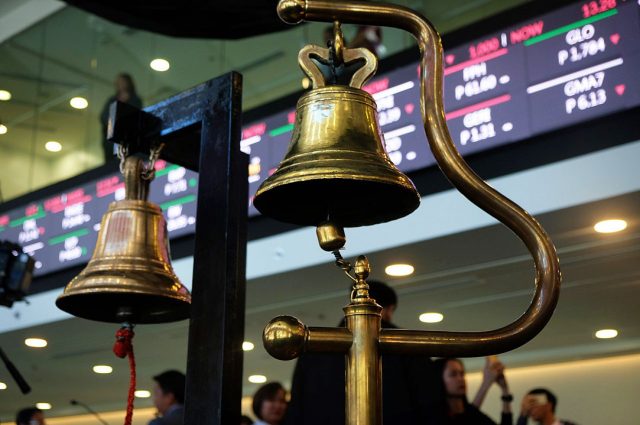
Stocks retreat as conflict keeps market cautious

BW FILE PHOTO

PHILIPPINE STOCKS continued to retreat on Tuesday as investors chose to stay on the sidelines amid continued uncertainty over the Middle East conflict.

The benchmark Philippine Stock Exchange index (PSEi) fell by 0.67% or 40.95 points to close at 6,013.10, while the broader all shares index went down by 0.27% or 9.40 points to end at 3,377.12.

“The local market extended its decline as investors continue to worry over elevated oil prices and the inflation risks it poses. This comes as tensions in the Middle East continue with the US blockading the Strait of Hormuz,” Philstocks Financial, Inc. Research Manager Japhet Louis O. Tantiangco said in a Viber message.

“The Philippine market closed lower as buying activity stayed on the sidelines, with investors awaiting further developments surrounding tensions in the Middle East… Overall, cautious positioning prevailed as uncertainty continues to limit risk appetite,” Regina Capital Development Corp. Head of Sales Luis A. Limlingan said in a Viber message.

Value turnover decreased to P5.92 billion on Tuesday with 1.48 billion shares traded from the P7.8 billion with 789.08 million issues that changed hands on Monday.

Other Asian stocks advanced while oil prices and the safe-haven dollar fell on Tuesday as investors banked on a resolution to the Middle East war even as the US blocked Iran’s ports after the collapse of peace talks over the weekend, Reuters reported.

Sources told Reuters that Washington and Tehran have left the door open to dialogue, and a US official said there was forward motion on trying to get to an agreement.

The US military began a blockade of Iran’s ports, angering Tehran and adding uncertainty around the crucial waterway, though shipping data showed a US-sanctioned Chinese tanker passed through the Strait of Hormuz on Tuesday.

“Market sentiment was also weighed down by reports that the Philippines lags behind its ASEAN peers in the FDI Confidence Index,” Mr. Limlingan added.

The Philippines fell to 18th out of 25 emerging markets in the 2026 Foreign Direct Investment (FDI) Confidence Index by Kearney with a score of 1.4635. This was the third straight year the Philippines’ ranking declined in the index. It ranked 16th in 2025, 13th in 2024 and 12th in 2023.

Most sectoral indices closed lower. Services slid by 1.44% or 40.98 points to 2,793.69; holding firms sank by 1.36% or 64.24 points to 4,646.79; property dropped by 0.11% or 2.27 points to 2,005.71; and financials slipped by 0.05% or 1.05 points to 1,879.04. Meanwhile, mining and oil jumped by 1.02% or 183.37 points to 18,023.66, and industrials went up by 0.75% or 65.65 points to 8,777.59.

Advancers beat decliners, 110 to 93, while 61 names closed unchanged.

“Monde Nissin Corp. was the day’s index leader, jumping 6.73% to P6.98. DigiPlus Interactive Corp. was at the tail end, falling 5.39% to P15.80,” Mr. Tantiangco said.

Net foreign selling climbed to P446.77 million from P216.89 million in the previous session. — Alexandria Grace C. Magno with Reuters

PAGCOR defers fee collection to provide relief to operators

BW FILE PHOTO

THE Philippine Amusement and Gaming Corp. (PAGCOR) said it suspended the minimum guaranteed fees (MGF) scheme until June 1, citing unfavorable economic conditions.

“In consideration of the current economic crisis, please be informed that PAGCOR’s Board of Directors … approved the deferment on the imposition of MGF on gaming system administrators (GSAs),” it said in a memorandum dated March 30.

The new schedule now requires GSAs with electronic casino games and a P30-million minimum monthly gross gaming revenue (GGR) to pay the first tranche of P9 million for the June 1-Dec. 31 period.

Meanwhile, GSAs without electronic casino games and with a P15-million minimum monthly GGR are to pay P3 million.

For the second tranche, or Jan. 1, 2027, onwards, GSAs with electronic casino games and a minimum monthly GGR of P35 million will pay a P10.5-million MGF.

GSAs without electronic casino games and with P20-million minimum GGR per month will pay a P4-million MGF.

“Prior to the expiration of the two-month deferment period, the Electronic Gaming Licensing Department shall conduct a comprehensive evaluation of prevailing industry conditions,” according to the memorandum.

“(This) will determine whether (we will) proceed with, further adjust, or lift the deferment of the MGF implementation, consistent with the objective of long-term sector sustainability,” it added. — Justine Irish D. Tabile

ADVERTISEMENT
ADVERTISEMENT