Home Blog Page 2642

Goodnes Unlocked: Nestlé PH unveils newest platform to help homemakers prepare tasty and balanced meals
As the largest food and beverage manufacturer in the country, Nestlé Philippines is unlocking the power of food to enhance quality of life. It aims to do its part in tackling nutrition challenges that Filipinos face through science-based research and development and large-scale initiatives, particularly food fortification, where it provided 26 billion fortified servings in 2023, and nutrition education for over 10.5 million public grade school students nationwide.

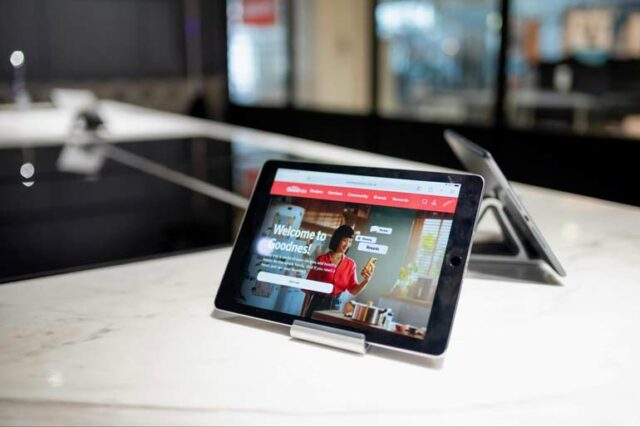
A launch event on September 18 was held for the Nestlé Goodnes website, where Nestlé Philippines showcased how to address the most common challenges homemakers face when it comes to cost, time and taste with its different features through activities to show how its latest service innovation aims to empower Filipinos and make tasty and balanced diets within reach and unlock the power of food.

This easy-to-use website serves as an extra pair of helping hands in the kitchen for homemakers. Through its main features such as the Recipe Builder, My Cookbook, and Meal Planner, it helps address the most common challenges when it comes to cooking tasty and balanced meals: time, cost, and taste. The website was developed with homemakers in mind and the challenges they frequently face when it comes to cost, time and taste providing them with access, flexibility and customization tailored for their needs with a variety of resources and helpful features, all in one website. 

During the event Ms. Tiny Sta. Ines, the Market Lead of Nestlé Goodnes, gave a walkthrough of the website. highlighting the various ways homemakers can maximize it to help them save time and create budget-friendly meals that are healthy and delicious. After this, the guests had the chance to test out the website’s main features firsthand and apply them into practical use in three exciting challenges.

Goodnes Kitchen Challenge

In an exciting old-fashioned cook-off, participants were asked to use the My Recipe feature of the website to come up with a tasty and balanced dish based on limited ingredients, a fixed budget, and level of difficulty in terms of time and personal preferences. It aims to simulate real-life scenarios in the kitchen and how useful the website can be in coming up with quick and easy recipes for any type of meal or occasions.

The participants were grouped into “Families” and given a “Family Character Card” that contains the difficulty, budget, scenario, and three key ingredients for the featured recipe. They had 40 minutes to cook their assigned dishes that were then judged based on balance, flavor and how well the key ingredients were utilized.

Goodnes Meal Plan Experience

Through a guided experience, participants were taken through a walkthrough of the Goodnes Meal Planner and how to generate tasty and balanced meal plans based on budget, dietary restrictions, and kitchen proficiency.

Users have the ability to customize their plans by replacing/adding dishes in their daily plans, create new dishes using leftovers and the discovery of more recipe ideas!

Goodnes Cookbook Creator

Using the My Cookbook feature on the Nestlé Goodnes website, participants were able to save the recipes they learned in the Kitchen Showdown and Menu Plan Challenge in one place, which they can easily access, update, and customize whenever they want to. What’s even better is they can share their collections of recipes to friends and family to also help them create tasty and balanced meals.

By creating an account and using the features of the website, users also receive accomplishment badges and can also get exclusive freebies and discounts from Nestlé brands, which they can check at the My Rewards section.

Nestlé Philippines is not only unlocking the power of food to enhance quality of life for everyone but also unlocking the power of innovation in its commitment as the Good Food, Good Life company. Its latest nutrition innovation service, the Nestlé Goodnes website aims to unlock tasty and balanced meals that are accessible, personalized, and tailored to fit the needs of Filipino families.

Ready to unlock Goodnes today? Visit http://www.nestlegoodnes.com to experience these useful features in your own kitchen.


Spotlight is BusinessWorld’s sponsored section that allows advertisers to amplify their brand and connect with BusinessWorld’s audience by publishing their stories on the BusinessWorld Web site. For more information, send an email to online@bworldonline.com.

Join us on Viber at https://bit.ly/3hv6bLA to get more updates and subscribe to BusinessWorld’s titles and get exclusive content through www.bworld-x.com.
Senate ratifies PHL-South Korea FTA

REUTERS

By John Victor D. Ordoñez, Reporter

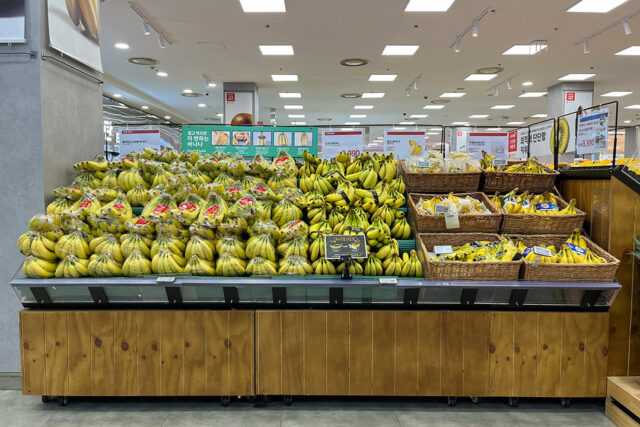
THE SENATE on Monday ratified the free trade agreement (FTA) between the Philippines and South Korea, a move that will pave the way for increased exports of Philippine bananas and processed pineapples to Seoul.

Twenty-one senators voted in favor of the ratification of the free trade pact, which will remove Philippine tariffs on 96.5% of goods from South Korea, while Seoul will lift tariffs on around 94.8% of Philippine products.

The Constitution requires concurrence by two-thirds of the Senate’s members for ratification of international agreements and treaties.

The Philippines and South Korea signed the free trade pact in September last year, which will boost trade between the two countries.

However, the deal is still undergoing the ratification process at the Korean National Assembly.

Under the deal, the Philippines secured the elimination of 1,531 tariff lines on agricultural goods, of which 1,417 would be removed after the FTA enters into force.

It will also remove 9,909 tariff lines of industrial goods, 9,747 of which would be removed after the deal enters into force.

“It presents an opportunity to expand the number of our commodities that can access the Korean market,” Philippine Chamber of Commerce and Industry President Enunina V. Mangio told BusinessWorld in a Viber message.

“To fully benefit from the FTA, we should improve our infrastructure and regulatory environment to attract investments from Korea.”

She also cited the need for the government to upgrade the technological capabilities of local industries to make them more competitive.

South Korean automakers are expected to benefit from the FTA, which will remove the 5% import duties on Korean-made automobiles. Tariffs on Korean electric and hybrid vehicles would also be eliminated within five years.

The Philippines is expected to attract as much as P200 billion worth of foreign direct investments for the electric vehicle industry and agricultural processing sector within three years, according to estimates from the Department of Trade and Industry.

The Philippines is also seen to increase banana and processed pineapple exports to Seoul. Tariffs on Philippines bananas, which currently have a 30% tariff, will be removed within five years. At the same time, the 36% tariff on processed pineapples from the Philippines will be removed in seven years.

“This is a good development for our banana and pineapple industries as they can get a bigger market in South Korea,” former Agriculture Undersecretary Fermin D. Adriano said in a Viber message.

Based on data from the United Nations Commodity Trade Statistics Database, South Korea was the Philippines’ third-biggest market for fresh banana last year with exports reaching $164.54 million, after China ($359.77 million) and Japan ($562.58 million).

South Korean Ambassador to the Philippines Lee Sang-hwa previously said that he is banking on the FTA to be a “game-changer” for trade and investment between Manila and Seoul.

In 2023, South Korea was the Philippines’ fifth-largest trading partner with total trade reaching about $12 billion, according to data from the Philippine Statistics Authority. Exports to South Korea last year were valued at $3.53 billion, while imports were at $8.49 billion.

This is the third FTA involving the Philippines and South Korea, after the Korea-ASEAN FTA and the Regional Comprehensive Economic Partnership.

However, Jose “Sonny” A. Africa, executive director at think tank IBON Foundation, said the expected increase in exports of these agricultural products is unlikely to substantially boost the economy, saying that the government is better off adopting an industrial policy.

“The proposed FTA is going to be entered into outside of a real strategy for national industrialization and so will be a policy step backward,” he said in a Viber message. “These investments have to be more embedded in the local economy to contribute to broader national industrial development.”

Federation of Free Farmers National Manager Raul Q. Montemayor said the free trade pact gives no assurance that Philippine farmers “will gain much” compared with the Korean automakers that will have improved market access to the Philippines.

“Our other concern is that most of the benefits, if any, go to big multinationals who capture most of the profits from exports,” he said.

Stronger peso likely to hurt exports, services

PHILIPPINE STAR/ MIGUEL DE GUZMAN

By Luisa Maria Jacinta C. Jocson, Reporter

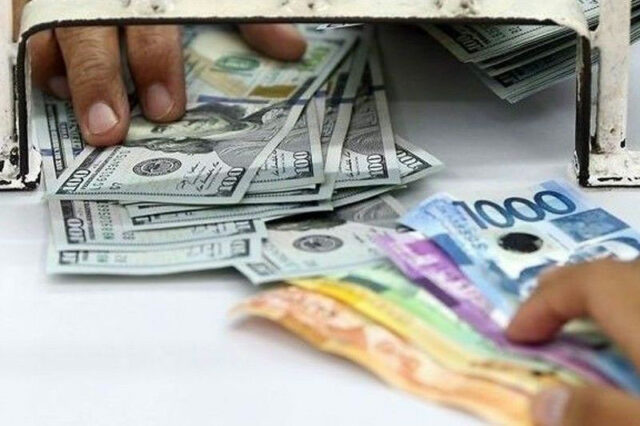
THE PESO could strengthen further following the start of the US Federal Reserve’s rate-cutting cycle, analysts said, but warned that these could impact exports and services.

“Philippine markets will be closely monitoring the potential impact of the US Federal Reserve rate cut on the domestic economy,” Security Bank Corp. Chief Economist Robert Dan J. Roces said in a Viber message.

“A stronger peso, which could result from the move, could negatively affect exports and other entities such as business process outsourcing companies (BPOs), but positively influence domestic prices,” he added.

This after the Fed delivered a 50-basis-point (bp) rate cut last week and amid expectations of further easing by the US central bank throughout this year and the next.

Markets imply nearly a 49% chance the Fed will deliver another 50-bp rate cut in November and have priced in 75 bps of cuts by the end of this year, Reuters reported.

The Fed’s policy rate is expected by the end of 2025 to be at 2.85%, which is now thought to be the Fed’s estimate of the neutral rate.

“The bigger accommodation in the US policy rate on balance reduces the certainty of the possible capital outflow should the interest rate spread move against the peso,” Diwa C. Guinigundo, a country analyst for the Philippines of GlobalSource Partners, said.

“If we manage to get all macroeconomic indicators going in the right direction, there’s a good chance the peso will remain more stable with a strengthening bias,” he added.

The peso closed at P55.97 against the greenback on Monday, depreciating by 28 centavos from its P55.69 finish on Friday, Bankers Association of the Philippines data showed.

The local currency previously fell to as low as the P58-per-dollar level in May and hit a 20-month low of P58.86 on June 26.

Metropolitan Bank & Trust Co. (Metrobank) Research in a commentary expects the peso to close at P55.30 per dollar by yearend, stronger than its earlier forecast of P57.20.

It also sees the local unit closing at P54.50 in 2025 from P56.30 previously.

“These forecasts also take into consideration the expected net dollar inflows from remittances in the fourth quarter, which would be partially offset by a projected wider trade deficit,” Metrobank Research added.

However, Pantheon Macroeconomics Chief Emerging Asia Economist Miguel Chanco noted there is still a need to be cautious about the peso’s performance for the rest of the year.

“Regardless of what the Fed does, and despite the peso’s upward retracement over the past few weeks, I’m still somewhat cautious on the peso’s outlook given the economy’s twin deficits on the current and fiscal accounts,” he said in an e-mail.

The current account deficit stood at $7.1 billion in the first half of the year, equivalent to -3.2% of GDP. The BSP expects the current account deficit to reach $6.8 billion this year (-1.5% of GDP).

The central bank last week trimmed its projections for goods and services exports this year. It now sees good exports growing by 4% this year from 5% previously, while services exports are seen expanding by 13% from 14% previously.

Meanwhile, latest data from the Treasury showed that the budget deficit widened by 7.21% to P642.8 billion in the first seven months of the year.

“All up, the peso will surely act up, but nobody knows in which direction because it cannot be delinked from other counterweights like better inflation and growth outcomes, the quality of public policy, the resolution of those political conflicts,” Mr. Guinigundo added.

FURTHER EASING
The Fed’s highly anticipated rate cut last week also gives the Bangko Sentral ng Pilipinas (BSP) more room to possibly deliver bigger rate reductions, analysts said.

“The first — faster and more ambitious than expected — start to its easing cycle will certainly give the BSP a lot more room to pursue more aggressive rate cuts in the coming meetings,” Mr. Chanco said.

BSP Governor Eli M. Remolona, Jr. earlier said that they could cut by another 25 bps in the fourth quarter. This after the central bank reduced borrowing costs by 25 bps at its August meeting, bringing the key rate to 6.25%.

The Monetary Board’s next meeting is on Oct. 17 while its last meeting for the year is scheduled for Dec. 19.

“Indeed, our base case before the Fed’s decision is that the Board will step up the size of its rate cuts to 50 bps each time from December, as we’ve long held a view that the Fed would pursue equally large cuts from the fourth quarter,” Mr. Chanco said.

Meanwhile, Metrobank Research expects the BSP to cut by a total of 75 bps this year, bringing the key rate to 5.75% by yearend.

“On the domestic front, the Fed move opens the door for a 25-bp cut in October by the BSP,” it said.

The central bank could reduce rates by 25 bps each at its last two meetings this year, Metrobank added.

“This would bring the BSP’s target reverse repurchase (RRP) rate down to 5.75% by year-end. The interest rate differential between the BSP and the US Fed would settle at 125 bps.”

“Previously, (Mr.) Remolona signaled a modest 50 bps of cumulative cuts for the year. A BSP pause in October suggests the BSP would only get a chance to adjust policy rates after two more projected Fed rate cuts,” it added.

For next year, Metrobank Research expects the BSP to cut by a total of 100 bps. This would bring the benchmark rate to 4.75%.

Mr. Chanco also noted Mr. Remolona’s repeated signals of the BSP being independent of the Fed.

“Most central banks in the region (not just in the Philippines) tend to only fret about Fed action when rates are going the other way around (i.e. up), given that this normally exerts a lot of downside pressure on regional currencies,” he added.

Falling oil prices to ease inflation pressure in Philippines

Crude oil is dispensed into a bottle in this illustration photo. — REUTERS

THE EXPECTED DECLINE in global oil prices will help tame inflation in Asia, with the Philippines among the countries seen to most benefit from this, ANZ Research said.

“Despite gains in recent days, average global oil prices in September so far have softened materially, and the transmission to pump prices in several economies in the region is underway,” it said in a report.

“If the weakness in global oil prices persists, disinflation will gather pace, and most of the region’s external positions will improve. Thailand and the Philippines will see the biggest drag to inflation.”

Data from ANZ showed that the estimated pass-through of a 10% decline in global oil prices is a -0.2-percentage-point (ppt) change in Philippine headline inflation.

“Thailand and the Philippines are likely to see relatively larger drags on inflation, with a pass-through of 0.2-0.3% for every 10% fall in global oil prices,” it said.

Headline inflation slowed to a seven-month low of 3.3% in August from 4.4% in July and 5.3% a year ago.

Transport inflation contracted by 0.2% in August as pump price adjustments stood at a net decrease of P2.70 a liter for gasoline, P2.80 for diesel and P3.70 for kerosene during the month.

The Bangko Sentral ng Pilipinas (BSP) earlier said that inflation is expected to ease further from August onwards.

ANZ estimates also showed that a 5% decline in benchmark gasoline pump prices would have an -0.12-ppt impact on September headline inflation for the Philippines.

“The fastest channel of transmission from falling global oil prices is typically through inflation. The Philippines, Thailand, South Korea, mainland China and Taiwan have already seen local gasoline pump prices adjust, with declines ranging from 1-5% relative to their August average,” it said.

The local statistics authority is set to release September inflation data on Oct. 4.

ANZ noted that the impact of inflation also depends on the weight of vehicle fuels. “While the Philippines has seen the largest fall in pump prices, vehicle fuels make up a smaller share of its inflation basket,” it added.

Meanwhile, ANZ also noted the impact of lower oil prices on food inflation.

“Another angle to consider is the food price channel, as oil is a key input in agricultural production. While isolating the impact of oil price changes on food prices is challenging, there is generally a positive correlation,” it said.

Food inflation eased to 4.2% in August from 6.7% a month ago, largely driven by easing rice prices. Rice inflation slowed to 14.7% from 20.9% a month prior.

“Assuming all other factors influencing food prices remain constant, economies with a higher proportion of food in their inflation basket are more likely to experience a greater reduction in inflation from lower global oil prices,” ANZ said.

“Within Asia, food has the highest weight in the inflation baskets of India, Thailand and the Philippines,” it added.

The heavily weighted food and non-alcoholic beverages index is typically the main contributor to headline inflation in the Philippines, with rice accounting for almost half of overall inflation.

Easing inflation will also make the case for further rate cuts, ANZ said.

“The combination of lower inflation and stronger external positions will open up scope for a deeper-than-anticipated rate-cutting cycle in the region, particularly if weaker global growth is a key driver keeping energy prices subdued,” it said.

Last month, the Monetary Board reduced the target reverse repurchase (RRP) rate by 25 basis points (bps) to 6.25% from the over 17-year high of 6.5%.

BSP Governor Eli M. Remolona, Jr. signaled another 25-bp cut in the fourth quarter. The Monetary Board’s remaining meetings this year are on Oct. 17 and Dec. 19. — Luisa Maria Jacinta C. Jocson

The art of shaping opportunities: The EY Entrepreneur Of The Year 2024 Philippines

FREEPIK

IN THE WORLD OF ART, a sculptor begins with a vision, often seeing the finished piece in their mind’s eye before the first chisel strike. As the sculpture takes shape, the artist must constantly assess and adjust their technique, responding to the material’s resistance and texture. As the moment of completion arrives, the sculptor steps back to reveal a form that was once hidden within the raw stone, now a work of art that can stand the test of time.

Entrepreneurs, similarly, shape opportunities in business by envisioning the potential, selecting the right tools and materials, refining their ideas with precision, and adapting to the medium in which they work. The journey from concept to creation is arduous and fraught with challenges, but it is through this process that both the artist and the entrepreneur bring forth something new and valuable into the world.

For the 15th year of the EY Entrepreneur Of The Year Philippines program, we once again celebrate the inspiring men and women of vision, courage and resourcefulness. They are individuals who are shaping opportunities, thriving in the age of disruption, and leading enterprises that can transform communities and uplift the nation.

This year’s finalists come from diverse industries, such as food products and ingredients, real estate development, mining, energy, financial and information technology, fashion retail, logistics, and business process outsourcing.

Some finalists, like many entrepreneurs, saw opportunities in emerging markets. One finalist saw the potential of microcomputers in the late 1970s and founded a business selling IT solutions. Another finalist started a business producing and selling desserts and treats based on the avocado, something the market hadn’t seen before. Another finalist foresaw the future of renewable energy, shifting careers to start her own company in this field.

Some finalists grew from humble beginnings to profitable success stories. Two finalists started working various jobs as teenagers to support their families. One saved enough money to eventually start his own nickel mining company. The other started trading, processing, and exporting food ingredients, growing the enterprise into a large and highly successful supplier. Another finalist started a modest delivery service business, with just a single truck, that grew exponentially to become a full-service logistics company.

Some finalists are motivated by providing solutions to identified problems. One finalist became an entrepreneur out of necessity, taking over the family business when the founder became ill and leading it to lasting success through modernization of processes and weathering the volatility and competitive pressures of the agricultural products market. Seeing the massive shortage in housing for low-income earners, another finalist established a real estate venture focused on building socialized housing projects and developing communities, while also promoting clean energy solutions.

Still other finalists made businesses out of enabling and promoting homegrown talent. One finalist, after many years working abroad and kindling a desire to uplift her home country’s capabilities, decided to come home to start her own IT solutions and services company for core banking systems. Another finalist similarly started an outsourcing enterprise that has become a top information technology-business process management provider. Yet another finalist, starting as a supplier to homegrown fashion brands, chose to rescue them from going out of business and leveraged them into advocacies that provide livelihoods to communities and promote less wasteful business practices.

By understanding their stories, we can trace their personal and professional journeys as they capitalize on emerging opportunities, adapt to change, and overcome challenges and disruption.

The EY Entrepreneur Of The Year Philippines program is assessed regularly in terms of its categories, nominees, finalists, and winners’ profiles in tandem with the current business environment. Qualified nominees were interviewed and screened to determine the finalists. An independent panel of judges will select the winners from among the finalists. The overall winner of the EY Entrepreneur Of The Year 2024 Philippines program will represent the country in the World Entrepreneur Of The Year in Monte Carlo, Monaco in June 2025.

The SGV Foundation launched the program locally in 2003 and presented its very first EY Entrepreneur Of The Year Philippines award to Jollibee Foods Corp. President and Chief Executive Officer (CEO) Tony Tan Caktiong, who went on to win as World Entrepreneur Of The Year. In the succeeding years 13 more prominent Filipino entrepreneurs received the award, the latest being Dennis Anthony Uy, CEO and co-founder of Converge ICT Solutions, Inc. in 2022.

The 2024 search for the EY Entrepreneur Of The Year Philippines is co-presented by the Asian Institute of Management, the Department of Trade and Industry, the Philippine Business for Social Progress, and the Philippine Stock Exchange. Gold Sponsors are SteelAsia Manufacturing Corp., Uratex, and Converge ICT Solutions, Inc. Silver Sponsor is International Container Terminal Services Inc. Bronze sponsor is Lausgroup Holdings, Inc. Media sponsors are BusinessWorld and the ABS-CBN News Channel.

Beginning Sept. 25, BusinessWorld will be featuring each finalist and their individual stories. The results of the EY Entrepreneur Of The Year 2024 Philippines will be known on Oct. 23 at a formal awards banquet at the Makati Shangri-La.

MPT South plans P14-B capex for 2025 projects

BW FILE PHOTO

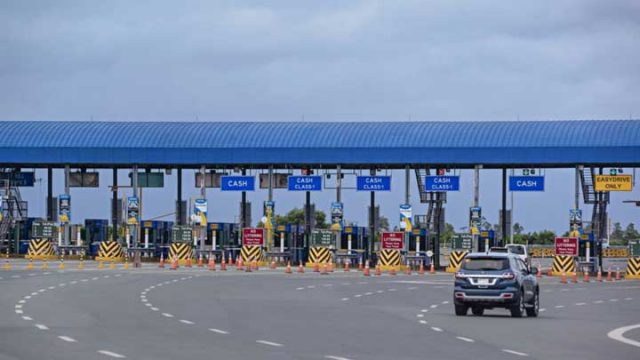
EXPRESSWAY operator MPT South Management Corp. is allocating P14 billion for its 2025 capital expenditure (capex) budget to fund key projects slated for completion next year, the company’s president said.

“Despite the challenges we face in construction, such as the timely delivery of right-of-way and the recent typhoons, we are working around the clock to ensure the delivery of these vital infrastructure projects for the benefit of progress by the end of 2025,” Raul L. Ignacio, MPT South president and general manager, said during a briefing on Monday.

MPT South Vice-President for Finance Elnora D. Rumawak said that next year’s target capex is almost double this year’s P8-billion capex budget.

For this year, MPT South expects to end with a core net income of P1.4 billion, up by 16.7% from P1.2 billion in 2023, driven by toll revenue from toll rate adjustments approved in 2023.

The company also anticipates ending the year with total revenues of P3.4 billion, marking a 13.3% increase from last year’s P3 billion.

MPT South’s capex for 2025 will mainly be funded by a mix of internally generated funds and debts, Ms. Rumawak said.

“2025 is a promising year for us… With all the projects that we will complete, traffic will increase by around 33%,” Ms. Rumawak said.

For 2025, MPT South expects an average daily vehicle count of 344,514, marking a 32.6% increase from the current 259,815.

The company’s optimism for next year is driven by the completion of several key projects which will boost MPT South’s overall operations, Mr. Ignacio said, adding that MPT South’s growth will ultimately hinge on the timely completion of its key projects.

The completion of MPT South’s expressway network will bring its total road network to 67 kilometers by the end of 2025, while also providing efficient services between industrial and commercial hubs, shortening travel time for motorists, the company said.

“We are quite confident of meeting our targets within 2025,” Mr. Ignacio said.

The Governor’s Drive Interchange of the Cavite-Laguna Expressway (CALAX) is among the projects scheduled for completion in 2025.

MPCALA Holdings, Inc., the concessionaire of CALAX, said previously that the portion of Governor’s Drive Interchange of CALAX has reached 25% completion and is on track to be opened by the first quarter of 2025.

Mr. Ignacio also said that other segments of CALAX and CAVITEX C5 Link like the Open Canal Interchange, Kawit Interchange, and C5 Link Segment 3B are all expected for commercial operations before the end of 2025.

MPTC is the tollways unit of Metro Pacific Investments Corp., which is one of three key Philippine units of Hong Kong-based First Pacific Co. Ltd., the others being Philex Mining Corp. and PLDT Inc.

Hastings Holdings, Inc., a unit of PLDT Beneficial Trust Fund subsidiary MediaQuest Holdings, Inc., has a majority stake in BusinessWorld through the Philippine Star Group, which it controls. Ashley Erika O. Jose

How SMIC balances risk preparedness with community gains

TIMOTHY DANIELS

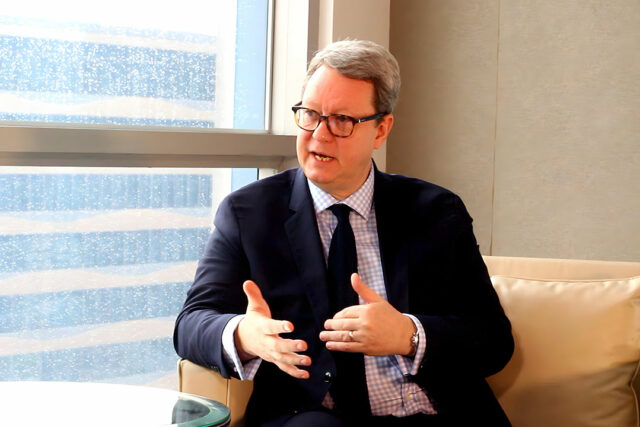
SM Investments Corp. (SMIC) is working to enhance the conglomerate’s preparedness for future risks while driving long-term benefits for communities and the environment, according to Timothy Daniels, SMIC consultant for investor relations and sustainability.

The conglomerate is dedicating 10% of its annual capital expenditure (capex) budget, primarily through SM Prime Holdings, Inc., to incorporating disaster-resilient features across its businesses, Mr. Daniels told Editor-in-Chief Cathy Rose A. Garcia during an episode of BusinessWorld One-on-One online interview series themed “The Reinvention of Business.”

“Sustainability is also thinking about the long-term risks, which a business should be thinking about. You have to pull back for a second and not get hung up on the frameworks,” he added.

For 2024, SMIC has allocated up to P115 billion in capex to support its expansion plans.

“We do look very long term, and we think we have a tremendous amount to contribute in the areas where we are experts. I think how we want to do it is to create win-win situations for everybody,” Mr. Daniels said.

He noted that the SM group’s companies each have their own sustainability initiatives.

“Every part of the group has sustainability things… Whether it’s looking at how to design energy-efficient buildings, how to prepare for disaster resilience or climate change, those are very property specific initiatives in SM Prime,” he said.

“In our retailing arm, it’s very customer-facing initiatives. We introduce more green habits and more green products into the country. In our banks, it’s how we create financial inclusion, and funding green and blue projects and renewable energy,” he added.

Mr. Daniels said incorporating sustainability features will pay off in the long term.

“When we look at the environment, it’s extra cost to design and build buildings that are energy efficient and disaster resilient. But we get it back by being more efficient operators,” he said.

“In the long term, we get it back by being prepared for when the worst things could happen. There isn’t a trade-off from our point of view between being responsible and being a successful business. Being a successful business means you think responsibly,” he added.

He said companies can benefit both shareholders and communities without losing profitability.

“A successful long-term company thinks about its stakeholders. It’s just a wise business decision to look after the people who make you successful. It’s a very practical thing that corporates should do to protect their own assets. If you do it right, you can also look after tenants, the communities around us, and we can try to make sure that everybody is gaining from how we think about dealing with climate change,” Mr. Daniels said.

“One of the things you have to realize is it’s not a trade-off between doing good business and doing sustainable business. It’s actually the same thing. As a group overall, we have a very big role to play in creating modern development, in creating employment, in creating economic growth. That benefits so many people,” he added. — Revin Mikhael Ochave

T-bill rates drop further on robust demand

BW FILE PHOTO

THE GOVERNMENT made a full award of the Treasury bills (T-bills) it offered on Monday as yields declined across the board amid strong demand after the central bank announced it would cut banks’ reserve requirement ratios (RRR) and the Finance chief said he would back a big rate cut at the Monetary Board’s next policy meeting to mirror the US Federal Reserve’s latest move.

The Bureau of the Treasury (BTr) raised P20 billion as planned from the T-bills it auctioned off on Monday as total bids reached P93.257 billion, almost five times as much as the amount on offer and higher than the P77.899 billion in tenders seen the previous week.

Broken down, the Treasury borrowed P6.5 billion as programmed from the 91-day T-bills as tenders for the tenor reached P29.64 billion. The three-month papers were quoted at an average rate of 5.38%, 36.3 basis points (bps) lower than 5.743% recorded last week, with the BTr only accepting bids with this yield.

The government made a full P6.5-billion award of the 182-day securities, with bids for the tenor reaching P24.66 billion. The average rate of the six-month T-bill stood at 5.48%, down by 46 bps from the 5.94% fetched last week and with all accepted bid yields being at this level.

Lastly, the Treasury raised P7 billion as planned via the 364-day debt papers as demand totaled P38.957 billion. The average rate of the one-year debt fell by 39 bps to 5.583% from the 5.973% quoted last week, with accepted rates ranging from 5.58% to 5.6%.

At the secondary market before the auction, the 91-, 182-, and 364-day T-bills were quoted at 5.7359%, 5.8795%, and 5.9249%, respectively, based on PHP Bloomberg Valuation Service Reference Rates data provided by the Treasury.

The government fully awarded its offer as rates declined across all tenors after the BSP announced reductions to banks’ reserve ratios, a trader said in a text message.

The RRR cut will free up about P400 billion in liquidity, which banks can lend and put in instruments like government debt, Rizal Commercial Banking Corp. Chief Economist Michael L. Ricafort said in a Viber message.

The BSP on Friday said it will reduce the RRR for universal and commercial banks and nonbank financial institutions with quasi-banking functions by 250 bps to 7% effective on Oct. 25.

It will also cut the RRR for digital banks by 200 bps to 4%, while the ratio for thrift lenders will be reduced by 100 bps to 1%. Rural and cooperative banks’ RRR will likewise go down by 100 bps to 0%.

T-bill yields rallied after Finance Secretary Ralph G. Recto’s rate cut comments, the trader added.

Mr. Recto, who represents the government in the central bank’s rate-setting board, said he will back a 50-bp rate cut at the panel’s next meeting in October, Bloomberg reported.

“Yes, I will support a similar rate cut,” Mr. Recto said in a mobile phone message when asked whether he sees a more compelling reason for Bangko Sentral ng Pilipinas to reduce borrowing costs again at next month’s meeting after the Federal Reserve’s half-point easing move last week.

The Finance chief’s remarks on Thursday came a day after BSP Governor Eli M. Remolona, Jr. signaled that the Fed move isn’t the main consideration in deciding borrowing costs.

The BSP began its easing cycle on Aug. 15 with a 25-bp cut that brought its policy rate to 6.25%.

Mr. Remolona has said they could slash benchmark interest rates by another 25 bps within the year. The Monetary Board’s last two policy-setting meetings this year are on Oct. 17 and Dec. 19.

Monday’s T-bill auction was the last for the month. The government raised P85.2 billion from the short-term papers in September, higher than the P80-billion program, as it hiked the awarded volume at two of its four auctions.

On Tuesday, the BTr will offer P25 billion in reissued 20-year Treasury bonds (T-bonds) with a remaining life of 19 years and eight months.

The Treasury wants to raise P195 billion from the domestic market this month, or P80 billion through T-bills and P115 billion via T-bonds.

The government borrows from local and foreign sources to help fund its budget deficit, which is capped at P1.48 trillion or 5.6% of gross domestic product for this year. — A.M.C. Sy with Bloomberg

RE players seek improvements in green energy auction

FREEPIK

By Sheldeen Joy Talavera, Reporter

RENEWABLE ENERGY (RE) leaders are seeking improvements in the green energy auction program (GEAP) to allow more energy players to participate actively.

At an energy forum organized by ING Philippines on Monday, SunAsia Energy, Inc. President and Chief Executive Officer Maria Theresa Cruz-Capellan said that the government should craft “a more sophisticated auction design.”

“Gas and pump storage and even geothermal needs a special kind of auction design because it is not the same as solar and wind…That kind of a market mechanism has to be more specific function design. I think we’re getting there,” Ms. Capellan said.

She said that the GEA was designed to support and fit new green technologies.

“There has to be a more sophisticated auction design that will allow leaders in the energy sector to participate actively and see the signals as correct,” Ms. Capellan said.

The GEAP aims to promote renewable energy as one of the country’s primary sources of energy through competitive selection.

The Department of Energy (DoE) is set to stage two rounds of GEAP this year.

GEA-3 involves geothermal, pump-storage hydro, run-of-river hydro, and impounding hydro with a total capacity of 4,399 megawatts (MW).

Meanwhile, the DoE is also targeting to hold GEA-4 which involves renewable energy technologies and energy storage systems and liquefied natural gas technologies.

Ms. Capellan noted the “red flags” during the second round of GEA, which resulted in few takers and subscribed capacities.

To recall, the DoE blamed the low turnout of GEA-2 on concerns about transmission lines available for the projects and the low reserve prices on offer.

First Gen Corp. Vice-President and Head of Power Marketing, Trading & Economics Carlos Lorenzo L. Vega said that there was “a huge gap” during the previous round as the capacity offered was at more than 11,000 MW, but only over 3,000 MW were subscribed.

“Clearly, we welcome more off-take mechanisms. This will help the strategy in managing risks. Having said that, it is not without difficulty because you know, while it’s good to have more off-take mechanisms, the devil is really in the details,” Mr. Vega said.

While the company looks forward to geothermal being part of the next round of GEA, Mr. Vega said that the policy makers should put up proper “price signal.”

“We hope before we get to the tenth round, the DoE has already kind of sorted it out,” Ms. Capellan said.

GEA was first conducted in 2022 and attracted 1,996.3 MW worth of renewables, while GEA-2 was held in 2023, where 3,440.756 MW were awarded.

Petron lists P16.8B worth of shares on PSE

ANG-LED Petron Corp. has listed P16.8 billion worth of shares on the Philippine Stock Exchange (PSE) following its recent follow-on offering, the oil company announced on Monday.

“We thank the investment community for their strong response and continued confidence in our company. Through their support, Petron remains a viable investment option and we are committed to making sure that we continue to grow and succeed, while being a partner in nation-building,” Petron President and Chief Executive Officer (CEO)Ramon S. Ang said in a statement.

The shares were offered from Sept. 5 to Sept. 13, consisting of 13 million preferred shares and an oversubscription option of up to four million additional shares, at a share price of P1,000 each.

Proceeds from the offering would be used to redeem the company’s Series 3A preferred shares, refinance maturing obligations, and fund general corporate purposes, including the purchase of crude oil inventory.

“These two successive oversubscribed offerings are clear testaments to the investor’s confidence in the company’s continued growth and profitability and investor’s positive perception of its management,” PSE President and CEO Ramon S. Monzon said during the bell-ringing ceremony.

The latest offering marks the second tranche of Petron’s shelf registration for up to 50 million preferred shares. In the first tranche, the company offered up to 22.5 million preferred shares.

Petron tapped BDO Capital & Investment Corp. as the sole issue manager. Bank of Commerce, BDO Capital, Chinabank Capital Corp., Philippine Commercial Capital, Inc., PNB Capital and Investment Corp., and SB Capital Investment Corp. have been designated as joint lead underwriters and joint bookrunners.

Meanwhile, East West Banking Corp., First Metro Investment Corp., and RCBC Capital Corp. were tapped as the selling agents for the offer. — Sheldeen Joy Talavera

Stories of angst, voices of hope

SINE KABATAAN 2024 WINNERS

FDCP presents Sine Kabataan

NINE FILMS that reflect youth’s creativity in tackling issues both personal and political were shown at this year’s Sine Kabataan Short Film Festival.

In celebration of Philippine Film Industry Month, the selection of films was screened from Sept. 20 to 22 at the Red Carpet cinemas of Shangri-La Plaza.

While the festival is over, the Sine Kabataan shorts will screen at a later date on FDCP’s all-Filipino streaming platform Juanflix.

“Besides all the enjoyment we get escaping from our real-life problems inside the dark movie theater, we put importance on Philippine cinema because of how it shapes our lives and our culture. This includes works by student filmmakers and young filmmakers, who represent the voices of the future,” said Jose Javier Reyes, chairperson of the Film Development Council of the Philippines (FDCP), at the awarding night of the short films on Sept. 22.

In May of this year, the finalists were selected after FDCP’s extensive deliberation process. They each received a production grant worth P150,000 and underwent an editing lab with industry experts.

The festival’s 7th edition boasts a mix of genres, from drama and coming-of-age stories to horror and animation. They all explore themes of identity, trauma, and aspirations, displaying the youth’s fighting spirit amid the issues of today.

CHILDREN’S PERSPECTIVE
Four of the nine films offered a unique glimpse into the minds of children to shed light on societal ills.

Zeus Batondo’s ARAPAAP, which earned a Special Mention, did this in the form of a small adventure taken on by two 12-year-old boys, Dong and Carlos. Set in the province of Abra, their little project reveals each of their heartwrenching familial motivations behind an escape to the skies.

Meanwhile, Silver Racca’s Kwitis kicks off when its central child protagonist Bonbon is tasked to find out his parents’ dream as an assignment — except his parents are no longer around and he only has his lola Belen to ask. He himself claims that his own dream is to be dead, shocking his entire class.

The sole animated film of the group, My Dog Knows All My Secrets by Vynce Ong, is another endearing childlike view of family. In it, a young girl dealing with living in a new neighborhood and the constant arguing of her parents confides in her best friend, her dog. Its end also briefly shows the perspective of the girl’s mother who gives insight to dysfunction in families.

Last Shift na ni Jaguar! by Josam Dalman is the most unconventional of the child-centered shorts. Marketed as a horror film, its lead is a hospital security guard nicknamed Jaguar, who encounters child ghost Cascas during the night shift. The well-crafted story reveals that instead of the usual ghostly fare, the real horrors are the dire healthcare situation in the country, affecting children like Cascas, and the inhumane labor conditions suffered by workers like Jaguar.

YOUNG ADULTS SPEAK UP
The other five films in the festival selection center on older protagonists, either high-schoolers or young working adults, who speak up about their respective realities.

Sa Dulo ng Linya, a drama short by Gian Arre, follows 28-year-old Erwin who stumbles upon an old tin can telephone he made with his father as a child. In testing the long-forgotten toy, his long-dead father responds, prompting him to open up about his life and seek solace in the unexpected reunion. Tensions later arise as their conversation turns to the unresovled dysfunctional relationship Erwin has with his parents.

Special Jury Prize winner Ang Halikan sa Water Fountain by Clyde Gamale starts off as a carefree look into a night of drinking by a male high-school barkada. Two boys in the group, Maki and Kaloy, share small moments of affection, often passed off as playful jests amid the macho environment, making it a subtle portrayal of the exploration of sexual identity.

Denbert Tiamson’s If I Were A Voice is more straightforward in this regard. It follows Ralph, a gay student leader being discriminated against for his homosexuality, all while a male teacher goes unpunished for inappropriate behavior towards female students. Ralph and his class decide to speak up about these injustices through a speech choir performance, in a scene that deservedly earns the film a Best Editing award.

High Tide or Low Tide by Gio Alpuente is another film with a gay protagonist, this time struggling to cope in a small, homophobic coastal barangay in Mauban, Quezon. The closeted high school student grapples with poor mental health as he navigates the complexities of his sexuality, a story that took the award for Best Screenplay.

Finally, Best Cinematography, Best Director, and Best Film winner Sa Ilalum sa Balabal sa Alitaptap (Beneath The Firefly Veil) takes viewers to another remote community, this time in Maragusan, Davao de Oro. There, young adult Joy (played by the film’s director Juvy Ann Clarito) lives with her grandfather on their ancestral land that is under threat of land grabbing. She turns to sacred rituals to drive away any further abuse to their land.

FDCP chairperson Mr. Reyes said that all the films convey a “sense of angst” that the Filipino youth feel about their society, but also “a remarkable strength” that can give people hope.

A subscription to FDCP’s all-Filipino streaming platform Juanflix costs P99 a month. — Brontë H. Lacsamana

15th Asia CEO Awards unveils 188 Circle of Excellence honorees

The long wait is over as the 15th Asia CEO Awards announces its Circle of Excellence.

Considered the largest event of its kind in the Southeast Asia, the Asia CEO Awards honors the most successful companies and individuals in terms of excellence in business achievements and positive impact to society.

View the list of 188 companies and executives who will be honored as Circle of Excellence here: https://www.asia-ceo-awards.org/.

Presented by Robinsons Land, a number of reputable partners collaborate to ensure everyone is given an opportunity to be recognized for their inspiring entrepreneurial spirit, which ultimately leads to making the Philippines a first world nation.

“Most categories received 40 and 60 submissions from which the Circle of Excellence awardees were chosen. These organizations and people are the best of these, chosen for their out-sized contributions to the nation’s progress,” shares Richard Mills, Chairman of the Asia CEO Awards.

He added that hundreds of submissions were received which showcases the amazing strength and diversity of the country’s economy.

Mr. Mills, who is also Chairman of the Board of Judges, said, “Our research experts at PwC spent weeks analyzing and confirming information for the Board of Judges who spent many intense hours to determine awardees.”

The Circle of Excellence are part of the following categories: Airspeed SME Company of the Year, Figari Entrepreneur of the Year, IBPAP IT-BPM TechBlazer of the Year, iCXeed Diversity Company of the Year, KMC Solutions Woman Leader of the Year, KonsultaMD Most Innovative Company of the Year, Maybank Sustainability Company of the Year, MicroSourcing Young Leader of the Year, Sante Wellness Company of the Year, Sprout Solutions Technology Company of the Year, and White & Case Governance Organization of the Year.

Other categories are Company of the Year, CSR Company of the Year, Service Excellence Company of the Year, Top Employer of the Year, and CEO of the Year.

White & Case Governance Organization of the Year

  1. Cloudstaff
  2. Immuni Global, Inc.
  3. Land Bank of the Philippines
  4. Polytechnic University of the Philippines
  5. Tech Mahindra Limited
  6. Zenutna Holdings Corp. (ZHC)

KonsultaMD Most Innovative Company of the Year

  1. Cloudstaff
  2. Concentrix Philippines
  3. Eastvantage
  4. GoTyme Bank
  5. Lexmark Research and Development Corp.
  6. LSEG (London Stock Exchange Group)
  7. Pili AdheSeal, Inc.
  8. Rizal Commercial Banking Corp. (RCBC)
  9. RUSH Technologies, Inc.
  10. Securities and Exchange Commission
  11. TDCX (PH), Inc.
  12. Teleperformance
  13. UNO Digital Bank

Service Excellence Company of the Year

  1. Airspeed
  2. ASUS Phils. Corp.
  3. CGI Phils, Inc.
  4. ING Hubs BV Philippine Branch.
  5. Inventi Intellectual Holdings Corp.
  6. RELX Reed Elsevier Philippines
  7. Seda Hotels
  8. Sprout Solutions
  9. SSS
  10. Theos Cyber Solutions, Inc.
  11. VXI Global Holdings BV Phils.
  12. Wipro Phils, Inc.

Airspeed SME Company of the Year

  1. Angkat PH
  2. Aficionado-Central Affirmative Co., Inc.
  3. Asialink Finance Corp.
  4. Asian Consultancy Group
  5. Devteam Outsourcing, Inc.
  6. Ebizolution, Inc.
  7. EdukSine Production Corp.
  8. Motovita
  9. Prometheus
  10. PSO Manila | Pepper Money
  11. Tent King

Sprout Solutions Technology Company of the Year

  1. Aboitiz Land, Inc.
  2. Ask Lex PH Academy
  3. Citicore Renewable Energy Corp.
  4. Concentrix Philippines
  5. Datamatics Global Services Corp.
  6. GoTyme Bank thru Frederick Blancas
  7. Hytec Power, Inc.
  8. Inventi Intellectual Holdings Corp.
  9. KonsultaMD
  10. Land Bank of the Philippines
  11. Lenovo PCCW Solutions
  12. Lexmark Research and Development Corp.
  13. UNO Digital Bank

Top Employer of the Year

  1. Ayala Land, Inc.
  2. Bank of the Philippine Islands
  3. Concentrix Philippines
  4. Foundever Philippines
  5. Gcash
  6. Gardenia Bakeries (Philippines), Inc.
  7. Hewlett Packard Enterprise
  8. HSBC Electronic Data Processing Philippines, Inc.
  9. IBM in the Philippines — Consulting Client Innovation Center (CIC)
  10. ING Hubs Philippines
  11. Macquarie Group Services (Philippines), Inc.
  12. Magsaysay Maritime Corp.
  13. MicroSourcing Philippines, Inc.
  14. RELX | Reed Elsevier Philippines
  15. Sun Life of Canada (Philippines), Inc.
  16. Wipro Philippines

Company of the Year

  1. Clark Development Corp.
  2. Concentrix Philippines
  3. Filinvest Land, Inc.
  4. Home Credit Philippines
  5. IBM in the Philippines —Consulting Client Innovation Center (CIC)
  6. MicroSourcing Philippines, Inc.
  7. Pru Life UK
  8. Santé International, Inc.
  9. Sun Life of Canada (Philippines), Inc.
  10. UHS Essential Health Philippines, Inc.

CSR Company of the Year

  1. Amazon Operation Services Philippines, Inc.
  2. Chevron Holdings, Inc.
  3. IBM
  4. Innodata Knowledge Services, Inc.
  5. Maybank Philippines
  6. Megaworld Foundation, Inc. 
  7. Merck Business Solutions Asia, Inc.
  8. NEARSOL
  9. Philippine Manufacturing Co. of Murata, Inc.
  10. PJ Lhuillier, Inc.
  11. Port Management Office of Surigao of the Philippine Ports Authority
  12. SM Foundation
  13. Teleperformance
  14. The Medical City Clark
  15. Tsuneishi Technical Services (Phils.), Inc.

Sustainability Company of the Year

  1. Avida Land Corp.
  2. Ayala Land, Inc.
  3. Bank of the Philippine Islands (BPI)
  4. Booth & Partners Philippines, Inc.
  5. Cognizant Technology Solutions Philippines, Inc.
  6. Genpact Philippines
  7. Metro Pacific Tollways Corp.
  8. Newport World Resorts
  9. Personal Collection Direct Selling, Inc.
  10. Rizal Commercial Banking Corp. (RCBC)

iCXeed Diversity Company of the Year

  1. DDB Group Philippines
  2. DXC Technology Philippines
  3. Foundever Philippines
  4. Genpact Philippines
  5. Home Credit Philippines
  6. Northern Trust
  7. Shopee Philippines, Inc.
  8. Sun Life Global Solutions Philippines
  9. Sutherland Global Services Philippines, Inc.
  10. Synchrony Global Services, Inc.
  11. Tech Mahindra Limited
  12. Teleperformance Philippines
  13. Ubisoft Philippines

Sante Wellness Company of the Year

  1. Bank of the Philippine Islands
  2. Cognizant Technology Solutions Philippines, Inc.
  3. Fluor Daniel, Inc. — Philippines
  4. Hewlett Packard Enterprise
  5. IBM in the Philippines
  6. KonsultaMD
  7. Quantrics
  8. Shopee Philippines, Inc.
  9. Tech Mahindra Limited
  10. Ubisoft Philippines
  11. VXI Global Holdings B.V. (Philippines)
  12. Zenutna Holdings Corp. (ZHC)

Figari Entrepreneur of the Year

  1. Chino San Diego, What’s Your Flan International
  2. Eric Peter Roxas, Pure Energy
  3. Felix Veroya, Ask Lex PH Academy
  4. Jason Romeo Valderrama, JCV & Associates Project Management & Development, Inc.
  5. Jettson Yu, PRIME Philippines
  6. Jonathan So / Carlito Macadangdang, JC Premiere
  7. Karen Jane Salutan-Krukover, EdukSine Production Corp.
  8. Marydae Hannah Ramos, Chizmozza
  9. Nathaniel Marquez, MNSA, Ebizolution, Inc.
  10. Raemin Reyes, Motovita
  11. Regieno G. Valencia, Interior Construction Services
  12. Ricardo Cuna, Kurimi Milk Tea Bar
  13. Robert Jordan, Jr., Asialink Finance Corp.

MicroSourcing Young Leader of the Year

  1. Cindy Burdette, Chief Commercial Officer, KonsultaMD
  2. Felix Concepcion Veroya, Founder and CEO, Ask Lex PH Academy
  3. Jettson P. Yu, Founder and CEO PRIME Philippines
  4. Lenard G. Jabolin, President, Casapa Livestock Raisers Association, Inc.
  5. Lcid Crescent Fernandez, Chief Executive Officer, Prometheus Productions OPC
  6. Maria Isabela Blancas, Owner and Founder, One Closet
  7. Ralph Ray Dacay Chua, President and Chairman of the Board, Immuni Global Inc. and Shireli Manufacturing Company
  8. Regieno G. Valencia, Owner, Interior Construction Services

KMC Solutions Woman Leader of the Year

  1. Abigail Tina M. Del Rosario, Country Director for Philippines and President & CEO, Maybank Philippines
  2. Aleli Arcilla, Vice-President & Managing Director, Mondelez Philippines, Inc.
  3. Alex Gentry, Co-Founder, Sprout Solutions
  4. Agnes Vicenta Salayo Torres Devanadera, President and CEO, Clark Development Corp.
  5. Beatriz Latay, Chief Executive Officer, KonsultaMD
  6. Cherrie De Erit Atilano, Founding Farmer, CEO and President, AGREA Agricultural System International, Inc.
  7. Coy Ordonez, Country Executive, Northern Trust
  8. Elizabeth Digna Ventura, President, Anchor Land Holdings
  9. Maria Catalina Estamo Cabral, Undersecretary for Planning and PPP Services, Department of Public Works and Highways
  10. Jemima Villa, Country Head, Innodata Knowledge Services, Inc.
  11. Lourdes T. Gutierrez-Alfonso, President, Megaworld Corp.
  12. Ma. Gilda “Gigi” Alcantara, President, PH1 World Developers, Inc.
  13. Martha Sazon, President and CEO, GCash
  14. Mel Migriño, Country Head and Southeast Asia Regional Director, Gogolook Co. Ltd.
  15. Rosemarie P. Rafael, Chairperson and President Airspeed
  16. Vivian Que-Azcona, President, Mercury Drug Corp.

CEO of the Year 

  1. Alan Jones, CEO, Asia Energy Company (AECO) Pte. Ltd.
  2. Anand Achuthan, Global Head,Tech Mahindra Ltd.
  3. Aseem Roy, Country Head, Wipro Phils., Inc.
  4. Cesar L Wee Jr., President & CEO, Wee Community Developers, Inc.
  5. David L. Rafael, President & CEO, Aboitiz Land, Inc.
  6. Ivy Ledres, GM, Insight Direct Phils. LLC
  7. Jaeger Tanco, President & CEO, Phil Care
  8. Jennire S. Torres, Country Head & CEO, Atos
  9. Jesus Joey Marcelo, CEO, Sante International, Inc.
  10. Lars Wittig, Country Manager, International Workplace Group
  11. Patrick Gentry, CEO, Sprout Solutions
  12. Sanjeev Kumar Gupta, President & Country Head, IBM Solutions Delivery, Inc.

IBPAP IT-BPM Techblazer

  1. Elias Patrick Salazar, Delivery Head, Tech Mahindra Limited
  2. Jacob Catayoc, Chief Technology Officer, EdukSine Production Corp.
  3. Kamal Asarpota, CEO, Eastvantage
  4. Lloyd Ernst, Founder and CEO, Cloudstaff
  5. Macario Solis Fojas, Founder and President, Seven Seven Global Services, Inc.
  6. Praveer Chadha, Senior Vice-President of Customer Management Solutions, Datamatics Global Services Corp.
  7. Rosette Carrao, Managing Director, delaware Philippines
  8. Shiju Varghese, Country Head, Tata Consultancy Services (Philippines), Inc.

The 15th Asia CEO Awards, the largest business awards event in the Philippines, is supported by PwC as the Official Knowledge Partner. Official Event Venue is Manila Marriott. Official Cocktail Sponsor is PSG Global Solutions. Technology Partners are DOOHand Globaltronics. Supporters include Admall and 1Sycamore Food Ventures, Inc.

Media Partners are BusinessMirror, BusinessWorld, Manila Bulletin, Manila Standard, NET25, Philippine Daily Inquirer, and THEPHILBIZNEWS.

Experience how the Asia CEO Awards and their partners promote leadership excellence and highlight Filipino business accomplishments to the world’s business leaders. Book your seats and join the grand awards night happening on Tuesday, Oct. 8 (starting 5:00 p.m.) at the Grand Ballroom of the fabulous Manila Marriott, Pasay City.

REGISTER: https://www.asia-ceo-awards.org/registrations.


Spotlight is BusinessWorld’s sponsored section that allows advertisers to amplify their brand and connect with BusinessWorld’s audience by publishing their stories on the BusinessWorld Web site. For more information, send an email to online@bworldonline.com.

Join us on Viber at https://bit.ly/3hv6bLA to get more updates and subscribe to BusinessWorld’s titles and get exclusive content through www.bworld-x.com.