Home Blog Page 2636

Weaving a sustainable future

The EY Entrepreneur Of The Year 2024 Philippines has concluded its search for the country’s most visionary leaders shaping opportunities and transforming industries. It is a program of the SGV Foundation, Inc., with co-presenters: the Asian Institute of Management, Department of Trade and Industry, Philippine Business for Social Progress, and Philippine Stock Exchange.

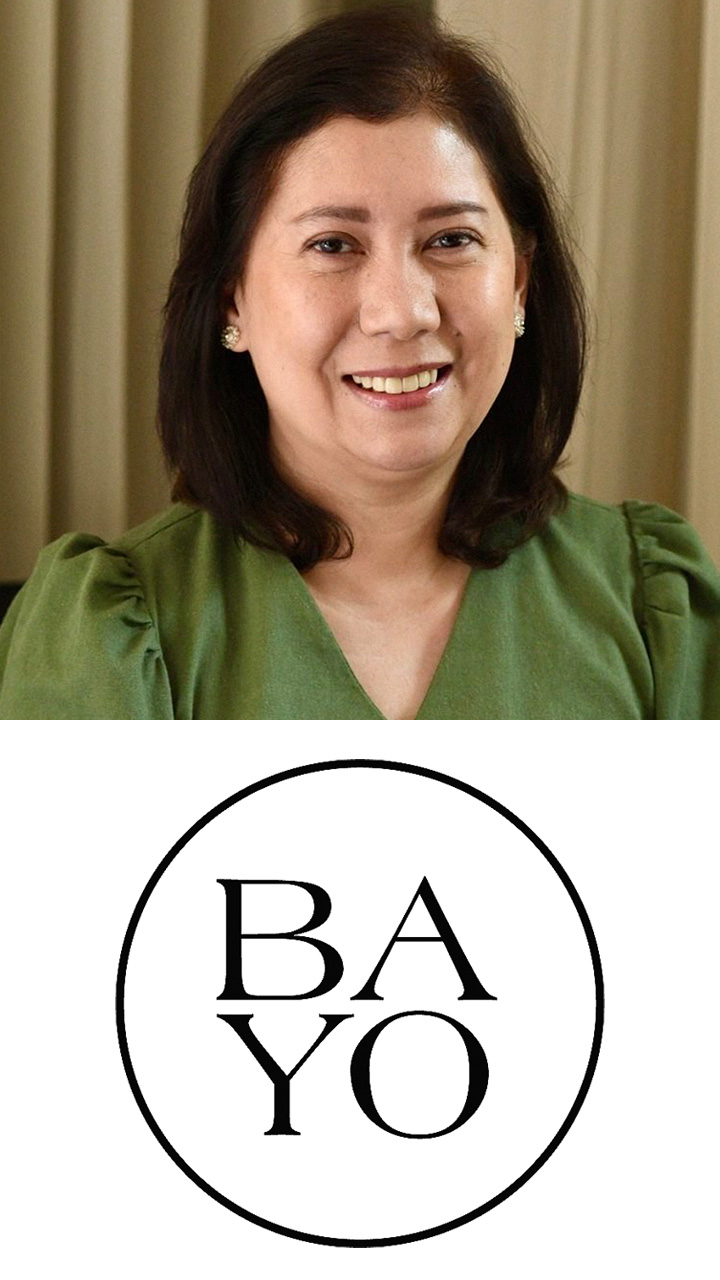
Anna Losanta Marie R. Lagon
Co-CEO and Chief Creative Officer
Bayo Manila, Inc.

FOR MANY ORGANIZATIONS, marrying business and sustainability is something like a pipe dream, an aspiration that’s too good to be true. For some, it’s more of an afterthought — a social responsibility that they need to fulfill. However, for sustainability to make an impact, it should be rooted in a sincere desire to do something good and be part of the solution. This was the case for Anna Losanta Marie R. Lagon, co-chief executive officer (CEO) and chief creative officer at Bayo Manila, Inc.
Bayo is a homegrown fashion brand that takes pride in being Filipino. In 2013, Ms. Lagon and her husband Leo acquired and co-managed Bayo. They took over the company during a tumultuous time in the local fashion industry. Bayo was also an ailing business then, facing a lot of internal difficulties.

Against all odds, they were able to turn things around and stabilize the company’s finances. From 31 branches, Bayo now has 64 branches in the Philippines.

This accomplishment was an amazing feat. However, what truly made an impact was Ms. Lagon’s remarkable story of how she transformed Bayo from a local fashion brand to a sustainable company that celebrates Filipino heritage and is passionate about community engagement.

In 2019, she launched the “Journey to Zero” initiative — aimed at reducing textile waste, raising consumer awareness and promoting Earth-friendly fashion practices. Through this effort, she showed that large-scale commercial success can coexist with sustainability goals.

Some of the steps she took include implementing measures to reduce the company’s fabric waste from 35% to a minimal 10% and using environment-friendly fabrics and low impact dyes. Now, she is awaiting approval for her application for a utility patent that would create construction materials from a mixture of residual plastics, with the remaining fabric waste that would otherwise end up in a landfill.

Over the years, Ms. Lagon has received recognition from numerous award-giving bodies for her sustainability efforts. She showcased how businesses can benefit from adopting eco-friendly practices, which is also aligned with her goal of creating a circular economy.

In her words, “In whatever things we do within our business, it all boils down to creating ripples of circles… everyone doing something not just on their own, but really replicating it. All of that contributes positively to others, to the environment. But everything becomes realistic because there are tangible results that really affect the positive side of how we are as people.”

Ms. Lagon’s passion for sustainability also trickled down to her other initiatives. When she committed to integrate sustainability into every aspect of Bayo, she also tapped into local resources and talents. By working with local artisans and using locally sourced materials, she in turn supported the local economy. Having seen the positive effect of giving people hope for a better future through sustainable livelihood, community engagement also eventually became one of her priorities.

“The essence of the Bayo brand is not just really in the numbers. But I think our impact is really from how we evolved into balancing our community development works and also stabilizing the business,” said Ms. Lagon.

This is evident in the Bayo Manila Foundation and their Creative Community Hubs, where they train people in various crafts. They also have the CommUNITY Partnership Program (CPP), where they travel to communities far and wide to partner with small associations that practice traditional Filipino crafts.

Ms. Lagon demonstrated through Bayo that businesses have a bigger impact on communities than they realize. And while her passion for sustainability and community engagement may not be immediately visible to the public, at the end of the day it’s her conscious and sincere efforts to do something good that make a difference. “Little things like that empower the entire community,” she said.

Media sponsors are BusinessWorld and the ABS-CBN News Channel. Gold sponsors are SteelAsia Manufacturing Corp., Uratex, and Converge ICT Solutions, Inc. Silver sponsor is International Container Terminal Services, Inc. Bronze sponsor is Lausgroup Holdings, Inc.

The winners will be announced on Oct. 23, 2024. The EY Entrepreneur Of The Year 2024 Philippines will represent the country in the World Entrepreneur Of The Year 2025 in Monte Carlo, Monaco in June 2025. The EY Entrepreneur Of The Year program is produced globally by Ernst & Young (EY).

House OKs Meralco franchise extension on second reading

MERALCO.COM.PH

By Kenneth Christiane L. Basilio, Reporter

THE HOUSE of Representatives approved on second reading late Tuesday a bill extending Manila Electric Co.’s (Meralco) franchise for another 25 years, acting on it four years before its current franchise expires.

House Bill (HB) No. 10926, which extends Meralco’s operation beyond 2028, was approved by voice vote. The bill retains a provision preventing Meralco from expanding its service area outside Metro Manila, Bulacan, Cavite, Rizal, and parts of Pampanga, Laguna, Quezon, and Batangas.

The House also adopted amendments to the bill’s consumer interest provisions, requiring Meralco to include its social responsibility initiatives in its annual report, specifically efforts to provide electricity access to unenergized areas.

“Meralco’s mandates under its current franchise were clear. It has met its mandates, hence its franchise merits renewal,” Albay Rep. Jose Ma. Clemente S. Salceda said in plenary during his sponsorship of the bill.

Mr. Salceda said Meralco has complied with its “least cost, efficiency, and reasonable price mandates,” observing all government regulations. “It complies with all the rules of competitive selection, obliged by ERC (Energy Regulatory Commission) rules on maximum rates, as evidenced by the ERC itself.”

“It is among the lowest system losses and is highly dependable,” he added. “It is on the lower end of rates among its neighboring [distribution utilities] in the region.”

Meralco is the main power distributor for Metro Manila and nearby areas, covering 39 cities and 72 municipalities, delivering electricity to at least 7.75 million Filipinos. It provides power to a region responsible for half of the country’s gross domestic product output.

The distribution utility’s franchise should be renewed as it performed better than average power companies, according to Mr. Salceda, citing data on Meralco’s outage frequency and duration.

“[Meralco’s] frequency of outages in minutes is 123.7 minutes per year. The national baseline is 214 [minutes], the world median is 168 [minutes], Meralco was better,” he said.

“In terms of systems loss 5.8%, national baseline 9.4%, the world median is 8%,” he added.

Mr. Salceda said Meralco’s kilowatt-hour (kWh) rate for consumers is lower than the national and global baseline of electric distribution utilities. “Meralco’s at $0.175 versus the national baseline of $0.20 and the world median of $0.198.”

“The reason electricity from Meralco is expensive is because of taxes, while in other countries, it is cheaper due to subsidies,” he said in Filipino.

Meralco in early September said the overall rate will climb by P0.1543 per kWh to P11.7882 per kWh in September. The adjustment will result in an increase of around P31 in the total electricity bill of residential customers consuming at least 200 kWh.

Meralco’s majority owner, Beacon Electric Asset Holdings, Inc., is partly owned by PLDT Inc.

Hastings Holdings, Inc., a unit of PLDT Beneficial Trust Fund subsidiary MediaQuest Holdings, Inc., has an interest in BusinessWorld through the Philippine Star Group, which it controls.

How Microsoft Philippines is shaping AI adoption

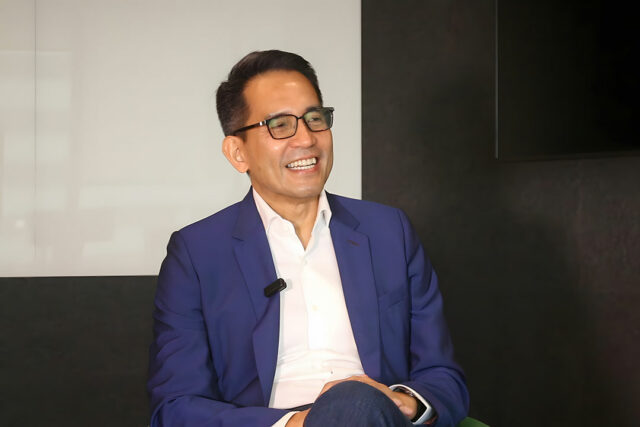
PETER MAQUERA

COMPANIES should not only embrace artificial intelligence (AI) but also ensure they have the right strategies and frameworks in place to use it effectively and ethically, according to Peter Maquera, chief executive officer of Microsoft Philippines.

This approach is crucial for achieving significant business impacts like faster revenue growth, higher productivity, and cost reduction, Mr. Maquera told Editor-in-Chief Cathy Rose A. Garcia during an episode of BusinessWorld One-on-One online interview series themed “The Reinvention of Business.”

“People will use it anyway because it’s already there. What we’re talking about is, how do you use it responsibly? How can you be more intentional about transforming your organization?” he said.

Mr. Maquera said the fastest AI adoption has been in the banking, financial, insurance, and telecommunications industries.

This is due to these sectors’ customers dealing with a lot of content, where language models have the most impact.

Microsoft employs two approaches to transform banking and financial companies. The first is starting with internal use cases like human resource policies, which are low-risk and help organizations become comfortable with the technology.

The second approach involves more complex uses, such as customer service for external customers. This includes chatbots, sales augmentation, or customer service augmentation.

“What we’re doing a lot right now, especially with our product called Copilot. The big idea is to give you a genius copilot, but you’re still the pilot. If you’re involved in sales, you’re a copilot. We might be recommending to you what would be appropriate for that customer so that it’s a much more engaging conversation with your customer,” he said.

Citing the recent Work Trend Index 2024 report by Microsoft and Linked-In, Mr. Maquera noted that employees are already using AI without waiting for their companies to develop an AI strategy.

The report found that 86% of knowledge workers in the Philippines use generative AI at work, higher than the 83% regional and 75% global averages.

Additionally, 83% of Filipinos are practicing “Bring Your Own AI” in the workplace.

Mr. Maquera also said that half of the company leaders are not confident in their AI strategies.

“What happens is you have the employees using it anyway, and you don’t have the framework and the guardrails in the company to practice AI responsibly,” he said, which makes the company susceptible to data loss, privacy breaches, and more.

“When you think about what you need to have in place to have AI in your organization, you need to understand how AI impacts your business strategy and your return on investment. Because companies won’t do AI just to do AI,” he said.

Mr. Maquera cited the cost of deploying AI and modernizing technology as a reason some companies hesitate to use AI.

“It is fairly complex, and if you have a lot of legacy technology, it might cost you to modernize, or you might not have the right skill sets in your organization to develop that strategy. I think all those need to be in place for you to intentionally benefit from AI,” he said. — Aubrey Rose A. Inosante

Axelum board approves up to P500-M share buyback plan

AXELUM Resources Corp., a listed coconut product manufacturer and exporter, said its board has approved a share buyback program aimed at enhancing shareholder value.

The buyback program will run for six months, commencing on Wednesday, Sept. 25, and concluding on March 24 of the following year, the company said in a regulatory filing on Wednesday.

“The board of directors may, at its discretion and upon management’s recommendation, extend the period by another six months to end on Sept. 24, 2025,” Axelum said.

Axelum’s board authorized the company to buy back up to P500 million worth of common shares.

“Such amount may be increased from time to time by the board of directors as the circumstances may warrant and subject to the availability of unrestricted retained earnings,” Axelum said.

“The actual number of shares to be included in the buyback program cannot as yet be determined as this will depend on the total buy back price of the shares,” it added.

Axelum said its capital structure remains undetermined, as the number of shares to be repurchased will depend on the buyback price.

The buyback program will be conducted in the open market through the Philippine Stock Exchange.

“The buyback program shall be implemented in an orderly manner and should not adversely affect the company’s and its subsidiaries’ prospective and existing projects,” Axelum said.

For the first half, Axelum saw a P208.16-million net income, a reversal of the P125.97-million net loss in the same period last year.

Revenue during the period increased by 14% to P3.22 billion from P2.82 billion a year ago due to the strong volume growth of its white meat business including desiccated coconut, coconut milk powder, and sweetened coconut.

On Wednesday, Axelum shares were unchanged at P2.26 apiece. — Revin Mikhael D. Ochave

PPA seeks bidders for P733-M Opol Port project in Misamis Oriental

THE PHILIPPINE Ports Authority (PPA) has started inviting interested parties to participate in the bidding for the expansion and restoration of Opol Port in Luyong, Misamis Oriental.

The PPA is allocating P732.77 million for the project.

The budget will be sourced from the agency’s corporate budget for 2024, the PPA said in its invitation, adding that any bids received in excess of this amount will be rejected.

The contractor for the port and restoration project must have finished a similar contract, the PPA said.

Bids from interested parties will be accepted on or before Oct. 17. Late submission will also be automatically rejected, it said.

The country’s port regulator earlier expressed its intention to enhance and develop ports to improve their efficiency and capacity, while also preparing some of them to receive cruise ships.

The contractor must complete the project within 720 days from the notice to proceed, the PPA said.

The winning bidder will upgrade the berthing facility in two phases and handle overall expansion and restoration.

Over the next four years, the PPA plans to allocate about P16 billion for infrastructure projects, including 14 flagship projects, which will undergo feasibility studies. — Ashley Erika O. Jose

HeyBo opens second store; parent company teases more

YOU can never run out of one-bowl combinations at HeyBo, the Singapore-based restaurant under the SaladStop Group which specializes in grain bowls, breakfast baos, and poke bowls. There are, apparently, well over 5 million possible ingredient combinations.

After HeyBo opened in Central Square BGC in August last year, it opened a second branch in Makati’s One Ayala last week.

During a preview the day before its Sept. 18 opening, guests were treated to its new offerings (dairy-free ice cream, kombucha, and baos), but also the Build-Your-Bo! option, where guests can mix up their own bowl with a base, a protein, three sides, a garnish, a dip, and a sauce. One can also add on or subtract items from a bowl. All of this leads to an immense number of possible combinations.

“We actually did the math: you can do 5.7 million different combinations with our different ingredients,” said Erika Segundo, Marketing Manager for HeyBo in the Philippines.

The new store boasts indoor seating for 42 guests, complemented by an alfresco dining area.

“From the onset, when we opened HeyBo in BGC, there was a lot of clamor for it,” said Joan Aquino, General Manager for SFRI (Specialty Food Retailers, Inc., the food arm of the Tantoco-founded SSI group), about the second branch’s opening. “Those who’d tried it and live far from BGC were asking when we’re going to open another spot,” she said. “From our socials, there were a lot of questions on when we were opening the second store.

The first branch is popular: “When we talk to our team in BGC, we do have regular customers coming in… like clockwork. Twice a week, or three times a week, even.”

She added, “We’re looking at the Ortigas area. I think that’s one pocket where our market is, and we’d like to be more accessible to the people in the Pasig-Mandaluyong-Ortigas area as well.”

HeyBo is a sister brand of SaladStop, also a healthy-eating joint. On the surface, they both seem the same: healthy food served in bowls and in hefty proportions. Asked about their actual difference, Ms. Aquino said, “I think the main difference is more on the process of cooking. HeyBo is more on the cooked side, more protein-based. SaladStop is more on salad-fresh vegetables.

“The play on flavors in HeyBo is more hefty; there’s more depth in the combination of flavors. With SaladStop, it’s more serious — if you’re serious about your diet and all that,” she said.

In Singapore, the SaladStop Group has two more concepts: Wooshi, featuring Maki and Poke Bowls, and freshkitchen, a catering venture. Asked about the possibility of bringing them here, Ms. Aquino said about Wooshi in particular: “We’re seriously considering that. Hopefully, we’ll share the news soon, but we’re still in the exploratory stage.”

In the SaladStop Group’s website, the different countries that their concepts have reached are marked with flags. Interestingly, Wooshi is already marked with a Philippine flag.

As for other developments in the SFRI group (which includes Shake Shack), Ms. Aquino said Italian chocolatier Venchi will be opening “soon.” Venchi’s opening was first announced in June of this year.

“Soon, we might be able to bring in more brands that resonate to our market.”

HeyBo One Ayala is located at the mall’s second floor al fresco area. — Joseph L. Garcia

mWell sees growth as more Filipinos embrace digital healthcare

MWELL, the digital healthcare arm of Metro Pacific Investments Corp. (MPIC), is optimistic about its future growth as more Filipinos look for easy ways to access healthcare, its chief executive officer (CEO) said.

“I would say that we are the pioneer in the integrated health and wellness platform, and as more Filipinos seek [to bridge the healthcare gap], we are growing,” mWell CEO June Cheryl Cabal-Revilla said during a press conference on Wednesday.

Ms. Revilla added mWell plans to launch more wearables and services to bridge the healthcare gap in the country.

She said the company focuses on meeting Filipinos’ healthcare needs “on the go” with features like teleconsultation, nutrition, fitness programs, wearable tech, and self-monitoring devices.

She also said the health hub feature is already accessible on the mWell platform, though improvements are still being made.

The health hub feature acts as an online assistant, helping users book and schedule doctor appointments and reminding them of these. It also serves as a personal database for electronic prescriptions, medical summaries, and health IDs.

“It is digital-ready in such a way that wherever you go, you have your personal health records with you,” Ms. Revilla said.

“We are improving [the health hub], but the new wearable is going to come out in a month,” she added.

In an interview with BusinessWorld, Ms. Revilla said the company aims to make healthcare more accessible by introducing mWell OnTheGo, a portable clinic designed for remote or off-grid areas without electricity.

According to its website, mWell OnTheGo is a portable mobile clinic equipped with foldable solar panels, a power station, pocket Wi-Fi, and a phone preloaded with the mWell app for online consultation.

MPIC is one of the three key Philippine units of Hong Kong-based First Pacific Co. Ltd., the others being Philex Mining Corp. and PLDT Inc.

Hastings Holdings, Inc., a unit of PLDT Beneficial Trust Fund subsidiary MediaQuest Holdings, Inc., has a majority share in BusinessWorld through the Philippine Star Group, which it controls. — Ashley Erika O. Jose

Tourists get free halo-halo in Mang Inasal-DoT tie-up

Restaurant gives foreigners a taste to whet their appetite before expanding abroad

MANG INASAL has worked with the Department of Tourism (DoT) to give tourists a special, limited time treat — a free halo-halo, the famous Filipino snack of sweet preserves served on crushed ice. This is a strategic decision on Mang Inasal’s part to introduce its flavors to foreigners before expanding abroad.

Until Sept. 27, local and foreign tourists can enjoy a free 8 oz. Extra Creamy Halo-Halo when they order Chicken Inasal Paa or Pecho Large. To avail of the dine-in offer, tourists must present a valid ID along with a boarding pass or e-ticket dated between Sept. 1 and 27. The promo is open to both foreign and domestic tourists.

This is part of the DoT’s “Love the Philippines” campaign (this collaboration with Mang Inasal tacks “Love the Flavors” on to the DoT’s tagline).

“The flavor of the Philippines is really Mang Inasal. Whenever you see foreigners coming here, they enjoy the flavors of Mang Inasal: our chicken, our pork barbecue, and our halo-halo. And the palabok (a noodle dish),” Mang Inasal President Mike V. Castro told the press at the sideline of the campaign’s launch in Novotel in Quezon City on Sept. 23.

Last month, Mang Inasal won multiple awards at the Marketing Excellence Awards for 2024, including Gold for #MangInasalAt20: The 20th Anniversary Digital and PR Campaign (Excellence in Anniversary Marketing); Silver for Mang Inasal Creators’ Circle (Excellence in Influencer/KOLs Marketing) and National Halo-Halo Blowout (Excellence in Customer Engagement); and Bronze for the MAS Juicy Campaign (Excellence in Integrated Marketing). Earlier this year, Mang Inasal was named the Strongest Brand in the Philippines by Brand Finance, according to Mr. Castro’s speech during the launch.

He said afterwards that, “Every campaign that we make is for the Filipino people, and they’re responding to it, and because of that, they are visiting the stores more often right now.”

EXPANSION AT HOME AND ABROAD
Since it was acquired by Jollibee Foods Corp. in 2010, Mang Inasal expanded and now has 600 stores across the country. “We’re not only about growth. Right now, we’re enjoying one of our highest growths this year, even without this promo. What we want right now is to make Mang Inasal known to the world,” Mr. Castro said.

In addition to opening a target of 22 stores this year and 50 next year — “We will be 1,000 (stores) in five years’ time,” said Mr. Castro — they’re also planning to open abroad soon. “We’re looking at 2025 to 2026 to be present abroad,” he said. “We’re looking at two countries right now: it’s the US, and in the Middle East.”

“That’s why we’re inviting our tourists, because we want them to taste it, so when we go there, they already know Mang Inasal.” — JL Garcia

TDF yields decline after Bangko Sentral’s reserve ratio reduction

BW FILE PHOTO

By Luisa Maria Jacinta C. Jocson, Reporter

TERM DEPOSIT YIELDS fell on Wednesday after the Bangko Sentral ng Pilipinas (BSP) slashed the reserve requirements for banks and nonbanks.

The BSP’s term deposit facility (TDF) attracted bids worth P175.473 billion, below the P190 billion on the auction block and P213.935 billion in bids a week ago for a P200-billion offer.

Tenders for the seven-day debt reached P93.21 billion against the P120 billion auctioned off by the central bank. It was also below the P134.256 billion in bids for the seven-day deposits offered last week.

Banks asked for yields of 6.25% to 6.31%, narrower than 6.2495% to 6.315% a week earlier. This caused the average rate of the one-week deposits to slip to 6.2872% from 6.2878%.

Meanwhile, bids for the 14-day term deposits rose to P82.267 billion from the P70-billion offer and P79.679 billion in tenders a week ago. 

Accepted rates ranged from 6.298% to 6.41%, compared with 6.298% to 6.445% a week ago. As a result, the average rate for the two-week deposits decreased by 0.9 basis point (bp) to 6.3737% from last week.

Meanwhile, the BSP has not auctioned off 28-day term deposits for more than three years to give way to its weekly offer of securities with the same tenor.

The central bank uses the term deposits and 28-day bills to mop up excess liquidity in the financial system and to better guide market rates.

“The TDF average auction yields were slightly lower week-on-week… after the latest RRR cut that would infuse about P400 billion into the financial system effective Oct. 25, 2024,” Michael L. Ricafort, chief economist at Rizal Commercial Banking Corp., said in a Viber message.

The central bank on Friday said it would reduce the RRR for big banks and nonbank financial institutions with quasi-banking functions by 250 bps to 7% effective next month.

It will also reduce the ratio for digital banks by 200 bps to 4%; thrift banks by 100 bps to 1%; and rural banks and cooperative banks by 100 bps to 0%.

Mr. Ricafort said that the RRR cut would “increase banks’ loanable funds, reduce intermediation costs that could lead to some easing of lending rates, and allow banks to purchase more bonds, money market and other fixed-income investments that would lead to some easing of yields.”

Mr. Ricafort also noted recent signals from the Philippine central bank of further policy easing.

Finance Secretary Ralph G. Recto, who is a Monetary Board member, said the BSP could further cut interest rates and match the US Federal Reserve’s 50-bp rate cut.

“The Fed cut by 50 basis points (bps) or half a percent. I think we can also do half-a-percent,” he told reporters on Tuesday.

The Federal Reserve last week cut interest rates by 50 bps to 4.75%-5%, the first cut since 2020 that Fed Chairman Jerome H. Powell said was meant to demonstrate policy makers’ commitment to sustaining a low unemployment rate, Reuters reported.

BSP Governor Eli M. Remolona, Jr. earlier said they could cut by another 25 bps in the fourth quarter.

The Monetary Board delivered a 25-bp rate cut in August, bringing the key rate to 6.25% from an over 17-year high of 6.5%.

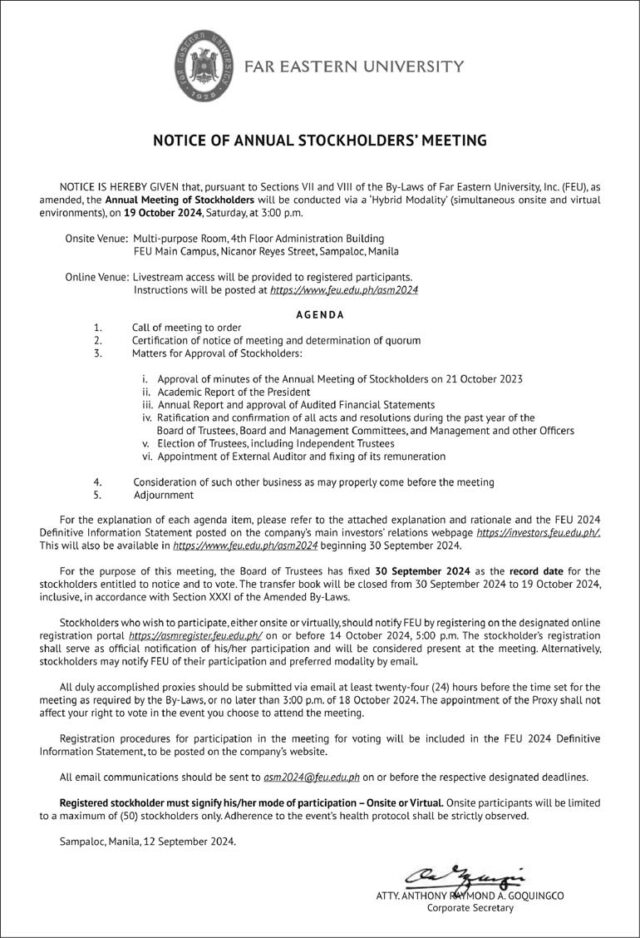
Far Eastern University, Inc. to hold Annual Stockholders’ Meeting on Oct. 19


Spotlight is BusinessWorld’s sponsored section that allows advertisers to amplify their brand and connect with BusinessWorld’s audience by publishing their stories on the BusinessWorld Web site. For more information, send an email to online@bworldonline.com.

Join us on Viber at https://bit.ly/3hv6bLA to get more updates and subscribe to BusinessWorld’s titles and get exclusive content through www.bworld-x.com.

That is one target-rich environment!

WIKIMEDIA.ORG

(First of two parts)

A soldier on a mission uttered that exclamation under his breath as he realized that his squad of eight men was cornered by hundreds of the enemy.

That was just a movie, by the way, but the remark captures the kind of spirit any manager would wish to see in his team.

“Now where does one get an employee like that?” I recall asking myself in jest, as I watched that flick a few years back.

It is probably the kind of question that pops up in the minds of managers across industries when faced by some employees’ less-than-optimal performance. The culprit, however, may not necessarily boil down to flawed attitudes. Casual conversations with peers from various companies left me with the impression that many have been bewildered by changing behavior and priorities in the workforce, especially over the past decade.

IT’S THEIR TIME
It just so happens that the next few years will increasingly be the age of Gen Zs — those born from 1995 to 2010 — who are expected to make up a growing chunk of any work force, even as Gen Y/millennials (those born 1981-1996) will dominate organizations and assume more business helms until the early 2040s.

In fact, that is one of the Philippines’ (and other Southeast Asian markets’) most compelling come-ons to investors from developed economies with their fast-aging populations: our growing pool of young workers.

Latest available final data of the Philippine Statistics Authority show that those aged 15-24 years made up 14.6% of the country’s labor force (employed and unemployed) and 13.2% of those with jobs as of July 2021, trailing people aged 25-34 years (28.6% of the labor force, 28.2% of those employed), 35-44 (23.4% of the workforce, 24.1% of those with jobs) and 45-54 (18.3% of the labor force, 18.9% of those with jobs). But it is a demographic that, at least according to some expectations, will account for up to a third of the Philippine work force in two years as Baby Boomers — those born between 1946 to 1964 —bow out and as a few of the Gen X (1965-1980) start doing so.1

Gen Zs are expected to make up a fourth of the global population by 2030, and while they now make up “a smaller percentage of working adults than other generations, meeting their needs is an important consideration for employers.”2

So, there is this growing pool of talent out there, but then, what makes them tick?

That is a million-dollar question for anyone keen on maximizing all his business’ resources. Without dehumanizing workers as individuals, managers have increasingly realized that they need to understand the nature of this particular resource if the company is to get the best out of each one.

Forcing lessons from one’s own unique experience on younger generations with their own value sets, i.e., “if I could do it, why can’t they?,” would be like forcing a nut on to an over- or undersized screw and still expecting it to do the job, and results in these youngsters just leaving for other options, which (unfortunately for any employer) abound. Guess who ends up on the losing end.

FIRST THINGS FIRST
The importance of this topic is borne by the growing literature on it, such that there is no lack of prescriptions on how to attract and retain Gen Zs.

According to 2022 study on Gen Zs in the Philippines, key factors in choosing work were salary, opportunities for career growth, and that the job jibed with their advocacy or at least was meaningful to society.3

One overarching priority for this demographic is that their work “must mean something,” making them part of something bigger than themselves that benefits society, or at least a segment of it. In a chat earlier this month, an executive of advisory, broking and solutions provider Willis Towers Watson (WTW) noted that more and more entrepreneurs — increasingly composed of millennials and Gen Zs — have been incorporating a social or environmental (or both) mission to their businesses. Remember that this is a generation that was born and grew up at a time of heightened awareness of climate risks: the first United Nations Climate Change Conference meeting was held in Berlin, Germany in March 1995, while the legally binding Paris Agreement for climate change mitigation was adopted in Paris, France in December 2015.

“Differentiate your company with strong CSR initiatives,” read one article on online job platform SEEK. “Corporate social responsibility (CSR) is a dark horse in attracting Gen Z. These talents are no longer content with just having a job. They are looking for a career with a purpose that would enable them to realize their vision and make a difference in humanity, the world and its future.4

Deloitte’s 2023 Gen Z and millennial survey in the Philippines showed that “more that 60%” of Filipino millennials and Gen Zs rejected a potential employer or an assignment when they perceived that these violated their beliefs.

Now, there may be sectors that are more inherently imbued with public interest and social/environmental relevance than others, but that does not excuse any lack of or poor communication of such priorities to the workforce. Besides outright, clear communication of such values, organizations — starting from the top — must actually live them, for actions always speak louder than words. Younger generations of workers are no fools and can smell BS a mile away.

Gen Z’s generally altruistic leaning does not mean that wage levels do not matter, or even matter less than this factor does to their predecessors, according to the WTW executive, while an officer of career platform Handshake noted that Gen Zs, “unlike some older colleagues,” are more wont to discuss salaries with peers and, in some cases, even seek salary audits.5

“This is to be expected,” said the WTW executive, since Gen Zs need to be able to afford their many activities outside work, including vacation trips abroad, in their quest for work-life balance.

Hence, it is advisable to regularly benchmark salaries — at least every other year — against those in the industry and even against those of allied sectors which could indirectly compete for one’s talent. So, this exercise goes beyond just making sure that wages are not eroded by inflation (WTW tracked a median 5.7% salary increase in the Philippines in 2023 and expects roughly the same pace this year, vs. an actual 6% inflation in 2023, 3.6% in the eight months to August, as well as the central bank’s 2-4% inflation target range and 3.4% latest forecast for 2024.)6

And, especially if a company cannot compete when it comes to wages, it may also need to lighten up on absolute bans on moonlighting, provided that the other job/s are not direct competitors. A 2023 Deloitte study on Millennials and Gen Zs showed that 71% of Filipino Millennials (compared to 37% of global Millennials) and 65% of Filipino Gen Zs (compared to 46% of global Gen Zs) have taken on either a part- or full-time paying job on top of their primary job — compared to 61% and 64%, respectively, in 2022. Asked why they decided to take on a side gig, 66% of millennials and 56% of Gen Zs said they needed a secondary income source, while about 40% of both groups said their side job helps them develop important skills and relationships. Moreover, more than half of Filipino Millennials (58%) and Gen Zs (59%) said they lived paycheck to paycheck and worry that they won’t be able to cover expenses.7

There should just be clear parameters to ensure that such employees will perform their main jobs competently, as well as an agreement that they will have to choose should holding multiple gigs prove untenable.

(To be continued)

1https://www.pluxee.ph/blog/heres-what-you-really-need-to-know-about-the-gen-z-workforce/

2https://www.axios.com/2023/11/22/gen-z-boomers-work-census-data

3“Generation Z in the Philippine Labor Force: Profile, Perspectives and Prospects,” Athena Mari E. Son, ILS Working Papers 2022

4https://ph.employer.seek.com/market-insights/article/here-comes-gen-z-but-are-you-ready

5https://www.axios.com/2023/11/05/gen-z-workplace-communication

6https://www.wtwco.com/en-ph/news/2024/01/philippines-pay-raises-continue-to-trend-upwards-in-2024-wtw-survey-finds

7https://www2.deloitte.com/ph/en/pages/about-deloitte/articles/2023-millennial-survey.html


Wilfredo G. Reyes was editor-in-chief of BusinessWorld from 2020 through 2023.

DoF says Semirara mining shares among assets set for privatization

THE PHILIPPINE government is looking to sell its mining shares in Semirara Mining and Power Corp. by next year, an official from the Department of Finance (DoF) said on Wednesday.

“We’re still reviewing it but that’s up for privatization already,” Finance Undersecretary and Chief Economist Domini S. Velasquez told reporters on the sidelines of a forum.

“The timeline should be anytime soon. I think that’s being discussed. Should be within the next year,” she added.

The Philippine government has over 145 million worth of shares in Semirara.

To narrow its budget deficit, the government intends to generate revenues from privatizing its assets to lessen the need to impose new taxes. It plans to raise P42 billion and P101.02 billion in 2024 and 2025 from privatization.

“Part of what we’re doing in the government is to increase or beef up our nontax revenues, and this is through the sale of some of the idle assets that we do have in the government,” Ms. Velasquez told the forum.

“These idle assets not only will generate revenues for the government but will also increase the value of these assets that have been lying around in Metro Manila,” she added.

The government is also keen on privatizing its Star City property, which had a zonal value of P14 billion as of September last year.

It also seeks to privatize its shares of stock in United Coconut Chemicals, Inc., the Elorde Sports & Tourism Development Corp., and condominium units in Atrium, Makati City.

In a list sent to reporters, the government aims to privatize 19 assets next year. These include the Food Terminal, Inc. in Taguig City, the Financial Center Area in Pasay City, the Ecology Villages (I, II, III) and the Mile Long Complex in Makati City, its National Housing Authority property in Caloocan City, and the Pioneer Glass Manufacturing Corp. in Rosario, Cavite.

In Quezon City, three government assets are up for privatization: the Fil-Eastern Woods Industries, Inc., the Mindanao Progress Corp., and the Al-Almanah Islamic Investment Bank of the Philippines.

It also aims to dispose of assets in Central Bank-Board of Liquidators in Iloilo City, its Technology Resources Corp. offices in South Cotabato, Pampanga, Rizal, and Bataan, and Office of the Ombudsman properties in Baguio, Batangas, and Laguna.

The government also plans to privatize the Sta. Clara Lumber Co., Inc. in Davao del Norte, the Anti-Money Laundering Council office in Cavite, and the Peninsula Development Bank in Quezon Province.

Earlier this year, the government raised P3.3 billion after divesting its 3.46% stake in NLEX Corp.

The government aims to narrow its deficit to P1.48 trillion this year and P1.54 trillion next year. — Beatriz Marie D. Cruz