Home Blog Page 2579

Peso may stay at P56 level as US data dampen hopes of big Fed rate cut

BW FILE PHOTO

THE PESO may stay at the P56-per-dollar level this week after strong US jobs data tempered market expectations of large rate cuts by the US Federal Reserve.

The local unit closed at P56.295 per dollar on Friday, strengthening by 7.5 centavos from its P56.37 finish on Thursday, Bankers Association of the Philippines data showed.

However, week on week, the peso declined by 21.8 centavos from its P56.077 finish on Sept. 27

The peso recovered against the dollar on Friday after September inflation slowed to an over four-year low, Rizal Commercial Banking Corp. Chief Economist Michael L. Ricafort said in a Viber message.

“The dollar-peso closed lower following the release of lower local inflation data,” a trader likewise said by phone.

Headline inflation slowed to an over four-year low of 1.9% in September from 3.3% in August and 6.1% a year ago, the Philippine Statistics Authority reported on Friday.

This was below the BSP’s 2%-2.8% forecast for the month and the 2.5% median estimate yielded in a BusinessWorld poll of 15 analysts.

The September consumer price index was also the slowest in 52 months or since the 1.6% print in May 2020.

In the first nine months, headline inflation averaged 3.4%, matching the central bank’s full-year forecast and well within its 2-4% annual target.

For this week, the trader said the peso could remain at the P56 level against the dollar following strong September US employment data.

The trader sees the peso moving between P56 and P56.40 per dollar this week.

Meanwhile, Mr. Ricafort expects the local unit to range from P56.20 to P56.40 on Monday.

The dollar jumped to a seven-week high on Friday and was on track to post its best week since September 2022 after a surprisingly strong jobs report for September led traders to cut bets that the Federal Reserve will make further 50-basis-point (bp) rate cuts, Reuters reported.

US nonfarm payrolls increased by 254,000 jobs last month, beating the 140,000 new jobs that economists polled by Reuters had anticipated.

The unemployment rate also unexpectedly slipped, to 4.1% from 4.2% in August.

Improving economic data and more hawkish comments from Fed Chair Jerome H. Powell last week, when he pushed back against expectations of continuing hefty rate cuts, led traders to reduce bets on a 50-bp reduction at the Fed’s next meeting on Nov. 6-7.

Those odds were completely wiped out after Friday’s data. Traders are now pricing in no chance of a 50-bp rate cut, down from around 31% earlier on Friday and 53% a week ago, the CME Group’s FedWatch Tool shows. A 25-bp reduction is seen as almost certain, with traders also seeing a small chance that the Fed will leave rates unchanged.

Bank of America expects the Fed to cut rates by 25 bps per meeting through March 2025, followed by reductions of 25 bps each quarter until the end of 2025, BofA US economist Aditya Bhave said in a report on Friday.

Chicago Fed President Austan Goolsbee called the data “superb” and said more labor market data along those lines would boost his confidence the economy is at full employment with low inflation.

The dollar index reached 102.69, the highest level since Aug. 16, and was on track for its best weekly percentage gain since September 2022.

The dollar has also been boosted by safe-haven demand on concerns about widening conflict in the Middle East. — Aaron Michael C. Sy with Reuters

PHL hoping to wrap up CEPA talks with UAE by early Nov.

REUTERS

THE PHILIPPINES is hoping to conclude negotiations for the Comprehensive Economic Partnership Agreement (CEPA) with the United Arab Emirates (UAE) by early November, the Department of Trade and Industry (DTI) said.

“We want to conclude negotiations by the end of October or first week of November,” DTI International Trade Group Undersecretary Allan B. Gepty told BusinessWorld via Viber.

The Philippines and the UAE are expected to hold the third round of negotiations for a CEPA on Oct. 21-25.

“Our focus there will be on market access negotiations and the remaining issues in the text,” Mr. Gepty said.

Meanwhile, the Philippine Exporters Confederation, Inc. said that the Philippines and the UAE are set to exchange their second requests and offers before the next round of negotiations.

Initially, the Philippines had asked to eliminate nearly 7,000 tariff lines, which account for $700 million or 99.94% of the country’s exports to the UAE.

In turn, the UAE asked for the elimination of 1,400 tariff lines, which account for almost $958 million, or 90.58%, of Philippine imports from the UAE.

Bianca Pearl R. Sykimte, director of the Trade department’s Export Marketing Bureau, said that the Philippines is likely to accept the UAE’s offer to eliminate 4,621 tariff lines, the trade in which was valued at $519 million.

“At the same time, the Philippines will reiterate its request to include key tariff lines initially excluded in the UAE’s initial offer,” she added.

The UAE is the country’s 18th biggest trading partner and top export market in the Gulf Cooperation Council. In 2023, trade between the two countries totaled $1.88 billion. — Justine Irish D. Tabile

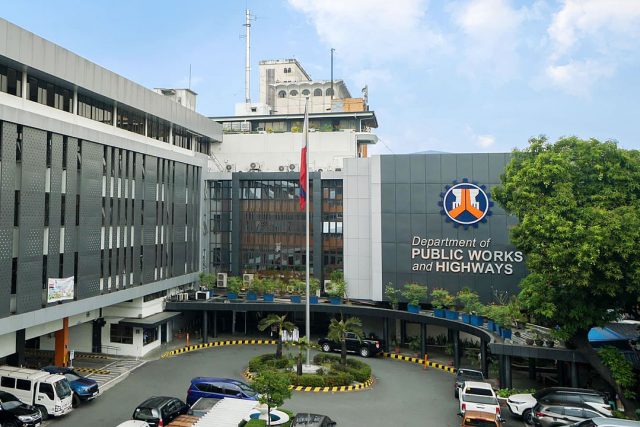
DPWH put on notice to improve spending

DPWH

THE Department of Public Works and Highways (DPWH) has been asked to adopt catch-up measures after failing to meet spending targets for its key programs, the Department of Budget and Management (DBM) said.

In its mid-year report, the DBM flagged the DPWH, which has one of the government’s biggest budgets, for falling short of its first-half targets.

“In the first half of 2024, the DPWH… had an average accomplishment rate of only 13%,” the DBM said.

According to the report, the DPWH’s Convergence and Special Support program posted the highest accomplishment rate at 31.3%.

The program aims to extend the length of access roads leading to airports, seaports, tourist destinations, industries, and railway stations. It also seeks to build infrastructure to support National Security roads, among others. 

On the other hand, the Network Development Program had a 0.9% accomplishment rate, the lowest among all programs. It aims to extend the length of newly constructed as well as widened roads.

Other programs that failed to meet the DPWH’s targets include the Asset Preservation Program, the Bridge Program, and the Flood Management Program.

“Given the Department’s low physical performance in the first semester, DPWH is strongly recommended to implement catch-up measures to ensure that the targets for the current year are met by the end of the year,” the DBM said.

According to the DBM, the DPWH should closely monitor project implementation, compare progress against targets, adjust quarterly targets, and address bottlenecks.

As of the end of June, DPWH allotments rose 25.2% year on year to P1.22 trillion. Of the total, P857 billion was obligated while P307.2 billion was disbursed.

The DPWH’s disbursement performance is expected to improve in the second half of the year due to payments and progress billing for completed and ongoing public works, including those initiated and fast-tracked during the dry season, the report said.

Meanwhile, the DBM also noted that the Department of Transportation (DoTr) failed to meet its targets for the Railway Construction, Rehabilitation and Improvement Sub-Program.

This was mainly due to the reduction of programmed appropriations for the DoTr’s foreign-assisted project (FAPs) to P3.5 billion, significantly lower than the P42.9-billion allocation last year.

The program only posted a 47.5% completion rate, against a 60.9% target. Its progress is measured via the percentage completion of both new and expanded railway system projects.

Rail expansion projects also failed to meet the 4.7% completion target, hitting a rate of 4.3%.

“Considering also the releases from the unprogrammed appropriations for support to foreign assisted projects, the DoTr is advised to prepare and implement catch-up plans to achieve the set target for the year,” the DBM said.

Total allotment releases to the DoTr dropped 21.2% to P176.4 billion. — Beatriz Marie D. Cruz

UK offshore wind industry ready to advise Philippines

REUTERS

THE UK is open to working closely with the Philippines in developing its offshore wind resources, noting the country’s many high-potential sites.

British Deputy Ambassador to the Philippines Alistair White said on the sidelines of a conference last week that “the Philippines is showing real ambition and understanding of the urgency of addressing climate change and moving to renewables… I think where the UK and the Philippines can work most closely is potentially UK expertise, particularly in offshore wind. You have a lot of islands, you have a lot of wind from offshore, and the UK has a lot of expertise,” he said, adding that solar is another potential area of cooperation.

Mr. White described the Philippines as a “young market” and “fast-growing economy.”

“There’s a clear need and appetite for foreign investment and partnerships, particularly in the energy sector. I think it’s seen as a very attractive, interesting market,” he said.

He said the UK recognizes the government’s work in minimizing red tape and make the investment climate more attractive.

Philippine offshore wind resource potential has been estimated at 178 gigawatts, according to the World Bank’s 2022 Offshore Wind Roadmap for the Philippines.

During the conference, Mr. White announced that the UK shut down its last coal-fired power station, the first among the Group of Seven (G-7) to do so.

“Just over 10 years ago, the UK still relied on coal for 40% of all of our energy needs, but today we have the largest fixed bottom offshore wind farm in the world and the world’s first floating wind farm. We’ve installed enough solar power to power over three and a half million homes,” Mr. White said.

“And today, the 30th of Sept. 2024, I’m delighted to be able to stand here and say that the UK’s very last coal-fired power station will cease operations,” he added.

Ratcliffe-on-Soar power station in Nottinghamshire shut down late last month ending the over 140-year history of coal power in the UK.

It had a generation capacity of 2,000 megawatts and was capable of producing electricity to power more than two million households, according to Uniper, which owned and operated the station. 

Mr. White said that the UK has been committed to decreasing its fossil fuel generation since around 2008 and has been increasing the mix of renewable energy.

“Our trajectory is continuing the investment in renewable energy towards our net zero target in 2030,” he said at the sidelines.

Asked to comment, Jose M. Layug, Jr., former Energy undersecretary and president of the Developers of Renewable Energy for Advancement, Inc., said via Viber that the UK’s coal phaseout could serve as “a model for the Philippines’ own goal of energy transition: calibrated and responsive.”

Pedro H. Maniego, Jr., senior policy advisor of the Institute for Climate and Sustainable Cities, said that the Philippines has the third-lowest per capita power supply in ASEAN (Association of Southeast Asian Nations) and there needs to be reliable power to step in when it phases out its coal-fired power plants.

“We need reliable and sufficient power for continued economic growth and industrial development. There must be replacement plants for any retired power plants whether coal-fired or not,” he said in a Viber message.

Under the Philippine Energy Plan, the Department of Energy (DoE) plans to study the voluntary retirement and repurposing of coal-fired power plants to ensure a clean-energy transition.

The DoE has set a target of increasing the share of renewable energy in the power generation mix to 35% by 2030 and 50% by 2040. — Sheldeen Joy Talavera

BIR: Incomplete VAT refund claims automatically deemed ‘high risk’

PHILIPPINE STAR/KRIZ JOHN ROSALES

THE Bureau of Internal Revenue (BIR) will now automatically classify value-added tax (VAT) refund claims with incomplete information as “high risk,” subject to full verification.

In a memorandum order, the BIR said incomplete claims include those with no reference details and incomplete or no transaction details on the schedules of sales and purchases.

A VAT refund claim classified as “high risk” would need 100% verification of sales and purchases, according to an earlier memorandum issued by the BIR.

“With the implementation of the risk-based approach in the verification of VAT refund claims, the completeness of the information supplied in the schedules of sales and purchases is very crucial, as the scope of verification varies depending on the claim’s risk classification,” the BIR said.

“Hence, to address the issue of applications with incomplete/missing information on the schedules of sales and purchases, such applications shall automatically be classified as high risk and shall require 100% verification in accordance with the risk-based approach on the verification of VAT refund claims.”

Republic Act No. 11976 or the Ease of Paying Taxes Act applies a risk-based approach in evaluating VAT refund claims. This classifies claimants as low, medium, or high risk.

The risk classification process is determined through a points system that considers the size of the claim; the frequency of claims filed; the claimant’s tax compliance history; and other risk factors.

The BIR also classifies “high risk” claims if they were filed between April 27, 2024 and June 30, 2024; if they were filed by first-time claimants; claims in which the claimant cannot be located; and claimants with complaints before the Justice department or with pending criminal cases, among others.

The BIR identifies a VAT refund claim as low risk depending on the completeness of submitted documents.

A refund claim classified as medium risk is subject to 50% verification of both the sales amounts and total invoices/receipts issued including inward remittances and proof of VAT zero-rating.

The Commissioner of Internal Revenue may determine whether other cases may be deemed high risk, the bureau said. — Beatriz Marie D. Cruz

PHL chicken production seen rising 3.8% in 2025

PHILSTAR FILE PHOTO

PHILIPPINE chicken production is expected to increase 3.8% to 1.63 million metric tons (MT) in 2025, according to the US Department of Agriculture (USDA).

In a report, the USDA’s Foreign Agriculture Service said that the increase in production follows reduced feed costs and an easing in the number of highly pathogenic avian influenza (HPAI), or avian flu, infections.

Some 53 municipalities across nine provinces have active cases of avian flu, according to the Bureau of Animal Industry (BAI) as of Sept. 27.

It added that the adverse impacts of African Swine Fever (ASF) on pork production will drive chicken consumption in the Philippines.

A recent surge in ASF cases was reported in the Philippines, which the Department of Agriculture blamed on the recent rains and weak biosecurity.

“Despite high operating costs, primarily due to high domestic corn prices, the chicken meat sector rapidly expanded in the first and second quarters of 2024… this growth will generate positive momentum for 2025,” the USDA added.

The USDA said the decline in imported soybean meal prices will carry over into next year and offset the cost of corn used in animal feed.

“Challenges such as the tight supply of day-old-chicks will temper the growth of chicken meat production,” it added.

The USDA said that the limited supply of breeding stock may weigh on production growth.

“Higher prices mean more commercial raisers are willing to turn day old chicks (DOC) into broilers 28-35 days later. The elevated DOC prices will temper production growth in the rest of 2024 and 2025,” it added.

Meanwhile, the USDA reported that chicken imports are expected to increase to 480,000 MT from the 470,000 MT forecast in 2024. 

“The price competitiveness of imported chicken products vis-à-vis domestically produced remains very attractive, especially for food service and institutional buyers seeking to maintain specific price points,” it added.

Meat Importers and Traders Association President Emeritus Jesus C. Cham said that imported chicken, along with pork, continues to be in demand due to the “scarcity of local production.”

“Delayed shipments are also arriving together en masse, squeezing liquidity of importers. With new arrivals, the pendulum is shifting to the other end with some selling below landed cost,” he said via Viber.

Meat imports in the seven months to July rose 7.8% to 757,296 MT, according to the BAI. — Adrian H. Halili

Irrigation project under study using canals to retain rainwater

PHILIPPINE STAR/ MICHAEL VARCAS

THE Department of Agriculture (DA) said it is studying the use of peripheral canals to retain rainwater for irrigation.

“What we will do is offset the water so that it does not go directly to the sea, but it can be used in irrigation,” Agriculture Undersecretary Roger V. Navarro said on the sidelines of a forum organized by the Financial Executives Institute of the Philippines.

He added that the DA is looking to partner with the departments of Public Works and Highways, Interior and Local Government, and Environment and Natural Resources, the National Irrigation Administration (NIA), and the Bureau of Soils and Water Management.

The DA’s flagship projects include increasing irrigation to underserved farming areas.

President Ferdinand R. Marcos, Jr. issued Executive Order No. 69 transferring the NIA to the control of the Office of the President, which is expected to improve NIA’s access to funding.

Mr. Marcos has pushed for more irrigation dams and bulk water projects to ensure sufficient usable water for communities.

Only 68% of the country’s farmland was irrigated as of 2023, equivalent to 2.11 million hectares, leaving 1.1 million without access.

“You can just imagine we have 2.6 meters of rainfall every year. That’s a lot of water. The problem is we are doing flood control but don’t consider our production areas,” Mr. Navarro added.

The Philippines faces an average of 20 typhoons a year. In August, Metro Manila and nearby provinces were flooded due to the typhoon-enhanced southwest monsoon. — Adrian H. Halili

GOCC subsidies drop in August

PHILSTAR FILE PHOTO

BUDGETARY support for state-owned corporations fell sharply in August, the Bureau of the Treasury said.

Subsidies provided to government-owned and -controlled corporations (GOCCs) dropped 51.93% year on year to P9.1 billion.

Month on month, GOCC subsidies fell 15.1% from P10.72 billion in July.

State-owned firms receive monthly subsidies from the government to support their daily operations if revenue is insufficient.

The National Irrigation Authority (NIA) received the top allocation at P5.6 billion, taking up 61.54% of all subsidies.

This was followed by the Philippine Crop Insurance Corp. (PCIC) with P1.9 billion and the Local Water Utilities Administration with P287 million. Both firms did not receive subsidies in the previous month.

State-owned firms that received at least P100 million in subsidies include the Philippine Heart Center with P177 million, the Philippine Children’s Medical Center P154 million, the National Kidney and Transplant Institute P133 million, the Philippine Fisheries Development Authority P111 million, and the Philippine Coconut Authority P100 million.

Firms that obtained at least P50 million in subsidies were the Social Housing Finance Corp. (P82 million), the Cultural Center of the Philippines (P80 million), the Light Rail Transit Authority (P72 million), the Lung Center of the Philippines (P70 million), the Development Academy of the Philippines (P64 million), and the National Housing Authority (P50 million).

At least P20 million in subsidies were given to the Philippine Rice Research Institute (P38 million), the National Dairy Authority (P30 million), the Philippine Institute for Development Studies or PIDS (P21 million), and the Aurora Pacific Economic Zone and Freeport Authority (P20 million).

In August, no subsidies were given to the Bangko Sentral ng Pilipinas, the National Home Mortgage Finance Corp., the Bases Conversion and Development Authority, the Philippine Deposit Insurance Corp., the Small Business Corp., the National Power Corp., and the Philippine Health Insurance Corp.

Also receiving zero subsidies were the National Electrification Administration, the National Food Authority (NFA), the Philippine Postal Corp., the Power Sector Assets and Liabilities Management Corp. (PSALM), the Subic Bay Metropolitan Authority, the Sugar Regulatory Authority, and the Tourism Promotions Board.

As of the end of August, GOCC subsidies dropped 24.89% year on year to P87.03 billion.

During the eight-month period, the NIA received the most subsidies at P48.89 billion, followed by PSALM (P8 billion), NHA (P3.8 billion), PCIC (P2.8 billion), and the NFA (P2.25 billion).

In August, subsidies fell after the government pursued fiscal consolidation, PIDS senior research fellow John Paolo R. Rivera said.

“The decline in subsidies is a continuation of the effects of declining availability of government funds due to the high utilization of funds for infrastructure spending, social protection programs, calamity response, and debt servicing,” he said via Viber. — Beatriz Marie D. Cruz

Realizing transformation success through the human element

IN BRIEF: 

• Companies are engaging in transformational activities at an accelerated rate, making the ability to transform successfully and continuously in response to disruption essential for an organization’s survival.

• Human factors were commonly identified as a primary reason for the result of transformations.

• To take their transformation efforts to a higher level, organizations must focus on placing humans at the heart of their strategies.

Transformation is important for the enduring success of any organization. However, there has recently been a noticeable shift in its frequency and pace. The EY Global Board Risk Survey revealed that 82% of board members and CEOs believe market disruptions are happening more frequently, and with greater impact. As a result, companies are engaging in transformational activities at an accelerated rate — making the ability to transform successfully and continuously in response to disruption, essential for an organization’s survival.

EY and the University of Oxford’s Saïd Business School collaborated to look into more modern and effective methods for driving organizational change. The approach placed a greater emphasis on human factors, which was commonly identified as a primary reason for the failure of transformations. It was observed that not only is the rate of transformation failure excessively high, but it also imposes a human toll that organizations can no longer tolerate.

The research indicates that 85% of senior leaders have participated in at least two major transformations in the past five years. Furthermore, 67% of those surveyed acknowledged that they have been part of at least one transformation that did not perform well during this period. While not surprising, it was astonishing that companies continue to accept this high rate of failure as the cost of change. By any other measure or in any other scenario, such a level of performance would be unacceptable.

This research underscores that the complex factors determining whether a transformation succeeds or fails are deeply connected to the human element, a pattern that holds true across various industries and geographies. Adequate support can transform the increased stress associated with transformation into a catalyst for enhanced performance and drive progress. To optimize their chances of success, organizations must become proficient in these key areas.

CULTIVATE ESSENTIAL LEADERSHIP SKILLS
In the study, employees identified leadership as the primary factor influencing transformation outcomes, regardless of whether it was successful or not. Leaders themselves considered leadership to be the most critical element in successful transformations, but deemed it insignificant when the transformation did not meet expectations.

It’s essential for leaders to confront their own fears, worries, and uncertainties about the path that lies ahead. For instance, 47% of participants from highly successful transformations reported that leaders were open to ideas from junior staff members, compared to 29% from less successful transformations.

INSPIRE THROUGH A SHARED AND COMPELLING VISION
The vision is the cornerstone of any transformation. Leaders should extend their search for an inspiring vision beyond their personal scope, their organization, and even their industry. They should cast a broad net to employ future-oriented planning to uncover bold new possibilities, shaping a vision that garners widespread support and resonates emotionally with everyone involved. Close to half (47%) of participants from highly successful transformations acknowledged that the vision was clear and persuasive, in contrast to just 26% from transformations that did not perform well.

For the vision to take hold, leaders must effectively convey the reasons behind the need for transformation, rather than merely dictating the actions required. Nearly half (48%) of employees from successful transformations reported that leaders successfully communicated the reasons for organizational change, as opposed to 25% from unsuccessful transformations.

FOSTER A CULTURE THAT ENCOURAGES INPUT
In the qualitative analysis of the research, employees involved in unsuccessful transformations expressed feelings of being ignored, unsupported, and stressed both during and after the process. Subsequent discussions found leaders surprised at these findings and their lack of awareness regarding the significant emotional impact an unsuccessful transformation has on employees.

Leaders must channel the appropriate emotions to keep employees committed and driven, while also offering sufficient emotional support to stave off worry and exhaustion. According to the predictive model used in the study, increasing emotional support raised the average probability of a successful transformation by 17%. By being attuned to the emotional state of employees throughout the transformation, leaders can detect early signs of trouble and implement changes to steer the transformation back on course.

EMPOWER THROUGH CLEAR RESPONSIBILITIES
There will be unexpected developments, and intermittent pauses in any transformation journey. Leaders must strike a balance between providing structure and discipline while allowing space for creativity and innovation. Over half (52%) of participants from successful transformations reported that employees had well-defined roles and responsibilities, and 49% indicated that decision-making powers were distributed clearly and suitably throughout the organization.

Leaders should promote a culture of trial and error by shifting from a mindset of avoiding failure at all costs to one that embraces rapid learning from failures. Minor setbacks can pave the way for significant achievements, while a fear of failure often results in lost opportunities. Forty-six percent of respondents from successful transformations said they established a process that fosters innovative experimentation without the risk of such experimentation adversely affecting careers or compensation.

LEVERAGE TECHNOLOGY AND SKILLS TO DRIVE ACTION
Technology is not the end goal, but it is instrumental in bringing the vision to fruition. Selecting the appropriate technology is essential to achieving the vision and streamlining the transformation process. Leaders identified the effective deployment of technology as the second most important factor for a successful transformation and its ineffective use as the second leading cause of poor performance. Nearly half (48%) of those from successful transformations reported that their organizations had made the right technological investments to support their transformation goals, as opposed to 33% from less successful transformations.

It’s vital to consider the emotional reactions that come with the introduction of new technology. Employees from underperforming transformations are 25% more likely to associate transformation with concerns about job stability (49% compared to 39%). Others might view technology as a substitute for human interaction, which is crucial for the emotional health of employees and the smooth functioning of the organization.

Leaders should focus on demonstrating progress rather than striving for perfection. By combining recruitment, upskilling or reskilling, partnerships, and outsourcing, leaders can foster the appropriate digital mindset and skills to actualize the potential benefits of technology. Forty-nine percent of participants from successful transformations indicated that their organizations possessed the necessary digital skills and mindset for the transformation, compared to 35% from less successful transformations.

COLLABORATE TO CONNECT AND CREATE
In contrast to traditional corporate cultures that favored a directive, top-down hierarchy with employees carrying out a vision dictated by their leaders, the current continuous state of transformation demands mutual reliance and teamwork. Leaders must cultivate a culture that promotes connectedness and inventiveness, creating an environment where employees feel secure to explore new methodologies — both digital and agile — that foster innovation, engagement, and rewarding work experiences.

Forty-four percent of those from successful transformations reported that their organization’s culture supported the adoption of new work practices, as opposed to 28% from less successful transformations. For new work practices to thrive, leaders and employees must work together to recalibrate the dynamics of delegation, ownership, and empowerment. Forty-two percent of participants from successful transformations noted that a new organizational culture was intentionally defined and put into practice as part of the transformation initiative.

HARNESS THE HUMAN ELEMENT
Leaders are aware that their organizations must undergo change, yet the challenge of transformation can leave many feeling inundated. In a time characterized by relentless change, complacency is not a viable option.

By tapping into the collective strength of their employees and by applying best practices in relation to each of the factors mentioned, leaders can steer their organizations towards a successful transformation. To take their transformation efforts to a higher level, organizations must focus on placing humans at the heart of their strategies.

This article is for general information only and is not a substitute for professional advice where the facts and circumstances warrant. The views and opinion expressed above are those of the author and do not necessarily represent the views of SGV & Co.


Rossana A. Fajardo is the consulting leader of SGV & Co.

Dynastic politicians seen hijacking party-list system in 2025 elections

PHILSTAR FILE PHOTO

By Kenneth Christiane L. Basilio, Reporter

RICH FILIPINOS seeking to enter politics and politicians whose terms have ended are likely to run for office through the party-list system, which could dilute sectoral representation at the House of Representatives, political analysts said.

About 80% of the more than 300 congressmen are district representatives, while the rest of the seats are allotted to party-lists, supposedly to help sectors push their legislative agendas.

“In the 2025 midterm elections, we are expecting more party-list groups who will have their nominees from powerful dynasties and nominees who are popular and rich,” Arjan P. Aguirre, who teaches political science at the Ateneo de Manila University, said in a Facebook Messenger chat.

“This tells us that party-list groups who do not belong to the wealthy, popular and powerful groups are having a hard time winning the system,” he added.

Congressmen have three-year terms and may be re-elected for a total of three consecutive terms.

The 1987 Constitution created the party-list system, but it was not until eight years later that an enabling law came to force.

“Since 2013, the average growth of the number of participating party-list groups is 21.3%. The biggest jump was in 2022, when we saw a 32% increase in participating parties with 43 seats to 177 from 134,” Mr. Aguirre said.

He added that some party-list nominees had been “linked to a dominant dynasty in a locality, wealthy industry, or entertainment or popularity-oriented venture.”

Party-list groups are now also campaigning through “popular nominees,” he added. “This is one of the effects of the Supreme Court decision to open the space of the party-list system to mainstream parties and groups alongside sectoral groups of the marginal sectors in society.”

The tribunal in 2013 ruled political parties could also participate in the party-list system, allowing “ideology-based and cause-oriented parties” to run for a seat in the House.

The landmark ruling “is a step in the right direction,” Edmund Tayao, president of Political Economic Elemental Researchers and Strategists, said in a separate Viber message. “The problem is we don’t have a working appreciation of what a real political party is.”

“We don’t have ‘real’ political parties so we have a flawed idea of what it is, thus preventing a much-needed appreciation of their significance,” he added.

He said campaign rules for party-lists are “deficient” because these focus on their nominees instead of the groups themselves.

“The whole setup is problematic,” Mr. Tayao said. “The presence and dominance and further strengthening of dynasties is due largely to the prevailing political system,which is… an archaic political setup. It will never have room for genuine marginalized groups.”

The Commission on Elections (Comelec) should revise the Election Code by incorporating “fundamental changes” in what defines a political party, he said.

In a statement on Sunday, militant group Bayan Muna condemned what it called the exploitation by the political elites of the congressional party-list system, urging the House to take up a bill preventing the “infiltration of political and economic elites” in party-list groups.

Filed in 2022 by Party-list Reps. France L. Castro, Arlene D. Brosas and Raoul Danniel A. Manuel, House Bill No. 211 seeks to restore the “original purpose” of the party-list system by ensuring that registered groups truly represent marginalized groups through a public hearing by the Comelec.

The bill disqualifies former officials from President down to town mayors, as well as ex-Cabinet members. “Senators and congressmen must also be disqualified,” Neri J. Colmenares, one of Bayan Muna’s nominees in the midterm elections next year, said in the statement.

“You already won in the senatorial or congressional elections because of your wealth, and now you still want to join the party-list?” he asked. “We owe it to the Filipino people to protect the spaces intended for their genuine representation,” he added in Filipino.

PHL embassies on alert for attacks on anniversary of Hamas assault on Israel

THE PHILIPPINE government at the weekend said it was on alert for potential security risks in the Middle East as the world marks the anniversary of the Oct. 7 militant attack that led to the conflict in Gaza.

“Either Israel will do something symbolic, or the other side will do something symbolic,” Foreign Affairs Undersecretary Eduardo Jose A. de Vega told a news briefing.

Foreign Affairs Deputy Assistant Secretary for the Middle East Marlowe A. Miranda said Philippine envoys were on alert for possible “signs” of conflict. “In those circumstances, Filipinos overseas will rely on advisories from our embassies,” he said.

Mr. De Vega noted that Israel could protect itself, including the 30,000 Filipinos who live there, from potential missile attacks. “They have the defense mechanism necessary to repel all these missile attacks.”

Tensions in the Middle East continue to escalate after Israel’s bombardment of Gaza in response to missile attacks by militant group Hamas on Oct. 7 last year.

Israel launched a ground operation into southern Lebanon earlier this week, as it vowed to conduct raids against “Hezbollah terror targets” that it said were an “immediate threat” to northern Israeli communities.

Hezbollah spokesman Mohammed Afif last week said there had been “no direct ground clashes” with Israeli forces, denying that they had crossed into southern Lebanon, based on a Reuters report.

The group was “ready for a direct confrontation with the enemy forces that dare or attempt to enter Lebanese territory and to inflict the greatest losses on them.”

Mr. De Vega said more than 100 Filipinos were set to be repatriated from Lebanon in batches on Oct. 11 to 28 amid Israeli bombardments.

They include 15 Filipinos whose repatriation scheduled for Sept. 26 did not proceed after commercial flights were canceled. 

Mr. De Vega said the Department of Foreign Affairs (DFA) is prepared to help undocumented Filipinos whose passports are being withheld by their employers.  “If they don’t have a passport, we can always issue travel documents for them to go home.”

He said many Filipinos in Lebanon refuse to go home. He added that the DFA was not seeking to raise the alert for Lebanon to Level 4, which would trigger mandatory evacuation.

“Israel has not conducted a full-scale ground assault like we’ve seen, for example, in 1982 or 2006,” he said. “Of course, we need prayers, so that as we see in our analysis, this will not explode.” — Kyle Aristophere T. Atienza

LGUs’ PPP projects face funding gap, political pressure

PHILIPPINE STAR/JOHN FELIX M. UNSON

LACK of funding for project development and political pressures that increase the cost of private sector expenses are among the barriers to public-private partnerships (PPP) at the local level in the Philippines, according to the PPP Center.

Still, at least three provinces, two cities and one municipality have successfully pursued PPPs and adopted practices that their peers could learn from, the agency said.

In an e-mail to BusinessWorld, the PPP Center said PPP remains a viable option for local government in financing local infrastructure projects such as public markets, slaughterhouses, hospitals and water supply systems.

It said there have been several digitalization and information and communications technology-related PPP projects at the local level. Local governments “see this as a way to make certain facilities, processes, and public services more efficient.”

“Local government units (LGU) that used to lack the capacity to enact their own PPP regulation now have the PPP Code as the implementation-ready legal framework that they can use to jumpstart their PPPs,” PPP Center Deputy Executive Director Jeffrey I. Manalo said.

He said the provinces of Negros Occidental, Cavite and Bataan, the cities of Iloilo and Baguio, and the municipality of Vaggao in Cagayan province are some of the LGUs with a steady project pipeline involving PPPs, both solicited and unsolicited.

These local governments have sought feedback from stakeholders and potential investors to ensure that PPP projects are commercially, economically and technically viable.

“The firm commitment of these LGUs is crucial in developing and implementing successful PPP projects,” Mr. Manalo said. “The political will of local leaders plays a vital role, especially during the approval and implementation phases of these projects.”

He noted while local PPP projects in the pipeline remain mostly unsolicited, there’s “increasing interest” from LGUs in developing their own PPPs and pursuing them using the solicited PPP track.

The government of President Ferdinand R. Marcos, Jr. has vowed to harness the potential of PPPs to boost Philippine infrastructure. In December, he signed the PPP Code or Republic Act No. 11966, which amended the Build-Operate-Transfer (BOT) Law to create a unified legal framework for all PPPs at the national and local levels.

Mr. Manalo said major obstacles to PPP projects at the local level include lack of funding to conduct their own preparatory or project development studies and their lack of capacity to develop business cases and assess solicited and unsolicited proposals.

He also cited local political pressures that in some cases have forced local officials to keep water tariffs low “to the point that these may already be below the cost-recovery levels for potential private sector counterparts.”

The center also cited right-of-way issues during the implementation stage and operational challenges in monitoring private sector counterparts. 

It said highly urbanized cities and large municipalities often get unsolicited proposals from the private sector due to their commercial potential.

Smaller or less urbanized LGUs are usually advised to adopt a clustering-based approach, under which LGUs are clustered under one PPP arrangement or contract to create a sizeable demand.

“This is intended to optimize investment costs and arrive at designs that are both technically and financially feasible.”

The center said it has developed an LGU PPP Strategy that focuses on assistance to LGUs through capacity-building and technical assistance in pursuing bankable PPP projects.

The project is in line with the government’s aim to expand development in the regions and spread economic growth outside Metro Manila, the agency said. “More LGUs now see PPPs as an engine for growth and driver of economic opportunities.” — Kyle Aristophere T. Atienza